Stress Wasn’t ‘Discovered’ Until The 1930s
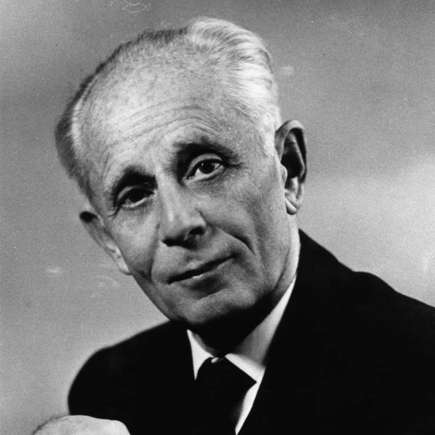
Described as the man who “father of stress research,” Hans Seyle took the word stress out of the sphere of physics & applied it medicinally. Seyle, an Austrian-born endocrinologist, noticed patients experiencing symptoms and signs unrelated to their diagnoses as early as the 1920s.
Seyle began inflicting stress upon rats and found “almost universally these rats showed a particular set of signs”, according to medical historian Mark Jackson.
His research led him to believe that,
Subjecting an animal to prolonged stress led to tissue changes and physiological changes with the release of certain hormones, that would then cause disease and ultimately the death of the animal.
Seyle called the effects of chronic stress “general adaptation syndrome” and worked tirelessly to promote his theory of stress.
In 1936, Hans Selye wrote a groundbreaking paper in the journal Nature about stress’s effect. He described the concept of general adaptation syndrome, which is now an integral part of our lives. Selye is known as the “Einstein of Medicine” and his work on stress research has been influential 12345.
We hear the word “stress” all the time, but where did it come from?
KEY POINTS
The term “stress” emerged out of the field of engineering to describe the actual physical strain put on a structure, but has now been broadened.
Selye (1936) discovered that after a rat was exposed to a stressor, a typical “syndrome” appeared which was not related to the physical damage.
The stress response proposed by Selye (1976) suggested that three interdependent elements accompanied any specific stressor.
The notion of “stress” is ingrained in both academic and public discourse, creating a popular phenomenological term that is rarely defined. As accurately noted by Selye (1976), the founder of the term as we know it today, “everybody knows what stress is and nobody knows what it is” (p. 692).
The term “stress” emerged out of the field of engineering to describe the actual physical strain put on a structure. In the mid-1930s, however, the paper “A Syndrome Produced by Diverse Nocuous Agents” was published in Nature (Selye, 1936), which discussed experiments on rats who were given “acute non-specific nocuous agents,” or, “stressors,” which included exposure to cold, surgical injury, spinal shock, excessive muscular exercise, or sub-lethal drug administration.
Selye’s discovery
In his investigation, Selye (1936) discovered that after a rat was exposed to a stressor, a typical “syndrome” appeared which was not related to the physical damage done by the stressor. Selye noted that regardless of the type of stressor to which the rats were exposed, two stages emerged after exposure:
In the first stage, 6-48 hours after the initial injury, amongst a myriad of symptoms, rats experienced a notable decrease in size of the thymus (the organ responsible for producing T cells, critical to immunity strategies).
In the second stage, beginning at 48 hours after the initial injury, it seemed the brain structures responsible for the production of the organism’s growth ceased to function in favor of other structures which would be more greatly needed, economizing the body’s resources. Selye’s work would be seminal in exploring the biomarkers of stress and provide a catalyst for stress research in general.
Emerging from this study, the stress response proposed by Selye (1976) suggested that three interdependent elements accompanied any specific stressor. These were: hypertrophy in the adrenal cortex (essentially an enlargement in the structure of the brain which stimulates androgen glucocorticoid production), atrophy in the lymphatic system (responsible for the defense of the immune system), and gastrointestinal ulcers.
The GAS model
In noting the abundant health issues derived from “stress,” Selye (1976; 1980) developed the General Adaptation Syndrome (GAS) model, which suggested that the odd behavioral and physiological reactions to stress are caused by disrupting homeostasis, the body’s natural balance. The GAS model accounts for three distinct phases that activate when one is under stress: the alarm reaction (made up of the “shock” and “anti-shock” phase), resistance stage, and exhaustion stage.
Within homeostasis, the body adapts to minor stressors, however when a stressor exceeds the amount of adaptation given in homeostasis, the body enters into the shock phase of the first stage, alarm, where cells in the hypothalamus begin to activate, the sympathetic nervous system (which regulates the body’s “sympathico- adrenal system,” otherwise known as the “fight or flight” response) is suppressed.
However, in the “anti-shock” phase, when the stressor persists, the sympathetic nervous system is activated, and the “fight or flight” reaction occurs in an attempt to best mobilize the body’s resources in case of danger. This occurs through the activation of the hypothalamic-pituitary-adrenalcortical (HPA) axis.
In 1936, Hans Selye published a pivotal paper titled “A Syndrome Produced by Diverse Nocuous Agents” in Nature. This work laid the foundation for the modern understanding of stress. Selye’s experiments on rats revealed that exposure to various stressors—like cold, surgery, or drugs—triggered a consistent physiological response, which he termed the “General Adaptation Syndrome” (GAS). This model described three stages of stress response: alarm, resistance, and exhaustion2.
His findings were groundbreaking because they demonstrated that stress could have profound effects on health, beyond just emotional strain. Selye’s work eventually earned him the title “the father of stress research”1.
1brainimmune.com 2www.stress.org 3time.com
Does this align with what you were curious about, or would you like to dive deeper into his theories?
Hans Selye’s pioneering work on stress has had profound implications across various fields. Here are some modern applications:
- Healthcare and Medicine: Selye’s General Adaptation Syndrome (GAS) model is used to understand how chronic stress contributes to diseases like cardiovascular disorders, diabetes, and autoimmune conditions. Stress management techniques, such as mindfulness and cognitive-behavioral therapy, are rooted in his research2.
- Psychology and Mental Health: His distinction between eustress (positive stress) and distress (negative stress) informs therapeutic approaches to help individuals harness stress for motivation while mitigating harmful effects3.
- Workplace and Organizational Management: Stress research has shaped workplace policies, emphasizing the importance of work-life balance, employee wellness programs, and stress-reduction strategies.
- Education and Training: Selye’s insights are applied in educational settings to help students manage academic stress and optimize performance.
- Sports and Performance: Athletes use stress management techniques to enhance focus and resilience during competitions.
1neurolaunch.com 2library.oapen.org 3www.jstor.org
Selye’s legacy continues to influence how we approach stress in daily life and specialized fields. Which of these applications resonates most with you?
Stress: Eight Decades after Its Definition by Hans Selye: “Stress Is the Spice of Life” – PMC
Stress History: Meet the Doctor Who Invented Being Stressed | TIME
Hans Selye (1907–1982): Founder of the stress theory – PMC
The first scientific publication on ‘general adaptation syndrome’, or as we know today ‘biologic stress’ , was published in Nature in 1936 by the 29-year old Hans Selye. His results in that short publication that contained no references or illustrations, were based on experiments in rats that were exposed to severe insults/ stressors, but his idea about a ‘nonspecific bodily response’ originated from his observations of sick patients whom he had seen as a medical student and young clinician.
Autopsy of stressed rats revealed three major, grossly visible changes: hyperemia and enlargement of the adrenals, atrophy of the thymus and lymph nodes as well as hemorrhagic gastric erosions/ulcers (the “stress triad”). Based on this and additional observations, he concluded that the key master organ in stress reactions is the adrenal cortex (although he also accepted the limited and short lasting effect of catecholamines released from the adrenal medulla) which stimulated by an increased secretion of ACTH, secreted by the anterior pituitary gland.
He thus identified the first molecular mediators of the stress reaction, i.e., steroids released from the adrenal cortex that we call today glucocorticoids, based on his classification and naming of steroids. At the end of a very productive life in experimental medicine, Selye recognized that under both unpleasant and demanding stressors as well as positive, rewarding stimuli adrenal cortex releases the same glucocorticoids and only certain brain structures may distinguish the stimuli under distress and eustress – terms he introduced in 1974, that also contained his last definition of stress: the nonspecific response of the body on any demand on it.
After a brief description of the history of stress research, the rest of this review is focused on one element of the stress triad, i.e., gastroduodenal ulceration, especially its pathogenesis, prevention and treatment. Following a short description of acute gastroprotection, discovered by one of Selye’s students, we discuss new molecular mediators of gastroduodenal ulceration like dopamine and new drugs that either only heal (very potently, on molar basis) or prevent and heal ulcers like sucralfate derivatives and the relatively new peptide BPC-157.
We conclude that despite the extensive and multidisciplinary research on stress during the last 80 years, a lot of basic and clinical research is needed to better understand the manifestations, central and peripheral molecular regulators of stress response, especially the modes of prevention/management of distress or its transformation into eustress and the treatment of stress-related diseases.
Keywords: BPC-157; MPTP; Parkinson’s disease; Stress; angiogenic growth factors; cysteamine; distress; dopamine; eustress; gastric and duodenal ulcers; history; propionitrile; stress triad; sucralfate.
Stressful Facts About Stress,
Ranked By How Much They Stress You Out.
Stress, it’s something nearly everyone experiences. Daily life happenings with work, family, money, and everything in between are often stressful, as are major life events – whether they’re good or bad. People hear a lot about how stress impacts the human body but don’t always comprehend what it means. Facts about stress are mixed with opinions about it, too. Understanding stress, the research behind it, what stress side effects can be, and some of the ways it shows up in our lives is really insightful. It’s also somewhat terrifying when you realize just what stress can do. Check out these facts about stress and vote up the information that really ramps up the tension.
Stress Can Lead to Tooth Loss
Stress doesn’t force teeth out of your mouth, but it affects teeth in several ways that ultimately lead to tooth loss. Stress may cause an individual to clench their jaw or grind their teeth (day or night), which can crack, wear down, and ultimately lead to tooth loss.
Stress also causes inflammation and depletes one’s immune system, potentially leading to gum inflammation and gum disease. Canker sores, nail-biting, and acid reflux brought on by stress can also introduce bacteria or erode teeth.
Hwang Dong-hyuk, the creator of Squid Game, indicated that stress was at the root of his tooth loss while making the show’s first season. He explained to the BBC that he lost “eight or nine” and, with his teeth aching again during filming season two, said, “I’ll probably have to pull out a few more very soon.”
Generational Trauma Contributes To Stress
Stress isn’t always the result of what’s happened yesterday, today, or may happen tomorrow. It can be influenced by the effects of traumatic events passed down through generations.
Generational trauma may be caused by war, discrimination, violence, oppression, or some other event that ultimately results in “a genetic adaptation that can be passed on to successive generations.” Learned behaviors also exacerbate generational trauma.
Generational trauma can then influence conditions such as reactions like anxiety, depression, substance abuse, and an “extreme reactivity to stress.”
The Most Stressful Life Events Involve Death And Divorce
Major life changes are the most stressful experiences for humans, according to research. The death of a spouse is the most stressful life change, with divorce and marital separation as the second and third, respectively. Going to jail, the death of a loved one, and personal injury or illness also score highly on the life change index scale.
None of these life events have the same reactions by everyone who experiences them. What they have in common is that they disrupt routine, put one’s physical and mental health into flux, and exacerbate anxiety, depression, and cardiovascular and infectious diseases.
This is why it’s possible to “die” of a broken heart, so to speak, because grief can result in chronic stress that reaches such extremes that the body can no longer handle it.
Denying You’re Stressed Can Make You More Stressed
Denial is a natural defense mechanism and often one used to delay or avoid accepting facts or reality. Denying stress may push away unwanted emotions but this can lead to more internal strife. As a result, stress levels increase.
Author and licensed social worker Hilary Jacobs Hendel put it this way:
When the mind thwarts the flow of emotions because they are too overwhelming or too conflicting, it puts stress on the mind and the body, creating psychological distress and symptoms. Emotional stress, like that from blocked emotions, has not only been linked to mental ills, but also to physical problems like heart disease, intestinal problems, headaches, insomnia and autoimmune disorders.
You Can Lose Your Hair and Get Pimples from Stress
The effects of stress on hair vary, but hair loss manifests itself in three ways.
Telogen effluvium is hair loss from hair follicles shutting down during a period of significant stress while trichotillomania is a compulsion to pull out one’s hair as a reaction to stress. Alopecia areata occurs when the immune system attacks hair follicles, leading hair to fall out.
The relationship between stress and gray hair wasn’t proven until 2020. That year, scientists confirmed that norepinephrine, a hormone that triggers the body’s “fight-or-flight” response, was released into hair follicles during stress. This causes hair pigment cells to release and the body only has so many to go around. When they’re gone, hair goes gray.
As far as acne goes, stress doesn’t cause pimples directly but the body makes more androgens when stressed. This stimulates the body’s oil glands and hair follicles, often leading to breakouts. Inflammation exacerbates this and may make breakouts worse.
Stress Less, Live More: Unlocking the Power of Mindfulness and Meditation
Feeling Anxious? 6 Simple Habits to Reduce Stress and Boost Your Mood
Game Theory Applied: Strategies for Winning the Game of Life | Watch
How to tell if you are stressed — and what to do about it
What happens to your body when you stop going outside?
AC/DC setlist: All the iconic songs rocking the Power Up tour
The Most and Least-Played Song Live Off Every AC/DC Album
The Best of AC/DC (part 1) The Greatest Hits of AC/DC
The Best of AC/DC (part 2) The Greatest Hits of AC/DC
AC/DC |Greatest Hits [Playlist] | The Best – YouTube