
The One-Legged Cancer Patient Who Ran Marathons for 143 Consecutive days
Terrance Stanley Fox (July 28, 1958 – June 28, 1981) was a Canadian athlete, humanitarian, and cancer research activist. In 1980, having had one leg amputated due to cancer, he embarked on a cross-Canada run to raise money and awareness for cancer research.
The annual Terry Fox Run, first held in 1981, has grown to involve millions of participants in over 60 countries and is the world’s largest one-day fundraiser for cancer research; over C$900 million has been raised in his name through the Terry Fox Research Institute as of September 2024.
On November 12, 1976, Fox was driving to the family home in Port Coquitlam when he was distracted by nearby bridge construction and crashed into the back of a pickup truck. Fox injured his right knee in the crash and felt pain in December, but chose to ignore it until the end of basketball season.[12] By March 1977, the pain had intensified and he went to a hospital, where he was diagnosed with osteosarcoma, a form of cancer that often starts near the knees.[4]
Fox believed his car accident weakened his knee and left it vulnerable to the disease, though his doctors argued there was no connection.[13] He was told that his leg had to be amputated, he would require chemotherapy treatment, and that recent medical advances meant he had a 50-percent chance of survival. Fox learned that two years before, the figure would have been only 15 per cent; the improvement in survival rates impressed on him the value of cancer research.[14]
With the help of an artificial leg, Fox was walking three weeks after the amputation.[4] Doctors were impressed with Fox’s positive outlook, saying it contributed to his rapid recovery.[15] Fox endured sixteen months of chemotherapy and found the time he spent in the British Columbia Cancer Control Agency facility difficult as he watched fellow cancer patients suffer and die from the disease.[16]
In the summer of 1977, Rick Hansen, working with the Canadian Wheelchair Sports Association, invited Fox to try out for his wheelchair basketball team.[17] Less than two months after learning how to play the sport, Fox was named a member of the team for the national championship in Edmonton, Alberta.[18] He won three national titles with the team,[4] and was named an all-star by the North American Wheelchair Basketball Association in 1980.[19] SOURCE: Terry Fox – Wikipedia
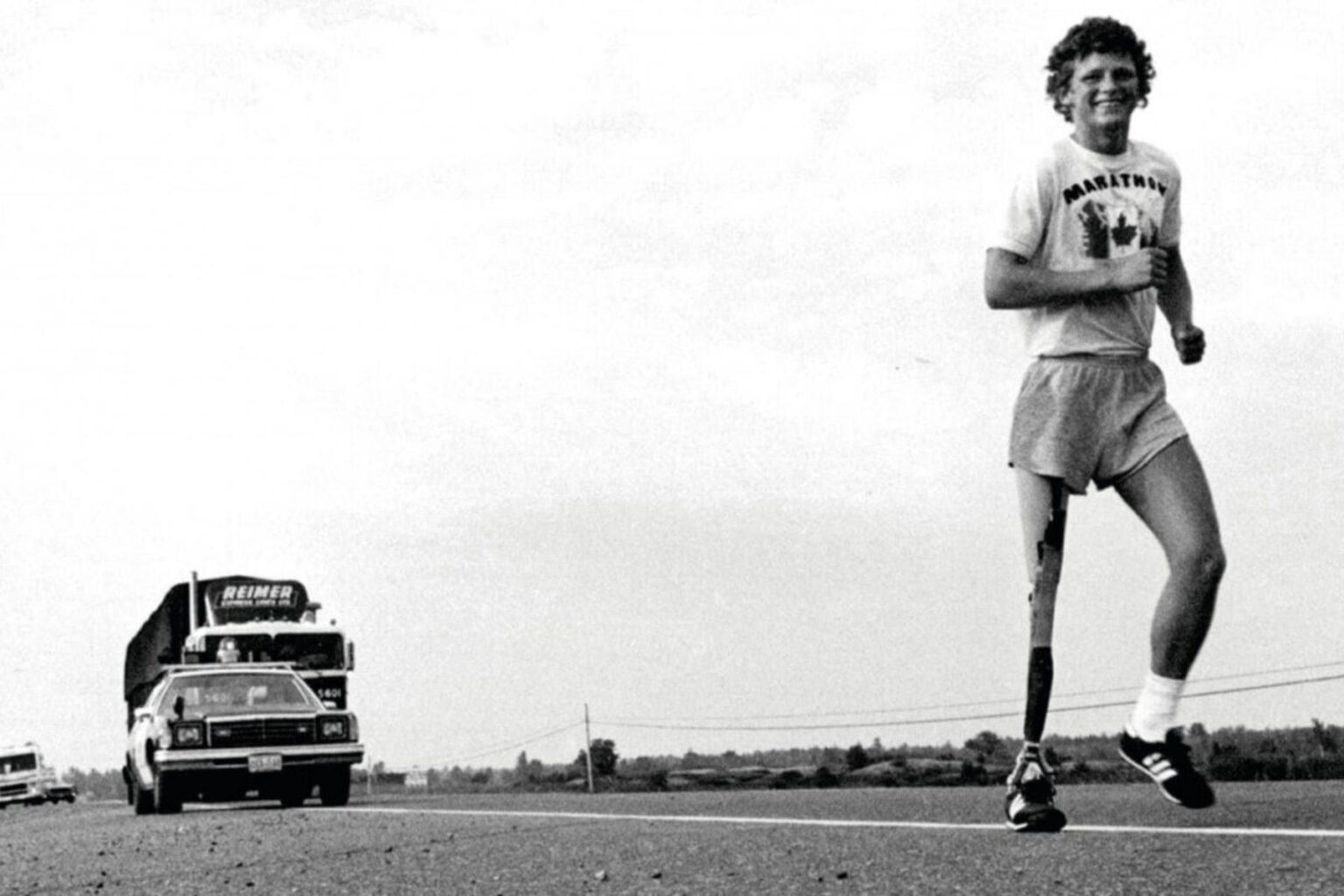
Just let that sink in. Now, consider the fact that Terry Fox also pulled this herculean feat off with one good leg in addition to an early 1980s prosthetic. His shoes were also nothing special compared to modern running shoes.Terry Fox was a 21-year-old one-legged cancer patient who ran 3,339 miles across Canada in 143 days before dying.
An 18-year-old was traumatized in a car accident in 1976.
He was rear-ended by a truck, completely totaling his own vehicle. Surprisingly, the young man was unharmed after the collision. Only his knee hurt, which he attributed to the collision. But the discomfort persisted. He played basketball frequently in school and believed that the pain was brought on by too much stress.
But the pain persisted after the basketball season was over, so he made the decision to see a doctor. He was identified as having osteogenic sarcoma, a bone cancer that frequently begins in the knee and spreads rapidly, four months after his accident. The doctors knew right away that amputating his leg and then starting chemotherapy would give him the best chance of survival.
Five days after his diagnosis, on March 9, 1977, medical professionals amputated his right leg 15 cm above the knee.
Running 143 Consecutive Marathons
Terry Fox was a young man, and like any other 18-year-old, he was completely shocked to learn that he had cancer.
It is challenging to comprehend what a diagnosis like this means when your entire life is in front of you. No matter how emotionally intelligent you are, you will never be able to feel what Terry Fox felt during those moments.
But he didn’t stay in his situation. He didn’t turn bitter.
In fact, Terry Fox was already playing golf with his father on an artificial leg just a few weeks after his leg was amputated. But the cancer did not go away. He underwent chemotherapy for almost one and a half years following the operation.
He witnessed the suffering of other cancer patients during that time, which had an impact on Fox. He made the decision to run across Canada to raise awareness for cancer after being inspired by Dick Traum, an amputee who had completed the New York City Marathon.
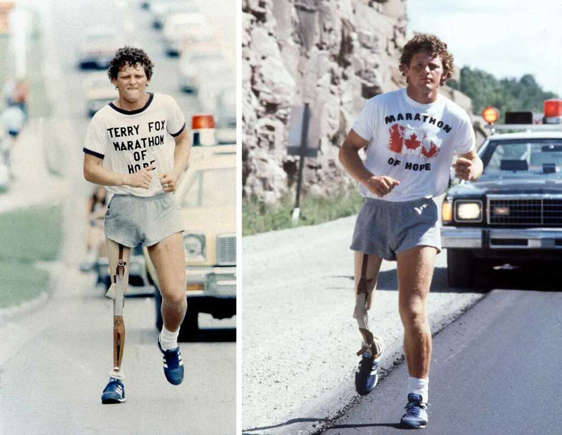
The “Marathon of Hope” was founded in this manner. On April 12, 1980, on Canada’s east coast, Terry Fox started his nearly impossible feat after more than a year of training.
He ran a marathon every day for 143 days. Recall that Terry Fox was a cancer patient who could only use one leg. He ran despite the pain, wind, rain, and storm.
He did something that no one had ever done, despite the fact that he never finished his marathon. Cancer spread to his lungs after 5,372 km (3,338 miles), forcing him to stop on September 1st, 1980. Terry passed away ten months later, 30 days before turning 23.
Confronting Pain
What motivated this man? Terry Fox stayed strong despite experiencing the biggest setback of his life—terminal illness. In fact, he increased his suffering.

He aggravated his pain instead of treating it.
When I consider my own life, I search for relief from pain at the first sign of it. We frequently look for something to relieve our suffering, whether it be mental or physical. We look for a way out.
Terry instead searched for it. He stated, “I got satisfaction out of doing things that were difficult. It was an incredible feeling. The pain was there, but the pain didn’t matter.”
That is a completely different mentality. Most people associate difficulty with being difficult. When things get challenging, they give up.
But what if you adopted a different outlook?
Terry Fox and the Marathon of Hope 40 years later
You seek out adversity rather than fleeing it. I’ve been working on teaching my brain to enjoy challenges more. And let me tell you: it’s not simple.
When you face challenges head-on, you truly understand why humanity avoids them. Comfort is simple. There is no effort needed. Anyone with average intelligence can comprehend that. But we don’t consider that when we’re in the middle of a difficult task. We search for the simplest solution.
It’s challenging to establish a career, launch a business, work on a relationship, maintain good health, learn a new language, relocate, travel the world, and develop new skills. But you shouldn’t let that stop you. There is only one thing you can do if you want to live a life without regrets: Go all in.
Terry Fox’s Transformational Run, 40 Years ago – The Intelligencer
Terry Fox: A Legacy of Courage and Determination
What If Memories Live Beyond Your Brain? | Watch