
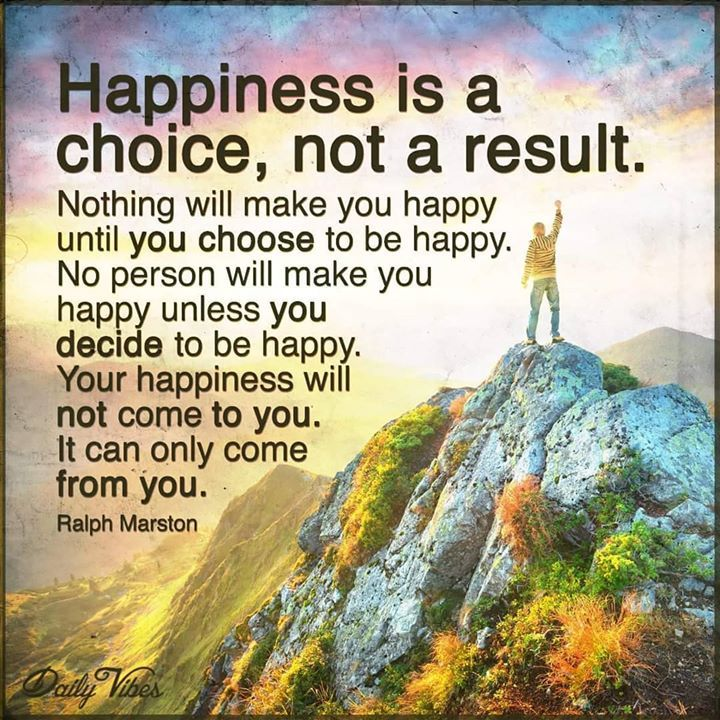
Philosophers argue that happiness is not a passive state, but rather a choice we make actively1.
Stoic philosophers, in particular, saw achieving tranquility and contentment through virtuous choices as our duty for the good of humankind2.
OBSESSION BEATS TALENT – Michael Jordan (The Mindset of Winner)
Obsession beats talent. This motivational video, featuring insights from Michael Jordan and original content and editing by Absolute Motivation, delves into the mindset of a winner. Through powerful speeches and exclusive content, you’ll learn how unwavering obsession and relentless dedication can outshine natural talent. Discover the secrets behind Michael Jordan’s success and how his mindset can inspire you to push beyond your limits.
“Be true to the game, because the game will be true to you. If you try to shortcut the game, then the game will shortcut you. If you put forth the effort, good things will be bestowed upon you. That’s truly about the game–in some ways that’s about life too.” 🏆🏆🏆🏆🏆🏆 The Last Dance – Most MOTIVATIONAL Moments: (Michael Jordan)
Michael Jordan – MORE THAN A GAME – Inspirational Video
Michael Jordan, businessman and former professional basketball player, delivers one of the best motivational/inspirational speeches you will ever hear.
▼Speaker: Michael Jeffrey Jordan, also known by his initials MJ, is an American businessman and former professional basketball player. He played fifteen seasons in the National Basketball Association, winning six NBA championships with the Chicago Bulls. “I’ve missed more than 9,000 shots in my career. I’ve lost almost 300 games. Twenty-six times, I’ve been trusted to take the game winning shot and miss.
I’ve failed over and over and over again in my life. And that is why I succeed.”
― Michael Jordan
Michael Jordan Leaves The Audience SPEECHLESS ― One of The Best Motivational Speeches Ever Listen to this every day and change your life.
MJ’s baseball career wasn’t the failure you think
Michael Jordan’s baseball career was a brief but notable chapter in his life, marked by his time with the Birmingham Barons, a Double-A affiliate of the Chicago White Sox, in 1994.
Why His Airness doesn’t deserve to be a punchline
Michael Jordan’s underrated Minor League baseball career
When MJ speaks it’s almost like hearing a gospel. He’s so eloquent and wise.
MJ is a true legend and will still be a hundred years from now.
GREATEST OF ALL TIME MENTALITY – Michael Jordan Motivation
Michael Jordan Motivational Video – Search
Happiness is a choice that requires effort at times.
Happiness – a word that holds immense significance in our lives. We all strive to be happy, to find that elusive state of contentment and fulfillment. But what does it truly mean?
The ancient Greek playwright Aeschylus once said, “Happiness is a choice that requires effort at times.” This profound quote encapsulates the essence of happiness and emphasizes the active role we must play in our pursuit of it.In its straightforward meaning, the quote suggests that being happy is not a passive state of being, but an active decision we make.
It implies that happiness doesn’t simply happen to us, but it is something we must actively choose and work towards. Aeschylus reminds us that although happiness may come naturally to some, for many of us, it requires dedication and effort.Importantly, this quote highlights the power we hold over our own happiness.
It suggests that despite the circumstances we find ourselves in, we have the ability to choose happiness. Even during challenging times when happiness may feel far from reach, we have the agency to shift our perspective, seek joy in small moments, and actively cultivate happiness in our lives.
However, let us delve deeper into the concept of happiness and its link to effort. What if happiness is not merely a result of our choices and efforts but an intricate interplay of predestination and free will?
Enter the philosophical concept of determinism and its contrast with the idea of free will.
Determinism posits that all events are determined by external factors beyond our control, leaving no room for free will. According to this concept, our human experience, including our emotions like happiness, is predetermined, and our choices are illusory.
In this context, Aeschylus’s quote may seem contradictory, as if our happiness is predetermined, how can it require effort?Contrastingly, the concept of free will asserts that our choices are independent of external factors, granting us the ability to shape our lives and find happiness through deliberate effort. It acknowledges the complexity of human existence, where determinism and free will seemingly coexist.
Perhaps, happiness lies at the confluence of the choices we make within the boundaries of our predetermined circumstances.Returning to Aeschylus’s quote, we can interpret it from this more nuanced perspective.
While it acknowledges the potential influence of determinism, it emphasizes the agency we possess to exercise our free will and actively strive for happiness. Even if our external circumstances may not align perfectly with our desires, our choices and efforts can lead to the cultivation of happiness.
Moreover, it is through the acknowledgment of the effort required for happiness that we find purpose and growth. Happiness, when achieved effortlessly, may be fleeting and hollow. It is in the midst of challenges and the conscious choice to pursue happiness that we experience personal growth, resilience, and a deeper sense of fulfillment.
In conclusion, Aeschylus’s quote reminds us that happiness is not a passive state but an active choice. It emphasizes the dual nature of the human experience, wherein determinism and free will intertwine to shape our lives. While our circumstances may not always be within our control, we retain the power to choose our mindset and actively cultivate happiness.
Ultimately, it is through the efforts we make in our pursuit of happiness that we find purpose and unlock the true depths of joy in our lives. So, let us make that choice, put in the effort, and embark on a journey towards happiness.
Why philosophers say happiness is a choice – Search
Happiness According to 5 Famous Philosophers
Happiness is one of the hardest words to define. Mystical happiness has nothing to do with the happiness of a powerful man, or with that of everyday people.
In our daily lives we encounter different definitions of this word. If we look to philosophy, there is also a wide and diverse range of approaches to this concept.
This article will explain and discuss a few of these philosophical points of view.
“All mortals go in search of happiness, the sign that tells us none of them have it.” -Baltasar Gracián-
Aristotle and metaphysical happiness
For Aristotle, the most notable of the metaphysical philosophers, happiness is the highest desire and ambition of all human beings. In his opinion, the way to reach it is through virtue. In other words, if one cultivates within oneself the highest virtues, he or she will reach happiness.
More than just a tangible state, Aristotle believed that it is more a lifestyle. The key characteristic of this way of life is to constantly exercise and extract the best of each individual.
It is also necessary to practice prudence of character and have a good “daimon,” meaning good fate or good luck in order to lead a full and truly happy life. For this reason, his thesis on happiness is known by the name “Eudaimonia” or “Eudaemonism.”
Aristotle provided the philosophical base on which the Christian church was built. Considering this, great similarities can be found between this great thinker’s ideas and the principles of Judeo-Christian religions.
Epicurus and hedonistic happiness
Epicurus was a Greek philosopher who contradicted metaphysical philosophers. In contrast to their beliefs, he did not believe that happiness came only from the spiritual world, but rather that it also had a great deal to do with more earthly dimensions.
In fact, Epicurus founded a school of thought called Epicureanism, and actually had his own school which he called “The Garden.” Many interesting ideas and conclusions come from Epicureanism.
He proposed the principle that balance and temperance were what created space for happiness. This idea is captured in one of his greatest maxims: “He who is not satisfied with a little, is satisfied with nothing.”
Epicurus thought that love had little to do with happiness, and that friendship, instead, was more important. He also insisted in the idea that one should not work for money to be able to buy goods, but rather for the love of the work.
Nietzsche and the criticism of happiness
According to Nietzsche, to live peacefully and without any worries is the desire of mediocre people who do not give any greater meaning to life.
Nietzsche disagreed that “happiness” could be a constant state of wellbeing. He felt it was an ephemeral, fleeting condition that could end at any moment.
Nietzsche said that described happiness as an “ideal state of laziness.“ In other words, to not have any worries or distresses.
He felt, in contrast, that contentment could only be found in having vital strength and a fighting spirit against all of the obstacles that limit liberty and self-assertiveness.
Being happy means being able to prove this vital strength by overcoming adversity and creating original ways in which to live life.
José Ortega y Gasset and happiness as a convergence
For this Spanish philosopher, a state of contentment is found when “the projected life” and “the effective life” coincide. In other words, when the paths of what we want to be and what are truly are converge.
In his writings, he notes:
“If we ask ourselves what this ideal state of the spirit called happiness consists of, we easily find an initial answer: happiness consists of finding something that satisfies and gratifies us completely.
“Furthermore, strictly speaking, this answer does nothing but tell us what this subjective state of complete satisfaction is made up of. On the other hand, what objective conditions must be in place in order for us to find that which will satisfy us.”
According to Ortega y Gasset, all humans have the potentiality and desire to be happy. This means that each person defines their reality and what can make them happy. If a person is able to truly achieve and reach that reality, then they will be happy.
Slavoj Zizek and happiness as a paradox
This philosopher indicates that being truly happy is a matter of opinion, and not of truth. He considered satisfaction and contentment a product of capitalist values which implicitly promise eternal satisfaction through consumption.
However, dissatisfaction reigns within humans because in reality, they do not know what they want.
Each person believes that if they reach something (buy something, raise their social status, accomplish something, etc…) they will be happy. But, in reality, unconsciously, what they want to reach is just another thing and therefore they will remain dissatisfied.
YOU MUST WORK HARDER – Motivational Speech
You must work harder. #motivation #motivational #motivationalspeech #motivationalvideo
To achieve greatness, you must outwork, and outlast your competition, prioritizing discipline and long-term goals over immediate gratification. Success demands relentless effort, unwavering commitment, and a mindset that sets you apart from the rest. Spoken by Andy Frisella, Tony Robbins, Eric Thomas. You can see more of Andy Frisella at instagram.com/andyfrisella, Tony Robbins at twitter.com/tonyrobbins, Eric Thomas at instagram.com/etthehiphoppreacher. The music is We Are Gods by Audiomachine.
In the motivational speech “YOU MUST WORK HARDER,” Grant Cardone emphasizes the importance of personal responsibility, discipline, and hard work to overcome chaos and mediocrity12.