
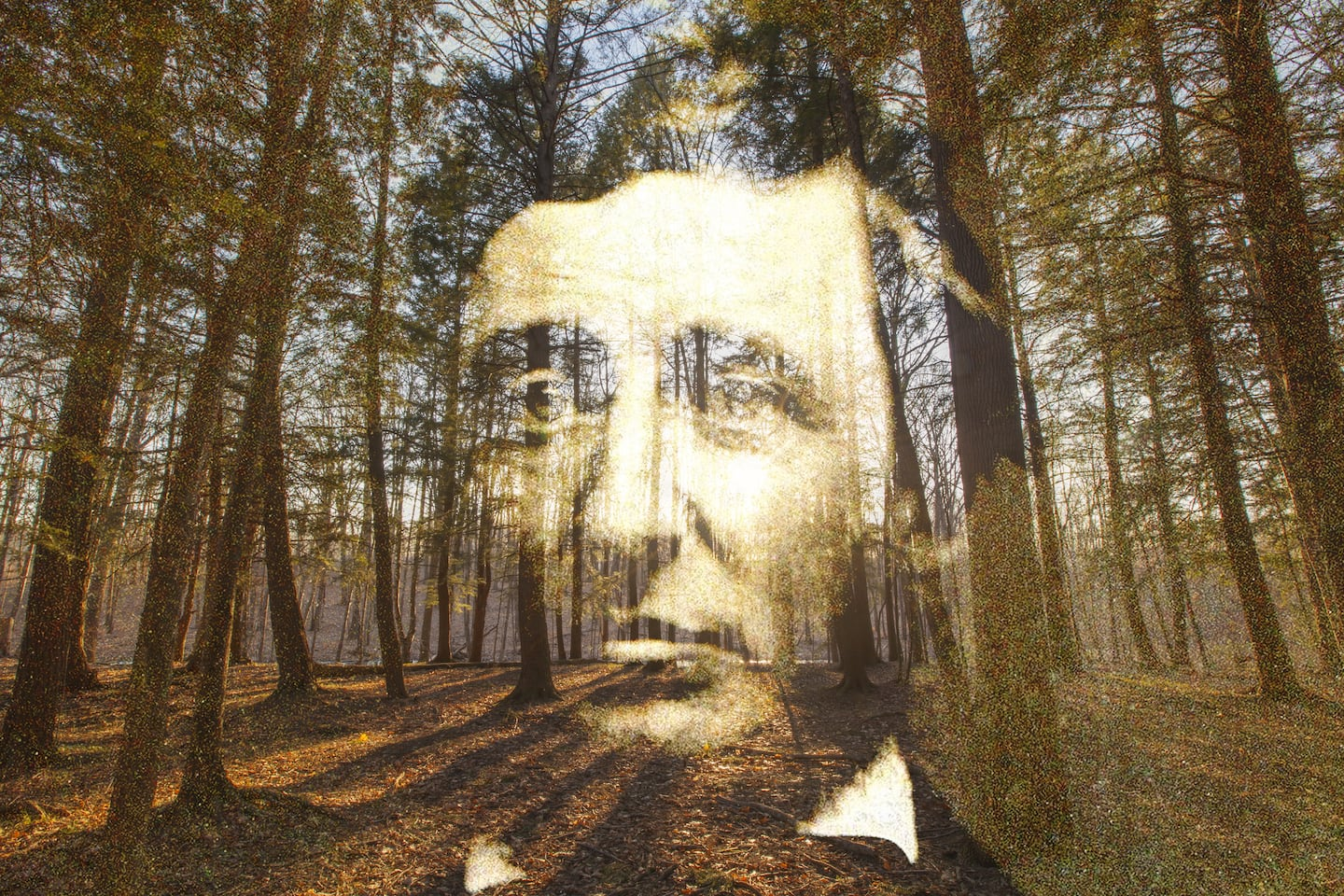
Henry David Thoreau got a lot of good press in 2020 during the pandemic.
One hundred and fifty-eight years after his death, the so-called hermit from Concord was suddenly hot. And why not? The original social distancer seemed a fine model in a world that valued sheltering in place, exploring the nature in your backyard, doing with less, and civil disobedience. For many, Walden has long been a map for a different way of living, but as the world shut down it seemed newly significant: part prophecy, part survival guide.
Growing up in Worcester, my own Thoreau addiction began in high school and has never really let up, though sometimes it cools — he can seem too uptight, too strict, too moral, a voice like an external conscience or a nagging parent. And then at other times I feel like he is truly pointing to a way that can break us free of our neurotic, inward-turned, fractious lives. As it happened, my Thoreau moon was waxing right before the pandemic struck.
I was rebuilding the writing shack on the creek behind my house in North Carolina that had been destroyed during Hurricane Florence, reading a new biography of Thoreau, building an osprey platform, and rereading Walden. It was as if I were studying for a test I didn’t know I would have to take.
You might have spent your pandemic year with your dog or with your kid home from college, or on the front lines at a hospital or grocery store. I decided to spend mine with Henry. I read more of his books, more books about him, wrote about him, and tried my best to live with him. Not that I was a Thoreau groupie or purist.
He would have frowned at my pandemic staple, beer — ”Water is the only drink for a wise man,” he once wrote — and my Netflix binging. He was the first to tell people not to try on his clothes unless they fit. But some of his clothes did fit me well enough. He helped me make it through the year and I feel that some of the lessons I learned will stay with me.
Get Starting Point
Like an expertly choreographed dance, the sequence and timing of natural events through a season, called phenology, give us clues about how the climate is changing.
For example, a warmer spring may lead to plants leafing and flowering early, potentially disrupting life cycles of the birds and insects who may miss this crucial window if it happens before they migrate. Climate change is throwing such timing out of balance, and unless it directly impacts humans, we may not notice.
To study New England’s regional phenology through a historical lens, U.Conn Department of Earth Sciences Professor Robert Thorson is looking into 10 years’ worth of Henry David Thoreau’s meticulous, systematic records of river behavior from the 1850s to glean insights into climate change. His findings are published in The Concord Saunterer.
A season is much more than a block of a few months on the calendar; it is a category of phenomena that varies depending on who you ask, says Thorson. For instance, a season differs if you ask a skier, a fisherman, or a student.
To understand something as complex as climate change on a personal level requires helping them see that their seasons are being changed and time-shifted, no matter how they define them. This requires a well-established baseline with a clear definition for each season. Thoreau’s “Journal” provides exactly this.
“I don’t pick Thoreau for his philosophy, he’s just a damn good observer,” says Thorson. “He is meticulous, he is daily, he is yearly, and he is systematically rigorous about roaming around 50 square miles and recording it day after day after day after day.”
Thoreau created an impressive data set from 1850 through 1860, including the 6,000 entries Thorson has cataloged so far by reading line-by-line, indexing, and creating a spreadsheet. Thoreau recorded examples of phenology along the river—for instance, when the first ice occurred, when the river was completely frozen, when the first snow fell, and when the breakup of ice occurred.
How long was Thoreau at Walden Pond?
Henry David Thoreau lived at Walden Pond for two years, two months, and two days. Thoreau began this period on July 4, 1845, and concluded it on September 6, 1847. During his time at Walden Pond, Thoreau undertook a personal experiment in simple living and self-sufficiency. Walden Pond, a small glacial lake located just two miles outside the village of Concord, gave inspiration to Thoreau every day for the two years, two months and two days that he lived there. The pond, half a mile wide and three-fourths of a mile long, is exceptionally deep and clear.
“From these observations, we can establish the timings of discrete phenomena from the mid-19th century using simple statistics,” says Thorson. “The next step is to compare those timings with the modern era using publicly available data; for example, minimum stream discharges from the U.S. Geological Survey.”
Rather than seeing the year on a calendar, Thorson categorized how Thoreau saw not four, but ten discrete seasons whose exact dates were fluid and based on the physical conditions he observed rather than celestial happenings or arbitrary dates. These seasons included breakup, inland sea, aquatic spring, riparian spring, summer, drought, aquatic autumn, riparian autumn, freeze up, and winter white.
The landscape surrounding a section of the Sudbury River on July 2, 2005, at the low water stage. Images like these can help us visualize Thoreau’s river seasons. Credit: D.T. Stevenson
Why Climate Change Might Be Natural After All – Search
Discover the fascinating perspectives on climate change that challenge the conventional narrative!  Join us in exploring how natural cycles could play a larger role than we think. Don’t miss out on this eye-opening discussion!
#ClimateChange #NaturalCycles #ThoughtProvoking 
Thorson details the timings and characteristics of Thoreau’s river seasons using hundreds of direct, dated, and descriptive quotes. Thorson notes that all of Thoreau’s seasons still exist today, though they have shifted in timing and intensity due to climate change.
Thorson’s idea is to create a then-and-now comparison and to incorporate statistical analysis between Thoreau’s and modern data sets to understand patterns and trends in the complicated phenomena.
“Even just answering the question of how much earlier ice breakup is occurring would take nothing more than a simple statistical analysis. This is eminently translatable to the public because many residents of Thoreau country have experienced river breakup in the past,” says Thorson.
“They may have had their dock ripped out by river ice, they may have gone swimming on a certain day, but not others. People could relate to this stuff, and that’s essentially what I’m trying to do.”
Though Thoreau is remembered primarily for his writings while living on Walden Pond, Thorson points out that he actually spent most of his time on three local rivers, whether walking trails, boating, swimming, or skating.
“This is a guy who skated 60 miles in one day—upriver to the falls at Framingham on the Sudbury River and then he turned around and skated past Concord all the way down to just north of Lowell in Billerica. Then he turned around and skated back home again. In another winter, he measured ice floes two feet thick. Imagine those conditions today. Now the river hardly freezes at all.”
Researching this project, Thorson was delighted by the sensory detail of Thoreau’s descriptions. For example, on one August day, he felt the barking “dog-day” heat of the air, the silence of laminar streamflow, the “unctuous” iridescent sheen on sluggish water, and the fetid smell of riverbank muck draped by dead lily pads, says Thorson.
“But within a day, he can feel fall coming, and all of a sudden, the first rains or the cooling air start to bring change. You get a completely different river from the preceding one of drought, or the one with icebergs stampeding down the river, tearing out bridges. All of this is phenology. All can be timed to a specific day.”
With these phenological details, Thorson has laid the groundwork for creating a record of climate change. Thorson was initially inspired by Thoreau’s phenology when writing his book “The Boatman,” in which he was only able to sketch Thoreau’s river seasons briefly.
With this new article, Thorson pulls it all together to identify the specific seasonal thresholds and presents the information in Thoreau’s words to show readers how he saw the year. Thorson hopes the paper inspires collaboration with statisticians to help in the next step of analysis.
“Probably the first thing I’ll do is explore where the modern records are. I also wanted to pull the historical record together and tighten portions into a robust hypothesis. Thoreau’s work is New England’s best record of broad environmental conditions for the mid-19th century.
It’s astonishing. It’s two million words,” says Thorson.
Noting the contrasts between the river phenology Thoreau so thoughtfully detailed and what we can observe today, Thorson says he hopes this work resonates with readers.
“Breakup is the most instantaneous and dramatic point in the entire year. We don’t think much about it right now, because we don’t have a lot of river ice, but it used to be two feet thick on the river, and that says something sad about how dramatic the climate change has been.
“You can read dry numerical facts about how New England’s nighttime average temperatures have risen in the last 100 years. But when you make climate change dramatic, as with a bridge being torn apart by a spring freshet, that’s a phenomenon associated with emotion. People pay more attention. The personal narrative of a river system year after year after year—that’s what Thoreau gave us.”
More information: Thoreau’s River Seasons: A Phenological Baseline, The Concord Saunterer (2024). thoreau societyty.org/wp-content/ … photo-supplement.pdf
Provided by University of Connecticut
CO₂ Is Essential for Plant Life – Search Videos
Carbon dioxide is not just a greenhouse gas—it is the very breath of plant life. Every green leaf on Earth owes its existence to CO₂, which fuels the magical process of photosynthesis.
According to NASA’s Earth Observatory, the planet has actually become greener in recent decades, in part due to rising CO₂ levels.
Satellite images show that vegetation cover has expanded in surprising places, such as the Sahel region of Africa and parts of Asia.
Plants use CO₂, sunlight, and water to produce sugars, which form the basis of nearly every food chain. Without CO₂, forests would wither, crops would fail, and humanity would struggle to survive.
In this way, carbon dioxide is both a villain and a quiet hero in the story of life on Earth.
The idea that CO₂ is a modern problem can be misleading—its levels have changed dramatically over time. Scientists study ancient ice core samples from Antarctica to unlock Earth’s climatic secrets, offering a window into the past 800,000 years.
These icy records reveal that CO₂ concentrations have swung between about 180 and 280 parts per million (ppm) in natural cycles. However, today’s reading of around 420 ppm is a record-breaker for human history.
What’s most startling is the rate of increase: never before have levels risen as quickly as they have since the industrial revolution. This rapid climb is what has scientists and policymakers so concerned.
CO₂ Alone Is Not the Only Greenhouse Gas – Search Videos
When it comes to heating our planet, CO₂ often takes the full blame. Yet, it is far from the only greenhouse gas in play.
Methane (CH₄) and nitrous oxide (N₂O) are both much more powerful when it comes to trapping heat, even if they are less abundant. The Intergovernmental Panel on Climate Change (IPCC) notes that methane is 25 times more effective than CO₂ at trapping heat over a 100-year timeframe.
Nitrous oxide is even more potent, with a warming potential nearly 300 times that of CO₂. These gases often come from agriculture, landfills, and industrial processes.
While CO₂ remains the focus of most discussions, it’s important to remember that fighting climate change means tackling a whole family of emissions.
Carbon Capture Technology Targets CO₂ Directly
Human ingenuity is racing to find solutions for rising CO₂ levels. One promising approach is carbon capture, where technology is used to pull CO₂ directly from the air.
Direct air capture (DAC) and carbon capture and storage (CCS) are at the forefront of these innovations. In 2021, a Swiss company called Climeworks opened the world’s largest DAC plant in Iceland.
This facility can capture around 4,000 metric tons of CO₂ each year, storing it safely underground. While this is a small fraction of global emissions, the technology is rapidly advancing. The hope is that, with enough investment and development, carbon capture could be a key player in balancing our carbon books.
The world’s oceans are silent workhorses in the fight against climate change.
Oceans Absorb Nearly 30% of Human CO₂ Emissions
According to the National Oceanic and Atmospheric Administration (NOAA), oceans absorb nearly 30% of the CO₂ humans release every year.
This process helps keep atmospheric CO₂ levels from climbing even faster. However, there’s a hidden cost: as oceans soak up more CO₂, their chemistry changes, becoming more acidic.
Ocean acidification threatens coral reefs, shellfish, and other marine life that depend on stable conditions. The ocean’s ability to act as a carbon sink is both a blessing and a warning sign, showing how interconnected our atmosphere and oceans truly are.
CO₂ as a Coolant and Industrial Agent
Few people realize how versatile CO₂ is outside the atmosphere. In industry, carbon dioxide serves as a fire suppressant in extinguishers, a refrigerant in cooling systems, and the fizz in carbonated drinks.
In the tech sector, CO₂ is used as a non-toxic coolant for high-performance computers and sensitive electronics. These applications highlight the gas’s usefulness and safety in controlled environments.
Far from being just a pollutant, CO₂ is a valuable tool that keeps our drinks bubbly and our data centers cool. Its many industrial uses show that our relationship with this molecule is far more nuanced than it first appears.

Too much CO₂ disrupts ecosystem balance by causing significant environmental changes. Increased CO₂ levels lead to global warming, which alters weather patterns, increases the frequency of extreme weather events, and threatens marine life through ocean acidification1. Additionally, ecosystems are becoming less efficient at absorbing CO₂, which reduces their ability to mitigate climate change5.
The cumulative effects of these changes can lead to disruption of food webs, increased biodiversity loss, and ultimately, the destabilization of entire ecosystems3. Despite its many benefits, CO₂ in excess throws nature off balance.
The warming effect of surplus CO₂ is not just a theory—it’s visible in melting glaciers, rising sea levels, and shifting weather patterns.
NASA reports that the past nine years have been the warmest since records began, closely tracking the rise in CO₂ emissions. As global temperatures climb, habitats are lost, species are pushed to extinction, and extreme weather becomes more common.
These disruptions ripple through ecosystems, affecting everything from polar bears to plankton. While CO₂ is essential for life, too much turns it into a threat.
Photosynthesis Saturation Limits CO₂ Absorption
It’s tempting to think that plants could simply soak up all the extra CO₂ we produce, but nature isn’t so straightforward. Plants do grow faster with higher CO₂, but only up to a point.
A 2023 study published in Nature Ecology & Evolution found that factors like limited soil nutrients, drought, and heat stress can all diminish the positive effects of extra CO₂. When these limits are reached, the planet’s natural ability to act as a carbon sink weakens.
This means that planting more trees alone cannot solve the problem of rising emissions. The solution must be as complex as the challenge itself.
CO₂ and Human Health Connections
Carbon dioxide can also influence human health in ways that aren’t always obvious. In confined spaces, high CO₂ levels can lead to headaches, fatigue, and difficulty concentrating, a problem sometimes seen in overcrowded classrooms or poorly ventilated offices.
On a global scale, CO₂-driven climate change can impact health by worsening air quality and increasing the frequency of heatwaves. These effects are particularly dangerous for vulnerable groups, like the elderly and children.
The story of CO₂ is therefore tied closely to the well-being of people as well as the planet.
CO₂ in the Earth’s Carbon Cycle
CO₂ is just one part of Earth’s vast carbon cycle—a complex web connecting air, land, water, and living things. Plants absorb CO₂ from the air, animals eat plants, and eventually, CO₂ returns to the atmosphere through respiration and decay.
Human activities, especially burning fossil fuels and deforestation, have disrupted this natural cycle, causing more CO₂ to accumulate in the atmosphere. Understanding the carbon cycle helps scientists predict future climate scenarios and design better strategies to restore balance.
It’s a reminder that every breath, every tree, and every drop of ocean water is part of a global system shaped by CO₂.
CO₂’s Role in the Future of Climate Solutions
As the world searches for ways to tackle climate change, CO₂ will remain at the center of the conversation. Advances in renewable energy, more efficient agriculture, and smarter city planning all aim to cut CO₂ emissions.
At the same time, discussions about geoengineering and reforestation offer new hope for reducing atmospheric CO₂. The challenge is to find a balance—keeping enough CO₂ to support life, but not so much that it threatens our future.
The debate over CO₂’s reputation is far from over, and its story is still being written each day.
A viral tweet by Peter Clack has sparked debate online with its bold claims about carbon dioxide (CO2) and its role in climate science. It states that oceans are the largest reservoir of CO2, supposedly holding 93% of it—50 times more than the atmosphere and 19 times more than land. The tweet dismisses concerns about rising CO2 levels as a “colossal scam,” accusing climate science of ignoring CO2’s importance in photosynthesis, oxygen production, and the global food chain. While these claims might sound scientific at first glance, they are misleading, lacking factual accuracy, and attempt to downplay the established link between human-driven CO2 emissions and global warming.
X Post:
Claim 1: The oceans hold 93% of all carbon dioxide.
Fact: This claim is misleading. Oceans hold about 93% of the Earth’s active carbon in the carbon cycle, but most of this carbon exists in the form of bicarbonate and carbonate ions, which are chemically stable. Only a tiny fraction is dissolved in CO2 gas. The post incorrectly implies that this carbon is interchangeable with atmospheric CO2, overlooking that carbon in the ocean is primarily locked in forms that do not directly contribute to atmospheric concentrations. Moreover, this reservoir operates on slower timescales than the rapid changes in atmospheric CO2 levels caused by human activities.
Oceans act as a massive carbon sink, absorbing CO2 from the atmosphere through processes like diffusion and biological uptake by phytoplankton. Once absorbed, CO2 undergoes chemical reactions that convert it into bicarbonates and carbonates, which remain dissolved in seawater. This buffering system is crucial in regulating atmospheric CO2 levels but has limits. Excess CO2 emissions from human activities have disrupted this balance, leading to ocean acidification and negatively impacting marine life, such as coral reefs and shell-forming organisms.
Claim 2: This is 50 times more than the atmosphere and 19 times more than the land.
Fact: While oceans contain about 50 times more carbon than the atmosphere, the claim about land is exaggerated. Scientific estimates show that oceans store approximately 15-16 times more carbon than terrestrial ecosystems, not 19 times as suggested. By overstating the comparison, the tweet misleads readers about the relative contributions of different carbon sinks.
Carbon reservoirs in the Earth’s system are dynamic and interconnected. Land ecosystems, including forests, soils, and vegetation, store significant carbon and play a vital role in sequestering atmospheric CO2 through photosynthesis. The exaggerated comparison disregards the complexity of carbon cycling, where terrestrial ecosystems act as critical carbon sinks that buffer rising CO2 levels. Protecting these ecosystems is as vital as addressing oceanic absorption capacity to mitigate climate change.
Claim 3: The colossal scam about CO2 completely ignores the reality of CO2 in the formation of life, photosynthesis, the creation of oxygen, and the global food chain.
Fact: This claim is false. Climate science fully acknowledges CO2’s role in photosynthesis, which underpins oxygen production and the global food chain. However, the concern is not about CO2’s natural functions but the excess CO2 from human activities driving climate change. Rising atmospheric CO2 levels are causing global warming, ocean acidification, and disruptions to ecosystems and food security, all backed by extensive scientific research.
Photosynthesis, driven by CO2 and sunlight, is the foundation of life on Earth. It supports plant growth and oxygen production. However, increased atmospheric CO2 due to fossil fuel burning and deforestation has shifted this balance. The greenhouse effect traps heat in the atmosphere, leading to global warming. This warming alters ecosystems and affects the processes the claim highlights, such as crop productivity and oxygen generation in stressed environments.
Peter Clack’s tweet presents a distorted view of carbon storage and the role of CO2 in climate science. By selectively presenting data and making exaggerated claims, the post attempts to downplay the critical issue of anthropogenic CO2 emissions and their impacts on global warming. The oceans play a vital role in the carbon cycle but cannot indefinitely absorb the excess CO2 generated by human activities. Climate science does not ignore the importance of CO2 in natural processes but emphasises the urgent need to address its destabilising effects on the planet.
References:
The Carbon Cycle | The oceans – the largest CO2-reservoir
Climate Change: Atmospheric Carbon Dioxide | NOAA Climate.gov
Banner image:
Record carbon dioxide emissions impeding progress on meeting climate goals – NOAA Research
Why CO₂ Could Be Far Less Dangerous Than Claimed – Climate Cosmos
Why CO₂ Might Not Deserve the Blame It’s Getting