
Can someone visit the biosphere in Oracle Arizona – Search
Yes, visitors can visit the Biosphere 2 in Oracle, Arizona. The facility welcomes all visitors and strives to make its tours, exhibits, and programs accessible to everyone. While much of the Biosphere 2 campus is wheelchair accessible, certain areas of the property are not accessible due to steep terrain and the presence of stairs.
Visitors ages 8 and up who are interested in science and the environment can participate in the tours and programs 1 2. It is located at 32540 South Biosphere Road in Oracle, AZ, northwest of Tucson. The facility is open every day of the year from 9:00am to 4:00pm, except for Thanksgiving Day and Christmas Day 2 3
Biosphere 2 – University Of Arizona
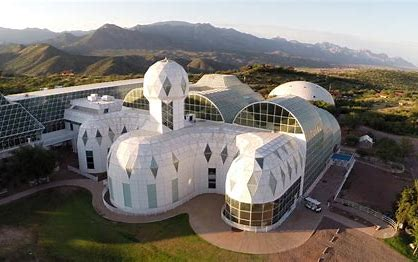
Biosphere 2 is an American Earth system science research facility located in Oracle, Arizona. Its mission is to serve as a center for research, outreach, teaching, and lifelong learning about Earth, its living systems, and its place in the universe.
It has five synthetic ecosystems and a living area enclosed in a glass and metal structure. It was built to study the interactions between life systems and to test the feasibility of closed ecological systems for space colonization.
The Biosphere 2 Experience is a self-paced app guided tour that will lead you through the rich history and current research initiatives of this remarkable facility. The Biosphere 2 app should be downloaded prior to arrival in order to get the most out of your visit. The Biosphere 2 Experience will take place both indoors and outdoors.
Biosphere 2 – Apps on Google Play
The Biosphere 2 App provides an accessible and family-friendly guide for you to explore the groundbreaking science and unique history of this one-of-a kind facility. Visit Biosphere 2, owned and operated by the University of Arizona, to dive deep into all you need to know about the 30 years of history, architecture and awe-inspiring science.
Visitors should be prepared for the following physical requirements:
- This is a 75-minute walking tour, where you explore Biosphere 2 using your own smartphone and headphones.
- This is an indoor AND outdoor tour
- Approximately 100 stairs, both up and down
- 1-mile route to walk
- Varying weather conditions (Biosphere 2 Biomes are maintained as tropical environments, temperature and humidity inside the facility can reach the high 90’s)
Biosphere 2 is located in Oracle, Arizona – just outside of Tucson. Although currently owned and operated by the University of Arizona, the complex and its creators have quite the backstory. We were excited to get to visit it in person!
The History of Biosphere 2
In the 1960s, John Allen was the leader of an idealistic and eccentric performance group located in San Francisco called the Theatre of All Possibilities. His group then founded the Synergia Ranch collective in the New Mexico desert, where they constructed an environmental-centric community that included a Buckmisterfuller geodesic dome. In the 1970s, they built the Heraclitus, a ship that they used to travel the world to explore its art, science, ecology.
Those adventures lead Allen and his team to envision a way to settle other planets.
Keep in mind that this was right around the time that movies like “2001: A Space Odyssey” and “Silent Running” were out. But before colonizing other planets, they needed to figure out how to create a closed system on earth that would support human life. Given that earth itself was “Biosphere 1,” their project would be named “Biosphere 2.”
How did Allen and his followers pay for all of this?
Most of the money came from Ed Bass, an oil billionaire from Texas who ultimately became chairman of Space Biosphere Ventures. For a location, John Allen eventually found some acreage in Oracle. The Biosphere 2 property was first homesteaded in the 1920s by a dentist who ran a cattle farm and hunting lodge.
In the 1950s, Lady Margaret of Suffolk built a large adobe home and servant quarters. The Motorola Corporation acquired the property and built a hotel, restaurant, and auditorium, and the facility was used as an executive training center.
The University of Arizona obtained the property in the 1970s, but sold it to Space Biosphere Ventures in 1984, who built Biosphere 2. Biosphere 2 broke ground in 1987, and construction was complete in just four years. That included construction of: (1) a test module, (2) greenhouses where plants and animals were quarantined prior to placing them in Biosphere 2, (3) analytical lab, and (4) mission control.
To me, the “lungs” were perhaps Biosphere’s 2 most interesting engineering feats. As the air in Biosphere 2 heated, the pressure created by the expanding gas had to go somewhere or it would literally explode. The solution was to create the “lungs” —40,000 pounds of flexible rubber attached to an aluminum steel disc that would move with the pressure.
The biosphere itself included a tropical rainforest, ocean with a tropical coral reef, savannah, mangrove marsh, arid coastal fog desert, agricultural area, and living quarters. Ten two-story apartments were designed for each resident, featuring a downstairs living area and upstairs bedroom that could be decorated to each person’s taste. A library sat atop a long spiral staircase at the top of the biosphere that provided 360-degree views of surroundings.
Biosphere 2 – Lungs (Oracle, AZ — just outside of Tucson, Arizona)
For Biosphere 2’s first mission, a crew of eight “Biospherians” stayed in the system from 1991 to 1993. Another mission with seven Biospherians in 1994 lasted about six months. Media coverage was intense, and the launch of the first mission made the nightly news and many of the morning talk shows.
Each Biospherian took turns preparing meals, which were low calorie and high in nutrients. Sweet potatoes, beets, and legumes were popular. Goats, chickens, and pigs also lived in Biosphere 2. Coffee was a luxury as the beans were difficult to grow and roast. For alcohol, they tried to make banana wine. One of the Biospherians was a doctor, and his job was to focus on how their diet affected them. If you are wondering, the crew had a 22-25% body fat loss during the mission.
During both missions, low amounts of food and oxygen plagued the participants. The air typically contains 21% oxygen, but because of all of the photosynthesis occurring in the closed dome, the oxygen levels dropped to a dangerous 14%, and oxygen had to be pumped into the system. The project was later criticized for not disclosing this in a timely manner, especially given the media attention.
Food was scarce because, among other things, the hummingbird and honey bee pollinators died. Meanwhile worms and mites ate the crops and cockroaches flourished. The mission was subject to criticism for other reasons as well. When a Biospherian cut her finger on a threshing machine, the mission’s doctor ultimately decided she needed to go to a hospital for surgery.
Upon her return to the “closed” system, she also brought a duffel bag filled with computer parts and color film. Biosphere 2 employees also reportedly supplied the Biospherian employees with seeds, vitamins, mouse traps and other supplies twice a month. None of this was disclosed to reporters, and the project lost credibility after the press found out.
During the second mission, the owners decided to transition the project from being a human habitation experiment to an environmental experiment. Interestingly, Steve Bannon (yes, THAT right-wing, Breitbart-founding Steve Bannon) became CEO for a couple of years. Academics were brought in, and in 1996, Columbia University took over the project.
They changed it from a closed system to a “flow-through” system, and operated research projects there for seven years. One project showed how increasing carbon dioxide levels in the ocean would adversely affect the coral reefs.
After several years of inactivity (which resulted in the coral reefs completely dying), the University of Arizona took over management in 2007 and then acquired ownership in 2011 from Mr. Bass, along with $20 million to support its research.
Today, the University operates the Landscape Evolution Observatory (LEO) out of the facility. Scientists are trying to understand how water changes as it goes from rain and encounters various environments. An energy center includes chillers, boilers, generators that run on both natural gas and diesel to keep Biosphere at proper temperatures.
An agri voltaics project illustrates how both the solar energy and resulting heat from solar panels can be harvested to produce a system that is around 80% efficient. In addition to conducting active research, the University also maintains a Conference Center with 28 casitas and nearly 100 rooms on the property.
Visiting Biosphere 2
To visit Biosphere 2, we booked one of the time slots online for $25/person fee through Biosphere website and downloaded the self-guided tour on a mobile app created by the University of Arizona. The mobile app is a series of videos that visitors are supposed to play at designated spots along the Biosphere 2 property. We downloaded the mobile app ahead of time.
Biosphere 2 – Apps on Google Play
The Biosphere 2 App provides an accessible and family-friendly guide for you to explore the groundbreaking science and unique history of this one-of-a kind facility. Visit Biosphere 2, owned and operated by the University of Arizona, to dive deep into all you need to know about the 30 years of history, architecture and awe-inspiring science.
If you are planning a trip to Biosphere 2, my advice is to watch all of the videos prior to visiting. We had a hard time hearing our own video when several other people were playing the same thing in the background.
Eight people attempted to live in a biosphere for two years and it went terribly wrong
While somewhat informative, the University’s mobile app video tour is lacking in many ways. Instead, our advice is to watch the Spaceship Earth documentary, preferably before your visit. Unlike the documentary, the mobile app focuses largely on the facility itself and not on the people who created Biosphere 2 and the controversy surrounding that.
Science on Screen Presents Spaceship Earth
Maybe that is because the University is trying to promote its own ongoing research. Or maybe that is because the Biosphere 2 missions were controversial in nature. However, I think that most people who visit Biosphere 2 will be disappointed that there is not more information on the Biospherians themselves.
The World Is A Book – Family Travel | Tips | Itineraries
Tales from the Morgue: Locked in at Biosphere II
Biospherians 2, Oracle, Arizona
Admittedly, that is largely why I wanted to visit.
The tour includes a hallway with photos from the original mission. And, near the kitchen at Stop 106, the Biospherians are shown at work in a two-minute looped video. There are a few notebooks on display as well. But beyond that, most visitors will really have to use their imagination to understand what life was like inside Biosphere 2 during the mission. During our visit, we were unable to venture inside the living quarters or up to the library for the 360-degree views.
As for the two-minute video, I note that the video was looped on a very small ~32” TV screen. Was the University nostalgic for 1990s-screen sizes? Or was this just another way that the University wanted to deemphasize history? By the way, the video is the same as the one in the University’s mobile app (Stop 105 – Upper Human Habitat & Kitchen).
At one point not too long ago, University’s tour included human tour guides and docents, but then did away with them in 2020. Bringing them back would likely make any visit much better. As an alternative, the University could have the 19 videos in the mobile app play on appropriately-sized TVs located at each of the tour stops. I’m just sayin’…
Another possible improvement to the visiting experience would be to have screenings of the Spaceship Earth documentary (or excerpts thereof) in one of the Conference Center rooms as part of the tour – maybe even for an extra fee that could be shared with the producers of the documentary.
Biosphere 2 is an incredibly compelling story. With just a few improvements, the University of Arizona can make the experience for visitors just as compelling.
The mobile app is a good try, but it is less than satisfying.
Eight people attempted to live in a biosphere for two years and it went terribly wrong
Exploring The Origins Of Humanity: A Complete Timeline of Human Evolution | Watch
Inside the ’90s ‘cult’ that locked humans inside ‘Spaceship Earth’