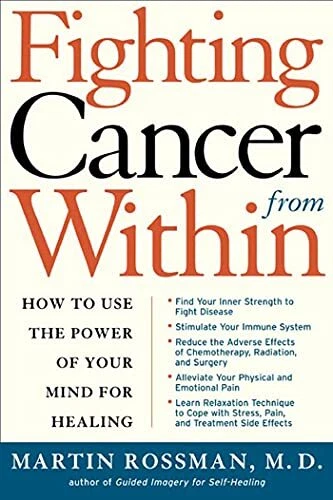
Fighting Cancer From Within: How to U… by Rossman, Martin Paperback
HOW TO USE THE POWER OF YOUR MIND FOR HEALING
If you have been diagnosed with cancer, and you want to have the best chance to survive it, then guided imagery is for you. The way you use your mind can make a huge difference in what happens to you; the evidence points to effects that range from improving your emotional well-being to reducing adverse effects of treatments, to surviving, even thriving, through the experience.
When you are diagnosed with cancer, you can find yourself overwhelmed with emotions at a time when you most need to keep your wits about you. I aim to teach you to reconnect with your own inner strengths and resources so you can make the best use of them when you most need them.
Fighting Cancer from Within: How to Use the Power of Your Mind for Healing by Dr. Martin L. Rossman is a groundbreaking guide that explores how mental and emotional resilience can support physical healing during cancer treatment. Rossman, a pioneer in mind-body medicine, introduces techniques like guided imagery to help patients manage stress, bolster their immune response, and improve their overall well-being
The book emphasizes that while these practices are not substitutes for medical treatment, they can significantly enhance the healing process. Rossman walks readers through different psychological responses to a cancer diagnosis and offers tools to shift one’s mindset from fear to empowerment.

What are other mind-body techniques for healing?
There’s a whole toolkit of mind-body techniques that can support healing and well-being—many of which have roots in ancient traditions and are now backed by modern science. Here are some powerful ones you might explore:
- Meditation – From mindfulness to loving-kindness, meditation helps calm the nervous system, reduce stress hormones, and improve emotional regulation.
- Yoga – A blend of movement, breathwork, and meditation, yoga enhances flexibility, reduces chronic pain, and fosters mental clarity.
- Tai Chi – This gentle martial art combines slow, flowing movements with deep breathing to promote balance, cardiovascular health, and inner peace.
- Biofeedback – Using sensors to monitor bodily functions like heart rate or muscle tension, biofeedback teaches you to consciously control these responses, which can help with anxiety, migraines, and more2.
- Hypnotherapy – A guided state of focused attention that can help reframe thoughts, reduce pain, and manage stress-related conditions.
- Somatic Experiencing – A body-focused therapy that helps release trauma stored in the nervous system by tuning into physical sensations and gently processing them.
- Guided Imagery – Similar to what Dr. Rossman advocates, this involves visualizing calming or healing scenarios to influence physical and emotional states.
- Progressive Muscle Relaxation – Alternating tension and release in muscle groups to reduce physical stress and promote relaxation.
Each of these techniques taps into the body’s innate ability to heal when the mind is calm and focused. Want help figuring out which one might suit your lifestyle or goals best?
1www.mindisthemaster.com 2www.meetreflect.com 3positivepsychology.com
How do these techniques impact emotional and physical health?
Mind-body techniques have a profound impact on both emotional and physical health by tapping into the intricate communication between the brain, nervous system, and body. Here’s how they work their magic:
 Emotional Health Benefits
- Stress Reduction: Practices like meditation, yoga, and deep breathing activate the parasympathetic nervous system—your body’s “rest and digest” mode—lowering cortisol levels and calming the mind2.
- Improved Mood & Resilience: Techniques such as mindfulness and guided imagery can increase the production of neurotransmitters like serotonin and dopamine, which are linked to happiness and emotional balance.
- Anxiety & Depression Relief: Studies show that progressive muscle relaxation, tai chi, and biofeedback can significantly reduce symptoms of anxiety and depression, especially when used alongside conventional therapies.
- Trauma Processing: Somatic therapies help release trauma stored in the body, allowing for emotional healing that talk therapy alone may not reach.
 Physical Health Benefits
- Pain Management: Yoga, acupuncture, and meditation have been shown to reduce chronic pain by altering pain perception and reducing inflammation.
- Immune System Boost: Positive emotional states fostered by these techniques can enhance immune function, while chronic stress suppresses it.
- Cardiovascular Health: Practices like tai chi and mindfulness can lower blood pressure, improve heart rate variability, and reduce the risk of heart disease.
- Better Sleep & Digestion: Relaxation techniques help regulate the autonomic nervous system, improving sleep quality and digestive function.
In essence, these techniques don’t just help you feel better—they help your body function better. Want to dive deeper into one of these benefits or explore how to start incorporating a few into your daily routine?
1positivepsychology.com 2www.nccih.nih.gov 3www.psychologs.com
4www.nccih.nih.gov 5www.recoveryteam.org 6MeridianMedicalCentre.com
Can you provide studies supporting these techniques?
Absolutely — there’s a growing body of scientific research supporting the effectiveness of mind-body techniques for both emotional and physical health. Here’s a quick tour through some of the most compelling findings:
 Meditation & Mindfulness
- The American Psychological Association reports that mindfulness meditation can reduce stress, anxiety, and depression, and even improve immune function and brain structure related to attention and emotion regulation.
- A Harvard Health review found that meditation helps lower blood pressure, reduce pain, and improve sleep and mood.
 Yoga
Yoga
- Johns Hopkins Medicine highlights yoga’s benefits for flexibility, heart health, arthritis relief, and stress reduction.
- A Harvard Health article notes that yoga improves body awareness, mindful eating, and cardiovascular health.
 Tai Chi
- Harvard Medical School describes tai chi as “meditation in motion” and cites evidence for improved balance, reduced anxiety, and better cardiovascular health.
- A Cleveland Clinic review found tai chi boosts brain function, reduces fall risk, and helps manage chronic pain and stress.
 Biofeedback
- A Harvard Health article confirms biofeedback’s effectiveness for migraines, chronic pain, incontinence, and anxiety.
- A VA study found biofeedback reduced headache pain and improved stroke recovery and incontinence symptoms.
Hypnotherapy
- The National Center for Complementary and Integrative Health (NCCIH) reports that hypnotherapy can help with IBS, anxiety, pain, and hot flashes.
- A 2024 APA Monitor article highlights hypnosis as a powerful tool for pain, anxiety, and behavior change, with growing scientific support.
 Somatic Experiencing
- While still emerging, somatic therapy is gaining traction. A Harvard Health article explains how it helps release trauma stored in the body and regulate the nervous system.
- Studies cited by Scientific Origin show it improves emotional regulation, reduces chronic stress, and supports trauma recovery.
 Guided Imagery
- A Healthline review found guided imagery reduces anxiety, improves sleep, and helps manage pain and depression.
- Allina Health notes it positively affects heart rate, blood pressure, and hormone balance.
Progressive Muscle Relaxation (PMR)
- A 2024 systematic review of 46 studies found PMR significantly reduces stress, anxiety, and depression in adults.
- Cleveland Clinic confirms PMR helps shift the body from “fight or flight” to “rest and digest,” improving sleep and emotional regulation.
If you’d like, I can help you match a technique to a specific goal or health concern.
Want to explore that next?
1www.apa.org 2www.hopkinsmedicine.org 3www.health.harvard.edu 4www.nccih.nih.gov

How do these techniques compare in effectiveness?
Great question—because while all mind-body techniques offer benefits, some may be more effective than others depending on the goal. A 2024 network meta-analysis compared various mind-body practices (MBPs) and psychological therapies for reducing occupational stress in healthcare workers. Here’s what they found:
 Top Performers
- Yoga ranked highest in effectiveness, with a standardized mean difference (SMD) of 1.36 and a 97.5% probability of being the most effective (SUCRA score).
- Progressive Muscle Relaxation (PMR) came in close behind, also with an SMD of 1.36 and a SUCRA of 87.3%.
Other Strong Contenders
- Mindfulness-Based Interventions (MBIs) and Meditation Techniques showed solid results, especially when combined with other therapies.
- Biofeedback and Qigong were also effective, though slightly less so than yoga and PMR.
 Psychological Therapies
- Mindfulness-Related Therapy (MRT) was the most effective among psychological approaches, but still ranked below the top MBPs.
 Takeaway
Mind-body practices overall outperformed traditional psychological therapies in this study, with yoga emerging as the most effective for stress reduction. That said, the best technique for you might depend on your personal preferences, physical ability, and specific health goals.
Want help choosing one based on your lifestyle or what you’re hoping to improve?
1
Cancer is many diseases, and the first thing most newly diagnosed people need to know is that having cancer does not mean they will die from it. More than 50 percent of cancers diagnosed today are curable through conventional medicine alone – as many cancer patients get well and succumb to their illnesses. While you are alive you have hope, and you have options. You have will, imagination, and powerful natural healing abilities within you that you can stimulate by the use of your mind.
There are many ways to cope with or fight cancer. The major tools guided imagery supports are your attention, your intention, your will, and, most important, your imagination. Guided Imagery can help you learn ways of thinking that can tip the balance of health and illness in the direction of healing.
Cancer Care 101: Treating the Illness, Treating the Person
In cancer care there are two complementary goals of treatment. One, the usual medical goal, is to kill cancer cells and tumors, or reduce their numbers and their ability to grow, reproduce, and spread (metastasize). The other, perhaps best called the healing goal, is to support the well-being and resistance of the patient. Here I use resistance to stand for all the mechanisms, known and unknown, that protect us from the development and dissemination of cancer.
Conventional medical care for cancer has for many years concentrated on destroying tumors without paying much attention to supporting the patient as a whole person, with innate healing capacities. Until recently, most people put themselves in the hands of an oncologist (cancer specialist) and did what they were told. While you almost certainly need a good oncologist to prescribe and monitor your medical treatment, there is often much more to surviving cancer. A well-nourished person with cancer, with tools and support to help them maintain their emotional balance, is likely to have a much easier time with cancer and its treatments than a person who is poorly nourished, poorly supported, and stuck in terror and emotional turmoil.
Supporting your innate healing abilities will help you make the best use of any treatment you choose, and, alternatively, neglecting them is likely to make it more difficult for any treatment to work.
Supporting your health and eliminating your disease are two complementary approaches to healing that support and strengthen each other. In my experience, neither one works as well as both together.
Supporting your health makes it easier to tolerate treatments that can sometimes be difficult, and that in turn increases the likelihood that the treatments will work as desired. Methods of supporting your health and enhancing resistance to cancer generally fall into three categories:
(1) nutritional support, ranging from improvement of diet to sophisticated individualized programs of nutritional supplementation with vitamins, minerals, herbs, essential fatty acids, and natural biological response modifiers;
(2) mind-body approaches, ranging from support groups to counseling, to meditation, stress reduction, and guided imagery practices, and body-mind practices such as yoga, chi gung, tai chi, Jin Shin Jyutsu; and
(3) systematic approaches with time-honored healing systems, such as traditional Chinese medicine or Ayurvedic medicine.
While the methods differ, their goal is the same — supporting and stimulating the vitality and function of the innate healing systems of the body, mind, and spirit. This idea is an ancient one, but many modern studies show that mind-body approaches, including guided imagery, are all effective in reducing anxiety and depression, reducing adverse effects from conventional treatments, and very likely in improving treatment results.
Guided imagery has become quickly and widely accepted as a useful adjunct in the treatment of people with cancer due largely to its ease of use, low cost, and rapid psychological benefits. It has been shown to increase both the numbers and aggressiveness of natural killer cells when practiced over time, has been shown to reduce complications from surgery, relieve pain, and reduce adverse effects of chemotherapy. Imagery is a psychological and medical intervention likely to increase your odds of recovery.
My Fighting Cancer from Within Book & CD Set teaches you how to use guided imagery for this purpose. The book explains how to use the guided imagery techniques, why they work, and how other people have used them successfully. On the CDs I will lead you through the specific guided imagery exercises, and then the book addresses the most frequent questions that people have when they begin to work with imagery for self-healing.
Together the set is a self-paced course in learning to use your mind to support your health and healing when dealing with cancer. For more information, or to order and try it out yourself, go to www.thehealingmind.org Rossman, Martin – Search Videos