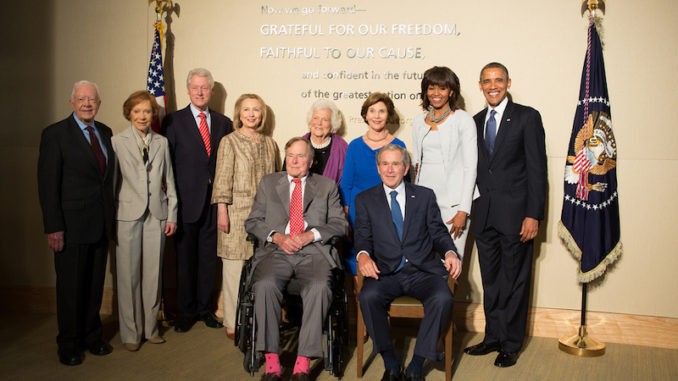
I don’t believe this is by coincidence. I believe we have a Secret monarch!
They Own You George Carlin Full Episode – Search Videos
Presidential BloodLines Are all the US Presidents related?
A 12-year-old girl has traced all US Presidents back to just one British King in one of the greatest discoveries in genealogical history.
BridgeAnne d’Avignon made the discovery whilst tracing back her genealogical roots in France. Whilst doing so, she found out that all US presidents were related to John Lackland Plantagenet – the King of England in 1166 who signed the “Magna Carte” in 1215.
For anybody who is familiar with the “Illuminati”, this news probably comes as no surprise, especially if you knew that pretty much all our Presidents, including George Bush’s Jr. and Sr., Bill Clinton, Jimmy Carter and even President Barack Obama are distant cousins to Elizabeth, The Queen of England.
12 Year Old Girl Discovers That All But One US President Are Directly Related To Each Other
 That’s right! BridgeAnne d’Avignon, a 12-year-old from California, made headlines for her genealogical deep dive tracing the lineage of U.S. presidents. Her research revealed that all but one American president—Martin Van Buren—are related through a common ancestor: King John of England, the infamous monarch who signed the Magna Carta in 1215.
 She compiled her findings into an infographic titled “We Are All Related,” which mapped out this presidential family tree. The chart was so compelling it was even featured in a Library of Congress exhibit on the Magna Carta. BridgeAnne reportedly sifted through over 500,000 names with help from her grandfather, a seasoned genealogist, and traced both male and female lines—something earlier researchers hadn’t done.
1www.elitedaily.com 2outsidethebeltway.com 3www.dailymail.co.uk 4
However, BridgeAnne managed to make the first Family Tree of its kind, which not only traced back through male family bloodlines of the Presidents, but since she was able to trace the female sides of the family tree, she managed to link all Presidents except for one, Martin Van Buren, back to King John “Lackland” Plantagenet.
In essence, as BridgeAnne explains it, ALL Presidents are cousins, as well as grandsons of King John. Before BridgeAnne’s discovery, genealogists were only able to link 22 families of presidents. She also discovered that she herself is an 18th cousin to Barack Obama.
She tried contacting Obama, by writing him a letter: “I’ve written a letter to Obama, however, I’ve just gotten a standard reply. I hope to meet him and explain it to him.”
Genealogical relationships of Presidents of the United States | Familypedia.
In 2009, a 12-year-old girl stumbled onto an incredible genealogical connection:
Every American president but Martin Van Buren shares a common ancestor.
BridgeAnne d’Avignon, then a seventh-grader from Salinas, California, began studying ancestral lineage as part of a summer project inspired by her grandfather’s 60-year-long dedication to studying presidential genealogy. With plenty of help from the 80-year-old man, BridgeAnne learned the process of tracing ancestry on her own line.
Once comfortable searching through countless records and certificates, the young girl started looking into the background of several presidents.
Soon, she noticed an odd coincidence: Each president seemed to be related to John “Lackland” Plantagenet, perhaps best known as Robin Hood’s enemy, King John. The prodigious royal even signed the Magna Carta in 1215. It took an estimated 500,000 documents and many months of arduous work, but BridgeAnne had finally solved a historical mystery.
Although genealogists had previously genetically linked 22 of the presidents, they hadn’t been able to find a common ancestor for the majority of the men. BridgeAnne published her results in an infographic titled “We Are All Related,” which is still for sale five years later. In fact, the chart even made it into the Library of Congress’s exhibit on the Magna Carta earlier this year.
She told Good Times Weekly,
I think it would be nice to pass [the chart] along from generation to generation and keep it alive so they can know about this information and spread this information. It’s important to know about your culture, where you’re from, and where your leaders are from.
Perhaps most important for the budding genealogist, BridgeAnne discovered she’s actually the 18th cousin of President Barack Obama. At the time of discovery, she even wrote him a letter to let him know.
Barack Obama Family Tree Donald Trump Family Tree Joe Biden Family Tree
JD Vance Family Tree (featuring the Hatfields & McCoys)
Elon Musk Family Tree Princess Diana & Winston Churchill Family TreePope Leo XIV Family TreeUsefulCharts – YouTube
AMERICAN PRESIDENTS ARE ZIONIST BUTCHERS, WAR MONGERS, WARLORDS and WAR CRIMINALS..
All wars are bankers’ wars. By that I mean parasitic juice.
‘RESEARCH SAYS THAT 97.5% OF THE ISRAELIS ARE NOT SEMITIC.
USA Is Full of Ungodly Very Hateful Intolerant People That Love Destroying Other Nations To Steal Their Wealth & Natural Resources. According to genetic research from Johns Hopkins University, 97.5% Jews living in Israel have no ancient Hebrew DNA at all, and are therefore not Semitic and have no ancient kinship with the land of Palestine.
On the other hand, 80% of Palestinians have ancient Hebrew DNA – Search and are therefore genuine Semites.’ 1
The claim that 80% of Palestinians carry ancient Hebrew DNA is based on a study by Eran Elhaik, which explored the genetic links of Ashkenazi Jews. Elhaik’s findings suggest that only a small proportion of the genetic makeup of European Jews is linked back to Israel. However, the study did not involve any Jews living in Israel, and the claim has been proven false. The study’s author confirmed that it did not look at Israeli Jews or “Judaics living in Israel” as the claim puts it. 2
The genetic study published in 2012 by Eran Elhaik and his team found that Ashkenazi Jews, who have significant European ancestry, do have genetic links to the ancient Khazars, with roots also in the Middle East and Europe. However, the study did not include Israeli Jews or “Judaic living in Israel” in its sample. 2 The genetic study published in 2021 by the New York Genome Centre revealed that the DNA of modern Palestinians matches that of Bronze Age people 3.
The genetic study published in 2001 by a group of Spanish researchers also examined the genetic relationships of Palestinians with their neighbors, particularly the Jews, and other Mediterranean populations. The study aimed to discover the Palestinian origins and explain the historic basis of the present-day Middle East conflict between Palestinians and other Muslim countries with Israelite Jews. 4
The genetic study published in 2021 by the New York Genome Centre revealed that the DNA of modern Palestinians matches that of Bronze Age people who lived in the Holy Land around 2500-1700 BCE. 5
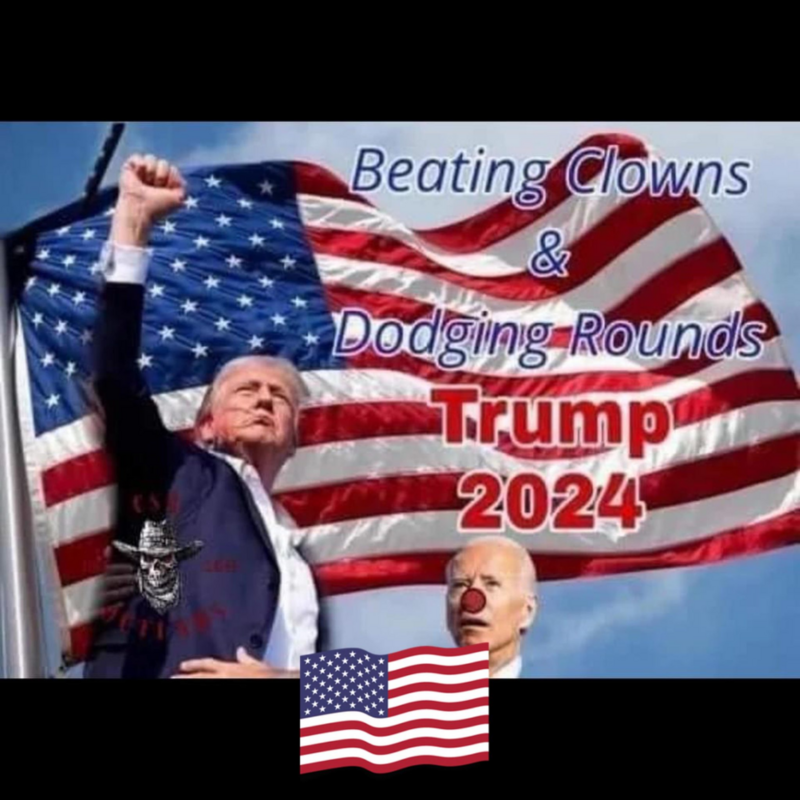
Are all the US Presidents related to the illuminati …Not Trump!!!
Not all U.S. Presidents are connected to the Illuminati—at least not in any verified or factual way. The idea that every president is part of a secret society like the Illuminati is a popular conspiracy theory, but it’s not supported by credible evidence.
 Here’s what fuels the theory:
- Freemasonry ties: Several presidents, including George Washington and Harry S. Truman, were Freemasons—a fraternal organization often linked to Illuminati theories due to its secretive rituals.
- Elite networks: Some presidents have belonged to exclusive groups like Skull and Bones (e.g., George H. W. Bush), which conspiracy theorists associate with Illuminati-like influence.
- Historical paranoia: In the late 1700s and early 1800s, fear of Illuminati infiltration was widespread, especially after the French Revolution. Even George Washington acknowledged concerns about Illuminati doctrines spreading in the U.S., though he didn’t claim to be part of it2.
 Reality check:
- The original Bavarian Illuminati was a short-lived Enlightenment-era group that dissolved in the late 1700s.
- Modern references to the Illuminati are mostly speculative and symbolic, often used to explain complex political events or elite influence.
So while some presidents have belonged to secretive or elite organizations, that doesn’t mean they were part of a global Illuminati cabal. But it does make for some intriguing late-night rabbit holes. Want to explore how these theories evolved or which presidents were Freemasons?
Which U.S. Presidents were Freemasons?
 Quite a few U.S. Presidents were Freemasons—15 in total, with some additional honorary or disputed cases. Here’s a rundown of the most notable ones:
 Confirmed Freemason Presidents
- George Washington – Initiated in 1752; served as Worshipful Master.
- James Monroe – Joined in 1775 while studying at the College of William & Mary.
- Andrew Jackson – Grand Master of Tennessee (1822–1824).
- James K. Polk – Initiated in 1820 in Columbia, Tennessee.
- James Buchanan – District Deputy Grand Master in Pennsylvania.
- Andrew Johnson – Initiated in 1851 in Greeneville, Tennessee.
- James A. Garfield – Active in multiple Ohio lodges; served as lodge chaplain.
- William McKinley – Became a Mason in 1865; later a Knight Templar.
- Theodore Roosevelt – Initiated in 1901 in Oyster Bay, New York.
- William H. Taft – Made a Mason “at sight” in 1909.
- Warren G. Harding – Raised to Master Mason in 1920.
- Franklin D. Roosevelt – Initiated in 1911; Honorary Grand Master of DeMolay.
- Harry S. Truman – Grand Master of Missouri; received the 33rd Degree.
- Lyndon B. Johnson – Initiated but did not advance beyond the first degree.
- Gerald Ford – Became a 33rd Degree Mason; Honorary Grand Master of DeMolay.
 Honorary or Disputed Cases
- Ronald Reagan – Honorary Freemason (1988).
- Joe Biden – Declared a “Mason at Sight” by Prince Hall Grand Lodge in 2025, though acceptance is disputed.
Would you like to explore how Freemasonry influenced their leadership or public image?
1en.wikipedia.org2masonicfind.com
What was the role of Freemasonry in U.S. history?
Freemasonry played a surprisingly influential role in shaping early U.S. history—both politically and culturally. While often shrouded in mystery, its impact is woven into the fabric of the nation’s founding and development.
 Founding Fathers & Revolutionary Ideals
- George Washington, Benjamin Franklin, and other key figures were active Freemasons.
- Masonic lodges served as hubs for Enlightenment thinking—promoting liberty, equality, and self-governance2.
- About 9 of the 56 signers of the Declaration of Independence and 14 of the 39 signers of the Constitution were Freemasons.
Influence on American Institutions
- Masonic principles like democratic governance, moral integrity, and religious tolerance mirrored the values embedded in the Constitution and Bill of Rights.
- Washington laid the cornerstone of the U.S. Capitol in a Masonic ceremony in 1793—a symbolic gesture of Freemasonry’s role in nation-building.
 Controversy & Decline
- The William Morgan affair in 1826, where a former Mason disappeared after threatening to expose secrets, sparked public backlash.
- This led to the rise of the Anti-Masonic Party, the first third-party in U.S. politics, which briefly gained traction in the 1830s.
Cultural & Social Impact
- Freemasonry helped redefine masculinity through ritual and symbolism, offering an alternative to mainstream religious and social norms.
- Lodges became spaces for networking, charity, and community leadership, especially in small towns.
 International Connections
- Freemasonry fostered global cooperation, especially during WWI and in support of the League of Nations.
- Figures like Franklin D. Roosevelt and Winston Churchill used their shared Masonic values to strengthen diplomatic ties during WWII.
Freemasonry wasn’t just a secret handshake club—it was a philosophical engine behind some of America’s most enduring ideals. Want to dive into how its symbols or rituals influenced American architecture or culture?
1daily.jstor.org 2explorefreemasonry.com 3freemasonscommunity.life
4www.thesquaremagazine.com 5en.wikipedia.org
What is Freemasonry’s influence in today’s society?
 Freemasonry’s influence today is more subtle than in centuries past, but it still leaves meaningful footprints across society—especially in areas like philanthropy, community service, and cultural heritage.
 Modern Contributions
- Charitable Work: Masonic organizations fund hospitals, scholarships, disaster relief, and youth programs. Institutions like the Shriners Hospitals for Children and Scottish Rite RiteCare clinics offer free or low-cost care to thousands.
- Community Engagement: Lodges often serve as hubs for civic involvement, hosting blood drives, food banks, and mentorship programs.
- Education & Personal Growth: Freemasonry promotes lifelong learning, ethical behavior, and self-improvement through lectures, rituals, and symbolic teachings.
Cultural & Architectural Legacy
- Symbolism in Design: Masonic symbols like the square and compass appear in architecture and city planning—Washington D.C.’s layout is famously influenced by Masonic ideals.
- Arts & Literature: Freemasonry has inspired works from Mozart’s The Magic Flute to modern thrillers like National Treasure, fueling public fascination.
Challenges & Adaptation
- Declining Membership: Freemasonry has seen a steady drop in numbers, especially in the U.S., due to changing social norms and less interest in fraternal organizations.
- Digital Transformation: Lodges are embracing online platforms and virtual meetings to stay connected and relevant.
- Inclusivity & Transparency: Modern Freemasons are working to dispel myths and open up about their values, countering conspiracy theories and outdated perceptions.
 Looking Ahead
Freemasonry today is at a crossroads—balancing tradition with innovation. Its future may depend on how well it adapts to modern values while preserving its core principles of brotherhood, charity, and truth.
Want to explore how Freemasonry is evolving in the digital age or how its symbols show up in pop culture?
1www.thesquaremagazine.com 2freemasonscommunity.life 3masonicfind.com
What are the reasons for declining Freemasonry membership?
Freemasonry membership has been steadily declining in the U.S. since its peak in 1959, when over 4.1 million men were members. Today, that number has dropped by about 75%, and the reasons are multifaceted2:
 Social & Cultural Shifts
- Changing lifestyles: Modern life is fast-paced, and people have less time for traditional clubs and rituals.
- Decline in “joiner culture”: Americans are less likely to join fraternal organizations than in previous generations.
- Generational gaps: Gen X largely skipped Freemasonry, and younger generations often find it outdated or irrelevant.
Perception & Relevance
- Loss of mystery: Masonic secrets are now easily accessible online, reducing intrigue.
- Outdated practices: Some lodges still resist modernization, making them less appealing to younger members.
- Exclusivity concerns: Limited diversity and resistance to change have alienated potential members.
Internal Challenges
- Rigid traditions: Strict adherence to rituals and hierarchy can feel unwelcoming or inflexible.
- Lack of engagement: New members often feel disconnected or underutilized, leading to early exits.
- Resistance to innovation: Some lodges struggle to adopt digital tools or rethink their outreach strategies.
 External Factors
- COVID-19 pandemic: Lockdowns disrupted lodge meetings and slowed recruitment.
- Economic pressures: Financial instability and shifting priorities have made dues and time commitments harder to justify.
Freemasonry isn’t alone—many fraternal and civic organizations are facing similar declines. But some lodges are adapting by embracing technology, engaging families, and rethinking their purpose for a new generation. Want to explore how some lodges are successfully reinventing themselves?
1www.myfraternity.org 2www.hardingfile.com 3www.davislodge.org
Are all the US Presidents related to the illuminati – YouTube