
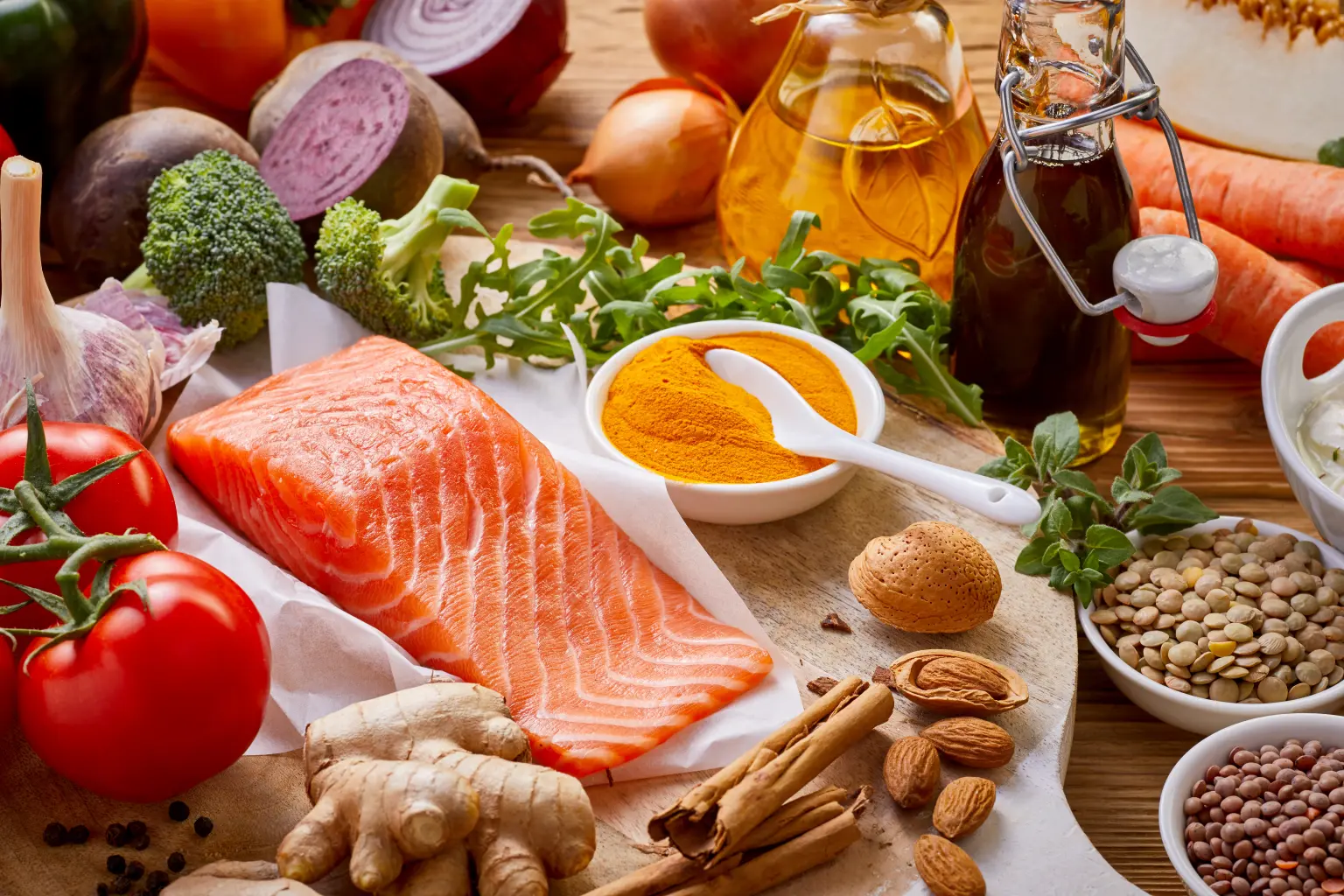
Salmon is encouraged as part of the MIND diet, a plant-focused eating plan designed to support brain health.exclusive-design – stock.adobe.com
I’m a neurosurgeon and my tasty 3-ingredient dinner to prevent Alzheimer’s: ‘I never get tired of it’
By Tracy Swartz
Dr. Jonathan J. Rasouli, a board-certified spinal neurosurgeon in New York, is spilling the details of his go-to meal rich in brain-beneficial omega-3 fatty acids and phytonutrients and low in carbs, sugar and fat.
“It tastes great, and I never get tired of it,” Rasouli, director of complex and adult spinal deformity surgery in the Department of Neurological Surgery at Staten Island University Hospital, recently told Parade. “It is super easy to make and doesn’t require too many ingredients.”
The MIND diet — which emphasizes leafy green vegetables, berries, beans, nuts, whole grains, fish and olive oil — was developed specifically for brain health. The eating plan is a blend of the plant-friendly Mediterranean diet and the DASH diet, which focuses on easing high blood pressure.
Salmon is encouraged as part of the MIND diet because it boasts omega-3 fatty acids, which are believed to preserve the integrity of cell membranes in the brain, facilitate communication between neurons, enhance blood flow to the brain, support the creation of new brain cells and lower inflammation.
Nearly 7 million Americans have been diagnosed with dementia, which is characterized by a decline in memory, thinking and learning. piksel stock – stock.adobe.com
That’s why Rasouli often prepares grilled salmon seasoned with turmeric and steamed broccoli on the side.
Turmeric’s main active ingredient is curcumin, which has shown potential in reducing inflammation, improving memory and slowing the development of amyloid plaques, a hallmark of Alzheimer’s disease.
Alzheimer’s is the most common form of dementia — it’s characterized by a decline in memory, thinking and learning. Nearly 7 million Americans have been diagnosed with dementia but researchers say millions more likely have dementia symptoms but no formal diagnosis.
For its part, broccoli contains glucosinolates, which transform into isothiocyanates when chewed. Isothiocyanates have been shown to reduce oxidative stress and inflammation. Broccoli also contains vitamins C, K and A as well as potassium, calcium and iron.
Rasouli warns against consuming sugary foods that can contribute to insulin resistance, a risk factor for dementia. Photographee.eu – stock.adobe.com
But Rasouli warns against adding too much salt to the salmon and subbing in a carb-heavy side for the broccoli. Excess salt and refined carbs can potentially contribute to brain inflammation.
“Any dinner that is low in processed ingredients, sugars and unhealthy fats would be a good dinner not only for Alzheimer’s prevention but also your general health,” Rasouli told Parade. “I like to stay away from red meats, processed meats like sausage and anything high in sugar. These have been shown to contribute to insulin resistance, which is a risk factor for dementia.”
For breakfast, Rasouli favors the “powerhouse” meal of grass-fed steak, pasture-raised eggs and leafy greens or avocado, which contain healthy fats.
Grass-fed steak boasts high-quality protein, iron and vitamin B12, Rasouli said, which support energy, focus and cognitive function.
“Additionally, grass-fed beef contains higher levels of omega-3 fatty acids and antioxidants like vitamin E compared to conventional beef, which can further benefit brain health,” Rasouli told The Post. “Pasture-raised eggs are rich in choline, an essential nutrient for memory and brain function, and they also offer a higher concentration of omega-3s compared to standard eggs.”
Another brain-healthy breakfast is avocado toast with whole-grain bread and a poached egg. For lunch, Rasouli is a fan of grilled chicken or salmon salad with leafy greens, olive oil and nuts, thanks to the antioxidants, omega-3s and healthy fats.
A second choice is a quinoa bowl with roasted vegetables, chickpeas and tahini dressing. “Quinoa is a complete protein and provides slow-releasing carbohydrates,” Rasouli explained. “Chickpeas add fiber and protein, while tahini offers brain-boosting fats.”
BREAKING NEWS: The FDA Just Banned Alzheimer’s Medications! [Discover How to Naturally Restore Memory Just By Doing This at Home]
Updated: March 4, 2025
This morning, a shocking FDA decision rocked the medical community: all medications for treating Alzheimer’s were suddenly pulled from the market.
Why?
Serious side effects and questionable efficacy.
But what the pharmaceutical industry doesn’t want you to know could completely change the way we treat memory loss. Until now, the standard approach to combating Alzheimer’s has been through medications that, at best, merely delay the symptoms.
Dr. Michael Carter, a renowned neuroscientist, has argued for years that not only are these treatments ineffective, they can also be dangerous. That’s because the root of the Alzheimer’s problem is not something that can simply be medicated.
According to his research, a toxic protein directly linked to the modern diet is the true culprit. That’s right, you probably ate something today that is silently destroying your neural synapses, causing memory lapses, and triggering Alzheimer’s.
This discovery calls into question decades of medical guidance and points to a pharmaceutical industry conspiracy to keep this information from the public. Despite all this sounding frightening, there is still hope…
During research in Okinawa, Japan—a place known for its high life expectancy and low incidence of Alzheimer’s—Dr. Carter discovered a simple practice that locals have been using to naturally prevent and reverse the effects of memory loss.
This technique, which can be done at home in less than one minute, is based on natural ingredients that combat the toxic protein responsible for brain deterioration.
“I thought my memory loss was just part of aging,” says Maria G., a follower of Dr. Carter’s recommendations. “But after applying the method he suggested, my mental clarity returned, and after just 16 days I threw my medications in the trash.”
If you or a loved one is suffering from memory loss, Alzheimer’s, or any other type of neurodegenerative disease… Dr. Carter’s video where he explains step-by-step how you can restore your brain’s health at home… In an exclusive interview, an expert in brain health Reveals: “Evil Protein” is Literally KILLING the memory of 200 Million Americans! (Learn How to solve it below!)
Dr Sanjay Gupta’s Calming Creamy Turmeric Tea Recipe |Calming Creamy Turmeric Tea
Dr. Sanjay Gupta’s prescription for fighting off dementia – CBS News
Neurosurgeon reveals 3-ingredient dinner to prevent Alzheimer’s
Calming Creamy Turmeric Tea
Dr. Sanjay Gupta drinks a calming cup of Creamy Turmeric Tea every night to help calm his nerves, but the benefits of this colorful drink don’t end there: A recent study suggests that curcumin, a brain-boosting chemical in turmeric, could help slow the progression of Alzheimer’s by helping hippocampal brain cells grow.
Prep Time: 5 minutes
Cook Time: 5 minutes
Total Time: 10 minutes
Course: Beverages
Cuisine: Healthy Spa Cuisine
Keyword: Ayurvedic, Ginger, Honey, Tea, Turmeric
Servings: 1 Serving
Calories: 162kcal
Courtesy Of: Dr Sanjay Gupta, MD – Search Videos is an Indian American neurosurgeon and an assistant professor of neurosurgery at Emory University School of Medicine and associate chief of the neurosurgery service at Grady Memorial Hospital in Atlanta, Ga.
Ingredients
- ▢1 cup almond milk (or coconut milk)
- ▢½ teaspoon turmeric
- ▢½ teaspoon fresh ginger juice Ginger People Juice. – Search Images
- ▢½ teaspoon cinnamon
- ▢1 teaspoon honey
- ▢1 dash cayenne pepper
** 1/2 teaspoon of regular honey and 1/2 teaspoon of Mike’s Hot Honey (that really peppery sweet honey)
Instructions
- Heat the almond milk in a microwave, or, on the stove top
- Stir in all spices, and blend.
- Drizzle honey on top of spiced milk.
- Expect sediment from the cinnamon to occur — just stir now and then while enjoying.
Spa Index Kitchen Notes
If you do not have fresh ginger juice (available bottled from The Ginger People, or, reserved from crushed fresh ginger), substitute a piece of sliced ginger, or, 1/4 teaspoon of ginger powder. Do not use candied or crystallized ginger, which is mostly sugar.
“Creamy Mug of Warming Deliciousness” is more accurate. It just plain feels good to drink this slightly sweet, slightly spicy blend of heated almond (or coconut) milk, turmeric, ginger, cayenne and honey. Turmeric tea will perk you up in the morning, calm you down at night and soothe sniffles and sore throats. It’s also a really pleasant way to end a meal.” — Mark’s Daily Apple
Nutrition
Serving: 1 Serving | Calories: 162 kcal (8%) | Carbohydrates: 23 g (8%) | Protein: 8 g (16%) | Fat: 4.5 g (7%) | Sodium: 125 mg (5%) | Fiber: 2 g (8%) | Sugar: 0.6 g (1%)
Albert Einstein quiz: What do you know about the life of the famous theoretical physicist?
The Recipe for a Nourished Brain – Chasing Life with Dr. Sanjay Gupta – Podcast on CNN
Dr. Sanjay Gupta’s 8 Tips for Preventing Memory Loss and Maintaining Brain Health.
9 foods a neurologist always buys at the grocery store for better brain health
Fear of Death: Confronting Our Mortality and Finding Peace | Watch
Neurosurgeon reveals 3-ingredient dinner to prevent Alzheimer’s
Timeless Quotes From the Greatest Minds in History
Understanding the mind of Albert Einstein