Minnesota: A Better World | America Outdoors | PBS LearningMedia
What does the wild mean to Americans today?
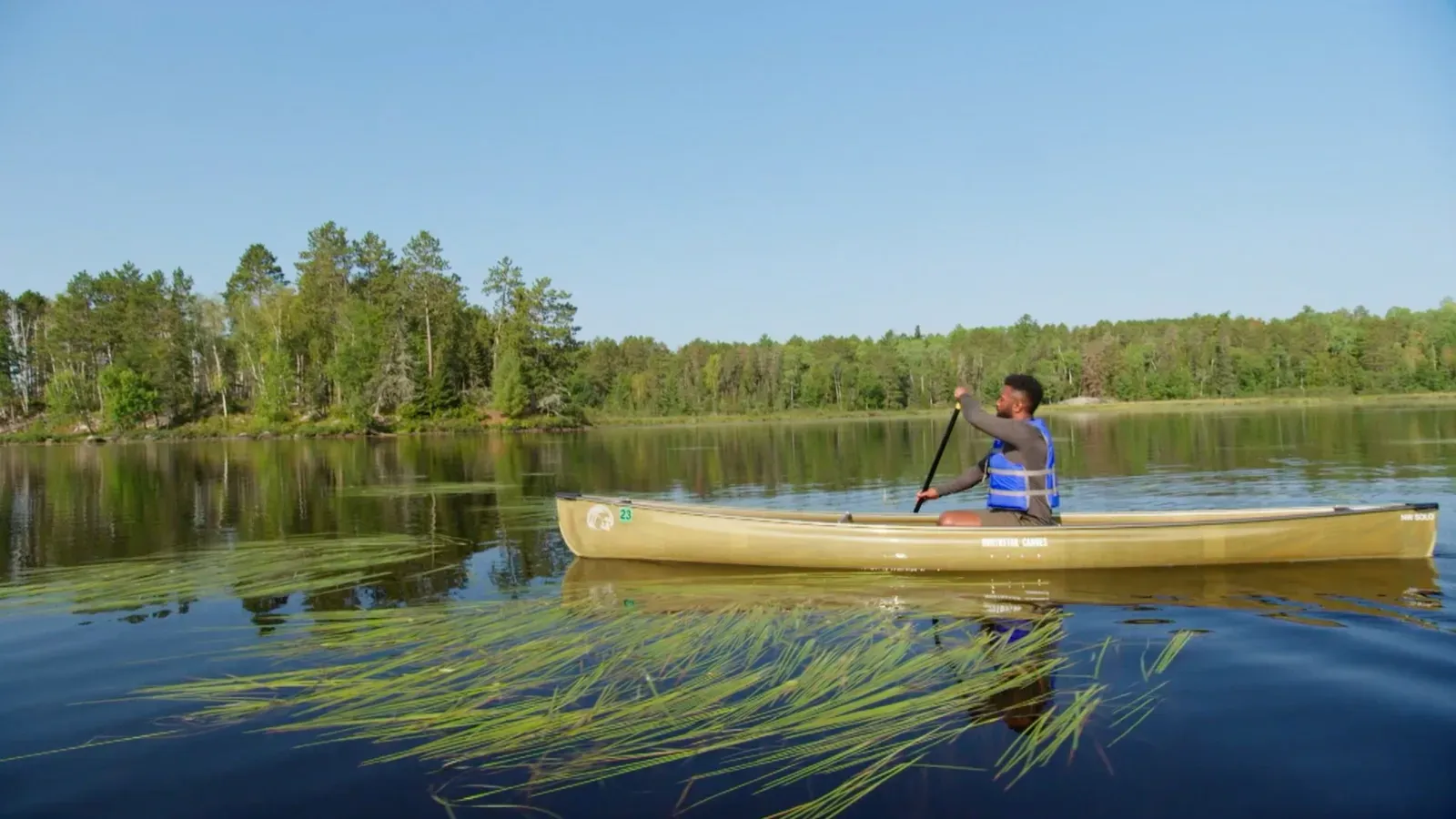
To find out, Baratunde Thurston – Search Videos journeys into Minnesota’s Arrowhead Region, one of the last places where you can hike or paddle your way into the remote wilderness. From passionate birders to harvesters of wild rice, he encounters a fascinating cast of characters—and hears from them why wilderness means so much.
(gentle music) I’m on the edge of the Boundary Waters Canoe Area Wilderness, the most visited wilderness area in all of America.
(gentle music) What’s opening up before me now is over a million acres of wild lands and fresh water that extends from Northern Minnesota, all the way into Canada.
(gentle music) I’ve come here in one sense to experience nature in its purest state possible.
But I’m not planning to do that alone.
Today, I’m meeting up with a couple who’ve devoted almost a decade to exploring this place and pushing to keep it protected.
Their names are Dave and Amy Freeman. – Search Videos
Hello?
– Hey.
– Hi.
– Welcome.
How’s your paddle?
– It was nice.
This is an especially beautiful spot.
– Yeah, well, thanks for joining us.
This is White Iron Lake.
It’s part of the Kawishiwi River and we’re right on the edge of the Boundary Waters Canoe Area, which is the largest wilderness area east of the Rockies and north of the Everglades, just full of lakes like this.
It’s our favorite place in the world.
Really special place.
– I can see why.
I honestly can.
The landscape surrounding us is one of the most stunning wild places I’ve ever visited.
And it’s been kept that way, thanks to its designation as an official wilderness area.
(gentle music) How does that differ from a national park or a national river?
There’s so many different kinds of codes and words to describe protected outdoor space.
– Right, good question.
Well, it’s federally designated as a wilderness area.
That’s the highest level of protection.
– Oh, congratulations.
(all giggling) – So there are no buildings.
There are no roads.
There are no signs.
There’s generally no motorized or mechanized vehicles.
We have realized that some places like the Boundary Waters are just so special that we need to protect them in their most natural state.
– [Baratunde] It’s this very idea that some places are so special to us that we want to protect and preserve them as they are, that first drew me to Northern Minnesota.
– All right.
Ready to go?
– Yes.
Yes I am.
(gentle music) But as we venture out into lake, with no sign of civilization in sight, I can’t help but think the Boundary Waters seems pretty well protected as is.
What are you protecting it from?
– Well, the latest threat to this area is copper mining.
So, a large multinational company wants to mine for copper, just outside the wilderness area.
– You know, there’s demand, we need copper.
We need these things.
But there are some places like this amazing water rich wilderness that are just too precious to risk.
– [Baratunde] Some locals do support the mine because it could bring year-round jobs to the region.
And copper itself, is used for making everything from solar panels to electric cars, technology designed to help the planet.
But mining upstream, even if the mine is built just outside the protected area comes with the risk of polluting this wilderness.
And for some, that possibility is unthinkable.
So when you’re out here, how do you feel?
– [Amy] Incredibly calm and happy.
– Yeah, I mean, all you can hear is the wind and the birds and the water, you can just drink the water right outta the lake.
– All right, I’m gonna test that.
This feels like the spot.
To the Boundary Waters.
– Cheers.
– And all this fresh water.
Oh, that’s good.
(gentle music) – [Crowd] On to DC!
On to DC!
– [Baratunde] The Freemans have campaigned to stop copper mining near the Boundary Waters area for years.
(people cheering) Starting with the protest that took them clear across America.
– Really our goal of this journey is to tell people all across the country about this amazing place.
The most popular wilderness area in the country.
– In 2014, to demonstrate against several proposed mining projects, they collected signatures on a canoe.
And somehow paddled that canoe all the way from here to Washington DC.
How does one paddle from Minnesota to Washington DC?
There’s not like a continuous body of water between here and– – Right, it’s a lot of portaging too.
So carrying the canoe.
– We paddled through Lake Champlain and down the Hudson River.
Right through New York City, right past the Statue of Liberty.
80 Days!
80 days to get here!
Woo-hoo!
From Baltimore, we portage from Baltimore to DC.
– What?
– Just portaging the canoe.
Nine miles to Washington DC!
(gentle music) – [Baratunde] They finally did get there and to make their case, they delivered the canoe to the chief of the US Forest Service.
(gentle music) Today, the debate over nearby mining development is still playing out.
But Amy and Dave continue to advocate for this wilderness and find creative ways to show what makes it special.
(indistinct) Whoa!
After their DC trip, they decided to live in this wilderness for 12 months and documented their adventure so others could follow along.
– [Dave] We didn’t cross the road.
We didn’t go into a building.
We didn’t leave the wilderness for a whole year.
(Dave giggling) (Amy giggling) – When you spend a whole year in the wilderness like that, what changes for you?
– One thing that’s kind of amazing is we’re still married.
(all giggling) And the other thing that we noticed towards the end of our time in the wilderness was that our senses were heightened.
(gentle music) – All the way through we were smelling things, hearing things, seeing things that we had never seen before.
And we have been able to slow down to the point where we felt like there was nothing else for us to do except sit there and observe that.
And then try to help use that as a way we can help people understand how special this place is.
And how special just getting outside is.
(gentle music) (leaves crackling) – It smells so good.
Since their year in the wilderness, the Freemans have focused on inviting others into the Boundary Water.
– Can you hear it?
– Sound of rushing water.
Yes.
– Yeah.
– Makes me thirsty.
To share that feeling of having your senses awakened by the wild.
Oh!
What a breeze!
– Yeah.
– What a view.
– Pretty special.
– Yeah.
(air whooshing) This is great.
It’s kind of an understatement but it just feels really good.
The air is good.
It smells good.
That water looks good.
I haven’t heard a single car horn or airplane or radio.
It’s just everything else.
(gentle music) As I take in the scenery around me, I start to see how wilderness isn’t just a place.
It’s a feeling, a state of mind and an experience.
And sharing that experience can be a powerful way to build support for protecting the wild.
– Well, we’ve seen the impact of just bringing people into the place.
I think that’s the most important thing is, we get people here and it kinda speaks for itself.
– We only protect the things that we love and we only love the things that we know.
And so, we all need to get outside and connect with the natural world.
And I think every once in a while you just gotta come out here and just immerse yourself.
– And unplug.
– And unplug.
– Yeah.
– This is the full experience.
(gentle upbeat music) Places like this, they do feel like nature at its most pristine, but this journey reminds me, most of the time, even the wildest places aren’t really untouched.
The footsteps we leave on the beach may be washed away by the tide, but the impacts we’re having on the planet, they reach even here.
The places we are determined to protect.
All around the country, so many of us seek out wild spaces, looking for solitude, escape and experience, or a sustainable way of life.
(gentle music) But as much as the wild can give us, in my mind, it’s time to give back.
Because protecting the wild isn’t just about the planet.
It’s also something much more personal.
The wilderness can seem wild and remote, but it’s an intimate part of us.
I know because when I’m feeling stressed or overwhelmed or a little bit broken, I come here.
Not exactly here, the North Shore of Lake Superior in Minnesota, this place is amazing.
But when I come to any place kind of like here, I feel better.
And I feel more whole.
What we call the outdoors is actually part of us.
These lakes, they feed us, body and soul.
The trees, they breathe for us, holding carbon so that we can breathe.
Now we’ve so changed the climate that there’s no fully stopping the process that’s unfolded.
But we can change.
We can adapt.
And we can help nature adapt the same way nature has helped us.
We owe that to the earth, which is exactly the same as saying, we owe that to ourselves.
(gentle music) ♪ ♪ ♪
A North American Odyssey with Amy Freeman
May 21, 2025, Amy Freeman, National Geographic Adventurer of the Year shares breathtaking stories from her and Dave Freeman’s remarkable 12,000-mile journey across North America. This epic expedition is entirely human-powered – traveling by kayak, canoe, dogsled, and ski through some of the continent’s most wild and remote landscapes.
During their adventure, the Freemans encounter diverse wildlife, connect with Indigenous communities, and witness firsthand the growing impacts of environmental degradation. More than just thrilling tales of outdoor exploration, Amy’s presentation serves as a powerful call to action to protect the natural places we cherish before they’re lost forever.