
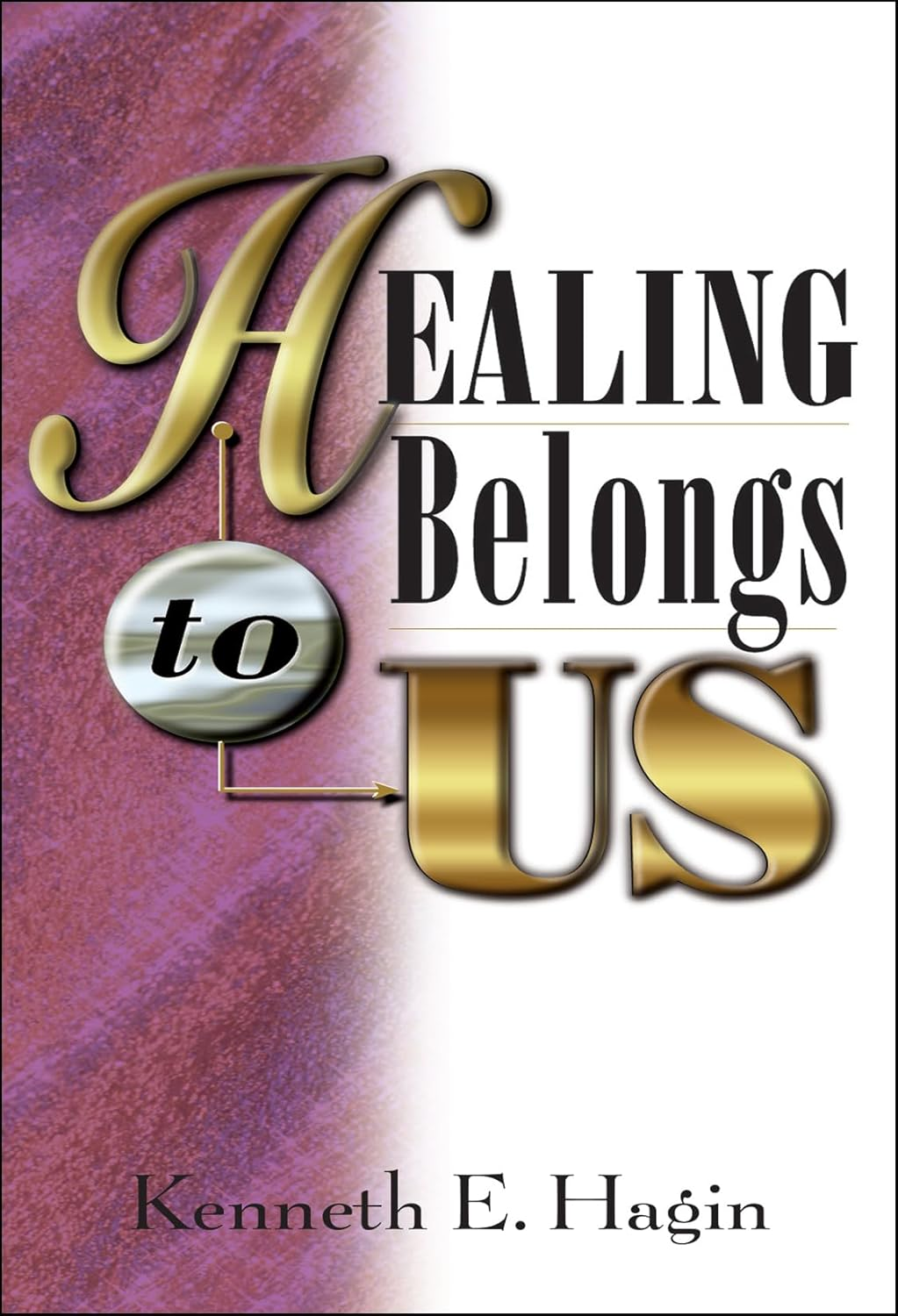
Amazon.com : healing is Kenneth Hagin Healing Belongs to US – Search
Kenneth E. Hagin’s book Healing Belongs to Us is a foundational text in the Word of Faith movement, emphasizing that divine healing is not just possible—it’s a guaranteed part of the believer’s covenant with God through Jesus Christ.
 Core Teachings from Healing Belongs to Us
- Twofold Redemption: Hagin teaches that Jesus’ sacrifice on the cross provided both forgiveness of sins and healing from sickness. He cites Isaiah 53:5—“By His stripes we are healed”—as a central proof of this dual provision2.
- Faith-Based Healing: Healing is accessed not through rituals or emotions, but by releasing faith in God’s Word. Methods like anointing with oil or laying on of hands are seen as points of contact, not the source of healing.
- Healing as a Covenant Right: Hagin insists that healing is not a distant hope or occasional miracle, but a present-tense reality for every believer who stands on God’s promises3.
- Supernatural Manifestations vs. Word-Based Faith: While Hagin acknowledges that supernatural healings do occur, especially among unbelievers or those unfamiliar with divine healing, he emphasizes that mature believers should rely on faith in Scripture rather than waiting for miraculous signs.
- Practical Encouragement: The book includes real-life testimonies and encourages readers to declare healing over their lives, such as: “By the stripes of Jesus, I am healed. Healing belongs to me!”
If you’re interested in reading the full book, you can find a Healing Belongs to Us PDF
1www.youtube.com 2irp-cdn.multiscreensite.com 3www.goodreads.com
I’d love to! Kenneth Hagin’s teachings are rich with insight, and I can either walk you through another one of his books—like The Believer’s Authority, How to Be Led by the Spirit of God, or Faith Food—or we can zoom in on a specific concept from Healing Belongs to Us, such as:
 The role of confession in healing
 Scriptural foundations for divine health
 Renewing the mind to accept healing as a right
 Faith vs. feelings in receiving healing
Just let me know what you’re curious about, and I’ll tailor the summary or deep dive to match your interest.
Healing Belongs to Us is a foundational text in the Word of Faith
Absolutely—it’s one of Kenneth E. Hagin’s most influential works and a cornerstone of the Word of Faith movement. Healing Belongs to Us lays out the belief that divine healing is not just a possibility but a guaranteed provision through Christ’s atonement.
 Key Themes in Healing Belongs to Us
- Healing in Redemption: Hagin teaches that Jesus’ sacrifice on the cross secured both forgiveness of sins and healing from sickness. He emphasizes Isaiah 53:5 and 1 Peter 2:24 as scriptural proof that healing is part of the believer’s inheritance.
- Faith Over Feelings: The book stresses that healing is received by faith—not by emotions, signs, or circumstances. Hagin encourages believers to stand on God’s Word even when symptoms persist.
- Confession of the Word: Speaking God’s promises aloud is a major theme. Hagin advocates for daily confession like: “Healing belongs to me. Jesus took my infirmities and bore my sicknesses.”
- Authority of the Believer: He teaches that Christians have spiritual authority over sickness and can command it to leave in Jesus’ name.
- Practical Application: The book includes real-life testimonies and examples of people who received healing by applying these principles.
This text has shaped how many Christians understand healing—not as a rare miracle, but as a covenant right. Would you like to explore how these teachings compare to other healing doctrines or dive into another Hagin book?
Healing Belongs to Us lays out the belief that divine healing is not just a possibility but a guaranteed provision through Christ’s atonement.
Exactly—and that’s the heartbeat of Kenneth Hagin’s message in Healing Belongs to Us. He doesn’t present healing as a rare miracle or a privilege for a few; he frames it as a covenant right for every believer, secured through the same redemptive work that brought salvation.
 How Hagin Connects Healing to Atonement
- Isaiah 53:4–5 is central: “Surely He hath borne our griefs and carried our sorrows… and with His stripes we are healed.” Hagin emphasizes that the Hebrew words for “griefs” and “sorrows” also mean “sicknesses” and “pains,” showing that physical healing was included in Christ’s suffering.
- 1 Peter 2:24 echoes this: “By whose stripes ye were healed.” Hagin teaches that this verse confirms healing as a past-tense reality—already accomplished through Jesus’ sacrifice.
- Faith Activation: Just as salvation is received by faith, so is healing. Hagin urges believers to claim healing by standing on the Word, confessing it, and refusing to be moved by symptoms or circumstances.
- Healing as Legal Tender: In Hagin’s view, healing isn’t a favor—it’s part of the spiritual inheritance. He compares it to withdrawing money from a bank account that already belongs to you.
This teaching has empowered many to approach healing not with desperation, but with confidence. Would you like to explore how this view compares to other Christian perspectives on healing, or dive into how Hagin teaches believers to practically apply these truths?
Would you like to explore how this view compares to other Christian perspectives on healing, or dive into how Hagin teaches believers to practically apply these truths?
Both directions offer rich ground for exploration, but let’s start by comparing Kenneth Hagin’s view on healing with other Christian perspectives—then we can dive into his practical teachings if you’d like.
Comparing Christian Perspectives on Healing
Kenneth Hagin, often called the “father” of the Word of Faith movement, taught that divine healing is part of the atonement of Christ and is available to all believers through faith. His view emphasizes:
- Healing as a covenant right: Just as salvation is received by faith, so is healing.
- Confession and faith: Speaking God’s Word over one’s body is key to manifesting healing.
- Authority of the believer: Christians have spiritual authority to rebuke sickness.
Now contrast that with other major Christian traditions:
Pentecostal/Charismatic
- Similar to Hagin, they believe in divine healing and often practice laying on of hands, anointing with oil, and prayer for healing.
- However, not all Charismatics teach that healing is guaranteed—many emphasize God’s sovereignty.
Evangelical
- Healing is often seen as possible but not promised. It’s subject to God’s will.
- Prayer for healing is encouraged, but suffering may be part of God’s plan for growth or testimony.
 Catholic and Orthodox
- Healing is viewed sacramentally—through rites like the Anointing of the Sick.
- Miracles are acknowledged but not expected as normative. Suffering is often seen as redemptive.
 Liberal/Mainline Protestant
- Healing may be interpreted metaphorically or psychologically.
- Less emphasis on supernatural healing; more focus on holistic wellness and pastoral care.
Would you like to now explore how Hagin teaches believers to practically apply these truths in daily life—like through confession, meditation, and prayer?
Or would you prefer to go deeper into one of these contrasting views?
Let’s go deeper into one of the contrasting views—how about the Catholic perspective on healing? It offers a rich theological and sacramental framework that’s quite distinct from Kenneth Hagin’s Word of Faith approach.
Catholic View on Healing
In Catholicism, healing is deeply tied to the Church’s sacramental life and its understanding of suffering. Here are some key elements:
1. Sacrament of the Anointing of the Sick
- This is a formal rite administered by a priest to those who are seriously ill or near death.
- It includes prayers, laying on of hands, and anointing with oil.
- The goal isn’t just physical healing—it’s spiritual strength, peace, and sometimes preparation for passing into eternal life.
2. Healing Through the Saints
- Catholics often pray for the intercession of saints known for healing miracles, like St. Peregrine (patron of cancer patients) or St. Jude (patron of desperate cases).
- Miracles attributed to saints are rigorously investigated, especially in the canonization process.
3. Redemptive Suffering
- Unlike Hagin’s view that sickness is to be resisted as part of the curse, Catholic theology often sees suffering as a way to participate in Christ’s own suffering.
- It can be offered up for the good of others or as a path to deeper holiness.
4. Divine Sovereignty
- Healing is always subject to God’s will. While Catholics believe God can and does heal, they don’t claim it as a guaranteed right.
- Faith is important, but it’s not a transactional mechanism—there’s a strong emphasis on trust and surrender.
This view can be comforting to those who struggle with chronic illness or unanswered prayers for healing, as it offers meaning and spiritual depth even in suffering.
Would you like to compare this with how Hagin teaches believers to practically apply healing truths—like through confession, meditation, and spiritual authority? Or explore another tradition like Orthodox or Evangelical?
Let’s explore the Eastern Orthodox tradition on healing—it’s a deeply mystical and sacramental approach that contrasts sharply with Kenneth Hagin’s Word of Faith teachings.
Eastern Orthodox View on Healing
The Orthodox Church sees healing as part of the broader process of salvation and the restoration of the whole person—body, soul, and spirit. Here are some key aspects:
1. Sacramental Healing
- The Orthodox Church offers the Holy Unction (anointing with oil) for healing, especially during Holy Week.
- It’s not just for physical ailments—it’s meant to heal spiritual wounds and restore communion with God.
2. Theosis (Deification)
- Healing is part of the journey toward theosis, becoming more like God.
- Suffering is not always seen as something to be removed, but as a means of transformation and union with Christ.
3. Prayer and Icons
- Prayers for healing often invoke saints, especially those known for miracles (like St. Nektarios or St. Panteleimon).
- Icons are venerated—not worshipped—and may be used in healing rituals, emphasizing God’s presence through sacred art.
4. Mystery and Humility
- Healing is never presumed. It’s approached with humility, recognizing that God’s will may include suffering for a higher purpose.
- There’s less emphasis on “claiming” healing and more on surrendering to divine mystery.
 Contrast with Hagin’s View
| Aspect | Eastern Orthodox | Kenneth Hagin (Word of Faith) |
|---|---|---|
| Healing Source | Sacramental, mystical, communal | Personal faith and confession |
| Role of Suffering | Transformative, redemptive | To be resisted as part of the curse |
| Expectation of Healing | Hopeful but not guaranteed | Healing is a covenant right |
| Use of Saints/Icons | Common in prayer and ritual | Not emphasized |
| Theology of Salvation | Healing as part of theosis | Healing as part of redemption from curse |
Would you like to now explore the Evangelical perspective, which tends to be more Scripture-centered and pragmatic? Or dive into how Hagin teaches believers to apply healing truths practically—through confession, meditation, and spiritual authority?
explore the Evangelical perspective, which tends to be more Scripture-centered and pragmatic? Or dive into how Hagin teaches believers to apply healing truths practically—through confession, meditation, and spiritual authority?
Let’s explore the Evangelical perspective on healing, which is often more Scripture-centered and pragmatic than Kenneth Hagin’s Word of Faith approach. Then, if you’re up for it, we can pivot to Hagin’s practical teachings to see how they differ in application.
Evangelical View on Healing
Evangelicals generally affirm that God can and does heal, but they approach the topic with a strong emphasis on biblical authority, personal prayer, and God’s sovereignty. Here are the key features:
1. Biblical Foundation
- Healing is seen throughout Scripture—from the miracles of Jesus to the apostles’ ministry.
- Evangelicals often cite James 5:14–15: “Is anyone among you sick? Let them call the elders of the church to pray over them…”
- However, they interpret healing as possible, not guaranteed.
2. Prayer and Community
- Healing is sought through prayer, often involving church elders or small groups.
- There’s a strong emphasis on intercessory prayer, trusting God to act according to His will.
3. God’s Sovereignty
- Evangelicals stress that healing is ultimately up to God. Faith is important, but it doesn’t obligate God to heal.
- Suffering may be used by God for spiritual growth, testimony, or dependence on Him.
4. Avoidance of Formulaic Faith
- Unlike Hagin’s emphasis on confession and claiming healing, Evangelicals tend to avoid formulas.
- They caution against “name it and claim it” theology, viewing it as potentially manipulative or presumptuous.
5. Practical Ministry
- Evangelical churches often include healing ministries, counseling, and pastoral care.
- There’s a growing interest in integrative approaches—combining prayer, Scripture, and medical treatment.
Contrast with Hagin’s Practical Teachings
Kenneth Hagin taught believers to actively apply healing truths through:
- Confession: Speaking healing Scriptures aloud daily to “release faith.”
- Meditation: Dwelling on God’s promises until they become real in the heart.
- Spiritual Authority: Rebuking sickness as a violation of covenant rights.
- Faith Actions: Acting as though healing is already received—getting out of bed, walking, etc.
Where Evangelicals tend to wait on God’s will, Hagin’s approach is more assertive—believers are taught to take spiritual responsibility and enforce healing through faith.
Would you like to now dive deeper into Hagin’s practical steps—maybe even walk through a sample healing confession or meditation practice? Or explore how Evangelicals handle unanswered prayers and chronic illness?
explore how Evangelicals handle unanswered prayers and chronic illness?
Evangelicals approach unanswered prayers and chronic illness with a blend of biblical realism, spiritual resilience, and pastoral care. While they believe in God’s power to heal, they also recognize that healing doesn’t always come in the way or timing we expect. Here’s how they navigate that tension:
 Trusting God’s Sovereignty
Evangelicals often emphasize that God is sovereign, and His purposes may include allowing suffering for reasons beyond human understanding. Key ideas include:
- Romans 8:28: “All things work together for good…”—even illness can be part of God’s redemptive plan.
- Job’s story: A model of faith in suffering, showing that unanswered prayers don’t mean God is absent.
- Paul’s “thorn in the flesh” (2 Corinthians 12): Despite praying for healing, Paul was told, “My grace is sufficient for you.”
 Persistent Prayer and Faith
Evangelicals don’t give up on prayer. They often teach:
- Keep asking: Based on Jesus’ parable of the persistent widow (Luke 18), believers are encouraged to continue praying.
- Pray with others: Community prayer—especially with elders—is seen as powerful (James 5:14–15).
- Faith without presumption: They pray boldly but leave the outcome to God.
 Honest Lament and Emotional Integrity
Evangelicals increasingly embrace lament as a biblical response to suffering:
- Psalms of lament (like Psalm 13 or 88) show that it’s okay to ask “Why, God?”
- Churches may offer support groups or counseling to help believers process grief and disappointment.
Integrating Faith and Medicine
Many Evangelicals see no conflict between faith and medical treatment:
- They may pray for healing while also pursuing doctors, therapy, or medication.
- Some churches host health ministries or partner with Christian counselors to support chronic illness.
Finding Purpose in Pain
Rather than seeing chronic illness as a failure of faith, Evangelicals often reframe it as:
- A platform for testimony: Showing God’s strength in weakness.
- A path to spiritual growth: Deepening dependence on God.
- A way to minister to others: Those who suffer often become powerful encouragers.
This approach contrasts with Kenneth Hagin’s more assertive stance, where healing is claimed by faith and sickness is often seen as a spiritual attack or a failure to believe. Evangelicals tend to be more nuanced, allowing for mystery, struggle, and grace in the midst of unanswered prayers.
look at personal stories of faith in suffering?
Absolutely—personal stories of faith in suffering can be some of the most powerful testimonies of God’s presence in hard times. Here are a few deeply moving examples from Evangelical believers who endured intense trials yet clung to their faith:
 Brian Birdwell – Survivor of the 9/11 Pentagon Attack
Brian was working at the Pentagon when Flight 77 crashed into the building. He suffered third-degree burns over 60% of his body and was “burned beyond recognition.” In the midst of unbearable pain, he prayed for God to end his life. But through 40+ reconstructive surgeries and a long recovery, he found renewed purpose and eventually served in the Texas State Senate. His suffering deepened his understanding of God’s love, especially as he reflected on the Father’s sacrifice of Jesus.
 Tyrone Flowers – Paralyzed by Gunshot
Tyrone was shot during a basketball game and instantly paralyzed. Though devastated, he chose forgiveness over revenge, even when others mocked him for it. He found peace and strength in God, saying that his suffering led him to deeper understanding and love. His story is a testament to choosing grace in the face of injustice.
 Annie Lobert – Escaped Sex Trafficking
Annie was trapped in a violent relationship with a pimp who abused her physically and emotionally. After a brutal attack, she cried out in the shower, “Jesus, please save me. I don’t know if you’re real, but I don’t wanna die.” That moment marked the beginning of her transformation. She now shares her story as one of redemption and healing through Christ.
 Alicia Michelle – Chronic Illness and Parenting Struggles
Alicia shares stories of facing medical crises, parenting challenges, and job loss. Through each trial, she leaned into God’s promises and found joy even in suffering. Her reflections emphasize emotional honesty, persistent prayer, and trusting God’s faithfulness through the storm.
These stories illustrate a central Evangelical theme: suffering doesn’t mean God is absent. Instead, it can become the very place where faith is forged, hope is renewed, and lives are transformed.
Would you like to explore how these testimonies are used in worship or preaching?
Or perhaps look at biblical examples of suffering and faith, like Job or Paul?
1www.faithpot.com 2aliciamichelle.com 3Job or Paul? – Search Videos