
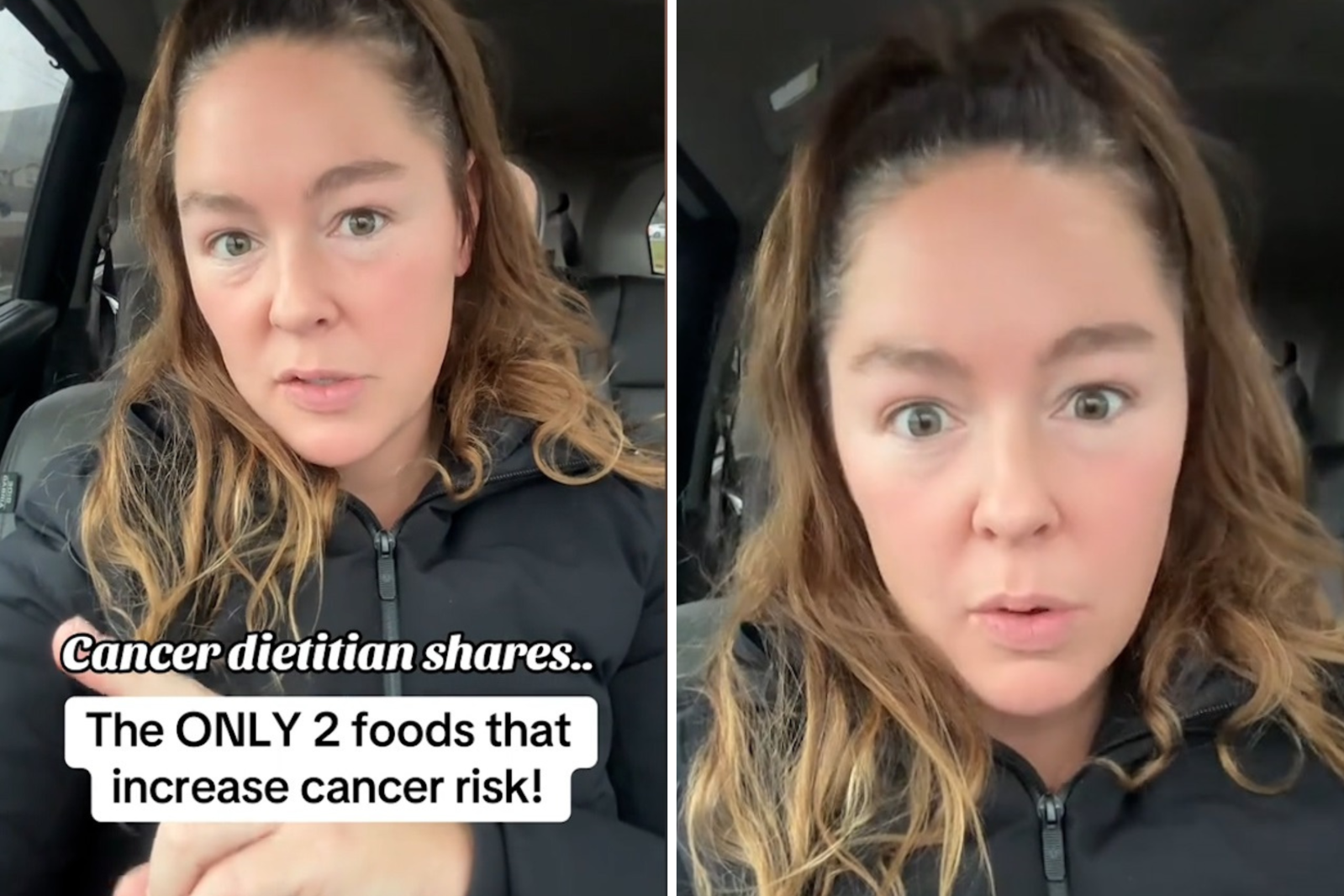
Two screenshots from Nichole | Oncology Dietitian (@oncology.nutrition.rd) | TikTok showing Andrews speaking to the camera in her car.
She discussed the clip further with Newsweek.

By Lucy Notarantonio – Search Videos
Senior Life and Trends Reporter
Dec 14, 2024, at 06:30 AM EST
Nichole Andrews has shared the most common question she is asked as a registered cancer dietitian on TikTok, and that is: Which foods will increase the risk of cancer?
She frequently hears concerns about sugar, beef, gluten, diet soda and plant oils. But, according to Andrews, the answer might surprise you. “The great news is, it’s only two foods,” said Andrews, based in Tri-Cities, Washington, adding that none of the commonly feared items are directly linked to cancer risk.
In an interview with Newsweek, Andrews explained that the two culprits she advises people to avoid are processed meats and alcohol, both of which have been shown to significantly increase the risk of multiple cancers.
In 2024, the National Cancer Institute estimated there will be a total of 2,001,140 new cancer cases and 611,720 cancer-related deaths in the U.S. The most common types include breast, prostate, lung, colorectal, melanoma, bladder, kidney, non-Hodgkin lymphoma, endometrial, pancreatic, leukemia, thyroid and liver cancers.
Andrews, who has 15 years of experience, highlights how alcohol consumption increases the risk of six types of cancer:
Breast cancer
Colorectal cancer
Esophageal cancer
Liver cancer
Mouth and throat cancers (oral and pharyngeal cancer)
Stomach cancer
Salami, sausages, cheeses, pepperoni, prosciutto, on a wooden board. All of which are processed meats. | Kobog/iStock/Getty Images Plus
Processed meats are those that have been preserved by smoking, curing, salting, or using preservatives. This includes sausages, ham, bacon and canned meat such as corned beef.
The link between red and processed meat and colorectal cancer.
Has been a growing area of research for years. In 2015, the International Agency for Research on Cancer (IARC) reviewed data from 800 studies and classified processed meat as a Group 1 carcinogen, indicating sufficient evidence that it can cause cancer in humans. Meanwhile, red meat was categorized as a Group 2A carcinogen, suggesting it is probably carcinogenic, but with less definitive evidence.
Fred Kinyuy Tabung, PhD, MSPH | Ohio State cancer researcher with The Ohio State University Comprehensive Cancer Center in Columbus, Ohio – Search Videos she told Newsweek that processed meats should be limited. “But that does not mean never taste processed meat,” he said. “If our bodies see processed meats on a regular basis, that is bad for metabolism and bad for cancer.”
The Added Hormone’s in Beef Cause Cancer – Search
The recent increase of hormone-dependent cancers roughly parallels the increasing consumption of beef in Japan. During the past quarter century, hormone-dependent cancers have risen fivefold: 4 times in breast and ovarian cancer, 8 times in endometrial cancer, and 10 times in prostate cancer [1]. Meanwhile, popularization of the Western diet has resulted in a fivefold multiplication of beef consumption in Japan [2].
Estrogen concentrations in beef and human hormone-dependent cancers – The Annals of Oncology || Are Hormones in Meat Affecting Humans? | Healthfully
More than 25% of the beef has been imported from the United States [3], where hormonal steroids including estradiol-17β have been implanted to cattle for growth promotion since the USA Food and Drug Administration approved the first steroid implant in 1956. In the USA, steroid implantation was carried out in 97% of beef cattle in 1999 [4], though the practice is still uncommon in Japan.
‘Weight Gain, Not Sugar Itself, Is the Greater Concern’
But does the overconsumption of sugar cause cancer.
Andrews points out that her patients fear sugar consumption is going to lead to the sinister disease. However, research has shown that eating sugar doesn’t cause cancer.
But overconsumption of it can lead to weight gain, and with the extra pounds comes a risk of health problems—including 13 different types of cancer, according to Cancer Research U.K.
Sugar and cancer – what you need to know
The claim that overconsumption of sugar can lead to 13 different types of cancer is supported by research from Cancer Research U.K. This research indicates that excessive sugar intake can contribute to weight gain, which in turn increases the risk of various cancers. The study highlights that obesity is a significant risk factor for at least 13 types of cancer, as it promotes chronic inflammation, hormonal imbalances, and metabolic changes that create a favorable environment for cancer development. It is important to note that while sugar itself does not directly cause cancer, the overall calorie balance and body fat are more critical factors in cancer risk.
Overconsumption of sugar itself does not directly cause cancer, according to Cancer Research UK and other leading health organizations. However, excessive sugar intake can lead to weight gain and obesity, which are strongly linked to an increased risk of at least 13 types of cancer.
Here’s how the connection works:
 Sugar → Weight Gain → Cancer Risk
- Sugar isn’t carcinogenic: It doesn’t directly damage DNA or initiate cancer.
- Excess sugar contributes to obesity: Especially from sugary drinks and processed foods.
- Obesity is a known risk factor for cancers such as:
- Breast (postmenopausal)
- Bowel
- Kidney
- Liver
- Pancreatic
- Ovarian
- Gallbladder
- Esophageal
- Endometrial
- Thyroid
- Meningioma
- Multiple myeloma
- Stomach (cardia)
 Common Myths Debunked
- “Sugar feeds cancer”: All cells, including cancer cells, use glucose for energy, but cutting sugar doesn’t “starve” cancer without harming healthy cells too.
- Natural sugars vs. added sugars: Naturally occurring sugars in fruits and dairy are not harmful and come with beneficial nutrients. The concern is with free sugars—those added to foods and drinks.
So while sugar itself isn’t the villain, its role in promoting obesity makes it a significant indirect contributor to cancer risk. If you’re curious, I can help you explore healthier dietary swaps or ways to reduce added sugar intake.
Information sheet: Sugar and cancer risk | Cancer Council
Can sugar cause cancer? Separating fact from fiction
Sugar and cancer – what you need to know
According to Cancer Research UK, obesity is linked to an increased risk of developing Thirteen types of cancer:
 Cancers Linked to Obesity
- Esophageal cancer
- Stomach (cardia) cancer
- Bowel (colorectal) cancer
- Liver cancer
- Pancreatic cancer
- Gallbladder cancer
- Breast cancer (especially postmenopausal)
- Uterine (endometrial) cancer
- Ovarian cancer
- Kidney cancer
- Thyroid cancer
- Multiple myeloma
- Meningioma (a type of brain tumor)
These cancers are more likely to develop in individuals who are overweight or obese, especially if the condition persists over time. The mechanisms include hormonal changes, chronic inflammation, and insulin resistance—all of which can promote cancer cell growth.
If you’re cautious, I can help you explore healthier dietary swaps or ways to reduce added sugar intake.
Absolutely! Making smart swaps and reducing added sugar can be surprisingly easy—and delicious.
Here are some practical ideas to help you cut back without feeling deprived:
 Sweet Swaps for Everyday Life
1. Breakfast Boosts
- Instead of sugary cereals → Try oatmeal topped with fresh fruit and cinnamon.
- Instead of flavored yogurt → Try plain Greek yogurt with berries and a drizzle of honey.
2. Drink Smarter
- Instead of soda or sweetened iced tea → Try sparkling water with lemon, lime, or cucumber.
- Instead of energy drinks → Try herbal teas or infused water.
3. Snack Attacks
- Instead of candy or cookies → Try dates, dried fruit (unsweetened), or dark chocolate (70%+).
- Instead of granola bars → Try nuts, seeds, or homemade energy bites with oats and nut butter.
4. Savory Fixes
- Instead of ketchup and BBQ sauce → Try mustard, salsa, or homemade dressings.
- Instead of store-bought pasta sauce → Try making your own with tomatoes, garlic, and herbs.
5. Dessert Downgrades
- Instead of ice cream → Try frozen banana “nice cream” blended with cocoa or berries.
- Instead of cakes and pastries → Try baked apples or poached pears with cinnamon.
Pro Tips to Cut Sugar Without Noticing
- Read labels: Look for hidden sugars like “syrup,” “juice concentrate,” or anything ending in “-ose.”
- Cook more at home: Restaurant and packaged foods often sneak in sugar.
- Balance your plate: Protein, fiber, and healthy fats help curb sugar cravings.
- Retrain your taste buds: Gradually reduce sugar to let natural flavors shine.
Andrews told Newsweek: “Obesity is a proven risk factor for at least 13 types of cancer because it promotes chronic inflammation, hormonal imbalances (like higher levels of insulin and estrogen), and metabolic changes that create a favorable environment for cancer development. The key takeaway: It’s not sugar itself—it’s the overall calorie balance and body fat that matter most.”
Overweight and obesity statistics | Cancer Research UK
How does obesity cause cancer? | Cancer Research UK
Does sugar feed cancer?
It’s one of the questions we get asked often. We prepared this video to provide an evidence-based answer to this frequently asked question.
The bottom line: every cell in our bodies, including cancer cells, uses sugar (glucose) from our bloodstream for fuel.
We get that blood sugar from foods we eat containing carbohydrates, including healthful vegetables, fruits, whole grains and low-fat dairy sources. Some glucose is even produced within our bodies from protein, but there’s no clear evidence that the sugar in your diet preferentially feeds tumors over other cells.
There is a connection between sugar and cancer risk, however, but it’s more indirect than many realize. Eating a lot of high-sugar foods may mean more calories in your diet than you need, which eventually leads to excess body fat. After not smoking, being at a healthy weight is the most important thing you can do to prevent cancer.
It is excess body fat that is convincingly linked to greater risk of these 12 types of cancer:
- Breast (post-menopausal)
- Colorectal
- Endometrial
- Esophageal
- Gall Bladder
- Kidney
- Liver
- Mouth/Pharynx/Larynx
- Ovarian
- Pancreatic
- Prostate (advanced)
- Stomach
Source: The Sugar and Cancer Connection – American Institute for Cancer Research
Does Sugar ‘Feed’ Cancer?
Sugar and cancer | World Cancer Research Fund
Is There a Link Between Sugar and Cancer?
Andrews explained that sugar leads to weight gain which can lead to cancer. Natalia_Grabovskaya/iStock/Getty Images Plus
Research on the relationship between sugar and cancer presents conflicting findings.
A large study involving over 300,000 people found no significant link between sugar consumption and the risk of developing most major cancers, such as colorectal, breast, prostate, or pancreatic cancer, though it did suggest a potential association with rarer cancers like lung and esophageal cancer.
In contrast, research by microbiologists and molecular biologists in Belgium indicates that sugar can activate a specific protein, mutations of which have been linked to cancer, particularly pancreatic and colon cancers. These differing results highlight the complexity of understanding sugar’s role in cancer development and suggest that further investigation is needed to reconcile these findings.
Andrews explained: “All cells, including cancer cells, use glucose for energy,” said Andrews. “It is the body’s primary energy source. Both healthy cells and cancer cells rely on glucose to function.
“However, cutting out sugar completely will not ‘starve’ cancer cells. Your body will naturally produce glucose from other sources, like proteins and even fats, to meet its energy needs.”
She points out that cancer cells do not grow faster with sugar, and that the growth is due to genetic mutations and other complex biological factors.
“Not simply because sugar is present in the body,” she said. “While cancer cells might consume more glucose than healthy cells, this does not mean sugar causes cancer to grow faster. The process is a byproduct of how cancer cells metabolize energy differently, not a result of dietary sugar intake.”
Is Cancer Preventable?
Between 30–50 percent of all cancer cases are preventable, according to the World Health Organization (WHO).
“Diet is one of the most impactful lifestyle factors in cancer prevention and survivorship,” said Andrews, adding that a diet rich in plant-based foods—like vegetables, fruits, whole grains, legumes, nuts and seeds—provides essential nutrients and bioactive compounds that help reduce cancer risk.
“These foods are naturally high in fiber, antioxidants and phytochemicals, which work to reduce inflammation, support a healthy gut microbiome, and protect cells from damage that could lead to cancer,” she said.
This doesn’t mean you have to go fully vegetarian to reap the benefits, nor does it mean being a vegetarian grants cancer immunity. Andrews advises people to focus on high-quality animal proteins, like fish, eggs, poultry, or lean meats or lean dairy, paired with an abundance of vegetables.
“This approach is sustainable, enjoyable, and scientifically supported for cancer risk reduction,” she said.
Dr. Eric Winer, the director of Yale Cancer Center and president and physician-in-chief of Smilow Cancer Hospital in Connecticut, has provided the following tips to reduce the risk of cancer:
Don’t smoke.
Maintain optimal body weight.
Exercise regularly.
Eat a diet that emphasizes fruits and vegetables, grains, some protein and not bad fat.
Omega 3 Fatty Acids Foods prevent cancer from spreading – Search
🔑 Key to good health is the omega 3-6-9 Fatty Acids Ratio – Search
Dr. Amy – Cancer Researcher & Cancer Survivor
Description Bing Videos
Dr. Amy’s real name is Dr. Amy Morris. She is a cancer researcher and survivor who has dedicated her life to helping others navigate cancer journeys and share her experiences and strategies for recovery. You can find more about her on her YouTube channel, Cancer Researcher & Cancer Survivor – YouTube where she discusses various aspects of cancer treatment and recovery.
Dr Amy Morris, My Journey Through Cancer – YouTube
You can completely recover from cancer. I’m living proof!
Helping thousands of women diagnosed with cancer, I’ve discovered exactly what you need for recovery, remission and radical weight loss. Life has offered me a unique view into cancer care.
With over 15 years of clinical experience, a Doctorate Degree Focusing in Cancer Care (University of Toronto, College of Pharmacy), and as a STAGE 3 Cancer Survivor, I truly understand what it’s like to go through cancer.
But now – there are many days when I find it hard to believe that I ever had cancer at all. Whenever you’re ready, here are the 2 best ways I can help you…
1) Click Here: Your A-Z Guide to Staying Cancer Free
2) Apply for the Cancer Freedom Program. If you are ready to skip the line and get started with a customized cancer recovery plan, then apply for The Cancer Freedom Program. Click HERE – https://www.cancerfreedomprogram.com/