
The Title of the Blog Solitarius.org Originating from Ken’s Father being an Avid Card Player of Solitaire. Ken always inspired to deal out Answers to Cancer Simply By Playing Out a Hand of Solitaire!!! READ MORE: I Can Only Imagine | Cancer Quick Facts
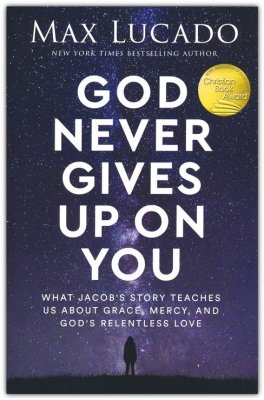
Max Lucado’s God Never Gives Up on You uses Jacob’s story to illustrate how God’s grace and mercy persist—even when we stumble.
It’s a powerful reminder that divine love is relentless, unconditional, and transformative.
Here’s a deeper look at the book’s core themes and lessons:
 Central Message
Max Lucado explores the life of Jacob—a deeply flawed biblical figure known for deceit, manipulation, and family conflict—to show that God’s grace is not reserved for the perfect. Instead, God chooses and uses imperfect people to fulfill His divine purposes.
- Jacob’s failures (stealing his brother’s birthright, deceiving his father, fleeing from consequences) are not hidden—they’re central to the story.
- Yet, God never abandons Jacob. Through dreams, blessings, and wrestling matches, God continually reaches out, shaping Jacob into a man of faith.
 Key Themes
- Grace for the Unworthy: Jacob’s life proves that grace isn’t earned—it’s given. Lucado emphasizes that God’s love is bigger than our worst mistakes.
- Relentless Pursuit: Even when Jacob runs, God follows. Lucado likens this to how God pursues each of us, never giving up—even when we do.
- Transformation Through Struggle: Jacob’s wrestling with God becomes a metaphor for spiritual growth. Painful moments can lead to profound change when we allow God to work through them.
- God’s Use of Imperfect People: Lucado highlights other biblical figures—Moses, Esther, Peter, Paul—who were flawed but chosen. This reinforces the idea that God’s plan includes people like us.
 Why It Resonates
- If you’ve ever felt disqualified by your past, this book offers hope.
- Lucado’s writing is warm, accessible, and deeply pastoral—ideal for personal reflection or group study.
- The book includes study guides and free resources to help readers dive deeper into Jacob’s story and its relevance today.
God’s unending grace.
Lucado highlights the remarkable persistence of God’s love and grace in accompanying Jacob throughout his turbulent life. Even with his many wrongdoings and moral failings, God consistently pursued Jacob, offering him chances for redemption, guidance, and granting him blessings. The unwavering kindness in the divine engagement with people is a key point emphasized by Lucado, which extends beyond Jacob’s narrative.
He cites numerous examples of the Divine choosing people with notable imperfections and histories of wrongdoing to execute His holy duties, as documented in the scriptures. Max Lucado underscores that the unyielding commitment to pursue and redeem humanity lies at the heart of divine benevolence, offering solace to everyone, regardless of past or present difficulties.
Even in his most difficult moments, God persistently pursued Jacob.
Max Lucado vividly portrays the journey of Jacob, marked by profound spiritual encounters and disheartening moral shortcomings. He recounts the story of Jacob’s escape from his residence after tricking his brother Esau and taking what was rightfully his brother’s inheritance. During his exile, Jacob experienced a vision where he saw a ladder extending from earth to the sky, and during this celestial meeting, God reaffirmed the sacred promises made earlier to his ancestors, Abraham and Isaac.
Jacob, after suffering through the deceitful tactics of his uncle Laban for many years, receives a divine vision instructing him to go back to the land of his forefathers. Jacob, despite his occasional deceit and wavering belief, was persistently led and protected by the Divine, who also orchestrated a peaceful reconciliation with his brother. Lucado demonstrates that even though Jacob seemed intent on creating his own destiny, it is evident that God’s steadfast mercy and commitment to stay involved in Jacob’s life never wavered.
God’s steadfast dedication persists, forging bonds and agreements with Jacob, despite his many imperfections.
Lucado emphasizes that Jacob was not an exemplar of devoutness. He frequently orchestrated circumstances for his own advantage, placing his own safety and wealth ahead of conducting his life in a manner that would honor the divine. Despite these flaws, God unwaveringly upheld the sacred agreement established with the forefathers of the Israelites, an agreement that would eventually lead to the coming of Jesus and the redemption of humanity.
In their meeting at Bethel, Lucado highlights that God promised Jacob His constant companionship, safeguarding, and the certainty of a secure journey back to his homeland. Despite straying from the path God had set out for him, as seen in the disastrous events at Shechem, the steadfastness of God’s dedication to him did not waver. He remained steadfast in his efforts to inspire Jacob to go back to Bethel and renew his commitment. Max Lucado conveys the depth of God’s mercy by using Jacob’s story, underscoring that it is offered to us not due to our perfection but because it acknowledges our weaknesses and mistakes.
Practical Tips
- Volunteer for a community service project without judging your skill level or comparing yourself to others. Engaging in acts of service can help you see the value you bring to the table, regardless of imperfections, and can mirror the idea of forging bonds and agreements with others through shared experiences and contributions.
- Create a “values hierarchy” chart to visually map out what you value most, placing safety and wealth alongside other values like community, spirituality, or family. By seeing where these rank in your life, you can make more conscious decisions that honor your full spectrum of values. If you find that safety and wealth are at the top, challenge yourself to make one decision a week that prioritizes a lower-ranked value.
- Create a personal or family mission statement that reflects a commitment to uphold certain principles or agreements. Gather input from family members, if applicable, and draft a statement that encapsulates the values and commitments you wish to honor. This could include aspects such as community service, religious observance, or a dedication to certain work ethics. Once completed, display this statement in a common area of your home as a daily reminder.
- Create a visual representation of your journey towards understanding redemption by crafting a redemption tree. On a large poster or canvas, draw a tree with branches representing different aspects of your life, such as family, work, and personal growth. Attach leaves to these branches with notes or symbols that signify moments of personal redemption or when you’ve witnessed it in others. This tree can serve as a daily reminder and inspiration of the ongoing process of redemption.
- Start a “homecoming tradition” where you celebrate the return of a family member or friend from their travels. This could involve a special meal, a welcome sign, or a small gathering. This tradition reinforces the idea of a secure return home and the joy of reuniting, reflecting the secure journey back home.
- God Never Gives Up on You (Max Lucado) – Study Gateway
- God enacts his perfect plan through imperfect people—including you and me! Max Lucado shows us how God used Jacob—the misbehaving patriarch who was strong on savvy but weak on conscience—simply because God chose to use Jacob.
- His story invites us to believe in a God who sticks with the unworthy until we are safely at home. God turns brokenness into blessings through his grace, mercy, and relentless love. Not just for Bible characters, but for you.
- God Never Gives Up on YOU.
- Summarize Key Points of the Book
- Here’s a concise summary of the key points from God Never Gives Up on You by Max Lucado, which centers on the biblical story of Jacob:
Key Lessons from Jacob’s Life
- God’s Grace Is Unconditional Jacob was a deceiver and manipulator, yet God chose him. Lucado emphasizes that God’s grace isn’t earned—it’s freely given, even to those who seem least deserving.
- God Pursues Us Relentlessly Despite Jacob’s attempts to run from consequences, God continually reached out—through dreams, blessings, and even a wrestling match. This shows that God never gives up on us, no matter how far we stray.
- Transformation Through Struggle Jacob’s wrestling with God becomes a metaphor for spiritual growth. Lucado teaches that our struggles can lead to transformation when we allow God to work through them.
- Imperfect People, Divine Purpose Jacob’s story is a reminder that God uses flawed people to fulfill His plans. Lucado draws parallels to other biblical figures like Moses, David, and Peter to reinforce this truth.
- Identity and Blessing Jacob’s journey is also about discovering his true identity. After wrestling with God, he’s renamed Israel—a sign of God’s blessing and a new beginning.
Memorable Takeaways
Would you like a chapter-by-chapter breakdown or a few reflection questions to go deeper with the themes?
- “God never gives up on you. Not because of who you are, but because of who He is.”
- “Grace is not reserved for the righteous—it’s poured out on the restless.”
- Let’s go deeper with both!
- Chapter-by-Chapter Breakdown:
- The God of Jacob
The Heel Grabber
- Introduces Jacob’s story and sets the stage for understanding God’s grace through flawed people.
The Great Escape
- Explores Jacob’s birth and early life, highlighting his manipulative tendencies and the consequences.
The Ladder of Grace
- Jacob flees after deceiving his father and brother—yet God meets him in a dream, showing divine pursuit.
The Trickster Gets Tricked
- Jacob’s dream at Bethel becomes a symbol of God’s presence and promise, even in exile.
The Wrestling Match
- Jacob is deceived by Laban, showing how God uses hardship to shape character.
The Reunion
- Jacob wrestles with God, a turning point where he receives a new name and identity.
The God of Second Chances
- Jacob reconciles with Esau, revealing the power of forgiveness and humility.
God Never Gives Up on You
- Reflects on Jacob’s legacy and how God’s grace continues through generations.
- A final encouragement that no matter your past, God’s love is relentless and redemptive.
Reflection Questions
Would you like me to turn these into a printable study guide or devotional outline?
- Where do you see yourself in Jacob’s story?Have you ever felt like you had to earn God’s love? How does Jacob’s life challenge that idea?What “wrestling matches” have shaped your faith?How has God shown up in your life when you least expected it?What does it mean to you that God gives second chances—even to people like Jacob?
- Here’s a chapter-by-chapter breakdown of God Never Gives Up on You by Max Lucado, followed by reflection questions to help you internalize the message.
Chapter-by-Chapter Breakdown
- The God of Jacob
- Introduces Jacob’s story and sets the stage for understanding God’s grace through flawed people.
- The Heel Grabber
- Explores Jacob’s birth and early life, highlighting his manipulative tendencies and the consequences.
- The Great Escape
- Jacob flees after deceiving his father and brother—yet God meets him in a dream, showing divine pursuit.
- The Ladder of Grace
- Jacob’s dream at Bethel becomes a symbol of God’s presence and promise, even in exile.
- The Trickster Gets Tricked
- Jacob is deceived by Laban, showing how God uses hardship to shape character.
- The Wrestling Match
- Jacob wrestles with God, a turning point where he receives a new name and identity.
- The Reunion
- Jacob reconciles with Esau, revealing the power of forgiveness and humility.
- The God of Second Chances
- Reflects on Jacob’s legacy and how God’s grace continues through generations.
- God Never Gives Up on You
- A final encouragement that no matter your past, God’s love is relentless and redemptive.
Reflection Questions
- Where do you see yourself in Jacob’s story?
- Have you ever felt like you had to earn God’s love? How does Jacob’s life challenge that idea?
- What “wrestling matches” have shaped your faith?
- How has God shown up in your life when you least expected it?
- What does it mean to you that God gives second chances—even to people like Jacob?
Would you like a breakdown of the chapters or a few quotes that capture the heart of the book?
Absolutely—I’ve got both for you! Here’s a mix of chapter highlights and quotes that beautifully capture the heart of God Never Gives Up on You by Max Lucado:
Chapter Highlights
- The God of Jacob Introduces the idea that God’s love isn’t reserved for the righteous—it’s poured out on the restless.
- The Heel Grabber Jacob’s name means “supplanter,” and his early life is marked by manipulation. Yet, God still chooses him.
- The Ladder of Grace Jacob’s dream at Bethel reveals God’s presence even in exile. Grace meets him in the wilderness.
- The Wrestling Match Jacob wrestles with God and is renamed Israel. This moment symbolizes transformation through struggle.
- The God of Second Chances Despite Jacob’s failures, God continues to bless him—proof that divine mercy never runs out.
Quotes That Capture the Heart
- “God never gives up on you. Not because of who you are, but because of who He is.”
- “Grace is not reserved for the righteous—it’s poured out on the restless.”
- “Jacob’s story is proof that God’s plan includes people like you and me—flawed, broken, but chosen.”
Would you like me to turn these into a printable devotional guide or small group discussion resource?
I can also help you reflect on how Jacob’s journey might mirror your own.
Let’s explore that together. Jacob’s story is rich with moments that mirror our own spiritual journeys—especially when we feel unworthy, restless, or uncertain. Here are a few ways you might reflect on Jacob’s path and how it connects to your life:
Reflection Prompts Inspired by Jacob’s Journey
1. Running from Mistakes
Jacob fled after deceiving his brother and father. Have you ever tried to outrun a mistake or avoid facing a hard truth?
Reflection: What are you running from—and what might happen if you stopped and let God meet you there?
2. Encountering Grace in the Wilderness
Jacob’s dream at Bethel came when he was alone and afraid. Sometimes grace shows up when we least expect it.
Reflection: When have you felt God’s presence in a season of isolation or uncertainty?
3. Wrestling with Identity
Jacob wrestled with God and was renamed Israel. That struggle marked a turning point in his life.
Reflection: What are you wrestling with right now? Is it fear, doubt, control, or something deeper?
4. Receiving a New Name
God gave Jacob a new name to reflect his transformation. You may not get a literal new name, but God often redefines us.
Reflection: What name or identity have you been living under—and what might God be calling you instead?
5. Reconciliation and Redemption
Jacob’s reunion with Esau is a powerful moment of forgiveness and healing.
Reflection: Is there someone you need to reconcile with? What would it look like to take the first step?
If you’d like, I can help you turn these reflections into a personal journal entry, prayer guide, or even a devotional series. Just say the word.
I can help you turn these reflections into a personal journal entry, prayer guide, or even a devotional series.
Beautiful—let’s turn those reflections into a devotional series that you can use for journaling, prayer, or group study. I’ll structure it as a 5-day journey, each day focusing on a key moment from Jacob’s life and how it mirrors our own walk with God.
 God Never Gives Up on You — 5-Day Devotional Series
Day 1: When You’re Running
Scripture: Genesis 27:41–45 Theme: God meets us even when we’re fleeing from our failures. Reflection: Jacob ran from Esau after deceiving him. Have you ever tried to escape a mistake or avoid facing consequences? Prayer Prompt: “Lord, meet me in the places I’ve tried to hide. Help me face my past with courage and grace.”
Day 2: Grace in the Wilderness
Scripture: Genesis 28:10–17 Theme: God’s presence is not limited to holy places—it shows up in lonely ones. Reflection: Jacob’s dream at Bethel came when he was alone and afraid. Grace often finds us in the wilderness. Prayer Prompt: “God, thank You for showing up when I feel lost. Help me recognize Your presence even in silence.”
Day 3: Wrestling with God
Scripture: Genesis 32:22–32 Theme: Struggles can be sacred when they lead to transformation. Reflection: Jacob wrestled with God and was changed. What are you wrestling with right now—fear, doubt, control? Prayer Prompt: “Father, I don’t want to let go until You bless me. Use this struggle to shape me.”
Day 4: A New Name, A New Identity
Scripture: Genesis 35:9–15 Theme: God redefines us—not by our past, but by His promise. Reflection: Jacob became Israel. What false names or identities have you carried? What might God be calling you instead? Prayer Prompt: “Lord, rename me. Let Your truth replace every lie I’ve believed about myself.”
Day 5: Reconciliation and Redemption
Scripture: Genesis 33:1–11 Theme: Forgiveness is possible—even after deep betrayal. Reflection: Jacob and Esau’s reunion is a picture of grace. Is there someone you need to reconcile with? Prayer Prompt: “God, soften my heart. Help me seek peace and extend forgiveness like You’ve done for me.”