
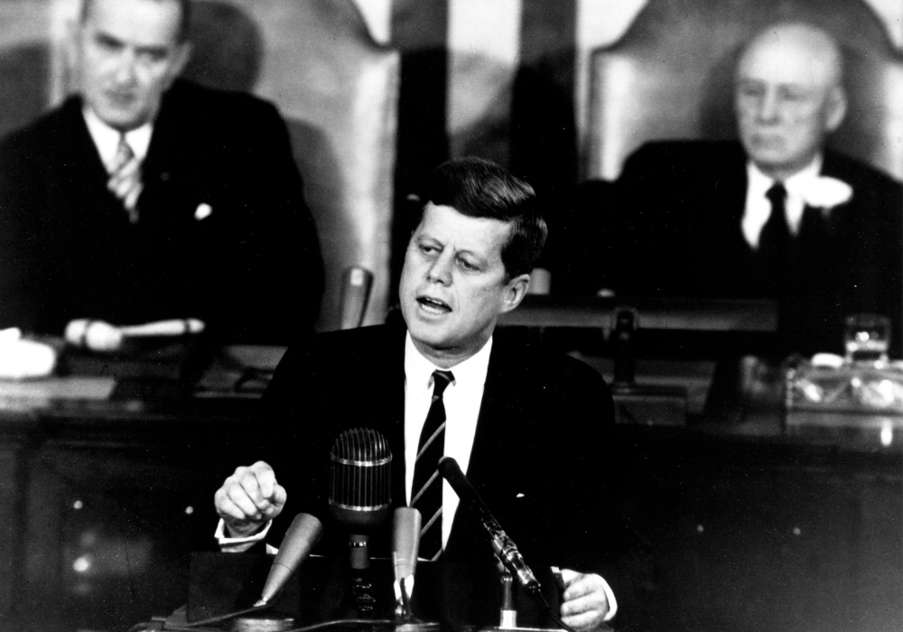
History: Assassination of US President John F. Kennedy – Samoa Global News
Experts say President Kennedy’s survival could have changed everything—from Vietnam to civil rights to the Cold War. ©Image license via Canva
What If JFK Had Lived? Historians Reveal How America Could Look Today
What If John F. Kennedy Had Lived? – Never Was
Story by Barrie Davenport
When President John F. Kennedy was assassinated in Dallas on November 22, 1963, it marked one of the most tragic turning points in American history. His death reshaped the decade that followed—fueling political upheaval, deepening divisions, and altering global power dynamics.
But what if he had survived?
Historians say Kennedy’s continued leadership could have steered the United States down a drastically different path. From war policy to social progress, the ripple effects might have transformed both America and the world.
1. Kennedy Planned a Gradual Withdrawal from Vietnam.
Before his death, Kennedy had approved National Security Action Memorandum 263, which ordered the withdrawal of 1,000 U.S. military advisers from Vietnam by the end of 1963. His advisers, including Robert McNamara and General Maxwell Taylor, later said Kennedy was skeptical about deeper involvement.
If he had lived, historians believe he likely would have continued to reduce U.S. presence rather than escalate the conflict. Without the Gulf of Tonkin incident under Johnson, the Vietnam War might never have reached the massive troop levels that defined the late 1960s.
2. The Civil Rights Movement Might Have Progressed More Slowly.
Kennedy had begun supporting civil rights legislation in 1963, but his political strategy was cautious. He feared losing support from Southern Democrats who controlled Congress. His successor, Lyndon Johnson, used his legislative experience and the nation’s grief to push through the Civil Rights Act of 1964.
If Kennedy had remained president, many historians believe progress would still have come—but likely at a slower pace. Kennedy favored negotiation and persuasion over confrontation. Johnson’s forceful leadership on civil rights may have been unique to that post-assassination moment.
3. The Space Race Could Have Taken a Collaborative Turn.
Kennedy famously declared that America would land a man on the Moon before the decade’s end, fueling national pride and technological innovation. But less known is his 1963 proposal to the Soviet Union for a joint lunar mission.
Documents released later show Kennedy’s genuine interest in cooperation rather than competition. Had he lived, the Cold War’s symbolic “space race” might have evolved into a shared scientific endeavor. Such collaboration could have softened U.S.–Soviet tensions and fostered earlier international partnerships in space exploration.
.
4. U.S.–Soviet Relations Might Have Eased.
After the Cuban Missile Crisis of 1962, Kennedy and Soviet Premier Nikita Khrushchev began secret back-channel communications to reduce nuclear tensions. The two leaders signed the Limited Nuclear Test Ban Treaty in 1963—the first significant arms control agreement of the Cold War.
If Kennedy had remained in power, historians believe this cautious thaw could have deepened. Kennedy’s diplomacy emphasized coexistence and dialogue over brinkmanship. A sustained détente might have delayed or prevented later flashpoints such as the escalation of the arms race or the 1970s’ renewed geopolitical rivalries.
5. The Great Society Likely Wouldn’t Have Existed.
Lyndon Johnson’s presidency ushered in sweeping domestic reforms, including Medicare, Medicaid, and the War on Poverty. While Kennedy had proposed limited social initiatives, his focus was more on economic growth through tax cuts and moderate welfare expansion.
Without Johnson’s aggressive legislative drive and political capital gained after 1963, it’s unlikely the Great Society programs would have been enacted on the same scale. Kennedy’s domestic agenda was pragmatic rather than visionary, suggesting a more incremental approach to social policy.
6. U.S. Politics Might Have Stayed More Centered.
Kennedy’s charisma and broad appeal allowed him to bridge divides between liberals and conservatives within his party. His survival might have delayed the political polarization that deepened under Johnson and Nixon.
Historians suggest that Kennedy’s continued presidency could have preserved a sense of postwar consensus politics longer into the 1960s. Without Vietnam’s divisive impact or the cultural backlash that followed, the partisan realignment that reshaped modern American politics might have occurred more gradually.
7. The Counterculture Movement Might Have Been Less Confrontational.
The disillusionment of the late 1960s was fueled by the Vietnam War, civil unrest, and the assassinations of major leaders. Kennedy’s presence might have mitigated some of that despair. His youth and optimism inspired trust among younger Americans who later grew alienated from authority.
If he had lived, historians argue, the student protests and antiwar movements might have emerged more moderately. The cultural revolution would still have occurred, but its tone—less defined by anger and loss—might have been tempered by continued faith in democratic institutions.
8. Relations With Cuba Might Have Normalized.
By late 1963, Kennedy had privately expressed interest in reopening dialogue with Fidel Castro. Declassified documents from the U.S. National Archives show that secret communications between Washington and Havana had already begun.
If Kennedy had remained in office, it’s possible that diplomatic relations could have resumed within a few years. Such a shift might have altered decades of Cold War tension in the Western Hemisphere, preventing Cuba from becoming a long-term flashpoint in U.S. foreign policy.
9. The Warren Court Might Have Faced Different Pressures.
The Supreme Court under Chief Justice Earl Warren issued landmark rulings on civil rights and individual liberties throughout the 1960s. Kennedy’s continued presidency might have affected both judicial appointments and the political climate surrounding those decisions.
Kennedy’s moderate temperament suggests he would have supported many of the Court’s progressive decisions while maintaining broader political stability. Without Johnson’s massive social agenda and Nixon’s backlash, the judiciary might have evolved with less controversy and greater public support.
10. The Cold War Could Have Softened Earlier.
Kennedy’s foreign policy after the Cuban Missile Crisis reflected a growing caution toward military intervention. He had resisted calls to invade Cuba and was increasingly focused on diplomacy through the United Nations and bilateral talks.
If this approach had continued, the U.S. might have adopted a more cooperative global stance a decade earlier than détente under Nixon. Kennedy’s emphasis on restraint and negotiation might have produced an earlier era of relative peace between the superpowers.
11. Bobby Kennedy’s Political Future Would Have Changed.
John Kennedy’s survival would have profoundly affected his brother Robert F. Kennedy’s career. Without the assassination, Robert likely would have remained attorney general through 1968 and might have run for president later, after John’s second term.
Historians suggest this alternate timeline could have made Robert Kennedy a unifying figure in postwar politics—without the tragic arc that defined his real-life campaign. The Kennedy family’s political influence might have continued far longer into the late 20th century.
12. America’s Identity Might Have Been More Optimistic
Kennedy’s death became a cultural trauma that shattered the optimism of postwar America. It marked the symbolic end of the nation’s age of innocence and the beginning of a more cynical era.
If Kennedy had lived, that optimism—anchored in his “New Frontier” vision—might have endured longer. His leadership could have maintained a national sense of purpose through the 1960s, shaping a country more confident in progress and less defined by division and doubt. SOURCE: What If JFK Had Lived? Historians Reveal How America Could Look Today
What If JFK Had Lived? – Search Videos
Kennedy was killed in Dallas. Almost as prevalent as theories about his assassination are theories about what would have happened to three major historical events if JFK had been alive in 1964.
Since then, many theories have sprung up about the assassination, who was involved, and why Kennedy was killed.
Among historians and some authors, there has been detailed debate and discussion about what would have happened in the event that Kennedy wasn’t killed in November 1963.
The three main topics of debate have been the outcome of the 1964 presidential election; the escalation of the Vietnam War; and the finality of the historic Civil Rights and Voting Rights acts.
All three of those items were in process when Kennedy died when he visited Texas as part of the run-up to the 1964 presidential campaign.
Kennedy was committed to running again in 1964 and based on the theories among historians, he had a good chance of winning.
His popularity rating was at 58 percent right before the assassination, just after he served 1,000 days in office. That number was higher than similar ratings for Richard Nixon, Ronald Reagan, Bill Clinton, George W. Bush, and Barack Obama, five presidents who won re-election bids.
The presumptive presidential nominee for the Republicans in late 1963 was Senator Barry Goldwater. He was friends with Kennedy and briefly dropped out of the race after Kennedy’s death, only to re-enter it to oppose a man he disliked, Lyndon Johnson.
Kennedy and Goldwater had reportedly agreed to debate, while Johnson had no interest in debating Goldwater.
The closeness of an election between Kennedy and Goldwater would have been decided by two big issues looming over the year of 1964: civil rights and Vietnam.
On taped recordings made in the White House just before his death, Kennedy told advisers he expected a tough re-election campaign because of his support of civil rights.
President Kennedy had introduced his historic Civil Rights Act in June 1963. It was stalled in Congress when Kennedy died.
The Civil Rights Act faced fierce opposition in Congress, mostly from southern Democrats. Kennedy rejected an attempt to substitute a bill that would allow segregation at public facilities to continue.
After Kennedy’s death, President Johnson told the nation that passing the Civil Rights Act would be the best way to honor Kennedy’s legacy, but it took until July 1964 for Johnson and his allies to get the act approved.
If Kennedy had lived, the debate over the Civil Rights Act would have occurred during an election year—or maybe not.
One theory is that Kennedy would have waited until after the 1964 election, with the hope of having more leverage in Congress to pass the act. The combination of Kennedy and Johnson would have tackled the bill, which would have been a protracted battle.
In reality, President Johnson was able to get the Civil Rights Act passed in 1964 and Voting Rights Act passed in 1965 using his mandate from a landslide election, Kennedy’s legacy, and his considerable powers of persuasion in Congress.
The same audio tapes from November 19, 1963, also show Kennedy’s concerns about the crisis in Vietnam as he quizzes two aides who had returned from Asia.
“On the one hand, you get the military saying the war is going better, and on the other hand, you get the political [opinion] with its deterioration . . . I’d like to have an explanation for the difference,” Kennedy asked.
The president’s brother, Robert Kennedy, did an audio interview for the Kennedy Library in April 1964 that recounted the thinking about Vietnam at the time of the president’s death: that Vietnam couldn’t fall to the Communists.
“He had a strong, overwhelming reason for being in Vietnam and that we should win the war in Vietnam,” Robert Kennedy said about his brother. The reason was the Domino theory, “Just the loss of all of Southeast Asia if you lost Vietnam. I think everybody was quite clear that the rest of Southeast Asia would fall,” Kennedy said.
Just three weeks before President Kennedy’s death, South Vietnamese president Ngo Dinh Diem was killed in a military coup indirectly supported by the United States.
In August 1963, Kennedy said in another taped conversation that Congress would be mad if it found out about a proposed coup in Vietnam, but Congress would “be madder if Vietnam goes down the drain.”
The situation rapidly deteriorated in Vietnam in the year after Kennedy’s death and in August 1964, Congress approved by a near unanimous vote the Gulf of Tonkin Resolution, which gave President Johnson the ability to commit massive amounts of U.S. troops without a war declaration.
In 2009, filmmaker and visiting Brown scholar Koji Masutani took on the subject of Kennedy and Vietnam in Virtual JFK: Vietnam If Kennedy Had Lived. The film was based on a book and considerable research on the subject by academics at Brown and the University of Toronto, who looked at large amounts of data and transcripts from the Kennedy administration.
Masutani and the researchers concluded that Kennedy would have sought a more diplomatic solution than Johnson, who committed more troops to the Vietnam War in 1964, and that Kennedy wanted to be out of Vietnam entirely by 1966.
Their theory was that Kennedy had a pattern of behavior, established in his handling of crises like the Bay of Pigs and Cuban Missile situations, which usually had the president going against the advice of his military advisers to find a diplomatic solution.
Planning documents from November 20, 1963 show that the U.S. had hoped to have all military personnel out of Vietnam by the end of the 1965 calendar year, unless there were “justified” exceptions.
But the fallout from the Diem coup was unknown at the time of the Kennedy assassination, so how the president would have handled Vietnam during an election year remains a mystery.
Scott Bomboy is the editor-in-chief of the National Constitution Center.
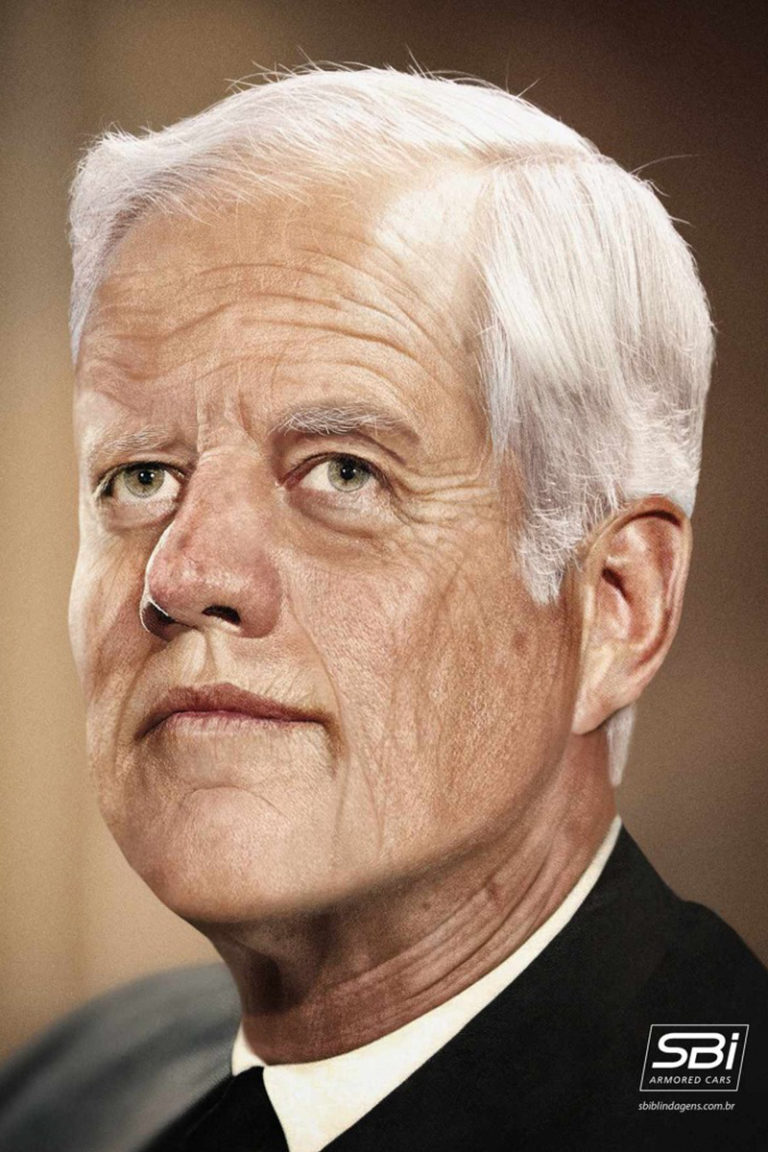
If JFK had not been assassinated, how many more years might he have lived? : r/Presidents
For context, the 35th president would be 106 years old, so probably wouldn’t still be with us, but it’s interesting to think about how long he would’ve lived. Yes, he became president at a very young age, but he had numerous health issues throughout his life. Might he have lived to see the Clinton administration and offered Bill some advice? Perhaps witnessing 9/11 or even the election of Obama?
Zapruder film driver was the gunman in the car – Search
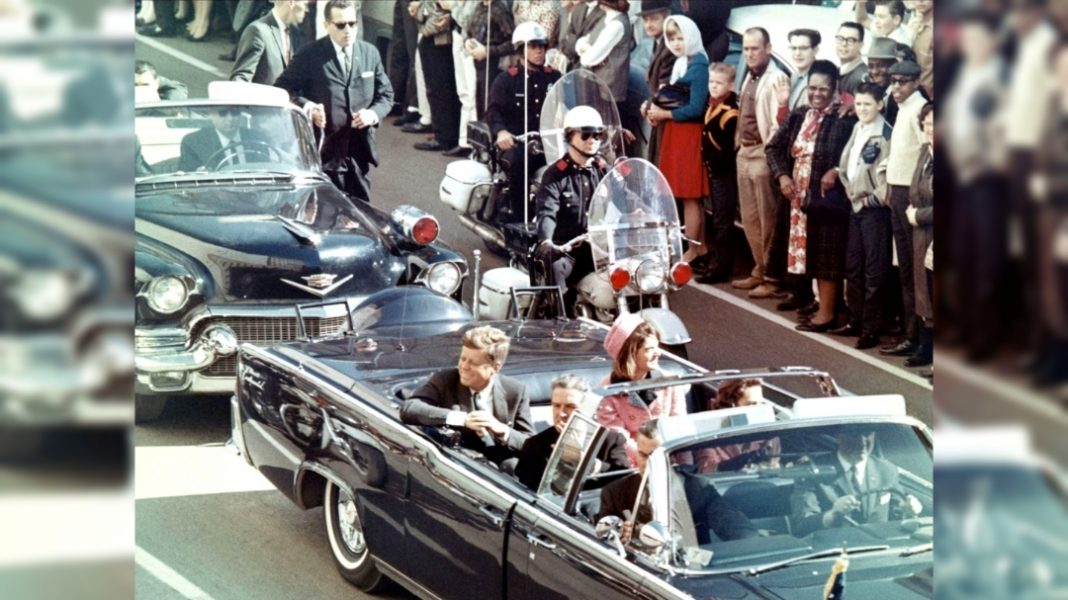
John F. Kennedy was given last rites 5 different times
JFK had 5 brushes with death before that open-air Dallas car ride
In this April 30, 1963 file photo, U.S. President John F. Kennedy listens while Grand Duchess Charlotte of Luxembourg speaks outside the White House in Washington.
The 35th president of the United States was a man of many distinctions.
But maybe one of the least-known is John F. Kennedy was administered last rites four times in his life. Not including his 1963 assassination.
A youthful JFK was elected president at the age of 43, yet battled health issues his entire life. If it weren’t for the care of doctors, nurses and hospitals, he would have never lived to see his inauguration day.
When JFK was just two years old, he was diagnosed with scarlet fever on the very day his mother was giving birth to his sister, Kathleen. Fearing he might transmit the fever to his siblings, his family rushed him to the Boston City Hospital. His condition became so dire, a priest was called in to deliver last rites. But young Kennedy pulled through due to the diligent efforts of the hospital staff. He received treatment for six weeks, then spent another six weeks in isolation until he recovered.
Years later, Kennedy enlisted in the Navy, where he saw action in the South Pacific. Four years after returning to civilian life, he was visiting England when he suddenly became ill. He was diagnosed with Addison’s disease in a London hospital. Addison’s disease is a serious adrenal disorder where the body doesn’t produce enough hormones to balance metabolism, blood pressure, stress response and the immune system.
JFK’s family insisted he be sent home, but his condition deteriorated severely while crossing the Atlantic and a priest was summoned to perform last rites. But again, Kennedy managed to hold on until he arrived home where doctors saved his life.
The third time JFK was given last rites was during a trip across Asia with his brother Robert, in 1951. While in Tokyo, JFK suffered a debilitating recurrence of his Addison’s disease. His temperature surged to 41 C. He became delirious, then comatose. Those around him didn’t think he could possibly survive. A priest was called in to deliver last rites. But Robert Kennedy found a way to transport JFK to an American military hospital in Okinawa. The medical staff there was able to save his life and the 34-year-old slowly convalesce until he was well enough to travel back home.
Then in 1954, two years after being elected to the U.S. Senate, JFK had to undergo surgery to fuse his spinal disks. It was a risky operation, but there was a chance that if he didn’t take the surgery, he might be confined to a wheelchair for life.
After the operation, he developed a urinary tract infection that became so serious due to his Addison’s disease, his temperature spiked dangerously high and he again slipped into a coma. He wasn’t expected to last the night and a priest was summoned to administer last rites for the fourth time in his life. But again, he managed to pull through and spent five months recovering.
When he was shot on that fateful day in Dallas in 1963, President Kennedy was rushed to Parkland hospital. A local priest was called in to perform last rites for the fifth and final time. This was the one time doctors could not save him. But hospitals had performed miracles on John F. Kennedy throughout his short life.
Kennedy had a slew of lifelong health problems and required extremely regular medical attention. If he wasn’t shot, it wouldn’t have been surprising if he’d only lived another ten years or so. JFK’s most serious health issue was Addison’s Disease. Men who are diagnosed with Addison’s Disease when young (as JFK was) live to an average age of about 65. So he probably would have lived to around the early ’80s, long enough to see his frenemy Nixon resign and the rise of Reagan, but probably not long enough to give the nominating speech for Clinton at the 1992 DNC.
I doubted Nixon would have become president in 1968 if Kennedy had lived, but it’s an interesting question what his opinions on Watergate would have been. Kennedy 100 percent would’ve won the 64 elections. Weird timeline Richard Nixon/HBO Timeline | Watchmen Wiki | Fandom when Nixon was president in the 80s. I think he would have lived until around 1980 or longer. Newer medicine was getting better there would of been more medications in the 70s and 80s
Into his 60s.
Addisons would have taken him prematurely; it’s a nasty disease especially for men.
He could have died in his 50’s or lived into his 80’s. He had the best health care you could get his whole life and was acutely aware of his medical struggles. And she only had 5 years of work (max) of work left before retirement so he could have easily had decades left. Most Doctors believed he would have had severe mobility issues by 50, so that would have been roughly the end of his second term.
I don’t think he would have survived more than a decade after leaving the White House.
Man this is a really interesting question. If he had gotten a 2nd term, I think his health combined with the stress would have ensured his life ending before his 60th. He inhaled medications and serving a 2nd term facing down Vietnam and Civil Rights may have even killed him. That being said, I’m not a doctor but I know his condition was rough to say the least. what was JFK DRUG COCKtail he was taking for his health issues – Search
What JFK DRUG COCKTAIL he was taking for his health issues
John F. Kennedy’s drug cocktail for his health issues included a combination of painkillers, stimulants, and other medications to manage his various health problems.
Here are some of the drugs he was taking:
Painkillers: Codeine, Demerol, and Methadone were used for pain relief.
Stimulants: Ritalin was taken for anxiety and to boost energy levels.
Anxiety Medications: Meprobamate and Librium were used to manage anxiety.
Sleep Medications: Barbiturates were used for sleep.
Hormones: Thyroid hormone was used to combat adrenal insufficiency.
Infections: Gamma globulin was used to fight infections.
Adrenaline: Hydrocortisone and Testosterone were used to boost energy and combat adrenal insufficiency.
These medications were taken in varying doses and combinations, often in response to stress or crises, such as during the Bay of Pigs fiasco and the Cuban Missile Crisis. Kennedy’s health was fragile, and he was almost permanently in pain for the last 10 years of his life due to a long-running back ailment.
His illness plus severe problems with his spine he would get injections of narcotics by a Dr called DR Feelgood would administer to him and other people in high places he came close to death had last rites 4 times I read that he was buried without his brain his brother was afraid they would find out some narcotic depend it was removed then place in a secret place but then it disappeared there is a theory that Robert had it taken
If Kennedy would have made it to 1980, he would have been lucky.
Sometime between 1985 and 2000. He had Addison’s disease plus a slew of other health problems, but Addison’s disease was the only thing that would truly affect his lifespan. The average person with that disease lived into their late 60s, and JFK would’ve had the best medical treatment available, and if he had organ failure or some other acute condition, he’d be first in line for treatment.
He’d still wear down quicker than his siblings (I don’t think he’ll live into his late 80s or early 90s like some of his siblings), and it seems likely he’ll die sometime in his late 70s (that’s the mid 90s) assuming he took his health seriously. He wasn’t a heavy drinker, nor did he smoke, and he tried to stay fit and active – all that would prolong his life.
One of my favorite fun facts is that he could theoretically be alive today if he wasn’t shot. It’s not like no one’s ever lived to 106 before.
Author of I Want To Die But I Want To Eat Tteokbokki dies at 35