

Meanwhile, being calmer and more reflective can lead to a longer, healthier life.
Does your personality affect your risk of developing dementia?
Personality Traits and Cognitive Decline in Older Adults
A 2022 American Psychological Association (APA) study, published in the Journal of Personality and Social Psychology, found that certain “Big Five” personality traits are linked to the risk of cognitive decline in older adults 
Key findings
- High conscientiousness (organized, disciplined, goal‑directed) was associated with a lower risk of developing mild cognitive impairment (MCI) and progressing to dementia
- Low neuroticism (emotional stability, less anxiety, mood swings, or depression) also reduced the likelihood of cognitive decline
- Extraversion showed a more nuanced role: higher extraversion was linked to more years of cognitive health span, especially in women, but was not as strongly protective against MCI as conscientiousness
- The study found no overall link between these traits and total lifespan, but they did influence cognitive health span — the number of years with good cognitive function
Study design
Researchers analyzed 23 years of annual data from 1,954 older adults in the Rush Memory and Aging Project in Chicago and northeastern Illinois
Mechanisms proposed
Lead author Dr. Tomiko Yoneda explained that personality traits reflect enduring patterns of thinking and behaving, which can influence engagement in healthy or unhealthy behaviors, thought patterns, and stress responses over a lifetime
Implications
While personality cannot be “changed” to prevent dementia, the findings suggest that lifestyle habits, stress management, and engagement in socially and cognitively stimulating activities — behaviors often linked to conscientiousness and low neuroticism — may help protect cognitive health in later life
In summary:
- Protective traits: High conscientiousness, low neuroticism.
- Risk trait: High neuroticism.
- Additional benefit: Higher extraversion linked to longer cognitive health span.
These results highlight the potential role of personality in shaping cognitive aging, but they do not replace medical or lifestyle interventions for brain health.
People who are organized, with high levels of self-discipline, may be less likely to develop mild cognitive impairment as they age, while people who are moody or emotionally unstable are more likely to experience cognitive decline late in life, according to research published by the American Psychological Association.
The research, published in the Journal of Personality and Social Psychology, focused on the role three of the so-called “Big Five” personality traits (conscientiousness, neuroticism and extraversion) play in cognitive functioning later in life.
“Personality traits reflect relatively enduring patterns of thinking and behaving, which may cumulatively affect engagement in healthy and unhealthy behaviors and thought patterns across the lifespan,” said lead author Tomiko Yoneda, PhD, of the University of Victoria. “The accumulation of lifelong experiences may then contribute to susceptibility of particular diseases or disorders, such as mild cognitive impairment, or contribute to individual differences in the ability to withstand age-related neurological changes.”
Individuals who score high in conscientiousness tend to be responsible, organized, hard-working and goal-directed. Those who score high on neuroticism have low emotional stability and have a tendency toward mood swings, anxiety, depression, self-doubt and other negative feelings. Extraverts draw energy from being around others and directing their energies toward people and the outside world. They tend to be enthusiastic, gregarious, talkative and assertive, according to Yoneda.
To better understand the relationship between personality traits and cognitive impairment later in life, researchers analyzed data from 1,954 participants in the Rush Memory and Aging Project, a longitudinal study of older adults living in the greater Chicago metropolitan region and northeastern Illinois. Participants without a formal diagnosis of dementia were recruited from retirement communities, church groups, and subsidized senior housing facilities beginning in 1997 and continuing to the present. Participants received a personality assessment and agreed to annual assessments of their cognitive abilities. The study included participants who had received at least two annual cognitive assessments or one assessment prior to death.
Participants who scored either high on conscientiousness or low in neuroticism were significantly less likely to progress from normal cognition to mild cognitive impairment over the course of the study.
“Scoring approximately six more points on a conscientiousness scale ranging 0 to 48 was associated with a 22% decreased risk of transitioning from normal cognitive functioning to mild cognitive impairment,” said Yoneda. “Additionally, scoring approximately seven more points on a neuroticism scale of 0 to 48 was associated with a 12% increased risk of transition.”
Researchers found no association between extraversion and ultimate development of mild cognitive impairment, but they did find that participants who scored high on extraversion—along with those who scored either high on conscientiousness or low in neuroticism—tended to maintain normal cognitive functioning longer than others.
For example, 80-year-old participants who were high in conscientiousness were estimated to live nearly two years longer without cognitive impairment compared with individuals who were low in conscientiousness. Participants high in extraversion were estimated to maintain healthy cognition for approximately a year longer. In contrast, high neuroticism was associated with at least one less year of healthy cognitive functioning, highlighting the harms associated with the long-term experience of perceived stress and emotional instability, according to Yoneda.
Additionally, individuals lower in neuroticism and higher in extraversion were more likely to recover to normal cognitive function after receiving a previous diagnosis of mild cognitive impairment, suggesting that these traits may be protective even after an individual starts to progress to dementia. In the case of extraversion, this finding may be indicative of the benefits of social interaction for improving cognitive outcomes, according to Yoneda.
There was no association between any of the personality traits and total life expectancy.
Yoneda noted that the findings are limited due to the primarily white (87%) and female (74%) makeup of the participants. Participants were also highly educated, with nearly 15 years of education on average. Future research is necessary on more diverse samples of older adults and should include the other two of the Big Five personality traits (agreeableness and openness) to be more generalizable and provide a broader understanding of the impact of personality traits on cognitive processes and mortality later in life, she said.
Summation
Your personality is linked to risk of dementia – Big Think
Research suggests that personality traits are associated with mild cognitive impairment (MCI), dementia, and mortality risk, but the timing of when traits are most important in the progression to dementia and the extent to which they are associated with years of cognitive health span are unclear. This project applied secondary data analysis to the Rush Memory and Aging Project (N = 1954; baseline Mage = 80 years; 74% female) over up to 23 annual assessments.
Multistate survival modeling examined the extent to which conscientiousness, neuroticism, and extraversion, assessed using the NEO Five Factor Inventory, were associated with transitions between cognitive status categories and death. Additionally, multinomial regression models estimated cognitive health span and total survival based on standard deviation units of personality traits. Adjusting for demographics, depressive symptoms, and apolipoprotein (APOE) ε4, personality traits were most important in the transition from no cognitive impairment (NCI) to MCI.
For instance, higher conscientiousness was associated with a decreased risk of transitioning from NCI to MCI, hazard ratio (HR) = 0.78, 95% CI [0.72, 0.85] and higher neuroticism was associated with an increased risk of transitioning from NCI to MCI, HR = 1.12, 95% CI [1.04, 1.21]. Additional significant and nonsignificant results are discussed in the context of the existing literature.
While personality traits were not associated with total longevity, individuals higher in conscientiousness and extraversion, and lower in neuroticism, had more years of cognitive health span, particularly female participants. These findings provide novel understanding of the simultaneous associations between personality traits and transitions between cognitive status categories and death, as well as cognitive health span and total longevity. (PsycInfo Database Record (c) 2025 APA, all rights reserved) Associations between personality and psychological characteristics and cognitive outcomes among older adults.
Personality Traits, Cognitive States, and Mortality in Older Adulthood Search Videos
Certain personality traits associated with cognitive functioning late in life | EurekAlert!
Article: “Personality Traits, Cognitive States, and Mortality in Older Adulthood,” by Tomiko Yoneda, PhD, Tristen Lozinski, BS, Andrea Piccinin, PhD, and Scott M. Hofer, PhD, University of Victoria; Eileen Graham, PhD, and Daniel Mroczek, PhD, Northwestern University; David Bennett, MD, Rush University; and Graciela Muniz-Terrera, PhD, The University of Edinburgh. Journal of Personality and Social Psychology, published online April 11, 2022.
Experts say this anti-inflammatory food can also improve your gut health
Signs your body is aging faster than normal
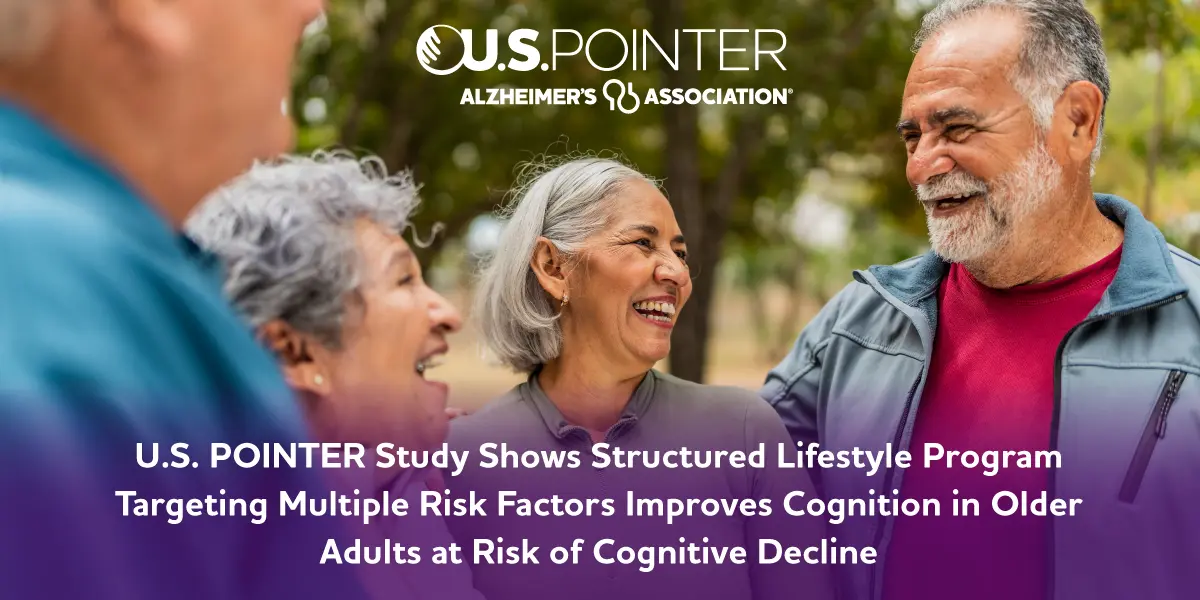
The Pointer Study: What is it and why is it important for our brain health?
The U.S. POINTER study, formally called the ‘Protect Brain Health Through Lifestyle Intervention to Reduce Risk’ trial, was first launched by the Alzheimer’s Association in 2018 with participant recruitment beginning in 2019.
The U.S. POINTER is the first large-scale, randomized controlled clinical trial to demonstrate that an accessible and sustainable healthy lifestyle intervention — a combination of diet, exercise, heart health, and cognitive challenge and social engagement — can protect cognitive function in diverse populations in communities across the United States.
The study is a large, ongoing clinical trial investigating whether lifestyle changes can help protect cognitive function in older adults who are at higher risk of cognitive decline. It is the first study of its kind in the United States and it builds on earlier, promising research in Europe, notably the FINGER Study which took place in Finland.
The FINGER study demonstrated that a combination of lifestyle changes significantly slowed cognitive decline in older adults. It showed that up to 40% of dementia cases may be preventable through changes in the way we live. For example, what we eat (nutrition), how much we move (exercise), how well we sleep (sleep), and whether we challenge our brains (active mind) and stay socially engaged (healthy life) – the 6 core pillars that form the foundation of Brain Health Network and collectively shape our long-term brain health. The Pointer Study aims to see if similar results can be achieved in a diverse American population in which lifestyle changes have the greatest impact.
The study involves 2,111 adults between the ages of 60-79. According to the Alzheimer’s Association, “more than 30% of participants were from groups typically under-represented in dementia research”. This cohort was made up of those who do not exercise regularly, who may have a family history of memory loss, slightly high blood pressure, cholesterol or blood sugar levels. Participants were randomly split into two intervention groups and followed over a two year period.
Throughout this time, both groups received advice and support in terms of lifestyle habits, but one group received a more intensive programme. These programmes were referred to as self-guided vs. self-structured intervention programmes.
They included:
- Physical activity: a structured exercise programme was created with both aerobic and strength training sessions adjusted to ability.
- Healthy diet: emphasis was on the Mediterranean diet which included plant-based foods, lean protein, whole grains and healthy fats.
- Cognitive training: regular brain training exercises designed to stimulate problem-solving, memory and processing speed.
- Social engagement: focus was on group activities and regular contact with others to support strong social networks.
- Monitoring vascular risk: regular health checks were carried out to manage blood pressure, cholesterol and blood sugar levels.
Participants in the more intensive self-structured programme received personalised coaching, group sessions and support to help them stick with these new habits. The self-guided group received general health education.
Recently, the U.S Pointer study has been highlighted in the news as the study’s initial results were revealed on 28 July 2025 during the Alzheimer’s Association International Conference (AAIC) 2025 in Toronto. The findings were then published in JAMA (the Journal of American Medical Association).
Both programmes showed improved cognitive function in older adults at risk of dementia, but the structured programme delivered significantly better results. The structured intervention, which featured greater intensity, structure, accountability and support, produced greater cognitive benefits. It “showed greater improvement on global cognition compared to the self-guided intervention, protecting cognition from normal age-related decline for up to two years.”
These findings show new insights and actionable steps that can be taken for public health and clinical practice in helping to reduce the risk of dementia in later life. As Professor James Goodwin explains, “The US POINTER study confirms earlier studies that favourable lifestyle factors can reduce the risk of cognitive decline. The Finnish FINGER study was the first to show this, and Brain Health Network bases its approach on this proven principle”.
According to Professor Goodwin, one of the overlooked findings from POINTER was the consistency in keeping to a healthy lifestyle – a major factor in the effectiveness of any lifestyle change. In particular, our Healthy Life pillar reflects what these studies (POINTER and FINGER) have shown: one third of dementia cases can be explained by ‘healthy life’ factors – diabetes, blood pressure, being overweight, physical inactivity, depression and smoking. Visit our ‘Healthy Life’ pillar on our website to find out more.
The POINTER Study: Lifestyle’s Impact on Brain Health – Brain Health Network
Why Some Dementia Patients Experience Intense Dreams or Nightmares and What to Do
Experts say this anti-inflammatory food can also improve your gut health
The POINTER Study: Lifestyle’s Impact on Brain Health – Brain Health Network