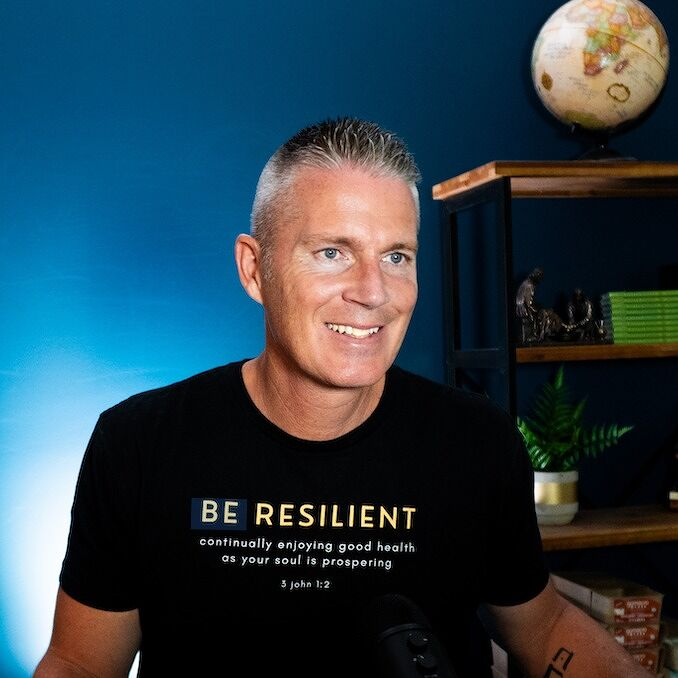
Dr. Pete Sulack — Education, Career, and Background
Dr. Pete Sulack is a licensed chiropractor, author, faith-based health advocate, and founder of Redeem Health and Matthew 10 International, with over 20 years of clinical and ministry experience, and a public profile shaped by his 2024 diagnosis and reported remission from Grade 4 diffuse astrocytoma 
Education and Professional Training
Dr. Sulack is a licensed chiropractor with more than two decades of clinical practice 

- Clinical leadership in one of the largest chiropractic and wellness clinics in the U.S., managing over a million patient visits
- Functional medicine and metabolic protocol development for chronic conditions, later applied in his own cancer treatment
- Public speaking and teaching in health, faith, and resilience, with a global reach through events, media, and written works
www.matthew10.com+1.
Career Highlights
- Redeem Health – Founder and leader, focusing on holistic, faith-informed health programs
- Matthew 10 International – Founded in 2006 as a ministry to proclaim the Gospel, serve the needy, and support pastors; has traveled internationally 25+ times
- Medical Consultant – Progressive Medical Center, advising on cancer support and metabolic health protocols
- Author and Speaker – Co-authored Healing Prayers for Cancer and delivers talks on resilience, faith, and health
Personal and Public Story
In November 2024, Dr. Sulack was diagnosed with Grade 4 diffuse astrocytoma, an aggressive brain cancer with no known cure, and a 1% eight‑month survival prognosis
Faith and Mission
Dr. Sulack’s work is deeply rooted in his Christian faith, influenced by his great-grandparents’ Baptist missionary heritage in Nagaland, India
In summary: Dr. Pete Sulack is a chiropractor, wellness leader, and faith advocate with a career built on functional medicine, global ministry, and public teaching, now recognized for his personal cancer survival and his mission to inspire resilience and hope in others
“Beloved, I pray that you may prosper in all things and be in health, just as your soul prospers.”
3 John 1:2 expresses a heartfelt prayer from the Apostle John to his friend Gaius, wishing him prosperity and good health in every aspect of life, paralleling the well-being of his soul (NKJV) 
Key Points and Interpretation
- Prosperity in all things: This refers not only to material or financial success but also to general well-being, success in daily endeavors, and fulfillment in life
Bible Hub+1.
- Health: John’s prayer includes physical health, highlighting the importance of caring for the body alongside spiritual growth
- Soul prosperity: The verse underscores that spiritual health—faith, love, and righteousness—is foundational. John implies that as the soul prospers, it can positively affect other areas of life
- Application: This verse is often cited in Christian teachings to encourage believers to seek holistic well-being, combining spiritual devotion with care for physical and emotional health
🔥When I was given 1% chance to live, I changed not just what I ate… but what I refused to eat.
🚫 Most fruit (kept only berries)
🚫 Grains
🚫 Processed dairy (except butter & cottage cheese)
🚫 Soy
🚫 Seed oils
 This is for educational purposes only. I’m sharing what I personally did in my own healing journey.
This is not medical advice. Always consult your doctor before making dietary or health changes.
Diet, Nutrition & Cancer | Dr. Pete Sulack
After my cancer diagnosis, I stopped looking at food in terms of calories and started looking at it in terms of biology.
Every time you eat, you’re creating a biological response. Blood glucose changes. Insulin changes. Hormones and signaling pathways respond. Your gut microbiome is affected. You’re supplying your cells with fats, amino acids, vitamins, minerals, and thousands of naturally occurring plant compounds.
So when someone tells me diet doesn’t matter, I simply don’t agree.
Science tells us it matters.
That doesn’t mean food alone treats cancer. It means diet is one of the most consistent ways we influence the environment our cells live in every single day.
That’s why diet became one of the five pillars of my approach, and it’s an area of my health I don’t compromise on.
Start by Getting Rid of the Food That Isn’t Food
If I could change one thing about the American diet tomorrow, I would dramatically reduce ultra-processed food.
This isn’t based on opinion. In a large prospective study of more than 100,000 people, every 10% increase in ultra-processed food in the diet was associated with approximately a 12% increase in overall cancer risk. Other large studies and reviews have connected higher ultra-processed food intake with obesity, type 2 diabetes, cardiovascular disease, and other poor health outcomes.
So this is where I start: eat real food.
If it came from the ground, grew on a tree, swam in the water, or had a mother, we’re generally moving in the right direction. If most of the ingredient list requires a chemistry lesson, I don’t want it making up the foundation of my diet.
You don’t need a complicated protocol to understand that.
Your Terrain Matters
This is also where terrain theory becomes important.
A tumor doesn’t exist in isolation. It exists inside a person, and that person has a metabolic state, nutrient status, immune system, microbiome, inflammatory state, hormones, circulation, and an entire internal environment surrounding those cells.
That’s your terrain.
Diet has the ability to influence many of those factors. We know dietary patterns affect insulin sensitivity, glucose regulation, body composition, cardiovascular health, the microbiome, and inflammatory markers.
Cancer Has a Metabolism
This became particularly important to me when I began studying cancer metabolism.
Nearly a century ago, Nobel Prize-winning scientist Otto Warburg observed that many cancer cells consume large amounts of glucose and rely heavily on glycolysis even when oxygen is available. Today we call this the Warburg Effect, and altered cellular metabolism is now recognized as one of the important characteristics of cancer biology.
That does not mean cancer is simply a sugar disease. Cancer cells can be metabolically flexible, and different cancers behave differently.
But it absolutely means metabolism deserves our attention.
That’s one reason I chose a therapeutic ketogenic diet. I restricted carbohydrates aggressively, incorporated fasting, and actually measured my glucose and ketones because I wanted to know whether I was achieving the metabolic state I was aiming for.
I wasn’t “doing keto” because it was popular. I was using ketosis as a targeted metabolic strategy.
Keto Is Not for Everyone
This is where I see people make mistakes.
They hear that I used a ketogenic diet during my cancer journey and assume they should do the same thing. I don’t believe that.
If you’re going to use ketosis therapeutically, you need to understand whether you’re actually in ketosis. Simply eating bacon, butter, cheese, and fewer carbohydrates doesn’t automatically accomplish that.
If you’re eating a high-fat diet but regularly producing enough glucose or consuming enough carbohydrate to keep yourself out of ketosis, you’re not necessarily achieving the metabolic state you intended.
There are other concerns as well. Some people with cancer are already losing weight or muscle. Others may have medical conditions, medications, treatment-related nutritional needs, or metabolic circumstances that make aggressive carbohydrate restriction inappropriate.
So I wouldn’t blindly recommend keto to every cancer patient.
Use the strategy that makes sense for your biology, and measure what you’re trying to change.
That’s also one of the reasons I’m such a believer in <u>personalized testing through Be Resilient</u>. I would rather make decisions using information than guess.
If You’re Not Doing Keto, Look at the Mediterranean Diet
For someone who isn’t pursuing therapeutic ketosis, a Mediterranean-style diet is one of the first dietary patterns I would look at.
Why?
Because unlike most trendy diets, we have decades of human research behind it.
The Mediterranean pattern emphasizes vegetables, fruits, legumes, nuts, seeds, extra virgin olive oil, fish, herbs, spices, and minimally processed foods while limiting ultra-processed foods, added sugars, and processed meats. It closely overlaps with nutrition recommendations from major cancer organizations.
It also naturally delivers something I think is incredibly important: a huge diversity of biologically active plant compounds.
Polyphenols, carotenoids, flavonoids, fiber, minerals, healthy fats, and countless other compounds interact with human physiology in ways we’re still working to understand.
You don’t get that from an ultra-processed diet.
I Intentionally Eat Anti-Angiogenic Foods
A solid tumor cannot continue growing beyond a certain size without developing a blood supply. It needs oxygen and nutrients, so tumors can release signals, including VEGF, that stimulate the formation of new blood vessels. This process is called angiogenesis.
One of the strategies in modern oncology is anti-angiogenesis, or interfering with the signals tumors use to develop that blood supply. This is established cancer biology, and there are FDA-approved cancer drugs designed specifically to inhibit angiogenesis.
Nutrition is where this became particularly interesting to me. Researchers have identified naturally occurring compounds in foods that demonstrate anti-angiogenic activity in laboratory and preclinical research. These include compounds found in foods such as berries, cruciferous vegetables, green tea, garlic, tomatoes, herbs, spices, and extra virgin olive oil.
That’s why I intentionally incorporate many of these foods into my diet. I want foods that are nutrient-dense, support my overall terrain, and contain compounds being studied for their effects on biological pathways relevant to cancer.
I want as much of my diet working in my favor as possible.
What I Would Do First
If you’re overwhelmed by all of this, don’t start by trying to recreate my diet tomorrow.
Start by removing what we already have a good reason to limit.
Get ultra-processed foods out of the foundation of your diet. Eliminate sugary drinks and added sugars. Limit processed meats. Start eating real, nutrient-dense foods.
Then add intentionally.
Eat colorful vegetables and berries. Eat cruciferous vegetables. Use extra virgin olive oil. Include herbs and spices. Get adequate protein so you can maintain muscle. Eat foods naturally rich in fiber and phytonutrients.
From there, get more personalized.
Look at your glucose. Look at your metabolic health. Understand your nutritional status. Determine whether a Mediterranean-style approach makes sense or whether there is a reason to discuss a more targeted strategy such as therapeutic ketosis with your healthcare team.
But please don’t make the mistake of thinking diet doesn’t matter simply because diet isn’t a cancer treatment.
Those are two completely different statements.
Food changes biology.
We have overwhelming evidence for that.
I can’t control every variable in my health, but I can control what I put on my plate multiple times every day. After my diagnosis, I decided I wasn’t going to waste that opportunity.
I want to eat in a way that supports metabolic health, provides the nutrients my body needs, minimizes unnecessary processed food, and creates the healthiest terrain I reasonably can.
That’s how I approach diet today.  Accept Jesus TODAY!

Blessed And Highly Favored -The Detty Sisters
Cancer, Ketosis, and Conviction: Dr. Pete Sulack’s Healing … – iHeart
Jun 24, 2025 · In this powerful episode of the Lisa Fischer Said Podcast, Dr. Pete Sulack shares his remarkable journey of healing …
Dr. Pete Sulack – These are the 8 FOODS I EAT DAILY to… | Facebook
Aug 10, 2025 · Protocol I was just diagnosed with TNBC that has spread to lymph nodes and bloodstream.  These are the 8 FOODS I …
Dr. Pete Sulack – I declared healing. ️ I … – Facebook
May 28, 2025 ·  I declared healing.
 I declared protection. I declared LIFE when death tried to speak. These Scriptures weren’t just …
Dr. Pete Sulack – The Glioma Protocol That’s Being… | Facebook
Sep 16, 2025 · The Glioma Protocol That’s Being Quietly Used Around the World Here’s what’s included: Ivermectin – immune …
- Dr. Pete Sulack | Cancer, Faith & Resilience Dr. Pete Sulack shares his cancer journey, faith, resilience resources, health education, and the lessons that …
- Ivermectin has been shown in recent studies to inhibit cancer cell growth, impair glucose metabolism, and disrupt mitochondrial respiration—especially in aggressive tumor types.But it must be used with caution and proper terrain support.https://www.instagram.com/p/Dej0KCLTpJW/
 Research:
• Ivermectin inhibits WNT-TCF pathway in cancer stem cells – (Nature, 2014)
• Disrupts mitochondrial function in glioblastoma – (Front Pharmacol, 2020)
• Can stress detox organs if not paired with liver and gut support – (Toxicol Appl Pharmacol, 2012)I used it strategically, not casually.
Cancer isn’t a one-pill problem—it’s a terrain problem.
Dr. Pete Sulack | Cancer, Faith & ResilienceDr. Pete Sulack shares his cancer journey, faith, resilience resources, health education, and the lessons that have shaped his recovery… Dr. Pete Sulack’s Cancer Story | The Story Behind My Mission drpetesulack – Search Images - drpetesulack
🔥 Ivermectin vs Mebendazole vs Fenbendazole — What’s the Difference? - And one thing I noticed quickly?
- ⚠️ People often talk about ivermectin, mebendazole, and fenbendazole like they’re the same thing.
- They’re not.
- Researchers study each compound for very different reasons and mechanisms.
- Here’s a simple breakdown 👇
- 💊 IVERMECTIN
- Researchers have explored ivermectin in laboratory models involving:
- ✅ Cellular signaling pathways
- ✅ Immune modulation
- ✅ Inflammatory signaling
- ✅ Cellular transport mechanisms
- ✅ Tumor-related metabolic pathways
- 📚 Frontiers in Oncology, 2022
- 🐾 MEBENDAZOLE
- Mebendazole has been studied for:
- ✅ Microtubule disruption
- ✅ Cell division pathways
- ✅ Mitotic stress signaling
- ✅ Metabolic stress responses
- 📚 Scientific Reports
- ⚡ FENBENDAZOLE
- Fenbendazole research discussions often focus on:
- ✅ Microtubule interaction
- ✅ Cellular energy processes
- ✅ Glucose-related metabolism
- ✅ Cellular replication signaling
- 📚 Preclinical metabolic research models
- ⚠️ Important:
- These compounds are NOT approved cures for cancer.
- And I’m not telling anyone to self-prescribe or replace conventional medical care.
- For me personally, they were explored only as PART of a much larger terrain-focused strategy involving:
- 🥩 Ketosis
- ⏰ Fasting
- 🫁 Hyperbaric oxygen
- ☀️ Red light therapy
- 🌱 Detoxification support
- 🔥 Inflammation reduction
- 🙏 Faith + nervous system regulation
- Because healing is rarely one thing.
- It’s the cumulative effect of intentional choices that support:
- ⚡ Mitochondria
- ⚡ Metabolism
- ⚡ Oxygen delivery
- ⚡ Cellular resilience DISCLAIMER: This information is for educational purposes only and reflects personal experience
#Ivermectin #Mebendazole #fenbendazole #drpetesulack #braincancersurvivor journeytowellness.orghttps://journeytowellness.org › insights › dr-pete-sulack-on-repurposed-drug…Dr. Pete Sulack on Repurposed Drugs and Hope for the Future of …Oct 27, 2025 · A New Approach to Starving Cancer at Its Source What if cancer treatment could target not just tumors, but the fuel …
- The Resilience Protocol is FINALLY LIVE! The exact … – FacebookMar 12, 2025 · The Resilience Protocol is FINALLY LIVE! The exact strategies I’ve used to fight Grade 4 Diffuse Astrocytoma (brain cancer …
- Dr. Pete Sulack – The Budwig Protocol: A 70-Year-Old … – FacebookOct 11, 2025 ·
 The Budwig Protocol: A 70-Year-Old Cancer Protocol I Still Use Today You’ve probably never heard of it— But this …
- Dr. Pete Sulack | The Budwig Protocol Ingredients: – 2 tablespoons of …The Budwig Protocol Ingredients:- 2 tablespoons of cold-pressed flaxseed oil (Dr. Pete uses Barlean’s organic flax oil)- 1 cup of German Quark…
- Dr. Pete Sulack-12 Steps To The Happy, Healthy Life You’ve Always Wanted — Destiny Image
- Mar 6, 2023 · In Be Resilient, Dr. Pete reveals a simple 12-step process that will empower you to achieve
- How Pete Sulack Beat the Deadliest Brain Cancer Against All Odds
Dr. Pete’s Resilience Protocol 1/30/2026Dr. Pete’s Resilience Protocol 11.4.25Dr Pete’s Guide to Resilience