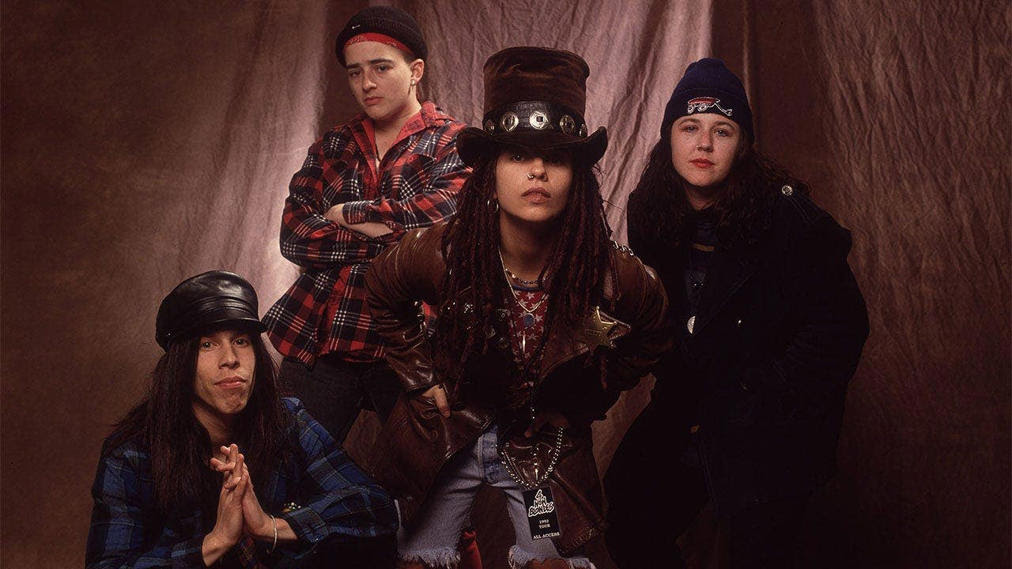
4 Non Blondes include Roger Rocha, Christa Hillhouse, Linda Perry and Dawn Richardson. © Getty Images
Linda Perry’s journey through grief and creativity
Linda Perry, best known as the frontwoman of 4 Non Blondes and a celebrated songwriter, has spoken openly about her breast cancer diagnosis, treatment, and the personal transformation that followed.
Diagnosis and cancer type
Perry said she felt healthy when, during a planned breast reduction surgery, doctors discovered triple-negative breast cancer in her biopsy 
She described it as a “very, very fast” and “angry” cancer, and noted she had never had mammograms, which she said she avoided due to discomfort with the medical process
The doctor offered two options — chemotherapy and radiation, or a double mastectomy — and Perry chose the latter without hesitation
Treatment and surgery
She underwent a double mastectomy in January 2022 
Personal and emotional impact
While recovering, Perry’s elderly mother, who had dementia and a history of emotional, mental, and physical abuse toward her, became gravely ill and died four months later 

Artistic response
These experiences inspired Perry’s 2026 solo album and documentary, Let It Die Here, Reel To Reel: Linda Perry: Let It Die Here Bing Videos her first solo record in 27 years
Current outlook
Perry has said she is “really happy” she can handle what comes and grateful for the support she receives
In short, Linda Perry’s cancer journey was marked by a surprise diagnosis, decisive treatment, profound personal loss, and a deep artistic transformation — and she has shared it openly to inspire and connect with others.
Linda Perry: Let It Die Here – Tribeca Documentary Film (2024) FULL HD

Linda Perry of 4 Non Blondes had a double mastectomy in 2022. © Getty Images
Linda Perry was five months into filming a documentary when her life was thrown into turmoil. She hadn’t exactly planned to make a film about herself: the frontwoman of 4 Non Blondes and hugely successful songwriter to the stars had merely agreed to let her friend record some studio footage for social media content. “He just said, ‘Can I come and film you and your process of songwriting?’” Perry says. “But then things started happening,” reports BritPanorama.
The documentary, Linda Perry: Let It Die Here — KTF Films became a raw, unfiltered account of grief, survival, and resolution, blending her cancer journey, her mother’s death, and the lingering trauma of her childhood abuse 
The project also coincided with her first solo album in 27 years, Let It Die Here, whose songs frame her mother as “the villain and the muse” 
Perry has said the experience was both “terrible” and “beautiful,” noting that her mother’s peaceful death was “the best gift” she gave her
Towards the end of 2022, Perry was diagnosed with breast cancer. Shortly afterwards, her mother, who had dementia, became gravely ill and died four months later, just as Perry was recovering from a double mastectomy. “And then my meltdown,” Perry adds, referencing an all-consuming artistic and personal identity crisis. “It was a crazy year.” The friend who was filming – Don Hardy, a producer – “saw a clear documentary where I was lost and in my own spin out.”
The situation was made even more fraught given Perry’s family history. Her mum had abused her as a child, which Perry describes as “fully traumatic and dramatic and abusive emotionally, mentally, physically.” Inadvertently, Hardy’s film, Let It Die Here – which has inspired Perry’s solo album of the same name, her first in 27 years – became a moving, raw, unfiltered document of grief, suffering, survival, and resolution. “If the documentary was about me and my vanity and how amazing I am, I would never have let that happen,” she says. “But it’s about way more than just me. It’s so honest and real.”

Linda Perry is seen on stage in 1990. Getty Images© Getty Images
Perry, on video call from LA, is one of America’s great songwriters. 4 Non Blondes only released one album at the height of America’s alt-rock explosion – 1992’s Bigger, Better, Faster, More! – but it had huge influence. With feminist and queer empowerment to the fore, the album sold seven million copies, spawning the MTV mega anthem “What’s Up?” and made Perry an icon.
Not that she makes a virtue of identity. “Let me just make this as clear, or queer, as possible. Me being gay has nothing to do with anything. But if you want to go there, I’m a single mum, gay Latino woman.” She laughs. “I mean, I got a lot of stuff on me right there.”
Perry says “What’s Up?” will never be beaten in terms of its impact. “Have I written songs that I feel are better? Yeah, of course. But it doesn’t mean it’s going to be received better.” Yet her run of hits in the noughties, where she became the go-to songwriter for pop stars seeking an alternative edge, ran it close: “Get the Party Started” by Pink, Gwen Stefani’s “What You Waiting For?” and Aguilera’s ballad “Beautiful.” There’ve been Grammy nominations and in 2015 an induction to the Songwriters Hall of Fame; and this week Perry received the Special International Award at the Ivor Novello Awards.
It’s not just her musical abilities that make her such a respected figure: Perry is admired for her no-nonsense independent spirit. “I mean, I’m a badass. I’m powerful. I know that. My mom was very, very tough. So I’m tough.” When I say lots of women in the music industry can often feel undermined and undervalued, Perry dismisses the notion. “I consider that a weak way to look at things. I’m not undermined, and I’m not undervalued at all. I’m actually afraid. Men are very intimidated by me when I walk into a room. My energy enters a room way before I do.”
Which is precisely what makes seeing her in such distress in the documentary all the more moving. Vulnerability is there in Perry’s songs – “honestly, most of my power comes from me being insecure and vulnerable” – but she says at times the documentary was difficult for her to watch. She is shown in her studio post-surgery, and, at the end, in tears after she performed “What Lies With You”, an anthemic song about her mum: she wrote the music the night before filming, and the lyrics that morning (“I’m holding on cos I just can’t say goodbye/I saw heaven in her eyes”). “It’s so powerful to me what happened in that room in such a short period of time.”
One distressing scene sees Perry go to film herself on her laptop to promote her EqualizeHER project (to help women access careers in music). But then a Supertramp song comes on through the speakers, the childhood memory sparking a breakdown: Perry continues to dance while in floods of tears, talking inaudibly. “I don’t know what happened. All I know is that I had some sort of meltdown.” She sent the video to Hardy immediately, who had asked Perry to also shoot footage for the film. “When I saw that on the big screen, I almost went into shock. It was a blackout of emotions, and seeing that scene was so embarrassing and so ridiculously honest and vulnerable.”
In another scene, the question of her purpose in life – as both a woman and artist – completely overwhelms her. She tells me that years of absorbing other artists’ personalities, feelings, ways of working – “if you’re wearing a jean and T-shirt, I put on your jean and T-shirt” is how she puts it – has adjusted her sense of self. “I’m a workaholic. And my mind is spinning. My heart is spinning. Everything’s spinning. Within that you get buried in all this other stuff that it gets hard to find out – where are you in this picture?”
The backdrop to this is childhood trauma. When she was growing up in San Diego – before she found an escape through music, via going to live with her older brother – Perry tried to kill herself with tranquilisers at 16. When the doctor told her mum and recommended treatment, she ignored the advice and did nothing.
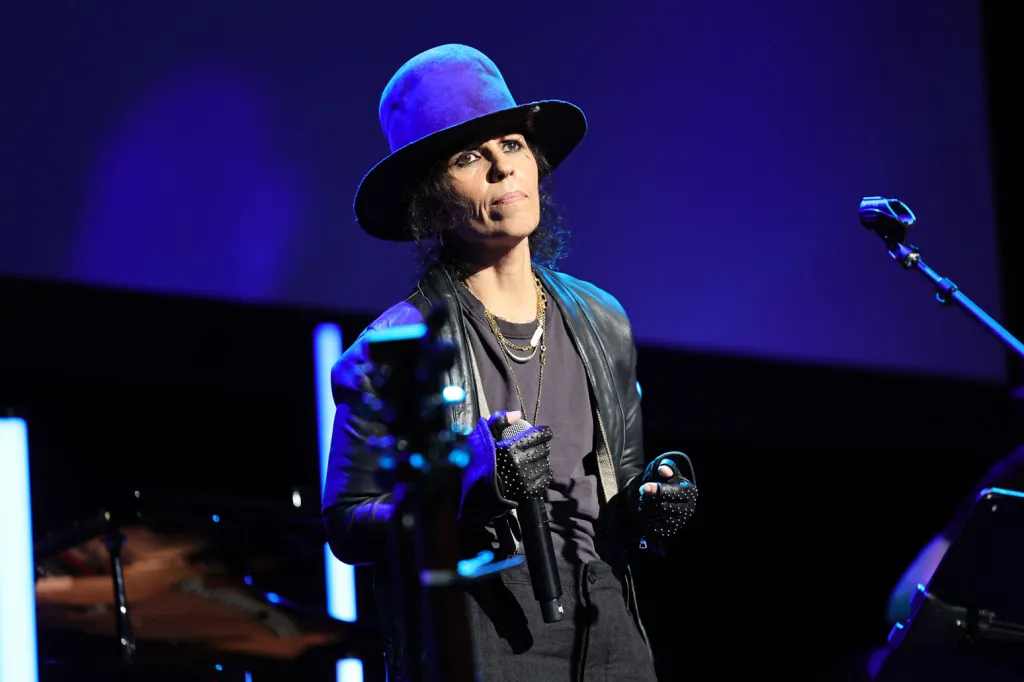
Linda Perry’s Inner Conflict in Let It Die Here
Linda Perry’s Inner Conflict in Let It Die Here Perry’s on‑screen demeanor often reflects a deep tension between condemning the harm she endured and yearning for the validation she never received from her mother.
The documentary was conceived when producer Don Hardy began filming Perry’s songwriting process, but the project evolved into an unfiltered account of her life amid breast cancer, a double mastectomy, and the death of her mother, who had dementia and had physically and emotionally abused her as a child britpanorama.co.uk+2. Perry has described her mother’s upbringing as “fully traumatic and dramatic and abusive emotionally, mentally, physically”
britpanorama.co.uk.
This history shapes the film’s emotional core. Perry alternates between denouncing her mother’s actions — calling them “hurt” and “damage” — and seeking a form of reconciliation or understanding that never came The Guardian. She has said she learned from her mother that “to show feelings was weak,” yet she herself is defined by emotional honesty and vulnerability
The Guardian+1.
In the film, Perry’s “torn” moments appear in candid scenes where she is visibly struggling, breaking down, or questioning her own worth, while also expressing a desire to be seen and understood. She has explained that she “needed truth in my life” as a child and that she would “give that” to others, but she also resisted the urge to let the camera capture her most vulnerable moments American Songwriter.
This duality — rejecting the abuse while still longing for maternal approval — is central to the documentary’s emotional weight. Perry has said the film is “about way more than just me” and that it is “so honest and real” because it shows her “lost and in my own spin out” britpanorama.co.uk+1. The tension between condemnation and longing mirrors her broader life narrative: surviving trauma, confronting her own identity, and seeking the validation that, despite her resilience, she never received from her mother
britpanorama.co.uk+1.
In short, Perry’s “torn” presence in the film is a direct reflection of her ongoing struggle to reconcile the love she craved with the harm she endured, making the documentary both a personal reckoning and a universal portrait of grief, survival, and the search for acceptance.
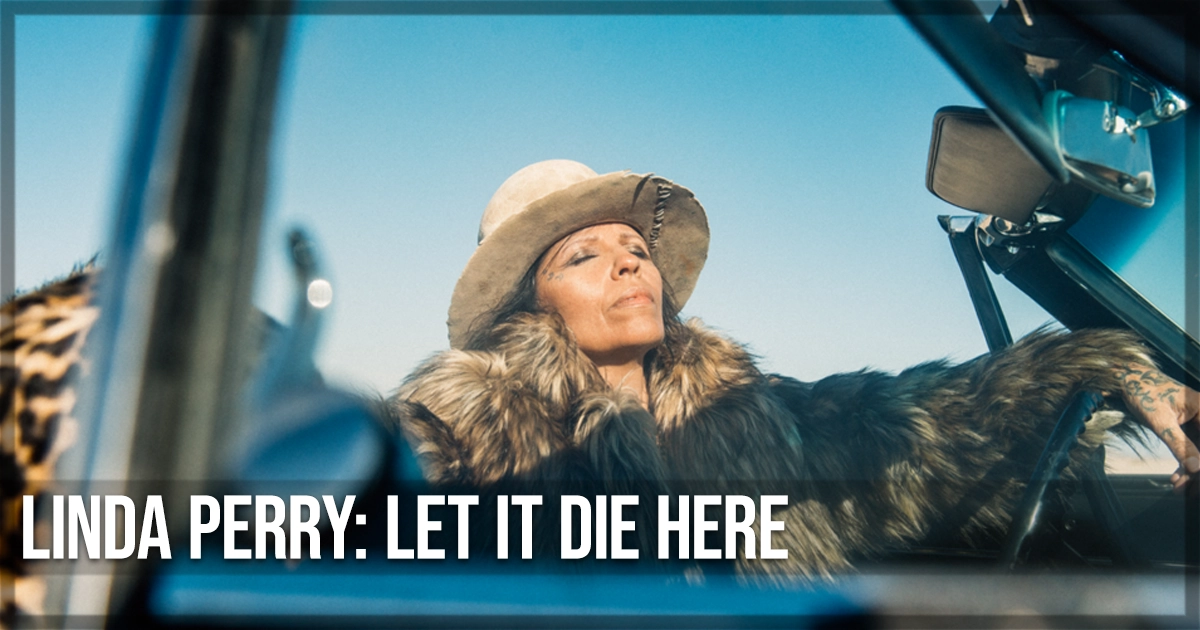
‘Linda Perry: Let It Die Here’ Review: An Immeasurably Moving Documentary
Throughout the documentary, Perry seemed torn between denouncing such actions and seeking validation from her mother that had never come. “Yeah,” she agrees, “and I think that would be one of the things that I hope people can relate to. That relationship with your parents is very complex. My mum being a hard woman wasn’t really her fault. Her parents were hard on her. I mean, I couldn’t give a f**k about my dad. I loved him and whatever, but his mistakes were his, and I was invisible to him. But my mum, I admired. She’s so powerful and strong, and what a survivor. And I wouldn’t trade any of that hard living for anything. I would take the beatings all again to end up where I am today.”
She says her mum’s death doesn’t change her perspective at all. “She did all those things, you know? So it doesn’t take it away just because someone dies. I still feel the bruises from that.” But there was a happier ending. Perry was able to bond with her mum over the last four months of her life; she lived in Perry’s house, and they slept in beds next to each other as she acted as her carer. It was, says Perry, “the most incredibly beautiful thing that could have ever happened. I got closure. So many people don’t get that. This is a hard thing to say, but my mother dying was the best gift she ever gave me. Because I’m free.”
But that freedom brings its own issues, she says. “Who am I without the villain in this picture? Who am I without someone to fight? Who am I without someone to blame? Who am I? I’m battling myself now. But it’s definitely way lighter, I’ll tell you that.”
The album Let It Die Here tries to answer all those questions across 17 tracks. Like the documentary, it is a powerful, at times uncomfortable listen. She describes it as “long, dark and depressing, and so thoughtful and emotional.” It is designed to lay the ghosts of the past to rest. “The goal of the album is to let it die here, let all that shit go so you can move forward.”
It holds all of Perry’s conflicted emotions, sometimes, as on “Is That All You Got” and “I Am Daughter”, within the same song. “It’s as if this record is a split personality and they’re all just showing up without my acknowledgement.” With “Feathers on a Storm”, she is taking responsibility for her future happiness. “We need to stop trying to make other people change, and we have to find the change within ourselves.”
A Perry solo album has been a long time coming. Why? “Because I’m scared,” she says, which is a surprising answer. “I’m a sensitive person. I’m a big contradiction.” She says it’s been fun, but she’s been using the artists she’s worked with.
Related Link:
- FORMER ‘DWTS’ HOST SAMANTHA HARRIS SURVIVED BREAST CANCER TWICE AFTER DOCTORS DISMISSED HER SYMPTOMS
- Celebrities who have had breast cancer – National Breast Cancer Foundation
- How many celebrities had breast cancer – Search Videos
- What Celebrities Have Had Breast Cancer? – Fertile Hope
- 23 Celebs Who Have Survived a Breast Cancer Diagnosis
- These Celebrities Have All Battled Cancer and Won
- Celebrities Who Have Had Breast Cancer
- Celebrities Who’ve Had Breast Cancer

Linda Perry felt “healthy” at the time of her breast cancer diagnosis. © Jamie McCarthy/Getty Images for LOVE ROCKS NYC/God’s Love We Deliver
Linda Perry says she was feeling healthy when doctors discovered angry cancer by chance
Story by Janelle Ash
Oct 23 • 2 min read
Linda Perry cancer journey – Search
Musician Linda Perry was feeling healthy when doctors discovered her body was plagued with an “angry” cancer.
On a recent episode of the “Off The Record” podcast with Lisa Konicki, Perry said “guardian angels” were the ones that brought her breast cancer diagnosis to the surface.
“That was just angels, you know, guardians, because I never do any of that stuff – mammograms. Nothing. No, I’m not going down that way. And if that’s where I go, then take me down. But I can’t stand the medical … I’m not a fan. I don’t buy it,” Perry began.
The 4 Non Blondes singer went on to explain that she considered herself “healthy” at the time of her diagnosis, noting that she doesn’t smoke, drink alcohol or ingest caffeine.
Perry also explained that she wanted a breast reduction “for years,” but never booked the surgery because she is afraid of being under anesthesia. Eventually, she decided it was time and arranged for the procedure.
“So, I’ll go do the appointment,” she began. “We go to the recovery, you know, I stay at this place overnight. Totally, everything was fine. And then the doctor comes by and she’s like, ‘Everything went great, you know, but … you have triple negative cancer, and we found it in your biopsy. It’s very early, but it’s there.'”
4 Non Blondes Singer Linda Perry Documentary – Barrett Media
Perry said that the doctor told her that the cancer she had was a “very, very fast” and “angry” cancer.
She said that the doctor laid out her options – begin radiation and chemotherapy or do a double mastectomy.
“I was like, ‘No brainer. I’m halfway there. Take them.’ I didn’t even think about it. I was just like, ‘Pop them off. I’m good. When can we go?'” Perry said on the podcast.
Perry had her double mastectomy in January 2022 and since then, she’s been healthy.
On the podcast, Perry talked about her mother, Marluce Martins Perry, who was sick at the time of her diagnosis and surgery. She told Konicki that she would never have thought her symptoms were due to a serious illness and would have assumed they were caused by the stress from her mother’s condition.
Therefore, she would never have gotten her breasts checked.
“So, angels, angels all around me. My whole life,” she said of how she was able to catch her cancer so early.
Original article source: Linda Perry says she was feeling healthy when doctors discovered ‘angry’ cancer by chance
Linda Perry says she was feeling healthy when doctors discovered angry cancer by chance
Linda Perry — The SoCal Sound Session | Live Performance & Interview with Nic Harcourt
4 Non Blondes – Greatest Hits (Full Album, Super Collection/All Songs) – YouTube
Linda Perry: The Loss of Her Mother, A Cancer Diagnosis, and Let It Die Here
4 Non Blondes – “What’s Up” [2026 Dick Clark’s New Year’s Rockin’ Eve]