
Paris said au revoir to cars. Air pollution maps reveal a dramatic change.
© Patrick Kovarik/AFP/Getty Images
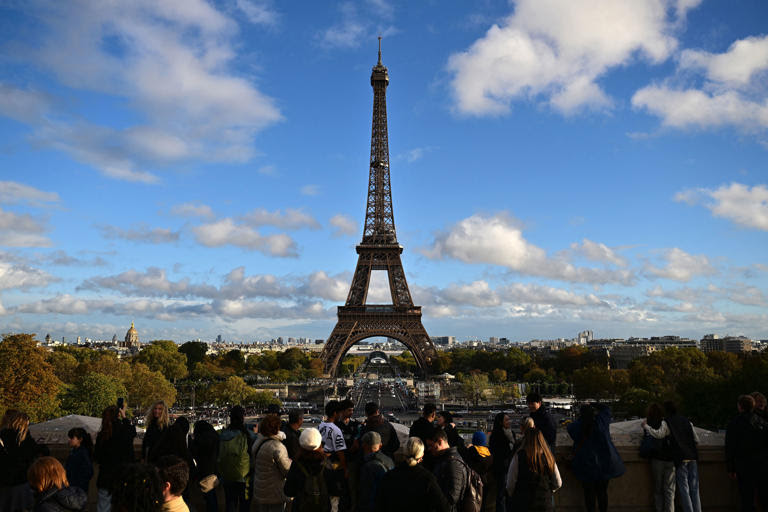
The Eiffel Tower stands tall under clear skies on Nov. 1, 2023.
© Miguel Medina/AFP/Getty Images
Over the past 20 years, Paris has undergone a major physical transformation, trading automotive arteries for bike lanes, adding green spaces and eliminating 50,000 parking spaces. Part of the payoff has been invisible — in the air itself.
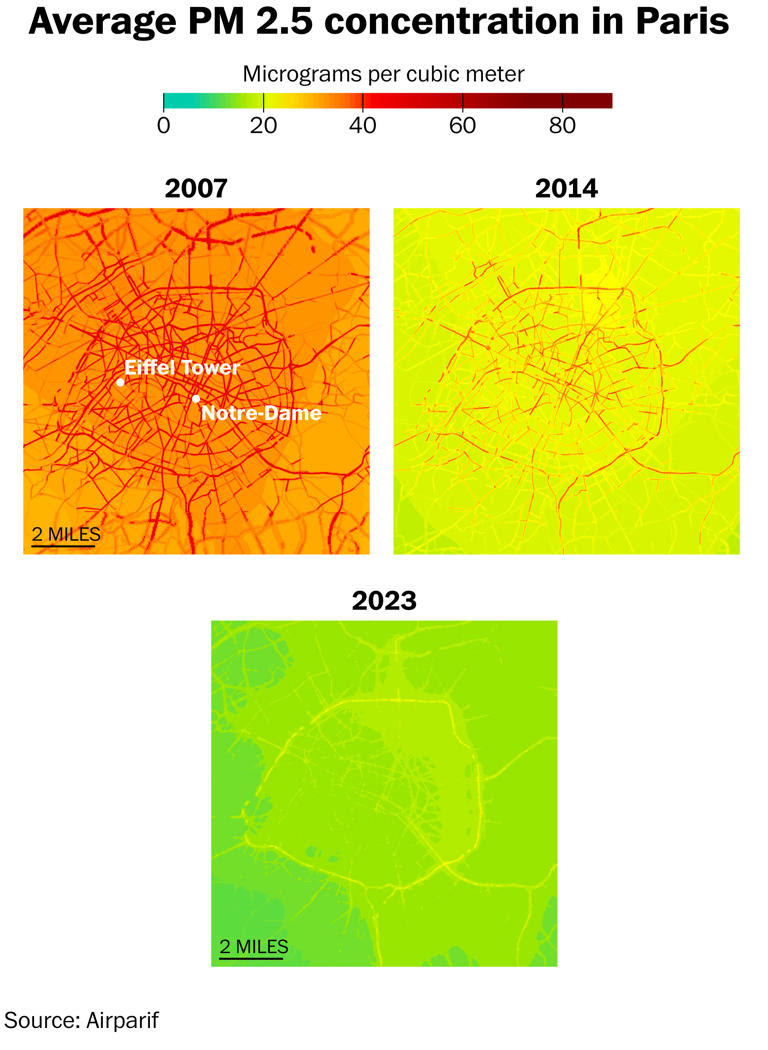
Airparif, an independent group that tracks air quality for France’s capital region, said this week that levels of fine particulate matter (PM 2.5) have decreased 55 percent since 2005, while nitrogen dioxide levels have fallen 50 percent. It attributed this to “regulations and public policies,” including steps to limit traffic and ban the most polluting vehicles.
Air pollution heat maps show the levels of 20 years ago as a pulsing red — almost every neighborhood above the European Union’s limit for nitrogen dioxide, which results from the combustion of fossil fuels. By 2023, the red zone had shrunk to only a web of fine lines across and around the city, representing the busiest roads and highways.
The change shows how ambitious policymaking can directly improve health in large cities. Air pollution is often described by health experts as a silent killer. Both PM 2.5 and nitrogen dioxide have been linked to major health problems, including heart attacks, lung cancer, bronchitis and asthma.
The countries making the most progress on the Paris Climate Agreement
Paris said au revoir to cars. Air pollution maps reveal a dramatic change.
Paris has been led since 2014 by Mayor Anne Hidalgo, a Socialist who has pushed for many of the green policies and has described her wish for a “Paris that breathes, a Paris that is more agreeable to live in.”
Her proposals have faced pushback — from right-leaning politicians, a car owners’ association and suburban commuters, who say that targeting cars makes their lives more difficult.
But last month, Parisians voted in a referendum to turn an additional 500 streets over to pedestrians. A year earlier, Paris had moved to sharply increase parking fees for SUVs, forcing drivers to pay three times more than they would for smaller cars. The city has also turned a bank of the Seine from a busy artery into a pedestrian zone and banned most car traffic from the shopping boulevard of Rue de Rivoli.
Carlos Moreno, a professor at Paris’s Sorbonne University and a former adviser to the city, said Paris has developed “an urban policy based on well-being.”

People flocked to the streets during Paris’ car-free day.
©PHILIPPE WOJAZER/Reuters/Corbis
Paris has long been a city of cars as much as a city of lights, but this congestion pumps greenhouse gasses into the sky. On September 27th Paris held its first “car-free day,” eliminating motor vehicles from the city center, and cutting exhaust emissions by nearly 40 percent, Caroline Mortimer reports for The Independent.
Though cars were only banned from 30 percent of Paris, harmful pollutants still dropped substantially citywide. Exact numbers the greenhouse gas nitrogen dioxide varied throughout the city, from 20 percent at Place de l’Opera to 40 percent near the city center, Mortimer reports.
An unusual silence also settled on Paris, with noise pollution cut in half, reports Kim Willsher for The Guardian.
The initiative’s success could fuel support for a citywide ban on cars, writes Willsher. The support of a socialist mayor, the city’s poor air quality and an upcoming climate change conference may spur new car policies.
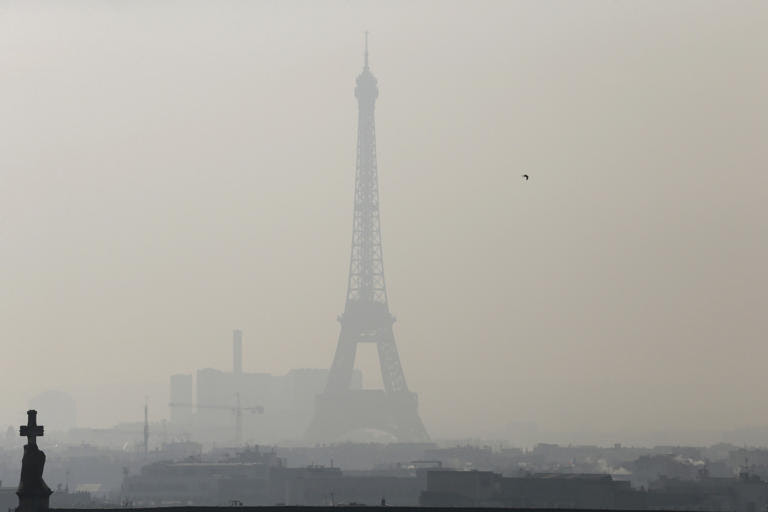
Car banning isn’t new for Paris: In 2014, the city banned even-numbered license plates for a single day and managed to nudge air pollution down by six percent. But the city will have to do much more than ban cars for a day to make long-term reductions in the pollution that has shrouded the Eiffel Tower in smog and triggered concern about health and quality of life.
For inspiration of more permanent moves, Paris’ mayor Anne Hidalgo might look to London. In 2003, London started charging motorists to drive downtown, a move met with widespread criticism. But years later, the initiative has reduced both air pollution and traffic fatalities.
Paris’ temporary car ban had another unexpected benefit.
Landmarks like the Arc de Triomphe often vanish behind traffic jams.
So, without all the cars, the city looked even more beautiful.
You Might Also Like
- Why This Rwandan City Bans Cars Once a Month August 19, 2016
- You Can Ride the Paris Metro for Free Right Now March 17, 2014
- France May Say ‘Au Revoir’ to Fossil-Fueled Vehicles July 7, 2017
- How Cities Plan to Keep Traffic Out When Lockdowns Lift May 21, 2020
- New Delhi Scrambles to Curb Record Smog November 10, 2016
Paris said au revoir to cars. Air pollution maps reveal a dramatic change.
In Just a Decade, Paris Achieves 40% Less Cars and 45% Cleaner Air –
Here’s how they did it
In just ten short years, Paris has achieved a transformative feat many cities only dream of: reducing car use by an impressive 40% and slashing air pollution by a remarkable 45%. This significant metamorphosis didn’t happen overnight; it’s the result of a purposeful, conscious, and concerted effort by both the city’s authorities and its residents.
City of Pedestrians and Bicycles
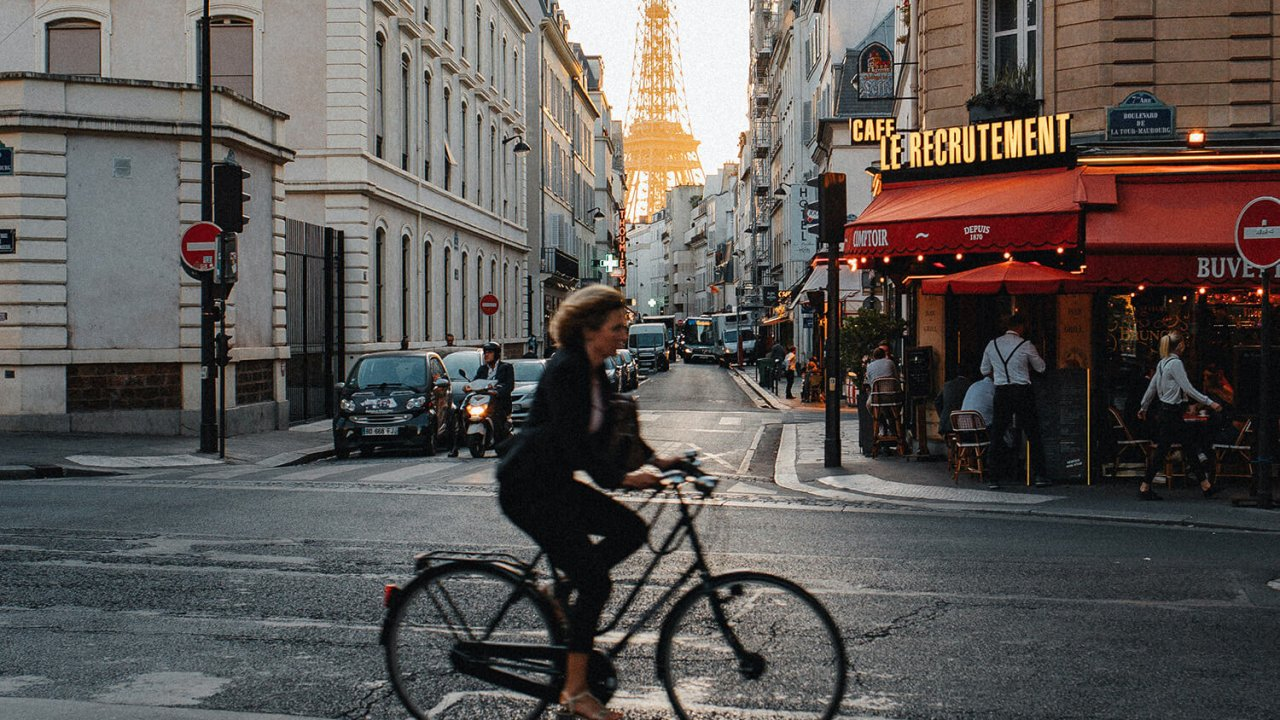
Paris, renowned as the city of love and lights, is progressively earning another title – the city of pedestrians and bicycles. Over the past decade, the French capital has made significant strides in reshaping its urban landscape to prioritize pedestrians, champion cycling, and create safer streets for all. The result? A dramatic 40% plunge in car use and a breathtaking 45% reduction in air pollution. As revealed in a LinkedIn post by Anne Hidalgo, the Mayor of Paris, the city has followed a path towards sustainability and walkability.
Pedestrians First: Paris Paves the Way
As part of a relentless battle against climate change, Paris has evolved to put pedestrians first. The city’s ambitious Street Code initiative addresses the climate emergency by actively shifting transportation habits. Parisians have embraced this change with open arms, enthusiastically adopting the new, more eco-friendly ways of getting around.
Embracing Cycling: 900km of New Bike Lanes
In a bid to encourage sustainable commuting, Paris has gone the extra mile. The city now boasts a staggering 1,120km of cycle paths, a fivefold increase from the 200km recorded in 2001. This massive addition of cycling infrastructure has played a key role in transforming Paris into a cyclist’s haven.
School Streets Sans Cars: A Safer Environment for Kids
Safety and sustainability are not mutually exclusive in Paris. The city has made impressive efforts to create car-free zones around schools. This move not only ensures a safer environment for children but also fosters a healthier and more active lifestyle among the younger generations.
Enhanced Safety Measures: Making Streets Safer for All
The safety of every Parisian, whether a child, an elderly citizen, or a person with disabilities, is a top priority in the city’s transformation plan. Measures such as widening sidewalks, increasing the number of sound signals and guide paths for the visually impaired, and providing cycling safety workshops for children, are all testament to Paris’s commitment to inclusive city planning.
The Payoff: Dramatic Reduction in Car Use and Pollution
This extensive reshaping of urban transportation in Paris has yielded impressive results. Over a decade, car traffic has plummeted by 40%, leading to a significant 45% drop in air pollution. The city’s radical change in approach has not only reduced the carbon footprint but also vastly improved the quality of life for its residents.
Every Step Counts: You Can Contribute Too
Paris’s inspiring transformation is a testament to the power of collective change. Yet, every major shift begins with small, individual steps. Whether you’re in Paris or any other part of the world, there are several ways you can contribute to this cause. Opting for a bike over a car, supporting local green initiatives, or simply choosing to walk more often, are actions that can make a big difference. Remember, every step you take today towards sustainable living, helps to shape a healthier and greener future for all. Start today! Let’s make our cities and our planet better, together.
Paris said au revoir to cars. Air pollution maps reveal a dramatic change.
If you’re a fan of cycling, you will love this article about how the Dutch save lives and billions of Euros each year by cycling.