
Nearly Half of Americans Breathing Toxic Air—These States Are the Worst Hit
A new report by the American Lung Association reveals a troubling trend: almost half of all Americans are breathing unhealthy air because of high ozone and particle pollution levels.
The “2025 State of the Air” report finds a marked increase in the number of Americans exposed to dangerous air quality, emphasizing the accelerating public health threat posed by worsening air pollution.
However, this development comes as the federal government debates changes to environmental protections, raising concerns about the future of clean air efforts across the United States.
Scope of the Problem
According to the 2025 State of the Air report, 156 million Americans, representing 46% of the population, live in areas with unhealthy levels of air pollution. This marks an increase of almost 25 million people compared to the previous year’s report and is the highest figure recorded over the past decade.
The report’s findings are based on air quality data collected between 2021 and 2023, the most recent period for which comprehensive, quality-assured data is available
Causes of Bad Air Quality
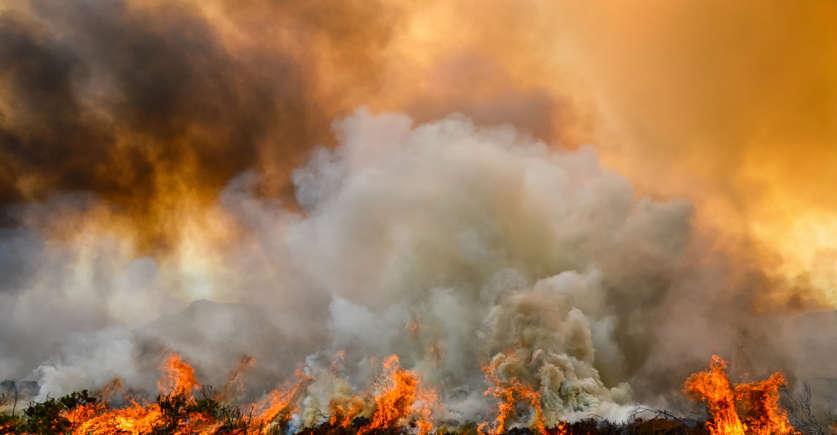
The report says that the warning air quality is linked to several interrelated factors, including extreme heat, widespread drought, and an increase in wildfires.
All of this has been tied to climate change, which is increasing the frequency and severity of pollution events. In 2023, smoke from massive Canadian wildfires combined with a deadly heat wave in Texas contributed to significant spikes in ozone and particle pollution across many parts of the U.S.
Atlas of United States Mortality
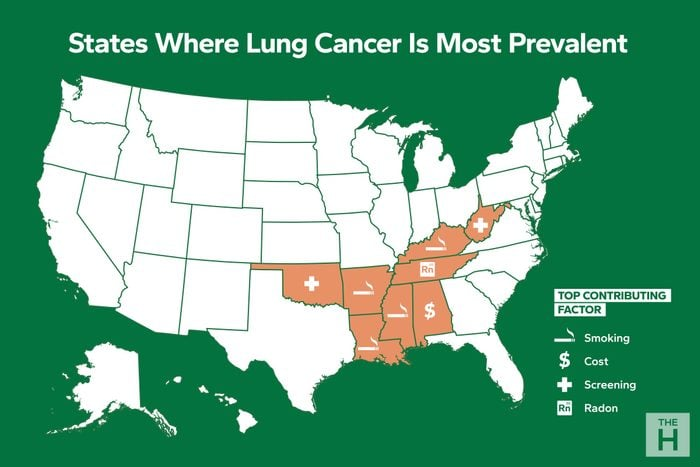
High lung cancer death rates among white males had been found in States along the Mississippi River.
However, high death rates now extend into the Ohio River Valley, probably reflecting the levels of cigarette smoking–the greatest risk factor for lung cancer.
Health Impacts of Air Pollution – Search
Exposure to unhealthy air is linked to a range of serious health problems. These affect the respiratory system, including asthma attacks and chronic coughs, as well as cardiovascular issues and premature death.
Children, the elderly, and those with underlying health conditions are especially susceptible. The American Lung Association points out that air pollution is also associated with low birth weight in babies and that it can exacerbate the situation for those who work outdoors.
How the Report Measures Pollution
The evaluation of air quality in the State of the Air report is based on data obtained from official monitoring sites in various parts of the country. It grades communities on three key metrics: ozone pollution, daily particle pollution, and annual particle pollution. Cities and counties are ranked according to their performance in each category, providing a detailed picture of where air quality is most hazardous.
Regions Most Affected
California remains the epicenter of unhealthy air, with Los Angeles, Visalia, and Bakersfield topping the list for ozone pollution. Bakersfield, Fairbanks (Alaska), and Eugene (Oregon), are among the most polluted cities for daily particle pollution, while Bakersfield, Visalia, and Fresno (California), top the list for annual particle pollution.
The report also notes a change in the geographical distribution of pollution over recent years, with the Midwest, Northeast, and Central U.S. experiencing more significant effects, generally because of wildfire smoke and extreme heat events.
Disparities in ExposureIndia’s Disadvantaged Groups Face More Air Pollution – Eos
The report also points to significant disparities in who is most affected by air pollution. People of color are nearly twice as likely as white Americans to live in areas with unhealthy levels of soot and ozone.
Hispanic populations, in particular, are almost three times more likely to live in communities that receive failing grades in all three pollution categories, highlighting the environmental justice dimensions of air quality issues.
What If Earth Lost Its Atmosphere? – Search
“What If is an epic exploration of possibilities. What If is a Webby Award-winning science web series that takes you on a journey through hypothetical worlds and possibilities, some in distant corners of the universe, others right here on Earth. Each scenario examines a scientific theory, research or fact through a hypothetical question.”
Policy and Regulatory Context
These findings also come as the White House considers rolling back key Environmental Protection Agency (EPA) rules designed to curb pollution. The American Lung Association cautions that the reduction in funding, staff, and programs at the EPA threatens to undermine decades of progress in improving air quality. The organization calls for renewed commitment to strong federal protections to ensure clean air for all Americans.
.
Major Climate Myths—Were We Misled All Along?
Looking Ahead
The 2025 State of the Air report is a sobering reminder that harmful air pollution is still an ever-present threat to public health, even after decades of regulatory progress.
As climate change accelerates and environmental protections face political challenges, advocates stress the urgent need for robust action to control pollutants and address the root causes of worsening air quality. Without decisive intervention, millions more Americans could find themselves at risk from the nation’s deteriorating air.
The Path to Cleaner Air
Solving the country’s air pollution problem will require action at the local, state, and federal levels. The American Lung Association urges policymakers to protect the lives and health of all residents from the dangers of air pollution and not undermine the protections that safeguard our right to breathe healthy air while also investing in cleaner technology, renewable energy, and wildfire prevention efforts.
Public awareness and community engagement are equally important, as individuals can advocate for policies that safeguard health and reduce emissions. By prioritizing clean air initiatives and climate action, the United States can work toward reversing current trends and ensuring that future generations can breathe easier in a healthier, safer environment.
Lung Cancer Rates Are Worst in These 8 States | The Healthy @Reader’s Digest
The prevalence of lung cancer includes the following key statistics:
- In 2022, lung cancer accounted for about 1 in 8 newly diagnosed cancers worldwide, totaling nearly 2.5 million new cases. 1
- It was responsible for about 1 in 5 cancer deaths, with approximately 1.8 million deaths globally. 1
- In the United States, there were an estimated 635,547 people living with lung and bronchus cancer in 2022. 1
- Lung cancer is the leading cause of cancer death in the U.S., accounting for about 1 in 5 of all cancer deaths. 1
- These statistics highlight the significant impact of lung cancer on public health.
What Does Cigarettes Do to your body – Search
Smoking cigarettes can have long-term negative effects on the body, including heart disease, cancer, and diabetes 1. It can harm nearly every organ in your body and increase your risk of certain health conditions like glaucoma, cancer, and lung disease 2
Smoking causes most lung cancers and can cause cancer almost anywhere on the body 3.
It can also increase your risk for cancer of the bladder, throat, mouth, kidneys, cervix, and pancreas 4. Additionally, smoking affects the heart, blood vessels, blood cells, fertility, immune system, vision, oral hygiene, and integumentary system 5.
Smoking increases the risk of cancer1 2.
Lung cancer is the leading cause of cancer death in the United States2.
The Most Effective Way to Quit Smoking for Good – CBQ Method