An ADHD diagnosis didn’t fully explain Leanne Maskell’s experiences. An autism diagnosis provided the final puzzle piece – Our society is increasingly stigmatizing neurodivergence, but the reality is that these labels enable people to take responsibility for themselves ~Matt Writtle
I’ve lived with ADHD and autism all my life – this is what it’s like to have both
Story by Leanne Maskel
Imagine having a brain that is at constant war with itself. Desperate to fit in, yet determined to escape social situations. Obsessively creating complex structures for stability, but just as predictably smashing them all up. Chronically overwhelmed, yet unable to say no.
That’s the reality of living with both ADHD and autism. The two conditions might seem at odds with each other but can, as experts are increasingly realising, coexist and lead to non-stop internal conflict.
While ADHD brings hyperactivity, impulsivity and inattention, autism is associated with social challenges, sensory sensitivity and repetitive behaviours.
Until 2013, autism and ADHD couldn’t be diagnosed in the same person. Today, researchers have found that there is a 50 to 70 per cent crossover between these neurodevelopmental conditions, which is increasingly being referred to as AuDHD.
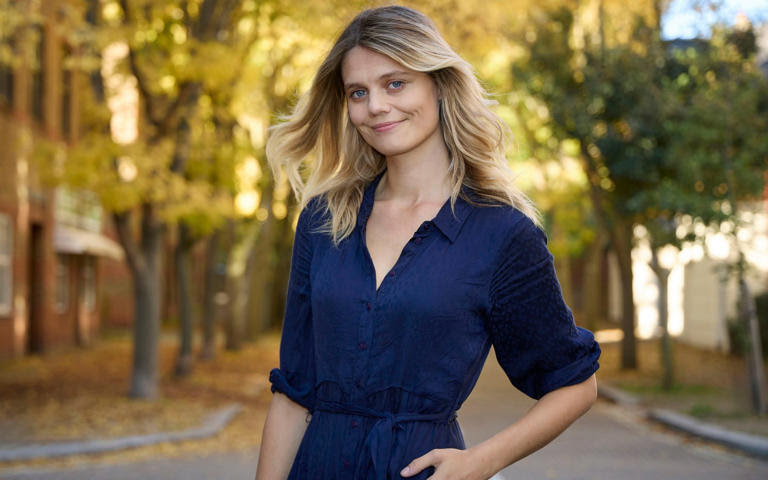
An AuDHD diagnosis has explained an awful lot about my life to date and why I’ve always struggled with social situations, says Maskell
I was diagnosed with ADHD at the age of 25 after spending a year ruminating daily over the best way to end my life, moving to a different country every month and quitting any job that I started. The diagnosis helped me make sense of my life, but it didn’t seem to fully fit with my experience.
Now, six years later, I finally have the missing piece of the puzzle: an autism diagnosis.
It might sound like a diagnosis too far for most people, but I was relieved. It explained an awful lot about my life to date and why I’ve always struggled with social situations.
Relationships have always confused me
As a child, I questioned why we had to visit family at Christmas just because we share DNA. The answer of “because they’ll always be there for you” felt transactional and has shaped how I have approached every relationship since.
I’ve spent my life figuring out how to be useful to people in a relentlessly exhausting trade for companionship. I constantly regulate everything – from forcing myself to make the “right” amount of eye contact, to saying the “right” things – but I never stick to my own pre-planned script. ADHD impulsivity sees me veering off course, often saying the wrong thing and then beating myself up over it for hours afterwards.
I’ve lost count of how many people have stopped talking to me for reasons I’ll never know. Group settings are even worse, as competing demands overwhelm me to the point where I often hide in the bathroom, my brain ready to explode.
Turning off the ADHD ‘noise’ with alcohol
After moving abroad at the age of 13, I discovered a way to turn off the constant AuDHD radio of thoughts blasting in my head. Getting paralytically drunk seemed to turn my brain off, at least temporarily. This coping strategy lasted until I was diagnosed with ADHD; I would kick social interactions off with a tequila shot wherever possible.
The lack of inhibition associated with ADHD saw my teenage self drinking cocktails abandoned by strangers and picked up off the tables in bars. The loud, crowded clubs left me chronically overstimulated because of my autism. The sensory overload was so intense that I’d often fall asleep right in the middle of the noise – a shutdown response when my brain simply couldn’t cope. It wasn’t unusual for my friends to find me curled up next to a thumping speaker.
However, this didn’t just happen in clubs. One time my friends spent an entire night looking for me in a pub before eventually finding me passed out under a pile of coats. It doesn’t matter whether it’s noise, lights or simply the intensity of being around people; any of this can lead to overstimulation – then shutdown. I often fell asleep in class, in the cinema and even whilst out for dinner.
I couldn’t understand why I kept putting myself into situations that caused me so much stress. Now I do: it was easier to blend into the noise than to be stuck with my own thoughts. However, living like this felt like being prisoner to a sadistic script writer on season six of a terrible TV show.
Unable to trust myself, I took cues from those who seemed to know better – but not everyone has your best interests at heart.
I was confused about the ‘right’ way to behave
As a teenage fashion model, I was confused about the “right” way to behave and was, therefore, easily manipulated. When I tried to cover up in front of the male stylists who were dressing me, they laughed and explained that they were gay. The guilt that I felt led to a pattern in which I would immediately undress upon request from strangers in public – whether it was casting directors in offices, photographers on set or agents who had invited me to meet with them. For years, I was terrified of offending anybody, constantly conforming to the expectations set by those around me.
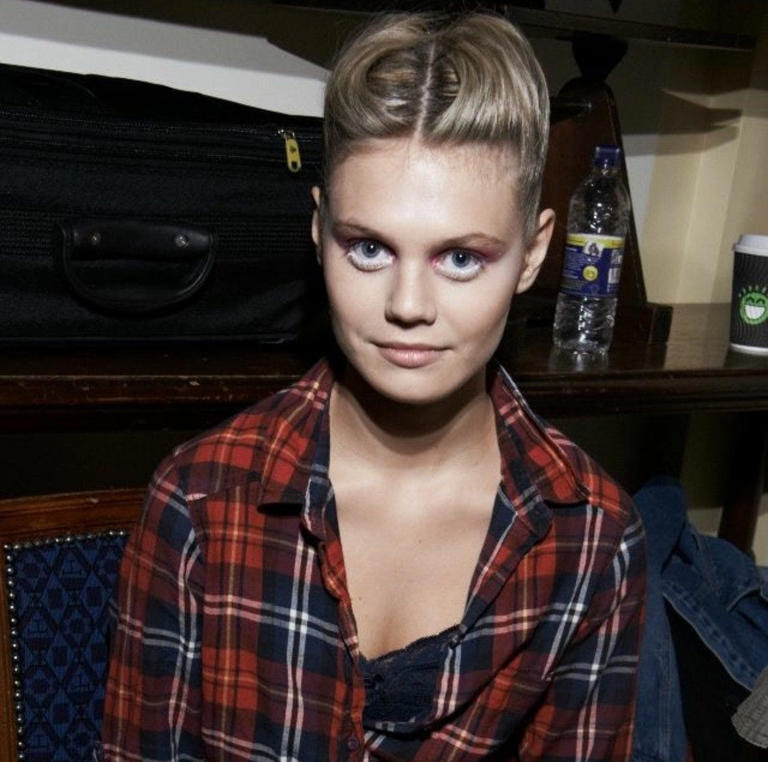
‘I hated modelling, but I was unable to quit’ says Maskell
I hated modelling, but I was unable to quit. My autism thrived on the predictability of receiving a daily email at 6pm that outlined my schedule for the next day. The routine provided both the structure that my mind craved and kept my ADHD brain engaged with dopamine, novelty and adrenaline.
Outsourcing my personal agency could be relaxing because it meant that someone else was in control of my life and, therefore, the “small” decisions that caused me so much stress because of my ADHD, such as what to eat for lunch. On jobs, I usually just had to do or mimic whatever the people around me said, and I wasn’t expected to talk.
However, it was also extremely stressful because my ADHD struggled with the monotony of being a human coat hanger. I had to hide the hyperactivity of my internal experience and force my face to stay calm as my mind felt like it was on fire, exploding with racing thoughts.
It was only when I was diagnosed with ADHD that everything changed. It felt like I finally had the guide to life that everybody else seemed to have. The diagnosis enabled me to access medication, which, in turn, enabled me to stop self-medicating with alcohol. After completing a law degree, I eventually got a job in law; I was determined to “hack” my ADHD by getting ahead of it.
Struggling with office life
Getting to the office was a hurdle in itself, and so I rented a flat that was over the road from it so that I didn’t have to travel every day. Although I didn’t know I was autistic at the time, I did know that I couldn’t cope with public transport during rush hour; I regularly had panic attacks if I thought I was going to be late. AuDHD impacts executive functioning skills, such as time management, which meant that I was often late, and so a flat opposite the office felt like the most sensible option, even if the rent was extortionate.
However, I wasn’t prepared for how stressful I’d find working in an office. The lights, the noise and the open-plan environment made me constantly on edge. On top of that, I was constantly worrying about making a mistake. I would beg my bewildered manager not to fire me and provide her with 15-page reports detailing everything I’d done that week for our catch ups.
I struggled to say the right thing and had difficulty regulating my behaviour. For example, one colleague used to speak very loudly in the kitchen next to my desk, which I found very distracting. One day, I snapped and impulsively emailed them to ask them to stop talking so loudly because no one cared about their weekend, only realising that this was a mistake once I’d pressed send. The mortification when they responded, cc’ing in both of our managers and the Culture Code, was like nothing I have ever experienced. It’s no excuse, but it’s an example of how undiagnosed AuDHD can contribute to these situations. Eventually, two and a half years later, I quit to become an ADHD coach and write a book.
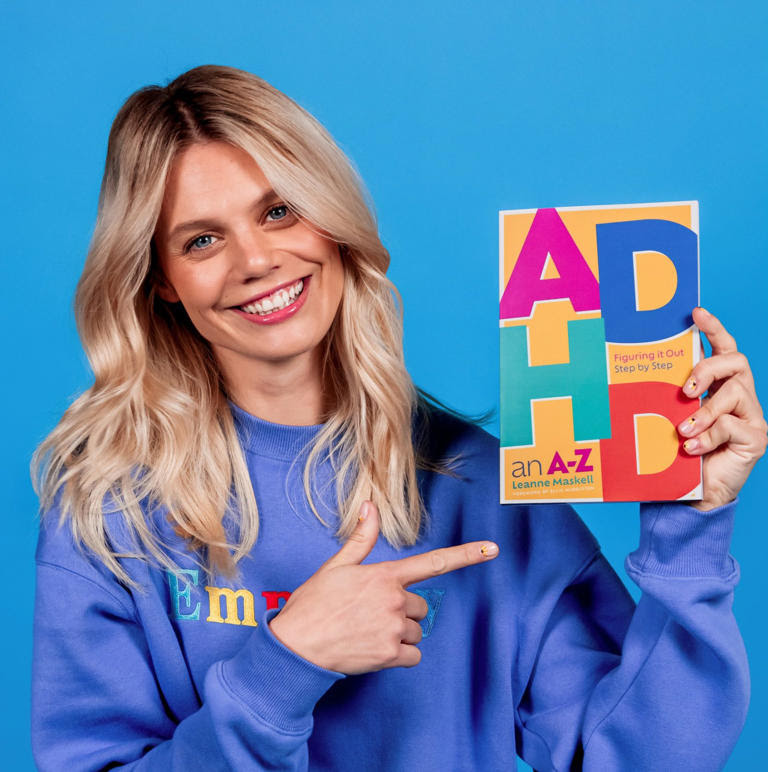
Leanne Maskell has written two books on ADHD, including ‘ADHD an A-Z’
Women are far less likely to be diagnosed with autism or ADHD
When I told my therapist that I thought I was autistic, she dismissed it because I was nothing like the autistic children that she worked with. I accepted this at face value, just as I accepted doctors telling me that I was fine (before I was diagnosed with ADHD) because I had a law degree – a symptom of autism is literal thinking.
Autism makes all relationships harder to navigate and also makes you more vulnerable to abuse. Like nine out of 10 autistic women, I have been a victim of sexual violence, including being groomed at the age of 15 by a man 10 years older than me.
When I contacted the police after being harassed by an ex-partner, they asked me a list of mandatory questions that they ask about relationships that could involve coercive and controlling behaviour. I answered “yes” to every single one. I’d been in a relationship where I’d been told what to wear, do and see, whether I could take medication, and even whether I could drink coffee, and yet I hadn’t realised that this was wrong.
Thanks to societal conditioning, women are far less likely to be diagnosed with autism or ADHD than men. Women tend to mask symptoms so that our struggles are less noticeable to others.
This is the truth of living with AuDHD, especially for women like me, who’ve spent their entire lives hiding their symptoms as a way to survive. I felt like I had to monitor every part of who I was, terrified of unintentionally doing something wrong because I could never understand the rules that everybody else seemed to know.
Autistic women are twice as likely as autistic men to attempt suicide, with autistic people nine times more likely to die by suicide than the general population. Nearly one in four women with ADHD have attempted suicide, with a five times higher risk of suicide linked to the condition. For me, things came to a head earlier this year when I started considering ways to end my life after a big change in my routine. Eventually, after I had a screaming breakdown in an airport when I got lost, I booked an appointment with a psychiatrist. It was then that I got my autism diagnosis, and the last piece of the puzzle fell into place.
Our society is increasingly stigmatising neurodivergence, associating it with people seeking disability benefits and using it as a justification for poor behaviour. However, the reality is that these labels enable people to take responsibility for themselves, reclaim agency over their lives and contribute meaningfully to our society.
It is easy to view AuDHD as a convenient excuse for personal failings. However, if I’d had this diagnosis earlier when I was growing up, I would have been far less vulnerable to the harm inflicted by others. Instead of shaming the individuals seeking help, we should focus on the broken systems that allow so many people to go undiagnosed for so long. AuDHD isn’t an excuse, but it can be a life-changing lens to explain our experiences.
Ultimately, these labels enable people to “name it to tame it” – far from marking themselves as victims, they’re survivors of a world that wasn’t designed for them.
| Ken E Goubeaux <kenegoubeaux@gmail.com> | Tue, Jun 10, 8:33 PM (2 days ago) |  | |
| to me | |||
Getting to know Leanne Maskell, author of “ADHD: An A-Z”
Leanne Maskell is the founder and director of ADHD coaching company ADHD Works, and the author of ADHD Works at Work and ADHD an A-Z
Recommended I’ve lived with ADHD and autism all my life – this is what it’s like to have both
Why so many people have both autism and ADHD
I’ve lived with ADHD and autism all my life – this is what it’s like to have both
My wife was recently diagnosed with AuDHD, I don’t think enough conversations are being had about the symptom overlap between that and Narcissistic personality disorder (NPD) is a personality disorder characterized by a life-long pattern of exaggerated feelings of self-importance, an excessive need for admiration, and a diminished ability to empathize with other people’s feelings.
It is very common for people on the spectrum to also have ADHD. As a young child my son was diagnosed with ADHD and it took years before he received a diagnosis of Aspergers. One of my daughters was diagnosed ADHD as a child and didn’t receive her Autism diagnosis until she was a mom in her 30’s dealing with 3 kids on the spectrum who were also originally diagnosed with ADHD.
The problem is ADHD, Autism, and anxiety disorder all have overlapping symptoms, so doctors are more than willing to diagnose someone with multiple or all three of those.
I have ASD and a BA in Psychology.
No, diagnoses are not meant to be used as excuses but rather as explanations of the reasons why you are the way you are. I 100% agree with you that it’s supposed to be used as a means for us to take better responsibilities for our lives.
Most of the NT mainstream society doesn’t even know what autism/ADHD or neurodivergence is and tend to act incredibly ableist towards us as a result. Because they think we’re being difficult on purpose. And, on the other hand, a lot of us either assume that they know more than they do or, if we’re undiagnosed, mistakenly assume that everyone else is more or less like us. Which is where we all clash and a lot of us then accuse NT’s of trying to make our whole existence wrong. Which is, first, what alienates us, which leads to a depression and, sometimes, most tragically, to suicide.
But, unfortunately, one thing that cultures as materialistic as ours don’t teach very well is that your self-validation has to come from within first.
Ryan W
I mistakenly assumed most people thought like I did until I was almost 40. I would think about what I would do or feel in a situation, and choose actions that (I assumed) would work best for others. Yet I was consistently misunderstood and scolded for doing what I thought was best for everyone involved. When my significant other told me that she had a son with ADHD, I bought a book so I could understand him better, but the whole time I was reading about the symptoms and thinking “This isn’t normal?!?” Just knowing that other people do not have the challenges that I’ve lived with my whole life is already helping me identify why certain tasks are a challenge, and that the reason organization/time management advice from NTs has never worked or even made any sense to me at all.
D Bomb
We are all on the “spectrum” somewhere, we just aren’t all tested. Knowledge is power, knowledge of yourself gives you a better understanding of what you’re capable of.
Nancy White
My daughter had fairly severe ADHD and I was surprised how poorly informed teachers were about the condition. They deal with ND kids every day, but would flat out refuse to follow doctor’s recommendations, such as writing down sequential tasks, because it would supposedly give my daughter an “unfair advantage”.
greg phelps
Know why we didn’t have ADHD in the 50s and 60s is because we had strict parents and we got an ass kicking when we needed it– we are not parenting our kids the way we’re supposed to today
user-skasp3t2uf
We barely discovered Autism in the 1940s, beating children only traumatizes them.
Lilly Feltes
People have ADHD as long as there have been people. It just wasn’t recognized/understood until relatively recently. It has nothing to do with parenting.
James Lynch
You are exactly right. Today’s parents have failed miserably but they found psycho-babble libs to give them an excuse for their inability to parent. Want to know what causes ADHD? “soft parenting”…
Scott Bradney
Hmm wonder why those near daily ass kicking from my mother never “cured” me? Obviously, she must have been beating me wrong… Maybe for someone who is not actually suffering from disorders like Asperger’s and ADHD. For people that do, you can beat us every single day and the behaviors tend to stay the same. Trust me, my mother tried to “correct” me with near daily beatings. Unsurprisingly it did not work.
user-9d7mtmrgvj
my parents were very strict and kicked my ass all the time growing up and guess what? I still have ADHD
Nancy White
So just label kids “slow” or “problem kids” and let them fail when we now know they simply have neurological differences that they can often learn to manage with a little help. If you call this sort of compassion being “soft”, well then, I’m fine with being soft because my daughter who has ADHD is now a successful cardiac ICU nurse saving lives and earning a great living!
When she was young, she struggled in school and couldn’t understand why she couldn’t remember things other kids could. We knew she was bright, and we got her appropriate help. Some of the techniques she learned were so helpful her teachers started using them with all their students!
She thrived because I was an involved, caring parent who took the time and effort to help my child succeed and SHE put in a lot of extra work! (I guarantee you, she would never say I was “soft” on her!)
user-0invecwk33
Apr 28
This was such a great article. I feel like the more I hear about how others experienced life with undiagnosed AuDHD it GREATLY parallels my lived experience.
I’ve already seen a lot of awful negative things in the comments and I hope you find peace and healing so that you do not feel the need to be mean and negative. There are people out here like the author and myself who experience this and having this diagnosis helps immensely to understand how to improve our lives.
None of us want it for excuses, we want to just coexist in peace and not be taken advantage of or belittled because our brain has limitations.
Let this sink in a second, we’re trying to fit in your world. Is your adverse reaction that maybe one day the realization is you need to fit into ours?
Steve cannon
Feb 24
I’m 72 and was diagnosed at 47 because of my children having adhd.It has been a wild journey with no meds or therapy. But it has been a good life.My mind is my worst enemy.adhd is exhausting.But you learn to navigate and have a good life.I also have depression and anxiety but I take an aniti depressant for that.Prayer is so helpful.
Tammy Croft
I only discovered that I had Aspergers AND ADHD when my son was diagnosed. After David’s diagnosis, my mother remarked that David had more extreme versions of traits my father (a respected logger and lumberman) and I shared. So back to the doctors. Believe me it was a relief to finally learn WHY I always seemed to be fighting myself.
I do think my father was lucky; logging and running a sawmill is both routine and keeps you on high alert constantly. You have to be hyper aware of your surroundings in order to prevent accidents. I know this from working in a sawmill with my father; I once heard the drive belt coming apart behind me and dived under the drive carriage track just before the separating belt hit where I was standing.
Dad had already hit the off switch for the mill and, until I crawled out from under the track, did not know where I was or if I was safe. By the way, the drive belt knocked a four-inch-deep hole in the ground where I was standing–and we both had to go back to the house and just sit for a while until the shakes went away because it was almost certain that the separating drive belt would have killed me.
MillyMil
This is so relatable. I am 31 and just getting to know about my condition around 30. They only ever did initial ADHD studies on males. I wish I had a normal brain
Erin Dorn
I think medications are pushed first too fast and people think a diagnosis is a label for themselves when it doesn’t have to be. I think the label can be important to figure out mechanisms for coping and managing symptoms of things like ADHD and Autism (to a certain extent) but too many people focus on what it makes them. It doesn’t make you anything. It means your brain works differently and it is no different than missing a limb or only having one kidney. My personal opinion, of course.
Martin Toth
ADHA is nothing but a joke mainly kids just being kids ….so now weak adults think because they have it that it means they have something….and they seem like the hand out the autism card now days ………. wants some real problem i can tell you what i grew up with……..PS ADHD is not real ppl having energy is a blessing
Patty Knight
it’s all the same thing on the same spectrum. and it’s not just male centered.
C. B. Davis
I felt a cleaving in my mind –
As if my Brain had split –
I tried to match it – Seam by Seam –
But could not make them fit
The thought behind, I strove to join
Unto the thought before –
But sequence ravelled out of sound –
Like Balls – upon a floor
~ Emily Dickinson