
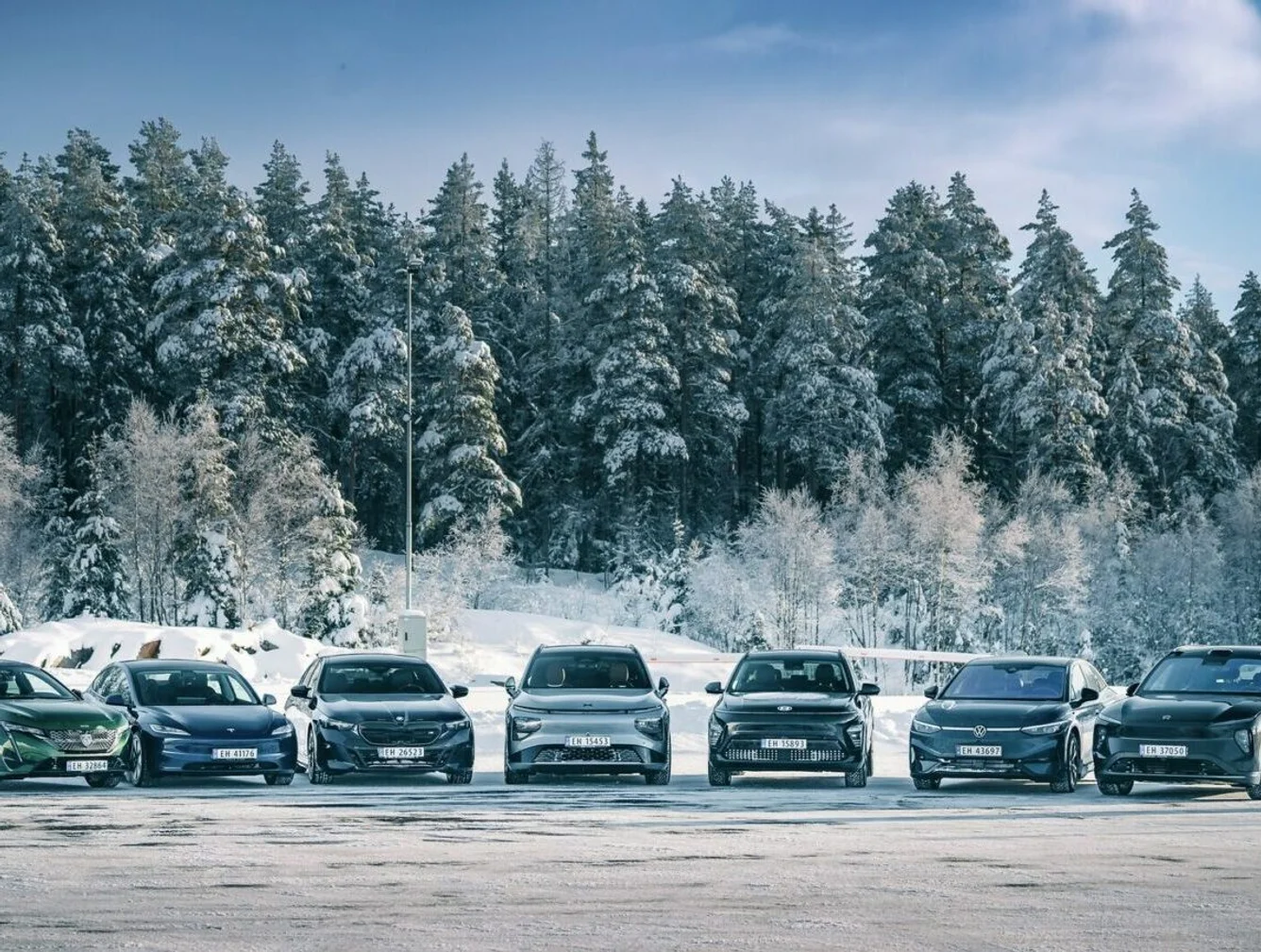
Norway’s record-breaking 96.9% EV market share offers crucial lessons
Norway’s EV Dominance: A Roadmap for Global Success | EV Magazine
how did Norway get converted over to EV Quickly – Search Videos
Why EVs are so Hot in Norway – Search
By Stella Nolan
Norway’s record 96.9% EV market share offers crucial lessons on policy consistency, charging infrastructure & consumer incentives to accelerate adoption. The EV revolution is well underway, with Norway leading the charge globally.
With an unprecedented 96.9% EV market share achieved in January 2025, Norway has set a benchmark that other countries are eager to emulate. Adam Rodgers, Global Business Development Director at Easee, brings nearly a decade of experience in the EV and mobility space to shed light on Norway’s success and what it means for the global EV transition.
Norway’s high adoption of electric vehicles (EVs) can be attributed to a combination of taxation rules, incentives, and government policies1234.
Despite the cold climate, Norway’s EV market has thrived, these vehicles have significantly reduced greenhouse gas emissions5.
Adam Rodgers, Global Business Development Director at Easee
Norway’s incentive programme: A blueprint for success
Norway’s world-leading EV adoption rate results from a strategic, long-term approach to incentivisation. “Norway’s world-leading EV adoption rate of 96.9% in January 2025 is the result of a long-term and well-structured incentive programme that focuses on creating a seamless transition,” explains Adam.
The Nordic nation’s approach has been multi-faceted, combining financial incentives with practical advantages that make EV ownership genuinely appealing. Adam points out that “Norway’s financial incentives included reduced import duties between 1990 to 2022 and certain exemptions from VAT, significantly reducing the upfront buying cost compared to other vehicles.”
Beyond fiscal measures, Norway implemented everyday benefits that enhanced the EV ownership experience. “Practical incentives, such as access to bus lanes, reduced toll fees and preferential parking, make EV ownership not just the affordable and sustainable option, but genuinely advantageous in day-to-day life,” Adam highlights.
Interview with Christina Bu, Norwegian Electric Vehicle Association
Policy consistency: The cornerstone of consumer confidence
A critical factor in Norway’s success has been the unwavering commitment to EV-friendly policies regardless of political changes. “One of the most critical factors in Norway’s success has been consumer confidence in government policies. Despite changes in government, the policy has remained consistent, offering clear direction to the industry and consumers,” notes Adam.
The consistency starkly contrasts the approach seen in other countries like the UK, where policy shifts have created uncertainty. “By comparison, in the UK, the date for the ban on ICE vehicles shifted backwards, before being brought forward again to the original 2030 deadline,” Adam observes.
The lesson is clear: “The Norwegian model shows that government support plays a critical role in fast-tracking the uptake of EVs. Continuity of policy and government-led support for electrification is vital to build long-term consumer confidence.”
Kristine Bu, General Secretary of the Norwegian EV Association
Adam’s sentiment echoes Kristine Bu, General Secretary of the Norwegian EV Association, who praised Norway’s long-term strategy for transitioning to electric mobility. Reflecting on the country’s progress, she stated, “The goal set by the Storting (Norwegian parliament) in 2016 has been like a beacon that has led us in the right direction”.
Charging infrastructure: The backbone of EV adoption
Norway’s impressive charging network has been instrumental in alleviating range anxiety and supporting widespread EV adoption. “One of the biggest factors behind Norway’s success is its extensive charging infrastructure, which supports an effortless charging experience. The country has 447 chargers per 100,000 people versus just 89 per 100,000 in the UK,” Adam explains.
The contrast with other nations is striking. While the UK has made progress, with public charging points increasing from 28,500 in 2022 to more than 75,000 as of February 2025, geographical disparities remain problematic. “London has 250 charging devices per 100,000 people compared to Northern Ireland with just 36 per 100,000 people,” points out Adam.
Private companies have been pivotal in building robust networks.
“In Norway, Easee, for example, has installed almost 300,000 chargers,” Adam adds, highlighting the role that businesses like his own have played in supporting infrastructure development.
“In Norway, Easee, for example, has installed almost 300,000 chargers.”
Barriers to adoption in other markets
Despite Norway’s success, EV market penetration elsewhere lags significantly. “Norway’s high EV market share contrasts sharply with other countries, for example, in 2024, 13.6% in Europe and 6% in the US,” notes Adam.
Several key barriers continue to impede adoption:
Cost concerns: While the initial purchase price of EVs has been a deterrent, the market is evolving. “A new study revealed that used fuel engines are on average US$3,317 more expensive than EV models of the same age, mileage and manufacturer, which means motorists could save money by opting for a secondhand EV rather than its combustion engine equal,” Adam explains.
Charging infrastructure gaps: “Charging infrastructure is another major challenge. Whilst Norway has built a vast network of chargers and is now focusing on expanding its fast-charging stations, other countries, such as the UK, have a way to go to build their initial charging infrastructure,” says Adam.
Consumer education: Misunderstandings about EV technology remain prevalent. “Many people are still hesitant to switch to EVs due to misconceptions about charging times, battery lifespan and overall reliability. Governments and manufacturers must do more to educate consumers about the benefits of EVs whilst addressing concerns,” Adam advises.
Looking ahead: The next 12-18 months
The coming year and a half will be pivotal for global EV adoption. In the UK, progress is evident, but challenges remain. “Looking ahead, the next 12 to 18 months will be critical for the global EV market. In the UK, it is incredibly positive to see battery EVs holding a 23.7% market share. The Labour government’s reinstatement of the 2030 ICE ban offered the clarity the industry needed to make progress,” Adam observes.
Norwegian EV Associations answer to G.M. and Will Ferrell. Bring it on!
The secondhand EV market offers particular promise for broadening access.
“We are at a pivotal stage in the EV transition, witnessing a significant rise of secondhand EVs in the market. In January 2025 secondhand EVs contributed for 17% of car dealers’ stock,” notes Adam. “With more EVs on the market, affordability will improve, creating greater accessibility to the benefits of electrification to a broader range of motorists.”
Norway’s remarkable success in EV adoption provides valuable lessons for countries worldwide. Through consistent policy support, comprehensive incentives and robust charging infrastructure, Norway demonstrated a near-complete transition to EVs is achievable.
As Adam highlights, the key to success is making the transition “effortless” for consumers. It requires a holistic approach that addresses financial barriers, practical concerns and education gaps. With the right strategies, other nations can accelerate their EV revolutions and move closer to a sustainable transportation future.
Norway offers both inspiration and practical guidance for countries like the U.K. with ambitious targets such as the 2030 ICE ban. Also, the global shift to EVs can gain the momentum needed to address transportation’s climate impact by applying these lessons and maintaining consistent support for electrification.
Stay informed and inspired with the EV Magazine community by signing up for our free weekly newsletter. Each week, receive the latest industry news and in-depth insights into the world of electric vehicles, sustainability and cutting-edge innovations. Subscribe now, don’t miss the opportunity in the fast-evolving EV industry.
The United States vs. The Top Countries Leading Electric Vehicle Adoption — Induct EV
Alternative Fuels Data Center: Maps and Data – Electric Vehicle Registrations by State
Which Country Has the Highest Percentage of Electric Cars? – Future Flux Tech
2025 EV Sales Surge: Which Countries Are Winning the Electric Race?
Is the Renewable Energy Boom Destroying the Environment? | Watch
Countries with highest percentages of electric vehicles – Search
Is the Future of Renewable Energy Inevitable? – Search Videos
America’s Extreme Heat Crisis Will Last For Decades | Watch
Chart: Which countries buy the most EVs? | Canary Media
Electric vehicles (EVs) have one really big problem
Map shows states with biggest housing shortages
Biggest solar farm in Arizona – Search Videos
Spain is on fire, climate change is already here
Do We Really Need Electric Cars? | Watch