
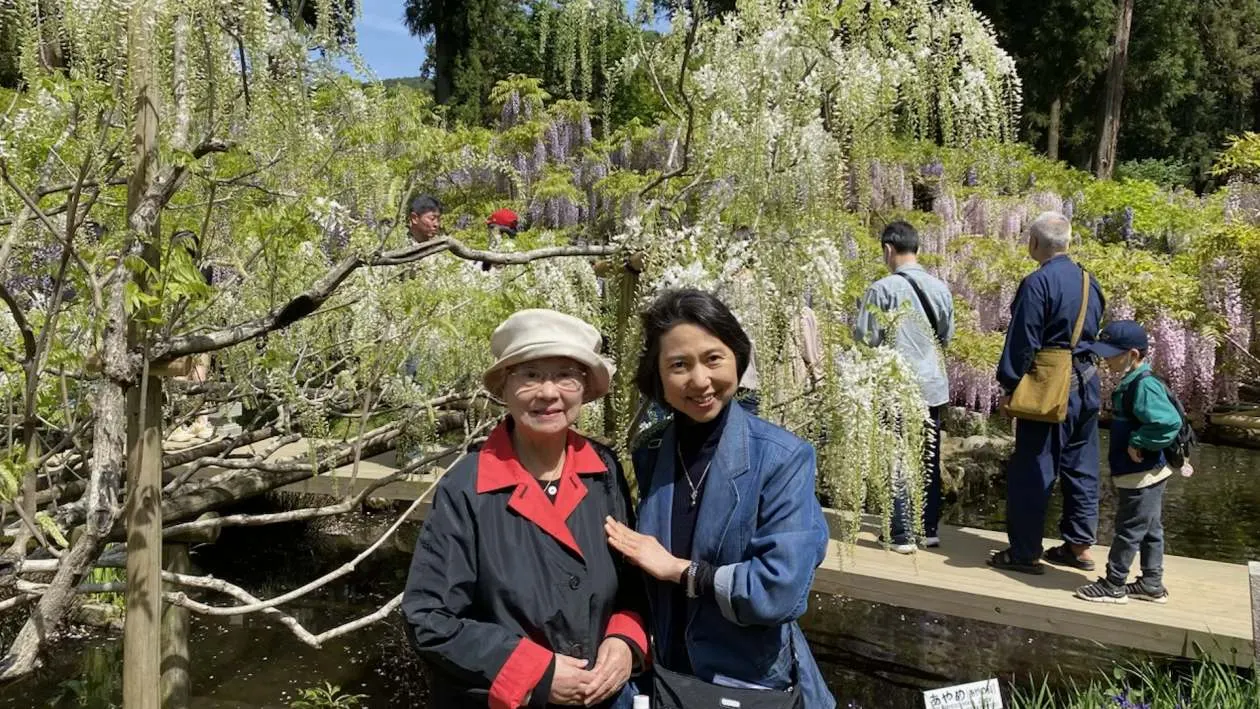
Michiko Tomioka (right) and her mother, Mikiyo Kakutani (left) @Michiko Tomioka Hibakusha: Stories of Survivors of Hiroshima and Nagasaki | PBS
Yes, she is a recurrent cancer survivor…, lung in 2001 and both breasts in 2018.
On March 11, 2011, a major nuclear accident started at the Fukushima Daiichi Nuclear Power Plant in Ōkuma, Fukushima, Japan. The direct cause was the Tōhoku earthquake and tsunami, which resulted in electrical grid failure and damaged nearly all of the power plant’s backup energy sources. The subsequent inability to sufficiently cool reactors after shutdown compromised containment and resulted in the release of radioactive contaminants into the surrounding environment.[8]: 56–58
The accident was rated seven (the maximum severity) on the International Nuclear Event Scale by Nuclear and Industrial Safety Agency, following a report by the JNES (Japan Nuclear Energy Safety Organization).[9][10] It is regarded as the worst nuclear accident since the Chernobyl disaster in 1986,[11] which was also rated a seven on the International Nuclear Event Scale.[12]
Hiroshima to Nara, Japan. miles – Bing Maps
I’m from Japan, home to some of the world’s longest living people:
Growing up in Japan, I fell in love with food at a young age. One of my favorite things to do is to cook for friends and family. Japanese people are very intentional about their diet — and it shows: Japan is home to some of the world’s longest-living people. My mom, a cancer survivor, is 86 years old, and my aunt is still going strong at 98.
When I moved to the U.S., I tried a variety of popular American diets and food trends. But my body didn’t respond well to a lot of it. Now, as a nutritionist, my approach centers mostly around Japanese eating habits,
.
I recommend foods that have medicinal properties & promote longevity.
6 American foods I never eat as a Japanese nutritionist – Michiko Tomioka
Perfect opposite side of Hometown in Nara, Japan and New York
Growing up in Nara, Japan …, it’s a New YearI always loved eating “wagashi,” or traditional Japanese sweets. My favorite was pudding and cakes made with “anko,” which is sweet red bean paste.
But when I moved to the U.S. and became a nutritionist, I couldn’t believe the dessert selections at the grocery stores. They were too rich and sugary for me. So I started making recipes inspired by my childhood.
“Ikigai” the best medicine ever, cancer survivor and longevity, Japanese Tradition.
In Japan, there is a popular concept called “ikigai,” which translates to your reason for getting out of bed each morning.
Ever since my mom was diagnosed with cancer in 2018, her ikigai has been to preserve her health and wake up feeling a little happier and more grateful than the day before.
As a nutritionist, I’ve always been inspired by my mom’s intentional diet and positive outlook on life. Today, at 85 years old, she’s a cancer survivor.
I’m from Japan: What I eat every day for a long life
Michiko Tomioka’s mother, Mikiyo Kakutani, was diagnosed with cancer in 2018, but the specific cause of her cancer hasn’t been publicly disclosed. What we do know is that after her diagnosis, she embraced a deeply intentional lifestyle focused on healing and longevity. Her daughter, Michiko—a nutritionist and longevity expert—shared that her mother prioritized an anti-inflammatory diet, spiritual practices, and community connection during her recovery
How did Michiko Tomioka mother get cancer
Michiko Tomioka’s mother, Mikiyo Kakutani, was diagnosed with cancer in 2018, but the specific cause of her cancer hasn’t been publicly disclosed. What we do know is that after her diagnosis, she embraced a deeply intentional lifestyle focused on healing and longevity. Her daughter, Michiko—a nutritionist and longevity expert—shared that her mother prioritized anti-inflammatory foods, spiritual practices, and community connection throughout her recovery1.
Rather than dwelling on the “why,” Mikiyo focused on the “how” of living well. She adopted traditional Japanese foods like miso, seaweed, and omega-3-rich seafood, eliminated processed items, and leaned into laughter, gratitude, and spiritual rituals to support her healing.
It’s a powerful reminder that while we can’t always control what happens to us, we can shape how we respond. Would you like to explore the kinds of foods or habits that support cancer recovery or prevention?
What holistic practices can help in cancer recovery?
 Holistic practices can play a powerful role in supporting cancer recovery—physically, emotionally, and spiritually. While they don’t replace conventional treatments, they can complement them beautifully and improve overall well-being.
 Mind-Body Therapies
- Meditation & Mindfulness: Reduces stress, anxiety, and improves sleep quality.
- Yoga & Tai Chi: Enhances flexibility, balance, and emotional resilience.
- Guided Imagery & Breathwork: Helps manage pain and fosters inner calm.
 Nutritional Support
- Anti-inflammatory Diet: Emphasize leafy greens, berries, turmeric, and omega-3-rich foods.
- Avoid Processed Foods & Sugars: These can fuel inflammation and disrupt gut health.
- Hydration: High-quality water (e.g., mineral-rich or alkaline) supports detoxification.
 Natural Therapies
- Herbal Remedies: Ginger (nausea), turmeric (inflammation), and medicinal mushrooms (immune support).
- Supplements: Vitamin D, probiotics, omega-3s, and antioxidants—always under medical guidance.
- Fasting Protocols: Supervised short-term fasting may promote cellular renewal.
 Integrative Treatments
- Acupuncture: Eases chemotherapy side effects like nausea and fatigue.
- Infrared Sauna & Cold Plunge: Boosts circulation and detoxification.
- Hyperbaric Oxygen Therapy & IV Nutrients: Supports tissue repair and immune function.
 Emotional & Spiritual Wellness
- Support Groups & Counseling: Builds resilience and reduces isolation.
- Art & Music Therapy: Encourages expression and emotional healing.
- Gratitude Journaling & Laughter: Boosts mood and immune function.
 Choosing the Right Environment
- Holistic cancer centers like Holistic Health and Its Role in Cancer: A Comprehensive Guide or Treatments – Cancer Center for Healing integrative care plans tailored to individual needs.
Would you like help building a personalized recovery plan or exploring specific therapies in more depth?
How can I create a holistic recovery plan for myself?
Creating a holistic recovery plan is like designing a blueprint for your healing—one that honors your body, mind, and spirit. Here’s a step-by-step guide to help you build a personalized and empowering path forward:
 Step 1: Define Your Goals
- Clarify your vision: What does recovery mean to you—physical strength, emotional peace, spiritual growth?
- Set SMART goals: Specific, Measurable, Achievable, Relevant, Time-bound.
- Visualize success: Use affirmations or vision boards to stay inspired.
 Step 2: Mind-Body Practices
- Daily meditation or breathwork: Reduces stress and enhances clarity.
- Gentle movement: Yoga, tai chi, or walking to support circulation and mood.
- Sleep hygiene: Create a calming bedtime routine to improve rest and recovery.
 Step 3: Nourish with Purpose
- Anti-inflammatory diet: Focus on leafy greens, berries, turmeric, and omega-3s.
- Hydration: Drink mineral-rich or alkaline water to support detoxification.
- Fasting protocols: Consider intermittent fasting or supervised short-term fasts to promote cellular renewal.
 Step 4: Integrative Therapies
- Acupuncture & massage: Ease pain and improve energy flow.
- IV nutrient therapy: Boosts immunity and cellular repair (consult a practitioner).
- Infrared sauna & cold plunge: Enhances detox and resilience.
Step 5: Natural Remedies & Supplements
- Medicinal mushrooms: Support immune function.
- Herbs like ginger & turmeric: Reduce inflammation and nausea.
- Supplements: Vitamin D, probiotics, glutathione, and antioxidants—always under medical guidance.
 Step 6: Emotional & Social Support
- Therapy or counseling: Process emotions and build coping strategies.
- Support groups: Connect with others on similar journeys.
- Creative outlets: Art, music, journaling to express and release.
 Step 7: Track Progress & Adapt
- Keep a recovery journal: Note physical changes, emotional shifts, and insights.
- Celebrate small wins: Every step forward matters.
- Stay flexible: Adjust your plan as your needs evolve.
Would you like help building a weekly schedule or choosing specific foods and therapies that match your lifestyle? I’d love to help you personalize it even further.
Finding a Holistic Alternative Near You Microsoft Copilot: Your AI companion
She’s now a cancer survivor at age 85, and her story is often cited as a powerful example of resilience and holistic healing. If you’re curious, I can share the five rules she lives by that helped her through treatment. They’re pretty inspiring.

What were the five rules Michiko’s mother followed during recovery?
Michiko Tomioka’s mother, Mikiyo Kakutani, followed five deeply intentional rules during her cancer recovery that helped her heal physically, emotionally, and spiritually:
Here are her five rules for a long, happy life filled with joy and purpose:
85-year-old Japanese mom’s 5 rules for a long, happy life:
‘Complaining only leads to more complaints’
1. Eat foods that reduce inflammation
- She embraced traditional Japanese ingredients like seaweed, ginger, kudzu, and matcha.
- Her diet included omega-3-rich seafood (salmon, mackerel), fermented foods (miso, nukazuke, umeboshi), and natural sweeteners like goji berries and cinnamon.
- She eliminated processed meats, fried foods, sugary snacks, dairy, and alcohol.
- Philosophy behind it: Chronic inflammation has been linked to cancer and other diseases. Her approach was about creating an internal environment that discourages disease from thriving.
- What it looked like daily: Meals were packed with antioxidants, minerals, and fiber. She used miso as a base for soups, topped rice with fermented pickles, and added seaweed to stews.
- Why it matters: These foods nourish gut health, regulate blood sugar, and support immune resilience—all key to post-treatment recovery.
- Example: Swap processed snacks for homemade miso soup with wakame and tofu.
- Simple Tip: Add turmeric, ginger, or garlic to stir-fries—these have natural anti-inflammatory properties.
- Small Shift: Choose brown rice over white, or toss flax seeds into morning oatmeal for added omega-3s.
 2. Find reasons to laugh
- She believed that “complaining only leads to more complaints,” while laughter and gratitude bring happiness.
- Watching comedy shows and reading cartoons helped lift her spirits during treatment.
- Philosophy behind it: Emotional wellness plays a huge role in physical healing. Laughter boosts serotonin, improves circulation, and lightens stress.
- What it looked like daily: She watched comedy reruns, listened to funny radio segments, and even followed an Instagram account that posted dog memes. Sometimes her daughter would just tell a goofy story to make her laugh.
- Why it matters: Maintaining a sense of humor helped her find joy and gratitude in the small moments, which gave her strength during tough times.
- Example: Watch a favorite comedians stand-up special once a week.
- Simple Tip: Schedule a 5-minute “silly break” during your workday—scroll memes, call a funny friend, or read humorous short stories.
- Small Shift: Keep a “laughter log”—jot down one thing that made you giggle each day.
 3. Have a dependable community
- She learned to ask for help and leaned on small interactions with neighbors and friends.
- Being part of a community gave her strength and a sense of belonging.
- Philosophy behind it: Illness can feel isolating—but community brings back connection, routine, and normalcy.
- What it looked like daily: A neighbor dropped off groceries. Friends stopped by for tea. Her local temple group checked in on her weekly.
- Why it matters: Feeling supported, seen, and cared for helps counteract fear and loneliness—which are heavy emotions during recovery.
- Example: Join a local yoga class or book club where you regularly connect with others.
- Simple Tip: Send a “thinking of you” message to someone once a week—it builds connection, even if you haven’t talked in ages.
- Small Shift: Let a friend know you’re available to listen, not solve. That kind of support often means the most.
 4. Plan things to look forward to
- Whether it was grocery shopping or attending worship services, she always had something on the calendar.
- Looking forward to her grandson’s visit gave her a sense of purpose and joy.
- Philosophy behind it: Anticipation activates parts of the brain that lift mood and energy. Having something to look forward to can spark motivation to keep healing.
- What it looked like daily: She’d get dressed to go for short walks, schedule phone calls, and plan mini celebrations like “tea party Tuesday.”
- Why it matters: These moments weren’t grand, but they gave her life rhythm and purpose beyond treatment.
- Example: Schedule a mini outing like trying a new café, going to a farmer’s market, or a scenic drive every Sunday.
- Simple Tip: Hang a calendar and mark fun future plans—can be as simple as “movie night” or “garden walk.”
- Small Shift: Plan an end-of-week treat. Doesn’t need to be expensive—maybe just your favorite pastry from the bakery.
 5. Connect with something bigger than yourself
- Her spiritual practices included lighting incense, chanting Buddhist scripture, and visiting a Shinto shrine three times a month.
- These rituals grounded her and gave her peace.
- Philosophy behind it: Whether religious or spiritual, finding meaning beyond oneself can offer peace and acceptance.
- What it looked like daily: Lighting incense became a form of meditation. Reading scripture gave her hope. Shinto shrine visits helped her feel connected to her ancestors.
- Why it matters: These practices brought her calm in uncertainty and made her feel part of something timeless.
- Example: Set aside time weekly to meditate, pray, or read from a spiritual or philosophical text that grounds you.
- Simple Tip: Practice “forest bathing”—go into nature with no agenda but to feel connected.
- Small Shift: Light a candle each evening and set an intention or express gratitude for something that day.
Her story is a beautiful reminder that healing isn’t just about medicine—it’s about mindset, connection, and meaning. Want help building your own version of these five rules? I’d love to help you craft something personal.
Her approach is a beautiful reminder that healing is holistic. If you’d like, I could help you turn these into your own set of personal wellness principles. Something truly tailored to your life and values.
Each one starts with awareness—but the real magic is when these small actions become habits. Would you like help designing a personalized daily ritual from these principles? I’d love to collaborate with you on that.
What studies support these healing rules?
Absolutely—there’s a growing body of research that supports each of Michiko’s mother’s healing principles. Here’s a breakdown of the science behind them:
1. Eat foods that reduce inflammation
- Scientific Support: Numerous studies link anti-inflammatory diets to reduced cancer risk and improved recovery outcomes.
- Key Findings:
- Diets rich in vegetables, fruits, whole grains, and omega-3s are associated with lower levels of chronic inflammation and oxidative stress2.
- The Dietary Inflammatory Index (DII) shows that each unit increase in inflammatory foods correlates with an 8.3% increase in overall cancer risk.
- Anti-inflammatory diets may also support gut health, regulate blood sugar, and reduce recurrence risk3.
2. Find reasons to laugh
- Scientific Support: Laughter therapy has been shown to improve emotional resilience, reduce anxiety, and even enhance immune function.
- Key Findings:
- Laughter activates dopamine and serotonin pathways, improving mood and reducing stress hormones.
- A 2025 meta-analysis found that laughter therapy significantly reduced anxiety and increased life satisfaction in adults.
- Laughter also improves cardiovascular health and pain tolerance, and may boost recovery in cancer patients.
- Music Heals Lawrence Welk Show 1978 Tribute to Bing Crosby – YouTube
3. Have a dependable community
- Scientific Support: Social support is a well-established factor in recovery from illness, especially mental health conditions.
- Key Findings:
- Community and cultural engagement improves coping, reduces isolation, and enhances emotional well-being
- Peer support and social connection are linked to better outcomes in chronic illness and mental health recovery
- Studies show that social support reduces inflammation, improves resilience, and promotes healing.
4. Plan things to look forward to
- Scientific Support: Anticipation of positive events activates reward centers in the brain and boosts emotional health.
- Key Findings:
- Anticipating future joy releases dopamine, which enhances motivation and reduces anxiety
- MRI studies show that anticipation of positive events correlates with higher well-being scores and improved brain function.
- Even small daily anticipations—like a treat or a walk—can improve mood and help people cope with stress.
5. Connect with something bigger than yourself
- Scientific Support: Spirituality and meaning-making are linked to better health outcomes, especially in serious illness.
- Key Findings:
- A 2022 Harvard-led study found that spirituality improves quality of life and medical decision-making in patients with serious illness.
- Spiritual practices like prayer, meditation, and nature connection reduce stress and promote healing18.
- The NIH developed a tool (NIH-HEALS) to measure psycho-social-spiritual healing, showing that trust, acceptance, and reflection are key healing factors.
If you’d like, I can help you explore one of these areas more deeply—like designing a laughter ritual or building a personalized anti-inflammatory meal plan. Just say the word.
1www.aicr.org 2theoncologydietitian.com 3evidence-based-nutrition.com
4www.mayoclinic.org 5psychology-spot.com 6 Whole Health Library
7 Mayo Clinic Press 8 BMC Psychology | Full Text
9 Social support and recovery: a scoping review 10 systematic umbrella review
11. he power of anticipation: Why it boosts our mental health – Wellspan Health
Foods That Fight Cancer: The Ultimate Science-Based List
1. Eat foods that reduce inflammation.
When my mom was going through her cancer treatment, she emphasized traditional Japanese foods in her diet. This meant plenty of inflammation-fighting and immune system-boosting options in her kitchen:
- Goji berries and cinnamon as sweeteners
- Seaweed, ginger, kudzu and green teas like matcha
- Seafood high in omega-3 like salmon and mackerel
- Miso (fermented soybeans), nukazuke (vegetables in fermented in rice bran) and umeboshi (Japanese pickled plum)
She eliminated most processed and packaged foods, including meats and animal fats, oily and fried foods, sugary snacks, dairy and alcohol.
She still maintains this mindful diet today.
2. Find reasons to laugh.
My mom always says, “Complaining only leads to more complaints, but gratitude and laughter lead to happiness.”
Studies show the benefits of laughter therapy during cancer treatments, such as improving mental health and immune function.
Even something as simple as watching a comedy show or reading a funny cartoon lifted my mom’s spirits and helped her get through tough times.
3. Have a dependable community.
During her rehabilitation period, being a contributing member of her community was crucial to my mom’s healing process.
She’s always been the independent type who likes doing things on her own. But as she’s gotten older, she has learned the importance of asking for help, even if it’s something as simple as slicing a watermelon.
The smallest interactions can be the foundation of an enduring connection.
4. Plan things to look forward to, and include your loved ones.
This can be anything from going to the grocery store to attending worship services to going to a concert with friends and family.
This year, my mom is most excited about visiting her grandson after he graduates in December.
When you have something to look forward to or work towards, then you have an ikigai and purpose to keep you happy and motivated each day.
5. Connect with something bigger than yourself.
My mom takes a lot of comfort and joy in her spiritual life and traditions. Her day starts with lighting incense and chanting Buddhist scripture.
Three times a month, she goes to her local Shinto shrine for a ritual worship that has been maintained by the temple for over 1,300 years.
She prays for her family’s health and safety, sees the priests, and has lunch with friends and members of the community. This relationship with something that’s larger than herself is incredibly healing, and she never takes it for granted.
This Cheap, Delicious Food Could Help You Live Longer
by Adam Eckert Benzinga Editor
Michiko Tomioka grew up in Nara, Japan, eating countless tofu-based dishes throughout her childhood.
Studies have shown tofu can help reduce risks of heart disease, bone loss, and cancer.
Tofu — a staple of Japanese cuisine — is versatile, inexpensive, tasty and may even lead to a longer life.
What To Know: CNBC contributor Michiko Tomioka grew up in Nara, Japan, eating countless tofu-based dishes throughout her childhood. She carried on the culinary tradition with her own children when she moved to the U.S.
Instead of giving her kids ultra-processed baby foods, Tomioka opted for tofu recipes that helped save time and money
“I often call tofu my best friend for happy living,” Tomioka said.
Tofu is widely believed to have significant health benefits. It’s consumed by people of all ages across Japan, which has one of the highest life expectancy rates in the world.
Tomioka’s in-laws are 95 and 88 years of age and eat tofu, along with natto and miso soup every day. According to CNBC, Tomioka’s in-laws attribute much of their longevity and immunity to their diet.
Why Tofu: Tofu is traditionally made using soybeans and nigari, the solution that remains after removing salt from ocean water. Tofu is often made in the U.S. with calcium sulfate. Regardless of how it’s made, tofu contains all of the essential amino acids one normally gets from meat, poultry, eggs, fish and dairy, but without cholesterol.
The report cites studies that claim tofu can help reduce risks of heart disease, bone loss, and cancer.
Tofu is also economically and environmentally friendly. Tomioka noted that it takes more than 70 kilograms of greenhouse emissions to produce one kilogram of beef, but it takes only 3.2 kilograms of emissions to produce one kilogram of tofu.
“To me, it is simple math. In the course of the week, if you were to swap out one or two beef burgers for tofu burgers, you would feel better, pay less for groceries and do something small to help the environment,” Tomioka said.
You don’t have to sacrifice taste for health and cost benefits. Tofu actually has a subtle, natural taste that can be paired with just about any dish. Tomioka serves tofu pan-fried, in soups and salads, dumplings, burgers, cabbage rolls, ice cream and more.
Japanese native and nutritionist, Michiko Tomioka will guide us through Yakuzen cooking to build skills in preparation and presentation of this food as a medicine art form. She will also honor guests by sharing Chanoyu (the way of tea) traditional matcha tea ceremony to welcome the New Year. This authentic Japanese experience filled with Michiko’s joy and passion for mindful eating and health is not to be missed.
Michiko is a Japanese native nutritionist from Nara, Japan.
She has been cooking and caring for family and friends since the age of three. Since she grew up in Nara, Japan and fully embraces all the traditional foods and mindful practices. After years of corporate life, she decided to pursue a career in nutrition. She is a registered dietitian, certified and licensed dietitian, and integrative functional nutrition certified practitioner ( IFNCP).
As a IFNCP, she is focusing on total long-term lifestyle health with science based individualized whole body approach to find out the root cause and individualized care plan. She especially optimises the authentic Japanese whole plant based cooking, meal planning, and mindfulness. She loves sharing and cooking her original Yakuzen (薬膳ー medicine meals) in simple cooking methods which everyone can incorporate into daily meals.
She has since built a career in nutrition consultation, authentic cooking, and mindful eating in the underserved school system in NY/NJ, WIC ( special supplemental program for women, Infact, and Child), numerous clinical care facilities, and substance recovery center, as well as community service.
She is a founder of Michi Nutrition, LLC. Michi. “Michi “ represents meaning of 道(way)未知(limitless ) 満(fulfillment )、美智( beautiful wisdom), in Japanese…, the way of limitless unknown powder of nutrition with beautiful authentic wisdom. She is currently offering in divisional and group nutrition and consultation, education, authentic plant-based Japanese cooking, mindful eating and tea ceremony ( 茶道ー the way of tea and live)
Michiko Tomioka, MBA, RDN is a certified nutritionist and longevity expert. Born and raised in Nara, Japan, her approach focuses on a plant-based diet. She has worked in nutritional roles at substance recovery centers, charter schools and food banks. Her passion lies in delivering and educating her messages, Cook Well, Eat Well, Love Yourself to love your loved one.
You can find her articles and interviews in CNBC, NPR, MBG, and Substuck.
From Japan with Love: 5 Healthy Desserts a Japanese Nutritionist Eats to Satisfy Sugar Cravings
How the Japanese diet and lifestyle make it easier to stay healthy : Shots – Health News : NPR
In Order to Adapt to a Changing Environment, Octopuses Can Edit Their Genetic Code | Watch
Miso Soup, as a health ambassador | by Michiko Tomioka, RDN, IFNCP, 富岡美智子 | Medium
How to make a Miso soup from scratch | by Michiko Tomioka, RDN, IFNCP, 富岡美智子 | Medium
Nutritionist: I visited a Costco in Japan—6 ‘longevity foods’ I couldn’t leave without buying
Anything is possible, no need to be perfect. Your Body and Mins is happy, I am sure it is.
“Ikigai” the best medicine ever, cancer survivor and longevity, Japanese Tradition.
I visited a Costco in Japan – 6 Foods I Wish They Brought in the US | TrendFt
What’s the Must-Have Food According to a Longevity Expert? | MUI KITCHEN
A Japanese Formula for Dinner: One Soup, Three Sides | Cup of Jo
Japanese nutritionist: The food robust elders swear by and I eat daily
Japanese foods, Miso Soup, as a health Ambassador in longevity
Natto-Jiru (Natto Soup With Miso, Tofu, and Vegetables) Recipe
Another Michiko’s Happiest Day in Paris, tea ceremony in Paris
Secrets to a Long Healthy Life from a Japanese Centenarian
Why it’s easier to make healthy food choices in Japan : NPR
Chado…., The Art of Living. – Michiko Tomioka, RDN, IFNCP
All about NON-GMO Tofu – Michiko Tomioka, RDN, IFNCP
85-year-old Japanese mom’s 5 rules for a long, happy life
Japanese nutritionist: What I eat for breakfast every day
Japanese Mindful Eating in Longevity, shiba inu, tofu,
I’m from Japan what I drink every day for a long life
Comfort Foods, Miti-Grain for Longevity
(!) Japanese Nutritionist – Search Videos
(!) Japanese Nutritionist – Search Videos
Find A Doctor | Michiko Tomioka, RD
Follow her on Instagram @michian_rd.
@ Japanese functional Nutritionist
Cindy Becker Cooking with tofu – Search Videos