
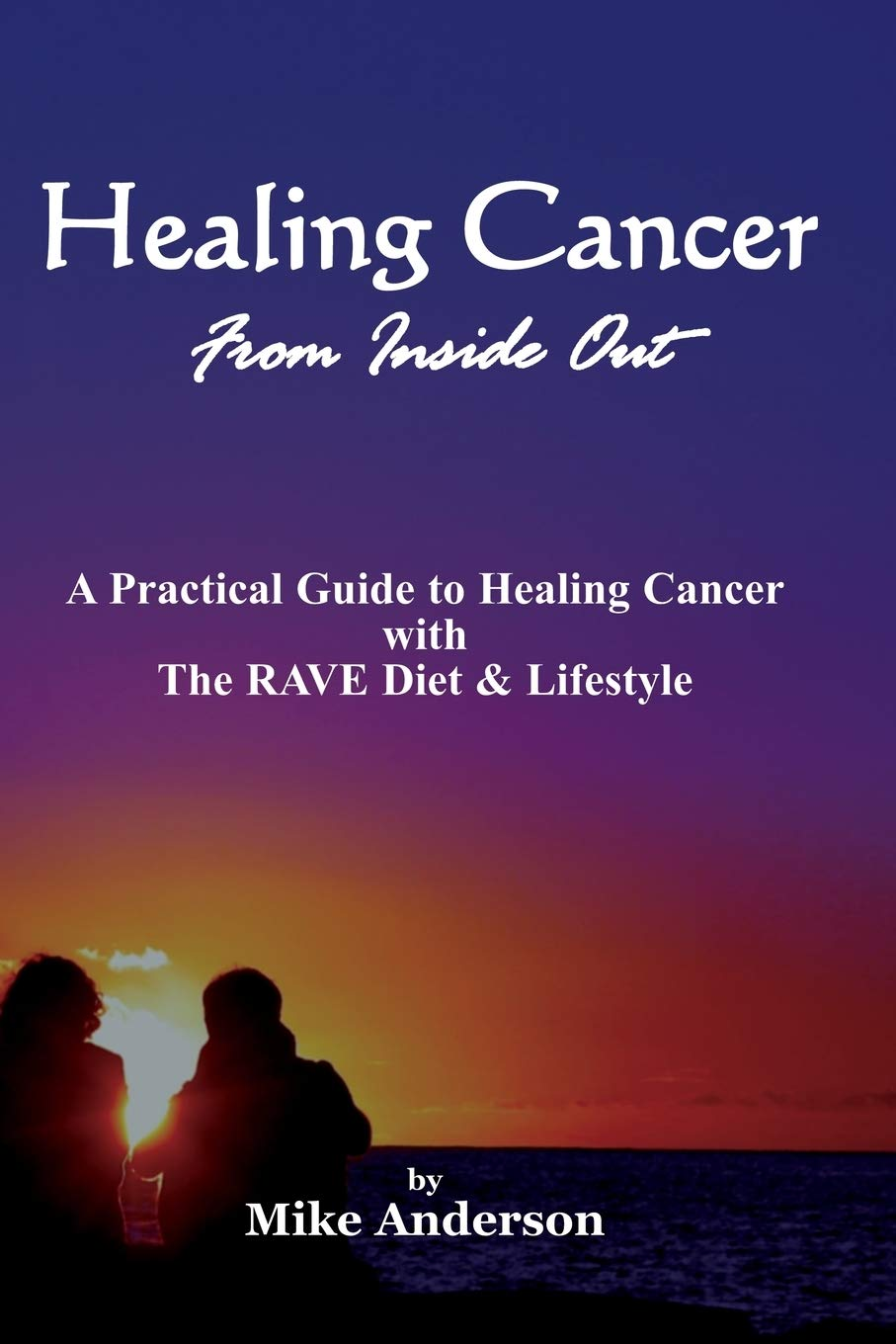
 “Healing Cancer From Inside Out” by Mike Anderson is a provocative and alternative take on cancer treatment that challenges conventional medical approaches.
Here’s a breakdown of what the book and documentary offer:
 Core Themes
- Critique of Conventional Treatments: Anderson argues that mainstream cancer therapies—like chemotherapy, radiation, and surgery—often fail to address the root causes of cancer and can be ineffective or harmful.
- Nutritional Healing: He presents evidence supporting the idea that cancer can be reversed through diet and lifestyle changes, particularly by eliminating processed foods and embracing whole, plant-based nutrition.
- The RAVE Diet: A central feature of the book, this diet emphasizes:
- Raw foods
- Vegan choices
- No animal products
- No processed foods
- No oils or refined sugars
 Practical Guidance
- Over 200 recipes tailored for cancer patients
- Tips for quick meal prep without needing recipes
- Advice on supplements—what to take, what to avoid
- Debunking myths around soy, supplements, and treatment interference
What are the main criticisms of Anderson’s approach?
Great question—Mike Anderson’s approach in Healing Cancer from Inside Out has sparked both interest and skepticism. Here are the main criticisms leveled against his ideas:
 1. Lack of Scientific Rigor
- Critics argue that Anderson’s claims are not backed by peer-reviewed clinical studies.
- His comparisons between conventional and nutritional treatments often rely on anecdotal evidence rather than controlled trials.
 2. Oversimplification of Cancer
- Cancer is a complex and multifaceted disease, with different types requiring different treatments.
- Anderson’s suggestion that diet alone can reverse cancer is seen by many experts as overly simplistic and potentially misleading.
 3. Dismissal of Conventional Medicine
- He strongly criticizes chemotherapy, radiation, and surgery, calling them largely ineffective.
- This stance can be dangerous if it leads patients to reject proven treatments in favor of unverified alternatives.
 4. Promotion of a Rigid Diet
- The RAVE Diet excludes all animal products, oils, and processed foods.
- While plant-based diets are generally healthy, critics say the “no exceptions” rule may be too extreme and not suitable for all patients, especially those with specific nutritional needs during cancer treatment.
5. Emotional Appeal Over Evidence
- The book and documentary use emotional storytelling to persuade rather than relying on balanced scientific discourse.
- This can make it compelling but also biased, especially for vulnerable patients seeking hope.
 Bottom Line
While Anderson’s emphasis on nutrition and lifestyle is valuable, most medical professionals recommend integrative approaches—combining healthy living with evidence-based treatments. His work is best viewed as complementary, not a substitute for medical care.
 Core Concepts
- Critique of Conventional Treatments: Anderson argues that mainstream cancer therapies—like chemotherapy, radiation, and surgery—often fail to address the root causes of cancer and can be ineffective or even harmful.
- Nutritional Healing: He promotes the idea that cancer can be reversed naturally through dietary changes, particularly by adopting the RAVE Diet—a plant-based, whole-food regimen designed to detoxify the body and rebuild the immune system.
- Toxic Diets: The book claims that the typical Western diet creates a cellular environment conducive to cancer growth, and that changing this environment is key to healing.
- Supplementation Insights: It explores which supplements may help or hinder recovery, debunking myths around popular choices and highlighting lesser-known options.
The RAVE Diet
- R: No refined foods
- A: No animal products
- V: No vegetable oils
- E: No exceptions
- Includes over 200 recipes and practical tips for meal prep without needing to follow complex instructions.
Would you like a summary of the RAVE Diet’s nutritional principles or a look at the scientific critiques of Anderson’s claims?
 The RAVE Diet, created by Mike Anderson, is a plant-based nutritional plan designed to promote health and potentially reverse chronic diseases—including cancer—by eliminating harmful foods and emphasizing whole, nutrient-dense options.
 RAVE Diet Summary
The acronym RAVE stands for:
| Letter | Meaning | Description |
|---|---|---|
| R | No Refined Foods | Avoid white flour, sugar, oils, and processed snacks. Focus on whole grains and natural sweeteners like fruit. |
| A | No Animal Products | Eliminate meat, dairy, eggs, and fish. These are linked to inflammation and disease in Anderson’s view. |
| V | Vegan | Reinforces the exclusion of all animal-derived ingredients. Emphasizes ethical and health reasons. |
| E | Exercise | Encourages regular physical activity to support overall wellness and immune function. |
 What You Can Eat
- Fruits and vegetables (especially raw)
- Whole grains (brown rice, oats, quinoa)
- Legumes (beans, lentils, peas)
- Nuts and seeds (in moderation)
- Herbs and spices for flavor
 What You Should Avoid
- Meat, poultry, fish, dairy, eggs
- Refined sugar and flour
- Processed and packaged foods
- Oils (even olive or coconut oil)
- Artificial additives and preservatives
 Philosophy Behind It
Mike Anderson argues that many chronic diseases—including cancer—are largely preventable and reversible through diet. He believes the Western diet is the root cause of many health issues and that returning to a whole-food, plant-based lifestyle can restore balance and healing.
Would you like a sample meal plan or recipe ideas based on the RAVE Diet?
What are some easy RAVE Diet recipes I can try?
Microsoft Copilot: Your AI companion
Would you like to explore what integrative oncology looks like or how diet can support conventional cancer treatments
What are some tips for meal prepping RAVE Diet meals?
Absolutely! Meal prepping for the RAVE Diet can be simple and efficient if you follow a few smart strategies. Here are some practical tips to help you stay consistent and save time while sticking to the diet’s plant-based, whole-food principles
 Top RAVE Diet Meal Prep Tips
 1. Prep Raw Ingredients First
- Wash and chop veggies like carrots, cucumbers, bell peppers, and leafy greens in advance.
- Store them in airtight containers for easy access throughout the week.
- Aim for at least 50% raw food intake, as recommended by the RAVE Diet guidelines.
 2. Batch Cook Whole Grains
- Cook large portions of brown rice, quinoa, millet, or buckwheat.
- Store in the fridge or freezer in portioned containers.
- These grains are nutrient-dense and form the base of many RAVE meals.
 3. Prepare Legumes Ahead
- Cook beans and lentils in bulk or use no-salt canned versions.
- Freeze in meal-sized portions for quick use in salads, stews, and wraps.
- Chickpeas, black beans, and lentils are great protein sources.
4. Assemble Grab-and-Go Meals
- Make mason jar salads with layers of veggies, grains, and legumes.
- Keep dressings oil-free—use lemon juice, tahini, or blended avocado.
 5. Freeze RAVE-Friendly Soups & Stews
- Sweet potato and black bean stew or lentil vegetable soup freeze well.
- Reheat for quick dinners without compromising nutrition.
 6. Create a Weekly Grocery List
- Stick to whole, unprocessed items: fruits, vegetables, legumes, whole grains, seeds.
- Avoid refined foods, oils, and animal products.
 7. Make Smoothie Packs
- Pre-portion fruits, greens, and seeds into freezer bags.
- Blend with water or plant-based milk for a quick breakfast.
Would you like a printable grocery list or a sample weekly meal plan based on these tips?

Can you provide a sample weekly meal plan?
Absolutely! Here’s a sample 7-day RAVE Diet meal plan that’s simple, nutrient-packed, and aligned with Mike Anderson’s principles: no animal products, no refined foods, and lots of raw or minimally cooked whole foods
 RAVE Diet Weekly Meal Plan
Day 1
- Breakfast: Chia pudding with almond milk, topped with berries and flaxseeds
- Lunch: Kale and quinoa salad with chickpeas, cucumber, and lemon-tahini dressing
- Snack: Apple slices with raw almond butter
- Dinner: Sweet potato and black bean stew with steamed broccoli
Day 2
- Breakfast: Green smoothie (spinach, banana, chia seeds, water)
- Lunch: Raw veggie wrap with hummus in collard greens
- Snack: Raw trail mix (walnuts, raisins, pumpkin seeds)
- Dinner: Zucchini noodles with raw marinara sauce and avocado
Day 3
- Breakfast: Overnight oats with dates, cinnamon, and fresh fruit
- Lunch: Lentil salad with bell peppers, tomatoes, and parsley
- Snack: Carrot sticks and tahini dip
- Dinner: Stuffed bell peppers with quinoa, black beans, and salsa
Day 4
- Breakfast: Fruit salad with watermelon, kiwi, and mango
- Lunch: Raw sushi rolls with avocado, cucumber, and sprouts
- Snack: Celery sticks with cashew cheese
- Dinner: Butternut squash soup and mixed greens salad
Day 5
- Breakfast: Banana oat cookies and herbal tea
- Lunch: Spinach salad with walnuts, strawberries, and balsamic vinegar
- Snack: Dried figs and sunflower seeds
- Dinner: Falafel (baked, oil-free) with tahini sauce and tabbouleh
Day 6
- Breakfast: Smoothie bowl with berries, granola, and chia seeds
- Lunch: Raw taco salad with walnut meat and guacamole
- Snack: Pomegranate seeds and cucumber slices
- Dinner: Lentil and vegetable stir-fry (no oil) over brown rice
Day 7
- Breakfast: Sprouted grain toast with avocado and tomato
- Lunch: Raw gazpacho soup and seaweed salad
- Snack: Mixed berries and raw coconut flakes
- Dinner: Veggie-stuffed portobello mushrooms with quinoa
If you’d like, I can also create a matching grocery list or offer tips for adjusting this plan to your taste or schedule. Want to go that route?
Can you provide a grocery list for this meal plan?
Absolutely! Here’s a comprehensive grocery list tailored to the RAVE Diet weekly meal plan I shared earlier. It includes only whole, plant-based, unprocessed ingredients—no animal products, no refined foods, and lots of raw options.
Produce
- Kale
- Spinach
- Romaine or butter lettuce
- Collard greens
- Broccoli
- Zucchini
- Bell peppers (red, yellow, green)
- Carrots
- Celery
- Cucumber
- Tomatoes (cherry and regular)
- Avocados
- Sweet potatoes
- Red onion
- Garlic
- Sprouts (alfalfa, mung bean)
- Fresh herbs (cilantro, parsley, basil)
- Lemons and limes
- Apples
- Bananas
- Berries (blueberries, strawberries, raspberries)
- Mango
- Kiwi
- Watermelon
- Oranges
- Pomegranate
 Grains & Legumes
- Quinoa
- Brown rice
- Rolled oats
- Lentils (green or brown)
- Black beans
- Chickpeas (canned or dried)
- Millet (optional)
 Nuts & Seeds
- Chia seeds
- Flaxseeds
- Walnuts
- Almonds
- Pumpkin seeds
- Sunflower seeds
- Raw almond butter or cashew butter
 Pantry Staples & Condiments
- Tahini
- Nutritional yeast
- Apple cider vinegar
- Mustard (no added sugar)
- Salsa (no added sugar or oil)
- Low-sodium vegetable broth
- Spices: cumin, chili powder, cinnamon, turmeric, cayenne, black pepper
 Plant-Based Milks
- Unsweetened almond milk or oat milk (check for no added oils or sugars)
 Optional Extras
- Dates or dried figs (unsweetened)
- Raw coconut flakes
- Sprouted grain bread (oil-free, sugar-free)
Would you like this organized into a printable format or broken down by store section (produce, bulk, refrigerated)? Do Your Own Research
 Where to Find It
- Healing Cancer from Inside Out: A Practical Guide to Healing Cancer With the Rave Diet and Lifestyle: Anderson, Mike: 9780972659055: Amazon.com: Books
- Amazon.com: Healing Cancer From Inside Out – 2nd Edition : Mike Anderson, Mike Anderson: Movies & TV || Amazon.com : better way to treat cancer
- eBook – Healing Cancer From Inside Out by Mike Anderson · OverDrive: from your library.
 Documentary Version
There’s also a Healing Cancer From Inside Out By Mike Anderson (2008) : Free Download, Internet Archive, which expands on the book’s themes with interviews and case studies.