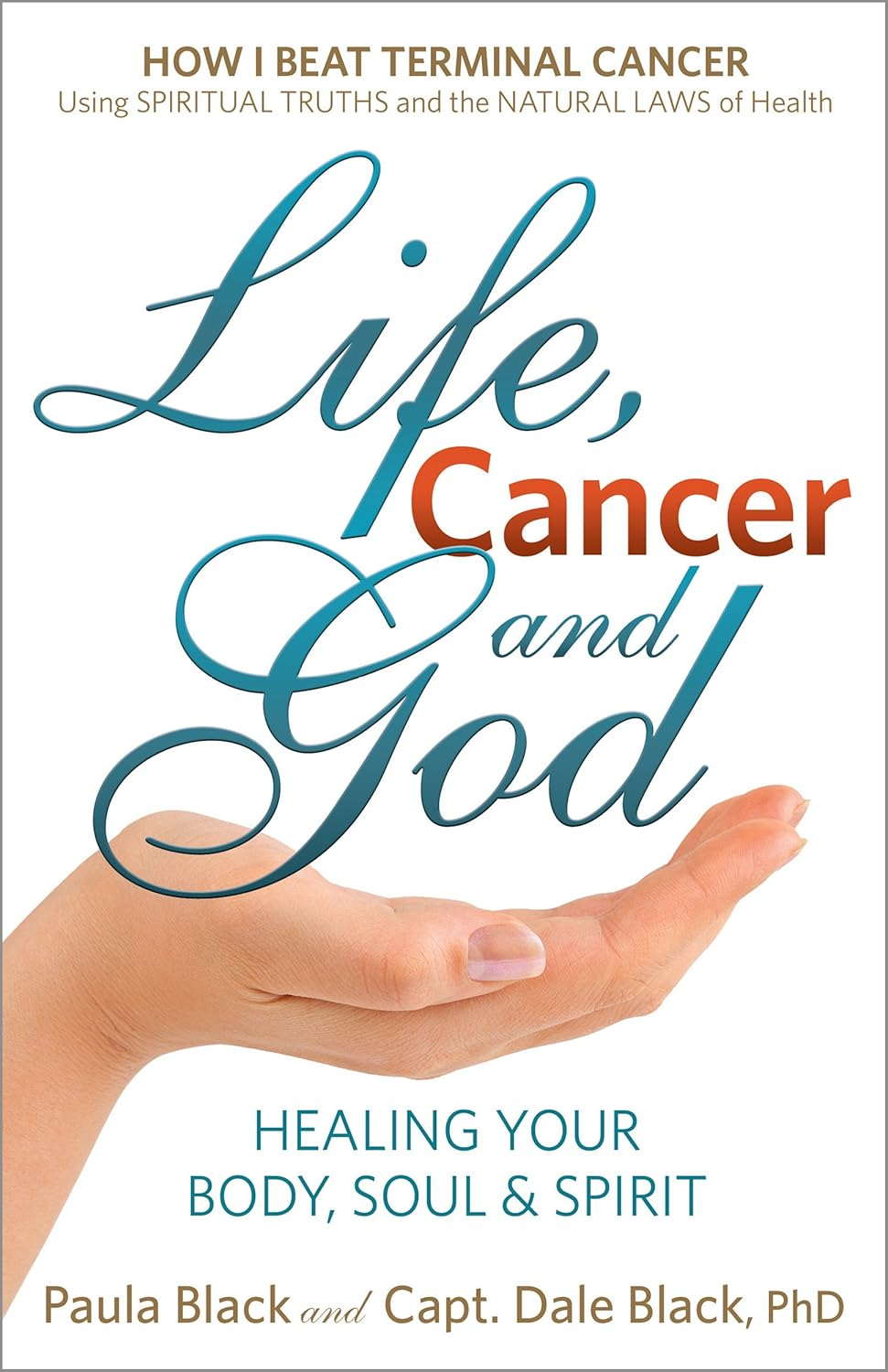
Life, Cancer and God: Beating Terminal Cancer
by Paula Black (Author), Capt. Dale Black (Author)
4.7 4.7 out of 5 stars 323 ratings
The Essential Guide to Beating Cancer. Riveting! Shocking! Eye Opening!
A roadmap to successfully treating cancer and other chronic diseases! As featured on the cover of “Publisher’s Weekly” this beautifully written, inspirational and enlightening memoir may be the ultimate victory-over-cancer story. The author’s journey from advanced-stage cancer to near death, to complete healing is destined to become a faith-based BEST SELLER.
In the prime of life–as a wife, mother and businesswoman–Paula heard the dreaded words: “It’s cancer.” Doctors gave her 3 to 6 months to live. Her husband, a former airline pilot instructor who had become the senior pastor of a growing church, became Paula’s full-time cancer researcher.
The two began discovering everything they could about her fatal disease. They met with doctors and oncologists, talked with cancer patients and their families–tirelessly researching every conventional and alternative cancer treatment available.
Mostly they prayed.
Ultimately, they felt God revealed the BODY-SOUL-SPIRIT Approach–which deals with the whole person–treating root causes of disease, not just symptoms. It was this approach that saved Paula’s life. Twenty months from initial diagnosis her advanced-stage cancer was gone; without chemotherapy–without radiation–and without drugs.
Easy to read–the authors express medical concepts and terminology in words and ideas the layperson can easily understand. You won’t find this information discussed in mainstream media, nor talked about in your doctor’s office.
Prepare to laugh, cry, hold your breath and shout for joy as you accompany this husband and wife on their incredible journey of faith–where personal struggles collide with biblical insight. Learn how Paula defied medical logic, reversed terminal cancer PERMANENTLY and got her life back.
The Journey of Life, Cancer and God: Beating Terminal Cancer is one of profound faith, resilience, and healing against all odds.
The book by Paula Black and Capt. Dale Black tells the gripping true story of Paula’s battle with terminal cancer—diagnosed with only 3 to 6 months to live—and her miraculous recovery through a holistic BODY-SOUL-SPIRIT approach. But this theme of divine intervention and personal transformation echoes across many powerful testimonies.
Here are some deeply moving video stories that expand on this intersection of faith and healing:
What Happens When God Doesn’t Heal You? Lifelong Cancer Patient Opens Up. This video explores the emotional and spiritual journey of living with chronic illness, even when healing doesn’t come. It’s a raw and honest look at faith in the face of unanswered prayers.
I Asked God If This Terminal Cancer Would Kill Me, And He Answered– Abigail shares her encounter with the spirit of death and how her relationship with Jesus transformed her outlook and ultimately her prognosis.
Jesus Healed Me From Cancer | Dodie Osteen– Dodie Osteen’s testimony is a classic example of unwavering belief in divine healing. Her story has inspired countless others to seek spiritual strength during their battles.
God Told Me I Was Healed, But The Cancer Came Back | The 700 Club– Rita Green’s experience of beating cancer twice is a testament to perseverance and faith, even when healing seems temporary or uncertain.
Healed from Addiction and Cancer – Paul’s Story– Paul’s journey shows how spiritual transformation can heal not just the body, but also the soul, as he overcame both addiction and cancer.
How Terminal Cancer Brought Me to God (Tammy Peterson) | Ep. 531– Tammy Peterson’s story is a powerful reflection on how facing death can awaken a deeper connection to God and reshape one’s entire life.
Bite Back: Beating cancer with gratitude – This video emphasizes the healing power of gratitude and positivity, showing how mindset can be a vital part of recovery.
Chronic Disease Doctor: We Can Now Reverse Some Stage 4 Cancer?– Is your daily diet secretly fueling chronic disease? Dr. William Li reveals the shocking truth about what you’re really eating.
Each of these stories adds a unique layer to the conversation started by Life, Cancer and God. Whether you’re seeking hope, inspiration, or a deeper understanding of how faith intersects with illness, these voices offer a chorus of courage and conviction.
How does spirituality impact cancer treatment outcomes?
Spirituality can have a profound impact on cancer treatment outcomes—not necessarily by altering the disease itself, but by shaping how patients cope, heal, and even respond to treatment. Here’s how:
 Emotional and Psychological Resilience
Improved coping mechanisms: Patients with strong spiritual beliefs often report greater emotional strength and resilience during treatment.
Reduced anxiety and depression: Spiritual practices like prayer, meditation, or connection to a faith community can lower stress and improve mood.
Enhanced sense of purpose: Feeling connected to something greater than oneself can help patients find meaning in their journey, even in the face of terminal illness.
 Impact on Treatment Adherence and Recovery
Better adherence to medical protocols:
Patients who feel spiritually supported are more likely to follow through with treatments and maintain hope.
Improved quality of life: Studies show that spirituality contributes to better overall well-being, which can indirectly support physical recovery.
 Patient–Provider Relationships
Greater satisfaction with care:
When healthcare providers acknowledge and respect spiritual needs, patients report higher satisfaction and trust.
Reduced feelings of isolation: Spirituality can foster a sense of community and support, which is especially vital during long or difficult treatments.
 Research Highlights
A systematic review of over 13,000 cancer patients found that spirituality and religion significantly improved quality of life and coping across various cancer types—including breast, prostate, and gastrointestinal cancers.
Another study revealed that unmet spiritual needs were linked to lower ratings of care and increased emotional distress2.Spirituality doesn’t replace medicine—but it can be a powerful complement. Whether through faith, mindfulness, or a personal sense of connection, it helps many patients navigate the storm with grace and grit.
Would you like to explore how specific spiritual practices—like gratitude journaling or guided prayer—can be integrated into healing routines?1www.mdpi.com2www.cancer.gov3cancerscience.net
What are some studies linking spirituality to health outcomes?
There’s a growing body of research showing that spirituality isn’t just a comfort—it can be a powerful factor in health outcomes. Here are some standout studies that have made waves in the medical and public health communities:
 1. Harvard & Brigham Systematic Review (2022)
Published in: JAMA
Scope: Reviewed over 8,900 articles on serious illness and 6,400 on general health2
Findings:Spirituality is linked to better health outcomes, including longer life, less depression, and reduced substance use.
Religious service attendance was associated with greater longevity and better mental health.
The study called for spirituality to be integrated into whole-person care, especially in serious illness.
2. George Washington Institute for Spirituality and Health (GWish)
Focus: Spiritual distress as a human rights issue in healthcare
Key Insight: Addressing spiritual needs improves patient satisfaction, emotional well-being, and can even influence treatment adherence.
 3. Duke University Studies
Duke researchers have long explored the intersection of religion, spirituality, and health.
Their work shows that spiritual beliefs can buffer stress, improve immune function, and enhance recovery from illness.
 Why It Matters
These studies don’t claim that spirituality cures disease—but they do show that it can:
Improve mental resilienceEnhance quality of life
Support better coping with chronic or terminal illness
Foster stronger patient-provider relationshipsIf you’re curious, you can dive deeper into the Spirituality linked with better health outcomes, Harvard T.H. Chan School of Public Health or explore the full article in Spirituality in Serious Illness and Health | Health Care Quality | JAMA | JAMA Network or JAMA Study Shows Spirituality Plays an Important Role in Whole-Person Care | School of Medicine and Health Sciences
Would you like to explore how different spiritual practices—like meditation, prayer, or community rituals—affect specific conditions like cancer or heart disease?Can spirituality influence chronic disease management?
Absolutely—it can, and in ways that are both profound and measurable. Spirituality doesn’t replace medical treatment, but it can significantly influence how people manage chronic diseases like diabetes, heart disease, cancer, and autoimmune conditions. Here’s how:
 Psychological & Emotional Benefits
Stress reduction: Practices like prayer, meditation, and mindfulness can lower cortisol levels and reduce inflammation, which is crucial in chronic illness.
Improved coping: Spiritual beliefs often provide a framework for meaning-making, helping patients navigate uncertainty and pain with greater resilience.
Lower rates of depression and anxiety: Spiritual engagement is linked to better mental health, which in turn supports physical healing.
 Treatment Adherence & Lifestyle Changes
Greater motivation for self-care: Patients who view their bodies as sacred or part of a divine plan may be more committed to healthy behaviors.
Better adherence to treatment: Spiritual support can foster hope and trust, making patients more likely to follow medical advice and stick with long-term regimens.
 Physical Health Outcomes
Improved immune function: Some studies suggest that spiritual practices can positively influence immune markers.
Better cardiovascular health: Regular spiritual practices like meditation have been shown to lower blood pressure and improve heart rate variability.
 Research Highlights
A study published in MDPI’s Religions Journal Spiritual Needs of Patients with Chronic Diseases found that patients with chronic diseases often rely on spirituality to cope, and that addressing spiritual needs improves quality of life and emotional well-being.
According to Spirituality in Chronic Disease Management – iResearchNet spirituality enhances emotional regulation and stress buffering, which are key in managing chronic conditions.
Psychology Today highlights how chronic illness can reshape spiritual identity, and that engaging with spiritual questions can help patients reclaim a sense of self beyond their diagnosis.
Spirituality isn’t one-size-fits-all—it might mean prayer for one person, nature walks for another, or deep conversations about purpose and connection. But when integrated thoughtfully, it can be a powerful ally in the journey of healing.
Would you like to explore how specific spiritual practices—like journaling, breathwork, or rituals—can be tailored to different chronic conditions?
What is the Basis of Faith Healing – Search Videos
The basis of faith healing lies in the belief that faith in God’s power to heal can activate a supernatural force that brings about restoration and wholeness.
This belief is supported by numerous accounts in the Bible of miraculous healings attributed to faith. For instance, the Paralytic at Capernaum was healed by Jesus’ forgiveness of his sins and the power of faith. Similarly, the Woman with a Hemorrhage was healed by touching Jesus’ cloak, demonstrating the power of faith in healing physical ailments. cautivoestrella.org
Faith healing operates on several psychological principles, including the placebo effect, where belief in the effectiveness of a treatment can sometimes led to real physical improvements. It also emphasizes the importance of mindfulness and stress reduction, which can promote a sense of well-being. Community support is another factor, as being part of a faith community can provide emotional support, which is crucial for healing. Wikipedia
In summary, the basis of faith healing is rooted in the belief that faith in God’s power to heal can activate a supernatural force that brings about restoration and wholeness. This belief is supported by numerous accounts in the Bible of miraculous healings attributed to faith. Kate Strong | Intuitive Healing
What does research say about spirituality and health outcomes?
Research has increasingly shown that spirituality is not just a personal or philosophical pursuit—it can have tangible effects on health outcomes. Here’s what the science says:
Mental & Emotional Health
Lower rates of depression and anxiety:
People who engage in spiritual practices often report greater emotional resilience and lower levels of psychological distress.
Improved coping with illness: Spirituality provides a framework for meaning-making, which helps patients navigate serious diagnoses and chronic conditions.
Physical Health Benefits
Longer life expectancy:
Regular participation in spiritual communities—such as attending religious services—is associated with increased longevity.
Better immune function: Studies suggest that spiritual engagement may support immune system regulation and reduce inflammation.
Lower substance use: Individuals with strong spiritual foundations are less likely to engage in harmful behaviors like smoking, excessive drinking, or drug use.
 Health Care Outcomes
Improved quality of life in serious illness:
Patients who receive spiritual care during treatment report better overall well-being and satisfaction with care.
Reduced health care costs: Addressing spiritual needs can lead to more efficient care and fewer hospitalizations.
Enhanced patient-provider relationships: When clinicians acknowledge and respect a patient’s spiritual beliefs, trust and communication improve.
Landmark Study
A major systematic review published in JAMA in 2022 analyzed over 500 high-quality studies and concluded that spirituality should be integrated into whole-person care.
The review emphasized that spirituality—defined broadly as seeking meaning, purpose, and connection—has consistent, positive effects across physical, emotional, and social dimensions of health.
You can explore the full findings from Spirituality linked with better health outcomes, patient care | Harvard T.H. Chan School of Public Health or dive into the original Spirituality in Serious Illness and Health | Health Care Quality | JAMA | JAMA Network
Spirituality isn’t just about belief—it’s about connection, purpose, and healing. Whether through meditation, prayer, nature, or community, its influence on health is both powerful and personal. The Many Health Benefits of Spirituality | Psychology Today
Would you like to explore how different spiritual practices—like gratitude journaling or breathwork—can be tailored to specific health goals?
What specific spiritual practices have proven most effective?
Great question—research has identified several spiritual practices that consistently enhance well-being and support better health outcomes. These aren’t just feel-good rituals; they’re backed by science and can be powerful tools for managing stress, improving emotional resilience, and even boosting physical health.
Top Spiritual Practices with Proven Benefits
Practice Key Benefits
How It Helps Health Outcomes
Meditation Reduces stress, improves focus, lowers blood pressureEnhances immune function, supports heart health
Gratitude Boosts mood, reduces depression, increases optimism Improves sleep, lowers inflammation
Forgiveness Releases emotional burden, reduces anxiety Linked to lower cortisol and better cardiovascular health
Compassion Builds empathy, strengthens relationships
Supports mental health and reduces loneliness
Awe walks Cultivates wonder and presence through nature
Lowers stress hormones and improves emotional clarity
These practices are highlighted in 5 Spiritual Practices That Increase Well-Being | Psychology Today of evidence-based spiritual habits. The article emphasizes that these activities are most impactful when practiced regularly and, ideally, within a supportive community.
Bonus Practices Worth Exploring
Mindfulness: Being present in the moment helps regulate emotions and reduce chronic pain.
Prayer or reflection: Offers comfort and a sense of connection to something greater.
Reading spiritual texts: Can reinforce values, provide guidance, and foster inner peace.
Yoga or movement rituals: Align body, mind, and spirit while improving physical flexibility and strength.
Spirituality is deeply personal, so the most effective practice is often the one that resonates most with your values and lifestyle. Want help designing a daily spiritual wellness routine tailored to your goals or health needs? I’d love to help you build one.
How can I incorporate these into my daily life?
You’re asking the right question—because the magic of spiritual practices lies in consistency, not complexity. Here’s how you can weave them into your daily rhythm without turning your life upside down:
 Morning Rituals
Gratitude journaling (5 min): Write down 3 things you’re grateful for before checking your phone. It sets a positive tone and rewires your brain for optimism.
Mindful breathing (2–5 min): Before your coffee, take a few deep breaths. Inhale peace, exhale tension. Even 60 seconds helps.Set an intention: Choose a word or phrase for the day—like “compassion,” “clarity,” or “presence.” Let it guide your choices.
 During the Day
Awe walk or nature break: Step outside, even briefly. Notice something beautiful—a tree, a cloud, the breeze. Let it ground you.
Micro-meditations: Between tasks or meetings, pause for 30 seconds. Close your eyes, breathe, and reset.Acts of kindness: Hold the door, send a kind text, or compliment someone. Compassion is a spiritual practice too.
 Evening Wind-Down
Reflective journaling: What moved you today?
What challenged you? What did you learn?
Forgiveness practice: Release grudges, even small ones. Say to yourself, “I let this go for my own peace.”
Spiritual reading or prayer: End your day with a passage, mantra, or quiet reflection. It helps you sleep with a lighter heart.
 Weekly Anchors
Community connection: Attend a spiritual group, yoga class, or even a book club that nourishes your soul.
Digital detox: Pick one evening to unplug and reconnect—with yourself, loved ones, or nature.
Creative expression: Paint, sing, dance, or write—not for perfection, but for presence.
You don’t need to do all of these. Even one or two, practiced consistently, can shift your energy and outlook. Want help crafting a personalized daily spiritual routine based on your lifestyle or health goals? I’d love to build one with you.
What are some popular spiritual practices to consider?
There’s a rich tapestry of spiritual practices out there—some ancient, some modern, and many that blend both. Whether you’re seeking inner peace, connection, or clarity, here are some widely embraced spiritual practices to consider:
Foundational Practices
Meditation: A cornerstone of spiritual growth, meditation helps quiet the mind, increase self-awareness, and foster inner peace.
Prayer: Whether traditional or personal, prayer is a way to connect with a higher power, express gratitude, or seek guidance.
Gratitude journaling: Writing down what you’re thankful for daily can shift your mindset and deepen your spiritual awareness.
Movement-Based Practices
Yoga: More than physical exercise, yoga unites body, mind, and spirit.
It’s rooted in ancient spiritual traditions and promotes balance and mindfulness.
Running or walking meditations: Some traditions view movement as a form of spiritual cleansing and connection—especially when done mindfully in nature.
 Energy & Healing Practices
Energy healing (Reiki, chakra balancing):
These practices aim to restore energetic harmony and promote healing on emotional and physical levels.
Sound healing or chanting: Using vibrations—through singing bowls, mantras, or chants—to align energy and induce calm.
 Nature & Cosmic Connection
Awe walks: Immersing yourself in nature with intentional awareness can evoke a sense of wonder and spiritual connection.
Moon rituals or seasonal ceremonies: Tied to natural cycles, these practices honor transitions and intentions.
 Reflective & Creative Practices
Spiritual reading: Engaging with sacred texts, poetry, or philosophical writings can inspire and deepen your understanding.
Art as devotion: Painting, music, or dance can be spiritual when used to express your inner truth or connect with something greater.
These practices aren’t confined to any one belief system—they’re adaptable, personal, and powerful. If you’re curious, I can help you explore which ones might resonate most with your lifestyle or goals. Want to build a weekly spiritual rhythm around a few of these?
Can you explain the benefits of meditation?
Absolutely—meditation is like a gym for your mind and nervous system. It’s simple, free, and incredibly powerful. Here’s a breakdown of the benefits, backed by science:
Mental & Emotional Health
Reduces stress: Meditation lowers cortisol, the stress hormone, helping you feel calmer and more focused.
Manages anxiety: Regular practice helps quiet racing thoughts and reduces symptoms of anxiety disorders.Improves mood: Meditation enhances emotional regulation and can ease symptoms of depression, sometimes rivaling antidepressants in effectiveness.
Boosts self-awareness: It helps you observe your thoughts without judgment, fostering personal growth and clarity.
Physical Health
Lowers blood pressure: Meditation activates the parasympathetic nervous system, helping reduce heart rate and blood pressure.
Improves sleep: Mindfulness and relaxation techniques can help you fall asleep faster and sleep more deeply.
Reduces pain: Meditation can change your perception of pain and improve coping, especially in chronic conditions.
Supports immune function: Some studies suggest meditation may enhance immune response and reduce inflammation.
Cognitive & Behavioral Benefits
Enhances focus and attention: Meditation trains your brain to stay present, improving concentration and memory.
Promotes kindness and empathy: Loving-kindness meditation increases compassion and social connectedness.
Helps with addiction recovery: It supports self-control and emotional regulation, aiding in recovery from substance use.
Meditation isn’t one-size-fits-all—there are many styles, from mindfulness and transcendental to movement-based forms like tai chi or walking meditation. Even a few minutes a day can make a noticeable difference.
Want help choosing a meditation style that fits your personality or goals? I’d love to guide you through it. 1www.verywellhealth.com 2www.healthline.com 3www.health.harvard.edu
The Role of Faith in Healing and Recovery – Wordembassy – Inspirational
The relationship between faith and healing | Bill Randall Writes
How does faith contribute to spiritual and physical healing?
The Power of Faith Healing: Exploring its Impact