
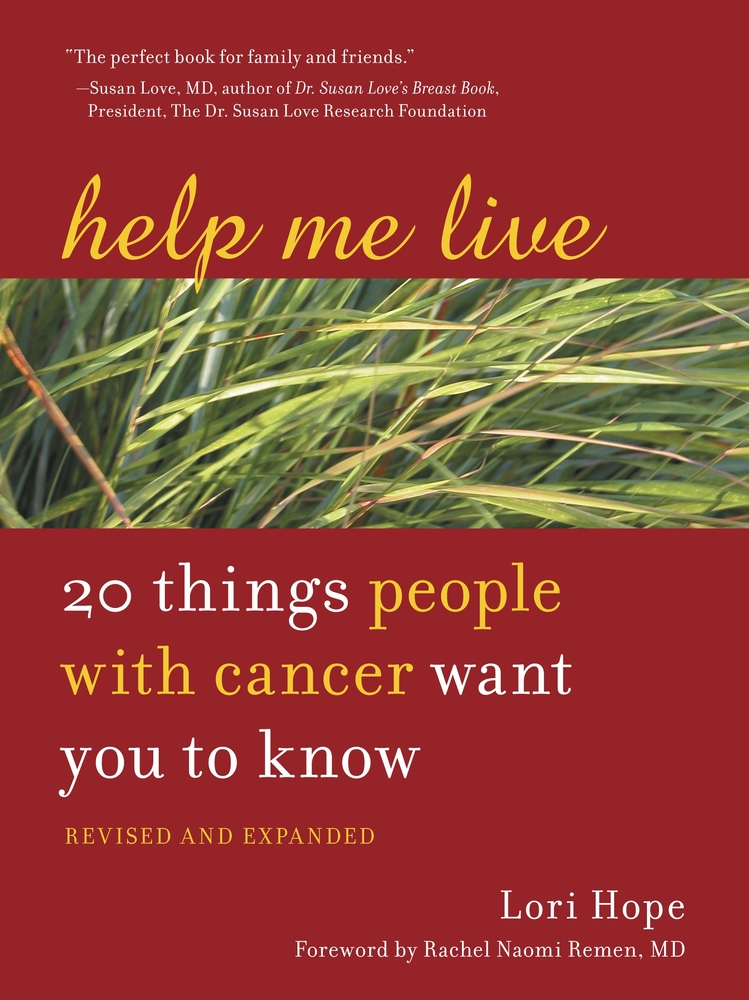
Lori Hope’s Help Me Live: 20 Things People with Cancer Want You to Know
Is a deeply compassionate guide that bridges the emotional gap between cancer patients and their loved ones. After surviving lung cancer herself, Lori surveyed fellow patients to uncover what they truly needed from those around them—and distilled their voices into 20 powerful lessons.
Here’s a glimpse into some of those insights:
 “I need to know you care.” — Small gestures matter more than perfect words.
 “Treat me like a normal person.” — Don’t let cancer dominate every interaction.
 “I like to hear success stories.” — Hope is contagious.
 “Let me make my own treatment decisions.” — Respect autonomy.
 “I want to laugh.” — Humor is healing.
 “Be honest with me.” — Truth builds trust.
 “Listen, don’t lecture.” — Being heard is powerful.
 “Include me in everyday life.” — Invitations help preserve dignity and connection.
Lori’s writing is warm, honest, and often gently humorous. She reminds us that even when we don’t know what to say, simply showing up matters. Her legacy lives on through this book, which has helped countless people feel seen, understood, and supported3.
If you’re navigating cancer—whether personally or alongside someone you love—this book is like a hand reaching out in the dark. Would you like a deeper summary of all 20 lessons? Or maybe help finding where to read or purchase it?
1www.solitarius.org 2www.sfgate.com 3stljewishlight.org
Lori Hope’s Help Me Live: 20 Things People with Cancer Want You to Know distills the voices of cancer patients into 20 deeply human lessons that help loved ones offer meaningful support. Here’s a concise summary of each one:
 The 20 Lessons from Help Me Live
- I need to know you care. Simple gestures of love and presence matter more than perfect words.
- Treat me like a normal person. Don’t let cancer dominate every interaction—balance empathy with normalcy.
- I like to hear success stories. Stories of survival and hope can be uplifting and motivating.
- Let me make my own treatment decisions. Respect autonomy, even if choices differ from what others might expect.
- I want compassion, not pity. Empathy builds connection; pity can feel isolating or condescending.
- I want to laugh. Humor is healing and helps lighten the emotional load.
- Be honest with me. Avoid sugar coating or vague reassurances—truth builds trust.
- Listen, don’t lecture. Being heard is more powerful than unsolicited advice.
- I may not always want to talk about cancer. Sometimes distraction or normal conversation is a welcome relief.
- Include me in everyday life. Invitations and involvement help maintain a sense of belonging.
- I need to feel hopeful. Hope can be a powerful emotional anchor, even in uncertainty.
- I want to be touched. Physical affection—when appropriate—can be deeply comforting.
- I want to feel useful. Contributing to others or tasks helps preserve dignity and purpose.
- Understand me, don’t judge me. Avoid assumptions about how someone “should” feel or act.
- Let me grieve my losses. Acknowledge the emotional toll and allow space for sadness.
- See me as more than my cancer. Identity goes beyond diagnosis—celebrate the whole person.
- Offer spiritual support (if I ask for it). Respect individual beliefs and offer spiritual comfort only when welcomed.
- Help me find meaning. Conversations about purpose and legacy can be deeply enriching.
- Remember I’m still me. Illness doesn’t erase personality, passions, or quirks.
- Be there—even when it’s hard. Consistent presence, even in silence, is one of the greatest gifts.
Each chapter in the book expands on these lessons with real stories, practical advice, and heartfelt reflections. If you’re supporting someone with cancer—or simply want to be a more empathetic human—this book is a masterclass in compassion.
Would you like help applying these lessons in your own life or relationships?
Can you expand on lesson number 5?
Absolutely. Lesson 5 from Help Me Live is:
“I want compassion, not pity.”
This distinction is subtle but powerful—and deeply felt by people living with cancer. Here’s what Lori Hope and many patients mean by this:
 What Compassion Looks Like
- Empathy without condescension: Compassion means truly listening, being present, and acknowledging someone’s experience without making them feel “less than.”
- Respecting strength: It honors the resilience and dignity of the person, rather than focusing solely on their suffering.
- Offering support, not sorrow: Compassion says, “I’m here with you,” while pity says, “I feel sorry for you.”
 Why Pity Can Be Harmful
- It isolates: Pity can make someone feel like they’re being viewed as broken or helpless.
- It shifts focus: Instead of empowering the person, it centers the discomfort of the observer.
- It can feel patronizing: Even well-meaning words like “You poor thing” or overly dramatic reactions can unintentionally diminish the person’s sense of agency.
A Mindset Shift
Lori encourages readers to approach loved ones with cancer as whole people—not just patients. That means:
- Asking how they really feel, not assuming.
- Being willing to sit with discomfort without rushing to fix it.
- Celebrating their joys and victories, no matter how small.
One of the most touching insights from the book is that people with cancer often feel more alive—more attuned to what matters. Compassion honors that vitality. Pity overlooks it.
Would you like help practicing this kind of compassionate presence in your own relationships? Or maybe exploring how to respond when someone shares difficult news?
Can you expand on lesson number 16?
Absolutely. Lesson 16 from Help Me Live is:
“See me as more than my cancer.”
This lesson is a powerful reminder that a cancer diagnosis doesn’t erase a person’s identity. Lori Hope emphasizes that while cancer may be part of someone’s life, it should never become the whole story.
 What This Really Means
- Preserve the person’s full identity: Patients are still parents, friends, professionals, artists, jokesters, dreamers. They want to be seen for who they were before and beyond the diagnosis.
- Avoid defining them by illness: Constantly referring to someone as “the cancer patient” or focusing only on their treatment can feel dehumanizing.
- Celebrate their passions and quirks: Whether it’s their love of jazz, gardening, or bad puns—those things still matter and bring joy.
Why It Matters
- Emotional resilience: Feeling seen and valued for more than their illness helps patients maintain a sense of self-worth and strength.
- Connection: It deepens relationships when loved ones engage with the whole person, not just the medical situation.
- Dignity: It affirms that they are still in control of their narrative, not just a passive recipient of care.
 How You Can Practice This
- Ask about their interests, not just their symptoms.
- Share stories, jokes, or memories that have nothing to do with cancer.
- Invite them to participate in activities they enjoy—even if it’s just watching a favorite movie together.
- Use language that reflects their humanity: “my friend Sarah” instead of “my friend with cancer.”
Lori’s message here is deeply human: illness may change someone’s life, but it doesn’t erase their soul. Seeing the person beyond the diagnosis is one of the most healing gifts you can offer.
What are other key lessons related to this one?
Great question. Lesson 16—“See me as more than my cancer”—is deeply connected to several other lessons in Help Me Live that reinforce the importance of preserving identity, dignity, and emotional wholeness. Here are a few that echo and expand on that theme:
Related Lessons That Complement Lesson 16
2. Treat me like a normal person
- This lesson emphasizes the need for normalcy. Patients don’t want to be tiptoed around or treated as fragile—they want to be engaged as they always were.
10. Include me in everyday life
- Isolation can be one of the most painful side effects of illness. Including someone in regular activities—whether it’s a walk, a dinner, or a group text—helps affirm that they’re still part of the world.
13. I want to feel useful
- Seeing someone as more than their diagnosis means recognizing their talents and contributions. Giving them opportunities to help or participate reinforces their value.
19. Remember I’m still me
- This is perhaps the closest companion to Lesson 16. It’s a plea to remember the person’s quirks, passions, and personality—because those things don’t disappear with illness.
14. Understand me, don’t judge me
- When people are seen only through the lens of their illness, they’re often judged unfairly—whether for their emotions, decisions, or appearance. This lesson calls for deeper empathy.
Together, these lessons form a powerful message: cancer may change someone’s circumstances, but it doesn’t erase their essence. Lori Hope’s work reminds us to honor the full humanity of those we love—not just their diagnosis.
Expand on the other Lessons at: https://copilot.microsoft.com/chats/8sUxKMJ5QNPzRufULegXV