
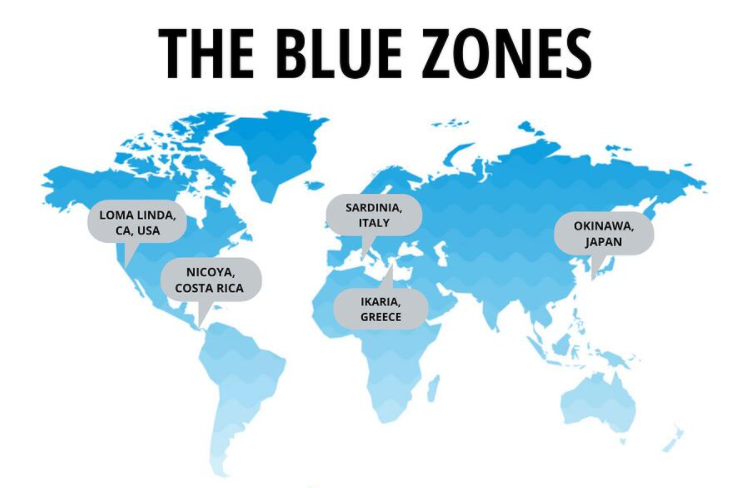
Blue Zones (BZs) are regions across the world associated with exceptional human longevity, where individuals routinely live into their 90s and beyond. These areas share distinct lifestyle and environmental factors that promote healthy aging. The established BZs include Sardinia, Okinawa, Ikaria, and Nicoya, while several “emerging” BZs have been reported in various parts of the globe.
This study investigates an area in Sicily for similar longevity patterns. Demographic data from the Italy National Institute of Statistics and local civil registries identify the municipality of Caltabellotta, home to approximately 3000 residents, and the nearby Sicani Mountains as a potential emerging BZ.
The area exhibits a significantly higher prevalence of nonagenarians and centenarians compared to national and regional averages. Between 1900 and 1924, the proportion of newborns in Caltabellotta who reached age 90 and above rose from 3.6% to 14%, with 1 out of 166 individuals during this period reaching the age of 100.
Historical, dietary, environmental, and sociocultural characteristics align with known BZ traits, including adherence to the Mediterranean diet, physical activity through agrarian routines, strong social cohesion, and minimal environmental pollution. A comparative analysis with the validated Sardinia BZ supports the hypothesis that this Sicilian area may represent an emerging longevity hotspot. Further multidisciplinary investigation is warranted to substantiate these findings.
Human longevity has long fascinated scholars across multiple disciplines, including gerontology, public health, and anthropology.
Although global life expectancy has risen consistently over the last century [1], certain geographical pockets, known as “Blue Zones” (BZs), stand out for their remarkably high concentration of individuals living well into their 90s and beyond [2]. The concept of BZs was introduced more than two decades ago, following the rigorous identification of a long-lived population in inland areas of Sardinia, Italy [3]. Since then, BZs have become focal points for studying the interplay of genetics, lifestyle, and environmental factors contributing to human longevity [4].
Following the formal recognition of the Sardinian BZ [3], other communities with similar demographic patterns have been discovered, including populations on the islands of Okinawa, Japan [5], and Ikaria, Greece [6], and the Nicoya Peninsula, Costa Rica [7]. These regions consistently show demographic indicators of longevity that significantly exceed national averages, thus supporting their classification as established BZs. For example, Okinawa’s 1975 census recorded 37 centenarians in a population of 1.04 million (35.5 per million), roughly seven times the Japanese average of 5.1 per million [8].
The number of newborns reaching age 90 per 100,000 in the Sardinia BZ is 12,575 and 12,729 for men and women, respectively, versus 3506 and 8745 in mainland Italy [9]. Other BZs, including Nicoya (Costa Rica) and Ikaria (Greece), are similarly noted for longevity. Nicoya men, in particular, live far longer than average, and Ikaria has one of the world’s lowest rates of middle-age mortality [7]. Across Europe, high longevity is concentrated in Mediterranean countries. France, Italy, and Greece each had over 20 centenarians per 100,000 inhabitants in 2011.
These statistics underscore that Mediterranean communities support much higher proportions of very old individuals than national averages. Collectively, the data illustrate that BZ areas in Europe and around the world host an unusually large share of the oldest-old, highlighting the role of environmental and lifestyle factors in healthy aging. Other locations, such as the Cilento region in Southern Italy [10,11,12], a municipality in the Netherlands [13], and the island of Martinique in French Antilles, one of the overseas departments [14], have been identified as potential or emerging BZs, but conclusive evidence remains pending.
A few years ago, a Chinese region was also proposed as a possible BZ based on the proportion of 90-year-olds [15]. By contrast, some regions considered potential candidates, including Menorca in the Balearics [16] and Southern California [17], have failed to meet the criteria for exceptional longevity. Notably, Loma Linda in California is often included among BZs despite a lack of comprehensive demographic validation [18].
Sicily, the largest Mediterranean island, is renowned for its complex demographic and cultural history shaped by millennia of migration and trade [19]. The island has been influenced by the Phoenicians, Greeks, Romans, Byzantines, Arabs, Normans, and other populations, each leaving an indelible mark on its cultural landscape [20]. The island population is also known for its adherence to a traditional Mediterranean diet, characterized by a high consumption of fruits, vegetables, legumes, and olive oil [21]. Despite its similarities to Sardinia in terms of diet and geography, Sicily has been less extensively studied for the presence of longevity clusters [22], although evidence of individuals who have reached extreme age and recent local surveys [23,24] suggest that inland Sicilian villages may share features with known BZs.
In recent years, specific areas of inland Sicily have attracted attention for demographic patterns that seem to mirror those of established BZs: small, rural towns exhibiting a disproportionately high number of nonagenarians and centenarians [22,23]. Many of these individuals not only reach advanced ages but also maintain good cognitive and physical function, continue to follow traditional dietary and lifestyle practices, and adhere strongly to the Mediterranean diet [21,23,24,25]. Despite these promising indicators, systematic research into the potential existence of longevity hotspots in Sicily remains limited. Much of the available data is anecdotal or derived from municipal civil registries, lacking the epidemiological consistency required to confirm such claims.
Furthermore, much of the existing literature on longevity primarily focuses on genetic or clinical determinants, while the synergistic role of environmental and sociocultural factors remains less explored. An interdisciplinary approach integrating community-based demography, environmental science, and nutritional epidemiology is therefore needed to uncover the drivers of healthy aging in this region.
The present study investigates whether specific areas in Sicily, particularly the Sicani Mountains, exhibit the characteristics of an emerging BZ. We compared the longevity metrics of this region with those of the validated BZ from Sardinia, since Sardinia represents a valid point of comparison for investigating the environmental, dietary, and sociocultural factors that may promote healthy aging. The findings also offer a basis for reflecting on broader conceptual and methodological challenges involved in defining a region of exceptional longevity when observed in an early stage of development.
Keywords: longevity; Blue Zones; Sicily; health; environment
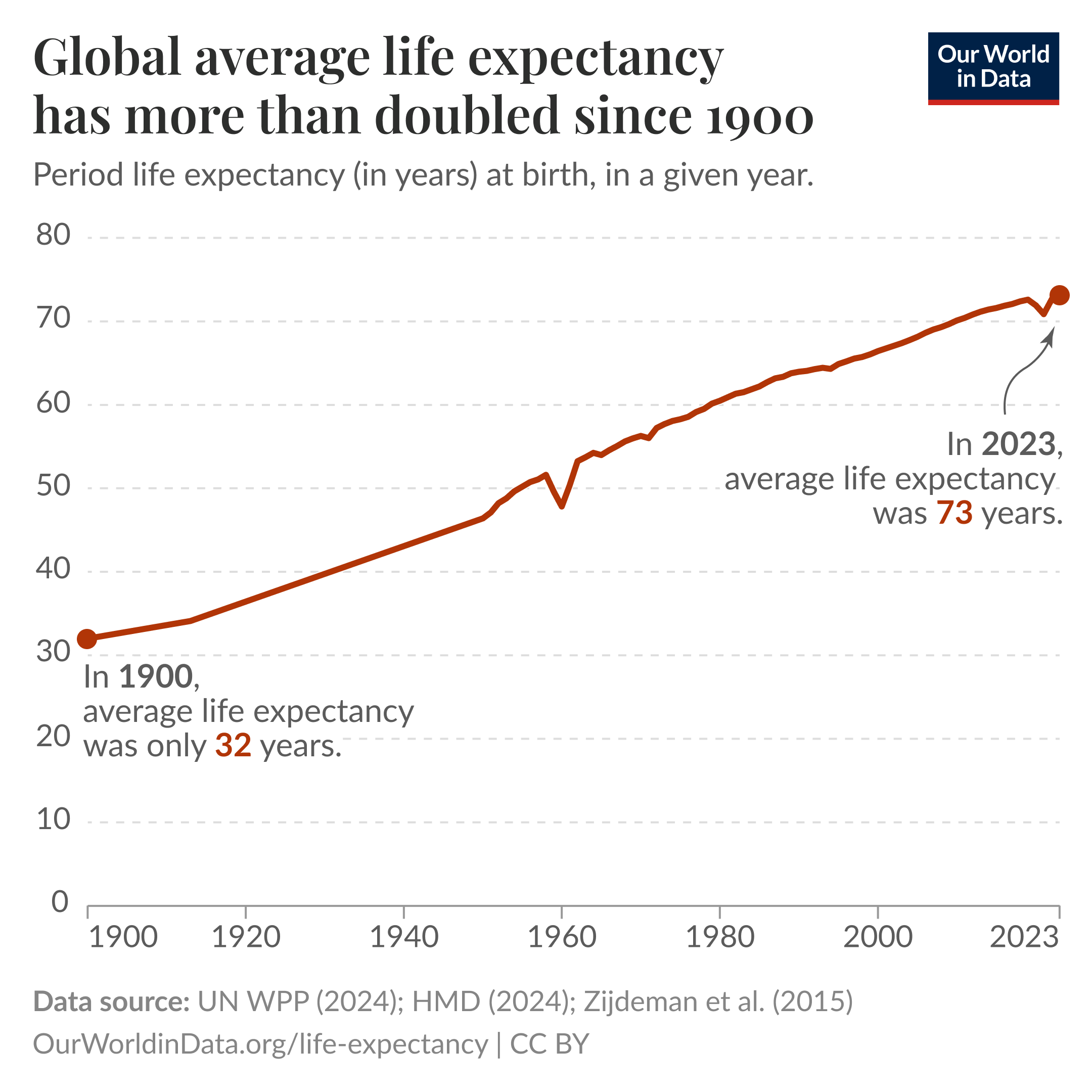
We can expect to live more than twice as long as our ancestors in 1900.
As the chart shows, global average life expectancy was just 32 years at the beginning of the 20th century. This was a short life by today’s standards: in 2023, average life expectancy had increased to 73 years.
That’s 41 years longer.
This remarkable increase is due to improved living standards, like better nutrition and sanitation, and advances in healthcare, such as antibiotics and vaccines.
While large declines in child mortality have been crucial, they have not been the only reason for the increase in life expectancy; it has increased across all ages.
Read more in our article “Twice as long – life expectancy around the world” →
Cancer RATES @ 2024
Countries with Highest and Lowest Life Expectancy (2025 Data)
With all cancers and to give your body the best chance of not getting cancer, crank your Vitamin D levels (look at articles by Prof Angus Dalgliesh).
Vit D levels (look at articles by Prof Angus Dalgliesh). I saw a video recently of Prof. Dalgleish talking to John Campbell where he said it’s not worth treating a person until their vitamin D3 levels are adequate. Have you any idea why that is so?
I’ll tell you it’s Powerfully antifungal. And of course, it does a hundred and one other beneficial things for overall health. Vitamin D3, also known as cholecalciferol, is a vital nutrient with a wide range of health benefits.
Here’s a quick breakdown to help you understand its importance:
🌞 What Is Vitamin D3?
- It’s the form of vitamin D your body naturally produces when exposed to sunlight.
- It’s more potent and longer-lasting in the body than vitamin D2 (ergocalciferol).
💪 Key Benefits
- Bone Health: Enhances calcium absorption, crucial for strong bones and teeth.
- Immune Support: Helps regulate immune responses and may reduce the risk of infections.
- Mood & Brain Function: Linked to improved mood and cognitive clarity; deficiency may contribute to depression.
- Heart Health: Supports cardiovascular function and may help regulate blood pressure.
- Skin Health: Promotes healthy skin and may reduce inflammation.
🍳 Natural Sources
Vitamin D3 is found in limited foods, mostly from animal sources:
- Fatty fish: Salmon, mackerel, sardines
- Egg yolks
- Liver
- Fortified foods: Milk, cereals, plant-based milks (soy, almond, oat)
- Supplements: Widely available and often recommended, especially in low-sunlight seasons
🧪 How Much Do You Need?
- Adults (1–70 years): 600 IU/day
- Older adults (70+): 800 IU/day
- Infants (0–12 months): 400 IU/day
If you’re unsure about your vitamin D levels, a simple blood test can help. Want help choosing a supplement or exploring vegan-friendly options?
Dietitians Share 5 Surprising Benefits of Vitamin D3
15 Ways Vitamin D3 Supports a Healthy Body
Yes, there is a rationale behind ensuring adequate vitamin D3 levels before or during treatment for infections, including COVID-19. Here’s why vitamin D3 is important:
1. Immune Support
– Vitamin D3 plays a crucial role in modulating the immune system. It enhances the body’s ability to fight infections by promoting the production of antimicrobial peptides and regulating inflammatory responses.
2. Antifungal Properties
– Vitamin D3 has been shown to have antifungal effects, helping the body combat fungal infections, which can sometimes complicate viral illnesses or occur as secondary infections.
3. Overall Health Benefits
– Beyond immune function, vitamin D3 supports bone health, cardiovascular function, and neurological health, which are important for recovery and resilience during illness.
4. Clinical Observations
– Some clinicians and researchers, including Prof. Dalgleish, emphasize optimizing vitamin D3 levels because deficient patients may have poorer outcomes and slower recovery.
While vitamin D3 is not a standalone treatment, maintaining adequate levels is considered a supportive measure that can enhance the effectiveness of other treatments and improve overall health outcomes.
* SELENIUM IS EQUALLY IMPORTANT*
Potential Role of Selenium in the Treatment of Cancer and Viral Infections – PMC
Where do Ohioans have the longest and shortest lifespan?
Ohio River Tributaries and Cancer Risk due to the presence of toxic chemicals and pollutants. The river basin also received the largest volume of toxic discharges by weight nationwide in 2020, with industrial facilities responsible for a substantial portion of these discharges. These toxic substances are linked to severe health problems, including cancer, and are particularly concerning for drinking water sources. The Ohio River Foundation and other organizations emphasize the need for tighter control of persistent chemicals and the importance of monitoring and reducing pollution to protect public health and the environment.
Life Expectancy Has Barely Changed in Some US States For More Than a Century
Why Does Uncertainty Bother Us So Much? | Adam Kucharski | TED | Watch
Counties With the Longest Life Expectancy in Ohio | Stacker
Counties With the Longest Life Expectancy in Iowa | Stacker
Counties With the Longest Life Expectancy in Illinois | Stacker
Counties With the Longest Life Expectancy in Indiana | Stacker
Counties With the Longest Life Expectancy in Arkansas | Stacker
Counties With the Longest Life Expectancy in Michigan | Stacker
Counties With the Longest Life Expectancy in Missouri | Stacker
Counties With the Longest Life Expectancy in New York | Stacker
Counties With the Longest Life Expectancy in Kentucky | Stacker
Parishes With the Longest Life Expectancy in Louisiana | Stacker
Counties With the Longest Life Expectancy in Wisconsin | Stacker
Counties With the Longest Life Expectancy in Tennessee | Stacker
Counties With the Longest Life Expectancy in Minnesota | Stacker
Counties With the Longest Life Expectancy in Oklahoma | Stacker
Counties With the Longest Life Expectancy in Mississippi | Stacker
Counties With the Longest Life Expectancy in West Virginia | Stacker
Counties With the Longest Life Expectancy in Pennsylvania | Stacker
Counties With the Longest Life Expectancy in Nebraska | Stacker
In Nebraska, the counties with the longest life expectancy include:
These counties have been identified as having higher life expectancy rates compared to others in the state. 1
Why Many People Lose Interest in Going Out as They Get Older: 7 Key Reasons | Watch
Comparing The American States With The Lowest & Highest Life Expectancy
Life Expectancy by Country 2025 | Stats & Facts – The Global Statistics
The World’s 50 Most Beautiful Cities, Ranked by Travel Experts
14 types of cancer that are striking more people before age 50
11 Habits That Quietly Drain Your Energy Every Day
20 Countries With The Highest Life Expectancies
The healthiest and least healthy states in America
17 Countries Where Life Expectancy is Longest
I’m Leaving Mexico City – Here’s Why | Watch