
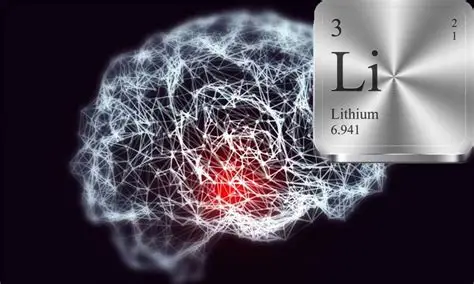
The value of lithium therapy in treating Alzheimer’s disease – https://debuglies.com
TRANSCRIPT | WATCH: The Groundbreaking Alzheimer’s Study You Need to Hear.
A new study published this past summer in Nature suggests that a lithium deficiency may be responsible for Alzheimer’s disease and other forms of dementia. The science is early, by the way, involving only mouse studies, but this discovery has been described as very promising, which is critically important to the 7 million people in this country who are dealing with Alzheimer’s right now. And by 2050, that number is projected to rise to nearly 13 million. I was thrilled to be able to talk to Dr. Bruce Yankner, the study’s lead author and a professor of genetics and neurology at Harvard Medical School.
By now, you probably have heard about an exciting study published this past summer in Nature that suggests that a lithium deficiency may be responsible for Alzheimer’s disease and other forms of dementia. The science is early, by the way, involving only mouse studies, but this discovery has been described as very promising, which is critically important to the 7 million people in this country who are dealing with Alzheimer’s right now.
And by 2050, that number is projected to rise to nearly 13 million.
I am thrilled to be able to have a conversation with Dr. Bruce Yankner. He is the study’s lead author and a professor of genetics and neurology at Harvard Medical School. Dr. Yankner, thank you so much for being here today and talking to me and all of my followers and viewers about this exciting study.
Lithium levels tied to Alzheimer’s disease and dementia | National Institutes of Health Um can you just try to simply say what you discovered about the importance of lithium in the brain and then we can unpack why a lithium deficiency might happen. Sure. Just uh briefly um we all know that lithium has been used for years as a drug for bipolar disorder and it’s always been thought of as a drug. But what we discovered now is that it’s actually a natural substance in the body and in particular in the brain. It plays an important role in the biology of uh of all different parts of the brain.
And we found that in aging individuals it’s particularly very important and that it drops in people who have early memory loss which we call mild cognitive impairment which is the first stage in progression to Alzheimer’s disease often. And um we then tried to translate these findings into a mouse model to determine whether that drop was meaningful by depleting it from the diet and found that it actually spur the pathology of Alzheimer’s disease and led to memory loss in the mouse models.
And finally, um, we, uh, found, uh, a new lithium salt that was able to so-called resist the pathology of Alzheimer’s disease. Uh, because what we found was that the amyloid in the The Alzheimer brain actually was responsible in part for the low lithium levels. So the amyloid in the brain starting very early in Alzheimer’s disease acts like a sink to deplete the natural lithium from the brain and we found that that gives rise to all the major features of Alzheimer’s disease and uh leads to memory loss.
So We were able to design a lithium compound that was able to in a way evade the amyloid.
It didn’t stick to it as much as the clinically used lithium compounds and that was very potent at exquisitely low doses in reversing the changes of Alzheimer’s disease in mice. Can you just briefly tell us the difference between dementia and Alzheimer’s?
Dementia is the umbrella term and Alzheimer is the subset. Is it the other way around?
I’m always confused by this.
No, that’s a totally reasonable question because you see it in the press used uh in many ways. So, dementia is the umbrella term that refers to people who develop enough memory loss that impairs the life and the life of their families. Um and Alzheimer’s is the most prevalent cause of dementia in the human aging population. It’s 80 plus percent. Other causes of dementia are people getting multiple strokes. We call that vascular dementia. Um there’s a kind of dementia called frontotemporal dementia that has some overlap.
That’s the one Bruce Willis has.
Yes. ALS is a related syndrome. It tends to affect um you know the motor function more um so and but it’s also associated with dementia. So there are a variety of and even people with Parkinson’s disease uh can get dementia which may or may not be related to Alzheimer’s. Can I backtrack for two seconds Dr. Yankner and ask you what because I was going to look this up and then I was so busy reading all your material. What exactly is lithium? So, lithium is a metal.
Um, it’s in the same class of molecule of elements as iron, copper, magnesium, but present at much lower levels in our bodies. In fact, as I mentioned earlier, people didn’t think it was naturally in our bodies at all until now, I guess. And um it’s one of the lightest metals in nature. Um and um that’s why it’s so effective uh for charging our phones, you know, tablets and electric vehicles. It has this property of storing energy and releasing it very rapidly. So, it has these very interesting properties that set it aside from other metals.
But I know the lithium that is generally used in bipolar disorder, drugres resistant depressive disorder is very very powerful, right? And can be super harmful. So tell me about this lithium orotate and what makes it different from other forms of lithium. Yeah. So the other forms of lithium, lithium carbonate is probably the prototype for clinical use in bipolar disorder. Um, it’s used at very high doses. It’s used at levels that are now a thousand fold higher than what’s naturally in our bodies. So, we found that the amyloid plaques as they’re accumulating in the brain and can bind this lithium carbonate which is one of the reasons is probably not very effective in Alzheimer’s disease.
And so what we did is we designed this drug screening platform where we tested a whole slew of different lithium compounds. Lithium that’s complex with different molecules purposely to look for some that might not be uh binding to this amyloid. And we found a class of lithium compounds that actually bound much less than the usual compounds used in clinical practice. And of those promising lithium drugs, lithium orotate rose to the top as being the most potent.
So it has this unique property that it can give it to a mouse at a dose that replicates the physiological level in the body. So it’s quite different from bipolar disorder where you’re using these huge doses which might be necessary for those patients. I’m not saying it’s a bad thing, but it’s quite different where you’re giving it huge doses.
Um, we’re giving it at a dose that replicates what’s naturally present, but is depleted when somebody gets Alzheimer’s disease. So, what happened when you gave the mice after giving them or decreasing the amount of lithium in their bodies? What happens when you give them lithium or rotate?
So when we gave them a diet that reduced the amount of lithium naturally in the brain and it was only by about 50% that we reduced it at first but that drop in 50% was enough to cause the Alzheimer pathology to become magnified in the brain and to cause memory loss. Now if we took those mice and we gave them this exquisitely low dose of lithium orotate it basically seemed to sweep away the amyloid plaques.
It also reduced the number of a of these structures called tangles which are inside the brain cells and are thought to actually compromise their function and lead to dementia. It reduced that. It reduced the inflammation in the brain which is a very important feature of Alzheimer’s and other uh degenerative brain diseases. And most importantly, it restored the memory of the mice.
Wow. And how do you judge that? I mean, how do you know that a mouse has restored its memory? I mean, I I don’t know how you do that. Can you explain? Sure. I mean it’s a good question because it has to be done very carefully because behavior and memory are so subject to many external influences. So, you have to do it very carefully and we have a number of experimental systems developed over the years for doing this in mice, our lab and other laboratories.
One is called the Morris water maze where we take a pool of water.
We put something in the water which is harmless but it makes it opaque so you can’t see below the surface and we put these visual cues, little pieces of paper you know colored pictures around the tank. You put a mouse in the water and mice don’t particularly like water so they swim around. We have a submerged platform in one part of the tank and eventually they find that platform.
Okay. And it gets them out of the water. They’re very happy about that. Um, and you do this every day for about 7 days. And believe it or not, after 7 days, the mice have memorized the visual cues and they can now get to the platform really fast. Mh. and mice however that have memory loss that for instance that are designed to express genes that cause Alzheimer’s in humans and they get a lot of the amyloid and the tow and these other things that characterize Alzheimer’s disease they take much longer to find this platform and you can quantify that as a measure of memory and we also have some other complementary tests of memory that we use all together to get a sense of how good their memory is.
This is so fascinating and of course every answer leads me to so many other questions. When you say you reduced the amount of lithium in their diets, that makes me think, oh, I better eat foods with lithium in them. So, I mean, is it something that is normal? I know that and we’ll talk about how this will be applied to human beings and I know you’re hoping to start clinical studies, clinical trials on humans.
Are there foods rich in lithium that the average person or the average mouse should in fact be eating? Yes, there are actually. Um, one of the foods that’s richest in lithium naturally is green leafy vegetables. Uh lithium is also at relatively uh enriched levels in nuts, legumes such as lentils and chickpeas. Uh some spices such as turmeric and cumin and also some mineral waters. You know, water is a very important source of lithium, drinking water. Ironically, people who are drinking very purified reverse osmosis filtered water are getting no minerals at all and no lithium.
A Quiet Look at Sicily and Greece – Mediterranean in 4K | Watch
So, interestingly, those foods I mentioned are core components of the so-called Mediterranean diet, right? So, it’s uh my colleagues and and we have been wondering whether, you know, that’s part of the benefit of the Mediterranean diet. Well, it makes me want to eat a kale salad for lunch. That’s for sure. But let’s talk about how lithium interacts with these so-called amyloid beta deposits and protein. I know here before that the thinking about Alzheimer’s disease was really about these amyloid deposits that keep the brain from functioning.
That’s about the extent of my scientific knowledge.
So can you take it from here Dr. Yankner and explain what these amyloids and protein towels are that seem to be present in people who have Alzheimer’s disease. Sure. So this dates back to the original observations about the disease by Alawa’s Alzheimer in Germany in 1906.
And he saw what we call pathological hallmarks of these features under the microscope.
When he took a patient who had died of Alzheimer’s disease and sliced the brain and stained it and looked under the microscope, he saw these dark brillow pad like deposits riddling the brain of the patient. That is the amyloid and it’s a protein that’s made inside the cell but gets outside and then it clumps together to form these very insoluble deposits around the brain. But then there’s another protein inside the brain cells called tow and it tangles together and forms what we call neurofibrillary tangles and it’s thought that they promote the eventual death of the brain cell the neuron.
REGIONS WITH THE MOST LITHIUM HAS THE LEAST AMOUNT OF ALZHEIMER’S
Lithium Rich Regions in the United States
The United States has several regions rich in lithium deposits, with the most significant being
Nevada, California, North Carolina, Arkansas, and Utah
Nevada is home to the Silver Peak Mine, the only active lithium mine in the country, and several major lithium projects expected to expand U.S. lithium production significantly. Other states like Arizona and New Mexico also host valuable lithium reserves. The Thacker Pass deposit in Nevada is one of the world’s largest lithium-rich claystone resources, while the Kings Mountain Belt in North Carolina hosts hard-rock lithium spodumene deposits critical for battery-grade refinement.
The Smackover Formation in Arkansas holds brine reservoirs estimated to contain an estimated 4 million metric tons of lithium. California’s Salton Sea geothermal brines combine lithium extraction with renewable energy production. These regions highlight the growing geographic spread of lithium mining in the U.S., supporting the country’s goal of increasing domestic lithium production to meet rising demand.
Alzheimer’s prevalence, mapped
Those were the two major hallmarks.
It’s now known that there are other hallmarks of Alzheimer’s disease such as neuroinflammatory changes from immune cells. But the field was sort of at that level until about 1960 1970 and when you know people started debating what is the role of these pathological hallmarks and for a long time amyloid was thought to be just an inert byproduct of the disease sort of brain garbage if you will but then um you uh in 1990 we show that amyloid could actually be toxic to brain cells. So
maybe it wasn’t so inert after all.
And in 1991 – 92 there was new evidence from genetics that some families had a mutation, a change in the gene sequence of the protein that gives rise to the amyloid and those people developed Alzheimer’s disease at a very early age. So this led to what was called the amyloid hypothesis which was that amyloid is the cause of the disease. This was fairly contentious in the 1990s. Uh there the genetic evidence and the biological evidence was strong but There were a few things about it that led people to question whether that was the entire story.
First, there wasn’t a clear correlation between the amount of amyloid in the brain and dementia. Some people had large amounts of amyloid in the brain when they died at an old age and they were perfectly intact cognitively and others who had less amyloid in the brain were severely demented. So you had that disconnect. Second, you know, as the genetics progressed, there were mutations in other genes that appeared to predispose to Alzheimer’s by others in other ways.
And lastly, the uh treatments that have targeted the amyloid and remove it from the brain, although effective, do not stop the progression of the disease or restore cognitive function. Again, suggesting that that was not the whole story. Mehm. So, you know, I always wondered what else was out there that was accounting for this. So, the amyloid beta deposits and the protein towel, so the deposits and the tangles, were they preventing sort of um brain connections or neuro uh connections to happen?
How were they actually creating the environment for the disease to thrive if that makes sense Katie that is the central question and it was unresolved so I’ll tell you what was thought to occur so um we showed that the amyloid could cause a loss of synapse connections the connections between the neurons and toxicity and other groups had shown that as Well, and there was a lot of work on that and it was shown that the tow could also cause the neurons to not function well. But how the tow or the amyloid did this in a step by step way was the mechanism of the disease was unclear.
So one possibility is that what the amyloid is doing is it is toxic in a passive way that by binding lithium and possibly other essential nutrients it’s depriving the brain of these essential nutrients and that leads to degeneration. We’ve shown in the mouse brain if we do that if we simply deplete the amount of lithium in the brain by 50% this leads to the degeneration and that can explain a lot of observations particularly what has been known for many years which is that um amyloid starts accumulating in the brain for decades before a person becomes symptomatic with memory loss and
sometimes with Alzheimer’s disease.
And what happens is we now know from imaging studies of the brain that the amoid keeps accumulating and then something happens at some point there is an inflection point where suddenly you start to see the two accumulate inside the brain neurons start to degenerate and memory loss occurs. So clearly the brain is able to function pretty well with a lot of amyloids for a long time and then something there’s always been that big question mark triggers a relentless downhill course. And so, one candidate for that something is that you have reached a threshold of loss of lithium due to the progressive binding by the amyloid.
It reaches a threshold where you get below the level that the brain needs to function normally. So the amyloids are basically sucking the li lithium out of your brain and at a certain level that means your cognitive function is impaired and how strongly do you believe that lithium is really the reason Dr. Yankner I mean uh that that this is happening obviously this study is incredibly exciting and promising but do you think that you have found I don’t want to say the holy grail but a real possibility for what is actually causing Alzheimer’s it’s not the amyloid beta you know deposits or the the protein
towel tank angles, but what those things do to the lithium in your brain.
So, I think it’s fair to say that it’s a candidate mechanism, as we call it, for this multi-system degeneration of the brain that leads to the onset of Alzheimer’s disease. And one of the most attractive features of the work to me is that lithium appears to target all of the various manifestations of Alzheimer’s disease. The amyloid, the toe, the inflammation, even the memory loss. Um, it doesn’t focus on one specific facet of it. You mean the lithium fights amyloid deposits and these tangles?
Yes. or do these things fight the lithium or Does it work both ways?
It works both ways and you’ve actually hit but hit upon something very important which I’ll address in a moment. Just to finish answering your question in all fairness we have to see where the science goes whether this turns out to be a common mechanism. I think it’s an intriguing possibility at this point. Now it’s interesting because we’ve shown by treatment with lithium orotate that lithium is quite effective at clearing the amyloid, clearing the tower, and restoring memory.
We’ve also shown that the amyloid plaques can deplete the natural lithium from the brain. So you can imagine a vicious cycle where you get a little amyloid in the beginning. We don’t even know if that’s the primary inciting cause of the disease. It’s probably multifactorial. But as the amyloid accumulates, it starts depleting the lithium.
The lithium normally helps keep the amyloid levels down in part by stimulating these cells called micro ga, which are the cleanup cells of the brain that take them down. So now you get even more amyloid. You deplete the lithium even more and you get into a positive what we call feedback loop that can you know play feed upon itself?
That’s fascinating. And what led you to say hey maybe it’s the lithium? That’s a good question. We came about this in an indirect way. We were studying a protein about 10 years ago called rest which we had found also plays an important role in the aging brain and protects against Alzheimer’s disease and we were you know i’m trying to find out how is this protein turned on or off in the brain and we found that it’s activated by what we call a pathway that itself is activated by lithium.
So we were using the old pharmacology route. We were giving the high doses of lithium to the animals t you know as one does clinically and you know studying this rest protein and we observed that all the various manifestations of Alzheimer’s in these mouse models seem to get better when we use these high doses very high doses and you know usually um when one targets a specific aspect of Alzheimer’s disease focused on one thing or other the inflammation. Now this would seem to cut through all of them.
So one day we just wondered if you know if lithium could actually be part of the disease mechanism. Now the problem with that thought initially was that lithium was not part thought to be a normal part of the brain you know, a natural substance. So in order to determine whether it’s there naturally, we had to um adapt some new technology to make it more sensitive and specific for lithium, which you know to make a long story short, we’re able to do and found that it’s present naturally in the brain.
And most interestingly, as people age, those people who develop very early memory loss, what we call mild cognitive impairment, half of those go on to develop Alzheimer’s roughly. Um, the lithium levels just dropped in their brains. And as they progressed from the mild cognitive impairment to Alzheimer’s disease, uh, the lithium deficit became even more pronounced. I think it’s also so cool, Dr. Yankner that you collaborated with this foundation I guess in Chicago.
Tell me if I’m getting this right because it’s very difficult to study the brain. Well, look who I’m talking to. Basically, a brain scientist, but it’s hard to get tissue samples of the brain, right? And I think that’s why brain research has often lagged behind other kinds of medical research. Uh, and now with modern day imaging, they’re they’re they’re making so much more progress. But you worked with an organization or a group that made the brain tissue of people who had died from Alzheimer’s available to you.
Can you tell us about that collaboration?
Yes. Um, that was really important.
So we’ve had a longstanding collaborative relationship with David Bennett who runs what’s called the Religious Order Study out of Rush University Medical Center in Chicago. and he um follows people along for many years and they get um careful neurological and memory assessments every year as well as broad clinical evaluation and they donate their brains to science afterwards.
So we had through our relationship with them access to blood samples from people in different cognitive stages postmortem after death brain samples from people who donated their brains to science from individuals who died with normal memory very early
mild cognitive impairment and various stages of Alzheimer’s disease. What’s more, each year their cognitive assessment is really detailed. It looks at various types of memory. Memory for places, memory for people, how good their speech is. So we were able to in fact correlate different aspects of brain function with Lithium. Wow.
So it was a very powerful data set. And did you see that the people who had severe Alzheimer’s at the time of their deaths had basically no lithium in their brain?
They had some lithium in their brain, but it was below the level.
Yes. So you could look at that in two ways. The total amount of lithium was significantly reduced. But of that lithium that was in their brain, a substantial proportion of it was inactively bound to the amyloid deposits. Oh, so it was rendered kind of useless or it couldn’t function fully because the amyloid had basically sucked it in and said, “Sorry, lithium. You’re not going to be able to do your thing.”
That’s right. I should be a scientist, right, Dr. you’re that that’s that’s really the central issue. What’s more, you’ve got these big amyloid deposits. I don’t want to get too technical here. Um but I think it goes to your So far so good. I’m actually following everything you’re saying. So, you’ve got these big amyloid deposits, but there are smaller pieces of the amyloid that are made by the cells which then come together to form these big deposits and they’re all over the brain.
They’re not just in the plaques.
Oh, wow. Though the so-called depletion of lithium in the brain that we attribute to the plaques, that’s an underestimate of how much the brain has lost its lithium because we think lithium is binding to these little pieces all over. It wouldn’t surprise me as in an advanced Alzheimer patient if There is no biologically active lithium left in the brain at all.
We don’t know that as a fact, but it wouldn’t surprise me. Let’s talk about the practical implications of your study. When do you think human trials uh uh about the importance or the role of lithium in the can the brain can begin?
So, we’re in the planning stages of a clinical trial of lithium orotate, a randomized placebo control trial that we hope will start in the near future. It will be based at the Massachusetts General Hospital in the Brigham Women’s Hospital in uh Boston. Um practically speaking, we need to determine the effective uh dose of lithiumate in people. We’ve done that in mice, but we need to be able to translate it to people. Um we need to determine that it’s not toxic to people.
Um, in mice, we’ve used the so-called physiological dose of lithium orotate in aging animals for as much as a year with no evidence of toxicity. We need to confirm that’s encouraging, but we need to confirm it in people. So, I would strongly recommend that people not go out and take lithium on their own at this point before the clinical trial results are in. There are a number of new uh treatments for Alzheimer’s disease which have come online in the last uh two or three years and uh people should speak with their physicians about this. So I shouldn’t go to CVS and buy myself a little bottle of lithium orotate.
Is that what you’re saying? That’s correct. Can you do that? Is it available over the counter?
I don’t I’ve never heard of it. I don’t believe it’s available over the counter but there are number of online uh supplement makers that that and you know you can imagine people hearing this study and have a loved one with Alzheimer’s are thinking gosh I need to start giving my dad or my mom or my sister or whatever this I mean would you call it an element I uh this drug um And you’re saying people definitely should not do that.
Yes. Because as encouraging as the mouse studies are, you know, until we see it in humans, we cannot say definitively whether it would be safe or not and what is the effective dose. Um and this is, you know, an issue I encounter every single day. I I hear from patients and their families and um some of the stories are very sad frankly and um every time I open my email box there several more um stories like this and um this has been the most difficult part of what I do in the last month or two and but I think the prudent thing to do is for people to consult with their physicians and use the tried
tried and true treatments that have been vetted in human studies.
At this point, I do a lot of cancer research or support a lot of cancer research and awareness and I know how difficult it is to get people to enroll in clinical trials. Um, is there a way or can I share any information with people watching this about how they could be considered for a clinical trial? So when the trial begins uh a notice will be put out I believe at that point in the hospital will be mediating that not me and um it will probably be publicly known at that point although I can’t say for certain uh what the mechanism will be um so we’re not at that stage yet but I’m very hopeful that we will be soon.
When you say soon, I’m just curious. Are you talking about a year, a couple of months? I mean, I know it’s probably hard to predict exactly, but when do you think you can commence phase one clinical trials? We’re hoping within the next year.
A lot of people have questions for you, uh, Dr. Yanker. One was could this study help with Parkinson’s and other neuro degenerative diseases and is there a sharing of your research with people in those areas of expertise?
That’s one of our major areas of interest and our research is open to everybody and my hope is that investigators in those areas will look at this. Uh we’re also very interested in ALS and Parkinson’s disease um vascular dementia which can be due to strokes and we’re looking at some of this. We don’t have any good results yet. by good I mean well developed results on Parkinson’s so I can’t comment on that but it’s um but it’s an interest of ours and hopefully others and the way those diseases manifest themselves is different than how Alzheimer’s does in terms of the synapse synapses it’s it’s it’s a different um maybe delivery system in terms of how Parkinson’s manifests itself in a patient or ALS because obviously it’s clearly not just a neuro disease.
It’s a neurodegenerative disease that affects your entire body and Alzheimer’s really doesn’t. Right.
So you’re right, the way they manifest themselves are different. So Parkinson’s disease has many motor muscle symptoms, slowness, rigidity. My dad and my dad died of Parkinson’s so I saw it firsthand.
Yes. So you know it can sometimes overlap with Alzheimer’s and ALS is a different kind of muscle motor disease. Many of the differences have to do with where in the brain the disease arises, and they certainly have different proteins that may cause the disease. uh for instance there’s the amyloid protein in Alzheimer’s something called alphas clean and Parkinson’s but some of our hope is that some of the mechanisms some of the ways in which the neurons are degenerating or dying will be common to the different disorders and that there may be some treatments possibly lithium among them that could cut a broad swath across all these diseases it’s so exciting I know that I don’t want you know, overstate it, but it does sound so promising.
And someone asks, given the new findings on lithium’s potential to reverse or protect against Alzheimer’s disease, do patients, I thought this was such a smart question, do patients with mood disorders like bipolar, schizoaffective disorder who have been treated with lithium show a lower risk or incidence of developing Alzheimer’s later in life?
It’s a very good question. The short answer is yes. There have been a few studies over the years which have shown that individuals with bipolar disorder and there’s one study suggesting this for schizophrenia as well are at a higher risk of Alzheimer’s disease SA. Um and uh those treated with lithium actually do not appear to be at a higher risk.
Now, one problem with lithium with the lithium treatment for bipolar disorder as individuals age is that they become more susceptible to the toxicity of those high doses of lithium uh particularly for the kidneys and the thyroid and that oftentimes requires them to discontinue treatment.
And our hope is that alternative lithium compounds such as lithium bartate that can be given at 100 to a thousand fold lower levels might not have that toxicity associated with it. So obviously there are many things to test and tweak in the future. Um a lot of people uh wanted to know if humans can actually be tested for lithium levels. In other words, is there a simple blood test when I go get my physical this fall?
Why San Diego’s Alzheimer’s diagnosis rate is higher than expected – Axios San Diego
Can I say to my internist, “Hey, Dr. Nash, can you test me for lithium?”
So, people who are on lithium therapy for bipolar disorder have their blood lithium levels monitored. Make sure they’re in what we call the therapeutic range, that they’re not in a toxic range. They’re not too high. But those blood tests, you know, monitor a much higher level of lithium in the blood than uh what we’re talking about here. So, one thing we’re very interested in is whether one can predict lithium deficiency early by measuring either lithium or other markers that are responsive to lithium in the blood or possibly in other tissues. you know, for instance, um, uh, people have advocated in the hair.
Uh, we have no data on that, but it would be really, um, quite advantageous if it turns out that lithium deficiency is important for Alzheimer’s to be able to see that early as part of a general physical exam.
So, it sounds to me that you and someone else asked this potentially, again, I don’t want to get ahead of us, but potentially see a future where lithium orotate in some quantity could be used to stave off and potentially even reverse Alzheimer’s disease.
That is my hope. Certainly, we’ll see where the science goes.
But um in the mouse models and one has to be cautious about that in the mouse models we gave lithium orotate to the animals that develop Alzheimer like pathology plaques tangles memory loss early before they developed those symptoms and it prevented it. But we also gave it to animals at a very much more advanced stage when their brains had quite a bit of this uh this pathology and and and more significant memory loss and it helped to reverse that as well.
So, I think it’s important to take a preventive approach, but it’s also important not to give up on the many people who already have the disease. As you know, Dr. Yankner, more women than men are diagnosed with Alzheimer’s disease.
And I wondered if in your research you discovered that men have more lithium in their brains or from the tissue samples of men and women that you examined from that lab in Chicago if there was any difference because people have tried to understand and you could tell me more about this the role estrogen or the lack thereof plays in Alzheimer’s disease among women.
So we were not able to find a significant difference in the levels of lithium um when we analyzed that in our human brain samples or blood samples. Um but what we can’t exclude at this point is whether the response to lithium so lithium interacts with cells and cells respond to it very strongly whether that might not be um sex dependent. So you don’t know yet?
We don’t. Do you know anything about estrogen and Alzheimer’s separate and apart from lithium?
So, um it’s been thought that possibly the post-menopausal decline in estrogen could relate to the increased incidence in women versus men of the disease. And um that men who still um make testosterone into an old into their old age um and some of that testosterone gets converted to estrogen might be a bit protected.
But I think the science of that is not conclusive at this point. We definitely Yeah, I was going to say we definitely need more research into that and all kinds of diseases affecting women because they’ve certainly been under-represented and underfunded in a whole panoply of diseases and conditions. That’s just my little political statement.
Oh, I I couldn’t agree more and especially something as prevalent as Alzheimer’s disease.
I think this is a very important issue and it’s ironic in a sense Katie because women on average live longer than men. So this discovery, I know I asked you before about neurodegenerative diseases like Parkinson’s and ALS, but do you feel like this holds a potential hope for not only Alzheimer’s, the largest subset of dementia related illnesses, but other things like like you were saying frontotemporal dementia and other things that um are impacting cognitive function in in individuals.
I do and the reason I say that is we know that lithium affects the basic cellular processes that can lead to death of the cell and dysfunction of the neuron. We have shown that the natural lithium in the brain is important for the communication between neurons. It’s important for these cells that insulate the connections, the wires between the neurons called myelin. It’s what enables us to think quickly.
Frankly, electrical transmission goes fast because of this insulin.
So, it affects these immune cells called micro glee in the brain that are thought to be so important for cleaning up the brain as well as inflammation when they’re not functioning well. So it’s important for that. So it’s important for all these different normal functions.
So that gives me hope that capitalizing on this function might be helpful for many different diseases of the brain. Let me ask you about the importance of NIH funding. That’s another thing I’ve been on my high horse about. I am absolutely sickened by how much money is being taken away from the National Institutes of Health and Argo research universities all across the country.
You have said that the NIH support was absolutely critical for this work. Um how concerned are you? I just read a big article about UMass Chan and all their work on cancer, pediatric cancer in particular, that’s being stopped. And you know, of course, we’re all worried about a brain drain with young scientists going to places where their work can be supported and valued.
So, how concerned are you about these cuts to medical research overall?
Well, I’m quite concerned. Uh I’m concerned that we’re losing the advantage that the US has had in the world and for the world uh where we’ve been the sort of gem of biomedical research. um that the best and brightest will not want to come from other countries to the US any for much longer given that they perceive a negative environment.
Um and one of the most productive um forces in this country has been the partnership between the US government and biomed research at the university level at the company level and it’s been estimated that for every dollar the government puts puts in there has been an effective return multiple fold a economically, not to mention society and people’s benefits.
I mean, we think about what we can do for cancer now compared to what we could do 30, 40 years ago, um, and many other diseases as well. The progress has been enormous. The idea of losing that jewel is so concerning and it’s not a spot that we could turn on and off. So if it’s turned on or there’s a turned off, excuse me, or there’s a perception that it is going off and we lose people, the young people who need to be trained at this point, the next generation of investigators, the people who will have the cancer and Alzheimer cures for our grandchildren and their children.
Um it’s not as if down the road it gets turned on and suddenly those people are going to rejoin the ranks and we’ll have them again. There will be a gap because there’s such a long period of training that’s required to get people to be great scientists and to actually enter this area. People are going to go into other areas.
Do you think these cuts will impact your ability to have clinical trials on this very important and exciting discovery? It could be because the NIH uh does support clinical trials and if their funding is limited, you know, I would imagine that will considerably constrict what they’re able to fund. Uh so it might be a limiting factor.
Do you think you’ll be able to work around it? That would be so devastating?
It would. It would. We’re trying to do that. In fact, we’re trying to accelerate these trials and get this information to people. Does this work or does it not work as fast as possible through philanthropy? Well, I’m so grateful for your time, even more grateful for your work, which involves a lot of time, and I hope that this initial discovery in mice really translates to human beings because if it does, it’s going to have an extraordinary impact on so many people and so many families.
And I hope if it works out, you get the Nobel Prize, Dr. Yankner. I’m gonna nominate you, even though I don’t even know how to do that. I appreciate that. Thank you, Katie. And uh our hopes are there as well. And uh we’re working as hard as we can, as are many other scientific groups across the country.
Well, please give our best to all the people on your team from the people who wash out the test tubes to the people who are looking through microscopes to the people who are studying brain tissue and um you know we’re just personally I just want to say I am so grateful for the work you do. I can’t think of anything more important.
The Groundbreaking Alzheimer’s Study You Need To Hear About – YouTube
Thanks. I appreciate that. Dr. Bruce Yankner again. Thank you so much. .
People Who Choose Solitude Over Social Life As They Get Older Usually Have These 11 Reasons
Could Lithium Explain — and Treat — Alzheimer’s Disease? | Harvard Medical School
4 things to know about a new study on lithium and Alzheimer’s disease | PBS News
Dolly Parton Opens Up About ‘Health Challenges’ As She Postpones Vegas Shows
Lithium Deficiency and Alzheimer’s Disease | Science | AAAS
Lithium Deficiency and Alzheimer – Search Videos