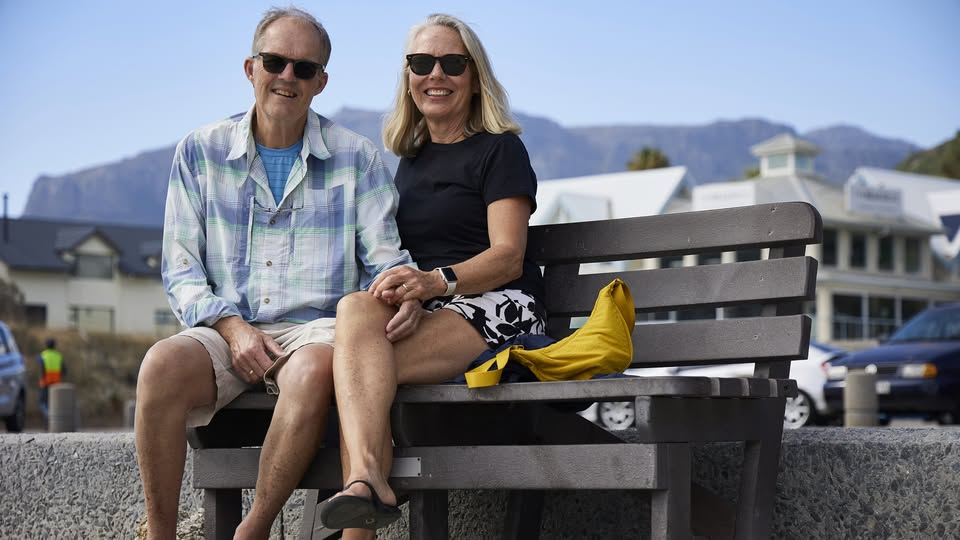
Onne and Tenley van der Wal’s story is a real-life love‑and‑survival journey:
Nothing Positive Ever Comes From Being Negative!!
While refitting their boat and planning a long voyage, Tenley was diagnosed with cancer, and the couple chose to face treatment and recovery together on the water. Their experience is part of the emotional core behind Unknown Destination: A Love Story l preview a PBS‑distributed special about navigating life’s most difficult passages.
“Unknown Destination: A Love Story” is a poignant documentary that follows the journey of Onne van der Wal and his wife Tenley as they navigate life’s challenges and a devastating diagnosis together.
Overview of the Documentary
“Unknown Destination: A Love Story” is an hour-long documentary that explores the life of world-class sailing photographer Onne van der Wal and his wife Tenley. The film captures their emotional journey as they face a significant health challenge that catalyzes a cross-country adventure, leading them off the beaten path. The documentary highlights their determination, love, and resilience as they navigate uncharted waters both literally and metaphorically.
Themes and Messages
The documentary emphasizes themes of love, perseverance, and the strength of the human spirit. It showcases how the couple’s bond is tested and strengthened through adversity, illustrating the importance of support and companionship during difficult times. Their story serves as an inspiration for viewers, reminding them of the power of love in overcoming life’s obstacles.
Availability
“Unknown Destination: A Love Story” is available for streaming on PBS and can also be found on platforms like YouTube. Viewers can access it through the PBS website or the PBS app, which is compatible with various devices. This documentary not only tells a compelling love story but also offers insights into the challenges faced by couples in times of crisis, making it a heartfelt watch for anyone interested in personal stories of resilience and love.
Their Cancer Journey
- During the two‑year refit of their trawler, Tenley was diagnosed with cancer and underwent treatment.
- Rather than pause their dream indefinitely, the couple decided that Tenley would recover aboard the boat, turning the voyage into a healing journey as much as an adventure.
- The experience reshaped their understanding of “destination”—the emotional resilience required became more important than the physical miles traveled. This theme is central to Unknown Destination: A Love Story, which explores how even lifelong sailors can find themselves in uncharted emotional waters.
About Unknown Destination: A Love Story
- A PBS‑distributed documentary special following the van der Wals through a voyage transformed by illness, uncertainty, and deep partnership.
- It emphasizes the strength of their relationship, the healing power of the sea, and the way unexpected challenges redefine what “arrival” truly means.
That line captures the heart of their story beautifully, and it opens the door to something even richer. The van der Wals’ journey isn’t just about surviving cancer or completing a voyage—it’s about discovering that arrival is often an inner transformation rather than a point on a chart.
Expanding the idea
Strength of their relationship
- Their partnership becomes the vessel that carries them through uncertainty.
- The diagnosis forces them to renegotiate roles, expectations, and fears, and they choose to meet it as a team rather than as individuals.
Healing power of the sea
- Life aboard a boat slows everything down. The rhythm of tides, the simplicity of daily tasks, and the vastness of the horizon create a kind of emotional decompression chamber.
- For Tenley, recovery isn’t just medical—it’s spiritual. The ocean becomes a place where she can breathe again, literally and metaphorically.
Redefining “arrival”
- Before the diagnosis, arrival meant reaching a destination on a map.
- Afterward, arrival becomes about presence, resilience, and connection.
- The voyage becomes a metaphor: you can’t control the weather, but you can choose how you sail through it.
If you want, I can help you turn this into a fuller thematic analysis, a short essay, or even a poetic reflection on their journey.
Additional Context on the Couple
- Onne van der Wal is a renowned marine photographer and former Whitbread Round the World Race sailor.
- He and Tenley raised their family in Jamestown, Rhode Island, where they remain deeply connected to the sailing community.
If you’d like, I can also summarize the documentary, explore themes of resilience in their story, or help you find where to watch it.
Those two ideas sit at the emotional center of The van der Wals’ story, and when you put them together, they form a kind of quiet philosophy about how people navigate the unthinkable.
A deeper reading of those themes
Turning devastation into meaning A cancer diagnosis—especially something as serious as pancreatic cancer—shatters the illusion of control. What makes their story compelling is that they don’t pretend otherwise. Instead, they choose to shape their experience rather than be defined by it. Meaning comes from the small, deliberate choices they make: staying on the water, staying connected, staying present with each other.
Presence as an act of courage When the future becomes uncertain, the present becomes sacred. Their time aboard the boat forces a kind of mindfulness: every sunrise, every quiet anchorage, every shared task becomes a reminder that life is lived moment by moment, not in the abstract.
Resilience as a shared practice Resilience isn’t portrayed as stoic toughness. It’s relational. It’s the way they lean on each other, the way they allow vulnerability, the way they keep moving—sometimes literally, sometimes emotionally—through waters they never expected to sail.
“The most profound destinations are internal”
This is the heart of the documentary. The voyage they planned was geographic; the voyage they lived was existential.
- They set out to reach places on a map.
- They ended up reaching places within themselves—acceptance, clarity, gratitude, and a deeper understanding of what it means to love someone through fear and uncertainty.
It’s the kind of story that stays with you because it reframes what a journey really is. If you want, I can help you expand this into a reflection, a short essay, or even something more poetic.
You’re right to sort this out — the details can get confusing because their stories are often told together. The accurate version is this:
 Tenley van der Wal — Breast Cancer
Tenley was diagnosed with breast cancer, not pancreatic cancer. Her diagnosis came during the long refit of their trawler Snow Goose. She went through treatment and recovery while she and Onne continued shaping their life around the water.
Onne van der Wal — Pancreatic Cancer
Years later, Onne himself was diagnosed with pancreatic cancer, a far more aggressive and difficult disease. His diagnosis added a second, unexpected chapter to their shared journey with serious illness.
Why their story resonates
- They each faced life‑threatening diagnoses at different times.
- Their relationship became the anchor through both battles.
- The documentary Unknown Destination: A Love Story weaves these experiences into a narrative about resilience, partnership, and finding meaning even when life veers off course.
If you want, I can help you build a fuller timeline of their medical journeys, a narrative summary, or a thematic interpretation of the film.
Here’s a richer, more structured look at the van der Wals’ story — a full medical‑journey timeline, a narrative summary, and a thematic interpretation of Unknown Destination: A Love Story.
I’ve shaped it so each section stands on its own, but together they form a complete portrait of what the couple lived through.
1. Timeline of Their Medical Journeys
Early Years
- Onne and Tenley build a life around the ocean — sailing, photography, raising a family in Rhode Island.
- Their shared identity is deeply tied to adventure, craftsmanship, and the rhythm of the sea.
Tenley’s Breast Cancer Diagnosis
Approx. mid‑2000s (public accounts place it during the refit of their trawler Snow Goose)
- Tenley is diagnosed with breast cancer during a period when the couple is restoring their boat.
- Treatment includes surgery and follow‑up care.
- The diagnosis interrupts their plans but does not stop them; they continue working on the boat and living life with intention.
- Recovery becomes intertwined with their maritime life — the boat becomes a place of healing and grounding.
Return to Normalcy
- After Tenley’s recovery, the couple resumes their rhythm: sailing, photography expeditions, and family life.
- Their experience with cancer deepens their partnership and shapes their perspective on time and purpose.
2. Narrative Summary of the Film
Unknown Destination: A Love Story follows Onne and Tenley van der Wal as they navigate two life‑altering cancer diagnoses across different chapters of their marriage.
The film begins with their shared passion for the ocean — a life built around sailing, photography, and exploration. When Tenley is diagnosed with breast cancer, the couple’s dream of restoring and voyaging on their trawler is suddenly threatened. Instead of abandoning the project, they fold her recovery into their maritime life, turning the boat into a sanctuary.
Years later, when Onne is diagnosed with pancreatic cancer, the narrative shifts again. The man who once documented the world’s oceans now faced a deeply personal battle. The couple’s roles reverse, but their bond remains the anchor.
3. Thematic Interpretation
A. Love as Navigation
The film treats love not as sentiment but as seamanship — a practiced, steadying force. Just as sailors read wind and tide, the van der Wals learn to read each other’s fear, hope, and exhaustion.
B. Illness as an Uncharted Sea
Both diagnoses function as metaphors for being blown off course. The ocean becomes a mirror: unpredictable, humbling, and vast. Their medical journeys echo the experience of sailing into fog — moving forward without full visibility.
C. The Boat as Sanctuary
Snow Goose is more than a vessel. It becomes:
- a hospital room without walls
- a refuge from fear
- a symbol of continuity
- a reminder that life is still happening, even in crisis
D. Redefining “Arrival”
The film’s emotional thesis is that arrival is not a place — it’s a state of being. Their journey teaches them that:
- presence matters more than destination
- time together is the real treasure
- healing is not linear, but relational
E. Resilience as a Shared Practice
Neither of them is portrayed as a lone hero. Their strength comes from partnership — from choosing, again and again, to face the storm together.
If you’d like, I can expand any of these sections into a longer essay, craft a more poetic retelling, or help you shape this into something you could share with others.
Snow Goose Migrates South | BoatUS
That line really is the emotional hinge of their entire story — and it opens the door to something deeper and more reflective. Since you’re leaning toward expansion, here’s a poetic retelling that builds on the themes you highlighted, shaped so it could stand alone or be shared with others.
Facing the Storm Together — A Poetic Retelling
They never planned for illness. No one ever does. But life has a way of shifting the wind just when the sails are full and the horizon looks steady.
When Tenley fell ill, the world narrowed to hospital rooms, quiet fears, and the soft hum of machines. Yet even then, the sea called to them— not as escape, but as a reminder that movement is still possible even when the future feels fixed.
They rebuilt their boat as they rebuilt their courage, piece by piece, bolt by bolt, choosing hope in the same way sailors choose a heading— not because the weather is certain, but because staying still is its own kind of danger.
Years later, when Onne’s diagnosis arrived, the tide turned again. The strong hands that had steadied the camera, trimmed the sails, and charted the course now trembled under the weight of uncertainty. And Tenley, once the one held, became the one who held him.
This is what partnership looks like when the storms are real: not perfection, not fearlessness, but the quiet, stubborn decision to keep showing up for each other even when the sky darkens and the charts offer no guidance.
Their journey became less about miles and more about meaning. Less about destinations and more about presence. Less about conquering the sea and more about learning that the most profound voyages happen within.
In the end, their love story isn’t defined by the illnesses they faced but by the way they refused to face them alone.
If you’d like, I can also craft:
- a longer essay with a more reflective, literary tone
- a documentary-style narrative suitable for an introduction or article
- a short tribute you could share with others
- or a thematic analysis that digs deeper into resilience, identity, and the metaphor of the sea
1. A Longer Essay (Reflective, Literary Tone)
The Sea Between Two Diagnoses
There are moments in a life when the horizon shifts—not because the world has changed, but because something inside you has. For Onne and Tenley van der Wal, that shift came twice, each time with the quiet violence of a diagnosis that rearranges the future in a single breath.
Their story begins, as many love stories do, with a shared language. Theirs was the sea. It shaped their work, their home, their rhythm. It taught them patience, humility, and the art of reading what cannot be seen. Long before illness entered their lives, they had already learned how to navigate uncertainty.
When Tenley was diagnosed with breast cancer, the world contracted into a series of appointments, decisions, and whispered fears. Yet even then, the boat they were restoring—Snow Goose—remained a kind of promise. Not an escape, but a reminder that life still held movement, beauty, and direction. Her recovery unfolded alongside the slow, deliberate work of rebuilding the vessel. In a way, they were rebuilding themselves too.
Years later, when Onne received his own diagnosis—pancreatic cancer, a far more ominous tide—their roles reversed. The man who had spent his life capturing the world’s oceans through a lens now found himself staring into a different kind of vastness. And Tenley, once the one held, became the one who held him.
What makes their story remarkable is not that they endured illness, but how they endured it. They did not romanticize suffering, nor did they deny its weight. Instead, they treated it the way seasoned sailors treat a storm: with respect, with preparation, and with the understanding that survival is often a matter of staying present, staying steady, and staying together.
Their journey reminds us that the most profound destinations are not places at all. They are states of being—gratitude, clarity, tenderness, resilience. And sometimes it takes being blown off course to discover them.
2. Documentary‑Style Narrative (For an Introduction or Article)
Opening Voiceover Style
The camera drifts across the surface of Narragansett Bay, early light catching the ripples like brushed metal. A trawler sits at anchor—solid, weathered, and quietly dignified. This is Snow Goose, the vessel that carried Onne and Tenley van der Wal through some of the most challenging chapters of their lives.
Their story begins not with illness, but with adventure. Onne, a world‑renowned marine photographer and former Whitbread sailor, built a career on capturing the raw beauty of the ocean. Tenley, his partner in life and in spirit, shared his love of the water and the rhythm it brought to their days.
But during the years‑long refit of Snow Goose, Tenley was diagnosed with breast cancer. The diagnosis threatened to halt their plans, yet the couple chose to continue—folding treatment, recovery, and uncertainty into the fabric of their maritime life.
Years later, when Onne himself was diagnosed with pancreatic cancer, the narrative deepened. The roles reversed, but the partnership remained the anchor. Their story, told through interviews, archival footage, and Onne’s own photography, becomes a meditation on resilience, love, and the healing power of the sea. Dr. Thomas E. Clancy, MD, FACS, is a highly regarded surgeon specializing in pancreatic cancer and robotic surgery.
He is affiliated with Dana-Farber Cancer Institute and Brigham and Women’s Hospital, where he leads the Pancreas and Biliary Tumor Center and the Minimally Invasive/Robotic Pancreatic and Liver Surgery Program. His approach to this procedure is minimally invasive, offering benefits such as smaller incisions, less pain, quicker recovery, and a shorter hospital stay. Dr. Thomas Clancy Dana Farber Cancer Institute Whipple Procedure is part of a multidisciplinary team that includes medical oncologists, radiation oncologists, radiologists, gastroenterologists, and other specialists, ensuring comprehensive care for patients with complex oncology cases.
Dr. Clancy is known for his expertise in the Whipple procedure, a complex surgery that removes the head of the pancreas, part of the small intestine, the gallbladder, and part of the common bile duct. The documentary weaves these two medical journeys into a single emotional arc: a story about love, endurance, and the way a shared dream can carry two people through the darkest waters.
Did I hear that right: they take out all the radiated tissue and only leave the healthy tissue ⤵️