Ashley Monroe.
Kirsten Balani
Ashley Monroe on Her Musical ‘Fresh Start’ Following Cancer: ‘I’m Happy, Thankful and Feel Amazing’ (Exclusive)
“Especially after what has happened, music just has a whole new spin on it in my heart,” the country star tells PEOPLE
Published on February 16, 2024 12:15PM EST
The eyes of Ashley Monroe turn a deeper green when she is happy.
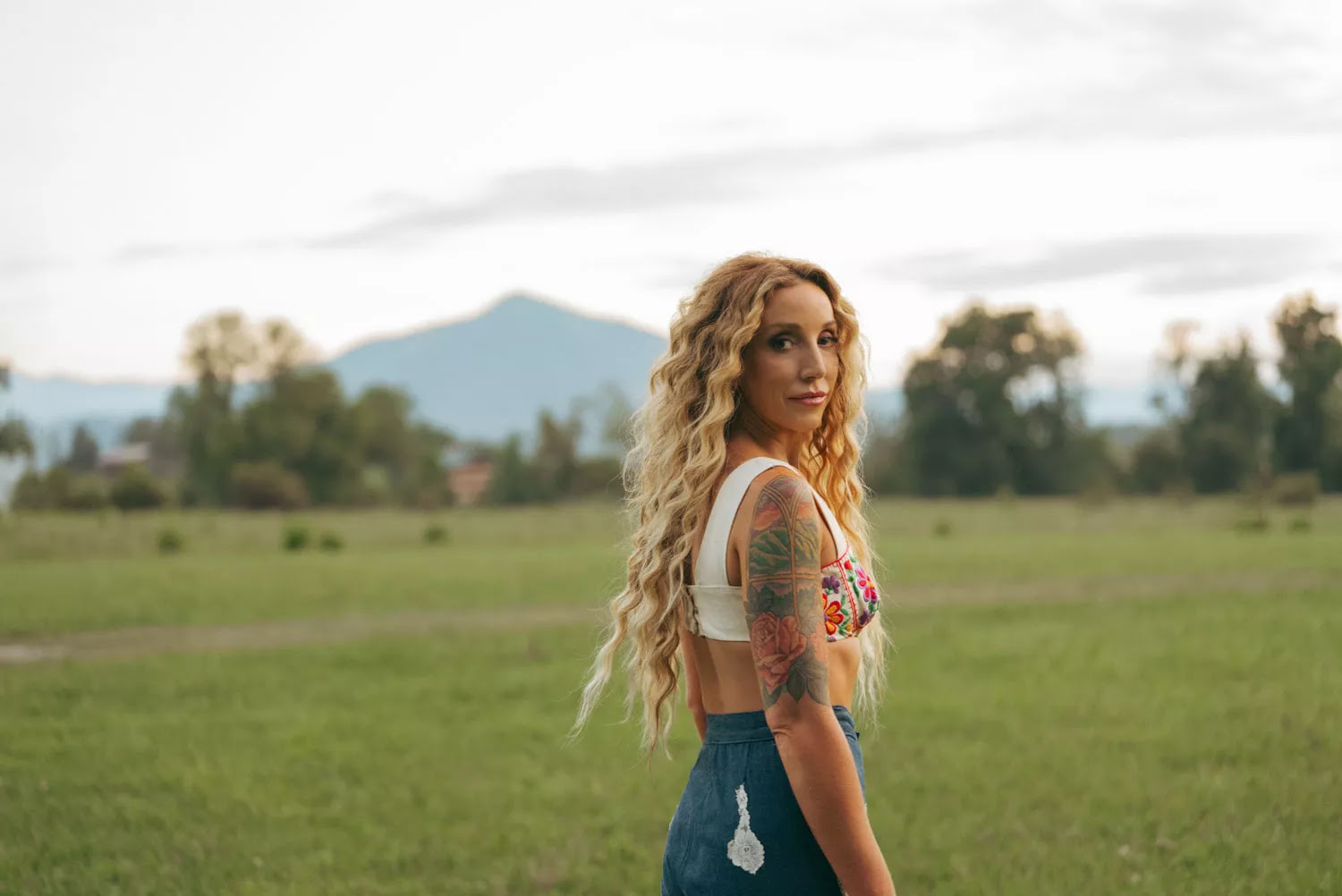
“I am happy, I am thankful, and I feel amazing,” the 37-year-old tells PEOPLE in a recent interview about her vibrant appearance in the music video for her new single “Over Everything.” “I didn’t lose my hair at all, but I could tell around the edges, it just thinned out. My hair now came back with a whole other texture — it’s curly. It won’t be straightened. It feels like a fresh start in a lot of ways.”
Certainly, the Grammy-nominated singer/songwriter is not complaining, because she knows a blessing when she feels one. Truth be told, Monroe’s eyes have seen far too much in her life thus far, from her father’s death when she was just 13 years old to her 2021 diagnosis of Waldenström macroglobulinemia (WM), a type of non-Hodgkin’s lymphoma also known as lymphoplasmacytic lymphoma.
“I think I was even losing some hair before I even started chemo,” continues Monroe, who finished six months of chemo treatments in December of 2021 after being diagnosed in June of that same year. “I was really anemic and looking back, I was getting dizzy all the time and feeling super tired. So now, I’ve got healthy blood pumping through my veins. I felt like it took a while to get all the toxins and stuff out of my body, but now I have energy.”
Ashley Monroe Announces Cancer Scans Came Back ‘Amazing and Normal,’ Hopes Illness Is ‘Gone Forever’ And it’s this newfound energy that is now going towards caring for her 6-year-old son Dalton.
“He’s so precious,” Monroe says of her child with her husband of 10 years, former Chicago White Sox pitcher John Danks. “Dalton is such an old soul. He loves history and he doesn’t like to lose.” She laughs, adding, “He’s got John’s competitive nature, which I don’t have, but I think it’s cool. And he’s pretty good at throwing.”
Her son also loves his new accordion.
“He plays it just by ear,” Monroe explains of Dalton’s obvious musical talents. “He hums all the time, and sometimes we make sick beats and stuff. But yeah, his melodies are really pretty, so we’ll see.”
Monroe is the first to admit that she feels somewhat relieved to see her little boy flourishing, as it was he who had to watch his mother fight blood cancer. “I would do chemo and I would come home and just go straight to bed, and it was so hard to hear Dalton in the next room. I couldn’t do anything. I couldn’t hardly move.” She pauses. “I always knew in the back of my mind that I was doing this so I could be better, and I could be better for him on the other side. I have peace with that.”
Ashley Monroe Celebrates End of Chemo Treatment: ‘I’ve Never Been More Thankful’
And while the physical ramifications of her battle have begun to subside, Monroe admits that the mental challenges remain.
“When it gets close to those days when I have to go to Vanderbilt [Ingram Cancer Center] to get checked, my body starts panicking,” says Monroe, who returns for a recheck approximately every three months. “[My body] just starts panicking that it’s going to have to go through it all over again. And every now and then, I’ll even start thinking about how I hope that doesn’t have to ever happen again. But if it does, I know I can get through it.”
Certainly, it was music that helped her get through it, and music that continues to play a vital piece in her journey to ultimate healing.
“I’m so overwhelmed with how much I’m obsessed with what I’m currently working on,” says Monroe. “It kind of feels like that going home thing. It feels good. And especially after what has happened, music just has a whole new spin on it in my heart.”
Now having released her first single following her critically acclaimed 2021 album Rosegold, Monroe says that “Over Everything” touches on that spot in one’s life in which life might not be perfect, but it’s still beautiful.
The Pistol Annies Say They Should ‘Thank Sia Big Time’ For Making Their Christmas Album ‘Happen’
“Sometimes your heart gets tired,” says Monroe, who has been writing with bestie (and Pistol Annies bandmate) Miranda Lambert as of late.
“There’s a lot of challenges in life. When I sing ‘Over Everything,’ it’s almost like I just give myself permission to feel tired, but hopeful in the same breath.”
Will she and Danks add to the exhaustion with an eventual second child?
“I don’t know,” she says with a somewhat deep breath. “I don’t really think about it, but I would be sad if I thought I couldn’t. I’m just at that point. I feel like… I don’t know. Probably not. But who knows. We can plan and plan and plan, but still yet, sometimes that’s not the plan.”
Country Star Ashley Monroe, 35, Gets Clean Scans, Says She Hopes Her ‘Incurable’
Blood Cancer is ‘Gone Forever’! – SurvivorNet
Ashley Monroe | Photo by Erika Rock
Finding Strength in Surrender: Ashley Monroe on Her Rare Blood Cancer Diagnosis
Country singer Ashley Monroe never expected a routine physical to change her life, but being diagnosed with Waldenström macroglobulinemia, a rare bone marrow cancer, taught her to trust her gut, ask hard questions, and take her health one day at a time.
Can you share what first led to your diagnosis and what that moment was like for you and your loved ones?
In April or May 2021, I had routine labs for a physical, and they showed I was anemic. I thought, “Okay, I’ll just eat more hamburgers or something.” That’s what everybody thinks when you’re anemic. But when I went back later that summer, my levels were really low. They tested my iron, folic acid, and B12, and all of those were great. That’s when they said, “We’re going to do a bone marrow biopsy.”
At first, I went to Tennessee Oncology, but I wasn’t feeling the vibe. Something in my gut said, “Go to Vanderbilt. Have all your doctors under one roof.” That was one of the first times I really tuned into my gut with my care.
When I got the biopsy, I actually saw my results on the patient portal before the doctor called. I was at a friend’s farm that weekend, logged in, and saw the notes: something plasma, lymphoma. I was like, “What is this?” It turned out to be a rare cancer in my bone marrow, Waldenström macroglobulinemia. Looking back, I can see how thin I was, losing hair from being anemic. My platelets and red blood cells were so low that my doctors worried about stroke risk. It was a lot to process.
What have been some of the most important factors in your treatment journey, whether in terms of medical care, support, or resilience?
They told me I needed six months of chemotherapy and immunotherapy. I was already so anemic, and the first few months just knocked me down. I needed blood transfusions, and I had to hunker down in “warrior mode.” I’d come home from chemo, sleep for a few days, then push myself to get up and move a little, even do Pilates, just so I didn’t feel the toxicity sitting in my body.
There was a low point after my second chemo. I was in the shower, my hair was falling out, and I felt so sick. I went into my closet, got on my knees, and felt a word come to me: surrender. I felt a presence next to me. That moment helped me hand it over — to faith, to spirit, whatever people believe in. That surrender gave me strength.
I also learned to advocate for myself. My doctor wanted me to do a bone marrow biopsy midway through treatment and again at the end. I asked, “If I do this biopsy, will it change the treatment plan?” He said no, it was just for numbers. I thought, “Then why put myself through more pain?” I decided against it, and he respected that. It was empowering to realize I didn’t have to do something just because it was standard. I could ask questions and make informed decisions about my own care.
What do you wish more people understood about blood cancers, from either a patient perspective or navigating the healthcare system?
Don’t assume it can’t happen to you. I only discovered mine because of routine labs, and blood cancers can be sneaky. Keeping an eye on your health really matters.
Ashley Monroe | Photo by Erika Rock
How has connecting with other patients, advocacy groups, or resources helped you along the way?
Organizations like the Leukemia & Lymphoma Society and the WM Foundation reached out to me, which was wonderful. But it was interesting — sometimes people assume you want to talk to others who’ve gone through the same thing. For me, I didn’t want too many other stories weighing on mine. I didn’t want to hear someone else’s outcome and then fear it would become mine.
I did look to see if there was anyone my age with this cancer, but there wasn’t. At that point, I thought, “Okay, my journey is just going to be my journey.” I leaned into prayer and into sharing my story publicly because I do think things happen in life to help other people.
Looking back, what have you taken away from this experience that you hope others might, too?
That we are stronger than we think. This made me so thankful for health. My doctors told me, “This type will never go away,” but I refuse to give it power. I don’t sit and dwell on it — except maybe the day I go in for labs.
I think about surrender, about trusting your gut, about asking questions. I learned that doctors will listen, that you can be an active participant in your care, and that hope and faith are powerful. Cancer has taken a lot from me, but sharing my story is one way I can give something back.
What message would you like to share with others who may just be starting their own journey with blood cancer or supporting someone through it?
Try not to think about the big picture all at once. It always helped me to take things a little at a time and give myself grace. If you’re with somebody who’s going through it, give them grace, too. Give yourself grace, because it’s hard and there are a lot of emotions, but it can be gotten through, just a little at a time.
In this episode of The Stephan Hogan Podcast, Stephan sits down with Grammy-nominated singer-songwriter Ashley Monroe, known for her work with the Pistol Annies (alongside Miranda Lambert), her acclaimed solo career, and writing chart-topping hits like “The Truth” and “Heart Like Mine.”
Beyond the accolades, Ashley opens up about her battle with cancer, her experience with addiction, and the spiritual awakening that changed everything. 