
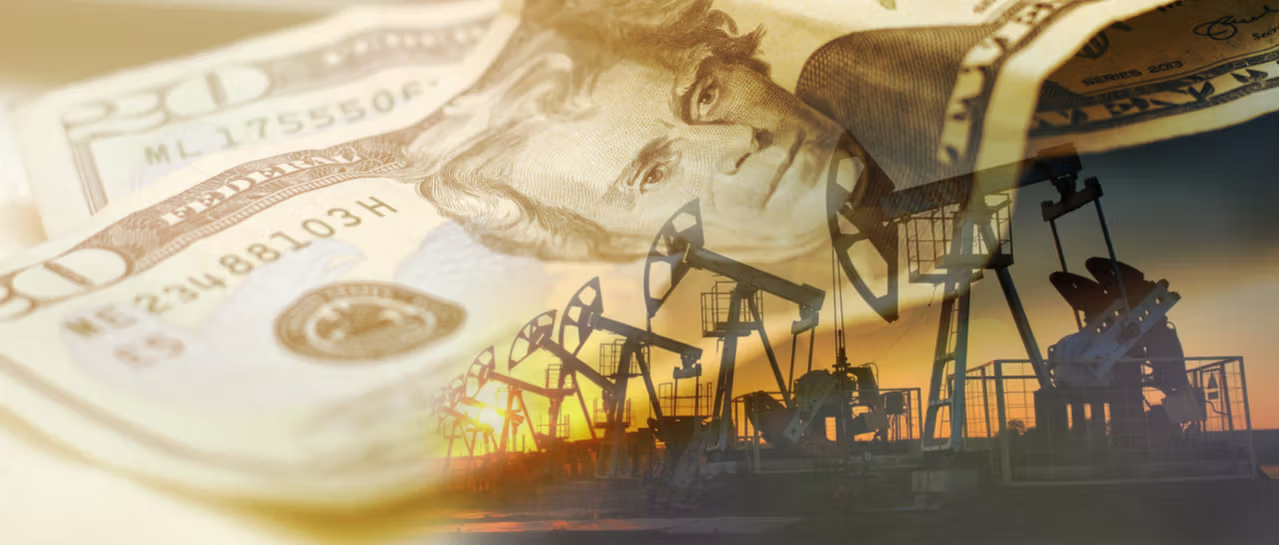
Petrodollars are simply US dollars that have been used to purchase crude oil.
How China Plans to Collapse the Petrodollar – Search
The term petrodollar should be considered as a system rather than a distinct currency. The petrodollar system has seen oil exporting countries predominantly accepting payments in US dollars, essentially earning petrodollars.
The US dollar is the most powerful and widely used currency in the world. As such, for many oil exporting countries, receiving payments in US dollars is very convenient.
The term ‘petrodollar’ gained notoriety in the 1970s when the oil crisis saw the prices of the commodity increase sharply. At the time, most oil exporting countries depended on petrodollars to finance their budgets, and suddenly, they had huge budget surpluses. But the origin of petrodollars goes a little way back.
In the early 20th century, most countries around the world used the gold standard; which meant that their currencies were backed by their gold reserves. Following the end of World War II, the US held most of the global supply of this precious metal.
At a Bretton Woods conference in 1945, many countries agreed to peg their currencies to the US dollar instead of the unstable gold commodity. That same year, the petrodollar was born when Saudi Arabia struck an agreement with the US to accept US dollars as the sole payment currency for their oil in exchange for military and business training. The Bretton Woods system was abandoned in the 1970s, but by that time, the US dollar had cemented its status as the most dominant currency in the world.
Petrodollar Recycling
Petrodollar recycling refers to the process by which oil-exporting countries, particularly those in the Gulf region, invest their surplus oil revenues into foreign assets and economies.
Most of these oil-exporting nations have limited opportunities to invest their petrodollars domestically. They are therefore driven to invest their surplus revenues in developed economies to both preserve their wealth and earn interest.
This phenomenon has significantly impacted various economies and financial markets around the world. Below are specific examples illustrating how petrodollar recycling has influenced certain economies, especially through Gulf nations’ investments in Western assets.
Oil Price Swings and the Global Ripple Effect of Petrodollar Recycling
Setup:
The global economy is deeply influenced by fluctuations in oil prices. For oil-exporting countries in the Gulf, these fluctuations can lead to significant economic surpluses or deficits. During periods of high oil prices, such as the early 2000s up to 2008, Gulf nations experienced windfall revenues. This resulted in substantial budget surpluses and the accumulation of foreign reserves.
Conversely, when oil prices plummet as they did in 2008-2009, 2014-2016, and during the COVID-19 pandemic in 2020, these countries faced budgetary pressures. The sudden drop in revenue forced them to adjust fiscal policies and, at times, tap into their accumulated reserves.
Action:
During High Oil Prices:
- Accumulation of Surpluses:
- Gulf nations amassed vast reserves of petrodollars due to high oil export revenues.
- These funds exceeded the capacity for domestic investment, prompting the need to invest abroad.
- Global Investments:
- Sovereign wealth funds and central banks invested heavily in international financial markets.
- Investments spanned equities, bonds, real estate, infrastructure and private equity across the U.S., Europe and Asia.
- For example, the Abu Dhabi Investment Authority and Qatar Investment Authority expanded their global portfolios significantly.
During Low Oil Prices:
- Budgetary Adjustments:
- Declining revenues led to budget deficits, prompting austerity measures and spending cuts.
- Governments prioritised essential spending and delayed or cancelled non-critical projects.
- Asset Liquidation and Reduced Investments:
- Gulf nations drew down on their foreign reserves to cover budget shortfalls.
- They reduced the pace of new investments and in some cases, sold off assets.
- Saudi Arabia, for instance, liquidated over $200 billion in foreign assets between 2014 and 2016.
Outcome:
Impact on Global Financial Markets:
- During High Oil Prices:
- Increased Liquidity:
- The influx of petrodollars into global markets provided significant liquidity.
- This capital contributed to rising asset prices, lower yields on government bonds, and robust market performance.
- Strengthening Financial Ties:
- Investments enhanced economic interdependence between Gulf nations and recipient countries.
- They supported growth in various sectors, including finance, real estate, technology, and infrastructure.
- During Low Oil Prices:
- Asset Price Pressures:
- Withdrawal of investments and asset sales by Gulf nations exerted downward pressure on asset prices.
- Markets experienced reduced liquidity and increased volatility.
- Global Economic Concerns:
- The reduction in petrodollar recycling raised concerns about funding gaps in global capital markets.
- It highlighted vulnerabilities in countries and sectors reliant on Gulf investments.
- Asset Price Pressures:
- Increased Liquidity:
Broader Implications:
- Economic Diversification Initiatives:
- The volatility underscored the need for Gulf countries to diversify their economies.
- Programs like Saudi Arabia’s Vision 2030 and the UAE’s Centennial 2071 aim to reduce dependency on oil.
- Diversification efforts included investing in renewable energy, tourism, technology, and manufacturing.
- Changing Investment Strategies:
- Sovereign wealth funds began seeking higher returns through alternative investments.
- There was a shift towards emerging markets, direct investments, and strategic partnerships.
- Global Financial Stability:
- The cyclical nature of petrodollar flows influenced global interest rates, exchange rates, and capital availability.
- Stability in oil prices became crucial not just for energy markets but for the overall health of the global economy.
Conclusion:
The fluctuations in oil prices and the corresponding shifts in petrodollar investments by Gulf nations have profound effects on global financial markets. During times of high oil prices, the surplus petrodollars recycled into international markets stimulate growth, increase liquidity, and strengthen financial ties. Conversely, when oil prices fall, the reduction in these flows can contribute to market volatility and highlight the interconnectedness of global economies.
Understanding this dynamic is essential for policymakers, investors, and financial institutions worldwide. It emphasises the significance of petrodollar recycling as a driver of global economic trends and the importance of economic diversification for oil-exporting nations.
The Petrodollar Collapse?
It is evident that the US dollar has dominated the petrocurrency scene, but in recent years, it has faced challenges. To start with, many oil-producing nations are concerned about being overly dependent on the petrodollar. This is because the United States has exploited the petrodollar system to assert its dominance in foreign policy.
The implications of US sanctions on countries, such as Iran and Venezuela, have provided clues on why this overreliance can be very dangerous. Already, some oil-producing countries have started selling their oil in their local currencies. In 2007, the Dubai Mercantile Exchange (DME) was instituted with the primary goal of providing an alternative benchmark for oil price denomination. The intention was clear, but the impact on the petrodollar was not really significant.
However, the biggest threat to the petrodollar is the potential of the petroyuan.
In early 2018, the Shanghai International Energy Exchange was instituted, marking the birth of the petroyuan. The exchange has increasingly gotten favour from countries that are favouring the de-dollarisation of the oil markets. Such countries include Venezuela, Russia, North Korea, and Iran. These are examples of countries that have been on the wrong end of US sanctions.
Other countries such as Iraq, Syria, Libya, and Yemen have also witnessed how US political interference can destabilise them and probably will not mind being ‘rescued’ from the dollar. As a country, China has famously adopted a foreign policy of political non-interference, something that will appeal to some oil-producing countries.
A recent case of US sanctions has been on Russia in 2022. The country has been in military conflict with Ukraine, and after a series of US sanctions, Russia has deepened its relations with China. Russia is a major supplier of oil within Europe and has already started receiving payments in its local currency for the commodity.
Russia-China relations also give the petroyuan impetus in its quest to fight the petrodollar. Already, Saudi Arabia has indicated that it is willing to price at least a small portion of its oil in currencies other than the US dollar. Saudi Arabia has been a major US ally, but it recently started buying arms from Russia. This does not bode well with the future of the petrodollar because Saudi Arabia’s de-dollarisation can only encourage other oil-producing nations to ‘free themselves’ from the US dollar.
Petrodollar’s Impact
The petrodollar system has propelled the US dollar to be the most dominant currency in the global economy. Oil is the most important commodity in the international markets, and this has made the United States automatically become the most decisive player in the global economy. It has allowed the country to consistently run trade deficits as well as have a high inflow of investment capital through petrodollar recycling. The US can also finance its budget deficits using low-interest financial instruments, and so the importance of the petrodollar to the US is obvious.
But deficits also come with some challenges. The global economy is constantly growing, which essentially means that the country must run deficits to prevent any potential slowdowns. However, running deficits also pose the threat of a potentially weaker US dollar.


 4/01/2026
Let’s get something straight, because this hasn’t been talked about enough. And I’m tired of seeing people grabbing headlines and posts that agree with their narrative instead of doing their own research.
What’s happening right now in Iran is not Israel’s war. It’s not a Jewish vendetta, it’s not a Middle East skirmish that has nothing to do with the rest of us, and contrary to Tucker Carlson, it has nothing to do with Chabad. You need to know what’s actually going on.
Washington severed diplomatic ties with Iran under the Carter administration after Iranian students stormed the U.S. embassy in Tehran and held 52 Americans hostage. That was 1979.
Since then, EVERY administration, Carter, Reagan, Bush (senior), Clinton, Bush (junior), Obama, Biden, and Trump, has said that a nuclear-armed Iran is unacceptable. The White House recently documented 74 separate instances of Trump making that case, calling it “longstanding, bipartisan American policy.”
This isn’t a new position. It isn’t a right-wing position. It’s what every administration has believed for half a century. So why did it take until now?
Because Iran kept moving the goalposts, and the world kept letting them.
By May 2025, the IAEA reported that Iran’s cache of near-weapons-grade enriched uranium had surged by roughly 50 percent in just three months, putting Tehran one step away from having enough material for ten nuclear weapons.
That’s not some little vague threat. That’s a countdown.
The head of U.S. Central Command testified that if Iran decided to sprint toward a nuclear weapon, it could produce enough weapons-grade material for a simple device in one week, and enough for ten weapons in three weeks.
Secretary of State Marco Rubio put it plainly: “They have everything they need to build nuclear weapons.” When you’ve built the engine, loaded the fuel, and pointed the car at the wall, it doesn’t matter much whether you’ve pressed the gas yet.
Iran spent years insisting its program was civilian. All the while, it was moving toward weapons capability. According to reporting sourced by the Institute for International Political Studies, Khamenei had authorized development of miniaturized nuclear warheads for ballistic missiles as recently as October 2025.
Now let’s talk about China,
because this piece of the picture is pretty darn critical.
China is not a bystander in this story. Iran is central to Beijing’s entire overland trade and energy strategy. Iran sits at the heart of China’s Belt and Road Initiative, the infrastructure network connecting East Asia to Europe through land-based transport and Persian Gulf energy routes. Without stable access through Iranian territory, Beijing’s supply chains have no viable alternative. Iran exported more than 520 million barrels of crude oil to China in 2025 alone. Only Saudi Arabia supplied more. China buys over 80 percent of Iran’s oil. This isn’t ideological solidarity. It’s a dependency that neither side wants disrupted.
Which brings us to the Strait of Hormuz.
Roughly 13 million barrels of oil per day moved through the Strait in 2025, about 31 percent of all seaborne crude in the world.
About 45 percent of China’s oil imports pass through it. Iran has threatened to close it. And here’s what that threat actually produced: China is now in direct talks with Iran, pressing Tehran to allow crude oil and LNG vessels safe passage and to hold off on targeting tankers or key export hubs. When Beijing’s energy supply is on the line, the anti-American posturing has real limits.
Here’s what this all adds up to:
The United States didn’t stumble into this war because Israel asked nicely. It acted on a threat that five decades of American presidents acknowledged and mostly kicked down the road.
Iran was weeks away, not years, from having the material needed for nuclear weapons. It had long-range ballistic missiles capable of reaching U.S. bases and allies throughout the region. It had a weapons development program it had been lying about for years.
Calling this Israel’s war ignores fifty years of American policy, multiple rounds of failed diplomacy, and a nuclear program that was running out of road.
The world needed someone to act.
– Melissa Brodsky
#truthOnlyTRUTH #OvercomeTDS #allOfTHIS #LoveMyPresident
#EXACTLYwhatIvotedfor #MAGA #AriesInMars #WinningSeason
The better question isn’t why it happened. It’s why it took this long.
Former Navy SEAL rips Trump’s genocidal threat to Iran: ‘I didn’t think it was presidential’
NAVY SEAL SAYS IT WASNT PRESIDENTIAL – Search
Final Word
The petrodollar system has been very dominant in the international oil markets and has consequently led to a strong and influential US dollar. However, its future also hinges on the nature of relations that the US has with major oil producers such as Russia and Saudi Arabia, as well as major consumers such as China.
If the Petrodollar Ends, What Comes Next? Scenarios for U.S. Adaptation in a De-Dollarizing World | by Steven W. Pearce | Medium
America’s Petrodollar ‘Secret’: Maduro’s Dollar Defiance The Real Reason Behind His Kidnapping?
What is the Petrodollar System? | How Did the US Dollar Strengthen? | Narayana IAS Academy
Can you explain to a noob what are Petrodollars and how do they work? : r/AskEconomics
Unpacking The “Petrodollar War Theory”: News Article – Independent Institute
Petrodollars and Their Impact on the U.S. Dollar and Global Economy
What Is the Petrodollar? Benefits and Drawbacks | Tony Robbins
“Iran Deal’s Sudden Collapse — Key Factors Behind the Fallout”