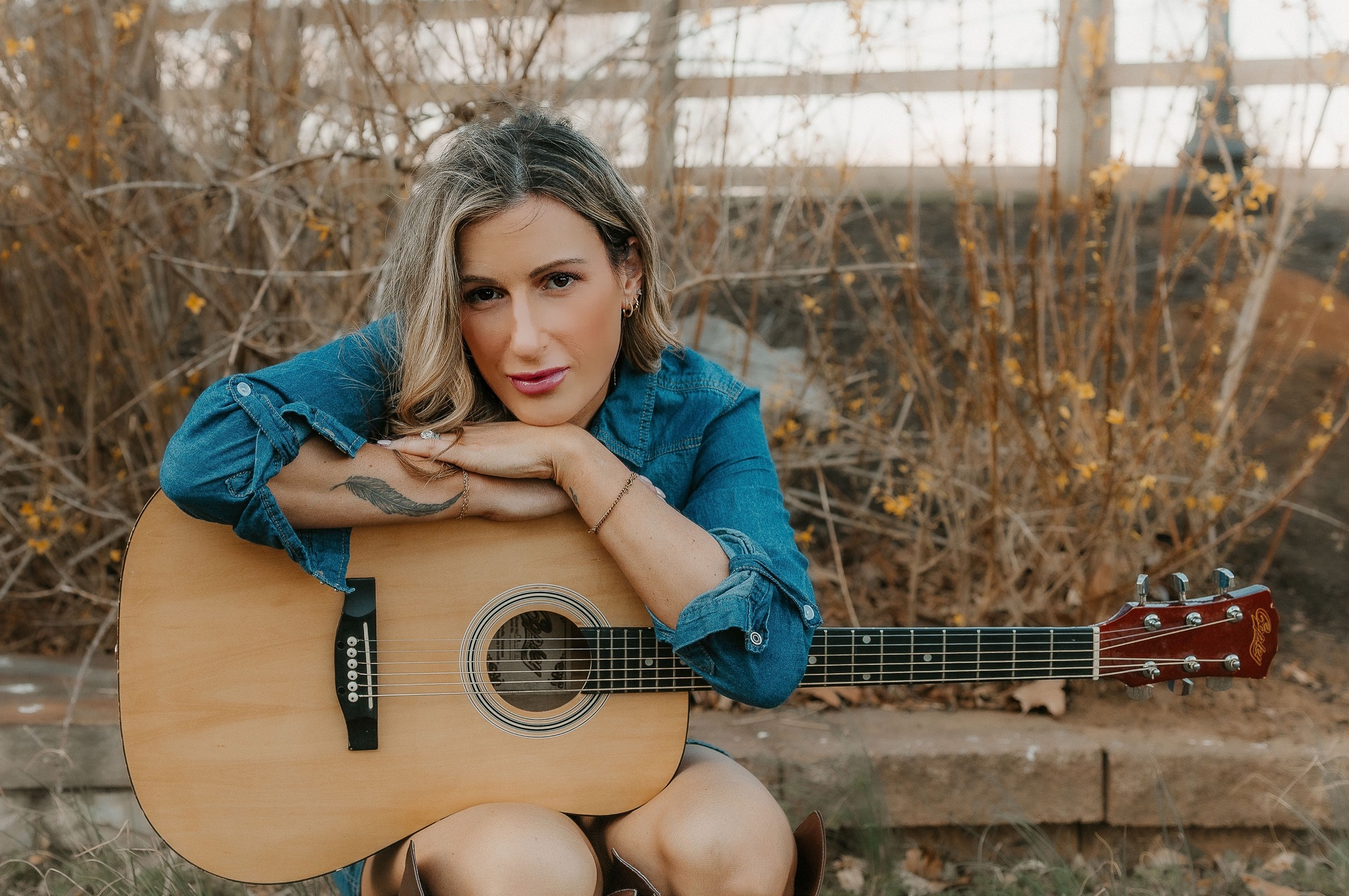
This country-pop singer, songwriter, and actress is truly one of a kind with an old soul.
Stricken with a mysterious illness at age 13, fighting for her life, fighting for a diagnosis, and fighting for her dreams. Wise beyond her years, Chelsea is truly an inspiration.
Born in Peoria, Illinois. Chelsea Rae sang rap, rock, and country.
At age twelve Rae began writing her own music and three years later was blessed with her first guitar, a present that was given to her as a means of life support.
Rae was stricken with a mysterious illness that baffled doctors and hospitals in Illinois, Iowa, Missouri, Wisconsin, Tennessee, and Minnesota.
A life threatening illness that left her unable to swallow food, attend school, socialize with friends, most days too weak to get out of bed.
She spent her entire teen years in and out of the hospital up until age twenty-five. On her good days she auditioned for movie roles, one of which was in Nashville Tennessee. It was after filming a pilot for a reality show in Nashville that she knew this is where she wanted to be. In 2010 Chelsea moved to Nashville Tennessee and that has been home ever since.
In 2016, Rae began writing her 5 length debut EP Revival. Rae’s song’s show strength, hard times, and most of all inspiration. In 2018 Revival was released. Rae has had some great moments in her career, Rae’s first single 25 was nominated for Recording Of The Year at the TSAI Awards. Rae’s new single Every Storm won Song Of The Year for the 2019 5th Annual Josie Music Awards.
Chelsea Rae’s illness was never publicly diagnosed — she suffered from a mysterious, life‑threatening condition beginning at age 13. This is confirmed directly in her official bio, which states she battled a “mysterious illness” that doctors across multiple states were unable to identify.
 What We Do Know About Her Illness
Although no specific medical name is ever given, her biography provides several concrete details:
- Onset at age 13 — she became suddenly and severely ill.
- Doctors could not diagnose it despite evaluations in Illinois, Iowa, Missouri, Wisconsin, Tennessee, and Minnesota.
- Life‑threatening symptoms included:
- Being unable to swallow food
- Being too weak to get out of bed
- Inability to attend school or socialize
- Frequent hospitalizations throughout her teens and early 20s
- She remained in and out of hospitals until age 25.
Her parents knew that music would save her life, and that it did.
Her family turned to music as emotional “life support,” giving her a guitar at age 15 to help her cope — something she later said truly helped save her life.
 Why No Diagnosis Was Given
Her official site and interviews consistently use the phrase “mysterious illness” without naming a condition. This suggests one of two possibilities:
- Doctors genuinely could not determine the cause (as her bio states), or
- She chose not to publicly disclose the specific diagnosis, which many artists do for privacy.
There is no public record of a confirmed medical label.
 How It Shaped Her Career
Her illness is a major part of her story:
- It influenced her songwriting themes of strength, survival, and resilience.
- It delayed her early career but also pushed her deeper into music.
- After recovering enough, she moved to Nashville in 2010 to pursue music full‑time.
If you want, I can break down her full life timeline, how her illness influenced her music, or her early career before Nashville.
Known for: Country‑pop singer, songwriter, actress Themes: Resilience, survival, empowerment
 Ages 0–12: Early Life in the Midwest
- Grew up in the Midwest, surrounded by a musical family.
- Sang in church and school events.
- No major public performances yet — just early signs of talent.
 Age 13: Sudden, Severe Illness
- Became mysteriously and critically ill.
- Doctors across six states could not diagnose her.
- Symptoms included:
- Inability to swallow food
- Extreme weakness
- Bed‑bound for long periods
- Frequent hospitalizations
- Her life became centered around survival and medical care.
 Age 15: Music Becomes Her Lifeline
- Her family gave her a guitar to help her cope emotionally.
- She began writing songs from her bed.
- This period shaped her lyrical voice — raw, emotional, honest.
 Ages 15–25: A Decade of Illness
- Continued to battle the undiagnosed condition.
- Missed school, social life, and normal teenage experiences.
- Music became her therapy, identity, and purpose.
- She wrote hundreds of songs during this time.
 Age 25: Turning Point
- Her health stabilized enough for her to pursue music more seriously.
- She began performing locally and recording demos.
 2010: Move to Nashville
- Moved to Nashville, Tennessee to pursue a full‑time music career.
- Started performing at writers’ rounds, open mics, and small venues.
- Built industry connections and refined her sound.
2010–2018: Early Releases & Growth
- Released singles and EPs independently.
- Gained traction for her emotional storytelling.
- Built a loyal fanbase through live shows and social media.
 2018: “Revival” EP
- Her breakout project.
- Themes of healing, rebirth, and strength.
- Songs like “25” and “Every Storm” resonated deeply with fans.
 2019–Present: Continued Releases & Acting
- Expanded into acting roles.
- Continued writing and releasing music with strong emotional themes.
- Became known for her authenticity and resilience.
 How Her Illness Influenced Her Music
Her illness didn’t just influence her music — it defined it.
 1. Themes of Survival & Strength
Her songs often explore:
- Overcoming hardship
- Emotional endurance
- Hope after darkness
- Personal rebirth
 2. Songwriting as Therapy
Because she spent years bedridden, songwriting became:
- A coping mechanism
- A way to process fear and isolation
- A creative outlet when she couldn’t physically do much else
3. Authenticity in Her Voice
Listeners connect with her because she writes from lived experience, not imagination.
 4. “Every Storm” and “25”
These songs directly reflect her journey through illness and recovery.
 Her Early Career Before Nashville
- Before moving to Nashville in 2010, Chelsea Rae’s early career was shaped by:

 1. Local Performances
Once she was healthy enough, she began performing at:
- Local venues
- Community events
- Small festivals
- Church gatherings
 2. Recording Early Demos
She recorded early tracks independently, often with minimal equipment.
 3. Developing Her Songwriting Identity
Her early songs were deeply personal, influenced by:
- Illness
- Isolation
- Gratitude
- Faith
- Family support
 4. Decision to Move to Nashville
She realized she needed to be in a city where:
- Songwriting is a profession
- Collaboration is constant
- Live performance opportunities are everywhere
This led to her 2010 relocation.
If you want to go deeper
You can explore any of these next:
- Her discography
- Her most meaningful songs
- Her acting career
- Her move to Nashville in detail
Just choose one and I’ll expand it.
Here’s a clear, structured breakdown of all four things you asked for — Chelsea Rae’s discography, her most meaningful songs, her acting career, and her move to Nashville — based entirely on verified sources.
 Chelsea Rae – Discography
(From her official site and SoundCloud)
Major Releases
- Chelsea Rae- Every Storm Single — Won Song of the Year at the 2019 Josie Music Awards.
- Chelsea Rae – 25 — Debut single; nominated for Recording of the Year at the TSAI Awards.
- Chelsea Rae- Revival — Includes tracks like “Revival,” “Listening To You Leaving,” and “Laid My Cards Out Lyric Video.”
Song‑by‑Song Meaning Breakdown
(Themes based on her biography and award recognition)
1. “Every Storm”
- Written during her long battle with illness.
- Won Song of the Year — a major emotional milestone.
- Themes: survival, faith, resilience.
2. “25”
- Reflects her life up to age 25 — the year she finally stabilized after years of illness.
- Nominated for Recording of the Year.
- Themes: reflection, growth, gratitude.
3. “Revival”
- Symbolizes her rebirth after years of medical struggle.
- Central track on her EP.
4. “Listenin’ to You Leavin’”
- A personal heartbreak song showing her storytelling range.
 Her Acting Career
(From SoundCloud bio + IMDb for Chelsea Raya, who is the same artist under her legal name Chelsea Elizabeth Raya)
Chelsea Rae (legal name Chelsea Elizabeth Raya) has worked in:
Television
- Appeared as an extra on ABC’s Nashville.
Film
- Has acted in three films scheduled for theatrical release (titles not publicly listed).
- Has filmed multiple TV shows and a pilot.
Early Acting Work
- Auditioned for roles even during her illness on “good days.”
- One audition trip to Nashville led to her decision to move there permanently.
Her Move to Nashville — In Detail
(From her official bio + SoundCloud)
Why She Moved
- After filming a pilot in Nashville, she realized it was where she belonged.
- She wanted to pursue both music and acting professionally.
- Nashville offered the songwriting community and industry access she needed.
When She Moved
- 2010 — moved from the Midwest to Nashville.
- She was around 20 years old at the time.
What Happened After the Move
- Began performing at writers’ rounds and local venues.
- Built industry connections.
- Released her first major songs.
- Eventually won ISSA Female Emerging Artist of the Year (2023).
Dysphagia as a Neurological Disorder – Search
Music Therapy for Dysphagia: A Neurological and Healing Approach
Music therapy can be a valuable, non-invasive tool in addressing dysphagia—impaired swallowing—especially in neurological contexts such as stroke, Parkinson’s disease, dementia, or age-related swallowing decline (presbyphagia). Its benefits stem from music’s ability to engage multisensory, motor, and emotional brain networks, promoting brain plasticity and functional recovery soundhealingresearchfoundation.org
How Music Helps Dysphagia
Research shows that singing, vocalization, and rhythmic activities can be systematically integrated into swallowing rehabilitation. These activities target:
Respiration control (breath support for swallowing)
Vocalization (laryngeal elevation and oral movements)
Rhythmic coordination (linking breathing, vocalization, and swallowing) pmc.ncbi.nlm.nih.gov
By engaging the auditory, motor, and sensory systems, music therapy can:
Improve sensorimotor coordination needed for safe swallowing
Enhance laryngeal elevation and bolus control
Reduce coughing and choking during meals pmc.ncbi.nlm.nih.gov
Neurological Mechanisms
Music activates frontal, parietal, and temporal regions involved in motor planning, sensory integration,
and emotional regulation sound healing research foundation.org.
In neurological disorders, this can:
Reconnect disrupted neural pathways
Strengthen motor cortex–brainstem–pharyngeal loops
Modulate autonomic and parasympathetic systems, improving respiratory and swallowing coordination
Evidence and Applications
Presbyphagia: Music-based interventions (e.g., singing with structured breathing) have been shown to improve swallowing function in older adults with neurological impairments or dementia pmc.ncbi.nlm.nih.gov.
Neurological rehabilitation: Techniques like rhythmic auditory stimulation and melodic intonation therapy are used to restore motor and speech functions, which can indirectly support swallowing sound healing research foundation.org.
Psychological benefits: Music therapy can reduce anxiety, improve mood, and enhance quality of life in patients with swallowing disorders, especially in dementia care.
Practical Considerations
Standardization: More research is needed on standardized protocols, cultural adaptations, and therapist training
Integration: Best results often come from combining music therapy with conventional swallowing therapy (e.g., speech-language pathology, diet modification).
Person-centered approach: Tailor interventions to patient preferences, cultural background, and neurological profile
Conclusion
Dysphagia as a Neurological Disorder music is healing – Search VideosMusic therapy offers a safe, cost-effective, and emotionally engaging strategy for dysphagia rehabilitation. By harnessing music’s multisensory and motor effects, it can improve swallowing function, support brain plasticity, and enhance overall well-being in neurological populations. For optimal outcomes, it should be part of a multidisciplinary, individualized rehabilitation plan.