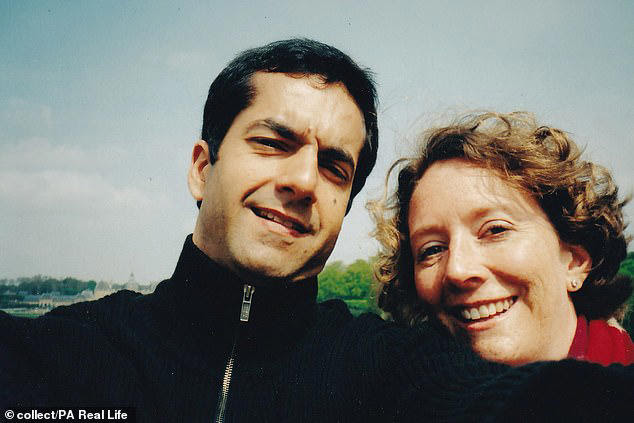
Jason Venkatasamy has told how his wife Lucy Driver struggled with indigestion before a pancreatic cancer diagnosis
My wife died from pancreatic cancer at just 57 – she thought acidic foods were to blame
Story by Ciaran Foreman
Key takeaways
- Early Symptoms Ignored: Lucy Driver experienced persistent indigestion and stomach pain, initially attributed to acidic foods or pancreatitis, which were early signs of pancreatic cancer.
- Diagnosis & Treatment: Diagnosed at stage two, she underwent chemotherapy, surgery, and radiotherapy, temporarily clearing the cancer but facing recurrence in her liver.
- End-of-Life & Legacy: Lucy sadly passed away at 57, inspiring her husband to raise awareness and funds for Pancreatic Cancer Action through a long-distance walk.
Lucy Driver had struggled with indigestion for years, particularly after her battle with breast cancer.
Diagnosed with the disease in 2005, she underwent surgery to remove her left breast followed by rounds of chemotherapy, but was in remission within a year and went on to live without major health problems – aside from the occasional digestive issue.
So, when those symptoms cropped up over the following 15 years – during which she married her husband Jason Venkatasamy and returned to normal life – there was little reason for alarm.
That remained the case in March 2022, when Lucy began suffering stomach pain during a hike, initially putting it down to pancreatitis – the term for when the pancreas becomes inflamed.
But the symptoms were the first sign of pancreatic cancer – a devastating disease which is on the rise in the UK, and one that would cruelly claim her life at just 57.
Sadly, Ms Driver, originally from Yorkshire, was among the 27 per cent of British women who survive breast cancer only to later receive a second cancer diagnosis.
Mr Venkatasamy, a graphic designer, said his wife ‘always seemed to have’ problems with indigestion – a burning pain or discomfort in the upper abdomen or chest – after receiving the all-clear from breast cancer.
He added: ‘It always makes me think back now if that was a continuous symptom of cancer rearing its ugly head.’

Ms Driver’s indigestion became worse in the years after her breast cancer diagnosis in 2005
The NHS advises that ‘heartburn or indigestion that’s frequent, very painful or gets worse’ can be a symptom of cancer, while Pancreatic Cancer UK advises that it can be a common sign of the disease.
One of Ms Driver’s main symptoms in the lead-up to her diagnosis was becoming unable to tolerate spicy foods.
Three weeks after her 54th birthday on March 30, 2022 – after abandoning a hike at Seven Sisters in Eastbourne, East Sussex – she went to her GP for blood tests.
The results caused such concern that she was told to go to A&E urgently.
Mr Venkatasamy said: ‘I never thought it would be cancer. It didn’t even enter my mind.
‘We just thought it was some sort of pancreatitis or something that could be solved.’
The very next morning, Ms Driver was diagnosed with stage two pancreatic cancer.
Around 11,500 people are diagnosed with pancreatic cancer in the UK each year, between 10 and 20 percent of whom are stage two, but the disease is notoriously difficult both to diagnose and treat.
Common symptoms of the incurable cancer include jaundice – when the skin and eyes take on a yellowish tinge – loss of appetite, weight loss, fatigue, a high temperature, feeling or being sick, diarrhoea and constipation.
As it is often caught very late, when treatment options are limited, only 10 per cent of patients live longer than five years after diagnosis – with more than half dying within three months of finding out that they have the illness.
At present, the disease is incurable, with life expectancy just five years from initial diagnosis. Just one in four patients live more than a year.
Ms Driver and her husband later met with a private specialist, who Mr Venkatasamy said gave them the ‘bad news’ that the cancer was ‘too big’ for immediate surgery and would need to be first shrunk with chemotherapy.

Pancreatic cancer remains one of the least survivable forms of the disease and worryingly its on the rise. Source for data: Cancer Research UK

Mr Venkatasamy said he never thought his wife would be diagnosed with pancreatic cancer, thinking instead that it would be pancreatitis
Mr Venkatasamy added: ‘When she left the consulting room, she just reduced in size.
‘And then she was so upset because she knew what chemo was going to be like, so that really hit her hard.’
Ms Driver had previously undergone chemotherapy ‘as an insurance’ measure after her breast cancer diagnosis – treatment Mr Venkatasamy described as ‘awful, but she got through it’.
Despite trepidation, she endured chemotherapy again, but this time developed painful mouth ulcers that made eating difficult and caused her to lose around 21lbs.
The treatment proved effective, though, and her tumour was eventually removed in May 2023. However, doctors later discovered a further ‘mass’ in her liver, requiring more treatment, before scans in March 2024 showed no evidence of disease.
However, medics discovered a further ‘mass in the liver’ and she had to undergo further chemotherapy and radiotherapy, but this resulted in a full clearance of the cancer in March 2024.
Mr Venkatasamy said: ‘We thought we’d dodged a bullet, as it’s very rare to get past pancreatic cancer.’
Life returned to normal for Ms Driver. Her hair, which she’d lost during the treatment, grew back. And she even started gaining weight again.
But by Christmas time of 2024, the indigestion returned.
Within weeks, scans revealed the cancer had come back and spread to her liver once more.
Ms Driver went through more radiotherapy and then chemotherapy, but Mr Venkatasamy said his wife’s ‘body just couldn’t really take that much’ more of it by the middle of 2025, so she decided to stop treatment last September.
Pancreatic cancer can tragically wear down its victims by invading nearby organs, blocking the bile and intestinal ducts, and spreading via the blood and lymphatic system to the liver, lungs, and abdomen, eventually triggering organ failure.

Ms Driver went through numerous rounds of treatment but decided to stop last September
Ms Driver began palliative, end-of-life care from October via local district nurses who Mr Venkatasamy said ‘came around once a week’, before her health deteriorated by the end of 2025.
She sadly died aged 57 on January 3, 2026.
Mr Venkatasamy said: ‘She was very active in her bed and couldn’t get comfortable.
‘I remember thinking I should keep her hydrated so I went to the kitchen to get some water.
‘I think she waited for me to get back to the bedroom, and then that’s when she passed away.
‘It was a shock because she deteriorated that morning very, very quickly.’
In the aftermath of his wife’s death, Mr Venkatasamy said Ms Driver’s workplace raised £6,000 in her memory and he wanted to do something of his own to ‘mark Lucy’s life in some form’.
He is now undertaking a 34-day walk over 800 kilometres via Spain’s Camino de Santiago this August to raise money for Pancreatic Cancer Action.
Jason said: ‘I really want to warn people that pancreatic cancer is pretty much a death sentence.
‘But if you’re lucky enough to notice the early symptoms of indigestion or jaundice and react to it straight away, then you’ve got a fighting chance.’
Why is this story important, and who does it affect?
This story matters because it highlights a pattern that is both common and dangerous: pancreatic cancer often hides behind everyday symptoms, and people—patients and even clinicians—frequently misinterpret them. It affects far more people than the individual family in the article, and the consequences can be life‑altering.
This story matters because it exposes a pattern that quietly endangers thousands of people, and it affects far more than just one family. By looking closely at what happened to Lucy Driver, you can see how easily pancreatic cancer hides in plain sight — and how devastating the consequences can be when early symptoms are overlooked.
Below is a clear, structured breakdown grounded directly in the article you’re viewing .
Why this story is important
1. It shows how easily pancreatic cancer is missed Lucy lived with indigestion and stomach pain for years. These symptoms were dismissed as food intolerance, acid-related issues, or pancreatitis — all common, everyday explanations. But they were actually early signs of pancreatic cancer. This is exactly why pancreatic cancer is so deadly: it mimics harmless conditions until it’s advanced.
2. It highlights the danger of “normalizing” persistent symptoms Lucy had survived breast cancer, and her lingering digestive issues became part of her “normal.” Her husband even wondered later if those symptoms had been quietly signaling cancer for years. This story pushes people to take persistent changes seriously.
3. It illustrates the brutal reality of pancreatic cancer Even with:
- stage‑two diagnosis
- chemotherapy
- surgery
- radiotherapy
- a period of “no evidence of disease”
…the cancer still returned aggressively and ultimately took her life. The article underscores that pancreatic cancer remains one of the least survivable cancers, with only about 10% of patients living beyond five years .
4. It raises awareness through personal storytelling Statistics don’t move people — stories do. Lucy’s husband sharing her journey humanizes the disease and motivates others to act sooner, get checked, and support research.
5. It shows the emotional and practical toll on families The story captures the fear, hope, exhaustion, and grief that families experience as they navigate repeated treatments, setbacks, and end‑of‑life care.
Who this story affects
1. Anyone with persistent digestive symptoms Indigestion, stomach pain, intolerance to certain foods — these are common, but when they persist or worsen, they deserve medical attention. This story is a wake‑up call.
2. Cancer survivors Lucy was among the 27% of women who survive breast cancer only to later develop a second cancer. Survivors often assume new symptoms are unrelated or benign. This story challenges that assumption.
3. Families and caregivers Loved ones often struggle to interpret symptoms, support treatment decisions, and cope with rapid changes in health. Jason’s experience reflects what many families go through.
4. Healthcare providers The article underscores how difficult pancreatic cancer is to diagnose early. It reinforces the need for vigilance when patients report persistent or worsening digestive symptoms.
5. Public health advocates and researchers The story highlights the urgent need for better screening tools, earlier detection methods, and more effective treatments for a cancer that remains “pretty much a death sentence,” as Jason puts it .
6. Anyone who tends to “push through” symptoms Lucy was active, hiking, working, and living life. Many people ignore discomfort until it becomes severe. Her story encourages people to listen to their bodies sooner.
The deeper significance
Pancreatic cancer is rising in incidence, yet survival rates remain stubbornly low. Stories like this one cut through the noise and remind people that early action — even on symptoms that seem minor — can make the difference between catching cancer early or not at all.
If you want, I can also break down:
- the early symptoms to watch for
- why pancreatic cancer is so hard to detect
- how risk factors work
- or what research is being done to improve survival rates
The core importance is early‑warning awareness.
Pancreatic cancer is one of the deadliest cancers, largely because it’s usually diagnosed too late. Lucy’s story shows how:
- Indigestion, stomach pain, or food intolerance—symptoms most people dismiss—can be early signs of something serious.
- Even someone who has survived a previous cancer may not recognize new symptoms as red flags.
- Misattributing symptoms (in her case, to acidic foods or pancreatitis) can delay diagnosis until treatment options are limited.
- The disease can appear to improve, only to return aggressively, which is emotionally devastating for families.
Her husband’s decision to speak publicly is part of a broader push to help others recognize symptoms earlier, when survival odds—though still low—are better.
Who this story affects
This story resonates with—and has implications for—several groups:
- Anyone experiencing persistent digestive symptoms People who regularly deal with indigestion, stomach pain, or food intolerance may not realize these can be warning signs worth checking.
- Cancer survivors Survivors of one cancer, like Lucy, are statistically more likely to develop another. Many don’t know this or don’t connect new symptoms to that risk.
- Families and caregivers Loved ones often struggle to interpret symptoms, navigate medical uncertainty, and support someone through grueling treatments.
- Healthcare providers It underscores the challenge of diagnosing pancreatic cancer early and the need for vigilance when symptoms persist.
- Public health advocates and researchers Stories like this highlight the urgent need for better screening tools, earlier detection methods, and more effective treatments.
- Anyone who might ignore “minor” symptoms The emotional weight of the story is a reminder that listening to your body—and acting early—can save lives.
One more layer
Pancreatic cancer is rising in incidence, yet survival rates remain among the lowest of all major cancers. Personal stories like this one cut through statistics and make the stakes real. They help people recognize symptoms sooner, push for medical evaluation faster, and support research funding.
If you want, I can also break down the early symptoms, risk factors, or why pancreatic cancer is so hard to detect.
Absolutely — there is background context that makes this story clearer and more meaningful. Since I can see the full article you’re reading , I’ll pull out the deeper layers that aren’t obvious at first glance but help explain why Lucy’s experience unfolded the way it did.
 1. Pancreatic cancer is notoriously hard to detect
This is the single biggest piece of context behind the entire story.
Pancreatic cancer often produces vague, everyday symptoms — indigestion, stomach pain, food intolerance, fatigue. These overlap with dozens of harmless conditions.
Because of this:
- Most patients are diagnosed late, when the cancer is already advanced.
- Only 10% survive five years after diagnosis.
- More than half die within three months of learning they have it.
Lucy’s long‑standing indigestion fits this pattern exactly.
 2. Cancer survivors face higher risk of a second cancer
The article notes that Lucy was among the 27% of British women who survive breast cancer but later develop another cancer. This is important context because:
- Survivors often assume new symptoms are “just side effects” or unrelated.
- Doctors may also attribute symptoms to past treatment rather than suspecting a new cancer.
- This can delay diagnosis.
Lucy’s indigestion began after her breast cancer treatment, which made it easier for everyone — including her — to normalize it.
 3. Pancreatic cancer is rising in the UK
The article mentions that the disease is on the rise. This matters because:
- More people are developing it, but
- Screening tools still don’t exist, and
- Awareness remains low.
So stories like this fill a gap that public health systems haven’t solved yet.
 4. Her symptoms fit a classic but overlooked pattern
Looking at the timeline in the article:
- Years of indigestion
- Worsening symptoms after certain foods
- Pain during physical activity
- A sudden spike in symptoms during a hike
- Rapid escalation once she sought medical care
This is a textbook progression of pancreatic cancer — but only in hindsight. Most people (and many clinicians) don’t recognize this pattern early.
 5. Treatment is grueling, even when it “works”
The article describes:
- Chemotherapy
- Surgery
- Radiotherapy
- Weight loss
- Mouth ulcers
- Tumor shrinkage
- A period of “no evidence of disease”
- Recurrence in the liver
- More treatment
- Finally, palliative care
This context shows how pancreatic cancer often behaves: Even when you beat it back, it tends to return aggressively. Lucy’s story follows that heartbreaking arc almost exactly.
 6. Her husband’s mission adds emotional and social context
Jason’s decision to walk the Camino de Santiago to raise money for Pancreatic Cancer Action gives the story a second layer:
- It’s not just a medical narrative
- It’s a grief narrative
- And a public‑awareness mission
He wants people to recognize symptoms earlier because he believes it might save someone else’s life.
 7. The story fits a broader public‑health push
Across the UK and US, there’s a growing effort to:
- Increase awareness of early symptoms
- Encourage earlier GP visits
- Push for better diagnostic tools
- Improve survival rates for a cancer that is still “pretty much a death sentence,” as Jason says
This article is part of that movement.
If you want, I can also explain:
- The specific early symptoms people often miss
- Why pancreatic cancer spreads so quickly
- How it differs from other cancers
- What research is being done to improve survival
- Or the emotional/psychological dynamics families face during long cancer journeys
Just tell me what direction you want to go.
Summation:
There’s important background context that makes this story clearer, and understanding it helps you see why Lucy’s experience unfolded the way it did. Since I can see the article you’re reading , I’ll anchor the context directly to what’s in that story.
 1. Pancreatic cancer is one of the hardest cancers to detect
This is the biggest piece of context behind everything in the article.
Pancreatic cancer often starts with indigestion, stomach pain, food intolerance, or vague abdominal discomfort — exactly the symptoms Lucy had for years. These overlap with dozens of harmless conditions, so:
- Patients rarely suspect cancer
- Doctors often don’t either
- Diagnosis usually happens late
The article notes that more than half of patients die within three months of diagnosis and only 10% survive five years . That’s why early symptoms matter so much.
2. Cancer survivors face higher risk of a second cancer
Lucy had breast cancer in 2005. The article points out she was among the 27% of British women who survive breast cancer but later develop another cancer .
This matters because:
- Survivors often normalize new symptoms
- Doctors may attribute symptoms to past treatment
- This can delay detection of a new cancer
Her long‑term indigestion fit that pattern — it didn’t seem alarming because it had been around for years.
3. Pancreatic cancer is rising in the UK
The article explicitly states that pancreatic cancer is on the rise in the UK .
This adds context to why stories like this are being published more often:
- More people are being diagnosed
- Awareness is still low
- There’s no routine screening test
- Early detection is rare
Public health organizations are trying to close that awareness gap.
4. Her symptoms followed a classic—but easily overlooked—pattern
Looking at the timeline in the article:
- Years of indigestion
- Worsening intolerance to spicy foods
- Pain during a hike
- A sudden spike in symptoms
- Rapid escalation once she sought care
This is a textbook pancreatic cancer progression, but only in hindsight.
Most people — and many clinicians — don’t recognize it early.
5. Treatment for pancreatic cancer is extremely difficult
The article shows the full arc:
- Chemotherapy
- Surgery
- Radiotherapy
- Weight loss
- Temporary “no evidence of disease”
- Recurrence in the liver
- More treatment
- Palliative care
This reflects the reality that pancreatic cancer often returns aggressively even after successful treatment. The article emphasizes that life expectancy is typically five years from diagnosis and that it remains “one of the least survivable forms of the disease” .
6. The emotional context: a husband trying to warn others
Jason’s grief and his decision to walk the Camino de Santiago to raise money for Pancreatic Cancer Action add another layer. He says he wants people to recognize early symptoms because “pancreatic cancer is pretty much a death sentence” unless caught early .
This isn’t just a medical story — it’s a call for awareness.
7. The story fits a larger public‑health narrative
Across the UK and globally, there’s a push to:
- Increase awareness of early symptoms
- Encourage earlier GP visits
- Improve diagnostic tools
- Fund research for better treatments
This article is part of that broader effort.
If you want, I can also explain:
- The early symptoms people most often miss
- Why pancreatic cancer spreads so quickly
- How it differs from other cancers
- What research is being done to improve survival
- Or the emotional dynamics families face during long cancer journeys
My wife died from pancreatic cancer at just 57 – she thought acidic foods were to blame
What makes pancreatic cancer hard to detect – Search