
Homelessness

How It Feels to Be a Part of a Generation That Lacks Empathy!
By Laura Van De Walle ~ Unwritten – Bing images

Sometimes when I hear the older generations complain about kids now, I can’t help
but feel a little offended. Not so long ago, I was the kid they were complaining about
and to be completely honest, I never thought we were that bad. Although the older
I’ve gotten, the more I’ve come to realize that there is one area in which I truly do
understand and see their reason for complaining about us. This area is our lack of empathy.
I look around me, and I often feel like my life is not so different from those I see. I go to school and work, I go out with my friends, I watch Netflix and scroll through Instagram.

From the outside, I feel like I fit in. Yet, a part of me feels entirely different as well.
I constantly feel like I’m looking at those I care about and absorbing their emotions.
Maybe it is through writing that I learned to put myself into another’s shoes; after all,
that is how you create the world outside of your own.
Perhaps it’s from all the reading I do, as it has allowed me to learn to lose myself
in any world that is laid out in front of me, despite how different it is from my own.
In the end, I’m not entirely sure where it came from. All I know is that I don’t ever want to be the kind of person who doesn’t see the people around me, and I mean really see them.
Having empathy sounds a lot nicer than it really feels. It makes you look like this wonderful person who cares about everyone around you.

RELATED: People With These 5 Personality Traits Have No Idea What Empathy Means

However, this also means carrying the weight of other’s burdens, feeling their pain
like you do your own, and letting your own mental health slide simply because theirs is.
It sucks the energy from you and sometimes makes it difficult to find time and patience to face your own life and problems.

RELATED: What Is Empathy & How To Be More Empathetic In All Of Your Relationships

Perhaps, the world we live in, where mental health awareness is so immensely essential, we have finally come to realize that protecting ourselves is important. This is an argument I have no issue with.
However, what I can’t understand is why we haven’t come to find a happy medium.
Why can’t we live in a world where it’s okay to protect yourself and those around you?
I see illness and death strike down numerous people in my community, and less and less young people stand up to face it. What they don’t realize is that if they don’t stand strong for others, then how can they expect others to stand strong for them when their time comes.
Life will always, always be easier when fought together. My generation, although unique and strong, hasn’t learned that lesson yet. Independence is necessary, but it has a time and a place. We have spent so much time fighting for the right to do things on our own terms, that we forgot what it means to help the person next to us.
One day life won’t be so easy for some of us, and when we need help, we will look around and no one will be there. Maybe a few older members of our family or community, but not the people we expect. While I’m proud to be a part of my generation, there are many, many ways in which we have excelled and grown beyond our years.
When we think we have it bad, always look at the others around you.
They may have it worse off. All I ask is that next time you fight a battle, hold hands with the person next to you because God knows they’re fighting a battle of their own.

RELATED: 10 Subtle Signs Someone Has Low Emotional Intelligence —
Be aware Be wary Be Leary & Be Weary.

Laura Van De Walle is a student writer and a contributor to Unwritten. She writes primarily on topics of health, self-esteem, and relationships. This article originally appeared on YourTango

“The task of a modern educator is not to cut down jungles,
but to irrigate deserts.”   ~C.S. Lewis

Major cities are cracking down on homeless encampments. But why are so many people ‘living rough’?

Understanding America’s homelessness crisis
The Week Staff 

Here’s everything you need to know: 

How many are homeless?
It’s hard to determine with any certainty, but in January 2020, more than 580,000 people were homeless in the U.S. on a given night, with an estimated 226,000 of them sleeping outside, in cars, or in abandoned buildings. The 2021 numbers indicated an 8 percent decrease in homelessness, although that may be misleading: The pandemic delayed or suspended counts in half of the 400 communities that report data to the Department of Housing and Urban Development.
During the height of the pandemic, the Centers for Disease Control and Prevention advised against breaking up homeless encampments out of fear that dispersing people would spread COVID, and cities such as Dallas, Seattle, and Portland, Oregon, saw double-digit growth in tent cities.
In New York City, from 2,300 to 5,000 people are living on the streets, with 45,000
in shelters. In San Francisco, nearly 1 percent of the city’s population of 875,000 are homeless. Mayor London Breed declared a state of emergency in the Tenderloin district last December, after it became littered with human excrement and used syringes. “Too many people are sprawled out all over our streets,” Breed said, adding that homelessness “has destroyed our city.”

Why do people become homeless?
The reasons vary, but a few common factors stand out.
One is mental illness: The deinstitutionalization and defunding of psychiatric care preceded a spike in homelessness in the 1980s. By 2015, one quarter of all homeless people were suffering from a serious mental disorder such as schizophrenia. Drug and alcohol use is also often a factor: More than a third of homeless shelter residents struggle with substance-abuse disorders. 

But researchers say that the role of economic factors — particularly the cost and availability of housing — should not be underestimated. Many cities have seen housing costs skyrocket, and a 2018 Zillow study found that homelessness rises wherever people have to devote more than 32 percent of their income to rent.
Poverty can trigger a downward spiral of domestic violence, arrests, jailing, and eviction, which in turn lead to drug use and psychological distress. “You experience what they experience,” said pastor Wayne Walker, who runs a Dallas homeless mission,
“and you are going to have mental health problems, too.”

What effect did COVID have?
As closed businesses pushed the unemployment rate close to 15 percent in April 2020, federal and local governments mobilized to prevent an exponential surge of homelessness. Trillions in relief spending helped fund an 11-month eviction moratorium and let hard-hit cities and states house the homeless in newly vacant motels.
COVID’s disruptions exacerbated another crisis: the opioid epidemic. In San Francisco, deaths among homeless people doubled in 2020, 82 percent of them overdoses. 

How are cities responding?
In response to a growing public outcry, many cities have returned to sweeping up
camps of homeless people. The National Coalition for the Homeless reports that at least 65 communities now criminalize or systematically remove homeless camps. New York Mayor Eric Adams recently vowed to remove the approximately 1,000 people who are essentially living in the subway, and police cleared more than 300 outdoor camps within a month. But many who choose to “live rough” refuse to bunk up with hundreds of others in barracks-like shelters, where theft, lice infestation, and confrontations are commonplace. Some now also cite the fear of catching COVID. Homeless advocates argue that sweeps merely shuffle homeless people around and result in the loss of their belongings; with so many cities short of shelter and psychiatric beds, said Bill Johnson of the National Association of Police Organizations, “jail becomes the default.”

What else can be done?
Some states, such as Alabama, Washington, and Texas, are clarifying their involuntary commitment laws to make it easier to hospitalize people with serious mental illness.
Other states, aided by millions in pandemic relief funds, have adopted a “housing first” approach, which prioritizes putting people under a roof before addressing issues such
as mental illness and addiction. Dozens of “tiny house” communities, some based on Portland, Oregon’s Dignity Village, provide transitional housing with more individual privacy than traditional shelters. 
Since 2007, the U.S. has added more than 373,000 units of “permanent supportive housing,” which a study in the medical journal The Lancet   showed was 90 percent effective at preventing future homelessness. “You heal better when you have a door
that you can lock,” said Gail Gilman of the San Francisco–based nonprofit All Home.
But it takes an investment of millions by local governments to provide free housing for thousands of struggling people, and many advocates argue that any long-term solution must include market incentives for building more affordable and low-cost housing. Getting people off the street “takes consistent, intensive effort,” said San Diego Mayor Todd Gloria. “This crisis did not emerge overnight, and it won’t be solved overnight.”

The Golden State’s woes:
California, which has some of the country’s most expensive housing, is estimated to have more than 25 percent of the nation’s homeless population. About 70 percent of the state’s homeless live outdoors rather than in shelters, and in January 2020, a federal survey found that 70 percent reported being homeless for the first time. 
The state’s homeless service providers helped 91,000 people move into permanent housing in 2020, and last July Gov. Gavin Newsom signed a $12 billion bill to address homelessness.
But the state had already spent $13 billion on the problem over the previous three years, and a withering auditor’s report last February blamed the lack of visible results on tangled, uncoordinated bureaucracy.
In Los Angeles County, the nonprofit Economic Roundtable expects the number of homeless to rise from 66,000 in early 2020 to nearly 90,000 next year, and neighborhoods such as Venice Beach are crowded with tent encampments.
“We have failed in so many respects,” said advocate Theo Henderson, an Angeleno who once lived on the streets. “There are families with children living in automobiles.
There are elderly and the infirm on the streets. It’s a dark time right now.”

Laura Van De Walle – Home (weebly.com)

Laura Van De Walle, Author at Unwritten (readunwritten.com)

My Humanities Degree Is Anything But Useless | HuffPost Communities

Why You’ve Lost Touch With The Holiday Spirit And How To Get It Back (readunwritten.com)

This article was first published in the latest issue of The Week magazine.

If you want to read more like it, you can try six risk-free issues of the magazine here.

Source:  Understanding America’s homelessness crisis (msn.com)
Biden touts $1.5 trillion budget deficit reduction — but he’s not telling the whole story.
Biden addresses state of the economy ahead of expected Fed rate hike | Watch (msn.com)
Biden goes after the ‘Ultra-MAGA agenda’ as he sharpens his midterm message (msn.com)
Biden calls conservatives the ‘most extreme political group’ in history – Washington Times
Biden talks up deficit reduction, as watchdog says it’s ‘highly misleading’ (msn.com)
Biden is close to the point of no return with Americans on the economy (msn.com)
Biden says U.S. will pay down national debt for first time in 6 years (msn.com)
Tax-Hike-Happy Democrats Are Economic Illiterates | Opinion (msn.com)


FL judge says Biden border policies merely a ‘speedbump’

Posted in Uncategorized | Leave a comment

Question: The Big Bang Theory

War having ‘catastrophic effect’ on global food supply: USAID administrator

 A meteor falling towards Earth’s surface. © Triff/Shutterstock 

Questions Remain on Meteors’ Impact…
Scientists Found the Building Blocks Of DNA And RNA In Meteorites.
Here’s What That Means Articles by Rahul Srinivas’s | Muck Rack

It’s been a long-held belief that many of the key ingredients needed for the creation of life on Earth came from outer space. The source behind these ingredients was thought to be meteorites that landed on the planet billions of years ago. Studies carried out on fallen space rocks over the course of the last century have confirmed the presence of several nucleobases — vital for storing genetic information in DNA and RNA — on these meteorites. Among the bases that have been detected on meteorites include adenine, guanine, and uracil. However, two key ingredients that are essential for confirming this theory — cytosine and thymine — have continued to elude scientists. Without establishing the presence of these compounds on these space rocks, it was nigh impossible for researchers to substantiate the long-held theory about life on Earth having a cosmic connection.
recent development, however, is all set to change this. Advancements in detection and extraction techniques have finally led scientists to detect cytosine and thymine on four meteorites that fell to the Earth sometime in the late ’60s.
New Detection Techniques

Close up of a meteorite
Close up of a meteorite © abriendomundo/Shutterstock 

The group of researchers that conducted the study included Daniel Glavin, an astrochemist at NASA’s Goddard Space Flight Center. He confirmed that the discovery marks the first time that all the bases found in DNA and RNA were isolated from a single meteorite. To ensure their detection was correct, tests were carried out on four different meteorites collected from different parts of the Earth. To their surprise, all four of them showed traces of these vital organic compounds.
For the purpose of this study, researchers used a new extraction technique developed by geochemist Yasuhiro Oba of Hokkaido University in Sapporo, Japan. This technique involves extraction using cold water — a much milder process compared to older techniques that involved using acids. According to Oba, the new method has “orders of magnitude higher sensitivity” than techniques applied in earlier studies. The new technique had proven itself in the past when three years ago, another group of researchers used it to discover another elusive organic compound — ribose — from three meteorites.
While the detection of these critical ingredients from multiple meteorites is an encouraging sign, questions are still being raised if these compounds got to the rocks after they fell to our planet’s surface. Scientists do not entirely dismiss the likelihood that these rocks could have been contaminated by elements already present on Earth. Conclusive results won’t likely be available until studies can be done on samples acquired outside Earth’s atmosphere.
And that is precisely what the scientists are up to next. In 2020, Japan’s Hayabusa space mission extracted a piece of rock from the surface of an asteroid called Ryugu and brought it back to the Earth for study. NASA is also on a similar mission, and in September 2023, the organization is expected to be in possession of a similar sample extracted from asteroid Bennu. Once conclusive studies on these chunks of uncontaminated rocks are out, we can conclusively prove that key ingredients that acted as catalysts for life on Earth did, in fact, come from space.

Read this next: The 12 Coolest Scientific Discoveries Of March 2022

image.png
When did modern man appear on earth – Search (bing.com)

Did humankind originate in Africa – Search (bing.com)  

Extinct human species: how different were they from us?

Yes, that’s us: the modern human.

We avoided extinction and thrived. But this was not the case for any other archaic
human species. And if you think that we simply evolved in a direct line, you couldn’t
be more wrong. In fact, other species of humans cohabited our planet at the same.
And yes, we even inbred with some of them. Though in the end we were the only
ones who made it to this day. Well done Homo sapiens!

But how different were these early human species from us, really?

image.png

Australopithecus afarensis – Bing video

The Australophithecus species is one of the best-known ancestors of the modern human. The Australopithecus afarensis, in particular, is well known for a skeleton discovered in 1974, which was nicknamed Lucy (depicted). The Australopithecus afarensis lived between 3 to 3.7 million years ago in East Africa. They had a small frame and a small brain. Their height ranged from between 3.2 ft (96 cm) to 5.5 ft (165 cm), and they weighed between
55 to 141 lbs (25-64 kg). Fossils have been found in Kenya, Ethiopia, and Tanzania. Australopithecus afarensis ate mostly a vegetarian diet.

image.png
Homo habilis – Bing video

The Homo habilis is the first early human species (with the genus “homo”). They descended from the Australopithecus. The Homo habilis lived  approximately 1.4 to 2.3 million years ago in South and East Africa. Their appearance was smoother and rounder when compared to Australopithecus, but they were still smaller than modern humans, weighing an average of 75 lbs (34 kg). Unlike their ancestors, the Homo habilis also ate meat. They are known for having developed a range of tools, hence their name, which means “handy man.”

image.png
Homo rudolfensis – Bing video

There are not many fossils of this archaic human species. Only one cranium was discovered in the Turkana Basin in Kenya, and then a mandible in Malawi.
The skull indicates that their brains were larger than those of Homo habilis. Scientists still debate whether the Homo rudolfensis had indeed the homo genus or if it was just an Australopithecus with a larger brain. They lived approximately 1.7 million years ago,
which means that they would have coexisted with Homo habilis and Homo erectus.

image.png
Homo erectus – Bing video

Unlike the previous example, there are numerous fossils of Homo erectus, dating
back from between 110,000 to 1.89 million years ago. The Homo erectus was the longest existing species of human ever to have walked on Earth. They had larger bodies and smaller teeth than Homo habilis and were more similar to modern humans.
Though they had shorter arms and longer legs than us. They had a similar size to us, at about 4.9 ft (150 cm) to just over 6 ft (180 cm), and weighed an average  of 150 lbs (68 kg).
The Homo erectus was the first human species to travel outside of Africa.

image.png
Homo ergaster – Bing video

The Homo ergaster lived in Eastern and Southern Africa between 1.4 and 1.9 million
years ago. Like with Homo rudolfensis, scientists still debate whether the Homo ergaster is indeed a species on its own or a subspecies of Homo erectus. The Homo ergaster cohabited our planet at the same time as the Homo erectus.
They were, however, generally more slender than Homo erectus. Though they too had a similar diet and lifestyle, and also used tools.

Image result for Homo floresiensis

Homo floresiensis – Bing video

Scientists discovered the Homo floresiensis in 2003, in the Liang Bua cave on the island of Flores in Indonesia. It is estimated that this early human species lived 50,000 to 100,000 years ago.

image.png
Homo heidelbergensis – Bing video

The Homo heidelbergensis lived between 200,000 to 600,000 years ago in various regions. Fossils indicate they roamed eastern and southern Africa, as well as Europe,
and possibly China. They were the first human species to be adapted to the cold.
This means that they were pretty good at mastering fire, finding and building shelter,
as-well-as developing tools and weapons, such as spears.

image.png
Homo antecessor – Bing video

The first fossils of the Homo antecessor were discovered between 1994 and 1996
in Atapuerca, Spain. Scientists dated them back to 800,000 to 1.2 million years ago.
Though unlike other ancestors, the Homo antecessor had similar features to those
of modern humans, including their faces and hunting lifestyle.

image.png
Homo naledi – Bing video

In 2015, over 1,550 fossils were found in the Rising Star Cave System in South Africa.
The species found was dubbed Homo naledi. It’s estimated that this species lived from approximately 236,000 to 335,000 years ago. They shared features with both Austra- lopithecus and humans. They had small heads, but their brains were built like ours.

image.png
Homo neanderthalensis – Bing video

Possibly the most famous archaic human species, the Neanderthals lived from about 24,000 to 200,000 years ago. These quintessential “cavemen” are likely the closest extinct relative to our species. They also had larger brains and were more intelligent than other species. Neanderthals also displayed signs of culture and spiritual beliefs, including ritualistic burials, art, and even musical instruments. Neanderthals might have gone extinct, but they interbred with modern non-African humans, so their genomes are still present among us.

image.png
Denisovans – Bing video

Remains of this species of human were found in a cave in Siberia in 2010. It’s estimated that they lived about 400,000 years ago. It is believed that the Denisovans branched off the Neanderthals and headed to Asia instead of Europe. They too interbred with modern humans and might have been the last archaic human species to become extinct.

image.png
Homo longi – Bing video

In 1933, a skull was found in Harbin,  northeastern China. It was larger than modern humans, but it featured almost square eye sockets and thick brow ridges. It was nicknamed “Dragon Man.” It was not until 2021 that scientists considered it a unique human species. The fossil dates back to around 146,000 years ago. The Homo longi as a species, however, is still up for debate, as some scientists claim that it is a Denisovan. Sources: (Grunge)

See also: History of the hunter-gatherers

What is sin in nature? 

The sin nature is that aspect in man that makes him rebellious against God. When we speak of the sin nature, we refer to the fact that we have a natural inclination to sin; given the choice to do God’s will or our own, we will naturally choose to do our own thing.
Proof of the sin nature abounds. No one has to teach a child to lie or be selfish; rather, we go to great lengths to teach children to tell the truth and put others first. Sinful behavior comes naturally. The news is filled with tragic examples of mankind acting badly. Wherever people are, there is trouble. Charles Spurgeon said, “As the salt flavors every drop in the Atlantic, so does sin affect every atom of our nature. It is so sadly there, so abundantly there, that if you cannot detect it, you are deceived.”
The Bible explains the reason for the trouble. Humanity is sinful, not just in theory or in practice but by nature. Sin is part of the very fiber of our being. The Bible speaks of “sinful flesh” in Romans 8:3. It’s our “earthly nature” that produces the list of sins in Colossians 3:5. And Romans 6:6 speaks of “the body ruled by sin.” The flesh-and-blood existence we lead on this earth is shaped by our sinful, corrupt nature.

The sin of nature is universal in humanity. All of us have a sinful nature, and it affects every part of us. This is the doctrine of total depravity, and it is biblical.
All of us have gone astray (Isaiah 53:6). Paul admits that “the trouble is with me,
for I am all too human, a slave to sin” (Romans 7:14). Paul was in his “sinful nature a slave to the law of sin” (Romans 7:25). Solomon concurs: “Indeed, there is no one on earth who is righteous, / no one who does what is right and never sins” (Ecclesiastes 7:20).
The apostle John perhaps puts it most bluntly: “If we claim to be without sin, we deceive ourselves and the truth is not in us” (1 John 1:8). Even children have a sin nature.
David rues the fact that he was born with sin already at work within him: “Surely I was sinful at birth, / sinful from the time my mother conceived me” (Psalm 51:5). Elsewhere, David states, “Even from birth the wicked go astray; / from the womb they are wayward, spreading lies” (Psalm 58:3).

Where did the sin nature come from?
Scripture says that God created humans good and without a sinful nature: “God created man in His own image, in the image of God he created him; male and female he created them” (Genesis 1:27). However, Genesis 3 records the disobedience of Adam and Eve.
By that one action, sin entered into their nature. They were immediately stricken with a sense of shame and unfitness, and they hid from God’s presence (Genesis 3:8). When they had children, Adam’s image and likeness was passed along to his offspring (Genesis 5:3).
The sin nature manifested itself early in the genealogy: the very first child born to Adam and Eve, Cain, became the very first murderer (Genesis 4:8).

From generation to generation, the sin nature was passed down to all of humanity: “Sin entered the world through one man, and death through sin, and in this way death came to all people, because all sinned” (Romans 5:12). This verse also presents the unsettling truth that the sin nature leads inexorably to death (see also Romans 6:23 and Ephesians 2:1).
Other consequences of the sin nature are hostility toward God and ignorance of His truth. Paul says, “The mind governed by the flesh is hostile to God; it does not submit to God’s law, nor can it do so. Those who are in the realm of the flesh cannot please God” (Romans 8:7–8). Also, “the person without the Spirit does not accept the things that come from the Spirit of God but considers them foolishness, and cannot understand them because they are discerned only through the Spirit” (1 Corinthians 2:14).

There is only one Person in the history of the world who did not have a sin nature: Jesus Christ. His virgin birth allowed Him to enter our world while bypassing the curse passed down from Adam. Jesus then lived a sinless life of absolute perfection. He was “the Holy and Righteous One” (Acts 3:14) who “had no sin” (2 Corinthians 5:21). This allowed Jesus to be sacrificed on the cross as our perfect substitute, “a lamb without blemish or defect”
(1 Peter 1:19). John Calvin puts it in perspective: “For certainly, Christ is much more powerful to save than Adam was to ruin.”
It is through Christ that we are born again. “That which is born of the flesh is flesh, and that which is born of the Spirit is spirit” (John 3:6). When we are born of Adam, we inherit his sin nature; but when we are born again in Christ, we inherit a new nature: “Therefore, if anyone is in Christ, the new creation has come: The old has gone, the new is here!”
(2 Corinthians 5:17).

We don’t lose our sin nature once we receive Christ. The Bible says that sin remains in us and that a struggle with that old nature will continue as long as we are in this world. Paul bemoaned his own personal struggle in Romans 7:15–25. But we have help in the battle—divine help. The Spirit of God takes up residence in each believer and supplies the power we need to overcome the pull of the sin nature within us. “No one born of God makes a practice of sinning, for God’s seed abides in him, and he cannot keep on sinning because he has been born of God” (1 John 3:9). God’s ultimate plan for us is total sanctification when we see Christ (1 Thessalonians 3:131 John 3:2).
Through His finished work on the cross, Jesus satisfied God’s wrath against sin and provided believers with victory over their sin nature: “‘He himself bore our sins’ in his body on the cross, so that we might die to sins and live for righteousness” (1 Peter 2:24).
In His resurrection, Jesus offers life to everyone bound by corrupted flesh. Those who are born again now have this command: “Count yourselves dead to sin but alive to God in Christ Jesus” (Romans 6:11).

DNA Doesn’t Look Like What You Think! – Bing video

Question: Did God know all about us before we were born?

And did He give our souls to us at some specific time?

Or are they just part of our natural birth?

Answer: Yes, God knew all about us even before we were born. In fact, He gave our lives to us, and we are here because He created us and allowed us to be born. The Bible says, “Before I formed you in the womb I knew you” (Jeremiah 1:5).

Furthermore, it’s important to remember that God not only made our body and our mind (through the natural processes He created), but He also gave us our soul or spirit, which is the part of us that is able to know God. We aren’t just bodies or minds; if we were, we would be like every other animal (although unique because of our abilities). We also were created in the image of God.

The Bible certainly implies that we are given our souls right from the first. When the Virgin Mary, the mother of our Lord, visited her cousin Elizabeth, the baby growing in Elizabeth’s womb responded: “As soon as the sound of your greeting reached my ears, the baby in my womb leaped for joy” (Luke 1:44).

Why is this important?

First, it tells us that all human life–including that of the unborn–is sacred in God’s eyes and must not be wantonly destroyed. Second, it tells us that God wants us to know Him! God loves us and He wants to come into our lives and begin to change us from within. Is this happening in your life? It can, by opening your heart and life to God’s Son, Jesus Christ.

Question: I was told that all the people who died prior to Jesus
(including Moses and Abraham) went to hell. Is this true?

Answer: The Bible says all human life is sacred and has dignity—and the reason is because God has implanted His image (i.e., a soul) within every one of us. Furthermore, the Bible says He did this long before we were born—not afterward, nor at birth. God told Jeremiah, “Before I formed you in the womb I knew you, before you were born I set you apart” (Jeremiah 1:5). The psalmist declared, “For you created my inner being; you knit me together in my mother’s womb” (Psalm 139:13).
There is much we don’t know about how God works in these matters—but we must never forget that God gave life to us, and only He has the right to take it away.
But the larger question is this: What has happened to the soul God gave you? Have you nurtured it—or have you ignored it and starved it? Don’t let this happen, but open your heart to Christ and discover the joy of His presence every day.
By his death and Resurrection, Jesus opened heaven (CCC 1026). Prior to that time all who died went to “hell”; however, the just went to a place in hell referred to as “the Bosom of Abraham,” where they would be comforted. The parable of the Rich Man and Lazarus (Luke 16:19-31) seems to indicate that there were two parts of hell. Both Lazarus and the rich man died and went to hell, but Lazarus was comforted in the bosom of Abraham while the rich man was in a place of torment. A great chasm separated the two parts.

The Catechism explains, Scripture calls the abode of the dead, to which the dead Christ went down, “hell”— Sheol in Hebrew or Hades in Greek—because those who are there are deprived of the vision of God. Such is the case for all the dead, whether evil or righteous, while they await the redeemer: which does not mean that their lot is identical, as Jesus shows through the parable of the poor man Lazarus who was received into “Abraham’s bosom”: “It is precisely these holy souls, who awaited their Savior in Abraham’s bosom, whom Christ the Lord delivered when he descended into hell.” Jesus did not descend into hell to deliver the damned, nor to destroy the hell of damnation, but to free the just who had gone before him. (CCC 633)

Question:  I was told that all the people who died prior to Jesus (including Moses and Abraham) went to hell. Is this true?

Answer:  The Bible says all human life is sacred and has dignity—and the reason is because God has implanted His image (i.e., a soul) within every one of us. Furthermore, the Bible says He did this long before we were born—not afterward, nor at birth. God told Jeremiah, “Before I formed you in the womb I knew you, before you were born I set you apart” (Jeremiah 1:5). The psalmist declared, “For you created my inner being; you knit me together in my mother’s womb” (Psalm 139:13).
There is much we don’t know about how God works in these matters—but we must never forget that God gave life to us, and only He has the right to take it away.

But the larger question is this:
What has happened to the soul God gave you?
Have you nurtured it—or have you ignored it and starved it?
Don’t let this happen but open your heart to Christ and discover the joy of His presence every day. By his death and Resurrection, Jesus opened heaven (CCC 1026).
Prior to that time all who died went to “hell”; however, they just went to a place in hell referred to as “the Bosom of Abraham,” — where they would be comforted. The parable
of the Rich Man and Lazarus (Luke 16:19-31) seems to indicate that there were two parts of hell. Both Lazarus and the rich man died and went to hell, but Lazarus was comforted
in the bosom of Abraham while the rich man was in a place of torment.

A great chasm separated the two parts.


 Question:  Did God put souls in people born – Search (bing.com)

Answer: Did God put a soul in all of us – Search (bing.com)

Question: Why do nice people finish last or you can kill other people with kindness? 

Answer: People are sinful by nature – Search (bing.com)

BONUS: It’s Okay to be Smart PBS Video – Search (bing.com)


Posted in Uncategorized | Leave a comment

Global Mass Migration

Americans are moving out of urban counties like never before
By Grace O’Donnell Adriana Belmonte – Bing video

Abbott Threatens to Declare an ‘Invasion’ as Migrant Numbers Climb

Top Honduran official says mass migration to US ‘possible’ when title 42 ends,
stresses economic help

“The bones of Agenda 21/2030 were laid out in a series of Club of Rome reports, one of the first being Limits to Growth (1971) this was mainly about ‘overpopulation. What we are experiencing now has been a very long-term plan. The technocracy movement of the 1930” s had its roots in Eugenics. It was put on ice during WW11, but Zbigneiw Brezinzky (Club of Rome) revived it in 1971.

To quote: “The technotronic era involves the gradual appearance of a more controlled society.
Such a society would be dominated by an elite, unrestrained by traditional values. Soon it will be possible to assert almost continuous surveillance over every citizen and maintain up-to-date complete files containing even the most personal information about the citizen. These files will be subject to instantaneous retrieval by the authorities.”  
SOURCE: https://www.technocracy.news/club-of-rome-planetary-emergency-plan-declared/
Club of Rome was originally founded at a meeting in David Rockefeller’s house in Bellagio, Italy, and promoted alarmism over population growth. Its 1973 book, Limits to Growth, coincided with the creation of the Trilateral Commission, also by Rockefeller.
They are still at it. This text is taken from the Club of Rome’s 2002 report, Planetary Emergency Plan: Securing a New Deal for People, Nature and Climate. – Bing video
Since the Great Panic of 2020 (pandemic) is currently dominating the new cycle, don’t think for a minute that radical climate change alarmism has gone away. 
To the contrary, it is just waiting for the massive funding that will be sprung during the Great Reset. ⁃ TN Editor

Source: Club of Rome: Planetary Emergency Plan Declared – United Nations Plan Agenda 21 / 2030 (sandiadams.net)

The economy of the Illegitimate Regime— April 2022 one of the worst months in almost 50 years —- and much worse is to come ~ Steve Bannon

 Cruelest Indeed: There Have Been Just 4 Months Since 1973 As Horrific As April!
“It will be possible. I think this issue has been a part of the worries and we understand
that many people internally and with the different policies that the US has to decide.” He spoke. 14% of migrants who have been expelled using Title 42 originated from Honduras. The policy was put in place in response to the Covid-19 Pandemic in March of 2020. Already over 100,000 migrants have been encountered from Honduras since the beginning of the Fiscal Year according to CBP data. 
The Biden administration posted that they would end Title 42 on May 23rd, but a Federal Judge in Louisiana blocked that order earlier this week. “A main issue that we will have to work together with the Biden administration in order to provide some alternative to develop this possibility of all economic growth in Honduras”.
He said Honduras has been a key fixture for the Biden administration in solving the migrant crisis. It is part of the Northern triangle in Central America where over 680,000 migrants originated in FY 2021
 In January, Vice President Kamala Harris attended the inauguration of President Xiomara Castro, head of the left-leaning Libre party, with a focus on combating corruption and irregular migration. Foreign Minister Reina traveled to Washington and New York with a series of White House and State Department officials, including senior director of the NSC department for the Western Hemisphere Juan Sebastian Gonzalez.
They discussed the need for more direct aid to Honduras to prevent the flow of migration
to the US. Which country of migrants are coming across The U.S. southern border?

  The Centers for Disease Control and Prevention (CDC) began working in the Democratic Republic of the Congo (DRC) in 2002 with an initial focus on capacity building and health system strengthening. The launch of the U.S. President’s Emergency Plan for AIDS Relief in 2004 and the U.S. The President’s Malaria Initiative in 2005 expanded CDC’s support. CDC also works closely with the DRC to address other infectious diseases and strengthen laboratory, surveillance, and workforce capacity to respond to disease outbreaks, including Ebola. On August 1, 2018, the Ministry of Health of the DRC reported an outbreak of Ebola virus disease in North Kivu Province in the Eastern part of the country.
This is the 10th Ebola outbreak in the DRC since the virus was discovered there in 1976 and it has grown to become the second largest.

 Diseases in Republic of Congo – Search (bing.com)

Diseases in the democratic republic of congo – Search (bing.com)
  Diseases in democratic republic of congo – Search (bing.com)

 Democratic republic of the congo diseases – Search (bing.com)

       Democratic republic of congo diseases – Search (bing.com)

Americans leaving urban counties reached a new high in 2021 as droves of people settled in suburban and exurban counties. More than two-thirds of large urban counties saw their populations decline, according to a recent report by the Economic Innovation Group (EIG) that used federal statistics. This marked the first time in 50 years that counties with an urban center and more than 250,000 people experienced negative growth as a category.

While some migration patterns had been in effect before the pandemic, COVID-era remote work and delayed immigration accelerated the shift. “The big key takeaway to me was just how dramatic the effect was in 2021,” August Benzow, the lead researcher on the study, told Yahoo Finance. 
Exurban counties saw the biggest increase across the board, with about 80% gaining population. These counties are defined as areas with “a population smaller than 50,000,
at least 25 percent of their population in a large or medium-sized suburb, and must be in a metro with a population of 500,000 or higher.”

“While there has been much discussion of a flight to the suburbs, the share of suburban counties growing actually declined,” the report stated. “Instead, exurban and rural counties saw a rising share of counties that gained population, with non-metropolitan rural counties seeing the highest population gain since 2008.”
The share of rural counties with population growth underscored the demand for more remote places. ‘Bigger, cheaper housing’ …Housing affordability and spaciousness are likely culprits for the shift away from major cities. 
“The tendency is just for people to maybe be attracted to cities when they’re younger and then move out to the suburbs and exurban places to find bigger, cheaper housing when they choose to have families,” Benzow said. “That trend has always sort of defined the map.”

Urban counties saw huge gains in the early 2000s that began petering out after the Great Recession. In 2011, nearly all of the top 15 counties for population growth were large urban counties, whereas just three were in 2021.
“That trend really picked up after COVID hit and during the pandemic as people started, for different reasons, exiting these more urban counties and moving further out,” Benzow said. “Suburbs are the dominant forces of the landscape in terms of being where the cheap affordable big housing is.”

(Photo by Alexi Rosenfeld/Getty Images)
© Provided by Yahoo Finance U.S. (Photo by Alexi Rosenfeld/Getty Images)

The result of the outward expansion from major metropolitan areas such as New York City and Washington D.C. created a phenomenon that has been called the “donut effect.” 
As counties farther out from city centers grow their populations, city centers become hollowed out due to departing residents. However, the influx of people to suburbs and exurbs is more welcome in some places than in others. 
In some areas like Billings, Montana, the housing inventory hasn’t been able to keep up with the increased demand, which has driven up housing costs for new and long-time residents alike. Other counties surrounding major cities hope to make the most of the population growth.
“There are definitely some negative effects in places that are getting too many people at once,” Benzow said. “But then there’s also the places that have been on the outskirts of metros and have maybe not seen a lot of populations grow and now are benefiting from having more people coming in and creating more jobs and more economic activity.”
Benzow added that “it’s a mixed bag, and it depends on how places can soak up all these newcomers and to what extent that’s a permanent shift too.”

More people left urban areas between 2020-2021, particularly in New York City and the San Francisco Bay Area. (Chart: National Bureau of Economic Research)
© Provided by Yahoo Finance USMore people left urban areas between 2020-2021, particularly in New York City and the San Francisco Bay Area.
(Chart: National Bureau of Economic Research)

‘Sunbelt and the Mountain West continued to outshine’ 
Another population dynamic that showed no indication of slowing down was migration Westward. For instance, Phoenix’s Maricopa County, Arizona, experienced the most significant population growth despite being classified as a large urban county.
“Overall, the Sunbelt and the Mountain West continued to outshine the rest of the country,” the report stated. “Remote rural counties in eastern Oregon and northern
Idaho experienced robust population growth while every single county in Nevada
gained population.”
Urban cores in the Great Plains and Midwest generally fared worse, with some exceptions, while all large urban counties lost population in the Northeast.
In the South, Wake County in North Carolina, which encompasses Raleigh, bucked the trend by adding 16,651 residents, and metropolitan areas in Texas and Florida largely retained their populations.

(Getty Images)
© Provided by Yahoo Finance U.S. (Getty Images)

How these demographic shifts affect key issues such as labor markets, political maps,
and resource distribution has yet to unfold. “We’re still kind of waiting for the dust to settle” from the upheaval that the pandemic brought about, Benzow said.
“Some of the effects of the pandemic that drove this outmigration are likely temporary, such as young people moving back in with their parents and the more affluent retreating
to vacation homes,” Benzow wrote in the report. “However, it seems less likely that those who purchased homes in the suburbs and exurbs during the pandemic, motivated in part by new remote work options, will be selling and moving back to cities.”

Adriana Belmonte is a reporter and editor covering politics and health care policy for Yahoo Finance. You can follow her on Twitter @adrianambells and reach her at adriana@yahoofinance.com.

See the source image
Climate change: ‘Nature bounces back when given a chance,’ Planet CEO says
Grace O’Donnell · Assistant Editor – Wed, April 27, 2022, 

As climate change increasingly disrupts complicated earth systems in unprecedented ways, one company hopes to use high-resolution satellite imaging to better understand how the planet is changing.
“We are seeing more climatic events of extreme weather, and that’s driving challenges around the world such as the collapsing of our coral systems and so on,” Will Marshall,
the CEO and co-founder of Planet, a satellite data company, told Yahoo Finance Live video here: Earth Day: Planet CEO details how satellite images can be used to assess ESG risks (yahoo.com)
“But then, even worse than that, we have seen an absolute decimation of ecology on the planet. 70% of fish in freshwater rivers and lakes, 82% of mammals — all of these numbers gone in the last 40 years. So we’ve decimated the populations of animal species of all kinds around the planet.”
However, despite this bleak outlook, Marshall added that there is a glimmer of hope: “What we are also seeing is that nature bounces back when given the chance. And so,
if you protect an area of land, nature bounces quickly back. If you protect an area of the oceans, nature quickly bounces back.”  

image.png
Coral reefs are seen in Matemwe, Zanzibar, on January 10, 2022. 
(Photo by SUMY SADURNI/AFP via Getty Images)
.
The San Francisco-based company, founded in 2010, has been using its 200 satellites to help groups collect data on everything from forestry and agriculture to defense operations and developments in the Russia-Ukraine war. The company is also helping to launch a cluster of satellites that will pinpoint where CO2 and methane super polluters are.
Although humans’ impact on biodiversity is looking direr every year — especially from
the view from space — Marshall argued that the solutions to climate change are fairly straightforward.
“We need to stop deforestation, we need to protect those marine protected areas,
we need to transition to sustainable agriculture, and so on,” Marshall said. “I’m inspired by the wicked tools that we have to bring to bear on the challenges, despite the… pretty sad starting point that we have positioned ourselves in.”

‘Helping people make real decisions’
With the growing challenge of climate change hanging overhead, Planet (PL) sees a huge opportunity in serving insurers and financial markets. Marshall predicted the company will double or triple its revenue growth rate year after year. The demand for better data comes as more companies issue climate targets and governments look to strengthen climate disclosure regulations.
Planet hopes to step in and provide information to help these enterprises to assess their strategies. Recently, the company partnered with Moody’s Analytics to help investors better grasp environmental, social, and governance (ESG) risks.
“We’re really excited about that because… a company has to measure its ESG targets, and we are partnering with Moody’s to try to better use satellite data to do global reporting standards, understand global asset risk, and develop products that enable the whole financial sector to transition to a sustainable one,” Marshall said.

Warm weather crops such as dates thrive along the lower reaches of the Colorado River in Bard, California, USA on Jan 25, 2020. (Photo: Planet)

Planet has a slew of other partnerships as well. NASA is “tracking key kinds of variables and helping us as a whole society to respond to climatic events more directly,” Marshall said. “We are working with FEMA now to help them have data to ensure that they do rapid response to disasters. We are working with Bayer environmental sciences to enable ranchers to assess their pastures from invasive species that are becoming more common with climate change.”
“These are real things,” he added. “They are helping people make real decisions.”
In order to deliver for these partners, Planet is beefing up its fleet of satellites with 32 new Pelican satellites that will provide 30-centimeter resolution imagery and faster download times. The idea is to not only monitor natural phenomena changing over the course of years but to respond quickly when climate-related disasters strike.
“With climate, we’re seeing more rapid needs for our data from things like disaster responses after floods and fires and earthquakes,” Marshall explained. “We need quick data. So this will be able to be very fast, you know, really rapid response — at times just minutes after delivery, and then getting that data in the hands of the users in the most sophisticated way.”

Tulsi Gabbard suggests Obama behind ‘Ministry of Truth,’ says Biden just ‘front man’.

Migrants being brought to shore by the UK Border Force
.

Controversial Rwanda migration policy – Search (bing.com)
Posted in Uncategorized | Leave a comment

Kane Tanaka (1903–2022)

The Foods the World’s Oldest Person, Kane Tanaka, Ate Until 119 Years Old

Blue Zone is a concept used to identify a demographic and/or geographic area of the world where people live measurably longer lives. The concept grew out of demographic work done by Gianni Pes and Michel Poulain, who identified Sardinia’s Nuoro province as the region with the highest concentration of male centenarians. As the two men zeroed in on the cluster of villages with the highest longevity, they drew concentric blue circles on the map and began referring to the area inside the circle as the Blue Zone. 

Dan Buettner identifies longevity hotspots in Okinawa; Sardinia; Nicoya; Icaria; and among the Seventh-day Adventists in Loma Linda, California, and offers an explanation, based on empirical data and first hand observations, as to why these populations live healthier and longer lives.

Kane Tanaka was a Japanese supercentenarian who, until her own death at the age of 119 years and 107 days, was the oldest living person following the death of Chiyo Miyako

on 22 July 2018. She was the…  🎶 Blessings!


Lived Jan 02, 1903 · Fukuoka Prefecture, Japan
SpouseHideo Tanaka (1922 – 1993)
ParentsKumakichi · Kuma Ota
Kane Tanaka – Bing video was the oldest person in the world
when she passed away at the age of 119.   
Died: Tuesday, April 19, 2022. (Who else died on April 19?
Details of death: Died in Japan at the age of 119.
We invite you to share condolences for Kane Tanaka in our Guest Book

World’s oldest person
Kane Tanaka was born in 1903 and married a rice shop owner at the age of 19.
She worked in the family store until she was 103. Her great-granddaughter Junka Tanaka set up a twitter account to celebrate her amazing life which included photos of her great-grandmother eating cake and drinking soda pop. Her family said she kept herself active
by doing math problems and staying curious.
She lived through many events including the 1918 flu pandemic and the current Covid-19 pandemic. along with two world wars. Kane Tanaka, a Japanese woman who was certified by the Guinness Book of World Records as the world’s oldest person, passed away on April 19th, as confirmed by her daughter today. Tanaka, who turned 119 earlier this year, was three years shy of the record for oldest person ever, Jeanne Louise Calment, who passed at 122 years of age in 1997.
(To put her age in perspective, Tanaka was born in 1903: the same year that the Wright brothers flew the world’s first successful flight.)
It almost always comes with the territory that the longest-living people in the world are begged for their secrets: What does a typical day look like? How do you keep busy? But perhaps the most common question posed to centenarians is, “what do you eat in a day?

Tanaka was a big fan of these sweet foods.
This automatically brings up the question, what is the secret behind the longevity of the world’s oldest living person. Luckily, we have found the answer to it.
And we are sure, the answer will take you by surprise. In an interview conducted by Japan National Tourism Organization in 2020, Tanaka stated, “I think the secret to long life is to do the things that you like. Eating the things I like, doing the things I like, I’ve been able to enjoy each and every day.”

When asked further, “When we say ‘longevity’ or ‘live long’, we automatically think of healthy eating. But what are the things that you, as the oldest living person in the world, can’t resist?” Kane Tanaka promptly replied that they would be “fizzy drinks (especially Coca Cola), coffee and chocolate”.

“My favorite things are fizzy drinks (especially Coca-Cola), but also coffee and chocolate,” she told the organization when asked to introduce herself to their readers. “There isn’t actually really anything I don’t like,” she added.
When asked about the things that she, as the oldest living person in the world, can’t resist, the supercentenarian couldn’t help but underscore her love for sweets, again mentioning, “that would be fizzy drinks, coffee, and chocolate for me!”

RELATED: 3 Foods the World’s Oldest Person Ate Every Day

She certainly practices what she preaches! 
When Guinness World Records certified her as the world’s oldest person in 2019, Kane was given a box of chocolates during the presentation ceremony, which she immediately opened. After the ceremony when she was asked how many chocolates she wanted to eat today, she replied “100.” 
Kane also enjoyed a cake with cream and strawberries at the ceremony.
And Tanaka’s love of fizzy drinks was on full display on her birthday this past year.
Coca-Cola sent her commemorative bottles of their bubbly beverages for her 119th birthday that were personalized with her name and age on them, her daughter tweeted.
Although sweets top the list of Tanaka’s go-to foods, the takeaway here shouldn’t be to load up on sugary foods if you want to live to be over 100. Rather, it’s to enjoy the things you like.
When asked what she thought the secret to a long life is, Tanaka said it was “to do the things that you like,” continuing, “eating the things I like, doing the things I like, I’ve been able to enjoy each and every day.” She also attributed her long life to playing Othello, the board game, doing math’s puzzles, and talking to lots of people.

RELATED: I Ate Like The Longest Living People In The World—And I Feel Amazing

If you ever want to visit Tanaka’s home region of Fukuoka, she recommends feasting on countless delicious foods including, “Hakata ramen, motsu nabe (offal stew), mentaiko (fish roe), mizutaki (chicken hotpot), the yatai food stalls — the list goes on and on.”
Japan is known as one of the nations in the world with the longest average life span,
with people living in Okinawa being the most famous. Okinawa is considered to be one of the five “Blue Zones:” the regions of the world with the highest concentrations of centenarians. Want to eat to live to 100? 
Please Consider adding any of these 6 Breakfasts Enjoyed By The Longest-Living People In The World to your daily diet. 

Also Read: Japan Grows World’s Heaviest Pomelo – Breaks Records

Kane Tanaka (who was born in 1903) was recognized as the oldest living woman in the world in 2019 when she was 116 years old. At the ceremony she was presented a boxful
of chocolates and a cake.

That’s not all. Earlier this year (2022), Coca Cola commemorated her 119th birthday with customized pet bottles with her name and age on the labels. Her daughter took to Twitter to share the moment. “Birthday wishes、” the tweet (in Mandarin) read.

 Check out the post here:  (2) 田中カ子 on Twitter: “【誕生日プレゼント1】 誕生日祝いに頂いたプレゼントを紹介します カ子さんの誕生日を覚えていて、 プレゼントを頂けることにとても感謝です ︎コカ・コーラ社様から  誕生日記念ペットボトル 今も変わらずに コーラを飲んでいるそうです
Wikipediaが119歳に更新されました https://t.co/fBrNYbHn3l” / Twitter

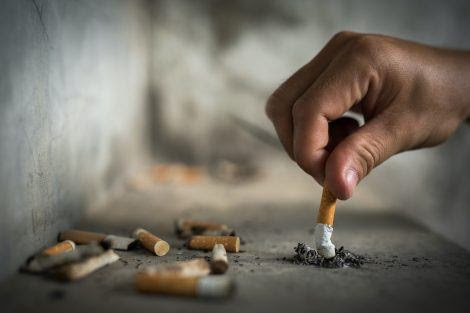
a cigarette being snubbed out
Why a national ban on menthol cigarettes is the right choice.

Perspectives:
The U.S. Food and Drug Administration (FDA) recently announced that it will take steps to ban menthol cigarettes. Three Harvard T.H. Chan School of Public Health experts share their views on the significance of the ban, its potential impact on public health, and why this step is long overdue. ~Vaughan Rees

Director of the Center for Global Tobacco Control, Lecturer on Social and Behavioral Sciences. Scientists and advocates working in tobacco control have been concerned about the influence of menthol cigarettes for decades.
Menthol is added to cigarettes by manufacturers to create a cooling sensation that reduces the harshness of cigarette smoke. Menthol also has broncho dilatory properties, allowing deeper penetration of smoke into the lung. The cooling sensation and reduced harshness of mentholated smoke leads consumers to perceive those cigarettes as posing a lesser health risk compared with non-mentholated cigarettes.
But the truth is that by making cigarettes smoother, cooler, and easier to inhale, tobacco companies have created a product that has a higher addiction potential and is harder to quit than non-mentholated cigarettes. For example, a recent analysis of adult smokers in the FDA’s Population Assessment Tobacco and Health study found that menthol smokers had a lower probability of remaining abstinent from cigarettes compared to non-menthol smokers.

That same study has shown that menthol cigarettes are the preferred cigarette type among youth and black smokers. According to the data, 39% of youth overall and 81% of Black youth prefer menthol cigarettes. Most notably, menthol cigarettes are preferred by 86% of Black smokers. This is not surprising, given that cigarette manufacturers have historically targeted African American communities with menthol marketing campaigns.
The proposed ban on mentholated cigarettes will help to address a substantial driver of smoking among African Americans, while eliminating a design feature that misleads smokers about the health risks while making it harder for smokers to quit.
It’s important to point out that bans on menthol cigarettes are not new.
In 2017, Canada was one of the first countries in the world to introduce a national ban on menthol cigarettes, as well as most cigars and blunt wraps (hollowed-out cigar wrappers that are often filled with marijuana). Ethiopia, Senegal, Uganda, Nigeria, Moldova, Turkey, and the European Union have implemented similar bans. It is very encouraging to see the U.S. FDA moving to act in accordance with science and join the efforts of the global tobacco control community. ~ Mary Bassett

Director of the Francois-Xavier Bagnoud (FXB) Center for Health and Human Rights; FXB Professor of the Practice of Health and Human Rights
The tobacco industry identified menthol cigarettes as a product that they would preferentially market to the African-American population. If you look at the advertisements over time, you can absolutely see menthols positioned as the “Black” cigarette and it is really shameful and put their lives disproportionately at risk. In a recent op-ed I co-authored on this subject, we noted that there’s this persistent perception in the United States that Black people prefer menthol cigarettes. But in fact, that is a result of racist marketing.
These are lethal products. Cigarettes, menthols in particular, each year kill 45,000 Black people, a population that is already saddled with higher rates of heart disease, asthma, and other conditions that smoking can exacerbate. Smoking also makes people more vulnerable to worse COVID-19 outcomes, and, as we know, the pandemic has disproportionally harmed Black communities.
I’m pleasantly surprised that the FDA is taking steps to ban menthols, but I hope it acts swiftly and gets a timeline for the ban in place. The tobacco industry doesn’t flinch, and it will surely mobilize efforts to attack the science and legal merits of a ban on menthol cigarettes. ~Howard Koh

Harvey V. Fineberg Professor of the Practice of Public Health Leadership
On my very first day as U.S. Assistant Secretary for Health in June of 2009, I will never forget joining a delegation in the White House Rose Garden to support President Obama as he signed into law the Family Smoking Prevention and Tobacco Control Act. That law allowed the FDA authority to regulate tobacco products for the first time ever. So it was not only a stunning and historic day for public health, but an unforgettable one for me personally. As part of enactment, the law banned flavors in cigarettes, such as candy, bubble gum, or chocolate, but specifically exempted menthol. That was left for another day. So the new menthol ban the FDA just proposed has actually been at least 12 years in the making.
As a physician trained in multiple fields, including cancer, I have witnessed far too much suffering and dying caused by tobacco products, which are projected to cause a billion deaths worldwide in the 21st century. Eighty-five percent of Black smokers use menthol cigarettes. Studies show that menthol cigarettes increase initiation of smoking, decrease cessation, and make it harder for Black smokers to quit compared to non-Black smokers.

This menthol ban will save an enormous number of lives—one study estimates that it could prevent more than 600,000 deaths by 2050. Importantly, this ban will also address health inequity issues that arise from the tobacco industry’s long history of manipulation of flavors as part of targeting youth and minority populations.
Despite so many challenges, tobacco control can save lives. It has been an honor to be part of these efforts for several decades now in Massachusetts and nationally. During my time at the Department of Health and Human Services (HHS), we created and implemented the Department’s first ever Tobacco Control Strategic Action Plan entitled “Ending the Epidemic.”
In the era of the new Affordable Care Act, the plan helped unite HHS in leveraging FDA’s new tobacco control authority. We were proud to see some progress in renormalizing these products and their use. But there is still so much work to be done. The menthol ban, which includes flavored cigars, does not apply to e-cigarettes, for example. The tobacco industry maintains that cigarette use is a choice when in fact it remains a devastating addiction. The FDA’s proposed menthol ban is an overdue step forward in the long and difficult history of tobacco control.
– Chris Sweeney

Cancer Rates by State 2022 (worldpopulationreview.com)

Stats of the States – Cancer Mortality (cdc.gov)

State Cancer Profiles

Related video: Ultra-Processed Foods Are Trashing the Planet and Our Health (Veuer) – Bing video

GMO’s Harm to the Environment and Harm to Your Health – Search (bing.com)

The Monsanto Story Documentary – Search (bing.com)

50 Jaw-droppingly Food Additives – Search (bing.com)

Chemicals in our food that’s killing us – Bing video

Posted in Uncategorized | Leave a comment

China Is Polluting California’s Air

WORLD’S TEN FASTEST GROWING CITIES ARE ALL IN ASIA!
By Ilana Strauss

This story is part of Treehugger’s news archive.
Learn more about our news archiving process or read our latest news.

The World Travel & Tourism Council has released new city tourism impact data
which shows that the world’s top ten fastest growing tourism cities are all in the east.
Asia Pacific City Travel & Tourism Impact is one of a series of reports by WTTC which looks at the contribution of Travel & Tourism to city economies and job creation.

The study covers 65 cities, 21 of which are in Asia Pacific.
The data shows that Asian cities are at the forefront of tourism growth over the next ten years. Chongqing (14% growth per year) heads the table, followed by Guangzhou (13.1%), Shanghai (12.8%) and Beijing (12%). The other cities on the top ten list are Chengdu (11.2%), Manila (10.9%), Delhi (10.8%), Shenzhen (10.7%), Kuala Lumpur (10.1%) and Jakarta (10%). With the world average growth rate at 4% per year, and Asia Pacific at 5.8%, these cities are significantly outpacing both the regional and global average.

Asia Pacific also includes some of the world’s largest Travel & Tourism cities.
Shanghai, with an annual tourism GDP contribution of US$30 billion is the largest
in the world, followed by Beijing (US$29 billion). Tokyo (US$20 billion) is ranked 6th in the world. Shanghai and Beijing together account for 21% of China’s Travel & Tourism economic impact (GDP), whereas Tokyo alone accounts for 18% of Japan’s total.
The dominance of the Chinese market is clear, both in terms of future growth and overall size and as a main source market for destinations in the wider Asia Pacific region.
The success of Chinese cities is largely driven by domestic business (as high as 94.5% of spend in Chongqing is domestic), and the Chinese outbound market is key for neighboring cities such as Tokyo (24% of spend is Chinese, the largest market) and Bangkok (38%).
Gloria Guevara, President & CEO, WTTC said “The power of Asian cities when it comes to driving the Travel & Tourism sector is clear to see in this new data.
However, not only do these cities contribute significantly to their country’s tourism sector, but tourism is also an important generator of economic growth and jobs within the cities themselves. With this level of forecast growth, the importance of investment in long term planning, infrastructure and sustainable public policies cannot be underestimated. 

It is vital that city authorities understand the economic & environmental impact of Travel & Tourism, GDP and employment contribution, and not just visitor arrivals, as they seek to develop new products and opportunities to increase traveler spend and sustainable growth. WTTC has invested in this new research and data to support them in this ambition.

Other highlights from the report include:
Singapore’s Travel & Tourism has doubled in the past ten years,
to a total of US$12.4 billion in 2016 and supporting 164,000 jobs.
Tourism in Bangkok generates US$18.2 billion for the city each year,
representing 10% of the city’s economy and 50% of Thailand’s Travel & Tourism.
Delhi and Mumbai together generate over 1 million tourism jobs,
10% of India’s total tourism employment.
Macau is the most tourism intensive city in Asia Pacific,
with 27% of its economy a direct result of what tourism spend.
Eight cities in the study contribute more than 25% of their country’s Travel & Tourism economy: Auckland, Bangkok, Ho Chi Minh City, Jakarta, Kuala Lumpur, Manila, Seoul and Sydney.

Read more at: https://www.wttc.org/media-centre/press-releases/press-releases/2017/worlds-top-ten-fastest-growing-tourism-cities-are-all-in-asia/

Is China’s Po;;ution causing California drought.
Increasing air pollution over China in the past 50 years has reduced days of rainfall by nearly a quarter in the eastern half of the country—home to most Chinese people and pollution. Bad air is now likely affecting the country’s ability to grow food crops,
as well as causing a flood of health and environmental problems.
The study in the Journal of Geophysical Research-Atmospheres links for the first
time high levels of air pollutants with conditions preventing the light rainfall critical for agriculture. The research suggests that reducing air pollution might ease the drought in north China.

In the last 50 years, southeastern China has seen increased amounts of total rainfall per year, while the northern half has seen less rain and more droughts. But the light rainfall that sustains crops has decreased everywhere. At the same time China’s population has more than doubled and sulfur emissions from fossil fuel burning have exploded to nine times their levels 50 years ago.

“Air pollution is exacerbated in a changing climate,” McCarthy told me.
It’s big part of the reason California has so much smog. 

A lot of people like to imagine pollution respects national borders.
The reality is, it couldn’t care less. A new report found that pollution is traveling around the world and, in particular, moving from China to California.

“Pollution really doesn’t know boundaries,” explained Gina McCarthy, the former EPA administrator and director of the Center for Climate, Health, and the Global Environment at Harvard. “Nothing goes away. It ends up somewhere.”

That’s actually a big part of the reason California has so much smog.
“Scientists found Asian air pollution contributed as much as 65 percent of an increase in Western ozone in recent years,” NPR reported. “China and India, where many consumer products are manufactured, are the worst offenders.” A number of studies have come to similar conclusions, with one study finding “29% of particulates in the San Francisco area came from coal power plants in China.”

Pollution doesn’t stay in the air. It’s in our bodies.
Particles flow through air and water into our lungs and food.
“They end up in our bodies in detectable levels,” McCarthy said.

There, they cause a number of chronic diseases.
“Countries like China, India, Nigeria, Bangladesh, and Vietnam are accumulating intolerable levels of pollution. In some of these countries, pollution is responsible for one in four deaths, far more than infectious diseases like malaria,” continued the report.

And the problem is getting worse.
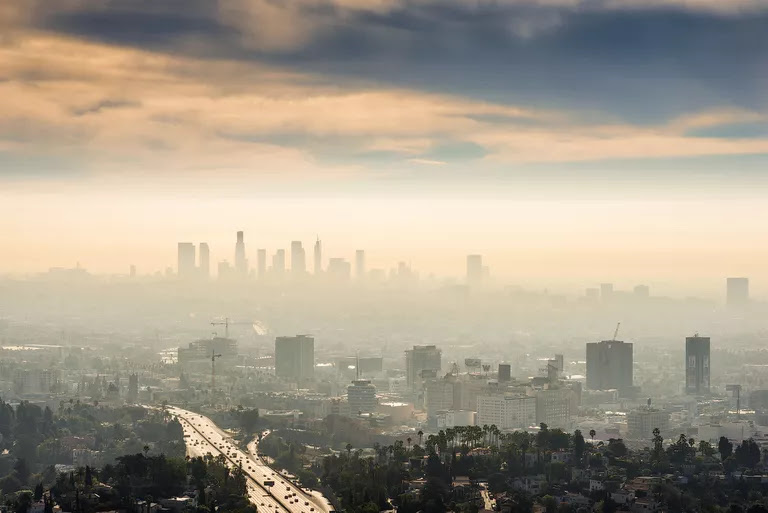
Studies show that eight cities in California top the charts for most polluted U.S. cities. With this poor air quality, the possible health effects affecting Californians can be huge.
Because of this, many ask: What can Californians do to improve the pollution?
The answer may not be so simple.
Studies show that China and other Asian countries are the number one contributors to California pollution. This surprising fact may be a shock to some, but it’s a reality that Californians must deal with every day.  
How exactly does China’s pollution affect California? And what can Californians do to combat the decreasing air quality to remain healthy?

Read below to find out the details on this and more!

China Pollution Documentary – Bing video
China has had a rapid increase in manufacturing over the last few decades.
This increase in manufacturing has come at a cost. Because China hasn’t enforced any strict regulations for manufacturing, pollution has become a major issue there.
Research shows that the number of sources of pollution in China has increased from 
5.9 million in 2010 to 9 million in 2018. This 50% increase in eight years is huge. China has implemented environmental regulations in recent years, but many factories have ignored these rules. 
China’s pollution problem is so dangerous that research shows that approximately 
1.6 million Chinese citizens die each year from it. This is an alarming statistic.
It shows the huge impact pollution and air quality can have on people. 

China’s Effect on California – Search (bing.com)
Over the last couple of decades, the United States has decreased its production of 
air pollution by 50%. On top of that, California has some of the strictest environmental regulations in the United States. Despite these two factors, China pollution has been canceling out any improvement in air quality in America. 
At first thought, increased pollution in China wouldn’t appear to have a huge impact
on California. The Pacific Ocean and 6,000 miles separate the two from each other.
However, it has been discovered that winds called the westerlies can and do carry pollution from China to California within days.
Because of this wind, the pollutants from China have caused a 65% increase in the Western Ozone – or, as it’s also referred to, smog. One study shows that 29% of the particulates in smog in San Francisco come directly from China’s coal plants.
These are startling numbers. It shows the huge impact China’s pollution is having on California pollution and California air quality. This increased pollution can create both short-term and long-term health problems for Californians.
Health Impacts From California Pollution
Californians are very familiar with smog. Most Los Angeles citizens check the Air Quality Index before planning outdoor activities. Everyone realizes that breathing in smog is unhealthy for you – but do you know the full extent of it?

The Environmental Protection Agency (EPA) has stated that small particles in smog 
can have huge health impacts. These particles can enter your lungs or bloodstream.
This can increase your risk of heart or lung disease.
It can also cause breathing issues and asthma attacks. Some of the long-term effects include chronic bronchitis and premature death.

Those that are most at risk are the following:
Anyone with heart or lung disease
The elderly
Children
Children are especially at risk because their lungs are still developing.
They also are more likely to suffer from asthma.
Poor air quality leads to an increase in asthma attacks. 
Humans aren’t the only ones that suffer. Air pollution is also harmful to our environment. Trees and crops can show damage from increased air pollution, stunting their growth.

What Can You Do?
Unfortunately, there isn’t much the average Californian can do to combat
China’s ongoing pollution. This issue must be dealt with on an international level.
However, Californians can do something to help protect themselves from this pollution!
Statistics show that people spend about 90% of their time inside. Because of this, indoor air quality is extremely important. One of the best ways to improve your indoor air quality is by using air filters!
Air filters help remove particulates such as allergens, dust, VOCs, and ozone from the
air in your house or office. Properly using an air filter and replacing it every 3 months
can drastically improve your health. It can reduce your risk of allergies, asthma, and bronchitis.

When selecting your air filter, there are three different ratings to choose from:

Merv 8
Merv 11
Merv 13

Merv 8 is the standard, cheapest filter. It is great for nonsmokers and families without pets or allergies. The Merv 11 is the next option up — great for people with pets and allergies.
The Merv 13 air filter is the best and most expensive option. It can filter out smaller particles. It’s an excellent option for those with pets and allergies.

On top of the different ratings, there are many other filter options to take into consideration. To make sure you select the right filter for your situation,
please check out this blog!
On top of selecting the right filter, you must also make sure to replace your filter in a timely manner. Look out for the signs that it’s time to replace your filter. Most suggest replacing filters every three months. Once your filter is clogged, it won’t be able to do its job anymore. 

Check Your Filter and Replace It Now!

As you’ve learned, China’s increasing pollution is negatively impacting California. Californians are breathing much more toxic air, and there isn’t much they can do about it. This California pollution can have huge short-term and long-term health impacts on its residents.
This pollution can make you feel hopeless, but there is something you can do. 
Check your air filter, and replace it when needed! This simple action can have a huge positive impact on your health. 
Do your research and select the air filter that is best for your home and your family. Please contact us if you have any questions on what air filter to select. Now, go out and find the right filter for your home! Once you do, you should be able to finally breathe easy!

World’s population increasingly urban with more than half living in urban areas |
UN DESA | United Nations Department of Economic and Social Affairs

68% of the world population projected to live in urban areas by 2050, says UN |
UN DESA | United Nations Department of Economic and Social Affairs

Biden admin authorizes E15 gasoline in an effort to increase US fuel supply,
reduce gas prices (msn.com)

Watch Paul McCartney Duet With Archival Footage of John Lennon on
“I’ve Got a Feeling” (msn.com)

The Dramatic Global Rise of Urbanization (1950-2020) (visualcapitalist.com)

Scientists just issued a chilling warning about climate change (msn.com)

U.S. Urban Population 1960-2022 | MacroTrends

Posted in Uncategorized | Leave a comment

Sometimes Trying Is Enough

USA’s Mikaela Shiffrin concentrates before taking the start of the women’s downhill first training AFP VIA GETTY IMAGES

Mikaela Shiffrin On Winning, Failing and Grief: 

OLYMPIC SKIER MIKAELA SHIFFRIN KNOWS SHE MIGHT NEVER STOP GRIEVING
THE SUDDEN 2020 DEATH OF HER FATHER, JEFF. AND SHE’S OK WITH THAT.

Two-time Olympic champion Mikaela Shiffrin has opened up about the mental health issues she suffered since the death of her father and says she is still unable to explain
how she came away from this year’s Beijing Winter Games without a medal.
The 27-year-old American detailed in a lengthy and deeply personal essay on
The Players Tribune the extent of her grief at the loss of her father and how it
still intruded into her life on a daily basis.
Expanding on the subject of mental health, the multiple world champion broached the subject of her disappointing form in Beijing, where she came nowhere near a medal despite competing in all disciplines.
“People always ask me, ‘What happened in Beijing?’,” she wrote.

“They want some kind of answer. And I genuinely don’t have one.
“I could give you the media answer that I always give.
I could put on a brave face and tell you some generic thing. But the real truth is… I don’t know. “It’s two minutes of your life. Two minutes, on a random day. You go down the hill. You try to go fast. You try not to make mistakes. Sometimes, you win the gold, like I did. Sometimes, you fail, like I did.”
Shiffrin said she did not want to ski, eat or sleep after her father’s death in an accident in February 2020, likening the loss to “an injury in your soul”.
She won the overall World Cup title in March following her Beijing disappointment but said that did not mean that all her personal issues had suddenly disappeared.
“People would say things to me like, “Mikaela, now that you’re in a much better place…” she added.
“And I never said it out loud, but I would always think: ‘Am I’?
“We equate winning with being okay, and failure with being not okay.
The real truth is that I’m neither okay nor not okay. It really depends on the day,
and it has almost nothing to do with how fast I came down a mountain.”
She had taken gold in giant slalom and silver in alpine combined at the 2018 Olympics in Pyeongchang, and she finished just off the podium in slalom. When you fail at the Olympics, there’s no private time for reflection and processing. Instead, there are cameras from every major international news network, in your face, immediately. And there are questions.

What happened? What went wrong?
After those Games, Shiffrin, now 27, had acknowledged that her aspiration
to win a gold medal in each of the five individual events was lofty—perhaps impossible. But ahead of Beijing, she was a favorite to at least make the podium in most of her races.
Instead, we all know what happened. Shiffrin recorded a “did not finish” in her first event, giant slalom—for the first time since January 2018, breaking a 30-race streak.
Then, in her second—and best—event, slalom, she took another DNF.
Shiffrin finished her third race, the super-G, placing ninth—an accomplishment considering how top-heavy that field of women is and the fact that it’s not Shiffrin’s
best event.
As she continued to learn to shift her perspective and find the positives in her experience in Beijing, Shiffrin headed into her fourth event, her Olympic downhill debut, focused not on medals but simply on skiing her best. Finishing 18th, then, on a day with difficult conditions, was a win.
In her fifth individual race and last chance to win a medal, alpine combined, Shiffrin started out strong, in fifth place entering the slalom portion following the downhill portion. But the medal was not meant to be; she recorded her third DNF in five events.

In her final event, the mixed team parallel, Shiffrin and the U.S. just missed the podium, finishing in fourth. “It’s not always easy, but it’s also not the end of the world to fail, fail twice.
Fail 5 times. At the Olympics. (Enter me …),” Shiffrin tweeted after her final individual race. “Why do I keep coming back? Gosh knows it hurts more than it feels good lately.
I came back because those first 9 turns today were spectacular, really heaven.
That’s where I’m meant to be and I’m stubborn as s**t.”
And then, a month after the Olympics, Shiffrin was back on top of the world again.
She clinched her fourth World Cup overall title, winning that coveted crystal globe to
tie fellow American Lindsey Vonn for the second-most all time.

Audi FIS Alpine Ski World Cup - Women's Giant Slalom
COURCHEVEL, FRANCE: Mikaela Shiffrin of Team United States wins the globe in the overall … [+] GETTY IMAGES

Shiffrin has experience with living out her life’s highest and lowest moments in
the public eye. Almost exactly two years before the Beijing Games’ opening ceremony,
her father, Jeff, had died after suffering a head injury in an accident at home.
Shiffrin has been navigating the unpredictable journey of grief—which she stresses
is not a linear one—publicly, redefining her relationship to skiing in the process.
In an intimate essay published by The Players’ Tribune on Thursday, Shiffrin discussed
all of it more candidly than she ever has before. Hers was the first essay in the site’s new Signature Stories series, which seeks to transform the traditional cover story into a 360-degree view of the athlete, combining first-person essays with original video, audio and photography.
The day before her essay was published, I spoke with Shiffrin—who is used to having her story being written about, not penning it herself—on the phone about what it was like to have more agency over her narrative and what she hopes readers take away from her piece.

“I just tried to explain the emotions that I go through from a more human perspective
than what people see me as—Mikaela Shiffrin the Olympian, the ski racer, the World Cup winner,” she said. “There’s common misconception that as an athlete, as long as you’re winning everything’s OK, and if you’re not winning, everything’s not OK. With this piece, it’s been so much about being able to put into words and tell the story that sort of goes against that theory.”
In the beginning of her career, Shiffrin says—when she was racking up titles and world championships, winning her first World Cup race in December 2012 at age 17—her emotions tended to go in line with success and failure. “Everything made a lot more sense,” she said. “It’s much different now.”

As she dealt with the fallout of losing her father—and as, after a few months,
she started to feel that the world had begun to move on without her—Shiffrin found it helpful to realize that others who came before her had experienced pain, sadness and
tragedy and loss and had somehow come out okay.
“Not necessarily come out on the other side,” Shiffrin said, “but have just continued
to go through life and have good moments, knowing it’s possible not necessarily to
be OK but to find happiness, even though it’s not a linear process.”
In writing her essay, Shiffrin hopes to be that example for someone else—proving that, while loss and tragedy might never actually be overcome, it’s still possible to continue building a life and setting goals.
At the same time, there’s a little bit of apprehension that comes with sharing her experience so widely. Someone out there is probably going to read the article and it might strike a chord and help them through something, she says, but many others might be stuck on the concept of “you’re the one who’s supposed to help me escape my life.”

The recent examples of other athletes and Olympians—like Simone Biles, Naomi Osaka and Michael Phelps—who have spoken out about their mental health struggles have been welcomed by many, but not by all. After all, Shiffrin says, sports is entertainment—it’s understandable that the public would look to athletes to forget about their own struggles.

Elite athletes are almost expected to be robots—to consistently dominate, to never disappoint. They’re allowed to show emotion if it is the type of emotion we have prescribed for them.
“You can’t forever brush aside everything else that’s going on in your life and opinions you have and things you see,” Shiffrin said. “You build this platform if you succeed in sports and you start to realize all the things in life you care about, at least for some of them,
you may be able to have an impact if you speak up.”

What she never wants to hear, Shiffrin stressed, is that experiences like the Beijing Olympics prove that she’s “just” human. “We’re all ‘just’ humans,” she said.
“That’s actually a pretty beautiful thing, if you don’t put the word ‘just’ in front of it.”
Now the competitive skiing season is over, Shiffrin has time to slow down and think about her goal-setting—for her training in the off-season, for the season to come, for the rest of her career. For so long, she says, her only goal in skiing has been simply to continue.

Of course, she can’t lie and say that, with 74 World Cup wins, the thought of overtaking Vonn (82) and Sweden’s Ingemar Stenmark (86) for the most all-time hasn’t crossed her mind. It’s close…but it’s still far enough away that it could never happen. “That record is not going to be the thing that defines my success in my career, ” Shiffrin said.
“It’s already been successful—but I’m still here and still doing it.

As I keep skiing in the next season or so I’m almost on a journey to find out
what the goal needs to be and what my career is going to look like moving forward.”
And just as grief is not linear, progress isn’t, either, Shiffrin said. “In my case the grief is probably never going to go away; it doesn’t mean that you can’t have wonderful times and things to look forward to in your future.” And when it comes to goals, sometimes it’s not about designating some outcomes as “successes” and others as “failures.”

The most important thing is to keep doing it.
“That’s what I hope people take away—the main point to tell this story is that sometimes it’s as simple as getting out of bed and putting one foot in front of the other,” Shiffrin said. “You don’t have to succeed every single day—you won’t succeed every single day. Sometimes all you’re doing is trying, and sometimes that’s enough.”
In an emotional essay published by The Players’ Tribune on Thursday, Shiffrin offers new details and perspective on her grieving process over the past two years, and how it has impacted her on the slopes. She describes grief not as linear “like a climb up a mountain,” but rather “more like a maze.” And winning, she writes, is no antidote.
“After Beijing, when I turned things around and ended up winning the World Cup,
people would say things to me like, ‘Mikaela, now that you’re in a much better place…’ 
And I never said it out loud, but I would always think: ‘Am I?’ ” Shiffrin writes in the essay.
“We equate winning with being OK, and failure with being not OK. The real truth is that I’m neither OK nor not OK. It really depends on the day, and it has almost nothing to do with how fast I came down a mountain.”
Shiffrin, 27, has won three Olympic medals and 12 World Cup titles but is coming off 
a disappointing performance at the 2022 Beijing Olympics, where she was favored to
win multiple medals but finished no higher than ninth in any of her individual events.
She proceeded to win the overall World Cup title in March.

Shiffrin writes in The Players’ Tribune that she still doesn’t know what happened
to her at the Olympics. “(People) want some kind of answer. And I genuinely don’t have one,” she writes. “I could give you the media answer that I always give. I could put on a brave face and tell you some generic things. But the real truth is… I don’t know.”
Shiffrin does suggest, however, that her father’s death has changed her mindset during competition. She writes that she struggled “just to not feel guilty for doing the thing that he loved to do.
“When I knew that I had a chance to win my first race after his death, I had this really surreal moment at the top of the mountain before my second run,” Shiffrin writes.
“I knew that if I had a good run, then I’d win. But if I won, then I’d be winning in a reality where my dad isn’t here to experience it. And I was asking myself,

‘Do I want to even exist in this reality?’

Mikaela Shiffrin, of the United States sits on the side of the course after skiing out in the first run of the women's slalom at the 2022 Winter Olympics, Wednesday, Feb. 9, 2022, in the Yanqing district of Beijing. (AP Photo/Robert F. Bukaty)
This article originally appeared on USA TODAY: Olympic skier Mikaela Shiffrin pens emotional essay on ‘maze’ of grieving father’s death

Mikaela Shiffrin gave insight into how she navigated the grief following her father’s death, and she may never stop grieving, something she is O.K. with. 

“It’s not linear. It’s not a climb up a mountain,” Shiffrin wrote in an essay published by 
The Players’ Tribune on Thursday. “It’s more like a maze.
Some days, I feel O.K. Some days, it still feels as raw as when we walked into the hospital after our 10-hour flight home and saw him on the ventilator.”
Shiffrin’s father suddenly in February 2020 after an accident, and she detailed the call she and her mother received, the emotions she felt during the 10-hour plane ride and the nine hours she laid with him in the hospital as he was on a ventilator.
But going through the pain of recounting the memories with him,
his influence on her skiing and his death have a purpose. 
“It’s extremely hard to relive this pain, but the reason I’m doing it is because
maybe it can help someone else. I’m doing it because someone did it for me.
A stranger, as a matter of fact,” Shiffrin wrote. 
The Olympic gold medalist detailed how people highlight feeling “endless sadness
of losing that person, and the ‘celebration’ and happiness of remembering their life.”
However, there is anger as well. She wrote, “It’s like you have an injury in your soul.
There is no timetable. There is no rehabilitation. Some days you wake up and think,
“What’s the point?”

Contact Tom Schad at tschad@usatoday.com or on Twitter @Tom_Schad.

“I’m Not at Peace With It”: Mikaela Shiffrin on Coming Back After the 2022 Olympics in Beijing | Vanity Fair

Olympic skier Mikaela Shiffrin pens emotional essay on ‘maze’ of grieving father’s death | Flipboard

Mikaela Shiffrin Writes Emotional Essay on Navigating Father’s Death – Sports Illustrated
Mikaela Shiffrin On Winning, Failing And Grief: Sometimes Trying Is Enough (forbes.com)
Mikaela Shiffrin pens emotional essay on grief, father’s sudden death (usatoday.com)
I Want to Remember Everything | By Mikaela Shiffrin (theplayerstribune.com)
Golden Buzzer: Nightbirde’s Original Song Makes Simon Cowell Emotional –
America’s Got Talent 2021 – YouTube


Posted in Uncategorized | Leave a comment

How Freud escaped

Evidently, ignoring problems doesn’t make them go away.

Sigmund Freud is a legend in psychology. Many are interested and sometimes disturbed by his psychoanalysis but the man was a genius and ahead of his time. As the founder of psychoanalysis, he helped develop psychotherapy into what it is today. You don’t have to agree with his ideas but there is no doubting his contributions to the field of psychology.

Thanks to technology we can see Sigmund Freud in living color. The Austrian neurologist escaped Nazis but couldn’t escape cancer. Later in his life, he developed a benign tumor on his mouth associated with smoking. By 1939, the cancer in his mouth had grown to affect the entire jaw – ultimately leading to his death, since it had become inoperable. 

Octogenarian Sigmund Freud was ailing from cancer and it was long past the time
to leave Vienna. Hermann Göebbels and Joseph Himmler had set out to kill psychoanalysts, especially Jewish ones. Hermann Göering had their property and assets seized, which included Freud’s publishing company. Moreover, a month after the Nazis took over Austria on March 12, 1938, every business owned by Jews had a Nazi appointed to run it. The appointed “commissar” was a 35-year-old chemist, 
Anton Sauerwald.
“By the time he finally decided he could not live at 19 Berggasse anymore, Freud and his extended family were already living under a form of self-house arrest, his daughter Anna had been interrogated by the Gestapo, and the family’s assets were being confiscated. Freud could look out his window and watch Jewish shops being looted by ‘respectable’ Viennese; he could see Jews being beaten and shot dead by thugs.”
So writes Bettina Berch for the Jewish Book Council. 

Why did he wait so long?
I hadn’t heard of The Escape of Sigmund Freud when it was released.
I ran across it in my usual internet wanderings. The book, by David Cohen,
was published by one of my favorite houses, Overlook Press. It sounds riveting.
Freud was an especial target but, as Debbie Hagan at Psych Central writes, “the Nazis couldn’t escape the fact that Freud was a well-connected, international figure, who they grudgingly had to respect. Freud did have friends throughout the world, such as 
William Bullitt, the American ambassador in Paris, and President Roosevelt, who telegrammed Hitler, warning him that any harm done to Freud would be considered a deplorable act. Still it didn’t stop Nazis from hanging swastikas on Freud’s stoop or the Gestapo from harassing him, claiming that he had not paid his taxes and his publishing company had outstanding debt. Thus, military police  confiscated the family’s cash and passports. These actions reached a climax when the  Gestapo arrested Freud’s daughter Anna, a noted analyst in her own right, which shook Freud into a stark reality:
His life in Vienna was over.” 
In Freud’s 1927 The Future of an Illusion, he concludes that all religious beliefs are “illusions and insusceptible of proof.” He notes that “civilization has little to fear from educated people and brain-workers,” but “the great mass of the uneducated and oppressed” were of more concern. Freud concluded with the “hope that in the future science will go beyond religion, and reason will replace faith in God.”
Yet he could not have conceived of the Nazis, and what the “educated people and brain-workers” might have been brought to by their own thinking. And there might be a little more to the oppressed than he had suspected. In fact, he had become one of them.  

On March 13, 1938, the Vienna Psychoanalytic Society met and Freud reached into his knowledge of Jewish history for the right story to give them hope. He told his friends: “After the destruction of the Temple in Jerusalem by TitusRabbi Jochanan ben Zakkai asked for permission to open a school at Jabneh for the study of the Torah.
We are going to do the same. We are, after all, accustomed by our history and tradition, and some of us by our personal experience, to being persecuted.”

In the end, he was saved, not by intellectuals or grand thinking, but by bourgeois kindnesses– of friends, admirers, and a Nazi who, in the course of his relationship with Freud, developed an old-fashioned conscience and chose to look the other way as the Freuds escaped. That’s right, Anton Sauerwald himself. (Read his story here.)

“Thus, the Freud family (including his daughter, Anna, his wife, Martha, and their faithful housekeeper, Paula), fled to Britain. They toted along Freud’s famous couch, some of his books, and many objets d’art. Four of Freud’s sisters stayed behind. Even though Freud made many attempts to contact them, he never succeeded. Years after his death, researchers would discover that three had died in concentration camps.
And the fourth most likely died of malnutrition.

image.png
Offensive Yards: The Worst NFL Stadiums Ranked (moneywise.com)

”The Real Blue States: These Are the Unhappiest Places in America!
Everyone loves to complain about their home state — the crummy stadiums, the weather, the taxes — but some unhappy residents have way more ammunition than others.
The personal finance site WalletHub maintains a list of the Happiest States in America1, based on numerous factors across three categories: “emotional and physical well-being,” “work environment” and “community and environment.”
It probably comes as no surprise that the gorgeous island state of Hawaii got the highest total happiness score, but you might not be able to predict some of the most miserable states languishing at the bottom of the list.

25. Rhode Island Happiness score: 50.96
The lovely ocean views are free, but Rhode Island is very expensive to live in. Plus, CNBC has dubbed it the worst state in the country for businesses due to slow economic growth and poor infrastructure.
America’s tiniest state got a half-decent score for emotional and physical well-being but didn’t fare as well when it came to work environment and community and environment. One benefit: Rhode Islanders work fewer hours than the residents of almost any other state, besides Utah.
“I left Rhode Island many years back and moved down south, and I like it better in every way, shape and form,” one Redditor writes. “I didn’t like living in Rhode Island…
The taxes are insane, the cost of living is insane and the winters suck.”

24. Florida Happiness score: 50.58
The Sunshine State offers sandy beaches, perpetually warm weather and Disney World. What more could you ask for?
Well, the retiree and tourist haven came second last for its community and environment, beaten only by Texas. It has some of the worst rankings in the country for safety, divorce rates, volunteering and long-term unemployment.
Plus, the summers can be blisteringly hot, with highs of 90 F, and the fall season gets plenty of thunderstorms and hurricanes.
OtherwiseReflection on Reddit points to the “massive wealth inequality,” citing “areas in the panhandle that are like areas in West Virginia, with crushing poverty. And there are areas with million-dollar mansions and condos and yachts.”

23. Pennsylvania Happiness score: 50.16
The Keystone State has a rich history. It was one of the original 13 colonies in the U.S. where the Declaration of Independence, U.S. Constitution and the Gettysburg Address were written.
Residents should hold on to that pride because it’s harder to celebrate these days.
While it didn’t receive an abysmal score in any category, Pennsylvania didn’t fare well in any category, either. It took 40th place for work conditions and 30th place for community and environment.
Plenty of Redditors add that the road infrastructure here is terrible.
“Potholes everywhere, and in some suburbs, previous work on gas lines or repeated water main breaks have basically destroyed some roads,” user deechbag writes. “Also, Pittsburgh is not set up like a normal city. There really isn’t the standard grid setup. Throw in random one-way roads, all the hills, too … and the result is a terrible city to drive in.”

22. Illinois Happiness score: 50.14
This midwestern state is known for its farming and manufacturing strength and hosts some of the country’s biggest companies, but it also has the third highest rate of long-term unemployment in the nation.
The Land of Lincoln ranked fairly well for emotional and physical well-being, at 12th place, but received low scores for work conditions and community and environment.
“The taxes are high, things were always just a bit pricier, and it just wasn’t worth it anymore,” explains former Illinois resident and Redditor whitecollarredneck. “Making the 3.5-hour drive to Chicago once or twice a year wasn’t worth the cost of living in the state.”

21. Maine Happiness score: 50.12
Maine boasts beautiful coastal views and is one of the safest states in the U.S., but residents say its lack of excitement and job opportunities push young folks away.
The Pine Tree State fared decently well for work conditions as well as community and environment but came in 35th place for emotional and physical well-being.
The state has one of the highest rates of adult depression in the U.S.
“Maine isn’t great for youth because there really aren’t that many jobs,” Doox4 on Reddit says. “After living in a few other states, I have noticed the lack of communities and opportunities for young adults. Still a great place to live … but it’s easier (and warmer) to move further south.”

20. Wyoming Happiness score: 49.26
You don’t hear too many people complain about Wyoming, but that’s probably because
it’s the least populated state in the U.S. Its population in the last census was just 578,759.
Wyoming came in 23rd place for working conditions, 30th for emotional and physical well-being and 39th place for community and environment. It also ranks close to the bottom for income growth and has the lowest minimum wage in the country, tied with Georgia at $5.15.
“I was born and raised in Wyoming and I’ve seen an enormous exodus of young people,” phargmin writes on Reddit. “We just don’t have enough college-degree-requiring entry-level jobs. Their choices are to accept underemployment here or go down to Denver and actually find work and start a career.”

19. North Carolina Happiness score: 49.19
The Tar Heel State was once dubbed the furniture capital of the world due to the strength of its factories, and it was also a major producer of tobacco and textiles.
That reputation was lost in the 1990s thanks to globalization and changing consumer tastes. North Carolina has since embraced food processing, banking and other sectors,
but it’s no longer a prized place to live and work.
The state took a so-so 28th place for emotional and physical well-being and 27th place for work conditions but fared far worse for community and environment. That’s the category focused on volunteering, weather, leisure time, divorce rates and public safety.
Redditors commiserate about the heat and abundance of deer flies in North Carolina. TheRealirony says there’s “not a lot to do once you’ve seen/done a handful of things here. We have what everyone else has (malls, movies, shops, restaurants, etc.), but to do anything worth talking about you normally have to drive out to somewhere in the mountains or coast.”

18. Kansas Happiness score: 49.16
The Breadbasket State is the country’s leading wheat producer and still has a substantial fossil fuel industry, helping Kansas land at 19th place for its work environment.
That category tracks things like employment rates, work hours, commute times and income growth.
On the other hand, it stumbled into 31st place for emotional and physical well-being
and 40th for community and environment. The odd twister does Kansas no favors.
“I have a love-hate relationship with the weather,” Daniel Welsey writes on Quora.
“The transition between seasons is always fun and interesting, but when you’re stuck in the middle of -15 F and five inches of snow or 97 F with 80% humidity or yet another Severe Thunderstorm Warning, you’re ready to move on.”

17. South Carolina Happiness score: 48.78
The Palmetto State has its charm, but residents say that charm can fade once you’re outside the bigger cities like Greenville and Charleston.
South Carolina took the 36th spot for emotional and physical well-being, which focuses on coronavirus rates, depression, life expectancy and food security. Wallethub calls this state one of the worst for health care2, as it has one of the highest infant mortality rates in the U.S. “The educational system leaves a lot to be desired,” says Angela Goodale on Quora.
“South Carolina ranks at the bottom of many important lists such as health risks for diabetes and heart attacks. Availability of health care is poor in rural areas.
Poverty is widespread.”

16. Ohio Happiness score: 48.37
While the decline of U.S. manufacturing hasn’t been as devastating
for Ohio as it has been for some other regions, the economy is still troubled.
It seems like Ohioans are burning the midnight oil on a regular basis, as they fall in the bottom five for the amount of sleep they get. Yet that hard work is not paying off, as the median household income here lags behind the national rate.
Ohio falls right in the middle of the list for community and environment, but came
in 32nd place for emotional and physical well-being and 41st for work environment.
“I grew up in Crawford County which … has like no industry aside from Arctic Cat
and that plant that makes electronics for Honda,” Redditor VncentLIFE writes.
“I went to undergrad in a town that is the direct back road from Pittsburgh to Cleveland.
The poverty is insane there. The drugs on the north side of Alliance are very real, along with small spurts of violence.”

15. Indiana Happiness score: 47.96
The Hoosier State might be affordable to live in,
but it’s also considered one of the poorest states in the U.S. due to stagnant wages.
According to a 2018 report by the Indiana Institute for Working Families,
basic expenses jumped almost 32% since 2009, while incomes rose by a meager 6.3%.
Indiana received lower-than-average scores across the board but performed worst for emotional and physical well-being. Perhaps as a result, some visitors to Indiana find Hoosiers cranky and rude.
“I lived in Indiana for five years, and people there were not naturally friendly in any way,” comments zonk3 on Reddit. “For example, even a mention of the day’s weather was met with contempt. And no one ever said welcome or thank you when visiting their businesses.”

14. Michigan Happiness score: 47.27
Michigan’s freshwater coastlines are breathtaking,
but turn back inland and things don’t look quite so pretty.
The abandoned, dilapidated buildings of Detroit make it the most famous example of urban decay following the decline of the auto manufacturing industry, and Wallethub 
says Michigan has the third-worst drug problem in the country.
The Great Lakes State didn’t do so badly for its community and environment score, but it took 38th and 35th place for emotional and physical well-being and work conditions, respectively.
“Much of southern Michigan never recovered from the Great Recession (or, for that matter, from the 1980s),” explains homerinthe details on Reddit. “Detroit, Flint and Saginaw are like dystopian novels, and many small- and medium-sized cities are poor
and run-down after the factories moved to Mexico.”

13. Montana Happiness score: 47.25
Mighty Montana comes in fifth place for its work environment
and has one of the lowest long-term unemployment rates in the U.S.
So why is it listed as one of America’s unhappiest states?
The Treasure State’s happiness score was dragged way down by its emotional and physical well-being and community and environment rankings, at 40th and 41st respectively. Depression is a serious problem, and many residents feel socially and geographically isolated despite the natural wonders around them.
“A big one for me has been boredom,” Robert Sunset on Quora writes. “Being from
San Diego, I grew up with constant recreational and fun activities. Also, no real seasons.
In Montana, you aren’t even within eight hours’ driving distance of a big city. It gets really cold and really hot. People are tribal in nature and suspicious of some outsiders.”

12. New Mexico Happiness score: 47.03
The Land of Enchantment’s low humidity may have helped it snag eighth place for its community and environment. In particular, Wallethub places Las Cruces in the top 3%
of all U.S. cities for mild weather conditions4.
But being warm and dry only means so much. New Mexico ranked 39th for emotional and physical well-being and a dismal 46th for work environment. It has some of the highest divorce and long-term unemployment rates in the nation and also scores poorly for income growth.
“Nobody has money. Nobody is hiring. Pay is low. If you want a job, you have to know people who know people. I searched for months without even getting so much as an interview when I first moved here,” explains Ih8Hondas on Reddit.

11. Missouri Happiness score: 45.79
Missourians praise the low cost of living here and the lush Ozark Mountains,
but there’s suffering just beneath the surface. The state has been repeatedly dubbed the meth lab capital of the U.S. by various media outlets; Wallethub gives it the worst score in the nation for drug use, making special note of poor law enforcement.
Missouri was awarded 12th place for community and environment and 22nd place for work conditions but fell behind for emotional and physical well-being.
“Drug addiction causes societal and personal decline on the whole, and the overarching drug problem is creating more work for family services, more kids in the foster system, more felons, and more welfare recipients,” writes Ryan P. Walsh on Quora.

10. Oregon Happiness score: 43.67
At first glance, the Beaver State seems to have it all: the second-lowest work hours,
third highest rate of volunteers and the No. 1 rate of income growth in the nation.
It’s hard to imagine why Oregonians are among the top 10 unhappiest.
Nevertheless, Oregon has the second-highest share of adult depression in the U.S. The state takes 43rd place for emotional and physical well-being, although it fared well for its work environment and achieved a middling score for community and environment.
To find answers, you may need to look to the skies. Several Redditors point to the state’s gloomy and gray winter climate, particularly in Portland, being a major trigger for someone with Seasonal Affective Disorder.
“I work out nearly everyday, use a happy light, Vitamin D, week-long Mexican vacations — and the winters are still crushing,” says schallplatte. “You simply cannot get around the lack of light, and all of these things are a Band-Aid to the problem.

9. Alaska Happiness score: 40.85
It’s not hard to imagine why Alaska is buried near the bottom of the happiness scale.
The state way up north is isolated and sparsely populated, with long, frigid winters and short, mild summers.
Alaska performed poorly across the board, but its low rankings for work conditions (47th) and community and environment (48th) are particularly telling. It has some of the longest work hours and lowest income growth in the country.
“It can feel like you’re trapped because it costs a small fortune to go almost anywhere.
My family is in Florida (which I realize is about as far from Alaska as you can get in the U.S.) and it cost my husband and I $2,000 to fly home one Christmas. It cost my aunt
and uncle less to visit my cousin in Germany,” writes notstephanie on Reddit.

8. Alabama Happiness score: 40.28
The Yellowhammer State isn’t a cheery place for adults, but it’s even worse for the kids.
It has one of the worst education systems in the nation, Wallethub says. While its schools are safe, they suffer from poor test scores and relatively low K-12 funding.
Its health care system ranks just as badly — beaten by only two other states — and few people can muster the energy to play sports. Overall, Alabama fared decently well for its community and environment but struck out for emotional and physical well-being, ranking 46th.
The economy is no saving grace, either.
“My hometown was once booming with steel mills and the coal industry, and everyone
had a job,” WillyXL on Reddit says. “Those are all gone now and there’s nothing left.
I’m hoping if I do move it would be a plus for my kids to have more opportunities for careers and jobs.”

7. Mississippi Happiness score: 39.52
Surprise: While Mississippi often falls at the bottom of all kinds of national rankings,
it has best its neighbors this time thanks to an impressive 14th place finish for community and environment.
That could only be because of its extremely pleasant weather or extra-long leisure time — because the other factors that make up that category are abysmal. The Magnolia State is the least safe in the nation, has one of the highest divorce rates and has one of the lowest rates of volunteerism.
And don’t even think about finding a pickup game, because Mississippi also ranked dead last for sports participation.
“Our politicians are awful, our schools are awful, our health care is awful,” Weneedmalllions writes on Reddit. “The best part is no one tries to make it better, every single person is just content to writhe in this awfulness. It’s all just awful, and I’m pretty certain old rich white people just come here to die staring at our lakes, the only things
that don’t suck.”

6. Tennessee Happiness score: 39.21
Tennessee may be nicknamed the Volunteer State for the number of soldiers who
signed up to battle in the War of 1812, but it failed to crack the top five for volunteerism in Wallethub’s recent study.
The state boasts strong growth in its manufacturing, mining, logging and construction industries, so it fared decently well for its work conditions. However, Tennessee could only reach the 44th spot for community and environment and the 45th spot for emotional and physical well-being.
Tennesseans have some of the highest rates of adult depression and get very little sleep. Plus, locals say the weather can be extremely unpredictable.
“One time, I came home for Thanksgiving break from college (only about an hour and
a half away from home) and played soccer on Friday with friends in mid-70 degree weather,” Logan Flowers on Quora recounts. “Then I drove back on Sunday in snow.”

5. Kentucky Happiness score: 38.29
No matter how entertaining the Kentucky Derby is, an annual
extravaganza isn’t enough to keep smiles on faces year-round.
Kentucky is one of the poorest states in the country, with a median household income of just $50,589. In January, 14% of the state’s population was enrolled in the Supplemental Nutrition Assistance Program (SNAP), though that number was as high as 39% in Owsley County.
The Bluegrass State took 32nd place for work environment and 47th place for emotional and physical well-being. Kentuckians also get very little sleep and rarely participate in sports.
Ggeunther on Reddit feels the “education system is terribly underfunded, with no end in sight,” and “the health care system is below the national average, and the pandemic is completely out of control.” While Wallethub is more optimistic about Kentucky’s schools, it ranks the state 44th for health care outcomes.

4. Louisiana Happiness score: 38.15
Louisiana’s workers are the most miserable in the country, and for good reason.
They work some of the longest hours but have the lowest income growth of any state.
The minimum wage remains at the federal rate of $7.25 per hour. Unemployment is rampant, and about one-in-five people (and one-in-four children) live below the poverty line. The Bayou State is also rated the second most dangerous in the country — and we’re not just talking about the alligators — and one of the worst for divorce and sports participation.
“It’s not uncommon for people graduating in Louisiana to head to Texas right away for higher wages there and more things to do,” Grenshen4px writes. “And Louisiana cutting back on education funding makes it less likely for businesses to move there since high-paying industries are looking for educated, skilled workers, not unskilled workers.”

3. Oklahoma Happiness score: 37.66
The Sooner State is no stranger to tornados, wildfires, floods and severe winter storms,
but it’s not just natural disasters leaving people in despair. As the price of oil has crashed,
the Oklahoma government has declared “revenue failures” three times — in 2020, 2017 and 2016 — meaning it pulled in less money than it allocated for public services.
Oklahoma’s lowest ranking was emotional and physical well-being, at 48th place. In a scathing 2017 analysis, The Guardian said Oklahoma was leading the nation in education cuts, expulsions and female incarceration rates, while it came second for male incarceration.
“The western half of the state is in economic arrest unless they have a military base, oil or gas boom going,” writes Gordon Couger on Quora. “We don’t have much skilled labor left. Most are old or have found greener pastures. It is difficult to hire people and get them to move to Oklahoma due the lousy weather and poor schools.”

2. Arkansas Happiness score: 36.83
Business is hardly booming in the Land of Opportunity.
Arkansas is one of the poorest states in the country, and even then certain areas have far fewer jobs than others. The recent trade war with China has also hurt the state’s exports, causing farmers to drop prices in the face of lower demand and triggering a wave of bankruptcies.
The state ranks poorly for its work environment (42nd) and emotional and physical
well-being (49th) — it’s one of the most dangerous and least sports-loving — although it managed to snag an impressive 15th place for the quality of its community and environment.
“Three-quarters of the state isn’t worth living in. The northwest is your best bet,” explains Cari Murphy on Quora. “Mosquitos are horrible, unless you get to the Ozarks. No alcohol sales on Sunday, and there are a lot of small towns where the streets roll up at 6:00 pm. And nothing is open on Sunday except Walmart and gas stations. Northeast Arkansas is terrible about its crime rate.”

1. West Virginia Happiness score: 30.58
In 2014, the West Virginia Legislature made John Denver’s Take Me Home, Country Roads one of its four official state songs. Yet this place is far from “almost heaven.”
The Mountain State is the most miserable of all the United States of America, with the highest rate of adult depression. West Virginians are also chronically sleep deprived, beaten only by happy Hawaiians having too much fun to rest.
Incomes are stagnant. West Virginia came last for emotional and physical well-being
and second last for its work environment. 
Wallethub adds that this state has the second-worst drug problem in the nation.
“Lack of adequate medical care (not enough doctors, etc.) leads to pharmacies and pill mills just handing out pain medication and opioids like candy,” ftxs writes on Reddit.

Happiest States in America, Wallethub
Best & Worst States for Health Care, Wallethub
Drug Use by State: 2020’s Problem Areas, Wallethub
Cities With the Best & Worst Weather, Wallethub
States with the Best & Worst School Systems, Wallethub
6 Crime Statistics by State and City – CityRating.com
7 Crime by Zip Code | CrimeGrade.org

A top lithium expert agrees with Elon Musk that there’s not enough of the crucial metal to meet booming demand (msn.com)
Ducey, Abbott and other GOP governors join Border Strike Force to combat illegal activity at southern border (msn.com)
Canada eyes new measures to protect economy from national security threats (msn.com)
Saudis’ Biden snub suggests crown prince still banking on Trump’s return (msn.com)
Biden job approval second lowest among presidents since 1950s: Gallup (msn.com)
Zelensky warns Putin’s Ukraine invasion is only the ‘beginning’ [Video] (aol.com)
Climate change threatens to sink U.S. coastal communities – Search (bing.com)
Social media ‘well designed’ to destroy democracies, says Obama (msn.com)
How Antarctica tells the story of global climate change – Search (bing.com)
Climate progress remains elusive for Biden on Earth Day (msn.com)
Posted in Uncategorized | Leave a comment

One Room School Houses

Bring back One Room School Houses where they gave you a class on common sense daily. 

A Local Legacy:  One-Room Schoolhouse
0ne room schoolhouse – Search (bing.com)

Would you like to experience what going to school was like in the late 1800s? 
To start with, imagine everyone in school sharing only one teacher and one classroom.
In the 19th and early 20th centuries — most American students attended a one-room schoolhouse. A single teacher would typically have students in the first through eighth grades, and she taught them all. The number of students varied from six to 40 or more. The youngest children sat in the front, while the oldest students sat in the back. The teacher usually taught reading, writing, arithmetic, history, and geography. Students memorized and recited their lessons.

The classroom of a one-room schoolhouse probably looked much like your own.
The teacher’s desk may have been on a raised platform at the front of the room, however, and there would have been a wood-burning stove since there was no other source of heat. The bathroom would have been outside in an outhouse.
In Honeoye Falls, New York, there is a one-room schoolhouse where kids today can experience what it was like to be students in the late 19th century. For a week during the summer, they wear 19th century clothes and learn the way children learned more than a hundred years ago.

image.png
Inside of the one-room schoolhouse. 

Honeoye Falls One-Room Schoolhouse
– Town of Mendon Historical Society
1 Allen Park Dr.
Honeoye Falls, NY 14472

In the 19th and early 20th centuries, most American students attended a one-room schoolhouse. A single teacher would typically have students in the first through eighth grades, and she taught them all. The number of students varied from six to 40 or more. The youngest children sat in the front, while the oldest students sat in the back.
The teacher usually taught reading, writing, arithmetic, history, and geography. Students memorized and recited their lessons.  The classroom of a one-room schoolhouse probably looked much like those of today. The teacher’s desk may have been on a raised platform at the front of the room, however, and there would have been a wood-burning stove since there was no other source of heat. The bathroom would have been outside in an outhouse.

 In Honeoye Falls, New York, there is a one-room schoolhouse where kids today can experience what it was like to be students in the late 19th century. For a week during the summer, they wear 19th century clothes and learn the way children learned more than a hundred years ago.  In 1991 the Honeoye Falls/Town of Mendon Historical Society began the transformation of an old one-room schoolhouse into a living history museum.
Mendon District School Number 15 was moved to the Village of Honeoye Falls Town Park some years ago and opened to the public as part of a Village Days celebration. The opening was met with great enthusiasm, and the Historical Society went on to restore the schoolhouse and develop a program to preserve its history.

 This little one-room schoolhouse building has been beautifully restored with the inside
set up as it would have looked 135 years ago.  During the 19th and early 20th century, the rural school often also served as a church, meeting place, and theater, thereby bringing the community together. One of the Historical Society’s educational programs is “Miss Eliza’s Summer Session,” a week-long summer class for graduating fourth graders.
During the class, the children dress in period clothing and are immersed in an educational experience from the past.  The Honeoye Falls – Town of Mendon Historical Society is dedicated to the preservation of local history and the education of the community.
The Society operates a museum located at One Harry Allen Park, which is open to the public Sunday afternoons from 2 to 4.

The teacher’s desk may have been on a raised platform at the front of the room, however, and there would have been a wood-burning stove since there was no other source of heat. 

The bathroom would have been outside in an outhouse.

During the summer they wear 19th century clothes and
learn the way children learned more than a 100 year ago.

What else has changed about school since the 19th century?

A Day in the Life – The One Room Schoolhouse (one room schoolhouses.ca)

The Logic of a One Room Schoolhouse – Bing video

One-Room Schoolhouses in America – YouTube 

Lessons to be learned from a one-room schoolhouse
There’s nothing like a desk and a chalkboard to bring back memories of the one-room schoolhouse. Unless, that is, you live in one of the American towns where these fabled schools are more than just a memory. They’re alive and teaching.

Our Sunday Morning Cover Story is reported by Barry Petersen:
For a century-and-a half, Montana’s Pioneer Mountains have echoed
with the young voices from the Divide, Mont.’s one-room school.
Yes, there are still one-room public schools in America. Today about 200 one-room schools carry on a tradition that’s older than America itself. And while the frontier where they first appeared may be gone, the spirit that they helped create is alive and well in towns across rural America.

 “This is the heart of the community,” said teacher Judy Boyle.
At Divide School, Boyle loves what she does: “I have teacher meetings once a week.
It’s with me, myself and I. We get along really well!” 
Divide School teaches grades K through 8. At times it had as many as 30 students.
This year, with only three students, Boyle can also give such individual attention,
she makes lesson plans for each student.

one-room-schoolhouse-b-620.jpg
There are three students at the one-room school in Divide, Mont. CBS NEWS

“You’re really designing something custom-made for these three kids.
That I would think, is something great to be able to do as a teacher,” said Petersen.
“It is, it really is,” said Boyle, “because you can respect their differences and what makes them tick.”  But there are some key similarities between a one-room schoolhouse and your neighborhood school. Take the cost: it’s roughly the same per student, and all the schools have to meet the same state and national standards.
And sometimes, like at Divide, there are additional expectations at a school that has been operating since the 1870s.
“In these small communities, their schools are really important to them,” said Boyle, “because the school is what generates the reputation of that town.”
There was a time when almost every American child learned in a one-room school. In the 1700s, John Adams taught in a one-room school near Boston; Abe Lincoln was educated at a one-room school; and Henry Ford loved him so much, he had it moved to a museum in Michigan.

As late as 1913, half of the country’s schoolchildren were enrolled in the country’s 200,000 one-room schools. But after the First World War, one-room schools started to close, as people moved into cities and small schools started to consolidate. So, for most of us, the one-room school is now just folklore — the kind that Laura Ingalls Wilder brought to life in “Little House on the Prairie.” It’s been a long time since the farmlands near Lansing, Mich., were prairie.

one-room-schoolhouse-c.jpg
 CBS News Poll: Are bigger schools better?

“In a big school the teacher would call in the guidance counselor —
that would be you,” said Petersen. “Or complain to the principal — that would be you.”
“Yes!” said Hydon. “At first, it was overwhelming. But now it’s part of the job. You just have to [have] the instinct to know what to do and what to say.” And here the lessons are not just about math or science, but about older children helping the younger ones with things like learning how to read.
And there is an unusual teaching tool that may only work in a one-room school: eavesdropping. It sure helps first grader Thomas Trygier: “‘Cause when I was in kindergarten, I was, like, listening to all the third-grade stuff,” he told Petersen.
“So, I learned a lot in kindergarten.”

“I remember last year he came from kindergarten, ‘Mom, what is the Silver War?'” said
his mother, Cynthia. “He didn’t know it was the Civil War. But he hears the older kids talking.” Which is why Cynthia Trygier (herself a teacher at a Christian high school) wanted seven-year-old Thomas in a one-room school, even though there were bigger schools closer to their home.
“Kindergarten, he was already moved up into first grade reading and math, and it was a smooth transition,” she said. “I don’t want him to grow up too fast; I want him to enjoy his childhood. And in this school, he is still a first grader, but he’s doing second and third grade work in reading and math.” 
And at Strange, there are other lessons of life; students must clean the school every day.
Petersen asked, “What are you trying to teach there?”
“Responsibility,” said Hydon. “I think responsibility goes with every aspect of life that we do. I mean, it carries over to a work ethic that everyone should have instilled in them.'”
You might think kids would miss things like team sports, but they don’t. At Divide the local one-room schools get together to make up a track or basketball team.

But for some, it’s hard when the day comes to go to the big city high school.
It can be, in a word, terrifying. “I mean, you’re going from, you know, seven, eight kids to thousands,” said Jon Dupuis. How did he handle it?
“Pretty poorly at first. But as freshman year moved on, I came out and was able to, you know, make friends, talk to people, get on with my life.”
Jon Dupuis — now a senior who’s going to college next year for a degree in computer science — says that, in balance, the one-room school was the unique basis for a life of learning.
Petersen asked, “How do you think you did academically against the kids who had gone through a normal school system?”

“In the top ranks,” Dupuis said.
Why? “I think it was the push of education here. There was no discouragement.
It was always, what can you learn, what can you do? You can do this. You will learn this.”
“I’m with these students 180 days a year for nine years of their lives,” said Judy Boyle.
“You have a real personal interest in these kids,” said Petersen. “These aren’t just kids behind a desk for you.” 
“You can’t help but love them,” Boyle said. “You’re a part of you. And I’m a part of them.”
No wonder that when it comes to education, the teachers and students in one-room schools so often consider themselves the lucky ones.

For more info:
Strange School, Grand Ledge, Mich.
One-Room School Program, The Henry Ford, Dearborn, Mich.

image.png
A Social Credit System Aimed at Modifying Climate Change Behaviors is Being Deployed in Italy. BY WAHAGEN KHABAYAN — APRIL 22, 2022

Italy will become the first European nation to implement a social credit system –
where citizens will be rewarded for their “good behavior”. Starting in the fall of 2022, the city of Bologna will begin a new pilot project. Citizens who display good behavior such as correctly recycling or using public transportation will be rewarded. The Bologna municipality is deploying a “Smart Citizen Wallet” which will be the primary method for citizens to collect digital coins in exchange for behavioral changes.

Based on the given scores, a person can also receive discounts for local shops.
The primary argument for this program is to “save resources” and promote climate friendly behavior.

As reported by Bologna Today, Massimo Bugani, the councilor for the digital agenda in
the northern city, said that while no one will be forced to use this application, he expects a high user uptake. In its current state, the system will not be tied to others, such as online identification and social media usage.

Given the increasing interest by the European Union, some fear it is only a matter of time before more regions and nations will implement similar methods to solve “social issues”.
Germany and Austria (ID Austria) have already accelerated their respective digital ID plans. Both countries are introducing new platforms to integrate more public services and IDs, digitize mail, and even national passports. These new measures have been introduced under the auspices of solving “bureaucratic problems and [saving] resources.”

European Commission President Ursula von der Leyen has also expressed keenness
over introducing ‘EU ID’, which would integrate national IDs with internet sign-ups.
In 2021, von der Leyen said: “Every time an App or website asks us to create a new digital identity, or to easily log via a big platform, we have no idea what happens with our data.”

That is why the Commission will propose a secure European e-identity.
One that we trust, and that any citizen can use anywhere in Europe to do anything from paying taxes to Renting bicycles. “Given the amount of data such a platform could log on every EU citizen, a looming privacy nightmare seems inevitable.” The European ID Wallet app began its testing phase in 2021 and will also deploy in the fall of 2022.

image.png
And Tips to Waitresses at your favorite restaurants.
Posted in Uncategorized | Leave a comment

Obama is Marxist

 Photo of Obama in Muslim garb shows deep ties to his faith, O’Reilly says | Fox News

BY BARRY RUBIN SEP 10, 2012 

Obama would like a third term puppet.
Barack Obama Is a Dangerous Leftist of a New Kind, not a Communist, Muslim, Marxist, or Socialist.
Barack Obama is not a communist, a fascist, a Muslim, a Marxist, a Progressive (in the pre-1920s meaning of that word), or even a socialist. Obama and those who control much of America’s academia, mass media, and entertainment industry — plus a number of trade unions and hundreds of foundations, think tanks, and front groups — are believers in a new, very American form of leftism. It is very statist, very dangerous for freedom, and economically destructive. But we first have to identify what “it” is. Our difficulty in doing so has been a huge reason why we have not persuaded more people — though goodness knows a lot of people have woken up and now realize that there is a huge problem here.

Yet calling Obama those various names doesn’t persuade a large portion of the American population because they sense that these definitions aren’t accurate. They can come up with valid counter arguments or be fed phony ones by schools and media. And all of those who rage in the comment sections of websites aren’t persuading anyone of anything except, perhaps, that Obama’s opponents are delusional. You may not like hearing that, but it’s the truth.
I’m amazed and amused by people who say that Obama cannot be a leftist because
he–gasp! –appointed people from Wall Street to his cabinet and favors certain specific companies and banks.
Excuse me, but you are merely saying that by engaging in corruption and getting some favored capitalists to give him big campaign donations in exchange for favors, Obama shows that he isn’t an “honest” leftist. Íf the left can get support from some such people,
it would be foolish to throw away the chance. Refusing to act like that was how the
Old Left and the New Left of the 1960s behaved, and we saw what happened to them.

Is Obama Waging Jihad?
We are in a totally new era. The nineteenth and early twentieth century debates and categories no longer hold. Indeed, when the New Leftists climbed out of the wreckage of the 1960s to early 1970s, they realized this and successfully built something very new.
(If you are looking for a “prehistoric” founding document in terms of some important themes, albeit very much altered, read the original Weatherman Manifesto and then
delete all the hysterical parts. Dress it up in a suit and tie and seat it behind the desk of a professor, foundation director, reporter, or politician.  I don’t have the space here to explain this point in detail.) Muslims in Obama’s Administration.

Let’s start with the word “socialist.” 
The European socialist (or social democratic) movement was strongly anti-communist. Did they hate their countries? Remember, these were the people who remained patriots during World War II — that’s one of the main reasons they first broke with the communists. The European socialists gave up the idea of abolishing capitalism many decades ago. While some parties were further to the left (notably in Spain and Sweden), most had settled into relatively moderate positions. When was the last time they nationalized anything?
Moreover, remember that European statism is as much of conservative origin as of socialist origin. Consider France, a country whose high degree of centralization goes back to feudal times and Napoleon, not to mention the Gaullists. America is very exceptional all right, but only because it broke with both European conservative and leftist models.
The welfare states there were the results of multi-partisan efforts.

Have European socialists — I’m not talking here about left-wing academics and journalists — fallen in love with Barack Obama? Not at all. They might like Obama more than George W. Bush, but they liked Bill Clinton even more.
Not only do they not see Obama as a comrade, but they could probably give him good advice about why his policies will inevitably fail. They may not have the answers for their own countries, but they understand capitalism and how to make it work (and they want to make it work) far more than he does.
So here’s a key point: Obama and his ideological comrades–let me call them the
New New Left (NNL)–are to the left of almost all of the European socialist parties.
Are Obama and company a Marxist group or a bunch of communists (referring to the movement begun by Vladimir Ilyich Lenin and run thereafter by Joseph Stalin)?

Well, certainly there are parallels and ideas taken from that movement. But in many ways they have turned Marxism on its head. Let me give one critical example.  Marxists held that material conditions were primary and would determine the course of history. The NNL rejects this and argues that it can use ideas and modern methods of advertising, educational indoctrination, a takeover of most media, and so on to bring about the fundamental transformation of America. They draw mainly from a deviant form developed by such people as Antonio Gramsci and the Frankfurt School. But they have learned the most by taking mainstream American techniques and putting them towards the service of radical ideology.
Moreover, in contrast to the NNL, Marxists saw the “bourgeois” government as an inevitable enemy. Impossible to change, it could only be overthrown. The NNL sought to take over that government and use it to force a “revolution” from above. The Marxists focused on the proletariat; while working with some (mostly government workers’) trade unions, the NNL bases itself on certain elements of the upper middle class while trying to buy off crony capitalists and the poor, who Marx called the lumpenproletariat.

Lumpenproletariat (/ˌlʌmpənproʊlɪˈtɛəriət/) refers – primarily in Marxist theory – to the underclass (deplorables) devoid of class consciousness. Karl Marx and Friedrich Engels coined the word in the 1840s and used it to refer to the unthinking lower strata of society exploited by reactionary and counter-revolutionary forces, particularly in the context of the revolutions of 1848. They dismissed the revolutionary potential of the Lumpenproletariat and contrasted it with the proletariat.
Well, of course, the result is a disaster when an anti-capitalist regime takes over a capitalist system. How can the system do anything but crash? The pilots are motivated by something that blends deliberate suicide with incompetence, and an ideology that ensures a crash. And they will never ever get better because they are just uninterested in learning what to do.

So what are we dealing with here? 
A radical leftist movement pretending to be liberal, growing out of the New Left of the 1960s, painfully aware of how the far left miserably failed in American history, and trying to create a twenty-first century stealth leftism. The first step was to gain hegemony in the key institutions that created ideas, rather than the factories that created material goods. They succeeded brilliantly.
The next step was to shape millions of Americans, especially young Americans, to accept their ideas that the United States was a force for evil in the world, a failed society, a place of terrible racism and hatred for women, and a country where the vast majority didn’t have a fair chance because the system was unfair. In fact, if you take away the varnish rhetoric, they argue that America is a virtual dictatorship of a small minority of wealthy people who just set everything up for their own convenience. Obviously this parallels both Marxist and non-Marxist historical leftism.
The fact that their description of America has so little to do with the actual country makes it all the more impressive that they’ve been able to sell this set of ideas. Having one of their indoctrinated products become president was a special bonus. That doesn’t mean Obama was backed by some conspiracy or singled out for highest office. There are thousands of such people who are in positions of power, including one-third of the Democrats in the House of Representatives. Obama just perfectly fits the needs of the moment.

Is Obama a Muslim? 
Of course not, and there is no evidence that he is no matter how much you jump up
and down and holler about it. On one hand, Obama is– like his NNL colleagues–rather obviously a cynical atheist who has no serious religious belief. On the other side, he certainly had close contact with Islam and functioned as a Muslim in Indonesia.
It is worth mentioning that generally speaking, Indonesia has about the most moderate form of Islam in the world. Note how in his autobiography, Obama describes his Muslim step-father’s tolerance for “pagan” Indonesian practices.
This would be virtually unimaginable in any other country.
Coming from that experience, Obama fancies himself an expert on Islam with a
special rapport and sympathy for Muslims.  His policy is a disaster because he refuses to recognize that non-al-Qaeda Islamists are extremely anti-American, totalitarian, and anti-democratic. Does Obama want to help Islamists take power? In many cases, yes, but that isn’t because he’s a Muslim but because he falsely believes–encouraged by various “experts”–that this would tame them and cause them to like America and become democratic.

Has this kind of thinking happened before? 
Absolutely yes. In the 1950s, the U.S. government decided that Arab nationalists would
be anti-communist modernizers, but they turned out to be bloodthirsty anti-American tyrants. In the early 1990s, both the U.S. and Israeli governments decided that helping Yasir Arafat would transform him into a statesman who just wanted to have his own country and settle down to fixing potholes.
Note that even if Obama were to be defeated in the election, the far left’s relative monopoly over mass media, academia, many schools, and much of publishing and entertainment would not be affected. The left wing’s control over the Democratic Party might also not be affected, because that would require a revolt by courageous people, further motivated by disastrous defeat, of which so far there is no sign whatsoever.
Obviously, only so much can be said about these things in 1000 words and these are central themes in a book I hope to complete before year’s end called Silent Revolution.
But unless we can persuasively explain what is going on and avoid being labeled–at least by anyone who has been duped but wants to be honest–as a bunch of crazy name-callers, there’s just going to be more years of the same.

Obama: His Marxist / Communist Past Exposed & How It Continues – Freedom Outpost (investortimes.com)

Barack Hussein Obama, the First Marxist and Hidden Radical Muslim President | BWCentral

Biden officials release new post-Title 42 plan amid bipartisan criticism (msn.com)

Hannity: Liberals are on day two of a full fledged public meltdown (msn.com)

China Urges Restraint After Russia Warns of World War III (msn.com)

Obama College Term Paper About Socialism – Search (bing.com)

French Peasants of 1848: The First “Deplorables” – Broadstreet

A Deplorable Definition | FirstOneThrough (wordpress.com)

Kamala Harris bailed out rioters – Search (bing.com)

Obama Marxist Muslim – Bing video

Posted in Uncategorized | Leave a comment

U.S. Covid Death Rates

Related video: A new study unveils the disproportionate impact COVID-19 has on America’s poor (MSNBC).

U.S. COVID deaths could hit 1-million mark in next few weeks.
When Trump left office with 24,255,934 coronavirus cases and 402,269 deaths, 
Biden was saying he had a plan even with Trump’s Operation Warp Speed in place. 
Now two years into the pandemic, the U.S. is approaching the “once-unthinkable”
threshold of one million COVID-19 deaths, The Wall Street Journal reports.

Of the 990,000 and counting death certificates recorded by the U.S. Centers for Disease Control and Prevention, “at least 90 percent list COVID-19 as the underlying cause of death,” the Journal reports. The remaining 10 percent list the virus as a contributing
cause of death.

The New York Times has estimated the country will arrive at the one-million mark within the coming weeks. When independently analyzed using the current seven-day average of 376 deaths, per CDC dataThe Week similarly calculated the U.S. would hit one million COVID deaths in about a month.

Meanwhile, experts have cautioned that the virus’ exact toll is likely being underestimated in official reports, considering undiagnosed cases, especially those from early 2020, per the Journal.

Since the start of the pandemic, almost 75 percent of all deaths have been among those at least 65 years old, the CDC has reported. The virus also hit nursing homes especially hard, phenomenon vaccines eventually help curb.

When the data is adjusted for age, Black and Hispanic Americans are overrepresented among COVID-19 deaths, while white Americans are underrepresented. The total number of pandemic deaths is otherwise highest for the white population, “both because it is the largest and significantly older, on average,” the Journal writes.

Virus deaths also hit men harder than women, considering “[m]en are prone
to cardiovascular problems that can heighten the risks of COVID-19 infections,”
per the Journal.

Researchers believe there could also be a difference in how the male and female immune systems respond to the disease. Today when you do the math shows case deaths equal in both red and blue states.

If you use the ships for a sample: 
The British-registered Diamond Princess was the first cruise ship to have a major outbreak on board, with the ship quarantined at Yokohama  from 4 February 2020
for about a month. Of 3711 passengers and crew, around 700 people became infected 
and 9 people died.

When you superpose those number within the United States 332 million population.
The total number of deaths before it would be over (would be around 850,000 without
a vaccine.) This is why: I am not a proponent of a vaccine because after two years if you
haven’t had covid or if you had covid like I had the virus.  

Why would you want the vaccine? 
COVID-19 patterns vary widely depending on community behaviors, including whether
or not people are practicing good hygiene or social distancing (cities versus rural areas.)
For a look at how a state’s cases and deaths in the past week stack up to cases and deaths since the start of the pandemic, see the chart below.

The current total cases and deaths in each state since the beginning of the pandemic and in the last 7 days. As of April 26, the Centers for Disease Control and Prevention (CDC) reports there have been 80,807,564 cases of COVID-19 in the United States.

people looking at charts

California has over 9 million cases, followed by Texas with over 6 million, Florida with over 5 million, and Illinois with over 3 million. A growing number of states are hitting milestones, including:

Over 2 million cases: Pennsylvania, New York, Georgia, New Jersey, North Carolina, Ohio, Michigan, Arizona, and Tennessee.

Over 1 million cases: South Carolina, Indiana, Massachusetts, Virginia, Wisconsin, Missouri, Minnesota, Colorado, Alabama, Louisiana, Washington, Kentucky, Oklahoma, and Maryland

At a per capita level, the daily average of new cases in the last week was highest in Vermont and New York. Since the start of the pandemic, 988,707 people in the U.S.
have died from COVID-19. In the last week, California reported the highest number
of new deaths with 348, followed by Oklahoma with 163.

COVID-19 patterns vary widely depending on community behaviors, including whether or not people are wearing masks and practicing social distancing. For a look at how a state’s cases and deaths in the past week stack up to cases and deaths since the start of the pandemic. COVID-19 Rates by State (verywellhealth.com)

Posted in Uncategorized | Leave a comment