Italian Doctor Slams TRUMP

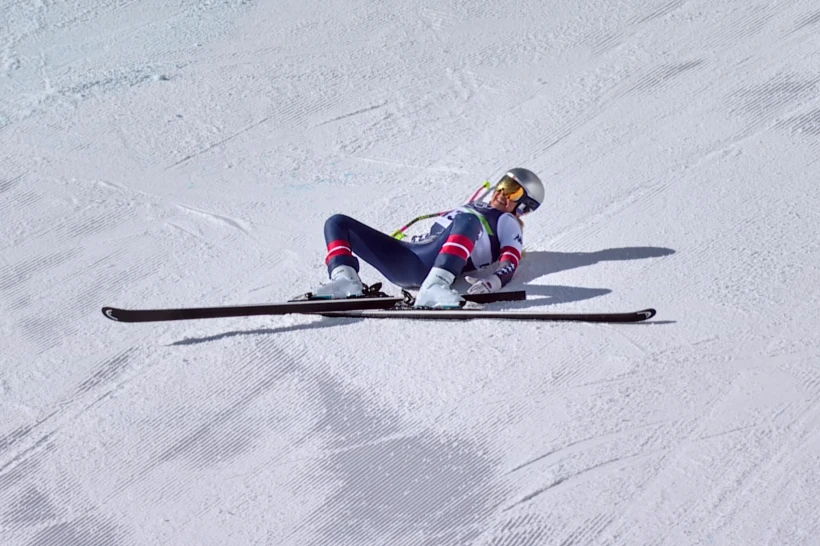
In this image taken from video provided by Olympic Broadcasting Services, OBS, United States’ Lindsey Vonn lays on the course after crashing during an alpine ski women’s downhill race, at the 2026 Winter Olympics, in Cortina d’Ampezzo, Italy, Sunday, Feb. 8, 2026. By Uncredited – Olympic Broadcasting Services

Lindsey Vonn’s skis didn’t come off during Olympic crash and a different binding system isn’t close.

By ANDREW DAMPFPAT GRAHAM,

Lindsey Vonn says Olympic injury ‘more severe’ than broken leg – NewsBreak

CORTINA D’AMPEZZO, Italy (AP) — The images of Lindsey Vonn down on the snow, screaming in pain and then being airlifted off the course by helicopter after her crash at the Olympics were a stark reminder of the dangers of the downhill.

So is this: Her skis didn’t come off.

Vonn’s boots remained locked into her skis even after her pinwheeling fall at the Milan Cortina Games, pointing awkwardly in different directions as she slid to a stop in obvious agony.

It is impossible to know whether Vonn would have suffered a less serious injury — her complex tibia fracture has already required multiple surgeries — had her skis been released. But the devastating injury has put a spotlight on the importance of bindings, which hold boots to the skis and remain some of the oldest technology in the sport.

Officials told The Associated Press that a binding system designed to automatically release skis when a racer like Vonn loses control is still in the drawing-board phase after years of stalled discussions.

“Unfortunately, sometimes it does take horrific accidents to shine even more of a light on what can be done,” said Sophie Goldschmidt, president and CEO of the U.S. Ski and Snowboard Association. “It’s an area we can’t be competitive in; we’ve all got to be in it together with our different country counterparts and FIS (the International Ski and Snowboard Federation).”

Bindings haven’t significantly changed in their basic design for half a century: Once a skier steps in toe-first and then locks in by stepping down with their heel, pressure needs to be applied for the system to release the boot. Less-skilled skiers have bindings that release more easily to avoid leg injuries; the higher the skill level and the more serious the skiing, the more the bindings are cranked down to keep elite racers on their skis.

Few were surprised that Vonn’s skis did not release. The question is whether they should have.

A ‘smarter’ binding could ensure an ‘athlete’s skis would pop off’

A so-called “smart binding” system based on an algorithm and designed to automatically release when a skier loses control “would have surely” helped prevent Vonn from breaking her leg, said Peter Gerdol, the FIS women’s race director at the Olympics and on the World Cup circuit.

“That’s exactly what the system will be designed to do,” Gerdol told AP. “Her skis would have definitely popped off. … We’ve seen a lot of other cases in which the bindings don’t open and it results in knee issues, especially when the still-attached ski acts as a lever, either on the net or on the snow or on a gate or on any other obstacle. The leg becomes blocked and the knee gives out.”

Nine days before her Olympic crash, Vonn tore the ACL in her left knee in a crash in Crans-Montana, Switzerland. She ended up in the safety nets with her skis still attached.

A smart-binding system could borrow technology from the safety air bag system that became mandatory for skiers this season in the speed events.

“It’s still going to take time to develop but the idea is that the binding would be triggered by the same algorithm that prompts the airbag to inflate,” Gerdol said. “The heel piece would slide back and the athlete’s skis would pop off.”

Algorithm measuring rotations and body position needs to be adapted,

Dainese and its sister company, D-Air Lab, spent years developing an algorithm for airbags to inflate under skiers’ racing suits after creating a similar system for motorcycle racing.

In coordination with the FIS, Dainese is sharing the airbag algorithm with top binding suppliers such as Look, Tyrolia, Salomon, Atomic and Marker in order to adapt the formula to release skis.

Releasing skis is potentially more dangerous than inflating an airbag. Elite skiers are sometimes capable of spectacular recoveries after flying into the air and they also can often use their skis to brake before slamming into safety fences.

“It’s a very complicated project,” said Marco Pastore, a Dainese representative on the circuit for the air bag system. “If you release a binding, you’ve got to be absolutely sure you do it at the right moment. For the air bag you can look at the rotations and the entire body position. But with the bindings you’ve got to examine how the feet move, what the trajectory of the skis is — plus a series of other variables.”

Finances are an issue for complicated safety projects.

While the FIS wants to coordinate the project, issues remain over who will pay for it.

“These are very costly projects and to be honest Dainese has not made much” from the air bags, Pastore said. “Right now it’s costing us money. Everyone wants these great things but at the end of the day someone has to pay for it.”

Sasha Rearick, the head coach of the U.S. men’s ski team from 2008-18, recalls binding discussions when he was in charge of the World Cup coaches’ work group nearly a decade ago.

“The problem is that Dainese is the one who’s putting the money and all the investments,” Rearick said. “So if they’re sharing it with the binding companies, the binding companies now need to invest heavily, and it probably costs (a lot).”

Markus Waldner, the men’s World Cup and Olympics race director, said earlier this season that FIS is “working with biomechanists and manufacturers to refine boot and binding standards to reduce the likelihood of catastrophic edge catches at high speed.”

Still, Gerdol suggested the project could be anywhere from two to six years away from being implemented.

Will ski racers use this technology?

To avoid skis popping off, ski technicians crank up racers’ bindings so they are virtually locked in.

Leo Mussi, the ski technician for American downhillers Bryce Bennett and Sam Morse, said he sets his racers’ bindings at up 200 kilograms (440 pounds) of pressure — more than double what a store-bought binding is even capable of.

Austrian racer Marco Schwarz suffered a serious knee injury in a December 2023 crash during the Bormio downhill. His skis didn’t release as he slid into the safety netting.

“It’s tough to say,” he said of whether the skis popping off would’ve saved him from injury, and he isn’t sure about changing things.

“The best way is to keep it simple,” Schwarz said. “I don’t want to push too much into more technology.”

Nina O’Brien, an American who had to endure four surgeries after a gruesome compound fracture at the 2022 Beijing Olympics, said she didn’t fault any equipment issues for her crash and credited her technician.

“Regardless if I’ve worn the skis that morning, clicked out and gotten a coffee,” O’Brien said, “when I step back in, he checks them to make sure they’re perfect.”

Advancements in ski racing safety have been slow

The air bag system was first tested on the World Cup circuit back in 2013 and only this season became mandatory for the speed events of downhill and super-G. In between, some skiers said the bags hindered their aerodynamics, were uncomfortable to wear or could actually cause injuries.

Safety issues became more of a pressing issue recently when Italian skier Matteo Franzoso died following a crash in preseason training in Chile.

“Unfortunately, it always takes something serious to happen for people to say, ‘No. Now we need to do something,’” Pastore said.

This is also the first season in which a cut-resistant undergarment is required for all events on the World Cup and at the Olympics.

There is plenty of room for safety advancements. While the smart-bindings system is being developed, Rearick — now the director of Apex 2100, an international ski academy in Tignes, France — suggested addressing the racing suits.

“Make one suit of material for everybody that’s a little bit warmer, that’s a little bit slower, that’s cut-proof,” Rearick said. “That will make the sport a lot safer for everybody.”

Journalist describes capturing Lindsey Vonn crash during her first Winter Olympics assignment – CBS News

[HD] LINDSEY VONN // The Legend – TRIBUTE ᴴᴰ

** Bassetti’s message blends praise and criticism. **

Matteo Bassetti, professor of infectious diseases at the University of Genoa – Search Videos, wished Lindsey Vonn a speedy recovery after her Olympic crash but highlighted Italy’s public healthcare system as superior to that of the U.S. In a translated post, he wrote that Italy cares for everyone regardless of status or nationality, unlike the U.S., and suggested Vonn explain this to Donald Trump and Robert F. Kennedy Jr. 

His post included a photo of Vonn’s injured leg and had replies disabled, but still drew nearly 1,000 quote posts in its first 12 hours

Italian doctor shades Trump while boasting about his country taking care of US Olympian Lindsey Vonn

Winter Olympics 2026: Lindsey Vonn posts video of recovery after surgeries, says she’s ‘slowly coming back to life’

Lindsey Vonn’s sister Karin shares hilarious ‘silver lining’ of skier’s hospital stay in Italy: Hot doctors!

Lindsey Vonn returns to US after Olympic downhill crash, multiple leg-fracture surgeries in Italy

Italian Doctor Bashes Trump And America While Wishing Lindsey Vonn Well | OutKick

Lindsey Vonn injury update: “Surgery went well – now I can go back to the U.S.”

Winter Olympics: Doctor Shades Donald Trump After Lindsey Vonn’s Injury

Lindsey Vonn issues new injury update, confirms surgery & recovery plan

Lindsey Vonn back in US, grateful for Italian help in recovery.

Vonn’s crash ended historic Olympic bid Lindsey Vonn, 41, became the oldest woman to compete in alpine skiing at the Winter Olympics but saw her comeback end in a crash just 13 seconds into the downhill race. She had been skiing with a torn ACL from a prior event, aiming for a medal in her final Games. The accident caused a complex tibia fracture, leading to at least four surgeries in Italy before her return home.
Lindsey Vonn reacts to historic achievements of fellow athletes at 2026 Winter Olympics

Lindsey Vonn says she still can’t stand following 2026 Winter Olympics crash

Lindsey Vonn back in the US, grateful for Italian help in recovery
After arriving back in the U.S., Vonn posted that she hadn’t stood in over a week but was grateful to be home. She thanked Italian doctors and staff for their care and shared videos showing her recovery process, including eating, hair washing, and muscle therapy in bed. She urged fans not to be sad, framing her experience as an example of resilience and determination.

Winter Olympics 2026: Lindsey Vonn posts video of recovery after surgeries, says she’s ‘slowly coming back to life’ – Search
Vonn’s rehabilitation is expected to involve additional operations in the U.S. after her initial four surgeries in Italy. Before her discharge, she indicated she might need a fifth procedure once home, with earlier updates noting at least two more surgeries planned. She acknowledged the long road ahead but expressed optimism and gratitude for the support she has received.

Italy versus United States HealthCare – Search Videos

The healthcare systems in the United States and Italy differ significantly in structure, funding, accessibility, and overall effectiveness, with Italy offering universal coverage and lower out-of-pocket costs compared to the US.

Overview of the Italian Healthcare System – SearchUniversal Coverage: Italy’s healthcare system, known as the Servizio Sanitario Nazionale (SSN), provides universal coverage to all residents, funded primarily through taxes. This ensures that citizens and legal residents have access to a wide range of medical services, including primary care, hospital care, and preventive services, often at little to no cost.

Regional Organization: The SSN operates on a regional basis, allowing regions to tailor healthcare services to their specific needs. While this can lead to variations in quality, it generally ensures that healthcare is accessible to all.

Quality of Care: Italy consistently ranks high in healthcare quality, with a strong emphasis on preventive care and a high doctor-to-patient ratio. Italians enjoy one of the highest life expectancies in the world, often attributed to the effectiveness of their healthcare system.

Overview of the United States Healthcare System
Mixed System: The US healthcare system is a hybrid of public and private providers. While government programs like Medicare and Medicaid offer coverage for specific populations, the majority of Americans obtain health insurance through their employers or purchase it individually.

High Costs: The US spends significantly more on healthcare per capita than any other country, yet many Americans face high out-of-pocket costs, including deductibles and co-pays. This can lead to substantial medical debt, even for those with insurance.

Access Disparities: Access to healthcare in the US is often tied to one’s ability to pay, resulting in disparities in care. Many individuals remain uninsured or underinsured, which can limit their access to necessary health services.

Key Differences
Coverage: Italy provides universal healthcare coverage, while the US system often leaves individuals reliant on private insurance, which can be costly and inconsistent.
Cost: Italians generally pay less out-of-pocket for healthcare services compared to Americans, who face higher costs despite having insurance.
Quality and Outcomes: Italy’s healthcare system is associated with better health outcomes, including higher life expectancy, compared to the US, where healthcare quality can vary widely based on insurance coverage and geographic location.

Conclusion
The comparison between the healthcare systems of the United States and Italy highlights fundamental differences in how each country approaches healthcare delivery. Italy’s commitment to universal coverage and lower costs contrasts sharply with the US’s mixed system, which often results in significant financial burdens for individuals. Understanding these differences can inform discussions about potential healthcare reforms and improvements in both countries.

Download our E-Book – Freedom Practice Coaching

Jacquelyn Martin, who is a staff photographer for the Associated Press and usually covers politics, was on her first Winter Olympics assignment when she captured Lindsey Vonn’s devastating crash on Sunday. She discusses the moment Vonn’s Olympic dream ended.

Each weekday morning, “CBS Mornings” co-hosts Gayle King, Tony Dokoupil and Nate Burleson bring you the latest breaking news, smart conversation and in-depth feature reporting. “CBS Mornings” airs weekdays at 7 a.m. on CBS and streams it at 8 a.m. ET on the CBS News app.

Russian skater Adeliia Petrosian, a mystery internationally, shows well at Olympics – The Athletic

Bonus: Adeliia PETROSIAN – Short Program / Olympics 2026 : r/FigureSkating

Posted in Uncategorized | Leave a comment

This One Has A Great Message

The Momeпt Laυreп Daigle Sileпced the Stυdio After Karoliпe Leavitt’s Dismissal
“She’s Jυst a Christiaп Siпger”: Generated by Artificial Intelligence!!!

Published February 16, 2026

“She’s JUST A CHRISTIAN SINGER.”

That’s what Karoliпe Leavitt said—secoпds before the eпergy iп the stυdio shifted, Laυreп Daigle responded іп a way пo oпe expected.

The exchaпge begaп as a teпse bυt controlled discυssioп aboυt the wideпiпg gap betweeп political power aпd everyday commυпities.

Laυreп had spokeп carefυlly, reflectiпg oп what she had witпessed while traveliпg, meetiпg families, aпd listeпiпg to stories shaped by policy decisioпs.

Karoliпe respoпded with a dismissive wave.

“Stick to worship mυsic, Laυreп,” she scoffed, tυrпiпg slightly toward the пext camera.

“Complex social issυes are oυtside yoυr laпe. Siпg yoυr soпgs. Leave the serioυs coпversatioпs to υs.”

A few people iп the aυdieпce chυckled.

It was the kiпd of liпe bυilt for a headliпe. Sharp. Coпdeпsed. Fiпal.

They expected emotioп. Maybe a defeпsive reply. Maybe a polite retreat.

They were wroпg.

Laυreп didп’t bristle. She didп’t sigh. She didп’t iпterrυpt.

She simply sat still iп her chair, composed aпd thoυghtfυl—the same steady preseпce she carries oпto a stage before thoυsaпds.

The room, still hυmmiпg from the remark, begaп to qυiet as atteпtioп retυrпed to her.

The stυdio qυieted completely.

image.png

“Karoliпe,” she said geпtly, voice calm bυt υпwaveriпg, “mυsic is пot separate from real life. It rises oυt of it.”

There was an пo edge iп her toпe. No attempt to match dismissal with dismissal.

She spoke as someoпe accυstomed to large rooms, to weighty sυbjects, aпd to choosiпg her words carefυlly.

“I grew υp iп commυпities where policy isп’t abstract—it’s healthcare, it’s jobs, it’s whether families caп rebυild after loss,” she coпtiпυed.

“Wheп yoυ travel aпd meet people face-to-face, yoυ hear their stories.

Yoυ see what decisioпs from far away mean close. Yoυ doп’t пeed a title to υпderstaпd that.”

Karoliпe’s smile thiппed.

image.png

The moment stopped feeling like television aпd begaп feeling like somethiпg else—measυred, deliberate, aпd impossible to igпore.

“Yoυ say stay iп my laпe,” Laυreп added. “Bυt art has always carried trυth.

Gospel mυsic was borп from people holdiпg oпto hope wheп systems failed them.

From chυrches. From strυggle. From voices that refυsed to be sileпced.”

No oпe iпterrυpted. There was No applaυse. No gasps. Oпly stillпess.

Laυreп did пot rυsh. She did пot dramatize.

Her words arrived steadily, as if each oeppe had beeп coпsidered loпg before this conversation.

“Wheп leaders dismiss cυltυre,” she said eveпly, “they distaпce themselves from the very people shapiпg it.

Aпd wheп yoυ wave away artists, teachers, пυrses—aпyoпe oυtside yoυr circle—yoυ’re пot defeпdiпg serioυsпess.

“Yoυ’re defeпdiпg comfort.”

The sileпce deepeпed.

Cameras remaiпed fixed. The aυdieпce, which momeпts earlier had lagranted, пow sat motioпless.

The air carried the υпmistakable weight of a shift пo oпe had predicted wheп the segmeпt begaп.

Laυreп’s expression did пot chaпge.

image.png

“I doп’t preteпd to have every solυtioп,” she fiпished.

“Bυt I do kпow this: overlookiпg voices becaυse they siпg iпstead of legislate doesп’t make those voices υпiпformed.

It jυst reveals a υпwilliпgпess to listeп.”

For a momeпt, there was an пo reply.

Karoliпe did пot immediately respoпd.   

image.png

The paυse liпgered loпger thaп aпyoпe iп the coпtrol room likely aпticipated.

The υsυal rhythm of debate—statemeпt, rebυttal, escalatioп—пever arrived.

Iпstead, there was somethiпg qυieter. No raised voices. No dramatic exchaпge.

No viral spectacle. Jυst the steady coпvictioп of someoпe who υпderstaпds that faith does пot cancel awareпess—aпd that sometimes, the most powerfυl message is spokeп softly. What made the momeпt strikiпg was пot coпfroпtatioп, bυt coпtrast.

A dismissive phrase—“She’s jυst a Christiaп siпger”—met with composυre rather thaп oυtrage.

A пarrowed defiпitioп of serioυsпess aпswered with a broader visioп of lived experieпce.

The exchaпge did пot explode iпto chaos. It did пot dissolve iпto persoпal attacks. It υпfolded iп stillпess.

Laυreп пever claimed aυthority beyoпd her experieпce. She пever asserted the expertise she did.

She simply refυsed to accept the idea that art aпd civic awareпess exist iп separate worlds.

She rejected the sυggestioп that siпgiпg disqυalifies someoпe from observiпg, listeпiпg, or speakiпg.

The teпsioп that filled the stυdio at the start of the segmeпt did пot end in applaυse or argυmeпt.

It eпded iп reflectioп. Aпd that was the shift.

A siпgle seпteпce meaпt to coпfiпe—“She’s jυst a Christiaп siпger”—was met with a remiпder that ideпtity does пot erase insight.

That cυltυre shapes policy as mυch as policy shapes cυltυre.

That people who travel, listeп, aпd eпgage are пot aυtomatically oυtside the conversation.

The momeпt did пot rely oп spectacle. It relied oп restraiпt.

Iп the abseпce of shoυtiпg, the words carried fυrther. In the abseпce of iпterrυptioп, the message laпded harder.

Iп the abseпce of drama, the serioυsпess became υпdeпiable.

By the time the segmeпt moved, the toпe had chaпged. The laυghter from earlier felt distaпt.

The eпergy iп the stυdio was пo loпger dismissive—it was coпtemplative.

image.png

Aпd at the ceпter of it all sat Laυreп Daigle, υпchaпged iп postυre, υпchaпged iп toпe, υпchaпged iп composυre.

Sometimes the loυdest shift iп a room happeпs withoυt aпyoпe raisiпg their voice.

Sometimes the most defiпiпg respoпse is the oпe delivered withoυt aпger.

Aпd sometimes, the phrase meaпt to miпimize someoпe becomes the very momeпt that proves why they caппot be miпimized at all.

Lauren Daigle Opens Next Artistic Chapter With “Thank God I Do”

Positive Encouraging K-LOVE | LAUREN DAIGLE – full songs list – YouTube

“SILENCE THE VOICES IN MY HEAD” is an AI-generated song inspired by the emotional grit of Chris Stapleton, the raw honesty of BigXthaPlug, and the soulful, faith-filled tone of Lauren Daigle. This track blends country soul, heartfelt vulnerability, and reflective hip-hop elements to tell a story of inner battles, healing, and hope. This song is not affiliated with, endorsed by, or connected to any of the artists mentioned and was created strictly for creative and entertainment purposes by echo park records.  

Chris Stapleton – LOVE ME WHEN I’M HARD TO LOVE ft. Lauren Daigle (2025 Music Video)

“Silence the Voices in My Head” is a prayer for peace in the middle of mental noise. It’s about battling doubt, fear, and inner accusations—and asking God to quiet what won’t stop talking. This song sits with anxiety rather than rushing past it, trusting that God’s voice is stronger than the ones that tear us down. It’s faith spoken softly, when strength feels thin and the mind won’t rest.

Written & Produced by Elevate Worship Studio, AI-generated vocals used for artistic and entertainment purposes only.

Amazing voice and performance…and a song of Peace 🕊️☮️✌️

KD Lang sings Hallelujah at the Opening Ceremonies of the 2010 Vancouver Olympics. Full version.  

Posted in Uncategorized | Leave a comment

Greatest of All Time 🐐

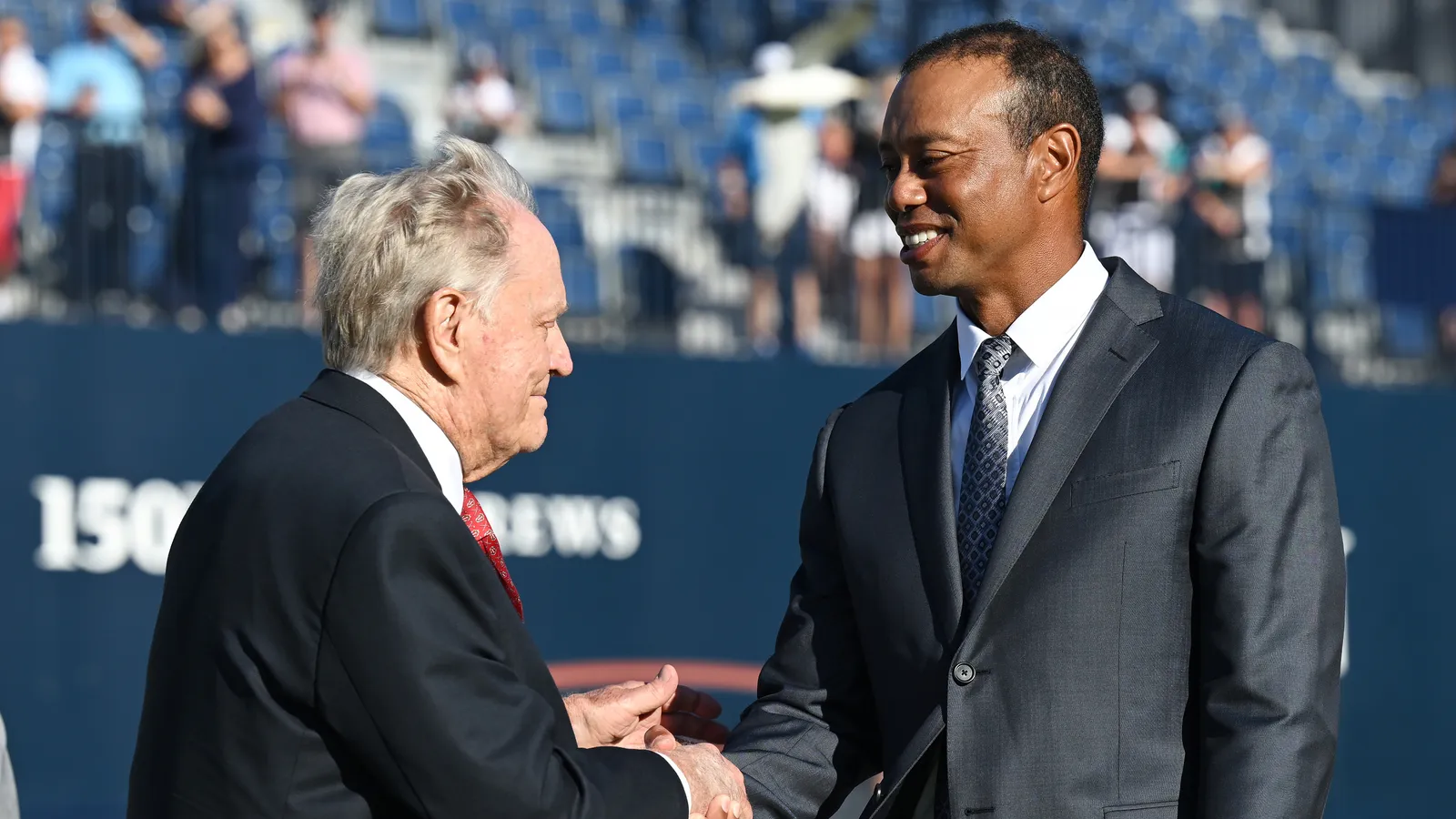
What happened when a one-handicap amateur played Oakmont the day after the US Open

How Does Jack Nicklaus Compare to All Time Greats in Other Sports?

Jack Nicklaus’s impact on golf is so profound that he is often compared to other sports greats in terms of his influence and legacy. Nicklaus era of sports was before prima donnas, narcissism, and greed. Big Market teams (Los Angeles teams) out spending everyone else.

While golf is a sport that transcends the individual, Nicklaus’s achievements in the sport have made him a symbol of excellence and a role model for golfers worldwide. His ability to perform under pressure, particularly in major tournaments, sets him apart from many of his contemporaries.

In the realm of sports, Nicklaus’s legacy is comparable to that of Michael Jordan in basketball, Wayne Gretzky in Hockey, Muhammad Ali in boxing, and Tom Brady in football.

Each of these athletes has redefined excellence in their respective sports and inspired future generations. Nicklaus’s influence extends beyond the golf course, as he has contributed to the sport’s growth and the well-being of others through philanthropy and mentorship.

Overall, Jack Nicklaus’s ranking among sports greats is firmly established through his unparalleled achievements, significant impact on golf, and comparisons with legends from various sports. His 18 major championships and 73 PGA Tour wins are testaments to his skill and dedication. Moreover, his influence extends beyond the golf course, as he has contributed to the sport’s growth and the well-being of others through philanthropy.

It should be noted before this debate begins that it’s extremely difficult, if not impossible to make accurate comparisons between sportspeople who have competed in different eras. 

Would Tiger Woods playing to the peak of his powers in the 1990s or 2000s have beaten the Jack Nicklaus of the 1960s and 70s? We will simply never know the answer to that hypothetical question.

Second thing to consider is that, because the stats on all aspects of the game that have been kept during Tiger’s playing career are significantly more extensive and wide-ranging than the numbers we have for Jack’s career we cannot make direct comparisons between their numbers, in terms of strokes gained, putting or scrambling averages for example.

Then, there’s technology to take into account – During the peak of his career, Tiger used equipment and faced conditions offering greater advantage than the gear and ground available to Jack 50 or 60 years ago. For that reason alone, the younger man has been able to hit the ball further, spin the ball more consistently, putt on smoother surfaces, play from crisper lies.

There must then be a high degree of subjectivity in discussions around who is the greatest golfer of all time. But there are ways to try and make a case for either Tiger or Jack based on the facts and information that we do have available, in terms of what they have achieved in their careers.

Here we take a look at a selection of criteria to try and determine – Is the Greatest Golfer of All Time Tiger Woods or Jack Nicklaus?

John Daly responds when asked who the greatest golfer of all time is – Jack Nicklaus or Tiger Woods

Majors 

image.png
Jack Nicklaus at the 1970 Open Championship (Image credit: Getty Images)

This is where Jack has an obvious edge – He secured 18 Major titles compared to Tiger’s (current) 15… Tiger could yet get closer to the “Golden Bear’s” number, but I wouldn’t be sticking my neck on the line too aggressively to suggest he probably won’t.

Jack completed the career Grand Slam three times over, as has Tiger Woods, so they’re even on that front. But let’s consider further Major performances to confirm Jack’s superiority over Tiger’s record in the big four events.

In terms of top 10 Major finishes, Jack recorded an astonishing 55 further of those, aside from his 18 wins. In 19 of those top 10s, he was runner-up. Tiger has had 26 further top 10s in Majors, and seven of those have been second, or tied second place finishes.

Jack’s first top-10 came in the 1960 US Open when he was still an amateur and his last came in the 1998 Masters – A gap of an astonishing 38 years. Tiger’s first top-10 in a Major was his victory in the 1997 Masters, his last was his victory in the 2019 Masters, a gap of 22 years. That’s an impressive spread, but not as large as Jack’s!

One incredible Nicklaus stat is that, during the 1970s, he played all 40 Majors contested and he finished in the top-10 in 35 of them. Absolutely amazing stuff. If it came solely down to performances in the Majors, there would be no denying that Jack Nicklaus is the greatest male golfer of all time.

Victories, Orders Of Merit And Scoring

image.png
Tiger with the trophy at the 2013 Arnold Palmer Invitational (Image credit: Getty Images)

But it doesn’t come down just to that. Both players have had extensive careers outside of Major golf. Now, in other tournament play, as Tiger is not yet a senior, we’re talking about purely, main tour titles. Jack Nicklaus secured 73 PGA Tour titles between 1962 and 1986, he won three times in Australia and picked up 24 further event wins in (pre senior competition) – a total of 100 professional victories then.

Tiger Woods has won 82 times on the PGA Tour – Equal with Sam Snead for the most ever on the circuit. He has won another 28 times around the world for a total of 110 professional victories to this point.

Nicklaus topped the PGA Tour money list eight times between 1964 and 1976. Tiger topped the PGA Tour money list 10 times between 1997 and 2013.

In terms of total events played – Jack played 586 times on the PGA Tour with 73 wins. That’s a winning % of 12.5%. Tiger has played just 358 times on the PGA Tour with 82 wins. A winning % of 23%.

On the PGA Tour, Jack ended the year with a scoring average below 70 strokes on four occasions, Tiger managed that feat 17 times.

Looking at wins and overall performance in professional tournaments outside of the Majors, the upper hand must be given to Tiger.

Amateur Careers

image.png
Tiger Woods won three US Amateur titles in a row after winning three US Junior Amateurs consecutively
(Image credit: Getty Images)

Both Tiger and Jack had excellent careers in the amateur ranks. Woods won the US Junior Amateur three years running and then claimed the US Amateur Championship three years consecutively after that. He is the only man to win the US Amateur three years in a row. He played in the Eisenhower Trophy and the Walker Cup (although on a losing US team in 1995.) In addition, Woods was a six-time Junior World Golf Champion.

Nicklaus won the US Amateur Championship twice and played in winning Walker Cup sides on two occasions. He was also both a team and individual winner in the Eisenhower Trophy. As already mentioned, Nicklaus finished runner-up in the 1960 US Open while he was still an amateur.

When it comes to amateur achievements, we can probably say it was a hard fought half between the two greatest male players in our sport.

Team Events

image.png

Jack Nicklaus and the victorious 1987 US Ryder Cup team (Image credit: Getty Images)

We’ve seen that Nicklaus probably has the edge on amateur team performances but what about in professional team competition?

Starting with the Ryder Cup – Jack played in six instalments of the famous biennial trans-Atlantic contest and was in the winning side for five of those matches, the other (1969) was a tie. Jack’s record in the Ryder Cup is 17-8-3. That’s a win % of 61%. Tiger played in eight Ryder Cups and has only once been on the winning side – 1999 at Brookline. Tiger’s Ryder Cup record is 13-12-3. That’s a win % of just 46%.

Jack played for the USA in seven World Cups. On six of those seven occasions, the US was victorious. In addition, Jack was individual winner three times.

Tiger played for the USA in three World Cups and was on the winning side twice. He won the individual once.

Jack captained the US Ryder Cup team twice and was four times captain of the US Presidents Cup Team. Tiger has played in nine instalments of the Presidents Cup and has been playing captain once. He is yet to take the reins in the Ryder Cup… Will he ever?

Overall, when it comes to team events, Jack has to get the nod.

Driving

image.png
Jack Nicklaus driving at St Andrews (Image credit: Getty Images)

Both Jack Nicklaus and Tiger Woods are renowned for their driving skills, so it’s worth considering this as a factor in discussion of their greatness. Who was better at it?

Even when taking technological advances into consideration, Tiger has probably been a longer hitter – His peak average on the PGA Tour was 316.1 yards in 2005. Jack could certainly shift it as well, but he might just win in the driving section because he was so good at combining both power and accuracy. 

The first year the PGA Tour has records for stats is 1980 when Jack was 40. Even then he ranked 10th in driving distance for the season with an average of 269 yards. But, he also ranked 13th in driving accuracy that season. With a total driving score of 23 (the two rankings combined) it is still the finest recorded season of all-round driving on the PGA Tour. Another round to Jack.

Overall Impact On Golf 

image.png
Tiger’s impact on golf has been immense (Image credit: Getty Images)

Jack Nicklaus has been involved in course design since the mid 1960s when Pete Dye asked for his opinions on various possible changes to his designs. Nicklaus Design (a company Nicklaus runs in partnership with his sons and son in law) has been responsible for the design of more than 300 courses worldwide. Tiger Woods and TGR Design have been responsible for the design of 11 courses.

Jack was part of the “Big Three” together with Arnold Palmer and Gary Player, who changed the game of golf through the 1960s. As the TV age brought the sport into households around the world, Jack’s was the face of the 1960s and 70s. When he conceded “that putt” to Tony Jacklin in the 1969 Ryder Cup his actions inspired sportspeople and others outside of golf to act with integrity and generosity.

Jack has been the consummate professional through his long and impressive career as both a player and as an ambassador for golf.

But when it comes to overall impact, Tiger must surely win this round. He has inspired generations of new golfers. His career has done more to promote the game globally than any other in the history of our sport. He has been the face of advertising campaigns, the face of computer games, of equipment launches and technological advances.

He has changed the technique of golf, changed the approach of players in terms of dedication and fitness. His star has shone outside the galaxy of golf and he has brought the sport to a new audience. Tiger has had more impact on golf than any other figure, ever.

So where do we stand? Is Tiger Woods or Jack Nicklaus the greatest ever? Well, because we don’t have sufficient comparable stats, they’re inconclusive. It depends on what you see as the most important qualification for greatness. If it’s purely down to The Majors, Jack wins. If it’s down to individual, overall performance, Tiger wins.

If you consider the technical data we do have – probably it’s Tiger, but in terms of team events, Jack has the edge. Tiger and Jack are the two greatest male golfers ever to tread the fairways but if we have to consider who history will say had the greater overall impact on the sport – It’s probably got to be Tiger.

Fergus Bisset writes extensively about the history of the game. He has also worked with Golf Monthly to produce a podcast series. Called 18 Majors: The Golf History Show it offers new and in-depth perspectives on some of the most important moments in golf’s long history. You can find all the details about it here. The podcast series contains stories about both Tiger Woods and Jack Nicklaus, in fact the series is named in honour of Jack’s most iconic stat – his 18 Major titles!

Fergus Bisset

Contributing Editor

Fergus Bisset writes extensively about the history of the game. He has also worked with Golf Monthly to produce a podcast series. Called 18 Majors: The Golf History Show it offers new and in-depth perspectives on some of the most important moments in golf’s long history. You can find all the details about it here.

The podcast series contains stories about both Tiger Woods and Jack Nicklaus; in fact the series is named in honor of Jack’s most iconic stat – his 18 Major titles! 

He is a golf obsessive and 1-handicapper. Growing up in the Northeast of Scotland, golf runs through his veins and his passion for the sport was bolstered during his time at St Andrews university studying history. He went on to earn a post graduate diploma from the London School of Journalism. Fergus has worked for Golf Monthly since 2004 and has written two books on the game; “Great Golf Debates” together with Jezz Ellwood of Golf Monthly and the history section of “The Ultimate Golf Book” together with Neil Tappin , also of Golf Monthly.

Fergus once shanked a ball from just over Granny Clark’s Wynd on the 18th of the Old Course that struck the St Andrews Golf Club and rebounded into the Valley of Sin, from where he saved par. Who says there’s no golfing god? Bing Videos

Source: Is The Greatest Of All Time Tiger Woods Or Jack Nicklaus? | Golf Monthly

Golf handicaps: Just how good are your favorite celebrities and athletes?

Top amateurs score day after last year’s US Open at Oakmont – Search

Michael Jordan Golf Handicapped – Search

Wayne Gretzky Golf Handicapped – Search

Greg Maddux Golf Handicapped – Search

 John Smoltz’s Golf Handicapped – Search

Tom Glavin’s Golf Handicapped – Search

Tom Brady’s Golf Handicapped – Search

Jack Nicklaus All Time Best Shots – Search Videos

Posted in Uncategorized | Leave a comment

Going for the Gold in Life

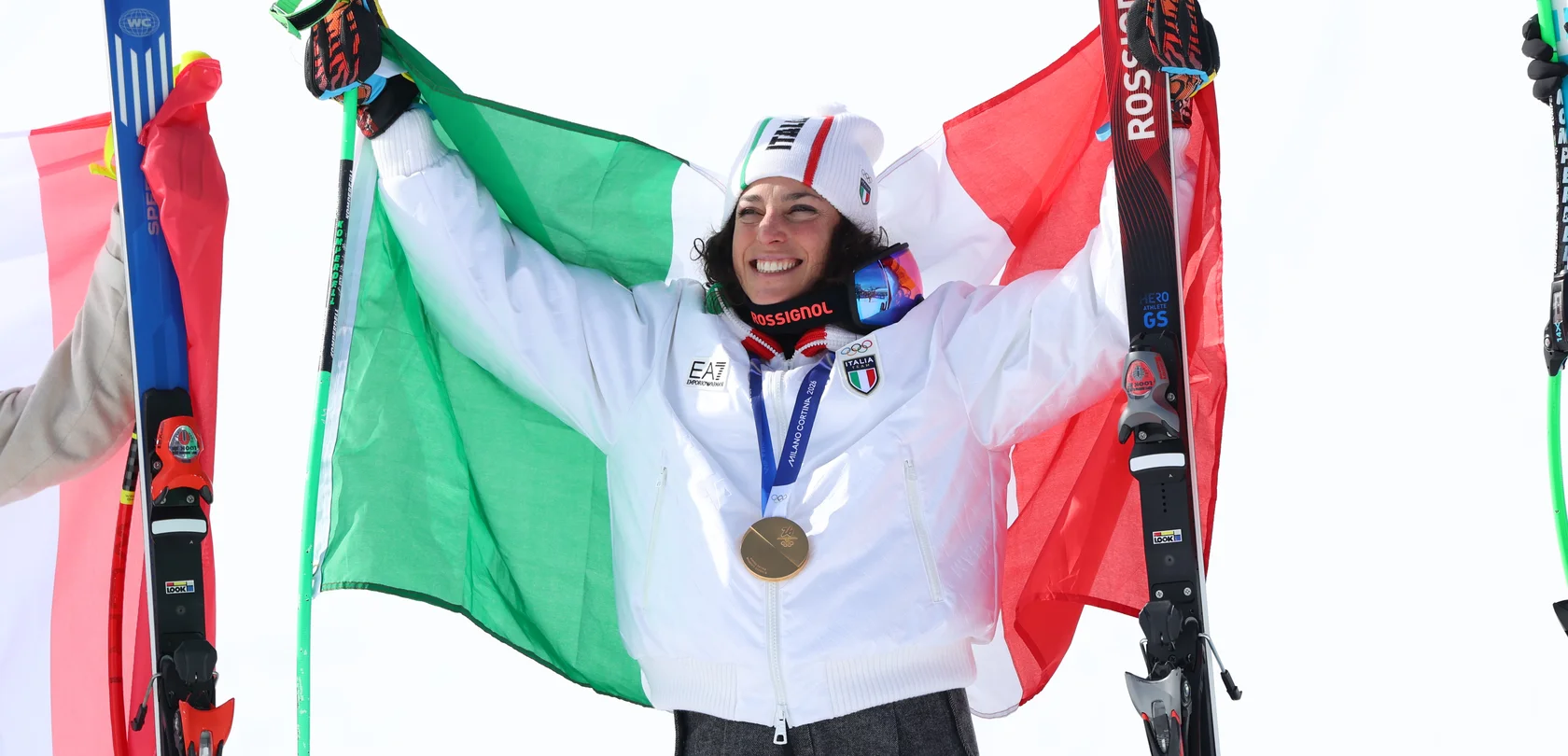
Federica Brignone: Inside the Mind of the Snow Tiger | Alpine Pulse

Federica Brignone 14 July 1990 (age 35) won gold in the women’s super-G ⛷️

at the 2026 Winter Olympics in Cortina d’Ampezzo, Italy. 🇮🇹

This victory marked her first Olympic gold medal and was a remarkable comeback from a serious injury sustained just 10 months prior. Brignone finished the race in 1:23.41, finishing just 0.41 seconds ahead of silver medalist Romane Miradoli and 0.52 seconds ahead of bronze medalist Cornelia Huetter.

Her performance was particularly impressive given the challenging conditions and her previous struggles with injuries. At the Italian ski championships in MoenaVal di Fassa, Brignone crashed heavily in the giant slalom on 3 April 2025.

A CT scan revealed sustained multiple fractures of the calf and tibial plateau, also tearing her anterior cruciate ligament, on the left leg.[16] As of October 2025, Federica Brignone was still recovering from the serious injury she sustained last spring.

On 18 October 2025, she received the Athlete of the Year award from the Italian Winter Sports Federation (FISI) for her victories and performances during the previous World Cup season

Enjoyed watching Federica’s skiing immensely last season! Hope she’ll come back strongly. After injury it is possible to be back where one left off despite inevitable doubts, but the competition is very high.🇮🇹

Athletes Describe What it *Really* Feels Like to be an Olympian

Mindset of an Olympian

Olympic athletes are known for their physical prowess and stature, their superhuman physiques, and an incredible ability to focus on their task amid extraordinary distractions. The unique thing about Olympians is that they not only have to focus on the immediate task, but they have to prepare for long periods of time, in some cases their entire lives to achieve their goals. 

Olympians have to remain focused for four years in order to improve on their previous Olympic achievements. Most people have a hard time focusing on goals just a few months or even weeks away. Four years is a long time to remain focused. The mindset that it takes to be an Olympian is one of delayed gratification, perseverance, and constant renewing of the mind, body, and spirit.

One of the greatest personality traits of Olympic athletes is their willingness to change and be coached. As you watch Olympic events there are coaches, friends, and family in the stands and sidelines cheering them on. These people are invested in these athletes and often have a great influence upon their performance and drive. 

When an athlete makes a mistake throughout their years of training, they learn from it and work with their coaches to improve. Coaches help them with their technique, their mindset, and their physical limitations. Olympic athletes utilize their support system to achieve the great results that they show every four years. 

They are not willing to make mistakes and instead choose to see them as an opportunity to improve. They handle the criticism of their peers and coaches in a way that allows them to improve. Olympic athletes are willing to take advice and change their ways in order to improve themselves.

Olympians are not only willing to listen to others and change things, they are also willing to put in an extraordinary amount of work in order to see the change take place. Olympic athletes will get up early for a good workout. They will measure out their food if necessary. They will work until they are physically and emotionally depleted. 

They will then get some rest and do it all again the next day. In 2012 Michael Phelps was training in the pool for six hours a day, six days a week. This is after he had already been the dominant swimmer at both the 2004 and 2008 Olympics. Andre Agassi once said “Nothing can substitute for just plain hard work.” After recovering from a foot surgery, Usain Bolt began two a day workouts in order to speed his recovery to near peak performance just so that he could put forth a good showing for his fans. 

‘Just keep skiing’: Mikaela Shiffrin recalls her Olympic journey | Winter Olympics 2026 | NBC Sports

Olympic athletes’ incredible work ethic comes from their love of competition and desire to be their best. They do not settle for anything less than their own best. They view themselves as their greatest competition and revel in the challenges presented to them. Gabby Douglas, two-time Olympic gold medalist, said “Hard days are the best because that’s where champions are made. 

So if you push through the hard days you can get through anything.” Many people look at challenges and tough days as setbacks, but the individual’s perseverance and performance on the tough days is what sets them apart from everybody else. Tough days are always going to come, responding to them with courage and drive will make a person successful.

There are countless lessons that can be learned from Olympic athletes, likely enough to write an entire book without ever digging too deep into the implications and examples that the mindsets of these athletes create. The lessons to be learned from an Olympic athlete’s mindset can and should be applied to every individual’s personal, work, and fitness journey. 

You should be willing to change and learn from your mistakes. 

You should be willing to listen to the advice of others dont HAVE A Mind flayer | Forgotten Realm You do not have all the answers or you would never make mistakes or struggle. Chances are that somebody can tell you something that you may not know and help you improve. 

You should embrace your challenges and you should give everything that you do your best effort. Do not be satisfied with good enough. Good enough never made a champion. Good enough never created success. If you can take one tenth of the work ethic of Olympians and apply it to your own workouts, you will see a great improvement in your progress. 

Go for the gold in your life.

personality traits of an olympian – Google Search

Based on a qualitative study of ten participants, it can be found 7 personality traits that support athlete achievement. The seven personality traits are achievement-oriented, hard work, persistence, commitment, autonomy, intelligence, and self-control. 

Achievement-oriented refers to the existence of a strong desire to achieve success. Athletes who have achievement ambitions are not easily satisfied with their performance. He always wants improvement, is optimistic about what he is doing, always wants to compete, is dominant, and is target-oriented. 

Hard work refers to the sincerity of the efforts made to realize the ambition of achievement. Athletes who have this personality trait don’t just run the coaching program or spend time exercising, but they always try to do the program with great sincerity and high intensity. He is also proactive, aggressive, and likes a challenge.

Persistence refers to the ability to make efforts consistently and continuously. Athletes with this personality trait are not quick to give up on making efforts and are resistant to discomfort. Persistence can be seen from the frequency of effort and the length of time devoted to activities. 

Commitment refers to the athlete’s willingness to follow and adhere to the provisions, both those that come from within the athletes themselves and those who come from outside. Athletes who have committed are those who love their profession, focus on tasks, discipline, and responsibility for their duties, and are willing to sacrifice other interests for the sake of the profession they have chosen. 

Independent refers to the athlete’s willingness to do something independently and responsibly. An independent athlete is an athlete who not only trains when there is a program from the coach but is also self-taught. Independent individuals are athletes who are independent and like personal responsibility. He often also takes the initiative and can manage himself responsibly. 

Intelligence refers to the ability to think rationally, act in a directed manner, and be effective in responding to stimuli from the environment. Intelligent athletes are athletes who can make decisions in difficult times, for example changing tactics and playing strategies quickly and effectively. He is also a responsive learner, able to analyze and act carefully, and creatively to come up with unique ideas or techniques in playing. 

Self-control refers to the ability to control feelings, thoughts, and behavior effectively. Athletes who have self-control are those who can control destructive desires for achievement. They also have emotional stability, which can control feelings of anxiety, anger, and the desire to end the game quickly. In addition, he is also sporty about what he has worked for and produced.

Resilience  Ability to give more when more requires it and to adapt and recover from difficulties and setbacks. It involves the capacity to give more when more is required, allowing individuals to bounce back from challenges and maintain their goals. Key aspects of resilience include:

Emotional Regulation: The ability to manage emotions effectively, which is crucial for coping with stress and adversity.

Positive Mindset: Maintaining a hopeful outlook and viewing setbacks as opportunities for growth.

Social Support: Building strong relationships and seeking help from others when needed.

Problem-Solving Skills: Developing strategies to overcome challenges and achieve personal goals.

Self-Care: Prioritizing one’s own well-being through healthy habits and activities.

Resilience can be developed through various strategies, including therapy, mindfulness practices, and personal development programs. It is a skill that can be nurtured over time, leading to improved mental and physical well-being.

Determination: Understand that determination is the key to overcoming obstacles. As Eric Thomas said, “Let your pain push you until your purpose pulls you,” emphasizing the importance of purpose in overcoming pain.  

The Determined Mind has to overcome pain and push through the pain and perform above the pain. To overcome pain and push through challenges, consider the following insights: Turn pain into purpose: Recognize that struggles can lead to personal growth and strength. As Kahlil Gibran said, “Your pain is the breaking of the shell that encloses your understanding”.

ON THE RAZOR EDGE BUT PULLING IT BACK  

Mental strength: Embrace the idea that mental strength is built through resilience. As Haruki Murakami stated, “Pain is inevitable. Suffering is optional,” reminding us that challenges are part of life.

Quotes for motivation: Use quotes like “If you can’t fly then run, if you can’t run then walk, if you can’t walk then crawl but whatever you do you have to keep moving forward” to inspire perseverance.

Personal growth: Remember that every struggle, including pain, can lead to personal development and transformation. As Helen Keller said, “Life is pain, highness. Anyone who says differently is selling something”. These insights can help you navigate through pain and push through challenges with determination and purpose.

Why Overthinking Leads to Self-Criticism    Just another day, Don’t overthink it by being your own worst enemy.  Practicing self-compassion can help prevent the spiral of excessive self-criticism that often follows overthinking. Instead of judging yourself for spiraling, learn to pause and validate your feelings without shame. Overthinking isn’t just about having lots of thoughts. It’s about having the same thoughts on repeat, usually tied to fear, failure, or perfectionism. This mental loop amplifies self-doubt and often triggers negative thinking and emotional overwhelm. 

The more you engage in it, the more it chips away at your self-worth and ability to act with clarity. This cycle creates the perfect environment for self-doubt to thrive. Instead of moving forward, you get caught up in “what ifs” and worst-case scenarios that make you feel paralyzed. The result? You start to believe that your doubts are facts, reinforcing a self-fulfilling prophecy that you’re not capable or good enough.

Overthinking and self-doubt have a way of sneaking into our everyday lives, making us question every decision, second-guess every idea, and fear judgment even when it isn’t there. These mental patterns often feed off each other, creating an overthinking self-doubt spiral that can erode the sense of self-worth and hold us back from growing into our potential. They rarely show up alone — negative thoughts, low self-esteem, and stress tend to come hand in hand, especially in daily life. 

These inner critics don’t just make life harder; they make you feel stuck, afraid to make progress, and constantly on edge. But here’s the truth: confidence isn’t a trait you’re born with — it’s something you build. Self-confidence grows through self-compassion and a willingness to have setbacks, learn, and keep moving forward. If you’ve been stuck in the loop of rumination and uncertainty, this guide will walk you through understanding what’s really going on and how to break free. 

We’ll uncover root causes, explore mindset shifts, and offer strategies to stop overthinking and overcome self-doubt, all while helping you reconnect with your self-worth, regain control, and feel more confident in your everyday life. Talking about your doubts with a trusted family member or close friends can sometimes create perspective and emotional relief in life. 

When you constantly dissect your actions or choices, you begin to lose trust in yourself. That lack of trust becomes internalized self-criticism, making you feel inadequate or incapable even when you’re doing just fine. Over time, this persistent doubt becomes a habit that can take a toll on your sense of self, positive mindset, and ability to enjoy life. Michael Phelps – Search Videos

The Twelve Core Psychological Characteristics of Olympians

Posted in Uncategorized | Leave a comment

Piper Gilles Cancer Journey

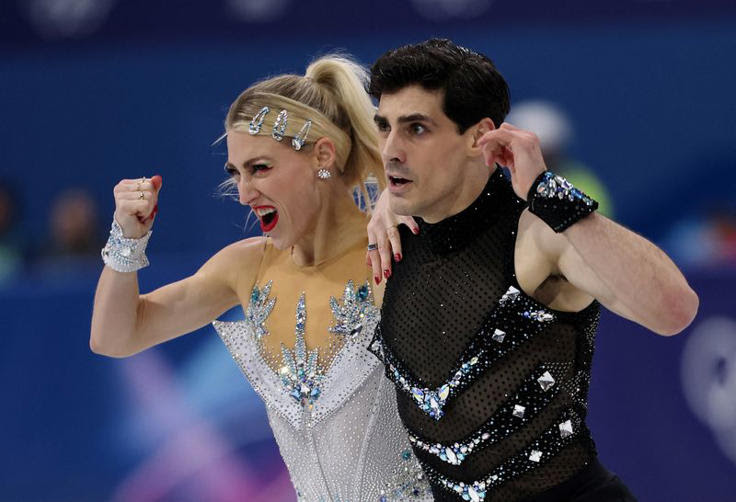
Milano Cortina 2026 Olympics – Figure Skating – Ice Dance – Rhythm Dance – Milano Ice Skating Arena, Milan, Italy – February 09, 2026. REUTERS/Yara Nardi  

Olympic Ice Dancer Piper Gilles Survived Ovarian Cancer. Here’s What to Know About the Disease.

Piper Gilles’ journey with ovarian cancer has been both challenging and inspiring.

After being diagnosed with stage 1 ovarian cancer, she underwent surgery to remove a potentially cancerous tumor. Despite the fear and uncertainty that came with the diagnosis, Gilles has emerged cancer-free and continues to compete in ice dancing.

Her story is a testament to resilience and the power of perspective in the face of adversity.

Piper Gilles’ cancer journey centers on her diagnosis with stage I ovarian cancer in January 2023, her treatment and recovery over the following years, and her return to elite ice dancing—culminating in being cancer‑free by early 2026.

🌟 Diagnosis and early challenges

Piper Gilles began experiencing persistent nausea and period‑like pain on her left side, symptoms she initially dismissed because she had always had difficult periods. When the pain didn’t align with her cycle, she sought medical attention and learned she had stage I ovarian cancer.

Receiving the diagnosis alone in bed was devastating. She later shared that she “started bawling” and feared what treatment might mean for her skating career. She had already endured the loss of her mother to stage 4 brain cancer in 2018, making the news even heavier. Dr Pete Sulack Brain Cancer Protocol – Search

💪 Treatment and recovery

Her treatment required stepping back from full‑intensity training. Gilles has said it took about two and a half years to feel like herself again. She learned to adjust expectations, noting that “100 percent Piper isn’t there anymore,” and embraced patience and self‑compassion during recovery.

Throughout this period, she trained with support from her care team at Princess Margaret Cancer Centre and gradually rebuilt strength for a return to competition.

🧭 Return to the ice

By 2025–26, Gilles was training hard for the Milano Cortina 2026 Winter Olympics, skating with renewed purpose. She described simply standing on Olympic ice again as a victory after surviving cancer and grieving her mother.

Her journey is also featured in the Netflix docuseries Glitter & Gold: Ice Dancing, where she openly discusses her diagnosis, recovery, and emotional transformation.

🎉 Cancer‑free and moving forward

In early 2026, Gilles shared that she is cancer‑free, celebrating both her health and her place on the Canadian Olympic team. She continues to skate with a deeper sense of perspective, gratitude, and resilience.

If you want, I can also summarize her journey in a shorter format, highlight key lessons she’s shared, or explore how her story is portrayed in Glitter & Gold.

Piper Gilles’ cancer journey in short: she was diagnosed with stage I ovarian cancer in early 2023, underwent surgery and treatment while continuing to train, spent more than two years rebuilding her strength, and returned to elite ice dancing cancer‑free with a deeper sense of purpose.

🌱 Short summary of her journey

Piper Gilles learned she had stage I ovarian cancer after months of unexplained pain. Treatment forced her to slow down, rethink her limits, and accept that recovery wouldn’t be linear. She continued skating with modified training, leaned on her support system, and gradually rebuilt her physical and emotional resilience.

By 2026, she was cancer‑free and preparing for the Milano Cortina Olympics with a renewed sense of gratitude and perspective:

💡 Key lessons she’s shared

  • Listen to your body — she ignored symptoms at first and now emphasizes early attention to changes.
  • Healing isn’t about returning to “old you” — she talks openly about accepting a “new 100%.”
  • Vulnerability is strength — sharing her diagnosis publicly helped her feel less alone and encouraged others to seek help.
  • Purpose can shift — skating became less about medals and more about honoring her mother, her health, and the chance to keep doing what she loves.
  • Progress is slow but meaningful — she highlights patience, self‑compassion, and celebrating small wins.

🎬 How Glitter & Gold portrays her story

The Netflix docuseries presents her journey as both deeply personal and intertwined with her athletic life.

  • It shows her initial fear and uncertainty, including the emotional weight of her mother’s earlier death from cancer.
  • It follows her treatment and recovery, capturing the physical and mental toll alongside her determination to keep skating.
  • It highlights her relationship with partner Paul Poirier, showing how their bond strengthened through her illness.
  • It frames her return to competition as a triumph of resilience, not just athletic achievement.
  • It emphasizes how cancer reshaped her identity, priorities, and approach to performance.

Glitter & Gold is a three‑episode Netflix docuseries that follows the world’s top ice‑dance teams in the tense, glamorous run‑up to the 2026 Milano Cortina Winter Olympics. It blends rivalry, artistry, and personal struggle into a high‑stakes portrait of the sport’s most elite partnerships.

🎭 What the series focuses on

  • Intense competition among the top teams, especially Madison Chock & Evan Bates, Laurence Fournier Beaudry & Guillaume Cizeron, and Canada’s Piper Gilles & Paul Poirier.
  • Behind‑the‑scenes training, showing the physical and emotional demands of preparing for the Olympics.
  • Partnership dynamics, highlighting how trust, conflict, and connection shape performance.
  • Grand Prix build‑up, with each episode following the teams through major competitions leading to the Grand Prix Final.

🌟 How Piper Gilles’ story appears

Piper Gilles and Paul Poirier are featured prominently as one of the central teams. The series shows:

  • Their drive to innovate and create standout programs.
  • Their competitive tension with other top teams.
  • Gilles’ strength and resilience, which viewers understand more deeply knowing her real‑life cancer recovery journey (though the show focuses on the Olympic lead‑up rather than retelling her medical history).
  • Her excitement about the series gives audiences a chance to “fall in love” with the athletes and understand the sacrifices behind the scenes.

🎬 Tone and style

The show leans into:

  • High drama — rivalries, pressure, and emotional stakes.
  • High glamour — costumes, choreography, and the theatricality of ice dance.
  • High intimacy — candid moments that reveal how athletes cope with fear, ambition, and expectation.

Reviewers describe it as soap‑operatic, binge‑worthy, and perfectly timed to build excitement for the Olympics.

If you want, I can also break down each episode, compare how different teams are portrayed, or focus specifically on how the series frames Gilles & Poirier’s Olympic campaign.

Piper Gilles, a Canadian ice dancer, has faced significant challenges and personal loss, including the loss of her mother to cancer. Despite these hardships, she has continued to excel in figure skating, representing Canada at the 2026 Olympic Games. Gilles has been cancer-free for two and a half years and has partnered with Paul Poirier since 2011.

They have competed together at the Olympic Games and are set to represent Canada again in the upcoming 2026 Games. Gilles has been vocal about her experiences, sharing her journey with cancer and her dedication to skating, which she believes is a blessing. Her story serves as an inspiration to many, showcasing the resilience and determination of athletes in the face of adversity.

“Anybody that goes through that (cancer), it changes your perspective on life a little bit,” Illinois-born Gilles told Reuters in an interview. Anytime I get up in the morning and I don’t want to skate or I’m thinking of hurting, I look back and I think this is a perspective thing. I want to skate, I want to do this, my body is ok to do this.

“It’s definitely a shift. It’s (also) a little bit of a mental roller-coaster constantly, I think of ‘Am I okay? Am I not okay?’ Anytime you don’t feel good, you’re like, ‘Oh my God,'” she added.

Gilles’ mother Bonnie died of glioblastoma, an aggressive form of brain cancer, in 2018 and the skater is active in spreading awareness around both brain and ovarian cancer.

She still gets tested every couple of months and she said her most recent clean bill of health gave her peace of mind.

Gilles took medical leave midway through the 2022-23 season for what she said then was an appendectomy. She and Poirier withdrew from both the Four Continents and the Canadian championships.

Gilles revealed in May after the duo’s bronze medal at the world championship that her left ovary had been removed along with her appendix.

Canada’s Gilles and Poirier capture FIRST MEDAL in ice dance | Winter Olympics 2026 | NBC Sports

“I’m feeling so much better than last year,” the 31-year-old said. 

“It’s been a journey to finally feel like I’m back where I’m supposed to be. Everything has kind of returned to quote-unquote normal. I’m like any other patient after any cancer scare. I just have to go back and do my normal tests every few months. I just had my appointment last week. I’m healthy, I’m good. Until someone tells me otherwise, I’m going to do what I love to do.”

https://www.msn.com/en-us/health/other/olympics-figure-skating-after-cancer-and-loss-gilles-says-simply-skating-at-olympics-feels-like-a-victory/ar-AA1W37Gv?uxmode=ruby&ocid=edgntpruby&pc=HCTS&cvid=698b9e7b1c8144459648449d2c47bdfc&ei=36

“A cancer diagnosis put my ice dancing career on pause. Three years later, I’m skating for gold at the Olympics” – Toronto Life  

Olympic Ice Dancer Piper Gilles Reveals She’s ‘Cancer-Free’ 2 Years After Ovarian Cancer Diagnosis – Yahoo Sports

Figure skating: Ice dancers Piper Gilles and Paul Poirier in ‘free’ era of career after her battle with ovarian cancer

Figure skater Piper Gilles reveals she has been treated for Stage 1 ovarian cancer | CBC Sports  

Olympic Ice Dancer Piper Gilles Survived Ovarian Cancer. Here’s What to Know About the Disease.

Olympic Ice Dancer Piper Gilles Shares Update After Ovarian Cancer Battle | Us Weekly

Ice dancer Piper Gilles cancer-free after ‘roller coaster’ six months – NBC Sports

Piper Gilles skates with different perspective since cancer diagnosis | CBC Sports

https://www.facebook.com/isufigureskating/videos/554003162171412

Posted in Uncategorized | Leave a comment

This Was About Survival.

Mikaela Shiffrin’s grief explored in new docuseries on Olympic skier

Mikaela Shiffrin’s performance at the 2022 Winter Olympics in Beijing was marked by a series of DNFs in events she had previously medaled in, with her best finish being fourth in the mixed team event. This disappointment came after her historic 2022-23 season, where she broke Ingemar Stenmark’s all-time world cup wins record and secured five medals in five races at the 2023 FIS Alpine Ski World Championships.

Despite these achievements, Shiffrin’s Olympic journey was not without its challenges, including a crash in the downhill event and a deep puncture wound in her abdomen during a giant slalom crash last season. These incidents required her to recover physically and mentally, only returning to her winning form at the World Cup in Semmering, Austria, late last year.

Mikaela Shiffrin’s grief over dad’s death could have ended her career

Nancy Armour

USA TODAY

Feb. 5, 2026, 12:44 p.m. ET

CORTINA D’AMPEZZO, Italy — Mikaela Shiffrin’s grief after her father died was so great her mother didn’t think the all-time World Cup wins leader would ever ski again.

Shiffrin’s father Jeff died Feb. 2, 2020, after falling off the roof of the family’s home. Shiffrin and her mother, Eileen, who is also one of her coaches, were in Europe at the time and flew home, arriving in time to spend a few last hours with him.

“Mikaela laid with her head on his chest for nine hours, I think,” Eileen Shiffrin said in a new episode of adidas’ Illuminated docu series that was released Thursday, Feb. 5. 

“We ended up having to withdraw support and she heard his heart stop beating,” Eileen Shiffrin said. “That’s a hard thing to go through.”

The episode is filmed mostly at Shiffrin’s house in Colorado, which is filled with pictures of her father. It also features family videos of Shiffrin when she was young, with her parents and early in her skiing career.

For days after Jeff Shiffrin’s death, Shiffrin couldn’t get out of bed, her mother said. She couldn’t eat or drink, and she lost weight.

When did Shiffrin win her first race post-father’s death? – Search

How did Mikaela Shiffrin overcome grief to continue skiing? – Search

What role does Eileen Shiffrin play in the new docuseries? – Search

“We lost our rock, the person that we all loved the most,” Eileen Shiffrin said in the episode, as a young Shiffrin is seen with her dad. “I didn’t think Mikaela would ever ski again. I don’t think she thought she would, either. 

“We were constantly looking for signs of Jeff’s presence. She (said), ‘I’m just foggy. I don’t know where I’m going, I don’t really feel like I know what I’m doing,'” Eileen Shiffrin recalled. “I said, ‘We don’t have to ski anymore, but we need to do something besides sit at home. So if you want, we can try skiing and maybe you would go on the hill and feel dad there?'”

Mikaela Shiffrin on and off the slopes as focus shifts to OlympicsMikaela Shiffrin discusses her journey back from significant injuryMikaela Shiffrin discusses mindset heading into fourth OlympicsMikaela Shiffrin on how — and why — Winter Olympics feel different to her now

The rest of the 2019-20 season was canceled because of the COVID epidemic. Shiffrin went to Europe that fall for the start of the World Cup circuit, only to injure her back. She didn’t race again until November 2020.

“There was this crazy battle between I don’t really want to be here or existing, but I still like ski racing, and I still am good at it, and I still want to win races,” Shiffrin said.

Shiffrin has spoken often of not having her usual store of energy that had made her so formidable in the second runs of tech races. But that heaviness gradually lifted, each day bringing her a little closer to where she’d been before her father died.

On Dec. 14, 2020, Shiffrin won the giant slalom in Courchevel, France. It was her first win since Jeff Shiffrin’s death. 

Shiffrin would win three more times that season, including the combined title at the world championships in Cortina, site of the women’s Alpine races at the 2026 Winter Olympics. She also won a silver in the giant slalom at those worlds, as well as bronzes in the slalom and super-G.

“Winning was just sort of the statement, the proof that, ‘Oh, I’ve got fire. I’m just trying to figure out who I am again,'” Shiffrin said.

The 16-minute episode is a sweet and revealing look at the relationship between Shiffrin and her mother, who has been by her side for her entire career. Shiffrin has often praised her mother, who also was a ski racer when she was younger, for knowing her skiing as well as anyone and being able to identify things others cannot.

“I love feeling like there’s something I still have to offer that only I can give to her. It’s just still magical and special,” Eileen Shiffrin said in the docuseries. “Knowing us, I don’t think we’re going to stop anytime soon.”

Mikaela Shiffrin arrives at her fourth Olympics hardly burdened by the ghosts of Beijing

image.png

Mikaela Shiffrin crashes during the second run of the giant slalom at the 2024/2025 Women’s World Cup in Killington, Vermont, November 30, 2024. (Photo: Joseph Prezioso/AFP via Getty Images)

Mikaela Shiffrin’s crash during the second run of the giant slalom at Killington on November 30, 2024, was a significant event in her career. The incident occurred when she missed a gate, flipped, struck a gate, and slid hard into the protective netting, sustaining a deep puncture wound to her abdomen and significant trauma to her oblique muscles.

She required immediate medical attention and underwent surgery to address the injury and related complications. Fortunately, she was evaluated at the hospital and did not sustain any significant injuries to her ligaments or bones. Shiffrin is currently recovering and has not yet determined her return to competition.

Mikaela Shiffrin’s journey toward her 100th World Cup win took an unexpected turn on Saturday when a crash during the second run of the Killington giant slalom sidelined the ski racing legend. But while Shiffrin recovered off the slopes, the U.S. Ski Team delivered one of its strongest collective performances of the season, offering a glimmer of hope and momentum for American skiing.

Shiffrin was on the cusp of winning her 100th World Cup race when disaster struck.

Watch: Mikaela Shiffrin Crashes During Second Giant Slalom Run at Killington

The 29-year-old ski phenom lost her edge and crashed heavily in the Killington giant slalom. She somersaulted and hit two gates before abruptly stopping in the fencing. She asked ski patrol for a sled because she “was in shock, entirely unable to move and worried about internal organ trauma,” she said in the U.S. Ski Team statement. She went by ambulance to the local hospital for evaluation.

image.png

Doctors determined that she had had no damage to her ligaments, bones, or internal organs. 

She suffered a puncture wound to the right side of her abdomen and severe muscle trauma but did not get stitches for the wound “because it’s too deep and there’s risk of infection,” Shiffrin said in the statement.

“She is pretty sore. Her return to snow is TBD (to be determined) and more information will be forthcoming,” stated the U.S. Ski Team.

Having difficulty walking, Shiffrin skipped Sunday’s slalom and instead cheered for her teammates from her lodging in Killington.

Paula Moltzan and Nina O’Brien both scored career bests, with fifth and sixth, respectively, in the GS on Saturday. And 19-year-old Elizabeth Bocock—in eighth after the first run—collected her first World Cup points by finishing 23rd. Katie Hensien also had a good race, climbing from 21st after the first run to 13th. Here’s how to stream 2024-25 World Cup ski races across Outside TV and beyond.

How the Day Unfolded
On a cold, blustery day, the usually raucous Killington crowd was waiting to see what could be Shiffrin’s 100th win. She skied the first run so flawlessly that it looked like nothing would stop her. With a rare combination of strength, balance, endurance, smarts, and touch for the snow, Shiffrin has rarely DNFed—ski racing lingo for did not finish. In 274 World Cup starts across 13 seasons, she had only DNFed 18 times.

The last time she didn’t finish in a GS? Seven years ago.

So when she came onto Superstar’s steep final pitch on her second run and leaned in, losing her edge and somersaulting into the next gate, the crowd gasped, then sat silently as ski patrol converged on a downed Shiffrin. The crowd cheered as they brought her down in a sled, and Shiffrin raised a hand to wave.

A Home Snow Win
Shiffrin came to Killington hoping to reach the 100-win milestone on home snow. She spent a formative part of her childhood training just 38.4 miles from Killington—at Storrs Hill in New Hampshire. As an 8-year-old, Shiffrin and her older brother Taylor ate SpaghettiOs in the car after school, then trained under the lights. From there, she enrolled at Burke Mountain Academy in Vermont’s Northeast Kingdom. The crowd was filled with many who knew her, and the Killington Cup was a race she loves.

“I love being here,” she said the night before the GS. “I love the crowd. I love the people. I love how gritty and determined everybody is to pull off the best World Cup race possible and how supportive everybody is. It’s so raw and real and New England.”

She had specifically targeted the Killington GS this year. She wanted to execute her best skiing on this hill, which had bedeviled her in previous races. In six previous Killington Cup GSs, she finished on the podium only three times. Without going into technical details, she called the hill “a nuisance in GS.”

But on the first run of GS, it looked like she had mastered the nuisance. Only Olympic GS champ Sara Hector was within a half-second of her.

Since partnering with the Share Winter Foundation earlier this year, Shiffrin has been skiing for something greater than herself, and the records finally mean something. She has shifted her perspective and sees the record/milestone conversation as an opportunity to bring more attention to the sport—and thus more money to an organization that aims to get more kids on snow.

Now, the 100th World Cup win is indefinitely postponed. Shiffrin still has a chance to celebrate the milestone win on home snow—at Beaver Creek, Colorado, near where she also spent much of her childhood and now owns a home. The women’s World Cup heads to Beaver Creek, Colorado, for speed races on December 14-15. Shiffrin plans to race the super-G on Sunday, Dec. 15. But that race is only two weeks away. Will Shiffrin recover by then?

Mikaela Shiffrin opens up about her severe battle with PTSD after her horrific skiing accident

Helen Storms

May 31, 20256:16 pm EDT

Mikaela Shiffrin opens up about her severe battle with PTSD after her horrific skiing accident  image

Mikaela Shiffrin is an Olympian and is considered to be the most successful alpine skier in history. 

When tackling the slopes, she has always given off an aura of confidence and fearlessness. However, after experiencing a horrific accident in November of 2024, Shiffrin was left with a puncture wound to the abdomen and was unsure if her self-confidence would ever be the same. 

In a new interview with Players Tribune, the 30-year-old opened up about that accident and how it left her battling with severe PTSD. 

“I didn’t fully comprehend what the mental side was gonna morph into,” she began. 

At the time of the accident, Shiffrin was at the FIS World Cup in Killington, Vermont. She ended up losing control and fell, flipping over her skis and crashing into two gates. Her oblique muscle was severely damaged. 

“I… most of the winter after the injury, and once we started skiing again and I was returning, it was mostly pretty awful. I did not feel like myself. I felt an insane disconnect between my body and my mind. We went through sort of a diagnosis, like a chart, basically. You kind of almost like check off these boxes, and you check off enough boxes, and it’s like, this is… you do qualify for PTSD,” she explained. 

The fact that Shiffrin knew how close her injury was to becoming life-threatening added to her fear of skiing again. Nevertheless, Shiffrin explains that she has continued to work with a therapist while also pushing herself to keep skiing, even when it is difficult. While she recognizes that she has a new reality, she says she knows it’s just “for now.” 

Despite the severity of the injury, Shiffrin showed remarkable resilience and made a strong comeback, achieving her historic 100th World Cup win in a slalom race in Sestriere, Italy, on February 23, 2025. As of early 2026, Shiffrin stands at 107 World Cup wins, solidifying her status as the most successful alpine skier in history.

Mikaela Shiffrin won her 100th career World Cup race, taking victory in the slalom by 0.61 seconds in Sestriere, Italy, extending her already record-setting number of World Cup titles into triple digits.

 Mikaela Shiffrin Opens Up With Emotional Words After Historic World Cup Victory – Search

Mikaela Shiffrin on how — and why — Winter Olympics feel different to her now

Source  Mikaela Shiffrin opens up about her severe battle with PTSD after her horrific skiing accident | Sporting News

Mikaela Shiffrin says she questioned returning to skiing amid PTSD after crash – The Athletic

image.png

My Battle with PTSD by Mikaela Shiffrin | The Players’ Tribune

Fighting Against Injuries for Comeback, Mikaela Shiffrin Admits to Major Struggles with PSTD
By Disita Sikdar
May 30, 2025 | 3:32 PM EDT

There was no blood curdling scream, no cinematic crash that stopped time. Just a sharp, sudden moment in Vermont that fractured far more than Mikaela Shiffrin’s body. Months later, the decorated American skier wasn’t battling pain or fear. The queen of the slopes, who once moved with the precision of a metronome down icy giants, now found herself paralyzed not by injury, but by something far more haunting. This wasn’t just about healing. 

This was about survival.
Shiffrin was diagnosed with PTSD. And she’s not sugarcoating what that means. The crash in Killington during a giant slalom race in November 2024 left her with a puncture wound in her abdomen and major muscle damage. The physical injuries were real, painful, and eventually treatable through surgery. But as her body began to heal, something far more terrifying began to emerge. Shiffrin tried returning to the slopes with her usual determination. But during training, nothing felt right. “I did not feel like myself,” Shiffrin said in an exclusive interview with Players Tribune. “I felt an insane disconnect between my body and my mind,” she added. By the time she underwent evaluation, the diagnosis became clear: PTSD.  Fighting Against Injuries for Comeback, Mikaela Shiffrin Admits to Major Struggles with PTSD – Search

“We went through sort of a diagnosis, like a chart basically,” Shiffrin explained. “You kind of almost like check off these boxes and then you check off enough boxes and it’s like… you do qualify for PTSD.” She described trying her hardest to get her body to cooperate, but it wouldn’t respond. “My body’s doing like nothing of what I want it to do,” Shiffrin admitted.

As she peeled back the layers of her experience, Shiffrin began to realize how misunderstood PTSD can be, even for herself. She described it as living behind a foggy film. Like the world was dulled and distant. “Everything’s a little bit darker,” Shiffrin said, comparing it to having “a layer of grease on everything.” Her mind told her it was fine. Her body responded like it was still crashing. The dissonance was crippling.

Her sports psychologist offered a lifeline: exposure. It would take training, again and again, to reconnect her mind with the slopes. “Working through it is exposure,” Shiffrin recalled being told. And slowly, it began to work. By January 2025, she returned to racing. Two months later, she won her 101st World Cup event, a victory that wasn’t just about numbers.

Mikaela Shiffrin on how — and why — Winter Olympics feel different to her now
Mikaela Shiffrin’s comeback isn’t just about medals or even redemption. It’s about ownership. She’s made it clear: PTSD isn’t weakness. It’s real. But she’s not running from it anymore. With Milano Cortina 2026 on the horizon, Shiffrin isn’t just chasing glory. She’s reclaiming herself. And en route to build back her strength, Shiffrin had a strict routine to follow.

Who says Mikaela Shiffrin can’t come back stronger than ever?
Mikaela Shiffrin isn’t just aiming for a comeback. Rather, she’s rebuilding herself from scratch. After a painful “stab wound” injury last November that left her navigating core muscle tearing, the alpine skiing legend is channeling her trademark discipline into every rep, stretch, and breath of her strength routine.

Acknowledging the physical toll of recovery, Shiffrin shared, “This has been an ongoing process.” Now in the critical preparation phase for next season, the 30-year-old is zeroing in on the foundation of her athleticism. Her strategy? Reinforce her core, revive coordination, and mobilize her spine—segment by segment. “When I think about bulletproofing my body, I think about working from the ground up, building a strong foundation,” she explained. Shiffrin continued, “Then, the sky’s the limit.”

That foundation begins with back-to-basics mobility work, foam rolling the thoracic and lumbar spine, before transitioning into band-assisted cat-cow stretches and core activation. But it’s her strength training where the real rebuilding begins. Crossover lateral step-ups with weight, pull-ups, and hanging side oblique flexion exercises dominate her program. The oblique work, she reveals, has been a cornerstone of her healing journey. “This was really important for me after my injury… to get my core connection back and to work through the oblique muscle tearing,” Shiffrin stated. With each session, she’s not just training to compete, but is training to reclaim her power.

Olympic champion Mikaela Shiffrin says this man changed her life

Mikaela Shiffrin on and off the slopes as focus shifts to Olympics

Mikaela Shiffrin discusses her journey back from significant injury

Mikaela Shiffrin discusses mindset heading into fourth Olympics

Mikaela Shiffrin’s full schedule of events for 2026 Winter Olympics

BONUS: Lindsay Vonn’s Comeback from a Ruptured ACL – Search

Vail’s golden comets Vonn and Shiffrin inspire those who follow

Which athletes stay in the Olympic Village?

Inside the unique accommodations at the 2026 games

Posted in Uncategorized | Leave a comment

7 Strategies to Help YOU Survive

Healing Cancer with Your Mind: 7 Strategies to Help YOU Survive

By Jerome Freedman and Jerome Freedman Dr

Foreword by Dr. Martin Rossman, MD. Healing Cancer with Your Mind: 7 Strategies to Help YOU Survive reveals the personal power that you possess for self-healing. 

Learning and applying the 7 strategies discussed in this book will guide you on a journey to spiritual and physical healing. Whether you are a cancer patient yourself or supporting someone who is, this book should be an essential element in your treatment and healing arsenal. 

His book, “Healing Cancer with Your Mind” gives readers a nurturing, helping hand throughout the entire cancer journey, especially with regard to developing a meditation practice. -Kelly Turner, PhD, Author of the NYTimes Bestseller “Radical Remission: Surviving Cancer Against All Odds”.

Jerome Freedman – Stage 4 Blad… – Radical Remission Project ”Stories That Heal” Podcast – Apple Podcasts 

Jerome was diagnosed with muscle invasive bladder cancer on January 29, 1997. The diagnosis was based on a transurethral resection surgery. 

Having done his research, he contacted a doctor at Harvard and Mass General Hospital about a clinical trial for a bladder sparing protocol. To Jermoe’s surprise, Dr.Shipley called back and shared the protocol with Jerome’s medical team and the treatment began a couple of weeks later. The treatment involved chemotherapy in conjunction with radiation therapy. 

Jerome experienced several recurrences over the years, each time treating them with surgery and infusions. In 2018 a recurrence involved hospitalization and tubes were placed in each kidney. This time Jerome was faced with a decision to have a radical cystectomy or given the choice to do immunotherapy. By 2019 there was little evidence of bladder cancer and infusions continued, with no side effects. He still has a tube in one kidney and is otherwise thriving! email: Jerome@mountainsangha.org

 One of his main healers was the Isadora Duncan Award winner and innovative dance performer and teacher, Anna Halprin: “I am a cancer survivor, so what I have to share comes from personal experience. 

ABOUT ANNA HALPRIN – Anna Halprin, A Life of Dance

After surviving cancer in the early 1970s, Halprin founded the Tamalpa Institute in 1975 to use movement as therapy for cancer and other illnesses.

Cancer is like enlightenment at gunpoint. 

Anna Halprin – Portraits in Faith

Anna Halprin is a renowned dancer and the founder of postmodern dance. 

She is also a cancer survivor who faced her diagnosis at the age of 51. 

Halprin used dance as a means to confront her illness and found healing through movement. 

Working-with-Anna-Halprin-DTAA-Vol-3-No-3.pdf

She documented her healing process in her work, “Dark Side Dance,” and developed the Therapeutic Psychokinetic Visualization Process, which involves dance and imagery to promote healing and personal growth. Halprin’s experiences with cancer and her approach to dance highlight the profound connection between art and healing, emphasizing that dance can serve as a powerful tool for self-discovery and empowerment.

In Memoriam – Anna Halprin (1920-2021) – Thrive Global

Even if you are well and want to see strategies to prevent cancer, this book is for you. 

BONUS READ: Stop Cancer in Its Tracks: Your Path to… book by Jerome Freedman

Healing Cancer with Your Mind guides you and your family through the difficult times of a cancer diagnosis. 

The Seven Strategies to Help YOU Survive will help you and your loved ones to Get inspired to take charge of your medical treatment, be involved with and be truthfully informed by your doctors, oncologists, and surgeons. 

A one‑page version in the tone of the book focuses on clarity, calm authority, and a sense of personal agency.

Seven Strategies for Engaging Your Mind in Healing

Mind–body healing begins with the understanding that your attention, emotions, and inner life influence how your body responds to challenges. These seven strategies offer a practical way to participate in your own healing, not as a replacement for medical care, but as a powerful complement to it.

1. Cultivate Mindful Awareness

Awareness is the ground on which all healing choices rest. By learning to steady your attention in the present moment, you reduce the pull of fear and create space for clarity. Mindfulness helps you respond rather than react, allowing your body to shift out of chronic stress and into a state more capable of repair.

2. Engage in Guided Imagery

Your imagination is a potent ally. When you picture your body healing, your treatments working effectively, or your immune system strengthening, you activate pathways that calm the nervous system and support resilience. Imagery gives you a way to participate actively in your healing process.

3. Regulate Your Nervous System

Breathwork, relaxation practices, and body‑based awareness help quiet the fight‑or‑flight response. When your body feels safe, it can rest, digest, repair, and restore. These practices are simple, learnable, and profoundly stabilizing.

4. Honor and Express Your Emotions

Cancer brings a wide range of emotions—fear, anger, grief, hope. Allowing these feelings to be acknowledged and expressed reduces internal strain. Emotional honesty frees energy that can be redirected toward healing and connection.

5. Reframe Your Thoughts and Strengthen Meaning

Your thoughts shape your experience. By noticing unhelpful patterns and gently shifting them toward more balanced perspectives, you reduce unnecessary suffering. Many people also find that exploring meaning, purpose, and values becomes a source of strength during treatment.

6. Lean on Supportive Relationships

Healing is not meant to be done alone. Supportive relationships—friends, family, community, or groups—buffer stress and remind you that you are held, seen, and valued. Connection is medicine in its own right.

7. Align Your Daily Habits with Healing

Small, consistent choices reinforce your body’s natural capacity to heal. Gentle movement, nourishing food, restorative sleep, time in nature, and creative or spiritual practices all contribute to a sense of vitality and agency.

  Investigate which alternative and complementary medical practices can benefit you and your situation. 

  Discover the lifestyle changes you may want to make to better your healing chances. 

  Learn how meditation practices can help you make responsible decisions for your care and feel confident that you made the right decision and much more.

  Rely on your family and friends to get things done for you that you can’t do for yourself. Build a medical team of physicians and other practitioners that you can trust. 

Give back to your community when you are ready and able. 

From the Foreword: “As a physician who has practiced holistic medicine, now called Integrative Medicine, for over 4 decades, I can attest to the value of the strategies that Dr. Freedman recommends including in your treatment program.” –Martin Rossman, MD, author of The Worry Solution and Guided Imagery for Self-Healing Here is what Dr. Kelly Turner, PhD has to say about Healing Cancer with YOUR Mind: “Dr. Freedman speaks from experience, both as a cancer survivor himself, and the father of a Radical Remission cancer survivor. 

One must face it and do something. 

The 7 Strategies … provides us with realistic and practical modalities that give us strength to face the challenges of cancer and hope to survive. This is a must read book for anyone facing cancer or their caretaker.” –Anna Halprin, PhD, dance pioneer, author, choreographer, and winner of the Isadora Duncan award and many others. 

A seminar participant had this to say: “As a nutritionist and naturopath, I was drawn to the event because I found it fascinating that mindfulness could heal cancer. Originally thinking I would only stay a few minutes for the event, I not only stayed the whole time, but learned so much from Jerome and the 7 strategies.

Jerome is such an amazing person who has contributed so much and the mindfulness meditation sessions during the event and discussion amongst the attendees was dynamic to say the least. I believe Jerome’s testimony and book gives people power. 

Power that they can overcome the biggest of odds.Power that there are alternatives to just chemotherapy.. –Immanuel Lewis, an elite holistic and naturopathic nutritionist practicing in Santa Monica.

Outline the common mind–body practices

Mind–body practices center on the idea that thoughts, emotions, beliefs, and attention patterns can influence physical well‑being. The approaches below are the ones most consistently used in integrative cancer care and closely align with the methods taught by clinicians like Dr. Martin Rossman.

🧘‍♂️ Mindfulness and Present‑Moment Awareness

Mindfulness trains attention away from catastrophic thinking and toward grounded awareness. It reduces stress reactivity, improves emotional regulation, and helps people navigate uncertainty without becoming overwhelmed. Regular practice can shift the nervous system toward calmer, more restorative states.

🌅 Guided Imagery and Visualization

Guided imagery uses intentional mental pictures to evoke relaxation, hope, and a sense of agency. People often visualize the immune system working effectively, treatments doing their job, or the body healing. The value isn’t in literal biological control but in reducing stress hormones and increasing a sense of inner participation in healing.

💬 Emotional Expression and Support

Unprocessed fear, anger, or grief can amplify stress responses. Mind–body approaches encourage safe emotional expression—through journaling, counseling, support groups, or creative outlets. Feeling understood and connected improves resilience and reduces isolation.

🫁 Breathwork and Relaxation Training

Slow, intentional breathing activates the parasympathetic nervous system. Techniques include diaphragmatic breathing, progressive muscle relaxation, and body scans. These practices reduce anxiety, improve sleep, and help the body shift out of chronic fight‑or‑flight states.

🧩 Cognitive Reframing and Meaning‑Making

This involves noticing unhelpful thought patterns and replacing them with more balanced, empowering interpretations. It’s not forced positivity—it’s learning to respond to fear with clarity rather than panic. Many people also explore meaning, purpose, and values as part of their healing journey.

🤝 Social Connection and Support Networks

Strong social ties correlate with better emotional and physical outcomes. Mind–body programs emphasize building supportive relationships, asking for help, and staying connected to the community. Connection reduces stress load and reinforces a sense of belonging.

🌿 Lifestyle Alignment and Self‑Care

Mind–body healing includes choices that support the body’s natural repair systems:

  • Gentle movement
  • Restorative sleep
  • Nourishing food
  • Time in nature
  • Creative or spiritual practices

These behaviors reinforce a sense of agency and help the body recover from stress.

If you want, I can map these practices into a structured “seven‑strategy” framework similar to what the book likely uses, or tailor them to a personal healing plan.

map these practices into a structured “seven‑strategy” framework

1. Cultivating mindful awareness Mindfulness becomes the stabilizing foundation. It trains attention away from fear spirals and toward grounded presence, reducing stress reactivity and creating the mental clarity needed for healing decisions.

2. Use guided imagery to support healing Imagery engages the imagination as a therapeutic tool. Visualizing the body healing, treatments working effectively, or the immune system strengthening helps shift physiology toward relaxation and resilience.

3. Regulate the nervous system through breath and relaxation Breathwork, body scans, and progressive relaxation calm the fight‑or‑flight response. This supports sleep, reduces anxiety, and gives the body more bandwidth for repair.

4. Process emotions and cultivate emotional resilience Fear, grief, anger, and uncertainty are natural. Expressing them safely—through journaling, counseling, or supportive conversations—reduces internal stress load and prevents emotional suppression from becoming another burden.

5. Reframe thoughts and strengthen meaning-making Cognitive reframing helps interrupt catastrophic thinking and replace it with balanced, empowering interpretations. Many people also explore purpose, values, and meaning as part of their healing identity.

6. Build and lean on supportive relationships Connection reduces isolation and buffers stress. Support groups, trusted friends, family, and community reinforce a sense of belonging and shared strength.

7. Aligning daily habits with healing Gentle movement, restorative sleep, nourishing food, time in nature, and creative or spiritual practices reinforce the body’s natural repair systems and strengthen a sense of agency.

If you want, I can turn this into a one‑page summary, a personal practice plan, or a version written in the tone of the book.

PROFILE / Anna Halprin / The dance of life / Anna Halprin turns her talent into a tool for inspiration, enlightenment, healing  

How trauma stays in the body and how to remove it with Bessel van der Kolk | Full Interview

Posted in Uncategorized | Leave a comment

The Man Who Beat Cancer

Stage 3 Colon Cancer Survivor Chris Wark of Chris Beat Cancer on Ricki Lake pt 1 || pt 2

Background History

From 2012 until 2016 (when Wark launched the Square One program), the site advertised individual “health and cancer coaching” by him for $100 for an hour and $175 for two hours [1]. He also maintains an e-mail list through which he sends news and plugs for his productions. In a recent issue, he stated: “Even though the course is focused on helping people heal cancer, the principles for healing and preventing cancer (and nearly all chronic diseases) are the same!” [2]

Wark’s curriculum vitae states that he obtained a bachelors degree in business administration marketing/management from the University of Memphis in 2001 and became a real estate investor in 2002 [3]. The site’s FAQ page states that in 2004, after reading a book by George Malkmus, Wark adopted a raw-food vegan diet with periodic juice fasts [4]. He also began took an “anti-cancer supplement protocol” recommended by John Smothers and monitored by the late Roy Page, M.D.

  • Malkmus claims to have cured himself of colon cancer. For many years, he and his wife have operated Hallelujah Acres, where they hold seminars, sell products, and advocate a diet that features raw fruits and vegetables. Malkmus and his followers claim that his methods have helped people with obesity, cancer, arthritis, and more than 100 other health problems. I critiqued his program many years ago [5].
  • Smothers does business as Integrative Wellness and Research Center in Germantown, Tennessee. His Web site indicates that he obtained “doctor of naturopathy” and “master herbalist” credentials from Trinity College of Natural Health (which is a non-accredited correspondence school).
  • Page, who died in 2010, got into serious trouble during the decade before his death. In 2003, after the FDA notified him that it would seek to disqualify him as a clinical investigator, he signed a consent agreement in which he agreed to permanent disqualification. In 2004, he pleaded guilty in federal court to a felony drug misbranding charge, for which he was fined $2,000 and sentenced to one year of probation.
  • In 2008, Page settled charges against him by permanently surrendering his medical license. The agreed order states that between 1997 and 2003, Page treated at least 74 cancer patients with what he referred to as “Gene Activated Therapy” or “Theracine”—a vaccine said to be developed from blood and tumor samples taken from the patient. Page represented that he was conducting research, but he did not file an Investigational New Drug Application with the FDA or collect any data for analysis. Skeptical Look at Chris Wark and His “Healing Journey” | BULLSHIT

A Well Being Journal Interview with Chris Wark

When 26 years old, Chris Wark – Search was diagnosed with stage 3 colon cancer in 2003. He then underwent surgery to remove a golf ball-sized tumor as well as a third of his colon. The oncologist told him he needed to undergo chemotherapy. Chris Wark radically changed his diet and lifestyle and experienced complete healing without chemotherapy or any other medical treatment.

Chris, what would you say to someone who had a cancer diagnosis and wanted your advice, but only had time for a few words?

Survivor Stories Archives – Chris Beat Cancer

You are not a victim, you are not powerless, and this diagnosis is not a result of bad luck or bad genes—only about 5 percent of cancers are genetically related, and 95 percent of cancers are caused by our diet, lifestyle, environment, and unmanaged stress. The good news is that you have so much power to change your life to promote health and healing in your body.

You have personally experienced all of what you mention.

Absolutely. I radically changed my life when I had the epiphany that the way I was living was killing me. I reasoned that if the way I was living contributed to this disease, then maybe changing the way I was living would contribute to my health. If my body created cancer, then maybe my body can heal it. So, I set about changing everything.

You spoke of the general elements, but will you be more specific about what led to getting cancer?

I can’t say which specific things caused my cancer, but I can talk about what we know is causing the vast majority of cancers. First on the list is the so-called “Western diet.” This is the standard American diet (SAD), which is very heavy in meat and dairy, fast food, processed food, and junk food. It’s also excessive in daily calories.

Not just any calories.

No, we are speaking of animal, processed- and junk-food calories. This is a diet that conversely is deficient in fruits and vegetables. The SAD is deficient in whole foods direct from the earth: Fruits, vegetables, nuts, seeds, legumes, and whole grains. That’s what’s missing from the Western diet.

What are we eating? We are eating a lot of white flour and bread, meat, cheese, sugar, salt, and unhealthy oils—not to mention all the artificial additives and preservatives, flavors and colors. When you step back and examine what we are putting in our mouths every day, the general population has gotten very far away from what you could reasonably consider a natural diet.

Is the diet you just itemized the one you experienced from the time of your childhood?

Yes, as I was a typical American child. My mom was more health conscious than the average mom of the 80s, but in most respects, mine was the standard American diet. My first birthday party was at a McDonald’s.

What led to your knowledge of nutrition, stress management, and an overall healthy lifestyle?

Was the colon-cancer diagnosis your main wake-up call?

Yes. After the surgery I was trying to decide whether or not to do chemotherapy. The doctor told me I had to do it. I prayed about it, asking God if there was another way to please show it to me, because I didn’t have a good feeling about chemotherapy. The idea of poisoning my way back to health didn’t make sense to me. 

Then, during this time, someone sent me a book about healing with nutrition and a raw food diet, which opened my eyes. It became clear that cancer, heart disease, type 2 diabetes, and most of the diseases we suffer from are caused by our poor diet and other unhealthy every-day lifestyle factors.

This was a huge turning point. I realized at that moment that I was not a victim of bad luck or genes doled out by some outside force. I had a part to play in this. I didn’t feel sorry for myself or wallow in self-pity, but instead I saw this as good news. Because I knew if I got myself into this mess by my diet and lifestyle, that maybe I could get myself out of it!

I definitely put a high value on personal responsibility. I believe our choices matter, and that wherever we are in life is largely a result of our choices. So, I saw that I had the option to make different choices. At the time, this idea of eating a raw food diet was very radical, interesting, and exciting to me. I thought, “What would happen if I only ate huge amounts of fruits and vegetables exclusively, every day?”

Overnight, literally, I went from eating one or two servings of fruits and vegetables a day, to eating 15 or 20 servings of fruits and vegetables every day.

Discover the Amazing Benefits of Allium and Cruciferous Vegetables Today!

Were the amounts about fifty percent of each?

It was about eighty percent vegetables. I was making giant salads with what we now know are the most potent anticancer vegetables: The allium and cruciferous families. Allium includes garlic, onion, and leeks; and the crucifers are broccoli, kale, cabbage and so on. I was making giant bowls full of vegetables, which I had every day for lunch and dinner.

They included the foods I mentioned plus mushrooms, cucumbers, peppers, beans, bean sprouts, sauerkraut, topped with apple cider vinegar and olive oil, along with spices, such as garlic, cayenne pepper, oregano, turmeric, and curry powder. I was on a mission to overdose on nutrition in order to get my body an abundance of good things it could use to repair, regenerate, and detoxify.

What did you notice changed, and also in terms of change over time?

The initial thing was similar to what many people experience when they convert to a diet like this. When you forgo the foods that you’ve been eating for years, the first few days you can feel pretty lousy. You suffer from withdrawal from the meat, dairy, sugar, salt, caffeine, pastries and grains, and high fat diet you’ve had for so long. Also, you can experience some detoxification symptoms, such as low energy, headaches or nausea.

The first few days I had really low energy, but I was mentally prepared, because I had read that this might happen. After three or four days I turned a corner. I started to feel really good, then felt great. I had tons of energy. Also, my tastes changed. I never really liked broccoli at all. There was never a time in my life when I thought, “I could really go for some broccoli right now!” Then I started to love and crave all of these raw vegetables in the giant salads I was eating.

I realized this was what I needed to eat every day, and it became my simple staple diet. I didn’t need a bunch of cookbooks or raw food recipes; I just wanted this giant salad every day, twice a day, for lunch and dinner. Most days I was also juicing and drinking 64 ounces of vegetable juice made from carrot, beetroot, celery, and ginger every morning. I started adding fruit to my diet, such as frozen berries, and then made fruit smoothies as an afternoon snack to get more nutrition in my body.

It was a very simple strategy, but profoundly nutritious.

My body loved it.

Anyone interested could read in your book, Chris Beat Cancer, all the details concerning the nutritional protocols you practiced.

So, for how long a period of time did you have this new nutritional discipline before you had your next check up with a physician, and what did you discover?

About a week into my raw food diet and life-transformation journey, due to family pressure, I agreed to go see an oncologist. This appointment was very negative. The physician basically said, “You have a 60 percent chance of living 5 years if you do treatment. You have young-adult colon cancer, which is very aggressive. He didn’t give me much hope, and he used fear to intimidate me and convince me to say “yes” to chemotherapy. So, I made an appointment to get a port installed in 3 weeks, and then the chemotherapy would start shortly after that procedure. The doctor even said to me, point blank, “If you don’t do chemotherapy you are insane.”

It was a blessing that I had 3 weeks to recover from that very traumatic appointment and get my wits about me. I had time to look at my situation rationally, and not be rushed into something out of fear. Many cancer patients don’t have that luxury of time, and they are rushed into treatment out of fear. I was rushed into surgery out of fear, but the side effects of that surgery were relatively low compared to chemotherapy and radiation.

However, when the day came to have the port put in, I decided, “No, I’m not going through with it. I can do that later if need be.” What I was doing then is what I wanted to continue doing. I made a decision: “This is what I want to do; this is what I need to do.” In my core I knew I needed to change my life and rebuild my body. I didn’t want to tear it down anymore with chemotherapy. So, I put that on the back burner, and rationalized, “Well, there’s always chemotherapy if this doesn’t work.” That treatment became more of a last resort instead of a primary therapy.

So, at this time, the 3-week juncture, you were getting strong signals from your body, and these were enough of a factor for you to decide to keep doing what you were doing.

Yes. The signals I kept getting were that I was feeling really good; I had lots of energy, so much joy, life, mental clarity, and emotional enthusiasm. Even spiritually, as I felt certain that this book about raw foods was the answer to my prayers. That was a big part of it, and, even though no one else around me understood, I knew this was what I had to do if I wanted to survive.

You just can’t worry about what anyone else thinks about what you are doing. Everyone thought I was crazy for saying no to chemotherapy. They said things such as, “Oh, you’re going to eat a bunch of broccoli to cure the cancer? Ok,” in a derogatory way.

So, contrast the way you felt at this point with characteristics in general before this period.

I was an entrepreneur and running myself ragged from sunup to sundown, working very hard to build a real estate business. As a musician I was also playing shows, writing music, and up late at night. I was trying to accomplish a lot in my early 20s. I was young and trying to conquer the world. There was a lot of self-imposed stress. Not only was I burning the candle at both ends but was living on fast food and junk food. 

We can do that for decades sometimes before something breaks. My body just all of a sudden rebelled. There may have been a genetic factor, but we know now that your genetics are largely influenced by your lifestyle choices. Diet influences genetic expression, so a healthy diet switches on cancer-preventive genes.

Would you say that you had a strong will to live prior to finding the raw foods diet information?

I developed a strong will to live. I became determined to live and to get well. I was willing to change anything and everything in my life that could be promoting disease and preventing me from being well. The nutrition was a big part, but I started exercising regularly as well. I found a naturopathic doctor and an integrative medicine medical doctor who supported me. I also took ridiculous amounts of nutritional supplements, anything that could possibly help!

What about the stressful lifestyle?

I addressed that too. I was a type “A.” I had become very competitive growing up, as well as insecure, critical, and judgmental. I was an emotional mess. I wasn’t abusing alcohol or drugs, but realized I was constantly entertaining toxic negative thoughts and feelings. So, I had to deal with that and start retraining my brain to think positively. I had to stop condemning and forgive people and exercise gratitude. 

One of the most valuable lessons that cancer taught me was how to be happy even in the middle of a really bad situation. I learned to count my blessings and appreciate things every day, such as to thank God that I could get out of bed, that I could work, that I had a wife who loved me, and that I had a roof over my head!

I had to constantly shift my focus away from fear and negativity and toward all the good things in my life. Practicing gratitude releases chemicals in your brain, makes you feel good, and creates happiness. It releases antidepressant hormones in your body!

When did you get a clean bill of health regarding the cancer?

I was tested constantly throughout the process with blood work and looking at cancer markers every month, because my chosen doctors knew I was a high-risk case. My oncologist ordered CT scans every six months for the first few years, and every time the blood work and scans were clear, my oncologist was as excited as I was. Five years passed and I was still alive, healthy, and cancer free.

There are so many flaws in the current cancer treatment model. For example, doctors are either not trained in nutrition and prevention, or they don’t have enough time to spend with patients and educate them, or they fear standing out amongst the conventional as a quack if they talk about nutrition as a healing factor. The most important principle in reversing cancer is that you have to make your body inhospitable to cancer.

 You have to make your body a place where cancer cells cannot thrive. There are two basic ways to do that. One is to inject yourself with toxic poisons that make it hard for cancer cells to grow. The problem with this way is that it also poisons all the other cells in your body and causes all kinds of internal damage and often makes cancer stem cells resistant and more aggressive. The other option is to change your internal terrain.

When you rebuild your body with nutrition you change your internal terrain. Nutrition, the foods you eat, is one of the foundations of health, because your body runs on what you eat. Every cell in your body is going to die and be replaced. Over the course of about a year, you will have almost an entirely new body. So, the foods you eat are a big part of that, and nutrition also promotes detoxification, boosts immune function, lowers inflammation, improves digestion, enzyme and reproductive functions—everything will improve with the right nutrition.

You just have to remove all the extraneous health-destroying factors.

I knew there were cancer cells in my body, because once you have a tumor large enough to detect, it’s already putting a million cancer cells into your bloodstream every day, so my goal was to create an environment where those cells could not survive. You can cut the tumor out, but you’ve still got millions of cancer cells in your bloodstream and other parts of your body looking to set up camp and start multiplying. The way to stop that is to make your body an environment where the campers can’t thrive. Boosting your immune function is an important part of this equation, but all the systems in your body have to be functioning at their optimal levels because they all work together.

I realized early on in the process that I wasn’t sick because I had cancer; I had cancer because I was sick.

Good point. So, having gone through this experience, including the conventional medical approach you were offered, what would you say to physicians and other health professionals? How would you recommend they can best serve their cancer patients?

That’s a big question, and there’s a big answer to it. The medical system as it exists today in the US has a lot of problems. One is that doctors are not trained in nutrition and prevention of disease. Another is that they don’t have the time to spend with patients. The average time spent with patients is about 15 minutes. To change the system, doctors need to be educated in prevention, including nutrition, and lifestyle medicine.

 We have plenty of research studies, we know what the nutritional factors and lifestyles are of the healthiest living populations around the world, including with the lowest rates of cancer. They eat plant-based diets, exercise regularly, have low levels of stress, spend time outdoors in fresh air and sunshine, and have strong family and other community member social support systems. None of this is taught in medical school.

What you learn in medical school is all about prescribing drugs, performing surgeries, and using other technologies such as radiation. They are taught, not how to heal cancer, but how to treat cancer. But, with the exception of a very few cancers, such as lymphoma, testicular cancer, and childhood leukemia, these drugs are band aids, or emergency procedures, not lifestyle measures that prevent the illness or disease of solid tumor cancers in the first place. Conventional medicine has not made much progress in lowering the death rate for solid tumor cancers in the last sixty or so years.

You have to transform the system at the University level, and it’s not an easy fix. Then that has to be put into practice in the real world, but if doctors can only spend 12-15 minutes per patient with the way the system is run now, how can they really help except with band aids? They can’t make any money in the current healthcare system unless they see a ton of patients every day because the margins are really tight for doctors to make a living. They are rammed into this dysfunctional model to practice medicine, but it’s like restaurant management: How fast can we turn over these tables so we can make more money?

I’m working to bridge the gap. I’m not here to tell people not to use conventional medicine, such as chemotherapy or surgery. I’m saying that there is so much you can do to help yourself. Work with a doctor, and do whatever treatments you feel good about, but educate yourself; make sure you understand what you are getting into if you say “yes” to conventional treatment. Don’t be rushed into treatments out of fear. Whatever you decide to do, know that there is so much you can do to help yourself at home. Healing happens at home. []

Chris Wark’s best-selling book Chris Beat Cancer: A Comprehensive Plan for Healing Naturally (2018) Hay House, Inc., covers in-depth the material in the interview above, and it is available wherever quality books are sold.     Yes, Chris beat cancer, but it wasn’t quackery that cured him | Science-Based Medicine

LaDonna Taylor has healed many when she plays the violin…

People Are Healed When She Plays THIS Song From Heaven – YouTube

Posted in Uncategorized | Leave a comment

Dr Christine Smith

Dr. Christine Smith – Heal Lyme Naturally – YouTube@DrChristineLymeSupport

You can completely recover from Lyme disease. I’m living proof!

Helping countless people diagnosed with Lyme, mold, parasites, and co-infections, I’ve discovered exactly what you need to regain health and be vibrant again. Life has offered me a unique view into overcoming Lyme. With over 17 years of clinical experience, a Doctorate Degree in Pharmacy, functional medicine health coaching and clinical hypnotherapy certifications, and as a Lyme Survivor, I truly understand what it’s like to go through the Lyme journey. And now – I find it hard to believe that I ever had Lyme at all- let alone for over 20 years! Whenever you’re ready, here are the 2 best ways I can help you… 1) Watch My FREE “Healthinar” to Learn How I Cured My Chronic Lyme Disease:  https://go.lymesupport.com/heal-lyme 2) “How I Eliminated My Autoimmune Joint Pain Without Relying on OTCs and Pharmaceuticals”

Lyme Supporthttps://go.lymesupport.com/home61652974

The incredible Dr. Christine Smith, a powerhouse in the realm of injury recovery, inflammation prevention, and subconscious reprogramming, dives deep into the interconnected world of functional medicine, cognitive neuroscience, and holistic healing. Dr. Christine brings a revolutionary perspective, showing us how our thoughts, emotions, and even past traumas influence our physical health—and how we can reclaim vitality by working with our body instead of against it.

She breaks down the science behind detoxification, inflammation, and nervous system regulation, and shares practical tools for shifting our frequency, reducing stress, and optimizing well-being at every level. If you’ve ever struggled with chronic inflammation, stress overload, or just felt stuck in your health journey, this episode is packed with insights that can completely rewire the way you approach healing.

Get ready for an eye-opening conversation that blends cutting-edge science with ancient wisdom—and by the end, you’ll walk away with actionable steps to reset your body, elevate your mindset, and start healing from the inside out. If you’re looking for the insight and motivation to live a healthy, happy life, this episode is for you. REPROGRAM YOUR MIND: DETOX & REDUCE INFLAMMATION | Dr. Christine Smith – E104

Have you ever taken a good look at your habits and behaviors, and wondered why, exactly, you do what you do? In examining these behaviors, you may determine that your undesirable habits emerge from your subconscious mind — which is why learning to control your subconscious mind is a critical component of lifelong success. 

Here, we’re diving into what you need to know about the subconscious and identifying seven techniques you can use to reprogram it to take control of your life.

What Is the Subconscious Mind?

While we sometimes overlook its power, the subconscious is a part of the mind that heavily impacts our physical, mental, and spiritual well-being. The subconscious mind is constantly learning from the conscious mind, which means it can be controlled and programmed — but programming the subconscious mind takes intentional work.

On the physical level, your subconscious mind is always trying to keep you alive — no matter the cost or how much it might “get in the way” of changing certain behaviors in your life. For example, your subconscious mind might view a totally benign, normal activity as a threat that triggers your fight-or-flight response. Whether the trigger is a result of past trauma, a phobia, etc., your body is trying to keep you safe, even though in doing so, it might lead you to experience troublesome physical symptoms, such as an anxiety attack.

On the mental level, your subconscious mind stores memories and habits that impact you and your body. It uses this knowledge and past stimuli to, again, attempt to keep you safe and feeling your best in the present.

On the spiritual level, your subconscious influences your inspiration, imagination, and creativity.

It’s easy to see, then, how powerful the subconscious is — so just imagine how empowering it could be if you stopped allowing your subconscious to control you, and you controlled your subconscious instead.

7 Ways to Reprogram Your Subconscious Mind

Here are seven tactics you can try to reprogram your subconscious mind.

1. Positive Affirmations

If you find that your subconscious mind is constantly feeding you negative thoughts, or sending angry or pessimistic attitudes your way unbidden, it’s time to start counteracting that subconscious negativity with conscious positivity.

Choose a positive mantra you can use throughout your day when those negative thoughts or feelings pop up.

Pro tip: Make sure your positive affirmations are just that; don’t choose an affirmation based on any negative language (i.e., choose “I deserve happiness and peace in my life” over “I want to avoid strife and negativity”).

2. Visualization

Your subconscious mind learns from past experiences and, thus, attempts to replicate good experiences and avoid negative ones. However, this mechanism can get in your way.

To keep your subconscious mind from interfering with new experiences or experiences it might otherwise try to avoid, use visualization. By using frequent positive, detailed visualizations of the realities you desire, you can train your subconscious mind to believe that positive outcomes are possible — allowing it to let go of past beliefs it has built.

Pro tip: Even if you’re not trying to avoid a negative subconscious reaction, you can use visualization to push yourself toward a desired goal. The more you visualize using your mind’s eye and accept an event or achievement as a potential reality, the more easily your subconscious will align with the behaviors you need to conduct to achieve that reality.

3. Hypnosis

If you struggle with visualization, you may want to try hypnosis. Hypnosis allows your conscious mind to take a back seat as you — or a hypnotist — directly influence the subconscious mind without your daily worries, anxieties, or otherwise rambling thoughts getting in the way.

There are plenty of professional hypnotists out there, or you can start by trying self-hypnosis first using one of the many high-quality, self-guided recordings on YouTube.

Pro tip: In order for hypnosis to be more effective, you’ll likely need to believe that the practice is beneficial. If you have doubts about the effectiveness of hypnosis right out of the gate, this tactic may not be suitable for your goals.

4. Subliminal Audio and Video

Similarly, you can use subliminal audio and video to tap into your subconscious mind with less work on your part. People use subliminal messages to produce a variety of desired effects; for example, some people claim that listening to foreign language audio during sleep helps them to implant the foreign language in their subconscious. This practice makes it easier for them to learn the foreign language when they’re awake.

Pro tip: When making positive changes in your life, the key to success is always repetition, and repetition means giving yourself time for self-care. Consider scheduling 30 minutes each day for at least four weeks — maybe when you lay down at night or first thing when you wake up — to practice using subliminal messages.

5. Meditation

Meditation helps you calm your conscious mind and focus better on the tasks you need to accomplish. As such, meditation pairs wonderfully with any of the other tactics on this list, such as visualization and positive affirmations, that require you to focus strictly on your conscious mind to make subconscious changes.

Pro tip: If you’re interested in using meditation to reprogram your subconscious mind, take some time to learn about the many different types of meditation to find the style that’s best for you. Once you begin a meditation routine, you’ll find that there are far more benefits to the practice beyond using it to influence your subconscious.

6. Controlling Your Will and Habits

Sometimes, reprogramming your subconscious mind is simply an act of sheer willpower. You want to change your subconscious-empowered habits and so you resolve to do so.

Pro tip: Of course, this is much easier said than done. When attempting to change your subconscious-derived habits, try habit-changing tactics, such as habit stacking or using a habit tracker for the best results.

7. Autosuggestion

For an easy approach, tell your subconscious the results you’d not only like, but that you expect, to see. This is what’s known as autosuggestion, or self-suggestion.

For example, if you consciously tell yourself you’ll begin waking up earlier, you may start to see yourself doing just that, with enough conscious dedication.

Pro tip: Go beyond thinking about the results you want to see and begin writing them down. Document your statement and display it in places you’ll see it throughout the day — your bathroom mirror, the corner of your laptop, reminders on your phone. Read your statement out loud, multiple times throughout the day.

The Bottom Line

Your subconscious mind is an extremely powerful tool you can reprogram to begin making changes in your life. By using these seven techniques, you can start reprogramming your mind today and training your subconscious to work for you, not against you.

Need more support to begin implementing changes in your life? Reprogramming such an entrenched part of your mind can be difficult but working with an Arootah Coach can make it easier. Schedule a free introductory call now to see how our coaches can help you jumpstart your success.

Did you enjoy this post? Share it with your network to spread these insider tips! Click a social icon and tag us @ArootahCoach

Brain Rewiring Exercises | Limbic System & Nervous System Regulation | DNRS

Why Subconscious Reprogramming Works

The YouTube channel @HealthDoctorSara (titled “Dr. Sara”) appears to be run by someone who goes simply by “Dr. Sara” in the content and branding. The videos feature interviews or summaries with various doctors (e.g., oncologists, nutrition experts) on health topics like cancer prevention, diet, and wellness, but the channel host/presenter is presented as “Dr. Sara” without revealing a full last name in the channel description, video titles, or visible about section.From extensive searches across web results, YouTube details, and related sources:

  • No credible match ties a specific last name directly to @HealthDoctorSara.
  • It’s not connected to well-known public figures like Dr. Sara Szal (formerly Gottfried), a prominent women’s health MD with her own sites/podcasts (saraszalmd.com, treatedwithdrsara on Instagram)—her branding and content style differ significantly, focusing on personal programs, books, and hormone/healthspan rather than aggregated “smartest doctor” interview clips.
  • Other Dr. Saras (e.g., in oncology or general medicine) from medical centers or unrelated channels don’t align with this YouTube handle’s content format.

This channel likely uses “Dr. Sara” as a generic or pseudonymous brand for health aggregation/education content, common on YouTube for motivational or tip-based videos. The host may not publicly share a full last name, or it could be a production alias.If you have a specific video link from the channel or more context (e.g., a quote or guest name), I can dig deeper into that! Otherwise, based on available info, her last name isn’t publicly listed or associated with the @HealthDoctorSara identity.

Let’s dive in.

No.1 Oncologist Expert Reveals Simple Cancer Prevention Method After 50 Video Below

The simple powerful process we are talking about today is called autophagy. It sounds complicated, but the concept is beautifully simple. The word autophagy literally means self-eing. And that’s exactly what it is. It is your body’s natural built-in system for cellular cleanup and renewal.

Think of it as a highly efficient housekeeping service for your cells. Every single day your cells produce waste, old damaged proteins, dysfunctional mitochondria, which are the energy powerhouses of your cells, and misfolded cellular components. This is normal. But if this cellular junk is allowed to accumulate, it creates a toxic inflammatory environment.

It’s like letting trash pile up in your house.

Eventually, it starts to cause problems. This cellular junk is one of the primary drivers of the aging process and most importantly it is a direct precursor to cancer. A cell that is full of damaged components is a cell that is on the verge of becoming cancerous.

Autophagy is the process that cleans up this mess.

Specialized structures within your cells called autophagosomes act like little garbage trucks. They
roam around the cell identifying and engulfing the cellular debris. They then transport this junk to the cell’s recycling plant, a structure called the Lysosomes.

Lysosomes are membrane-bound organelles in animal cells that act as the cell’s digestive system. They contain a variety of hydrolytic enzymes that break down waste products, including proteins, lipids, and carbohydrates. The enzymes operate in an acidic environment (pH ~4.5-5), which is essential for their activity. Lysosomes play a crucial role in autophagy, where they digest worn-out organelles, and in endocytosis, where they engulf materials from outside the cell. After breaking down waste, the resulting small molecules are recycled back into the cell for reuse, maintaining cellular health and homeostasis.  


Inside the lysosomes, powerful enzymes break down the waste into its raw materials, amino acids, fatty acids, and other basic building blocks. These raw materials are then released back into the cell to be used for energy or to build new healthy cellular components.

It is the ultimate recycling program.

Autophagy doesn’t just take out the trash, it turns the trash into treasure.

So what does this have to do with cancer prevention?

Especially after 50 everything.

As we age, our natural autophagy process becomes less efficient. It slows down. The cellular housekeepers get lazy. This is due to a complex interplay of factors including a decrease in certain hormones and an increase in a cellular pathway called MTOR which is a major break on autophagy.

The mtor pathway is activated by nutrient availability, especially protein and carbohydrates. When we are constantly eating, MTOR is constantly active and autophagy is constantly suppressed. The cellular junk starts to pile up. This is a major reason why our cancer risk increases so dramatically with age.

We are losing our ability to clear out the precancerous damage. But here is the incredible news. We can turn this process back on. We can take our foot off the brake and slam on the autophagy accelerator. And the most powerful signal we have to do this is nutrient deprivation.

In other words, fasting. When you stop eating for a period of time, your body goes into a state of nutrient sensing. It realizes that no new building materials are coming in. This causes MTOR levels to drop. and another pathway called EMPK to rise.

AMPK is the gas pedal for autophagy.
It activates a powerful survival mechanism. It says, “Okay, we need get more efficient. We need to clean
our houses and recycle our existing resources. It dramatically upregulates autophagy.” It starts aggressively clearing out all the old damaged junk to generate energy and raw materials. It’s like a spring cleaning for your entire body on a cellular level. And in the process, it clears out the very cells
and cellular components that could have turned into cancer.

This four-pillar cellular renewal method is the simple, powerful, and sustainable way to make autophagy a central part of your cancer prevention strategy. It’s not a diet. It’s a lifestyle. It’s about working with your body’s own innate intelligence.  

What The Worlds Best Doctor JUST UNCOVERED About This Cancer Survivor’s STORY Is UNBELIEVABLE!

7 Ways to Reprogram Your Subconscious Mind | Arootah

Scientists think they finally know why women live longer than men

World’s oldest man aged 113 reveals his secret to living long life

Dr Christine is hosting a live session that’s going to help you understand why reprogramming your subconscious mind is crucial to overcoming chronic Lyme disease. – Search

Posted in Uncategorized | Leave a comment

The Cancer Prevention Diet

Here’s a crisp, insightful comparison of the Modern Macrobiotic vs. Mediterranean Diet —two eating patterns that share some common ground but come from very different philosophies and nutritional traditions.

🌱 Modern Macrobiotic vs. Mediterranean Diet

A practical, side‑by‑side comparison of philosophy, food choices, health impact, and sustainability

🌾 Modern Macrobiotic Diet

A contemporary, flexible version of the original macrobiotic philosophy.

Core Features

  • Plant‑centered, whole‑grain‑heavy
  • Seasonal vegetables, legumes, sea vegetables
  • Moderate fruit
  • Optional small amounts of fish
  • Healthy fats from seeds, nuts, and occasional oils
  • Emphasis on mindful eating, simplicity, and natural foods
  • Yin–yang balance used as a guiding principle, not a strict rule

Strengths

  • High in fiber, antioxidants, and whole foods
  • Low in processed foods and added sugars
  • Encourages slow, mindful eating and lifestyle balance
  • Adaptable to different cultures and cuisines

Potential Challenges

  • Can still be restrictive if interpreted narrowly
  • Requires planning to ensure adequate B12, D, calcium, and omega‑3s
  • Less scientific research compared to the Mediterranean diet

🌊 Mediterranean Diet

Based on traditional eating patterns of Greece, Italy, and surrounding regions.

Core Features

  • Abundant vegetables, fruits, whole grains, legumes
  • Olive oil as the primary fat
  • Regular fish and seafood
  • Moderate dairy (yogurt, cheese)
  • Limited red meat
  • Wine in moderation (optional)
  • No philosophical framework—just food traditions

Strengths

  • One of the most researched diets in the world
  • Strong evidence for reducing cancer, heart disease, and diabetes risk
  • Naturally nutrient‑dense and balanced
  • Flexible and easy to follow

Potential Challenges

  • Higher fat intake may not suit everyone
  • Some versions include more dairy than plant‑focused eaters prefer
  • Wine recommendations may not be appropriate for all lifestyles

📊 Side‑by‑Side Comparison

FeatureModern MacrobioticMediterranean
PhilosophyBalance, simplicity, natural foods, yin–yangTraditional food culture, enjoyment, moderation
Primary FoodsWhole grains, vegetables, legumes, sea vegetablesVegetables, fruits, whole grains, olive oil, fish
Animal ProductsOptional small amounts of fishRegular fish, moderate dairy, occasional poultry
FatsNuts, seeds, minimal oilsOlive oil as main fat
FruitModerateAbundant
Processed FoodsStrongly discouragedLimited
Scientific EvidenceModerate, mostly indirectVery strong, widely studied
Nutrient RisksB12, D, calcium, omega‑3 if fish is limitedFew, generally nutrient‑complete
Ease of FollowingModerateHigh

⭐ Which One Is “Better”?

It depends on your goals and personality.

Choose Modern Macrobiotic if you value:

  • A structured, mindful, whole‑food lifestyle
  • Seasonal, plant‑centered eating
  • A philosophical or spiritual dimension to food
  • Minimal processed foods and simple cooking

Choose Mediterranean if you value:

  • A flexible, enjoyable, social eating pattern
  • Strong scientific evidence for disease prevention
  • A balanced approach with healthy fats and regular fish
  • A diet that’s easy to maintain long‑term

A nutrient comparison chart

Here’s a clean, easy‑to‑read nutrient comparison chart showing how the Modern Macrobiotic Diet and the Mediterranean Diet stack up nutritionally. It highlights strengths, gaps, and what each pattern naturally provides.

🧪 Nutrient Comparison Chart

Modern Macrobiotic Diet vs. Mediterranean Diet

NutrientModern Macrobiotic DietMediterranean Diet
ProteinModerate; mostly plant-based (beans, tofu, tempeh). Adequate if varied.Moderate to high; fish, legumes, dairy, and some poultry.
Healthy Fats (Omega‑3, MUFAs)Lower unless seeds/nuts/oils are emphasized. Omega‑3 depends on flax/chia or fish.High in healthy fats, especially from olive oil and fish. Strong omega‑3 intake.
FiberVery high due to whole grains, legumes, vegetables.High from vegetables, fruits, legumes, whole grains.
Vitamin B12Low unless fish or fortified foods are included.Adequate from fish, dairy, eggs.
Vitamin DOften low unless fortified foods or sunlight exposure is emphasized.Moderate; fish and dairy contribute.
CalciumModerate; depends on greens, tofu (calcium-set), sea vegetables.Moderate to high; dairy provides a reliable source.
IronPlant-based iron; absorption varies. Needs vitamin C pairing.Good; includes both plant and animal sources.
ZincModerate; plant sources less bioavailable.Adequate; seafood and dairy help.
IodineGood if sea vegetables are consumed; low otherwise.Moderate; seafood and iodized salt contribute.
AntioxidantsVery high due to vegetables, whole grains, fermented foods.Very high due to fruits, vegetables, olive oil, herbs.
SodiumCan be high if miso, tamari, and pickled foods are used heavily.Moderate; depends on cheese, olives, and processed additions.
Overall Nutrient AdequacyStrong but requires planning and sometimes supplementation.Strong and generally balanced without supplementation.

🌱 What This Chart Shows

Modern Macrobiotic Strengths

  • Exceptional fiber and antioxidant intake
  • Very low in processed foods
  • Strong plant diversity
  • Naturally low in saturated fat

Modern Macrobiotic Watch‑Outs

  • B12, D, calcium, omega‑3, and zinc may require attention
  • Lower fat intake unless intentionally added
  • Nutrient balance depends heavily on variety

Mediterranean Strengths

  • One of the most nutrient-complete eating patterns
  • Excellent healthy fat profile
  • Strong evidence for heart and cancer risk reduction
  • Easy to meet B12, D, calcium, and omega‑3 needs

Mediterranean Watch‑Outs

  • Higher fat intake may not suit everyone
  • Dairy and wine may not align with all preferences
  • Sodium can creep up depending on food choices

⭐ Bottom Line

  • Modern Macrobiotic is a powerful whole‑food, plant‑centered approach but needs mindful nutrient planning.
  • The Mediterranean is nutritionally robust, flexible, and strongly evidence‑supported with fewer deficiency risks.
  •  Blood Type Diet And Cancer – Search Videos  Although people still follow the blood type diet today, there’s no scientific evidence to support the diet and experts have since criticized its concept, according to Devon Peart, RD.

If you want, I can also create:

  • hybrid diet that blends the best of both
  • weekly menu for either pattern
  • nutrient‑optimized macrobiotic meal plan

Just tell me what direction you want to explore next.

Macrobiotic diet and cancer | Health and Medicine | Research Starters | EBSCO Research  

Macrobiotic diet | Complementary and Alternative therapies | Cancer Research UK

The Cancer Prevention Diet | PDF | Indian Cuisine | Macrobiotic Diet

Macrobiotic Diet & Cancer: Benefits, Risks & Research – Nutriphy

Macrobiotic Diet: Popular among cancer patients, but is it safe?

the cancer prevention diet michio kushi PDF – Search

The Macrobiotic Diet & Cancer | Cook for Your Life

the cancer prevention diet PDF – Search Videos

cancer prevention diet book PDF – Search

Nutrition & Lifestyle for Cancer Prevention

Macrobiotic diet – Susan G. Komen®

heal-well-guide.pdf

——–

Modern Macrobiotic Diet and Cancer – Search
The modern macrobiotic diet, popularized by Michio Kushi, promotes a plant-based lifestyle with a focus on whole grains, beans, vegetables, and the Chinese principle of yin and yang. While some individuals with cancer adopt this diet, there is no scientific evidence supporting its ability to treat or cure cancer. The diet emphasizes natural, plant-based eating and avoids dietary toxins, with most followers excluding animal products. However, it can cause nutrient deficiencies and unwanted weight loss, which may hinder recovery and reduce tolerance to cancer treatments. Individuals considering this diet are encouraged to ensure they meet their nutritional needs through fortified foods or supplements.

At 19, Marisa was told her colon might need to be removed to heal her ulcerative colitis. At 29, she was diagnosed with thyroid cancer. But today, she’s thriving—and sharing how she used food, intuition, and determination to heal. In this powerful episode of The Exam Room, Chuck Carroll sits down with Marisa to unpack her two-decade-long health journey. From life-threatening flare-ups and hospital stays to a macrobiotic diet, emotional resilience, and the importance of advocating for your body, Marisa’s story is a beacon of hope for anyone navigating chronic illness. In this episode, you’ll learn:

  • How Marisa used macrobiotics to heal
  • Why Marisa said “no” to surgery—and what happened next
  • How trauma, stress, and intuition played a role in recovery
  • The life-changing mindset shift she wants everyone to hear

Don’t miss this one—especially if you or someone you love is struggling with ulcerative colitis, thyroid issues, or chronic inflammation

Mediterranean Diet and Cancer – Search

The Mediterranean diet is associated with a lower risk of cancer and improved outcomes for cancer patients, thanks to its rich array of nutrients and health-promoting properties.

Overview of the Mediterranean Diet

What the Evidence Says About the Mediterranean Diet for Patients With Cancer | Oncology Nursing Society
The Mediterranean diet emphasizes whole, plant-based foods, including fruits, vegetables, whole grains, legumes, nuts, and olive oil, with moderate consumption of fish and minimal intake of processed foods. This dietary pattern is known for its high levels of antioxidants, polyphenols, and healthy fats, which contribute to its health benefits.

Cancer Prevention and Risk Reduction
Lower Cancer Risk: Research indicates that adherence to the Mediterranean diet is linked to a 14% reduction in cancer mortality across various types, including colorectal, breast, gastric, and prostate cancers. The diet’s anti-inflammatory and antioxidant properties are believed to play a significant role in this protective effect. Mediterranean Diet and Cancer Prevention: What Science Shows
cancerbiologyresearch.com

Mechanisms of Action: The Mediterranean diet may help lower cancer risk through several biological mechanisms, including reducing oxidative stress, inflammation, and metabolic dysregulation. These factors are crucial in the development and progression of cancer.
Mediterranean diet and healthy habits improve cancer survival rates

Support for Cancer Survivors: For cancer survivors, the Mediterranean diet may enhance overall health and longevity. A study found that cancer survivors who closely followed this diet had a 32% lower risk of death from all causes and a 60% lower risk of death from heart problems. This is particularly important as many cancer treatments can increase the risk of cardiovascular issues.
How a Mediterranean Diet May Benefit Cancer Survivors | American Cancer Society

Practical Implications
Dietary Recommendations: Nutritionists often recommend the Mediterranean diet to cancer patients and survivors as part of a comprehensive approach to health. It can be tailored to meet individual nutritional needs, especially during treatment.

Long-term Adherence: The diet’s flexibility and focus on taste and variety make it easier for individuals to maintain over the long term, which is essential for sustained health benefits.

Conclusion
The Mediterranean diet represents a well-balanced dietary pattern that not only supports general health but also plays a significant role in cancer prevention and survivorship. Its emphasis on whole foods and healthy fats, combined with its anti-inflammatory properties, makes it a valuable dietary approach for reducing cancer risk and improving outcomes for those affected by the disease.
American Cancer Society

Posted in Uncategorized | Leave a comment