Gilbert Rutschilling — Born September 18, 1928 Died May 10, 2020 at Lima Memorial Hospital.
The human spirit is the deepest part of our being and was created by God to contact and receive Him.
Footnote 1 on Genesis 2:7 in the Holy Bible Recovery Version explains the meaning of the spirit in this verse: “Man’s spirit is his inward organ for him to contact God, receive God, contain God, and assimilate God into His entire being as his life and his everything.” This ability of our spirit to contact and receive God can be illustrated by a radio. A radio, turned on and properly tuned, can receive the invisible radio waves in the air. This is something a coffee pot or microwave can’t do. In fact, a radio is the only apparatus that can properly receive and interpret those radio waves. Our human spirit is like that radio, and God is like the radio waves. Our spirit is the part of us that can receive and contact God. Our other parts—our body and our soul—are important, but they function in other ways. It is only by our spirit that we can contact and know God, who is Spirit.
What makes your human spirit so important?
Our human spirit is very important to God because God desires to fill us with Himself. He wants us to receive Him, and our spirit is the unique “receiver.” Our Christian life begins with our human spirit. Consider what John 3:6 says: “That which is born of the flesh is flesh, and that which is born of the Spirit is spirit.”
Footnote 2 on this verse in the Recovery Version says this: “The first Spirit mentioned here is the divine Spirit, the Holy Spirit of God, and the second spirit is the human spirit, the regenerated spirit of man. Regeneration is accomplished in the human spirit by the Holy Spirit of God with God’s life, the uncreated eternal life. Thus, to be regenerated is to have the divine, eternal life (in addition to the human, natural life) as the new source and new element of a new person.” This means that from the moment we believe into God’s Son, Jesus, His Spirit enters into our human spirit and we are reborn! We’re born of God, we receive His divine, eternal life in our spirit, and we become His children. Our human spirit is the unique place for God’s Spirit to enter into us to make us His children, and it is also the place from which he goes on to fill our entire being.
Our human spirit and the Christian life Once we realize that the Lord Jesus lives in our spirit, we need to apply this revelation by practicing to use our spirit to contact Him and receive Him as our life all the time. Here are some ways we can do this: We can practice contacting the Lord Jesus in our spirit first thing each morning, and then continually throughout the day. We can do this even by simply calling on His name—“Lord Jesus!” This is like spiritual breathing. We can use our spirit to contact the Lord in prayer and to pray with God’s Word. Rather than seeking an emotional feeling when we pray or focusing on understanding the Bible in a mental way when we read, we must learn to turn deeply to the Lord who is right in our spirit. Our Bible reading and prayer will then be fresher and full of the divine life. We’ll taste God each time we pray and read His Word, and our hunger for the Lord and His Word will increase.
The human spirit is a component of human philosophy, psychology, art, and knowledge – the spiritual or mental part of humanity. While the term can be used with the same meaning as “human soul”, human spirit is sometimes used to refer to the impersonal, universal or higher component of human nature in contrast to soul or psyche which can refer to the ego or lower element. The human spirit includes our intellect, emotions, fears, passions, and creativity. If we don’t believe that what happens to the ‘human’ is spiritually relevant, we won’t bother to improve our behavior or become more inclusive in our thinking. We won’t stop to look at our effect on each other. We won’t bother to worry about human rights, or healing our trauma, or crafting legal and political structures that reflect our sacred significance. Why would we bother to focus on inclusivity and human value if we believe that our experience of God or Enlightenment or Divinity, is not down here among us, but is way up there, far above the human fray?
Are we human beings living a spiritual experience or are we spiritual beings living a human life?
‘Spirituality’ has been seen as above and beyond our ‘faulty’ humanness.
I often wonder this when I think of the Rutschilling Family, a family that has experienced more than their fair share of the trials and tribulations of life. From Wilbert living through an accident at a fire, having a teenager with cancer in the family, Mother having a stroke,a daughter having a smile on her face the day after having their house destroyed by the Memorial Day 2019 tornado and Wilbert most recently falling at 91 and cracking 4 ribs they always seemingly bounce back with a smile on their face.
MARIA STEIN – Though he was blind for most of his life he never utilized a guide dog, Gilbert Rutschilling perceived the lay of the land and the flora and fauna that inhabit it with extraordinary precision. Simply by listening, a sense he was compelled to hone to compensate for his lack of sight, Gilbert could name a bird by the sound of its song, know when it was safe to cross the road and determine a person’s surname by the way he or she talked.
“He could hear a mouse run through a ditch. He could hear a leaf blow across the parking lot from inside the house,” said his nephew Ben Huelskamp, who lived with his uncle for 21 years. “His brain could focus on his hearing, not that his hearing was any better than yours or mine.” For instance, one night when the electricity went out in the middle of the night at his chicken house, Rutschilling had to run outside to fetch the tractor to run the generator. He found it in the middle of a field via echolocation – smacking two rocks together and listening to hear where the sound reflected back, signaling the location of the tractor. He then drove it back to the chicken house. “(He) stops it. Shuts it off. Hits two rocks together so he can hear the sound bounce off the building and that’s how he got the tractor to the chicken house so he could hook up his generator to save his chickens,” Huelskamp said.
He also played a mean game of euchre at the Korner Kafe, ran an egg operation, managed a snack shop in a Cincinnati high-rise building, where he single-handedly thwarted an attempted robbery, and possessed a vast knowledge of the Cincinnati Reds, never missing a game on the radio. “He never allowed his disability affect him whatsoever. He always had a smile on his face,” Huelskamp said. “He was always happy. He accepted things as they were.” Rutschilling was perhaps best known for walking the streets of Maria Stein – and well beyond. The dedicated saunterer would travel up to 5 miles on each of his constitutionals. “He would walk anywhere from the county line up to 716,” Huelskamp said. “If it was too windy he didn’t walk because he couldn’t hear the cars.
But otherwise, he walked whenever he could.” Sometimes Rutschilling would be gone for hours.
People “would stop and talk to him. Sometimes he said he worked his mouth more than he worked his legs, so many people stopped to talk to him,” Huelskamp recalled. The man loved to walk as a way to enjoy the world around him. He was also fond of sitting still in the woods, squirrels gathering around to eat the peanuts he had tossed about. “He could tell me who had the best cornfield or who had the best wheat field because he’d go out there and he’d feel the (crops),” Huelskamp said. His sharpened sense of hearing, combined with a striking intelligence, a farmer’s grit and a kind heart, allowed Rutschilling to enjoy a rich, fulfilling life, one that sadly came to an end after a heart attack at the age of 91 on May 10. The only thing he loved more than his walks and listening to nature was listening to baseball games, most of the time he would listen to 2 or 3 of them simultaneously. He also loved playing cards with family and friends and seldom missed a chance to play even after being injured by running into the side of a moving van. In some ways when you met Gilbert along the Road side we knew to look out after Gilbert but when he walked down into the ditch we knew he was looking out after us. Never a selfish person, Gilbert donated his body to science. Presently we will not be able to see him again, but now he can see us.
As COVID-19 rages most fiercely in densely-populated cities, we must learn from history’s pandemics. This time around, we have the benefit of technology to share news through social networks and websites. We have advanced medical technology and the ability to share developments or deliver supplies quickly once they become available.
Throughout history, many of the biggest plagues and pandemics have coincided with a conjunction. These are meet-ups between global Jupiter, the planet of expansion and knowledge, and shadowy Pluto, which rules all things hidden and buried. On April 4, Jupiter and Pluto made their first of three conjunctions in Capricorn. In astrology – a conjunction occurs when two or more planets align at an exact degree in the same zodiac sign. This union joins their energies—to mixed results, depending on the planets involved. Related Post: 8 Things Astrology Says About the Coronavirus Outbreak
The three 2020 Jupiter-Pluto conjunctions will be at: April 4: Capricorn 24 degrees June 30: Capricorn 24 degrees November 12: Capricorn 22 degrees
Jupiter has been traveling in proximity to Saturn, Pluto and the South Node all year, but in April, the first official convergence arrives. In Capricorn, the sign of government, structures and the economy, this planetary alliance is already revealing its footprint. It started with a January 12, 2020, Saturn-Pluto conjunction that may now unfurl another chapter of its saga.
Jupiter-Pluto Conjunctions and Mythology: Heaven Meets Hell? Supersizer Jupiter, the planet of global connections, expands whatever it touches. In Roman mythology, Jupiter (Zeus to the ancient Greeks), is the god of all gods— the ruler of the sky and thunder. In mythology, Pluto (or Hades, to the Greeks) was the god of the underworld. Astrological lore contends that Pluto rules all things hidden—from viruses to government conspiracies. This shadowy sign governs death, rebirth and transformation that “rises from the ashes.”
During a Jupiter-Pluto conjunction (meetup), heaven and hell essentially come together.
Perhaps pandemic is our purgatory—that midpoint between the two realms. Indeed we are living in a suspended state as we quarantine and wait interminably for answers, test kits, vaccine developments, medical supplies and more. Jupiter-Pluto conjunctions occur every 13 years. These two planets last connected in Sagittarius mid-December 2007. While not every meetup is quite this eventful, some of history’s most devastating plagues indeed correlated with Jupiter-Pluto conjunctions. A couple of those plagues also peaked during these transits, and simmered down after Jupiter and Pluto parted ways. With grim headlines about rising infection rates and shortages of medical equipment and protective gear, it’s hard to hold onto hope. What history has shown us during past astrological cycles, when Jupiter and Pluto were side-by-side as a pandemic broke out.
The 1918 Flu Pandemic: Jupiter and Pluto in Cancer. In January and February 1918, Jupiter and Pluto were traveling together in Cancer, the zodiac sign that rules the United States. The flu pandemic, which was also called the Spanish flu, broke out during this time, infecting an estimated 500 million people—one-quarter of the world’s population— and resulting in 50 million deaths worldwide. The Spanish flu was the first of two pandemics caused by the H1N1 influenza virus; the second was the swine flu in 2009. When the first case of swine flu was detected in early 2009, Jupiter and Pluto were briefly both in Capricorn, though not making a close conjunction.
1981 HIV Outbreak: Jupiter and Pluto in Libra In 1981, the HIV epidemic—which remains one of the world’s largest pandemics—arrived in the United States, spawning the AIDS crisis. Jupiter and Pluto made their exact meetup in Libra, the sign of relationships, in October and November 1981. Shortly after the next Jupiter-Pluto conjunction on December 2, 1994, the U.S. Food and Drug Administration (FDA) approved an oral HIV test, the first non-blood-based antibody test for HIV. This conjunction took place in Scorpio, which rules the sexual organs. By 1995, complications from AIDS was the leading cause of death for adults 25 to 44 years old.
Russian Plague of 1771: Jupiter and Pluto in Capricorn.
From 1770 to 1772, The Russian Plague, also known as The Plague of 1771, was the last huge outbreak from the bubonic plague, resulting in between 50,000 and 100,000 lost lives in Moscow. In December 1770, Moscow General Hospital’s chief physician, Dr. Shafonskiy, reported a case of the bubonic plague, but public health officials—particularly a German doctor named Rinder (who died of the plague in June 1771)— were at first skeptical and dismissive. The national government was slow to respond, sending military guards to the hospital to enforce a quarantine. In late February 1771, Jupiter and Pluto united at 18 degrees Capricorn. That month, Dr. Shafonisky submitted a report that was refuted by Dr. Rinder. However, in March (is this starting to sound eerily familiar?), the disease was spreading and Moscow officials began to implement protocols—but unfortunately, they waited too long to act.
In September 1771, Jupiter and Pluto united at exactly 17 degrees Capricorn—which brought the very peak of the plague. That month, the outbreak killed an estimated thousand Moscow residents a day and 20,000 were confirmed dead that month alone. By then, three-quarters of Moscow’s population had fled the city. On September 15, 1771, the Plague Riot broke out, as residents revolted against the state and authorities, convinced that it was a government conspiracy.
The Black Death of 14th Century Europe: Jupiter and Pluto in Aries, From 1346 to 1353, the Black Death swept across Europe. Approximately 50 million people—at the time, 60 percent of Europe’s population—died from the bubonic plague, an infection that circulates among rats. As the rat population started to dwindle from this disease, their fleas began biting humans and infecting them as well. As the plague reached its peak in 1347, the Jupiter-Pluto conjunction was in Aries. In 1346, Jupiter pivoted between Aquarius and Pisces, as it will again in 2021. Aquarius rules large populations and Pisces is associated with hospitals and illness. The crucial error that caused the bubonic plague to spread—like most pandemics—was a slow response or recognition time. The faster we can address an outbreak, as we now know, the better we’ll be able to contain it.
The Plague of Athens (430-427 BC): Pluto in Capricorn. The devastating Plague of Athens in ancient Greece killed around 75,000 to 100,000 people during the Peloponnesian War. Originating in a shipping port and believed to be typhus or typhoid, it raged in waves for five years and ravaged the population. It also sparked uprisings, lawless behavior and chaos among citizens, resulting in rigid government enforcements—and the collapse of Athenian democracy. Although Jupiter and Pluto were not conjunct during the Athens Plague, it’s noteworthy that Pluto was traveling through its final degrees of Capricorn and early degrees of Aquarius during the peak of the plague—just as it will be throughout the 2020s. For context, it takes Pluto roughly 247 years to return to each astrology sign. Pluto was last in Capricorn when the United States was founded. It returned here for the first time from 2008 to 2024, a time that brought massive, Plutonian transformation and shake ups to Capricorn-ruled areas of government and economy. On July 4, 1776, as the United States became a nation, Pluto was at 27 degrees Capricorn. And on February 24, 2020, the stock markets crashed and the U.S. government recognized that the coronavirus was indeed a pandemic, Saturn transited through the same 27-degree point of Capricorn, making an exact conjunction with Pluto in the United States’ chart. The bearing down of weighty (transiting) Saturn on Pluto is like activating a dormant volcano. With Tangible Saturn’s connection with intangible Pluto made our fears into a reality.
How 2020’s Jupiter-Pluto Conjunctions Could Play Out On April 4, Jupiter and Pluto made their first of three conjunctions. With Two possible scenarios could ensue.
Jupiter-Pluto Conjunction Possibility 1: Global Jupiter expands, magnifies and spreads. Pluto governs the invisible realm and anything hidden in the shadows, like viruses. It’s also the ruler of death. On this date, we could see a spike in COVID-19 cases in areas that haven’t yet been hard-hit.
Jupiter-Pluto Conjunction Possibility 2: Optimistic Jupiter exposes what’s hidden, uplifts us and gives hope. We may hear a surge of positive information, such as progress toward a vaccine, deliveries of medical supplies to healthcare workers, or the re-opening of certain small businesses (Jupiter rules entrepreneurs). However, we guard against overconfidence, a temptation of Jupiter. At their second alignment on June 30, both Jupiter and Pluto will be in powered-down retrograde. Inner planet retrogrades (Mercury, Venus, Mars) have a reputation for creating chaos. But when the slow-moving outer planets turn retrograde, it can actually bring improvements. We get a break from whatever they govern—and we could certainly use a reprieve from Jupiter’s wildfire growth and Pluto’s shadowy hand. Late June has other potentially positive transits. Venus, the planet of love and social gatherings, ends a six-week retrograde in Gemini on June 25. Gemini is an interpersonal air sign and when Venus turns retrograde on May 14, friends and couples will struggle with separation (or post-separation) strain. Gemini rules the lungs and hands—two areas of the body that have been central to the COVID-19 crisis.
Saturn, which rules boundaries and barriers, will leave air sign Aquarius on July 1, not to return until December 2020. With this restrictive influence lifted, we may literally and figuratively feel like we can “breathe again.” (This lines up with research indicating that many flus recede during warmer months.) Communal Aquarius is the sign of groups, friendship and social settings—Saturn (the planet of boundaries) here is the ultimate signature for social distancing. As Saturn’s gates lift for a few months, public gatherings may resume. But we should NOT get lax with our prevention, as Saturn will return to Aquarius from December 17, 2020, until March 2023. The final Jupiter-Pluto conjunction arrives on November 12, 2020. Both planets are both in direct (forward) motion once again. With aggressive Mars making an extra-long trip through Aries from June 27, 2020, to January 6, 2021 (and retrograde September 10 to November 13), people may be exploiting their independence and disobeying warnings to distance themselves. At its worst, the double dose of self-interest from Mars in Aries could bring out people’s “Lord of the Flies,” survival-driven nature. A lack of resources might breed an “every person for him/herself” mentality.
We expect a sharp rise in gun sales in the second half of the year. Given that this November 12 grand finale is a week after U.S. presidential elections, anger and frustration could reach a boiling point. No matter who wins the 2020 election, there are certain to be outraged people on both sides. Similar to the Plague Riot of Moscow, which coincided with the peak of the 1771 Russian Plague—citizen uprisings could run rampant if this final Jupiter-Pluto conjunction isn’t managed correctly. Here’s hoping the world leadership handles this crisis appropriately enough to circumvent such worst-case scenarios. Let’s learn from history—and astrology, too—and handle this crisis to avoid civil unrest and devastation.
But we must be prepared to protect ourselves on many levels. So, is there any hope in a Jupiter-Pluto conjunction (Answer: Yes.)
Now, as for getting out of this place—and when it will be over… We don’t want to spread feelings of doom, even though the world is in a dire place, from public health to the job market to the economy. But on the upside, science and technology are at a point of unprecedented progress now. As we write this, the FDA has just approved a 15-minute COVID-19 home testing kit made by healthcare technology company Abbott Labs. Production is set to begin the exact week of the April 4 Jupiter-Pluto conjunction, with a hoped-for output of 50,000 kits per week. And Johnson & Johnson announced a potential vaccine that will start trials in September for release in early 2021. With structured Saturn in communal Aquarius from March 21 to July 1, 2020, the stars support working together in an organized, systematic way. The transformation of convention halls into field hospitals (like New York City’s Jacob Javits Center), though a grim picture, is an example of this kind of modern mobilizing.
Saturn rules authorities and government, and we’re already seeing heightened intervention levels. Last week, Donald Trump invoked the Defense Production Act to compel automaker General Motors to produce ventilators. Quarantines are being enforced around the world, some with stronger police and military presence (and in some places, a rise in police brutality). Military medical workers are being asked to join the front lines. Jupiter will leave its challenged position in Capricorn and enter cutting-edge Aquarius on December 19, marking a time of global innovation that will last throughout 2021. And on December 21, 2020, Jupiter and Saturn will unite in Aquarius, forming what’s called the Great Conjunction, a once-every-20-years alignment that can bring tremendous progress. But we must take things slow and steady, as cautious Saturn reduces the reckless speed that Jupiter prefers.
What might December bring? Well, the last Great Conjunction of Jupiter and Saturn was on May 31, 2000. It took place in Taurus, which rules the economy, right as the dot-com bubble burst and a recession was beginning that spanned through 2001. That year, the Federal Reserve increased interest rates several times to shield the economy from inflated tech stocks. What lessons did we learn about excess, balance and growth from this last Great Conjunction? As the new wave of Jupiter-Saturn meetups shifts from material-minded earth signs to communal air signs, we’ll need to apply the past (Saturn’s domain) to our future (an Aquarian hallmark), as we attempt to recover from the devastating toll of the 2020 pandemic. Interestingly, the Jupiter-Pluto conjunctions that coincided with the major plagues were in authoritative cardinal signs. These pandemics delivered crucial lessons about leadership and planning wisely for the future. Jupiter-Pluto conjunctions can also spawn major moments of innovation and resourcefulness. Pluto governs our resources, and with Jupiter here, we are already being called to be more communal, to put our powers and innovative minds together for a common solution.
Intuitive Astrology: Saturn and Pluto Align 2019-2020 Contemporary Western astrology is often associated with systems of horoscopes that purport to explain aspects of a person’s personality and predict significant events in their lives based on the positions of celestial objects; the majority of professional astrologers rely on such systems. Many cultures have attached importance to astronomical events, and some—such as the Hindus, Chinese, and the Maya—developed elaborate systems for predicting terrestrial events from celestial observations. Western astrology, one of the oldest astrological systems still in use, can trace its roots to 19th–17th century BCE Mesopotamia, from where it spread to Ancient Greece, Rome, the Arab world and eventually Central and Western Europe.
In Astrology, planetary alignment is significant in more than one way. First of all, the position of the planets in the sky at the time of your birth reveal significant information about how you see the world, your habits and traits, belief systems, and strengths and weaknesses. Astrology is a pseudoscience that claims divine information about human affairs and terrestrial events by studying the movements and relative positions of celestial objects. Astrology has been dated to at least the 2nd millennium BCE, and has its roots in calendrical systems used to predict seasonal shifts and to interpret celestial cycles as signs of divine communications.
Saturn and Pluto align every 34-38 years, so it is not completely abnormal, but the last time these two aligned in Capricorn was hundreds of years ago, so in that sense, this energy is not one that we have ever experienced. Saturn and Pluto have the reputation of being the darkest, deepest, most intense planets in our solar system. They are known to bring change, transformation, endings, rebirths, awakenings, limitations, and more. So, when these two cosmic giants come together, it definitely makes for an interesting recipe.
Huge shifts are expected on a global level, and the closest taste we can get to understanding what shifts may be in store started happening in April 2019. This is because both Saturn and Pluto are hovering about 3 degrees away from each other. This is the closest they will get before they both turn retrograde at the end of the month and go their own separate ways. When they both finally move out of retrograde, it will take until December 2019 to get as close as they are right now. Then on January 12, 2020 they will sync up perfectly and we will all be showered in the full expression and potential of their energy.
This alignment of Pluto and Saturn actually happens on January 12, 2020 and will affect the entire year. In fact, 2020 is filled with powerful and potent cosmic alignments, which really signals that it will be a transformative and perhaps even life-altering year for us all. Also On a global level, Saturn in Capricorn has been putting weight on the banking system, political systems, big corporations, and other government structures to ensure everyone is paying the toll and doing things right. Saturn is all about law and order, so if things have been slipping through the cracks, Saturn will pull them up and write the ticket.
Saturn will continue working in Capricorn until December 2020.
On a global level, Pluto in Capricorn has also been putting pressure on the banking systems, big corporations, and the government. Part of its job while in Capricorn is to rework things and to transform things that are not aligned with authenticity. Pluto is also very connected to power. People in power and the idea of power is up for some transformation and revamping under the spell of Pluto. Pluto’s work is ultimately very spiritual in nature. Pluto works on the inner self, the shadow self, and on the depths of our soul. Pluto helps us to keep digging deeper in order to find our strength, peel back the layers, and step into our authentic power. Pluto will remain in Capricorn until 2024, and will not return until the year 2254, so the impression it leaves will be long-lasting. Can you imagine what conversations Pluto and Saturn will have when they meet up in Capricorn?
Both of them seem focused on banking, government, business, law and order, and the like, but they also carry a deeper message and essence as well. On a soul level, on an intuitive level, Saturn and Pluto are coming together to be reborn. They too are undergoing their own rebirthing process and are moving to a higher level and a higher expression and frequency. Both of these planets aligning are going to create a cosmic storm of sorts.
This storm is going to force us to rise up and claim responsibility for our lives, for our decisions, and for the way in which we are running the world. Under the intense energy of Pluto and Saturn, the curtain is going to be pulled back and we are going to see the chaos of our ways. We are also going to be forced to take responsibility for our collective actions and the contributions we have been making or not making. In the past, when Saturn and Pluto have aligned we have seen everything from recessions to wars, to depressions, and revolutions. All of these, while challenging, gave birth to a new way, and every single time, we rebuilt ourselves and found a new strength. Saturn and Pluto is nothing to fear, but it is definitely something that will be interesting to watch. Pluto and Saturn are going to help all of us to awaken.
They are going to help all of us to rework the structure of our lives. So perhaps you will start to see just a glimmer of what is to come, or what tensions are being built that will ultimately give rise to the powerful lessons that this alignment will bring. This energy is going to give us new air to breathe and new ways to consider. We are going to have to do things differently, we are going to have to change our values, we are going to have to pivot as a society. This alignment has been a long time in the works. There are so many moving parts and moving pieces, but the world as we know it is going to shift and we are going to be given the opportunity to change the way we have been dealing with money and power. All of us are going to be given the opportunity to shed and rise up. All of us are going to be given the opportunity to release our limitations and rebirth them into something new. All of us are going to be given a new power and a new strength. We are preparing for this alignment from now. We are being prepped and guided on the deepest levels of our soul. Your soul knew this was coming, and wanted to be a part of this new unfolding of energy. Right now, we all have to continue working to raise our consciousness to ensure that when Pluto and Saturn align, the sparkles they rain down are able to work their magic at the highest vibration.
God created man in His own image; in the image of God He created him; male and female He created them.
Ronald Reagan 40th President of the United States Wikipedia Lived: Feb 06, 1911 – Jun 05, 2004 (age 93) This powerful message by President Ronald Reagan reminds each American we are One Nation Under God. Celebrate America’s freedoms and we celebrate the Ones who gave us these freedoms. This video makes a powerful addition to your church service or patriotic gathering. Perfect for when you are speaking on the topics of freedom or America’s religious heritage for the next generation.
I Was HONORED TO HAVE HAD THIS GREAT MAN LIVE AS THE GREATEST PRESIDENT OF MY LIFETIME! GOD BLESS President Reagan, Nancy & HIS FAMILY!
HE IMMENSELY IMPACTED MY LIFE!
People come into your life for a reason, a season, or a lifetime. When you figure out which it is, you know exactly what to do. When someone is in your life for a REASON, it is usually to meet a need you have expressed outwardly or inwardly. They have come to assist you through a difficulty, to provide you with guidance and support, to aid you physically, emotionally, or spiritually. They may seem like a godsend, and they are. They are there for the reason you need them to be. Then, without any wrong doing on your part or at an inconvenient time, this person will say or do something to bring the relationship to an end. Sometimes they die. Sometimes they walk away. Sometimes they act up or out and force you to take a stand. What we must realize is that our need has been met, our desire fulfilled; their work is done. The prayer you sent up has been answered and it is now time to move on. When people come into your life for a SEASON, it is because your turn has come to share, grow, or learn. They may bring you an experience of peace or make you laugh. They may teach you something you have never done. They usually give you an unbelievable amount of joy. Believe it! It is real! But, only for a season.
LIFETIME relationships teach US lifetime lessons: Those things you must build upon in order to have a solid emotional foundation. You’re to accept the lesson, love the person/people (anyway); and put what you have learned to use in all other relationships and areas of your life. It is said that love is blind but friendship is clairvoyant.
So enough of this protesting nonsense already: What makes all humans the same is that everybody’s special and unique with different DNA. Well it appears all the people in the world came from the same blueprint irrespective of what language they speak or color of their skin. We all have similar needs, food, clothing, shelter and companionship. Our strategies for meeting those needs are similar – but we make so much about of the slightest differences.
We all have the same dreams, complaints, problems, interests, and motivations in life. I promise you. We all perceive the world and are forced to create our own unique world view. There are several major cultures (Western, Far Eastern, Middle Eastern, etc.) which have nothing whatsoever in common with one another. However, we are all condensations of energy with absolutely no matter at all, and we are intimately connected with each other within the great energy field of all the universe, so there is no separation at all between us. Nature has made all humans the same or similar. The Color of your skin or brain power may differ but it doesn’t matter as each individual is different in that respect. Equality is not a descriptive but a prescriptive, ethical term. It concerns what should be most fundamentally valued and respected about a person and all others among the most morally defining features they have.
People that are equal means, they have the most fundamentally respectful features in common. If you want to be included into someone’s life welcome them into your life with a smile 🙂 Being A street thug will only bring you a hard life and get you killed!!!
SO If you want RESPECT: give it and there’s a good chance it will be returned.
Traditionally these features have been defined as dignity meaning the cognitive awareness and power to be self-determining in the way they think, act, relate and interact. This power encompasses a variety of cerebral functions and neural nets, expressed under the guidance of social understandings and institutions, Justice under the law, opportunity in the economy, access to healthcare, and freely available education – but only in countries where the people value equality to the extent that they fight for and enact laws to guarantee it.
People are the same from the mental and physical capacity point of view. But external appearance and mental processes differ widely and that is where some excel and others fail. There are certain universals of human culture, about 70 of them identified so far. I read about the research in the book The Blank Slate by Steven Pinker. But after that cultures vary immensely. For example, in western cultures children are nourished before adults In Africa, the father is nourished before the rest of the family. In China the oldest male son is nourished first. By nourished, I mean that that person is fed even if others go hungry. Because they have different physical characteristics, different abilities, different interests and tastes. However they all have equal “worth”. Equal dignity. And an equal right to our respect and support unless lost in very specific circumstances. If you think about it, we are made from the universe; we are part of it.
We were made from the universe, and so we are all the exact same in our cores, no matter how different we appear to be. We are simply the universe in consciousness experiencing itself. And the universe is in fact a constant, and so we are all, in our core, the same. There are a plethora of differences between each and every person on this planet. Some are major, but most are minor. The only thing that is exactly the same in each person is their original spirit. Although some have become far darker over their lifetime. What makes all humans the same is the classification of having most, if not all, of the characteristics of the human species (homo sapiens). This includes the human genome, similar physiological characteristics (eyes, ears, arms, legs, etc.), certain communication characteristics, similar associative characteristics (like culture), certain created systems that encourage further understanding (education), etc.
This is more or less a simplified definition of humans.
In summing it up, everybody have different choices and intentions and tastes, so in “reality (as in my reality) we are all the same because there is no point of view, there is no big or small or blacks or whites, or males or females, nothing to describe, relatively we are different as everybody has a point of view and that makes it different. Generally we are all the same. But because of our background or the way we are raised we bring differences into the equation like who we choose as friends is what shaped us versus who are brothers and sisters turned out to become.
Some humans have no regard for others, no respect for the religion of others, no respect for the customs of others and no tolerance for anything other than their own. I believe people have basic commonness in general regardless of nationality. However, the way you were brought up and its experiences in life makes up one’s thinking, language, and culture. it can also change with age and more of life experiences in time conditions the person. People are biologically much, much more similar than they are different. Variations within populations are greater than between populations and humans are far, far more like one another. Anatomically, yes. We are all members of the same species. We are all primates, and some things are universal. But everything else relies upon culture and psychology. The outlaw biker in Texas has different views from the middle class college student. I rather like the fact that humans are (in DNA) more than 99.9% similar to each other and more than 99.5% similar to an ape. I understand that humans are also 50% similar to bananas. Because racialists and white supremacists seem to like enlisting “science” to justify their wholly erroneous belief that there are intrinsic differences between human “races” (in every group we have our “good” and “bad.” just like good and bad cops.) There is a new form of imperialism called globalization that insists on ironing out differences and destroying unique cultures and features.
The reality is that while people share many virtues and emotions, there are many different cultures with different ways of looking at the world. There is more variety in the world and when we try to force them to be the same – to fit our mold – some are destroyed (like many indigenous people), some ignore us and carry on on their own path (like modern China) and some rebel violently (like the Islamists). We all are born, we all live, we all need food, water, shelter, and clothing. We all want to have families, find love, love others, protect our children, see them grow, see them become adults and parents as well. We all die. The circumstances of the above commonalities are different due to location, culture, and the nature of both human kind and our natural surroundings. We all suffer, we all have joy, We all question, we all provide answers, we all search and eventually we all find. Confirmation Bias has us wanting to have our beliefs and preferences confirmed/endorsed. Clever opportunists know this about people and use it to attract or stir up and then manipulate them. This is an age old political and public relations tactic. So we tend to constantly scan our environment looking for what supports our biases…..and we criticize and even attack those that don’t (like/they’re our enemy). Most people are totally oblivious to doing this even turning their backs to strangers on elevators. If they were more aware, they’d gain more understanding of themselves and others and this anger and hate would cease. So if I assume everyone is (or even should be) like me, I can become outraged with even a hint that they aren’t. This is reinforced by culture and by the many leaders and those seeking leadership: “To finally……end all those differences!”. Of course it’s easier to control a population (or segment of a population) when they are more alike….lock step….follow the leader. Obviously there are some cultural differences, but we all share the same DNA, we can mate with each other successfully, and we can learn each other’s languages so then we can communicate pretty successfully. I think we notice the differences so much more than the similarities because we are so similar, to those differences that stand out. Food and climate and religion, and history and class structure all play a part, but I could describe several different types of people and I know you would recognize them through your own life experiences. Therefore, If only we did see each other as brothers, the world would be a better place.
We may look different and have different life styles and life choices, but we all have the same emotions. All people everywhere feel love, hate, joy, happiness, sadness, jealousy, etc. the exact same way. The intensity of the emotions may differ, but otherwise we can all relate to everyone else when they are feeling the same emotions we feel. Levels of intelligence and capacity for empathy may affect them as well, but that does not affect your basic premise with two patterns in the world of nations:
1. People as a collective whole (a culture, in other words) are very different from each other. 2. One on one, person to person, there are more similarities because individually we have very similar needs, wants, concerns and hopes.
It’s like the old nature vs. nurture argument. It’s not one or the other. It’s both, often simultaneously, and depending on the perspective you’re looking from. On the biological level, we’re mostly similar because as animals we have similar basic biological needs. We all need good air, water, food, shelter, etc. There are also universal human psychological needs like identity, community, etc. As groups, however, (clans, nations, cultures, religions, etc.) we’re often quite different. Although very often, if you dig deeper, you’ll find similarities and patterns among psychological groups. On the individual level, when we meet and interact with someone, we get to experience both – the similarities and the differences. And that dynamic determines whether we fall in love or go to war – or just walk away. We humans are pretty much the same, but some of us have traveled further along their version of The Way to becoming Love, as opposed to just surviving in Fear. The journey towards that Destiny of becoming Love is actually a huge one, but all are likely doing all they can do, according to what they understand it to be.
In the end, then, some of us have learned a lot and acted upon it and some of us have listened to societies’ Lies and not grown much at all along their version of The Way of their Life Mission. There is a huge teaching process needed here, but maybe “The Trumpet who makes that terrible noise” will end up showing many of us how bad we can become when we do not turn towards Love. Equality is not sameness, for there are many ways to describe human similarities AND differences. What makes humans different from one another is what makes them unique. Sex, race, personalities, intelligence, and endless other traits belong to all. They are commonly celebrated, cultural, as well as family traditions. More or less, yeah. There are differences in appearance, culture, social norms, etc. but generally speaking those are learned. When it comes down to it, all humans are basically biological machines with a bit of free will mixed in to make things interesting. There is variance in the mechanical design of various genepools – for example, Kenya creates a dramatically higher number of elite distance runners when compared to other locations – and Jamaica produces better sprinters but about 99.5% of human DNA is identical across all people. A lot of people answering this question are getting hung up on culture, ideology, religion, national identity, etc.
But none of that is ‘real’, in the same sense that a human individual is real. Genetics, mechanics, biology, brain chemistry – those things can be easily, empirically proven to be basically similar across all people.
People are basically the same everywhere. What they believe, what they do, and especially how they relate to one another, is not necessarily the same everywhere. Using caution, I personally find it tragic and ironic that what sets each person apart, no matter how wonderful or special, historically is also the source and roots of great conflict and hatred throughout the entire species… Our parts are interchangeable. If you need a blood transfusion in another part of the world, chances are someone has your blood type. We can give away “spare” parts like kidneys and livers. We all laugh. We may not laugh at the same things and a smile may be harder to coax from one individual than from another, but there are things that make us happy. We all cry. We all feel pain whether physical, psychological or emotional. When someone close to us dies we feel a sense of loss. We all want something better for our kids. Even terrorists want this. They are completely wrong-headed in the way they try to accomplish things, but if you listen to the rhetoric they’re wanting what they perceive to be a “better” society. Their vision may sound horrific to us, but to them it’s “better”.
We all want to feel important and accomplished. Not necessarily to be Nobel Laureates, but to feel like we matter. We all find it easier to have compassion for those like us than for those we perceive as “different”. So the sooner we begin to see how much we are alike, the better for us all.
However, we are all the same in some respects.
We require clean air to breathe, clean water to drink, clean food to eat, a clean environment to live and grow in. We all require the same general things: light to do our work and other activities, space to move and feel free, clothing to keep us safe, clean and protected from the environment’s excesses, opportunities for social interaction with people we prefer, and the ability to avoid those we would rather avoid, the opportunity for privacy, temperatures generally hospitable for our general survival and flourishing. We all are fragile and breakable; when cut, we all bleed.
One could go on and on, but you get the gist.
With all that being said, the short answer still remains as follows: The only equality humans share entirely, is their inescapable mortality. To be human, we are required to be birthed, only to be promised a death to come. Therefore, effectively speaking on sameness of the human race undoubtedly is MOST alike and similar in the facts of one’s beginning and guaranteed end to life.
Last summer the former Senate majority leader hid from the obvious fact that pancreatic cancer was on the verge of defeating him. “I wasn’t willing to acknowledge that I was about to get hit by the Grim Reaper,” Reid (D-Nev.) said Thursday in a 45-minute telephone interview. Instead, under an experimental treatment, Reid has been declared in “complete remission” and cancer-free. He does therapy workouts with a trainer four times a week, including 20-minute walks with the help of a cane in his neighborhood outside Las Vegas. His hair is even starting to grow back. One year later, his world has been transformed, he said. “There’s no comparison to how I feel — I feel good. I’m alive.” The 80-year-old former amateur boxer long ago turned fighting into his political call sign. He titled one of his books “The Good Fight” and, on the day Democrats elected him leader, he declared that he knew how to dance and how to fight. Over 12 years as leader, eight in the majority, he danced and boxed his way to a vast legislative legacy.
But his latest steps might prove to be even more lasting. “Consider the senator the first astronaut to the new universe,” said Patrick Soon-Shiong, a cancer specialist who credits a new drug treatment with saving Reid’s life. Soon-Shiong, a South African of Chinese descent, has spent the past decade working on alternative cancer treatments, other than the standard heavy doses of chemotherapy and radiation that ravage a patient’s body. Reid is one of four patients who joined his compassionate-use program for patients suffering from certain forms of pancreatic, breast and brain cancers — basically, for those who have run out of options.
“The prognosis for these patients, sadly, is months,” Soon-Shiong, adjunct professor of surgery at UCLA, said in the conference call with Reid. Reid, always a fighter: famously punched his future father-in-law in the face when he refused to let his daughter marry him, eloping to Utah not long after. Likewise, Soon-Shiong has run into trouble at various medical destinations along the way, including MD Anderson Cancer Center in Houston and at Northwestern University. Years ago they wanted to use his cancer drug, Abraxane, at high doses that would create the same effect as chemotherapy. He returned to UCLA and kept working on using Abraxane and therapies at lower doses, Dr. Patrick Soon-Shiong Says ‘Triangle Offense’ Against Cancer Is Working to Ignite three “killer cells” to Attack tumors. The final cell is ignited through an IV therapy in a way that, Soon-Shiong contended, allows the cells to locate and continue fighting the cancer.
“Find me, kill me, remember me,” he said. Reid reached out to Francis Collins, the director of the National Institutes of Health, about his new doctor and received a warning that Soon-Shiong was unconventional. He didn’t mind and, besides, he had just about run out of options. “I saw him the next day,” Reid said. After surgery in May 2018, Reid underwent a brutal slate of chemo and radiation that crushed his body. Doctors would not even allow Reid to take a short flight to Phoenix for a memorial service for his old friend, the late senator John McCain (R-Ariz.), that August. Reid told the New York Times in late 2018 that his diagnosis was “you’re dead,” further feeding fear among former colleagues he might soon die. He fought through most of 2019, but the standard cancer treatments left his already hunched back even more curled up, requiring a wheelchair to get around in public places because he had lost his balance.
Many Democrats privately viewed the weeks leading up to his state’s critical Feb. 22 presidential caucus as a farewell tour of sorts. He received a standing ovation at the Democratic debate and doled out his political wisdom to any reporters who made their way to his office inside MGM’s Las Vegas headquarters. He greeted reporters with jokes about their graying hair, only to take his cap off to show a completely bald head of his own. Reid didn’t let on that things were improving. Last September, he and Landra Reid celebrated their 60th wedding anniversary, and he began the new treatment regimen with Soon-Shiong. The doctor is comfortable around powerful figures. He spoke with then-Vice President Joe Biden during his son Beau’s fight against brain cancer, and later joined top cancer experts at the Naval Observatory when Biden convened the “cancer moon shot” strategy, a massive infusion of funding to National Institutes of Health to fight the disease. That legislation, part of a broader 21st Century Cures legislation, was one of the last major bills to pass under Reid’s watch before he retired in January 2017. Soon-Shiong said that the spirit of collaboration infused by Biden, now the presumptive Democratic presidential nominee, has fallen apart amid internal politics and profit motives for the medical and pharmaceutical industries. He kept pushing on his own and, in Reid, feels he has a triumphant case to present to those experts who dismissed him years ago. “People may still think this is quackery.
It’s not,” Soon-Shiong said. Soon-Shiong is CEO of NantKwest and ImmunityBio, the company that has been cleared to start a Phase II trial for his treatment of advanced pancreatic cancer, using a new IV therapy that allowed Reid to do these sessions as an outpatient. For Reid the progress came instantly, seeing his data points drop quickly to normal levels.
By April they declared they had answered the question. “Clinically? A complete remission,” Soon-Shiong said. Reid showed his results to an oncologist in Las Vegas, who told him it must be “witchcraft.” He spoke to Biden just over a week ago and gave him an update on his health. Reid will continue to keep up the treatments, for fear that there are cancer cells lurking that will return to go up against him. For now, however, the former majority leader’s bigger fear is battling through the covid-pandemic world, as an elderly man fighting cancer. He has a big backyard, where his children will visit and bring the grandchildren. They all wear masks.
“Also Harry you sure ate your words in the video below.” 🙂
We Need a National Push for Everybody to Do the Right Thing. For a brief shining moment at the end of May, Americans may have had hope that the COVID-19 pandemic was behind us. But by mid-June, the coronavirus started surging in some southern and western states. Now, just a few short weeks later, 40 out of 50 U.S. states are seeing new COVID case numbers climb again. “Put simply, we are losing the war with the SARS-CoV-2 virus,” Mark Kortepeter, MD, an infectious disease doctor and professor of epidemiology at University of Nebraska Medical Center, wrote for Forbes. According to Kortepeter, the “increases in new cases of infection are not surprising.” As he sees it, states that reopened more aggressively are seeing COVID surges, while “the states in the northeast that were hammered during the first wave are being a bit more cautious and seeing declining or stable numbers of cases.” Currently, the states in the most “critical” COVID situations—according to data collected by Covid Act Now—are Alabama, Arizona, Florida, Idaho, Missouri, and South Carolina, most of which reopened at the end of April or beginning of May. Kortepeter compared reopening too quickly amid the pandemic to speeding down a highway. “[If] a car in front of you stops, you will put your foot on the brakes. If you let up on the brakes too soon, you will crash,” he writes. “This is what has been occurring across the country. As businesses reopen, they have let up on the brakes. If it occurs too quickly, a ‘crash’ is inevitable.” The doctor, who also previously studied the Ebola virus, says a virus has one purpose: to reproduce. “It is programmed to hijack your cells to crank out offspring, which then infect others,” he writes. “If you let up on the brakes, the virus will take advantage of any opening you give it.” Recently, many Americans have given coronavirus the opportunity to do just that, Kortepeter says. “If you gather with others, whether for a political rally, a protest, a drink at the local bar, a beach party with friends, in a nursing home, or in a meatpacking plant, the virus will exploit any vulnerabilities,” he writes. “The only real control we have is our own personal behavior.” RELATED: For more up-to-date information, sign up for our daily newsletter. So, how does Kortepeter recommend changing your behavior? Well, he says to weigh the risk of every activity you engage in. The riskiest, he says, involve these five things: 1. Being around a lot of people 2. Being indoors 3. Not wearing masks 4. Being physically close to people 5. Spending lengthy amounts of time in places that meet those four criteria. The risk factors he points out align with the measures many states with COVID outbreaks are taking to reduce the spread of the virus. For example, Texas and Florida have shut down indoor bars and restaurants, while Arizona shuttered bars, gyms, theaters, and water parks. On top of that, masks are now required when out in public in four more states as of July 3. While California and Texas recently joined the list, the six aforementioned “critical” states still do not mandate that citizens wear masks across the board. “Hoping that this problem will go away is not a plan,” Kortepeter warns. “By ignoring the problem, the chance of our getting back to ‘normal’ gets further and further away.” He added: “Everyone can do their part to make a difference by acknowledging their risk and taking measures to reduce that risk.” And for behavior to be wary of, check out: Most COVID-19 Patients Did This One Thing Before Getting Sick, Study Finds. BEST LIFE IS CONSTANTLY MONITORING THE LATEST NEWS AS IT RELATES TO COVID-19 IN ORDER TO KEEP YOU HEALTHY, SAFE, AND INFORMED. HERE ARE THE ANSWERS TO YOUR MOST BURNING QUESTIONS, THE WAYS YOU CAN STAY SAFE AND HEALTHY, THE FACTS YOU NEED TO KNOW, THE RISKS YOU SHOULD AVOID, THE MYTHS YOU NEED TO IGNORE,AND THE SYMPTOMS TO BE AWARE OF. CLICK HERE FOR ALL OF OUR COVID-19 COVERAGE, AND SIGN UP FOR OUR NEWSLETTER TO STAY UP TO DATE.
But so far, no single discovery has had the potential to end it. That’s why this study from UCSF’s Quantitative Biosciences Institute is so exciting: if proven true, their findings could mean an end to the virus’ reign of terror. They claim they’ve found COVID’s “Achilles heel,” and that it may be possible to stop its spread within the body by using drugs already exist on the market.
The study, which was published last week in the journal Cell, reveals that when COVID infects human cells, it relies on a family of enzymes known as kinases in order to promote its own spread and survival. By attaching “tiny chemical tags to proteins,” coronavirus is able to hijack those cells and reprogram them with the singular goal of multiplying. The study, which was published last week in the journal Cell, reveals that when COVID infects human cells, it relies on a family of enzymes known as kinases in order to promote its own spread and survival. By attaching “tiny chemical tags to proteins,” coronavirus is able to hijack those cells and reprogram them with the singular goal of multiplying.
Though the researchers have not yet tested their theory in human subjects, they were “encouraged” by their findings that kinase inhibitors were effective at combating the spread of coronavirus in cell cultures. As they shared in a press release, these treatments “exhibited potent antiviral activity without being toxic to cells, suggesting that a combination ‘cocktail’ of these drugs could prove to be an effective way to treat COVID-19.” While the pandemic won’t truly be “over” until an effective vaccine is available for widespread use, this would be a groundbreaking achievement that could save countless lives. Until then, we’ll all need to do our part to stop the spread by socially distancing, washing our hands frequently, and wearing masks in public. And find out how you could be spreading COVID, even without any symptoms:
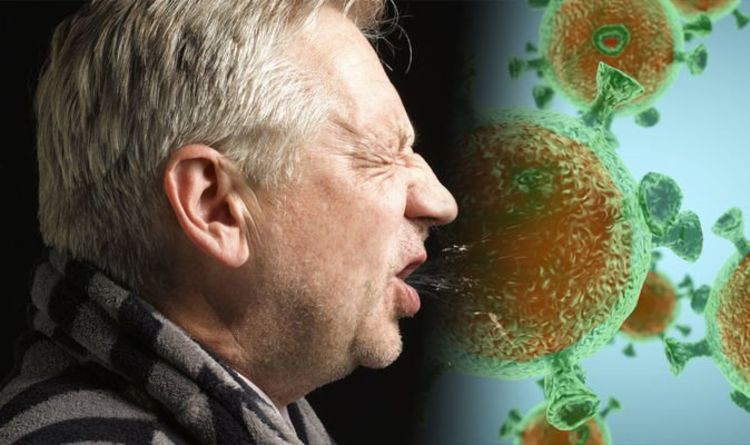
By now you know that COVID-19 is a respiratory virus mostly spread by the transmission of aerosolized droplets from person-to-person contact. Symptoms, of course, include shortness of breath, coughing, and congestion. But doctors are just beginning to fully comprehend some of the more insidious and harmful effects that COVID-19 has on the rest of your body—in both the short and long term. New research indicates that the coronavirus attacks essentially all of your major organs, especially the brain, and can saddle your body with an incredibly long and arduous recovery—assuming, of course, that you actually recover at all. Oxford University’s Helen Salisbury, MD, wrote in the British Medical Journal on June 23 that though COVID-19 symptoms usually last around two to three weeks, upwards of 10 percent of patients will experience symptoms that persist for much, much longer—perhaps indefinitely. Read on to find out the unique effects COVID-19 has on your body. And for some more up-to-the-minute, expert-backed health advice, make sure you know the 3 New Coronavirus Symptoms the CDC Just Announced.
1. IT AFFECTS BASICALLY ALL OF YOUR MAJOR ORGANS. A study published in April in the journal Protein & Cell found that COVID-19 spreads by first entering the lungs and then infecting the cells lining your blood vessels—a key step in its full-body invasion that allows the viral particles to circulate throughout your bloodstream. “We thought this was only a respiratory virus,” Eric Topol, MD, founder and director of the Scripps Research Translational Institute, told Reuters recently. “Turns out, it goes after the pancreas. It goes after the heart. It goes after the liver, the brain, the kidney, and other organs. We didn’t appreciate that at the beginning.” It remains unclear whether or not the resulting organ damage, according to Nature, “is directly caused by the virus or by secondary complications of the virus,” but the damage is undeniable. And for more up-to-date information, sign up for our daily newsletter. 2. IT REALLY TARGETS YOUR BRAIN. “The virus can also cause neurological complications that range from headache, dizziness, and loss of taste or smell to seizures and confusion,” according to Reuters. “Recovery can be slow, incomplete and costly, with a huge impact on quality of life.” A new study published on June 25 in the journal Lancet Psychiatry revealed that COVID-19 can even cause psychosis and lead to dementia. “What was particularly interesting was that this spanned the neurological spectrum,” senior author Benedict Michael, PhD, a neurologist at the University of Liverpool, told Stat News. 3. IT CAN CAUSE BLOOD CLOTTING THAT LEADS TO STROKES. The Reuters article also notes that those suffering from coronavirus may experience disorders arising from blood clotting that “can lead to strokes, and extreme inflammation that attacks multiple organs.” It’s been well reported that patients who are as young as 30 years old have experienced strokes as a result of COVID-19. As Villanova University’s Theresa Capriotti, DO, MSN, RN, explained to Healthline: “The coronavirus has been shown to cause development of [small clots that] can travel to the lung and obstruct blood flow to the lung, which is called pulmonary embolism, or travel to brain circulation and cause ischemic stroke.” Capriotti added: “It can occur in any age group and it occurs suddenly.” And for more alarming news, check out 50 Percent of Coronavirus Patients Experience This Terrifying Side Effect. 4. PHYSICAL RECOVERY TAKES A LONG, LONG TIME—MAYBE FOREVER. Extreme fatigue is an overlooked side effect of COVID-19. In fact, those who have had severe cases of the virus will require weeks of rehabilitation to restore their bodies. “I tell all of my post-hospital patients you’re going to be tired for a month. You’re going to be tired for six weeks,” said Stephen Cleves, MD, an internal medicine specialist, in an interview with WKRC, in late May. But according to Oxford University’s Salisbury, writing in BMJ, there’s no guarantee you’ll even bounce back. “If you previously ran 5k three times a week and now feel breathless after a single flight of stairs, or if you cough incessantly and are too exhausted to return to work, then the fear that you may never regain your previous health is very real,” she wrote. And for more coronavirus news, make sure you’re aware of The Rare Weather Event About to Make Coronavirus Even Worse.
BOTTOM LINE; Before We’re Screwed Over In line with Centers for Disease Control and Prevention (CDC) guidance, as well as federal guidance from the Trump Administration, you’re encouraged to follow these guidelines: 1. Listen to and follow the directions of your state and local authorities. 2. If you feel sick, stay home. Do not go to work. Contact your medical provider. 3. If your children are sick, keep them at home. Do not send them to school. Contact your medical provider. 4. If someone in your household has tested positive for COVID-19, keep the entire household at home. Do not go to work. Do not go to school. Contact your medical provider. 5. If you are an older person, stay home and away from other people. 6. If you are a person with a serious underlying health condition that can put you at increased risk (for example, a condition that impairs your lung or heart function or weakens your immune system), stay home and away from other people. 7. Even if you are young, or otherwise healthy, you are at risk and your activities can increase the risk for others. It is critical that you do your part to stop the spread of COVID-19. 8. Avoid social gatherings in groups of more than 50 people. 9. Avoid eating or drinking in bars, restaurants, and food courts – use drive-thru, pickup, or delivery options. 10. Avoid discretionary travel, shopping trips, and social visits. 11. Do not visit nursing homes or retirement or long-term care facilities unless to provide critical assistance. 12. Practice good hygiene: Wash your hands, especially after touching any frequently used item or surface. Avoid touching your face. Sneeze or cough into a tissue, or the inside of your elbow. Disinfect frequently used items and surfaces as much as possible. 13. Practice common sense and personal responsibility.
Arthritis, gastritis, colitis, dermatitis, nephritis, neuritis, cystitis are just some of the common inflammatory conditions.
If the doctor’s diagnosis ends in the four letters “itis,” which there are 178 diseases by definition, inflammation is involved. By 2040, an estimated 78 million (26%) US adults aged 18 years or older are projected to have doctor-diagnosed arthritis. Learn more about future arthritis burden HERE. There are also numerous diseases or health challenges that are closely linked to inflammation. For example, heart disease, especially coronary artery disease, is thought to be directly associated with inflammation. Inflammation is now considered to be a more important risk factor for heart disease than high cholesterol levels. Laboratory tests showing elevated levels of ESR, hs-CRP, and fibrinogen indicate the presence of inflammation in the body and a higher risk for heart disease. Also noteworthy is that statin drugs such as Lipitor and Crestor routinely used by the medical profession to lower blood levels of cholesterol are anti-inflammatory in their mechanism of action.
Numerous Diseases Involve Inflammation Cancer spread is accelerated by inflammation, and many cancer therapies utilize anti-inflammatory drugs such as steroids to keep the symptoms of inflammation (swelling and pain) under control. As well, obesity, dementia, migraine headaches, and Alzheimer’s disease involve inflammation. So do all infections, allergic conditions such as hives, and virtually all autoimmune diseases. To this list you can add asthma, diabetes, psoriasis and other skin disorders, and irritable bowel syndrome. The medical treatments for all these conditions use anti-inflammatory drugs as the main therapy. Sports injuries (for example, tendonitis and bursitis) and any musculoskeletal injury sustained in a motor vehicle accident involve inflammation.
Treating Inflammation with Drugs & Surgery Conventional doctors have always treated inflammation with drugs and surgery. In some cases, interventions such as surgery for an inflamed appendix are lifesaving. So are short-term antibiotics for some infections such as pneumonitis (pneumonia). But while modern medicine is wonderful in treating acute illnesses, it fails miserably when it comes to chronic disease or prevention. In the majority of cases of chronic illness or inflammation, current medical treatments serve only to suppress symptoms without making any dent in the disease process itself.
For example, if you have osteoarthritis, doctors will prescribe NSAIDs (nonsteroidal anti-inflammatory drugs). Most people who suffer from osteoarthritis are on NSAIDs for life. NSAIDs include drugs such as ibuprofen, naproxen, and numerous others. The trouble with all of these drugs is that they induce blood loss from the stomach or other areas of the gastrointestinal tract if taken for any extended period of time. One NSAID, Vioxx, was banned worldwide from the market a few years ago after it was proven to cause heart attacks and death in hundreds of users.
The one common denominator of all the current medical and surgical treatments for chronic inflammatory conditions is that they do not address the underlying cause of the illness. Doctors say that the use of anti-inflammatory drugs addresses the cause but, if that were really true, why does the disease persist?
Other drugs prescribed for chronic illnesses such as rheumatoid arthritis or lupus are even worse. Drugs such as Imuran and Remicade suppress the immune system dramatically; drugs that are chemotherapeutic agents (methotrexate) and antimalarial drugs (Plaquinyl) can damage the liver, the bone marrow, and other organs. The horrendous side effects of these drugs are sometimes worse than the disease itself.
Side-Effects of Drugs Prescribed for Chronic Illnesses You do not make hives better by suppressing the immune system with steroids such as prednisone. You don’t cure any form of arthritis by prescribing drugs that cause heart attacks, hemorrhage, and peptic ulcers. You do not reverse prostatitis with a year’s prescription of broad-spectrum antibiotics that lead to chronic yeast infections. You can mask and suppress symptoms for years with powerful drugs, but you will never reverse the disease process. With symptom suppression, one pays a huge price in terms of side effects and, often, finances. You cannot prevent inflammation in the body with any drug or surgical procedure. The fact that doctors and surgeons continue trying to do so without attempting a natural approach first is deplorable. Worse is the fact that many still tell their patients that diet has nothing to do with inflammation when there is overwhelming scientific evidence to the contrary.
So Can “…itis” Diseases Be Healed? There is a better way. You can prevent, control, reduce, and eliminate inflammation in the body by addressing the root causes of it in the first place. You do not need drugs in order to do this. Whether or not your doctor agrees, you can prevent or treat inflammation successfully through diet and lifestyle changes. This is not just folklore, herbalism, and old wives’ tales — every bit of information in this book [Meals That Heal Inflammation by Julie Daniluk] is backed up by scientific evidence, published studies, and clinical expertise. Certainly, in Julie Daniluk’s good hands, one can be put well on the way to greater health naturally. “Julie is a pioneer in the field of holistic nutrition, bringing her depth of knowledge and unparalleled passion to the world. Julie makes her evidence-based approach so very approachable through her books and online programs, inspiring her audience to get into the kitchen and transform their health.” Though assessing people for deficiencies, toxins, and allergies and prescribing an anti-inflammatory diet and nutritional supplements has convinced me that anyone suffering from an “itis” can reverse the disease process naturally. There are numerous recipes and meals that truly do heal inflammation.
It is indeed possible to improve health conditions without drugs and surgery.
Meals That Heal Inflammation: Embrace Healthy Living and Eliminate Pain, One Meal at a Time — by Julie Daniluk R. H. N. So if you’re one of the millions of people who have been affected by allergies, diabetes, skin disorders, heart disease, arthritis, or other conditions ending in “-itis,” then you know firsthand what havoc inflammation can cause. In Meals That Heal Inflammation, television personality and registered holistic nutritionist Julie Daniluk shows you how to conquer these health conditions with foods that will make you feel fantastic.
Although it comes in many forms, one of the most common forms of arthritis is called osteoarthritis. As a condition, osteoarthritis usually first affects the cartilage lining of our joints that are supposed to be smooth, making pain and stiffness an issue since it makes our movement more difficult than normal. And while it is unfortunate that there is no definitive cure of the condition, emerging bodies of work reveal that one particular lifestyle intervention is known to help alleviate these painful symptoms, especially when it affects our knees and hips.
That’s because, per a study published in the Journal of Nutrition, Health and Aging, following the well-known and highly-regarded Mediterranean diet can significantly reduce the markers of inflammation while also improving knee flexion and hip rotation in people who are suffering from osteoarthritis.
Here is a simple guide to some of the vegetables that should color your plate every day.
Dark Green Leafy Vegetables Energy production and other metabolic processes in the body produce harmful byproducts called free radicals. Not only do free radicals damage cells, but they also have been linked to rheumatoid arthritis (RA) and inflammation. Green, leafy vegetables such as broccoli, spinach, Brussels sprouts, kale, Swiss chard and bok choy are packed with antioxidants like vitamins A, C and K, which protect cells from free-radical damage. These foods are also high in bone-preserving calcium. Broccoli and other cruciferous vegetables (Brussels sprouts, cabbage, bok choy and cauliflower) offer another benefit – a natural compound called sulforaphane. Research on mice shows sulforaphane blocks the inflammatory process and might slow cartilage damage in osteoarthritis (OA). And there’s some evidence diets high in cruciferous vegetables could prevent RA from developing in the first place.
Sweet Potatoes, Carrots, Red Peppers and Squash These brightly orange- and red-hued vegetables get their distinctive color from carotenoids like beta-cryptoxanthin. Plant pigments also supply sweet potatoes, carrots, squash and red peppers with antioxidants. Some research suggests eating more foods rich in beta-cryptoxanthin could reduce your risk of developing RA and other inflammatory conditions.
Red and Green Peppers Peppers – no matter what their color or whether they’re mild or hot – are an abundant source of vitamin C, which preserves bone, and may protect cartilage cells. Getting less than the recommended 75 mg for women and 90 mg for men daily may increase risk for OA of the knee. Just a half-cup of red bell pepper gives you a full day’s supply.
Onions, Garlic, Leeks and Shallots These pungent and flavorful vegetables are all members of the allium family, which are rich in a type of antioxidant called quercetin. Researchers are investigating quercetin’s potential ability to relieve inflammation in diseases like RA. Alliums also contain a compound called diallyl disulphine, which may reduce the enzymes that damage cartilage.
Olives Though technically a fruit and not found in the produce aisle, olives and olive oil can be potent inflammation fighters. Extra-virgin olive oil contains the compound oleocanthal, a natural anti-inflammatory agent that has properties similar to the ibuprofen.
Nightshade Vegetables Eggplants, peppers, tomatoes and potatoes are all members of the nightshade family. These vegetables contain the chemical solanine, which some people claim aggravates arthritis pain and inflammation. However, most reports are anecdotal, and while it certainly might be true for some people, there are no scientific studies done to prove that they actually cause inflammation or make symptoms worse, says Kim Larson, a Seattle-based dietitian and Academy of Nutrition and Dietetics Spokesperson. Nightshade vegetables are rich in nutrients, making them a worthy addition to your diet. Simply test it. Eliminate nightshades from your diet for a couple weeks and slowly reintroduce them back into your diet.
If you find that adding nightshades trigger arthritis pain, don’t eat them.
Cooking Your Vegetables Almost as important as which vegetables you choose is how you cook them. Steaming is preferable to boiling because it preserves the nutrients in the vegetables. “Don’t use a lot of water, because vitamins and antioxidants might leach out in the water,” Larson says. Also, don’t overcook them – keep vegetables a little bit al dente to hold in the vitamins and minerals. Skip the deep fryer, which adds a lot of extra fat and calories, but do sauté. Using oil releases the phytochemicals in vegetables and makes them more available, says Larson. Even better, use a tablespoon or two of olive oil to get an extra dose of anti-inflammatory oleocanthal.
It wasn’t until 2007 that the international outcome measures in the Rheumatology Clinical Trials group added fatigue to the list of core rheumatoid arthritis (RA) symptoms. Fatigue is invisible and different from normal tiredness, so people that haven’t experienced it have a hard time understanding the challenges it presents itself to those that have hard times with it. The nature of fatigue is completely different from the tiredness people get, and it sometimes seems worse because it’s less easy to manage. Researchers have found that fatigue is more prevalent in certain arthritic related conditions. For example, 9 0ut 0f 10 people with RA and fibromyalgia tell their doctors they have fatigue severe enough to affect their daily lives and activities. But a much smaller proportion of people with osteoarthritis (OA) — about 40 to 47 percent – report that level of exhaustion. Furthermore, half of people with psoriatic arthritis state “they feel tired whatever they do.”
A study in the Journal of Pain found that people with RA and OA are better able to predict when fatigue will strike than people with fibromyalgia, whose energy levels often vary more widely day to day. Little is known about the causes of arthritic related fatigue. People can experience it even when their condition is otherwise controlled. A mixture of often connected physical and emotional factors seem to influence fatigue.
Inflammation: inherent in many types of arthritis and autoimmune conditions, is itself a cause of fatigue. Comparing it to the flu is spot on. The body responds to the flu with an inflammatory response that includes the release of infection-fighting proteins called cytokines that makes one feel tired and unwell, as does inflammation in RA and related conditions.
Pain: The No. 1 symptom of arthritis makes feeling fatigue worse. If you’re in pain you have less tolerance for your tiredness, and when you’re fatigued you can’t tolerate the pain you could have put up with [when you weren’t fatigued]. Remember also pain is an accurate predictor of fatigue, thus reducing pain and managing inflammation should be primary fatigue relieving strategies.
Stress: physical and emotional, can leave you flattened by fatigue. Stress from illness or physical overexertion is a surefire fatigue trigger and emotional stress can be just as draining. And another emotional drain and fatigue feed off of each other would be depression.
Depression: affects more people with RA or psoriatic arthritis that other people. In a survey of people with RA, more than 90 percent said fatigue caused them to be depressed in the last week. Depression can also lead to increases in pain perception, and all those factors interacting together create a vicious cycle of worsening symptoms and cause poor sleeping.
Poor Sleep: also worsens fatigue. Sleep problems are extremely common in people with chronic pain disorders, such as fibromyalgia and more than 60 percent of people with RA have poor or disturbed sleep. “Clinicians used to view this as a reaction to chronic pain, but research shows sleep problems are leading the way and causing pain, fatigue and depression. It’s also found that sleep disturbances increase inflammation, which can lead to a worsening of RA.
Fatigue Can Be Tough to Treat… Treating fatigue is complicated because of the shifting mixture of factors that influence it. Drugs can help control inflammation that contribute to fatigue, however, medication alone can’t solve the problem of fatigue. A 2013 Cochrane Database review of 24 studies of non-drug treatments for fatigue in RA looked at a variety of therapies, but only two — exercise and psychosocial interventions — produced measurable interventions. Exercisers had the biggest reductions in fatigue — about 9 percent than before starting the activity.
Pain & Your Brain Stephanie Aleite, a Miami native, has waged a two-decade long war against rheumatoid arthritis. And just as she loves to accessorize the cane she uses to walk with her outfits, she has come to learn that her best accessory is her smile. Just by looking at her, most wouldn’t know that Stephanie battles an autoimmune disease because she shrouds it so well with her positivity and optimistic outlook on life with her illness. Stephanie has had Juvenile Rheumatoid Arthritis since she was 5 years old. Over the years she has learned that how she feels emotionally affects her pain and what she learned intuitively, physicians and researchers are verifying. Being in a good mood distracts my mind from pain and makes it more bearable, says Stephanie: “my flares are usually temporary so I always tell myself there is light at the end of the tunnel.’
How we feel about pain affects the experience of pain.
When you’re talking about physical pain, “it’s so important not to neglect the emotional influences on how we experience pain. A lot is based on our past experiences and emotions to pain.” Although researchers are still investigating how thought and emotions affect pain, numerous studies have shown their correlation. In a 2010 study published in Osteoarthritis and Cartilage, researchers interviewed 266 people with hip and or knee osteoarthritis over 12 weeks, using a pain index and a mental inventory. And the researchers found that for people whose moods dipped lowest, the chance of a painful flare the following week was more than twice as likely as it was for people who had the greatest feelings of well being. Also in a study published in 2013 in the Journal Brain, researchers looked at brain activity in 153 people with either acute or chronic back pain. Those with back pain for two months or less showed brain activity in areas of the brain involved in acute pain. The researchers speculate that as pain persists, perception becomes less about the increasing emotion, memory and experience of the pain’s persistence. Emotions change the biology of pain as well, explains David Hanscom, M.D.. an orthopedic spine surgeon at the Swedish Neuroscience Institute in Seattle Washington Out of Chronic Pain and author of Back in Control: A Spine Surgeon’s Roadmap. “Pain is interpreted by the brain,” he says, “if you are angry about and frustrated by your pain, for instance, your body has a fight or flight response, secreting cortisol and adrenalin, chemicals that amplify pain. Your blood supply to the brain shuts down but increases to the muscles, your airways dilate.
Essentially, your body’s driving down the highway amped in third gear.
Once you realize emotions can affect pain, you may have a whole arsenal of new approaches for reducing it. These approaches won’t make the arthritis go away, but it may help you deal with the pain better. Effects of mindful-attention and compassion meditation training on amygdala response to emotional stimuli in an ordinary, non-meditative state. https://www.ncbi.nlm.nih.gov/pmc/articles/PMC3485650/
Now, a new study in which researchers treated 153 adults suffering from fibromyalgia (a chronic, incurable disorder) with nine 20-minute sessions of real or fake acupuncture has shown that regular treatments can lower the pain by about 41 percent, compared with just 27 percent for those given sham treatments. The results were published in the journal Acupuncture in Medicine.
A totally new paradigm for treating back pain…. Virtually every American will suffer from back pain at some point. Dr. Jack Stern, a neurosurgeon and professor at Weill Cornell Medical College, brings relief to these millions of sufferers (including himself) who literally ache for help. Based on the latest scientific data, Dr. Stern developed a five-step solution with a multidisciplinary, holistic perspective that’s been missing from conventional back pain wisdom:
Step One: Unlock your back’s unique pain code Step Two: Prepare to work with health care professionals Step Three: Ensure proper diagnosis Step Four: Embrace various pathways to healing Step Five: Live a life that supports a strong, healthy back
Engagingly written and chock-full of enlightening case studies, Ending Back Pain finally shares the program that’s already helped more than 10,000 grateful patients. The thalamus is the gateway to the cerebral cortex. All cortical-bound somatosensory inputs relay through the thalamus. One major group of these somatosensory inputs is the nociceptive input. Nociceptive inputs from the skin, deep structures, and visceral organs converge in the thalamus en route to the cerebral cortex. A hundred years ago, Head and Holmes1 designated the thalamus the essential organ of the affective side of our sensation, especially pain. The objectives of the present review are to review the importance of the thalamus in pain function, posit main questions, and propose what needs to be done.
Here Are Some Approaches To Try… Mind Your Pain: try mindful meditation exercises — focusing on slow breathing and calming thoughts. Focus on the painful part with positive affirmation. In 2009, a study at Wake Forest University, researchers did brain scans of 15 healthy volunteers in whom they induced pain. An instructor then taught them mindful meditation over four days. In 20 minute sessions, they focused on deep breathing and paying attention to their bodies’ sensations. On day 5, the researchers again induced pain on those same volunteers and they experienced 40 percent pain reduction compared to the levels they had when they were not meditating.
Express Your Pain: for 10 minutes a day, write down exactly what you feel, including your pain inducing thoughts. Then tear up the writing unloading that negative thought from your brain. That simple writing exercise will cause your anxiety and pain to drop. The exercise may reduce inflammatory chemicals as well. In a 2009 study, published in Psychotherapy and Psychosomatics, involving 68 people with rheumatoid arthritis, those who had four weekly sessions for expressing their emotions had significantly lower levels of inflammatory markers, such as cortisol, three months after the sessions.
Monitor Pain-Related Thoughts: for instance, some people with knee arthritis may think that if they have any discomfort, they should stay in bed all day. To help change pain related thoughts cognitive behavioral therapy CBT examines negative thoughts and beliefs and offers ways to alter your attitude. In a University of Vermont study published in 2013 in The Journal of Pain, for example, researchers assessed changes in pain and in the brains of 13 patients with chronic back pain after 11 weeks of group CBT. Scans in their brains showed changes in the gray matter that correlated with less catastrophizing or exaggerated worry about their pain.
Dance Away Your Pain: if you’re looking for a fun way to work out with big benefits, move to music! In a study published in the 2014 issue of Geriaric Nursing, older adults who took a 45 minute dance therapy class twice a week reported less knee and hip pain and were able to walk faster after three months. ” Dancing may help to prevent falls and keep people functional, independent and strengthens muscles while the music stirs happy thoughts. Dancing is great exercise at any age and arthritis patients should look for low impact with slow fluid movements that won’t tax your joints (Zumba Gold, Ballroom Dancing, Healthy Steps, Jazzercise Life.)
1. Laughing reduces cortisol stress hormones. I believe there is a simple reason why Unplugging, our night-time nootropic, has been so popular: we’re all stressed.
2. increases the endorphins that are released by your brain, which activates and relieves your stress response. A rollicking laugh fires up and then cools down your stress response, and it can increase and then decrease your heart rate and blood pressure.
3. Laughter enhances your intake of oxygen-rich air, stimulates your heart, lungs and muscles, and…. Extended periods of oxygen deprivation can produce acidosis, inflammation, energy failure, cell stress, or cell death. However, brief profound hypoxia (here defined as Sao2 50%–70% for approximately 10 minutes) is not associated with cardiovascular compromise and is tolerated by healthy humans without apparent ill effects. In contrast, chronic hypoxia induces a suite of adaptations and stresses that can result in either increased tolerance of hypoxia or disease,
In healthy humans, brief profound hypoxia produces increased minute ventilation and increased cardiac output, but little or no alteration in blood chemistry. Central nervous system effects of acute profound hypoxia include transiently decreased cognitive performance, based on alterations in attention brought about by interruptions of frontal/central cerebral connectivity. However, provided there is no decrease in cardiac output or ischemia, brief profound hypoxemia in healthy humans is well tolerated without evidence of acidosis or lasting cognitive impairment.
Setting Higher Expectations: “you can affect the outcome and how you experience pain simple by preempting the emotional aspect.” Talk about your fears and how much pain you are experiencing. Much like Stephanie Aleite who is able to walk and climb steps, She realizes she may never be able to dunk a basketball. But she has her heart set on ice skating and bicycling. She is optimistic that someday she will be chasing a two year old around and enjoying her life.
>>>>>>>>>>>>>>>
About the Authors
Dr. Zoltan P. Rona, author of: Vitamin D, The Sunshine Vitamin!! Dr. Zoltan P. Rona is a graduate of McGill University Medical School (1977) and has a Masters Degree in Biochemistry and Clinical Nutrition from the University of Bridgeport in Connecticut (1984). He is past president of The Canadian Holistic Medical Association (1987-88). He is the author of three Canadian bestsellers, The Joy of Health (1991), Return to the Joy of Health (1995) and Childhood Illness and The Allergy Connection (1997). He is co-author with Jeanne Marie Martin of The Complete Candida Yeast Guidebook (1996) and is the medical editor of the Benjamin Franklin Award winning Encyclopedia of Natural Healing (1998). He has had a private medical practice in Toronto for the past 32 years, has appeared on radio and TV as well as lectured extensively in Canada and the U.S. Dr. Rona has just published his new book, “Vitamin D, The Sunshine Vitamin”.
Julie Daniluk R.H.N., author of: Meals That Heal Inflammation–Embrace Healthy Living and Eliminate Pain, One Meal at at Time by Julie Daniluk, R. H. N. , is a leading nutritionist and the co-host of Healthy Gourmet, a reality cooking show that airs on OWN (the Oprah Winfrey Network) in Canada. Julie has appeared on The Dr. Oz Show, The Right Fit, and The Marilyn Denis Show. For 12 years, she was the cooperative owner and the Chief In-Store Nutritionist for one of Canada’s largest health-food stores, The Big Carrot Natural Food Market in Toronto. https://www.progesteronetherapy.com/list-of-inflammatory-diseases.html
Take Control of Your Fight Against Cancer… Discover the powerful benefits of food as medicine with evidence-based nutrition without confusion, overwhelm, and most of all discouragement!
If you’re on a cancer journey, in remission, a caretaker, or someone looking to reduce your chances of developing cancer, then you already KNOW the path is not easy. It’s an emotional and physical one that takes a lot of hard work and growth.
You’ve probably heard a healthy lifestyle can play a role in reducing treatment side effects, improve outcomes, and decrease the risk of recurrence. Since you know that, you know the importance of taking control of your nutrition.
After all, research suggests 1 in 3 cancers are a result of diet.
HERE’S WHAT YOU MIGHT NOT KNOW Even if you are lucky enough to have an excellent cancer care team and supportive family and friends, understanding how nutrition impacts cancer is most likely not part of the journey.
~Food Can Be Fuel~ Depending on what you put in your mouth, you’re either causing disease or fighting it. We’ll dive into the difference between disease-causing and disease-fighting foods, which can dramatically change your body’s ability to fight and can impact your loved ones’ health too!
~A Long, Healthy Life, Feeling Strong~ A long, independent life filled with plenty of birthday parties and watching your children (and even grandchildren) getting married is possible. Implementing a healthy lifestyle can increase your chances of being there for the best things in life.
~You Can Gain Control of Your Destiny~ You don’t have to leave it all up to chance. You can take some of that control back. One day at a time, one meal at a time. And fight back.
~Controlling Inflammation~ Research shows inflammation is the root cause of several diseases, including cancer. Learning how to reduce inflammation gives you the best chance of preventing disease in the first place and managing it early.
Even though the motivation to overcome cancer (or prevent it) is clear, the path to actually doing it is anything but.
BEAT CANCER? Let’s Do It! But where do I start?
We All Know It Won’t Be Easy It’s not easy when all your energy has gone into your cancer treatments… dozens of doctor appointments…not to mention all of your other life responsibilities.
You’ve done some nutrition research, but you find so many different resources sharing differing opinions. Don’t eat soy. Eat soy. Don’t eat sugar. Don’t eat legumes… Wait, I thought beans were healthy? Who can keep up?
Maybe you even reached out to your doctors, inquiring how nutrition could complement your treatments. But they’re at a loss, or you didn’t feel confident in his or her answer.
Once you complete your treatment, you wonder, “What’s next?” Cancer took control of your life, but you’re finally ready to make sure it never, ever takes over again.
Most importantly, you don’t want your loved ones, your husband or wife or your children, ever to have to hear the words “you have cancer” like you had to.
You Can’t Afford to Have Cancer to Come Back – So How Do You Take the Next Step? You feel a lack of clarity around what foods cause disease. You feel as though you will always be a cancer victim (or that you’re doomed to be one).
You hear all the health gurus say, “Just don’t do this” or “Do that.” But it’s not that easy, is it? Years of habits can’t change overnight.
The moment you feel like you “messed up” or ate the wrong thing, you feel like it’s impossible to go back. You have never pictured yourself as someone who can successfully live a healthy lifestyle.
You feel as though you have to be PERFECT.
But that is precisely why you need someone to share the WHY, WHAT, and HOW.
The ‘I Can Fight’ Mindset You Need to March On (and reduce your risk of developing cancer and/or recurrence) Let’s pretend you already completed your radiation and/or chemotherapy treatments. Your surgery is over. You walk out of the cancer center wondering what’s next.
When you implement a healthy lifestyle, you have the opportunity to take control of something that has the power to take you to new and exciting places!
WHY NOTHING HAS WORKED IN THE PAST Even though there are hundreds of thousands of health professionals claiming they can help you gain a healthy lifestyle, they simply tell you WHAT to eat: “Eat x cups of broccoli a day. Don’t eat deli meat”.
But you ask, “Why broccoli? How do I cook it so it tastes good? And what does deli meat have to do with my cancer?”
While well intentioned, their approach doesn’t actually give you the tools to make a sustainable shift in your lifestyle. In the end, it can make you feel more lost. What you need is someone to teach you about evidence-based research in an easy-to-understand manner, someone who can provide access to healthy meal planning, recipes, healthy substitutions, tips, tricks, and sustainable changes to put you on the path back to wellness.
The key to marching on is education around the what, the why, and how, to implement a plant-based (or plant-focused) lifestyle.
A comprehensive digital program that teaches evidence-based information about nutrition and cancer AND how to implement a plant-based lifestyle while meeting nutrition needs to support your health once you’ve been diagnosed with cancer, or to help prevent it in the first place.
Meet Alison Tierney – Oncology Dietitian I have spent many years training to become an oncology dietitian, achieving my master of science, becoming a certified specialist in oncology nutrition, and teaching other registered dietitians working towards their master’s degrees.
My passion and dedication have allowed me to teach hundreds of patients how to make positive changes in their life. Most of them now have no evidence of disease and are living healthy lives.
ALISON’S CREDENTIALS MS – Master of Science – Nutrition & Fitness Concentration RD – Registered Dietitian CD – Certified Dietitian, State of Wisconsin CSO – Certified Specialist in Oncology Adjunct Graduate Professor – Evidence Based Practice, Oncology
~Teaches Evidence-Based Research~ Teaches the currently available research that demonstrates which foods are disease-causing and which are disease-fighting.
~Is an All-in-One Resource for Cancer Nutrition~ Since oncology nutrition is a specialty practice, it is rare for a medical professional to receive in-depth education on the topic. We believe this course fills that gap and is also perfect for the average person.
~Gives You the Tools to Implement Sustainable Changes~ t doesn’t only share what to do, but why and how to confidently implement it in your own way, at your own pace.
Other References: ON this episode of Health, Hope & Inspiration, psychologist Dr. David Wakefield talks about the importance of finding someone you can trust to talk to when you’ve received a cancer diagnosis, and how that can help you to cope with what the future holds. Processing a Cancer Diagnosis ON This episode of Health, Hope & Inspiration is entitled “Overcoming Insecurities.” Mind-body therapist Corliss Ivy explores how emotions can affect physical well-being. Overcoming Insecurities In this episode of Health, Hope & Inspiration the hosts talk with cancer survivor Robbie Robinson, who shares how his experience with cancer has inspired him to commit his life to serving others and made him an advocate for those starting their own journey. I’m Not Done Yet Mind-body therapist Steve White talks to the hosts of Health, Hope & Inspiration about three thought processes most patients go through and why they should give their worries to God. Taking the Worry Out of Cancer Dr. Lynn Bornfriend, a psychiatrist at Cancer Treatment Centers of America, talks on this week’s Health, Hope & Inspiration about the power of a proper mental attitude of focusing on the present in order to help combat the effects of illness in our bodies. Exchanging Anxiety for Peace Clinical Psychiatrist Dr. Laura Sunn joins the hosts of Health, Hope & Inspiration to talk about dealing with mental health issues during cancer care, including anxiety and depression. Caring for Emotional Health
Let’s look at this man for one damn second and STOP Blaming HIM!
“I share the same birth date as this 74 year old man coming back home from work at 2AM. While most men his age are retired in their vacation homes. President Trump comes back after a long day that probably started before the sun rose and gets back home exhausted with his tie open and hat in his hand feeling that an accomplished day is finally over.
This amazing man is in the age of many people’s grandfathers, great grandfathers or my grandfather when he passed away, but this man just came back home from work, for me, for you. This man left his massive gold covered mansion where he could retire happily and play golf all day long.
But this man put his wealth aside and went to work for free, for $1 a year, for me, for you, for us, for AMERICA. While other presidents became rich from the presidency, this man LOST over 2 billion dollars of his wealth during this short 4 years of his life. He put aside his amazing retirement lifestyle for getting ambushed every single day by the media and the Radical Left.
Democrats through political gain have trash this man who works for them until 1AM for free! He doesn’t do it for money or power, he already had it. He is doing it so their houses will be safe, so their schools will get better, so they will be able to find jobs or start a new business easier, so they will be able to keep few dollars in their pockets at the end of the month while other presidents before him (the last One) made sure to keep digging in your pocket to free load of the system. Look at this picture again, that man is at the age of your fathers, grandfathers or maybe YOU! Where is your respect? Honor? Appreciation? Are you THAT BLIND? THAT BLIND to not see a thing this man is doing for you and for your family? It’s blind to keep calling him a racist? Are you THAT BLIND to not see how much this country developed in the last 4 years?
I would hate to see where this country would be right now if Hillary would have won 4 years ago.
President Donald J. Trump, I want to thank you with all my heart. I am so sorry for blind hatred you have been made to endure. And the witch hunt Impeachment I witnessed earlier this year. You are a good and generous man. I KNOW THIS. What I don’t know and think about often is what kind of pitiful people that can be so hateful in their hearts to spew such hate, not just at you but at your wife and young son? Or people mocking and making jokes of you because you’re not a professional politician ” Deceiver,” groomed in speech making from a prompt and straight faced lying. WHAT KIND OF PEOPLE ARE THESE?? People not realizing they have been manipulated and brainwashed by such a deep rooted EVILNESS MOTIVATED BY A Hateful Agenda, MEDIA AND DEMOCRAT PARTY.” The American People are in a bad place right now….in their hearts and souls. God help us….Trump is not the problem. It’s we the people without (values, morals or principles) like those that came before us and an immature government that doesn’t have a clue how to fix what is wrong. It’s a government that thinks Obamacare is the answer and refuses to address the root cause of the problem.
If not for President Trump, I am sure Hillary Clinton would have allowed an additional 10 million illegals into this country in her first four years in office. Which we would not have afforded to allow to happen to this country for the sake of the Democrat gain. Many Americans in the United States don’t realize that Trump is very effective at finding Groups like—Mara Salvatrucha (MS-13), and the 18th Street Gang. Their activities have helped make the Northern Triangle — Guatemala, El Salvador, and Honduras — the most violent place in the world that is not at war. In October 2012, the US Department of the Treasury labeled the group a “transnational criminal organization,” the first such designation for a US street gang, These international gangs are involved in drug and human smuggling, prostitution, murder, and extortion, among other illegal activities was founded in Los Angeles in the 1980s by immigrants from El Salvador and later spread throughout the United States, Central America, and Canada, gaining a reputation for extreme violence or — and sending them back home to Central America ensuring our safety.
God bless President Trump…As He’s Trying to Keep America great. The Committee of Five refers to the group of men charged by the Second Continental Congress with drafting the Declaration of Independence. The Committee of Five consisted of: John Adams; Benjamin Franklin; Thomas Jefferson; Robert Livingston; Roger Sherman; It operated between June 11, 1776, and July 5, 1776, when the Declaration was published.
SO The Fourth of July—also known as Independence Day or July 4th—has been a federal holiday in the United States since 1941, but the tradition of Independence Day celebrations goes back to the 18th century and the American Revolution. On July 2nd, 1776, the Continental Congress voted in favor of independence, and two days later delegates from the 13 colonies adopted the Declaration of Independence, a historic document drafted by Thomas Jefferson. From 1776 to the present day, July 4th has been celebrated as the birth of American independence, with festivities ranging from fireworks, parades and concerts to more casual family gatherings and barbecues. This Fourth of July 2020 is on Saturday, July 4, 2020.
When the initial battles in the Revolutionary War broke out in April 1775, few colonists desired complete independence from Great Britain, and those who did were considered radical. By the middle of the following year, however, many more colonists had come to favor independence, thanks to growing hostility against Britain and the spread of revolutionary sentiments such as those expressed in the bestselling pamphlet “Common Sense,” published by Thomas Paine in early 1776.
Did you know? John Adams believed that July 2nd was the correct date on which to celebrate the birth of American independence, and would reportedly turn down invitations to appear at July 4th events in protest. Adams and Thomas Jefferson both died on July 4, 1826— the 50th anniversary of the adoption of the Declaration of Independence.
This Saturday marks the 244th birthday of America’s Independence and a turning point in our country’s history. If we the people decide in November to elect the demented one into office and pass on Trump. In 2024 don’t say I didn’t tell you that Joe Biden would be a bigger mistake than Obama at dividing this once great United States. For as many blacks that I talk to that are making it in this country will tell you Black Lives Matter if you decide to get out there and make it happen for yourself!!!
The Most Beautiful “Amazing Grace” I’ve ever heard!!! 🙂 Amazing Grace was written by a former slave trader John Newton.. Once sailing a ship full of slaves from Africa his ship was hit by a fierce storm… Newton feared for his life and got down on his knees and begged the good Lord to spare his life.. He promised the Lord that if he would only spare his life he would change his ways and stop trading slaves.. The storm calmed down and Newton wrote the song Amazing Grace, full of sorrow and love and hope that he would be forgiving of his sins. One of the most powerful songs ever written and this is one of the most beautiful versions ever recorded by Judy Collins.
Thanks to my friend, for writing this, Is it all starting to add up to you yet…. talking of getting rid of the police?
Smells like the New World Order are in the works. Here’s the TRUTH of what’s happening in the world!!!! Create a VIRUS to scare people. Place them in quarantine. Count the number of deaths every second of every day in every news headline. Close all businesses. 40,000,000 out of jobs. Peak unemployment. Remove entertainment: parks, gyms, bars, restaurants, sports. No dating. No touching. Mask people. Dehumanize them. Close temples and churches. Create a vacuum. Let depression and anxiety and desperation set in.
THEN… ignite hatred and civil war. Civil unrest. Empty the prisons because of the virus and fill the streets with criminals. Send in Antifa to vandalize property as if they are freedom fighters. Undermine the law. Loot. Attack law enforcement, but tell the government to order a stand-down. We are all being baited by adversarial governments who want to destroy America – China, Iran, Russia.
They Can’t take America in war, so destroy it from within. We are being conditioned, manipulated, and programmed by multiple agendas as never before….. its time to DO OUR OWN RESEARCH and MAKE UP OUR OWN MINDS rather than eating everything being spoon-fed to us by The MEDIA that is going to kill us! SO Pull your heads out of the sand. Dust yourself off. It is times to take our FREEDOM and our GREAT NATION BACK‼‼
According to a Reuters tally, marking a major milestone in the spread of the respiratory disease that has so far killed almost half a million people in seven months. The figure is roughly double the number of severe influenza illnesses recorded annually, according to the World Health Organization The milestone comes as many hard-hit countries are easing lockdowns while making extensive alterations to work and social life that could last for a year or more until a vaccine is available. Some countries are experiencing a resurgence in infections, leading authorities to partially reinstate lockdowns, in what experts say could be a recurring pattern in the coming months and into 2021. North America, Latin America and Europe each account for around 25% of cases, while Asia and the Middle East have around 11% and 9% respectively, according to the Reuters tally, which uses government reports. There have been more than 497,000 fatalities linked to the disease so far, roughly the same as the number of influenza deaths reported annually. The first cases of the new coronavirus were confirmed on Jan. 10 in Wuhan in China, before infections and fatalities surged in Europe, then the United States, and later Russia. The pandemic has now entered a new phase, with India and Brazil battling outbreaks of over 10,000 cases a day, putting a major strain on resources. The two countries accounted for over a third of all new cases in the past week. Brazil reported a record 54,700 new cases on June 19. Some researchers said the death toll in Latin America could rise to over 380,000 by October, from around 100,000 this week. The total number of cases continued to increase at a rate of between 1-2% a day in the past week, down from rates above 10% in March. Countries including China, New Zealand and Australia have seen new outbreaks in the past month, despite largely quashing local transmission. In Beijing, where hundreds of new cases were linked to an agricultural market, testing capacity has been ramped up to 300,000 a day. The United States, which has reported the most cases of any country at more than 2.5 million, managed to slow the spread of the virus in May, only to see it expand in recent weeks to rural areas and other places that were previously unaffected. In some countries with limited testing capabilities, case numbers reflect a small proportion of total infections. Roughly half of reported infections are known to have recovered. Coronavirus cases in the U.S. topped 2.5 million Saturday as new states saw record spikes this week in their daily coronavirus infection rate. According to John Hopkins University data Saturday, the U.S. reached 2,507,874 cases — accounting for a quarter of the world’s almost 10 million cases.
Several states around the U.S. — including Florida, Texas and Arizona — saw alarming new records in their daily coronavirus infection rates, with Florida reporting 20 percent of the country’s 45,000 daily increase on Saturday.
Florida The state’s Department of Health reported more than 9,600 new cases of COVID-19, surpassing Friday’s record high of nearly 9,000 cases and marking the third time this week the Sunshine State topped the previous daily infection rate. FLORIDA SEES THIRD DAY OF RECORD-HIGH CORONAVIRUS CASES IN ONE WEEK Miami-Dade Mayor Carlos A. Gimenez announced that all beaches in his county will be closed July 3 through July 7, and potentially longer. “The closure may be extended if conditions do not improve and people do not follow New Normal rules requiring masks to be worn always inside commercial establishments and outdoors when social distancing of at least 6 feet is not possible,” Gimenez told Floridians in a statement Friday. The state’s alcohol regulatory board also announced a statewide ban on in-person alcohol consumption in bars. State officials believe the spike in cases is attributed to young demographics meeting in social settings without practicing the Centers for Disease Control and Prevention (CDC) guidelines of keeping a 6-foot distance and wearing a mask, as the guidelines are not enforced statewide. Florida Gov. Ron DeSantis said in a press briefing Friday that he does not believe instituting a statewide regulation on masks is the right decision to make. PENCE POSTPONES FLORIDA, ARIZONA CAMPAIGN EVENTS AMID INCREASE IN CORONAVIRUS CASES THERE “We’ve advised that’s something that could make an impact,” DeSantis said. “At the same time, to do police and put criminal penalties on that is something that probably would backfire.”
Texas Texas Gov. Greg Abbott announced this week that the state is pausing all reopening plans at this time, in an attempt to stunt the rapid increase in coronavirus cases seen recently. The governor on Friday signed an executive order suspending rafting and tubing businesses. Bars and similar establishments that receive more than 51 percent of their gross business from the sale of alcoholic beverages were also forced to close, to the dismay of many business owners. And dine-in restaurants will be required to seat only 50 percent capacity by June 29, down from the current 75 percent capacity that had been implemented.
Arizona Arizona Gov. Doug Ducey, who lifted the state’s stay-at-home orders in May, is now asking residents to again stay home to prevent a larger increase in cases. Arizona reported 3,600 new cases Saturday and is ramping up the state’s hospital preparedness. Vice President Mike Pence, the leader of the White House Task Force, was asked this week if he saw a correlation between the states that reopened early and the states now seeing spikes in coronavirus cases. “I think there will be a temptation for people to look at these Sunbelt states that have been reopening and putting people back to work and suggest that the reopening has to do with what we’re seeing in the last week or so,” Pence said. Pence announced that he was postponing his campaign tour in Florida and Arizona on Saturday, due to the rising COVID-19 numbers in those states.
However, a spokesperson for Pence told Fox News that he will still be traveling to Florida, Texas and Arizona next week to meet with governors and assess the situation on the ground. Only two US states are reporting a decline in new coronavirus cases compared to last week — Connecticut and Rhode Island. A staggering rise was reported in 36 states, including Florida, which some experts have cautioned could be the next epicenter.
Florida reported 9,585 new coronavirus cases Saturday, a single-day record high since the start of the pandemic. The number rivals that of New York’s peak in daily cases in early April. While Florida Gov. Ron DeSantis said the state’s surge in cases in the past week was the result of a “test dump,” officials there and across the US have also warned of an increase in cases among younger groups. That’s all as the US broke another record, reporting the highest number of new cases in a single day Friday with at least 40,173 new infections. But the daunting numbers could just be the tip of the iceberg: A new survey by the US Centers for Disease Control and Prevention suggests the total number of coronavirus infections across the US could actually be six to 24 times greater than reported. As cases spike, US travelers are “unlikely” to be allowed into the European Union as the bloc begins opening up to international travel, several EU diplomats told CNN. Officials in parts of the US are now trying to reel in the spread of the virus — which many experts have said is spiraling out of control — by making pleas to the country’s young population to keep their distance, urging the use of face masks and halting reopening plans. The US has now hit more than 2.5 million infections and at least 125,539 deaths, according to Johns Hopkins University.
Your coronavirus questioned, answered here Where new cases are on the rise The 36 states seeing a rise in cases include: Alabama, Alaska, Arizona, Arkansas, California, Colorado, Florida, Georgia, Hawaii, Idaho, Illinois, Iowa, Kansas, Kentucky, Louisiana, Maine, Michigan, Minnesota, Mississippi, Missouri, Montana, Nevada, New Mexico, North Carolina, Ohio, Oklahoma, Pennsylvania, South Carolina, Tennessee, Texas, Utah, Vermont, Washington State, West Virginia, Wisconsin and Wyoming. Cases are trekking steady in Delaware, Indiana, Maryland, Massachusetts, Nebraska, New Hampshire New Jersey, New York, North Dakota, Oregon, South Dakota and Virginia.
At least 12 states halted or rolled back their reopening plans in hopes of curbing the spread of the virus. Washington State Gov. Jay Inslee announced Saturday he’s hitting the pause button on the state’s reopening plan due to rising cases. Some counties were preparing to enter the fourth phase of reopening, “which would essentially mean no restrictions,” the governor’s office said in a statement. “Phase 4 would mean a return to normal activity and we can’t do that now,” the statement said. “This is an evolving situation and we will continue to make decisions based on the data.”
Texas Gov. Greg Abbott announced last week he’d pause any further phases to reopen the state. “I ask all Texans to do their part to slow the spread of Covid-19 by wearing a mask, washing their hands regularly, and socially distancing from others. The more that we all follow these guidelines, the safer our state will be and the more we can open up Texas for business.” A day later, Abbott also said he was closing bars and limiting restaurant capacity. Arizona’s governor has also announced the state’s reopening is on pause as a result of a major spike in cases. “We expect that our numbers will be worse next week and the week following,” the governor said.
Pleas to young groups In recent days, officials across the US have reported a rise in cases among younger groups. In Mississippi, officials pointed to fraternity parties as one of the drivers behind the state’s cases. California Gov. Gavin Newsom said last week there’s been an increase in younger groups testing positive for the virus. “There is a sense that a lot of young people, well you’re young so you feel a little bit more invincible but, respectfully, often that can be a selfish mindset,” Newsom said. In Florida, DeSantis said while the median age for those infected with the virus in March was in the 60s, in the past two to three weeks it’s dropped to people in their early 30s. The governor urged younger groups to be vigilant, saying while they may not be at risk for serious complications, they can pass the virus on to someone who is. The state’s community transmission, he said, is “being driven by that 18 to 35-year-old group.” “You have a responsibility to be careful if you’re in contact with somebody who is more vulnerable,” he said. “We’ve been stressing avoiding the three Cs which are: 1. closed spaces with poor ventilation, 2. crowded places with many people nearby and 3. close-contact settings, such as close-range conversations.”
To prevent infection and to slow transmission of COVID-19, do the following: 1. Wash your hands regularly with soap and water, or clean them with alcohol-based hand rub. 2. Maintain at least six feet distance between you and people coughing or sneezing. 3. Avoid touching your face. 4. Cover your mouth and nose when coughing or sneezing. 5. Stay home if you feel unwell. 6. Refrain from smoking and other activities that weaken the lungs. 7. Practice physical distancing by avoiding unnecessary travel and staying away from large groups of people. Bonus: Get Plenty of exercise and sunshine (11am and 3 pm.)
A main reason Tim Tebow — despite all the good he’s done in the world — is so polarizing is… because he’s so outspoken in sharing his Christian faith that some of his detractors classify it as too shove-it-down-your-throat. Shoot, even a minor league baseball mascot mocked him for this. Never was that more evident than in the 2009 BCS National Championship game between Florida and Oklahoma. Tebow wrote a Bible verse, John 3:16, in eye black beneath his eyes for the game — a practice that was banned by the NCAA in 2010. Then, 90 million people googled the verse that reads, “For God so loved the world that he gave his one and only Son, that whoever believes in him shall not perish but have eternal life.” Here’s where it gets weird, though. Exactly three years after Tebow shared his message with the world, he inadvertently did it again during his first NFL playoff game with the Denver Broncos against the Pittsburgh Steelers in 2012. Besides leading Denver to an overtime win — thanks to a game-winning 80-yard pass to Demaryius Thomas — he invoked some pretty surreal numbers relating to the biblical line he repped in ‘09. Before making his way to the postgame press conference of that game, Tebow explained he was stopped by a public relations person, who began explaining to him what just occurred. “‘I don’t think you realize what happened. During the game you threw for 316 yards, your yards per rush were 3.16, your yards per completion were 31.6, the ratings for the game were 31.6, the time of possession was 31:06.’ During the game, 90 million people had already Googled John 3:16 and it was the number one thing trending on Facebook and Twitter. A lot of people will say it’s coincidence. I say big God.” — Tim Tebow https://www.youtube.com/watch?v=7WVnAbdHZao
Why are the simple things in life so hard?
The reason the simple things in life are difficult is because people have preconceived notions. Like you think you know what love is, and then BAM life throws you for a loop and now you cant even make heads of tails of anything. Why is life so much harder for some people than others?
Some people’s lives are harder than others simply due to the fact that they are capable of more in respect to other people. painful times in life, are the times that help you grow and become more wise through the years. Life is so hard because you didn’t prepare for it especially financially). Your mind always thinks life is hard. It will become easy if you have a positive mindset. But be careful not to deny the fact that “life is difficult”. Life is hard because you play life easy. It will become easy if you play it hard. https://lanegoodwin.com/why-is-life-so-hard/
Question: “Why is life so hard?”
Answer: Life IS hard. It is harder for some than for others, but we all must cope with being imperfect people in an imperfect world. Accidents, disasters, illness, heartache, loss—the ways that the human heart can suffer are myriad. Even Jesus agreed that life is hard, but He didn’t stop there. He said, “In this world you will have trouble. But take heart! I have overcome the world” (John 16:33).
Life was never supposed to be hard. When God created the world and placed the first man and woman in it, life was perfect (Genesis 1–2). Bodies were perfect. The temperature was perfect. The first couple’s relationship was perfect, and they had everything they needed or wanted. They even had the presence of God with them. They lived in paradise.
Enter sin (Genesis 3). When Adam and Eve chose their own way over God’s, everything changed. Perfection was marred, and life became hard. As a result of humanity’s disobedience, God cursed the perfect world He had made so that it turned on the man and woman. Thistles sprouted where flower beds had been. Food was no longer available everywhere they looked. They must now forage, plant, struggle, and reap in order to survive. Sin ruined everything. Now “the whole creation groans” (Romans 8:22, NAS), and we groan with it. Sin still affects our world, and life is still hard. Sin has a ripple effect that carries its destruction to others. Consider this example: a man gets drunk. That’s one sin (Proverbs 20:1). He comes home and beats his wife and children: more sin. His wife suffers a broken nose that will cause her difficulties for the rest of her life. The children are so traumatized that they run away, eventually getting involved in drugs and prostitution. More sin. One son gets in his car and, under the influence of drugs, ignores a stop sign and slams into a bus, killing six people. Their families will now grieve the loss for the rest of their lives, and others will be affected by their pain in various ways. The fallout from one sin continues to spread, impacting countless other people who then impact other people, and the legacy goes on. That’s only one sin. Multiply that by tens of millions, and we start to understand why the world is so messed up and life is so hard.
Another reason life is so hard is that this is not our final home. Those who belong to Jesus are here on visitor’s passes. We became citizens of another kingdom the moment God adopted us into His family (John 1:12). We are ambassadors, here on assignment for our Father, the King of kings (2 Corinthians 5:20). We’re not supposed to feel at home in this world. We don’t belong here, so it’s only natural that we often feel like aliens and strangers (Hebrews 11:13). Life is hard many times because those who’ve been redeemed and transformed by Jesus Christ live with a deep yearning to go home (2 Corinthians 5:17). But as obedient children we remain faithful to our assignments until our Father calls for us.
When life is hard, it is a reminder that this world is not our final destination. As difficult as circumstances may be, Paul called them “light and momentary troubles” (2 Corinthians 4:17). Paul and many of the first-century Christians knew how hard life was in ways that most of us never will (2 Corinthians 11:23–29). Some of their struggles are showcased in Hebrews 11, a chapter that reminds us that, as hard as our lives are, many have it worse.
As we grow through troubles, we develop the character of Christ—who also struggled much during His time on earth (Isaiah 53:3). His example of selflessness, endurance, and trust in God is an example to us: “Consider him who endured such opposition from sinners, so that you will not grow weary and lose heart” (Hebrews 12:3).
Life is hard, but Christ is our advocate (1 John 2:1), our intercessor who pleads our case to the Father. He knows what it feels like to struggle through difficulty, depression, fear, heartache, and the host of human situations that make life so hard (Hebrews 4:15). Life is hard, but the Holy Spirit is our comforter who helps us and stays with us forever (John 14:16).
Life is hard, but it is brief. Compared to eternity, our earthly lives are like a mist that vanishes with the morning sun (James 4:14). What we do during this time on earth affects the rest of eternity. We can grow bitter, hard, and waste our struggles. Or we can endure (James 1:2–4), grow, learn faith, develop compassion for others who are struggling, and wait for our final reward. At that time, we will hear our Savior say, “Well done, good and faithful servant. Enter into the joy of your Lord!” (Matthew 25:21)
4 reasons why life is so hard and 40 ways to live a better one. I am Lachlan Brown, the founder, and editor of Hack Spirit. I love writing practical articles that help others live a mindful and better life. I have a graduate degree in Psychology and I’ve spent the last 6 years reading and studying all I can about human psychology and practical ways to hack our mindsets. If you want to get in touch with me, hit me up on Twitter or Facebook.
There’s no doubt about it: life is hard. It’s a given. Life is so hard we don’t even realize how often we walk around complaining about how hard life is anymore. It’s kind of trending, in fact. But there’s no doubt that life is also amazing and wondering, and with the bad stuff always comes some form of goodness, even if it doesn’t feel that way at the time. If you’ve ever found yourself crying into your hands wondering why life is so hard, you are definitely not alone. But humanity is slowly, albeit painfully slowly, starting to realize that a lot of the bad things that happen to us do not actually happen to us, they are just things that happen. It’s our negative attitude or disposition that turns neutral circumstances into something full of despair and anger, confusion and frustration. You got it: emotions, thoughts, and feelings. They are what make life so damn hard. But there are other things too. Here are four reasons why life continues to be so hard for you.
1) You are Selfish. Yikes, way to hit the ground running, right? If you are an overly selfish person, you might find that life is a lot harder than people who tend to give of themselves to others. We don’t mean you have to save a small country from famine or give someone the shirt off your back, but it is nice to consider others from time to time to take the focus off you. When you take the focus off you, say to those poor, hungry people in the small country mentioned above, it makes you realize how good your own life is and it helps you to be grateful for what you have in life. When we practice gratitude we are not only saying thank you to the universe for all that we have, but we are thankful for life in general. That makes life suck a whole lot less, trust us.
2) You are a Hypocrite. If you are someone who tends to think she lives and dies by her word but then goes back on her word, either to yourself or someone you know, then you’ll find that life is not as fun as it could be. The major reason people go back on their word is because of discomfort. We say we’ll lose 10 pounds in the new year, but it’s really hard. In fact, it’s not hard at all. What’s hard are the thoughts we have about losing 10 pounds. Losing 10 pounds is neutral. You say you’ll do something and then you don’t. That’s what makes life harder than it needs to be. If you do the things you said you would do, you’d live a much easier life, even if it means being uncomfortable from time to time. (The only way to overcome adversity and conquer any challenge is through mental toughness. Check out my no-nonsense guide to developing mental toughness here).
3) We are Not as Free as We Think. While humans like to hang on to the idea of free will, the truth is that many factors play into our decision making and choices in life. Many of which we are not even aware of. Take, for instance, stories your parents tell about your hometown: do you also believe that there is nothing for a teenager to do in that small town on a Friday night besides break into cars? Is that the story you believe or is that the story you grew up hearing and never bothered to question? We carry with us a tremendous amount of information that is not of our own minds, yet we’ve adopted it as truth in our lives. These thoughts often dictate how we make decisions and how we live our lives. “I can’t find another job.” Well, not with that attitude. When you examine how you think and feel, you might find that your free will has been compromised by a lifetime of information coming from all directions. Perhaps it’s time to consider another viewpoint?
4) People Suck. At the end of the day, no matter how hard you work on yourself, there will be another person waiting in the wings to burst your bubble. The great burden of being alive is that we cannot control other people. We can only control how we feel and how we react to the neutral circumstances that come our way. Circumstance remains neutral until we assign a value to them and blow them way out of proportion. Consider that the next time you find yourself face to face with someone you don’t like: It might help you see them in a different way and tolerate them for the time being. Remember though, that your frustration with other people, which only causes you discomfort, is about you and not them. Dig a little deeper to find out why someone is driving you bonkers before you write them off completely. Once we accept that life is hard, we uncover some brutal lessons that will help us live better lives. Here are 40 brutal lessons that I’ve encountered from living a tough life:
40 Brutal Lessons About Life !!! One of the most painful experiences I’ve ever had to live through was the passing of a close friend. She had been diagnosed with terminal cancer just two years before her death, and had dedicated her life towards serving others with purpose and passion in the time she had left. On the day of her passing she had told me her greatest regret: that she didn’t start sooner. That she had spent so much of her life caring about distractions and drama. Since that day, I’ve tried to live my life to the fullest, never wasting a day in the way she had regretted. I’ve let her words guide me, living by them as my constant reminder.
Here are 40 hard truths that are captured from her advice, some which we may not want to hear, but have to.
1) Change is uncomfortable. Change will always be strange, weird, and discomforting, but that’s just the way it is. Be patient, and wait for change to become the norm. 2) How you respond to a situation is more important than the situation itself. You are kidding yourself if you believe life should be simple and uncomplicated. There will always be difficult choices and tough situations, and playing your cards right is the best way to move forward in life. 3) You are your own worst critic. You never give yourself the credit that you deserve, and you need to acknowledge that. You can be too hard on yourself, and you need to feel good about your own strength. 4) You neglect yourself too much. This is something we all do. Take care of yourself, your needs and your wants, and your life will be much better in every aspect. 5) Don’t waste time and energy on people who don’t respect you and things you don’t care about. It can be easy to exhaust ourselves on pointless endeavors. But life is too short doing things that have no intrinsic value to you. 6) Distractions can take over your life if you don’t pay attention. Take a look at yourself: is your life filled with distractions? Could you do without them? Master your focus to master your life. 7) Anxiety is a part of life. You will never feel truly confident, so stop waiting for that elusive imaginary level of confidence, because you are using it as an excuse. 8) Waiting for the right circumstances is wasting your life. We often don’t want to move forward until all the stars have aligned. But guess what? The stars will never align unless you move them yourself. 9) Daydreaming is dangerous. Reminiscing about the past or fantasizing about the future can make you miss out on the only part of your life that matters—the present. 10) You don’t listen to things you don’t want to hear. Many of us surround ourselves in a bubble of opinions and truths that make us feel comfortable. We fail to grow because we never take in what we don’t want to hear. 11) The toughest walls will help you grow the most. Every tense and hard situation will help you grow a little bit higher and a little bit stronger. Embrace challenges for what they are. 12) Even the best chess grandmasters know when to move back. Like chess, life is a game where you have to know when to step forward and step back. It’s all about stepping into the winning position, regardless of where it might be. 13) Pay attention—everyone has something to teach. Don’t take the world for granted. Every obstacle and every interaction can become your teacher. 14) You don’t always get what you want. Deal with it, accept it. Learn to play with what you’ve got, instead of refusing to play at all.
15) Acting like the victim will have you treated like one. Stop complaining; life isn’t fair. Move on from your tragedies, and let you define your life, not the other way around. 16) Sometimes you don’t need closure. There are times where we have to move on from certain people or parts of our lives. We don’t always need to know “what could have been”; just know what could be. 17) Habits are the hardest things in the world to break. Be conscious of your daily habits, especially the negative ones. Don’t constantly fall back into toxic patterns, which will always try to come back into your life. 18) Don’t underestimate your mental strength. Your mind can do whatever you focus on. Use your mental strength to its greatest potential. 19) You can’t create positive habits overnight. Change takes a while. If you find yourself struggling to better yourself, remember that Rome wasn’t built in a day. 20) Patience and waiting are different things. Don’t wait for things to happen; patience is about taking yourself forward one step at a time and staying positive about it. 21) People won’t always be honest about their feelings towards you. Their actions are more important than their words, so pay attention. 22) Don’t let shallow factors define the way you judge others. Don’t value titles, money, and accomplishments; instead, value humility, kindness, and integrity. 23) Popularity doesn’t matter. Live your life without giving a damn about popularity. Do what you want to do, not for the applause, but for the purpose. 24) Evaluate your sources of validation. Don’t live your life searching desperately for the validation of others. True validation can only come from within. 25) Listen to yourself. Don’t forget what you really feel and what you really want; it can be easy to lose track of your true values in all the noise. 26) “I’m busy” is the worst excuse. We are always “too busy”. But finding the time to do something is showing that you value it. 27) You cling onto things that are keeping you down. Evaluate the people and things you have in your life: if they aren’t helping you move forward, then they are keeping you down. 28) Your greatest superpower is staying calm. Don’t overreact, and don’t take things personally. Learn to be bigger than that; learn to stay calm. 29) Negative thoughts are a part of life. Letting your momentum go to waste simply because you had a bad day will forever keep you from reaching your dreams. Don’t let negativity define who you become. 30) Stress comes from within. No matter how tough or difficult a situation may be, the way you respond to it comes from within. Stop yourself from stressing out over everything. 31) Life will give and take, always. When life takes away something important from you, remember that it gives you new things to appreciate and love. Life is in a constant state of flux. 32) Find peace through forgiveness. Holding grudges over others doesn’t hurt them as much as it hurts you. Solve your inner turmoil by forgiving those that have wronged you. 33) No one stays bad forever. We are always changing. Judging someone by their history no matter how much they have changed is unfair. Give others the chance to grow. 34) Don’t let disagreements turn into hatred. We have a tendency to dehumanize people that we don’t share opinions with. Be cautious, and watch yourself when you argue. 35) Learn to be more human. The modern world has taken some of our humanity from us; learn to embrace what it means to be human again. Smile, look people in the eye, and don’t stare at your screens all day. Talk and listen. 36) We don’t have the time to fight. There are only so many years before we say goodbye to everything, so why waste your time arguing and fighting? 37) Placing expectations on others will only leave you brokenhearted. Don’t expect; just appreciate. 38) Not everyone will respond and act the way you do. You are only setting yourself up for disappointment if you think that people will treat you the way you treat them. 39) Positive people find positive people. The way you think and act determines the type of people who stick to you. If you want good people around you, then you must be good, too. 40) Life will turn on you … Nothing lasts forever. Look around you and say thanks. Appreciate what you have—love, life, and happiness.
SO Ask Yourself:
Which of the points above make the most sense to you? How can you change yourself for the better?