Dr. Roni’s Story

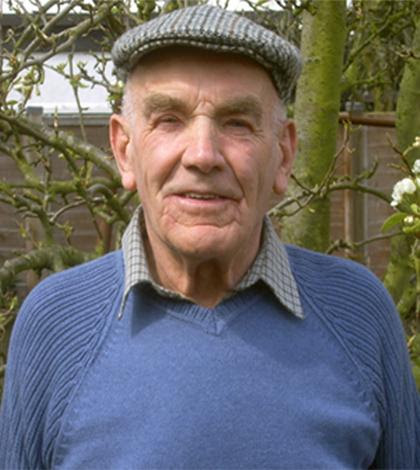
Image result for Roni DeLuz

 Roni DeLuz
American writer

Many people have asked me about my story, why I do what I do, how it all started           and How I do what I do. I didn’t set out to become an expert on either weight-loss or detoxification. In the spring of 1990, I was an ordinary woman living an ordinary life.          I was 35, married, a mother and happily following my calling as a registered nurse.

We lived in Southern California, where my husband at that time and I also owned and  operated 3 nursing homes providing healthcare to medically fragile and developmentally disabled children and adults. However,  unbeknownst  to our staff  and patients,  I had begun experiencing medical problems of my own.

I noticed  I was getting occasional headaches that, over time, became more frequent.  Since,  I was very busy at home and at work,  I just chalked it up to stress and popped       an aspirin.  No big deal,  I thought.  Then,  I started feeling a little pain in my joints— nothing too uncomfortable or disabling. I would ignore these indications  something      was wrong, down another aspirin or Tylenol and go on about my life.

Little by little things started getting worse. My joints started aching; my muscles      began     to hurt;  I started  having night sweats;  my heart started racing.  I did not       sleep for days even though I was exhausted.

I sought help, beginning with my internist, who did not know what was wrong, so suggested I see another doctor.  Over the course of several years,  I saw close to thirty physicians: my primary, different neurologists, immunologists, a rheumatoid arthritis expert, several heart specialists, a psychiatrist, a gastroenterologist.

None of them could figure out what was going on. Was it lupus? Multiple sclerosis? Cancer?  A bone disease?  Chron’s disease?  A boatload of viruses?  Over time different doctors suspected many ghastly,  horrible things,  but nobody  was certain about what   was happening to my body.

At first, they also told me to keep taking pain medications to relieve my symptoms.

Then they started handing me prescriptions: antibiotics, arthritis meds, steroids.

At one point I was taking thirteen different drugs, the worst being Methotrexate a         drug used for chemo- therapy. In the meantime my symptoms kept getting worse           and instead   of occurring individually they started happening all at once.

Before long, whatever was going wrong with me took over my body and life. I lost             my appetite.  I lost weight.  I was so constipated and very nauseous most of the time.        My thinking became slow and muddled—sometimes my brain was so foggy that it felt     like I was stuck in a Coca-Cola bottle and couldn’t get out.  My body was bloated; my      skin hurt and so did my eyeballs.  At one point  it felt like bugs were crawling all over       me. Needless to say, as my body and life spiraled out of control and I sunk into a deep depression. I had basically become bedridden.

On one of the rare days that I dragged myself out, I apparently drove in circles for hours while taking my daughter Whitney to Nursery school.  Her school was only 2 blocks from our home.  When I snapped out of a deep fog,  I had no idea where I was,  where I’d been or where the time had gone. That’s when I knew something was desperately wrong. I also admitted to myself that I had a serious problem.  I knew that if I didn’t get help,  I would be in serious trouble and possibly lose my daughter.

You might wonder how someone like me could find myself in a situation like this. As          a nurse and a nursing-home owner and administrator,  I certainly knew a lot of doctors.     I, of all people, should have been able to obtain proper care. So it would seem.

But like many people who develop a chronic illness, I had unknowingly strayed onto    what healthcare providers secretly call “the sick wheel”:  you go from doctor to doctor    none of whom knows exactly what’s wrong or has the complete picture of what’s going    on, though each prescribes an additional medicine.

When you’re on the sick wheel, you end up taking drug after drug, one for the physical symptoms you originally showed up with, then another to cover up the symptoms, or side effects, the first drug causes.  After a while your kidneys start hurting from trying to filter the man-made chemicals from the first two drugs out of your system. The kidneys are like the body’s trashcans,  filtering waste and toxins from the blood,  creating urine, helping to regulate blood pressure, however, they aren’t designed to process synthetic substances like pharmaceutical drugs, pesticides in your environment or chemicals in your food and water.

Once they start aching the doctors typically prescribe a third drug to mask those symptoms. Before long, you have to take a fourth to cover up the symptoms caused by    the third one.  You reach a point where so many things are going wrong with your body that no one really knows what the problem is: the drugs or the disease.  Many people in   the medical community know this cycle by a more ominous name: the “death ceremony.” It’s only a matter of time before the synthetic ingredients in the drugs wreak havoc inside your body, which becomes burdened with substances it wasn’t designed to process and, therefore, experiences as toxic.

Eventually, these chemicals exhaust the kidney and liver. My eyes turned yellow a serious indication that my liver was not working at optimal level. Many people end up on dialysis or a transplant list because medicine has damaged their organs.  And lots of folks actually die of so-called  “side effects” rather than of the disease they’re being treated for.  In fact, the fourth leading cause of death according to the Food and Drug Administration is cited as “Adverse drug reactions.” Not surprisingly, people become depressed as they lose their quality of life and hope.  Full Story ==>  http://mvholisticretreat.com/dr-ronis-story/ 

Preview YouTube video Dr Roni De Luz

Posted in Thought Provoking | Leave a comment

Spiritual Awakening “We are all one”

Image result for i can calculate the movement of the stars

The Universe is a Hologram: nothing is as it seems.

Genius is defined as a person having a natural capacity of intellect.  Many movies portray these individuals,  with their individual skills, whether it is mathematics, science, … A Beautiful Mind is based on a book of the same title.

IN this brilliant movie:  From the heights of notoriety. . . . .to the depths of depravity,   John Forbes Nash, Jr. experienced it all. A mathematical genius, he made an astonishing discovery early in his career and stood on the brink of international acclaim. However, the handsome and arrogant Nash  soon found himself on a painful  and harrowing journey of self-discovery. After many years of struggle, he eventually triumphed over his tragedy, and finally – late in life – received the Nobel Prize.

GENIUSES THINK IN OPPOSITES. Physicist and philosopher David Bohm believed geniuses were able to think different thoughts because they could tolerate ambivalence between opposites or two incompatible subjects. … The suspension of thought allows an intelligence beyond thought to act and create a new form.  https://www.fastcompany.com/3032830/secrets-from-the-brains-of-13-creative-geniuses.


What’s inside the brain of a genius?

There are intriguing differences between the brain of a genius and a normal noggin.

https://www.youtube.com/watch?v=9UukcdU258A

Image result for E = MC²

The Real Meaning of E=mc² | Einstein’s equation that gave birth to the atom bomb.
Albert Einstein’s famous equation E=mc 2 for the first time connected the mass of an object with its energy and heralded a new world of physics. Einstein’s theory of mass and energy. Photograph: Observer. Albert Einstein.  https://www.youtube.com/watch?v=hW7DW9NIO9M 
 
“If quantum mechanics hasn’t profoundly shocked you, you haven’t understood it yet.”
~ Niels Bohr~ must-see film, it will change the way you look at things ~ “What the Bleep Do We Know !?” ~
 .
 
The real Theory of Relativity maybe the “Law Of Attraction”, or the law of “Reaping and Sowing”. This law simply states, whatever you give out in Thought, Word, Feeling, and Action is returned to us. Whether the return is negative, or positive, failure or success, is all up to what you give out.  https://www.youtube.com/watch?v=LARXSPARbZU&t=383s 
 
  Quantum Mechanics is one of the breakthroughs in science that enabled scientists to explain phenomena at the level of atomic and sub-atomic particles.
.
As the Quantum theory progressed,  the more  “mysteries”  it begin to tackle which prompted Einstein to say, “the more success the quantum theory has, the sillier it looks.” It’s no surprise that quantum mechanics has had a huge impact on our view of reality,         see what we mean with these 25 ways that quantum mechanics changed our view of the universe.  http://list25.com/25-ways-that-quantum-mechanics-changed-our-view-of-the-universe/ 
 
Jim Carrey along with Greg Braden and David Wilcock explain what it means to be Conscious. Conscious of yourself and your situation. Also talks about the science of Consciousness and how is Literally effects the magnetic fields of the earth.  https://www.youtube.com/watch?v=57vmJxWBeRM 
 
Jim Carrey Spiritual Awakening “We are all one”   https://www.youtube.com/watch?v=pI1KKveHFGA

Quantum Mechanics

 In day to day life we seek to discover the meaning of life, we intuitively understand how the world works.  Drop a glass and it will smash to the floor.  Push a wagon and it will roll along.  Walk to a wall and you can’t walk through it.  There are very basic laws of physics going on all around us that we instinctively grasp: gravity makes things fall to the ground, pushing something makes it move, two things can’t occupy the same place at the same time.

At the turn of the century, scientists thought that all the basic rules like this should apply to everything in nature — but then they began to study the world of the ultra-small.  Atoms, electrons, light waves, none of these things followed the normal rules.  As physicists like Niels Bohr and Albert Einstein began to study particles, they discovered new physics laws that were downright quirky.  These were the laws of quantum mechanics, and they got their name from the work of Max Planck.

Here’s one of the quirky things about quantum mechanics: just because an electron or a photon can be thought of as a particle, doesn’t mean they can’t still be though of as a wave as well.  In fact, in a lot of experiments light acts much more like a wave than like a particle.

This wave nature produces some interesting effects.  For example, if an electron traveling around a nucleus behaves like a wave, then its position at any one time becomes fuzzy.  Instead of being in a concrete point, the electron is smeared out in space.  This smearing means that electrons don’t always travel quite the way one would expect.  Unlike water flowing along in one direction through a hose, electrons traveling along as electrical current can sometimes follow weird paths, especially if they’re moving near the surface of a material.  Moreover, electrons acting like a wave can sometimes burrow right through a barrier.  Understanding this odd behavior of electrons was necessary as scientists tried to control how current flowed through the first transistors.

So which is it – a particle or a wave?

Scientists interpret quantum mechanics to mean that a tiny piece of material like a photon or electron is both a particle and a wave.  It can be either, depending on how one looks at it or what kind of an experiment one is doing.  In fact, it might be more accurate to say that photons and electrons are neither a particle or a wave — they’re undefined up until the very moment someone looks at them or performs an experiment, thus forcing them to be either a particle or a wave.

This comes with other side effects: namely that a number of qualities for particles aren’t well-defined.  For example, there is a theory by Werner Heisenberg called the Uncertainty Principle.  It states that if a researcher wants to measure the speed and position of a particle, he can’t do both very accurately.  If he measures the speed carefully, then he can’t measure the position nearly as well.  This doesn’t just mean he doesn’t have good enough measurement tools — it’s more fundamental than that.  If the speed is well-established then there simply does not exist a well-established position (the electron is smeared out like a wave) and vice versa.

Albert Einstein disliked this idea.  When confronted with the notion that the laws of physics left room for such vagueness he announced: “God does not play dice with the universe.”  Nevertheless, most physicists today accept the laws of quantum mechanics      as an accurate description of the subatomic world.     And certainly it was a thorough understanding of these new laws which helped Bardeen, Brattain, and Shockley invent    the transistor.  https://www.youtube.com/watch?v=CBrsWPCp_rs

You might think “radio” is a gadget you listen to, but it also means something else. Radio means sending energy with waves. In other words, it’s a method of transmitting electrical energy from one place to another without using any kind of direct, wired connection. That’s why it’s often called wireless. The equipment that sends out a radio wave is known as a transmitter; the radio wave sent by a transmitter whizzes through the air—maybe from one side of the world to the other—and completes its journey when it reaches a second piece of equipment called a receiver.

When you extend the antenna (aerial) on a radio receiver, it snatches some of the electromagnetic energy passing by. Tune the radio into a station and an electronic circuit inside the radio selects only the program you want from all those that are broadcasting.

Artwork showing how antennas transmit and receive radio waves

 
In much the same way cells communicate in the human body: radio waves travel from a transmitter to a receiver.
.
1) Electrons rush up and down the transmitter, shooting out radio waves.
2) The radio waves travel through the air at the speed of light.
3) When the radio waves hit a receiver, they make electrons vibrate inside it, recreating the original signal. This process can happen between one powerful transmitter and many receivers—which is why thousands or millions of people can pick up the same radio signal at the same time.
 

How does this happen? The electromagnetic energy, which is a mixture of electricity      and magnetism, travels past you in waves like those on the surface of the ocean. These     are called radio waves. Like ocean waves, radio waves have a certain speed, length, and frequency. The speed is simply how fast the wave travels between two places.

The wavelength is the distance between one crest (wave peak) and the next, while the frequency is the number of waves that arrive each second. Frequency is measured with       a unit called hertz, so if seven waves arrive in a second, we call that seven hertz (7 Hz).

If you’ve ever watched ocean waves rolling in to the beach, you’ll know they travel with         a speed of maybe one meter (three feet) per second or so. The wavelength of ocean waves tends to be tens of meters or feet, and the frequency is about one wave every few seconds.

When your radio sits on a bookshelf trying to catch waves coming into your home, it’s a  bit like you standing by the beach watching the breakers rolling in. Radio waves are much faster, longer, and more frequent than ocean waves, however. Their wavelength is typically hundreds of meters—so that’s the distance between one wave crest and the next. But their frequency can be in the millions of hertz—so millions of these waves arrive each second.

If the waves are hundreds of meters long, how can millions of them arrive so often?

It’s simple. Radio waves travel unbelievably fast—at the speed of light (300,000 km or 186,000 miles per second).

Ocean waves carry energy by making the water move up and down. In much the same   way, radio waves carry energy as an invisible, up-and-down movement of electricity and magnetism.

This carries program signals from huge transmitter antennas, which are connected to     the radio station, to the smaller antenna on your radio set. A program is transmitted by adding it to a radio wave called a carrier. This process is called modulation. Sometimes       a radio program is added to the carrier in such a way that the program signal causes fluctuations in the carrier’s frequency.

This is called frequency modulation (FM). Another way of sending a radio signal is to make the peaks of the carrier wave bigger or smaller. Since the size of a wave is called its amplitude, this process is known as amplitude modulation (AM). Frequency modulation  is how FM radio is broadcast; amplitude modulation is the technique used by AM radio stations.

What’s the difference between AM and FM?

An example makes this clearer. Suppose I’m on a rowboat in the ocean pretending to be      a radio transmitter and you’re on the shore pretending to be a radio receiver.

Let’s say I want to send a distress signal to you. I could rock the boat up and down quickly in the water to send big waves to you. If there are already waves traveling past my boat, from the distant ocean to the shore, my movements are going to make those existing waves much bigger. In other words, I will be using the waves passing by as a carrier to send my signal and,  because I’ll be changing the height of the waves,  I’ll be transmitting my signal by amplitude modulation.

Alternatively, instead of moving my boat up and down, I could put my hand in the water and move it quickly back and forth. Now I’ll make the waves travel more often—increasing their frequency.  So,  in this case,  my signal will travel to you by frequency modulation.

Sending information by changing the shapes of waves is an example of an analog process. This means the information you are trying to send is represented by a direct physical change (the water moving up and down or back and forth more quickly).

The trouble with AM and FM is that the program signal becomes part of the wave that carries it.  So, if something happens to the wave en-route,  part of the signal is likely to get lost. And if it gets lost, there’s no way to get it back again. Imagine I’m sending my distress signal from the boat to the shore and a speedboat races in between.

The waves that it creates …. will quickly overwhelm the ones I’ve made and obliterate the    message I’m trying to send. That’s why analog radios can sound crackly, especially if you’re listening in a car.  Digital radio can help to solve that problem by sending radio broadcasts in a coded, numeric format so that interference doesn’t disrupt the signal in the same way. We’ll talk about that in a moment, but first let’s see take a peek inside an analog radio.

Posted in General News | Leave a comment

Nothing Will Change Unless We Change It Ourselves

Related image 
Also Mainstream medicine will breed hatred when a possible truth ~                     threatens to undermine its almighty empire of “cut, burn and poison.”
 
Albert Einstein … is broadly credited with exclaiming “The definition of insanity is doing the same thing over and over again, but expecting different results”. It truly doesn’t make a difference that there’s truly no proof that Einstein really put forth this expression; it’s still an awesome quote!
 

 Also Pinning down spontaneous remissions has been a little like chasing rainbows. It’s not even possible to say just how frequently such  cases occur—estimates generally range from 1 in 60,000 to 1 in 100,000 patients.  Many cases,  when subjected to close scrutiny,  prove not to have been remissions at all. According to Stephen Barrett, a retired psychiatrist who operates Quackwatch, a number of people claiming to have had spontaneous remissions or to have been cured by alternative treatments never had cancer in the first place.  Given the result we find in conventional medicine … Stephen Barrett should be saying that radiation and chemotherapy are an outright scam as well to be fair!!!

  Barrett, who has tracked claims of cures through alternative therapies, says some people were given mistaken diagnoses.
  Other claims, he says, are outright scams, used to promote books and videos that purport to share the secret of curing cancer or AIDS.  http://discovermagazine.com/2007/sep/the-body-can-stave-off-terminal-cancer-sometimes
.
Also Orac at Science Blog is always criticizing Natural Medicine,  however,  they never       take into account the faulty rate conventional medicine has with their 2 to 3 % cure rate with chemotherapy.  http://scienceblogs.com/insolence/2016/04/19/another-young-woman-with-cancer-lured-into-quackery-by-ty-bollinger/ 
 

These documentaries:  FREE to watch on YouTube>> “Cancer the Forbidden Cures ” and “Burzynski Cancer Is Serious Business”. And Forks Over Knives Interviews: The Reality of Plant Based Nutrition will help you understand why conventional physicians & oncologists do what they do.        

 
“Blowing out someone else’s candle will not make yours shine brighter.
But a single flame can ignite a thousand others flames.”
And AS long as their are people. . . . . with the Harry Reid mindset in government        “nothing will change.
 .
Harry Reid stated through our fools Government Shutdown that cost billions to our economy, ‘Why Would We Want To’ Help One Kid With Cancer?’    😡😡😡😡 😡😡😡😡 😡😡😡😡
 
By Jessica Chasmar – The Washington Times – Wednesday, October 2, 2013
.

Preview  Harry Reid: ‘Why Would We Want

To’ Help One Kid With Cancer?

 
Senate Majority Leader Harry Reid blamed Republicans Wednesday afternoon for the National Institutes of Health turning away cancer patients, saying he wouldn’t be forced  to pick and choose between parts of the government.

In a tense exchange, CNN reporter Dana Bash asked Mr. Reid why he wouldn’t pass a House bill that would specifically fund the National Institutes of Health if it would help “one child who has cancer.”

“The House is presumably going to pass a bill that funds at least the NIH,” Ms. Bash said. “Given what you’ve said, will you at least pass that? And if not, aren’t you playing the same political games that Republicans are?”

“Listen, Sen. Durbin explained that very well, and he did it here, did it on the floor earlier, as did Sen. Schumer,” Mr. Reid replied. “What right did they have to pick and choose what part of government is going to be funded? It’s obvious what’s going on here. You talk about reckless and irresponsible. Wow. What this is all about is Obamacare. They are obsessed.

I don’t know what other word I can use. They’re obsessed with this Obamacare thing. It’s working now and it will continue to work and people will love it more than they do now by far. So they have no right to pick and choose.”

As Mr. Reid was speaking, Ms. Bash asked him the question about why he wouldn’t take action if he could help “one child who has cancer.”

“Listen, listen — why would we want to do that?” Mr. Reid said, continuing his answer.

“I have 1,100 people at Nellis Air Force Base that are sitting home. They have a few problems of their own. This is — to have someone of your intelligence to suggest such a thing maybe means you’re irresponsible and reckless…”

When it comes to cancer what we the people need to be is more insistent on given results and start realizing cut burn and poison only profits big pharma. Through research of the past 11 1/2 years what I have learned that less toxic treatments are providing far better results.
.
 Related image

Wonderful Alternative Road to Recovery-Linda Wyllie

I took my wife to the Hufeland Klinik in February of 2010, and the outcome                 was      positive and satisfactory.

My wife Linda was operated on in December 2009, for endometrial cancer at                   one of England’s best known cancer hospitals.  Needless to say she was urged                       to undergo radiotherapy, but she declined.

We went to the Hufeland Klinik as soon as she could travel, which was in February,        and she was assessed by Dr. Demuth and Dr. Worms. Dr. Demuth advised Linda that radiotherapy would, in her case, have been the worst treatment possible, and that they  had seen terrible damage caused by it.   https://germancancerclinics.com/clinics/hufeland-klinik-cancer

Linda underwent five weeks of fairly intensive combined treatments, all gentle and non-invasive, except for the countless injections! The basis of treatment was immuno-building, enzyme therapy, detoxification, targeted nutritional support, ozone therapy, various IV infusions, including high-dose vitamin C, and de-stressing.

As is normal she was extremely stressed on arrival at the clinic having made a difficult decision, but by half way through our stay she had overcome this. Linda’s treatment was based on the”standard package” that everyone had; she was told she did not need any of the special treatments such as IPT or hyperthermia. She also took the Wilhelmsquelle Spa water every day, and it worked wonders on her bowels!

At the conclusion of treatment, tumor blood markers had returned to normal, and            Dr. Demuth advised us that in his opinion Linda could be regarded as cancer-free.

We think the Hufeland Klinik is excellent. One minor point is that there is a bit of traffic noise at night.

Linda was advised to continue with the IV vitamin C in England [which she does].

She undergoes regular physical examinations, ultrasound scans and blood marker tests [locally], and is currently cancer-free. All the treatments she underwent were, with the exception of some deep intramuscular injections, without pain or unpleasant side effects.

In contrast, we know, or know of, several people who have undergone long and protracted, and in some cases, extremely unpleasant chemotherapy and radiation with questionable outcomes, and in general the ones we know look terrible. These treatments can easily wreck ones health and pave the way for a return of cancer at a future time.

Thanks again for introducing us to a wonderful alternative road to recovery from cancer, which most people are completely unaware of, and in many cases, don’t seem to want to know about.

Sincerely,

David & Linda Wyllie  🙂

Also Another Find example would be my good friend on Facebook Darryl Anne Mooney whom …  went from a wheel chair to bicycle in three weeks and came back from her trip to The Marinus Klinik in Germany …. Healthy & Vibrant. 🙂

No automatic alt text available.

   Thereby when one has cancer one needs to do research about cancer survivors that made it happen           by doing exhaustive research themselves. For ex. people like Peggy Sue Roberts, a 10-year, stage-4         cancer survivor. She lives in Southern California and is very blessed to be alive today. Peggy states, I certainly wouldn’t be here today if I took the medical advice of my conventional oncologist.
He simply said oncology couldn’t do anything else for me because of my near death reaction to chemotherapy . She was sent me home to die in 2006.
   Instead of accepting his prognosis, my husband Jim and I had decided to try natural cancer treatments after some research. I arrived at the Mexican cancer clinic in a wheel chair with just several weeks to live. I was very weak, and felt like I was going to die. But I had the will to live! After several weeks of natural cancer treatments, I was a new person. I felt strong, and alive. My husband, Jim, and I walked out of that clinic with huge smiles on our faces.
 I knew I was going to live.

   Now, after getting natural cancer treatments at a Mexican cancer clinic in 2007,            I’ve enjoyed 10 additional years of life that’s been given  to me.  I feel great today,             and I thank the Lord for the additional time with my family. *Results may vary.

A few weeks after returning home from Mexico, I went to see my conventional oncologist. He was in mild shock after receiving the results of my “after” PET-scan test, compared with my first PET-scan.

He said, “I’ve never seen anything like it in my life, Peggy. Your blood test is perfect, and your PET-scan didn’t detect any cancer at all.”  I never told him I had been to a Mexican clinic and he never asked, which I can only imagine was because he never really cared.

My Custom Treatment Plan Consisted Of These 6 Therapies: 

  • Hyperthermia(local/whole body heat)
  • Sonodynamic Therapy
  • Insulin Potentiation Therapy(IPT)
  • Oxygen Treatments
  • Enzyme Therapy
  •  Halo (Biophotonic) Therapy

Barbara Caudill also arrived at the Immunity Therapy Center in a wheel chair unable         to walk and with very little hope to live.

Barbara witnessed firsthand how Dr. Bautista has built a center that brings life back       into people by stepping outside of the box.  Her trip to Mexico has given her a whole       new appreciation for a unique culture.*

 
Please Note: (My father excepted his fate; listen to his dumbass oncologist at OHIO State and died 14 months later without any further research to the very rare cancer type Leiomyosarcoma.)
 
So WE the people need to start voting these nimrods we have working for us that are career Washington D.C. without any given results throughout their career.  Whom are taking money from lobbyist and kick their sorry asses out of their precious office. To have true Universal Health Care, WE The People need to be insistent that we get back to pre –  1973 standards . . .  with our Health Care System being non — profit including Insurers.
 .
**Then and only then can we be expected to be taxed to help cover our doctors expenses and to have affordable health care coverage with reduced premium cost.**
Posted in General News | Leave a comment

CANdida CANcer CONnection

Image may contain: 1 person, smiling                                                                                                           By Chris Woollams  https://www.canceractive.com/

Candida albicans, a common yeast, and its links to cancer?

Expert Gerald Green believed that the common yeast, Candida albicans, was linked to cancer and a host of gut illnesses from IBS to Crohn´s and he had an anti-candida diet to beat it.   http://naturalsociety.com/candida-may-actually-cause-cancer/

Do you have a yeast infection?

Mouth ulcers, sweet tooth, bloating after meals, flatulence, cystitis or thrush? Or stomach problems, pain in the stomach, frequent bowel movements or constipation? How about unexplained fatigue, lack of energy, frequent minor infections, fibromyalgia or chronic fatigue syndrome?

Most people simply would not think that one of the first steps in a cancer prevention programme might be to cut out excess yeasts or candida infections. They drain you, and poison you. Certainly few oncologist doctors would tell a newly diagnosed cancer patient to go on an anti-yeast, anti-candida diet. Moreover, they will probably give you antibiotics, steroids and other drugs that will only make your yeast infections worse!

However, there is a growing body of evidence that yeast infections, and particularly candida, are involved in a number of cancers. They are definitely an acknowledged problem in certain cancer treatments, for example in Multiple Myeloma and Leukaemia,   a by-product of the heavy drug routine and the lack of a strong immune system.

But could yeasts and candida actually lie behind many cancers, far more than Doctors would expect? Could they even be the cause of a cancer? Or a factor that could drive the disease as it progresses?

Try this for size:  “Cancer patients undergoing radio or chemotherapy did not finally succumb to the cancer itself, but to an infestation of candida albicans”. That was taken from Contemporary Oncology Magazine 1993 in the USA.

This is one article about the possibility that common yeasts, which can show as symptoms like thrush, cystitis, yellow toe nails and/or bloating after meals, can develop in the body to become serious candida albicans infections. These thrive in a low oxygen environment (as do cancers) and produce toxic by-products that can both feed and stimulate cancers. This article, about the work of Gerald Green, will even give you a simple anti-candida diet. (Readers might also like to read our book: ´The Secret Source of your good health´, which covers beneficial bacteria, pathogens, candida and all chronic illnesses).

Candida, yeast infection and cancer!!!!

Preview  Sugar – cause of Candida – Candida cause of Cancer

I have a wonderful job. I also meet so many interesting people, so many experts all on   the  same mission – helping people beat cancer.  One minute it´s Charlotte Gerson, then Dr. Contreras. I may get a complex soon though; none of Britain´s top orthodox doctors ever seem to ring me up to tell me of their latest work,  which is very sad because icon now goes out to over 450,000 readers every issue in over 600 hospitals, oncology units, complementary centres and health centres in UK libraries.

Open quotesIt is estimated that 70 per cent of the British population
have a yeast infectionClose quotes


One gentleman, with whom I had been corresponding, was Gerald Green, a medical herbalist and immunologist in Bexhill, Sussex. His grandfather (Professor Fritz Hber 1868-1934) won a Nobel Prize and was one of Germanys finest scientists. Energy and investigative endurance clearly run in the family. Gerald devoted a large part of his life to studying candida, but sadly died a few years ago.

It is estimated that 70 per cent of the British population have a yeast infection. The primary cause of this is our love of antibiotics. Swollen glands? Take antibiotics. Tonsillitis? Take antibiotics. Are you allergic to antibiotics? If the answer is no, that´s fine. Antibiotics have no side effects. Who says?

So would you be surprised if I told you that The Journal of the American Medical Association (Feb 18th 2004; 291; 827-35) has reported a study on 10,000 women in which women who took over 500 days of antibiotics in a 17 year period (dubbed 25 plus doses) had twice the risk of breast cancer as those that took none at all. Even women taking just ONE DOSE had a statistical risk increase to 1.5 times. This followed worrisome findings   in Finland in 2000.

Friendly Bacteria and cancer

Apart from a minor problem that they may well be toxic to brain cells (Drs Goldman & Klatz – US), antibiotics kill many strains of bacteria in the body, including the ones you need; the friendly ones in the gut. You see, friendly (commensal) bacteria are fragile.

Friendly bacteria?  You´ve probably heard of acidophilus, or bifidobacteria?  But they       are not even in the top 50.  Your gut actually contains about 800 different strains, 400      of which have been identified. Roughly 12 come up time and time again in research and, for example,

1. They are known drivers of 85 per cent of your immune system – they stimulate it to produce antibodies.

2. They actually make important (and anti-cancer) vitamins like biotin, folic acid, B-12  and vitamin K. And melatonin, glutathione and seratonin.

3. They help you eliminate carcinogenic hormones and chemicals like oestrogen, nitrosamines, cadmium and mercury

4. They even produce an anti-cancer chemical from your foods

5. Their favourite foods are whole foods and whole grains – and candida albicans and microbes

Open quotesAntibiotics kill most of the bacteria in the body,
including the ones you needClose quotes

At night they can digest roughly 2.2 kilograms of yeasts and microbes for you.                They are your first line of defence.

Go to: How to heal Your Gut

They have inhabited our bodies for thousands of years. They help us, and in return           we give them a nice cosy place to live.

Except we don´t anymore.  We have broken our lifetime deal with them.  We no longer  feed them their favourite fibre-rich, whole foods. And, we eat too much salt, pickled foods, drink excess alcohol and chlorinated water,  which each can change our stomach´s acidity and so harms them and reduces their growth, multiplication and action. Worse we eat food with antibiotics in it and take drugs, which can kill them.

And to make matters worse we feed their enemies – yeasts and candida love sugar           and dairy!

Stress and poor diet can reduce levels of good bacteria in just a few days,                              so you are wise anyway to take an effective daily probiotic.

It is no wonder there is a growing volume of research linking your gut to the encouragement, or prevention, of cancer.

Go To: Gut Bacteria and cancer – from Breast cancer to liver and colorectal cancer

An anti-candida diet

It is easy to see how yeasts have taken a hold in the Western world. The US and UK diets are simply weak in the foods that keep yeasts under control.  My Thai wife used to live in    a country with a trillion such microbes lounging on every street corner, however in a Thai diet rich in coconut (caprylic acid),  garlic,  chillies and bee propolis,  foods are natural controllers of yeasts. Once upon a time in England, we ate cloves and raw honey, but now our diets merely help to propagate yeasts.

High sugar drinks, snacks, fast food, alcohol, refined wheat, indeed any high glycaemic food, feed the yeasts. And we live in a high glycaemic world in the West.Gerald Green believesd there is a ´Super-Herb´ that could kill off yeasts like candida, and pathogens  like E. coli, viruses, and parasites. It is called Artemisinin.

Go To: Super-herb artemisinin kills yeasts, pathogens, parasites and even cancer cells

Yeasts Are Parasites
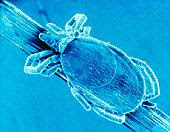
Over the last 80 years several people have had theories about parasites and their cause of cancer. By and large they have been ridiculed. Hulda Clark, Royal Rife and others. I helped Geoffrey Boycott beat his mouth cancer by killing off a parasite and his yeasts. They both weaken you, and they both produce toxins.

So why ignore yeasts?? Maybe because antibiotics are the big blame factor that no one dare own up to??

Yeasts Cause Other Illnesses

Diabetes is a well studied disease. Arthritis is probably less clear. But recently research in the USA showed that by taking cinnamon could – in some people – significantly reduce the symptoms of both diseases.  Why?  Well yeast infections eventually move across the gut lining (Leaky Gut) and into the blood system.  Every cell has large numbers of receptor sites on the cell wall which it needs to function properly. In non-diabetics, insulin alights on some receptors, for example, to take glucose out of the blood and into the cells.

But what if the receptors are blocked with yeasts? In the past 5 years two Nobel prizes were won by people showing how these receptor sites could become blocked and cells could not communicate very well. One reason for this blocking was that carbohydrate could make them sticky and what stuck to them? Yeasts.

Now, there´s many a nutritionist that knows what these scientists don´t know. Namely that cinnamon will help kill yeasts in the blood stream. So now you can see why some people may well benefit. The receptor sites for insulin become unblocked. And although taking cinnamon is officially credited with glucose control in the blood stream, you can  see that the research results that cinnamon benefited 25 per cent of diabetics may have had nothing to do with sugar directly, but by unblocking receptor sites the insulin could suddenly work again and thus, indirectly, blood sugar was lowered.

Yeasts – a cause of Cancer?

I recently went to a cancer clinic in the USA, and to the Dove Clinic in the UK.                     At both I talked to the nurses.

Open quotesEvery Cancer patient they see, man or woman, has bad candidaClose quotes

They were unanimous. Every cancer patient they see, man or woman, has bad candida. Whether it is breast cancer or prostate cancer. (It is most definitely true for    my daughter with her brain tumour too).

The problem is that these yeasts get everywhere. Whilst they might start off in your gut, they soon pass into the blood stream and then, like Alien, they are loose in the mother ship. And they make an alcohol as a by-product of their very existence, and this alcohol feeds cancer cells. Moreover, yeasts are anaerobes – they don´t use oxygen to metabolise and survive. If they move round your body and colonise an area of your breast or prostate they set up anaerobic conditions. And cancer thrives in situations where oxygen levels are lowered.

Cancer Treatments Make Matters Worse!

To repeat: “cancer treatments make matters worse!” Steroids, antibiotics and chemotherapy, for example, kill the good bacteria and thus help the growth of the yeasts. Once they dominate, they are like mushrooms, having roots which punch holes in the gut wall. If you eat gluten it increases levels of zonulin, which in turn makes the holes formed by the roots, even bigger. This allows food molecules into the blood stream and even yeasts. Result? Fatigue, lethargy and even reduced oxygen, with yeasts sticking to cell membranes and blocking important cell receptor sites creating deficiency inside cells.  This is leaky gut.

But don´t take my word for it,  as I started the article above,  try this comment from          the prestigious US magazine Contemporary Oncology as long ago as April 1993: Cancer patients undergoing radio or chemotherapy did not finally succumb to the cancer itself, but to an infestation of candida albicans.

The anti-candida diet

So back to the late expert Mr Green. (And he is an expert. I have seen the letters he receives from hospitals and microbiology units saying he knows more than they do).        He believes even terminal cancer patients can be saved if the root cause is candida.

He believes sufferers must immediately ELIMINATE THE FOLLOWING FROM THEIR DIET:

All cows´ milk products:
cheese, yoghurt, whey. And all cows milk derivatives which are everywhere in processed food.

Carrots

Yeast products:
alcohol, bread, Marmite, Oxo, Bovril, vinegars, mushrooms, processed and smoked fish and meats.

All sugar products:
honey, fructose, lactose, glucose, dextrose and sweeteners like Nutrisweet and Canderel.

Nearly all fruit:
overripe fruits are full of sugar and yeasts. Plus vegetables like courgettes, pumpkin, squash, marrow.

High sugar root vegetables:
carrots, parsnips, sweet potatoes, beetroots, (maximum 1 potato per day).

Personally, I would add all high glycaemic foods to this list, e.g. refined wheat, rice, pasta, fizzy soft drinks, fruit juices and squash, biscuits, pastries, pies and corn. Gerald mentions most of these too in his diet and he suggests you avoid all pulses, processed meats, high salt foods and hydrogenated vegetable oils too.

Below you will find his list of Good Food Choices.

His sweetener of choice is Stevia, a herb 100 times sweeter than sugar but a natural anti-fungal agent.

He recommends astragalus and echinacea pIus 1 gm vitamin C daily to boost the immune system. (Gerald does a lot of work with cancer patients, MS, Crohn´s and Lupus sufferers too).

Good Food Choices

EAT PLENTY OF THE FOLLOWING FOODS:

Broccoli

Alfalfa sprouts
Bean sprouts
Bell peppers (sweet peppers)
Bok choy
Broccoli
Brussel sprouts
Cabbage
Cauliflower
Celery
Cucumber
Endive
Fennel
Garlic
Green beans
Hot chilli peppers
Kale
Lettuce
Onions
Parsley
Radishes
Spring onions
Spinach
Swiss chard
Turnips
Yellow beans
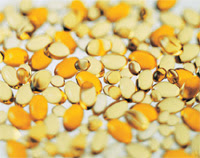
Cod liver oil

FATS (in moderation):
Granose sunflower margarine
Tomor kosher margarine (both these margarines should be available at your local health food shop)
Avocado oil
Fish oil
Flaxseed oil
Grapeseed oil
Hemp oil
Mayonnaise
Monounsaturated fats
Olive oil
Primrose oil

FLUIDS
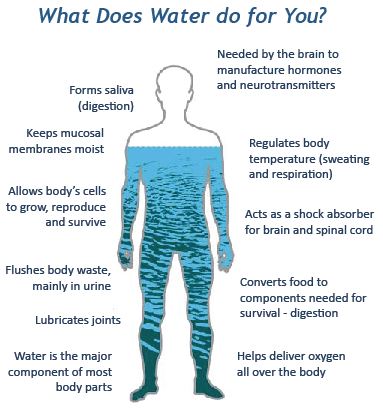
Try to drink eight glasses of water each day.

Herbal teas are acceptable

PROTEINS
Free range eggs
Fresh fish and seafood
Pork, lamb, veal
Poultry: chicken, turkey (particularly skinless white meat)
Game
Tofu
Quorn
5oy milk/cheeses (in moderation)
Rice milk
Sheeps milk/cheeses (dilute sheeps milk 50/50 with water and it will taste the same as cows milk)
Goats milk/cheeses

Culinary herbs and spices

Not that far from the excellent CANCERactive diet. Go To: Rainbow Diet

Gerald Green

Personally, I would add that garlic, caprylic acid, oregano oil and Pau D´Arco are all excellent yeast killers. Cinnamon can kill yeasts in the blood.

Gerald Green´s favourite natural destroyer was Artemisinin, or Sweet wormwood, and again I agree and want it in my pathogen and parasite course. It kills yeasts, pathogens, parasites, E.coli, and even some cancer cells. Wormwood is a natural herb and is now fast replacing poorer performing anti-malarial Drugs in the world. It is very efficient.

Go To: The Super-Herb that kills yeasts, pathogens, viruses, parasites and some cancer cells 

Finally, I believe people don´t understand probiotics – you don´t need 45 strains and    250 billion. You need probiotics that deliver – and 8 billion of them.   You need  one that contains L. Acidophilus, L. rhamnosus (to heal your gut wall) and Bifidobacteria. It should also contain a delivery system to get the bugs through the dangerous stomach, and specific foods to feed the bacteria immediately the bacteria arrive at their destination. I use a probiotic called Modere protozymes. To read more about toxin-free products and advanced supplements like protozymes go HERE to buy.

Chlorella is a supplement that seems to enhance the action of probiotics and the natural flora in the gut. And I believe fish oils can help too, as can vitamin D.

Astragalus and Echinacea tinctures, plus Wormwood, parasite killer and protozymes are all available in the Natural Selection Products of Choice shop – simply click SHOP at the top of this page or click here.

Reviews of herbs etc. can be found in our Nutritionals section, under Complementary    and Alternative Treatments.

Readers are also advised to look at our article on Beneficial Bacteria.

Gerald published a book called “Breaking Through the Untouchable Diseases”.        This along with multi-strain probiotics and other products mentioned here can be   found in the Natural Selection shop.

Bottomline: anywhere between 79 to 97 % of all cancer patients also have Candidiasis  

One book has everything you want to know about The Natural Alternative 🙂

Preview Cancer is candida fungus overgrowth – read video description
Posted in Thought Provoking | Leave a comment

You Can Heal Your Life By Healing Your LIFE

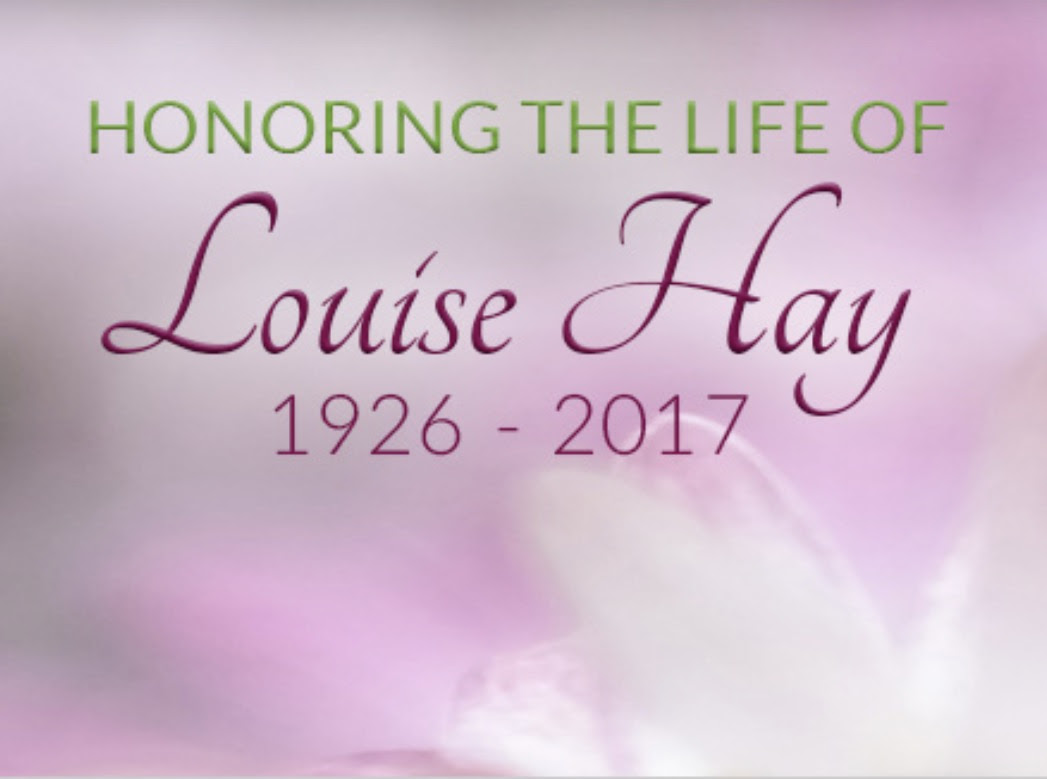
 Image result for honoring the life of louise hay full movie

Louise Lynn Hay (October 8, 1926 – August 30, 2017) was an American motivational author and the founder of Hay House. She authored several New Thought self-help books, including  the 1984 book,  You Can Heal Your Life built a self-help publishing empire has attracted millions of devotees with its messages about the power of thought and attitude, died on Wednesday at her home in San Diego. She was 90.

20 Quotes To Remember Louise Hay By:  http://www.collective-evolution.com/2017/08/30/20-beautiful-louise-hay-quotes-to-remember-her-legacy/

Her death was announced on the website of her company, Hay House.

Born Helen Vera Lunney in Los Angeles to parents Henry John Lunney (1901–1998)      and Veronica Chwala (1894–1985), Hay recounted her life story in an interview with   Mark Oppenheimer of The New York Times in May 2008.[1]

In it, Hay stated that she was born in Los Angeles to a poor mother who remarried Louise’s violent stepfather Ernest Carl Wanzenreid 1903-1992 , who physically abused   her and her mother. According to Hay, when she was about 5, was raped by a neighbor.

At 15, she dropped out of University high school in Los Angeles without a diploma, became pregnant and, on her 16th birthday, gave up her newborn baby girl for adoption. She then moved to Chicago, where she worked in low-paying jobs. In 1950, she moved on again, to New York. At this point she also changed her first name, and began a career as a fashion model.

She achieved success, working for Bill Blass, Oleg Cassini and Pauline Trigère. In 1954,  she married the English businessman Andrew Hay 1928-2001; after 14 years of marriage, she felt devastated when he left her for another woman Sharman Douglas 1928-1996.[1]

Hay said that about this time she found the First Church of Religious Science on 48th Street, which taught her the transformative power of thought. Hay revealed that here she studied the New Thought works of authors like Florence Scovel Shinn, who claimed that positive thinking could change people’s material circumstances, and the Religious Science founder Ernest Holmes, who taught that positive thinking could heal the body.[2]

By Hay’s account, in the early 1970s she became a Religious Science practitioner.               In this role she led people in spoken affirmations, which she believes would cure their illnesses, and became popular as a workshop leader.  She  also  recalled  how she had  studied Transcendental Meditation with the Maharishi Mahesh Yogi at the Maharishi International University in Fairfield, Iowa.[1]

Hay described how in 1977 or 1978 she was diagnosed with “incurable” cervical cancer, and how she came to the conclusion by holding on to her resentment for her childhood abuse and rape  she had contributed to its onset.  She also reported how she had refused conventional medical treatment, and began a regime of forgiveness, coupled with therapy, nutrition, reflexology and occasional colonic enemas.

She claimed in the interview that she rid herself of the cancer by this method, but, while swearing to its truth, admitted that she had outlived every doctor who could confirm this story.[1]

In 1976, Hay wrote her first book, Heal Your Body, which began as a small pamphlet containing a list of different bodily ailments and their “probable” metaphysical causes.[1] This pamphlet was later enlarged and extended into her book You Can Heal Your Life, published in 1984. In books like “You Can Heal Your Life,” “The Power Is Within You”  and “Meditations to Heal Your Life,”

Ms. Hay espoused an upbeat message with a metaphysical underpinning. She wrote  that there is a link between thoughts and disease and life’s other misfortunes, and she urged people to find a positive way to spin even the worst of them.

Ms. Hay became an early example of the sort of self-improvement gospel that has sprung up over the last several decades.  (In A 2008 New York Times Magazine article about her carried the headline “The Queen of the New Age.”) And she was one of its most successful adherents.

Few women have sold more books, and Hay House, which she started in her living room  in the mid-1980s, has grown into a multimillion-dollar company handling a long roster     of authors and an extensive line of products, including books, CDs and online courses.   The company also stages lectures and workshops featuring its authors.

Source: https://en.wikipedia.org/wiki/Louise_Hay

In the movie You Can Heal Your Life (2007). “Which is a Must Watch”

This entertaining and inspirational movie based on the best-selling book of the same  name is hosted by author and teacher Louise L. Hay.

This film gives penetrating insights into Louise’s fascinating personal story; and shows  how her views on self-esteem,  abundance,  and the metaphysical causes behind physical ailments were developed.  It reveals how she applied these concepts to her own emotional, spiritual, and professional life. With many luminaries in the fields of self-help, philosophy, health, spirituality, and New Thought join Louise, giving their take on success, happiness, and the myriad ways in which people can heal their own lives.

You Can Heal Your Life By Healing You Life Indeed!!!

 Preview  BREAKING NEWS! LOUISE HAY Age 90

Passed Away This Morning RIP True Visionary

Posted in General News | Leave a comment

Cancer Hates Tea

Cancer isn’t like catching something (cold or flu) or be prevented by washing your hands/ Cancer is something that is triggered in your body. It’s something that goes awry in a cells genetic code, either by stress, poor diet & chemicals in our food, smoking, sun exposure, toxins in our environment and even aging plain life. Cancer works like a scavenger waiting for the opportunity to strike
 .
 Of the trillions of cells in your body some are nasty, but your immune system is programmed as a top-notch cancer fighter. However, sometimes these cancerous monsters overwhelm your immune system. The pace at which cancerous cells divide and multiply after a slow start can be amazing. Because they’re multiplying so rapidly, they’re consuming more of your cells energy reserve.
 .
  If a microscopic cancer gets off to a good start it keeps growing until it forms a tumor. This requires oxygen for energy which cancer coerces your body into supplying by getting it to build blood vessels to deliver oxygen to the tumor building site. Once those blood vessels are created, the cancer can invade surrounding tissues.
 .
  When a tumor sits in isolation it can simply be removed, however, cancer is a conniving disease out to cause pure chaos “Metastasis”
 .
Understanding How CANCER begins is imperative:
The average body is made up of tens of trillions of cells and those cells require management. When you’re healthy your DNA is telling these cells to behave. Everyone sustains physiological strain to their cells. Either as a result of the chemical processes that keeps you alive, because your fighting inflammation or noxious invaders. This brings on a damaging cellular condition know as oxidative stress, however, your immune system is designed to counteract these free radicals.
 .
  At the deepest cellular level, antioxidants neutralize these free radicals dead in their tracks by stabilizing them chemically. left unchecked in their highly reactive state, free radicals can cause you DNA to spontaneously change its genetic message. Is estimated that cells can fix up to a million changes in its DNA daily. However when it doesn’t get repaired eventually the mutated cells will spawn a whole new hoard of cells growing ravenously out of control, becoming malignant. And that spells cancer.
 .

When Maria Uspenski was diagnosed with cancer and witness it go into remission … she turned her focus to 100% onto preventing the recurrence. It took Maria years to ignore the whispers of doubt in her head  where she wasn’t sensing signs of recurrence.  Maria being an analytical person by background wanted to learn every biomechanical mechanism that made cancer spread.

   What she learned was that if cancer doesn’t like the playing field in your body it will retreat. Simply by eliminating refined and processed foods that’s a huge step in the right direction. In this research also she learned cancer hates tea with compelling evidence advocating a five cup per day tea habit.
 ..
   Keep in mind the Academy of Nutrition and Dietetics states drinking 300 mg. per day won’t have any detrimental effects. Thereby your total caffeine intake is important to keep tabs on. Each 8 ounce serving of white or green tea gives you 10 mg and 35mg of caffeine. Black tea provides 0 to 50 mg per 8 ounces serving Pu-erh tea  can get up to 60 mg. Which is half as much caffeine as a  same size cup of coffee. One energy drink can have upwards of 200 mg of caffeine?
.

Green Tea: Does it Really Prevent Cancer  by Dr.James Meschino

Could Five teas a day keep cancer away? We’ve long been aware that drinking tea is good for us, but a new book with a telling title is doling out this fascinating prevention-centric advice that has us pondering. 

Cancer Hates Tea — written and researched by tea professional (and MIT engineer) Maria Uspenski — explores the potentially profound benefits of a daily tea habit, specifically, five cups a day. Green tea lovers, this ones for you… 

Tea is the most studied anti-cancer plant. Over the past ten years, more than 5,000 medical studies have been published on its health benefits,  with over 1,000 of those focusing specifically on tea and cancer. Now keep in mind, this is real tea we’re talking about here, not caffeine-free herbals like peppermint or chamomile. The good news is   that the research indicates you only need to consume a little more than a quart of fresh steeped whole-leaf tea each day to bask in the therapeutic benefits of its powerful antioxidants. That’s a five cup a day habit.

5 reasons to try the 5 cups a day habit

BOOST YOUR IMMUNITY Five cups daily can have a measurable effect on boosting your immunity against cancer and other diseases. The research studies that turned me on to tea, and in particular green tea, showed that green tea consumption of three to five cups per day may be preventive against the recurrence of cancer. The National Institutes of Health (NIH) stance on green tea is that research indicates it to be possibly effective against many afflictions, including several types of cancer. Some studies have shown its benefits being measurable in as little as one week of drinking a little over one quart of fresh brewed tea daily.

antioxidants all day When you consume five cups by drinking every few hours throughout the day, it keeps tea’s benefits active in your body. You want to maintain the level of antioxidants in your bloodstream. Timing is everything. The polyphenol antioxidants in tea are best absorbed when drinking it on an empty stomach. If you start drinking tea early in the day and sip it often, between meals, you’re on the right track to netting the maximum benefits for your immune system. You might be thinking, when am I supposed to find the time to make and drink five cups of tea? It may seem like you’re taking on a second career at first, but you really can make it simple. Here are some tips:

Begin your day with tea, as this is the best time of day for your body to absorb its benefits. Even if you need to grab a coffee an hour later, you’re rousing your cells with      tea polyphenols, which you can’t get anywhere else.

Cold brew and sip throughout the day. Every morning, fill a 32-ounce water bottle with a tea you cold brewed overnight. Choose a low-caff tea, and this becomes your new “enriched” water.

Keep calm and get an afternoon tea habit going. Tea is a perfect way to reboot before getting into your evening. If you’re not out indulging in a glass of wine for happy hour with friends, steep yourself a favorite tea to unwind at the end of your work day.

Relax + Focus Five cups a day will enhance your overall feeling of well-being in ways you never dreamed of. Tea contains a unique amino acid called theanine that’s like a mash-up of a chill pill with brain juice. In combination with caffeine, it’s especially clever in how it acts on some critical pathways in the brain. This molecule neutralizes the jittery and edgy effects of caffeine, without affecting the mind-focusing aspects. Have you ever noticed that your body reacts differently to the caffeine in tea versus coffee?

By promoting alpha brain-wave production, theanine allows you to relax and focus at the same time. It’s complicated, but once you dig down, it all begins to make sense as to why tea is often used to help support meditation. Drinking tea produces some of the same chemical and neurological effects as going into a deep meditative state.

One last tip: You’ll be in the express lane to zen if you reduce your coffee and alcohol consumption while increasing your tea intake.

It’s cost effective Five cups a day won’t break the bank. In fact, if you brew your own tea, and ditch a latte or a sugared beverage in the process, you’ll come out way ahead. You can get an amazingly diverse and healthful mix of five cups of tea a day for less than $30 dollars a month. Even the most lavish habit, if you steep your own tea, amounts to less than the cost of a couple of shots of Nespresso or a coffee from your local Starbucks daily.

Five is just right Five cups a day is a good place to stop drinking, too! Keep in mind that too much of anything turns out to be not such a good thing; anything in excess won’t be good for you. Your total caffeine intake is also an important number to keep tabs on. A cup of tea contains between 10 mg and 50 mg of caffeine, depending on the tea type and how long you steep it. By contrast, a cup of coffee has between two to twelve times as much. As positive as your five cups of tea are for maintaining wellness, doubling or tripling that amount isn’t a good idea, and can start to become toxic to your cells. The NIH states that it’s likely safe for adults to drink five cups of tea a day.

The Tea Spot is a leading producer of handcrafted loose leaf teas and  Steepware® –         the housewares tools that make loose tea easy. Its vision to modernize the loose leaf tea experience has held steadfast since the for-profit philanthropic company was founded by Maria Uspenski in 2004, a cancer survivor drawn to the health benefits of leaf tea during her recovery. Her message is simple and powerful: tea in its freshest form renders premium flavor, unmatched health benefits, and is eco-friendly.      https://www.youtube.com/watch?v=7fgQ6m6xL44

Preview  Cancer Hates Tea: Four Part Summary

by author Maria Uspenski

Posted in General News | Leave a comment

Root Cause 0f Disease ~ Lowered Self Esteem

I watched my father  for  fourteen  years battle cancer  and the 4th time it finally took his life. His cancer began when he was 70 and ended at 84 years old. Soon after he retired was when he as diagnosed,  until this day  I believe it was this sense of lost lowered self – worth that caused his cancer.  He was a machinist by trade: that was what he loved about his life and that is how he identified himself!!!!

Healing the Roots of Low Self-Esteem


Past experiences and environments have created the self image we hold today. Learn how to heal the root cause of your low self-esteem.

Past experiences have created the self-image and self-esteem we hold today. Learn how to heal the root cause of your low self-esteem.

  There is always a root to a problem,  and there is a root to low self-esteem,  but without identifying why or how it got there,  we don’t have the tools  to eradicate it for good. The struggle with developing unshakable confidence and self-esteem is like a battle with annoying ivy covering a beautiful home. Perhaps you have been used to the vines, even embracing them on occasion, but at the end of the day they are more problematic than positive, and they destroy the foundation.

I used this analogy just today with a beautiful young woman who felt anything but attractive. “I am trying, and I practice the tools, it just seems like I am not getting far;     I am always struggling with the way I look,” she said.

“So, its like you are cutting a small leaf or branch off, but still feel like your covered in vines. Some of the tricks and tools we have used work but they don’t seem to be fixing    the root cause—the reason these toxic thoughts developed in the first place.”

Even if we have done deep work in the past, when we thought we had eradicated those low self-esteem beliefs for good, the root can keep growing and the right circumstances can make it feel like the weeds are taking over your mind.

How to Get to the Root of Low Self-Esteem

Think of the ways your self-image, confidence, and self-esteem developed. These could have been thoughts you have had since childhood, early experiences, or circumstances you encountered through life. The beliefs stemmed from somewhere.

Past experiences have created the self-image and self-esteem we hold today. Learn how to heal the root cause of your low self-esteem.

  1. Invalidating environments: an overly critical parent, lover, or friend. On the   flip side,  it could have been a person in your life  behaved in a way that made you    feel incapable of making your own decisions or trusting yourself. An overprotective parent or someone who made you feel fragile and that alone you couldn’t handle the demands of the world.
  2. Loss or trauma: feeling out of control, death of a loved one, divorce, feeling abandoned, abuse
  3. Rejection: this could have been from a loved one or a group of kids at school,         not getting into a program or holding on to feelings of perceived inadequacy.
  4. Unspoken pressure: from peers, friends, even society, giving you standards       you tried to live up to but always felt like you were coming up short.
  5. Mistaken beliefs: these come from our own experiences, attempting to make     sense of the life circumstances and feelings we encounter.  However,  they hold          us back and keep the roots from healing.

Common Mistaken Beliefs that Lead to Low Self-Esteem

Do any of these feel true for you? If so, get curious and look for the roots or experiences that made these come about.

  • I am powerless; I am a victim of circumstances greater than me.
  • Life is not easy; it’s always a struggle
  • If I try, I will fail.
  • I don’t matter.
  • I should always look good and put together for others to like me.
  • I need to be a certain size or weight to be worthy.
  • I need to have X, Y or Z to feel successful.
  • I can’t cope with the demands of the outside world.
  • I am not good enough and I never have been.
  • I will never be worthy of love or respect.

As hard as this may be to admit, there is power in recognizing where your mistaken beliefs come from. When you can identify, to the best of your ability, the ways the root may have formed, and the toxic thoughts of low self-esteem that keep it growing in your mind, you have a much better grasp on how false they really are.

For my client, we examined that many of her mistaken beliefs came from her peers, the media, what she was told was “pretty” by television and the images she saw. She has supportive parents, but had highly critical grandparents who made confusing comments to her about weight, appearance, and the need to be attractive. She also had friends who placed a lot of emphasis on outer appearance.

When you also become aware of how these thoughts became stuck in your mind, you are better able to attack them when they come up. The more and more you practice, it’s like treating the ivy with chemicals.  Each time you spray,  it may not go away,  but it is slowly killing the root. Overtime, the real you, the empowered you, becomes more visible. When you catch a new bud or leaf starting to grow, you can stop it in its tracks. Knowing and understanding the root cause of your pain or mistaken beliefs is the best way to rid yourself of toxic thoughts and low self-esteem for good.

Emily is the author of Express Yourself: A Teen Girls Guide to Speaking Up and Being Who You Are.You can visit Emily’s Guidance Girl website. You can also find her on FacebookGoogle+ and Twitter.

Author: Emily Roberts MA, LPC

Emily is a psychotherapist, she is intensively trained in DBT, she the author of Express Yourself: A Teen Girls Guide to Speaking Up and Being Who You Are.     You can visit Emily’s Guidance Girl website. You can also find her on FacebookGoogle+ and Twitter.

Preview  The Importance of Self Esteem


The Importance of Self Esteem

Self esteem is crucial and is a cornerstone of a positive attitude towards living.

It is very important because it affects how you think, act and even how you relate to other people. It allows you to live life to your potential. Low self esteem means poor confidence and that also causes negative thoughts which means that you are likely to give up easily rather than face challenges. In addition, it has a direct bearing on your happiness and wellbeing. Read more about why self esteem  is so important to you.

Get some extremely helpful tips for improving your confidence – read this page now

“What is the most important thing for a person starting out on the road to success?”

“I would tell them the most important thing is to work on your self esteem, that’s the best advice I can give.”

What is Low Self Esteem?

Low self esteem comes from a poor self image. Your self image is based on how you see yourself. Do you think you are a good, reliable, hardworking, honest or friendly person? Do you like what you see when you look in the mirror or do you believe others look better and dress better than you?

Low self esteem also depends on other factors like your job. For example, do you value the job you do? Does the job you have help you be happy with who you are?  Do the others in your office respect you?

Low self esteem feeds your negative thinking and causes you to believe the critcism others make of you. Do you take what others say and not speak up? This can cause you to lose confidence so it is vital to end negative thoughts if you want to build your self esteem.

Want to discover how you can build your esteem, confidence and inner power in order to achieve success? Then you have to see my free CD “A More Confident You” 

What is High Self Esteem?

High self esteem is the opposite of the above! If you have a high level of self esteem you will be confident, happy, highly motivated and have the right attitude to succeed.

We all know that self-esteem can be an important part of success. Too little self-esteem can leave people feeling defeated or depressed.   It can lead people to make bad choices, fall into destructive relationships, or fail to live up to their full potential. But what about too much self-esteem?  Narcissism can certainly be off-putting and can even damage personal relationships.

Self-esteem levels at the extreme high and low ends of the spectrum can be damaging, so the ideal is to strike a balance somewhere in the middle.
.

A Breakdown of Self-Esteem

In psychology, the term self-esteem is used to describe a person’s overall sense of self-worth or personal value.

  • Self-esteem is often seen as a personality trait, which means that it tends to be stable and enduring.
  • Self-esteem can involve a variety of beliefs about the self, such as the appraisal of one’s own appearance, beliefs, emotions, and behaviors.

Components of Self-Esteem

According to one definition (Branden, 1969), there are three key components of self-esteem:

  1. Self-esteem is an essential human need that is vital for survival and normal, healthy development.
  2. Self-esteem arises automatically from within, based on a person’s beliefs and consciousness.
  3. Self-esteem occurs in conjunction with a person’s thoughts, behaviors, feelings, and actions.

Self-Esteem Theories

The need for self-esteem plays an important role in psychologist Abraham Maslow’s hierarchy of needs, which depicts self-esteem as one of the basic human motivations. Maslow suggested that people need both esteem from other people as well as inner self-respect. Both of these needs must be fulfilled in order for an individual to grow as a person and achieve self-actualization.

Factors That Can Influence Self-Esteem

As you might imagine, there are different factors that can influence self-esteem. Genetic factors that help shape overall personality can play a role, but it is often our experiences that form the basis for overall self-esteem. Those who consistently receive overly critical   or negative assessments from caregivers, family members, and friends, for example, will likely experience problems with low self-esteem.

Self-Esteem Synonyms:

  • Self-worth
  • Self-respect
  • Self-value

The Importance of Self Esteem and Self Worth

by Karl Perera

I think the importance of self esteem cannot be underestimated. It affects your behaviour and thoughts. It changes how you feel about and value yourself. It affects your confidence, and that can affect your success and thinking in a big way.

Can you imagine anything else so important?

Why Should Self Esteem Matter to You?

  • Self esteem can be the difference between success and failure
  • Esteem can affect your thinking, causing your outlook to be positive or negative
  • Esteem affects your confidence
  • It affects your self image
  • If you do not value yourself how will you be able to value others?
  • Self esteem enables you to have the right attitude to succeed at work
  • It affects your happiness

Let’s take a moment or two to look a bit more closely at what  I’ve said above –                 and then I hope that you will appreciate just how important self esteem is to you.

Your potential to achieve what you most desire is directly related to your self esteem. On the other hand, failure is much more likely when you suffer from low self esteem because you will believe others when they tell you why you cannot succeed. LOw self esteem will affect your motivation and make you more likely to give up on anything that seems difficult. So, work on building your self esteem and success will be that much easier.

I’m sure you realise the importance of positive thinking. Increase your esteem and you  will become more positive. This will benefit you in every area of your life.

Read more about optimism here.

Do you Have a Problem with Self Confidence?

Self esteem affects your confidence, how important is that? If you want to rise to any challenge you must believe in yourself. Without confidence in what you can do, and in   who you are, what chance do you have of happiness or success? And if you can’t believe     in yourself, how will you be able to trust and believe in others?

Want to increase your confidence and feel much better about yourself? Then go download feel better about yourself hypnosis audio now.

Self image is another important part of how you feel about yourself. Low self esteem means that you will have a poor image of yourself and this will result in a loss of confidence.  Your social skills will also suffer and you will find it harder to socialize   because others will respond negatively to your lack of confidence. With some effort  though you can improve your self image so that it helps you.

To learn more, read this page about feeling good about yourself.

Self esteem will also help you at work. Your confidence and positive attitude will enable you to look and feel your best. You will have no trouble presenting yourself in a favourable light because you will be full of self respect and comfortable with who you are.

Confidence in one’s own worth or abilities; self-respect.

“assertiveness training for those with low self-esteem”
synonyms: self-respect, pride, dignity, self-regard, faith in oneself; More

morale, self-confidence, confidence, self-assurance
“the best thing I ever did for my self-esteem was to divorce Roger”

Do You Value Yourself?

Value yourself, your ability and your contribution in the world because you are unique.   Do you understand this? You cannot value and respect others unless you first value and respect yourself.

Finally, one last reason why your self esteem is so important. It will help you be a happier person. To find out why read this page about moods and how they affect your thoughts and behaviour.

I hope that this short article has been helpful to you. Take a look around at the rest of the site which is filled with information about different aspects of self esteem.

Next article –   Enlightened Feelings   

Preview  WHY IS SELF ESTEEM IMPORTANT?

Posted in Thought Provoking | Leave a comment

WHY ME …. WHY Anybody !!!!

Stimulate the secretion of endorphins!!!

Mirrors stand as a symbol of reflection – both physical and spiritual. Our thoughts,    words and actions are a mirror of our feelings.  A mirror is nothing but a metaphor,             a reflection into our own selves.

Mirrors have been used since ancient times across many different cultures. However,     the ancient Chinese laws of Feng Shui give particular importance to mirrors and their placement.

According to Feng Shui, a mirror is a representation of water.  Since chi energy can             be pooled or collected with water, it can be done so with a mirror as well. This makes mirrors an extremely powerful tool – they double everything including chi energy.

All Feng Shui experts and practitioners know the power of mirrors. Mirrors are often referred to as Feng Shui’s aspirin.  They can magnify,  energise and alter a space dramatically.  If placed properly,  mirrors can even cure any space that is awkwardly  shaped and lacks chi energy.

To solve any crisis in life, we need to determine the cause of the problem.

Only when we see these problems can be work towards fixing them. Now, given that mirrors are a reflection of our lives, they can help us see problems and fix them. For example, only when we look at our reflection in the mirror can we say whether we’re having a bad hair day or not!  http://graceguru.net/tag/spiritual/ 

Thereby I received this message on Facebook recently:

Hey Ken: I’ve been keeping this to myself well my husband and mom know. But keep me in your prayers. I made a mistake and it led to a bigger problem. My spleen has had issues since I did a ton of chemo and transplant back in 2012. Each year since in the winter and spring my spleen struggles to do it’s job. Long story short. I had symptoms like excessive mucus production. Swollen glands and lymph nodes on my left side.  Loss of appetite.          I was treating all these symptoms and forgot about figuring out the actual cause.

 
By the time I realized these symptoms where caused by my slow spleen my spleen had become enlarged. For the past 2 months I’ve dealt with excruciating pain and a very strict protocol to get the spleen healthy.  The spleen effects the kidneys and liver so naturally they were also in some despair. I’ve very slowly gotten better and I’m no longer in pain.
 
  However, since I let it get that bad my tumor that I almost gotten rid of spread under my arm due to the state of health my body was in.   I know I will eventually get it all under control again. This has been very scary for me and I don’t talk about my health except for with people who understand why I chose natural over western medicine.
 
  In Chinese medicine the spleen is one of the most important organs. It’s sensitive to our thoughts, worries, and stress. It doesn’t like cold. In the winter it runs slower because it doesn’t like the cold. That’s why people get colds mainly during these times. Because the spleen is not working as effectively. When the spleen does get swollen or enlarged you have to baby it back to health. The spleen is rarely discussed in western medicine unless you have Lymphoma. They have no problem cutting the spleen out and telling people they don’t need it. That’s why I didn’t bother going to the doctor.
 
   Luckily I’m so close to Florida that I found a wellness center in Pensacola.  They have some holistic doctors that I’m going to go see.   My husband is also going to talk with a friend of his who is a holistic doctor in Miami to see if he can help guide me. I have major PTSD when if comes to going to the doctor because of what I’ve been through with chemo and a transplant. Someone that can help guide me with my health. Sorry for rambling.
 
I’ve been wanting to tell you about all this because I knew that you would understand. It can be very lonely and alienating when you live the way I do but it’s what I have to do to keep myself alive. And I need to reach out more to my friends that do understand instead of bottling it upside down inside. 🙃 thanks for listening 🙂  
.

The Emotional Life of the Body

     In modern medicine, we tend to take a very mechanical view of the body and the physiological functions of its component organs.  But in Greek Medicine and other traditional medical systems, the internal organs were seen as being strongly affected by the emotions.  These traditional notions of Greek Medicine are as follows:  http://www.shen-nong.com/eng/principles/sevenemotions.html?fref=gc&dti=685442198170188
.
Heart:  The heart, being the principal organ of the Vital Faculty, is very sensitive to emotional states.  Noble, expansive, uplifting emotions like courage, valor, honesty, forthrightness, altruism and compassion strengthen the heart and Vital Spirits, whereas ignoble, constrictive, base emotions like cowardice, timidity, guilt, remorse, deceit and duplicity weaken them.  Love and the emotional will to live are also very important to the heart; according to Greek Medicine, you CAN die of a broken heart.  The heart, being the hottest organ in the body, is also very vulnerable to hot, turbulent passions, which can agitate the Vital Spirits to such an extent that they create a fever, which can be quite high and acute; Greek Medicine calls these fevers of energetic or emotional origin ephemeral fevers.
.
Lungs:  The lungs, being an important noble organ of the Vital Faculty that works closely together with the heart, are sensitive and vulnerable to many of the same emotional states as the heart, and respond similarly.  The lungs need a feeling of psychic space within which to function; the phrase, “breathing room” is a common expression.  The feeling of being smothered, invalidated, or denied one’s psychic space can constrict the lungs and cause respiratory problems like dyspnea and asthma.  Conversely, a feeling of dignity and pride puffs up the chest, and allows the lungs to expand and function properly.  Negative emotions that sap the will to live are also injurious to the lungs, especially grief and bereavement; many chronic respiratory diseases and conditions develop after a major loss or bereavement. 
.
 Throat:  The throat is the body’s main communications center, and is connected with the Throat Canter, or chakra.  An inability to come out and speak one’s truth will often cause physical problems with the throat; in extreme cases, one may even become mute and unable to speak.  The throat is also the upper end of the digestive tract, and hence part of the Natural Faculty.  Acute emotional tensions and anxieties can agitate the Natural Force in the liver, causing it to rise and get bottlenecked in the throat; one then feels like one’s choking on something, or has something lodged in the throat, a condition called globus hystericus.  Emotional gushings or catharses of sadness, grief or intense sentimentality will also cause a lump in the throat.  Stuffing one’s emotions and feelings down one’s throat is injurious to its health, and will increase its vulnerability to dysfunction and disease.

Liver, Gall Bladder:  Bile is produced by the liver and stored in the gall bladder, which makes these two organs vulnerable to negative Choleric emotions like anger, irritability, frustration, resentment, jealousy and envy.  These negative Choleric emotions are stored in these organs, and can slowly eat away at them if allowed to fester.  Anger and rage can explode upwards from the liver into the head, causing a lot of havoc in their wake: headaches, migraines; red, sore, bloodshot eyes; and muscular tension in the neck and shoulders.  Nervous and emotional tension and stress, as well as Melancholic emotions like pensiveness and worry, will stagnate the flow of the Natural Force in the liver, which in turn causes nervous, colicky, Melancholic disturbances of the digestive functions.  This excess melancholy often accumulates under the lower ribs, giving a stuffy, distended, congested feeling in the whole chest and diaphragm area.  This is the origin of the term hypochondriac.

Stomach:  The stomach is a seething cauldron of emotions, and is intimately connected to the Gastric Center, or chakra, also called the Abdominal Center, which governs energy flow and distribution throughout the belly and gut.  Choleric emotions like anger, hate, rage and frustration stored here lead to gastritis, ulcers and other Choleric stomach conditions.  Many of us hold a lot of Choleric emotions like anger and resentment in our gut.  Melancholic emotional stress and tension, as well as pensiveness, worry and anxiety, will stagnate the flow of the Natural Force in the stomach, causing distension, bloating, colic, gas and stomachache.  And so, we must always try to be of good cheer when we eat.  If accumulated Choleric and Melancholic emotional tensions in the stomach and Gastric Center get very severe, we may experience anorexia, appetite disorders, giddiness, nausea and dry heaves.
.
 Spleen:  The spleen is the storage receptacle for black bile.  And so, it is adversely affected by negative Melancholic emotions like pensiveness, anxiety, worry and depression, which unduly constrict the free flow of the Natural Force through the digestive system and aggravate the Retentive Virtue, producing colic, gas, distension and bloating throughout the entire abdominal area.  Actually a trio of subdiaphragmatic digestive organs can be adversely affected by negative Melancholic emotional states: the liver on the right, the spleen on the left, and the stomach in the middle. 
.
Intestines and Bowels:  The intestines are often the effect of psychosomatic     or they’re emotionally induced digestive disorders that arise in the upper digestive organs – the liver, gall bladder, stomach and spleen.  The upper small intestine, or duodenum, being very close to these upper digestive organs, is the part most affected; these emotional disturbances are usually of a Choleric or Melancholic nature.  In the middle and lower intestinal tract, Melancholic emotional disturbances are most injurious and keenly felt, because they aggravate the Retentive Virtue, producing colic and kinks in the intestines, or obstructions to their smooth flow and function. 

Colon:  Since the balanced, proper action of black bile is important to proper colon function, the colon is very vulnerable to aggravations and excesses of the Melancholic emotions – especially chronic or deeply held worry, anxiety and nervous or emotional stress and tension.  Security issues and deep insecurities will also impact negatively on the colon, since its functioning is intimately connected with the Root Center, or chakra, which pertains to our emotional security.  These Melancholic emotional disturbances usually produce disorders like constipation, irritable bowel syndrome, or spastic colon, but if the aggravation is severe, even colitis and more serious degenerative diseases may result.
 Kidneys:  Fright, fear and shock are most injurious to the kidneys.  The energetic flow of these emotions is downwards, as they take away the foundation of security and self-assurance that we have.  This also concerns the Root Center, or chakra, that root support or energetic foundation of strength and security that we have, which is closely connected to the kidneys and their balanced retention and evacuation of urine.  When beset with extreme fear or fright, many lose control of their kidneys and bladder, and urinate spontaneously.

Adrenal glands:  The adrenal glands, sitting right on top of the kidneys, are injured and drained energetically by excessive stress.  The adrenal medulla and its fight-or-flight adrenaline response is excessively provoked by acute stress and emotional outbursts of anger and the like in those whose lives have become an overdramatized emotional roller coaster.  Chronic stress aggravates the functioning of the adrenocortical hormones like cortisol, which can lead to weight gain, especially in the lower body and midriff, as well as rising blood sugar, if the stress is constant and unresolved.  Since the adrenal glands provide the energetic support for healthy urinary function, the health, vitality and functioning of the kidneys will also be drained, and adversely affected by weakened or challenged adrenals.

Male Reproductive Organs:  Since the male reproductive organs are closely linked, both functionally and anatomically, to the kidneys and urinary tract, negative emotions that adversely affect the kidneys, like fear, fright, shock and anxiety, will adversely affect male sexual function as well.  Male impotence or sexual dysfunction, doesn’t always have a physical cause; it can also be emotionally or psychosomatically induced by feelings of fear, inadequacy, insecurity or performance anxiety, which often operate on a subliminal level.  Since the main energetic flow of these emotions is sinking and downwards, there may also be incontinence of sperm or premature ejaculation.  Since the adrenal glands, particularly the adrenaline response, provides the energetic support for both urinary and sexual function, or response, in the male, men who don’t live a balanced, well-regulated emotional life and drain their adrenal energy will also find that their sexual performance suffers.
.
Female Reproductive Organs:  Optimal female sexual response depends on a warm feeling of emotional closeness and intimacy with her partner.  If this trust and intimacy are violated, there will be emotional trauma that can adversely affect female sexual health and response.  This is not an absolute, all-or-nothing matter; there are many degrees of violation, ranging from a subliminal lack of proper tact and sensitivity in the male to outright rape and physical violation.  These negative experiences will traumatize the woman, to a greater or lesser degree, depending on their severity, provoking feelings of fear and anxiety which will further inhibit sexual functioning and response.  This is often called frigidity, and closes down the woman’s feelings and receptivity to orgasm.  Many women have had to disconnect emotionally from their sexual organs and their functioning as the only way of coping with a sexual life or circumstances that are completely unsatisfying and uninspiring.  Losing a pregnancy also brings an aura of great grief and sadness to the female organs, and to the woman herself; many women take a long time to heal emotionally from a miscarriage or an abortion.

Brain:  The brain comes last in our discussion of the emotional life of the organs because it’s often the effect of humoral and metabolic imbalances arising elsewhere in the body, which send subtle vapors up to the brain to influence its functioning.  Choleric vapors agitate, irritate and inflame, provoking anger, rage, envy, jealousy, or irritability.  Warm, moist Sanguine vapors can stir up feelings of wellbeing, pleasure, sensuality or even lust.  Melancholic vapors provoke feelings of prudence, caution, pensiveness, worry and withdrawal.  Cold, wet Phlegmatic vapors will dull or fog up the brain, producing mental lethargy and dullness, or they will cloud objective thinking with excessive sentiment and subjectivity.  However, the brain is not all effect; it can also be cause, since the kinds of thoughts that it habitually thinks can have a profound impact on the heart and its Vital Spirits, and hence on the entire Vital Faculty, for better or worse.  And so, we have come full circle, and again return to the heart.

.

Conclusion

     The proper balance and regulation of our emotional life is an important part of our daily hygiene.  It’s important not only to the health of the mind, but, as we have just seen, to the health of the body, and all its internal organs.


Emotional Body CodeDuring his 16 years as a holistic chiropractor, Dr. Bradley Nelson, the developer of the two Codes, found that when working on his patients, beneath their physical symptoms there seemed to be an emotional component. This emotional component seemed to cause either a delay in healing, or actually prevented healing altogether. Dr. Nelson began identifying and releasing emotions that had become trapped in his patients’ bodies. The results were positive. He codified the method, and in 2007, his book The Emotion Code, was released.Over time, Dr. Nelson discovered that Trapped Emotions are the most common cause of imbalance in the body/mind, and these imbalances cause a wide array of emotional and physical symptoms. Dr. Nelson continued using and developing his method, and realized that there were some other causes of imbalance, as well. These factors were more physical, although most often, Trapped Emotions negatively influenced them. He added these additional factors to his method, and called this more comprehensive system The Body Code.

Watch these. The whole thing. This gets right into it.

Preview  🌟DR BRADLEY NELSON: Best Interview on EMOTION CODE Technique, Removing Heart Walls & Muscle Testing 🌟

There are 6 components in the Body Code. The first of these is the emotional component—The Emotion Code.

The components are listed below, along with examples of what each addresses:

The 6 Components of The Body Code

  1. Energies– emotional, post-traumatic, mental, offensive (The Emotion Code)
  2. Toxicity– heavy metals, EM spectrum, chemicals, microbial residue
  3. Circuitry– organs, glands, chakras, meridians
  4. Pathogens– parasites, fungi, bacteria, viruses, mold
  5. Structural– bones, nerves, muscles, connective tissue
  6. Nutritional– pH imbalance, foods, herbs, nutrients, magnetic field

To do this work, one becomes certified first in The Emotion Code. This is important because, as I stated above, Trapped Emotions are the single most common cause of imbalance in the body/mind, and also underlie most of the imbalances caused by the other components. Certification in The Body Code can follow and encompasses working with all 6 components. I am certified in both, and use the comprehensive Body Code System in my work.

.
How we experience pain, stress and physical health challenges – and how healing can come about spontaneously when we simply get this understanding. Katja Symons talks about her experience of spontaneous and unexpected physical healing through an understanding of the 3 Principles. To see the full webinar go to … https://www.youtube.com/watch?v=pWw0qqGLxM8&index=19&list=PLDIIj4pRtxkNWDpS8cMTDtFfafxi9bwyc
 

Originally trained as a holistic health practitioner, Katja facilitates Natural Health Mentoring in English and German. She loves seeing wellbeing re-appear naturally in clients on the emotional, mental and physical level and is passionate about the prospect to be living well and with ease in a natural flow.

When she came across the principles behind life in 2011, she was chronically ill, depressed and frustrated. When stress and emotional despair eased more and more, her physical body also recovered from Fibromyalgia, Chronic Fatigue and IBS. Seeing the potential and power of this understanding in herself and others, Katja is excited to share this understanding wide and far.
Katja’s German website.
.

                            **************************************************

Some people confuse self-love with arrogance, selfishness, self-importance, or ego.

But that’s not what loving yourself is about at all.

We all have within us a Divine spark, that piece of God consciousness that animates us      in human form. Loving yourself simply means that you recognize that this spark exists, and in doing so, you realize you are inherently and divinely lovable.

It’s also about prioritizing self care, because you can’t truly love and serve others unless you’re giving and loving from a place of fullness, rather than depletion.

When you allow your Divine spark to be nurtured and cared for, and when you radiate   that Divine spark out into the world – LOOK OUT WORLD.
That’s how mighty you are and how much you have to give.

Who is that Divine spark within you?

Yup. You guessed it.

Humbly raising my hand,

Your Inner Pilot Light!!!!

Thanks Paula Doyle Weigel  🙂
.
Posted in Information & Research | Leave a comment

Everything is Electricity

Related image

What Nikola Telsa Know About 0ur Universe!!!

Nikola Tesla states  — ‘If you want to find the secrets of the universe, think in terms          of energy, frequency and vibration.’ http://www.one-mind-one-energy.com/Law-of-vibration.html

We live in an ocean of motion

Our thoughts are on a certain vibrational frequency and hence is part of the vibrating universe. The Law of Attraction, which is based on The Law of Vibration, states that we attract what we are sending out. Hence positive energies attract positive energies and negative energies attract negative energies.

Our thoughts are cosmic waves of energy that penetrate all time and space. Thought is the most potent vibration – so this means you can attract to you what you want and wish for.

Learn about the Power of Thought and how they make ripples in the sea of energy we call the universe, consciousness, the formula for success, universal Laws and more by getting the Make A Ripple Make A Difference e-book
 `

S0 Why doesn’t the Law of Attraction work f0r some people?

  Magnetic Force It does work as long as you send out the right vibrations.   The Law of Vibration never fails. Everything vibrates. Also Experts in the Law of Attraction. say that you must do more than just make a wish.Your emotions and y0ur feelings must also be aligned with what you wish for.

It is not enough to merely ask for it, thereby,  if you do not truly have emotions and feelings that are in harmony with that wish. You need to “fall in love” with what you     want in order to be in the correct vibrational state.

If you ask for more money through prayer, meditation or just by wanting it – it will not help you if your emotions and feelings are programmed to think that money does not grow on trees, or that you do not deserve to be rich, or that you cannot handle being rich etc.

If you grew up in a family where your father or mother (or both) always said: “do you  think I am made out of money – and that we can’t afford that” – then most likely you are programmed to believe this to be true.

Your subconscious mind has a different belief system than what you are wishing for. Hence your inner feelings and emotions are not aligned with your wish. These beliefs are thousands of times stronger than desires and wishes. So if you desire something like a new house or getting a new job it will not happen if your beliefs are “I can’t”. The beliefs win every time.

We all have built a blueprint in our mind (subconscious) of what we regard as true and what we believe in. This blueprint has been sculpted for years through your childhood by your father and mother, by your brother and sisters, by your friends, by what you read in the newspapers, by what you see on TV, by what you learn in school and so on.

If suddenly new information is presented to this blueprint it will not automatically be added.  You can ask for more money of financial wealth everyday for several years and nothing will ever manifest as the Law of Attraction preaches because your subconscious    is not aligned with that desire.  There is the reason why so many people who attempt to change their lives using the Law of Attraction fail.

In order to change your belief system you can start applying affirmations.

“Reprogram” your subconscious mind with a new belief system. Believe that anything is possible, believe that you are rich, that you deserve to be rich, that you are happy, that you are healthy and so on. Make a list of positive affirmations and read them to yourself every day. Say to yourself those things you want to be or believe in.

The New Science:   We are made of Energy, not Matter 🙂

             http://www.lifetrainings.com/We-are-made-of-Energy-not-Matter.html

We (YouAreCreators) created this channel to share one of the greatest secrets of               the universe, and the secret is, we literally create our reality! (Quantum Physics now proves this) We are all governed by a set of Universal Laws,  these laws were created         by GOD, to aid us in creating the life we desire.

One of these laws is known as the “Law Of Attraction”, or the law of “Reaping and Sowing”. This law simply states, whatever you give out in Thought, Word, Feeling,           and Action is returned to us. Whether the return is negative, or positive, failure or   success, is all up to what you give out.  https://www.youtube.com/watch?v=0XZG2dWxsT8

When Astrid Walschot-Stapp was eight years old.

She had such bad knee pain that she told her mother, “It’s almost like thousands of little creatures are eating me from the inside out.” Prior to this, she had a near-death experience when she had a seizure that was so bad it caused her tongue to retract into the back of her throat. What she didn’t know then, and what she wouldn’t find out until many years later, was that she had Lyme disease. During the seizure she lost consciousness and recalls, “I remember being in this beautiful white light…there were strings and when I would touch them a tear would fall, and I always wondered about it.”
.
 In a string of serendipitous events, at the age of eight and in the midst of extremely bad joint and bone pain that were written off as growing pains, Astrid’s Kindermusik teacher insisted that she play the harp. The instructor even went so far as to make up a story about how they needed a child to practice harp lessons on just so Astrid’s mother would say yes. When Astrid began playing the harp, memories of that white light during her near-death experience came to mind. She realized that the images of the strings that she saw during her seizure were a sign of her life’s purpose to make people happy through music. Not only would she go on to do that, but Astrid would later come to discover that playing the harp was her strongest defense against Lyme disease.
 .
Throughout her life, Astrid always had health problems that were written off or swept under the rug. Her music, however, always kept her fighting through severe symptoms. Growing up in The Netherlands, Astrid played the harp throughout her childhood, but at the age of 18 she developed such bad knee and wrist pain that her passion became painful. At the time, she was under a lot of stress, and her doctor in Holland thought that her pain was just a side effect of personal problems. Though he didn’t understand the severity of her condition, or the fact that she had Lyme, he did connect with Astrid on a musical level, because he was a musician himself. He instructed her to bring her harp to his hospital and leave it there. That way, when she came in for appointments, he could teach her how to play again—almost like physical therapy. Astrid says, “This man helped me by removing me from the stress and teaching me a new technique with relaxation. He taught me to play so well, and I was so aware of my body that my body was able to get over the Lyme.” It turned out that the soothing effect of playing the harp allowed Astrid to keep overcoming Lyme symptoms time and again throughout her life. In other words, playing the harp became a sort of musical medicine.    https://www.youtube.com/watch?v=kLUiGWZxGcU 
.
Interactive installation “Eunoia II” by Lisa Park | Dafta's VIEW
.
Lisa Park in piece “Eunoia.” The headpiece is not conveying anything to her directly.
It’s reading her. In her recent bodies of works, Lisa has used biofeedback devices as a
tool to investigate her inner states and emotional states.
These performances explored the possibilities of self-monitoring her physical
and psychological states to create an audio-visualization of herself.
In her first interactive artwork, Park encased her head in a plastic orb filled with live (terrifying) butterflies, then modulated the pitch of a recorded speed depending on the speed of her heart rate.
She later flipped Man Ray’s Le Violin d’Ingres by creating a bow that responds to human touch, then letting herself be played like the violin. She first donned an EEG in 2013 while doing research for her thesis project and first virally popular artwork, Eunoia.
As far as Park is concerned, she’s exploring uncharted territory. “When people think of new media art, they instantly think of screen-based work,” she observes. “But in New York, when you say ‘interactive art,’ there’s a lot of mediums to consider.”

https://www.youtube.com/watch?v=bTOQZNkQukg

So you show up at an art gallery one day, not really sure what to expect. You pass through the rooms. White walls. Canvasses. Statues. Some of it grabs you. A lot of it doesn’t. Then you enter another room and, besides some more wall hangings, you see five bowls of water sitting on the floor.

Each bowl sits on some sort of electronic device. Wires run out from beneath them.          As you’re trying to make sense of all this, a young woman in a full-length smock walks     out from behind the bowls   and moves into their center.  She’s barefoot.  What strikes        you most,  though,  is that she’s wearing a strange headpiece,  a cross between Google    Glass and recording studio headphones, yet no part of it reaches her ears or eyes.

She sits on her heels in the center of the five bowls and looks at them. Strange sounds rumble out from beneath the bowls, and the water begins to respond to the sounds. At first, it simply quivers. As you watch, however, a deeper sound makes the water in one bowl or another hop up, even splash. The young woman isn’t saying anything.
.
She alternates between looking at one of the bowls in front of her and closing her eyes. She just sits there as the sounds change. The water alternates between still and rippling, and the sound moves between a low drone and sharp charges.
.
The young woman is Lisa Park. The performance is called “Eunoia.” The headpiece            is not conveying anything to her directly.  Instead , it’s reading her.  It’s a NeuroSky MindWave transmitting data about her brainwaves via Bluetooth back to a computer, where a program takes the brainwave data and translates it into sounds played on the speakers set beneath the dishes of water.

For Park, the goal of the piece is to exercise control over her own mind, to make her    mind so still and so calm that there’s nothing for the EEG sensor to read. Ideally, the  water is still. The speakers are silent. She has attained total self-control.

It’s just the opposite of another recent art piece called “The Emotional Arcade.”                   In “The Arcade,”  artists Brent Hoff and Alexander Reben use different devices to     measure emotional states  and encourage people to compete  to see who can feel it              the most.  So,  for example,  similar EEG technology is used to fill “Rage Balloons,”         where participants compete to make themselves as angry as possible. What viewers          see are balloons blowing up as the EEG readings inform how much air gets pumped          in. The person to get angriest the fastest “wins.”

 Park’s work heads in the opposite direction, using technology to aid introspection—not    to facilitate chaotic emotions. She says that stillness “has been an ongoing theme” in her work, “something I am always interested in and trying to find.  Sometimes I feel like my emotion is too much. It is all around me.”  One of the ironies of “Eunoia,” she tells us, is that the audience likes it when the water jumps and splashes.  When she struggles and  fails to reach the goal of the piece—total stillness—that’s when viewers have something      to see.

The piece demonstrates how, in your own mind, calm is the heaviest lift. It may be more    exciting to visualize frenetic thought, but an absence of thought takes more work to attain. Like the disconnect between viewers’ interest and Park’s goals,  language creates an irony between the mind and body.  It’s harder for the body to exert itself and easier to rest,  but the opposite is true for the mind.  Yet both are described  in the same terms:  “rest”  and “calm” vs. “exertion” and “activity.”

“Eunoia” is the third in a trilogy of technology-driven performances expressing            Park’s feelings about herself and the context of her upbringing.  It’s interesting to               see the narrative these three pieces create—and how effectively they evoke a future             in which we are all awash in our own data.

In the first piece, “Obsession Is a Sad Passion,” Park shuts her head into a large bubble   full of butterflies. She doesn’t know why, but Park has always been afraid of butterflies. Locked inside this bubble with butterflies flitting about her face,  trying to escape, she stands there, trapped with her fears. Meanwhile, a recording is played: a short story by Patrick Suskind about a young artist driven to suicide by the expectations of the people around her.   http://www.thelisapark.com/obsession-is-sad-passion/  https://vimeo.com/61442808

The recording is governed by a heart rate monitor attached to Park. If she lets her            fear of the butterflies increase her heart rate, the sound of the recording gets lower         and slows down.  If she’s calm, it remains normal. In this piece,  Park is victimized              by her own work and must try to master the fears to which she has exposed herself.

 The second piece in this trilogy of self-control and anxiety, “Le Violon d’Lisa,” is the           most narrative. In it, she has modified a cello bow so that it creates sound when it comes in contact with skin that has a very small amount of electrical current running through it.
.
The piece begins with her body being unveiled and a male performer beginning to play music on her exposed back after putting her head into his shoulder, much as one would    an actual cello. Park’s body is played in that way for a while, until she begins to act like a living person and eventually plays herself. She transforms from an object into a human with agency.  http://www.thelisapark.com/le-violon-dlisa/     https://vimeo.com/58863266        https://www.youtube.com/watch?v=09fiSgoF-Y0
 

With Eunoia, she closes the loop. She doesn’t just have agency—she exhibits control.       She has opted for stillness. She’s choosing to seek her own goals, not what her audience wants from her performance.  The audience might want to see drama: water jumping      and shaking and exploding, as if powered by a sort of telekinesis. However, that’s not what      she pursues.   https://www.youtube.com/watch?v=6ywzE6vsytw 

Eunoia II was the follow up: https://www.youtube.com/watch?v=ZXMXqULrEWg 

That said, Park explains that it’s not so simple just to ignore the audience. She spent     three months practicing with the EEG sensor, the speakers, and the water.  By the end,   she was able to create stillness in the water.  “When I was by myself,  it was easier,” she said. During performances, it gets much harder. Having other people around makes her nervous. She responds to their presence.  She can get there,  but it takes her longer and    she can’t hold it.

She’s performed “Eunoia” three times: first at the spring 2013 show for NYU’s Interactive Telecommunications Program,  then at the digital arts space  319 Scholes  in  April,  and finally at “Art from the Heart 2013”  at a Gowanus Loft.  “If I do this again,”   she told us,     “I think the ideal would be to do it for five or six hours. There I would reach a point where I am in the zone.”

These works, she told me, initially explored the limits placed on women with her upbringing. Now, however, she says, “I realized last year that it is myself who is putting those limits.” Park is not the only artist who has found that using technology to augment introspection helps yield insights.

When I met Brent Hoff, one of the architects behind the “Rage Balloons,” he told me several similar stories. In one, a young woman said she would definitely win the balloon contest because she was so angry at an ex-boyfriend. Once she was strapped in, though, she couldn’t muster even the faintest inflation on her balloon. Afterward, she told Hoff that she’d realized she wasn’t angry with him. She just thought she was.

It won’t be long before more people—not just artists—will be able to create their own methods of transmuting brainwaves  and emotions into real world manifestations. In    fact, 2 engineers have a Kickstarter for the first completely open-source EEG platform, allowing users to get pure data and feed it back out into anything they want, any way    they want.

How long before we start to see more pedestrian applications of this data? For example, managers could use EEG sensors to tell them which of their employees really stay focused throughout the day and which ones let their minds endlessly wander.   It’s also not quite machine-assisted telepathy, but it’s getting there.

Lisa Park may continue to ride the cutting edge of this technology. She has already begun exploring other ways to take readings of her own emotions and physically manifest them. For Park, however, the technology is only a tool, one that facilitates a new level of introspection, yielding personal and artistic growth.

Heartmonic (heart+harmonic) is an interactive performance piece that uses the bodies of participants as instruments, turning their heartbeats into a symphonic ensemble in real time.   https://www.youtube.com/watch?v=Bp2nZitK5e8

What if people’s heart rhythms create music based on their interaction with other people?

Two groups of participants will be a part of this performance: eight dancers, or eight individuals. Heart rate sensors are connected to each of the eight participants, and their heart rhythms are converted to sound.

Each individual is assigned the sound of a different instrument—cello, piano, violin, marimba, percussion, flute, clarinet, or bassoon—which is controlled by their heartbeat. The artist, who acts as a conductor, will guide the participants in both physical and emotional activities designed to provoke their feelings. These activities include choreographed dance movements, holding hands, hugging, tickling, and kissing.

Resting heartbeats will be associated with a slower tempo, and elevated heartbeats correspond to more dynamic sounds, giving feedback to the participants about their      state of body and mind.

 We Are All Creators of This Reality!

Listen to Bruce Lipton drop some truth bombs about the power of our minds to control our health and the reality we experience.
We have forgotten the divinity that is inside all of us. We are able of achieving miracles but our educational system teaches that matter is the highest there is, but we know better know don’t we? Everything is energy, every emotion or situation is purely energy, we don’t have senses to sense emotions, but what we do sense is energy. Ancient civilizations were very well aware of this, and they were master in harnessing and directing energy to they’re will. We must reclaim this knowledge.
 We are not the victims of this reality, we are the creators of it. We must remember that nature’s natural state is abundance! When something is lacking in the natural world the eco-system will be out of balance and will not thrive but try to survive. This is humanity right now, we are not really living we are merely surviving. Regain your ancient power and be in charge of your experience here on the physical plane.   https://www.youtube.com/watch?v=7wlaViS9EsQ      https://www.youtube.com/watch?v=oqjpTsUuNDY&t=2420s
.
This talk was given at a local TEDx event, produced independently of the TED Conferences. Just because water covers 70% of the earth’s surface and composes the majority of our bodies doesn’t mean we know everything about it. Marcia Barbosa talks about the many anomalies of water.   https://www.youtube.com/watch?v=-OLFwkfPxCg
Being humans are Water: is of major importance to all living things; in some organisms, up to 90% of their body weight comes from water. Up to 60% of the human adult body is water. According to H.H. Mitchell, Journal of Biological Chemistry 158, the brain and heart are composed of 73% water, and the lungs are about 83% water.
Water burns? Water has a memory? Water can be effected by cell phones? It seems that there is much more to know about water than what we are taught about in science class at school. In this video you will learn about how water is effected by electricity and microwaves and that the water will carry that information and pass it along to other water. You will learn about an Austrian inventor by the name of John Grander who invented a way to “revitalize” dead water.

The water in you

Think of what you need to survive, really just survive. Food? Water? Air? Facebook? Naturally, I’m going to concentrate on water here. Water is of major importance to all living things;  in some organisms,  up to 90% of their body weight comes from water.         Up to 60% of the human adult body is water.

According to H.H. Mitchell, Journal of Biological Chemistry 158, the brain and heart are composed of 73% water, and the lungs are about 83% water. The skin contains 64% water, muscles and kidneys are 79%, and even the bones are watery: 31%.

Each day humans must consume a certain amount of water to survive. Of course, this varies according to age and gender, and also by where someone lives. Generally, an adult male needs about 3 liters per day …. while an adult female needs about 2.2 liters per day. Some of this water is gotten in food.

Water serves a number of essential functions to keep us all going:

  • A vital nutrient to the life of every cell, acts first as a building material.
  • It regulates our internal body temperature by sweating and respiration
  • The carbohydrates and proteins that our bodies use as food are metabolized                and transported by water in the bloodstream;
  • It assists in flushing waste mainly through urination
  • acts as a shock absorber for brain, spinal cord, and fetus
  • forms saliva
  • lubricates joints

According to Dr. Jeffrey Utz, Neuroscience, pediatrics, Allegheny University, different people have different percentages of their bodies made up of water. Babies have the most, being born at about 78%. By one year of age, that amount drops to about 65%. In adult men, about 60% of their bodies are water. However, fat tissue does not have as much water as lean tissue. In adult women, fat makes up more of the body than men, so they have about 55% of their bodies made of water. Thus:

  • Babies and kids have more water (as a percentage) than adults.
  • Women have less water than men (as a percentage).
  • People with more fatty tissue have less water than people with less fatty tissue              (as a percentage).

There just wouldn’t be any you, me, or Fido the dog without the existence of an ample liquid water supply on Earth.  The unique qualities  and properties of water  are what make it so important and basic to life. The cells in our bodies are full of water.

The excellent ability of water to dissolve so many substances allows our cells to use valuable nutrients, minerals, and chemicals in biological processes.

Water’s “stickiness” (from surface tension) plays a part in our body’s ability to transport these materials all through ourselves. The carbohydrates and proteins that our bodies use as food are metabolized and transported by water in the bloodstream. No less important is the ability of water to transport waste material out of our bodies.

Water ~ is it just a liquid or much more?

Many researchers are convinced  water is capable of ‘Memory’ by storing information     and retrieving it. The possible applications are innumerable: limitless retention and storage capacity and the key to discovering the origins of life on our planet. Research      into water is just beginning. https://www.youtube.com/watch?v=EIOx7i7MkY8

Bottomline: What Nikola Telsa know about our universe ?

Preview Nikola Tesla Interview Hidden For 116 Years – Incredible

Posted in Thought Provoking | 1 Comment

The “Cellular Basis of Cancer”

Image result for dr ray peat diet

The Cortisol Cancer Connection

When you’re stressed, your body makes certain so-called “stress” hormones to deal with it. In many cancers, these hormones bind with cancer cells. … This makes it easier for the tumor to grow and the cancer to spread. Stress also can affect your immune system. 
 
Kurt Goldstein: “Life is a condition alternating between excitation, destruction and unbalance, and reorganization, equilibrium and rest.”
                                                                                              ===========================
Oncological pathologists, looking at slices of a tumor, believe they can guess when the cells have an evil intention. However, biologists studying living cells find that cells can do only what they are allowed to do by their environment.
                                                                                              ===========================
Cancer: Disorder and Energy
According to the World Health Organization, cancer is now the leading cause of death in the world. Although many “causes” are known, and despite the “War on Cancer,” nothing practical has been done to reduce the incidence of cancer. Since Nixon started that war, the number of people dying annually in the US has increased faster than the population.
 In ancient Rome and Egypt, cancer was rare; cancer has been identified in only one Egyptian mummy. In the US and several other countries, between 2002 and 2005 there was an unprecedented decline (7% in the US) in the incidence of breast cancer, when the medical use of estrogen decreased following the Women’s Health Initiative report showing that estrogen caused cancer, dementia, strokes and heart attacks. However, when the public was reassured about estrogen’s safety, breast cancer incidence began increasing again each year.
The cancer industry has been flexible and imaginative in ways of presenting “age standardized” death rates to show that they are making progress against cancer, but there are philosophical and scientific problems in “oncology” (i.e., the study or treatment of lumps) that should be considered by anyone who plans to do business with that profession. In the 19th century (in Johannes Muller’s lab), cancers, like other animal tissues, were found to be made up of cells, and by 1858, all diseases were said to be caused by disturbances in cells (Rudolph Virchow).
 The atomic and molecular theory of matter was becoming accepted at the time that animals were found to be made up of cells, and in
both cases the “elementary particles” seemed to have a special power to explain things. This idea of a cellular basis of disease gradually displaced the old idea that diseases were caused by an imbalance of the body fluids, or humors. In 1863, Virchow recognized that inflammation, involving leukocytes, was a common feature of cancer, but that aspect of his work was neglected for a long time.
Recent medical textbooks reveal no major change in the understanding of cancer since Virchow’s time, except that “genes” (which weren’t known during Virchow’s life) gradually became the most important aspect of cells. The typical modern textbook describes the cellular disturbance of cancer as the result of an “initiating” mutation in a gene, which gives it the potential to develop into a cancer, if it subsequently is exposed to a “promoter,” which causes it to multiply.
 In some versions of the theory, a promoter is a second mutation that causes proliferation, but in other versions the promotion is
caused by chemicals binding to receptors the way hormones do, to stimulate proliferation. Typically, textbooks (and reports of continuing research) describe subsequent changes in the genes that cause a cancer to progress from a simple excess of cells through stages of increasing malignancy: hyperplasia, dysplasia, carcinoma in situ, invasive cancer.
One of the main reasons that the medical understanding of cancer hasn’t changed significantly since Virchow’s time is that blaming misbehaving cells for causing a tumor fits into the older medical tradition, that has existed at least since the time of Hippocrates, 400 BC, which treated tumors either by cutting them out, or by burning them off with caustics. Virchow’s identification of misbehaving cells provided a clear mental image of exactly what the physician must try to destroy. And it’s probably hard to get interested in something which could seriously limit your professional activities if it turned out to be true.
The “cellular basis of cancer” was developed simultaneously with the germ theory of disease, and in the case of cancer, the deviant cells came to be considered an alien substance, “not-self,” analogous to infective germs. Paul Ehrlich’s search for poisons that were specific for bacterial pathogens was quickly extended to the idea of finding poisons that would distinguish between cancer cells and the patient’s cells.
Hippocrates’ therapeutic approach to cancer may have survived for 2400 years, but the ideas of his younger contemporary, Plato,    about order and causation have probably had a greater effect on medicine. Plato believed that the world of experience is inferior and accidental, and that there are timeless “Forms” that are the real substances. In the atomic theory of matter, eternal, unchanging atoms took the place of platonic forms, and there are still molecular biologists who insist that life can only be explained in terms of its constituent atoms (“What else is there but atoms?”).
 This philosophy of timeless forms was a deep commitment of people like Gregor Mendel and August Weismann, whose ideas dominated the thinking of early 20th century geneticists. Genes were the immutable essence of organisms, and the cells, tissues, and organs that form the organism are merely temporal and accidental. Weismann’s “germ plasm” or germ line contained the immortal genes, the rest of the body lacked them, and was essentially mortal.
For most of the 20th century, the official doctrine was that most of the cells of the adult body became stationary once the body reached its adult size, and that aging consisted of the “wearing out” of those mortal cells. When a tumor, containing new cells, would appear and grow, these cells were called “immortal,” because they didn’t follow the rule for normal, stationary, mortal cells. Their “immortality” is often demonstrated by growing them endlessly in culture dishes.
 Normal cells, if they can be made to survive in a culture dish, are likely to be “transformed” into cancer, demonstrated by their ability to
replicate in dishes. This is an important ideological point, that developed as biologists were experiencing the extreme difficulty of getting cells to replicate, or even to survive, in culture dishes. It has only recently been realized that cells need more than nutritional and hormonal signals to survive in culture; they require certain textural, structural, even rhythmically repeating conditions that mimic their surroundings in the living body.
Applied to cancer, the gene theory made it seem clear that the changes occurring in tumor cells were irrevocable, and it has seemed self-evident to oncologists that the only hope the cancer patient has is for the physician to destroy every bit of the alien substance. The recurrence of a cancer that has been removed has been evidence to them that fragments had remained, or that the cancer had distributed its seeds into other parts of the body.
This seems to be the necessary conclusion if cancer is “caused” by defective genes. New ideas of causality have grown up in science beside, or within, the science culture that is committed to platonism, reductionism, and genetic determinism. A few biologists, including Ana Soto and Carlos Sonnenschein, are applying more realistic ideas of causality to ecological, developmental, and cancer research. They have said (Soto, et al., 2009) “The ecological developmental biology (eco-devo) movement rejects the notion that development is merely the unfolding of a genetic program.”
If events such as cancer aren’t “caused by genes,” understanding the causes of cancer and the appropriate ways to treat it will require more holistic ways of looking at the tumor’s relation to the organism, and the organism’s relation to the environment. It has been more than 40 years since experimenters demonstrated that cancer cells could be caused to revert to normal, by changing their environment.
 Harry Rubin (2006) has observed that cells can accumulate hundreds of mutations, and still function normally in the organism, but when separated and grown in a culture dish their differences become obvious. The surrounding cells in the body are causing the defective cells to remain normal in appearance, function, and growth behavior, instead of acting like cancer cells, and can also cause “stem-like” cells to differentiate appropriately.. He says “Intimate contact between the interacting cells is required to induce these changes.”
 When stem cells enter a tumor, they don’t find that regulatory, normalizing interaction with normal cells.Work like Rubin’s shows that even “myriad” mutations don’t necessarily cause cancer, and another line of research shows that things which don’t cause mutations can cause cancer–the “non-mutagenic carcinogens.” The presence of mutations is neither sufficient nor necessary for causing cancer, but tumors do eventually accumulate serious damage, which causes most of the tumor cells to die quickly.
Biological stress, or excitotoxic energy deprivation, destabilizes the genome; genetic changes develop as a result of prolonged destructive influences. The “non-genotoxic” carcinogens first cause inflammation, excitation, and energy impairment, leading to fibrosis, and atrophy. Cycles of cell injury, death, and repair cause chromosomes to deteriorate as the tissue loses its organization. When a cell is stimulated, it responds, and the response requires energy.
The stronger and more continuous the stimulus, the more energy the cell needs to continue responding. In some conditions, cells can desensitize themselves, to survive in the  presence of continuous stimulation or irritation, but otherwise they are killed when they don’t have enough energy to keep responding. When a nerve is stimulated and responds, a wave of negative electrical charge passes through it; the electrical field accompanies a structural change in the cytoplasm of the nerve; similar changes occur in other types of cell.
Stimulation of a nerve with negative (cathodal) polarity causes swelling, stimulation with the opposite polarity causes the opposite behavior; when nerve cells are inhibited, they shrink (Tasaki and Byrne, 1980; Tasaki, et al., 1988; Tasaki, 1999). Swelling, an increase of the water content of an area of tissue, is a general feature of inflammation (Weiss, et al., 1951), whether it’s in a lump caused by a bee sting, a bruise, or hives, or a cancer. Besides the instantaneous uptake of water described by Tasaki, there are increases that continue because of metabolic and chemical changes in the irritated cell.
Tasaki has used gels of synthetic polymers to demonstrate that an electrical field can cause these changes, without the need for the “chemical osmotic” changes that are customarily assumed to account for the swelling changes caused by stress (Tasaki, 2002). When the pH of a protein gel becomes more alkaline, it swells. The electrical activation of a nerve causes a quick shift towards internal alkalinity (Endres, et al., 1986), followed by a sudden increase in lactic acid production.
 Although increased lactic acid causes acidity of an irritated or inflamed region, the conversion of pyruvic acid to lactic acid causes the interior of the stressed cell to become more alkaline, causing it to swell. This is the same process that causes the familiar swelling of
tired muscles.If blood vessels swell, the delivery of oxygen may be restricted, and hypoxia causes more intense swelling, because more lactic acid is produced, and less oxidized.
This swelling pressure resembles an increase of osmolarity. For over 100 years, it has been customary to treat shock with “isotonic” fluids, which are in balance with well oxygenated tissues, with approximately 290 milliosmoles per liter, but this usually causes edema, swelling, and weight gain. Stressed tissues have been found to be in balance with fluids of much higher osmolarity, for example 372 mOsm/L (Tranum-Jensen, et al., 1981), and sometimes much higher.
Apart from its acidity, lactic acid acts as an excitatory signal. A very slight increase above the normal amount of lactic acid in the body fluids excites sensitive cells, and the amounts reached in inflamed tissues and in cancers will excite even stable cells such as
myelinated nerves (Uchida and Murao, 1975).
Cancer cells show all the signs of being intensely stimulated, and this includes a high rate of oxygen consumption (deGroof, et al., 2009). The stimulation increases the energy requirements beyond the ability of the mitochondria’s capacity to meet them, leading to the production of lactate even when a normal amount of oxygen is present.
Even when both glucose and oxygen are supplied (which they usually aren’t), the tumor cells will consume amino acids as fuel, as well as using them as material for growth.Tumors have been called “nitrogen traps” or “glutamine traps,” but this has meaning beyond the use of the nitrogen for growth; it is involved in the energetic inefficiency of this process, and the reorganizing effects this wasteful flow of energy has on the tissue structure (Medina, 2001).
 When glutamine enters the Krebs cycle to be used as fuel, this interferes with the ability to oxidize glucose, causing more lactic acid      to be formed, contributing to the excitation and increased energy requirement. Lactic acid also activates the other major mediators of inflammation, including prostaglandins (made from PUFA), free fatty acids (including arachidonate, that forms prostaglandins; Schoonderwoerd, et al., 1989), nitric oxide, carbon monoxide, proteolytic enzymes that degrade the extracellular matrix, TNF (Jensen, et al., 1990), hypoxia inducible factor (Lu, et al., 2002; McFate, et al., 2008), interferon, and interleukins.
 Arachidonic acid itself can increase lactate production (Meroni, et al., 2003). TNFalpha and interferon gamma activate lactic acid production by increasing prostaglandins (Taylor, et al., 1992).
Most of the present information about cancer cells’ behavior, such as reactions to radiation and chemical toxins, has been based on the study of cells in culture dishes. For more than 70 years, it was generally believed that radiation caused mutations and cancer by directly modifying the cells’ genetic material. Then, it was discovered that fresh cells that were added to a dish of irradiated cells also developed mutations. The radiation causes cells to emit excitatory, inflammatory, substances such as serotonin and nitric oxide, which injure the cells that are later put near them.
Applying this information to the existing knowledge that radiation induces cancer in animals, the doctrine of genetic determinism inferred that the radiation “bystander effect” is just another mechanism by which radiation produces the “mutant cancer cell” or clone of cancer cells. But the difference between events in vitro and in vivo is that cells which are injured in the organism immediately initiate a process of healing, and in that situation each of the substances emitted by injured cells is acting both locally and systemically to activate repair or regeneration of the damaged tissue.
Cells isolated in a culture dish can’t call on the organism for the necessary materials, so the responses of the “bystander” cells, leading to mutations and death, seem meaningless. The injured cells are merely toxic, rather than potentially being a stimulus to healing. When any part of a living organism is injured, for example by x-rays or surgery, the emitted substances affect the endocrine and nervous systems, activating processes that change metabolism and behavior.
The injured tissue takes on new functions, for example by locally synthesizing estrogen, cortisol (Vukelic, et al., 2011), and other
hormones, as well as stimulating the normal endocrine glands to secrete them. These interactions have been generally disregarded in cancer treatment, because of the gene centered theory of cancer, but they are essential for understanding the “malignancy” of tumors, that property that makes them likely to return after the tumor has been destroyed, and to spread to other tissues. Has anyone ever heard of a radiologist or surgeon who measured estrogen or the various mediators of inflammation before, during, and after their treatments? Long range survival after breast cancer surgery is affected by the time in the menstrual cycle when the surgery is done (Lemon, et al.,
1996).
All sorts of stress, inflammation, and tissue injury increase the concentration of estrogen, both locally and systemically. Estrogen in turn produces hypoxia, swelling, lactic acid formation, and stimulates cell multiplication. Even a brief period of hypoxia will cause the secretion of lactate and other chemoattractants (Neumann, et al., 1993), which will cause cells to move into the hypoxic area from the blood stream.
Although lactic acid attracts immune cells, it probably reduces their anticancer functions, and it stimulates the formation of new blood vessels, supporting continued growth and expansion of the multiplying cells (Hirschhaeuer, et al., 2011). When a tissue is being repaired normally, the new cells sense a quorum, and stop multiplying. The return of nerves to the damaged area is part of the regenerative process; nerves have inductive and stabilizing effects on differentiating cells.
These complex interactions between tumor cells and the rest of the organism are not considered by the ideology of medical oncologists. The ruling belief is that the malignancy of cells can be determined by examining them microscopically, and that their rate of growth can be determined, and that the tumor’s approximate time of origin can be estimated. After surgically removing a tumor, the administration of chemotherapy and/or radiation is governed by mathematical descriptions of the expected behavior of cancer cells.
The mathematical relation of mortality to aging was described by Benjamin Gompertz, an actuary, in 1825, based on the understanding that people become less able to resist dying as they get older. This Gompertzian growth curve, which is realistic when applied to a population of people, flies, or rabbits, was applied to tumor growth (A.K. Laird, in 1964). Gompertz’ reasoning that the probability of a person’s dying increases with age has nothing to do with cancer cells, and there is very little evidence that his law of growth is useful for describing tumors.
 Laird’s evidence consisted of 19 tumor samples, taken from 10 mice, 8 rats, and a rabbit. Her suggestion that the continuing eceleration
of the growth rate might represent a natural growth regulating process wasn’t influential, but her use of an actuarial formula, suggesting certain properties of cancer cells, has been extremely influential. It seems to be the profession’s great need for justification that has made a Law of Tumor Growth so important to them.
At the time Laird did the tumor growth study, there was considerable interest in the idea that the immune system could be induced to prevent tumor growth. In 1951, Chester Southam, of the Sloan-Kettering Institute, tested his theory of cancer immunity on hundreds of patients and prisoners, and his results were widely reported. He found that pieces of tumor implanted in healthy people caused a local intense inflammation, which healed completely after two or three weeks.
 In sick people, the rejection of the cancer implant took about twice as long, and in people who already had cancer, the implant was very slow to be destroyed, and sometimes it was still present when they died. In 1889, Stephen Paget had noticed that cancers metastasize only into certain organs, and compared the cancer cells to seeds that “can only live and grow if they fall on congenial soil.” While many people, like Southam, saw a failing “immune system” as part of the congenial soil, and suggested vaccination to activate an immune rejection of the tumor, others have suggested “reducing the soil to dust,” making growth impossible in a more general way.
 Recently, this attitude has taken the form of different ways of “starving” cancer, by reducing sugar in the diet, or by blocking cells’ ability to use sugar. The idea of making the “soil” inhospitable to cancer is a variation on the theme of killing the unwanted tissue. As long as the lump is defined as an alien material, killing it by any means seems reasonable, but if it is seen as the body’s attempt to repair itself, then killing it is no more reasonable than it would be to cut the spots out of someone with smallpox.
When a cell is dying, it emits growth stimulating signals (Huang, et al., 2011). That’s a normal part of tissue renewal. Some of its substance guides the differentiation of new cells, as demonstrated long ago by Polezhaev (discussed in my previous article, “Stem cells, cell culture, and culture: Issues in regeneration”). Anything that injures a tissue enough to require cells to be replaced causes the activation of a regulatory protein, hypoxia-inducible factor, HIF, which inhibits mitochondrial respiration, causing a shift toward glycolytic metabolism, increasing substances needed for growth. HIF is essential to the healing of any wound.
 Even glucose deprivation can cause the induction of HIF. Prostaglandins made from polyunsaturated fatty acids released by stimulation, can cause HIF to increase, but HIF also causes prostaglandins to increase. Lactic acid increases the expression of HIF, while HIF causes cells to shift metabolically to depend on converting glucose to lactic acid, that is, to adopt the “cancer metabolism.” HIF is
recognized as a fundamental problem in “cancer therapy,” since HIF allows the cancerto resist the treatment, but the treatment increases HIF.
Radiation, chemotherapy, and surgery all activate these processes of cell replacement, and unless something has changed to improve the organism’s recuperative ability, it isn’t clear why the cells which replace the missing part should be more able to satisfactorily complete the recovery process than the original cells were. Even the amount of radiation in a single dental x-ray is enough to activate the excitatory-inflammatory processes, and a “therapeutic” x-ray to any part of the body excites similar, but much greater, processes throughout the body.
But the ideology of “the cancer cell,” and the Gompertz Growth Law, guide the practice of cancer treatment.
Many years ago, Harry Rubin was impressed by hearing from a pathologist that he had been able to find diagnosable cancer somewhere in the body of every person over the age of 50 that he had autopsied. If everyone has cancer by the age of 50, that means that cancer is harmless for most people, and that small cancers might frequently appear, and be spontaneously removed as part of the body’s regular house-cleaning.
One of the reasons that spontaneous regression of tumors seems so rare is undoubtedly that most tumors are quickly cut out by surgeons.  Preventing injury should be a basic consideration, but the medical slogan, “first do no harm,” just doesn’t apply to the cancer treatment industry, and this results from the doctrine of “the cancer cell,” which is something to be destroyed or kept from multiplying. In the process of diagnosing a cancer, and during the course of treating it, the patient is usually subjected to multiple x-ray examinations, sometimes given radioactive drugs that supposedly concentrate in hidden tumors to emit positrons, and often has toxic contrast agents injected even for MRI examinations.
These procedures, even before the destructive “therapies” begin, are adding to the body’s inflammatory burden, interfering with the body’s ability to complete a healing process. Decisions about pain control usually disregard the effects of the drugs on tumor growth and
general vitality–for example, the opiates stimulate histamine release, which increases inflammation and tumor growth.
In 1927, Bernstein and Elias found that rats eating a fat free diet had almost no spontaneous cancer, and many studies since then in animals and people have shown a close association between polyunsaturated fatty acids and cancer. The polyunsaturated fatty acids in themselves, and their breakdown products, are excitatory and destabilizing to normal cells, but by modifying the sensitivity and energy production of cells, they limit cells’ ability to respond to stimulation and destabilizing influences.
Although they aren’t essential for wound healing (Porras-Reyes, et al., 1992), they and their metabolites, the prostaglandins, are very conspicuous in wounds and tumors, and their proportion generally increases with aging. The prostaglandins are involved in several vicious cycles, including that with HIF mentioned above. This makes the PUFA and prostaglandins important to consider in relation to optimizing wound healing, and decreasing cancerization.
Aspirin’s protective and therapeutic effects in cancer are starting to be recognized, but there are several other things that can synergize with aspirin to reduce the circulation of free fatty acids and their conversion to prostaglandins. Niacinamide, progesterone, sugar, carbon dioxide, and red light protect against both free fatty acids and prostaglandins.
Since excitation leads to intracellular alkalinity and swelling, reducing the excitation seems reasonable, and many things which protect cells against excitation also have demonstrated anticancer effects. Local anesthetics, antihistamines, and anti-inflammatory
substances and some anesthetics such as xenon (Weigt, et al., 2009) are safe. Inhibitory substances related to GABA are being investigated for their ability to stop tumor growth. Simply stopping excessive excitation tends to restore the dominance of oxidative respiration over glycolysis.
To restore the supply of oxygen, sugar, and nutrients, swelling must be stopped.
Hyperosmotic fluids act directly on swollen cells, removing water. Stopping excitation allows a return to efficient metabolism and reduces the injury potential, allowing the pH to decrease; with lower pH, the cell releases some of its water. Increasing carbon dioxide lowers the intracellular pH, as well as inhibiting lactic acid formation, and restoring the oxidation of glucose increases CO2. Inhibiting carbonic
anhydrase, to allow more CO2 to stay in the cell, contributes to intracellular acidification, and by systemically increasing carbon dioxide this inhibition has a broad range of protective anti-excitatory effects.
The drug industry is now looking for chemicals that will specifically inhibit the carbonic anhydrase enzymes that are active in tumors. Existing carbonic anhydrase inhibitors, such as acetazolamide, will inhibit those enzymes, without harming other tissues. Aspirin has some effect as an inhibitor of carbonic anhydrase (Bayram, et al., 2008). Since histamine, serotonin (Vullo, et al., 2007), and
estrogen (Barnett, et al., 2008; Garg, 1975) are carbonic anhydrase activators, their antagonists would help to acidify the hypoxic cells. Testosterone (Suzuki, et al., 1996) and progesterone are estrogen antagonists that inhibit carbonic anhydrase.
With aging, cells have less ability to produce energy, and are often more easily stimulated. The accumulation of polyunsaturated fats is one of the factors that reduce the ability of mitochondria to produce energy (Zhang, et al., 2006, 2009; Yazbeck, et al., 1989). Increased estrogen exposure, decreased thyroid hormone, an increased ratio of iron to copper, and lack of light, are other factors that impair the cytochrome oxidase enzyme.
The increased intracellular alkalinity and intracellular calcium that result from the combination of those factors increase the tendency of cells to be overstimulated, leading to aerobic glycolysis, the cancer metabolism. Improving any part of the system tends to increase carbon dioxide and decrease lactate, permitting differentiated functioning.
There are many people currently recommending fish oil (or other highly unsaturated oils) for preventing or treating cancer, and it has become almost as common to recommend a sugar free diet, “because sugar feeds cancer.” This is often, incorrectly, said to be the meaning of Warburg’s demonstration that cancer cells have a respiratory defect that causes them to produce lactic acid from glucose even in the presence of oxygen.
 Cancer cells use glucose and the amino acid glutamine primarily for synthetic purposes, and use fats as their energy source;the growth stimulating effect of the “essential fatty acids” (Sueyoshi and Nagao, 1962a; Holley, et al., 1974) shows that depriving a tumor of those fats retards its growth. The great energetic inefficiency of the cancer metabolism, which causes it to produce a large amount of heat and to cause systemic stress, failure of immunity, and weight loss, is because it synthesizes fat from glucose and amino acids, and then oxidizes the fat as if it were diabetic.
Estrogen, which is responsible for the fact that women burn fatty acids more easily than men, is centrally involved in this metabolic inefficiency. When a tissue is exposed to estrogen, within minutes it takes up water, and begins to synthesize fat, with a tendency
to produce lactic acid at the same time. The alkalizing effect of lactic acid production is apparently what accounts for the uptake of water. Since it takes longer, at least 30 minutes, to produce a significant amount of new enzymes, these early changes are explained by the activation of existing enzymes by estrogen.
The transhydrogenases, or the transhydrogenase function of the steroid dehydrogenases, which shift metabolic energy between glycolytic and oxidative systems, have been shown to explain these effects of estrogen, but the transhydrogenases can be activated by many stressors. The biological function of the transhydrogenases seems to be to allow cells to continue growth and repair processes
in a hypoxic environment. Estrogen can start the process by creating new pathways for electrons, and will promote processes that are started by something else, and progesterone is estrogen’s natural antagonist, terminating the process.
Recently, a group at Johns Hopkins University (Le, et al., 2012) has been working out the implications of this ability to change the metabolism under hypoxia: Using an isotope-labeled amino acid, “. . . glutamine import and metabolism through the TCA cycle persisted under hypoxia, and glutamine contributed significantly to citrate carbons. Under glucose deprivation, glutamine-derived fumarate, malate, and citrate were significantly increased.”
The implication of this is that if the tumor isn’t supplied with sugar, it will increase the rate at which it consumes the host’s proteins.
Forty years ago the work of Shapot and Blinov was showing the same effect, except that they demonstrated the involvement of the whole organism, especially the liver, in interaction with the tumor (Blinov and Shapot, 1975).
The alkaline cancer cell surrounds itself by the acid that it emits, and this extracellular acidity increases the ability of fatty acids to enter the cell (Spector, 1969); cancer cells, although they are synthesizing fat, also avidly take it up from their environment (Sueyoshi and Nagao, 1962b). This fat avidity is so extreme that cancer cells in vitro will eat enough polyunsaturated fat to kill themselves. This has been offered as proof that fish oil kills cancer. Saturated fats, however, have a calming effect on cancer cells, inhibiting their aerobic glycolysis (Marchut, et al., 1986) while permitting them to resume the respiratory production of energy.
The foods that nourish the patient well enough to support healing while permitting energy reserves to be built up are also the foods that don’t interfere with the hormones, that don’t cause spurious excitation of the tissues. The polyunsaturated fats directly stimulate the stress hormones, activate the excitatory amino acid signals, and directly excite cells, while the saturated fats have opposite effects, and are anti-inflammatory, and also don’t interfere with mitochondrial function.
When we eat more carbohydrate than can be oxidized, some of it will be turned into saturated fats and omega-9 fats, and these will support mitochondrial energy production. Carbohydrates in the diet also help to decrease the mobilization of fatty acids from storage; niacinamide and aspirin support that effect. Sugars are probably more favorable than starches for the immune system (Harris, et al., 1999), and failure of the immune system is a common feature of cancer.
Polyunsaturated fats are generally known to suppress the immune system. Foods that provide generous amounts of sodium, calcium, magnesium, and potassium, help to minimize stress. Trace minerals and vitamins are important, but can be harmful if used excessively–iron excess is important to avoid.
Emodin, an anti-inflammatory substance found in cascara sagrada bark and other plants, is similar to other molecules that have been used for treating cancer, and one of its effects is to lower HIF: “Consistently, emodin attenuated the expression of cyclooxygenase 2 (COX-2), VEGF, hypoxia inducible factor 1 alpha (HIF-1!), MMP-1 and MMP-13 at mRNA level in IL-1” and LPS-treated synoviocytes under hypoxia” (Ha, et al., 2011). MMP-1 and MMP-13 are collagenase enzymes involved in metastasis.
When cells are fully nourished, supplied with protective hormones, and properly illuminated, their ability to communicate should be able to govern their movements, preventing–and possibly reversing–metastatic migration.
.

What does Ray Peat eat?

I have heard about Peatarians who follow the research of Ray Peat. They seem to have a pretty strange diet.

You are pretty safe with low fat milk, orange juice, some eggs, fruit and meat. Oh and don’t forget the gelatin and coffee.

How much milk does Ray Peat drink?

At least a few quarts. Milk and dairy are a huge part of his daily diet.

Why does he eat gelatin? Do you just make jello every day?

Actually, you can dissolve it right into your coffee and drink it. It doesn’t have any taste so you don’t really notice it at all. The gelatin is a great source of protein.

Doesn’t he say to have sugar with your eggs?

Yes, eating eggs will drop your blood sugar, so drink around 16 ounces of orange juice with it.

That sounds like a lot of sugar!

You have to realize that according to Ray Peat, sugars are not the enemy.

What is the enemy?

Actually, what you want to avoid is PUFAs, or Poly Unsaturated Fatty Acids.

Where do those come from?

They are found in liquid oils like Canola, Soybean oil, Vegetable oil, Olive oil and so on. They are also plentiful in nuts and seeds.

What about meat? Does Ray Peat eat chicken?

Chicken is a no go. It has way too many PUFAs in it. Stick to red meat like beef and lamb.

What about starches?

Ray Peat is not a huge fan of starches, but he did say that potatoes were the best starch option. Just be sure to eat it with butter.

So how much orange juice does he drink a day?

From what I’ve read he has about 2 quarts of milk and 1 quart of orange juice a day. He also eats one or two eggs. You should try to keep your milk to orange juice ratio around 2 to 1.

What about seafood?

He recommends mussels and oysters. Stay away from fatty fish.

Does he eat all fruits, or only certain ones?

He says to stay away from seeds, so only eat fruits where you can remove the seeds.

So this is why they call it a milk, orange juice and egg diet.

That is the core of it. There are a few other foods to add, but dairy and orange juice are the most important ones.

 I would like to credit my fabulous Facebook friend from Dublin, Ireland               Deborah Eiffe for finding this information and inspiring me to write about Ray Peat 🙂


Posted in Information & Research | Leave a comment