Everything we fight only weakens us, and hinders our ability to see the opportunity in the obstacle. — Wayne Dyer 🙂
Ever since my dad tried to convince me to meditate when I was about 12, I’ve been fairly skeptical of this practice. It always seemed to be so vague and hard to understand that I just decided it wasn’t for me.More recently, I’ve actually found how simple (not easy, but simple) meditation can be and what huge benefit it can have for my day to day happiness. As an adult, I first started my meditation practice with just two minute per day. Two minutes! I got that idea from Leo Babauta’s Zen Habits blog, where he points out how starting with a tiny habit is the first step to consistently achieving it. So even thought two minutes won’t make much difference, that’s where I started.
Whether you’re as skeptical as I used to be, or you’re well ahead of me with a meditation habit of several hours, I think it’s always interesting to find out how new habits affect our brains. I had a look into meditation to see what’s going on inside our brains when we do this, and what I found is pretty interesting.
What is meditation?
There are different ways to meditate, and since it’s such a personal practice there are probably more than any of us know about. There are a couple that are usually focused on heavily in scientific research, though. These are focused-attention, or mindful meditation, which is where you focus on one specific thing—it could be your breathing, a sensation in your body or a particular object outside of you. The point of this type of meditation is to focus strongly on one point and continually bring your attention back to that focal point when it wanders.
The other type of meditation that’s often used in research is open-monitoring meditation. This is where you pay attention to all of the things happening around you—you simply notice everything without reacting.
What happens in your brain when you meditate
This is where things get really interesting. Using modern technology like fMRI scans, scientists have developed a more thorough understanding of what’s taking place in our brains when we meditate, kind of similar to how scientists have previously looked at measuring creativity in our brains.
The overall difference is that our brains stop processing information as actively as they normally would. We start to show a decrease in beta waves, which indicate that our brains are processing information, even after a single 20-minute meditation session if we’ve never tried it before.
In the image below you can see how the beta waves (shown in bright colors on the left) are dramatically reduced during meditation (on the right).
![how meditation affects your brain - beta waves]()
Below is the best explanation I found of what happens in each part of the brain during meditation:
Frontal lobe
This is the most highly evolved part of the brain, responsible for reasoning, planning, emotions and self-conscious awareness. During meditation, the frontal cortex tends to go offline.
Parietal lobe
This part of the brain processes sensory information about the surrounding world, orienting you in time and space. During meditation, activity in the parietal lobe slows down.
Thalamus
The gatekeeper for the senses, this organ focuses your attention by funneling some sensory data deeper into the brain and stopping other signals in their tracks. Meditation reduces the flow of incoming information to a trickle.
Reticular formation
As the brain’s sentry, this structure receives incoming stimuli and puts the brain on alert, ready to respond. Meditating dials back the arousal signal.
How meditation affects us
Now that we know what’s going on inside our brains, let’s take a look at the research into the ways it affects our health. It’s in fact very similar to how exercising affects our brains.
Better focus
Because meditation is a practice in focusing our attention and being aware of when it drifts, this actually improves our focus when we’re not meditating, as well. It’s a lasting effect that comes from regular bouts of meditation.
Focused attention is very much like a muscle, one that needs to be strengthened through exercise.
Less anxiety
This point is pretty technical, but it’s really interesting. The more we meditate, the less anxiety we have, and it turns out this is because we’re actually loosening the connections of particular neural pathways. This sounds bad, but it’s not.
What happens without meditation is that there’s a section of our brains that’s sometimes called the Me Center (it’s technically the medial prefrontal cortex). This is the part that processes information relating to ourselves and our experiences. Normally the neural pathways from the bodily sensation and fear centers of the brain to the Me Center are really strong. When you experience a scary or upsetting sensation, it triggers a strong reaction in your Me Center, making you feel scared and under attack.
When we meditate, we weaken this neural connection. This means that we don’t react as strongly to sensations that might have once lit up our Me Centers. As we weaken this connection, we simultaneously strengthen the connection between what’s known as our Assessment Center (the part of our brains known for reasoning) and our bodily sensation and fear centers. So when we experience scary or upsetting sensations, we can more easily look at them rationally. Here’s a good example:
For example, when you experience pain, rather than becoming anxious and assuming it means something is wrong with you, you can watch the pain rise and fall without becoming ensnared in a story about what it might mean.
More creativity
As a writer, this is one thing I’m always interested in and we’ve explored the science of creativity in depth before. Unfortunately, it’s not the most easy thing to study, but there is some research into how meditation can affect our creativity. Researchers at Leiden University in the Netherlands studied both focused-attention and open-monitoring mediation to see if there was any improvement in creativity afterwards. They found that people who practiced focused-attention meditation did not show any obvious signs of improvement in the creativity task following their meditation. For those who did open-monitoring meditation, however, they performed better on a task that asked them to come up with new ideas.
More compassion
Research on meditation has shown that empathy and compassion are higher in those who practice meditation regularly. One experiment showed participants images of other people that were either good, bad or neutral in what they called “compassion meditation.” The participants were able to focus their attention and reduce their emotional reactions to these images, even when they weren’t in a meditative state. They also experienced more compassion for others when shown disturbing images.
Part of this comes from activity in the amygdala—the part of the brain that processes emotional stimuli. During meditation, this part of the brain normally shows decreased activity, but in this experiment it was exceptionally responsive when participants were shown images of people.
Another study in 2008 found that people who meditated regularly had stronger activation levels in their temporal parietal junctures (a part of the brain tied to empathy) when they heard the sounds of people suffering, than those who didn’t meditate.
Better memory
One of the things meditation has been linked to is improving rapid memory recall. Catherine Kerr, a researcher at the Martinos Center for Biomedical Imaging and the Osher Research Center found that people who practiced mindful meditation were able to adjust the brain wave that screens out distractions and increase their productivity more quickly that those that did not meditate. She also said that this ability to ignore distractions could explain “their superior ability to rapidly remember and incorporate new facts.” This seems to be very similar to the power of being exposed to new situations that will also dramatically improve our memory of things.
Less stress
Mindful meditation has been shown to help people perform under pressure while feeling less stressed. A 2012 study split a group of human resources managers into three, which one third participating in mindful meditation training, another third taking body relaxation training and the last third given no training at all. A stressful multitasking test was given to all the managers before and after the eight-week experiment. In the final test, the group that had participated in the meditation training reported less stress during the test than both of the other groups.
More gray matter
Meditation has been linked to larger amounts of gray matter in the hippocampus and frontal areas of the brain. I didn’t know what this meant at first, however it turns out it’s pretty great. More gray matter can lead to more positive emotions, longer-lasting emotional stability and heightened focus during daily life.
Meditation has also been shown to diminish age-related effects on gray matter and reduce the decline of our cognitive functioning.
Discover Meditation’s Healing Power
If you were to ask me what the most important experience of my life has been, I would say it was learning to meditate. Meditation has been the key to my creativity, wellbeing, and happiness. I have enjoyed it in my own life, and it continues to be one of the most powerful healing tools we offer at the Chopra Center.
Meditation takes us from activity into silence, giving our body a very deep level of rest. Rest is how the body heals itself, which it does by throwing off the stress, fatigue, and toxins accumulated during our daily life. The silence of pure awareness is extremely refreshing to the mind, which finds it increasingly easy not to cling to old thought-patterns; rigid habits of thinking and feeling begin to fall away of their own accord. When this happens, the mind is actually learning to heal itself.
The most significant health benefits of meditation are stress reduction, better sleep, lower blood pressure, improved cardiovascular function, improved immunity, and the ability to stay centered in the midst of all the turmoil that’s going on around you. Meditation helps you do less and accomplish more.
During meditation, you aren’t forcing your mind to be quiet; you are experiencing the silence and stillness that lies beyond the background static of worry, resentment, wishful thinking, fantasy, unfulfilled hopes, and vague dreams in your head. Meditation brings us home to the peace of present-moment awareness. It gives us a direct experience of our Spirit and in the process dissolves the impurities which are preventing Spirit from shining forth in our lives.
In meditation we disrupt the unconscious progression of thoughts and emotions by focusing on a new object of attention. In the meditation technique we teach at the Chopra Center – Primordial Sound Meditation – the “object of attention” is a mantra that we repeat silently to ourselves. A mantra is pure sound, with no meaning or emotional charge to trigger associations. It allows the mind to detach from its usual preoccupations and experience the spaciousness and peace within.
Even more important than what we experience during our meditation sessions is the effect they have on the remaining hours of our day. With a regular meditation practice, life’s inevitable stresses no longer have the power to throw us into chaotic mind-states, and all of our thoughts, actions, and reactions are infused with greater love, calm, and joy.
– See more at: http://www.chopra.com/ccl/discover-meditations-healing-power#sthash.oBAkCDge.dpuf
Using The Power Of Your Mind To Change Your Life – Dr Joe Dispenza [very educational] In psychology, the subconscious is the part of consciousness that is not currently in focal awareness. The word subconscious is an anglicized version of the French subconscient as coined by the psychologist Pierre Janet (1859-1947), who argued that underneath the layers of critical thought functions of the conscious mind lay a powerful awareness that he called the subconscious mind. Because there is a limit to the information that can be held in conscious focal awareness, a storehouse of one’s knowledge and prior experience is needed; this is the subconscious.
https://www.russellbrandtrews.com
The subconscious mind is a composite of everything one sees, hears and any information the mind collects that it cannot otherwise consciously process to make meaningful sense. The conscious mind cannot always absorb disconnected information, as it would be an information overload, so the subconscious mind stores this information where it can be retrieved by the conscious mind when it needs to defend itself for survival (and for other reasons, such as solving puzzles).
The subconscious mind stores information that the conscious mind may not immediately process with full understanding, However it stores the information for later retrieval when ”recalled” by the conscious mind, or by an astute psychoanalyst who can also draw out information stored in the subconscious, bringing it to the person’s conscious awareness. This can especially be observed with heightened sensitivity of victims of violence and other crimes, where victims “felt something” “instinctually” about a person or situation.
However failed to take action to avoid the situation, for whatever reason, be it embarrassment, self-denial or other reasons to ignore instinct, as they disregard internal warning signals.
Preview YouTube video Using The Power Of Your Mind To Change Your Life – Dr Joe Dispenza [very educational]


Using The Power Of Your Mind To Change Your Life – Dr Joe Dispenza [very educational]
Louise Hay’s definition of having good health: Good health is having no fatigue having a good appetite going to sleep and awakening easily having a good memory having good humor having precision in thought and action not being clutzy. Being honest, humble, grateful, and loving. So How healthy are you?
Preview YouTube video Healing Your Body Using Your Mind! (Law Of Attraction)


Healing Your Body Using Your Mind! (Law Of Attraction)

The Bible’s #1 Statement Is ‘Don’t Be Afraid’
Ebola, ISIS, UVA student abduction, everywhere we turn there are disturbing events unfolding. All of this can lead to a fear of the future. I believe the number one issue people struggle with in normal circumstances is fear, but it is especially significant now. It would seem that fear has won and we are left to live in insecurity and anxiety. Yet, there is another way. When we tackle our fears head on there is hope for a better life.
In the Gospels, 125 times Jesus says something as an imperative statement like, “Love Others.” These 125 statements are on a number of different topics or themes. The number one theme, which is 21 times, is variations of “Don’t be afraid,” “Fear not,” “Have courage.” The next closest is eight and is the “love your neighbor” theme. What makes Christianity unique is that we are the Faith that teaches love. And yet, even though love is the central theme of Christianity, the number one statement that Jesus makes more than any other statement is, “Don’t be fearful. Don’t be afraid.” Jesus knew fear holds too many people back from God’s best for their lives.
Fear keeps us from loving deeply, keeps us from giving freely and keeps us from dreaming wildly. It keeps us from loving deeply, because when you are afraid, you don’t want to risk and only in risk can you experience true, deep, satisfying relationships. Fear keeps us from giving freely because it creates a scarcity mentality. You think there is only so much and you can’t part with what you have, so you are never able to give freely. Without giving freely, you cannot be blessed. It is more blessed to give than to receive. It’s only when we give that we are then able to receive. Fear keeps us from dreaming wildly because you can’t have huge, crazy dreams about what you could do if you are filled with fear. The idea of taking risks is abhorrent so you play it safe and miss out.
Resist being fear filled. Fear breeds fear. The more we focus on it, the more exaggerated and distorted the fear becomes. The worst thing you can do is to be fear focused. You cannot be filled with fear because fear will breed upon itself and it will simply expand and reproduce and there will be even more fear in your life. Fear creates spiritual amnesia we forget all the good things God has done. We seem to forget all the ways God has carried us through. We get so focused on the present issue that we forget we have amnesia about the fact that God has brought us through time and time again.
As fear begins to take hold of our lives security becomes our god. Our true god really is security and safety. We seek out the safest thing, the safest place, the most secure feeling. But God never placed you on this earth to be safe. He placed you on this earth for a great adventure of how God is going to work in your life. And you will miss out on so much that God has for you if you try to build safety walls, if you try to hunker down into your bunker and make everything safe. You cannot create security and safety for yourself as hard as you may try.
And while you focus on security and safety, opportunities pass you by. Good things don’t even get noticed. This is what is so dangerous about this time we are in right now. If you give into fear, you will miss out. You will miss out on the good things that God has for you. You won’t even be able to see them because your sole focus will be safety and security. Don’t do it. You can choose faith over fear. If you will exercise greater faith, you will automatically diminish fear. It’s like a mathematical formula. The more faith that you exercise, the less fear you will have. The higher the faith goes, the lower the fear goes. Resist giving into fear and practice faith.
Preview YouTube video Healer | Kari Jobe
Using The Power Of Your Mind To Change Your Life !!!
You are not doomed by your genes and hardwired to be a certain way for the rest of your life. A new science is emerging that empowers all human beings to create the reality they choose. In Breaking the Habit of Being Yourself, renowned author, speaker, researcher, and chiropractor Dr. Joe Dispenza combines the fields of quantum physics, neuroscience, brain chemistry, biology, and genetics to show you what is truly possible.
Not only will you be given the necessary knowledge to change any aspect of yourself, but you will be taught the step– by –step tools to apply what you learn in order to make measurable changes in any area of your life. Dr. Joe demystifies ancient understandings and bridges the gap between science and spirituality. Through his powerful workshops and lectures, thousands of people in 24 different countries have used these principles to change from the inside out. Once you break the habit of being yourself and truly change your mind, your life will never be the same! http://www.amazon.com/Breaking-Habit-Being-Yourself-Create/dp/1401938094/ref=pd_bxgy_14_2?ie=UTF8&refRID=01M1EJ01GZWS0QW4TFFE
Dr. Joe Dispenza [whom is very educated] in psychology, the subconscious is the part of consciousness that is not currently in focal awareness. The word subconscious is an anglicized version of the French subconscient as coined by the psychologist Pierre Janet (1859-1947), who argued that underneath the layers of critical thought functions of the conscious mind lay a powerful awareness that he called the subconscious mind. Because there is a limit to the information that can be held in conscious focal awareness, which is a storehouse of one’s knowledge and prior experience is needed; this is the subconscious.
https://www.russellbrandtrews.com
The subconscious mind is a composite of everything one sees, hears and any information the mind collects that it cannot otherwise consciously process to make meaningful sense. The conscious mind cannot always absorb disconnected information, as it would be an information overload, so the subconscious mind stores this information where it can be retrieved by the conscious mind when it needs to defend itself for survival (and for other reasons, such as solving puzzles).
The subconscious mind stores information that the conscious mind may not immediately process with full understanding, however it stores the information for later retrieval when ”recalled” by the conscious mind, or by an astute psychoanalyst whom which can draw out information stored in the subconscious. While also bringing it to the individual’s conscious awareness. This can especially be observed with heightened sensitivity of the victims of violence and other crimes, where victims “felt something” “instinctually” about a person or situation, but failed to take action to avoid the situation, for whatever reason, be it embarrassment, self-denial or other reasons to ignore instinct, as they disregard internal warning signals. https://www.youtube.com/watch?v=nPxCPK5Q2Ec
Is it possible to heal by thought alone—without drugs or surgery? The truth is that it happens more often than you might expect. In You Are the Placebo, Dr. Joe Dispenza shares numerous documented cases of those who reversed cancer, heart disease, depression, crippling arthritis, and even the tremors of Parkinson’s disease by believing in a placebo. Similarly, Dr. Joe tells of how others have gotten sick and even died the victims of a hex or voodoo curse—or after being misdiagnosed with a fatal illness. Belief can be so strong that pharmaceutical companies use double- and triple-blind randomized studies to try to exclude the power of the mind over the body when evaluating new drugs.
Dr. Joe does more than simply explore the history and the physiology of the placebo effect. He asks the question: “Is it possible to teach the principles of the placebo, and without relying on any external substance, produce the same internal changes in a person’s health and ultimately in his or her life?” Then he shares scientific evidence (including color brain scans) of amazing healings from his workshops, in which participants learn his model of personal transformation, based on practical applications of the so-called placebo effect. The book ends with a “how-to” meditation for changing beliefs and perceptions that hold us back—the first step in healing.
You Are the Placebo combines the latest research in neuroscience, biology, psychology, hypnosis, behavioral conditioning, and quantum physics to demystify the workings of the placebo effect . . . and show how the seemingly impossible can become possible.
How Does the Placebo Effect Work?
Research on the placebo effect has focused on the relationship of mind and body. One of the most common theories is that the placebo effect is due to a person’s expectations. If a person expects a pill to do something, then it’s possible that the body’s own chemistry can cause effects similar to what a
medication might have caused.
Experts also say that there is a relationship between how strongly a person expects to have results and whether or not results occur. The stronger the feeling, the more likely it is that a person will experience positive effects. There may be a profound effect due to the interaction between a patient and health care provider.
The same appears to be true for negative effects. If people expect to have side effects such as headaches, nausea, or drowsiness, there is a greater chance of those reactions happening.
The fact that the placebo effect is tied to expectations doesn’t make it imaginary or fake. Some studies show that there are actual physical changes that occur with the placebo effect. For instance, some studies have documented an increase in the body’s production of endorphins, one of the body’s natural pain relievers.
It’s well known among doctors that people can get pain relief from a placebo. Now, they’re closer to understanding the phenomenon called the placebo effect.
A new study provides evidence that a placebo — the mere expectation of relief, with no real treatment — causes physical changes in how the brain responds to pain, writes lead researcher Tor D. Wager, PhD, a psychologist with the University of Michigan in Ann Arbor. His paper appears in this week’s issue of Science.
While the body still experiences the sensation of pain, the brain processes it differently when relief is expected — the placebo effect, he explains.
In his study, Wager and his colleagues used functional MRI to view brain activity in about two dozen people.
Volunteers were told that they were testing a pain-relieving cream, which only the researcher knew was a placebo. The cream was applied, and the volunteers were given a shock while researchers viewed their brain activity.
The researchers wanted to see if the placebo “pain reliever” would alter the sensation of the pain in the brain. They could see this by viewing changes in pain-sensing regions of the brain.
When the placebo was used, the response of the brain’s pain-sensing regions was ratcheted down.
These studies showed “placebo effect patterns” in the prefrontal cortex, writes Wager. The prefrontal cortex is the brain region that becomes activated in anticipation of pain relief — which triggers a reduction of activity in pain-sensing areas of the brain.
This interplay within the prefrontal cortex may trigger a release of pain-relieving opioids in the midbrain, Wager speculates.
Another explanation of the placebo effect: The prefrontal cortex may direct attention away from pain, since the same region has been implicated in attention processes.
https://www.youtube.com/watch?v=J_l_N-EyV7k https://www.youtube.com/watch?v=JcPwIQ6GCj8
Preview Top 10 Interesting Facts About the Placebo Effect — TopTenzNet

Top 10 Interesting Facts About the Placebo Effect — TopTenzNet
Preview Master the Power of Your Mind & Change Your Life!

Master the Power of Your Mind & Change Your Life!

http://www.raw-wisdom.com/melindasbioWhen I first started to follow Melinda Elliott was back in 2009 from her cancer dx of 2002. At that time I would only search the internet looking for information. My discovery of her work came when I read this statement : My name is Melinda Elliott and I am the Overseer for Shining Star Miracles Ministry. My partner Nathan Batalion and I have a website that is called WWW.RAW-WISDOM.COM, please visit us there to learn more about us.
This blog is specifically for our 92 Day Juice Feast which begins August 1st, 2009 and ends November 3rd, 2009. These dates being so significant to me as they represent anniversary dates of the days my parents were killed in car accidents five years apart which left me orphaned at age 15. To read ; more: please go to the ABOUT Page…
This piece of information like many others also lead me to THE Dr. Loraine Day EXPERIENCE when I read what Melinda Elliott wrote about her. Given that Melinda was a dedicated follower of Dr. Lorraine Day’s belief. These thoughts also provoke me into believing that maybe doing everything perfect may not be the answer. The answer: maybe kicking the addiction to stress and leading a hectic life of work, work and more work. With Dr. Lorraine Day’s thought in the words Melinda Elliott Writes:
——————————————————————————————————————————————
Dr. Lorraine Day was an inspiration for me right from the beginning of my cancer journey. The fact is that she was a medical doctor (orthopedic trauma surgeon) and a medical educator (UCLA) who rejected allopathic treatment for breast cancer (surgery, chemotherapy and radiation) made a deep impression on me. She felt it was too risky so did I. I remember printing up the following literature from her website – drday.com – and showing it to my nurse practitioner at UVA hospital. She wasn’t impressed, nor were any of my other doctors. They told me that healing naturally was anecdotal and was not backed up by scientific research.
I’m sharing it with some of you here so you will understand that a pathology such as breast cancer has a life of it’s own and when you are healing naturally your tumor may enlarge before it begins to reduce. Mine did and so did Dr. Day’s (see photos below).
What’s most important I feel, is that you believe with all your heart and soul that God would never want you to suffer- that your suffering is of your own making and that you are willing to alter your life to be more in alignment with the Truth of who you are.
You are a Divine extension of the Source of all Life and Creativity. You are a Shining Star – a direct ray of the Great Rays. Your life comes from the Light.
Cancer is a wake-up call to be willing to clear out any mist, or temporary eclipse, or darkness, blocking your path to full alignment with the Divine. It is a call for intense prayer and soul–searching — ‘a spiritual initiation of sorts’ — to get yourself back in alignment with God –or whatever that means to you – so you feel connected and not abandoned and separate. This will heal you.
(As a consequence of cancer, Dr. Day transformed her life from an atheist to a Born-Again Fundamental Christian and she entitled one of her brightest videos “You can’t Improve on God.” Fundamental Christianity may not be your path – it definitely isn’t mine – but there is a lot to learn from this very courageous and well-educated woman.)
—————————————————————————————————————————————–
You Have Cancer. You’re Going to Die!
the doctors told me. . .
“But they were wrong!” says Lorraine Day M.D. She was diagnosed with invasive breast cancer and had a lumpectomy of a small tumor. But the tumor soon recurred, became very aggressive and grew rapidly. Yet Dr. Day rejected standard therapies because of their destructive side effects and because those therapies often lead to death. She chose instead to rebuild her immune system using the natural, simple inexpensive therapies designed by God and available to everyone, so her body could heal itself.
Melinda’s Impressions of Dr. Lorraine Day
Dr. Lorraine Day was an inspiration for me right from the beginning of my cancer journey. The fact that she was a medical doctor (orthopedic trauma surgeon) and a medical educator (UCLA) who rejected allopathic treatment for breast cancer (surgery, chemotherapy and radiation) made a deep impression on me. She felt it was too risky so did I. I remember printing up the following literature from her website – drday.com – and showing it to my nurse practitioner at UVA hospital. She wasn’t impressed, nor were any of my other doctors. They told me that healing naturally was anecdotal and was not backed up by scientific research.
I’m sharing it with some of you here so you will understand that a pathology such as breast cancer has a life of it’s own and when you are healing naturally your tumor may enlarge before it begins to reduce. Mine did and so did Dr. Day’s (see photos below).
What’s most important I feel, is that you believe with all your heart and soul that God would never want you to suffer- that your suffering is of your own making and that you are willing to alter your life to be more in alignment with the Truth of who you are.
You are a Divine extension of the Source of all Life and Creativity. You are a Shining Star – a direct ray of the Great Rays. Your life comes from the Light.
Cancer is a wake-up call to be willing to clear out any mist, or temporary eclipse, or darkness, blocking your path to full alignment with the Divine. It is a call for intense prayer and soul-searching — a spiritual initiation — to get yourself back in alignment with God- whatever that means to you- so you feel connected and not abandoned and separate. This will heal you.
(As a consequence of cancer, Dr. Day transformed her life from an atheist to a Born-Again Fundamental Christian and she entitled one of her brightest videos “You can’t Improve on God.” Fundamental Christianity may not be your path – it definitely isn’t mine – but there is a lot to learn from this very courageous and well-educated woman.)
_____________________________________________________
You Have Cancer. You’re Going to Die!
the doctors told me. . .
“But they were wrong!” says Lorraine Day M.D. She was diagnosed with invasive breast cancer and had a lumpectomy of a small tumor. But the tumor soon recurred, became very aggressive and grew rapidly. Yet Dr. Day rejected standard therapies because of their destructive side effects and because those therapies often lead to death. She chose instead to rebuild her immune system using the natural, simple inexpensive therapies designed by God and available to everyone, so her body could heal itself.
TEN Step Natural Health Plan
by Lorraine Day, M.D.
15 years on the faculty of the University of California, San Francisco, School of Medicine, Chief of Orthopedic Surgery at San Francisco General Hospital for many years. Diagnosed with invasive ductal adenoid carcinoma of the breast – healed herself without chemo, radiation or mutating surgery.
Here’s her plan:
This video is so informative. Watching her video, You Can’t Improve On God, was ultimately what started my health journey when I was 22 years old. It was recommended to me by my friend Rachel’s mother. I am so thankful for what I learned in her video. It started a ripple effect of better and better health in my life. Here is a summary of what, in combination, cured her cancer.
10 Step Natural Health Plan
- Proper Nutrition: Diet of vegetables, fruit, grains, nuts, and seeds. 3 meals a day of natural, unprocessed food and fresh vegetable juices.
- Exercise at least 4 hours a week
- Drink enough Water
- Get adequate amount of Sunlight
- Get Fresh Air every day
- Temperance: eliminate the following: caffeine, sugar, artificial sweeteners, tobacco, alcohol, food dyes, food chemicals, processed food, drugs (including pharmaceutical drugs)
- Get Proper Rest at proper time of night.
- De-stress: Trust in something higher
- Have an Attitude of Gratitude: Be thankful for what you have. Have an upbeat, positive spirit.
- Have a Spirit of Benevolence: Quit focusing on your own problems and start focusing on caring for others. Eliminate every negative thought you have.
Have you heard of Dr. Lorraine Day and her 10 Natural Health Steps? What do you think? Are you following these steps in your life? https://www.youtube.com/watch?v=3-RZlcOXWG8
Given that Melinda Lichter Elliott, whom was 56, passed away October 30, 2011, in Lake Monticello, Virginia after a 9 year extended battle with breast cancer. She was born Melinda Gale Lichter, the third of four daughters, on April 1, 1955, in Pittsburgh, Pa. to William S. Lichter, M.D. and Lillian Gottlieb Lichter Jacobson. After graduating with a BA from University of Arizona, Melinda volunteered for several years at Innisfree Village, a community for mentally challenged adults in Crozet, Virginia. She received her Masters in Anthropology from the University of Virginia, She also married Leo Hamilton Elliott who preceded her in death.
She became a Certified Occupational Therapy Assistant and worked in various hospitals and nursing homes in Virginia and Florida. In addition she was the director of the former Academy of Re-Remembering, a therapeutic arts and living foods program in Ivy, Va. She is survived by two sons, Krishna Meister and Forrest Elliott, stepdaughter, Hannah Elliott, sisters Shelly Benjamin (David), Wendy Lichter and Amy Harrington, stepbrother, Peter Jacobson, as well as grandson, Kyle Meister, and nieces, nephews, extended family, and a wealth of friends. A memorial service was held at Teague Funeral Home, Charlottesville, Virginia. http://www.healingtalks.com/remembering-melinda/
Read more: The Jewish Chronicle – Melinda Lichter Elliott
Preview YouTube video dr lorraine day cancer cure

dr lorraine day cancer cure
Preview YouTube video Dr Lorraine Day

Seeking Spiritual Reality Through the Power of Cosmic Energy and How It Relates To Meditation https://www.youtube.com/watch?v=rpEq5Ln9e9c
I believe you should believe in the whatever power you think your have inside you and believe in it with all your heart.
THE AWAKENING – Quantum Mechanics
Human Brain And Quantum Physics – Become Self Aware
Dr. Granville Dharmawardena of the University of Colombo writes that psychologists often speak of the mind and the body as two separate entities for convenience, however, but most acknowledge that they are intimately entwined. Yet none knows exactly how or how intimately. So the mind body problem keeps stubbornly resisting a definite solution. Philosopher John Searle (Mills Professor of Philosophy, University of California, Berkley) says that today’s philosophers are reluctant to tackle such big problems as how people have been trying to understand their relationship to the universe.
All these refer to the elusive relationship between the body and the mind referred to more generally as the brain-mind problem. The brain-mind relationship has baffled mankind for a very long time. One main reason for this is that it was not considered as a candidate for scientific study until recently.
Psychology and related sciences were able to continue for many years by either ignoring the brain entirely or at best treating it as a black box whose rules of operation could be understood without reference to its internal contents or composition.
The human brain without doubt is the most complex organ in the known universe. It is physical and biological. Therefore, it has to be amenable to scientific probing without the intervention of such considerations as the Gödel’s theorem, which states that there are statements in mathematical systems which are true but cannot be proven within those systems.
Consciousness on the other hand is neither physical nor biological. Therefore, it is a more elusive subject to deal with and Gödel’s considerations may have a role to play there. Attempts to understand brain and consciousness have been mostly based on restrictive Newtonian classical science and exclusively the material realm composed of matter.
Although the powers of understanding of human senses and the scope of Newtonian science are limited to three spatial dimensions, the scope of our universe is not limited to three dimensions. In fact, news theories hypothesize there are eleven dimensions. Many of the natural phenomena happening within our universe transcend the three dimension scene. Therefore, it is not possible to assume that the mechanisms of operation of the brain and consciousness remain imprisoned within the confines of Isaac Newton’s three dimensional material universe. Just as the Earth was proved not to be the center of the universe, our current theories that govern our physical universe such as Einstein’s gravity theory and others may become obsolete in our understanding of reality. https://www.youtube.com/watch?v=x2baCg8SHGM
Harness Your Mind’s Power to Heal and Transform
by: Deepak Chopra, M.D.
In the past few decades, there has been a revolution in how we perceive the body. What appears to be an object, a three-dimensional anatomical structure, is actually a process, a constant flow of energy and information.Consider that in this very moment, your body is changing as it reshuffles and exchanges its atoms and molecules with the rest of the universe—and you’re doing it faster than you can change your clothes.
In fact, the body you’re using right now as you read this article is not the same body you woke up with or even the same body that you had a few minutes ago.The fifty trillion cells in your body are constantly talking to each other as they keep your heart beating, digest your food, eliminate toxins, protect you from infection and disease, and carry out the countless other functions that keep you alive. While these processes may seem out of your conscious control, hundreds of studies have shown that nothing holds more power over the body than the mind.To think is to practice brain chemistry.
Every thought, feeling, and emotion creates a molecule known as a neuropeptide. Neuropeptides travel throughout your body and hook onto receptor sites of cells and neurons. Your brain takes in the information, converts it into chemicals, and lets your whole body know if there’s trouble in the world or cause for celebration. Your body is directly influenced as these molecules course through the bloodstream, delivering the energetic effect of whatever your brain is thinking and feeling.
When you say, “I have a sad heart,” then you literally have a sad heart. If we looked inside your heart, we would find it affected by molecules that cause stress and damage, such as excessive amounts of adrenaline and cortisol. If you say, “I’m bursting with joy,” a scientist could analyze your skin and find it loaded with neuropeptides that may have antidepressant effects and that may modulate the immune system. If you say, “I feel exhilarated, unbounded, and joyful,” and I were to examine your blood, I would find high levels of interleukin and interferon, which are powerful anticancer drugs.
Expanding Self-Awareness
One of the keys to harnessing this potentially unlimited power of the mind is to expand your level of self-awareness. When your awareness is contracted, the flow of energy and information throughout your bodymind is hampered. You tend to stay stuck in toxic emotions such as regret, resentment, and self-pity. Non-nurturing habits such as overeating and not exercising take hold. The feedback loop between your mind and your body turns negative, and stress can hit you instantaneously or grind away at you day after day.
On the other hand, when you expand your awareness, your energy flows freely. You’re more flexible, balanced, and creative. You view yourself freely and the world with more compassion and understanding. You have more energy and are open to new possibilities. At this level of awareness, you have all the power you could possibly need to create a new reality—a reality of vibrant health and wellbeing.
Mind, Body, Spirit: Wellbeing, Longevity and Health with Deepak Chopra — The Atlantic Meets the Pacific:
There are many practical tools that can help you expand your awareness, including meditation and mindfulness. In addition, a self-aware approach to life would include the following prescriptions, which I developed with Dr. Rudy Tanzi when we co-wrote our new book, Super Brain:
- Be passionate about your life and the experiences you fill it with.
- Remain open to as much input as possible.
- Don’t shut down the feedback loop with judgment, rigid beliefs, and prejudices.
- Don’t censor incoming data through denial.
- Examine other points of view as if they were your own.
- Take responsibility for making conscious choices
- Work on psychological blocks like shame and guilt – they falsely color your reality.
- Free yourself emotionally – to be emotionally resilient is the best defense against growing rigid.
- Harbor no secrets – they create dark places in the psyche.
- Be willing to redefine yourself every day.
- Don’t regret the past or fear the future. Both bring misery through self-doubt.
Awareness isn’t passive. It directly leads to action (or inaction). As you take steps to expand your awareness, you will naturally find yourself harnessing your mind’s infinite power to create greater health, happiness, and love in your life.
– See more at: http://www.chopra.com/ccl/harness-your-minds-power-to-heal-and-transform#sthash.ssbAMTIE.dpuf
Deepak Chopra, M.D. 5 Pillars to Good Health 1. Sleep 2. Meditation 3. Movement 4. Emotion 5. Food https://www.youtube.com/watch?v=QF0yv-hRwG8
Preview YouTube video deepak chopra – The Secret of Healing – Meditations For Transformation and Higher Consciousness

deepak chopra – The Secret of Healing – Meditations For Transformation and Higher Consciousness
Preview YouTube video The Journey Within → Seeking Spiritual Reality Through the Power of Cosmic Energy and Meditation

The Journey Within → Seeking Spiritual Reality Through the Power of Cosmic Energy and Meditation


This Memorial Day Weekend I remember my father whom would have been 95 years young (May 28,1921) today. In honor of him and a Former Facebook Friend Rosa Parkin. Whom we finally met one year ago this weekend in Portland, Oregon. While trying to Slay The Dragon …. which is called Leiomyosarcoma which took my fathers life and eventually Rosa’s a few months later.
I remember last Memorial Day Weekend it was an awesome trip to Portland Oregon to meet up with Rosa Parkin. Shortly there after … times started to change for the worse for Rosa. But this trip looking back gave me the opportunity to look at cancer in a whole new light. Rosa was always positive and upbeat, however, once I arrived in Oregon. I saw the toll cancer was taking to Rosa’s insides, not only, in her own mind her body and in spirit (emotions), but also, the financial pressures and stress was mounting.
What eventually came of this trip was an insight: I pondered how much does stress and emotions dictate your chances of getting cancer. Also if don’t have cancer. What impact does traumatic experiences or stressful situations on your health or if you have cancer could this stress cause cancer to metastasize.
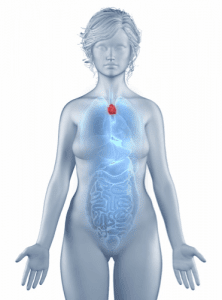
Stress and Your Thyroid: What’s the Cancer Connection?
Stress: A word that seems all too common in today’s society. Not only can chronic stress wreck havoc on your overall health and well-being, but it can affect your thyroid too.
Stress and Hypothyroidism
Your thyroid works in tandem with your adrenal glands. The adrenal glands, which are above your kidneys, can handle small amounts of stress well. When you encounter stress they release cortisol, which enhances various bodily functions.
The impact of stress on the thyroid occurs by slowing your body’s metabolism. This is another way that stress and weight gain are linked. When thyroid function slows during stress, triiodothyronine (T3) and thyroxine (T4) hormone levels fall. Also, the conversion of T4 hormone to T3 may not occur, leading to higher level of reverse T3.
Insulin resistance and issues balancing blood sugar often occur alongside hypothyroidism. Increased levels of glucocorticoids lower the levels of TSH in the blood. A delicate balance between stress hormones and cortisol must exist for proper thyroid function. If this delicate balance changes, your thyroid symptoms may increase.
Lab tests cannot always depict the right picture of how you’re feeling, and medications cannot always keep up with the changes that stress causes. Chronic stress can cause problems in your body for years before lab tests show a problem. All the while, you may experience hypothyroid symptoms, such as fatigue or weight gain. This prolonged stress may crop up as depression or anxiety when both are actually hypothyroid symptoms.
The thyroid is the main system regulator- it produces two main molecules- T3, and T4-which contain iodine — and these molecules regulate metabolic processes with glucose. Your body has to build a billion cells a day — if you are under stress your body will use Coriolis- de-stress your life so that the thyroid is used properly. https://www.youtube.com/watch?v=vcfb6MAtESo https://www.youtube.com/watch?v=F1rxW9IzYrA
Stress Relief Tips
You can help your overall stress levels and thyroid health by making some simple changes in your daily life.
Eat Right
Fighting Cancer with Food
Whether you are currently fighting cancer or simply want to cut your risk, diet—specifically a diet heavy on plant-based foods—plays a crucial role in fending off this disease. According to a study in JAMA Internal Medicine involving Seventh-Day Adventists— 35% of whom are vegetarian, compared – with 4% of the distinct general population—people who eat plant-based diets live longer and have fewer cancer occurrences.
One way eating a mostly vegetarian diet helps …. fight cancer is by helping to keep your weight down. That’s important: Excess body fat has been found to be metabolically active, promoting the kinds of cell changes that can contribute to cancer development.
Plants also provide the kinds of nutrients that help retard malignancy development. For example, the folate found in dark leafy greens such as kale and spinach (as well as asparagus and other foods) plays a role in maintaining DNA, and low levels of folic acid in the blood have been linked to higher rates of colorectal cancer. Lycopene, a carotenoid found in foods such as tomatoes, pink grapefruit, red grapes, watermelon and papaya, has long been believed to help reduce prostate cancer risk; recent studies indicate it may lower the risk of kidney cancer as well.
If you do eat animal foods, your best bet is to concentrate on seafood, especially wild-caught species that tend to be low in mercury such as salmon, sardines, squid and shrimp. Besides providing high-quality protein, salmon and sardines also supply vitamin D (as does small amounts of the daily sun exposure on unprotected skin). The National Cancer Institute reports, “In studies of cancer cells and of tumors in mice, vitamin D has been found to have several activities that might slow or prevent the development of cancer, including promoting cellular differentiation, decreasing cancer cell growth, stimulating cell death and reducing tumor blood vessel formation.”
If you are currently undergoing cancer treatment or have been diagnosed with cancer in the past, speak with your healthcare provider about the ideal diet for your needs. http://www.eattobeat.org/food
A healthy, balanced diet looks different for everyone. In general, plan to eat three well-balanced meals full of fruits, vegetables, and protein each day. Start your morning off with a good breakfast, one low in sugar but higher in protein and fiber. While reducing alcohol consumption, caffeine, and sugar within your diet will help with your overall energy levels. Also, think about how you’re eating. Make sure to take the time to sit and enjoy the meal, which will help your body digest food better. While this may seem tough to do in your busy lifestyle, your body and thyroid will thank you for it.
Think About Vitamins
You may want to consider adding thyroid supporting vitamins and minerals to your daily routine. An iodine deficiency is the most common cause of hypothyroidism. Adding other essential vitamins and minerals, such as:
- selenium
- zinc
- iron
- copper
- vitamins A, B, C, and E
Talk to your doctor before starting these supplements.
Are you tired or toxic? That is a fair question since many symptoms of toxic overload are commonly mislabeled as digestive issues, insomnia, chronic fatigue or even allergies. Listen to Dr. Rostenberg explain how toxins are impacting your body and what you can do to fix it. If you or someone you know is sick and tired of being toxic, please share this video with them! For help with healthy detoxification to revitalize your body and mindhttps://www.youtube.com/watch?v=mBtzULZYw0o
Sleep Well
Getting enough quality sleep at night can be tough with hypothyroidism. Stress makes getting a good night’s sleep tough too. But aiming for a good night’s rest can have a huge impact on your thyroid health. Try adopting a strict bedtime and avoid technology in the hours before bed. Slowing down before you sleep allows the adrenal glands to lower the stress response and rest.
Relax
Taking time to reflect or meditate can help the body relax. In turn, relaxation leads to reduced stress and less impact on your thyroid. There are many ways to relax. For some people, making crafts helps to calm their bodies. For other people, deep breathing exercises, yoga, or simply being outside is enough.
You may not be able to remove all the stress from your life, but supporting your body with healthy foods, adding vitamins and minerals, sleeping properly, and trying some relaxation techniques can help you balance your overall health as well as your thyroid.
Healing The Adrenal Gland:
https://www.youtube.com/watch?v=_iERqD2XrUk https://www.youtube.com/watch?v=l27y1rtUrFQ
When you think of the adrenal glands (also known as suprarenal glands), stress might come to mind. And rightly so—the adrenal glands are arguably best known for secreting the hormone adrenaline, which rapidly prepares your body to spring into action in a stressful situation.
But the adrenal glands contribute to your health even at times when your body isn’t under extreme stress. In fact, they release hormones that are essential for you to live.
Anatomy of the Adrenal Glands
The adrenal glands are two, triangular-shaped organs that measure about 1.5 inches in height and 3 inches in length. They are located on top of each kidney. Their name directly relates to their location (ad—near or at; renes—kidneys).
Each adrenal gland is comprised of two distinct structures—the outer part of the adrenal glands is called the adrenal cortex. The inner region is known as the adrenal medulla.
Hormones of the Adrenal Glands
The adrenal cortex and the adrenal medulla have very different functions. One of the main distinctions between them is that the hormones released by the adrenal cortex are necessary for life; those secreted by the adrenal medulla are not.
Adrenal Cortex Hormones
The adrenal cortex produces two main groups of corticosteroid hormones—glucocorticoids and mineralcorticoids. The release of glucocorticoids is triggered by the
hypothalamus and
pituitary gland. Mineralcorticoids are mediated by signals triggered by the kidney.
When the hypothalamus produces corticotrophin-releasing hormone (CRH), it stimulates the pituitary gland to release adrenal corticotrophic hormone (ACTH). These hormones, in turn, alert the adrenal glands to produce corticosteroid hormones.
Glucocorticoids released by the adrenal cortex include:
- Hydrocortisone: Commonly known as cortisol, it regulates how the body converts fats, proteins, and carbohydrates to energy. It also helps regulate blood pressure and cardiovascular function.
- Corticosterone: This hormone works with hydrocortisone to regulate immune response and suppress inflammatory reactions.
The principle mineralcorticoid is aldosterone, which maintains the right balance of salt and water while helping control blood pressure.
There is a third class of hormone released by the adrenal cortex, known as sex steroids or sex hormones. The adrenal cortex releases small amounts of male and female sex hormones. However, their impact is usually overshadowed by the greater amounts of hormones (such as estrogen and testosterone) released by the
ovaries or
testes.
Adrenal Medulla Hormones
Unlike the adrenal cortex, the adrenal medulla does not perform any vital functions. That is, you don’t need it to live. But that hardly means the adrenal medulla is useless. The hormones of the adrenal medulla are released after the sympathetic nervous system is stimulated, which occurs when you’re stressed. As such, the adrenal medulla helps you deal with physical and emotional stress. You can learn more by reading a SpineUniverse article about the
sympathetic nervous system.
You may be familiar with the fight-or-flight response—a process initiated by the sympathetic nervous system when your body encounters a threatening (stressful) situation. The hormones of the adrenal medulla contribute to this response.
- Epinephrine: Most people know epinephrine by its other name—adrenaline. This hormone rapidly responds to stress by increasing your heart rate and rushing blood to the muscles and brain. It also spikes your blood sugar level by helping convert glycogen to glucose in the liver. (Glycogen is the liver’s storage form of glucose.)
- Norepinephrine: Also known as noradrenaline, this hormone works with epinephrine in responding to stress. However, it can cause vasoconstriction (the narrowing of blood vessels). This results in high blood pressure.
Enzymes are natural proteins: that
stimulate and accelerate biological reactions in the body. Enzymes, many of which are made in the pancreas, break down food and help with the absorption of nutrients into the blood. Metabolic enzymes build new cells and repair damaged ones in the blood, tissues, and organs. Though the
American Cancer Society says that there have been no well-designed studies showing that enzyme supplements are effective in treating cancer we need look no further than the benefit that comes from stimulating and accelerating so many biological reactions.
Most alternative health professionals understand the importance of taking digestive enzymes. This becomes critical for many people as they age. Most people think of enzymes (if they think of them at all) as necessary only for those who deal with digestive problems such as GERD, hiatal hernias, ulcers, etc. Enzymes though are extremely important for treating cancer and should not be overlooked. Enzymes allow one substance to be turned into a different substance and support the pancreas, liver, and immune system’s function.
Sep. 21, 2013 – 6:54 – On today’s A Healthy You & Carol Alt, Carol welcomed Doctor Gonzalez, the author of “What Went Wrong: The Truth Behind the Clinical Trial and Enzyme Treatment of Cancer.”
https://www.youtube.com/watch?v=p6E3hQdFEg8
The
digestive (or gastrointestinal) system (see page
Overview of the Digestive System), extending from the mouth to the anus, is responsible for receiving and digesting food and excreting waste. This system includes not only the stomach, small intestine, and large intestine, which move and absorb food, but associated organs such as the pancreas, liver, and gallbladder, which produce digestive enzymes, remove toxins, and store substances necessary for digestion.
The Liver is an organ as well that the Chinese state: if you keep cancer out of this vital organ you won’t die of cancer. You can not live without a proper functioning liver. The Liver is known as the great detoxifier and The active ingredient — the one protecting the
liver — is
milk thistle also known as silymarin — a chemical extracted from the seeds. Silymarin is actually a group of flavonoids (silibinin, silidianin, and silicristin), which are thought to help repair
liver cells damaged by alcohol and other toxic substances.
http://draxe.com/milk-thistle-benefits/
Preview YouTube video Adrenal Gland Function
Once a tumor has developed, stress may modulate neuroendocrine pathways and affect numerous mechanisms that can also potentially lead to the progression of cancer:
•Stress hormone stimulation of beta-adrenergic receptors (present on all cells) increases tumor growth rates
•Stress hormones increase tumor blood vessel growth
•Stress hormones suppress natural killer (NK) cell activity (immune suppression)
•Stress hormones reduce the cancer-killing effects of chemotherapy on tumor cell apoptosis (cell death/suicide)
Chronic stress is a major culprit in women’s lives, contributing to ongoing cycles of fatigue, poor nutrition, waves of exhaustion, mood swings, and hormonal imbalance.
by Marcelle Pick, OB/GYN, NP.
When I ask my patients what they think is the reason for their symptoms, their answers have one common thread: too much responsibility that is impossible to manage. Trying to help themselves through each day, many women find themselves overloading on caffeine, sugary snacks, alcohol, and even sleep aids to manage stress, all of which can disrupt our body’s normal rhythms.
Research shows that when we experience chronic stress, our adrenal glands, or the tiny glands that moderate the stress response as well as regulate other hormones, will suffer. The adrenals, which are the size of walnuts, have an enormous job. They produce many hormones that regulate our body’s functioning, including cortisol, a hormone activated when our stress levels rise, signaling our body to enter a heightened state of emergency. But high cortisol levels are intended to be short term, not remain elevated. Since our adrenals do not know the difference between stressors, they can continue to work hard to do their jobs, whether we are stressed due to a true emergency or are simply stressed out.
When our cortisol levels stay elevated, it interferes with many functions in our body, including immune function, digestion, sleep, and even the ability to produce other essential hormones such as estrogen, progesterone, testosterone, and thyroid hormones. This can lead to high blood pressure, high blood sugar, excess abdominal fat, and inflammation. In the meantime, our health is compromised, along with our moods, and even our sex drive.
When the adrenal glands continue to be compromised long term, they have a decreased ability to produce cortisol, and instead produce extra adrenaline, causing us to feel irritable, shaky, lightheaded, and anxious. Adrenal fatigue is a syndrome that can, over time, cause low blood pressure, allergies, and pure exhaustion.
These issues, although very concerning, can also be relieved when adrenal dysfunction is healed. And the good news is, it can be healed. Along with decreasing chronic stress, adjusting our emotional responses to stressors, and changing what, when and how we eat, we can reverse adrenal fatigue. Let’s take a look at some of the dietary approaches we can utilize to not only support our adrenals, but also improve our energy and promote better sleep.
First: Time Your Meals and Snacks
When we go for long periods without food, our adrenal glands work hard to release more cortisol and adrenaline, to try to maintain the body’s normal functioning. When our blood sugar dips for extended periods, this creates a stress reaction, taxing the adrenals. It’s important to know that our body always needs energy, even when we are sleeping. Cortisol works to moderate blood sugar in between meals and at night, so regulating our cortisol levels by eating timely, healthy meals and snacks is key.
Cortisol levels follow our natural circadian rhythm. It begins to rise around 6 am, peaks around 8 am, and then throughout the day naturally rises and falls as needed. It tapers off at night, and reaches its lowest levels while we are sleeping.
Timing our meals, and how much we eat, can help regulate cortisol and its natural cycle. Eating larger meals earlier in the day naturally helps support cortisol levels, while eating smaller, lighter meals at the end of the day helps maintain hormonal balance.
Exercise will also increase cortisol levels, so enjoying lighter activities while trying to heal adrenal fatigue is important. Also to keep cortisol levels as smooth as possible, heavier exercise is recommended in the morning or early afternoon when cortisol is higher, and lighter exercise, such as walking or gentle stretching such as restorative yoga, is better in the evening.
If Cortisol Is Higher In The Morning, Why Am I Not Hungry?
The old adage about breakfast being the most important meal is actually true. Eating a nutritious breakfast that includes protein within an hour of rising will help balance your metabolism and cortisol throughout the entire day. But it’s hard to eat when we don’t feel hungry, even if we know it’s important.
Here are reasons we may not feel hungry in the morning:
- Corticotrophin-releasing hormone (CRH) levels can dull the appetite when it enters the bloodstream at a fast rate first thing in the morning.
- Decreased liver function can accompany adrenal fatigue, which also can quell morning hunger.
Here are some tips to help support your natural cortisol cycle:
-
Try to eat breakfast within an hour of getting up, or by 8 am to restore blood sugar levels that were depleted during the night.
- Eat a healthy snack around 9 am.
- Try to eat lunch between 11 am and noon to prevent a large dip in cortisol levels.
- Eat a healthy snack between 2 and 3 pm to help off-set the natural cortisol dip that occurs around 3 or 4 pm. Many people notice this dip every day and reach for extra caffeine or carbohydrate-loaded snacks, which will actually impede hormonal balance.
- Try to eat dinner between 5 and 6 pm and although it may be difficult at first, try to eat a light meal. Eventually your body will enjoy digesting less food in the evening.
- Eat a nutritious, light snack an hour before bed, but be sure to avoid refined sugars. Nut butters with fresh fruit or cheese are ideal choices.
When we properly time our meals and snacks, we can prevent dramatic drops in blood sugar and support our body’s natural functioning. Our adrenals will not have to continually work to produce cortisol and can instead perform many of their other important secondary functions. We will also have more energy and more happiness throughout the day!
Next: Choose The Right Foods and Beverages
It is natural to crave sweets when we have low blood sugar. Fighting adrenal fatigue is exhausting, and reaching for quick, easy, and even tasty snacks such as cookies, doughnuts, candy, colas and coffee drinks is common. Unfortunately the energy we get from these types of foods is short-acting. This quick spike in blood sugar followed by a spike in insulin levels clears from our bloodstream so fast that we refer to this process as a “crash.”
Stress and exhaustion, when combined with hunger, can impede our ability to make healthy choices. When we aren’t aware of the effects that too much caffeine and refined carbohydrates have on our bodies, we may not realize we are affecting our hormones and how they function, as well as our sleep patterns by consuming them. I often recommend a gluten-free diet and limited caffeine to my patients who are suffering from adrenal fatigue.
In addition to cortisol levels, our serotonin may also be off balance, signaling our body to rest. That doesn’t always mean sleep — sometimes deep breathing or a 10-minute walk outdoors can help boost serotonin and ward off fatigue.
Ways to Eat to Support Adrenal Health
-
Use fresh, whole foods, preferably organic, locally grown, seasonal food for meals and snacks.
- Avoid preservatives, added hormones, artificial colors, dyes, and chemicals.
- Include lean protein with each meal and snack to help stabilize blood sugar and stave off cravings for refined sugars and caffeine.
- If you buy prepared food, try to buy it at a health food store or grocery offering natural, whole foods.
- Try to prepare extra nutritious snacks to have on hand so they are ready and available when you are having cravings.
Beverages also make a difference in supporting adrenal health. Here is a chart showing the alternatives.
|
Adrenal draining
|
Adrenal restoring
|
| Drinks that contain caffeine |
Ginseng [Panax sp.] Eleuthero/Siberian ginseng [Eleutherococcus senticosus] (in the morning) |
| Alcohol |
Herbal teas like chamomile, passionflower, valerian |
| Gatorade |
Vegetable juice (with salt), like V-8 |
Tip: If coffee is a must, try to have one cup in the morning with a nutritious breakfast.
A Note On Salt and Adrenal Imbalance
My patients are always surprised when I tell them to give in to their cravings of salt during periods of adrenal fatigue. Salt cravings in adrenal insufficiency are related to low levels of a steroid hormone called aldosterone. This hormone helps the body maintain salt and water as a way to help regulate blood pressure. When cortisol goes up, aldosterone goes down. Like cortisol, aldosterone fluctuates throughout the day, and is also influenced by stress. Chronically low levels of aldosterone can impact electrolyte balance, and sodium intake is one way to help correct this imbalance.
If you experience lightheadedness when you get out of bed in the morning, or when you get out of a hot bath or shower, you may have hypotension or low blood pressure. This is a common side effect of adrenal insufficiency, so adding good quality-salt, such as Celtic sea salt, could be helpful to manage those symptoms.
A Final Tip On Choosing The Right Foods and Beverages
When we make necessary dietary changes, we may often feel stress, which of course does not help break the stress-patterns that have already depleted our adrenal glands. This is when I remind my patients to not feel bad if they veer off course once in a while. Feelings of self-disappointment that are associated with bingeing may lead to a desire to abandon the course of action. Doing your best 90 percent of the time is all I ask, because guilt is not a healthy way to support your adrenal glands!
Other Nutrients Valuable To Adrenal Health
Vitamins and minerals and micronutrients found in a pharmaceutical-grade supplement (Click here for information on Women to Women’s high-quality, specially formulated supplements) are essential to restoring adrenal health, and supporting the entire endocrine system. Not only can they help the healing process, but they can provide extra nutrition to our cells, and support proper adrenal functioning every day. Here are some important ones.
- + Vitamins C, E and all the B vitamins (especially pantothenic acid and B6) help regulate stress hormones.
- + Magnesium provides energy to the adrenal glands.
- + Calcium and trace minerals including zinc, manganese, selenium, and iodine provide calming effects in the body.
Herbal support is also a consideration when treating adrenal fatigue. Adaptogens are herbs that actually adapt to the individual needs of your body, providing the additional essential support your adrenals need. Begin with the first two herbs listed below, along with B vitamins. If you do not notice improvement within a few weeks, be sure to consult with a naturopathic or functional medicine provider for evaluation and a program that evaluates your specific needs.
-
Ashwagandha (Withania somnifera)
- Eleuthero / Siberian ginseng (Eleutherococcus senticosus)
- Astragalus root (Astragalus membranaceus)
- Schisandra (Schisandra chinensis)
- Rhodiola rosea
- Licorice root (Glycyrrhiza glabra)
It’s amazing to think that the adrenal glands have so much power over our functioning. When they are working properly they offer balance – providing us with energy when we require it, and helping us feel relaxed when it’s time to rest. The burden is great on our adrenals, and they can become impaired under the heels of long term stress. But we can make small choices that can dramatically impact their functioning for the better. With proper nutrition, exercise, relaxation, and sleep, our body’s natural rhythms will be supported. By reducing stress levels, our adrenal glands will work in harmony with us, and our energy and vitality will be renewed.
For more information, read our many informative articles in our Adrenal Health Section and take our online Adrenal Health Assessment.
Preview YouTube video Understanding the Stress, Thyroid, Hormone Connection & Prioritizing Systems

Understanding the Stress, Thyroid, Hormone Connection & Prioritizing Systems