What is Gerson Therapy

The Gerson Miracle – Documentary Films   ||   The Beautiful Truth – Documentary Films

Science Behind Gerson Therapy – Search

Gerson therapy is based on the idea that cancer develops when there are changes in cell metabolism because of the buildup of toxic substances in the body. Dr. Gerson said the disease process makes more toxins and the liver becomes overworked. Gerson Therapy is an alternative treatment that claims to help with cancer and other diseases through a strict diet, supplements, and detoxification methods like enemas.

The theory behind it suggests that disease results from toxins in the body and imbalances in cell metabolism, particularly sodium and potassium levels. However, there is no substantial scientific evidence supporting its effectiveness in treating or curing cancer or other conditions. The therapy is not FDA-approved, and few clinical studies have been conducted to validate its claims.

1 Gerson Therapy – NCI – National Cancer Institute cancer.gov

cancer.gov

2 Gerson Therapy: Overview, Regimen, Risk… verywellhealth.com

verywellhealth.com

3 What Is Gerson Therapy,

Gerson Therapy is an alternative treatment that claims to help with cancer and other diseases through a strict diet, supplements, and detoxification methods like enemas. The theory behind it suggests that disease results from toxins in the body and imbalances in cell metabolism, particularly sodium and potassium levels.

However, there is no substantial scientific evidence supporting its effectiveness in treating or curing cancer or other conditions. The therapy is not FDA-approved, and few clinical studies have been conducted to validate its claims. Some of its practices, such as frequent enemas, may even pose health risks1.

Would you like to explore more about alternative treatments or conventional approaches to health?

1www.cancer.gov    2 www.medicinenet.com

The Gerson Therapy diet is a strict, organic, plant-based regimen designed to detoxify the body and restore health. It emphasizes fresh, raw juices, low sodium intake, and minimal fats and proteins.

Key Dietary Components:

  • Organic Produce: Patients consume 15–20 pounds (7–9 kg) of organic fruits and vegetables daily.
  • Fresh Juices: Drinking 13 glasses of freshly pressed juice per day is a cornerstone of the therapy.
  • Restricted Foods: The diet excludes processed foods, salt, oils, and animal products, except for small amounts of organic, non-fat yogurt after six weeks.
  • Allowed Foods: Includes carrots, apples, leafy greens, potatoes, and non-fat rye bread.
  • Detoxification: Coffee enemas are used frequently to aid detoxification.

While some believe this diet supports healing, scientific evidence does not confirm its effectiveness in treating diseases like cancer

Would you like to explore its potential risks or alternatives?

1www.healthline.com  2gerson.org  3 hawaiinaturopathicretreat.com

What are the specific rules for food preparation?

 Gerson Therapy food preparation follows strict guidelines to preserve nutrients and aid digestion. Here are the key rules:

Cooking Methods:

  • Slow Cooking: Vegetables are cooked slowly over low heat to retain nutrients and make them easier to digest.
  • No Added Water: Foods are stewed in their own juices or with a small amount of Hippocrates Soup Stock.
  • No Oils or Fats: Cooking is done without oils, as fats are restricted in the diet.
  • Tight-Fitting Lids: Pots should have heavy lids to prevent steam from escaping.
  • Flame Tamers: A heat diffuser is recommended to maintain low cooking temperatures and prevent burning.

Food Preparation Rules:

  • Fresh, Organic Ingredients: All food must be prepared fresh—no canned, bottled, or frozen foods.
  • Minimal Seasoning: Salt, sugar, and spices are prohibited to allow the body to reset its taste buds.
  • Scrubbing Instead of Peeling: Vegetables should be scrubbed, not peeled, to retain mineral salts and vitamins.
  • Baking at Low Temperatures: Vegetables are baked at 200–250°F (93–121°C) for 2–3 hours in a covered dish.

Would you like details on specific recipes or meal planning within Gerson Therapy?

1gerson.org 2gerson-research.org 3www.urantiagaia.org

What ingredients are best for Gerson Therapy?

The best ingredients for Gerson Therapy are fresh, organic, and nutrient-rich foods that support detoxification and healing. Here are some key components:

Vegetables & Greens

  • Carrots – A staple in juices, rich in beta-carotene.
  • Leafy greens – Romaine lettuce, escarole, red leaf lettuce, and Swiss chard.
  • Beet tops – Provides essential minerals.
  • Red cabbage – Supports digestion and detoxification.
  • Watercress – Used in small amounts for its cleansing properties.

Fruits

Other Essentials

  • Hippocrates Soup – A blend of potatoes, celery root, leeks, and onions.
  • Oatmeal – Organic, raw oats cooked slowly.
  • Baked potatoes – A common meal component.
  • Tomatoes, zucchini, and artichokes – Used in various dishes.

These ingredients are carefully selected to maximize nutrient absorption and minimize toxins2. Would you like a sample meal plan or juice recipes?

1 www.hawaiinaturopathicretreat.com  2gerson.org   

Can you suggest some recipes using these ingredients?

Absolutely! Here are some Gerson Therapy-friendly recipes – Search 

Using the best ingredients:

1. Hippocrates Soup

A staple in Gerson Therapy, this soup is packed with nutrients. 

Ingredients:

  • 1 medium celeriac or 4 stalks of celery
  • 2 medium potatoes
  • 1 medium onion
  • 2 cloves garlic
  • 1 medium leek
  • 2 medium tomatoes
  • 1 bunch parsley
  • 1 quart filtered water Instructions:
  1. Wash and chop all ingredients.
  2. Simmer in a covered pot for 2 hours.
  3. Blend until smooth and serve warm.

2. Carrot-Apple Juice

A refreshing and detoxifying juice. Ingredients:

  • 3 large carrots
  • 1 large green apple Instructions:
  1. Wash and chop ingredients.
  2. Juice using a cold-press juicer.
  3. Drink immediately for maximum benefits.

3. Baked Potatoes with Greens

A simple, nourishing meal. Ingredients:

  • 2 medium potatoes
  • 1 cup Swiss chard or red cabbage
  • 1 tbsp lemon juice Instructions:
  1. Bake potatoes at 250°F (121°C) for 2 hours.
  2. Steam greens until tender.
  3. Mash potatoes and mix with greens and lemon juice.

For more Gerson Therapy recipes, check out this resource or this collection.

The Gerson Therapy Resources offer fresh Gerson-approved recipes, up-to-date information from their blog, and Gerson-approved vendor lists1The Gerson Therapy Cookbook is the most comprehensive and accurate cooking guide in Gerson Institute history, developed by their own Gerson chefs2.

Would you like more meal ideas or juice combinations?

What are the health benefits of these ingredients?

The ingredients used in Gerson Therapy are chosen for their potential health benefits, particularly their ability to support detoxification, provide essential nutrients, and promote overall well-being. Here are some key benefits:

Vegetables & Greens

  • Carrots – Rich in beta-carotene, which supports eye health and immune function.
  • Leafy greens – High in chlorophyll, which may aid detoxification and oxygenation of cells.
  • Beet tops – Contain iron and antioxidants, supporting blood health.
  • Red cabbage – Provides vitamin C and fiber, aiding digestion and immune function.
  • Watercress – Known for its anti-inflammatory properties and high vitamin K content.

Fruits

  • Apples – Contain pectin, which may help remove toxins from the body.
  • Citrus fruits – High in vitamin C, supporting immune health and collagen production.
  • Bananas, papayas, and berries – Provide potassium and antioxidants, essential for heart health and cellular repair.

Other Essentials

  • Hippocrates Soup – A blend of nutrient-dense vegetables that may support digestion and immune function.
  • Oatmeal – Contains soluble fiber, which helps regulate blood sugar and cholesterol.
  • Baked potatoes – A good source of potassium, which supports nerve and muscle function.
  • Tomatoes, zucchini, and artichokes – Provide vitamins A and C, supporting skin health and digestion.

While these ingredients are nutrient-rich, it’s important to note that scientific evidence does not confirm Gerson Therapy as an effective treatment for diseases like cancer2. Would you like more details on how these foods interact with the body?

1www.healthline.com    2www.cancer.gov

The supplements used on the Gerson Therapy™ include: a specific Potassium compound, Lugol’s solution, Thyroid hormone, Pancreatic Enzymes and Niacin. Each supplement serves a specific biological purpose and is not intended as a substitute for nutritional intake.

How it works – Gerson Institute

gerson.org/how-it-works/

gerson.org/how-it-works/

These supplements serve specific biological purposes and are not intended as a substitute for nutritional intake. Supplements of the Gerson Therapy – Search

The supplements used in the Gerson Therapy include1 2 3 4 5:

The Gerson Therapy incorporates a variety of nutritional supplements to support its detoxification and healing process. Some of the key supplements include:

  • Potassium compound to help restore electrolyte balance.
  • Lugol’s solution (iodine) for thyroid support.
  • Pancreatic enzymes to aid digestion and help break down tumors.
  • Vitamin B12 and intramuscular liver extract to support liver function.
  • Niacin to improve circulation.
  • Coenzyme Q10 for cellular energy production.
  • Flaxseed oil as a source of essential fatty acids.   

If you’re looking for Gerson-approved supplements and supplies, check out: gerson.org/suppliesandvendors/ & midwesthealthandnutritioninc.com/  specializing in Gerson Therapy nutritional supplements and enema supplies. They distribute to doctors, clinics, and customers worldwide. If you’re considering this therapy, it’s always best to consult a healthcare professional to ensure it’s appropriate for your needs.

What are the benefits of each supplement?

Each supplement in the Gerson Therapy serves a specific purpose in supporting detoxification and healing:

  • Potassium compound: Helps restore electrolyte balance and counteract sodium retention.
  • Lugol’s solution (iodine): Supports thyroid function and metabolism.
  • Pancreatic enzymes: Aid digestion and help break down tumors.
  • Vitamin B12 and liver extract: Support liver function and red blood cell production.
  • Niacin: Improves circulation and supports cellular energy.
  • Coenzyme Q10: Enhances mitochondrial function and energy production.
  • Flaxseed oil: Provides essential fatty acids for cellular health.

You can explore more details about these supplements and their role in the therapy on Gerson Institute @ https://gerson.org If you’re considering this approach, consulting a healthcare professional is always a good idea!

Global web icon

Supplements and Schedules – Advanced Gerson Protocol

The Gerson Therapy book by Morton Walker

Book Overview

With over 300,000 copies sold, The Gerson Therapy paved the way for alternative cancer treatments and has successfully treated Cancer, Hepatitis, Migraines, Arthritis, Heart Disease, Emphysema, and Autoimmune diseases with a revolutionary all-natural program. For years, the traditional medical establishment has called these chronic or life-threatening diseases incurable. But now, The Gerson Therapy(R) offers hope for those seeking relief from hundreds of different diseases. 

One of the first alternative cancer therapies, The Gerson Therapy(R) has successfully treated thousands of patients for over 60 years and has clinic locations around the country. The definitive natural cancer and chronic illness guide, alternative medicine therapist Charlotte Gerson and medical journalist Morton Walker reveal the powerful healing effects of nutrition, organic foods, food preparation, meal planning, and supplements combined to treat a variety of ailments. 

The Gerson Therapy — Revised And Updated || The Gerson Therapy (R) shows you: – How to beat cancer by changing your body chemistry – Search Special juicing techniques for maximum healing – How to conquer symptoms of allergies, obesity, also high blood pressure, HIV, lupus, and other chronic illnesses – Which supplements will strengthen your immune system – How to prepare delicious, healthy foods using Gerson-approved recipes included in the book – And much more… 

This unique resource will help and inspire everyone who has ever said, I want to get well. Just show me how. The Gerson Therapy(R) offers a powerful, time-tested healing option that has worked for others–and can work for you. This description may be from another edition of this product.

Lower Your Blood Sugar and Cholesterol With These Heart-Smart Foods

Gerson Therapy Success Rate for Cancer

Related Subjects Gerson Detoxification Lifestyle Changes Supplements Natural Healing  Alternative Medicine Cancer Diseases & Physical Ailments Healing Health Fitness & Dieting Gerson Therapy YouTube – Search

BONUS: Lower Your Blood Sugar and Cholesterol With These Heart-Smart Foods

Charlotte Gerson (daughter of Dr. Max Gerson) delivers a 3-hour long talk on the Gerson Therapy at CNM – The College of Naturopathic Medicine in London.

The Gerson Therapy – Charlotte Gerson on Cancer I College of Naturopathic Medicine

Posted in Uncategorized | Leave a comment

6 Phillies die of brain cancer

How many ex MLB Players died of brain cancer – Search Videos

Brain Cancer in Baseball Raises Questions | TIME.com

In May 2022, the city of Philadelphia was struck by tragedy: the death of former Phillies pitcher David West. A ten-year MLB vet, West’s loss was a major blow to the Phillies family. Six former Philadelphia Phillies players, Tug McGraw, Darren Daulton, John Vukovich, John Oates, Ken Brett, and David West have died due to glioblastoma, 

This shit sucks. Darren Daulton, John Vukovich, Tug McGraw and more may have given their actual life to the Phillies. Vuk and Tug at least had a championship to show for it. Daulton only got one real shot in Philly (before winning in Miami, his final season) and a career filled with mediocre teams. That’s a raw deal.

Was Veteran Stadium built on a Toxic Dumping site – Search

That place was a death trap, but I do have some fond memories there.

Rheal Cormier also died as a result of cancer just a year or two ago. He played on that astroturf for the Phillies as well, although it was in the late 90s-early 2000s. Cormier also pitched for St Louis and Montreal and Cincinnati, turf parks all.

Veterans Stadium in Philadelphia was built on a site that had been a dump, and dangerous chemicals were discovered in the turf at the old stadium 1 2The stadium was considered a crown jewel when it was built, but by the turn of the century, it had lost its value4It has a dirty legacy and was the home of the Eagles from 1971 to 2002 and the home of the Phillies from 1971 to 2003 5.

Brain cancer deaths of six former Phillies players must be investigated, says Dr. Siegel | Fox News Leave it to Liberal leaning Filthadelphia to kill its own players

But it was more than that.

5:42 Mike Ryan # 9 catching a ball dropped from a helicopter on opening day at Veterans Stadium. Ex-Phillies wonder if stadium is to blame for players’ brain cancer 

See, West had died from glioblastoma, a rare form of brain cancer. West, however, was the sixth former Phillies to be killed by this disease. In fact, the rate of brain cancer among Phillies who played between 1971 and 2003 is roughly three times the average rate among adult men.

Great story. Crazy that Bayer bought Monsanto knowing Monsanto had the RoundUp cancer lawsuits piling up. Bayer settled a bunch of the lawsuits in 2020 for about $12 billion – but there are still several thousand pending that didn’t go with the class-action settlement.

Baseball is a statistic-driven sport (as is medical research). Given this, the Ken Brett (1973) and Johnny Oates (1975-76) case associations should be questioned simply due to the short time they were exposed (1 and 1.5 years). David West, too, due to only 4 years of exposure and the modern timeline (1993-96) likely with new turf products. I would question Daulton for the same ‘modern’ timeline (83-97). This leaves McGraw (75-84) and Vukovich (70-71, 76-81, 88-managed) with 10 and 9 seasons in the same era.

I find it interesting that almost ALL of the six Phillies (plus Gary Carter) were pitcher/catcher. The two positions that handle the baseball far more than any other on the field. Think how much the leather hide of the ball comes in contact with the turf. Now think about how players (especially pitchers) commonly lick their fingers.

So, this is simply a demonstration of how much information is unknown but should be looked at to determine if this is really a thing at all – or if it is much more widespread amongst the league players as a whole and/or other groups. How many cases throughout the league? How many cases amongst coaches, trainers, umpires, groundskeepers, bat boys, ball girls, vendors, season ticket holders, turf installers, turf factory workers, etc.

What years did the turf change on the field and in chemistry? Were any of the players doing steroids? Were any of their brains examined for CTE after their deaths? Did the cancers all start in the brain, or had it spread there? What treatments were they given by medical staff? And on and on. I’m not a fan of Monsanto or Bayer but if PFAS is all the turf contains, it would be hard to prove an association for the very reasons given in the video – they are everywhere and in everyone.

They have been around since the 1930s, known to be harmful in the 1950s, had corporate whistleblowers decades ago that the EPA did nothing about, and now in the mid-2020s everyone is acting surprised. Monsanto (Bayer), 3M, Dupont and who knows how many others have been making PFAS for 100 years and it’s in your pots and pans (Teflon), upholstery (Scotch guard), carpeting, etc.

Question becomes looking at these specific cancer rates among all baseball teams with “original” style artificial turf in the 60s – 90s. If the rates differ, then what is unique about Philadelphia and The Vet? And then do the same for football. It may be the pre-2000 artificial turf… it may be that plus other factors… it may not be the artificial turf – it could be something that was in the clubhouse, or the water supply. This rash of disease was alarming… and suspicious.

What was behind this spike? Why only Philly players?

And just how deep do the roots of this story go?

Not only Phillies Players, but Eagles. Reggie White, Andre Waters and Wes Hopkins.

White DID NOT DIE of Sleep Apnea. He had Brain Cancer. So did Waters and Hopkins.

It’s interesting that the Philadelphia Eagles also played at the Vet, but there seems to be no unusually high brain cancer rate among their players. But it should be noted that NFL teams have separate practice facilities, they only use the stadium on game day, which, unlike MLB, is only once a week instead of every day.

@AP-zw6ql

That was an interesting story, and it would be really good if they finally got to the bottom of what caused all the brain cancers. There were plenty of other teams with AstroTurf in their stadiums that didn’t experience the same problems, so it is entirely possible the cause was completely unrelated to the turf.

The existence of PFAS in the turf is a bit of a red herring. PFAS are a group of chemicals that don’t break down in the environment or our bodies. There is a lot we don’t know about how their accumulation in the environment and our bodies will affect our health.

There is a big push to limit the use of PFAS in manufacturing because we just don’t know if they are going to cause health problems in the future. We know we can’t easily get rid of them, and we don’t know if they are safe or dangerous, so we are trying to err on the side of caution by saying “let’s play it safe and not use these if we can avoid them.”

Also, if we assume the PFAS in the turf is the culprit, we still don’t know how the PFAS got from the turf to inside the players’ brains. Did the turf break down in sunlight and the players were inhaling turf dust? It’s possible, but then you would expect to see a lot of lung related issues. Perhaps it was breaking down and emitting fumes, possibly, but again why aren’t we seeing a spike in lung cancers?

And why only in Philly?

It’s entirely possible it was something unrelated to the stadium.

Maybe the equipment manager had a special recipe for eye black that was the cause. Maybe the water fountain in their locker room had some contaminants in it. I really wish someone would dig deeper. It could save lives in the future.

The Vet was green, fuzzy and full of poison. 

The Philadelphia Inquirer published a full-scale investigation into the Veterans Stadium turf after six former Phillies, who all played on the field, died of a rare brain cancer. They bought a couple slabs of turf from eBay that were part of the field from 1977-81 and sent them to labs to be tested. This is what they found:

Tests run on two of the samples by Eurofins Lancaster Laboratories Environmental Testing found the turf contained 16 different types of PFAS, or per-and polyfluoroalkyl substances — so-called “forever chemicals,” – Search  which the EPA has said cause “adverse health effects that can devastate families.”

The Vet turf will be the first domino to fall in terms of linking diseases to playing surfaces. AstroTurf carpeted more football and baseball stadiums than shag did in every porno from the 70s. It was invented by Monsanto. A company who invented a chemical that poisoned U.S. troops during the Vietnam War and poisoned the food supply.

They indirectly killed people and somehow Comcast still beat them in a “2014 Worst Company in America” poll. But now Comcast is indirectly killing Flyers fans with bad contracts and no plan for the future so I guess it all evens out in the end.

The NFL is mostly played once a week (Sunday or Monday at the time) including playoffs in January. Plus the NFL starts in late summer into the heart of winter in January/February depending if you make the playoffs. So the Turf would freeze and whatever was in the turf would freeze as well. When it’s in the middle of summer with Humidity, mold and other pathogens would grow and spread faster at a greater rate.

MLB teams not only play the games there, but show up every day at the stadium several hours beforehand, much more exposure. Worth mentioning the NFL only plays in the stadium 10 days a year and baseball 81. I’ve also heard it’s due to the Eagles playing in colder weather. When Astroturf gets hot, that’s when it’s hazardous. My take on this is that when heated the Astro turf released the PCBs easier, plus the Eagles play in fall and winter, where there is less heating.

@PatRyan-c7z

I played on that field as a kid at a summer camp. This was before everyone started passing away from brain cancer. I can distinctly remember 30+ years later how hot the field was and how you could smell the turf. What I didn’t know as a kid, but one thing I learned later on as an auto body tech is that plastic off-gases when heated to a certain temperature.

That old astro turf would sometimes off-gas at lower than 140°. Sometimes as low as 77°. That means on every day of the mid summer, that field temp was anywhere from 105-130 on the regular depending on cloud coverage. Not to mention the heat reflecting off the turf. When he says it cooked players, he’s right. They practically force-fed us water to keep us hydrated for those 3 days.

At least a dozen NFL players have suffered from ALS

A lot of people who played in Oakland or San Francisco also died of ALS. People forget that Bobby Murcer played two years with the Giants, and that Candlestick Park had artificial turf in those years.

When Dwight Clark announced in March he has ALS, it was a devastating blow to those around him and to his many fans. For individuals who were around the 49ers in the mid-1960s, the news brought back some painful memories. More than 20 years after they were 49ers teammates, Gary Lewis, Matt Hazeltine and Bob Waters passed away from the rare disease.

As part of ALS Awareness Month, the latest edition of “The 49ers Insider Podcast”  remembers those men with, “One of the great mysteries — The story of three 49ers diagnosed with ALS.”

The incidence of ALS (amyotrophic lateral sclerosis) is two per 100,000 people in the United States and it is estimated more than 20,000 Americans may be living with ALS at any given time, according to the ALS Association. Yet, on this one 49ers team, three players developed ALS and died within a short period of time in the late-1980s.

— Matt Hazeltine graduated from Tamalpais High in Mill Valley and was a star at the University of California. He was inducted into the College Football Hall of Fame posthumously in 1989. Hazeltine played 14 seasons with the 49ers from 1955 to ’68 as a linebacker.

He died on Jan. 13, 1987, at the age of 53. That year, Bill Walsh introduced the Hazeltine Iron Man Award, which is given annually to the 49ers most courageous and inspirational defensive player.

 Gary Lewis went to high school at San Francisco’s Polytechnic High, across the street from Kezar Stadium. He also played running back at City College of San Francisco before finishing his college career at Arizona State.

Lewis was a sixth-round draft pick of the 49ers in 1964. He played six seasons with his hometown team. Lewis was diagnosed with ALS in November of 1986 and died less than a month later. He was 44.

— Bob Waters played four seasons with the 49ers from 1960 to ’63 as a quarterback and defensive back. He was on the 49ers during training camp in 1964 before going into coaching. Waters threw the first touchdown pass out of coach Red Hickey’s shotgun formation in leading an upset over the two-time defending NFL champion Baltimore Colts in 1960.

Waters served 20 seasons as head football coach at Western Carolina. He devoted the final years of his life trying to find answers to solve this mystery. Waters contacted as many of his former teammates as possible to see if they were experiencing similar problems.

Studies were done that examined the use of DMSO, painkillers and, even, the fertilizer used on the 49ers practice field in Redwood City.

“He led a single-minded, tough, courageous mission to get as much information as possible,” said Dr. Stan Appel, chair of the department of neurology at Houston Methodist, who worked closely with Waters.

“We never quite resolved why there had been three players amongst a small group that developed ALS.”

Waters died on May 29, 1989. He was 50.

Waters’ wife, Sheri, said she was saddened to learn of Clark’s diagnosis.

“I am very sorry to learn about Dwight Clark’s ALS diagnosis,” Sheri Waters told NBC Sports Bay Area in a statement. “I know how difficult it will be for Dwight and his family, as they adjust to this news. Bob would be very sad to know that after all his efforts to seek information to help find a cure for this horrible disease, ALS continues to affect these good men.

“I know that Bob died believing that one day there would be no more ALS. I am still so proud of Bob for his courage and willingness to help others. I wish the very best for the Clark family.”

While publicly disclosing his condition on March 19, Clark made the following statement:

“I’ve been asked if playing football caused this. I don’t know for sure. But I certainly suspect it did. And I encourage the NFLPA and the NFL to continue working together in their efforts to make the game of football safer, especially as it relates to head trauma.”

Said Dr. Appel, “What Dwight Clark is saying is right on target. Namely, let’s do everything we can to find the causes, to find the therapies that are meaningful for him and for all present and future cases of ALS.”

Former 49ers running back Ken Willard, 73, has not experienced any alarming physical conditions in his post-football life. He cautions against automatically assigning blame to the sport of football.

“Some people try to simplify this issue, but it’s a very complex issue,” Willard said. “I think there’s a lot of research that’s yet to be done. (But) as far as being concerned, I think you’re a fool if you’re not concerned.”

Dr. Appel pointed out there have been studies that claim the incidence of ALS with former football players is four times greater than the general population. But, he said, the data is “far from convincing from a scientific point of view.”

“We know that any sort of trauma can be aggravating in a number of conditions,” Dr. Appel said. “But whether trauma causes it, there is no evidence that trauma causes it, and therefore there is no evidence in football players that trauma will cause ALS.

“Now, there are data that suggests that perhaps once you’re going to get ALS that it can make it worse. And that data is still contested. But I’m a believer that trauma can aggravate ALS, even if it doesn’t start it.”

@garbo8962 

Can remember a coworker who lived in South Philly telling me that the area that veterans stadium was a dumping area before WW2. I wonder if that possible toxic ground made the astro turf more cancer causing. John Kruk had testicular cancer too.

@JohnBaranich-wv6ot

It makes me sick. I’m from Philadelphia and spent a lot of time in the Vet. How could the club officials allow it to go on like that? That’s what sucks about living in a free country. It doesn’t matter that everything Monstrato or whatever it touches dies, as long as they skate under the law, they’ll always be in business, deaths or not. By the way, I believe our club president, David Montgomery died of some sort of brain cancer. – Search

A number of former Royals players also died from brain cancer, such as Dan Quisenberry. Kauffman Stadium had artificial turf from 1973 to 1994. Dick Howser, who was the manager of the Kansas City Royals in 1985, the year that they won their first World Series championship, also died from brain cancer. He died less than two years after the 1985 World Series victory. The final baseball game that Dick Howser ever managed was the 1986 All-Star Game from the Astrodome in Houston, Texas.

Did Houston Astros have any Former Players die of brain cancer – Search

Gary Carter also died of brain cancer and he spent a bulk of his career playing at Montreal’s Olympic Stadium, which in itself, had artificial turf. Derek Aucoin also died of brain cancer . Played for the Expos in Montreal along with Gary Carter. Good point; Gary was still playing 36 divisional games per year on the turf as a Met (9 each in Philly, Pittsburgh, St. Louis and Montreal; the Mets and the Cubs had the only grass in the division), plus 6 in Cincinnati and 6 in Houston. (We don’t have cases from Cincy or Houston, and Quiz is the only affected Cardinal that I know of, so the levels there might have been lesser, but still cumulative after Carter’s many seasons in Olympic Stadium)

Did St Louis have any Former Players die of brain cancer.

Former St. Louis Cardinals outfielder Chris Duncan died from brain cancer September 6, 2019, 2 3 4 5He battled glioblastoma, a form of brain cancer, for years before his passing 3His mother also died from glioblastoma in 2013 3.

It would be interesting to look at former St. Louis Cardinals players who died from cancers like this. As a youth in St. Louis I recall that Busch Stadium was the first outdoor MLB stadium to install AstroTurf. This was for the 1970 season. So it was an early generation of the stuff, roughly contemporary to Philadelphia’s. (Some other MLB stadiums opted for Tartan Turf, made by 3M, so I don’t know if that makes any difference.)

I’m sure the majority of players from that era spent some extensive amount of time around astroturf, there needs to be some substantial evidence, it’s too easy to have a villain of the ilk of Monsanto and declare that it’s their fault, I have to believe the some football players would have to suffer some of the same fate, regardless where they practiced, they were getting clobbered and drilled into that turf league wide ,maybe the warmer Temps and exposure with excessive heat was culpable but it’s pure speculation until shown.

Tim Wakefield spent the early part of his career at Three Rivers. What’s really odd is that the Astrodome was remarkably inexpensive. It cost only $34 million, was actually finished ahead of schedule, and was a quality stadium. Meanwhile, Veterans Stadium cost a whopping $60 million, was finished way behind schedule and very quickly became a mouse-infested dump.

Many of these cases were pitchers and catchers.

I thought I’d mention the theory that early radar gun technology had just a little bit to do with some of this. The theory being that the majority of the deceased were either pitcher or catcher. Which led to them getting hit with larger doses of high frequency microwaves. Which led to increased exposure, combined with the turf, led to the higher risk of glioblastoma.

Stalker Radar Guns- Testicular cancer – Search 

The American Cancer Society hasn’t exactly ruled it out, but says it’s unlikely the cause is radio frequencies. While adding they had “concern that in some circumstances, some forms of non-ionizing radiation might still have other effects on cells that might somehow result in cancer.” I’ve heard that a lot of scouts got testicular or abdominal cancers from those early radar guns.

Stalker Radar Guns- The Best in Baseball! 

Draw your own conclusions on that. They also found out how the talc in the rosin bags (pitchers) might have asbestos, another known carcinogen, and all the chewing tobacco risks. Which I don’t buy because these factors were all over the league and other teams did not have increased rates of brain cancer.

@mfm4205

pitchers and catchers touched the ball hundreds of more times a season than any other position. My theory is the chemicals leached into the dirt, those guys were constantly touching the dirt, then sometimes licking their fingers, leading to injecting way more of the stuff than anyone else. I think of all the MLB deaths linked to this type of cancer, I only recall 1 guy not being a catcher or pitcher (was an outfielder), though I think a few first basemen (the guys next likely to touch the ball after pitchers and catchers) died as well.

The 43 NBA Players Who Battled, Survived or Died of Cancer – Interbasket

@big8dog887

 @mfm4205  The counterargument to that is that balls are switched out of the game as soon as they touch the ground. However, bringing it full circle to the point where I think you could be right is the fact that the discarded balls are recycled into batting practice and bullpen sessions, which, as you point out, still means pitchers and catchers touch the ball way more than anyone else. Well played.

But this prevalent in football is another question? Almost all of the stadiums we’re talking about were dual use. What about the CFL? At that time the whole CFL used turf. What about the Astrodome and Kingdome.? The Kingdome was a covered stadium that hosted the Seattle Seahawks, Mariners, SuperSonics and Sounders from 1976 to 2000. It was demolished by implosion in 2000 and replaced by Lumen Field. Did the Seattle Mariners have Any players die of brain cancer

Turf exposed to elements vs not exposed. Not defending Monsanto, just asking.

@35diamondgirl

I knew the cause of death for a few of these players, but it hadn’t occurred to me that their prolonged exposure to chemicals embedded in astroturf at Veterans Stadium might be key to understanding the cause of their cancer. I lost my 52-year-old husband to glioblastoma.

He was a career chemical engineer who never worked for Monsanto, but I remember him once expressing relief for having rejected a job offer from Monsanto many years earlier, such was their reputation even within the chemical industry. My husband was an avid gardener who used Round-Up weed killer for years before he finally chose to grow organically. I’ve often wondered if his cancer was a result of his use of Round-Up, or any of a number of chemicals to which he was exposed over the years.

The Monsanto Story – Search Videos

The Monsanto Company was an American agrochemical and agricultural biotechnology corporation1It was founded in 1901 and headquartered in Creve Coeur, Missouri. Monsanto’s best-known product is Roundup, a glyphosate-based herbicide developed in the 1970s1As the largest producer of genetically engineered seeds in the world, Monsanto has transformed agriculture, but it has also faced an anti-GMO movement and lawsuits alleging harm to human health2.

@Jessica_Roth

11:16 there’s a reason Monsanto is sometimes referred to as “Mon Satan”

Don’t forget that the war in Ukraine is largely a Monsanto effort as well. They want their hands on the “black earth” in the eastern part. When Viktor Yanukovych (the President in 2014) passed a law forbidding the sale of land to non-Ukrainians, that was the trigger for the “Maidan” coup organized by top Hillary Ciinton aides Robert Kagan and Victoria Nuland. (Hillary herself had left State by then, preparing for her Presidential run, but may have had a part in drafting the plans.)

The fact that Yanukovych is a Russian-speaker and drew almost all his support from the Russian-speaking areas now being fought over (check out the election maps; it’s like a dividing line across the country. Yanukovych’s party was even called “The Party of the Regions”) made a convenient political excuse…but the resources were the real drivers of the coup and the wars resulting from it.

(The European Central Bank had a hand in it, too)

I recall reading in an issue of Sports Illustrated back in the 90s that there was a similar issue concerning a late-50s San Francisco 49ers team where multiple players died of ALS – Search

As for Monsanto, another YouTuber, “Company Man”, made an interesting video called Monsanto – Why They’re Hated For those who haven’t already, check out the movie Michael Clayton. It’s a fictional story, but the villain of the story is pretty much Monsanto (called UNorth in the film).  Here’s the plot: “A law firm brings in its “fixer” to remedy the situation after a lawyer has a breakdown while representing a chemical company that he knows is guilty in a multi-billion dollar class action suit.”

Global web icon

How Can I Tell How Much Radiation My Cell Phone Emits?

Specific Absorption Rate (SAR) value

Cell phones emit radiofrequency energy, and there is no consistent or credible scientific evidence of health problems caused by this exposure135To check the radiation emitted by your phone, you can determine the Specific Absorption Rate (SAR) value24.    

Testing Cell Phones for Emitting Radiation – Search Videos

Great video, sir. (BTW: in one – but so far ONLY ONE – instance has it been demonstrated that Monsanto was the wronged party. It has been proven via numerous scientific studies that Rachael Carson either didn’t know what she was talking about, or she outright lied: the “devastating effects” of DDT were wildly exaggerated. Agent Orange, PCBs and Roundup, OTOH, are every bit as terrible as claimed.)

Posted in Uncategorized | Leave a comment

Ashes to Ashes

Land of the Cross-Tipped Churches – Wikipedia

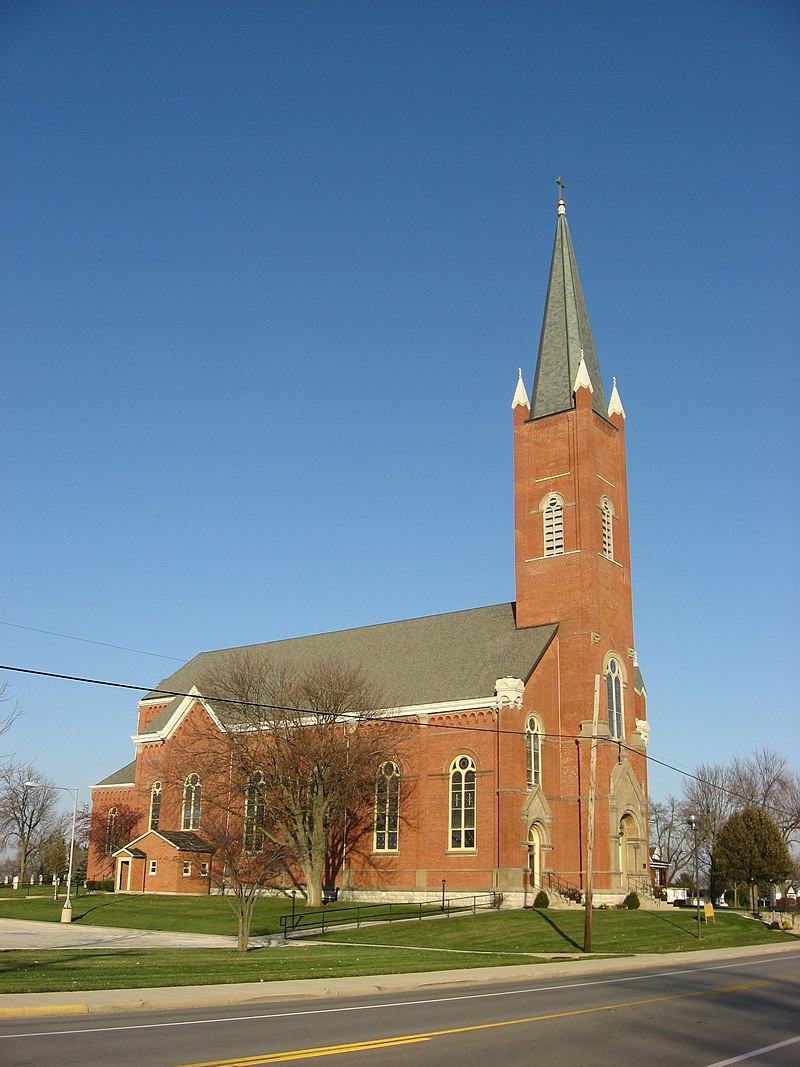
The Land of the Cross-Tipped Churches is a rural region in the western part of Ohio, centered near Maria Stein in Mercer County. The region is named after the dense concentration of large Catholic churches that dominate the area’s architecture.

The region consists of more than fifty buildings representing the German Catholic settlements of southern Auglaize and Mercer Counties, as well as portions of northern Darke and Shelby Counties, which were placed on the National Register of Historic Places. German Catholics fled the wars and upheaval of their homeland in the early and mid-19th century, and many settled in the United States. 

The community of St. Johns was established in 1833. When the Cincinnati, Hamilton, and Dayton Railway expanded through Mercer County some years later, its surveyors chose a path through the small community of Maria Stein, to the west of St. Johns. As these two communities were separated by only 0.5 miles (0.80 km), business interests migrated to the vicinity of the railroad,[4]: 203  and the two communities eventually merged under the name of Maria Stein.[5]

Large numbers of Catholics from northern Europe settled in southern Mercer County and surrounding regions in the early nineteenth century because of the activities of the Society of the Precious Blood in the region.[6]: 6  The center of the society’s activities was the Maria Stein Convent, located less than 1 mile (1.6 km) north of St. Johns.[4]: 223  

From this convent was derived the name of the community.[5]

St. John the Baptist Parish was founded in St. Johns in 1837 by priests of the Society from the village of Minster to the east;[4]: 224  at that time, it was dedicated to John the Baptist.[7] A small log church was erected to house the congregation,[4]: 224  but the number of parishioners soon grew to the point that it was inadequate to house the congregation. Accordingly, a brick church was built to replace the log structure. As the membership continued to grow, multiple additions were built onto the original structure. By the 1880s, the parish had decided to replace the old brick church entirely with a yet larger building.[4]: 224  The new and current church was built between 1888-1894 using 135,000 bricks and at a total cost of $43,354.19 paid from a building fund and special collections (Approx. $1.5 Million in 2022 dollars).

Today, St. John’s remains an active parish of the Archdiocese of Cincinnati.

It is part of the Marion Catholic Community cluster,[8] along with Precious Blood parish in Chickasaw,  Nativity of the Blessed Virgin parish in CassellaSt. Rose parish in St. Rose, and St. Sebastian parish in Sebastian.

The entire cluster is a part of the St. Mary’s Deanery.[9]

Transience of human life 

The phrase “ashes to ashes, dust to dust” signifies the transience of human life, expressing the belief that we come from dust and ultimately return to it. It originates from the Anglican Book of Common Prayer and is rooted in biblical texts, emphasizing human mortality and humility. This phrase is often used in funerals and liturgical contexts to remind individuals of their mortality and the cycle of life. 

“Returning to dust” is a metaphor for death. 

God forms Adam from the earth (Genesis 2:7), and after Adam and Eve sin, God tells Adam, “By the sweat of your brow will you have food to eat until you return to the ground from which you were made. For you were made from dust to dust you will return” (Genesis 3:19). 

image.png

Friday, May 30th, 2025

Fire Guts St. John Church

A dozen fire stations respond to Maria Stein; cause unknown

By Abigail Miller

St John’s Baptist Church Fire Maria Stein Ohio – Search Videos

Photo by Ryan Snyder/The Daily Standard

Firefighters from over a dozen departments responded to St. John the Baptist Church on State Route 119. Aerial trucks were used to attack the fire from above after the roof collapsed.

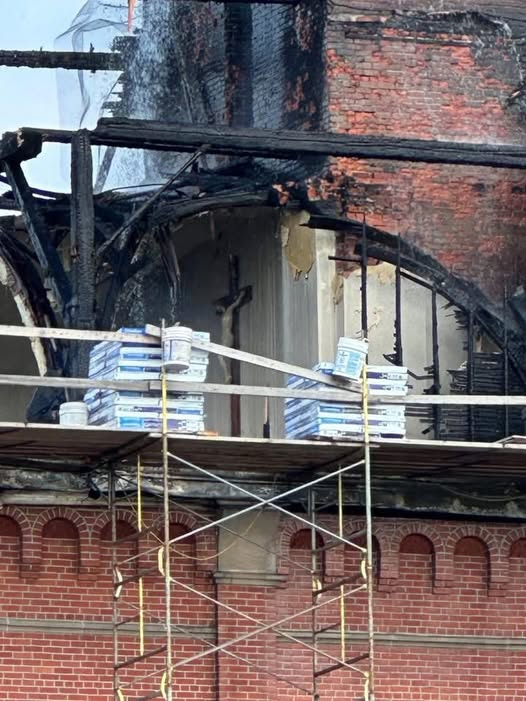
MARIA STEIN – Dozens of concerned neighbors and distraught parishioners watched firefighters from three counties battle for hours against a massive blaze that eventually decimated a nearly 135-year-old Catholic church on Thursday in Maria Stein.

The first 911 call for the structure fire at St. John the Baptist Catholic Church, located at 8533 State Route 119, came in at around 2:33 p.m. Thursday, Chickasaw Fire Chief Joe Hartings said. The call came from a team of contractors working on the roof of the structure.

Beginning shortly thereafter, mutual aid was repeatedly called in from fire stations in Mercer, Auglaize and Darke counties.

Photo by Abigail Miller/The Daily Standard

St. John Church has stood on this site since 1891 and is part of an Ohio Scenic Byways trail called “The Land of the Cross-Tipped Churches.”

By 3 p.m., colossal plumes of black smoke could be seen from as far away as U.S. Route 127 just outside of St. Henry, and on scene, intense orange and red flames billowed out of the church’s collapsed roof, its bell tower, and it’s back windows and doors.

“When we arrived, we had fire across the whole peak of the church, the north end to the south end,” Hartings said. “We sent a crew in on the inside to go up to the choir loft. There’s a door up there that we thought we could hit some fire with. They got up there, made a quick attack, and then they had to come back out. It kind of, it got away (from us). It was getting away from (us) pretty quick. (The fire) got in that old lumber and so they had to back out. We had to go on defense and had three aerial trucks here to fight it from the top.”

There were no serious injuries reported, though one responding firefighter required stitches after cutting himself on broken glass, he said. No neighboring buildings were damaged as of Thursday night. Additional Photos

Photo by Abigail Miller/The Daily Standard

Aiding fire departments were released around 9:30 p.m. after being on the scene for hours. One firefighter was injured by broken glass.

Hartings said there was no known cause of the fire on Thursday night, though no foul play is suspected and the state fire marshal’s office has been called in to aid in the investigation.

“I think it started on the south end of the church by the bell tower,” he said. “At 5:30 p.m., I called dispatch and told them that we had the fire under control but we still had some hot spots.”

However, a little after 7 p.m., large flames started to break through the church’s steeple, fully engulfing it, leading to its eventual collapse by 8:30 p.m., he said.

Submitted Photo

The steeple was overcome by flames later in the evening and toppled to the ground just before 8 p.m. From a still from a video posted on social media

“It was a lot to take in, (and) a little emotional,” Hartings said. “This church is a symbol of this community, this Catholic community. But you know, we did what we could do, and we did the best we could do with what we had I guess.”

Lifelong parishioner Jim Keller became emotional earlier on Thursday as he stood across the street and watched the church his family had attended for generations be torn down by flames.

“It’s just devastating,” Keller said.”My mother was baptized here, married here and buried here. My grandmother, the same. We have deep roots here. My great-grandfather was the president of the parish council when they built this church.”

Photo by Ryan Snyder/The Daily Standard

Fire personnel said the entire peak of the structure’s roof was in flames when they arrived just after 2:30 p.m.

The last few aiding fire departments were released at around 9:30 p.m., but some Chickasaw firefighters, including Hartings, planned to remain on scene watering down sporadic hot spots and investigating the scene into the early morning on Friday.

Portions of State Route 119 surrounding the church were still closed at 10 p.m. Thursday, and Hartings expected them to remain closed until around noon Friday.

“We’ve got a structural engineer coming tomorrow, through the Archdiocese and their insurance company,” Hartings said. “He’s supposed to get here tomorrow morning and see if he can figure out what’s structurally safe and if we can get in and get some of that nice stuff. I would say tomorrow morning’s going to be a busy morning around here.”

The Chickasaw Volunteer Fire Department was assisted by numerous first responders and firefighters, including units from Mercer County EMS, Auglaize County Emergency Management Agency, Minster Jackson Township Fire, Burkettsville Community Fire, St. Marys Township Fire, Ansonia Volunteer Fire, Southwest Mercer Fire District, Coldwater Fire, Celina Fire, Rossburg Fire, Montezuma Volunteer Fire, Versailles Fire, Osgood Volunteer Fire, Union City Fire, New Bremen German Township Fire and Mercer County Emergency Response Volunteers.

Photo by Abigail Miller/The Daily Standard

The cause of the blaze has not been determined, but Chickasaw Fire Chief Joe Hartings said he believes it began at the church’s south end near the bell tower.

IT’S BEGUN: Massive Fire Erupts in Church – A Message of Hope After Tragedy – YouTube

May 30, 2025 UNITED STATES

Yesterday, a devastating fire completely destroyed St. John the Baptist Catholic Church in Maria Stein, Ohio – a beloved 130-year-old landmark that served as the spiritual heart of this tight-knit community.

As flames consumed the historic sanctuary, something profound happened: a community discovered that their faith was stronger than any building could ever be.In this heartfelt message, we explore what happens when the familiar is taken away, when sacred spaces turn to ash, and when communities must choose between despair and hope.

Drawing from Scripture and real-life testimony, we examine how God can speak through tragedy and how the early church thrived without beautiful buildings.

This isn’t just about one church fire in rural Ohio. This is about the difference between religion and faith, between depending on structures and depending on God, between mourning what was lost and believing in what God can do next. 

What We’ll Cover: The heartbreaking details of the Maria Stein church fire Why losing a sacred space feels different from any other loss What the Bible teaches about fire as both judgment and purification How the early church changed the world without buildings Practical steps for communities facing similar tragedies.

Why this might be the beginning of something beautiful, not just an ending 💭 

Key Questions We’ll Answer: How do we find God when familiar sacred spaces are gone? What’s the difference between the church building and the Church body? How can tragedy become a catalyst for spiritual renewal?

What can we learn from communities that have rebuilt after loss? 🙏 

For the Maria Stein Community: Our hearts and prayers are with everyone affected by this tragedy. While we can’t replace what you’ve lost, we believe God has something beautiful planned for what comes next.

Your faith story is far from over – it’s just beginning a new chapter.💝 

How You Can Help: If you’d like to support the rebuilding efforts for St. John the Baptist Church in Maria Stein, Ohio, please contact the Archdiocese of Cincinnati or visit the Archdiocese of Cincinnati Website for verified donation information.

Every prayer and contribution make a difference. 🔔 

Don’t Forget: SUBSCRIBE for more messages of faith and hope LIKE if this message encouraged you SHARE with anyone who needs to hear this today COMMENT and let us know how we can pray for you  

Scripture References: Psalm 34:18 – “The Lord is near to the brokenhearted” Romans 8:28 – “All things work together for good” Exodus 3:2 – The burning bush that was not consumed Acts 2:3 – Tongues of fire at Pentecost Malachi 3:3 – The refiner’s fire that purifies.

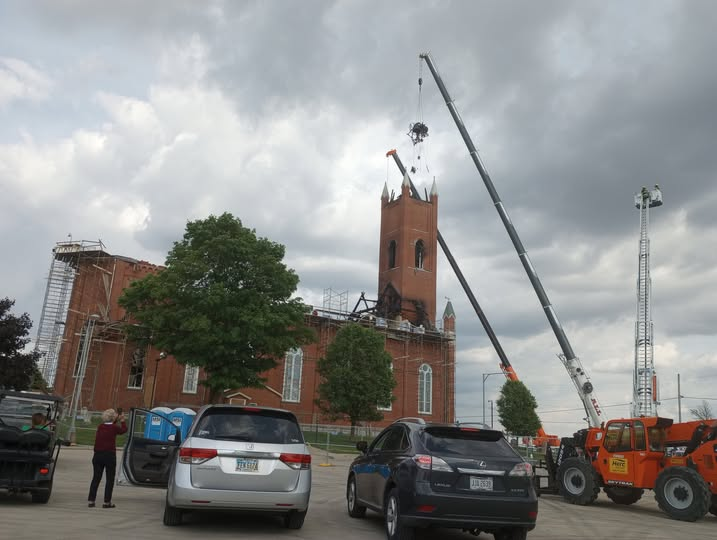
First time The Three Bells which together weighs 3000# have been out of the church in 134 years.

We are Property Damage Restoration Partners | First Onsite, a leading property restoration and reconstruction provider serving North America. We specialize in emergency mitigation, restoration, and reconstruction to repair property damage and minimize downtime.

With expansive resources and experience in water damage restoration, fire damage restoration, mold remediation and storm damage restoration, we ensure your property is quickly and efficiently restored. Our dedicated team is available 24/7, 365 days a year, to provide unmatched restoration services. It’s our goal to be the only property restoration partner you’ll ever need.

Posted in Uncategorized | Leave a comment

Absoboodylootely Spectacular

Photographer Mervyn Sequiera captured the fight and posted it on his Instagram account @msequeiraphotography.  (Mervyn Sequeira) PHOTO: (MERVYN SEQUEIRA)

Fight between bald eagle and Canada goose in Burlington Bay on February 23, 2025, is ’very symbolic,’ says photographer msequeiraphotography

 Eagle gave up and spared the goose after 20-minute faceoff, says Mervyn Sequeira

A bald eagle may have thought it spotted an easy lunch in a Canada goose sitting on an icy bay in Burlington, Ont., but according to Mervyn Sequeira — who watched and photographed Using his Canon R5 with a 100-500 Canon RF lens a 20-minute battle between the two birds — the goose held its own.

During his weekly Sunday morning family hike at the LaSalle Marina, Sequeira and his family witnessed a rare event — a fight between the national bird of the U.S. and the iconic Canadian animal. 

We were there, and we saw this bald eagle coming in and going in to attack a Canada goose that was on the ice, the 74-year-old told CBC Hamilton.

Sequiera says it appeared the goose was sick. (Mervyn Sequeira) PHOTO: (MERVYN SEQUEIRA)

Sequeira is a retired airline captain who has been photographing Canadian wildlife since he arrived in Canada from Goa, India, 30 years ago. He captured the eagle-goose battle  with his camera on Feb. 23.

The bald eagle made several attempts to attack the goose, Sequeira said.

When we thought that it was really over for the goose, strangely, the bald eagle just gave up and left, said Sequeira, who’s from Oakville, Ont.

The goose was spared that day.

‘This is how nature works’

Sequeira said while he doesn’t like getting into politics, he found the encounter very symbolic.

I only posted [the pictures to social media] in terms of what happened, not putting a political spin on it. However, there were lots of people who looked at it in the political context, he said.

Sequeira said, from his perspective, that is how nature works.

But we’re living in a slightly polarized world just now, so some people looked at it differently. 

An Ontario photographer captured a rare scene last weekend in Burlington, Ontario: a fight on the ice between a Canada goose, Canada’s national bird, and a bald eagle, the national bird of the United States.  PHOTO: INSTAGRAM /  

msequeiraphotography

The battle between the birds occurred not long before U.S. President Donald Trump launched a trade war with Canada. This week, he moved ahead with long threatened 25 per cent tariffs on most Canadian goods. Trump’s suggestions that Canada is so dependent on the U.S. that it should become the 51st state has also strained the relationship. 

On Tuesday, Prime Minister Justin Trudeau hit back, announcing immediate retaliatory tariffs on $30 billion worth of American goods.

To the American people, we don’t want this, Trudeau said during a Tuesday morning news conference. We want to work with you as a friend and ally and we don’t want to see you hurt either, but your government has chosen to do this to you.

Trudeau said Canadians are united in knowing that this is the time to hit back hard and demonstrate that a fight with Canada will have no winners… The sooner we can get past this fight… the better we will all be.

‘When we thought that it was really over for the goose, strangely, the bald eagle just gave up and left,’ Sequiera says. (Mervyn Sequeira) PHOTO:  (MERVYN SEQUEIRA)

Bird appeared to be unwell, says photographer

Bald eagles are not a new sight in Burlington. The first eagles to hatch on the Canadian side of Lake Ontario in 50 years did so at the Royal Botanical Gardens in 2013. Another pair of eaglets were born at the RBG in 2023. The RBG told CBC Hamilton the bald eagle population is growing, but the RBG only knew of one bird to be based locally, in nearby Cootes Paradise.  

The Canada goose, much more commonly spotted, appeared to be sick, Sequeira said, which he thinks is why the bald eagle chose it as prey. He said it’s common in winter for eagles to turn to sick waterfowl when the ice makes it harder to catch fish.

Sequeira said the goose was unstable on its feet and its head kept swinging very much like a person would be if a person had had vertigo.

Sequeira said he’s never seen anything like the encounter he captured last month.image.png

After twenty minutes of this, when it looked like it was all over for the goose, the eagle gave up!  (Mervyn Sequeira) PHOTO: (MERVYN SEQUEIRA)  

We see bald eagles going for fish. We see bald eagles going after smaller ducks occasionally, he said.

But it’s quite unusual to see a bald eagle taking on a Canada goose, and in all my years, this is the first time I’ve seen it.

The way nature balances itself is fascinating, said Sequeira.

Eagles, for instance, or coyotes are there to take out the sick and also to maintain a balance in numbers, he said.

Some of us do not understand [it] but that’s the way nature works. And I just enjoy nature.

Aura Carreño Rosas (new window) · CBC News

SOURCE: Photographer Captures Bald Eagle & Canada Goose In Tense, Icy Standoff: “Sign Of The Times” | Whiskey Riff

 Fight between bald eagle and Canada goose in Burlington bay ‘very symbolic,’ says photographer | CBC News

Fight between bald eagle and Canada goose in Burlington bay ’very symbolic,’ says photographer | Radio-Canada.ca

Co-Founder of Google Brain, Andrew Ng, Recommends: 5 Books For Turning Your Life Around

14 Great Sights from the Road in the American Desert Southwest

@msequeiraphotography ⚔️🙌💯🕊

Raptors play a role in keeping numbers in check and taking out the sick and weak. Not often does one see our apex raptor, the American Bald Eagle attempting to take down a Canada Goose.
For close to twenty minutes, one attacked and the other desperately defended. Finally, the eagle gave up, the goose was spared..

.
Two unhappy sides to this encounter-
1) Despite putting up a fight, the goose had all the symptoms of Avian Influenza . It survived the encounter with the eagle but would certainly soon succumb to the virus, the injuries and the cold.
2) The eagles, while doing their job, contract the virus from infected waterfowl like this one. In the last two years, we have lost many Bald eagles to the virus.

#rebels_nature #falcons #birding #hawks #eagles #falcons #earthphotography

 #birding #raptors #birdwatching #rebelsnature_feb25 #birdsofprey #raptors 

#baldeagle #birdsinflight #eaglehunting #ontario_birding_

Posted in Uncategorized | Leave a comment

Stories of HOPE

Do Cancer – Resources, Inspiration & Hope

Aidan Morris 6 Year Survivor

Stage 3 Triple Negative Breast Cancer & Melanoma

My perspective changed in the most wonderful way. 

Cancer is the best & worst thing to happen to me.

Diagnosis & Treatment

CANCER TYPE

Triple Negative Breast Cancer & Melanoma

AGE DIAGNOSED

34 years old

Medical Center

MD Anderson and Hoag-USC Keck

Surgeon

Dr. DeSnyder – MD Anderson, Houston TX

Oncologist

Dr. Vandermolen – Hoag-USC Keck, Newport Beach CA

Clinical Trials

No official clinical trials.

I was on an experimental immunotherapy drug at the time (KeyTruda).

Medical Treatment

Chemotherapy

Radiation

Surgery

Immunotherapy

Details of Treatment

20 weeks of IV chemotherapy, 8 months of oral chemotherapy, 3 surgeries (2 different cancers), 32 radiation sessions

Medication During Treatment

Adriamycin, Cytoxan, Taxol, Carboplatin, Xeloda, KeyTruda

Home Page – Chemocare is a comprehensive resource for cancer patients and their caregivers that provides chemotherapy drug and side effect information, cancer wellness information, and links to additional reliable resources and organizations.

All information provided on this website is created and reviewed by a multidisciplinary team at Cleveland Clinic or is referenced from reliable medical and community resources.

Chemotherapy Without Supplementation is Barbaric!!!

Dr Russell Blaylock Dr Richard Becker – Search

Alternative Therapies During Treatment

Meditation

Acupuncture

Supplements

Exercise

Cannabis

No sugar

No alcohol

WHAT CANCER TAUGHT ME

My perspective changed in the most wonderful way. Cancer is the best worst thing to happen to me.

Supplements

Zinc, Vitamin D, probiotics, elderberry, calcium

Favorite Quote

No rainbow without the rain.

Advice for Others

1. Seek a second opinion! 2. Believe in your healing. 3. Fuel your body for this fight with clean eating, water and sleep.

https://www.docancer.org/stories-of-hope

My Story

My life was perfect. I was married to an amazing human, had three healthy children, was proud of my career and was in the best shape of my life. Then, at 34 years old I was diagnosed with stage 3 triple negative breast cancer. 

My focus shifted from my 5, 3 and 18 month-old’s nap schedules to living. This wasn’t a common breast cancer, so I began rigorous research into the best doctors and most effective treatments for this “new” and incredibly aggressive disease. I was not going to leave my children motherless, my husband a widower and my sisters without their middle.

The cancer pulsing inside my body was aggressive; surgery was not an option until after chemotherapy. I began my cocktail right away – 5 months of the strongest chemo drugs available, followed by a mastectomy and removal of all lymph nodes in my left arm.

 [See my full treatment regimen here]

When chemo was over and it was finally time for my surgery.  I was ready to move on – as this “finish line” had been on my calendar and in my crosshairs for 6 months. However, my surgery revealed I still had some residual disease in my breast tissue as well as a lymph node, so that meant at least 6 more months of chemo to be started during my 32 radiation treatments. At the time that news was difficult to receive.

I thought this mountain was behind me.

I wasn’t even halfway through chemotherapy? How? How could this be?

I did everything right. We were so aggressive, I completed all of my treatments, I dramatically changed my diet and had a deep focus on mindfulness and gratitude. How could there still be cancer in my body? I felt like I wasn’t physically or mentally prepared to extend my therapies, but I am eternally grateful I was able to receive the additional treatment. I realized without the improvements I made; my body might not have been able to manage such aggressive treatment. So, I persevered.

In the middle of my radiation therapy I received another cancer diagnosis – melanoma. (I noticed a dark spot on my toe during one of my chemotherapy infusions and had it biopsied) Strangely enough, melanoma wouldn’t have been killed by my chemotherapy regimen (this stage melanoma is not treated with intravenous chemotherapy). Yet another unpredictable thing moved my finish line further away. 

Again, what felt like a surreal blow ended up being one of the best things to happen to me. At the time, an immunotherapy drug used to treat melanoma (KeyTruda) was proving very successful in trials with triple negative breast cancer, but not yet approved. Being diagnosed with melanoma allowed my oncologist to write me a prescription for the drug to treat my melanoma and to begin treatment immediately following my melanoma surgery (toe amputation). I received KeyTruda for two years and that drug is now approved by the FDA to fight triple negative breast cancer!

Western medicine saved my life. I would not be here if it wasn’t for the drugs, therapies, doctors and surgeries I completed. However, I would not be the person I am today without the support of my friends and family, as well as the supplemental treatment I received. Nutritionists, acupuncturists, therapists and trainers all helped give my body the best fighting chance against this terrible disease.  

The most influential of them being Shenell, one of my closest friends who was diagnosed just weeks ahead of me on her stage 4 glioblastoma cancer journey. For her guidance and research I am eternally grateful. She taught me that cancer can be a life sentence.

Together, we made the mental decision to choose joy, to choose to live, and to choose to see the good. We focused on clean food, therapy, and to surround ourselves with positive situations and people. We told ourselves we were healed and that one day we would hold our grandchildren. I always maintain that cancer is a mental journey – not a physical one. And changing how I thought about and approached this hardship in my life has made all the difference. 

I might have had an aggressive cancer spreading quickly throughout my body, but looking back on it, I feel lucky. Lucky that I had one of my best friends to go through this journey with me, lucky that I had the knowledge and generosity of previous survivors shared with me, lucky that an altruistic doctor at MD Anderson wanted to help me and most importantly, lucky that I was able to gain a new perspective and reprioritize my life in a way very few get to.

During that time of reflection, it became clear to me that spreading knowledge and treatment options for the newly diagnosed was a passion of mine. I truly believe that I am alive today because of new treatment options and coping therapies. Those options should be known to all facing cancer.  Shenell felt the exact same way, and thus, Do Cancer was born! 

I look back at this time, not all that long ago, and I cannot believe it actually happened to me. I survived two aggressive cancers and three years of arduous treatment and I am not only just living, I am thriving in this gift of a second chapter of my life. 

Do Cancer – Resources, Inspiration & Hope

And you can too.

Stories of Hope

Together We Are Stronger.
Together We Can Do Cancer.

Our Mission
At Do Cancer we believe everyone should have access to the best cancer care. We are committed to sharing proven treatment plans, wellness education, carefully vetted products, and complementary care programs for whole-person healing.

Posted in Uncategorized | Leave a comment

Vision is a Miracle to Beholden

1 Corinthians 2:9 no eye has seen no ear has heard – Search

The phrase “no eye has seen, no ear has heard” is from 1 Corinthians 2:9, which states: “Rather, as it is written: ‘No eye has seen, no ear has heard, no heart has imagined, what God has prepared for those who love Him'”. This verse emphasizes the idea that the blessings and plans God has for those who love Him are beyond human comprehension and imagination. Bible Hub+2

The eye functions by processing light to enable vision.

The human eye is like a high-powered camera, capturing light and converting it into electrical signals that the brain interprets as images.

Here’s how it works:

  • Cornea & Lens: Light enters the eye through the cornea, which bends the light to help focus it. The lens fine-tunes this focus to direct light onto the retina.
  • Pupil & Iris: The iris (the colored part) controls how much light enters by adjusting the size of the pupil—like a camera aperture.
  • Retina & Photoreceptors: The retina, located at the back of the eye, contains photoreceptor cells (rods and cones) that convert light into nerve signals.
    • Rods: Help detect light intensity and motion, making them key for night vision.
    • Cones: Detect color and detail, helping us see vivid images in daylight.
  • Optic Nerve & Brain: The optic nerve carries these signals to the brain, where they’re processed into the images you actually see.

It’s a fascinating, lightning-fast system, allowing you to take in the world’s beauty in real time. Pretty incredible, isn’t it?

How does the eye compare to a camera’s function?

The eye and a camera have striking similarities in how they process light, but the eye has some unique advantages.

Here’s a comparison:

  • Lens & Focus: Both have lenses that bend light to focus on a surface—retina in the eye, sensor in a camera. The eye’s lens dynamically changes shape for different focal distances, while a camera uses mechanical focusing.
  • Aperture & Light Control: The pupil adjusts size automatically like a camera’s aperture, regulating how much light enters based on brightness.
  • Image Processing: Cameras capture images as digital data, while the eye sends signals to the brain, which reconstructs a continuous, detailed visual experience.
  • Color & Dynamic Range: The eye perceives a wider dynamic range and adjusts in real-time to lighting changes far better than most cameras.
  • Peripheral Vision vs. Framing: Cameras have fixed frames, while eyes allow peripheral vision, offering a broader, natural view of surroundings.

So while cameras mimic the eye’s function, the human eye remains unmatched in adaptability and processing power. Amazing, right?

Explain how the eye processes images in detail.

The eye processes images in a sophisticated way, transforming light into signals that the brain interprets. Here’s how it works in detail:

1. Light Entry & Focus

  • Light enters the eye through the cornea, which bends it slightly.
  • The pupil adjusts its size (controlled by the iris) to regulate how much light enters.
  • The lens fine-tunes the focus by changing shape, ensuring light converges precisely onto the retina.

2. Retina & Photoreceptor Activation

  • The retina, located at the back of the eye, contains rods and cones—specialized photoreceptor cells.
    • Rods: Work in low-light conditions and detect motion.
    • Cones: Handle color perception and sharpness, functioning best in bright light.
  • The photoreceptors convert incoming light into electrical signals.

3. Signal Transmission via the Optic Nerve

  • These signals are processed into nerve impulses and sent through the optic nerve.
  • The optic nerve carries this data from both eyes to the brain.

4. Brain Processing & Image Formation

  • The brain, particularly the visual cortex, interprets these electrical signals.
  • It combines images from both eyes, adjusts for color, depth, and motion, and constructs the final visual experience.
  • Your brain fills in blind spots and corrects distortions, creating a seamless perception of reality.

This all happens in milliseconds, allowing you to see the world in vivid detail.

Amazing, right?

What About Seeing And Hitting A 105 mph baseball or 80 mph fastpitch softball and making contact.

Nebraska Softball’s Jordy Bahl Fouls Off 79.4 MPH Pitch – A Reaction Time Feat That Defies Logic

Nebraska Softball’s Jordy Bahl Fouls Off 79.4 MPH Pitch Defying Logic

SEC softball player tosses fastest pitch ever in NCAA Super Regional

This Softball Pitcher Just Threw The Fastest Pitch of All Time

79.4 meters per second in miles per hour (79.4 m/s to mph)

Fastpitch softball – Wikipedia

image.png

Fastest Pitch in NCAA Softball history #softball #ncaa

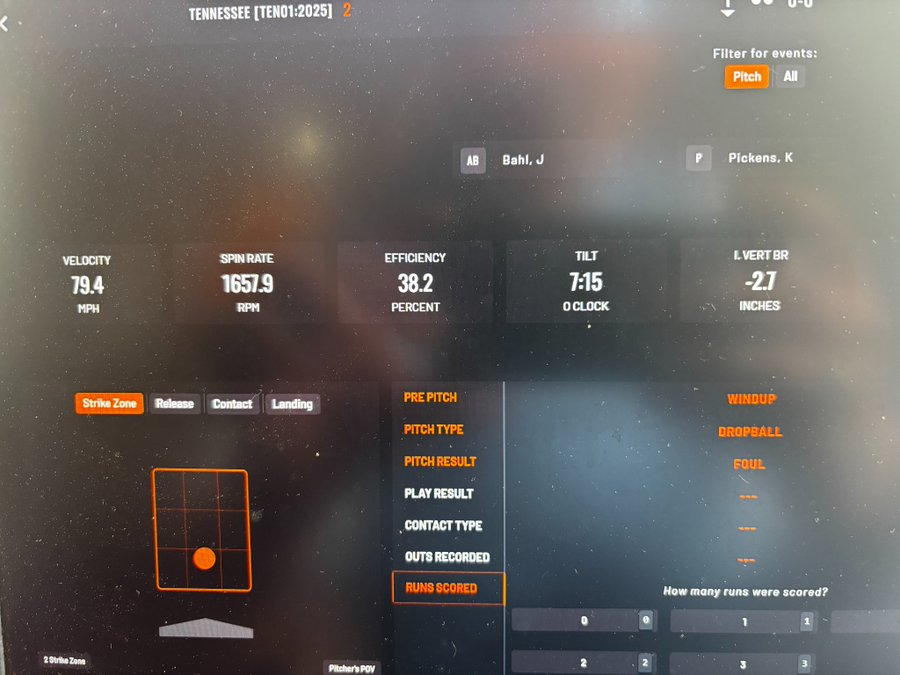
The softball world is talking about Saturday night, especially after Tennessee’s Karlyn Pickens broke her record by delivering a pitch against Nebraska’s Jordy Bahl at 79.4 mph on Saturday night during Game 2 of the Knoxville Super Regional.

While Pickens was quite impressive with her feat, what Bahl did defied logic because she fouled it off. Years ago, Sports Science broke down a pitch from Canadian Olympic medalist Danielle Lawrie.

The show studied her movement and physiology to determine that the average softball pitcher who starts at a rubber from 43 feet away from home plate, releases the ball just 37 feet from the batter.

From a distance of just 37 feet, a pitch at 79.4 mph is traveling at roughly 116.5 feet per second. That means it reaches the batter in about 0.318 seconds.

Let that sink in – 0.318 seconds. The average time it takes a human to blink can range from 0.1 to 0.4 seconds.

According to a study done by the University of Cambridge, the fastest reaction time recorded was .101. In the Guiness Book of World Records, the fastest response time to a punch is .186.

The average human reaction time is 0.250 seconds and the time it takes to swing a bat is roughly 0.150 seconds. While reacting and swinging overlap, the window for Bahl to process, decide, and act is nearly nonexistent.

Yet somehow, she managed to foul it off. Mathematically, what Bahl did in Nebraska’s 3-2 loss bordered on impossible and to the human eye seemed unbelievable. 

79.4 MPH from 43 feet away? That’s Real GAS

⛽️

image.png

Karlyn Breaks NCAA Softball Pitching Record with 79.4 MPH Fastball

the new fastest pitch in NCAA Softball history, breaking her own record of 78.2 

In a remarkable display of athletic prowess, Karlyn, a standout athlete from the Tennessee softball team, has set the new benchmark in NCAA Softball history by clocking a blistering 79.4 miles per hour (MPH) pitch. This record-breaking achievement not only showcases her incredible skills but also highlights the evolution of softball as an increasingly competitive sport. The previous record, which Karlyn herself set at 78.2 MPH, has now been surpassed, demonstrating her continuous improvement and dedication to the game.

The Significance of Karlyn’s Achievement

Karlyn’s recent accomplishment is significant for several reasons. Firstly, it emphasizes the advancements in training techniques and the level of commitment that athletes are making to improve their performance. Pitching at such high velocities requires not only physical strength but also refined technique, mental focus, and strategic thinking.

Secondly, breaking a record in a sport as competitive as NCAA Softball elevates the awareness and recognition of women’s sports. Achievements like Karlyn’s inspire young athletes and serve as a reminder of the extraordinary capabilities of female athletes. As women’s sports gain more visibility, records like this contribute to the growing narrative that they deserve the same recognition and resources as their male counterparts.

The Evolution of Fastpitch Softball

Fastpitch softball has evolved dramatically over the years, with athletes pushing the boundaries of speed and skill. The increasing velocity of pitches is a testament to the rigorous training regimens that modern athletes undergo. Coaches focus on strength training, agility drills, and advanced pitching techniques to enhance performance. Karlyn’s success can be attributed to the culmination of these factors, which have collectively raised the bar for aspiring softball players.

Breaking Down the Mechanics of a Fast Pitch

To understand the significance of Karlyn’s record-breaking pitch,

it is essential to consider the mechanics involved in delivering a fastpitch softball.

A successful fast pitch involves a combination of speed, accuracy, and movement. The pitcher’s grip on the ball, the angle of release, and the follow-through all plays critical roles in achieving maximum velocity.


Tennessee Softball
@Vol_Softball confirmation via @Yakkertech

Karlyn’s technique likely includes specific steps such as:

  • Wind-Up: A proper wind-up helps generate the necessary momentum for the pitch.
  • Arm Positioning: The arm must be positioned correctly to ensure a powerful release.
  • Follow-Through: A strong follow-through not only aids in speed but also helps prevent injuries.These elements, when executed flawlessly, culminate in a pitch that can reach speeds of 79.4 MPH, as Karlyn has demonstrated.
  • The Impact of Speed on the Game
    The speed of a pitch can significantly influences the outcome of a game. Hitters must react quickly to fast pitches, which can lead to more strikeouts and a greater challenge for opposing teams. Karlyn’s new record may not only impact her individual performance but could also change how teams approach their strategies when facing her on the mound.
  • Additionally, the psychological aspect of facing a fast pitcher can weigh heavily on batters. The fear of being struck out or hitting a ball at such high speeds can create pressure, making it difficult for players to perform at their best. This psychological edge could be a game-changer for Karlyn and her team in high-stakes matchups.
  • The Community Response
    The response to Karlyn’s achievement has been overwhelmingly positive, with fans and fellow athletes celebrating her remarkable feat. Social media platforms, including Twitter, have been abuzz with congratulatory messages, highlighting the growing support for women’s sports and female athletes. The tweet from Tennessee Softball announcing her record garnered significant attention, showcasing the pride and excitement within the community.Inspiring Future Generations
    Karlyn’s record is not just an achievement for her but also a beacon of inspiration for young athletes. Aspiring softball players can look up to her as a role model, motivating them to push their limits and strive for greatness. The visibility of her accomplishment serves as a reminder that hard work, dedication, and resilience can lead to extraordinary outcomes.
  • Conclusion
    Karlyn’s accomplishment of pitching a record-breaking 79.4 MPH fastball is a landmark moment in NCAA Softball history. It symbolizes the relentless pursuit of excellence that defines not only her career but also the evolution of women’s sports as a whole. As she continues to break records and inspire others, Karlyn stands as a testament to the power of determination, skill, and the unwavering spirit of athletes everywhere.
  • The significance of her achievement extends beyond the field; it encourages a new generation to dream big, work hard, and believe in their capabilities. As we celebrate Karlyn’s success, we also recognize the importance of supporting and promoting women’s sports, ensuring that their stories and accomplishments receive the attention they rightfully deserve.
  • 100 mph baseball pitch is roughly equivalent to a 70 mph fastpitch softball pitch in terms of reaction time for the batter. This is because the softball mound is closer to the batter than the baseball mound, meaning hitters have less time to react to the pitch.  If you’re interested in a conversion chart for different pitch speeds, you can check it out
  •   1huffsports.com Baseball Speed Compared To Softball: The Surprising Truth Behind The Pitch

How does the distance between the mound and batter affect pitch speeds?

The distance between the mound and the batter plays a huge role in how fast a pitch feels to the hitter. In baseball, the mound is 60 feet, 6 inches from home plate2. In fastpitch softball, the pitching distance is 43 feet for college and professional levels.

Since softball pitchers throw from a closer distance, a 70 mph softball pitch reaches the batter in about the same time as a 100 mph baseball pitch. The shorter distance means hitters have less reaction time, making even slower pitches feel much faster.

This difference also affects pitch movement—softball pitches tend to have more rise, drop, and lateral movement because of the underhand motion and shorter reaction time.

Want to dive deeper into the physics behind it? 

1www.platecrate.com   2www.internationalsoftball.com  

Can you explain the physics behind pitch speeds?

Absolutely! The physics behind pitch speeds involves velocity, spin, air resistance, and biomechanics. Here’s a breakdown:

1. Velocity & Energy Transfer

  • A pitch’s speed comes from the energy transfer through the pitcher’s body—from the legs, through the core, and into the arm.
  • Newton’s Third Law of Motion applies: as the pitcher pushes off the mound, an equal and opposite reaction propels the ball forward.

2. Spin & Magnus Effect

  • The spin rate of a pitch affects its movement. The Magnus force causes the ball to curve based on its rotation.
  • fastball with backspin resists gravity, staying higher in the strike zone.
  • curveball with topspin drops faster due to the downward Magnus force.

3. Air Resistance & Drag

  • As the ball moves through the air, it experiences drag, which slows it down.
  • Seam orientation affects how air flows around the ball, influencing movement and speed.

4. Biomechanics & Pitching Motion

  • Pitchers generate speed through a sequence of movements, including leg drive, hip rotation, and arm acceleration.
  • Proper mechanics help maximize velocity while reducing injury risk.  

1entertainment.howstuffworks.com  2www.popsci.com   3suchbaseball.com

Can you explain the Magnus Effect in more detail?

Absolutely! The Magnus Effect is a fascinating phenomenon in fluid dynamics that explains how a spinning object moving through a fluid (like air or water) experiences a force perpendicular to its direction of motion. This effect is responsible for the curve of a soccer ball, the movement of a baseball pitch, and even the lift generated by certain aircraft designs.

How It Works

When an object—such as a ball or cylinder—spins as it moves through the air, it creates differences in air pressure around it:

  • The side of the object spinning in the same direction as the airflow speeds up the air, reducing pressure.
  • The opposite side, where the object spins against the airflow, slows the air down, increasing pressure.
  • This pressure difference generates a sideways force, causing the object to curve in the direction of the lower-pressure side.

Real-World Applications

  • Sports: The Magnus Effect explains the curve of a soccer ball during a free kick, the drop of a curveball in baseball, and the movement of a spinning tennis ball.
  • Aviation: Some experimental aircraft use rotating cylinders instead of wings to generate lift.
  • Marine Engineering: Rotor ships use spinning cylinders to harness wind power for propulsion.

Can you explain different pitching styles in fastpitch softball?

Absolutely! Fastpitch softball pitchers use a variety of pitches to keep batters guessing. 

Here are some of the most common styles:

Fastballs

  • Four-seam fastball – The fastest pitch, thrown with a straight trajectory.
  • Two-seam fastball – Slightly slower than the four-seam but has more movement.

Breaking Balls

  • Curveball – Spins downward and away from the batter.
  • Slider – Moves more horizontally than a curveball.
  • Screwball – Breaks in the opposite direction of a curveball.
  • Drop ball – Falls sharply as it reaches the plate.
  • Riseball – Moves upward as it approaches the batter.

Changeups

  • Circle change – Gripped with a circular formation to reduce speed.
  • Back-hand release – Flipped backward to slow the pitch down.
  • Knuckle change – Thrown using the knuckles for deceptive movement.

Knuckleball

  • Knuckleball – Minimal spin causes unpredictable movement, making it tough to hit.

Each pitch has unique characteristics that can be used strategically depending on the batter’s tendencies and game situation. 

What are the speed ranges for different softball pitch types?

Softball pitchers use a variety of pitch types, each with its own speed range. 

Here are some common ones:

  • Fastball: 60–75 mph
  • Curveball: 45–65 mph
  • Changeup: 40–65 mph
  • Slider: 45–85 mph
  • Knuckleball: 40–60 mph
  • Riseball: 60–70 mph
  • Drop ball: 55–65 mph
  • Screwball: 50–60 mph

These speeds can vary based on the pitcher’s skill level, mechanics, and environmental conditions. Elite pitchers can consistently throw in the upper ranges, while younger or developing players may fall on the lower end.

Want to dive deeper into the mechanics of these pitches? 

1www.internationalsoftball.comwww.internationalsoftball.com

How do fastpitch and slowpitch softball pitches compare?

Fastpitch and slowpitch softball have distinct pitching styles that significantly impact the game’s pace and strategy.

  • Pitching Motion: Fastpitch pitchers use a windmill motion, generating high speeds and spin, while slowpitch pitchers deliver the ball with a high-arcing lob.
  • Speed: Fastpitch pitches can reach 60–75 mph, whereas slowpitch pitches are much slower, typically under 25 mph.
  • Reaction Time: Fastpitch batters have less time to react due to the speed and shorter distance, while slowpitch batters have more time to track the ball.
  • Strategy: Fastpitch relies on speed, deception, and movement, whereas slowpitch focuses on placement and accuracy.
  • Base Running: Fastpitch allows stealing bases, adding a strategic element, while slowpitch generally does not permit stealing.

Jennie Finch 70 mph pitch to mlb players in 2009 – Search Videos

What is the difference in mechanics baseball and fastpitch softball – Search Videos 

Posted in Uncategorized | Leave a comment

Only 19 ~Anna Grace Phelan

TikToker Anna Grace Phelan.  Credit : Evans Funeral Home

By Skyler Caruso

Published on May 26, 2025 12:18 PM EDT

Anna was diagnosed with an inoperable stage 4 Glioblastoma brain tumor on Sept 5, 2024.TikToker Anna Grace Phelan Said Her Cancer Recovery Would ‘Take a Miracle’ in One of Final Posts.

TikTok star Anna Grace Phelan, known for sharing her inspiring journey through a cancer battle on social media, has passed away at 19 on May 23. 2025.  The news was confirmed on Saturday through a heartfelt message posted on her official TikTok page, leaving her legion of followers and supporters in mourning.   

  • Anna Grace Phelan shared one final update with her followers about one week before her family announced her death on May 24
  • The TikToker said that her tumor grew and it’s in an area that can’t be operated on
  • Phelan said she wasn’t “giving up yet” before then thanking all of her followers for their prayers

Anna Grace Phelan never gave up hope while living with brain cancer.

The influencer shared one final update on her health journey with her nearly 400,000 followers on TikTok about one week before her family announced her death on Friday, May 23.

“Things haven’t been good. My tumor grew and it’s in the area where I can’t breathe and it can’t be operated on,” Phelan explained in part. “So, I just want to say thank you for all the prayers. It would take a miracle, but I’m not giving up yet.

If you keep praying for me, I think that I’ll make it.”

TikToker Anna Grace Phelan Dies at 19, Less Than a Year After Brain Cancer Diagnosis

Anna Grace Phelan

Later in the video, Phelan shared with her followers how she’d been feeling.

“I don’t see very well. I don’t walk or shower alone, or eat alone,” she said in the clip. “My whole right side is numb… that’s pretty much where we’re at,” she continued in part. “I’m not taking cancer pills right now, there aren’t [sic] options for me.”

She concluded, “So we’re just going to hope and pray that I get better soon… so yeah, just keep me in your prayers. It will take a miracle, but thank you all.” 

The Georgia-based influencer uploaded her update on May 14, shortly before her family announced her death in a post shared to her account on May 24, one day after she died, per her obituary.

“It is with great sadness to announce that our beautiful daughter, Anna Grace Phelan, went home to be with her Lord and Savior Jesus Christ,” the family penned. “So many of you have followed her journey through a difficult battle with cancer and bore witness to her powerful testimony of faith.”

“Thank you for the countless thousands of prayers for healing and peace,” they continued. “May we all rejoice with the assurance that she is in Heaven now, and she has been healed. Let us also remember that the only path to the promised kingdom of Heaven is through salvation in Jesus Christ.”

Influencer Who Was Diagnosed with Incurable Colon Cancer Dies at 21

Anna Grace Phelan

Phelan, originally from Florida, began posting her cancer journey on social media when she started experiencing symptoms last summer before college.

According to a GoFundMe page set up in her name, Phelan was eventually diagnosed with a grade 4 malignant brain tumor that was categorized as a glioma, a growth of cells that starts in the brain or spinal cord, according to the Mayo Clinic.

In a TikTok video, Phelan said that her early symptoms included numbness on one side of her face and in one of her legs. She got an MRI scan, which showed a lesion on her brain. Her cancer eventually showed in a brain biopsy.

Anna Grace Phelan

“This is definitely the hardest news I’ve ever received,” the content creator said in another  TikTok post announcing her cancer diagnosis in September 2024. “By all means, this is not easy. Just going to trust in the Lord and try and keep pushing forward.”

Per the obituary, Phelan is survived by her parents, William “Buddy” Phelan and Nadine Phelan, her brother Harper Phelan, her four grandparents, and “a host of aunts, uncles and cousins, who love her very much.”

Anna Grace Phelan’s family announced her tragic passing. Instagram/@phelann.annaa   

The Phelan family wrote“It is with great sadness to announce that our beautiful daughter, Anna Grace Phelan, went home to be with her Lord and Savior Jesus Christ.”

The statement further echoed sentiments of love and gratitude, emphasizing the community support that enveloped Anna during her challenging journey.

It read: “So many of you have followed her journey through a difficult battle with cancer and bore witness to her powerful testimony of faith. Thank you for the countless thousands of prayers for healing and peace.

“May we all rejoice with the assurance that she is in Heaven now, and she has been healed.”

Anna Grace Phelan’s Journey

Anna Grace Phelan shared her journey through social media. Instagram/@phelann.annaa   

Residents of Jackson County, Georgia, where Phelan resided, felt the impact of her loss deeply. Her funeral service is scheduled for Thursday, May 29, at Galilee Christian Church, and she will be laid to rest at the church cemetery, as detailed in her obituary.

Survived by her parents, William ‘Buddy’ Phelan and Nadine Phelan, and her brother, Harper David Phelan, Anna leaves behind not only family but a devoted community that rallied around her.

The influencer first revealed her brain cancer diagnosis in September, just days before she was set to begin her first year of college.

Phelan had been fighting glioblastoma, an aggressive form of brain cancer known for its rapid progression and dire prognosis. Her struggles began with seemingly innocuous symptoms — a numb face and leg, balance issues, and vision problems — increasingly alarming signals that led to an MRI revealing a lesion on her brain.

“My head’s very foggy,” Phelan confided during her struggle in a TikTok video that resonated with many of her followers. “I started losing my balance. I started having vision problems in my left eye. My speech started to seem weird. This is definitely the hardest news I’ve ever received.”  

Anna Grace Phelan Inspired Thousands  

A Legacy of Faith, Strength, and Gratitude in the Face of Terminal Illness

Despite the grim diagnosis, Anna Grace remained transparent about her experiences with radiation therapy, physical symptoms, and emotional challenges. Her TikTok videos often balanced moments of vulnerability with reflections on her faith and encouragement for others.

In her final weeks, she shared footage of joyful gatherings with friends and candid updates about her deteriorating condition. Her last videos, including a May 14 post where she acknowledged the tumor’s inoperability, showed her gratitude and resilience.

Anna Grace’s death has left a deep impact on her online community and local supporters. With nearly 140,000 followers, her story reached thousands who found inspiration in her courage and conviction.

Her family plans to hold a funeral service on May 29 in Georgia to celebrate her life and legacy. Though her time was tragically short, Anna Grace’s message of faith, perseverance, and hope continues to resonate with those who followed her journey.

Despite the overwhelming challenges, Anna remained steadfast and optimistic, inspiring her audience with her unwavering faith. In another clip, as she worked to process her diagnosis and navigate her treatment options, she told her followers: “By all means, this is not easy.

Just going to trust in the Lord and try and keep pushing forward.” As her condition worsened, Anna continued to share her journey candidly with her audience, allowing countless strangers to witness the realities of battling cancer.

In one of her final videos, she revealed: “Things haven’t been good. My tumor grew and it’s in the area where I can’t breathe. It can’t be operated, “If you keep praying for me, I think that I’ll make it.” 

The outpouring of emotional support and prayers revealed the genuine connection Anna established with her followers. After her diagnosis, supporters launched a GoFundMe page to assist with her medical expenses, which ultimately raised over $65,000.

You don’t have to live in fear of “not enough.”

Not enough time.

Not enough money.

Not enough support.

Not enough favor.

Not enough growth.

Scarcity is NOT your portion when you know who your Provider is. 🙌🏻

God already knows what you need.

He already sees the path ahead.

He already has the right people, the right doors, and the right timing in motion.

You don’t have to strive, manipulate, or cling out of fear.

You can move forward in peace and confidence because He’s the one building with you. 💪🏻

If it’s from Him, it won’t require you to sacrifice your values to keep it.

If it’s from Him, it will be sustained by His hand, NOT your hustle.

If it’s from Him, it will multiply—NOT drain you.

The people meant to walk with you? They won’t miss their invitation.

The provision you need? It will find you when you take the steps He’s asked you to take.

Your business will flourish because it’s built on the Rock, NOT the sand. 🪨

You’re NOT chasing success, you’re following obedience—and that’s where the blessing lives.

So walk boldly.

Sow faithfully.

Rest deeply.

The Kingdom doesn’t run on scarcity—it runs on abundance. 🔥🔥

And when you seek FIRST His Kingdom and His righteousness… all these things will be added to you. (Matthew 6:33) 🙏🙏

Anna Grace Phelan’s – Search | Anna’s fight@Facebook

Anna Grace Phelan garnered over 2 million views on TikTok.

Michael Bolton Breaks Silence on Brain Cancer Diagnosis

Posted in Uncategorized | Leave a comment

The Great Awakening

If deploying the military to the border is the answer? How much is the cost? 

What do the military have that the border agents don’t have? 

Or is it that Agents aren’t processing asylum-seekers anymore! 

The Department of Homeland Security has asked Congress for $45.6 billion to build hundreds more miles of fencing at the southern border, while they know rope ladders, tunnels, and sawing of the wall can still gain entrance! But remember with Trump it is all about money! He can pay off his buddy contractors as he did last time with no procurement rules! It’s not his money it’s ours!

Military gets paid whether they are at the border or not.

 👉The Bill for the border includes $46.5 billion for the border wall, $4.1 billion to hire Border Patrol agents and other personnel, and more than $2 billion for signing and retention bonuses for Border Patrol agents.  

Why cut it when it is working. Fewer crossings will allow for the courts to catch up with the due process everyone wants. This will hasten the deportation of the undesirables. Extra agents can go after those with standing orders to leave. It sounds like a win-win for both sides.  While I don’t agree with the way in which the administration is handling the migrant issue, the need to reduce illegal border crossings was necessary.

The last 4 years of the Biden administration denied there was any border crisis until election season came around. My local San Diego news outlets reported last month that illegal border crossings were at their lowest in years.  Some people don’t want to admit that Trump’s hard-line border stance is working…and that infuriates them.

In February of 2024 a bipartisan bill to strengthen the border was killed at Trump’s behest by GOP members who would rather see the country fail than allow a solution work under Biden’s administration. Look it up.  That proposed bill was garbage. It was a big welfare bill for illegals with no provisions for border control, only for additional “processing”. It needed to be quashed.

He talks like everyone from Mexico is a criminal – far from true. They commit fewer crimes than citizens. Now he says white people from South Africa are in danger and should be allowed into the US. So, Hispanics in actual danger should be kept out, but white people in questionable danger should be let in. No question about his motivations

We have a Great Leader sitting in office whose first, last, and every thought is the safety, prosperity, security, and sovereignty of the citizens. America FIRST Agenda. USA! USA! USA! MAGA TRUMP. 

Trump Admin Rolls Out New Tool To Stop Noncitizens From ‘Hijacking’ US Elections

FACT the TRUMP administration has a vision: drain the swamp and make government work for the American people. USA! USA! USA! America FIRST Agenda. MAGA TRUMP

Border crossings have seen a significant decline recently. At the U.S.-Mexico border, illegal crossings have dropped to the lowest levels since record-keeping began, with the El Paso Sector experiencing a 93% decrease in migrant encounters. This trend accelerated after policy changes restricting asylum access and increased military presence at the border1.

Similarly, crossings from Canada into the North Country have also fallen sharply, coinciding with trade tensions and new tariffs. In April, crossings at key entry points like Alexandria Bay and Ogdensburg were down by more than 31% compared to last year.

Would you like more details on the factors behind this decline?

Crossing at the Border take sharp decline

Border crossings have seen a significant decline recently. At the U.S.-Mexico border, illegal crossings have dropped to their lowest levels since record-keeping began, with U.S. Border Patrol reporting roughly 8,400 migrant encounters in April 2025, compared to nearly 129,000 in April 2024. In the El Paso Sector, migrant encounters fell 93% in April, from over 30,000 a year ago to under 2,000.

Similarly, crossings from Canada into the North Country have also decreased, with southbound travel dropping 26% in March and remaining 20% lower in April compared to last year. The sharp decline coincides with ongoing trade tensions and new tariffs imposed by the U.S. government2.

Would you like more details on the factors behind this trend?

1USA TODAY | MSN  2North Country Public Radio

A posted sign warns against entering a newly declared "national defense area" at the border.

“This Department of Defense property has been declared a restricted area,” the signs read in tiny print. 

Migrants who cross illegally here can be charged with trespassing on what is now a military installation.

Border crossings have seen a significant decline recently. At the U.S.-Mexico border, illegal crossings have dropped to the lowest levels since record-keeping began, with the El Paso Sector experiencing a 93% decrease in migrant encounters. This trend accelerated after policy changes restricting asylum access and increased military presence at the border1.

Opinions on military presence in border communities vary widely and are shaped by personal experiences, local history, and political perspectives.

Some residents welcome it, seeing the military as a source of security, stability, and economic support. Those who have jobs connected to military operations—such as working on bases or supplying goods and services—often view the presence as beneficial. In areas with high crime or smuggling, some people appreciate the added enforcement.

Others feel differently. Some residents worry about restrictions on movement, increased surveillance, or tensions between civilians and military personnel. If the military has been involved in past conflicts in the region, people may feel uneasy or distrustful. Environmental concerns can also play a role, especially if military exercises disrupt land or water resources.

There’s no single viewpoint that defines all residents of a border community, and perspectives can shift over time depending on the level of military activity and its impact. If you’re thinking about a particular region, I can dig into how opinions have been shaped there.

Border communities experience a mix of impacts when there’s a military presence nearby—some positive, some challenging.

On the one hand, military presence can boost local economies by providing jobs, increasing security, and investing in infrastructure. Troops stationed in these areas often spend money at local businesses, and military bases can bring government funding for roads, schools, and other public services. Increased security can reduce crime and smuggling, making people feel safer.

However, there are also drawbacks. Heavy military presence can lead to tensions, especially if residents feel like they’re under constant surveillance. Some border communities experience restrictions on movement, disruption to local economies, or environmental damage caused by military exercises. In places with a history of conflict, militarization can increase feelings of instability rather than security.

It really depends on the region and political circumstances. Some border communities benefit from military operations, while others struggle with the pressures they bring. 

Exactly. The impact of military presence isn’t one-size-fits-all—it depends on the specific circumstances of each border region. Some communities thrive due to economic opportunities and improved security, while others face challenges like restricted movement, heightened surveillance, or environmental damage. Local history, political tensions, and even international relations all play a role in shaping the experience.

Here are a few examples of border communities that have been significantly affected by military presence:

  • U.S.-Mexico Border Communities: Cities like El Paso, Texas, and San Diego, California, have experienced extensive militarization due to border security policies. Increased military-style enforcement has led to restricted movement, heightened surveillance, and tensions between residents and authorities.
  • Middle Eastern Border Regions: Countries like Jordan and Lebanon, which border conflict zones, have seen military presence shape daily life. Refugee influxes, security operations, and military checkpoints impact local economies and social dynamics.
  • European Border Areas: Some Eastern European countries, particularly those bordering Russia, have seen increased military activity due to geopolitical tensions. This has affected trade, infrastructure, and the daily lives of residents.

Each of these regions experiences unique challenges and benefits depending on the level of military involvement. Would you like to explore a specific case in more detail?

1www.southernborder.org  2afsc.org  3totalmilitaryinsight.com

What are the impacts on El Paso and San Diego?

El Paso and San Diego have both experienced significant impacts from military presence at the U.S.-Mexico border.

  • El Paso, Texas: The deployment of additional troops has led to heightened security measures, including increased surveillance and physical barriers. While some residents appreciate the enforcement, others express concerns about restrictions on movement and the perception of militarization1. Local leaders have pointed out that the presence of troops affects the economy and deters visitors.
  • San Diego, California: Military personnel have been stationed to assist with border operations, including constructing barriers and supporting enforcement efforts. Some advocates argue that the military presence contributes to uncertainty and anxiety among residents, particularly those involved in immigration-related issues2. The deployment has also been linked to deportation flights for detained individuals.

Both cities experience a mix of economic, social, and political effects due to military involvement. Would you like to explore how residents have responded to these changes?

1kvia.com  2www.nbcsandiego.com

What are the economic impacts of military presence in these cities?

Military presence has a significant economic impact on both El Paso, Texas, and San Diego, California:

  • El Paso: The military contributes to the local economy through defense contracts, employment, and infrastructure investments. Fort Bliss, a major military installation, supports thousands of jobs and brings federal funding to the region. However, some businesses and residents express concerns about restrictions and disruptions caused by heightened security measures.
  • San Diego: The military is a major economic driver, with defense spending supporting industries like shipbuilding, aerospace, and technology. The San Diego Military Advisory Council (SDMAC) has reported that military-related activities generate billions of dollars for the local economy, creating jobs and boosting business growth. The presence of military bases also influences housing markets and public services.

Would you like to explore how these economic effects compare to other border cities?

1sdmac.orgsdmac.org

What specific policy changes contributed to this decline?

Several policy changes have contributed to the sharp decline in border crossings:

  • Restricted Asylum Access: The Biden administration initially limited asylum claims at the border in June 2024, and the Trump administration later suspended undocumented migrant entry entirely in January 2025.
  • Increased Military Presence: The U.S. deployed 6,800 soldiers alongside 17,000 Border Patrol agents at the southern border, reinforcing security measures.
  • Publicized Deportations: The administration has emphasized deportation efforts, discouraging migrants from attempting crossings.
  • Trade Tariffs on Canada: The U.S. imposed 25% tariffs on Canadian goods, leading to a 31% drop in crossings at key entry points like Alexandria Bay and Ogdensburg.
  • CBP One App Cancellation: The Trump administration ended the CBP One scheduling app, which previously allowed asylum seekers to book appointments at ports of entry.

These measures have significantly reshaped migration patterns. Would you like insights on how these policies are affecting border communities?

1www.visaverge.com  2www.usatoday.com

Can you elaborate on the impact of the military presence?

The expanded military presence at the border has had a profound impact on migration patterns and security enforcement. In the El Paso Sector, where 6,800 soldiers are working alongside 17,000 Border Patrol agents, illegal crossings have dropped by 93%. The military’s role includes staffing surveillance vehicles equipped with high-tech optics, allowing them to monitor vast desert terrain.

Additionally, the Trump administration designated 110,000 acres of borderland as a national defense area, effectively placing it under military control. This move has sparked legal challenges, with courts dismissing cases against migrants charged with trespassing in these zones2. While the military cannot directly detain migrants due to legal restrictions, their presence has reinforced border security efforts.

Would you like insights on how border communities are responding to these changes?

1USA TODAY | MSN  2Military.com  3Military.com

How are border communities affected by military presence?

Border communities are experiencing significant changes due to the increased military presence. Here are some key impacts:

  • Restricted Movement: The designation of 110,000 acres as a military zone has led to legal disputes over land access, with some residents unable to reach their properties.
  • Legal Consequences for Migrants: Migrants caught within the military zone now face harsher penalties, including up to one year in custody and $100,000 fines for trespassing.
  • Economic Disruptions: Businesses near the border report declining foot traffic due to heightened security measures, affecting local economies.
  • Community Tensions: Some residents feel the militarization has turned their towns into “mock war zones”, increasing fear and uncertainty.
  • Human Rights Concerns: Advocacy groups argue that military enforcement undermines civil liberties and creates an environment of intimidation.

Would you like insights on how local governments are responding to these changes?

How does this decline compare to historical crossing rates?

Border crossings have fluctuated significantly over the years. Historically, encounters at the U.S.-Mexico border peaked in 2022, with over 3.2 million recorded incidents. In contrast, the latest figures for April 2025 show a dramatic decline, with crossings dropping to their lowest levels since record-keeping began.

For perspective, in 2019, crossings were around 1.1 million, while in 2015, they were just under 600,000. The current decline marks one of the sharpest reductions in recent history.

Would you like insights into the policies or events that may have contributed to this trend?

1ohss.dhs.govohss.dhs.gov

How does this compare to crossing trends in Europe?

Border crossings in Europe have also seen a sharp decline. In 2024, irregular crossings into the EU dropped by 38%, reaching their lowest levels since 2021. The Central Mediterranean route saw a 59% decrease, while the Western Balkan route experienced a 78% drop. However, not all routes followed this trend—crossings along the Eastern Mediterranean route rose by 14%, and the Western African route saw an 18% increase.

Compared to the U.S., Europe’s decline in crossings is largely attributed to stronger border security measures and cooperation with transit countries. The Western Balkans, once a major migration corridor, recorded its lowest numbers in years, with crossings falling from 81,800 in 2023 to just 17,000 in 2024. Meanwhile, crossings along Eastern land borders surged by 192%, reflecting growing instability in regions like Ukraine and Syria.

Would you like a deeper dive into the policies driving these shifts?

1www.frontex.europa.eu  2etias.com 

What economic effects arise from the decline in border crossings?

The decline in border crossings has significant economic effects, particularly for border communities and industries reliant on cross-border trade. Here are some key impacts:

  • Trade Disruptions: Many businesses depend on cross-border commerce, and fewer crossings mean reduced trade activity, leading to supply chain disruptions and lower revenue for retailers and manufacturers.
  • Tourism Decline: Border towns often attract visitors from neighboring countries. A drop in crossings results in fewer tourists, negatively affecting hotels, restaurants, and local attractions.
  • Employment Challenges: Industries linked to border activity, such as logistics and hospitality, experience job losses or reduced working hours due to decreased demand.
  • Reduced Investment: Investors may hesitate to expand businesses in border regions due to uncertainty, limiting economic growth and job creation.
  • Impact on Prices: In the U.S.-Mexico border region, fewer crossings mean less commercial traffic bringing goods into the U.S., which can lead to higher prices for certain products.

Would you like insights on how governments and businesses are responding to these challenges?

1theborderlessworkshop.com   2www.atlanticcouncil.org

Cecilia Vega speaks with one of those smugglers, a self-described Sinaloa cartel member who claims he runs a human and drug smuggling operation at the northern border. https://cbsn.ws/4l9CgYf

Posted in Uncategorized | Leave a comment

I am America

Where Did William Pitsenbarger get killed in Vietnam – Search

Had William H. Pitsenbarger always wanted to be a pararescueman?

No. The Last Full Measure true story reveals that during his junior year at Piqua Central High School in Ohio, Pitsenbarger tried to join the U.S. Army to become a Green Beret but his parents wouldn’t give their permission. Having to wait until he graduated, William H. Pitsenbarger decided to join the Air Force instead. He was sent to San Antonio for basic training in late 1962. It was there that he decided to volunteer for Pararescue. He qualified immediately and was sent to pararescue training right out of basic. Upon completion of his training, he headed to Hamilton AFB in California to become part of the Rescue Squadron stationed there.

William H. Pitsenbarger with Monkey and Jeremy Irvine

The real William H. Pitsenbarger (top) with a monkey on his shoulder in Vietnam, and actor Jeremy Irvine (bottom) in Thailand while filming the movie. Photos: Courtesy of Roadside Attractions

Where was The Last Full Measure filmed?

While researching The Last Full Measure fact vs. fiction, we learned that the movie was filmed in Thailand, which stood in for Vietnam. Other locations included Costa Rica, Atlanta, D.C. and Los Angeles. Actor Dale Dye, a Marine veteran of the Vietnam War, was one of several advisors on the film. Dye also portrays Senator Holt in the movie.

How did Charlie Company end up pinned down by the Viet Cong?

The Battle of Xa Cam My unfolded from April 11–12, 1966. The original intention was to lure the Viet Cong out by sending in Charlie Company alone as bait. Two other nearby rifle companies would then arrive to overtake and destroy the Viet Cong. This was part of a larger search and destroy mission known as Operation Abilene.

The companies moved in a formation, with Charlie Company on one end. However, Charlie Company had drifted from the formation. While moving through the Courtenay Rubber Plantation, Charlie Company encountered Viet Cong snipers and was soon encircled by the enemy. The other companies that were supposed to arrive as reinforcements were too far away and were slowed as they moved through the thick jungle. Thus, Charlie Company found itself in a dire situation.

image.png

Some of the men of Charlie Company, which suffered heavy losses during the Battle of Xa Cam My.

Is the helicopter used in the movie the same helicopter that Pits flew on in real life?

No. The helicopters seen in The Last Full Measure movie are Hueys (Bell UH-1 Iroquois). The real helicopter that Pitsenbarger arrived on during the battle was the Kaman HH-43F Huskie (nicknamed “Pedro” for its call sign moniker). Writer and director Todd Robinson admits that this is one of the movie’s biggest deviations from the true story. He says they chose to use Hueys over Pedros because of the scarcity of the latter and the cost of transporting them to Thailand. -Air Force Magazine

image.png

One of the movie’s biggest errors is the use of Huey helicopters (bottom) instead of Pedros (top), which Pitsenbarger flew on in real life during the Battle of Xa Cam My.

How did pararescueman William H. Pitsenbarger become involved in the Battle of Xa Cam My?

Pararescueman William H. Pitsenbarger flew more than 250 rescue missions during the Vietnam War. On April 11, 1966, his day off, he volunteered to board one of two Kaman HH-43F Huskie helicopters dispatched to extract a half-dozen or so wounded soldiers pinned down in a firefight near Cam My, a rural area of Vietnam located 35 miles east of Saigon. When his helicopter arrived over the battle, he was lowered through the trees.

The Last Full Measure – Avalon scene

image.png

A pararescueman descends from a Kaman HH-43F Huskie helicopter during the Vietnam War. “I saw the guy coming down through the trees,” says Army infantryman Johnny Libs, “and I said ‘What is he doin’ comin’ down here?’ … We were really in a mess on that ground, and he stayed there and helped us.”

Pitsenbarger immediately began tending to the wounded men on the ground. He managed to get nine of them loaded onto helicopters via a cable over the course of three flights. He would remain on the ground with 20 other soldiers while the two Air Force Huskie helicopters flew the wounded to an aid station and came back for more.

image.png

Pararescueman William Pitsenbarger helped get nine wounded men hoisted into the helicopters, saving their lives.When one of the helicopters was lowering its litter basket to Pitsenbarger, it was hit by enemy small arms fire and its engine began to lose power. Instead of landing the helicopter in the middle of the battle (or crashing on top of American soldiers), the pilot knew he had to get the helicopter to safety.

Pitsenbarger could have climbed into the litter basket and tried to leave with the helicopter, but he chose to stay and help the infantrymen on the ground (the pilot admitted he’s not sure if he could have lifted Pitsenbarger out).

He tended to the wounded, fashioning splints out of vines and constructing makeshift stretchers from saplings. He gathered ammo from the fallen, giving it to the men who were running low. He then grabbed a rifle and fought with the men to hold off the Viet Cong.

image.png

It’s true that Pitsenbarger waved off his potential liftout.”He came there to save lives,” says Army mud soldier and Purple Heart recipient Fred Navarro, “and that is what he was doin’.”

How badly were the Americans outnumbered in the Battle of Xa Cam My?

The Last Full Measure true story confirms that the Viet Cong outnumbered the Americans roughly 500 to 134.

Were Pitsenbarger’s actions on the ground really that heroic?

Yes. On five or six occasions, men saw Pitsenbarger run beyond the perimeter, grab a wounded soldier, and bring him back to save him. He was wounded at least twice but kept going. When he couldn’t fight anymore, he continued to shout instructions to his fellow soldiers.

image.png

The real William Pitsenbarger (left) and actor Jeremy Irvine (right) in The Last Full Measure.

Did Pitsenbarger hide a wounded soldier by covering him with two dead bodies?

Yes. During the battle, the Viet Cong would sneak inside the perimeter and kill the wounded. While examining The Last Full Measure fact vs. fiction, we confirmed that Pitsenbarger pulled two dead bodies over a wounded soldier named Fred Navarro and told him to stay down. Navarro watched as Pitsenbarger took his first bullet.

To hear more about the Battle of Xa Cam My and Pitsenbarger’s heroic actions, watch the video below from our YouTube channel: Dive deeper into the movie’s historical accuracy with our YouTube episode that separates the facts from the fiction.  

Was William H. Pitsenbarger killed by Viet Cong snipers?

Yes. After choosing to remain on the ground and fight with the embattled soldiers, Pitsenbarger was wounded at least twice and then shot and killed by Viet Cong snipers later that night. While investigating the movie’s historical accuracy, we learned that when the U.S. Army found his body the following day, he was still clutching his rifle in one hand and holding his medical kit in the other. There was a bullet hole in the forehead of the gas mask he was wearing.

William Pitsenbarger Uniform and Jeremy Irvine Uniform Movie

William Pitsenbarger in his Air Force uniform (left) and Jeremy Irvine in the film.

How did the battle end?

The Battle of Xa Cam My slowed down after five hours of intense and bloody fighting. Charlie Company had formed a tight perimeter and was protected by artillery fire, which reined down at a frequency of five or six rounds every minute. Realizing that American reinforcements would likely arrive soon, the Viet Cong retreated and left the area. B Company arrived by morning, and once it was light, American helicopters returned to extract the casualties.

How many American soldiers were lost in the Battle of Xa Cam My?

Our fact-check revealed that 80 percent of the 134 soldiers in Charlie Company, 2nd Battalion, 16th Infantry Regiment were either wounded or killed by the end of the battle, which was fought over two days, beginning on the afternoon of Monday, April 11, 1966. 34 American soldiers were killed in action and 71 were wounded. Some of the wounded would die later from their injuries. The Battle of Xa Cam My is considered to be one of the most catastrophic battles of the Vietnam War. The Viet Cong reportedly left 41 dead on the field of battle and it is estimated that they removed more than 80 dead and wounded.

Was Pitsenbarger denied the Medal of Honor because of a conspiracy to keep a friendly-fire incident classified?

This is one of the reasons that the movie implies could have led to the Medal of Honor being denied. There was indeed a friendly-fire incident during the Battle of Xa Cam My (April 11–12, 1966). Charlie Company had formed a circular perimeter as they tried to hold off the Viet Cong who were surrounding them. As the perimeter began to break down and the situation grew direr, things became more chaotic when an American artillery unit mistakenly fired on them, which resulted in American deaths (it is not known who gave the unit the incorrect coordinates). Some of the artillery fire hit the tops of the trees, causing spear-like pieces to rain down on them.

Last Full Measure Friendly-Fire Incident

The Last Full Measure‘s friendly-fire incident is based on a real incident involving an artillery unit that mistakenly fired on Charlie Company’s location during the battle. In the movie, Ed Harris’ character, veteran Ray Mott, states, “It was friendly fire. We were fightin’ our own men.”

This seems to be a bit misleading since The Last Full Measure true story involved friendly artillery fire that struck their location. They weren’t “fighting” their own men. The movie does clarify that it was an incident involving artillery fire, which it depicts in flashbacks. The movie’s conspiracy theory that a friendly-fire incident directly affected Airman First Class William Pitsenbarger from initially not receiving the Medal of Honor seems unlikely.

We do know that Pitsenbarger’s commanding officer in the Air Force immediately recommended him for the Medal of Honor, but Pitsenbarger was instead given the next highest honor for valor, the Air Force Cross (the highest honor awarded by the Air Force).

The Army general who recommended the honor be downgraded said there wasn’t enough documentation at the time to get an accurate picture of Pitsenbarger’s heroic actions. It’s possible that this is the true story, especially given that the soldiers who were there did not stay in touch and ended up scattered around the globe.

They didn’t reconnect until decades later after the evolution of the Internet. Further disproving the movie’s assertion is the fact that another soldier who fought and died in the 1966 battle, Sgt. James W. Robinson, Jr., received the Medal of Honor in 1967, the following year.

Something more accurately focused on in the movie is the possibility that the Medal of Honor was denied in part because it was an Army operation and Pitsenbarger was part of the Air Force. As stated in the film, the Air Force wasn’t supposed to be there. They volunteered to go in when the Army helicopter pilots refused because the area was too hot.

Acknowledging Pitsenbarger’s actions wouldn’t exactly make the Army look good. If there was a conscious effort to deny the medal, this was most likely the reason. However, there’s no evidence to support this theory either.  

The Last Full Measure's Friendly-Fire Conspiracy is Fiction

The movie’s government conspiracy around the friendly-fire incident is dramatized and based only on rumors. There were thousands of friendly-fire incidents in Vietnam (some estimates are as high as 8,000) and many were much worse than Cam My.

In real life, there was only a rumor that the Army squelched the paperwork because they were embarrassed over the battle. In the least, the controversy has been overdramatized for the movie, which tasks an almost entirely fictional Pentagon staffer (portrayed by Sebastian Stan) with unraveling the conspiracy. 

Is Pentagon investigator Scott Huffman a real person?

No. In the movie, Pentagon mid-level bureaucrat Scott Huffman leads the fight to get Pitsenbarger reconsidered for the Medal of Honor. There was no real-life Huffman. In analyzing The Last Full Measure fact vs. fiction, we discovered that the fictional character was only loosely inspired by the late historian Parker Hayes, who while working as a curator and historical writer at the Airmen Memorial Museum in Maryland from 1997 to 1999, wrote a short biography about Pitsenbarger for the museum. Soon, he found himself being contacted by fellow pararescuemen and historians, who encouraged him to seek a formal reconsideration for Pitsenbarger to be given the Medal of Honor, which most accurately characterizes his heroism. Intrigued, Hayes spoke with 12 veterans who’d served with Pitsenbarger. 

“The interviews were some of the most draining and toughest experiences I have ever had,” Hayes stated in his graduate school’s alumni newsletter. “As they retold the worst day of their lives, I found it impossible not to become involved.” 

Parker Hayes and Sebastian Stan as Scott Huffman

While fictional, Sebastian Stan’s character loosely aligns with museum curator Parker Hayes (left), who interviewed veterans who witnessed Pitsenbarger’s heroism.

Based on what the veterans told him and other information, Hayes forwarded a Medal of Honor request to the Pentagon. As for Hayes facing any sort of pushback from the government with regards to the recommendation, that seems to be almost entirely fictional.

The meddling Pentagon boss, Carlton Stanton, portrayed by Bradley Whitford, is fictional as well. However, it’s worth noting that, as stated in the movie, veterans had spent roughly 30 years trying to get Pitsenbarger the Medal of Honor.

Following a lengthy process, Pitsenbarger was finally given the Medal of Honor in December 2000, after Hayes had already gone on to work at the United States Holocaust Memorial Museum.

In 2001, Hayes became a project director at the Smithsonian. At age 36, he died unexpectedly at his home on August 2, 2009. He lay down to take a nap after a softball game and never woke up. The cause of death was never definitively confirmed. 

Are the veterans in the movie based on real people?

Not directly. While veterans of the Battle of Xa Cam My did campaign to get Bill Pitsenbarger the Medal of Honor, the veterans in the film do not appear to hold one-to-one relationships with the real-life veterans. This includes Samuel L. Jackson’s character Billy Takoda, Ed Harris’ character Ray Mott, William Hurt’s character Tully, and Peter Fonda’s character Jimmy Burr, to name a few. Some of the real-life veterans do appear in the audience at the Medal of Honor ceremony at the end of the movie.

The Last Full Measure Veterans

The Last Full Measure‘s veterans appear to be renamed and mostly fictional, though real veterans did campaign for Pits to receive the Medal of Honor.

How accurate is the dialogue in The Last Full Measure?

While much of the dialogue was dramatized, a lot of what is said by the veterans advocating for Pitsenbarger are direct quotes from some of the real veterans. This includes Charlie Company veteran F. David Peters’ statement, “There was only one man on the ground that day that would have turned down a ride out of that hellhole — and that man was Pitsenbarger” (Troy Daily News). It’s also true that Frank Pitsenbarger said that he regretted never being able to see his son marry and have a child because that would be the only way that his son could know how much he loved him (The Morning Call).

When was William Pitsenbarger finally given the Medal of Honor?

Pitsenbarger was awarded the Medal of Honor on December 8, 2000 at an awards ceremony in Dayton, Ohio, which was attended by 3,000 people. It had been 34 years since his death. His father, Frank Pitsenbarger, was presented with his son’s posthumous Medal of Honor. Parker Hayes, the historian who’d sent in the Medal of Honor recommendation to the Pentagon and who very loosely inspired Sebastian Stan’s character, was also in attendance. 

Pitsenbarger was one of two men to be awarded the Medal of Honor in relation to their actions during the 1966 Battle of Xa Cam My. Sgt. James W. Robinson, Jr., who was also killed in the battle, posthumously received the honor in 1967.

Real William Pitsenbarger and Jeremy Irvine

A U.S. Air Force photo of William Pitsenbarger (left), and actor Jeremy Irvine as Pits in The Last Full Measure movie. The Medal of Honor (center).

Was Pitsenbarger’s father really dying?

Yes. The true story behind The Last Full Measure confirms that Pits’s father, Frank Pitsenbarger (portrayed by Christopher Plummer), was dying of cancer at the time his son posthumously received the Medal of Honor in December 2000. In also researching the historical accuracy, we learned that Frank passed away roughly 14 months after accepting the long-awaited award on behalf of his son.

Christopher Plummer as Frank Pitsenbarger

Similar to the movie, Frank Pitsenbarger was dying of cancer at the time he received his son’s Medal of Honor. Actor Christopher Plummer plays Frank in the movie.

Was the Medal of Honor the first acknowledgment Pitsenbarger received for his heroism?

No. The parents of Airman First Class William H. Pitsenbarger received his Air Force Cross posthumously in 1966, five months after he was killed in the Battle of Xa Cam My.

It was the highest honor the Air Force could bestow. 34 years later it was upgraded to a Congressional Medal of Honor. He was also posthumously promoted to staff sergeant. Pitsenbarger has received a number of other honors over the years. The United States Navy Container Ship MV A1C William H. Pitsenbarger (T-AK-4638) was named after him.

Various government buildings also bear his name, including the William H. Pitsenbarger Professional Military Education Center at Beale Air Force Base in California, Pitsenbarger Hall at Randolph Air Force Base in Texas, William H. Pitsenbarger Airman Leadership School at Spangdahlem Air Base in Germany, among others.

Several nonmilitary institutions were also named in his honor. The Pitsenbarger Sports Complex in Piqua, Ohio; the U.S.A.F. Pararescue Memorial Parkway (Ohio State Route 48); and the Pitsenbarger Scholarship at Edison Community College were all named entirely or partially in his honor.

William Pitsenbarger Pararescueman Vietnam Jeremy Irvine

Pararescueman William Pitsenbarger (left) and actor Jeremy Irvine (right) in flight helmets.

Where does the title “The Last Full Measure” come from?

As stated at the end of the movie, the title comes from Abraham Lincoln’s Gettysburg Address where he talks about those who have made the ultimate sacrifice, “from these honored dead we take increased devotion to that cause for which they here gave the last full measure of devotion.”

SSGT William Hart Pitsenbarger (1944-1966) – Find a Grave Memorial

WATCH: The. last. full. measure. (2019) Original. 1080p – CDA

A1C William C Pitsenbarger | Cancer Quick Facts

National Memorial Day Concert 2025 | PBS

Posted in Uncategorized | Leave a comment

Kelly Clarkson Astounding Weight Loss

Kelly Clarkson Rockefeller Center Christmas Tree Lighting Rehearsals & Performance NYC 2024

The singer and daytime talk show host revealed she’s used a weight-loss drug to help her lose weight — but it’s not Ozempic.

By TODAY Author Gina Vivinetto

Everything Kelly Clarkson has shared about her weight loss journey

When it comes to Kelly Clarkson’s weight loss journey, the singer has been open with fans about how she’s changed her lifestyle in recent years.

Some of the ways she’s lost weight include walking, eating more protein, and medication to help with how her body processes food.

Clarkson started some of these changes to her diet and exercise routines when she moved to New York City, where she hosts “The Kelly Clarkson Show.”

She shared in an interview that she has a much more active day-to-day life in the city, which has helped with her weight loss. Around the same time, she also started trying out a high-protein diet, which can help with weight loss by keeping you feeling fuller and more satisfied.  

And the original “American Idol” made headlines in May 2024 when she revealed that she was taking medication to assist in her weight loss. She explained that she’d had concerns about using such a drug due to problems with her thyroid but eventually decided to try it. She broke the news on her talk show.

RELATED: 18 celebrities who’ve opened up about taking Ozempic or weight-loss drugs

When Hoda Kotb appeared on the show ahead of her departure from TODAY, Kotb announced she’d be launching a wellness brand and app, which Clarkson was all for, praising the act of slowing down. “A lot of us need to be better at that,” Clarkson said. “I’m a go-go-go — a lot of us are. We exhaust ourselves.”Here’s what to know about Kelly Clarkson’s health and weight loss journey.

What drug is Kelly Clarkson taking to lose weight?

Clarkson did not specify what weight-loss medication she is taking beyond that it is not Ozempic.

She confirmed the rumors during a May episode of “The Kelly Clarkson Show” when chatting with Whoopi Goldberg, who’s also been open about using Mounjaro, another weight-loss drug.

While the “American Idol” winner was initially unsure about trying medication to lose weight, she said she decided to “because my blood work got so bad.”

Kelly Clarkson tells her audience she’s ‘lost, alone, a lot’ as she marks 1000th episode.

Kelly Clarkson at the 51st annual Daytime Emmys Awards on June 7, 2024. 

 Rodin Eckenroth / Getty Images

“My doctor chased me for like two years, and I was like, ‘No I’m afraid of it, I already have thyroid problems,’” she explained.

“Everyone thinks it’s Ozempic — it’s not. It’s something else,” she told Goldberg. “But it’s something that aids in helping break down the sugar. Obviously my body doesn’t do it right.”

She added that she didn’t notice how much weight she’d gained prior to starting the medication. But catching a glimpse of herself on camera one day prompted her to pause and ask herself “Who the f–k is that?” she recalled.

“My heaviest, I was like 203, and I’m 5 foot 3 and a half,” Clarkson continued. “It’s funny because people assume, ‘Oh she must’ve been miserable, depressed, whatever,’ and I was like, ‘No I was not.'”

“I was never insecure about it, I was happy,” she added.

After sharing that she was using weight-loss medication, Clarkson faced a wave of backlash which Goldberg addressed on an episode of “The View.”

Clarkson was on the receiving end of criticism from those who said she’d previously claimed she lost weight by walking. “Here’s a point about that,” Goldberg said. “A lot of people are taking this shot because they need it. Some people need (their) bodies jump started, some have diabetes, there’s lots of reasons. She has been walking, but this has helped.”

Goldberg went on to point out the hypocrisy of the comments. “They kick her behind when she’s bigger, they kick her behind when she’s lost the weight, and now they’re kicking her behind because she said it out loud.”

How did Kelly Clarkson lose weight?

In addition to taking a weight-loss drug, Clarkson has made lifestyle changes for her long-term health. In January 2024, she credited her move to New York City for helping her get active.

In an exclusive interview with People, she revealed that she’s lost weight because she’s now taking her wellness seriously and walking more. She did not address her gym routine but said, “Walking in the city is quite the workout.”

Clarkson chose to relocate her talk show to New York from Los Angeles in 2023. “I was very unhappy in L.A. and had been for several years. I needed a fresh start,” Clarkson told People. California, she said, wasn’t good for her mental health.

In New York, she adopted a few other wellness trends, too. “I’m really into infrared saunas right now. And I just got a cold plunge because everybody wore me down,” the “Piece By Piece” singer added.

As for her diet, Clarkson isn’t doing anything extreme.

“I eat a healthy mix,” she told People.

“I dropped weight because I’ve been listening to my doctor — a couple (of) years I didn’t. And 90% of the time I’m really good at it because a protein diet is good for me anyway. I’m a Texas girl, so I like meat — sorry, vegetarians in the world!”

“But I still splurge. The other night I had a frozen yogurt with my daughter, and it was magical,” added the Grammy winner, who shares daughter River Rose, 10, and son Remington, 8, with ex-husband Brandon Blackstock.

Kelly Clarkson’s thyroid and other health issues

Clarkson has spoken before about her thyroid and autoimmune issues and trying to lose weight to address them.

For example, she changed her diet and ended up losing about 37 pounds, she told TODAY’s Hoda Kotb in 2018.

“I know the industry loves the weight gone, but for me, it wasn’t really the weight,” Clarkson said at the time.

Back then, to lose the weight, Clarkson focused on a lectin-free diet, she told Extra. Lectins are the proteins that bind carbohydrates. (Talk to a health professional before making any major changes to your diet, such as removing carbs.)

Clarkson read a book about lectins and cut them out of her diet which meant no legumes, beans, whole grains, dairy and certain veggies.

“I literally read this book, and I did it for this autoimmune disease that I had and I had a thyroid issue, and now all my levels are back up,” she said during the interview. “Literally, I haven’t worked out at all.”

During a January 2024 episode of her talk show, she revealed she was prediabetic.

“I wasn’t shocked,” Clarkson said. “I was a tiny bit overweight. … They were like, ‘You’re prediabetic. You’re right on the borderline.’ And I was like, ‘But I’m not there yet.’”

Two years after finding out, she decided to change her lifestyle habits.

Having prediabetes means your blood sugar levels are higher than normal but still lower than the range for Type 2 diabetes, according to the Cleveland Clinic. Exercise and a healthy diet can help reduce the risk of it progressing.

Kelly Clarkson’s weight struggles

Throughout her years in Hollywood, the “American Idol” star has had to deal with a lot of commentary about her size.

She told Glamour UK in 2020 that being thin doesn’t always give her more confidence, adding that she got her coaching role on “The Voice” after gaining some weight.

“I got on the No. 1 television show at my heaviest point, because it was right after I had kids, and it was like they didn’t care,” Clarkson said.

“Paul (Telegdy, chairman of NBC Entertainment) hired me from NBC because he loved my personality, he loved that I connect with people and I’m really raw and real. It had nothing to do with my sex appeal or my look aesthetically. It had to do with me as a person. I think it’s really up to artists to force people to have that mentality.”

Clarkson and TODAY’s Jenna Bush Hager bonded over weight struggles when Jenna and her twin sister, Barbara Pierce Bush, appeared on “The Kelly Clarkson Show” in November 2023.

During the conversation, Clarkson showed a photo of Jenna and Barbara dressed identically as kids. “Those drop waist things were popular,” Jenna said of the dresses she and her sister were wearing in the pic. Clarkson interjected, “Which is not good for girls with curves later on.”

After Jenna remarked that she and Barbara “were chubby” as children, Barbara agreed: “Well, there was a stage.” Clarkson then gave Jenna a high-five, joking, “I’ve had many stages.” Sometimes you have weight gain because your body doesn’t break down sugar.

image.png

The Kelly Clarkson Show – YouTube

Kelly Clarkson is known to fans for a variety of accomplishments, from American Idol winner to talk show host. She’s also shared a recent accomplishment with fans: her health journey. Recently, fans have seen Clarkson indirectly highlight her recent weight loss with a certain wardrobe choice on The Kelly Clarkson Show.

Kelly Clarkson Recently Showed Off A New Look On Her Talk Show
Clarkson first came to fame by being the inaugural winner of American Idol‘s first winner. Often considered the competition show’s biggest success stories, Clarkson went on to have a prominent career in music.

Starting in 2019, Clarkson added talk show host to her list of accomplishments with The Kelly Clarkson Show. Through it, she has often shared her own personal life and journey with fans at home.

Clarkson’s fans have been following her health journey for some time. Recently, the star showed off her figure on her talk show with her wardrobe, showing off a mini-skirt on set.

image.png

Kelly Clarkson Rocks Tiny Mini Skirt After 60-Lb Weight Loss

Clarkson predominantly appeared in this outfit during an interview with author Laura Day, as she talked about her book, The Prism: Seven Steps to Heal Your Past and Transform Your Future. She paired the skirt with a red top, while tying her hair back in a ponytail.

Back on March 10, Clarkson performed at Hard Rock Live at Etess Arena in Atlantic City, New Jersey. While at the venue, as noted by Billboard, she highlighted her recent weight loss, sharing that she wants to hear compliments. As she noted, “Because some of those b****** are out here working, and we’re trying, and I want every motherf—er that passes me to go, ‘Damn. Well done.’”

Kelly Clarkson Astounding Weight Loss – Search

Clarkson Has Been Open About Her Health Journey with Fans.

From Medication to Activities.
Around a year ago, Clarkson shared that she had been using medication that has been helping with weight loss. During a May 2024 episode, she was speaking with Whoopi Goldberg of The View fame, with the two discussing how they both recently lost weight.

Goldberg shared she was using Mounjaro. Teasing, “It’s all the weight I’ve lost. I’ve lost almost two people,” she added, “I am doing that wonderful shot that works for folks who need some help, and it’s been really good for me.”

Clarkson also shared she had lost some weight, believed to be around 60 pounds. She shared, “Mine is a different one than people assume, but I ended up having to do that, too, because my bloodwork got so bad.” She also denied using Ozempic, sharing, “Everybody thinks it’s Ozempic. It’s not.”

While not naming the drug, Clarkson shared, it was “something that aids in helping break down the sugar. Obviously, my body doesn’t do it right.”

However, if medication did help Clarkson with weight loss, diet and exercise were factors, too. Talking with People, Clarkson also described her health routine at the time. She noted, “I eat a healthy mix. I dropped weight because I’ve been listening to my doctor.”

Clarkson continued, “A couple years I didn’t. And 90 percent of the time I’m really good at it because a protein diet is good for me anyway. I’m a Texas girl, so I like meat. Sorry, vegetarians in the world!” She also added that she also described activities like walking around the city, infrared saunas, and cold plunges. By John Witiw has been a writer since at least 2015. – Search

May 24, 2025

Did you see Kelly Clarkson during this recent episode of her talk show?

Preview YouTube video Ozempic, Mounjaro users talk about changes to family life after weight loss

Preview YouTube video The effects of Ozempic and other weight loss injections | 60 Minutes Australia

Preview YouTube video What is Ozempic Butt? Dermatologist Explains Everything You Should Know

Preview YouTube video Where to inject for MAXIMUM GLP-1 Weight Loss | Breaking down the data

Preview YouTube video What happens to your body when you stop taking weight-loss drugs l GMA

Preview YouTube video Kelly Clarkson says weight loss is aided by prescription medication

Preview YouTube video Kelly Clarkson REVEALS How She Lost a Reported 60 Lbs.!

Preview YouTube video The Best OZEMPIC Alternative (Without the Side Effects)

Preview YouTube video Doctor reveals undisclosed risks of COVID-19 vaccine

Preview YouTube video This is what happens when you stop taking Ozempic

Scientists make game-changing discovery with centuries-old farming method — here’s how it could transform food production

Regenerative farming is on the rise – here’s why it matters

Preview YouTube video 5 Keys To Lose 20lbs In A Month

Country music’s 17 most iconic one-hit wonders

SIDE NOTE: What Happens to Your Body When You Go In A limited Sugar Diet?

Since January 1st I have loss 20 pounds feel more energized with less aches & joint pain.

Posted in Uncategorized | Leave a comment