To truly be happy, one must engage in activities that promote emotional well-being and personal satisfaction. This includes developing positive relationships, practicing mindfulness and self-compassion, and living in congruence with one’s values. Happiness is not just about feeling good; it also involves being good. It is a complex concept that encompasses both the pursuit of enduring happiness and the fulfillment of basic human needs.
Recent research from the 2024 World Happiness Report highlights that countries like Finland, Denmark, and Iceland consistently top the happiness rankings, largely due to their strong social ties. People living in these nations report spending more quality time with friends and family, which boosts feelings of belonging and support.
According to a Gallup poll from 2024, 82% of Finns say they can rely on someone in times of need. The happiest people make time for regular gatherings, even if it’s just a simple coffee with a neighbor or a weekly family dinner.
Socializing, even in small doses, is linked with lower stress and higher life satisfaction. People who feel connected to others are less likely to experience loneliness, which is a major predictor of unhappiness.
So, investing in relationships is not just nice—it’s scientifically proven to make you happier.
Embrace Nature and Outdoor Activities
Nordic countries, often leading the World Happiness Report, attribute much of their well-being to spending time outdoors. A 2024 study published in the Scandinavian Journal of Public Health found that 67% of Danes and Norwegians spend at least two hours a week in nature.
Fresh air, natural scenery, and even a brisk walk in the park can lift your mood. People in Iceland, for example, often take advantage of natural hot springs and long summer days to be outside.
The Japanese concept of “forest bathing,” which means immersing yourself in a forest environment, has also gained international popularity as a way to reduce anxiety. Even city dwellers in Helsinki and Copenhagen actively seek out green spaces.
The research shows that just 20 minutes a day outdoors can reduce stress hormones and improve overall happiness.
Practice Gratitude Regularly
A growing body of research in 2023 and 2024 confirms that gratitude is a key ingredient in the happiness recipe. The happiest people in the world often keep gratitude journals or share daily thanks with loved ones.
In Finland, gratitude is even taught in some schools as part of the curriculum. According to a 2024 Harvard study, people who jot down three things they’re grateful for each day report a 25% increase in life satisfaction over six months.
Gratitude helps shift focus away from what’s missing and toward what’s already good. This simple practice interrupts negative thinking patterns and encourages optimism. As one Danish teacher put it, “When you focus on what you have, you realize it’s often more than enough.”
Find Purpose Through Meaningful Work
Work-life balance is a cornerstone of happiness in countries like Sweden and the Netherlands, as reported in the 2024 European Quality of Life Survey. People in these nations value meaningful work but also prioritize time off and flexible schedules.
Only 12% of Icelanders work more than 40 hours a week, according to Eurostat 2024 data. The happiest workers are those who feel their jobs make a positive difference, whether that’s teaching, healthcare, or creative industries.
Autonomy at work—having control over your schedule and tasks—was strongly linked to higher well-being in the 2024 OECD report. Even small jobs, like volunteering at a local food bank or helping neighbors, provide a sense of purpose. The happiest people don’t necessarily earn the most; they find meaning in what they do.
Keep Moving: The Power of Daily Exercise
Physical activity is a common thread among the world’s happiest populations. In the Netherlands, nearly 40% of adults cycle daily, the highest rate globally as per the 2024 European Cyclists’ Federation report.
Regular movement—whether it’s biking to work, swimming, or simply strolling—releases endorphins and reduces depression. The World Health Organization’s 2023 data shows that people who are active for at least 30 minutes a day are 30% less likely to report feelings of unhappiness.
In Sweden, group sports and outdoor fitness are part of the culture, making exercise a social event rather than a chore. The happiest people don’t necessarily hit the gym; they just make movement a regular part of their lives.
Limit Comparison and Embrace Simplicity
The happiest people aren’t obsessed with keeping up with the Joneses. In fact, the 2024 World Values Survey found that Icelanders and Finns are far less likely to compare their wealth or possessions to others.
Simplicity is celebrated in Scandinavian countries—minimalist homes, simple meals, and low-key gatherings are the norm. Research from the University of Oslo in 2023 showed that people who focus on experiences over material goods report higher long-term happiness.
Instead of striving for “more,” the happiest people focus on “enough.” This mindset shifts attention from competition to contentment, making daily life feel lighter and less stressful.
Seek Balance, Not Perfection
Pursuing a balanced life is a hallmark of happy societies, especially in Denmark, where the concept of “hygge” (comfort and coziness) is deeply rooted. According to the 2024 Danish Institute of Happiness, 74% of Danes believe that maintaining balance—between work, family, and leisure—matters more than achieving perfection.
Mistakes are seen as learning opportunities, not failures. People in these countries are quick to forgive themselves and move on.
This acceptance helps reduce anxiety and fosters a sense of peace. Perfectionism, on the other hand, is linked with burnout and dissatisfaction, according to a 2023 meta-analysis in Psychological Medicine.
Yes, music does have healing powers in the bible. Research indicates that music therapy can effectively reduce symptoms of depression, anxiety, and chronic pain. Additionally, music can calm anxiety, ease pain, and provide comfort during medical treatments. Studies have shown that music can help heal physical, mental, and emotional wounds, making it a valuable tool in therapeutic settings. Overall, the therapeutic effects of music are supported by various studies and practices in the field of health. Psychology Today+3
Celebrate Small Joys and Everyday Rituals
One thing the happiest people do best is savor little moments. Whether it’s a morning coffee, a walk in the rain, or lighting candles on a winter night, these rituals anchor daily life.
The 2024 World Happiness Report notes that Icelanders and Danes rate their everyday satisfaction higher than their satisfaction with big events, like holidays or major achievements. This focus on small joys makes happiness accessible, even on ordinary days.
Everyday rituals, like Sunday brunch or a family board game night, create a sense of rhythm and predictability. The happiest people in the world find magic in the mundane, reminding us that happiness isn’t always about grand gestures but often about the little things.
Invest in Community and Trust
Trust is a critical factor in happiness, according to the 2024 Edelman Trust Barometer. Nordic countries consistently rank highest in social trust, with over 70% of Swedes and Norwegians saying they trust their neighbors.
This trust extends to institutions, like the police and government, which helps people feel secure. Community events, like local festivals or volunteer clean-ups, are common and help foster a sense of togetherness.
The happiest people participate in local life, knowing that their community has their back. When people feel safe and supported, happiness rises.
Prioritize Mental Health and Self-Care
Mental health is openly discussed and supported in the happiest countries, reducing stigma and encouraging people to seek help. A 2023 report from the Finnish Ministry of Social Affairs found that 85% of Finns are comfortable talking about their mental well-being with friends or professionals.
Free counseling sessions, mental health days at work, and mindfulness programs are widely available in places like Finland and Sweden. This proactive approach helps catch issues early and fosters resilience.
Love, in the form of a loving life, can significantly increase your immune system’s effectiveness. The presence of a loving partner or supportive social connection can lower stress levels and promote emotional balance, which in turn can lower harmful stress hormones like cortisol. This reduction in stress hormones can help maintain a healthy heart and improve overall cardiovascular health. Additionally, love releases hormones such as oxytocin, which can impact the immune system in various ways, including fighting inflammation and supporting the immune system’s surveillance, defense, and balance.
Was Long Promised Road an unnecessary documentary?
I haven’t watched Long Promised Road since it first came out, but I remember thinking Brian Wilson in the mental state he was in at that point felt really unnecessary to capture on film.
A) The story of his innovative production in the 60s had already been told to death, specifically with “Love & Mercy” a couple years earlier.
B) Seeing his early dementia being captured on film is really tough to watch. The real-time shocked reaction to Jack Rieley’s death – Search is so sad because he obviously would’ve been informed of his passing when it happened, and he just didn’t remember.
In this outtake from “American Masters—Brian Wilson: Long Promised Road,” Brian Wilson stops at Hawthorne High School, his alma mater, where the current principal helps right a wrong in his grades.
Explore the life and career of Brian Wilson, singer, songwriter and co-founder of The Beach Boys, as he and Rolling Stone editor Jason Fine drive around Los Angeles. American Masters – Brian Wilson: Long Promised Road features Wilson’s candid reflections on his life and legendary career.
It includes interviews with Elton John, Bruce Springsteen, Nick Jonas, Linda Perry, Jim James, Gustavo Dudamel and Al Jardine and introduces “Right Where I Belong,” an original song written and performed by Brian Wilson and Jim James for this film. American Masters—Brian Wilson: Long Promised Road premieres nationwide Tuesday, June 14 at 9 p.m. ET on PBS (check local listings), http://pbs.org/americanmasters and the PBS Video app. Bing Videos
After Earnhardt’s death, NASCAR began an intensive focus on safety—mandating the use of head-and-neck restraints, installing SAFER barriers at oval tracks, setting rigorous new inspection rules for seats and seat-belts,[2] and developing a roof-hatch escape system and the Car of Tomorrow—which eventually led to the development of a next-generation race car built with extra driver safety in mind.[2] Since Earnhardt’s death, no driver has died during competition in a race of NASCAR’s three major series.[5]
While there have been plenty of famous families in sports, few names found more success than Earnhardt. Ralph got things rolling in the early days of NASCAR; Dale Earnhardt and Dale Earnhardt Jr. followed in his footsteps, becoming motorsports legends in their own right. Behind the scenes, though, things weren’t exactly an example of familial bliss.
Despite the success he eventually found in NASCAR, Dale Earnhardt Jr. didn’t initially plan on racing. In fact, he only climbed behind the wheel for a painful, personal reason: to get closer to a distant dad.
Dale Earnhardt Jr. didn’t plan on becoming a NASCAR star.
Dale Earnhardt, background, and his son, Dale Earnhardt Jr., run side by side in turn 2 during the Budweiser Shootout at Daytona International Speedway, Sunday, Feb. 11, 2001, in Daytona Beach, Fla. Dale Earnhardt
Based on the fact that his dad was a NASCAR star, it’s easy to assume that Dale Earnhardt Jr. grew up dreaming of climbing behind the wheel. In reality, though, that wasn’t the case.
Junior attended automotive school and planned on being an ordinary mechanic, fixing everyday cars. He even took a job at his dad’s dealership and rose to the rank of “assistant engine guy.” Eventually, though, his dream career was dashed.
After a new service manager took over, Dale Jr. lost his job; he headed home and began working on his sister’s late model. Eventually, he’d climb behind the wheel himself and, from there, the rest is motorsports history.
Racing formed the basis of an entire relationship with his father
Dale Earnhardt Jr. didn’t simply start racing to fill his free time and have a bit of fun, though. During his youth, he and his famous father were practically strangers.
“We just didn’t have a relationship,” the younger Earnhardt told Graham Bensinger. “We didn’t do a lot of hanging out. We didn’t communicate much unless he was telling me where to stand or where to be or what to fix or what to clean up. We didn’t go hunting together, he didn’t take me on trips. Like when he would go do things, I was never like an idea or a consideration.”
Things didn’t remain icy forever, though. Once Junior started racing, he and his dad finally found some common ground. In fact, he only got behind the wheel in order to strengthen their relationship.
“The only reason I raced was to get closer to my dad,” Earnhardt Jr. continued. “That was the only way I would. Nothing I did would register with him … and finally, when I started racing and I won a couple of races, I noticed we would talk about it, and he’d come in the shop and want to know what happened. And so I got more and more into [it], like ‘hey I gotta, I want to do racing’ because it gets me closer to dad.”
Growing up, Dale Earnhardt Jr. never planned on being a NASCAR driver. Once he climbed behind the wheel, though, the rest is history.
Junior cut his teeth on the short track scene before moving up to the Busch Series in 1996; two years later, he made his Winston Cup Series debut. Before long, he became a fixture on the NASCAR circuit.
While he never reached the same heights as his dad and struggled with some serious concussion-related symptoms, Earnhardt Jr. still found plenty of success in the world of motorsports. He won 50 races across the Cup Series and what’s now known as the Xfinity Series, took first place in two Daytona 500s, and monopolized NASCAR’s Most Popular Driver title, claiming the award 15 times. He also built up an estimated $300 million fortune, which isn’t a bad consolation prize, either.
While it wasn’t ideal that Dale Earnhardt Jr. had to start racing to have a relationship with his father, that reality certainly changed the course of NASCAR history. Along the way, he also probably made his dad pretty proud.
Dale Earnhardt Sr.’s Heartfelt Message to Dale Jr.’s First NASCAR Cup Win Resurfaces on Father’s Day
Fresh off the consecutive championship victories in the Xfinity Series, Dale Jr set out to race alongside “The Man in Black” in the 2000 Winston Cup Series. Junior, then young and insecure, was apprehensive of ever securing a win in the Cup Series. All that would change on April 2nd, 2000, at the Texas Motor Speedway. Driving the #8 Chevy for the newly formed Dale Earnhardt, Inc., Junior bagged his first Winston Cup Series race win. Leading 106 of the 334 laps, Dale Earnhardt Jr clinched the title, beating Jeff Burton by 5.92 seconds. The victory was a major breakthrough for young Dale Jr, but the week leading up to the race was not easy as Junior was down with the flu.
“It was pretty straightforward, I had the flu most of that week, but that didn’t bother me once we got going. There weren’t any omens or superstitious feelings or signs. The car was good all day” revealed Dale Jr.
Feb 12, 1999 NASCAR driver Dale Earnhardt Sr and Dale Earnhardt Jr in victory lane after Earnhardt Sr. won the IROC race at Daytona International Speedway. Mandatory Credit: Photo By USA TODAY Sports (c) Copyright USA TODAY Sports
Throughout the course of their respective careers, Dale Earnhardt Sr. and Dale Earnhardt Jr. elevated the sport to a whole new level in their own unique ways. In fact, one could even go so far as to say that NASCAR today wouldn’t be the same if it weren’t for the Earnhardts. Having said that, one can’t help but address the tragic aspect of their careers for the brief time they raced in the Cup together. Yes, that day in Daytona overshadows most of the things they accomplished together, but that shouldn’t mean the beautiful moments they had together shouldn’t be talked about as much.
So on the occasion of Father’s Day, NASCAR on NBC did just that, throwing it back to one of the most important and beautiful moments shared between Dale Sr. and Dale Jr.
Dale Earnhardt’s heartfelt reaction to his son’s first Cup win
Even though Earnhardt Sr. was known and perceived as the tough guy in NASCAR (hence his nickname, The Intimidator), there were a few occasions on which he showed the lesser-known side of his personality. One such instance was when his son won his first-ever Cup race.
Following in the footsteps of his own career, Junior’s first Cup win came at Texas, the same track where he won his first Xfinity race. Not only that, that win was also the first in the books of Dale Earnhardt Inc. or D.E.I.
Ecstatic and full of emotions after the momentous day in his son’s life and his race team, Earnhardt Sr embraced his son just as he got out of his race car. When asked about his thoughts on the dual significance of this win, the Intimidator said, “I tell ya, he’s something else.”
Even Dale Jr posted a tweet on the occasion of Father’s Day as he wrote, “Happy Father’s Day to all the dads out there. ”
Dale Earnhardt Jr wonders this about his father every day
Ahead of his induction into the NASCAR Hall of Fame in early 2022, Dale Jr. opened up on what he imagined his father’s reaction would be to his and his sister Kelley’s massive achievements in their careers
“I think he would be surprised,” Earnhardt Jr said as per Fox News. “I think that he would be so proud of Kelley and who she has become, the amount of respect, her stature, I think that would matter a lot to him.”
With that said Junior claimed he would do anything to know what his father’s words would be about all his and his sister’s achievements, something he said he thinks about “all the time.”
We live in an extraordinary era, one where science and technology advance at a staggering pace. Discoveries of invisible dimensions, quantum entanglements, and the mysteries of the universe — topics that should inspire awe and captivate society — often go unnoticed amidst the noise of our fast-paced, materialistic culture.
As modern society progresses, we face a troubling reality: the growing irrelevance of science, history, faith and spirituality in an age dominated by fleeting social media trends.
This ironic detachment comes at a time when scientific discoveries are pointing to an astounding truth: everything in the universe, improbably, is made of light energy.
Quantum physics reveals that what we perceive as solid matter is not “material” in the traditional sense. Instead, matter and antimatter cancel each other out, leaving a sum total of nothing.
This revelation has led a growing number of physicists to theorize that we exist in a holographic universe — a projection of energy and information. Could it be that this intricate universe exists within the mind of an omnipotent Creator? Could the Universe Be Alive and Conscious? | Watch
The Light of Creation
The Bible, written thousands of years before quantum theory, presents a remarkable parallel. It describes God as light, love and a spiritual being omnipresent in space and time. Hebrews 11:3 echoes quantum principles: “By faith we understand that the universe was formed at God’s command, so that what is seen was not made out of what was visible.”
This aligns with quantum mechanics, where the act of observation transforms light waves into particles, shaping the reality we perceive.
Genesis underscores this phenomenon, repeatedly stating, “And God saw that it was good.” These divine observations bring order to the cosmos, much like how a conscious observer in quantum physics “collapses” a wave function into a tangible reality. Could this biblical narrative describe the inception of a miraculous, multidimensional universe?
A Holographic Universe and the Role of Faith
The suggestion that we live in a holographic universe is no longer the stuff of science fiction. It is a mathematical possibility that upends our understanding of reality. Quantum physics posits those unseen dimensions and spiritual realm — long described in Scripture — may indeed exist.
Ecclesiastes 3:11 marvels, “He has made everything beautiful in its time. He has also set eternity in the human heart; yet no one can fathom what God has done from beginning to end.”
This convergence of ancient wisdom and modern science compels us to reconsider our conventional views of the universe. It suggests that our faith, prayers and beliefs may actively shape physical reality, as the Bible has long asserted.
This raises profound questions about free will and predestination, challenging us to reflect on whether our existence is entirely autonomous or intricately woven into a divine plan.
Science, Intelligent Design, and the Mystery of Consciousness
Quantum physics continues to reveal astonishing truths about the universe, including its mathematical precision and apparent design.
This has led many scientists, including prominent physicists, to embrace the concept of intelligent design. The universe is not a chaotic accident; it operates according to astonishing mathematical laws that point to a Creator.
Johannes Kepler, a pioneer of modern astronomy, once remarked, “Those laws [of nature] are within the grasp of the human mind; God wanted us to recognize them by creating us after his own image so that we could share in his own thoughts.”
Even human consciousness defies material explanation. Our thoughts, dreams, and decisions have no physical dimensions, yet they govern the actions of our bodies. This duality mirrors the broader mysteries of the universe: unseen forces shaping visible outcomes.
Quantum Physics and the Future of Technology
Max Planck’s quantum theory has not only deepened our understanding of reality but also transformed technology. From quantum computing to cryptography, the principles of quantum mechanics underpin innovations that could reshape the future.
Most notably, the race to achieve controlled nuclear fusion represents the pinnacle of this quantum revolution. Fusion energy, a process that mimics the sun’s power, holds the promise of unlimited, clean energy. Central to this effort are tokamaks — massive installations that confine fusion reactions using magnetic fields.
Success in this endeavor would render fossil fuels obsolete and revolutionize global energy systems. However, this race for quantum energy is also a geopolitical contest. China has made significant investments in fusion research, rapidly building state-of-the-art tokamaks.
In contrast, the United States lags behind, with aging facilities and fragmented efforts. The stakes are enormous: the nation that masters fusion will wield unprecedented influence in an increasingly energy-dependent world.
The Judeo-Christian Legacy in Science
Amid these advancements, it is important to recognize the Judeo-Christian roots of modern science. The biblical philosophy of love, equality and the pursuit of truth inspired pioneers like Isaac Newton, Galileo Galilei and Johannes Kepler.
Yet, ironically, this worldview is often dismissed as outdated in contemporary culture.
This dismissal comes at a time when mounting evidence affirms the Bible’s historical accuracy and scientific insights. The mathematical elegance of the universe, the fine-tuning of physical constants, and the mysteries of consciousness all point to a Creator.
As Sir Isaac Newton observed, “The most beautiful system of the sun, planets and comets could only proceed from the counsel and dominion of an intelligent and powerful Being.”
Despite the growing divide between science and faith, the two are not mutually exclusive. Quantum physics, with its revelations of a multidimensional universe, aligns more closely with biblical teachings than many realize.
Both affirm the existence of unseen realms, the non-material nature of reality, and the importance of observation and consciousness.
Yet, as society becomes increasingly secular, these profound truths risk being overshadowed by materialism and relativism.
The Bible’s eternal message of salvation through Jesus Christ remains as relevant as ever, offering hope and purpose in a world captivated by transient trends.
A Call to Wonder
Max Planck’s legacy challenges us to approach the universe with humility and wonder. The mysteries of quantum physics and the Bible alike invite us to explore the depths of existence, to seek answers while embracing the unknown.
As Ecclesiastes 8:17 reminds us, “No one can comprehend what goes on under the sun. Despite all their efforts to search it out, no one can discover its meaning.” This acknowledgment of mystery is not a limitation but an invitation — to marvel at the Creator’s handiwork, to pursue knowledge, and to live by faith.
In a world obsessed with speed and material success, let us pause to reflect on the timeless truths that transcend our fleeting concerns. The universe, in all its complexity and beauty, points us toward something greater: the mind of an intelligent and loving Creator. Bing Videos
Isn’t it odd how religious people will try to claim that their holy book revealed some scientific discovery a long time ago but only after science figured it out. For some reason no one discovers these scientific revelations in their holy book before science figures it out.
Scott Davis When the James Webb telescope was sent out, it was imagined that we would see the edge of the universe and the beginning of time. If, however, nothing exists until it is observed, then there is likely no such thing as an edge of the universe. The hologram will expand as far as it can be seen. Even the distance itself is illusory, and everything we comprehend is in one singular point. Where that point is, is a different question.
Erica P Unified Field of Particle Physics + Theory of Everything= God It’s all God, down to the smallest particle. Even that which thinks it exists outside of the body of God still resides safely within it. Separation through individuation is merely an illusion that God explores the contents of its own creations through. Energy can never be destroyed., only transmuted. Time, space, density, light, sound….everything in existence manifests from a conscious, eternal, prematter state.
Patricia S. I seriously doubt that the guys who wrote the books of the bible 2,000+ years ago had any knowledge of quantum physics. Trying to filter everything that humans do and discover as we, hopefully, progress, through the lens of their limited knowledge is a huge mistake. Moreover, the society that these guys lived in in the Middle East/Roman Empire, which produced the bible was, by far, not the only society in existence.
Dan Bruce
We know from its record of being correct all the time that the Bible is true when interpreted correctly. The verdict is still out on quantum. When both the Bible and science are fully understood and correctly interpreted, they will agree. There is only one universal truth.
Mp Macal This is demonstrably false… Adding “when interpreted correctly”, is just one indication. The fact that Quantum Mechanics is used in transistors and micro electronic devices is another.
TIM LEDBETTER How did the Universe begin? The Bible says that God created it out of nothing, perhaps 13.8 billion years ago. Scientists scoff at this and claim that it ‘just sprang from nothing’ about 13.8 billion years ago. It seems to me that both depend on a form of ‘faith’.
Ron Boxwell the bible puts earth at about 10 thousand so why lie and change its long-standing precepts.Bob Sacamano What scientist claims that the universe sprang from nothing?
N.A. Pickle Bing says: “Models indicate that the Big Bang should have created matter and antimatter in equal amounts, but that implies that the total sum of particles formed in those early moments would have cancelled out long before stars, planets, and life could form.” In this article, Mr. Hotsenpiller has stated: “Quantum physics reveals that what we perceive as solid matter is not “material” in the traditional sense. Instead, matter and antimatter cancel each other out, leaving a sum total of nothing,” Mr. Hotsenpillar, with all due respect, would suggest neither of us understands physics all that well, but “keep trying” is what oneself tells oneself, right? Happy Easter to everyone here, and everyone at The Western Journal, a favorite spot for news and opinion.
Make America Smart Again Cause bing is our source of information for the most complex question?
Mp Macal > This wouldn’t perhaps be Mr. Phil Hotsenpiller, would it?
The head of American Faith, a Christian oriented “news” site? Why would I take the musings of someone with a Degree in Divinity over the writings of a Physicist? – The matter/anti-matter is misstated. While it is true that matter and antimatter CAN both be derived from energy, there are processes proposed (CP-symmetry violation) that account for the imbalance but none experimentally demonstrated. Unfortunately the higher energies required are more than currently achieved. > “Quantum physics reveals that what we perceive as solid matter is not “material” in the traditional sense”
This is demonstrably incorrect. That we do not EXPERIENCE quantum effects on a personal level does not mean matter is something spooky. – This is an appeal to the human scale of reality. We are in the middle. We experience wind, rain, up and down. We conceive of Mountains as HUGE. – Yet, a mountain is but a pimple on the planet. Our planet is less than a pimple on the Sun. The Sun is insignificant compared to the 100 billion suns in the Galaxy. We cannot personally experience the immensity of Cosmic objects. That does not make them mystical. – We also cannot experience the very small. We can observe, measure and test these particles, but no one will ever EXPERIENCE a single Electron. These Electrons follow the Pauli Exclusion Principle which states that particles of the same type and energy state cannot occupy the same space. The shell of electrons around every atom prevents them from ever touching. We don’t fall through the floor because electrons won’t allow the soles of our shoes to pass through the electrons of the atoms making up the floor. It “feels” solid. > This is not Magic. It is not Spiritual or Religious. It is Observed, Measured and Tested Physics. I recommend we not learn Physics from a Divinity Student.
N.A. Pickle Make America Smart Again Always getting censored, but it helps to mention Bing, having zero personal credibility with the community guidelines folks otherwise. Totally agree with your point. Also, love your name, and sorry to have not seen your reply sooner.
James Buono Absolute nonsense. Observation turns a wave into a particle. I couldn’t get past this first outright manipulation. Observation has nothing to do with the collapse of the wave form. The waveform is a representation of the probability of where the particle can be found.
When we observe a particle we see where it actually is, no probability needed. Before writing an article like this you should know the basics of quantum mechanics.
Dan Sova In other words, does this help explain what appears to be a lot of manmade stories and myths especially in the Old Testament? If God created everything, absolutely everything that is, was, and will ever be is from God then how can evil exist? Why does it seem God sacrificed himself, unto himself in order to save people from himself? When Christian apologists cobble together scripture to support a position then argue among themselves on true vs false gospel, how does quantum physics or mechanics explain illusions and delusional thoughts?
M M Strong positive evidence, the type that the author claims is lacking from scientific explanations, needs to be provided for creation speculation. The author of the article provides little of this, which is typical of ID supporters. “The universe, in all its complexity and beauty, points us toward something greater: the mind of an intelligent and loving Creator.” This is just a vague opinion.
Joe Shanahan “An intelligent and loving creator”?
Everyday innocent children are born with horrible diseases. They suffer for days or months, then die. If this is the “intelligent design” of a “loving” creator, then we need to revise the definition of “loving.”
Johnie Brake It would seem equally true that strong, positive evidence is required for a materialistic explanation of creation. However, only opinions and untestable theories have been offered, which is typical of atheism supporters.
Jason Byrer Atheists tend to not hold to the view that there was an act of creation. The universe has always existed in some form.
johnie brake
Jason Byrer Those that hold that view must have decided to ignore all of the evidence for the so-called Big Bang, or the moment of creation. That proves they are willfully blind to the facts.
les garber It has been reported in several studies released in the last 3 years, that Math is intrinsic to the universe and life. Meaning math has been discovered in their very nature, they are intrinsic, which means that someone invented math and then used it to create the universe and life, Math requires a mind and that proves God. So just like it says in the book of Romans 1:18 For the wrath of God is revealed from heaven against all ungodliness and unrighteousness of people who suppress the truth [m]in unrighteousness, 19 because that which is known about God is evident [n]within them; for God made it evident to them. 20 For since the creation of the world His invisible attributes, that is, His eternal power and divine nature, have been clearly perceived, being understood by what has been made, so that they are without excuse. 21 For even though they knew God, they did not [o]honor Him as God or give thanks, but they became futile in their reasonings, and their senseless hearts were darkened. 22 Claiming to be wise, they became fools, 23 and they exchanged the glory of the incorruptible God for an image in the form of corruptible mankind, of birds, four-footed animals, and [p]crawling creatures.
Creation proves God. for many reasons,
1. There is organization in the universe, randomness does not produce organization. However, an intelligent agency always produces organization. 2. There is math in biology, from the Fibonacci sequence to the golden mean, and fractals and on and on, to the base 4 digital programming we call DNA, which is used to control the micro tech biological machines that make up living cells, with the most basic have 88 irreducible parts that have to be assembled correctly to work at all, In all cases it requires intelligent agency to get it started and then keep it going, remember that automation is the pinnacle of intelligent design and that is all we see on earth today.
DIANNA . . What exactly are we being saved from? A “loving” god who designs us with imperfections, watches as we falter, and then punishes us for those very faults? Have you ever truly reflected on the beliefs you hold?
Why did your god make bad humans and have to kill another part-human to make it right? Sounds like the god you believe in screwed up… but then he wouldn’t be a perfect god.
johnie brake Make America Smart Again I was replying to a comment that maintained that creationists had to offer strong, positive evidence for a Creator. My point was that materialists need to do the same for their insistence on there being no Creator. God gave us free will. We can choose to believe and love God, or like you, choose to do neither. God did not design us to be unable to disbelieve, or unable to be “bad humans.”. He wants us to come to Him by choice, not force. That’s not a screw-up.
Gayle Miller I consider myself fairly intelligent and fairly open-minded. I went to college (nursing school) and worked at a trauma hospital for years, raised a family, and still go to Bible study every week.
I can’t even pretend to grasp quantum physics. “Quantum physics reveals that what we perceive as solid matter is not “material” in the traditional sense. Instead, matter and antimatter cancel each other out, leaving a sum total of nothing.”
Well, it’s not nothing or cancelled matter when someone hits a pole, wall, or another vehicle going 60 mph and comes into surgery a mess of blood, guts and broken bones…if they even make it that far. I’ll stick to having faith in God. There’s no expectation of having to understand faith…just to feel it.
Jason Byrer Faith is a dishonest position to have. As you have already stated, your position is based upon feelings. There are no facts in faith. Chase the emotion if you wish, just be honest with yourself and others that that is all it is.
Larry Moencurly Has any consideration been given to the power of Manifestation? Try to apply the same power of “faith” to believing you can “WILL IT” to be so. Somewhat paraphrasing here but “You are capable of works greater than my own”. Ring any bells? John 3:12
LE and Veteran Wonderful article, but I disagree with its very premise based on this line: “The mathematical elegance of the universe, the fine-tuning of physical constants, and the mysteries of consciousness all point to a Creator.” It does NOT “point to a Creator”. It just doesn’t point away from a Creator.
Mp Macal No, it is worse than that. Nowhere is there an EXPLANATION. “Creator” is a placeholder for ignorance. HOW did a Creator imbue elementary particles with information leading to nature’s patterns. HOW did a Creator piece together the particles needed for life. But it gets worse… What is the Creator? Not who. Not “what does it do?” WHAT is it. I am carbon, hydrogen, oxygen, calcium, phosphorus and other chemicals. Animals, mammals, and humans.
WHAT is this deity? Proposing a magical world with a Creator doesn’t solve the problem… It creates a greater problem. There is not a single piece of Observable. Measurable, Testable Evidence that Demonstrates any gods exist. To now appeal to that mystery to solve other mysteries is nonsense.
Gerald Gentry Out of nothing comes nothing. For even a quark to exist, there must be an eternal self-sustaining being to bring it into existence.
Mozart DaVinci The skeptics, the agnostics, the atheists have yet to put forth their explanation of how something could come out of nothing. As the great Elvis sang: Somewhere out in empty space/ Long before the human race/ Something stirred…” (the song “Life”)
Jason Byrer The idea of something coming from nothing comes from Christianity and not from non-believers. Does not Christianity teach that God created the Universe out of nothing?
Epicurus , Humans live in a world they perceive as something. Few, if any, humans can comprehend the concept of nothingness. Everything we think we see and feel is composed of buzzy little balls of pure energy which came from nothing.
Joe Ewell Try Quantum Physics and Hinduism or Islam, the Bible is not the only Holy Book with applications to how Nature should operate.
Burke O’Neal “,,,,order in the universe” ??? I don’t know where this idea started, but we have galaxies regularly plowing into other galaxies, asteroids nearly wiping out life on earth, several instances of “snowball” earth. Doesn’t seem to be a lot of order there. Then lately we also discover there were a half dozen species or so of man besides us. What “orderly” purpose or process did they serve? And what I frequently wonder, did these early species get to go to heaven if “they were good”?
Mp Macal The problem is: Humans are in a “Middle” existence. We see rocks, trees, tables and chairs. We Experience these things. We can touch, smell, and view them. – Quantum particles can be observed, measured and tested with sophisticated instruments, but we cannot Experience them. – The behaviors of quantum objects seem “magical”. Features such as wave/particle duality, or entanglement are nothing we see in our “Middle” existence. – On the Galactic scale of Planets, Suns, Black Holes are things we also Cannot Experience. Again they seem mysterious and magical. > Religions are feeding on this sense of mystery. Education and some time spent in a lab making observations can aid in conquering this sense of mystery, but most are willing to yield to the temptation of just saying “God did it.”. > For millennia, so many gods from so many religions throughout history have been employed to answer questions that were too big for humans to answer. We can do so much better with technology and innovation, yet many continue to rely on the simple answer and appeal to a god – one of many.
Melcurki So basically, as long as you believe it without justification or reasons (faith), then it makes sense, but if you apply logic and reasoning to the concept, it falls apart. To me ignoring logic and reasoning is a horrible way to live your life, but that’s the world we live in today.
stremba It’s not surprising. The words of the Bible have been twisted to supposedly conform to whatever scientific advances have been made since the time it was written. Often there has been a fight about it, (see Galileo and heliocentric theory, for instance), but ultimately religious people have mostly come to the realization that the scientific reality isn’t going away and that the message of the Bible needs to be reimagined to match the science. Unless you are a Fundamentalist who takes every word of the Bible literally, then there really is no problem with this. The Bible is meant to be a moral and ethical guide, not a science text. The stories in the Bible are just that – stories, and they are meant to convey a moral lesson, not describe the exact literal way in which the earth came to be how it is.
Dr. K. Mitch Hodge I don’t believe in any religion, but I also don’t believe in many of the wild claims of quantum physics (or, more specifically, the claims of certain quantum physicists). This is becuase to date, quantum physics is more an exercise in mathematics (that is–solving certain math problems) than it is science. Yes, yes, there are a few smatterings of evidence here and there that can be used as support for the hypotheses that we live, for instance, in a holographic universe or that there are infinite parrallel realities, but there is no definitive nor conclusive empirical evidence that this is true. Thus, while I find all of this interesting, I withhold “believing” in those phenomena. Of course, whether they are true or not is independent of my belief, so it does not really matter.
Rick Coleman All religion is based on imagination. Science is based on the physical world. The only similarity between the two is they both use thought experiments to derive their hypothesis. But only science produces tangible evidence while religion only produces advice.
Jeffrey Heller It’s all like Tesla said, based on frequency. We live in the lowest “channel” right next to the zero point. Our physical senses combined plus the equipment we build to peer further is still less than 1% of the entire spectrum (zero to infinity). The answers are all within, not without.
Greymanic Of course, an article designed to promote Christianity will ignore the fact that quantum physics is aligned with Eastern religions: Interconnectedness & Non-Duality, Observer Effect &, Illusory Nature of Reality
David Vernon The Bible was written about three to two thousand years ago It does a remarkable job of explaining the will of God to people coming out of the Stone Age. But the truths are universal. Love your God with all of your heart. Love your neighbor as yourself
www.cmnact.com 1-844-371-1117 DCT (Autologous Dendritic Cell Therapy) BMT (Autologous Bone Marrow Stem Cell Therapy/transplant*) MAH (Major Autohemotherapy) UVBI (Ultraviolet Blood Irradiation) Hyperthermia Far Infrared Therapy FOR HBOT (Hyperbaric Oxygen Chamber Therapy) LLLT (Low Laser Light Therapy) Escozul (Blue Scorpion Venom) RIFE Frequencies Biomagnetismo – Dr. Isaac Goiz’s Protocol PSIO (Color/Light/Sound/Music Therapy) IV Therapies (Daily Intravenous Vitamins and Mineral) IV Vitamin C IV Selenium IV Laetrile IV Multiple Vitamins & Minerals Essiac Tea Enzyme Therapy LDN (Low Dose Naltrexone) Essential Oil Therapy (Customized) Nutraceuticals (Customized) Energy Healing (Reiki) Alkaline Purified Water Master Cleanse Detox Necessary Radiology/ CT scan/ Sonogram etc included Blood Work/ Labs Juicing 1-2 times a day Meals – Organic, non-GMO, gluten-free, sugar-free, and no beef or pork, Emotional Healing Nutritionist (Customized, Vegan, Vegetarian, etc.) Pain Management Prayer Room in Hospital Spiritual Support 24/7 Doctor, Nurse, and Specialist Care Six Days of Continued Aftercare (No additional cost to the program) Individualized Home Therapies Monthly Scheduled Video Consult with Dr. Payan Healthy Meals & Snacks for Patient and Companion Jessie DiConti (1) Facebookhttps://www.facebook.com/jessiejamesintn
Shannon Knight survived breast cancer twice. Like millions of others she was faced with the challenge of deciding how to save her life. She refused chemotherapy and did some radiation and mastectomy. When conventional medicine failed, she discovered alternative healing at a hospital in Mexico. It was because of her courage and willingness to go on searching for alternative cancer treatment that she is alive today. She survived! The death sentence hanging over her head has been removed for about 14 years.
Shannon is now a cancer advocate and certified life coach who has assisted many survivors who struggle with the emotional issues connected with cancer. She has been a guest on radio shows and featured in documentaries.
She has deep empathy and compassion for all cancer warriors and understands what an individual goes through once they learn of a cancer diagnosis. She can relate with having to choose treatment and how difficult it is deciding how to save your own life, especially if your doctor has given you only so much time to live.
Shannon Knight is a survivor and thriver. Having survived breast cancer twice, including stage 4, she was faced with the challenge and fear of how to save her life. She refused chemotherapy and did some radiation and mastectomy. When conventional medicine failed, she discovered alternative healing at a hospital in Mexico. It was because of her courage and willingness to go on searching for alternative cancer treatment that she is alive today. She survived! The death sentence hanging over her head has been removed for over five years.
Since then, Shannon has become a cancer advocate and continues her education in order to help in her mission. With training as a certified life coach and other training, she helps survivors dealing with emotional issues to move forward from cancer
Favorite Quote:
“She designed a life that she loved.” -Unknown
Give yourself permission to be happy.
Key Points:
-Shannon fully recovered from Stage 4 breast cancer physically and emotionally. Her cancer spread to her bones and lungs. Since August 2011, Shannon has been cancer-free! -She learned to appreciate each day. -Happiness meant so much to her. -Shannon decided to take full responsibility for her life by seeking healing therapy and for her attitude. -She created Angels for Shannon to help raise money for her treatment in alternative therapies. -She recognizes that each person, including her own family, has their own path. She took control and walked her own path. -Her twin sister also got the same cancer and went through the same treatment with Shannon’s urging. -Shannon helps women going through cancer to have hope. Part of this is to encourage these women to give. When we give, we are also helping ourselves. -She went through both physical and emotional trauma throughout her life before cancer, including being stalked. When believing that we have shame and guilt from what happens to us, Shannon said, “This is the great lie that lives within us. We are not what happens to us.”
Mar 15, 2025 · Shannon Knight Cancer Survivor. Posted on March 15, 2025 by Ken. The Surprising Health Benefits of Being in Love. By: Victoria RobertsLast updated: 12/10/2024. Love isn’t just a …
“I am forty-one years old in each leg,” Jacques Houot blurts out while laughing with his thick French accent when asked his age. Like most people, he has two legs, so that makes him eighty-two. But based on his highly-energetic and outspoken demeanor paired with his activity level, he could get away with counting just one leg as his age, and then reading that number backwards. Take away the wrinkles and the white hair, and Jacques could easily be mistaken for a fourteen-year-old.
If the fountain of youth exists, Jacques has found it.
Most days of the week, depending on the season, one will find Jacques (a.k.a. The Frenchy) either attached at the hip to his mountain bike or attached by the foot to his skis – and we aren’t talking about a casual attachment to his sporting gear either. He is out there racing these sports, up to one race per week, if at all possible. How does he do it? His journey to achieve eternal youth wasn’t an easy one.
“I should have died twenty-three, maybe twenty-four, times!” Jacques yells. He keeps a well-documented list of “close calls,” at his home in Carbondale, Colorado – from being born blue at birth in France to surviving cancer.
One of his closest calls may have saved his life.
At age 52, Jacques was a sailor in Miami. One day, he took the bus to go to his job. The bus didn’t stop. He sprinted after it, caught it, and by the time he got to work he knew that something was wrong. “There was this big pressure on my chest, ” he remarks.
A co-worker told him to walk two blocks to the fire station to get checked. “I walked those two blocks, by hitting my heart. I was doing CPR on myself,” he explains. When he got there, he collapsed. A day later he woke up in the hospital, to learn that he had just survived a heart attack.
“I was smoking cigarettes…a pack a day, “ Jacques said.
After getting some health advice from his boss, he threw all of his cigarettes away and exchanged the flat lands of Miami for the mountains. He moved back to Colorado – to rebuild his heart. While working odd jobs, mainly as a French cook, he went up and down the mountains of Colorado by bike or skis on a daily basis.
He settled in the Roaring Fork Valley on the western slope of Colorado.
Thirty years later, he is still at it.
“Never give up. And pace yourself. Listen to your body,” He says, in a rarely-heard serious tone.
Exercise isn’t the only way that Jacques is able to stay young though. His social energy is tireless and he has an ability to find humor in any situation.
“Allez! Allez! Go!” The shout echoes across a cyclo–cross race course in Carbondale, Colorado, as he runs alongside the racers with a beer in his hand, spilling it across his arm as he cheers. He has raced already, and now he’s supporting the other athletes. He encounters a female spectator and asks if he can kiss her on the cheek. She laughs and allows it.
Approach him, and he won’t be shy. He will shower you with his tales of surviving life and leave you with one of his many words to live by.
“Every time you laugh, you will add one extra hour to your life. I am going to die very old, because I love to laugh, ” He will tell you, all while laughing.
Want to see Jacques in action for yourself? No Problem! This spring, The Frenchy, a film about the one and only Jacques Houot, will be premiering at a film festival near you. Stay tuned by searching #thefrenchyfilm on Facebook and Instagram and follow @michellescreative. by Michelle Smith, www.michellescreative.com
After I was diagnosed with breast cancer in 2023, my world was turned upside down, but I refused to let fear take over—I wanted to do something. Most of us have caught ourselves making excuses about getting fit or staying active – whether it’s being too busy, too tired, or thinking we’re too old to start. But what if age and life’s challenges could actually become stepping stones to your strongest self?
Meet Marilynn Larkin, a 75-year-old personal trainer who’s redefining what’s possible in fitness. As the founder of GET UNBENT and a champion bodybuilder managing stage 4 cancer, Larkin isn’t just talking about fitness – she’s living proof that it’s never too late to transform your life. Through her work as a posture expert, certified personal trainer, coach, and health writer, she’s helped countless people discover their own strength, regardless of age or circumstances.
Whether you’re 25 or 75, Larkin’s practical wisdom and proven strategies will help you build a stronger, more resilient body and mindset. Read on to discover the secrets that have kept her in the best shape of her life – and learn how you can apply them to your own fitness journey.
Facing Cancer with Courage
Before becoming a certified trainer, Larkin established herself as a health writer for prestigious publications including Vogue, The Lancet, and Reuters Health. Her transformation from writer to warrior began in 2003 when, at age 54, she entered her first bodybuilding competition and placed in both Masters and Open divisions.
“I focus on maintaining strong, flexible back muscles and stretching my body lengthwise,” Larkin explains, sharing one of her fundamental training principles. She emphasizes the importance of starting each day with targeted stretching exercises to maintain proper posture and flexibility.
When faced with a stage 4 cancer diagnosis in 2023, Larkin maintained her commitment to fitness despite significant challenges. “If you loved what you were doing before you received a diagnosis, keep going!” she encourages. “Continue as best you can to do all the things you enjoy – in many cases, you will still be capable of doing so, even if you may need to modify certain things.”
Daily Dedication
Her daily routine demonstrates this dedication. “I keep a regular routine every day of the week, including weekends,” she shares. “I get out of bed at 5:30 am and do various chores, followed by exercises to wake up my muscles.” Her schedule includes three personal training sessions weekly, plus spin and dance classes, alongside her professional work.
Regarding exercise selection, Larkin emphasizes personalization over age-based limitations. “I believe that the shape you are in and your fitness goals, not chronological age, determine which exercises are best for you,” she states. However, she strongly advocates for resistance training to combat age-related muscle loss.
For those facing health challenges, Larkin offers wisdom from her own experience: “Accept that you have cancer rather than trying to ‘battle’ it. If you’re stage 4, like I am, it’s part of your body now and often can be held in check even though you can’t get rid of it completely.”
Core Components of Success
Her approach to fitness includes several key components:
Core Activation: She recommends beginning with rotational movements while keeping the hips and feet forward, followed by balance exercises.
Leg Strengthening: “Make sure you feel with each squat that you are sitting back into your hips, not pushing forward into your knees,” she advises.
Proper Nutrition: Larkin follows a Mediterranean-style diet and emphasizes the importance of adequate protein intake for older adults.
Continuous Challenge: “In terms of fitness, challenge yourself!” she encourages. “Try to work your way back up to where you were before the diagnosis, and consider a bodybuilding or fitness challenge, like I did.”
Inspiring the Next Generation
Through her work, Larkin continues to inspire others with her message that the human body is capable of extraordinary achievements at any age. Her journey exemplifies how determination, proper training, and a positive mindset can help overcome even the most challenging circumstances.
For those of you who prefer reading, here is a summary of our conversation.
Marilyn Larkin, a 75-year-old bodybuilder, shares her inspiring story and insights on fitness, posture, and navigating life’s challenges. Despite being diagnosed with metastatic breast cancer last year, Marilyn has remained active and healthy, refusing chemotherapy and opting for a holistic approach that includes regular exercise.
Marilyn emphasizes the importance of posture, not just for aesthetics but for overall well-being. She explains that good posture promotes self-esteem, improves breathing, and even helps with physical pain. She advocates for a dynamic view of posture, emphasizing proper form and function in everyday activities.
She also shares her experiences with partner dancing, highlighting the potential for injury and exploitation. Marilyn believes it’s crucial to prioritize safety and personal comfort in dance classes and encourages individuals to be assertive about their boundaries.
Marilyn is passionate about empowering others to embrace fitness and challenge themselves. She emphasizes that it’s about reaching your personal best, not striving for an unattainable ideal. She encourages people to find activities they enjoy and prioritize their physical and mental well-being.
Throughout the interview, Marilyn demonstrates remarkable resilience and a positive outlook. She openly discusses her struggles with cancer and her decision to take medication only when absolutely necessary. She emphasizes the importance of listening to your body, seeking professional help, and navigating life’s challenges with grace and self-compassion.
Marilyn’s story is a testament to the power of resilience, self-belief, and prioritizing one’s well-being. Her insights on posture, fitness, and personal boundaries provide valuable lessons for individuals of all ages. You can connect with Marilyn through her social media channels, including Facebook (@Motivation by Marilyn) and Instagram (@Motivation by Marilyn). Her upcoming project, “Get Unbent,” aims to inspire people to move beyond their comfort zones and embrace a more fulfilling life.
Marilynn Larkin on Instagram: “On a rainy day I still went to the gym, not to lift but to dance some Hip-Hop with @chrisjnewsome It was great!” Bing Videos
Just a lifelong New Yorker sharing the journey through my lens. Please take note of a post’s date. The views I express here are subject to change and evolving as I grow and learn.
Leigh Gentry Claypool I didn’t say they are toxic. It’s just that carbohydrates turn into sugar and cancer cells feed on any sugar available and they don’t differentiate between sugars. Some vegetables are recommended but in limited quantities. It is interesting that Dr Thomas Seyfried studies ways to minimize glutamine and glucose.
Fast 72 hours or more, one thing that puts your body in cancer killing mode, also combine ivermectin….depending on where the cancer is, apply castor oil if it’s topical, it kills cancer. Lastly and most important, prayer for healing in Jesus name, tell that cancer has no right to be in your body.
I cured my husband’s cancer 4 years ago with diet, nutrition and mother nature’s medicines and felt compelled to share what I learnt. I am more grateful every day that he was spared the fear and trauma of the mainstream route and even more grateful that doing it this way leads you to a place where you no longer fear illness. Or getting older x It seemed wrong to waste my years of research when it could possibly help others avoid the fear route too. 4 years on and his angina and arthritis have gone too I got rid of a serious liver issue, fibromyalgia and 98lbs in weight after 30 years of trying thanks to a whole food plant based diet x
If you are dealing with cancer, it will be incredibly helpful to learn about both cancer and how your body works x Cancer feeds on sugar and requires an inflamed acidic environment – Remove this.
Your body works incredibly effectively when it has sufficient clean water (not tap!) for removing crap (including pre-cancerous cells!) and is not constantly distracted by inflammation. Remove the inflammation and you can heal when you work with your body. It’s far far more intelligent than we give it credit for!
We achieved this with a pescatarian diet, no meat, zero refined sugar (zero all sugar for the first year) lots of colourful veg, grains, beans, lots of raw stuff, lots of superfoods (it will blow your mind when you find out how many there are! ) and a few plant medicines, fenben, high nutrition, immune boosting supplements.
Hubby had been a meat lover for 60 years so if he can do it anyone can!We had to cut out meat too because you need to eliminate all inflammation from your body and most meat is full of cattle strength antibiotics these days which WILL damage your immune system.
Once your body is no longer distracted by putting out inflammation fires all over the place it will go back to what it’s normally doing; repairs, rejuvenation, healing, cleaning !!x If you support your body with its work, you can forget about disease x It took my husbands cancer to teach us this so we’re actually grateful to his cancer now as we were heading towards a poorly life into our 60’s, god knows how many pills we’d be trapped by, by now…..ugh.. In healing him naturally we learnt how to avoid disease and now look forward to getting older together, walking on the beach or in nature with our girls
Just learn how it all works (When doing your own research bare in mind that pharma don’t just own tv and media and they don’t want people finding this information so scroll to pages 6 + on Google for any search to find the truth and lots of good information, peer reviewed papers, studies, evidence, success stories, support, ancient knowledge… ) and also reconnect with the incredible body you were given.
Reiki can help you do all this and manage any fear, which can be worse than the disease! It was one of my main motivations to start researching like a mad woman to save my lovely hubby going anywhere near that kind of trauma let alone go through it. He had reiki anyway as it’s still cancer,.. and the difference in him was so profound that I went and had a session and it was amazing. It helped us both enormously. Please do this for yourself, you don’t have to do it without help 💞💞
In addition to cross referencing immunotherapies and chemotherapies, they also tested against 50+ natural substances.
We learned what his cancer would/would not respond to. We’ve changed some of his supplements to match the report and have seen a reduction of his CEA cancer marker and tumors.
Additionally, we are including the Jane McLelland protocol, – Search which includes many natural substances and off label drugs, like aspirin. I truly think knowing what your cancer mutations are is key.
Find the stressor, such as toxins overload (detox and start clean eating and and limit toxic exposure like candles, cleaning products, plastic containers etc.), trauma’s (resolve this), eat saturated fats (like coconut oil – mct) not unsaturated fats, stress – reduce stress and learn how to cope. Your body can make cancer cells if conditions are right but can also turn cancer cells into normal cells again, it’s a metabolic disease!
Sylvester Affanyi Good day, Chemotherapy is not the last option. If you can Detoxify your body systems everything will be history and it will kill the cancer in you. I will recommend the Norland Detox Pack for deep Detoxification.
Ivelisse’s Story – Mistletoe Cancer Treatment – Believe Big is a young and vibrant wife and mother of four. She is also a stage 4 colon cancer survivor. Her journey begins long before her diagnosis. Her father died of colon cancer when he was in his late thirties. She knew that family history put her at higher risk of developing colon cancer at a young age and was diligent about getting regular colonoscopies, eating organic and exercising. Despite this, she developed colon cancer more than a year before she was due for her next colonoscopy. She was just 37.
It’s crazy what can happen to the body when you stop eating sugar and things sprayed with glyphosate. Cereal and grain based products, oat based products, soy, wheat, corn. It’s a lot to avoid but all these foods are sprayed with chemicals that cause cancer. I’ve been doing some research and I’m shocked at how many everyday products contain glyphosate.
You have to make your body very alkaline by using a lot of bicarbonate, lemon, turmeric, soursop (guanabana leaves, pulp), pomegranate, eating a lot of green food, less red meat, doing liver and body detoxification, there are many natural things that can help you, taking a lot of sunshine, trunking a lot of water, etc..
Blushwood berry, black seed oil that’s high in Thymoquinone which is bionatal brand u can get on ebay & amazon, rich hydrogen ionized kangen water, papaya leaf tea, food grade hydrogen peroxide any percentage is fine…
All the supplements, all the nutrition, all the biohacking can definitely help, but if you’re not willing to look at the root cause of your trauma and emotional work, it’s not going to be as effective
Cutting out all sugar and processed starches. (It feeds the cancer) Extended fasting gives your body time to attack those cancerous cells. Fasting with water that has salt minerals in it like Baja Gold Sea Salt. (Amazon has it) taking ivermectin every day. (You can’t get it from. Horse feed store) squirt a pea sized amount on the back of your hand. Lick it off with some water. It kills off cancerous cells as well.
Also looked into…B17…fenbendazole…essiac tea..juicing carrots…juicing celery…resveratrol…high dosage melatonin…broccoli sprout powder…curcumin…rooibos red tea…matcha green tea…d3 and k2…omega 3…turkey tail mushroom…character…parasite cleanse… detoxing..so much info out there…
FollowKeep yourself parasite and fungal free and you’ll never be sick with anything again
Bill CottonDr Max Gerson and his esteemed colleagues figured out the cause and the cure for cancer by 1928. His therapy is all natural and it works 98% of the time. The other 2% were too far gone to save. Learn every word, people.
Nicholas WrightDitch processed food, carbohydrates, refined wheat and sugar.
Baking soda and molasses works also cbd oil and lions mane mushrooms work to
Brian CrawleyAvoid pharmaceutical companies and doctors that want to put radiation in you that kills you more than anything. I hear they discovered a cell and a person’s body that actually fights cancer and doctors are told to ignore it believe me or not I don’t remember the name of the doctor but he seem pretty reputable
Bikal AdhikariGuys, can anyone help me how to cure my father naturally?He has so many problems . I feel so sad to see him take medication every day just to live.He has brittle diabetes, thyroid, gall bladder removed due to stone.prostate, blood pressure high,. He’s been dealing with these issues for a long time.
Please anybody can suggest anything to me that would be a great help.
Angie HendersonOregano oil with black seed oil, soy soup, quercetin bromelain, milk thistle, magnesium.
Ray Maga BaileyCarnivore or Ketovore – Search low carb diet!! 30 day Fasting, Eliminating sugar and Processed carbs….Do a Parasites Detox!!
Mark HIStrict alkaline diet, Ivermectin, Fenbendazole and methylene blue from the information from various sources I’ve been reading and going down a rabbit hole about recently. Look into them yourself and see what you think
Chris MartinLook no further! All the lies will end today!!! Real quick synopsis about me! Since what’s most important here is giving all of the sick, suffering, and dying people of this world a chance to receive a message from our Lord!!! His message is one of Love, and more importantly the ability to heal themselves or their loved ones quickly and naturally!!! Sadly, 18 years ago this health care system tried to take out 1 of my baby girls!!! A Very Bad Idea!!! Unfortunately for them, when doing so, they woke up a Beast!!! A Beast who will not go back to sleep!!! 24/7 365 I have not been able to stop educating myself on this horrible medical system and all of its lies!!! The lie we’re going to discuss today is Autophagy!!! Autophagy is the miracle process given to us by the Lord himself!!! This miracle process is our body’s Natural Reset button!!! Yes!!! Complete and Total Reset!!! This is the miracle cure that makes all of your cells shift into reverse, turning their attention inward to look for anything foreign that doesn’t belong inside of us!!! Immediately eradicating the body of everything that the Lord didn’t bless us with at birth!!! Cancer, MS, Lyme, Vaccines, Heavy Metals, Etc, you name it, it’s gone!!! Unknown to us, for thousands of years people worldwide had been healing themselves with this miracle cure before they hid it!!! Today It’s true full blueprint has been buried from us all!!! Thank you pharmaceutical companies!!! When this finally gets out the medical system will begin to tremble, and hopefully one day crumble!!! They will try and lie to you, but you are smarter!!! They will tell you Autophagy is anywhere from an 18 hour process, all the way up to 3 days!!! However, that is a lie!!! I’m so so sorry!!! All they do is lie!!! All they care about is your money, not you!!! We all need to wake up to this!!! Knowledge is the key!!! If you’re not doing it for yourselves, then let’s do it for our children’s sake!!! We all have to stop believing science blindly!!! Science goes to the highest bidder!!! And the highest bidders are the pharmaceutical company’s!!! The true hidden blueprint of this process is a five day water only fast!!! Yes this is not going to be easy for some of you, but doable!!! More importantly On Day 6 you will be Cured!!! You and your family’s suffering will be over, and the healing can finally begin!!! Please everyone try to understand that Food is just a drug, and they have us all addicted!!! The human body can go 30 days without food!!! Yes, the body will go through horrible sugarcane withdrawals during this healing process, just know what you are feeling is only that, toxins withdrawing from your system!!! Fasting=Healing!!! Nothing More/Nothing Less!!! One day we will all change this word in the dictionary from fasting to Healing, the Lord’s true meaning!!! The only real question is whether you can handle it or not, it’s all in the mind!!!!!The water to use for this process must be ultra pure water only! On the East Coast there is a company called LeBleu which is perfect for this process!!! The water is 11% hydrogen and 89% oxygen!!! It is one of the only waters in the United States without an expiration date!!! All the toxins that could have affected this process have been completely removed!!! Do not ever use tap water!!! Yes tap water is toxic/acidic and your body must remain in an Alkaline state for this entire 5 days of this healing process!!! The fasting clock starts after your last poop, and then the timer begins!!! It is a 5/24 hour cycle!!! I would not suggest eating meat a few days before, since meat can take over 48 hours to digest, this would push you to a 6th, 7th or even an 8th day of fasting/healing!!! I understand how hard this will be for some of you!!! Please know I have done it 3 times now, and it is all in your mind!!! It gets so much easier every time you do it!!! You can always start with a 2 day fast and work your way up to 5 days if needed!!! Just know that the disease will fight back on day 3 and 4!!! But you are stronger!!! It will be a battle for those 5 days!!! But you will be Victorious!!! Please know Parasites have a dying defense mechanism, as a last resort they will release chemicals into your bloodstream to make you feel lightheaded, dizzy, and wanting to quit! Don’t give up!!! You are stronger!!! You have the Lord on your side!!! You will prevail!!! Either you win by making it to the end of day 5 or the disease/parasites win!!! The choice is yours!!! The first four days there will be no pooping at all! Obviously because you are not taking in any food! On day 5 you will have 3 parasite/disease dumps!!! It was every six to eight hours on day five for me!! 8am, 2pm, and 10pm approximately!!! It’s very simple if you get hungry, just fill your stomach with water! One bite of anything and you will have to start the process all over again! Even a grain of salt! NO SALT!!! Please understand that you will be extremely tired as your body heals itself! Take 5 days off work and plan on being a couch potato the entire time!!! For safety you should use supervision of your friends and family during the last couple days!!! They should be doing it with you!!! However, this process is not for everyone!!! Anyone on medication should wean off of it first!!! No supplements, no fruit juices, no baking soda, nothing but water period!!! No matter what anybody else says in the comments!!! WATER ONLY!!! YOUR BODY MUST REMAIN IN A ALKALINE STATE FOR ALL 5 DAYS!!! Every human being on Earth should be doing this healing process at least once a year! Just like they have been for thousands of years in other countries!!! I’m so sorry that they have hid this from you!!! We have all been lied to!!! All lies will be revealed!!! Right now it’s time to take our health back!!! This is the cure for everything real!!! Thank you again to Our Lord Savior Jesus Christ for this miracle cure!!! I send you all endless love and support through this healing cycle!!! I am here for all of you!!! Please don’t forget that our skin is our body’s largest organ!!! Absolutely nothing can touch it during this five day healing process!!! That means no showering in toxic tap water and zero application of any soaps, face/body creams or any chemicals of any kind!!!! Sit in bed and be healed!!!!
Please help me share the Lord’s Cure!!! – SearchSo anyone looking for options to save themselves or their loved ones can!!! After completing this curing process! The healing process begins! To speed up this process! Make sure you only eat organic fruits and vegetables! No Glusophate!!! No sugar, no salt, no meat! All toxic to the human body! Any ultra pure water that has been through a process similar to this one is acceptable for healing!!!
FollowThe Bushdoctorz of Cape Town /Africanbushdoctorz
Facebookhave anti cancer superfoods and fungi, from turkey tail to cancer bush and way more to support the body to heal itself, consults and treatments available
Andrew FitzsimonYou can help your cells communicate better and also boost your redox supply, boost immune system, regulate glutathione levels and so much more .
Happy to talk to anyone about this, but these products 100% contributed to my son’s recovery at age 8 with stage 4 brain and spine cancer. This is my associate site that is worldwide but doesn’t explain much. Aseaglobal.com/loveyourcells
I’ve taken the drug and have had no problem. It breaks down the cell wall of the organism
Tara LayKelvin Mukonde put everything whole papaya with seeds in blender add honey however to your taste and wallah you maybe crapping out stuff for awhile but you’ll feel so much better afterwards
A breakthrough from researchers at KAIST in South Korea…
Could change how we treat cancer. Instead of trying to kill cancer cells—something that often causes nasty side effects and doesn’t always prevent cancer from coming back—scientists have discovered a way to reprogram cancer cells and turn them back into normal ones.
The team, led by researchers in bio and brain engineering, studied how cells become cancerous and found that during this process, cells lose their identity by moving backward in their development. Based on this idea, they created a “digital twin” of the gene network that controls how colon cells mature. This virtual model helped them find key molecular switches that could push cancer cells to behave like normal cells again.
When they activated these switches in colon cancer cells, the results were impressive. The cancer cells didn’t die—they transformed into cells that closely resembled healthy colon tissue. These changes were confirmed in lab experiments and in animal studies, showing that the approach works in both cells and living systems.
This new method could be the start of a totally different kind of cancer treatment—one that avoids the damage caused by chemo or radiation and lowers the risk of the cancer coming back. While the study focused on colon cancer, the researchers believe it could eventually work for other types of cancer too.
There has been much research into ellagic acid. Its value as a potent anti-oxidant and its value in fighting cancer is widely accepted. Ellagic acid has been shown to keep cancer cells from dividing and multiplying and eventually helps to kill the cancer. Ellagic acid inhibits angiogenesis—a term used to describe the development of blood vessels needed for tumor growth. It also encourages apoptosis (cancer cell death.) Ellagic has been quite successful against esophageal, breast, colon, prostate, and skin cancer. Studies have shown that ellagic acid may help prevent the development of cancer in cells infected with the human papilloma virus, which has been linked to cervical cancer.
Desiigner Beaver check out the documentary, World Without Cancer (1973 video) This is a video adaptation of a documentary filmstrip which explains the scientific rationale for Laetrile therapy. It presents evidence that cancer, like scurvy or pellagra, is a deficiency disease. It is not caused by the presence of some mysterious virus or X- factor, but by the lack of an essential food factor which, increasingly, is deleted from the menus of modern man.
The native diets of those cultures where cancer is rare is examined and found to be 200 times more rich in this substance than the diet of industrialized society. The missing food factor is called amygdalin or vitamin B17, but in its concentrated and purified form developed specifically for cancer therapy, it is known as Laetrile.
A theoretical model for the biological action of Laetrile is presented. Included are dramatic case histories of terminal cancer patients who have recovered using Laetrile therapy. Based upon the book of the same name. READ World Without Cancer pdf. They have known about it since then and suppressed it. It’s usually removed from YouTube regularly
Desiigner Beaver ivermectin, fenbendazole, soursop, baking soda, Celtic sea salt.. these are parasite killers and acidic blood cures.. parasites cause cancer and illness
Researchers have identified biochemicals, including n–3 (ω-3) fatty acids, tocopherols, β-sitosterol, and pedunculagin, that are found in walnuts and that have cancer-prevention properties.
Desiigner Beaver RSO oil the plant, Polanco cannabis – Search soursop, apricot kernels and an alkaline diet zero processed foods or processed sugar and you’ll have a good chance
Naty Giselle Polanco chronic pain is inflammation build up because of wrong foods intake over a period of time. Treating the cause and animal products is our no1 problem. Humans are frugivores
Tristan Pike Fasting, Turkeytail, Chaga, Reishi, and many other things kill cancer including veterinarian grade dog dewormer, ivermectin etc. etc. etc. Stop listening and watching mainstream news… Unplug and be free. The placebo effect is direct evidence that the mind can heal the body simply through belief. Think about it. Best wishes on awakening.
Victor Marcus Grymm genetic conditions can be managed and altered, with the right diet.
The wrong diet is often the trigger for many genetic conditions.
We are all unique, we all need different intake, it’s not one size fits all.
Chronic health conditions are often the result of long term wrong dietary intake for your body. That’s why the condition is chronic ! Yes diet will resolve those issues; it doesn’t take one meal, can take years to get it right, but remember, it took years to get that sick !
Nature doesn’t work that way, we don’t have to go on a wild goose chase looking for our magical saviour. For every human illness we can turn to our species’ appropriate diet which consists of many plants and fruits, nuts and seeds for the body to build health rather than disease.
Sweet Syndrome – Search can be caused by many things, it needs to be treated on a case by case basis, you need to run down the cause, then work on the cure, 99% of all illness is Parasites or the Manufactured food we eat every day, it’s all Toxic Crap. Get back to natural food, no GMO, lab created seeds, or MFG foods.
The whole point in being your own alchemist is that you figure out how to heal yourself. Most often we don’t need medication but just do what we love. Doing what you don’t love lowers your vibrations and makes you more sensitive to modern day illnesses. Staying in your higher vibrations automatically heals you. Eating foods that are barely processed will also help. And even fasting will kick start your healing!
When you don’t eat for a certain period your body will start to attack all your “illnesses”. We never needed modern day medicine. Our problem is that we stay too much in this modern world instead of going outside barefoot and let the planet do its thing with our energy. No one speaks about how nature can heal you and how shoes disconnect you from that! Stick your hands in dirt sand water speak love and love will return from inside out in ways the modern world can NEVER GIVE
A lot of these people that come on here and want to bash something that’s been since the beginning of time it’s called God’s food and God’s medicine so the rest of you mind government controlled with your deathful pharmacies you’ll never be happy and guess what at the end you can’t fix stupid so if you don’t want to listen and hear get the hell off this page and Go destroy somebody else’s inner peace. Jesus himself admitted that he was not God, for he said: “And this is eternal life, that they know you, the only true God, and Jesus Christ whom you have sent.” (John 17:3 ESV)
Many inherited illnesses are related to genetic mutations, like the many forms of muscular dystrophy. There are no cures possible as confirmed by the lack of any progress in MD treatment since the Jerry Lewis Telethons began in 1966.
It’s remarkable to reflect on how nature holds such profound wisdom within its plants, each carrying potential healing energies that science continues to uncover. This deep connection between human health and the botanical world reminds us to listen closely to the subtle messages around us and trust in the ancient knowledge that supports our wellbeing. Be Grateful for this perspective that encourages a more harmonious and holistic approach to healing
Plants enhance healing but restoring balance in the body and mind by detoxing and establishing a healthy lifestyle is essential. That is, you have to eliminate the cause before you can get better. There is no one stop miracle cure.
It seems to me that the MIND (in particular….Belief) affects the healing. If we believe a plant or a pill or a healer or a food etc. will heal us (and that we completely believe it)…then it will.
The connection between salt and the zodiac is deeply intriguing—there’s an ancient wisdom there that often gets overlooked in modern conversations. Read the salt of the zodiac – Search Videos A book discussing the relationship between zodiac signs and biochemical cell salts for physical and spiritual well-being.
It’s fascinating how elemental substances like salt can hold symbolic and possibly energetic links to our inner nature and cosmic blueprint. Appreciate you pointing toward this lesser-known path of insight and exploration.
You have to think about it if we as eternal souls don’t necessarily come back here to live all our lifetimes in this dimension. Would you not think creation would make us where we have the divine gift to heal yourself we’re independent souls we don’t rely on outside we can love outside ourselves we also love ourselves so we take care of ourselves through all the lifetime journeys we will take to learn that’s the way it is.
%… There’s something called ” doctrine of signatures” – Search Videos that shows which plant helps which body part by their appearance…for example, the walnut is good for the brain, because the nut itself looks just like the brain.
Powerful message from Kevin Gates! Are you protecting Your energy? Not only Emotionally but mentally, physically, and spiritually? Emotional, Mental, Physical and Spiritual are all one system. When One is Off ….it Throws Them All Off. https://www.facebook.com/reel/1351240932807415
What Can Myofascial Release Therapy Do For My Emotional Trauma?
Michael has been in pursuit of uncommon wisdom practically since the day he was born. This has led him through many twists and turns, questioning philosophies and excelling in school only to drop out near the end, abandoning career paths. He has a scientific mind but has come to understand that life and love require artistry, not facts, figures, and protocols.
In his pursuit of true therapeutic artistry, Michael has trained extensively with the creator of The John F. Barnes’ Myofascial Release Approach®, John Barnes, PT, LMT, NCTMB (a therapist and teacher of the highest caliber) and has been an assistant instructor in his seminars.
Do you suffer from chronic pain associated with emotional trauma?
“There are many studies which link chronic pain to trauma. The Institute for Chronic Pain states that up to 90% of women with fibromyalgia and up to 60% of patients with arthritis report trauma at some stage in their lives.
As a point of comparison, people with chronic pain typically have at least double the rate of previous trauma as compared to the general population. The US Department of Veterans Affairs explains that 15% to 35% of patients with chronic pain also have Post Traumatic Stress Disorder (PTSD).”
But how can Myofascial Release Therapy help?
If you’ve read “The Body Keeps The Score” or “Why Don’t Zebras Get Ulcers,” you’ll already understand the mind-body connection and how issues get stuck in our tissues. Otherwise, the idea that myofascial release or any other type of physical or manual therapy can help you process and move through emotional trauma can seem a little alien.
Western medicine led us to believe that our thoughts, feelings, emotions, and mental health were separate from our physical bodies for a long time. But even old school “science” is now coming around to the idea and admitting that they were wrong. Previous theories about the mind and body as separate entities simply aren’t true.
I mean, how could they be?
You’ve felt butterflies in your stomach, haven’t you?
Or had an overwhelming “gut feeling” about someone or something?
But even if you are familiar with the idea – that trauma can manifest physically – you’re probably still wondering how myofascial release therapy, specifically, can help you deal with your longstanding and deeply painful emotional trauma.
What Is Myofascial Release Therapy?
Myofascial Release Therapy is the release of restricted “fascia,” which has become stuck and dehydrated.
When the fascia – or connective tissues in your body – get restricted, it leads to exhaustion, inflammation, chronic pain, and improper functioning of the immune system. But what many people don’t realize is that fascia restriction can happen in response to emotional trauma as well as physical injury or illness.
Understanding The Fascia
We don’t talk about fascia in our daily lives, so it remains a little mysterious. But to get a feel for what it is and looks like – think of a network of membranes that differ in thickness—covering and separating every organ, from bones to muscles and every other cell.
It’s a live protective sheath working hard to protect you from bacterial and viral invaders and sending sensory messages back and forth to your brain. It is mostly collagen and lubricated with 70% water – with the fascia acting a bit like a sponge. It is three-dimensional, completely continuous throughout the body and is the fundamental connective tissue that builds and joins together muscle fibers, ligaments, tendons, blood vessels, organs, capillaries, and lymph vessels.
In addition, it plays a critical role in the central nervous system through the dural tube that encases the brain and spinal cord and the meninges – these membrane layers of fascia contain and protect your entire central nervous system.
It is incredibly strong and resilient – able to withstand a pressure of up to 2000 lbs per square inch. In a healthy body, it is stretchable with no restriction. But when things go wrong – anywhere in the body – it can affect the entire fascial network. Fascia binds every muscle fiber, with both fascia and muscle fibers functionally interlinked. Therefore, any imbalance or injury to the muscles will result in the fascia tightening and dehydrating. And restrictions in the fascia can result in muscle imbalances.
It is these restrictions that cause pain.
Going deeper, the complete circulatory system, as well as the nervous system, is surrounded, supported, and penetrated by a web of fascia. If there is any restriction in the fascia, it squeezes those parts affecting circulation and movement, heart rate, and respiration.
But any restriction in the fascia, anywhere in the body, can manifest in various sorts of pain. First, an injury causes the surrounding fascia to harden. Consequently, the area around the fascia does not move freely, and pain and swelling increase.
Over time the restriction in the fascia can spread to other areas of the body. When myofascial restrictions turn into pain, the pain is sharp, throbbing, deep, and constant, but finding the exact source or root cause can be very difficult.
In the case of physical problems, Myofascial Release Therapy can help with various medical conditions and injuries. These include sports-related injuries, strain injuries, neck and back pain, and muscular injuries.
The therapy is also beneficial in releasing connective tissue that causes dysfunctions in the immune system like IBS, Fibromyalgia, CFS, and other conditions. In addition, it is an ideal therapy for relieving fatigue and severe pain in the following conditions:
Chronic lower back and neck pain
Migraines and headaches
TMJ and jaw issues
Sports injuries
Sprained muscles and ligament tears
Fibromyalgia
Chronic fatigue syndrome
Whiplash and other kinds of trauma
Myofascial related medical conditions and chronic pain syndromes
Heel spurs, plantar fasciitis
Muscular tension brought on by stress
What Does Fascia Have To Do With Emotional Trauma?
Fascia can harden and become dehydrated also as a result of emotional trauma and the body’s response to extreme stress. This dehydration, tightening, and hardening decreases the space between the fibers and increases friction and irritation inside the fascia. As a result, fibers shorten, thicken, and constrict, putting pressure on the adjoining areas.
This resulting pressure then compresses nerves and capillaries. Which in turn leads to discomfort, pain, and reduced blood flow in the area, affecting the immune system and reducing your resilience even further. But Myofascial Release Therapy can stop this stress-related cascade in its tracks. It rehydrates the fascia, restoring elasticity, and widening the space between the fibers to improve circulation and help blood and oxygen flow smoothly around the body again.
Myofascial Release Therapy: Techniques to release “issues in the tissues.”
When the source of your pain is emotional trauma, which makes everything tighten up, Myofascial Release, in conjunction with talking therapies (if required), helps you move past the trauma by providing a powerful signal to your body that you’re “safe.” To do this, we use a combination of methods to remove the restrictions, improve hydration, elasticity, and boost circulation.
These methods include various kinds of structural techniques using gentle, sustained pressure as well as myofascial “unwinding” to move your mind and body from a “frozen” fearful state to feeling calm and confident. All treatment sessions are unique to you and your specific set of symptoms but will likely include:
True Myofascial Release: Most think Trigger Point Therapy and foam rolling is the entirety of good myofascial release. But they are missing a much deeper and more effective resolution if that’s all they do. True myofascial release addresses the entirety of the fascial system by gently engaging with restrictions in such a way that your body does not have to protect itself. We then “nudge into” or “lengthen at” the barrier of resistance surrounding a restriction in the fascial “web.” Over time, as we maintain a steady, aware pressure, the restriction will begin to melt, rehydrate, and become mobile again. This is vastly different from the typical bodywork approach and experience of rubbing, stretching, and pinning. We are able to reach deeply into your body through the fascial web, even where fingers and tools will never reach on their own.
Myofascial unwinding: During the process of myofascial unwinding, there is frequently a subconscious movement as the constricted tissues and muscles begin to release. We help and assist this movement by providing support and aiding your body into positions where release happens. For your body to completely let go of the trauma and emotion of an event, it needs to move in a specific way. In cases where restrictions to the fascia are due to repetitive strain, emotional or physical trauma, the body assumes the significant positions and movements from when the event or events occurred.
It is when your body accesses these positions in space that myofascial unwinding can result in specific memories or emotions resurfacing. Western medicine and standard protocols will never address this component. Talk therapy will also never access this deeper layer of your mind. This explains why so many therapeutic approaches are well intentioned, but often leave you only better at coping and compensating for something that never quite resolves.
How Myofascial Release Therapy Helps You Recover From Emotional Trauma
When you have been affected by emotional trauma, the wounds are deep. For the mind and body to truly heal and recover – and turn off the stress response, we need to follow a highly individualized approach.
In trauma cases due to prolonged stress, physiological changes can include constant hyper-alertness, sleep disturbances, heart palpitations, fatigue, panic attacks, and many other uncomfortable symptoms. For the autonomic nervous system to regulate itself, we use various myofascial release approaches. These approaches remove stress from your body and allow it to return to its regular activity and behavior as you finally feel at peace again.
To book a free consultation to find out more about how we can help you recover from emotional trauma, please complete the form below, and we’ll be in touch. And remember, emotional trauma is nothing to be ashamed or embarrassed about – especially when seeking help.
The tree of life, mentioned in the books of Genesis and Revelation, is a life-giving tree created to enhance and perpetually sustain the physical life of humanity. The tree was planted by God in the Garden of Eden: “The LORD God made all kinds of trees grow out of the ground—trees that were pleasing to the eye and good for food. In the middle of the garden were the tree of life and the tree of the knowledge of good and evil” (Genesis 2:9). The centrally located tree of life would have been easily accessible to Adam and Eve from any point in the garden.
More details concerning the tree of life come after Adam and Eve’s sin: “The LORD God said, ‘The man has now become like one of us, knowing good and evil. He must not be allowed to reach out his hand and take also from the tree of life and eat, and live forever’” (Genesis 3:22). In his disobedience, Adam lost his eternal life. The tree of life in Eden must have had some role to play in maintaining the life of Adam and Eve (and possibly the animals). Adam would “live forever,” even in his fallen condition, if he had eaten the tree of life after his sin. God placed a sword-wielding cherub at the entrance to the garden specifically “to guard the way to the tree of life” (verse 24). It seems access to the tree of life would have prolonged Adam’s physical life indefinitely, dooming him to an eternity in a cursed world.
It was a mercy that God kept us from the tree of life. By barring access to the tree of life, God showed compassion in His omniscience. Knowing that, because of sin, earthly life would be filled with sorrow and toil, God graciously limited the number of years men would live. To live eternally in a sinful state would mean endless agony for humanity, with no hope of the relief that comes with death. By limiting our lifespan, God gives us enough time to come to know Him and His provision for eternal life through Christ but spares us the misery of an endless existence in a sinful condition.
In His great love, God provided One who would redeem fallen mankind. Through one man, Adam, sin entered the world, but through another Man, Jesus Christ, redemption through the forgiveness of sin is available to all (Romans 5:17). Those who avail themselves of the sacrifice of Christ on the cross will be resurrected to see the tree of life again, for it stands in the middle of the Holy City, the New Jerusalem, where it bears “twelve crops of fruit, yielding its fruit every month. And the leaves of the tree are for the healing of the nations” (Revelation 22:2). In the eternal state, the curse will be no more (verse 3), access to the tree of life will be reinstated, and darkness will be forever banished (verse 5). Eden will be restored
An ADHD diagnosis didn’t fully explain Leanne Maskell’s experiences. An autism diagnosis provided the final puzzle piece – Our society is increasingly stigmatizing neurodivergence, but the reality is that these labels enable people to take responsibility for themselves ~Matt Writtle
I’ve lived with ADHD and autism all my life – this is what it’s like to have both
Story by Leanne Maskel
Imagine having a brain that is at constant war with itself. Desperate to fit in, yet determined to escape social situations. Obsessively creating complex structures for stability, but just as predictably smashing them all up. Chronically overwhelmed, yet unable to say no.
While ADHD brings hyperactivity, impulsivity and inattention, autism is associated with social challenges, sensory sensitivity and repetitive behaviours.
Until 2013, autism and ADHD couldn’t be diagnosed in the same person. Today, researchers have found that there is a 50 to 70 per cent crossover between these neurodevelopmental conditions, which is increasingly being referred to as AuDHD.
An AuDHD diagnosis has explained an awful lot about my life to date and why I’ve always struggled with social situations, says Maskell
I was diagnosed with ADHD at the age of 25 after spending a year ruminating daily over the best way to end my life, moving to a different country every month and quitting any job that I started. The diagnosis helped me make sense of my life, but it didn’t seem to fully fit with my experience.
Now, six years later, I finally have the missing piece of the puzzle: an autism diagnosis.
It might sound like a diagnosis too far for most people, but I was relieved. It explained an awful lot about my life to date and why I’ve always struggled with social situations.
Relationships have always confused me
As a child, I questioned why we had to visit family at Christmas just because we share DNA. The answer of “because they’ll always be there for you” felt transactional and has shaped how I have approached every relationship since.
I’ve spent my life figuring out how to be useful to people in a relentlessly exhausting trade for companionship. I constantly regulate everything – from forcing myself to make the “right” amount of eye contact, to saying the “right” things – but I never stick to my own pre-planned script. ADHD impulsivity sees me veering off course, often saying the wrong thing and then beating myself up over it for hours afterwards.
I’ve lost count of how many people have stopped talking to me for reasons I’ll never know. Group settings are even worse, as competing demands overwhelm me to the point where I often hide in the bathroom, my brain ready to explode.
Turning off the ADHD ‘noise’ with alcohol
After moving abroad at the age of 13, I discovered a way to turn off the constant AuDHD radio of thoughts blasting in my head. Getting paralytically drunk seemed to turn my brain off, at least temporarily. This coping strategy lasted until I was diagnosed with ADHD; I would kick social interactions off with a tequila shot wherever possible.
The lack of inhibition associated with ADHD saw my teenage self drinking cocktails abandoned by strangers and picked up off the tables in bars. The loud, crowded clubs left me chronically overstimulated because of my autism. The sensory overload was so intense that I’d often fall asleep right in the middle of the noise – a shutdown response when my brain simply couldn’t cope. It wasn’t unusual for my friends to find me curled up next to a thumping speaker.
However, this didn’t just happen in clubs. One time my friends spent an entire night looking for me in a pub before eventually finding me passed out under a pile of coats. It doesn’t matter whether it’s noise, lights or simply the intensity of being around people; any of this can lead to overstimulation – then shutdown. I often fell asleep in class, in the cinema and even whilst out for dinner.
I couldn’t understand why I kept putting myself into situations that caused me so much stress. Now I do: it was easier to blend into the noise than to be stuck with my own thoughts. However, living like this felt like being prisoner to a sadistic script writer on season six of a terrible TV show.
Unable to trust myself, I took cues from those who seemed to know better – but not everyone has your best interests at heart.
I was confused about the ‘right’ way to behave
As a teenage fashion model, I was confused about the “right” way to behave and was, therefore, easily manipulated. When I tried to cover up in front of the male stylists who were dressing me, they laughed and explained that they were gay. The guilt that I felt led to a pattern in which I would immediately undress upon request from strangers in public – whether it was casting directors in offices, photographers on set or agents who had invited me to meet with them. For years, I was terrified of offending anybody, constantly conforming to the expectations set by those around me.
‘I hated modelling, but I was unable to quit’ says Maskell
I hated modelling, but I was unable to quit. My autism thrived on the predictability of receiving a daily email at 6pm that outlined my schedule for the next day. The routine provided both the structure that my mind craved and kept my ADHD brain engaged with dopamine, novelty and adrenaline.
Outsourcing my personal agency could be relaxing because it meant that someone else was in control of my life and, therefore, the “small” decisions that caused me so much stress because of my ADHD, such as what to eat for lunch. On jobs, I usually just had to do or mimic whatever the people around me said, and I wasn’t expected to talk.
However, it was also extremely stressful because my ADHD struggled with the monotony of being a human coat hanger. I had to hide the hyperactivity of my internal experience and force my face to stay calm as my mind felt like it was on fire, exploding with racing thoughts.
It was only when I was diagnosed with ADHD that everything changed. It felt like I finally had the guide to life that everybody else seemed to have. The diagnosis enabled me to access medication, which, in turn, enabled me to stop self-medicating with alcohol. After completing a law degree, I eventually got a job in law; I was determined to “hack” my ADHD by getting ahead of it.
Struggling with office life
Getting to the office was a hurdle in itself, and so I rented a flat that was over the road from it so that I didn’t have to travel every day. Although I didn’t know I was autistic at the time, I did know that I couldn’t cope with public transport during rush hour; I regularly had panic attacks if I thought I was going to be late. AuDHD impacts executive functioning skills, such as time management, which meant that I was often late, and so a flat opposite the office felt like the most sensible option, even if the rent was extortionate.
However, I wasn’t prepared for how stressful I’d find working in an office. The lights, the noise and the open-plan environment made me constantly on edge. On top of that, I was constantly worrying about making a mistake. I would beg my bewildered manager not to fire me and provide her with 15-page reports detailing everything I’d done that week for our catch ups.
I struggled to say the right thing and had difficulty regulating my behaviour. For example, one colleague used to speak very loudly in the kitchen next to my desk, which I found very distracting. One day, I snapped and impulsively emailed them to ask them to stop talking so loudly because no one cared about their weekend, only realising that this was a mistake once I’d pressed send. The mortification when they responded, cc’ing in both of our managers and the Culture Code, was like nothing I have ever experienced. It’s no excuse, but it’s an example of how undiagnosed AuDHD can contribute to these situations. Eventually, two and a half years later, I quit to become an ADHD coach and write a book.
Leanne Maskell has written two books on ADHD, including ‘ADHD an A-Z’
Women are far less likely to be diagnosed with autism or ADHD
When I told my therapist that I thought I was autistic, she dismissed it because I was nothing like the autistic children that she worked with. I accepted this at face value, just as I accepted doctors telling me that I was fine (before I was diagnosed with ADHD) because I had a law degree – a symptom of autism is literal thinking.
Autism makes all relationships harder to navigate and also makes you more vulnerable to abuse. Like nine out of 10 autistic women, I have been a victim of sexual violence, including being groomed at the age of 15 by a man 10 years older than me.
When I contacted the police after being harassed by an ex-partner, they asked me a list of mandatory questions that they ask about relationships that could involve coercive and controlling behaviour. I answered “yes” to every single one. I’d been in a relationship where I’d been told what to wear, do and see, whether I could take medication, and even whether I could drink coffee, and yet I hadn’t realised that this was wrong.
Thanks to societal conditioning, women are far less likely to be diagnosed with autism or ADHD than men. Women tend to mask symptoms so that our struggles are less noticeable to others.
This is the truth of living with AuDHD, especially for women like me, who’ve spent their entire lives hiding their symptoms as a way to survive. I felt like I had to monitor every part of who I was, terrified of unintentionally doing something wrong because I could never understand the rules that everybody else seemed to know.
Autistic women are twice as likely as autistic men to attempt suicide, with autistic people nine times more likely to die by suicide than the general population. Nearly one in four women with ADHD have attempted suicide, with a five times higher risk of suicide linked to the condition. For me, things came to a head earlier this year when I started considering ways to end my life after a big change in my routine. Eventually, after I had a screaming breakdown in an airport when I got lost, I booked an appointment with a psychiatrist. It was then that I got my autism diagnosis, and the last piece of the puzzle fell into place.
Our society is increasingly stigmatising neurodivergence, associating it with people seeking disability benefits and using it as a justification for poor behaviour. However, the reality is that these labels enable people to take responsibility for themselves, reclaim agency over their lives and contribute meaningfully to our society.
It is easy to view AuDHD as a convenient excuse for personal failings. However, if I’d had this diagnosis earlier when I was growing up, I would have been far less vulnerable to the harm inflicted by others. Instead of shaming the individuals seeking help, we should focus on the broken systems that allow so many people to go undiagnosed for so long. AuDHD isn’t an excuse, but it can be a life-changing lens to explain our experiences.
Ultimately, these labels enable people to “name it to tame it” – far from marking themselves as victims, they’re survivors of a world that wasn’t designed for them.
My wife was recently diagnosed with AuDHD, I don’t think enough conversations are being had about the symptom overlap between that and Narcissistic personality disorder (NPD) is a personality disorder characterized by a life-long pattern of exaggerated feelings of self-importance, an excessive need for admiration, and a diminished ability to empathize with other people’s feelings.
It is very common for people on the spectrum to also have ADHD. As a young child my son was diagnosed with ADHD and it took years before he received a diagnosis of Aspergers. One of my daughters was diagnosed ADHD as a child and didn’t receive her Autism diagnosis until she was a mom in her 30’s dealing with 3 kids on the spectrum who were also originally diagnosed with ADHD.
The problem is ADHD, Autism, and anxiety disorder all have overlapping symptoms, so doctors are more than willing to diagnose someone with multiple or all three of those.
No, diagnoses are not meant to be used as excuses but rather as explanations of the reasons why you are the way you are. I 100% agree with you that it’s supposed to be used as a means for us to take better responsibilities for our lives. Most of the NT mainstream society doesn’t even know what autism/ADHD or neurodivergence is and tend to act incredibly ableist towards us as a result. Because they think we’re being difficult on purpose. And, on the other hand, a lot of us either assume that they know more than they do or, if we’re undiagnosed, mistakenly assume that everyone else is more or less like us. Which is where we all clash and a lot of us then accuse NT’s of trying to make our whole existence wrong. Which is, first, what alienates us, which leads to a depression and, sometimes, most tragically, to suicide. But, unfortunately, one thing that cultures as materialistic as ours don’t teach very well is that your self-validation has to come from within first.
Ryan W I mistakenly assumed most people thought like I did until I was almost 40. I would think about what I would do or feel in a situation, and choose actions that (I assumed) would work best for others. Yet I was consistently misunderstood and scolded for doing what I thought was best for everyone involved. When my significant other told me that she had a son with ADHD, I bought a book so I could understand him better, but the whole time I was reading about the symptoms and thinking “This isn’t normal?!?” Just knowing that other people do not have the challenges that I’ve lived with my whole life is already helping me identify why certain tasks are a challenge, and that the reason organization/time management advice from NTs has never worked or even made any sense to me at all.
D Bomb We are all on the “spectrum” somewhere, we just aren’t all tested. Knowledge is power, knowledge of yourself gives you a better understanding of what you’re capable of.
Nancy White My daughter had fairly severe ADHD and I was surprised how poorly informed teachers were about the condition. They deal with ND kids every day, but would flat out refuse to follow doctor’s recommendations, such as writing down sequential tasks, because it would supposedly give my daughter an “unfair advantage”.
greg phelps Know why we didn’t have ADHD in the 50s and 60s is because we had strict parents and we got an ass kicking when we needed it– we are not parenting our kids the way we’re supposed to today
user-skasp3t2uf We barely discovered Autism in the 1940s, beating children only traumatizes them.
Lilly Feltes People have ADHD as long as there have been people. It just wasn’t recognized/understood until relatively recently. It has nothing to do with parenting.
James Lynch You are exactly right. Today’s parents have failed miserably but they found psycho-babble libs to give them an excuse for their inability to parent. Want to know what causes ADHD? “soft parenting”…
Scott Bradney Hmm wonder why those near daily ass kicking from my mother never “cured” me? Obviously, she must have been beating me wrong… Maybe for someone who is not actually suffering from disorders like Asperger’s and ADHD. For people that do, you can beat us every single day and the behaviors tend to stay the same. Trust me, my mother tried to “correct” me with near daily beatings. Unsurprisingly it did not work.
user-9d7mtmrgvj
my parents were very strict and kicked my ass all the time growing up and guess what? I still have ADHD
Nancy White
So just label kids “slow” or “problem kids” and let them fail when we now know they simply have neurological differences that they can often learn to manage with a little help. If you call this sort of compassion being “soft”, well then, I’m fine with being soft because my daughter who has ADHD is now a successful cardiac ICU nurse saving lives and earning a great living! When she was young, she struggled in school and couldn’t understand why she couldn’t remember things other kids could. We knew she was bright, and we got her appropriate help. Some of the techniques she learned were so helpful her teachers started using them with all their students! She thrived because I was an involved, caring parent who took the time and effort to help my child succeed and SHE put in a lot of extra work! (I guarantee you, she would never say I was “soft” on her!)
user-0invecwk33 Apr 28 This was such a great article. I feel like the more I hear about how others experienced life with undiagnosed AuDHD it GREATLY parallels my lived experience.
I’ve already seen a lot of awful negative things in the comments and I hope you find peace and healing so that you do not feel the need to be mean and negative. There are people out here like the author and myself who experience this and having this diagnosis helps immensely to understand how to improve our lives.
None of us want it for excuses, we want to just coexist in peace and not be taken advantage of or belittled because our brain has limitations.
Let this sink in a second, we’re trying to fit in your world. Is your adverse reaction that maybe one day the realization is you need to fit into ours?
Steve cannon Feb 24 I’m 72 and was diagnosed at 47 because of my children having adhd.It has been a wild journey with no meds or therapy. But it has been a good life.My mind is my worst enemy.adhd is exhausting.But you learn to navigate and have a good life.I also have depression and anxiety but I take an aniti depressant for that.Prayer is so helpful.
Tammy Croft
I only discovered that I had Aspergers AND ADHD when my son was diagnosed. After David’s diagnosis, my mother remarked that David had more extreme versions of traits my father (a respected logger and lumberman) and I shared. So back to the doctors. Believe me it was a relief to finally learn WHY I always seemed to be fighting myself.
I do think my father was lucky; logging and running a sawmill is both routine and keeps you on high alert constantly. You have to be hyper aware of your surroundings in order to prevent accidents. I know this from working in a sawmill with my father; I once heard the drive belt coming apart behind me and dived under the drive carriage track just before the separating belt hit where I was standing.
Dad had already hit the off switch for the mill and, until I crawled out from under the track, did not know where I was or if I was safe. By the way, the drive belt knocked a four-inch-deep hole in the ground where I was standing–and we both had to go back to the house and just sit for a while until the shakes went away because it was almost certain that the separating drive belt would have killed me.
MillyMil
This is so relatable. I am 31 and just getting to know about my condition around 30. They only ever did initial ADHD studies on males. I wish I had a normal brain
Erin Dorn
I think medications are pushed first too fast and people think a diagnosis is a label for themselves when it doesn’t have to be. I think the label can be important to figure out mechanisms for coping and managing symptoms of things like ADHD and Autism (to a certain extent) but too many people focus on what it makes them. It doesn’t make you anything. It means your brain works differently and it is no different than missing a limb or only having one kidney. My personal opinion, of course.
Martin Toth
ADHA is nothing but a joke mainly kids just being kids ….so now weak adults think because they have it that it means they have something….and they seem like the hand out the autism card now days ………. wants some real problem i can tell you what i grew up with……..PS ADHD is not real ppl having energy is a blessing
Patty Knight
it’s all the same thing on the same spectrum. and it’s not just male centered.
C. B. Davis
I felt a cleaving in my mind – As if my Brain had split – I tried to match it – Seam by Seam – But could not make them fit
The thought behind, I strove to join Unto the thought before – But sequence ravelled out of sound – Like Balls – upon a floor
The Cancer Revolution: A Groundbreaking Program to Reverse and Prevent Cancer
By Leigh Erin ConnealyThe center takes a holistic approach to treating cancer, focusing on addressing the underlying causes of the disease rather than just the symptoms. Their integrative approach combines traditional Western medicine with Eastern medicinal practices, such as nutrition, lifestyle changes, detoxification, herbal therapy, and mind-body techniques.
Functional Oncology is a revolutionary approach to cancer treatment that targets the underlying causes of tumors, rather than just treating the symptoms. It takes a holistic approach to treating cancer by addressing the imbalances in the body. This innovative approach is rapidly gaining popularity in the United States and is changing the way patients receive cancer care.
Key Takeaways
Functional Oncology takes a holistic approach to treating cancer by addressing the underlying imbalances in the body.
This innovative approach is rapidly gaining popularity in the United States and is changing the way patients receive cancer care.
Functional Oncology aims to improve patient outcomes by focusing on personalized treatment plans tailored to each patient’s unique needs.
Functional health is a comprehensive approach to wellness that views the body as an interconnected system, emphasizing the relationships between physical, mental, and emotional health. Unlike conventional medicine, which often focuses on managing specific symptoms, functional health seeks to identify and address the underlying causes of health issues. This approach considers factors such as nutrition, lifestyle, environment, and genetics to uncover the root contributors to illness or dysfunction. By adopting a holistic perspective, functional health practitioners develop personalized care strategies that target these root causes, offering solutions designed to support long-term health improvements. Central to this philosophy is the belief in prevention over reaction, encouraging individuals to take proactive measures that enhance resilience and vitality. By prioritizing wellness and addressing potential issues before they arise, functional health empowers individuals to achieve and maintain optimal well-being, offering a fresh and sustainable perspective on living a balanced, healthy life.
How It Works
Functional oncology practitioners start with a comprehensive assessment of the patient’s health status. This may involve advanced laboratory testing, imaging studies, and physical exams to identify any underlying imbalances in the body.
Based on the results, a personalized treatment plan is developed that may include a combination of medical interventions and alternative therapies. Some common modalities used in functional oncology include:
Modality Description Nutrition therapy: Developing a personalized nutrition plan that supports the body’s healing process and helps to enhance the effectiveness of cancer treatment. Herbal medicine: Using plants and natural substances to support the immune system, reduce inflammation, and improve overall well-being. Acupuncture: Ancient Chinese healing practice that involves inserting tiny needles into specific points on the body to stimulate the body’s natural healing process. Mind-body techniques: Practices such as meditation, visualization, and yoga that help to reduce stress and promote overall health and well-being.
Functional oncology also emphasizes the importance of lifestyle modifications, such as exercise, stress reduction, and detoxification, as a part of cancer treatment.
“Functional oncology is not a one-size-fits-all approach to cancer treatment. It’s a personalized, integrative approach that combines the best of conventional and complementary medicine to improve patient outcomes.”
Comprehensive Cancer Care at Cancer Center for Healing
The Cancer Center for Healing, located in Irvine, CA, is a leading provider of comprehensive cancer care through functional oncology. They offer an integrated approach to cancer treatment that includes a range of therapies aimed at addressing the root causes of tumors, promoting healing, and improving patient outcomes.
At the Cancer Center for Healing, patients receive personalized treatment plans tailored to their unique needs. The center’s team of experienced practitioners takes a holistic approach to cancer care, addressing not only the physical aspects of the disease but also the emotional and spiritual dimensions of the patient’s experience.
What Is New Medicine?
New medicine is an approach to care that addresses the full range of physical, emotional, mental, social, spiritual and environmental influences that affect a person’s health. Employing a personalized strategy that considers the patient’s unique circumstances, new medicines uses the most appropriate interventions from an array of scientific disciplines to heal illness and disease and help people regain and maintain optimum health.
Center for New Medicine contains some of the world’s most technologically advanced medical equipment, devices normally only found at select university research hospitals. Our prescriptions routinely feature customized dietary and lifestyle recommendations, natural nutritional supplements and other complementary therapies that produce lifelong benefits.
We shy away from the toxic aspects of conventional medicine at the Center for New Medicine, using drugs and surgery only when such intervention is absolutely necessary. Instead, we focus on therapies that support the body’s innate defense and healing mechanisms. We first determine the root cause of the illness, and then work with you as a team to combat the illness, while changing your lifestyle to achieve optimal success.
Dr. Leigh Erin Connealy, M.D. author of the life-saving book THE CANCER REVOLUTION, attended the University of Texas School of Public Health, and then attended the University of Health Sciences Chicago Medical School. She completed her post-graduate training at the Harbor/UCLA Medical Center in Los Angeles, California. Dr. Connealy soon realized that conventional medicine had very limited returns and did not always improve the health of her patients, who were hungry for alternative approaches for improving their health.
This led her to study integrative and complementary therapies, and since then she has revolutionized the landscape of medicine. Dr. Connealy feels that we must treat the patient with the disease and not the disease of the patient. She has discovered that many factors contribute to the disease process; therefore, many modalities must be used to reverse it. Dr. Connealy began practicing medicine in 1986. In 1992, she founded the Center for New Medicine in Irvine, California, where she serves as Medical Director. In 2009, she opened the Cancer Center for Healing.
Founder and Medical Director of the Center for New Medicine and the Cancer Center for Healing Dr. Leigh Erin Connealy shares an integrative approach to preventing and treating cancer, with a practical program and strategies. “This book will empower you with knowledge that just might save your life or the life of a loved one” (Ty M. Bollinger, author of The Truth About Cancer).
When it comes to cancer, conventional doctors are trained to treat their patients exclusively with surgery, radiation, and chemotherapy. These methods are grueling on the whole body – and they don’t treat beyond the tumor or the cancer itself. The focus is on the disease, not the whole person – and because of this, the outcomes in conventional medicine can be bleak.
But it doesn’t have to be this way. Dr. Leigh Erin Connealy has developed a whole-person approach to treating cancer – and these treatments have helped thousands of patients through her Cancer Center for Healing. In The Cancer Revolution, Dr. Connealy shows you how to get to the root causes of cancer and the practical steps you can take to get back on the path to healing — from balancing your body’s chemistry with nutritional supplements, following a healthy food plan, detoxifying your body and home, exercising regularly, getting deep restful sleep every night, practicing stress reduction techniques, and putting together a supportive healing team.
Chemotherapy and radiation have their place in treatment, but in many cases, they are simply not enough, because cancer isn’t caused by one thing, but by many different factors. All of these causes must be addressed, not just the tumor. The Cancer Revolution will equip you to make impactful, achievable lifestyle choices that fight the root of the disease, and that offer hope for recovery and a cancer-free life.
There is a place for chemotherapy, radiation, and surgery for treatment of cancer; but based on latest research, we know that there is a place for the mind and the spirit as well.
Integrative and functional medicine incorporate and realize that healing, with a whole being platform or the seven pillars of health, takes place on all levels and includes spirituality, mind-body, immunity, nourishment, detox, lifestyle and targeted therapies.
Interesting combination: Comedian – Jiujiteiro- Ayurveda Laughter is best medicine Amazing when their Facebook description states the above. And their response states:
“Our views on medicine are not in alignment – all the best to you.”

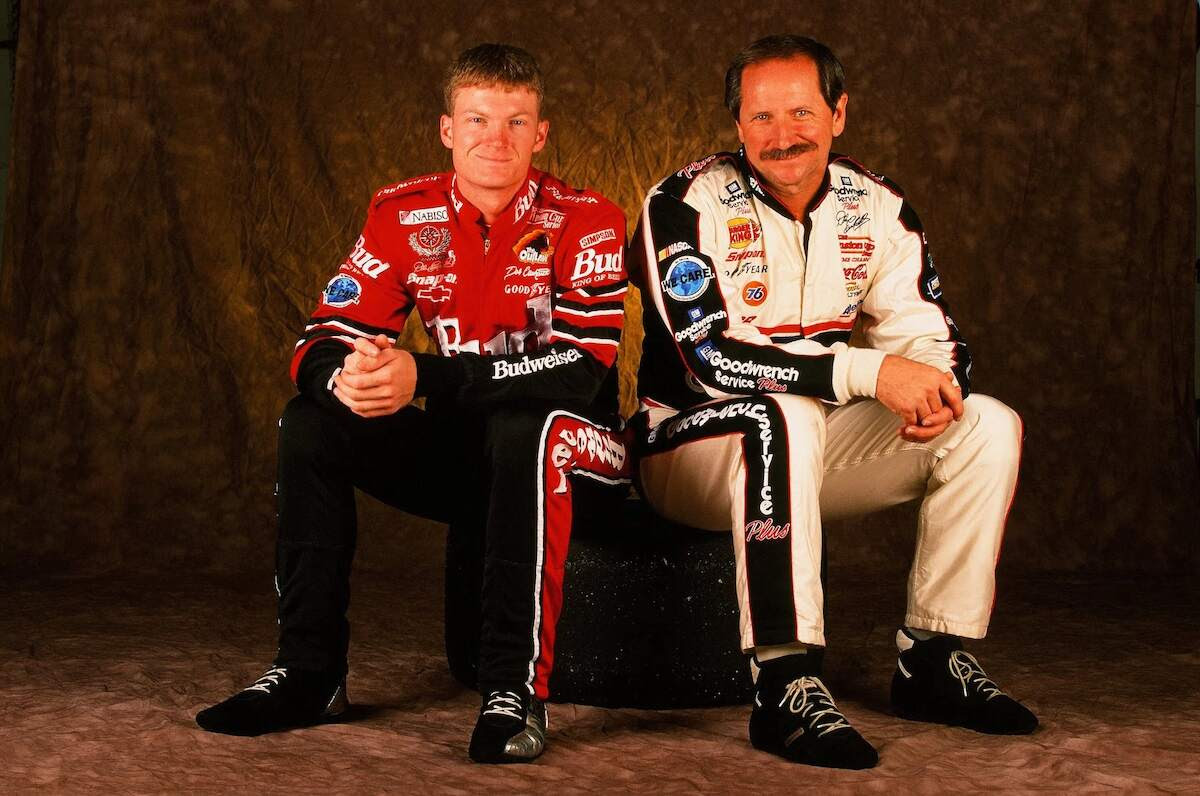


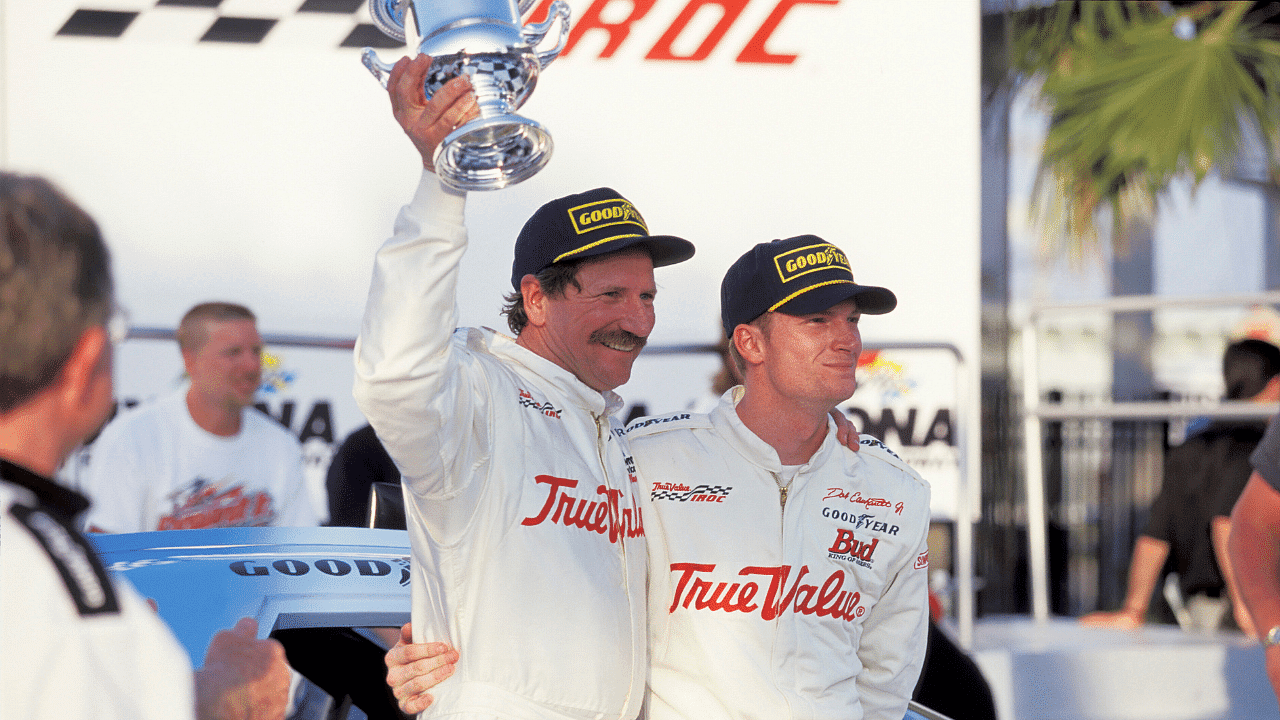

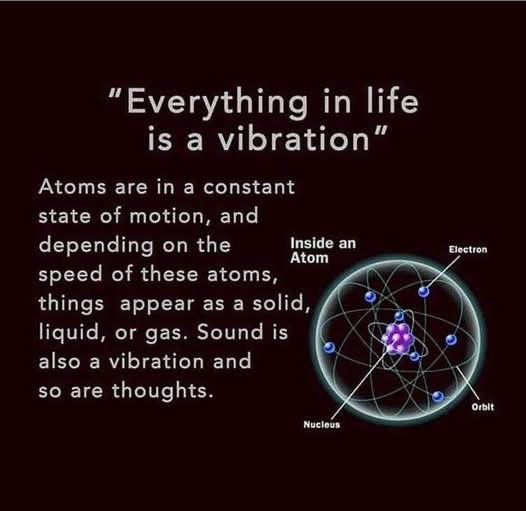
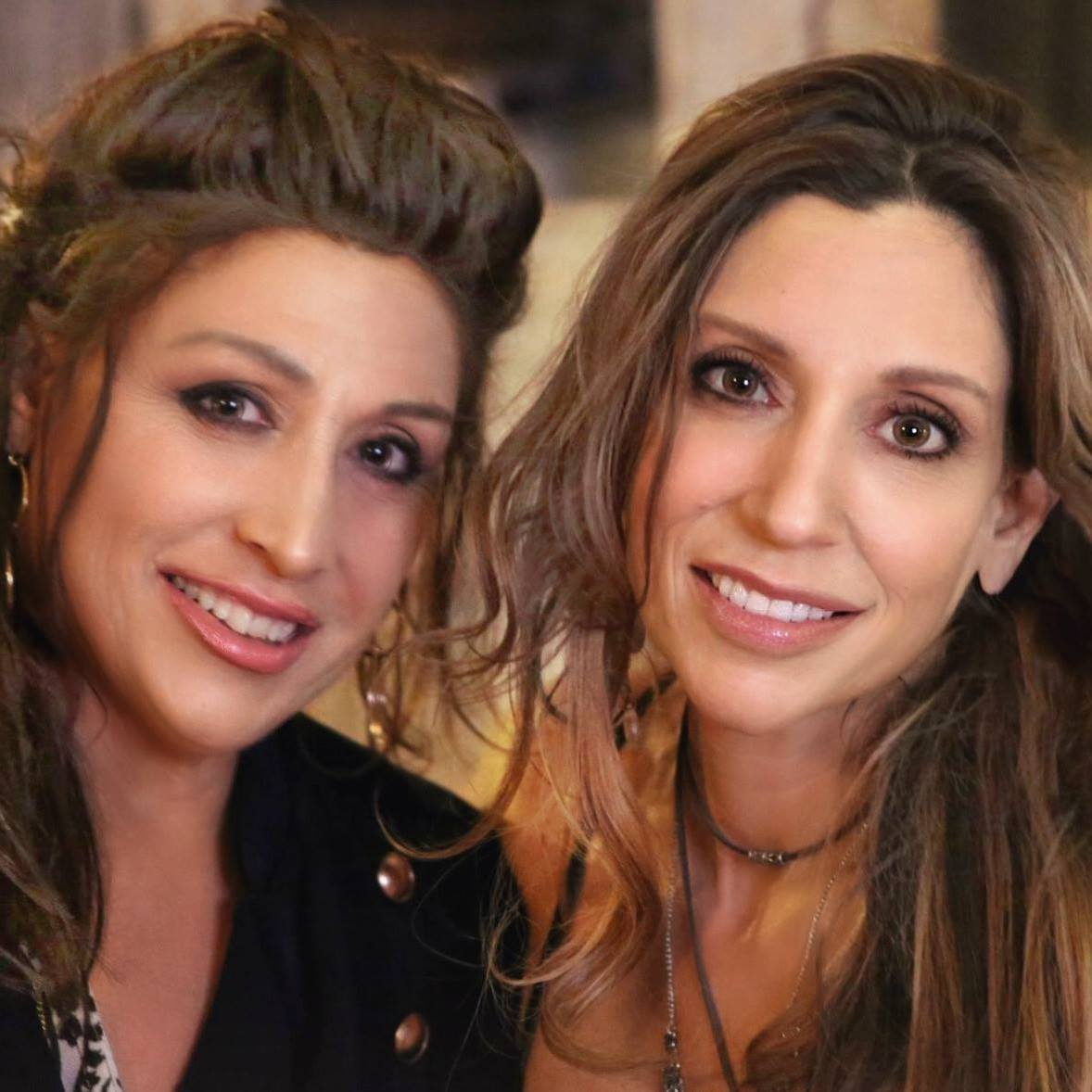

 Watch/listen to our Sis talk video



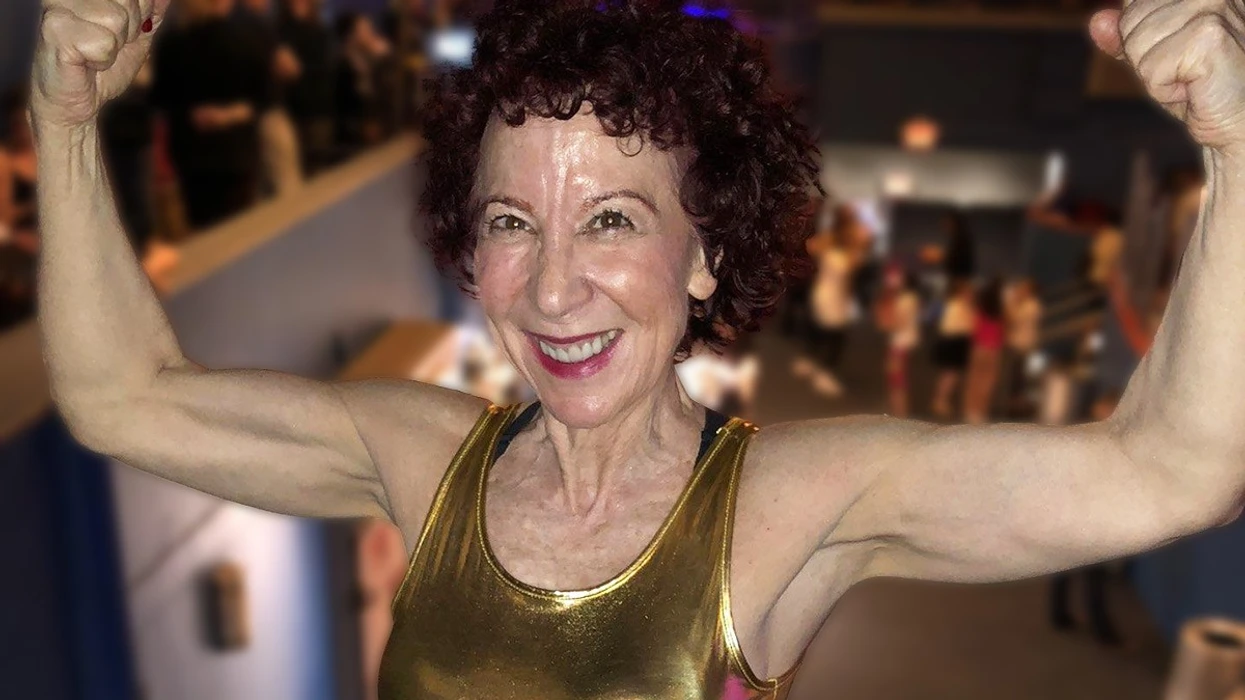

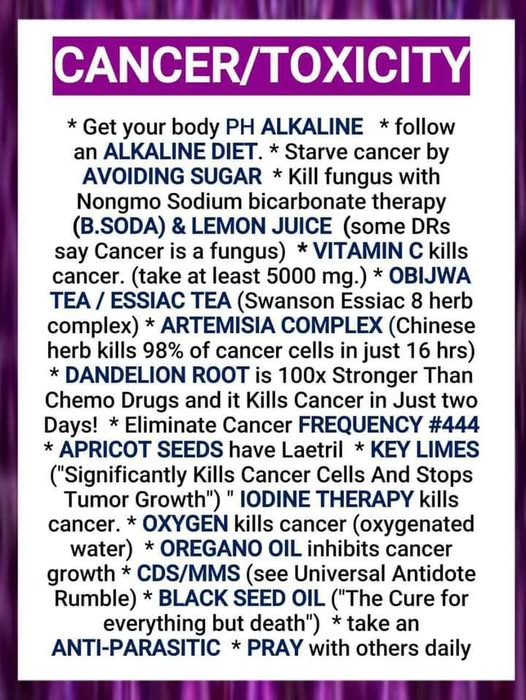
 I got rid of a serious liver issue, fibromyalgia and 98lbs in weight after 30 years of trying thanks to a whole food plant based diet x
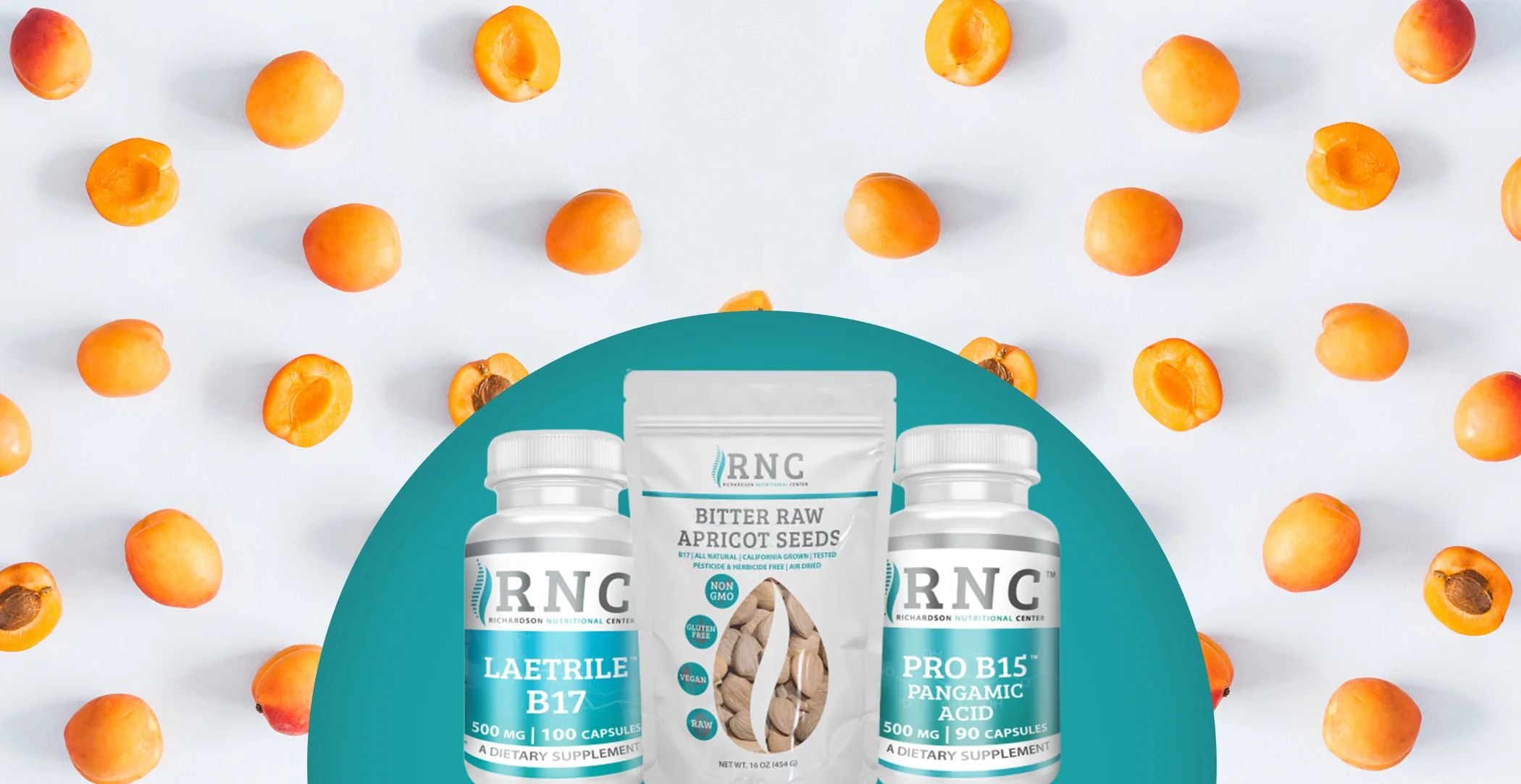


 . I feel so sad to see him take medication every day just to live.He has brittle diabetes, thyroid, gall bladder removed due to stone.prostate, blood pressure high,. He’s been dealing with these issues for a long time.

 Yes!!! Complete and Total Reset!!! This is the miracle cure that makes all of your cells shift into reverse, turning their attention inward to look for anything foreign that doesn’t belong inside of us!!! Immediately eradicating the body of everything that the Lord didn’t bless us with at birth!!! Cancer, MS, Lyme, Vaccines, Heavy Metals, Etc, you name it, it’s gone!!! Unknown to us, for thousands of years people worldwide had been healing themselves with this miracle cure before they hid it!!!
  not you!!! We all need to wake up to this!!! Knowledge is the key!!!


 plant,


 %… There’s something called