Director Andrew Wakefield Writers Del Bigtree Andrew Wakefield
“The vaccine was not brought in for Covid. Covid was brought in for the vaccine.
Once you realize that, everything else makes sense.” – Dr. Reiner Fuellmich
Before losing his medical license, Wakefield directed this film based on his own falsified study alleging a link between the MMR vaccine and autism.
A gut wrenching movie that should be shown to anyone that is expecting a baby or thinking about having children. Doctors will NOT tell you this information
A documentary alleging that the CDC, the government agency charged with protecting the health of American citizens, destroyed data on their 2004 study that allegedly showed a link between the MMR vaccine and autism.
In 2013, biologist Dr. Brian Hooker received a call from a Senior Scientist at the U.S. Centers for Disease Control and Prevention (CDC) who led the agency’s 2004 study on the Measles-Mumps-Rubella (MMR) vaccine and its link to autism.
The scientist, Dr. William Thompson, confessed that the CDC had omitted crucial data in their final report that revealed a causal relationship between the MMR vaccine and autism. Over several months, Dr. Hooker records the phone calls made to him by Dr. Thompson who provides the confidential data destroyed by his colleagues at the CDC.
Dr. Hooker enlists the help of Dr. Andrew Wakefield, the British gastroenterologist falsely accused of starting the anti-vax movement when he first reported in 1998 that the MMR vaccine may cause autism. In his ongoing effort to advocate for children’s health, Wakefield directs this documentary examining the evidence behind an appalling cover-up committed by the government agency charged with protecting the health of American citizens.
Interviews with pharmaceutical insiders, doctors, politicians, and parents of vaccine-injured children reveal an alarming deception that has contributed to the skyrocketing increase of autism and potentially the most catastrophic epidemic of our lifetime.
An exploration into a possible link between various vaccinations and illness, injury, and death.
‘Vaxxed II: The People’s Truth’ is the follow-up to the award-winning documentary, ‘Vaxxed: From Cover-Up To Catastrophe.’
When we set out across America promoting Vaxxed, thousands of empowered parents traveled miles to share the stories of what happened to their children. These stories created a movement. A revolution that will change history forever. The parents have been lied to and will be silenced no longer.
This is your story, your truth, and now we need your help to tell it.
Children’s Health Defense embarked on a nine-month journey across America, gathering powerful testimonies from the people. Our interviews ranged from mothers and fathers to teenagers, families, medical professionals, whistleblowers, lawyers, and people from all walks of life.
What we discovered was nothing short of staggering. We listened to harrowing accounts of COVID hospital protocols that shook us to our very core. The consistency of these stories was alarming.
People also shared their experiences after taking the COVID-19 vaccine, revealing tragic outcomes of either death or serious injury. Now, fueled by these powerful first hand testimonies, we are creating a documentary by the people, for the people.
Learn what we uncovered on the road. You can’t afford to miss it.
The film, produced by Jeff Hays, exposes Fauci’s influence on government policy, the pharmaceutical industry and medical research. It also examines the relationship between Big Pharma and the military, the outsized power of the news media and the concentration of technology companies.The documentary’s launch follows in the wake of Fauci’s Sept. 21 admission that he was aware the “draconian” COVID-19 policies he dictated would have negative consequences on the economy and schoolchildren.
After 50 years of quietly playing a key role in shaping the national response to health crises and infectious diseases, Dr. Anthony Fauci became a household name in March 2020 as the coronavirus pandemic reached America and began exacting a death toll that continues to this day.
However, without the diligent work of Fauci, who faced several obstacles from the Trump administration, the COVID pandemic could’ve claimed more lives, and the veteran physician is finding a thankfully cooperative partner in the Biden administration as the country gets vaccine distribution running up to full speed.
Fauci has been a steady hand through the ongoing ordeal, and it’s because of his tireless work that he’s receiving the documentary treatment from National Geographic in upcoming film Fauci from Emmy winning directors Josh Hoffman and Janet Tobias. Via Deadline: “There is only one Dr. Fauci, and it is an incredible privilege to bring his inspiring, lifelong quest to cure disease and prevent outbreaks, to viewers around the world,” said Hoffman and Tobias in a release announcing the project.
“This film will be an unprecedented, intimate portrait of our nation’s greatest public servant, whose relentless pursuit of truth and devotion to science has never been more important.” Fauci’s efforts to guide America through the pandemic have not been easy. He recently revealed the number of concerning and almost successful death threats that he and his family received during his time with the Trump administration.
Because of his devotion to telling the American public the truth about the coronavirus, Trump supporters felt that Fauci was trying to “sabotage” the former president’s re-election chances. Fauci also routinely shot down Trump’s endorsement of questionable COVID treatments from his “friends” in the business world.
“Fauci” delivers a rare glimpse into the long-standing professional career and personal life of the ultimate public servant, who after a lifetime of service faced his biggest test: a pandemic whose ferocity is unmatched in modern history. With his signature blend of scientific acumen, candor and integrity, Dr. Anthony Fauci became a cultural icon during the COVID-19 pandemic. But that has come at a cost as he has also faced attacks from adversaries in a nation increasingly divided by political party lines — with science increasingly caught in the crosshair.
A world-renowned infectious disease specialist and the longest-serving public health leader in Washington, D.C., who has served under seven presidents, Dr. Fauci has overseen the U.S. response to 40 years’ worth of outbreaks, including HIV/AIDS, SARS and Ebola. Crafted around unprecedented access to Dr. Fauci, National Geographic Documentary Films’ “Fauci” is a revealing and intimate portrait of the man mostly known only from appearances on the news.
Directed by Emmy winners John Hoffman (“The Weight of the Nation,” “Sleepless in America,” “Rancher, Farmer, Fisherman”) and Janet Tobias (“Unseen Enemy,” “No Place on Earth”), produced by Alexandra Moss (“Not Done: Women Remaking America”), Jon Bardin (“All In: The Fight for Democracy”), and executive produced by Academy Award® winner Dan Cogan (“Icarus”), and two-time Academy Award nominee Liz Garbus (“What Happened, Miss Simone?,” “The Farm: Angola, USA”), the film debuted in select theaters in the U.S. on Sept. 10, 2021. Opening cities included New York, Los Angeles, San Francisco, D.C. and New Orleans.
“There is only one Dr. Tony Fauci, and it’s an incredible privilege to be the first to tell the story of his life and career, including his never-ending quest to cure disease and prevent outbreaks,” said Hoffman and Tobias.
The film features insights from former President George W. Bush, Bill Gates, Bono, former national security advisor Susan Rice, National Institutes of Health director Dr. Francis Collins, former Centers for Disease Control and Prevention director Dr. Tom Frieden, journalists Laurie Garrett and The New York Times’ Apoorva Mandavilli, and key AIDS activists, among others. Dr. Fauci’s family, friends and former patients also provide more personal commentary about the man, his personality, and what makes him who he is.
“Janet and John did a remarkable job capturing the complex man I’ve come to know over the last three decades,” said Peter Staley, film subject and founding member of ACT UP. “As an activist, I think I’ll be tangling with Tony Fauci for the rest of my life, but I’ll never doubt his commitment to public health, nor his profound decency and humanity.”
The film is directed by John Hoffman and Janet Tobias, who have spent their careers telling important and compelling stories in the documentary space about science and public health. Over the past 36 years, Hoffman has made a specialty of communicating to a concerned public about disease, starting with HIV prevention and then addiction, Alzheimer’s, obesity, sleep, and the role of the NIH in leading the way on medical breakthroughs. Tobias’ recent film, “Unseen Enemy,” sounded a warning call about the threat of pandemics, which should not have gone unheeded.
“Fauci” is produced by Alexandra Moss (“Not Done: Women Remaking America”) and edited by Amy Foote (“Father, Soldier, Son”) and Brian Chamberlain (“Not Me, Murphy”). Director of photography is Claudia Raschke (“RBG”). For Story Syndicate, executive producers are Cogan, Garbus and Jon Bardin (“All In: The Fight for Democracy”).
National Geographic Documentary Films previously released the Academy Award, BAFTA and seven-time Emmy Award-winning film “Free Solo” and the Academy Award-nominated film “The Cave.” Other critically acclaimed films under the banner include Ron Howard’s “Rebuilding Paradise”; Sundance Audience Award winners “Science Fair” and “Sea of Shadows”; Emmy winners “LA 92” and “Jane,” both of which were included in the top 15 documentaries considered for an Academy Award in 2017; and Dupont Award winner “Hell on Earth: The Fall of Syria and the Rise of ISIS.”
With exclusive access inside one of New York’s hardest hit hospital systems during the terrifying first four months of the pandemic, Oscar®-nominated and Emmy® Award-winning director Matthew Heineman’s THE FIRST WAVE spotlights the everyday heroes at the epicenter of COVID-19 as they come together to fight one of the greatest threats the world has ever encountered. Leaving a devastating trail of death and despair, this once-in-a-century pandemic changed the very fabric of our daily lives and exposed long-standing inequities in our society.
Employing his signature approach of character-driven cinema vérité, Heineman embeds with a group of doctors, nurses and patients on the frontlines as they all desperately try to navigate the crisis. With each distinct storyline serving as a microcosm through which we can view the emotional and societal impacts of the pandemic, THE FIRST WAVE is a testament to the strength of the human spirit.
Celebrating 7 + years cancer free and what a better time to have done my first life-changing Ayahuasca ceremony at such a milestone, during Lions Gate too!
I say milestone as Triple Negative breast cancer is deemed to be the most aggressive type of breast cancer and statistics show a high chance of recurrence within the first 3 years.
Meet Dee Mani an inspiring individual whose health journey took an unexpected turn in March 2017. After discovering a sudden lump and undergoing a series of tests, including mammograms, ultrasounds, and biopsies, Dee received a diagnosis of grade 3 Triple Negative breast cancer, recognized as one of the most aggressive forms.
Initially advised to undergo a year of chemotherapy and radiotherapy, Dee opted to chart her own path based on thorough research. She chose to forgo conventional treatment, which had failed her sister previously, and instead embraced a natural healing approach. Following a lumpectomy, Dee pursued self-healing using an array of methods such as dietary changes, essential oils, supplements, detox salt baths, meditation, and full extract cannabis oil (FECO). Her journey of healing extended beyond her physical well-being, encompassing her mind and soul.
Despite her oncologist’s lack of support, Dee persevered. Just five months post-diagnosis and four months into her natural protocol, she achieved an all-clear status, free from evidence of disease (NED).
Motivated by her experience, Dee penned her story, sharing it in a self-published book that swiftly became an Amazon bestseller. When I wrote this book it was first and foremost a sense of cancer closure, the cancer that tried to destroy me (failed) putting my story on paper was a release and at the same time I thought if I could inspire one person to step away from chemotherapy and heal their body in a more natural holistic way then it was all worth it!
“When I was diagnosed, my oncologist recommended a year’s worth of chemotherapy, detailing that I had maybe one year left to live. I knew that chemotherapy was not going to make my suffering more comfortable but the complete opposite, so I thought – if I’m going to die anyway, what’s the point in poisoning my body for the short time I had left”, she said.
Dee started searching for natural ways to heal and found that many other people were healing with cannabis oil. So, she decided on this course of action. “I took the oil every night, treating it like a sleeping pill as the THC makes you sleepy, and while you sleep, you heal.”
Dee managed to heal within a short five months, using a range of supplements, diet change, and the illegal full extract cannabis oil.
“Almost four years on, I’m now healed and healthy. I continue to take the plant medicine as a preventive measure as cancer is likely to recur within the first two years.” However, “the oil protects me from all disease due to the protection of any radical change,” said Dee.
A few years before her diagnosis, Dee closely observed her sister’s suffering, who was also diagnosed with cancer and passed away two years later. Those moments contributed to her option of healing naturally.
“My sister had liver cancer. The opposite to me, she did everything that the doctors recommended, including chemotherapy. When told she only had two years to live, I questioned how they could put a timeline on a person’s life? But I soon began to understand that it is not the disease that kills, but the treatment”, she said.
Usually, after surviving cancer, patients prefer to close that chapter. However, Dee decided to share her experience to help inspire others to heal. That’s why she chose to write the book which shared her healing journey. The book’s success led Dee to create a private cancer support group to help other patients and their families. Dee now mentors patients worldwide and is also a columnist for two medical marijuana publications. She shares healing stories from various patients that she has helped heal from a range of diseases.
Dee then went on to launch her range of CBD oils – called My Way CBD. The reasoning was to help people access good quality affordable oils, unlike many others on the market.
“My job now is to educate people, teaching them how they can be healthy and prevent any disease, not just cancer,” she told The Portugal News.
The pandemic revealed another problem to Dee. “There are too many performers that haven’t been able to perform due to the lockdown restrictions,” adding that she has already been contacted by various artists who tried to put an end to their lives.
This is why Dee and her husband Ryan (the station manager and a music artist, aka Remmy Ruso) decided to launch a new digital global radio station adopting the same name as the brand: “My Way Radio.”
“My Way Radio” https://www.mywayradio.gr/ broadcast a diverse range of music 24/7 airing classic tunes and up-and-coming artists. While hosting a range of motivational podcasts discussing health and wellness, cooking, sports, and current affairs”.
The radio can be listened to by downloading the free apps on iOS and Android and is also Alexa compatible to be accessed anywhere there’s an internet connection.
“We’re giving performers a platform to get on board and be a part of the radio, to promote their music and feel the passion they’ve lost since Covid-19.” In her words: “there are many musicians who went into depression because of not being able to work due to the pandemic, many even considered committing suicide, so the radio has emerged as a light at the end of the tunnel to give artists and speakers a place to share their music and their voice.”
Since obtaining the license several weeks ago, the radio has continuously aired 24/7 music while the team tests the airways behind the scenes. My Way Radio hasn’t officially launched but will be within the coming weeks, keep an eye on their social media channels to be kept in the loop.
To download the app, just search for My way Radio in the App Store or Google Play.
The pandemic revealed another problem to Dee. “There are too many performers that haven’t been able to perform due to the lockdown restrictions,” adding that she has already been contacted by various artists who tried to put an end to their lives.
This is why Dee and her husband Ryan (the station manager and a music artist, aka Remmy Ruso) decided to launch a new digital global radio station adopting the same name as the brand: “My Way Radio.”
“My Way Radio” will be broadcasting a diverse range of music 24/7. We will air classic tunes and up-and-coming artists. We will also be hosting a range of motivational podcasts discussing health and wellness, cooking, sports, and current affairs”.
The radio can be listened to by downloading the free apps on iOS and Android and is also Alexa compatible to be accessed anywhere there’s an internet connection.
“We’re giving performers a platform to get on board and be a part of the radio, to promote their music and feel the passion they’ve lost since Covid-19.” In her words: “there are many musicians who went into depression because of not being able to work due to the pandemic, many even considered committing suicide, so the radio has emerged as a light at the end of the tunnel to give artists and speakers a place to share their music and their voice.”
Since obtaining the license several weeks ago, the radio has continuously aired 24/7 music while the team tests the airways behind the scenes. My Way Radio hasn’t officially launched but will be within the coming weeks, keep an eye on their social media channels to be kept in the loop.
To download the app, just search for My Way Radio in the App Store or Google Play.
This venture propelled her into an advocacy role, particularly in the realms of cannabis and holistic health. She contributes articles to top-tier Medical Marijuana publications, engages in interviews with health advocates, and delivers educational health talks at various forums.
Deeply convinced of the potential of cannabis, Dee has developed a range of CBD oils, wellness products, and skincare items. She has also initiated a cannabis education hub, where she seeks to counter prevailing stigmas surrounding this remarkable plant.
Dee’s contributions to health literature extend beyond her personal narrative. She has co-authored two other Amazon best-selling health books and holds columns in esteemed medical marijuana publications. Additionally, Dee serves as a mentor in a private support group for individuals grappling with cancer.
With her expansive role as an author, motivator, inspirer, and advocate, Dee’s journey reflects a quest for understanding health, our world, and our place within it. As she aptly quotes Henry David Thoreau, “Not until we are lost do we begin to understand ourselves.”
The author is a Medical Warrior we can all learn from!
In (June 2022) Dee Mani published a book about how she had healed from a diagnosis of CLL stage 4 cancer back around 2001 when I came across Dee Mani’s book, titled:My Way: Following the Cancer Brick Road, from Diagnosis to All Clear Naturally in 5 Months. Being the curious inveterate researcher that I am, I decided it was worth a read because I wanted to know if there were any parallels between her method of healing and mine.
The main parallels between the two books were that after consultation with our doctors, we both decided to ditch our doctor’s protocol to undergo chemotherapy and radiation treatments in favor of utilizing safer, non-toxic natural approaches such as upgrading to a better diet, adding certain supplements, meditation, etc.
In my situation back in 1999, I did not know about or have access to cannabis so my approach relied more on the use of coral calcium, which is an inexpensive alkalizing agent, the removal of a bad root canal, and spiritual prayer-work, as I had studied to become a minister and a healing practitioner of Science of Mind (Religious Science founded by Ernest Holmes).
In Dee Mani’s book I became really absorbed as I followed along with her on her healing journey and found it interesting to observe her thought processes along the way. As I read, I discovered a sort of kinship with her even though we both had very different types of cancer; hers Triple Negative Breast Cancer (TNBC) and mine, CLL (Chronic Lymphocytic Leukemia).
In an age when Big Pharma rules the roost, we need more people like Dee who can think outside the box! So I salute Dee Mani for her courage to fight the System and bravely chart her own way to healing. In that sense I feel that we both are modern day Medical Warriors! Highly recommended!
PS: Since publication of her book, Dee became inundated by messages from people all over the world asking for healing advice; her book does detail how she healed naturally using a combination of cannabis oil, supplements, essential oils, and diet. She states, “However, since I wrote the (My Way) book, I’ve discovered more supplements than what I originally mentioned, which is why I decided to put this short E-book together, listing the main cancer-fighting supplements to refer to easily. These supplements can either be used to prevent cancer from developing in the first place or be a part of your protocol if healing from already developed cancer. They all aim to boost the immune system”.
The ebook title: Cancer Fighting Supplements: A quick guide on powerful immune boosters. by Dee Mani | Goodreads When told she would die within a year without conventional treatment for her deadly triple negative breast cancer, Dee Mani-Mitchell of Belfast, Northern Ireland considered the repercussions of chemotherapy, having watched her sister take it and die of cancer. Instead, she took some time and found cannabis oil which she started taking. Four months later she went back to her doctor who gave her the all clear.
Following on from the Amazon best-selling cancer book called “My Way,” which details the journey of healing an aggressive type of cancer with full extract cannabis oil, author Dee Mani-Mitchell decided to launch a branch of CBD oils and wellness products with a difference.
The success of her book led Dee to set up “My Way CBD” to specialize in all-natural CBD healing solutions to add value to the world of natural healing by revolutionizing the attitude towards hemp-derived products and the wellness cannabinoids bring to peoples lives.
Dee is a columnist for two medical marijuana publications and writes with the aim to create a better understanding of our health, our world, and our place in it. A mission that has cast her in many different roles: writer, motivator, supporter, inspirer, advocate, and awareness raiser.
A successful businesswoman that has personally;y relied on cannabis for many years dealing with her own health issues., she is constantly breaking down barriers with her beliefs that healing should be built into how we live more naturally.
Dee’s on a mission – to improve the quality of lives through natural and effective healing solutions. The exciting part is that Dee has developed a completely unique range of CBD infusions. As part of her day-to-day life, she runs a cancer support group, where she recommends that patients add essential oils to their healing protocol as they assist in the apoptosis (cancer cell death) process. Pure, organic, food-grade (ingestible) essential oils often have a high price tag. So Dee decided to incorporate some highly powerful essential oils with her range of broad-spectrum CBD, to be more affordable for people that want to take both CBD and good quality essential oils.
My Way CBD stock infusions of Frankincense, Myrrh, Ashwagandha, Ginger, and Oregano oil. All essential oils are organic and safe for internal use, with 10% of the essential oil in each 30ml bottle of goodness. These infusions are flying out the shop store, and there’s a plan to infuse the full-spectrum range with some different powerful combinations.
My Way ensures an entire product range with a “complete transparency” and strict “no nasties” policy, which is always free from harmful chemicals, pesticides, solvent residues, toxins, chlorophyll, fats and lipids, preservatives, sulfates, mineral oils, parabens, animal testing, artificial colours, and perfumes. All products are also vegan, non-GMO, and Kosher.
All products are formulated with the most refined lab-tested CBD oils,
They will steal the election again, while everyone is too concentrated on the victory and lacks focus on stealing the election. Don’t let your guard down; that’s what I want to warn you about. They still print and count the ballots in Atlanta Detroit Philadelphia Milwaukee Las Vegas and Phoenix.
A New York Times story in April chronicled the chaos within the Trump White House as it initially responded to the coronavirus pandemic. One of the throwaway revelations in that piece was that the president’s delayed reaction to the crisis was partially due to his fears about the “deep state.”
“Mr. Trump’s response,” the authors write, “was colored by his suspicion of and disdain for what he viewed as the ‘deep state,’ the very people in his government whose expertise and long experience might have guided him more quickly toward steps that would slow the virus, and likely save lives.”
Under normal circumstances, this would be bad; in a pandemic, it’s terrifying. Now, more than ever, expertise is needed, and Trump isn’t especially interested. That a lot of his supporters think the virus itself is a deep state coup isn’t helping matters.
And Trump’s deep state obsession isn’t a new thing. He’s been pumping up this theory since special counsel Robert Mueller launched the investigation into Russia’s interference in the 2016 election. It has always been a diversion, whether it was coming from Trump or Fox News.
But here’s the thing: The deep state isn’t exactly a phantasm. There are parts of the US government that wield real power outside the conventional checks and balances of the system. It’s not a conspiracy against Trump, but the term does refer to something that exists.
The seed for many tantalizing conspiracy theories, the term “deep state” in the United States implies the existence of a premeditated effort by certain federal government employees or other persons to secretly manipulate or control the government without regard for the policies of Congress or the President of the United States.
Origin and History of the Deep State
The concept of a deep state — also called a “state within a state” or a “shadow government” – was first used in reference to political conditions in countries like Turkey and post-Soviet Russia.
During the 1950s, an influential anti-democratic coalition within the Turkish political system called the “derin devlet” – literally the “deep state” — allegedly dedicated itself to ousting communists from the new Turkish Republic founded by Mustafa Ataturk after World War I.
Made up of elements within the Turkish military, security, and judiciary branches, the derin devlet worked to turn the Turkish people against its enemies by staging “false flag” attacks and planned riots. Ultimately, the derin devlet was blamed for the deaths of thousands of people.
In the 1970s, former high-ranking officials of the Soviet Union, after defecting to the West, publically stated that the Soviet political police – the KGB – had operated as a deep state secretly attempting to control the Communist Party and ultimately, the Soviet government.
In a 2006 symposium, Ion Mihai Pacepa, a former general in the Communist Romania secret police who defected to the United States in 1978, stated, “In the Soviet Union, the KGB was a state within a state.”
Pacepa went on to claim, “Now former KGB officers are running the state. They have custody of the country’s 6,000 nuclear weapons, entrusted to the KGB in the 1950s, and they now also manage the strategic oil industry renationalized by Putin.”
The Deep State Theory in the United States
In 2014, former congressional aide Mike Lofgren alleged the existence of a different type of deep state operating within the United States government in his essay titled “Anatomy of the Deep State.”
Instead of a group comprised exclusively of government entities, Lofgren calls the deep state in the United States “a hybrid association of elements of government and parts of top-level finance and industry that is effectively able to govern the United States without reference to the consent of the governed as expressed through the formal political process.”
The Deep State, wrote Lofgren, is not “a secret, conspiratorial cabal; the state within a state is hiding mostly in plain sight, and its operators mainly act in the light of day. It is not a tight-knit group and has no clear objective. Rather, it is a sprawling network, stretching across the government and into the private sector.”
In some ways, Lofgren’s description of a deep state in the United States echoes parts of President Dwight Eisenhower’s 1961 farewell address, in which he warned future presidents to “guard against the acquisition of unwarranted influence, whether sought or unsought, by the military-industrial complex.”
Following the tumultuous 2016 presidential election, President Donald Trump and his supporters suggested that certain unnamed executive branch officials and intelligence officers were secretly operating as a deep state to block his policies and legislative agenda by leaking information considered critical of him.
President Trump, White House Chief Strategist Steve Bannon, along with ultra-conservative news outlets like Breitbart News claimed that Former President Obama was orchestrating a deep state attack against the Trump administration. The allegation apparently grew out of Trump’s unsubstantiated claim that Obama had ordered the wiretapping of his telephone during the 2016 election campaign.
Current and former intelligence officials remain divided on the question of the existence of a deep state secretly working to derail the Trump administration.
In a June 5, 2017 article published in The Hill Magazine, retired veteran CIA field operations agent Gene Coyle stated that while he doubted the existence of “hordes of government officials” operating as an anti-Trump deep state, he did believe the Trump administration was justified in complaining about the number of leaks being reported by news organizations.
“If you are that appalled at the actions of an administration, you should quit, hold a press conference and publicly state your objections,” said Coyle. “You can’t run an executive branch if more and more people think, ‘I don’t like the policies of this president, therefore I will leak information to make him look bad.’”
Other intelligence experts argued that individuals or small groups of individuals leaking information critical of a presidential administration lack the organizational coordination and depth of deep states such as those that existed in Turkey or the former Soviet Union.
The Arrest of Reality Winner
On June 3, 2017, a third-party contractor working for the National Security Agency (NSA) was arrested on charges of violating the Espionage Act by leaking a top-secret document related to the possible involvement of the Russian government in the 2016 U.S. presidential election to an unnamed news organization.
When questioned by the FBI on June 10, 2017, the woman, 25-year-old Reality Leigh Winner, “admitted intentionally identifying and printing the classified intelligence reporting at issue despite not having a ‘need to know,’ and with the knowledge that the intelligence report was classified,” according to the FBI affidavit.
According to the Justice Department, Winner “further acknowledged that she was aware of the contents of the intelligence reporting and that she knew the contents of the reporting could be used to the injury of the United States and to the advantage of a foreign nation.”
The arrest of Winner represented the first confirmed case of an attempt by a current government employee to discredit the Trump administration. As a result, many conservatives have been quick to use the case to bolster their arguments of a so-called “deep state” within the United States government. While it’s true that Winner had publicly expressed anti-Trump sentiments both to co-workers and on social media, her actions in no way prove the existence of an organized deep state effort to discredit the Trump administration.
In the U.S., the idea of a deep state cabal of unelected officials secretly pulling the strings of the American government, is widely believed. One 2018 poll even claimed a majority of American voter’s place credence in the theory. This is no fringe phenomenon.
America’s democratic political institutions and public opinion are driven by anxieties that have been given voice in the pronouncements of Donald Trump:
I Don’t Believe This for a Second that many of the January 6 Capitol rioters were inspired by QAnon conspiracy theories that claimed a deep state was also working to undermine President Trump and betray the electorate. If he wins this November, Trump has promised to “dismantle the deep state” by stripping thousands of federal employees of their civil service protections, allowing them to be fired at will.
The intricate apophenia of today’s QAnon-laced cynicism toward the federal government as deep state finds its origins in legitimate public concern about cold war CIA covert operations. Knowing this history offers some answers for today’s conspiracy culture questions.
Before the CIA’s disastrous Bay of Pigs invasion of Cuba in 1961, the American media consciously avoided discussing U.S. covert action: “[W]e left out a great deal of what we knew about U.S. intervention in Guatemala and in a variety of other cases,” noted the New York Times’ Washington bureau chief, James Reston, in 1954. As a result, many of the CIA’s most significant operations escaped popular accountability.
In learning about these covert interventions in the 1960s and 1970s, the public became acutely aware of the gap between the official narrative of a purely defensive foreign policy and the reality of these previously secret offensive operations. That awareness caused many to ask who oversaw American foreign policy. Was it their elected public representatives or secretive intelligence officer?
One of the most influential books of this era to raise this question was The Invisible Government, written in 1964 by journalists David Wise and Thomas Ross. They opened their account with a stark declaration: “There are two governments in the United States today. One is visible. The other is invisible.”
They then set out their thesis that the CIA had occasionally acted outside the authority of elected officials, and that such covert operations were not merely an instrument of U.S. foreign policy, but had actively shaped it. Though their thesis was more nuanced and narrowly focused than that of many contemporary purveyors of deep state conspiracy theories, their book provided the language and narrative apparatus that would eventually metastasize into the widespread skepticism in American society toward officialdom, and in particular toward the U.S. intelligence community.
The very use of the term conspiracy theory, however, risks both unfairly mischaracterizing Wise and Ross’s original argument, and trivializing the powerful hold that the “deep state” has upon the American political imagination today. Early attempts to understand what historian Richard Hofstadter famously described as the “paranoid style” in American political life deployed the term pejoratively. They pathologized political paranoia as an irrational and dangerous aberration from the usual politics of compromise and consensus that they believed characterized America’s democratic institutions.
But today the paranoid style has gone mainstream, and it has infiltrated the very organs of democratic politics that Hofstadter sought to defend. So how did public concern about CIA covert operations mutate into the all-encompassing cynicism toward government officials that characterizes belief in a deep state today?
The Invisible Government was published at the beginning of an era of revelations about secret state activity and government deception. In 1967 Ramparts magazine revealed that the CIA had covertly sponsored the National Student Association to try to influence the emerging international student movement in a liberal and anticommunist direction.
In 1971 Daniel Ellsberg provided the press with a secret Pentagon history of the Vietnam War, which revealed that four successive administrations had deceived the American people about the U.S. role in that conflict and the likelihood of victory.
In December 1974, just a few months after President Nixon resigned over Watergate, itself a scandal about government secrecy and duplicity, New York Times journalist Seymour Hersh published the first of a series of articles about some of the most controversial CIA operations, leading to three separate official inquiries into the activities of the CIA and FBI.
Filtered through this steady drumbeat of revelations,
The Invisible Government took on new meaning, with many coming to believe that the secret state was eroding the very foundations of American democracy.
A 1967 Herblock cartoon about the scandal revealed by Ramparts magazine features Alice in Wonderland’s White Rabbit with “CIA” tattooed on its thigh, burrowing in a hole beneath the twin pillars of “U.S. Credibility” and “Integrity of Schools and Foundations,” with Alice tumbling down the rabbit hole of “undercover activities.”
These revelations of state secrecy and deception coupled with the narrative of an “invisible government” also lent credence to conspiracy theories about President Kennedy’s death, in particular the popular idea that the CIA played a role. The Invisible Government was here directly influential.
In the late 1960s New Orleans district attorney Jim Garrison prosecuted Clay Shaw for Kennedy’s murder, alleging CIA involvement. Garrison drew at length from The Invisible Government when researching his prosecution. His case was flimsy, and the jury took less than an hour to deliver a “not guilty” verdict. But the trial was later popularized by Hollywood director Oliver Stone in his 1991 blockbuster JFK.
In the film’s denouement a teary-eyed Garrison, played by Kevin Costner, delivers his closing argument to the jury: “What ‘national security,’” he asks them, “permits the removal of fundamental power from the hands of the American people and validates the ascendancy of the invisible government in the United States?” (Emphasis added.) The film was incredibly damaging for the CIA and helped persuade the agency to become much more proactive in its public relations.
Today the deployment of the “deep state” by populist politicians like Trump taps into a rich vein of popular suspicion in American society that partly resulted from excessive state secrecy and official deception. Since Hofstadter, we have tended to understand belief in conspiracy theories as a kind of psychosis. In doing so we have focused our gaze pejoratively on the “basket of deplorables” who tend to believe such theories, and ignored the official sources and government policies that first produced these widespread anxieties.
This is an opinion and analysis article, and the views expressed by the author or authors are not necessarily those of Scientific American.
Stocks usually see double-digit gains under U.S. presidents — with two exceptions since 1933. Deutsche Bank Research recently analyzed the S&P 500’s annualized total returns under each U.S. president since Theodore Roosevelt in 1901.
With the U.S. presidential election just two weeks away:
Deutsche Bank Research found the S&P 500 has seen a long stretch of annualized double-digit returns under different White House administrations — with two exceptions since 1933.
“As we approach the big day, markets are bracing themselves for a vote that will likely lead to very different policies, depending who wins and with what congressional configuration,” said Jim Reid, global head of macro and thematic research at Deutsche Bank Research, in a note emailed Tuesday.
Yet it may be “better to be lucky than good,” said Reid, explaining that events might be more likely “to dictate big-picture market performance under the next president, with policy probably playing a smaller role.”
Deutsche Bank Research broke out the S&P 500’s annualized total return under each U.S. president dating back to Theodore Roosevelt in 1901. The link above shows the S&P 500 fell on an annualized basis under Herbert Hoover and Richard Nixon — declines that stood out against an otherwise long period of double-digit total returns no matter who was in the White House. The S&P 500 also fell on an annualized basis under President George W. Bush’s administration, the chart shows.
“From 1933 onwards, most presidents have benefited from a long period of U.S. exceptionalism and double-digit annual equity returns with just two very unlucky exceptions,” said Reid.
“The problem is these exceptions have tended to be pretty savage relative to the norm.”
But in Reid’s view, “the big outliers were driven by events that were arguably mostly outside of the control of the sitting president.”
Those events include “the [Great] Depression, the 1973 oil shock, and the double whammy of the post-2000 bubble unwind,” as well as the early global financial crisis seen under President George W. Bush, according to the note.
“Academics have argued that Hoover’s policies exacerbated the Depression,” said Reid, referring to the president who served from 1929 to 1933. “But you only have to look at the returns under” the preceding Calvin Coolidge “to see that he likely presided over a bubble that contributed to the subsequent 1929 crash, even if he had left office earlier that year.”
The S&P 500 had its highest annualized returns under President Coolidge and its worst performance during Hoover’s administration, the Deutsche Bank chart shows. “Hoover had a challenging legacy to deal with,” said Reid.
Thirteen of the last 15 U.S. presidents have presided over annualized total returns of between 10% and 17% for the S&P 500, he added. The S&P 500 performed in an “even tighter” range of 14% to 17% returns under seven of the last nine presidents, according to his note.
Deutsche Bank Research found that under President Joe Biden, the S&P 500 has so far seen an annualized total return of 14%. That compares with an annualized 16% total return under former President Donald Trump, whose administration spanned 2017 to 2021.
Election Day will be held Nov. 5, when Americans will vote on whether to send Vice President Kamala Harris, the Democratic nominee, or Trump, her Republican rival, to the Oval Office as the next president.
U.S. stocks are in a bull market that earlier this month marked its two-year anniversary.
The S&P 500 has jumped more than 22% so far this year based on its Tuesday afternoon level of around 5,854 That’s slightly below its record closing high of 5,864.67 notched Oct. 18.
The U.S. stock market was trading mostly higher Tuesday afternoon, with the S&P 500 about flat, the Nasdaq Composite rising 0.2% and the Dow Jones Industrial Average adding 0.1%, according to FactSet data, at last check.
The stock market is a constellation of marketplaces where securities like stocks and bonds are bought and sold. Stock markets provide you with easy, transparent access to investment assets, and they help professional investors determine fair prices for public companies.
What Is the Stock Market?
Think of the stock market as the main financial venue where investing happens. It’s a collection of all the places where matches are made between buyers and sellers trading shares of public companies.
“The stock market” and “Wall Street” can refer to the entire world of securities trading—including stock exchanges where the shares of public companies are listed for sale and markets where other securities are traded. The New York Stock Exchange is the biggest stock market on earth.
Market indexes like the S&P 500 and the Dow Jones Industrial Average aggregate the prices of groups of stocks, which indicate the day-to-day performance of the stock market as a whole.
The stock market helps companies raise money to fund operations by selling shares of stock, and it creates and sustains wealth for individual investors.
Companies raise money on the stock market by selling ownership stakes to investors. These equity stakes are known as shares of stock. By listing shares for sale on the stock exchanges that make up the stock market, companies get access to the capital they need to operate and expand their businesses without having to take on debt. In exchange for the privilege of selling stock to the public, companies are required to disclose information and give shareholders a say in how their businesses are run.
Investors benefit by exchanging their money for shares on the stock market. As companies put that money to work growing and expanding their businesses, investors reap the benefits as their shares of stock become more valuable over time, leading to capital gains. In addition, companies pay dividends to their shareholders as their profits grow.
The performances of individual stocks vary widely over time, but taken as a whole the stock market has historically rewarded investors with average annual returns of around 10%, making it one of the most reliable ways of growing your money.
Who Regulates the Stock Market?
The Securities and Exchange Commission (SEC) regulates the stock market in the U.S. The SEC was created after the passing of the Securities Act of 1933, following the stock market crash of October 1929. SEC regulations cover four main areas:
Stock exchanges
Brokers and dealers
Financial advisors
Mutual funds
The SEC’s mission is to protect investors, maintain fair, orderly and efficient markets, and facilitate capital formation. Thanks to SEC rules, companies that publicly trade on the stock market must tell the truth about their business, and those who sell and trade securities must treat investors fairly and with honesty.
Stock Market vs Stock Exchange
Although the terms are used interchangeably, the stock market is not the same as a stock exchange. Think of a stock exchange as a part of a whole—the stock market comprises many stock exchanges, such as the Nasdaq or New York Stock Exchange in the U.S.
When people talk about how the stock market is performing, they mean the thousands of public companies listed on multiple stock exchanges. And more generally, the stock market can be thought of as encompassing a very broad universe of bonds, mutual funds, exchange-traded funds and other securities beyond just stocks.
What Is a Stock Market Index?
A stock market index tracks the performance of a group of stocks that represents a particular industry or segment of the stock market, like the technology, energy and transportation sectors.
Often, one of three large indexes is used as shorthand to describe the performance of the U.S. stock market as a whole:
Dow Jones Industrial Average. The DJIA is made up of 30 blue-chip stocks of U.S. industrial companies.
S&P 500. The S&P 500 represents 500 of the largest companies in the U.S. economy.
The Nasdaq Composite. The Nasdaq Composite tracks the performance of more than 3,000 stocks listed on the Nasdaq stock exchange.
Other Types of Markets
The stock market generally refers to markets and exchanges where equity shares and related securities are traded. Other types of financial assets have their own markets.
Over-the-Counter Markets. OTC markets provide a venue for trading that takes place outside of major exchanges. OTC trades are primarily made directly between sellers and buyers, and prices may or may not be publicly available. Most bonds are traded OTC, and many stocks—including penny stocks—are also traded over-the-counter.
Commodities Markets. Raw materials like steel, coal and oil are traded on commodities markets. There are around 50 major commodity markets worldwide that facilitate trade in a wide range of commodities.
Derivatives. Derivatives are financial contracts like options whose value is tied to an underlying asset. These are essentially contractual bets about whether individual securities’ values will rise or fall. For experienced investors, derivatives can be extremely lucrative ways to hedge their bets when investing, and they can be incredibly risky for beginners.
Foreign Exchange Markets.Forex trading is a borderless, international market for exchanging currencies. Forex traders take advantage of the constantly fluctuating value of different currencies to make profits, and help provide liquidity for international trade.
Cryptocurrency. Bitcoin, Ethereum and other cryptocurrencies are traded on specialized crypto exchanges.
How to Invest in the Stock Market
If you want to invest in the stock market, the process to get started is easier than you think:
Decide what kind of account you want to open. From retirement savings to college savings, from short-term goals to long, there really is an investment account for everything.
Open a brokerage account. Once you’ve decided what kind of account you want, you’re ready to open an account at a provider called a brokerage. When choosing a company, consider their fees and available investment options.
Deposit money. To get started, you need to make an initial deposit. You can also set up recurring deposits to automate your investments going forward.
Choose your investments. Once your account is open, you can buy and sell securities. You can opt for individual stocks and bonds or mutual funds, index funds and exchange-traded funds (ETFs) that contain hundreds of individual securities. Many experts recommend a diversified, fund-based approach to minimize the risk any one bad investment loses you money.
Purchase your investments. Once you’ve settled on what you want to buy, simply enter the ticker symbol in the buy field and indicate how many shares you want to buy.
Racism is not dead, but it is on life support – kept alive by politicians who know how to game the system, race hustlers and people who get a sense of superiority by denouncing others as “racists”. ― Thomas Sowell
Personally … Any real Native American should be pissed about @Lizwarren lying about being Native to get jobs and scholarships. Because my culture was stolen by someone so undeserving, I’m pissed for every black person out there because @KamalaHarris is also stealing the valor of their heritage for votes and a job she doesn’t deserve.
Kamala Harris was admitted to law school under a program for students “who have experienced major life hurdles, such as educational disadvantage, economic hardship, or disability.” She struggled with having to learn two different languages…French Canadian and English.
Kamala Harris’s mother came from the highest caste in India, but by moving to the U.S. and Canada, obtaining a prestigious degree, marrying a future Stanford professor, having a successful career as a cancer researcher, and sending her daughter to private schools, her daughter became unusually disadvantaged?
In 1992, three years after Kamala graduated from Hastings Law School (a public university), there was a controversy after the dean of the law school realized the extent of student group involvement in admissions to the program for disadvantaged students (called LEOP).
That’s pretty bad:
Kamala took a spot that could’ve opened doors for someone truly disadvantaged. Students who claimed to be eligible for the LEOP because of some special hardship they suffered would have their claims of being disadvantaged verified via a phone call by members of the student organization associated with the applicant’s race. The phone interviews were used by some students to screen out conservative candidates—to avoid future “Clarence Thomases,” as one student explained.
This would have been the process in place when Kamala Harris applied to law school in 1986. According to her resume, she also served as President of the “Black Law Students [sic] Association,” so she likely participated in the process of selecting admittees to the LEOP program while she was a law student as well.
Kamala Harris failed the bar exam the first time she took it. I couldn’t find statistics for 1989, the year she graduated, but a letter to the law school paper in early 1992 says while the overall passage rate for Hastings graduates was 80.2%, only 55% of LEOP students passed. This was a big improvement over the earlier years—in 1977, only 16% of diversity admittees passed on the first try.
My wife graduated law school pregnant and passed the bar with a 3 month old.
To find out that Kamala got all of this undeserved help and still failed the bar is beyond infuriating. Everyone knew that she was LEOP at Hastings but that was mostly because her grades at Howard were not good. Harris has taken advantage of every single DEI program and she’s white. I knew they pulled strings. Any question Willie Brown made sure she finally “ passed” the Bar exam?
Kamala’s family owes reparations, not mine!
So, one less student who would be legitimately qualified was left out?
Yes, we all know the hardship of having two parents who each hold a PhD, and having to grow up in one of the more affluent parts of [checks notes] Westmount, Quebec, Canada.
They think being brown is a disadvantage because they’re racists.
Judge Brown talks with @RealCandaceO about: ⁃Kamala’s Hindu/Irish Marxi$t father (he’s not black & Kamala is lying about her ethnic background), ⁃with the FBI being responsible for the assass^nation of MLK, Jr., ⁃the Black caucus real motive in DC,
Stanley Armour Dunham, Obama’s maternal grandfather, is also distantly related to several U.S. presidents, including George H.W. Bush34. This makes Obama and Bush distant cousins, but not first cousins.
Please, God, let @realDonaldTrump become POTUS again. I owe the IRS $11k for this year and $14k for last year, due to helping my young adult kids out. #EndtheFed, too! OMG Please let this happen
Trump is asked if we can find a way to ELIMINATE Federal Taxes once America is back on its Feet
“There is a way…. In the old days when we were smart, in the 1890’s, this is when the country was relatively the richest it ever was.
Merica, we’re taking it back.
We had tariffs; we didn’t have income tax….”
WHAT has Trump been talking a lot about lately?
——— TARIFFS!
The original intent was for any Federal government to be entirely funded by tariff revenue.
Exactly! With tariffs… Congress will need to do their job of running the country on a budget, not a money printer machine that crushes the citizens more & more & more. They would be forced to bring America back to self-reliance of manufacturing our own products and creating more jobs.
The US received so much money in tariffs during the 19th century, there were no taxes. There was no need for taxes. But after WW1, America stopped the tariffs. But the Federal government needed money, so taxation on Americans began, replacing the tariff revenue. We need to return to the 19th century scenario.
The middle class would get killed it’s the same thing as a VAT tax on everything you buy i have lived in Europe it would end up costing you more, you people are clueless the price of everything goes up esp gas and the economy would collapse, gas would be mine 8 dollars a gallon, If a person making 30k a year and a person making 300k a year both need to buy at item that costs $5 but tariff adds $2 it’s worse for the person making 30K
As Gov. Waltz around his tax increases, Minnesota’s economy struggled.
The claim that Minnesota Governor Tim Walz “let Minneapolis burn” during the 2020 protests following George Floyd’s death is a bit of an oversimplification.
Tim Walz: Anatomy of a Fudd: Vice Presidential nominee Tim Walz likes to talk about his bona fides when it comes to firearms, using that to push his liberal gun control agenda. This sort of behavior and focus on hunting specifically has led many in the gun community to refer to him as a “Fudd.” But what does it mean to be a Fudd – and does Governor Walz fit the bill?
In summary, while there was significant damage during the protests, the narrative that Walz “let Minneapolis burn” simplifies a complex situation involving coordination and response challenges during a rapidly evolving crisis.
Since the COVID-19 economic recovery began in the second quarter of 2020, Minnesota’s growth has lagged the national average by 5.5 percentage points. Taxes have been imposed for many Centuries, even before the US was even a country. You want to be responsible for the road in front of you? No military…because no one can work for free and feed a family?
You think there are homeless and starving people now?
This is why he will be fought and this has been fought for a long time. Still though, this must happen. Now is the time.
He didn’t pause either! Do you hear the enthusiasm in Trump’s voice when he says “There is a way, there is a way”. Almost like he’s been dying for someone to ask that particular question! Read his tone, body language, eyes.
Trump also said that he would pay off the debt in 8 years. he had 4 years and what happened?
Every year his deficit was higher than the last, and literally a quarter of the entire US debt happened on his watch.
A tariff is a type of tax levied by a country on an imported good at the border.
Tariffs have historically been a tool for governments to collect revenues, but they are also a way for governments to try to protect domestic producers. Can you imagine how our economy would EXPLODE if this happened !?
if by “economy,” you mean “the current system where the bankers constantly steal from us,” then yes
It would infuse the economy with a ton of money, and demand would go through the roof.
Exactly. Just like the 1929 Great Depression.
I don’t think people realize what it was like for most workers before FDR addressed everything. Now to undo it all. Reagan allowed the rich to get richer while ignoring the workers once again. Clinton allowed Banks broader rein, etc. Chipping away. Personally, I don’t want 1890
You should have watched Fareeds’s CNN documentary Sunday night. It put America into a deep recession!It sounds like Fareed Zakaria’s documentary made quite an impact! Fareed Zakaria often tackles significant and complex issues in his specials. However, it’s important to note that a single documentary wouldn’t directly cause a recession. Economic downturns are typically the result of a combination of factors, including policy decisions, market conditions, and global events.
If Canada decided to put tariffs on US fruits and vegetables, what would happen? Most Canadians would stop buying American fruits and vegetables and would consume whatever is grown in Canada. You’d have a surplus and would need to FIRE workers … Trump’s favorite pastime …Quick History Lesson = Our government’s best revenue source, prior to Income Taxes, was sales taxes on liquor.
When the Suffragettes wanted to abolish liquor & gain voting rights for women, the government told them, “You help us get the Income Tax Amendment passed & we will pass a law making liquor illegal.” So Prohibition brought Income Taxes along with the prohibition of alcohol. Then, in 1933, when they repealed Prohibition, the government continued collecting income taxes & started collecting sales taxes on alcohol again getting two huge revenue streams.
I think cutting taxes won’t be the sole factor to the attainable future, as it might just drive more demands and raise prices up even further. Getting rid of unnecessary regulations and wasteful spending are two key steps to lower costs of living, as it opens up more supplies of housing and other goods, along with the reduction of Gov debts caused by parasitic agencies and fail “projects”, the market will readjust itself as things become abundant and attainable.
Porter Stansberry’s Biggest Prediction Ever This shocking development in the energy sector could unleash trillions in new wealth for America… and make one little-known U.S. energy firm the next Exxon.
Even if everything you say were true, the alternative is far worse: A second Trump presidency could be transformative for the U.S. His focus on economic growth, job creation, and reducing bureaucratic red tape helped boost the economy during his first term. Trump’s commitment to securing the nation’s borders and strengthening international alliances based on mutual respect—while holding adversaries accountable—reinforced America’s position on the global stage. His emphasis on law and order, alongside a pro-business agenda, could reignite the economic momentum and security that many Americans are yearning for, making him a potential catalyst for renewed national strength.
A Harris presidency would likely be a disaster due to her inconsistent track record and lack of clear leadership.She has frequently shifted positions on key issues throughout her political career, creating confusion and mistrust. Her tendency to prioritize political correctness over pragmatic solutions risks weakening America’s standing on the global stage and hindering domestic progress. Harris has shown little capacity to handle complex crises, and her divisive rhetoric could further polarize the country. In times that demand strong, decisive leadership, her inexperience and indecisiveness could lead to chaos both at home and abroad.
Where, exactly, is our border open, and is there a welcome mat?
Who opened it and how? I ask because I’ll bet you don’t know.
Our border is no more open NOW than it has EVER been, False
So with crime up. And the future is green energy. People are heavily vetted and must have a legally responsible American sponsor. They pay for their own flights and are granted temporary parole status for either 1 or 2 yrs. They are given working papers. The program is constantly monitored, and changes occur as needed.
When people refer to the U.S. border being “open,” they are often describing the perception of lax enforcement or policies that make it easier for people to cross illegally.
Here are some key points about how the border might be seen as “open”:
Surge in Illegal Crossings: In recent years, particularly since 2021, there has been a sharp increase in the number of migrants crossing the southern border illegally. This is seen as a sign that current policies are not as effective at deterring crossings as they once were.
Policy Changes: Several policies that were designed to control the border, like the “Remain in Mexico” policy (which required asylum seekers to wait in Mexico while their claims were processed), were reversed. Critics argue that this has encouraged more people to attempt to cross the border.
Catch and Release: In some cases, migrants who cross illegally are apprehended but then released into the U.S. while they wait for their asylum hearings. This is often criticized as creating a de facto “open” border since many people do not show up for their hearings.
Overwhelmed Border Patrol: Due to the sheer volume of migrants, U.S. Customs and Border Protection (CBP) is often overwhelmed, which makes it difficult to enforce immigration laws effectively. When resources are stretched thin, some migrants manage to cross without being apprehended. While the border isn’t literally “open” (there are border agents, barriers, and checkpoints), these factors contribute to the perception that it’s not secure or effectively controlled.
It also sends a message the administration will be focused on appeasing the radical left.
Expect: Open Borders: Giving free medical, jobs, and other resources to illegal immigrants at the expense of Americans.
Green Energy: Enforcing extreme green energy policies leads to higher energy costs. Imposing excessive regulations, driving up prices, and Stifling economic growth. While enforcing extreme green energy policies, leading to higher energy costs.
Soft on Crime: Advocating lenient criminal justice reforms that undermine law enforcement and public safety.
Wealth Redistribution: Excessively redistributing wealth, discouraging innovation and hard work.
Tax Hikes: Raising taxes on individuals and businesses, reducing disposable income and competitiveness.
Healthcare Overhaul: Pushing for government-controlled healthcare, risking reduced quality and longer wait times.
I believe that God has a purpose for all of us in life, and sometimes we may not even know what it is, but I’m certain that Donald J. Trump is destined by God to save our country from a total takeover by the Communist Democratic party. Donald Trump now has a 66 percent chance of victory#TrumpVance2024
Let’s talk about what tRump did in his time as POTUS shall we?
Let’s talk about Trump’s LONG string of broken promises. He promised to build a wall. He did 52 miles out of 2,000. Much of it was replacement, not new. He promised to make Mexico pay. They didn’t. He promised to cut the deficit. He added $8T to it. He promised to unveil a new health care plan. It didn’t exist.
He promised a middle-class tax cut. He cut taxes for the rich. The middle class is paying for it. He said COVID would just go away like magic. Hocus Pocus: it didn’t. He said he wouldn’t play golf as President. He made 250 visits to his own golf clubs. It cost taxpayers $136 million. He said he’d increase economic growth by 4%. He didn’t. President Biden did. And Trump is the first President to LOSE millions of jobs since Herbert Hoover.
He promised an infrastructure plan. He had none. President Biden signed a massive one. He promised to hire “the best people.” He fired half of them, and then said they were the worst ever. He promised to bring down the price of prescription drugs. He didn’t: President Biden did. He promised to drain the swamp. He didn’t: He WAS the swamp.
He promised to make America Great Again. He didn’t.
If he did, it’d still be great. But he’s been campaigning on the same thing since 2015. This was only a partial list of broken promises. The American voters are smarter than to elect him again. At least I hope they are. No way in Hell this lying traitor gets my vote,,,,, Trump was fired in 2020 as a result of being able to get nothing done. Thank Trump for saving Obamacare, Anyone believe that?? Trump meltdown, or the ravings of dementia Trump. ~USA TODAY(A Rag sheet full of Communist Propaganda).
Side Note: In Trump’s first 3 years he added 3.1 Trillion Dollars to the U.S. National Debt Clock : Real Time through World Peace and not giving our tax dollar out through foreign adversaries and Americans came first. Then the Democrat Virus enters into the United States, and they tack on $5 trillion in 2020 in stimulus waste. AND THE U.S. ECONOMY WENT TO HELL IN A HAND BASKET!
Good news for the GOP doesn’t come from the pages of USA Today.
This election is not about choosing the most likeable person. We are voting between two vastly different ideologies.
This is why I am voting for Trump. I’m voting for the First Amendment and freedom of speech. I’m voting for secure borders and LEGAL immigration. I am voting for election integrity to include mandatory voter ID. (Why would anyone vote against this?) I’m voting for the Second Amendment and my right to defend my life and my family.
I‘m voting for the police to be respected once again.
I am voting for law & order and an end to allowing protesters to trespass and burn our cities, destroying innocent small businesses. (hear that Tim Walz)
I am voting for personal responsibility and the end of the revolving door where criminals are being put back on the street. (hear that Kamala Harris).
I’m voting for the continued appointment of Federal Judges who respect the Constitution and the Bill of Rights. I’m voting for the next Supreme Court Justice(s) to protect the Constitution and the Bill of Rights.
I’m voting for the Electoral College and for the Republic in which we live. . I’m voting for keeping our jobs to remain in America and not be outsourced all over the world – to China, Mexico and other foreign countries.
I’m voting for doing away with all of the freebies given to all of the illegals and not looking after the needs of the American citizens and homeless veterans. I’m voting for the military & the veterans who fought for this country.
I’m voting for peace progress in the Middle East.
I am voting for the return of teaching math, history, and science instead of the indoctrination of our children into Communism.
I’m voting for 1A & 2A and Freedom of Religion.
I’m voting to keep men out of women’s sports. I’m voting to fight against human/child trafficking. I’m voting for America. I’m voting for Trump.
And most will be voting out the Democrats as Americans, especially in NC are tired of the America Last policies that left them with less money than there should have been and a horrible response from the clowns at FEMA.
Ragena WhiteThen answers one thing why so many people from NC are on TV and social media saying otherwise. It’s been reported by CNN that more than 60% of locals say FEMA response has not been good.
James WadeI don’t know where you got your information on TV, but I can only tell you what I have seen. We have had over 500 landslides and over 100 bridges washed out (from local news).
We had no water, no electricity, and most had no cell service.
Getting to people for rescue and sending people supplies was extremely difficult especially in the first week. I have seen the local, state and federal governments pitching in along with churches, individuals and volunteers from out of state..
All working together we have seen a tremendous response. Disinformation from social media and other sources, mistrust of the government, political spins and patience have been a problem.
FEMA had to suspend going door to door for 48 hrs. because of an armed threat. Some of the disinformation about FEMA was that they were stealing things, taking gas, their property and there was no FEMA money.
But Kent said Biden’s greatest accomplishment was passing the Infrastructure Investment and Jobs Act, which, according to the White House, will create 2 million jobs per year over the course of a decade and will “rebuild our roads and bridges with a focus on climate change mitigation, resilience, equity, and safety for all users.”
“That’ll help the country,” Kent said.
Americans pointed to the Afghanistan withdrawal, record-high inflation and the border crisis as some of President Biden’s biggest failures while in office. (AP Photo/Evan Vucci, File)
Aikee said she liked how the president has worked to protect abortion rights and eliminate some student loan debt.
“The student loan debt, even though it’s in the Supreme Court right now, that really helps me and my daughter because we both have student loans,” she said.
Biden’s approval rating hit an all-time low, 37%, this month, while 59% of U.S. adults disapproved of the president, a Gallop poll found. The president’s popularity is worse among younger voters, with 36% of 18- to 29-year-olds approving of his performance, according to an Institute of Politics at Harvard Kennedy School poll released Monday.
People that Fox News spoke with pointed to the U.S. withdrawal from Afghanistan, decades-high inflation and the border crisis as some of the president’s biggest failures while in office.
On President Biden’s failures, Suzanne said she couldn’t “name them all.
There’s just one thing after another.” (Fox News)
“Closing down our energy production,” Peter said. “That’s what I think is the biggest failure, because that raised the cost of every single thing we do.” At the start of his presidency, Biden halted oil and natural gas leases on public lands in an effort to curb carbon emissions and revoked a permit for the Keystone Pipeline.
One woman, Suzanne, said, “the border, inflation — I can’t name them all, there’s just one thing after another.” Kent, an Army veteran, said the Biden administration’s greatest failure was “when they brought the troops back from overseas.”
In 2021, Biden ordered the U.S. remove its military from Afghanistan after a 20-year-long war. A suicide bomber killed 13 American service members during the withdrawal’s chaos.
Former President Trump on Sunday stepped behind the counter at a McDonald’s in Pennsylvania, working the drive-thru for a short time after he spent weeks mocking Vice President Harris’s past experience at the fast-food chain.
Trump traded his suit jacket for an apron at a McDonald’s location in Bucks County. He worked the fry cooker and handed an order to customers at the drive-thru. The former president stopped at the fast-food chain ahead of a town hall in Lancaster, Pa., later Sunday. He is also expected to attend the Pittsburgh Steelers game against the New York Jets on Sunday night.
Trump has been fixated for weeks on Harris’s past experience working at McDonald’s in college. The Harris campaign launched an ad in August highlighting the vice president’s upbringing in an effort to appeal to middle-class voters.
The ad noted that Harris worked at McDonald’s while earning her college degree at Howard University. She had referenced the experience during past campaigns as well.
Trump and his allies have repeatedly suggested Harris did not actually work at McDonald’s because it was not listed on her resume. “I’ve now worked for 15 minutes more than Kamala,” Trump quipped Sunday.
The Harris campaign did not respond to a request for comment about Trump’s McDonald’s visit. A campaign spokesperson highlighted an exchange on X in which Trump did not say he would support a minimum wage increase.
“Trump is nothing more than a sock pocket for billionaires when it comes to the policies that matter for working people’s bank accounts,” Joseph Costello posted on X.
Trump’s love of fast food is well known. The former president has been photographed eating McDonald’s on his campaign plane, and in 2019 he served college athletes visiting the White House McDonald’s, Wendy’s and Burger King.
When Did Harris Say She Worked At Mcdonald’s?
Harris appeared to first mention a summer job at the fast-food chain in 2019 during her first presidential campaign. The New York Times reported that, at the time, she joined striking McDonald’s workers on a picket line in Las Vegas in support of a $15 minimum wage. “If we want to talk about those golden arches being a symbol of the best of America, well, the arches are falling short,” Harris reportedly said. Harris has also mentioned working at the company in this year’s general election, including in an interview with MSNBC.
Harris’ campaign told the Times she worked at a franchise on Central Avenue in Alameda, California, in 1983, the summer after she was a freshman at Howard University. They said she worked at a number of stations in the restaurant, including the french-fry machine, but have not provided much other information. Her campaign did not provide the Times with any friends or family members who could vouch for the claim that she worked there, but they did identify one of Harris’ friends from when she was a teenager who said “she recalled Ms. Harris having worked at McDonald’s around that time,” telling the paper Harris’ mother mentioned the summer job.
Where Did Trump’s Allegations Come From?
The allegation that Harris is lying about working at McDonalds started circulating after the conservative outlet The Washington Free Beacon published an article in August pointing out McDonald’s was not on a job application or resume, she submitted after graduating from college—though the job was for a law clerk position to which the McDonald’s experience may not have been applicable.
A conservative news website is getting thoroughly mocked on social media for attempting to gin up some controversy about Vice President Kamala Harris.
The Washington Free Beacon did a deep dive into Harris’ past work at McDonald’s that was breathlessly headlined, “‘I Did Fries’: Kamala Harris Claims She Worked at McDonald’s, but She Never Mentioned It Until She Ran for President. Did She Really Toil Beneath the Golden Arches?”
The Democratic presidential nominee has previously mentioned that she worked at McDonald’s after her freshman year in college to earn extra money.
Former President Bill Clinton mentioned Harris’ McDonald’s job during his speech at the Democratic National Convention, joking, “I will be so happy when she actually enters the White House as president, because she will break my record as the president who spent the most time at McDonald’s.”
Harris formerly working at a fast food restaurant may make her relatable to Americans, so apparently, the Beacon wanted to ensure she was on the up-and-up. The article noted that Harris didn’t mention the Mickey D’s gig until a labor rally in June 2019, and it wasn’t mentioned in either of her memoirs.
However, what likely aroused suspicion for the Beacon reporters is that she left her job at Mickey D’s off her October 1987 job application for a law clerk position in the Alameda County district attorney’s office.
The Beacon notes that Harris did list several jobs in a section that asked for every position she had held in the last 10 years, but not McDonald’s. Snopes was also unable to verify Harris’ employment at McDonald’s. HuffPost also reached out to McDonald’s, which didn’t immediately respond.
A Harris campaign official said on background that the vice president worked at McDonald’s during the summer of 1983 in Alameda, California, where she handled register duties and manned the fry and ice cream machines.
But after Free Beacon editor Peter J. Hasson promoted the story on social media, many people expressed that the publication was grasping at straws to make Harris look bad.
The article did recognize Harris may have worked at McDonald’s, but said “the absence of that detail in public records and her campaign’s coyness and refusal to provide any further details raise questions about what is now a foundational narrative.”
The former president stopped by one of the fast-food chain’s Pennsylvania franchises during his Sunday swing through the Keystone State, where he swapped his suit jacket for an apron to work as a fry attendant. He later handed customers food through the drive-thru window at the restaurant — which was closed for the event — telling them he had made it himself and that it was all on him.
Manning the fry machine is the same job Vice President Kamala Harris has said she held as a young woman, a biographical detail revealed during her first campaign for president. It has since become a centerpiece of the middle-class origin story she has made key to her pitch to voters as the Democratic Party’s presidential nominee.
Trump, whose deep affection for the Golden Arches and its offerings is well documented, has meanwhile grown fixated on Harris’ employment there. In interviews and on the campaign trail, he regularly accuses Harris – without evidence – of making up the factoid. His visit to the restaurant is his latest attempt to sow doubt about the Democrat’s work history.
“I’m looking for a job,” Trump said to the owner of the McDonald’s in Feasterville-Trevose on Sunday. “And I’ve always wanted to work at McDonald’s, but I never did. I’m running against somebody that said she did, but it turned out to be a totally phony story.”
Harris has largely ignored Trump, as well as calls from his supporters and inquiries from conservative news outlets to provide proof of her time there. Her campaign didn’t respond to a request for comment about Trump’s accusation and his upcoming visit to McDonald’s.
A campaign official told CNN that Harris worked at a McDonald’s in Alameda, California, during the summer of 1983 when she was still a student at Howard University in Washington. She worked the register and manned the fry and ice cream machines, according to the official.
On Drew Barrymore’s talk show earlier this year, Harris told the actor, “I did fries. And then I did the cashier.” And as a presidential candidate in 2019, Harris mentioned her work at the fast-food chain while joining striking McDonald’s workers on the picket line.
Her time there was repeatedly referenced onstage at this summer’s Democratic National Convention as her allies contrasted her upbringing with Trump’s upper-class roots. Former President Bill Clinton joked that Harris would “break my record as the president who has spent the most time at McDonald’s.” Texas Rep. Jasmine Crockett asserted that “one candidate worked at McDonald’s,” while “the other was born with a silver spoon in his mouth.”
Donald Trump visited a McDonald’s in a key Pennsylvania county on Sunday.
Kamala Harris said she once worked at a McDonald’s, which is a key part of her biography.
Trump repeatedly claimed, without evidence, Harris did not work at McDonald’s.
Former President Donald Trump has long been known for his love of the Golden Arches.
After landing at the Philadelphia International Airport on Sunday, Trump and his team traveled to a McDonald’s franchise in Feasterville-Trevose, Pennsylvania, where he donned an official employee apron and began handing out orders to customers waiting in the drive-thru lane. He also helped cook the restaurant’s signature fries.
Trump’s visit, however, had little to do with his fondness for the food.
Harris said she worked the cash register and made fries during the summer of 1983. At the time, Harris was an undergraduate at Howard University, and her campaign says she worked at a McDonald’s on Central Avenue in Alameda, California, a city in the San Francisco Bay Area.
The former president said in Detroit on Friday that Harris “lied about working at McDonald’s.”
Trump senior advisor Jason Miller also cast doubt on Harris’ McDonald’s employment on Saturday, telling reporters that Trump was going to the restaurant “so that one candidate in this race could have actually worked at McDonald’s.”
Trump needled Harris again on Sunday. While at the drive-thru window, he said he worked at McDonald’s for “15 minutes more than Kamala” and once again accused her of never having worked at the chain.
Harris has firmly pushed back against Trump’s accusation.
“When Trump feels desperate, all he knows how to do is lie,” Harris campaign spokesman Ian Sams told Business Insider. “He can’t understand what it’s like to have a summer job because he was handed millions on a silver platter, only to blow it.”
The Harris campaign has promoted the vice president’s experience at McDonald’s as a part of a middle-class upbringing that might resonate with millions of Americans — and that separates her from the affluent life led by Trump.
Harris and Trump remain locked in a historically tight race. Trump has sought to promote his handling of the economy, an issue he used to his advantage when President Joe Biden was the presumptive Democratic nominee.
But when Biden exited the race in July, and Harris became the nominee, she quickly went to battle with Trump on the economy and succeeded in eroding his once huge advantage on the issue in key swing states.
McDonald’s, which is headquartered in Chicago, is the world’s largest fast-food chain, with more than 40,000 locations. The chain plans to have 50,000 locations around the globe by the end of 2027, according to its company website.
McDonald’s is also a major employer.
In Pennsylvania alone, the company says its franchises employ over 25,000 people. In a statement provided to Business Insider on Sunday, the owner of the McDonald’s location that Trump visited said he was honored to “showcase” the restaurant chain.
“As a small, independent business owner, it is a fundamental value of my organization that we proudly open our doors to everyone who visits the Feasterville community. That’s why I accepted former President Trump’s request to observe the transformative working experience that 1 in 8 Americans have had: a job at McDonald’s,” Derek Giacomantonio said.
“As a former crew member, I can attest this job is more than burgers and fries, but a meaningful pathway to opportunity.” Trump’s appetite for McDonald’s — and other fast food chains — has been well documented.
After winning the requisite number of GOP delegates needed to secure the party’s 2016 presidential nomination, Trump was photographed eating a McDonald’s Big Mac on his private jet.
And in January 2019, Trump hosted the college championship-winning Clemson University football team at the White House, where he ordered an assortment of fast-food staples for the players from McDonald’s, Burger King, Wendy’s, and Domino’s Pizza.
It’s unclear why Trump has latched on to Harris’ McDonald’s employment or why a visit there was warranted during one of his few remaining weekends before Election Day. But in recent interviews, Trump has suggested that a small detail about his rival’s past shouldn’t be dismissed.
“We would say, well, that’s not a big lie. It’s a huge lie,” Trump said, “because McDonald’s was part of her whole thing.” Trump also visited a McDonald’s early in his presidential campaign, this one in East Palestine, Ohio, after a train carrying hazardous materials derailed there, sparking an environmental and public health crisis.
There, he joked to a woman working the register, “I know this menu better than you do. I probably know it better than anybody here.”
The former president has long stated his affinity for fast food.
During a 2016 CNN town hall, Trump, a self-described “very clean person,” attributed his preference for their offerings to the quality control, saying, “You’re better off going there than someplace you have no idea where the food is coming from.”
“I think the food is good. I think all of those places, Burger King, McDonald’s, I can live with,” he added. “The other night I had Kentucky Fried Chicken. Not the worst thing in the world.”
Trump brought that affection into the White House:
Where he once served Clemson’s national championship football team a smorgasbord of burgers and pizza. His son-in-law Jared Kushner quipped in his autobiography that he knew Trump had turned the corner in his battle with the coronavirus when he requested his favorite McDonald’s order.
“McDonald’s Big Mac, Filet-O-Fish, fries and a vanilla shake,” Kushner recounted.
In an appearance last week on Fox News, Donald Trump Jr. bemoaned that the network in its interview with Harris didn’t ask her which McDonald’s she worked at. He asserted that his father’s familiarity with the chain’s offerings would surpass the Democratic nominee. “I think my father knows the McDonald’s menu much better than Kamala Harris ever did,” Trump Jr. said.
People often ask me which party I identify with, and I often answer that question
Libertarianism
beliefs and principles
A political philosophy that emphasizes individual liberty, minimal government foreign intervention, and the protection of personal freedoms
Libertarians envision a society where individuals are free to pursue their own paths, experiment with new ideas, and engage in commerce without undue interference from the state1.
1. Here are some key beliefs and principles of libertarianism:
Individual Liberty: Libertarians believe that individuals should have the freedom to make their own choices about their lives, bodies, and property, as long as they do not infringe on the rights of others1
Minimal Government: The role of government should be limited to protecting individual rights, such as life, liberty, and property2. Libertarians advocate for a “night-watchman” state that provides basic functions like defense, police, and courts, but otherwise minimizes its involvement in people’s lives3.
Free Markets: Libertarians support free-market capitalism, where voluntary exchanges and competition drive economic growth and innovation1. They believe that government intervention in the economy often leads to inefficiencies and distortions.
Rule of Law: Libertarians emphasize the importance of the rule of law, where everyone is subject to the same laws, and those laws are applied consistently and fairly2.
Spontaneous Order: Libertarians believe that order in society can emerge naturally from the voluntary interactions of individuals, rather than being imposed by a central authority2.
Property Rights: Strong property rights are central to libertarian philosophy, as they are seen as essential for individual autonomy and economic freedom4.
Non-Aggression Principle: This principle states that individuals should not initiate force or coercion against others. It is a core tenet of libertarianism, emphasizing peaceful coexistence and voluntary cooperation4.
Libertarianism is a political philosophy that emphasizes individual liberty, minimal government intervention, and the protection of personal freedoms1. Here are some key beliefs and principles of libertarianism:
Does this align with your understanding of libertarianism?
And the views of Randal Howard Paul (born January 7, 1963) is an American politician serving as the juniorUnited States senator from Kentucky since 2011.
It’s not the fact you got knocked down 100 times. It’s the fact you’ve chosen to get back up 101 times. “Our greatest glory is not in never failing, but in rising every time we fall.” – Confucius
6 Ways Your Body Feels the Impact
July 21, 2023
It’s no secret that being proactive is the best way to stay healthy. Experts recommend a dental cleaning every six months, a yearly check-up with your doctor and regular screenings for certain cancers. But when did you last assess your mental health or take steps to improve it?
It’s easy to think of mental health as separate from physical health. But mental health significantly impacts your physical health, says MU Health care psychiatrist Dr. Meelie Bordoloi. You may be feeling the effects without realizing that stress, anxiety or depression is to blame.
Physical Reactions to Mental Health Issues
Over time, poor mental health can take a toll on your body and increase your risk for chronic conditions:
Anxiety increases the risk of arthritis, COPD (chronic obstructive pulmonary disease) and high blood pressure.
Depression heightens the risk of diabetes, heart disease and stroke.
Stress raises your risk for obesity, diabetes and heart disease.
But mental health doesn’t just affect your physical health “someday.” Mental health issues can immediately affect how you feel and how your body functions in many ways:
1. Increased cortisol levels
Cortisol is a hormone that regulates how your body reacts to stress — when you’re under stress, your adrenal glands release cortisol. But managing stress isn’t the only function of cortisol. It also helps to regulate:
Blood pressure
Blood sugar
Inflammation
Metabolism
Sleep
Chronic stress increases cortisol levels and impacts all these bodily functions. “High cortisol levels can lead to weight gain, increased blood sugar, skin changes, and various medical issues,” Dr. Bordoloi says, “especially if you’re not managing your stress well.”
2. Impaired executive function
People with depression often have unusually low activity in their prefrontal cortex — the area of the brain responsible for decision-making, problem-solving and working memory. These skills are collectively known as executive functions. You use these skills daily to work and learn.
Anxiety also impacts your executive function skills. It can cause you to overthink, making it hard to focus.
“These mental health issues may lead to poor work performance or failure to finish tasks,” Dr. Bordoloi says. “In children, it can manifest as defiance and not wanting to do schoolwork.”
3. Digestive distress
If you live with stress or anxiety, you might feel it in your gut. “Your gut health and mental health are closely connected,” Dr. Bordoloi says. “You need to pay attention to both.”
Your mental health influences your gut health by impacting your diet, causing inflammation and altering your hormone levels. These changes may impact the balance of bacteria in your gut, ultimately affecting how it functions.
4. Reduced energy and motivation
Chemical imbalances associated with depression can lower your desire to be active and productive. Dopamine and serotonin are “feel good” neurotransmitters that send signals throughout your body.
“When your levels of dopamine and serotonin are low, as happens with depression, you don’t have a feeling of well-being,” Dr. Bordoloi says. “That can lead to a lack of energy and interest in activities you previously enjoyed.”
Dopamine and serotonin also play an essential role in regulating your sleep. An imbalance can affect how much rest you get and how much energy you have the next day.
5. Pseudo symptoms
Stress and anxiety can cause physical symptoms that mimic the signs of severe physical disorders. These may include:
Heart palpitations that feel like a heart attack
Muscle spasms or paralysis when mental health issues disrupt signals from your brain
Psychogenic non-epileptic seizures (PNES) that look like an epileptic seizure
Sensory disruption resulting in trouble with vision, hearing, smell, touch or taste
Trouble swallowing
“In many cases, we cannot know the true cause of the symptoms without testing,”
Dr. Bordoloi says. “These are all manifestations of stress and mental health disorders.
6. Sensitivity to future stressors
A period of chronic stress can impact your body forever. Your body’s normal stress reaction adapts to meet the needs of chronic stress. So even after you remove the stress from your life and improve your mental health, your body may remain sensitive to stress triggers.
“This change may not be noticeable until the next trigger pops up,” Dr. Bordoloi says.
“But when it does, your body may react strongly, even if it’s only a minor stressor.”
Children and Mental Health
There is no physical difference in how children’s and adults’ bodies react to stress and mental health issues, Dr. Bordoloi says. But when adverse childhood experiences cause extreme stress, that child’s lifelong health can be impacted.
“When a child experiences stress like that at an early age, they may develop physical ailments, such as heart failure and high cholesterol, at a younger age than someone who hasn’t experienced extreme stress,” she says. “It can ultimately lead to a shortened lifespan.”
Even though the body’s physical reaction is the same, teens and children may not handle stress as well as adults.
“The frontal cortex is still not very developed, even in a teenager,” Dr. Bordoloi says. “When exposed to stress as an adult, you have more maturity and better decision-making capacity. You’ll react differently than a child without experience dealing with stress.”
Strategies for Managing Mental Health
Keeping yourself mentally healthy often involves proactively taking care of your mind and mood and knowing how to manage acute symptoms when they arise.
Stay mentally healthy
Making minor adjustments to your daily lifestyle can go a long way for mental health, according to Dr. Bordoloi. She recommends:
Eating a healthy diet consisting of unprocessed, whole foods
Exercising regularly to help regulate dopamine
Exposing yourself to sunlight for at least five minutes a day
Getting enough sleep (experts recommend seven to eight hours a night)
Keeping a routine, which is especially important for children and teens
Practicing mind-body exercises, including yoga, meditation, tai chi and Qigong
Manage acute stress or a panic attack
If you find yourself in a stressful situation or managing an anxiety attack, try:
Deep breathing, which decreases your heart rate and calms your nervous system
Engaging your senses by squeezing a ball, touching ice or showering in hot water
Meditating and practicing mindfulness to bring your mind back to the present moment
Relaxing muscles with progressive relaxation techniques to release tension associated with anxiety
Removing yourself from the trigger that started the cascade if you can identify it
The impact of stress on the thyroid occurs by slowing your body’s metabolism. This is another way that stress and weight gain are linked. When thyroid function slows during stress, triiodothyronine (T3) and thyroxine (T4) hormone levels fall. Also, the conversion of T4 hormone to T3 may not occur, leading to higher level of reverse T3.
Case-control and population-based studies provide conflicting results regarding the association between thyroid hormones and cancer. However, a large body of evidence suggests that subclinical and clinical hyperthyroidism increase the risk of several solid malignancies while hypothyroidism may also reduce aggressiveness or delay the onset of cancer.
Patients respond in different ways to their diagnoses, the initial medical workup, subsequent test results, and the implications of all that is happening to them. Many patients respond by…LOVING LIFE AND NOT FEARING DEATH!!
It’s hard to believe after the Fox News interviews, the daily barrage of screaming ads and all the history on these two candidates that anyone would be left undecided with less than three weeks until election day.
Yet there they were, surprisingly easy to find, drinking lattes at a strip mall Starbucks, browsing magazines at Barnes & Noble and eating eggs with their spouses at a pancake restaurant. Some were leaning toward former President Trump or Vice President Kamala Harris but were waiting on family meetings or a final round of online research. Others were hoping for inspiration on the drive to the precinct on Nov. 5.
I spent three packed days last week in three industrial states that have proven critical in deciding the presidency during the Trump era — Michigan, Pennsylvania and Wisconsin — on and off the campaign trail with Harris, talking to voters along the way.
Polls show the race a dead heat in the three so-called “blue wall” states, along with the four other battlegrounds, with about 5% of voters undecided. But it’s difficult for broad surveys to capture the complexities and contradictions that run through voters’ minds as they process an unprecedented election that involves a candidate who tried to overturn his 2020 election loss and would be the first president in history with multiple indictments and felony convictions.
I found Democrats battling insomnia and altering travel plans, Republicans who were friendly to a reporter but suspicious of the mainstream media and an overriding sense of disillusionment.
“Both of them are not good,” said Amgad Fram, a 61-year-old engineer from a Detroit suburb called Novi who was meeting for coffee with a friend.
He started the conversation saying he would vote for Trump for the third time because he’s going to “stop the flood of people coming to this country,” Fram said “You know, I shouldn’t be saying that, because I am a foreigner,” who moved from Jordan in 1981.
He is angry about a recent break-in at his brother’s mansion by Ecuadorian migrants here illegally, he said. And he pointed to sky-high unemployment in Jordan, which has one of the world’s highest refugee populations, as a cautionary tale.
But the conversation flipped when he began discussing Trump’s refusal to concede the 2020 election and his increasingly authoritarian rhetoric.
“I don’t really like that,” Fram said. “The reason we first immigrated to this country was to be free and to get rid of those dictators.”
He put his current odds of supporting Trump at 60% and said it would depend on a meeting with his large family.
The more committed Republicans I spoke with tended to dismiss those aspects of Trump’s rhetoric, blaming the media for a double standard and accusing prosecutors of pushing a political agenda.
“You kind of dance with the devil you know,” said Yves Francois, a 55-year-old salesman from Hartland, Mich., who was eating a fast-casual Middle Eastern lunch with his friend in Oakland County, just outside of Detroit. “Do I have a problem with that? I don’t know,” he said of the criminal charges and convictions. “The timing of it seems pretty crazy when these are things that could have happened four, five, six, seven years ago and you just now bring them to light.”
He was curious whether I would ask similar questions challenging Harris supporters but said he did not mind and wished we could all have a more civil dialogue. To him, Trump’s statements alarm people and then we “take our eyes off of the stuff that’s really obvious” with the economy and the broken immigration system.
The Harris campaign is spending the closing weeks begging voters to keep their eyes on Trump’s threats to use the military against his political enemies, his attempts to overturn the last election that resulted in the Jan. 6 insurrection and the range of former high-ranking members of his national security staff who have warned that he is a threat to democracy. They are frustrated that Americans are giving his presidency a much higher approval rating in retrospect than they did when he was in office.
“We barely survived,” said Olivia Troye, a former national security official in the Trump administration who praised the actions of her former boss, Vice President Mike Pence, and others who pushed back against Trump.
Troye spoke with me on a vivid fall day in Washington Crossing, Pa., a historic park along the Delaware River, after appearing on stage with Harris and other Republicans who warned about Trump.
“When he starts talking about using the military against people, or law enforcement, I think we should take that very seriously because those discussions were had in the White House where he actually talked about shooting Americans,” Troye continued. “I was there for those. I witnessed that. No president should ever talk about shooting his own people.”
That’s scaring committed Democrats like Claudia Seldon, a retired rehab nurse who was having her Wednesday coffee meet-up with friends in a downtown Detroit cafe earlier in the day.
“I’m worried if he does win, what’s gonna happen and if he doesn’t win, what’s gonna happen,” said Seldon, who plans to leave early this year for her winter home in Nevada to avoid traveling during potential election related turmoil.
Her friends Heather Hamilton and Joan Nagrant were counting absentee ballots in 2020 at the convention center when crowds tried to interrupt the process, a foreshadowing of Jan. 6. They were sequestered but remain nervous about returning for the job this year.
Many voters are seeing Harris’ ads with Troye and others running in battleground states. But some just hear political noise. The fliers that come through the mail slot accumulate but go unread. These voters manage to avoid news about the two candidates racing back and forth through their states on a near weekly basis.
“It’s less about us and more about them,” said Daniel Santos, a 36-year-old water company employee from Racine, Wis., who voted for former President Obama and Trump and has yet to make up his mind this time.
“I will vote,” said Ana Gallo, a 36-year-old warehouse worker who was putting up Halloween decorations in front of her small house in Racine. “I gotta sit down and think about it and read a little bit about what’s going on.”
A U.S. citizen from Mexico, she has been working on her husband’s legal status for more than a decade. That will weigh heavily on her vote, as will the economy. Trump says a lot of “over the top” things but she didn’t think he governed that way when he was in office, she said. She’s still learning about Harris.
Regina Gallacher, a 58-year-old physical therapist from Rochester Hills, Mich., said she is looking for a third party candidate because Trump “really scares me” but and she doesn’t “get warm fuzzies” when she hears Harris talk and found her replacement of President Biden on the ballot “very slimy.”
Her husband, a union Democrat, is voting for Trump for the first time but they don’t talk about it at home because Gallacher, who grows repulsed when Trump appears on television, would rather avoid a heated conversation with her husband, who is unlikely to change his mind. If she has to choose between the two, it will be Harris, she said. But she is unsure.
“We’ll get through it” if Trump wins, she said. “I just won’t be happy about it.”
Just when the divisions seemed bleakest, I ran into Jim Kusters, a retiree and Trump supporter who was sitting for breakfast in Mt. Pleasant, Wis., with his two friends: a Harris voter and a former supporter of Robert F. Kennedy Jr., who would not say who will now get his vote.
Kusters said his biggest problem was media bias. But it didn’t stop him from talking to a reporter or bantering with his friends. It wasn’t personal for any of them. Between taking shots at the candidates, they told stories about their families.
“We go back and forth all the time,” Kusters said.
Like just about everyone I met, they are ready for the campaign to end.
“Trump is obviously insane, and then Harris, I don’t think she has a plan,” said Clayton Ewing, a 63-year-old retiree from Shelby Township, Mich. who has voted for Trump in prior elections. Ewing said he may wait until he gets to the polls to make a final decision.
“I just hope whoever gets in, does a good job,” he said.
“We can go four years down the road and get some new characters.”
Don’t Believe The Communist Democrats (Obama’s Propaganda.) Would you like to know more about their campaign efforts or the upcoming election?
The ignorance of the left continues to amaze me.
Why would you talk about something you know nothing about. At least educate yourself so you have accurate talking points. The left just regurgitates everything the media says. These people are living a life of lies…..Ones that could land them in a communist nation.
If this happens, they will learn what hardship means. The problem is they’ve been given so much that they have no idea how much they have to lose. It’s going to be a very sad day if dancing the Harris Waltz gets into office. People are going to have a stark, fast, and cruel education on what it means to live in that kind of country.
PHOTO ILLUSTRATION BY EMILY SCHERER / GETTY IMAGES
From 1980 to 2016, 19 counties voted for the winner of the presidential election every single time. The most impressive of those was Valencia County, New Mexico, which voted for the victor in every presidential election from 1952 to 2016.
But in 2020, 18 of these 19 “bellwether counties” voted for former President Donald Trump. Just one — Clallam County, Washington — voted for President Joe Biden.
The Trump era made us rethink a lot about politics and elections in America, including the counties that are useful barometers of the national political environment. And like so many electoral trends, demographics play a major role in explaining why these once-bellwether counties finally missed the mark in 2020.
These former bellwether counties are much whiter and less college-educated than the country as a whole. For instance, Washington County, Maine — the median bellwether county in terms of its share that’s non-Hispanic white — is 89 percent non-Hispanic white, which is much higher than the overall U.S. population that identifies as such (60 percent). It is also not as educated: Just 22 percent of adults 25 or older have a bachelor’s degree or higher, which is substantially lower than the 32 percent who have a college degree nationwide.
White voters without a college degree used to vote more like the country as a whole, which helps explain why these counties maintained their bellwether status for a long time. From 1980 to 2012, for instance, these bellwether counties consistently voted within a few points of the national popular vote. They were particularly representative in 2012, when the average 1980-to-2016 bellwether county was just 0.8 points more Democratic than the nation. But that changed in 2016 when Trump made huge gains with white voters without a college degree. As such, the margins in bellwether counties became substantially more Republican even as the country only became a little more Republican, as you can see in the chart below.
Arguably, it was 2016 — and not 2020 — when bellwether counties first showed signs of falling by the wayside, given their dramatic swing to the right in that election. A total of 35 counties voted for the winner of each presidential election from 1980 through 2012. Nineteen of these counties continued their streak in 2016 by voting for Trump, but the remaining 16 counties ended their bellwether streak by voting for Hillary Clinton.
In other words, only 54 percent of bellwether counties from 1980 to 2012 kept their status in 2016. And notably, the 16 counties that lost their bellwether status in 2016 are more racially diverse (median of 46 percent non-Hispanic white, compared to 89 percent) and more highly educated (median of 27 percent of adults 25 or older with a bachelor’s degree or higher, compared to 22 percent) than the 19 counties that maintained their bellwether status.
That Trump did so well in the remaining 19 bellwether counties in 2020 should come as no surprise, then. Trump remained very strong with white voters without a college degree in 2020, helping him win Iowa and Ohio by comfortable margins and remain competitive in Wisconsin, Michigan and Pennsylvania.
In total, Trump won 18 of the 19 former bellwether counties, winning the average such county by 13.7 points in 2020. And as was true in 2016, those counties voted substantially to the right of the nation.
In fact, they became even more Republican — the average bellwether county from 1980 to 2016 voted 18.2 points to the right of the nation. Ultimately, of course, Trump’s strong performance in these counties didn’t matter because of Biden’s gains in the more highly educated suburbs of Milwaukee, Grand Rapids and Philadelphia.
But it’s not just demographic trends driving the loss of bellwether status. Increased political polarization is another reason why fewer counties are consistently indicative of presidential results in recent years. In fact, according to David Wasserman of The Cook Political Report, just 303 counties were decided by single-digit margins in 2016, compared to 1,096 counties that fit that description in 1992. The fact that there are fewer swing counties means that there are fewer potential bellwether counties.
In the end, only Clallam County retained its streak this year. However, its bellwether status is by no means guaranteed in future elections. As we’ve seen in the past two presidential elections, bellwether streaks can suddenly end thanks to America’s continually evolving political and demographic trends. Moving forward, it is entirely possible that there will be no single county that consistently indicates the results of a national election.
The United States is composed of 3,143 counties or county equivalents. Of them, Clallam County, in northwest Washington, has the longest record of always voting for the winning presidential candidate.
Since 1980, Clallam County has voted in every presidential election for the candidate that would go on to win the White House. Since 1920, it has only voted for the losing candidate in 1968 and 1976. Political scientists have a term for counties or states that anticipate how the rest of the country will vote—bellwethers.
Before the 2020 election, Clallam was one of 19 counties with an unbroken record of voting for the winning presidential candidate since 1980.
Those counties were:
Warren County, Ill.
Vigo County, Ind.
Bremer County, Iowa
Washington County, Maine
Shiawassee County, Mich.
Van Buren County, Mich.
Hidalgo County, N.M.
Valencia County, N.M.
Cortland County, N.Y.
Otsego County, N.Y.
Ottawa County, Ohio
Wood County, Ohio
Essex County, Vt.
Westmoreland County, Va.
Clallam County Wash.
Juneau County, Wis.
Marquette County, Wis.
Richland County, Wis.
Sawyer County, Wis.
Until the 2020 election, Valencia County, N.M., held the record for the longest streak of selecting the winning presidential candidate, going back to 1952. ALSO, Vigo County, Ind. began selecting the winning presidential candidate in 1956. Ottawa County, Ohio, Westmoreland County, Va., Juneau County, Wis., and Sawyer County, Wis., started their streak in 1964.
Clallam County is holding municipal elections in its three cities—Port Angeles, Sequim, and Forks—in 2021. Twenty-six offices are up for election in those cities.
The 19 pivot counties across America to correctly pick the president every time over the past 10 election cycles, A recent history of presidential election bellwether counties
The concept of “pivot counties” refers to counties that have consistently voted for
the winning presidential candidate over multiple election cycles. While I couldn’t find a specific list of 19 pivot counties that have correctly picked the president every time over the past 10 election cycles, there are several well-known swing counties that have played a crucial role in recent elections.
These counties often reflect broader national trends and can be key indicators
of the overall election outcome.
Some notable examples include:
Maricopa County, Arizona
Miami-Dade County, Florida
Macomb County, Michigan
Bucks County, Pennsylvania
Waukesha County, Wisconsin
These counties have been closely watched in recent elections due to their potential to swing either way.
If you’re interested in more detailed information, you might
US Vice President and Democratic presidential candidate Kamala Harris smiles during a presidential debate with former US President and Republican presidential candidate Donald Trump at the National Constitution Center in Philadelphia, Pennsylvania, on September 10, 2024. Historian Allan Lichtman has said polls may be underestimating Democratic voting strength. Saul Loeb/AFP via Getty Images
US Election ‘Nostradamus’ says Polls Underestimating Kamala Harris Support
WASHINGTON (AP) — Vice President Kamala Harris engaged in a combative first interview with Fox News on Wednesday, sparring on immigration policy and shifting policy positions while asserting that if elected, she would not represent a continuation of Joe Biden’s presidency.
Harris’ interview with Fox’s Bret Baier marked her first foray onto the network, which is popular with conservative viewers, as she looked to broaden her outreach to GOP-leaning voters with less than three weeks until Election Day. Her nearly-30-minute sit-down with Baier repeatedly grew heated, with the two talking over each other, as he pressed her on immigration and her changing policy stances since her first run for president in 2020.
Watch the explosive exclusive interview where Fox News’ Bret Baier puts Kamala Harris on the hot seat! The Vice President squirms under pressure as Baier grills her on the toughest issues facing the nation. From border control to economic policy, no topic is off-limits in this shocking exchange. You won’t want to miss this rare glimpse into the VP’s unfiltered thoughts and reactions. Tune in for the full, unedited conversation that’s got everyone talking!
Her nearly-30 minute sitdown with Baier repeatedly grew heated, with the two talking over each other, as he pressed her on immigration and her changing policy stances since her first run for president in 2020. When Baier kept talking as Harris tried to respond to his challenges on immigration, Harris told him, “May I please finish. … You have to let me finish please.”
Harris tried repeatedly to pivot the conversation to attacking Donald Trump.
But she also had plenty to say about herself. A week after saying she couldn’t think of any move made by Biden that she would have done differently, Harris asserted that “My presidency will not be a continuation of Joe Biden’s presidency.”
Harris did not offer specifics, but said, “Like every new president that comes into office, I will bring my life experiences, and my professional experiences and fresh and new ideas.” Asked to clarify her assertion that she wants to “turn the page,” though Democrats currently hold the White House, Harris said she is running on “turning the page from the last decade in which we have been burdened with the kind of rhetoric coming from Donald Trump.”
On immigration, Harris expressed regret over the deaths of women who were killed by people who were detained and then released after crossing into the U.S. illegally during the Biden administration, but she criticized Trump for his role in blocking a bipartisan immigration bill earlier this year that would have boosted border funding.
“I am so sorry for her loss, sincerely,” Harris said after Baier played footage of the mother of Jocelyn Nungaray blaming Biden and Harris for her daughter’s death. Harris indicated she no longer supports decriminalizing crossing the border illegally, as she did in 2019.
“That was five years ago and I am very clear that I will follow the law,” she said. She gave the same answer about proposals to allow those in the U.S. illegally to get driver’s licenses and subsidized healthcare. Of Trump, she said, “People are exhausted with someone who professes to be a leader and who spends full time demeaning and engaging in personal grievances.” She added, “He’s not stable.”
She also sought to focus Fox viewers on Trump’s talk of “the enemy within” and threats to punish political rivals.Baier challenged Harris over her attestations to Biden’s mental stamina after his disastrous debate with Trump in June that forced his exit from the 2024 presidential race and her elevation to the top of the ticket.
She again defended Biden, but added, “Joe Biden is not on the ballot and Donald Trump is.” Trump’s campaign spokesperson Karoline Leavitt said Harris was “angry, defensive, and once again abdicated any responsibility for the problems Americans are facing.” She added that if “Kamala can’t handle the pressure of an interview with Fox News—she certainly can’t handle the pressure of being president of the United States.”
Pushing back against Baier’s line of questioning at times, Harris at one point told her interviewer, “I would like it if we could have a conversation that is grounded in a full assessment of the facts.”
Presidential historian Allan Lichtman has suggested that polling is underestimating support for the Democratic Party and Vice President Kamala Harris. Replying to a question during one of his regular YouTube livestreams on whether reports that the Democratic Party was pulling ahead in terms of mail-in voting in some states (such as Pennsylvania, a key swing state) could be a sign they could win them, Lichtman said:
“I can’t say it proves that states would be blue, but it’s certainly a sign that it’s likely that these states would be blue,” the American University professor said. “The polls in 2016 underestimated Republican voting strength. It’s my view based on what I saw from 2022-2024 that the polls are now underestimating Democratic voting strength.”
According to FiveThirtyEight, just 2.4 points separate the candidates as of Wednesday morning. “As we saw in the special election for the congressional seat in New York held by the disgraced George Santos, the Democrat outperformed the poll right before the election by seven points.”
Santos, a former Republican representative, pleaded guilty to two charges relating to campaign fraud in August. He represented the Third Congressional District of New York. Following a special election for his seat, he was replaced by Democratic Representative Tom Suozzi, who had previously held the seat.
Lichtman added: “Even if the polls are off by a point or two, the Democrats are going to do a point or two better than the polls—they will sweep Pennsylvania.” The latest aggregation of national polls currently show Harris narrowly leading the former president in the race for the White House.
Lichtman has earned the moniker “Nostradamus” for his impressive track record predicting the outcome of presidential elections using his model—”The Keys to the White House”—though the system is not without its critics. Lichtman has already predicted that Harris will win the 2024 presidential election, based on this model.
His system hinges on 13 keys, which evaluate the standing of the incumbent party based on a variety of factors, including the economy, foreign policy and domestic politics, including social unrest, major scandals and the presence of a major third-party candidate. If six or more of the 13 keys—all true/false statements—are false, the incumbent party is predicted to lose the election.
Should five or fewer be false, it is expected to win.
The 13 keys, as set out by the historian in a 2012 article for the Social Education journal, are these:
Party mandate: After the midterm elections, the incumbent party holds more seats in the U.S. House of Representatives than after the previous midterm elections.
No primary contest: There is no serious contest for the incumbent party nomination.
Incumbent seeking reelection: The incumbent party candidate is the sitting president.
No third party: There is no significant third party or independent campaign.
Strong short-term economy: The economy is not in recession during the election campaign.
Strong long-term economy: Real per capita economic growth during the term equals or exceeds mean growth during the previous two terms.
Major policy change: The incumbent administration effects major changes in national policy.
No social unrest: There is no sustained social unrest during the term.
No scandal: The incumbent administration is untainted by major scandal.
No foreign or military failure: The incumbent administration suffers no major failure in foreign or military affairs.
Major foreign or military success: The incumbent administration achieves a major success in foreign or military affairs.
Charismatic incumbent: The incumbent party candidate is charismatic or a national hero.
Uncharismatic challenger: The challenging party candidate is not charismatic or a national hero.
And Kamala is an accessory to the biggest lie told to the world. Remember? The one where they all told us Joe was at the top of the game and everyone else was wrong. She was also appointed with no votes from constituents.
I can’t believe Trump tried to overthrow our government by flooding our nation with millions and millions of illegals to change the electoral votes per state as well as provide amnesty and a pathway to citizenship so they can all vote for their saviors, all while we pay to support them. Then after bringing in all the illegals, he’s supporting states making Voter ID illegal! Can you believe it?
I’m still mad at him about that! More Democrat Lies!!
Don’t fall for the propaganda from the overtly biased media.
Verifiable facts: support for Harris in national polls fell to single digits before she dropped out of the 2020 race. Her approval rating as vice president was 28%, a HISTORIC LOW for any modern vice president. After democrats could no longer pretend to support Biden, they now embrace Harris after they previously rejected her and had no say in her recent nomination.
Democrats love to say Trump is a threat to democracy. But they are apparently OK with their party’s leaders not allowing voters to choose their own candidate. These people somehow managed to live through Trump’s first term (and probably enjoyed the prosperity of those years), and now believe that THIS time he will surely destroy democracy!
The United States suffered the embarrassment of having a puppet president for the last four years. We can’t allow another one with Harris. She has hidden voters. Kind of similar to what happened with Trump in 2016, but with opposite results. Many supporters (especially men) are laying low. But they’re going to vote. On top of this, Harris is underestimated as a fighter. She was raised by a determined and intelligent mom who taught her to fight like hell. “I love a good fight,” Kamala said last week with a capable grin…Oh baby, baby we ain’t seen nothin’ yet.
She is a political chameleon and she cackles afterwards like a psycho? . One need only examine her answers on various political issues in response to a 2019 ACLU questionnaire to the DNC’s presidential candidates. She has virtually turned a 180 on every single one of those answers. Why? Because it is no longer politically expedient or tenable.
She will say anything and do anything to be installed as president. But make no mistake about it, she is a mere empty suit, an avatar, who is not truly in control. Biden being forced into “retirement” within 48 hours after publicly declaring he would not budge, shows you that the true power lies outside the Oval Office, at least with DNC elected officials.
I’m not a believer in Lichtman’s “model”, per se. But he is a good analyst and, with the polling adjustments made this year to counter the Trump undercounts of 20 and 16…plus the Harris ground game, with the voter registration and early voting numbers coming in, there are definitely silent blocks favoring Harris this go-round that could end up making Trumpers, who are convinced Trump is winning, feel like normal people felt after the election of 2016.
Trump is now the favorite amongst the professional oddsmakers.
In addition to their aggregate of pollsters, Real Clear Politics runs an aggregate of seven of the top odds makers as well. Their model had the oddsmakers preferring Harris +8.8 back on 8/15. As of this afternoon the model has Trump +16.4. A +25.2 swing for Trump in two months. He’s surging and Harris has three weeks to turn it around. Do oddsmakers get it wrong sometimes?
Yes. Are they right more often than not? Absolutely.
It is true that in the Trump era polls have so far underestimated his support which should concern people who care about retaining our democracy. However, due to a number of factors unique in this election, I believe they are underestimating Harris’s support.
In particular, the unusually high numbers of undecided Republicans and African American voters. Those are two constituencies that generally “come home” to their party in large numbers. The difference this year is the number of undecided Republicans is unusually high.
My bet is because they can’t bring themselves to vote for Trump.
Many of them are likely to stay home or even vote for Harris. On the other hand, it is not unusual to have a large number of black voter’s undecided at this point and they usually come home. There is little reason to suggest that will not happen in this election especially with the existential threat posed by electing Trump again.
Odds makers absolutely are the best source for predicting an outcome as math is the only objective foundation, and opinion and bias does not serve as a handicapper. In fact, it costs them. We can tell from Harris’s scrambling and Obama’s lecturing they don’t like what they’re seeing.
What is wrong with Lichtman? Is he so damn egotist about his keys that he can’t stand the thought they are wrong and hence HE is wrong? He was supporting Biden early on and even as Biden’s polls dropped beyond hope Lichtman’s model kept saying he should win. And that tells you his model and theory only happens to have been working for many years as its missing data (it can’t account for incompetent candidates)!
For example he keeps claiming the economic figure he uses is godly and the fact people are still underwater compared to the 23% inflation over the Biden years (total inflation) doesn’t matter. And that inflation and how people still feel it in their wallets every day is playing a big part into perceptions driving the election. And he simply refuses to look into this despite inflation of this level not having an effect on any elections since the Carter years. He just refuses to adjust like any scientist would, taking their theory and model and when results do not predict out, you change it (scientific method). And that shows he is more charlatan and showman than science related.
I don’t know about this one. I know, in 2016, they certainly underestimated the support for Trump. This was partially a result of Trump’s supporters’ mistrust of polling services leading to fewer respondents than would normally be expected. Since Trump’s followers are no less wary of pollsters now (likely more so), I don’t see why the results would be skewed the other direction this time.
Using Lichtman’s 13 keys to predict the election results Trump wins. His 13 keys are True or False questions with each true favoring the incumbent party.
1. Incumbent party mandate – Joe did not have a mandate he was elected because he was not Trump and the Democrat party stole the election, the math does not add up.
2. The incumbent party has more seats in the House of Representatives – False
3. There was no serious contest for the incumbent party’s nomination. – False, there was no primary for the incumbent party’s nominee at all.
4. No significant challenge by a third party. – True
5. The incumbent party had a strong short-term economy – False wages went down and inflation went up
6. The incumbent party had a strong long-term Economy – False, it was neither particularly strong or weak.
7. The incumbent party effects major policy change – True although it had arguably negative results especially on border policy changes.
8. No Social unrest during incumbent party’s term – False College campuses taken over by pro-Palestinian demonstrators for several months and it is starting up again on some college campuses.
9. Incumbent party has no scandal during term in office. – Falsely hiding of Biden’s senility and Cocaine in the White House and Hunter’s ties to Joe being part of his influence peddling schemes are definitive scandals as well as the immigration debacle.
10. No foreign or military failure. – False (Afghanistan was a total failure and embarrassment). Joe pulled out leaving Americans behind…he actually left US citizens behind saying “you’re on your own”. Oh, and he left billions in military equipment for the Taliban
11. Major foreign or military success. – False the world is on the brink of another world war; China is threatening Taiwan and Iran will soon threaten Israel with nukes.
12. The incumbent is charismatic or a national hero. – False Harris is not a good speaker and she is not a national hero of any sort.
13. Uncharismatic challenger and is not a national hero. – Toss Up Could go either way depending on whether you believe Trump has charisma or not. However, for the sake of argument let’s just say True. In my estimation that is. But I tell everybody don’t listen to how he says it… but listen to what Trump says,
They say crime is down under Biden’s Term but don’t believe it for a second.
The FBI openly and publicly posted declining violent crime stats when it was in the news cycle and a topic at the presidential debates. Trump was “fact checked” by ABC moderators that crime actually declined from 2021 to 2022 when the issue was raised.
Now, just days ago, with the news cycle moved on to the next big thing, the FBI quietly revised its nationwide violent crime stats to show that crime did not decline but actually surged from 2021 to 2022, meaning that Trump was, in fact, correct.
According to a criminologist professor Carly Moody at William & Mary, the FBI has never issued a revision so large, and what troubled Professor Moody more was that the FBI made this revision without any explanation and quietly. If you believe this is just some type of coincidence, I got a bridge to sell you. The “deep state” is real, and it is for Harris and against Trump. That’s why no poll matters. If Trump is winning, mail in ballots for Harris will just appear. If the deep state has the power to remove a sitting president (Biden) within 48 hours after he openly declared he would not budge, it can sure as heck install Harris.
I know for sure that the legal voting Immigrants, ( who don’t do polls), that have families and roots seeded in Armenia, Azerbaijan, Belorussia (now Belarus), Estonia, Georgia, Kazakhstan, Kirgizija (now Kyrgyzstan), Latvia, Lithuania, Moldavia (now Moldova), Poland, Tajikistan, Turkmenistan, Ukraine, and Uzbekistan are voting for Harris because they know Trump will pull out of NATO and then Putin will run wild!
“The Raven” follows an unnamed narrator on a dreary night in December who sits reading “forgotten lore” by the remains of a fire[6] as a way to forget the death of his beloved Lenore. A “tapping at [his] chamber door”[6] reveals nothing, but excites his soul to “burning”.[7] The tapping is repeated, slightly louder, and he realizes it is coming from his window. When he goes to investigate, a raven flutters into his chamber. Paying no attention to the man, the raven perches on a bust of Pallas above the door.
Amused by the raven’s comically serious disposition, the man asks that the bird tell him its name. The raven’s only answer is “Nevermore”.[7] The narrator is surprised that the raven can talk, though at this point it has said nothing further. The narrator remarks to himself that his “friend” the raven will soon fly out of his life, just as “other friends have flown before”[7] along with his previous hopes. As if answering, the raven responds again with “Nevermore”.[7] The narrator reasons that the bird learned the word “Nevermore” from some “unhappy master” and that it is the only word it knows.[7]
Even so, the narrator pulls his chair directly in front of the raven, determined to learn more about it. He thinks for a moment in silence, and his mind wanders back to his lost Lenore. He thinks the air grows denser and feels the presence of angels, and wonders if God is sending him a sign that he is to forget Lenore. The bird again replies in the negative, suggesting that he can never be free of his memories. The narrator becomes angry, calling the raven a “thing of evil” and a “prophet“.[8]
Finally, he asks the raven whether he will be reunited with Lenore in Heaven. When the raven responds with its typical “Nevermore”, he is enraged, and, calling the bird a liar, commands it to return to the “Plutonian shore”[8]—but it does not move. At the time of the poem’s narration, the raven “still is sitting”[8] on the bust of Pallas. The raven casts a shadow on the chamber floor and the despondent narrator laments that out of this shadow his soul shall be “lifted ‘nevermore'”.[8]
Project 2025, Social Security and Medicare
Since Biden dropped out and endorsed her, Harris has delivered two speeches and both times she referred to Project 2025 — a conservative plan for remaking the federal government via the Heritage Foundation’s Project 2025 — as Trump’s plan, even though the former president has disavowed it.
And in both speeches, Harris cited Project 2025 as evidence that Trump wants to cut Social Security and Medicare, even though the former president has offered no plans to do so.
Harris, Wilmington, Delaware, July 22: He and his extreme Project 2025 will weaken the middle class and bring us backward — please do note that — back to the failed trickle-down policies that gave huge tax breaks to billionaires and big corporations and made working families pay the cost; back to policies that put Social Security and Medicare on the chopping block; back to policies that treat health care as only a privilege for the wealthy, instead of what we all know it should be, which is a right for every American.
Harris, Milwaukee, July 23: But Donald Trump wants to take our country backward. He and his extreme Project 2025 agenda will weaken the middle class. Like, we know we got to take this seriously. And can you believe they put that thing in writing? Read it here: 2025_MandateForLeadership_FULL.pdf (project2025.org)
But here’s the thing. When you read it, you will see Donald Trump intends to cut Social Security and Medicare.
In September 2024, Trump’s campaign launched a tour called “Team Trump Agenda 47 Policy Tour” to promote Agenda 47.[11][12]
As we havesaid before, Trump says he has no plans to cut Social Security or Medicare.
In his four years as president, Trump did not propose cutting Social Security’s retirement benefits, and his budgets included bipartisan proposals to reduce the growth of Medicare without cutting benefits. (For more, see our February 2020 article “Competing Claims on Trump’s Budget and Seniors,” which details how Trump as president proposed cuts to the Social Security Disability Insurance and Supplemental Security Income programs, but not to retirement benefits.)
After leaving office, Trump has pledged not to cut Social Security, most recently on July 20 in his first joint campaign appearance with his running mate, Sen. JD Vance of Ohio. “We will not cut one penny from Social Security and Medicare,” Trump said in Grand Rapids, Michigan.
In January 2023, when House Republicans were discussing ways to cut government spending, Trump said in a video: “Under no circumstances should Republicans vote to cut a single penny from Medicare or Social Security to help pay for Joe Biden’s reckless spending spree.”
As for Project 2025, Trump described it at his Michigan rally as “seriously extreme.” He added, “I don’t know anything about it. I don’t want to know anything about it.” Project 2025 lays out “four goals and principles” for Medicare “reform,” but there is nothing in the 900-plus page document that calls for cutting Social Security, which the authors of the project call a “myth.”
Harris and the Democrats link the project and its agenda to Trump because, as CNN has reported, there are more than 100 people involved in the project who have worked in the Trump administration. Prominent figures such as Mark Meadows, who was Trump’s chief of staff, and Stephen Miller, a top aide who was involved in setting major immigration policy, are associated with conservative groups that advised the project.
Project 2025, which mentions Trump hundreds of times, includes concepts that Trump supports, including — as Harris alluded to — cutting business taxes and rewriting the nation’s health care laws. But it also proposes things that Trump did not do when he was president, such as setting just two individual tax brackets of 15% and 30% (down from seven) and eliminating or transforming entire government agencies.
There is no telling what parts of Project 2025 Trump would implement, if elected.
But Project 2025 is not his “agenda” or “plan,” as Harris said.



 P E R S E V E R A N C E


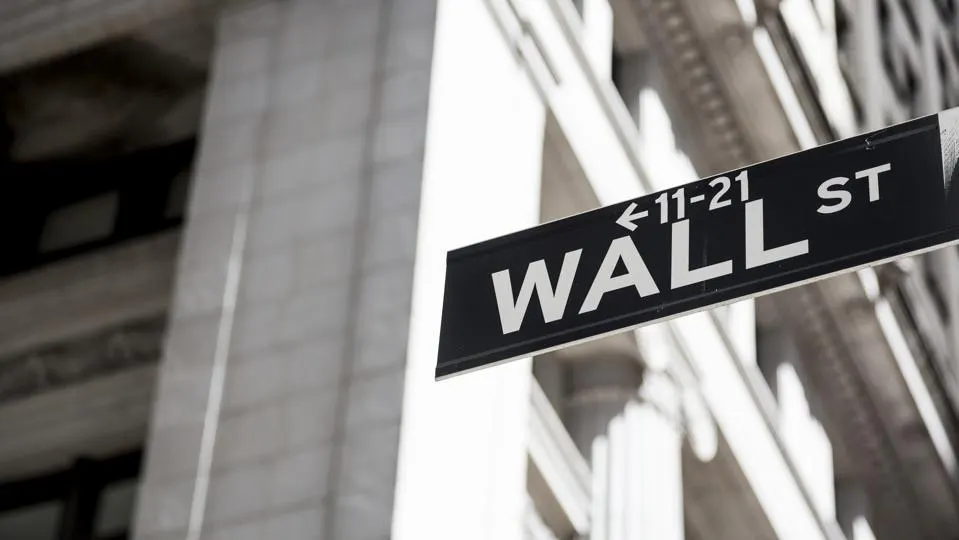


 OMG Please let this happen


 Merica, we’re taking it back.


 ️
 Trump2024


