Why didn’t the Roman’s get Dementia?

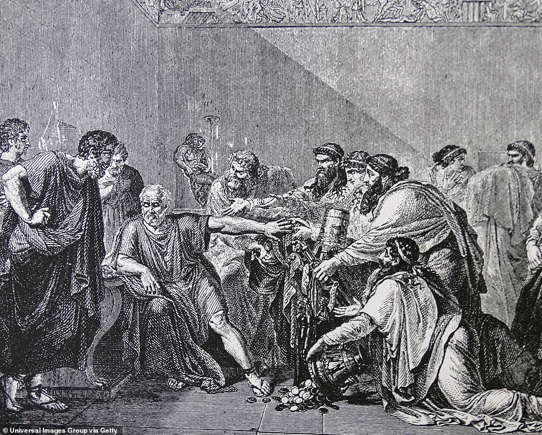
Dementia is probably a ‘modern disease’ because there are so few mentions of severe memory loss in ancient Greek and Roman medical texts, scientists say. Experts scoured writings from 2,000 to 2,500 years ago – the times of Aristotle, Galen and Cicero. Pictured: A picture of Hippocrates refusing presents from Artaxerxes I of Persia.

Ancient Greeks recognized that ageing commonly brought memory issues – today diagnosed as ‘mild cognitive impairment’. But there was no evidence of major loss of memory, speech and reasoning, as caused by Alzheimer’s and other types of dementia. Professor Caleb Finch, from the University of Southern California, pored over ancient medical writing by Hippocrates and his followers. 

The text catalogues ailments of the elderly such as deafness, dizziness and digestive disorders – but makes no mention of memory loss. Centuries later in ancient Rome, a few mentions do crop up. Galen remarked that at the age of 80, some had difficulty learning new things. And Cicero observed that ‘elderly silliness… is characteristic of irresponsible old men, but not of all old men.’

Professor Finch said the findings, published in the Journal of Alzheimer’s Disease, bolster the idea that Alzheimer’s is a product of modern living, mostly fueled by air pollution and sedentary lifestyles. He said: ‘There was a progression going from the ancient Greeks to the Romans.’ Professor Finch speculates that as Roman cities grew denser, pollution increased, which drove up cases of cognitive decline.

Researchers find simpler alternative to intermittent fasting (msn.com)

In our exploration of age-related dementia throughout history, a common belief is that this affliction is as old as humanity itself. However, research led by the University of Southern California (USC) suggests a different history behind this disease.
This study delves into classical Greek and Roman medical texts, revealing that severe memory loss, now almost epidemic, was surprisingly rare around 2,000 to 2,500 years ago. This finding strengthens the theory that Alzheimer’s and related dementias are
largely products of modern lifestyles and environments.

image.png
Factors like sedentary behavior and air pollution are significant contributors. 

Tracking dementia throughout history
Caleb Finch, the study’s first author and a University Professor at the USC Leonard Davis School of Gerontology, sheds light on the ancient Greeks’ understanding of memory issues.
“The ancient Greeks had very, very few – but we found them – mentions of something that would be like mild cognitive impairment,” said Finch.
They acknowledged mild cognitive impairments, akin to what we identify today, but nothing on the scale of Alzheimer’s, which involves substantial loss of memory, speech, and reasoning.
The study’s journey through ancient medical literature, including works by Hippocrates and his disciples, reveals intriguing insights.

These texts extensively catalog ailments common in older people,
such as deafness and dizziness, yet surprisingly omit significant memory loss.
However, as we shift to ancient Rome, the narrative changes slightly.
Notable figures like Galen and Pliny the Elder begin to document instances of memory decline in older populations.
For example, Galen observed learning difficulties in some 80-year-olds, while Pliny the Elder recounted a senator who forgot his own name. Cicero, too, noted a kind of “elder silliness,” though he didn’t associate it with all older men.
“When we got to the Romans, and we uncovered at least four statements that suggest rare cases of advanced dementia — we can’t tell if it’s Alzheimer’s. So, there was a progression going from the ancient Greeks to the Romans,” Finch explained.

Environmental factors and cognitive decline
Finch, alongside co-author Stanley Burstein, a historian at California State University,
Los Angeles, postulates that the denser Roman cities and increased pollution might have escalated cognitive decline cases.
The use of lead in cooking vessels, water pipes, and even wine sweetening by
Roman aristocrats likely exacerbated the issue, given lead’s neurotoxic properties.  
  To further their understanding, Finch didn’t limit his research to the ancient Western world. Lacking demographic data for ancient Greece and Rome, he turned to a modern comparison: the Tsimane Amerindians of the Bolivian Amazon.
The Tsimane’s pre industrial, physically active lifestyle mirrors that of the ancient civilizations, and significantly, they exhibit extremely low dementia rates.
An international team, including Margaret Gatz, a professor at the USC Leonard Davis School, found that only about 1% of older Tsimane people suffer from dementia, a stark contrast to the 11% incidence in the United States’ elder population.

Brain drain: How nasal and lymphatic drainage discovery could help end Alzheimer’s
Alzheimer’s month sheds light on new risk of the disease – Search Videos (bing.com)

Rethinking dementia in the light of history
In summary, this comprehensive study, bridging ancient texts and contemporary groups, underscores the profound impact of environmental factors on dementia risk throughout history.
The Tsimane community offers a valuable model for understanding how lifestyle choices influence cognitive health.

As Finch notes, their minimal dementia rates provide a template for asking critical questions about the environment’s role in this modern-day health challenge.
“The Tsimane data, which is quite deep, is very valuable,” Finch said. “This is the best-documented large population of older people that have minimal dementia, all of which indicates that the environment is a huge determinant on dementia risk.
They give us a template for asking these questions.”
This research revisits our historical understanding of dementia while providing suggestions for future studies, potentially reshaping our approach to preventing and managing this condition in the modern world. 

More about the history of dementia
As discussed above, dementia describes a group of symptoms affecting memory,
thinking, and social abilities severely enough to interfere with daily functioning.

Dementia is not a single disease but rather a general term that encompasses various specific medical conditions, including Alzheimer’s disease, observed throughout history.

This horrible infliction results from damage to brain cells, which affects their ability
to communicate with each other, thereby affecting behavior, feelings, and thoughts. 

image.png

Causes and risk factors
Several factors contribute to the development of dementia. Age is the most significant risk factor, with most cases occurring in people 65 years or older.
However, dementia can also affect younger people. Genetic factors play a role, as certain types of dementia run in families.
Other risk factors include smoking, excessive alcohol consumption, cardiovascular diseases, diabetes, and obesity. Traumatic brain injury may also increase the risk of developing certain types of dementia. 

Symptoms of dementia
The symptoms of dementia vary widely, depending on the cause and the area of the brain that’s affected.
Common signs include memory loss, difficulty in planning or solving problems, confusion with time or place, challenges in understanding visual images and spatial relationships, problems with speaking or writing, and changes in mood or personality.

As dementia progresses, individuals may have difficulty performing everyday tasks and may become more dependent on others for care.

Diagnosis and treatment
Diagnosing dementia involves a thorough medical evaluation, including medical history, physical examination, laboratory tests, and sometimes brain imaging studies.
While there is no cure for most types of dementia, treatment can help manage symptoms. Medications may be prescribed to improve symptoms related to memory, thinking, sleep disturbances, and behavior changes.
Non-pharmacological therapies, such as cognitive stimulation, exercise, and activities tailored to the individual’s interests and abilities, can also be beneficial. 

Living with dementia
Living with dementia poses significant challenges for individuals and their families.
It requires adjustments to living arrangements, daily routines & communication methods.
Support from healthcare professionals, social workers, and support groups can be invaluable in managing the disease.

Creating a safe, supportive environment and maintaining a routine can help individuals with dementia feel more secure and less confused.
In summary, dementia is a complex condition that affects millions of individuals and their families worldwide.
While it has been anecdotally present throughout human history, it has become increasingly common in the modern age.
Early diagnosis and appropriate care strategies can help improve the quality of life for individuals with dementia and provide support for their caregivers.
The full study was published in the Journal of Alzheimer’s Disease.
—–
Researchers find simpler alternative to intermittent fasting.
Can 16:8 intermittent fasting help you lose weight? What to know about the popular plan.
Why Intermittent Fasting (IF) May Be the Key to Anti-aging (msn.com)
How fasting fish could help scientist make us live longer (msn.com)
Study reveals the many benefits of intermittent fasting (msn.com)
Fasting and feeding cycle is crucial for healthy aging (msn.com)

Scientists from Monash University have identified a less stringent and
more manageable alternative to traditional intermittent fasting. It involves short-term isoleucine deprivation, – Search Videos (bing.com) which has shown remarkable results in fruit flies.

image.png

Why is dementia low in other parts of the world – Search Videos (bing.com)

The biggest reason why developed countries have a higher rate of dementia is that medical technology is better. People in these countries tend to live longer, so they live long enough to develop dementia. In developing countries, people do not have as long of a life expectancy. Therefore, the rate of dementia is lower.

The rates of dementia differ greatly around the world, from the lowest rates in Africa, India, and South Asia, to the highest rates in Western Europe and especially North America. Is it all just genetics? Well, the incidence of dementia and Alzheimer’s disease is significantly lower for Africans in Nigeria than for African Americans in Indianapolis, for example—up to five times lower.
Alzheimer’s rates of Japanese-Americans living in the U.S. are closer to that of Americans than to Japanese. When people move from their homeland to the United States, Alzheimer’s rates can increase dramatically. Therefore, when Africans or Asians live in the United States and adopt a Western diet, their increase in Alzheimer’s risk suggests that it’s not genetics.

Unfortunately, one doesn’t have to move to the West to adopt a Western diet. The prevalence of dementia in Japan has shot up over the last few decades. Mechanisms to explain this in Japan include increases in cholesterol, saturated fat, and iron from increases in the consumption of animal products. Traditional diets are generally weighted toward vegetable products such as grains and away from animal products. But since 1960, the diet in Japan has changed from a more traditional rice-based diet to one with a preponderance of meat. From 1961 to 2008, meat and animal fat increased considerably, whereas the rice supply dropped. The dietary factor most strongly associated with the rise in Alzheimer’s disease in Japan was the increased consumption of animal fat.

A similar analysis in China arrived at the same conclusion. As the authors of the Japan study (highlighted in the video, Alzheimer’s Disease: Grain Brain or Meathead?) note, on the basis of these findings, the rate of Alzheimer’s disease and dementia will “continue to rise unless dietary patterns change to those with less reliance on animal products.” This is consistent with data showing those who eat vegetarian appear two to three times less likely to become demented, and the longer one eats meat-free, the lower the associated risk of dementia.

Globally, the lowest validated rates of Alzheimer’s in the world are rural India, where they eat low meat, high grain, high bean, high carb diets. It’s possible that the apparent protective association between rice and Alzheimer’s is due to the fact that the drop of rice consumption was accompanied by a rise in meat consumption, but other population studies have found that dietary grains appear strongly protective in relation to Alzheimer’s disease. In other words, perhaps, don’t pass on the grain, but “pass the grain to spare the brain.”   Source: Where Are the Lowest Rates of Alzheimer’s in the World? (nutritionfacts.org)

A few previous videos on Alzheimer’s and maintaining cognitive function:
Alzheimer’s and Atherosclerosis of the Brain
Alzheimer’s May Start Decades Before Diagnosis
Saffron for the Treatment of Alzheimer’s
Alzheimer’s and Apple Juice
Does Coconut Oil Cure Alzheimer’s?
How to Slow Brain Aging By Two Years
More on the consequences of carbophobia here:
Atkins Diet: Trouble Keeping It Up
Paleolithic Lessons
Whole Grains May Work As Well As Drugs
Low Carb Diets and Coronary Blood Flow
-Michael Greger, M.D.
PS: If you haven’t yet, you can subscribe to my free videos here and watch
my live year-in-review presentations Uprooting the Leading Causes of Death,
 More Than an Apple a Day, From Table to Able, and Food as Medicine. 

Image result for toby keith interviews
His last interview was with news anchor Robin Marsh of KWTV.

Titled ONE-ON-ONE WITH TOBY KEITH, aired on Wednesday, January 24 and Thursday, January 25 on two different local news stations in Oklahoma. The first sneak peek of the interview was posted by News9 on January 20, and it was of Keith speaking about how important his faith has been during his cancer battle.

 Toby Keith Covel (July 8, 1961 – February 5, 2024), known professionally as Toby Keith, was an American country music singer, songwriter, record producer, and actor. In the 1990s, he released his first four studio albums—Toby Keith (1993), Boomtown (1994), Blue Moon (1996), and Dream Walkin’ (1997)—and Greatest Hits Volume One under Mercury Records. See more.
Quick Facts
Birth name Toby Keith Covel
Born July 8, 1961 · Clinton, Oklahoma, U.S.
Origin Moore, Oklahoma, U.S.
Died February 5, 2024 (aged 62) · Oklahoma, U.S.
Genres Country Toby Keith – Wikipedia

TOBY KEITH WAS one of the Nineties and 2000s most charismatic country artists, known for songs that were heavy in humor, romance, and patriotism — even when they were mixed with a heavy dose of post-9/11 jingoism — all of them delivered in a rich baritone that cut through the often-homogenized sounds of country radio. There was just no mistaking Keith’s voice.  Toby Keith American country music singer
Songs Albums Movies Quotes Interviews Biography

Movies Beer for My Horses 2008 Broken Bridges 2006
Darci Lynne: My Hometown Christmas 2018

3 types of cancer are affecting more young people, according to an expert. She shared how to lower your risk and catch signs early. (msn.com)

The 5 Longevity Exercises a Physical Therapist Recommends To Stay Strong and Pain-Free As You Age—No Equipment Required (msn.com)

Scientists have identified 5 of the healthiest foods for your gut — and some are probably already in your kitchen (msn.com)

This test can calculate your biological age for free. Here’s how it works — and how to interpret the results. (msn.com)

4 science-backed habits that will keep you mentally sharp into your 70s, from older adults who lived it (msn.com)
Not Sure Where To Start With Intermittent Fasting? The 16:8 Schedule Is A Good Start (msn.com)
8 Women Longevity Experts Who Are Spearheading the Science of Aging Well (msn.com)
Centenarians share their tips on living long and healthy lives after reaching 100 (msn.com)
Toby Keith had stomach cancer. Symptoms can be easy to miss, doctors say. (msn.com)
7-Day Walking Plan to Reduce Inflammation, Created by a Certified Trainer (msn.com)
Here is everything you need to know about the 20:4 intermittent fasting plan (msn.com)
Okinawa diet – 7 Japanese foods for longer lifespan and healthy lifestyle (msn.com)

California woman, world’s 2nd-oldest, celebrates her 116th birthday (msn.com)
Alzheimer’s Disease Facts and Statistics: What You Need to Know (msn.com)
The Okinawa diet: the Japanese secret to living to 100 years (msn.com)
How to Pick the Best Intermittent Fasting Schedule for You (msn.com)
12 Years of Data Link Popular Diet to Brain Boost | Watch (msn.com)
What Are the Stages of Parkinson’s Disease? (msn.com)
20 Foods That Can Help Unclog Your Arteries (msn.com)
18 Reasons Why Getting Older Is So Hard (msn.com)
The warning signs of Parkinson’s disease (msn.com)

XXXXXXXXXXXXXXXXXXXXXXXXXXXXX
Posted in Uncategorized | Leave a comment

Modern Day Holy War

EP Thompson: the idea of people possessing the capacity to act upon the world
was central to his life work.  © Photograph: Mirrorpix/Getty Images

What a legendary historian tells us about the contempt for today’s working class
Opinion by Kenan Malik • 8h

It is not often that, as a teenager, you get captured by a 900-page tome
(unless it has “Harry Potter” in the title). Even less when it is a dense book of history, telling in meticulous detail stories of 18th-century weavers and colliers, shoemakers
and shipwrights. Yet I can even now picture myself first stumbling across:
 EP Thompson’s The Making of the English Working Class Audio Book – in a bookshop. 
I had no idea about its cultural significance or its place in historiographic debates. I would not have known what “historiography” meant, or even that such a thing existed. But I can still sense the thrill in opening the book and reading in the first paragraph: “The working class did not rise like the sun at an appointed time. It was present at its own making.”
I did not know it was possible to write about history in that way. 
 I still have that old, battered, pencil-marked Pelican edition with George Walker’s engraving of a Yorkshire miner on the cover; a book into which I continue to dip, for the sheer pleasure of Thompson’s prose and because every reading provides a fresh insight.
Were Thompson still alive, he would have been 100 on Saturday. The occasion was marked by a small conference, in Halifax, a town in which Thompson lived for many years, while teaching in Leeds and writing his book. But beyond that, there has been little fanfare.
Still in print more than 60 years after it was first published, The Making of the English Working Class has acquired an almost mythic status.
Thompson himself, though, has faded from our cultural horizon. The historian Robert Colls noted a decade ago that when, in 2013, Jeremy Paxman asked, in the semi-finals of University Challenge, who wrote The Making of the English Working Class?, “nobody knew”. 
 Thompson’s most influential work was written at the high tide of working-class influence in British politics. Today, the old industrial working class, about the making of which Thompson wrote, has largely been unmade, politically marginalised and stripped of its social power. Few regard class as a fertile concept in historical thinking, fewer still as a foundation for progressive politics. Yet the very shifts that have led to the contemporary neglect of Thompson also make his arguments significant.
At the heart of Thompson’s book is a reimagining of class and class consciousness.
Class, he wrote, was “not a thing”, or a “structure”, but a “historical phenomenon” through which the dispossessed “as a result of common experiences (inherited or shared), feel and articulate the identity of their interests as between themselves, and as against other men whose interests are different from (and usually opposed to) theirs”.

Thompson was arguing against both the conservative view of class relations as describing “the harmonious coexistence of groups performing different ‘social roles’” and a form of economic determinism that imagines, as he put it later in an interview, that “some kind of raw material like peasants ‘flocking to factories’” could be “processed into so many yards of class-conscious proletarians”. For Thompson, the working class “made itself as much as it was made”. This idea of agency, of people, even in the most auspicious circumstances, possessing the capacity to act on the world was central to his life work.

image.png

His book is not only a magnificent work of historical excavation but also a sumptuous tribute to the human spirit. Thompson was a Marxist, a member of the Communist party who left in disgust in 1956, after the Soviet suppression of the Hungarian revolution, and helped found the New Left.
His Marxism was, however, leavened by two other traditions, that of radical Protestantism, from the 17th-century Levellers and Diggers to the later dissenters such as Quakers and Baptists, and of Romanticism, most powerfully articulated by William Blake, the subject of Thompson’s final, posthumously published, book. This dissenting, romantic Marxism is deeply imprinted in Thompson’s historical scholarship, his polemical debates and his political activism.

The most celebrated line from The Making of the English Working Class is Thompson’s avowal “to rescue the poor stockinger, the Luddite cropper, the ‘obsolete’ hand-loom weaver, the ‘utopian’ artisan” from the “enormous condescension of posterity”. What he meant was that from our vantage point, a movement such as the Luddites, textile workers who, in the early 19th century, opposed the introduction of new machinery, and destroyed them, might seem backward and irrational, their very name a byword for senseless opposition to technological innovation. Yet theirs was not, in Thompson’s eyes, “blind opposition to machinery,” but rather a fight against the “‘freedom’ of the capitalist to destroy the customs of the trade, whether by new machinery, by the factory-system, or by… beating-down wages”.
All these themes are perhaps even more relevant today than they were when Thompson wrote his book. His understanding of class not as a thing but as a relationship, and one not given but forged out of struggle, is as meaningful to this post-industrial age as it was in the analysis of the coming of industrialisation.

Thompson’s empathy with those forced to struggle on an inhospitable social terrain has lessons for us, too. Today, the issue is the enormous condescension not of posterity but of the present: the contempt for working-class people, the hostility to benefit “scroungers”, the derision of those forced to use food banks, the indifference to injustice.
It is visible also in the scorn for the supposed bigotry and conservatism of the working class or in the disdain of those who voted the wrong way or have become disillusioned
with the left. Thompson’s insistence that “their aspirations were valid in terms of their own experiences” is as necessary to acknowledge now as it was then.
There are, as critics have pointed out, holes in Thompson’s narrative.
Women are largely absent in The Making of the Working Class, as is the wider world, especially the impact of slavery and colonialism on class consciousness, which is odd given the influence of working-class radicals on the abolition movement. There are times, too, when Thompson’s Romanticism shades uncomfortably close to a despair about modernity.

Nevertheless, for all the criticisms: 
The Making of the English Working Class is not only a magnificent work of historical excavation but also a sumptuous tribute to the human spirit, to the capacity of people to transcend their circumstances and collectively to envision a better world. “The art of the possible,” as Thompson wrote, “can only be restrained from engrossing the whole universe if the impossible can find ways of breaking back into politics, again and again.”
• Kenan Malik is an Observer columnist

image.png

17 Religious Facts People Get Wrong All The Time (msn.com)


“Modern Day Holy War” By @NicoleNogrady OUT NOW!

Put on the Armor of God 👑🛡️🗡️ in Ephesians 6-13 Believe in Word of God and Sin No More! Repent! Confession is a Cleansing for the Soul and an Exorcism from a Catholic Priest to protect you from Satan and his Demons as long as you live

by the Ten Commandments ⬆️✨♥️👑✨🕊️ 

Modern Day Holy War 🎶 must have been Spirit lead.
 #NicoleNogrady Excellent song and video!


I really love it TY 4 all ☮️👍🫶💐


“Modern Day Holy War” By @NicoleNogrady OUT NOW! – Search Videos (bing.com)

Love this song and hopefully it will help wake more people up!!

Excellent job @MaxEvans 👏👏👏👏 

Definitely worth the wait!!!
I will share this far and wide. May God save America and the children 🙏❤️🇺🇸🇺🇸🇺🇸🇺🇸

Excellent! One video and song capture the secret war being thrust upon us.
If we share, share, share , maybe this will wake some more people up.

My “weapon of choice” is Prayer. If you want to fight the battle to save America, join me
in this manner. “If my people, who are called by my name, shall humble themselves, and pray, and seek my face, and turn from their wicked ways; then will I hear from heaven,
and will forgive their sin and will heal their land.”

– 2 Chronicles 7:14 (KJ2000) ✝️✡️🕊️

Good vs evil. If you aren’t on God’s side, you are doomed.
Repent, sin no more and believe in the light!

@NicoleNogrady If I see you at TP USA this weekend, I’d love to give you this book.
There’s a place in Phoenix called Canaan in the desert that is run by Lutheran nuns.
It has the stations of the cross and prayer benches. They also have a chapel where
you can go and pray. It’s about 15-20 minutes from the convention center.

image.png

Very beautiful and wonderful song, and if Trump is in it, you can always know that the United States will always stay with Jesus Christ, He’s gotten back to the constitution which is written for God, and We came here to set up a government that’s ALWAYS supposed to put Jesus First, and Then Everything else will fall into place, because He’s told us that He would always take Care of his People, so who do You think GOD IS TALKING ABOUT? WOULD IT BE THE SCUM COMMIE DEMONRATS? OR THE CHRISTIANS OF THIS GREAT COUNTRY, ALIEN YOURSELVES WITH THE ONE TRUE GOD, BECAUSE IN THE END THERE IS NOTHING THAT HE CAN’T DO. SO PRAY FOR THE UNITED STATES TO GET BACK THE GLORY WE ONCE HAD, BUT WE’VE GOT TO GET BACK TO THE SAVING GRACE OF OUR LORD, JESUS CHRIST!

There is no life without GOD

It’s right on target . We have an illegitimate criminal and his family inserted in the WH. They have no morals or values and no respect for decency in using each other for sex.
Bwt the father showering with daughter like it’s normal molesting her and Jill allows it
and it’s a mental illness and incest is against the law. This family thinks it’s normal!
Pretending to be RC yet he allows the FBI to spy on RC and try to get priests to target the people going to confession! Stupidity on how that is an abomination probably suggested by Obama a Christian hater who pretends to be Christian ! This family has the values of a backwoods family who wallow in gross sexual activity with family members and drugs !


Some may ask What does Notre Dame burning have to do with a holy war? Or contrails?
So called holy war is when jewish satanic American Ziofascists with hands of new Roman fake-protestant-so-called-Christians are actually sponsoring and conducting genocides of orthodox real-Christians all across Asia ? 

Reject Zionism Evangelicals ☦️ Ο Καιρός Γαρ εγγύς

FBI director warns antisemitism in US reaching ‘historic levels’ (bbc.com)


image.png
The True face of LGBTQ! Bunch of freaks in this world!! It is evil and not compatible with a decent society nor true Christianity! This is a taste of what God destroyed Sodom for. Mr @realDonaldTrump we must not condone such immorality and those in Colorado are guilty of RICO law violations. http://www1.cbn.com/cbnnews/us/202…


Here’s another one for inspiration!!💪🇺🇸 https://www.worshiptogether.com/songs/courageo…

Very awesome song and sadly so true. Hopefully there will be many many people who hear this and listen to the words and will spread the song https://youtu.be/9d4ui9q7eDM?si…    Leftards rail against Christians for wanting a world with more babies in it.
Leftards silent on the sexual abuse of children by the rich and powerful elites. ABSOLUTELY 💯 🙏


Beautiful and I do believe this might be the end of times.
I pray every day for our country and President Trump!


Absolutely true!❤️🙏🏻🇺🇸👏🏻🙏🏻👍🏻💯


Biden’s war on working women (msn.com)
NYC migrant homeless explosion proves the city can’t take much more (msn.com)
Democrats have been encouraging Biden to come after states’ rights: Kristi Noem

Bill Clintons Favorite Movie – Search (bing.com)
High Noon at 70: the politically loaded anti-western adored by US presidents.
The bulk of High Noon, then, is Kane meandering around town, searching for enough men to form the 12-14 person posse necessary to stamp out the threat. His most obvious right hand is his young deputy Harvey (Lloyd Bridges), a temperamental hothead who’s still bitter about Kane passing him over as his successor.
All the drunks and scalawags at the saloon are either too inebriated or cowardly to volunteer, or they’re holding some grudge against Kane from his tenure.
The congregants at church are more sympathetic to Kane’s cause, but some wonder
why they’re being asked to do the job of lawmen or why Kane doesn’t just leave town as planned. If Miller’s beef is with Kane, then his departure would save them all from danger, right?

image.png
Posted in Uncategorized | Leave a comment

Counter-Reformation

The Reformation Spreads and the Counter-Reformation | Rick Steves Classroom Europe

Five hundred years ago, Martin Luther kicked off the Protestant Reformation, which contributed to the birth of our modern age. In this one-hour special, Rick Steves visits
key sites relating to the Reformation and explores the complicated political world of 16th-century Europe — from indulgences to iconoclasts. It’s a story of power, rebellion, and faith that you’ll never forget. Video has closed captions. Special | 55m 37s

Luther’s call for reform inspired others to do the same (Zwingli, Calvin, Knox, and Ignatius). Some kings found it lucrative to break with the Church. The Church retaliated with the Counter-Reformation, using propaganda and intimidation to bring back worshippers.

RICK STEVES’ EUROPE Luther and the Reformation – Search (bing.com)

Rick Steves’ Europe | Luther and the Reformation | PBS

Most Christian States 2024 (worldpopulationreview.com)

©Provided by ISoldMyHouse

#1 Alabama (89% Christian) 
Alabama has the highest percentage of Christians among these states. The Evangelical Protestant community is particularly strong, constituting 49% of the population. Historically Black Protestants also form a significant group at 16%. The state has a smaller Catholic community (7%), and 12% of Alabamians are unaffiliated.
#2 Louisiana (87% Christian)
Louisiana stands out with its diverse Christian community, which includes a significant Catholic presence (26%), Evangelical Protestants (27%), and a notable Historically Black Protestant community (22%). The state has a relatively small unaffiliated population at 13%.
#3 Mississippi (85% Christian)
Mississippi has the highest percentage of Christians among these states, with a significant presence of Evangelical Protestants (41%) and Historically Black Protestants (24%). The state also has a small Catholic community (4%). Unaffiliated individuals make up 14% of the population.
#4 South Dakota (84% Christian)
South Dakota’s Christian population is diverse, with Mainline Protestants (32%) and Evangelical Protestants (25%) forming significant portions. Catholics account for 22% of the state’s population. The unaffiliated community makes up 18%.
#5 Tennessee (83% Christian)
In Tennessee, Evangelical Protestants make up the largest Christian group at 52%, one of the highest percentages in the nation. Mainline Protestants and Historically Black Protestants also have a significant presence. The unaffiliated segment comprises 14% of the population.
#6 Iowa (82% Christian)
Iowa’s Christian population is diverse, with Mainline Protestants (30%) and Evangelical Protestants (28%) forming the majority. Catholics make up 18% of the state’s religious demographic. Around 21% of Iowans are unaffiliated.
#7 Arkansas (82% Christian)
Arkansas has a strong Evangelical Protestant community, comprising 46% of the population. Mainline Protestants and Historically Black Protestants also form significant parts of the religious landscape at 16% and 8%, respectively. The unaffiliated group accounts for 18%.
#8 West Virginia (81% Christian)
West Virginia’s religious landscape is dominated by Evangelical Protestants (39%) and Mainline Protestants (29%). The state has a small Catholic presence (6%).   A significant portion of the population, 18%, is unaffiliated.
#9 Georgia (81% Christian)
In Georgia, Evangelical Protestants form the largest Christian group at 38%, followed by Historically Black Protestants at 17%. The state also has a notable Mainline Protestant community (12%). Approximately 18% of the population is unaffiliated with any religion.
#10 Oklahoma (81% Christian)
Oklahoma’s Christian population is primarily Evangelical Protestant (47%) and Mainline Protestant (18%). The state has a smaller Catholic community (8%). About 18% of Oklahomans are unaffiliated with any religion.
#11 North Dakota (81% Christian)
North Dakota has a diverse Christian community, with Catholics (26%) and Evangelical Protestants (22%) being significant. The state also has a substantial Mainline Protestant presence (28%). The unaffiliated population accounts for 20%.
#12 South Carolina (80% Christian)
South Carolina’s religious landscape is dominated by Evangelical Protestants (35%) and Mainline Protestants (16%). Catholics form a smaller part of the population (10%). Around 19% of the state’s residents are unaffiliated.
#13 North Carolina (79% Christian)
In North Carolina, Evangelical Protestants make up the largest Christian group (35%), followed by Mainline Protestants (19%). The state also has a substantial number of unaffiliated individuals (20%).
#14 Kansas (79% Christian)
Kansas features a significant Evangelical Protestant presence (31%) and a notable Mainline Protestant community (24%). Catholics account for 18% of the state’s population. The unaffiliated segment comprises 20% of the population.
#15 Kentucky (79% Christian)
Kentucky is predominantly Christian, with a large Evangelical Protestant community (49%) and a smaller Catholic population (10%). Mainline Protestants also form a notable part of the religious landscape (11%). The state has a moderate number of unaffiliated individuals (22%).
#16 Nebraska (78% Christian)
Nebraska has a balanced Christian demographic with Catholics (23%), Evangelical Protestants (25%), and Mainline Protestants (24%) forming significant portions. The state has a relatively small percentage of unaffiliated individuals (20%).
#17 Missouri (78% Christian)
In Missouri, Evangelical Protestants (36%) and Mainline Protestants (16%) are the predominant Christian groups. Catholics also form a significant portion of the religious landscape (16%). Around 20% of the state’s population is unaffiliated.
#18 Utah (77% Christian)
Utah is unique for its high percentage of Mormons, who constitute 55% of the state’s population, the highest in the nation. Other Christian denominations like Evangelical Protestants (7%) and Catholics (5%) are also present, but to a lesser extent. The unaffiliated community accounts for 22%.
#19 Texas (77% Christian)
Texas has a diverse religious landscape, with Catholics (23%) and Evangelical Protestants (31%) forming the largest Christian groups. The state also has a noticeable portion of its population unaffiliated with any religion (18%).
#20 Rhode Island (77% Christian)
Rhode Island stands out with a high percentage of Catholics (42%), which is one of the highest in the nation. The state also has a significant number of Mainline Protestants (14%) and a modest unaffiliated population (20%).
#21 New Mexico (77% Christian)
In New Mexico, Catholicism plays a significant role, representing 34% of the state’s Christian population. The Evangelical Protestant community also has a notable presence, accounting for 23%. Mainline Protestants make up 14%, illustrating a diverse Christian landscape. New Mexico’s religious diversity is further enriched by a modest 21% of its population being unaffiliated, showcasing the state’s blend of traditional religious beliefs and modern secular perspectives.
#22 Minnesota (76% Christian)
Minnesota’s Christian population is primarily made up of Catholics (22%) and Mainline Protestants (29%). The state has a relatively low percentage of unaffiliated individuals (20%) compared to others in this list.
#23 Virginia (75% Christian)
Virginia has a balanced Christian demographic, with Evangelical Protestants (30%) and Mainline Protestants (16%) being significant. The state also has a sizable group of unaffiliated individuals (20%) and a modest representation of other religions.
#24 Pennsylvania (75% Christian)
Pennsylvania’s Christian community is diverse, with Catholics (24%) and Mainline Protestants (23%) forming significant portions. Evangelical Protestants are also a notable group (19%). Around 21% of the state’s population is unaffiliated with any religion.
#25 Illinois (75% Christian)
In Illinois, the Christian population is quite varied, with Catholics (28%) and Evangelical Protestants (20%) being prominent. The state also has a significant Mainline Protestant community (16%) and a relatively small percentage of unaffiliated individuals (22%).
#26 Ohio (75% Christian)
Ohio’s religious demographics show a balance among various Christian denominations, with Evangelical Protestants (29%), Catholics (18%), and Mainline Protestants (17%) making up the majority. The state has a notable portion of unaffiliated individuals (22%).
#27 Indiana (74% Christian)
In Indiana, the Christian community is predominantly Evangelical Protestant, accounting for 31% of the population. This reflects the state’s strong traditional and conservative religious roots. Mainline Protestants 16% and Catholics 18% have a significant presence, respectively, showcasing a diverse Christian landscape. The state has a modest number of unaffiliated individuals, about 26%, indicating a still vibrant religious engagement among its residents. Indiana’s Christian demographic illustrates a blend of various denominational influences shaping its religious culture.
#28 Wisconsin (73% Christian)
Wisconsin has a substantial Catholic population (25%) and a notable Evangelical Protestant community (22%). Mainline Protestants also form a significant part of the religious landscape (18%). About a quarter of the population is unaffiliated.
#29 Michigan (73% Christian)
Michigan’s Christian community is diverse, with Catholics (18%) and Evangelical Protestants (25%) being the most prominent groups. The state also has a significant number of people unaffiliated with any religion (24%).
#30 Delaware (72% Christian)
In Delaware, Catholics form 22% of the population, followed by a strong Mainline Protestant presence (21%). The state has a relatively high percentage of people affiliated with Judaism (3%) and a notable number of unaffiliated individuals (23%).
#31 Connecticut (72% Christian)
Connecticut has a dominant Catholic presence, comprising 33% of the state’s population. Mainline Protestants are also significant at 17%. The state has a notable Jewish community (3%), and 23% of its population is unaffiliated with any religion.
#32 Wyoming (72% Christian)
Wyoming has a varied Christian population, with Evangelical Protestants (27%) and Mainline Protestants (16%) being the most prominent groups. It’s unique for its relatively high percentage of Mormons (9%) and those unaffiliated with religion (26%).
#33 Maryland (71% Christian)
Maryland has a balanced Christian demographic with Evangelical Protestants (18%), Historically Black Protestants (16%), and Catholics (15%) making up significant portions. The state also has a notable Muslim community (2%), and 23% of its residents are unaffiliated.
#34 Florida (71% Christian)
In Florida, Catholics (21%) and Evangelical Protestants (24%) form the bulk of the Christian population. The state has a considerable Jewish community (3%), and those unaffiliated with any religion make up 24% of the population.
#35 Idaho (70% Christian)
Idaho’s Christian community is quite varied, with Evangelical Protestants (21%) and Mainline Protestants (16%) leading the numbers. The state stands out for its high percentage of Mormons (19%), which is one of the highest in the nation. A quarter of the state’s population is unaffiliated with any religion.
#36 New Jersey (69% Christian)
This state has a diverse religious makeup, with a significant Catholic majority (34%) within the Christian population. New Jersey also has a notable Jewish community, accounting for 6% of the population. The unaffiliated segment is relatively small at 18%.
#37 Arizona (68% Christian)
Arizona has a strong Catholic presence (21%) and a substantial Evangelical Protestant community (26%). Interestingly, it has a higher percentage of people affiliated with other world religions (2%) and a considerable number of unaffiliated individuals (27%).
#38 Nevada (67% Christian)
Nevada’s Christian population is primarily Catholic (25%) and Evangelical Protestant (20%). The state has a diverse religious landscape with Muslims and Jews each constituting 1% of the population, and a significant 28% identifying as unaffiliated.
#39 Montana (67% Christian)
In Montana, Evangelical Protestants make up the largest Christian group (28%), followed closely by Catholics (17%). The state has a relatively high percentage of people affiliated with other world religions (4%) and those unaffiliated (30%).
#40 Washington DC (66% Christian)
D.C. is unique with a significant Historically Black Protestant community (23%) and a considerable Catholic presence (20%). It’s also notable for its Jewish (5%) and Muslim (2%) populations. A quarter of its residents are unaffiliated with any religion.
#41 Alaska (65% Christian)
Alaska’s religious landscape is quite diverse. The state has a significant Catholic population (16%) and a notable Evangelical Protestant presence (22%). Interestingly, Alaska has one of the higher percentages of Mormon followers (5%) compared to other states. A substantial 31% of Alaskans are unaffiliated with any religion.
#42 Washington (64% Christian)
In Washington, the Christian community is diverse, with Evangelical Protestants (25%) and Catholics (17%) being the most prominent groups. The state also has a relatively high percentage of people affiliated with other world religions (3%) and those unaffiliated (32%).
#43 California (64% Christian)
California’s Christian population is primarily Catholic (28%) and Evangelical Protestant (20%). The state also has a diverse religious landscape with notable proportions of Buddhists (2%), Hindus (2%), and Jews (2%). A significant portion of the population is unaffiliated (27%).
#44 Hawaii (64% Christian)
Hawaii’s religious landscape is diverse, with a notable proportion of Buddhists (8%) and a significant Christian population consisting mainly of Catholics (20%) and Evangelical Protestants (25%). A considerable portion of the population is unaffiliated with any religion (26%).
#45 Colorado (64% Christian)
Colorado has a significant Evangelical Protestant presence (26%) and a notable Catholic community (16%). Mainline Protestants are also a considerable group (15%). The state has a relatively high percentage of unaffiliated individuals (29%). s (5%).
#46 Maine (63% Christian)
In Maine, Mainline Protestants form a significant part of the religious landscape (21%), along with Catholics (21%). The state has a relatively high percentage of unaffiliated individuals (31%) and a notable presence of other world religions (5%).
#47 Oregon (62% Christian)
Oregon has a strong Evangelical Protestant community (29%) and a considerable number of Mainline Protestants (13%). The state is also known for its high percentage of unaffiliated individuals (31%) and a notable presence of other world religions (3%).
#48 New Hampshire (61% Christian)
Similar to Vermont, New Hampshire has a large group of people who are unaffiliated with any religion (36%). Catholics make up the largest Christian denomination at 26%, and there’s a notable presence of Buddhists and Hindus, each at 1%.
#49 New York (61% Christian)
A melting pot of cultures and religions, New York’s Christian population is mainly Catholic (31%). The state stands out for its Jewish community, which makes up 7% of the population. Those unaffiliated with any religion account for a significant 27%.
#50 Massachusetts (59% Christian)
A state with a rich historical connection to American religious movements, Massachusetts has a strong Catholic majority within the Christian population at 34%. The state also has a substantial number of people identifying with other faiths (32%), including Jews (3%) and Hindus (1%).
#51 Vermont (57% Christian)
Known for its liberal and secular leanings, Vermont has a relatively high percentage
of unaffiliated individuals (37%) and also a significant proportion of Buddhists (1%).
Catholic presence is notable at 22%, while Mainline Protestants constitute 19%.

image.png
Cancer Rates by State 2024 (worldpopulationreview.com)

Cancer is the second-leading cause of death in the United States, coming only behind heart disease. One out of every four deaths in the U.S. is from cancer. Cancer is a disease that occurs when abnormal cells divide and begin to destroy body tissue. Cancer can affect nearly any part of the body. Some cancers can also shed cells into the bloodstream and spread throughout other parts of the body. Cancer tends to be more prevalent in high-income countries, including the United States, due to lifestyle factors. 
These include smoking, obesity, and alcohol intake and not religious affiliation. 
However, in Loma Linda California the residents there live to great longevity and
are considered a Blue Zone. The Seventh-day Adventists in Loma Linda, California (USA): 
The Seventh-day Adventists are a very religious group of people.
They’re strict vegetarians and live in tight-knit communities.
 Although these are the only areas discussed in Buettner’s book,
there may be unidentified areas in the world that could also be Blue Zones.
A number of studies have found that these areas contain extremely high rates of nonagenarians and centenarians, which are people who live over 90 and 100, respectively (1Trusted Source, 2Trusted Source, 3Trusted Source).

Interestingly, genetics probably only account for 20–30% of longevity.
Therefore, environmental influences, including diet and lifestyle, play a huge role
in determining your lifespan (4Trusted Source, 5Trusted Source, 6Trusted Source).
Below are some of the diet and lifestyle factors that are common to people
who live in these Blue Zones. Loma Linda Blue Zone Lifestyle – Search (bing.com) 
Because these factors vary significantly from state-to-state, so do cancer rates.  

What is the Six Blue Zone – Search (bing.com)
Why People in “Blue Zones” Live Longer Than the Rest of the World (healthline.com)
The World’s 6th Blue Zones Region – an Engineered Longevity Hotspot – Blue Zones
Nine Healthy Life Habits shared by people who’ve lived the longest lives. 
The Blue Zones – secrets to a long and healthy life – The Endocrine Doc


image.png
Posted in Uncategorized | Leave a comment

I’ve visited 59 US National Parks alone.

Over the past 10 years, I’ve traveled to 59 National Parks. Emily Hart

Over the past 10 years, I’ve traveled alone to 59 of the 63 major National Parks.
First-time travelers often don’t realize they have to secure reservations ahead of time. 
It’s also important for visitors to respect the land, the wildlife, and their own physical limits. 

USUALLY THOSE WITH A FEARLESS ADVENTURSOME SPIRIT DO WELL AS A CANCER SURVIVOR. I’ve traveled solo to 59 US National Parks. Here are my 10 best
tips for first-time visitors. (yahoo.com)  

I’ve visited 59 US National Parks alone.
Here are 8 mistakes I see first-time travelers make.
Emily Hart – Business Insider
October 14, 2023, 12:24 PM  
  
Nearly a decade ago, I woke up in the middle of the night thinking that I should travel
to the Grand Canyon solo — the first National Park on what would become a yearslong personal quest. As I got in the car and headed southwest, I, admittedly, didn’t know much — I just knew I needed to go.

I brought my first backpack and a water bottle on the road (but forgot to bring any food) and spent days exploring the park. Only later did I realize how woefully unprepared I was.
Since that trip, I’ve traveled to 59 of the 63 major National Parks, hundreds of National Parks Service sites, and all 50 US States completely solo. 
 To say I’ve learned a lot in that time would be a gross understatement. Travel is a teacher, and of course, female solo travel adds another layer of complexity that has kept me on my toes.
With my experience, I’m hyper-aware of what is needed to make a National Park trip successful. Here is my advice on how a first-time traveler can easily mitigate mistakes. Emily, wearing a pink shirt, sunglasses, and a bandana around her neck, smiles in front
of giant arches at Arches National Park.

image.png
Travelers should always check to see if a park 
requires reservations in advance. Emily Hart

Reservations and timed-entry permits are the new normal for several of the
most visited US National Parks. Because it’s still a relatively new system,
I often see travelers turned away at the gates because they’re unaware they need a reservation.
Although there are occasionally workarounds when a traveler can enter those parks without a reservation, navigating them is frustrating and often leaves travelers looking
for backup options instead of the trip they envisioned. It’s crucial to research the entry requirements long before your visit, especially in the busy summer months.

Waiting until the last minute to book lodging or campgrounds.


image.png
Visitors should also secure reservations for campgrounds in advance. 

When considering a trip to the National Parks, many people think of freedom and spontaneity. Although that can undoubtedly be a part of the experience, travelers shouldn’t wait until the last minute to secure lodging or campgrounds.
The booming popularity of National Parks has brought shortages of lodging
and full campgrounds (many of which also require reservations in advance).
Making reservations far in advance is the best way to save yourself any hassle
(and likely some money on last-minute accommodations).

Relying on cell service or Wi-Fi for navigation.

image.png
Never rely on Wi-Fi to navigate the parks. 

Although some National Parks have cell service and Wi-Fi, you should never count on either being available. I always encounter travelers at visitor centers and shops in the parks begging for a Wi-Fi password that they cannot access or does not exist.
It’s essential to download offline navigation before entering a park,
as there’s no guarantee you’ll be able to otherwise.

Hiking without proper gear or enough water.

image.png
A good backpack is a must-have on any National Park trip. 

First-time visitors at a National Park don’t usually participate in overly technical or strenuous hikes. However, I recommend bringing a few items to stay safe. I often see visitors hiking in flip-flops or heels without any water or supplies. Even on a relatively short hike, anything could happen.
For anything longer than a quick trip, I always pack the essentials — navigation, sun protection, a headlamp, a first aid kit, knife, fire, shelter, extra food, water, and clothes. Going off-trail and not following the principles of Leave No Trace.

image.png
Stay on posted trails while exploring the parks. 

If you’re on social media, you’ve likely seen viral photos and videos of bad behavior in the parks. Unfortunately, this behavior seems to be escalating with increasingly bold visitors.
In nearly every circumstance in a park, visitors should stay on posted trails.
Travelers should also become familiar with the seven principles of Leave No Trace,
which provide guidelines for visiting the parks in a respectful manner.

Venturing too close to wildlife.

image.png
Be sure to observe wildlife from a safe distance. 

It’s shocking how close some National Park visitors will get to dangerous wildlife like bears and moose for a selfie or a thrill.The rule of thumb is always to stay at least 25 yards from wildlife and 100 yards from predators.

Arriving at popular parks late in the day.

image.png 
Arrive early to avoid crowds and high temperatures. 

I always recommend entering a National Park as early as possible for several reasons.
Arriving early helps to mitigate crowds, as there will likely be fewer people around earlier in the day.
The morning hours will also be the most tolerable for spending time outside, especially when traveling in the summer. Every year, visitors encounter health emergencies and even death by hiking in the afternoon hours of a hot day.

Pushing beyond physical limits.

image.png
Know your limits and take breaks when needed. 

As a Colorado resident, the biggest mistake I see visitors make is pushing themselves beyond their physical limits. For example, if a visitor is not acclimated to higher altitudes,
a hike that seems easy or moderate on paper can become extraordinarily strenuous and even dangerous.
Knowing and respecting your physical limits is important when venturing into the parks.
9 National Parks That Are Still Overrun with Tourists (And Where to Go Instead)

9 awesome National Parks you can do in a day (msn.com)
These Are The 10 Oldest National Parks In The United States (msn.com)
15 Facts You Probably Didn’t Know About America’s National Parks (msn.com)
Story by Mackenzie Jervis • 

Read More TRAVEL
I’ve traveled solo to nearly every US National Park. These 7 are my favorite hidden gems.
I’m a park ranger. I always saw visitors make these 5 mistakes at state and national parks.
10 of the most beautiful places in the US, according to someone who’s been to all 50 states

20 Best Van Life YouTubers Who Will Give You Wanderlust – UpViews – Blog

The Best Travel Vans Make Life on The Road Fun And Easy (msn.com)
Famous people who live van life – Search (bing.com)
Ameinavan – Search (bing.com)

Posted in Uncategorized | Leave a comment

Transforming Medicine

Shannen Doherty and Dr. Amin Mirhadi on her Let’s Be Clear podcast. Instagram

Shannen Doherty says she was afraid radiation might change her personality,
sharing that she worried that she would come out of treatment a different person.
Doherty did not say on her podcast exactly what infusion she is receiving.
In addition to the infusion, the actress said she is also undergoing radiation treatments, beams of intense energy meant to destroy tumor cells.

Research shows that long-term side effects of radiation can sometimes include mood or cognitive changes, as well as memory issues. Doherty described being scared of potential side effects of the radiation treatments she is receiving, saying, “I was petrified of, you know, is it going to change who I am?”

 Doherty shared a positive update on her treatment for stage 4 breast cancer 
thanks to what the “Beverly Hills, 90210” star called a “miracle” treatment.
“I’m on a new cancer infusion, and after four treatments, we didn’t really see a difference, and everybody wanted me to switch, and I just kind of was like we’re going to keep going with this and see,” Doherty said in a conversation While welcoming her radiation-oncologist, Dr. Amin Mirhadi, on Monday’s episode of her “Let’s Be Clear” podcast.

“After the sixth or seventh treatment, we really saw it breaking down the blood-brain barrier. Do I call that a miracle? For me, that happens to be a miracle right now, that, like, I sort of rolled the dice and said let’s keep going,” she said. Doherty did not name the exact infusion treatment she is undergoing, but she described it as a positive step in her ongoing battle with cancer.

MORE: Shannen Doherty gives update on stage 4 cancer: ‘I’m not done with living’

The success of the treatment may be “God intervening and being like I’m going to give her a break,” she added “radiation can be a very scary thing, especially when it’s to your brain, of course.” Shannen Doherty shared a positive update on her treatment for stage 4 breast cancer thanks to what the “Beverly Hills, 90210” star called a “miracle” treatment.
“I’m on a new cancer infusion, and after four treatments, we didn’t really see a difference, and everybody wanted me to switch, and I just kind of was like we’re going to keep going with this and see,” Doherty did not name the exact infusion treatment she is undergoing, but she described it as a positive step in her ongoing battle with cancer.

“After the sixth or seventh treatment, we really saw it breaking down the blood-brain barrier. Do I call that a miracle? For me, that happens to be a miracle right now, that,
like, I sort of rolled the dice and said let’s keep going,” she said.

The success of the treatment may be “God intervening and being like I’m going to give her a break,” she added. “I was petrified” and wondered, “‘Is it going to change who I am?’ That was, as you know, a big concern of mine.”

The Beverly Hills, 90210 alum, 52, added that she asked her doctor,
“Are you going to zap something? Am I not going to think as quickly?”
Doherty also said that she joked with her doctor about a desired side effect of the surgery — she hoped he would “touch the part of the brain that made me speak eight fluent languages.”

“He ignored me,” she deadpanned.
She was first diagnosed with breast cancer in 2015. Since then, Doherty — who 
underwent brain surgery and radiation last January — been open about her health journey. In a November PEOPLE cover story, the former Charmed star revealed that the cancer had spread to her bones — and she’s looking to “squeeze out another 3 to 5 years of life” while living with Stage 4 cancer.

She’s talked about the highs and lows of her journey, and on Monday’s podcast,
she revealed that her doctor gave her a photo of her “brain opened up.”

Related: CNN Anchor Sara Sidner Reveals Stage 3 Breast Cancer Diagnosis:
‘I Love My Life More Now’ (Exclusive)
Doherty says, “probably once a month — I’m going to really sound strange right now —
I look at the picture.” “He knows I’m like a weird nerd that way, and I look at it,” said Doherty, who didn’t keep the photo to herself.

image.png
Shannen Doherty had brain surgery in January 2023. Instagram

“I got home [and] I showed it to as many people as I possibly could,” she said.
“Some were horrified by it and some enjoyed it like I do.”
It’s part of Doherty’s mission to “live each day in as much of a positive manner, with a lot of hope” as she can — an attitude that Dr. Mirhadi says can indeed have a physical impact.

Related: Shannen Doherty Is Focused on How Her Cancer Treatments Can Help Her ‘Squeeze Out Another 3 to 5 Years’ of Life 
“When you’re not as stressed out and anxious you’re not releasing as much cortisol which can have an effect,” he said. And too much cortisol, often called the “stress hormone,” can have a negative effect on the body, the Cleveland Clinic explains.
Doherty explained her attitude toward life, saying, “Listen, I can die today. I could die in 20 years. I could die walking outside of my house and ,you know, a tree falling on me or a bus hitting me or whatever. Or I can die of cancer.”
“I can do is live each day in in as much of a positive manner with a lot of hope as I can and embrace it and be like, ‘Wow, you know, I get to wake up again.'”

Shannen Doherty has shared a “miraculous” health update in her years-long battle
with cancer, describing a new kind of treatment that feels like God “is intervening”.
The American actor, best known for shows such as Charmed and Beverly Hills, 90210, first announced her breast cancer diagnosis in 2015. Doherty, 52, went into remission in 2017 but, in February 2020, confirmed the cancer had returned to stage four.

Last November, she told her fans the cancer had spread to her bones, but that she
will keep fighting the disease through treatment because “I’m not done with living”.
Now, Doherty has shared more positive news about receiving a “new cancer infusion”
that she says feels like divine intervention.

image.png
Doherty revealed stage four breast cancer diagnosis in 2020 (Getty Images)

She added her “decision to roll the dice” and continue the treatment
despite not seeing its early impact feels like a “miracle right now”.
“Do I call that a miracle? Yeah,” the Memphis native said. “For me, that happens
to be a miracle right now. That I sort of rolled the dice and said, ‘Let’s keep going.’”
Since the diagnosis in 2020, Doherty has been documenting her fight with cancer
on social media to capture the reality of living with the disease.

So far, she has undergone a mastectomy, chemo, and radiation therapies.
During a candid interview last November, Doherty said: “I’m not done with living.
I’m not done with loving. I’m not done with creating. I’m not done with hopefully
changing things for the better,” she said. “I’m just not – I’m not done.”
She also reflected on learning the cancer had come back in 2020,
adding it led to her looking for “the bigger purpose in life”.
Doherty also said she hoped to get more involved in emerging clinical trials
for new forms of treatment, while “moving forward” with her life and continuing to work.
“People just assume that it means you can’t walk, you can’t eat, you can’t work. They put you out to pasture at a very early age – ‘You’re done, you’re retired,’ and we’re not,’” she said.
“We’re vibrant, and we have such a different outlook on life. We are people who want to work and embrace life and keep moving forward.” The “Beverly Hills 90210” alum said she started a new treatment to help with her stage 4 cancer diagnosis, calling it a “miracle.”

Shannen Doherty says she is undergoing ‘miracle’ cancer treatment
The actress was first diagnosed with breast cancer in 2015.
January 30, 2024, 10:17 AM  
By Katie Kindelan 

Actress Shannen Doherty says she has received a “miracle” treatment nearly 10 years into her battle with breast cancer.
The “Charmed” and “Beverly Hills, 90210” actress was first diagnosed with breast cancer in 2015, after which she underwent a mastectomy, chemotherapy and radiation. In 2017, Doherty announced she was in remission.

Three years later, Doherty announced her breast cancer had returned and was stage 4.
Last year, she revealed that the cancer had spread to her bones and her brain, and that she had undergone surgery to get a tumor removed from her brain.
The blood-brain barrier is a physical membrane that surrounds the brain and acts as a gatekeeper to determine what substances are allowed in the brain, according to StatPearls, an online library published in the National Library of Medicine.
Dr. Leah Croll, a board-certified neurologist, said that in the past, it has been difficult to find treatments that treat brain tumors because of the blood-brain barrier.
“That means that not every medication can cross that barrier and get into the brain,
and it’s a big problem we have with treating neurologic diseases of all kinds,” Croll told “Good Morning America.” “Many of the chemotherapeutic agents that we have available to us actually do not cross that blood-brain barrier, which makes treating brain tumors a real challenge.”

MORE: Shannen Doherty discusses mindset, potential funeral plans amid stage 4 breast cancer battle

The severity of side effects a patient experiences from radiation varies by several factors, including the number of treatments, the dose of the radiation and a person’s overall health and age. Croll noted also that radiation therapy continues to evolve and improve.
“Luckily, as the technologies we use for radiation treatments are getting more and more advanced, fewer and fewer people are having to deal with those long-term side effects,” Croll said.

Throughout the years, Doherty has candidly documented her journey with the illness.
The 52-year-old actress was first diagnosed with breast cancer in 2015 and underwent treatment for around two years before announcing her remission in 2017.
Doherty publicly disclosed in 2020 that she received a second diagnosis of breast cancer, this time at stage 4. The cancer spread to her brain and bones in 2023.

Shannen Doherty Was Worried That Radiation Might ‘Zap Something’ and Change Her Personality (yahoo.com)
Shannen Doherty says her new cancer treatment is a ‘miracle’ as she updates on her health
Shannen Doherty says ‘miracle’ cancer infusion has given her new hope – Search Videos
Scientists Are About to Break the Blood-Brain Barrier—and Maybe Transform Medicine
What type infusion attacks the blood brain barrier to kill brain cancer – Search (bing.com)
11 celebrities who beat breast cancer – Breast Stories Blog UK (breast-surgeon.co.uk)
What is Shannon Dougherty new infusion treatment – Search (bing.com)
10 celebrities that neat breast cancer – Search (bing.com)
Posted in Uncategorized | Leave a comment

* Knowledge is Power *

Most tumors are made up of many different kinds of cancer cells, as shown in this pancreatic cancer sample from a mouse.  © Ravikanth Maddipati/Abramson Cancer Center at the University of Pennsylvania via National Cancer Institute

Every cancer is unique – why different cancers
require different treatments, and how evolution drives drug resistance!  
Story by David DeGraff, Associate Professor of Pathology, Penn State, Joshua Warrick, Associate Professor of Pathology, Penn State, Cancer is an evolutionary disease. The same forces that turned dinosaurs into birds turn normal cells into cancer: genetic mutations and traits that confer a survival advantage.

Evolution in animals is largely driven by mutations in the DNA of germ cells – the sperm and egg that fuse to form an embryo. These mutations may confer traits that differ from those of the offspring’s parents such as larger paws, sharper teeth or lighter hair color.
If the change is beneficial, like a mutation that lightens the hair of a rabbit living in a snowy climate, the animal is better able to survive, mate and pass on its mutated gene to the next generation. Such changes accumulate over millions of years, eventually turning, for example, dinosaurs into bluebirds. 

Introduction to Evolution and Natural Selection (youtube.com)

Cancer arises by these same evolutionary pressures,
but at the level of individual cells within a person’s body. Instead of animals fighting for survival in a harsh environment, cells compete for space and nutrients. Because different organs are composed of different kinds of cells, cancers arising from different organs differ from one another in appearance and behavior and in how well they respond to treatment. 
 We are a team of oncologists, pathologists and translational scientists who work together to study how cancers evolve. We believe that understanding evolution is key to understanding how cancer arises and how to treat it.  

Timing is of the essence
Human cells are normally in a constant state of death and renewal. Old cells die and are replaced by new ones. These phases of death and renewal are usually orderly, with cells cooperating in a complex process that provides them with proper nutrition and replaces them at a constant rate, maximizing the overall function of the organ they make up.
Mutations disrupt this orderly process. Changes to the cell’s DNA alter the proteins that comprise the cell’s structure and govern its behavior, sometimes in ways that lead it to duplicate itself faster than its neighbors, resist normal death signals and sequester nutrients for itself. 
 The immune system attacks and kills mutant cells in most cases. However, if one survives and duplicates itself many times over, it can form a tumor made of multiple mutant cells. These tumor cells continue to reproduce and mutate, evolving until the tumor ultimately gains the ability to spread throughout the body.
Cancer detected at the earliest stages of this evolution can be treated more effectively than cancer at more advanced stages. This observation underlies the effectiveness of cancer screening programs in reducing cancer rates.
For example, colon cancer begins as a polyp, a small tumor on the interior surface of the colon that is harmless on its own but may eventually evolve and gain the ability to invade the colon wall and spread throughout the body. Precancerous polyps are easily removed during colonoscopy screenings, preventing them from evolving to invasive colon cancer.  

Different cancers require different treatments
In general, cancers from different organs look distinct from one another
and contain different proteins. This leads to variations in how they behave.
Under the microscope, cancer looks like a distorted and disorganized version of the normal tissue from which it arose. Cancer cells tend to contain the same set of proteins
as those in healthy organs, and likewise continue to perform many of the same functions.
For example, prostate cancer contains large amounts of androgen receptors, proteins that bind to testosterone and drive cells to grow and survive. Androgen receptors both enable normal prostate function and drive growth of prostate cancer.
Tumors arising in a given organ also tend to have mutations in the same set of genes, even among different patients. For example, around half of patients with melanoma, an aggressive type of skin cancer, have a mutation in the BRAF gene that enhances cell growth and survival. In contrast, BRAF mutations are rare in lung cancer.
Cancer in nano colour: a new type of microscope slide (youtube.com)

Cancers also differ in the number of mutations they contain,
and this number is strongly associated with the organ from which they arise.
The prevalence of mutations is influenced by mutations in genes that control DNA repair. For example, thyroid cancers typically have a low number of mutations while colon cancers  have many mutations, a number that is increased dramatically in tumors that have lost genes involved in DNA repair.

Because of these substantial differences in proteins and mutations, tumors from
different organs respond differently to treatment. For example, the majority of patients with testicular cancer can be cured with traditional chemotherapy combined with surgery. However, thyroid cancer and melanoma respond minimally to chemotherapy and require different approaches. Radioactive iodine can only be used to treat thyroid cancer because only thyroid cells take up iodine as part of their usual function.
Tumors that contain a large number of mutations often respond well to immunotherapies that help the patient’s immune system attack cancer cells. This is because the immune system sees tumors with more mutations as more foreign and thus mounts a greater response against them. For example, melanoma and bladder and lung cancers respond well to immunotherapy, particularly those that have lost DNA repair function.
In contrast, prostate cancer, which often harbors a low number of mutations,
has typically responded poorly to immunotherapies.  

Treatments can drive cancer evolution
Treatment can also push cancer to evolve further,
gaining advantageous mutations that help them survive and resist therapy.
For example, a subset of lung cancers is driven by mutation in a gene called EGFR.
These are treated with a group of drugs that block the protein the mutant EGFR gene encodes for, slowing the cancer’s growth. Lung cancers treated with these drugs often develop a new EGFR mutation called T790M that confers resistance to most EGFR inhibitors. However, researchers have developed another drug that inhibits proteins with T790M and other EGFR mutations more broadly, improving survival for patients with these types of lung cancers.

Why is it so hard to cure cancer? – Kyuson Yun (youtube.com)

Similarly, metastatic prostate cancer is often treated with drugs that block androgen receptors, because it depends on them for growth and survival. Over time, the tumors  evolve in response to these drugs and develop mutations that change the androgen receptor, massively increase the amount of androgen receptor they produce or, in some cases, completely change their appearance and protein content so they no longer rely on androgen receptors to survive. In these instances, patients require different therapies to overcome resistance.  

Not an easy fight
The fight against cancer is a fight against evolution, the fundamental process that has driven life on Earth since time immemorial. This is not an easy fight, but medicine has made tremendous progress.
Deaths from cancer in the U.S. have declined since the early 1990s. Much of this is attributable to cancer screening programs and recently developed, more effective drugs. The U.S. Food and Drug Administration approved 332 new drug treatments for cancer between 2009 and 2020. More new drugs are on the way.
This article is republished from The Conversation, a nonprofit, independent news organization bringing you facts and trustworthy analysis to help you make sense
of our complex world.

The Conversation has a variety of fascinating free newsletters.

Read more:
Cancers are in an evolutionary battle with treatments –
evolutionary game theory could tip the advantage to medicine
Cancer evolution is mathematical – how random processes and epigenetics
can explain why tumor cells shape-shift, metastasize and resist treatments
Time influences how well chemo drugs could help fight cancer: study (msn.com)

Joshua Warrick receives funding from The National Institutes of Health.
David DeGraff receives funding from the National Institutes of Health, Congressionally Directed Medical Research Fund/Department of Defense, the American Cancer Society, the Bladder Cancer Advocacy Network, and Bristol Myers Squibb.
Monika Joshi receives funding from NIH, AstraZeneca, BMS for research related work. She has received funding for research from Pfizer and Eisai in the past. She has received personal fees for advisory boards from Seagen, Sanofi and Bayer in the past.

Rod Bolduc Jan 1
If one gets treated for cancer with chemo and the chemo doesn’t destroy every single cancer cell the cancer cells that survive will evolve or mutate. The chemo one just took will no longer work. So, what ends up happening is that the new cancer cells are now harder to destroy and to make matters worse the new cancer cells multiply faster.
But your doctor won’t tell you that prior to your first treatment.  

DM
DC M Dec 31
I wonder if “evolution” isn’t a reliable term to use in general articles meant to inform an “average” crowd. The fact where it directly applies might better be conveyed by saying “changes” or “changed” in order to survive. “Evolution” is a word that will turn off multitudes despite its validity while simply noting something “changes” in some
way isn’t so likely while communicating the same idea. 
 
xxxxxxxxxxxxxxxxxx

Personal Cancer Testing
Functional Profiling for Cancer Diagnosis (nagourneycancerinstitute.com)
Each cancer patient is unique and their response to therapy is very different
from one person to the next.

Drugs that work for one patient may not work for another, even if both patients carry exactly the same diagnosis. This is why each patient should be tested to select the most effective and least toxic drug regimen for them prior to initiating treatment.

When patients are treated without testing, the treating physicians must rely on general guidelines and protocols that cannot capture each patient’s unique features. Standardized, trial-and-error approaches cannot individualize treatment to meet each patient’s needs.

Are all cancer tests the same?

Today, many centers offer genomic (molecular/DNA) tests that examine gene mutations but these tests, with rare exceptions, cannot identify drugs that will actually work for your cancer.

The Nagourney Cancer Institute’s functional profiling analysis (our Ex Vivo Analysis of Programmed Cell Death assay) pioneered the use of patient-derived, living cancer cell studies to determine the most effective and least toxic options for you.

We can test most types of cancers, solid and hematologic (blood).

To find the most effective treatment for you, living tumor cells are collected during biopsy or surgery. Therefore, it’s important to call us before your biopsy or surgery so we can obtain a sample to analyze.

We can also test fluid accumulations from the lung (pleural effusion) or abdomen (ascites) if they contain enough cancer cells. Also, if you have leukemia, lymphoma, or myeloma, we can often use a blood or bone marrow specimen.

Dr Robert Nagourney – Search Videos (bing.com)
For more information on how to get your cancer cells tested,
call our office at 800-542-4357

Samples are sent to us from all over the US and internationally.
Since the test involves living cancer cells, the samples must arrive within 24-36 hours.

Click here for our Specimen Processing Requirements. (PDF)

Once your sample is received in our laboratory, results are generally available
within 7 days. Why Functional Profiling When I Already Have A Cancer Diagnosis?
There are several reasons why someone may want to get functional profiling on their cancer after already being diagnosed.

The main reasons include:

To identify more-specific treatment options: Functional profiling measures how your cancers will respond to drugs and combinations by exposing your cells to these drugs in the test tube. (We do not do gene profiles) can help identify specific genetic mutations or abnormalities in a person’s cancer cells. This information can be used to tailor treatment options to the individual patient, potentially leading to more effective, personalized treatment.

Predicting treatment response: Functional profiling can also help predict how a patient will respond to certain treatments. This can help doctors select the most appropriate treatment options and avoid treatments that are unlikely to be effective.

Identify additional options if treatment stops working: Because functional profiling can examine many drugs and combinations at the same time using a single tumor sample, your doctor need not guess what to use for second or third-line therapy.

To identify clinical trials: Functional profiling can examine experimental agents and combinations helping patients identify the clinical trials that may be suitable for a patient based on the responsiveness of their cancer. This can provide patients with access to novel treatments and therapies that may not be available otherwise.

Overall, functional profiling can provide valuable information that
can help guide cancer treatment and improve patient outcomes.
Dr Robert Nagourney – Search Videos (bing.com)

‘My life will be short. So on the days I can, I really live’:
30 dying people explain what really matters (msn.com)

7 Healthy Habits to Decrease the Risk of Breast Cancer (msn.com)
Colon Cancer Diet: Foods to Eat to Lower Your Risk (msn.com)
William N. Pennington Cancer Institute | Renown Health
Saint Mary’s Regional Medical Center (Reno, Nevada)
Dr Emily Guerard Reno Nevada – Search (bing.com)
Dr Juan Cattone Reno Nevada – Search (bing.com)
Forsythe Cancer Care Center – Search (bing.com)
Dr. James Forsythe – Search (bing.com)
Carson Health Tahoe – Search (bing.com)
Posted in Uncategorized | Leave a comment

TARA COYOTE

My name is Tara Coyote — Wind Horse Sanctuary

I’m 51 years old. I was born and grew up in Saratoga, CA. I now live in Kauai, Hawaii.
I teach Equine Facilitated Learning (horses healing humans).
I was diagnosed with stage 3 breast cancer in September 2016. It spread to stage 4 two years ago and I came very close to dying as it spread to multiple places in my body. After heavy treatment and my hip breaking from bone metastasis, I am now grateful to be in remission.

What (or who) inspired you and why did you want to be involved in this project?
I saw Brittney Beadle�s photos about her time with Erena and it inspired me to want
to try it! I have always loved the water and it seemed like a fun way to celebrate all the challenges I have been through.
What were your plans for the photo shoot? What are you expecting from it?
I did not really have plans as I didn�t know what to expect.

I was very excited to try it.�

I told Erena I had not been in the water very much in the last year, but the thought of being in a warm, salt water pool was very appealing. I was drawn to Erena from seeing
her photos, website and watching some of her videos and saw what a beautiful, inspired person she is. It seemed like a perfect way to celebrate my life and overcome adversity!

How was the experience with an underwater portrait session?
It was lovely. Some of it was more challenging than I had expected like holding my breath and figuring out poses underwater. I had the most fun wearing the mermaid tale, that was a lot of fun and felt natural and easy for me!

How was your mood after you finished?
That is hard to describe. I felt elevated and excited after being in the water.
I also felt a bit shaken up. (I think the shook-up part is because I have been holding so much stress around a very stressful circumstance in my life. I realized when I was in the water how much stress I have been carrying.) This was a good thing for me to realize!�
I think my experience of being with you was a powerful way to release tension
and come to a place of �self-realization and healing.

I was super proud of myself for facing a bit of fear of using my mermaid tale actually!
I had been hesitant to try it and was excited to see after doing it that it was quite easy for me!
Being in the water with the fabric was difficult for me as I felt the fabric quite heavy in the water. (The white material).
It would have been nice to have more time to connect with Erena afterwards but I knew we had to go as a class was happening. I was grateful for the experience and for her loving open heart. 😉

What does WATER mean to you?
Do you think this experience could help overcoming your trauma?
Would you go back to the water again?

Yes for sure! I would do it again after practicing a bit more to get comfortable with the sensation of being under the water. I felt a bit of shyness being photographed as being deep in the water is such a private experience for me.
In the past I would dive down in the water, swim underwater like a dolphin and feel very much at home. Knowing a camera was pointed at me was a whole other experience…
Water is a very easy and effortless element for me. I feel at home in the water.
Yes, this experience did help me overcome my trauma; it helped me embrace
all that my body has been through…
How did you sleep the night of the photo shoot? Compared to the usual days?
Hmmmmmm I slept very deeply. Just realized that!!! 😉 I had a deep restful sleep.

How was Erena working with you?
She is/was wonderful! She helped me feel safe in a new challenging situation. She helped me put my tail on� 😉 I was nervous to try that. She was very encouraging and loving throughout the process. I felt a bit like a dimwit in certain moments with my dress and the fabric as I didn�t know if I was doing it �right�. (Oh the attachment to perfection!!). Then when I put the tail on, a vast sense of fun and playfulness came forth. That was wonderful!! That is when I relaxed and had fun with the experience�
It was thanks to her that I tried that. I almost got frustrated with putting the tail on and stopped. Thanks to her help I got it on!! So thank you!!

Would you recommend underwater transformation to other survivors or anyone?
Yes for sure! I will definitely recommend it to my friends and thriver friends�
I think it is a brilliant way to reclaim your body, play and enjoy the blessings of being
in a human body. It�s a wonderful way to face fear. You are such a great holder of space.
Thank you, Tara for working with me! I have one more question. How did you get into the horse healing business and what is your relationship with the horses?

I was a horse crazy little girl who constantly begged her parents for a horse.
Despite my desperate pleas, I never got my dream horse. (This was actually a shame as
I would have been less of a trouble-making teenager if I had a horse!) When puberty hit
I forgot all about horses, until I read the bestselling book by Linda Kohanov,
�The Tao of Equus�. Linda�s book helped me remember that I had loved horses as a youth. A few years later a very traumatic incident occurred in my picture perfect, Pilates studio owner life in Marin County, CA which threw my world utterly upside down. This event left me devastated.

To pull myself out of the shadows, I was called to spend time with the horses again.
Through each horse encounter I slowly began to thread my life back together again.
The experience of being with the horses affected me so deeply that I was inspired to
sell my successful Pilates studio and eventually buy a horse ranch. I can honestly say
that the horses saved my life.

Over a few years� time I became trained through Linda Kohanov�s organization Eponaquest as an Equine Facilitated Learning teacher. I created a horse retreat center (Wind Horse Sanctuary) in Nevada City, CA (Northern Ca.) In my five years of running the retreat center hundreds of people attended one- and three-day workshops, �Grief Rituals with Horses� and stayed at the tranquil sanctuary with my gorgeous herd of four horses.
I now live happily on my ancestral land in Kaua�i, Hawaii in an off the grid yurt on 3.5 acres where my two horses roam freely on the property. I am soon to publish my book �Grace, Grit and Gratitude� about how horses have been a powerful healing force throughout the last eight years of my life.

I am blessed to know horses so deeply.
Instagram
Facebook page
Wind Horse Sanctuary

BONUS: How to Treat Stage III (3) Breast Cancer – Updated (youtube.com)

278 ‒ Breast cancer: how to catch, treat, and survive breast cancer | Harold Burstein, M.D., Ph.D. (youtube.com)

Please connect with her to share your experience and potential meet up in the future!
Search Results for Tara Coyote | Cancer Quick Facts (solitarius.org)

 Honor the Earth – A Short Film by Tara Coyote  (youtube.com)

Tara Coyote – Breast Cancer Survivor (youtube.com)

Tara Coyote Bing Videos

Posted in Uncategorized | Leave a comment

The Tomaszewsky Story

This is Irene and when we learned of Walter’s diagnosis in November of 2011, we were devastated, and couldn’t understand why or how this would have happened to us. 

How could he have stage 4 mantle cell lymphoma when he went
for a physical every year and always had a clean bill of health.
We sought expert opinions from top hospitals and specialists, all of whom recommended a stem cell transplant, with no guarantee of success.  This process,  not only,  involved bringing my husband virtually to the brink of death with no certainty of an outcome,  but also, would have a negative effect on me as his caregiver and spouse. We quickly realized that this was a serious  illness,  but at the time,  were unaware of  the emotional, mental, and physical factors that contributed to the manifestation of the disease.

Utterly overwhelmed and frightened, we told the doctors that we would take 3 months 
to decide.  During that time we immersed ourselves in research.  Through this research
we adopted an alternative protocol where we made significant changes to his diet using alkaline water, also therapeutic essential oils, natural supplements and complementary therapies. We did not only wanted to get rid of cancer but also transform Walters life to create a powerful and lasting life.  With just 5 weeks the indicators and testing methods started registering normal. We were so encouraged with these results we continued with the integrated alternative methods,  and  continued  to see improvement several months afterward.  In eight months time,  the PET scan showed the cancer had not grown… but was dying, and his blood counts were normalizing.

One year out from his diagnosis, we were so blessed and thought that we were home free. We had successfully treated his entire body, but as I also mentioned, we were still unaware of the emotional and mental ramifications.  Walter changed his diet, cleaned his food of toxins and put nothing but organic products into his body. However we did failed to recognize that the great emotional stress he was under was preventing a full recover.

What I learned through new friends I met and the research I did on different healing modalities was that …. our physical bodies manifest what’s going on at our mental and emotional levels.  In my husband’s case, he was not willing to see the causes of the pain and anger in his life until his body quite literally forced the issue. As well the cancer was steadily dying  and under control when he was bitten by a spider and developed a staph infection.

Despite a visit to the hospital after the presentation of the spider bite, he was assured that there were no serious affects that could compromise his bodily systems, yet he did continue to feel worse every day. Soon enough, he began to lose the peripheral vision in his left eye and it began to protrude outward, growing in size and increase in redness. After several ophthalmologists were seen, followed by a cancer specialist, it was finally determined the cancer had moved behind the eyes.  As his left eye vision … had rapidly deteriorated in just five months from 20/20 to 20/80. The infection had reignited the lymphoma.

We were at a fork in the road and faced with a decision. We had done so much work
to get rid of the cancer, and the natural methods we were using were working, so we couldn’t imagine him taking chemotherapy and infusing his body  with poison. On the other hand, he was losing his eyesight very fast, and we were worried that he would lose his eye totally. While the natural methods were always our first preference, the speed at which the eyesight was going was the  factor that influenced us to accept the chemo.

   When you open the space  for true healing to occur, and trust your inner wisdom, you will find the strength you need to connect with all the right resources and take the right steps.  He was able to realize that despite our misgivings, chemotherapy was the right course of action at this crossroad and accepted it with confidence and support of  his alternative protocol to boost his immune system, it would help. Consequently, after just one chemo session, his eyesight returned to a normal, 20/20…

   The  full chemotherapy protocol — a total of six chemotherapy treatments once every     28 days  for six months – was required, so  he  took  all  six.  Because we had built up his immune system and  fortified his body through natural means, he suffered only minimal intensity of  the resultant  side effects.  He was able to tolerate  and absorb the remainder of the chemo treatments with no long-term damage to his body and no hair loss, while he continued to work 27 hours a week.  Additionally, no  follow — up pharmaceuticals were necessary to counteract the chemo.

   Around the same time, Walter acknowledged that there was a  mental and emotional component to his illness and became open and agreeable to investigating and addressing this.  It was then when he stopped completely resisting the investigation of his emotional stressors that his recovery quickly progressed.  After just a few counseling appointments and therapeutic sessions,  he was able to clear the emotional issues that were destroying his life.

    While many possible roads exist on the path of wellness,  knowing your options and following the inner wisdom  that comes  from a higher power are critical to good health.  You’ll know the steps to take if you accept the truth that wellness comes from integrating your body, mind, and spirit.  In order to get well and stay well,  we urge you to consider all your resources.
    For the physical healing,  investigate the entire spectrum of natural possibilities, supplemented  by  conventional medicine  and  chemical interventions  if  absolutely necessary.  At the mental  and  emotional level,  be open  to acknowledging  the toxic situations in your life experience, and take steps to move them or shift your negative thinking around them in order to bring joy and good health back into your life.
   There are many skilled and caring practitioners who can provide you with the tools and techniques you need.  Seek them out  and  work with them,  but remember that you are empowered, the one in control of your own destiny who ultimately drives your own outcome. And above all, remember your divine connection.  ALSO, Like the famous Footprints in the Sand, know that there’s a loving presence in your life to carry you when you lack the strength  to — go — on —  your own,  as you are never alone.

   We have both learned many lessons that we feel blessed to share with you.  I say “we” because as husband and wife,  we traveled the road together,  and this made the journey possible. We also connected with many other people who helped us along the way, many of whom we still are in touch with today.
  We are happy to report: Walter remains cancer free since Aug. of 2013. We built this website to offer you support  for whatever your particular journey is, and to provide you with access to many of the resources we used along the way.  We wish you good health, joy and the blessing of time.

Here is a protocol for cancer using minerals.. http://www.meminerals.com/?cCheck=ON&afid=3234
This Package contains the following products:
· Calcium 2 OZ Bottle…
· Chromium 2 OZ Bottle
· Copper 2 OZ Bottle
· Germanium 2 OZ Bottle
· Gold 2 OZ Bottle
· Magnesium 2 OZ Bottle
· Manganese 2 OZ Bottle
· Molybdenum 2 OZ Bottle
· Platinum 2 OZ Bottle
· Potassium 2 OZ Bottle
· Selenium 2 OZ Bottle
· Silver 2 OZ Bottle
· Sulfur 2 OZ Bottle
· Vanadium 2 OZ Bottle
· Ultimatium 1/2 OZ Bottle
· Mineral of Life 2 OZ Bottle
· Zinc 2 OZ Bottle
· Liposomal Vitamin C
· Ultimate GPM (Antioxidant Complete)
· Essential Earth Enzymes 8 OZ bottle
(Proteolytic enzymes, SOD – Super Oxide Dismutase)
· Oxygen Treatment Therapy
·Free Wellness Secrets for Life Book http://www.meminerals.com/?cCheck=ON&afid=3234

With much love,
Walter and Irene 

Picture Posted April 16, 2023. 

No photo description available.
Posted in Uncategorized | Leave a comment

Trina Christine Mason

On the shuffleboard of life we need to wait & tie up with God like we are in a 3-legged race.

I am starting classes again 🕊️

This semester I am taking abnormal psychology & beginning throwing ❤️
If Loving and Learning Living Life to its fullest is therapeutic TCM Has life down to
a science. In this class I am going to be learning how to create pottery from scratch!
I will be doing the whole process including the glazing! I can’t believe this counts as
a prerequisite to my psychology degree! How cool is that?!

I am really looking forward to this semester 🤠 

I have 5 classes left after this until I am complete with my AA!

I am the kind of person who would be perfectly happy being a lifetime student and professional student.

If I was a financially rich person I would be in college & take classes endlessly. ❤️
I would love to study & learn braille, neuroscience, communication, speaking, understanding, and reading Hebrew, Arabic, Swahili, etymology / linguistics, how
to weave, how to create a basket, how to dye clothes with natural resources used in traditional historical ways, engineering, draw blueprints, fashion design, iridology.

Also how to create jams and learning how to can and preserve food, survival skills, etiology, color science, architecture, philosophy, counseling, holistic, medicine, nutrition, medical intuition, physics, behavioral engineering, journalism, how to create a fire without matches or fuels, and a PhD in creativity are just a few things that would interest me

to dedicate my life to learning and acquiring. 😉 📝

I am intrinsically overtly a person who cares deeply & intimately for other people,
plants, and other life forms. I genuinely enjoy serving in this manner & have an ability to
attune to the needs of another without feeling like it is a personal sacrifice of my wellbeing.

I am passionate about the idea of community & working together as a global village.
I am gifted at being able to see facts of us all being interconnected & related.
This is a subject matter I enjoy being an educator & role model for.

I believe it is still possible to cocreate and cooperate together in harmony.
Are you a willing participant to receive affection & give your voice?
Are you a believer in the fact that we could potentially help one another if we
were open hearted to give what we have inherited after investing our lives?

image.png
For our struggle is not against flesh and blood [contending only with physical opponents], but against the rulers, against the powers, against the world forces of this [present] darkness, against the spiritual forces of wickedness in the heavenly (supernatural) places. Therefore, put on the complete armor of God, so that you will be able to [successfully] resist and stand your ground in the evil day [of danger], and having done everything [that the crisis demands], to stand firm [in your place, fully prepared, immovable, victorious].

 So stand firm and hold your ground, having tightened the wide band of truth
(personal integrity, moral courage) around your waist and having put on the breastplate of righteousness (an upright heart), and having strapped on your feet the gospel of peace in preparation [to face the enemy with firm-footed stability and the readiness produced by the good news]. Above all, lift up the [protective] shield of faith with which you can extinguish all the flaming arrows of the evil one. And take the helmet of salvation, and the sword of the Spirit, which is the Word of God.

God is our refuge and strength, an ever-present help in trouble. Therefore we will not fear, though the earth gives way and the mountains fall into the heart of the sea, though its waters roar and foam and the mountains quake with their surging. There is a river whose streams make the city of God, the holy place where the Most High dwells. God is within her, she will not fall; God will help her at break of day.

As you come to him, the living Stone—rejected by humans but chosen by God and precious to him— you also, like living stones, are being built into a spiritual house to be a holy priesthood, offering spiritual sacrifices acceptable to God through Jesus Christ.

For in Scripture it says:
“See, I lay a stone in Zion,
a chosen and precious cornerstone,
and the one who trusts in him
will never be put to shame.”
Now to you who believe, this stone is precious.
But to those who do not believe,
“The stone the builders rejected.
has become the cornerstone,”

#1Peter4 #thestoneswillcryout


JOHN 4:16 🌺 #TheLivingBible #TLB

We know how much God loves us because we have felt his love,
and because we believe him when he tells us that he loves us dearly .

God is love, and anyone who lives in love is living

with God and God is living in him. ❤️ 👼 🕊️

image.png

I am really in love with creating ceramics ❤️ 

I created this piece from slabs from @clayhouse_anacortes & using their templates 🧩

I have been in college this semester working on the wheel taking a beginner’s throwing class as my final elective as I am now 5 classes away from graduating with my associate

in arts degree 📜 

Making pottery on the wheel has been more of a challenge than slabs and templates! Pottery is something that can only be learned by being hands on & not something my teacher can really teach to me! 🎨

Looking forward to after the holiday & having more hours in the classroom to practice! In the meantime I have finished my abnormal psychology homework & finished the reading the assigned chapter for this week 📚 🤓

It has been so extremely cold here too! I am still not fully conditioned to this & I am still not fully equipped with the best wearble garments! Sometimes I feel like I am still learning how to layer & be dressed warm enough. There’s moments of thinking I did warm enough with three pants & three shirts, then going outside to realize NOPE! NEED MORE WARMY THINGS 🥶 ❄️

I am also totally that girl that wants her own sense of fashion PLUS pretty warmly things that cover my needs! 💃 I have been exploring amazon for high quality
wool with great reviews & for things that seem to be a good fit for me!

My birthday is coming up! I have been in collecting and gathering mode!

The hunt is half the fun.
Things that don’t resonate I enjoy giving to others who will enjoy ❤️ 💫 

It has been a process!

I have a few awesome staple pieces however it is a job to wash them multiple times to have them clean to wear multiple times a week!

On the bright side, the sunshine has been out more than “normal” and that has some tremendous positive effects on my mental & emotional well being!

I feel like I am learning so much more about myself since I moved here to Washington from Florida and arrived on December 29 2020 at 4 am 🏔️ ❤️

I am turning 32 years old this year 🥳 

My birthday is on February 26 🕊️ 💜 

 🗣️ I would love to meet more people & have many more fulfilling conversations!!!

I am also considering mediation certification 🤝 Trina Christine 🌹
image.png
Posted in Uncategorized | Leave a comment

DR. FRANCISCO CONTRERAS

Dr. Francisco Contreras – Alternative Medical Doctor – Healing Cancer In This Century

Coincidences: are a Faith-based Perspective? | Cancer Quick Facts (solitarius.org)

Dr. Francisco Contreras is director, president & chairman of the Oasis of Hope Hospital. Alternative Cancer Treatments in Tijuana, Mexico | Oasis of Hope 
A distinguished oncologist and surgeon, Contreras is renowned for combining conventional and alternative medical treatments with emotional & spiritual
support to provide patients with the most positive treatment experience possible.

DR. ERNESTO CONTRERAS, SR. – Oasis of Hope Hospital

Oasis of Hope was founded by Contreras’ father, Dr. Ernesto Contreras, Sr. in 1963, and since then the hospital has provided integrative cancer treatment for more than 100,000 patients. As director, Dr. Francisco Contreras – Search Videos (bing.com) continues the practice of his father’s two fundamental principles – do no harm and treat the patient as yourself. Today, Contreras oversees the treatment of 800 cancer patients annually.
After graduating with honors from medical school at the Autonomous University of Mexico in Toluca, Contreras studied alternative therapy at the Oasis of Hope Hospital.
He completed his specialty in surgical oncology at the University of Vienna in Austria, where he also graduated with honors.

Contreras has authored and co-authored several books concerning integrative therapy, cancer and heart disease prevention and chronic illness, including “The Hope of Living Cancer Free,” “The Hope of Living Long and Well,” “Fighting Cancer 20 Different Ways” and “Dismantling Cancer.” His newest book with co-author Daniel E. Kennedy, “Hope, Medicine & Healing,” is scheduled for release in fall 2008.
In addition to writing for numerous medical journals, Contreras has participated in medical conferences such as the World Conference on Breast Cancer and is active in the Cancer Control Society. He has been a part of governmental organizations, including the Georgia House of Representatives Health Policy Task Force and the Japanese Medical Association. He has also been on special assignment to Slovakia as a member of the Mexican Health Advisory Board.
A qualified entry-level professional motorcycle racer, Contreras says that racing is similar to performing surgery in that it requires 100 percent focus. Contreras and his wife, Rosa, have four daughters and one son. The family attends church in Bonita, Calif., and enjoys skiing and traveling.

Dr. Francisco Contreras on the Vital Role of Faith in Fighting Cancer | CBN

An an interview with Dr. Francisco Contreras, principal at the Oasis of Hope Clinic in Mexico, a world leading Hospital for alternative cancer treatments; the centre puts patients first, using non-invasive metabolic therapy, combining ozone therapy, pancreatic enzymes, vitamin C mega-doses and B-17.

Mexican Wave
Francisco Contreras loves Renaissance art, music and riding motorbikes. He has just written a book about Italy and is in the midst of his cancer tour. He intends to take three days off, and is having his leathers shipped over from Mexico so he can take a motorbike up into the Alps.
Francisco Contreras is also passionate about helping people with cancer. He truly feels he has a calling and is devoutly Christian.
His hospital, The Oasis of Hope, is a world class facility and people come from all over the world to be treated. Last Christmas people from nineteen different nations were sitting down to lunch together.
The hospital caters for all disciplines with the exception of neonatal and when I was in California I heard radio commercials inviting the ill to attend. But the reputation of Contreras and The Oasis of Hope is resolutely based around cancer treatment.

Open quotesLiving with the cancer, enjoying life anyway, being alive five years later, is successClose quotes
The great majority of patients arriving in Mexico have grade four cancers, about as bad as you can get. Contreras believes one of the first challenges is changing cancer patient’s expectations of cure. “Doctors have sold people on the goal of getting rid of the cancer 100 percent and this expectation is completely unrealistic.
 If they take a picture after the treatment and the cancer is still there then there is gloom, the treatment has failed”, he opines. In his view, “Living with the cancer, enjoying life anyway, being alive five years later, is success. It’s like a good marriage. You don’t bother me and I don’t bother you”, he laughs. In his view, happiness with your life and your cancer is linked to your expectations.

Three Levels Of Treatment
Happiness is an important cancer-fighting emotion at The Oasis.
Indeed Contreras defines his treatment programme as providing the patient with three resources: emotional, spiritual and physical. Of the three he immediately jumps to talk about the second.
“People who do well with us often have ’spiritual fortitude’ – their view on life is so different. If you view your life as just a little part of eternity, the fear factor of cancer becomes a secondary problem. We acknowledge all faiths and beliefs but we don’t hide the fact that we are Christians. We believe your ticket to eternity in heaven is Jesus Christ and we counsel patients in the teachings of the Bible. We have two people in a patient’s room praying for the patients and we have daily participation meetings”. In fact, the walls are covered with scripture, there is a chaplain and live-in missionaries at The Oasis of Hope.

Open quotesEmotional well-being is also tended toClose quotes
Emotional well-being is also tended to. Contreras tells of a lady who arrived with a bad case of breast cancer. At The Oasis of Hope they encourage partners to attend too; even to sleep with the patient in the all-private hospital. So at the preliminary meeting, Contreras was interviewing the patient with her husband in attendance. Or at least trying to! Every time he asked her a question, the husband answered! In the end he kicked the husband out of the room and, seemingly for the first time in her life she was free to get things ’off her chest’. Contreras recommended counselling, she met with a counsellor every day for two weeks and left a new woman with her cancer in regression. He didn’t say what happened to her husband!

Go To: 18 days at the Oasis of Hope Clinic in Mexico – a patient view

Other aspects of emotional well-being are attended to, from laughter – “laughing stimulates the immune system better than any drug” – to music and even the colour of the hospital room. They organise meetings with jokes, and ’sing-alongs’ at The Oasis of Hope.
We talked about research from an American Hospital that people who were more argumentative survived longer. “We are very clear. People who are more determined, beat it”, he says. Of course, it is the third level of treatment that excites him most; the physical. But more of that later.

A Little History on the Oasis of Hope Clinic
The origins of the hospital concern a lady called Cecile Hoffman. Francisco’s father Ernesto had started a free clinic for the poor called the Good Samaritan after time as a doctor in the Mexican military, and his mother had become a nurse there. Cecile had cancer and turned up in Mexico requesting that Ernesto administer laetrile to her. She had obtained supplies in Canada, but found no American hospital would use it for her benefit. And so a link to cancer and laetrile was founded.

Open quotesHe thought about training in music but the call of medicine was too strongClose quotes
Francisco grew up around all this. Often he would have to give up his bed as the clinic over the road overflowed. He thought about training in music but the call of medicine was too strong. After medical school in Taluca, Mexico City and Pasadena, California he spent five years studying surgical oncology in Vienna.
Meanwhile the Mexican Authorities had shut the laetrile clinic and a new hospital called Del Mar, had been opened in its place by Ernesto. Francisco started there but wanted a world-class facility and in 1984 the all new, state of the art Hospital Ernesto Contreras opened in its place.

Building The Patient Relationship
Ernesto taught Francisco, especially reminding him of the roots and reasons for their mission.
Their practice has two fundamental principles:
1: Do no harm.
2: Treat the patient as yourself.
No therapy was off-limits as long as it was potentially effective and covered the two points above. Such “open-mindedness” is the essence and the point of difference in The Oasis of Hope, but of course it brings its critics.
Since treatments are planned individually they may include laetrile or ozone therapy, bringing criticism from official medical authorities in the USA; and they may include radiotherapy or chemotherapy, bringing criticism from alternative, natural practitioners. As Francisco himself says, “Of course, chemotherapy is a valid option and we do use it sometimes. But we just don’t necessarily find it that effective! “I spoke with other Mexican clinics who indeed described the hospital bizarrely as too orthodox!

Open quotesChemotherapy is a valid option and we do use it sometimesClose quotes
In 1996 at the suggestion of a patient, the hospital’s name was changed to The Oasis of Hope, and in 1997 Ernesto handed over the reins to Francisco completely. Although they treat all manner of patients, cancer remains the focus and patient relationship the emphasis.
A course of treatment typically takes around three weeks and the hospital has roughly
180 private rooms. A stay can cost between $US 15,000 and $US 20,000. But Francisco emphasises that treatment is a two-year programme; the first three weeks at The Oasis are more about education and training to enable the patient to continue the programme effectively when they return home.
Francisco emphasises that what gives him most pleasure is turning a victim into a victor; watching the successes which are not necessarily total ’cures’, and building a rapport and a real trust with the patient over what they are doing.
He gets disappointed a little by the FDA and the Mexican FDA hovering all the time in the background, but says they have survived some heavy duty inspections with flying colours, so even that doesn’t concern him so much these days. His biggest disappointment is that there have been so very little advances made with children’s cancer across the world.

Physical Treatments at the Oasis of Hope
The patient relationship comes to the fore from the very start. Contreras is a great admirer of Dr Gerson and their diet programme is based on the Gerson Therapy; indeed Charlotte Gerson’s clinic was inside The Oasis until recently when she set up her own facility also in Mexico. (The space has now been taken by Dr Josef Issels’ widow, Marie Issels, another famous name in Cancer Treatment. Issels started his highly successful integrated cancer practice in 1951).

Open quotesSuccess or failure can depend a lot on the patient’s individual personalityClose quotes
At The Oasis of Hope they have found that success or failure with the Gerson Therapy
can depend a lot on the patient’s individual personality. Some patients simply find it too arduous and drop out, so The Oasis has modified it to where it is practical for most people.
There’s less juicing, just four to five rather than thirteen. It is less strict, with only one or two coffee enemas not five. As Francisco says, “You’ve got to have time to enjoy not having cancer!”

Go To:The Rainbow Diet
But he believes diet plays not just a physical, but a mental role too. “If you smoke, you are telling your body something; you don’t care about it. If every time you eat you are making a sacrifice you are also supplying a message that you care about your body”.
Every patient receives nutritional counselling. The Oasis will use drips, EDTA, polarising solutions, juice fasts, colonic irrigation and coffee enemas coupled with an essentially vegetarian diet, although recently fish has been added in.
To this detoxification programme they add vitamins and supplements often via drips.
This is then the core of the programme, which also usually involves B-17 in the synthetic form, Laetrile. 

Go To: Alternative Cancer Treatment ’vitamin’ B-17. 
 “We see B-17 as Nature’s Chemotherapy. It is a wonderful supporting agent for our treatments; we usually combine it with other specific treatments and there is usually synergy. It doesn’t work on all cancers; with sarcomas, primary brain tumours and primary liver tumours we have not had good results, but we still use it because it is a strong supporting agent”.
(You can buy  Apricot Kernels, one of the best natural sources of B-17, in  The Natural Selection shop.)
They use shark cartilage in much the same way to stop tumour spread. When I referred to the early work with shark cartilage and the emphasis that bottled mass-produced products were reportedly near useless, Contreras told me that they always carefully prepared their own from scratch.

Open quotesTreatment is very thorough at The OasisClose quotes
Treatment is very thorough at The Oasis. You are expected to arrive with all your lab. reports and medical history, which they will review to see if previous doctors have missed anything. Then they do all the lab work again as a comparison.
So what else do they use at The Oasis – and what treatments excite him?
“Ozone is our project. It is really most exciting and we are getting real results with it”, says Contreras. To date they have treated almost 1500 patients and use a machine similar to a dialysis machine to ozonate the whole blood system (Ed: Since 75 per cent of the blood in the body is in the poorly oxygenated venous system, the historical problem has always been how to create oxygen overload around the tumour.)

Contreras also increased the PO2 pressure from 100 to 700.
The ozone breaks down into oxygen and hydrogen peroxide, the latter enhancing nitrous
oxide levels and also actually helping deliver oxygenated haemoglobin past the tumour’s defence systems. (Tumours restrict the capillaries feeding them, so oxygen – which kills them – can’t pass into the tumour. Nitrous oxide dilates the blood vessels).
A second benefit Contreras says of ozone therapy is that it increases natural cytokines in the body giving a huge boost to the immune system. Contreras claims that 40 percent of patients see tumour regression of 10 to 30 per cent within 15 days.
Contreras is always on the lookout for new and potentially effective treatments. He is particularly keen to explore the latest developments in China and Russia. One Chinese project, CHML, makes him extremely excited. CHML involves using polypeptides taken from the lipid membranes of animal or plant cells. These polypeptides seem to act as extremely fast and effective antioxidating agents on tumours, providing the delivery system can take them into the tumour. CHML must therefore be injected directly into the tumour, or provided via a catheter into the tumour’s blood supply, otherwise it doesn’t work. This requires phenomenal accuracy and direct access to the tumour.

Open quotesIt will not get approval if the FDA doesn’t know how it worksClose quotes
The Chinese continue to develop these potent polypeptides but the FDA wants exclusive rights to develop the project outside China. According to Contreras the FDA logic for any treatment is simple. It can be miraculously effective, but it will not get approval if the FDA doesn’t know how it works. In the case of CHML the FDA knows exactly how it works and wants exclusive usage. Sadly, for this reason, he may not be able to obtain and use it in Mexico.
By contrast Photodynamic Therapy (PDT) doesn’t seem to interest him. They tried it, had lights everywhere but couldn’t make it work, he claims. In fact, as regular readers know, your intrepid reporter has investigated PDT quite extensively and was surprisingly unconvinced that Contreras knew what he was talking about on PDT(!). Never mind.
So what does the future bring? Contreras feels the most exciting area, long term is Electromagnetic Fields, just as we do at icon.
MRI scanning already uses the basic principles that different tissues resonate at different frequencies and so sonographic waves can be reflected to create pictures of the tissues and any cancer cells. “If we could learn the exact resonance of cancer cells then we could destroy them whilst leaving the surrounding tissues unaffected”, says Contreras. In the past a chap called Dr Royal Rife – yes, really – discovered that cancer cells could withstand very little electricity, far less than normal healthy cells. So he set about mildly electrocuting his patients and even had some successes. Contreras feels that magnets could do a considerably better job!
The Coming Cancer Cure
And so to his book that he is over here in the UK promoting, “The Coming Cancer Cure”. In line with his beliefs he praises Gerson, decries the total lack of spending on cancer prevention, laments the declining nourishment values of modern diets and provides an overview of some future possible “cures” for cancer.

Open quotesCancer is such big business in the USAClose quotes
While the book’s title is upbeat about finding a cancer cure, he himself is far more cynical and he tells the story of treating a congressman. When they discussed his hopes for an eventual cure, he was told that if he took a total cure to the US President tomorrow, he’d “probably be killed!” “Cancer is such big business in the USA”, he says, “bigger than Ford, General Motors and the rest. Imagine the job losses, the losses to the economy!”. Indeed in a number of our conversations he cites “money” as the reason things do or do not happen.

Contreras – Future Perfect
Contreras has two more books planned; one a 40 year history of The Oasis of Hope, the other one on breast cancer. We discuss the icon article, “Oestrogen – the killer in our midst” and he tells me the treatment for breast cancer is simple: anti-oestrogen. We discuss prostate cancer about which he feels the same, however he adds the point that no-one ever died of prostate cancer. He clearly feels that a lot of scare-mongering exists.
Does he want a wave of new “Oases” around the world? 
Yes, he’d love it. He has been trying to tie up a deal in England for six months but they haven’t quite overcome funding issues. He has hopes for a hospital in Korea and maybe something in Japan. The Mexican wave is about to encompass the world.
Dr Francisco Contreras is a polite man. The word “charm” springs into your mind after just a few minutes with him; then “knowledge”; then “passion”. It is important to remember he is Mexican, and the hospital started as a hospital for the Mexican poor.
This is definitely not another case of Americans being driven over the border by vested interests
It is clear that his open-minded approach to cancer results in truly integrated cancer treatments and we applaud him for that.
Dr Francisco Contreras is undoubtedly one of icon’s icons and we salute him on behalf of all our readers touched by cancer.

Dr. Contretas and Chis Woollams
Chris Woollams interviewed Dr Contreras at the former Foundation for Natural Health and greatly appreciated the help and generosity of spirit of the late Dr Paul Layman who arranged it all.
The coming cancer cure is published in the UK by Authentic Lifestyle – Search (bing.com)
Dr. Francisco Contreras: Easy Steps to Live Longer (Randy Robison /Life Today…)
YouTube https://www.youtube.com/watch?v=MfrMtomgRgQ
Author: lifetodaytv
Views: 


Source: Dr. Francisco Contreras, the Oasis of Hope Hospital, Mexico | CANCERactive
Alternative Cancer Treatment Hospital | Tijuana, Mexico (oasismedicalinstitute.com)
Mexican cancer clinic mixing faith and science to save lives (christianpost.com)
Stage 4 Breast Cancer Treatments in Mexico (Triple Negative) | Oasis of Hope
Oasis Of Hope Hospital – Cost & Reviews (2024) (healnavigator.com)
Cancer Hospital & Research Center | Oasis of Hope Mexico
Underming Cancer Book – Oasis of Hope Hospital
Oasis of Hope Hospital – Wikipedia
Posted in Uncategorized | Leave a comment