
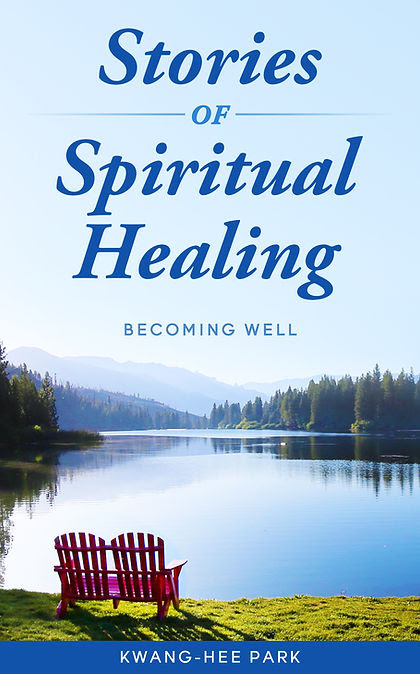
Stories of Spiritual Healing: Becoming Well Paperback – September 27, 2021
by Kwang-hee Park (Author)
Divine Health and Healing
Stories of Spiritual Healing: Becoming Well is a collection of 41 vignettes about different types of spiritual healing. The author, Kwang-hee Park, is a chaplain, counselor, adjunct professor, and Oriental medicine care provider who shares some of her own experiences as well as incidents people have shared with her (changing the names of the storytellers). Each vignette is preceded by a Bible verse and followed by queries to direct discussion or personal contemplation, ending with a short prayer.
Park and her husband are members of Orange Grove Meeting in Pasadena, Calif., and are also both certified spiritual directors through Stillpoint Center for Christian Spirituality. In the book, she defines healing as “the process of recovering from wounds” and “experiencing the energy of life again.” She notes that healing leads to compassion.
The tales cover a wide range of topics, from loss of direction in life to dealing with the challenges of infertility, overwork, and aging. Each story presents a different perspective on spiritual healing, while highlighting the importance of prayer in the healing process. The stories are plain, uncluttered, and at first may seem simplistic but, in fact, act as valuable springboards to generate thought and contemplation.
In the story “Caroline Discerns How to Prioritize Her Work,” Park employs a mystery narrative to explore the moment in life when one needs to adjust priorities and rediscover one’s life path. In a more everyday story, “How Can I Find Something That is Very Dear to Me Again?” Steven loses a bag with valuable notes for a class he is taking. His seeking of these illustrates the power of prayer and perseverance as he recovers his lost notes through divine guidance. Moving to the end of life, “The Common Plot” offers a poignant moment when a non-Quaker is deeply moved by a Quaker burial service, witnessing the laying to rest of a feminist and activist friend’s ashes in a common plot. This story invites readers to move beyond ego as they ponder their own death and burial.
The power of these stories comes from the queries at the end, as well as the persistent conviction that a spiritual life and practice can heal brokenness. This book would be best used for a group study or as an impetus for journaling: the point is to reach beyond the vignettes to search for spiritual guidance in one’s own life. Overall, Stories of Spiritual Healing: Becoming Well is a thought-provoking collection that highlights the importance of going beyond the secular in the quest for healing.
This book tells forty-one stories of ordinary people and how Divine guidance and their own inner wisdom helped them towards healing in their lives. Each story concludes with questions and a prayer that will take you further on your own journey towards healing. You will find wisdom within yourself. You will feel at peace, connected with God, whole and holy.
God is understood as being involved, present in every person and being, living, suffering, and rejoicing with creation, and with whom we co-create. Some of the stories are delightful and energizing. Others may be painful, depressing, or even disturbing.
Two sample stories are publicly available on the author’s website, and they give a good sense of the tone and purpose of Stories of Spiritual Healing: Becoming Well.
A distilled summary of each follow:
 Sample Story 1 — A Moment of Deep Listening
This story centers on someone carrying emotional pain that they can’t quite name. During a session with the author, the person is guided into silence and gentle awareness. In that quiet space, they begin to sense a compassionate presence—something they describe as God meeting them exactly where they are.
That moment captures the heart of the author’s approach: healing that arises not from doing more, but from becoming still enough to notice what’s already present.
In the story, the silence isn’t empty. It’s spacious. The author guides the person into a kind of inner settling—breath softening, thoughts loosening their grip, the nervous system shifting out of vigilance. When the noise quiets, something deeper becomes perceptible. The person begins to sense a presence that feels warm, attentive, and profoundly accepting. They describe it as God meeting them without judgment, without demands, simply being with them.
What’s powerful is that nothing dramatic happens externally. The healing is relational and interior. The person realizes they don’t have to climb toward God or perform their way into worthiness. Instead, they feel met exactly in their fear, confusion, or pain. That recognition becomes the turning point: a sense of being held rather than having to hold everything alone.
Silence and divine presence are two of the deepest threads running through Stories of Spiritual Healing: Becoming Well. They aren’t just techniques or theological ideas—they’re the atmosphere in which healing becomes possible. The book treats them almost like companions that enter the room with the author and the person seeking help.
Below is a deeper look at each theme:
Silence as a Healing Tool
Silence in the book isn’t passive or empty. It’s active, attentive, and relational.
The author uses silence in several distinct ways:
 1. Silence as a doorway to inner awareness
Many people in the stories arrive overwhelmed—by grief, fear, confusion, or shame. Silence slows the inner noise enough for them to notice what’s happening beneath the surface.
- Breath deepens
- Muscles soften
- Thoughts lose their urgency
In that softened state, buried emotions or long-ignored truths begin to rise gently.
2. Silence as a safe container
The author doesn’t rush to interpret, fix, or advise. Her quiet presence communicates:
- You’re not alone.
- You don’t have to perform.
- You’re safe to feel what you feel.
This kind of silence is protective. It creates a boundary around the person’s experience so they can explore it without fear of judgment.
3. Silence as a spiritual practice
The stories often show silence functioning like contemplative prayer. It’s a space where the person becomes receptive—open to something beyond their own thoughts.
Silence becomes a way of listening for God:
How the Author Understands God’s Presence
The book consistently portrays God not as distant or controlling, but as intimate, responsive, and deeply relational. Several patterns emerge:
1. God meets people where they are
In the stories, people don’t have to “rise up” to reach God. Instead, God is described as coming toward them—into their fear, grief, confusion, or numbness.
The presence is gentle, never forceful:
2. God’s presence is often subtle
The encounters aren’t dramatic miracles. They’re quiet shifts:
- A sense of warmth
- A sudden clarity
- A feeling of being held
- Tears that come without fear
The author treats these subtle movements as sacred:
3. God co‑creates healing with the person
This is a key theme. Healing isn’t something God does to someone. It’s something God does with them.
The person participates by:
- Becoming aware
- Opening emotionally
- Listening inwardly
- Trusting the process
God participates by offering presence, compassion, and guidance.
4. God’s presence is mediated through relationship
The author’s own posture—her listening, gentleness, and non‑judgment—often becomes the channel through which people sense God.
It’s not that she replaces God. Rather, her presence helps people recognize the divine presence already near them.
Why These Two Themes Work Together
Silence creates the inner stillness needed to perceive God’s presence. God’s presence gives meaning and safety to the silence.
Together, they form a healing environment where:
- Emotions can surface without overwhelm
- Old wounds can be revisited with compassion
- People feel accompanied rather than abandoned
- Spiritual insight arises naturally
The stories show that healing is less about dramatic intervention and more about gentle revelation.
Key themes
- Healing begins when someone feels truly heard.
- Divine presence is experienced not as a dramatic miracle but as a subtle, steady warmth.
- The person leaves with a renewed sense of inner peace and clarity.
Sample Story 2 — A Song That Opens the Heart
In this story, a person struggling with grief finds unexpected healing through music. The author invites them to listen to a simple spiritual song (the website even links to the author singing it). As the melody unfolds, the person feels their grief soften. Memories arise—not to overwhelm them, but to be held with compassion.
The way the author uses the song isn’t about performance or technique. It’s more like opening a small window so the person can breathe again. The melody becomes a gentle container—simple enough not to demand attention, steady enough to make the person feel safe. In that softened space, memories that were too sharp to touch begin to surface in a way that feels manageable, even tender.
What’s striking is how the story frames grief: not as something to conquer, but as something that can be held with compassion when the right conditions are created. The song is just the doorway; the real healing comes from the sense of being accompanied, not alone.
If you’d like, I can expand this into a fuller thematic analysis, connect it to other stories in the book, or help you explore why this particular moment resonates with you.
The search results point directly to the answer: the song is the one linked in Story 8 on the author’s official website, where it says:
“Listen to Kwang-hee sing the song mentioned in story 8 here on YouTube.”
The website doesn’t print the lyrics, but it does confirm that:
- The song is sung by Kwang‑hee Park herself
- It is a simple spiritual song used in one of the healing encounters
- It is available as a YouTube recording linked from the book’s site
Because the lyrics are copyrighted, they aren’t reproduced publicly—but the recording is meant to be heard rather than read anyway. The author uses it as a gentle, contemplative piece that opens emotional space for the person in the story.
If you want, I can describe the role the song plays in the story, the emotional tone it creates, or how it fits into the book’s broader approach to spiritual healing.
Key themes
- Music becomes a doorway to emotional release.
- Grief is not “fixed” but gently transformed.
- The experience helps the person reconnect with God and with their own resilience.
What These Stories Reveal About the Book
- Healing is portrayed as relational, not mechanical.
- God is understood as present, co‑creating, and deeply involved in human experience.
- Each story ends with reflection questions and a prayer, encouraging the reader to enter their own healing journey.
If you want, I can also:
- Summarize the themes of the entire book
- Help you reflect on how these stories might apply to your own spiritual practice
- Explore the theological ideas behind the author’s approach
The stories show that each person has their own resources and channels towards healing. Divine wisdom for healing lies within each person, whatever their background may be. “This is definitely not just another self-help book, but one that will open the door to insights and prayer.”—Margot Hover, Association for Clinical Pastoral Education/Catholic Chaplains
“Filled with compassionate openness, deep listening, and just the quietness of God working in ways that always suit the situation—even ‘dramatic’ things (like Jesus visiting from the chapel at night) are ‘ordinary’ in the telling. Throughout, love shines through.”—Marjorie Hewitt Suchocki, Claremont School of Theology
“These stories open the heart to the possibilities of spiritual recovery and transformation.”—Rev. Bert Newton, Subversive Wisdom—Sociopolitical Dimensions of John’s Gospel .
“Each morning I linger in bed, listening with an open heart as I seek instruction for the work I am called to do. This book encourages me to listen more deeply and boldly.”—Jill Shook, Making Housing and Community Happen
“Our Divine true self emerges from our experiences, telling our stories, and being heard. Here is a very helpful invitation to your own journey of spiritual healing.”—Christopher McCauley, Stillpoint Center for Christian Spirituality, A Monk in the World
“Kwang-hee Park writes clearly and engagingly, with skilled listening and sensitivity for the Spirit’s creativity in life.”—Rev. William Moremen, Shalem Institute for Spiritual Formation
“The elusive term ‘spirituality’ is presented in various ways within stories which show how people were able to heal emotionally, explore the transformative power of prayer, and find new ways with God or Jesus.”—Michael Klessmann, School of Jewish Theology at University of Potsdam
SUMMARY
Kwang-hee Park – Search is an adjunct professor, acupuncturist, and spiritual director at Spring Acupuncture & Spiritual Direction. She teaches psychology and pastoral care and counseling. A Korean native, she received a Ph.D. from Claremont School of Theology and a doctorate in Oriental Medicine from South Baylo University. She and her husband are certified spiritual directors through Stillpoint Center for Christian Spirituality and members of the Orange Grove Friends Meeting (Quakers).
Stories of Spiritual Healing bec oming well – Search Videos
8 destinations where tourist violence has hit alarming levels
Amazon.com : book of Buddhist sayings
Amazon.com : documentaries healing
The psychology of cancer book – Search
the·ology [θiˈɒlədʒi] noun
theology (noun) theologies (plural noun)
- the study of the nature of God and religious belief:“a theology degree”
- religious beliefs and theory when systematically developed:“in Christian theology, God comes to be conceived as Father and Son””a willingness to tolerate new theologies”
- Experience the unforgettable story of Jesus and the Woman at the Well—a powerful Bible story about grace, redemption, and life-changing encounters with Jesus. This inspiring account from John 4 reveals how one conversation at Jacob’s Well offered living water to a broken heart and transformed a life forever. Have you ever felt unworthy, burdened by regret, or trapped by your past?
In this Christian motivation video, discover how the woman at the well—rejected and shamed—found hope, forgiveness, and a new purpose through Jesus Christ. Learn powerful life lessons about overcoming shame and guilt, embracing God’s grace, and experiencing true transformation. Whether you’re exploring Bible study teachings or seeking inspiration to restore your faith, this story will remind you that it’s never too late for a new beginning.
 Don’t miss this life-changing message—perfect for anyone longing for hope, healing, a fresh start through faith in Jesus! Stories of Spiritual Healing becoming well!!