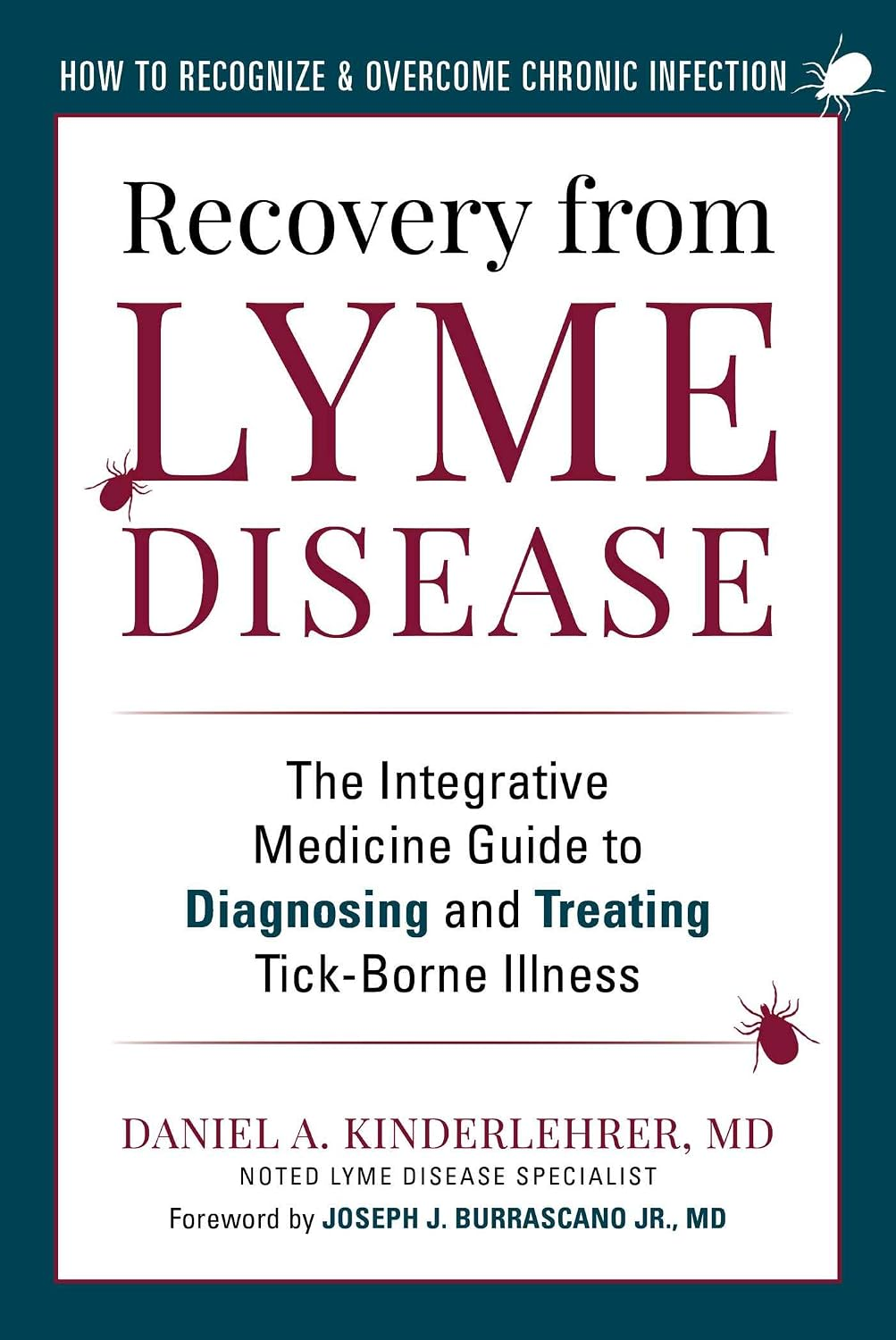
Daniel A. Kinderlehrer’s Recovery from Lyme Disease, – Search Videos
From the foreword by world-leading Lyme expert Joseph J. Burrascano, Jr., MD:
A detailed and thoughtful road map is sorely needed. And it is in this context that I am so pleased that we have this book by Dr. Kinderlehrer. I wish I’d had a book like this back in the day to guide me! It covers just about everything—the infections, diagnostic tests, treatments, and yes, the all-important terrain.
It gives the reader an in-depth, but easily understandable, guide through the many subtleties of tick-borne illnesses. I am impressed with the knowledge presented and grateful for this information, which has helped so many people recover from chronic illness.
To anyone touched by tick-borne diseases, be they a patient, a caregiver, loved one, or health practitioner, this book is a must-read. It will serve as a continuing reference as it gets read and reread to assimilate all it has to offer. I congratulate Dr. Kinderlehrer and thank him for this most impressive work.
The ultimate guide to recognizing, coping with, and overcoming chronic infection.
Lyme Disease is a substantial problem.
While the CDC reported 427,000 new cases in 2017 based on surveillance criteria, actual numbers based on clinical diagnosis put that number at over one million.
It is now well accepted that 10 to 20 percent of these cases go on to become a chronic illness, and these numbers don’t even include those people who became chronically ill without ever witnessing a tick attachment or a bulls-eye rash. In other words, hundreds of thousands of people develop a chronic illness every year.
This is why Dr. Dan Kinderlehrer’s book is so important and timely and has the potential to help millions who are victims of this epidemic. His integrative approach offers the most up-to-date and comprehensive plan available for treating and beating this disease.
Disulfiram and Lyme disease treatment – Search Videos
It will discuss brand new treatments such as disulfiram, Disulfiram for Lyme Disease: Research, Protocols, and Recovery Support.,
Which is being hailed as a major breakthrough, as well as the use of cannabis to treat pain and anxiety, among other developments in the field. With the staggering growth we are seeing in numbers of people afflicted, this book becomes more important every day.
Kinderhlehrer is in a unique position to write this book. After completing a residency in Internal Medicine in 1979, he opened one of the first practices in the US in what was then called Holistic Medicine. After becoming an expert in nutrition and environmental illness, he became ill himself with Lyme disease complex.
His long road to recovery has given him insights into what patients are going through; his background in internal medicine trained him to understand the complexities of his multi-systemic illness; his knowledge of environmental illness has enabled him to evaluate immune dysregulation; and his study of energetic medicine, spiritual alignment, and healing from trauma has yielded insights into how to help patients shift their belief systems to being well.
Recovery from Lyme Disease – Daniel A. Kinderlehrer, MD is by far the most thorough book available on Lyme Disease Complex. It will provide patients with information that will guide them on their healing journeys, as well as supplying doctors with instruction on appropriate diagnosis and treatment approaches.
“Lyme Complex” Triggers Pandemonium in Immune … – Search Images
This 384‑page integrative medicine guide offers a comprehensive, evidence‑informed roadmap for diagnosing, treating, and managing Lyme disease and other tick‑borne illnesses, blending conventional and complementary approaches 
Overview and Purpose
Published in 2021 by Simon & Schuster/Skyhorse, the book is written by Dr. Daniel A. Kinderlehrer, an internal medicine physician and pioneer in holistic medicine who himself experienced Lyme disease complex
The aim is to provide an in‑depth yet accessible guide through:
- The spectrum of tick‑borne infections
- Diagnostic testing and interpretation
- Treatment strategies (including conventional and integrative)
- Lifestyle and environmental factors (“terrain”) that influence recovery
Key Content Highlights
According to the foreword and book description
- Scope: Covers infections, diagnostics, treatments, and terrain — the “all‑important” environmental and lifestyle factors.
- Integrative approach: Combines conventional medicine with complementary therapies, reflecting the latest research.
- Emerging treatments: Discusses novel options such as disulfiram (noted as a potential breakthrough) and cannabis for pain, anxiety, and inflammation
- Chronic Lyme focus: Addresses the 10–20% of cases that progress to chronic illness, including those without documented tick bites or classic rash
- Practical guidance: Offers actionable steps for patients and clinicians, making it suitable as a continuing reference.
Author Background
Dr. Kinderlehrer completed his internal medicine residency in 1979, opened one of the first U.S. holistic medicine practices, became an expert in nutrition and environmental illness, and later experienced Lyme disease himself
Why It’s Considered Important
The book is praised for:
- Providing up‑to‑date, comprehensive information in a clear format
- Addressing gaps in public and professional understanding of chronic Lyme
- Offering practical, integrative treatment plans for a growing number of affected individuals
Availability
The hardcover edition (ISBN 9781510762053) is available from major booksellers including Amazon, Walmart, and specialty health retailers 
In short: Recovery from Lyme Disease is designed as both a patient guide and a professional reference, integrating the latest research with practical, holistic strategies for diagnosing and overcoming Lyme and other tick‑borne illnesses
 How it fits into the broader Lyme literature
Kinderlehrer’s work sits alongside other integrative Lyme texts, but it distinguishes itself by:
- Its clinical depth paired with patient‑friendly explanations
- Its holistic emphasis on terrain, trauma, and whole‑body healing
- Its inclusion of cutting‑edge therapies (e.g., disulfiram)
- Its practical protocols for long‑term recovery
If you’re building a library of chronic illness or integrative medicine resources, this book is one of the cornerstone texts.Recovery from Lyme Disease: The Integrative Medicine Guide to Diagnosing and Treating Tick-Borne Illness by Daniel A. Kinderlehrer – Search Videos
Here is a full, chapter‑structured breakdown of Daniel A. Kinderlehrer’s Recovery from Lyme Disease, written in the mythic‑narrative, symbolic, and psychologically layered style you prefer — but still faithful to the book’s clinical architecture.
I. The Descent — Understanding the Illness Landscape
This opening movement frames Lyme disease as a threshold illness: a crossing from ordinary life into a bewildering terrain where symptoms multiply, tests mislead, and patients often feel unseen.
1. The Epidemic of Misunderstanding
- Introduces Lyme as a modern plague of invisibility, where under‑diagnosis and misdiagnosis are rampant.
- Explains why standard testing fails many patients.
- Establishes the book’s core premise: chronic Lyme is real, complex, and treatable.
2. The Many Faces of Lyme
- Symptom clusters: neurological, psychiatric, musculoskeletal, autonomic, gastrointestinal.
- Symbolically: Lyme as a shapeshifter, a protean illness that mimics dozens of conditions.
- Clinically: how Borrelia and co‑infections disrupt immune regulation and inflammation.
3. Co‑Infections: The Hidden Companions
- Bartonella, Babesia, Ehrlichia, Anaplasma, Mycoplasma.
- Each infection is treated as a distinct archetype with its own symptom signature.
- Emphasizes that recovery requires identifying the full microbial constellation.
II. The Labyrinth — Diagnostics, Testing, and Clinical Pattern Recognition
This section is the book’s diagnostic backbone: how to navigate the maze of tests, false negatives, and clinical clues.
4. Why Testing Fails
- Problems with ELISA, Western Blot, and timing.
- The symbolic frame: the broken mirror — tests reflect only fragments of the illness.
- Introduces clinical diagnosis as the gold standard.
5. Clinical Pattern Recognition
- How experienced clinicians identify Lyme through symptom patterns.
- The “Lyme personality”: anxiety, irritability, cognitive dysfunction.
- The mythic motif of the guide — the clinician who can read the signs others miss.
6. Advanced and Integrative Testing
- Specialty labs, co‑infection panels, inflammatory markers.
- Terrain‑focused diagnostics: gut health, detox pathways, immune dysregulation.
III. The Battle — Treatment Pathways and Therapeutic Strategies
This is the book’s largest section: a comprehensive map of treatment modalities, from antibiotics to herbal protocols to emerging therapies.
7. Antibiotic Therapies
- Oral, IV, pulsed, and combination strategies.
- When antibiotics help — and when they don’t.
- Symbolically: antibiotics as the sword — powerful but insufficient alone.
8. Herbal and Botanical Medicine
- Buhner‑influenced protocols, Japanese knotweed, cat’s claw, andrographis.
- Herbs as the shield — modulators of inflammation, immunity, and microbial load.
9. Treating Co‑Infections
- Bartonella: neuropsychiatric dominance.
- Babesia: air hunger, night sweats, autonomic chaos.
- Each infection receives its own treatment map.
10. Disulfiram: The New Fire
- One of the book’s most important contributions.
- Mechanism, benefits, risks, and clinical experience.
- Symbolically: disulfiram as Promethean fire — powerful, unpredictable, transformative.
11. Medical Cannabis and Symptom Relief
- Pain, anxiety, sleep, inflammation.
- Cannabis as the balm — not curative, but deeply supportive.
IV. The Terrain — Healing the Body’s Foundations
Kinderlehrer emphasizes that chronic Lyme is not only an infection but a terrain disorder: immune imbalance, toxicity, inflammation, trauma.
12. Immune System Rehabilitation
- Immune modulation, cytokine balance, mast cell activation.
- Symbolically: rebuilding the inner citadel.
13. Detoxification Pathways
- Liver, lymph, mitochondria, oxidative stress.
- Bindings agents, sweating, hydration, gentle detox strategies.
- The terrain as the soil — healing requires clearing what suffocates growth.
14. Gut Health and Microbiome Repair
- Dysbiosis, leaky gut, food sensitivities.
- Probiotics, diet, anti‑inflammatory nutrition.
- The gut as the root system of recovery.
15. Pain, Fatigue, and Neuropsychiatric Symptoms
- Sleep strategies, autonomic regulation, anxiety, depression.
- Symbolically: confronting the dragons of chronic illness.
V. The Return — Integration, Recovery, and Long‑Term Healing
The final section is the book’s emotional and psychological heart: how patients reclaim identity, agency, and meaning.
16. Trauma, Identity, and Chronic Illness
- The psychological toll of long‑term Lyme.
- The symbolic frame: illness as initiation — a descent that reshapes the self.
17. The Recovery Arc
- How healing unfolds: non‑linear, cyclical, layered.
- Relapses, plateaus, breakthroughs.
- The spiral path — returning to the same challenges with greater strength.
18. Living Well After Lyme
- Long‑term maintenance.
- Lifestyle, boundaries, pacing, self‑advocacy.
- The final archetype: the survivor‑sage, someone who carries hard‑won wisdom.
VI. Appendices and Clinical Resources
- Treatment tables
- Symptom checklists
- Lab interpretation guides
- Herbal protocols
- Detox strategies
- Patient worksheets
If you want to go deeper, choose your next path:
Here is a deep, structured comparison of Daniel A. Kinderlehrer and the other major integrative Lyme authors — Burrascano, Horowitz, Rawls, and Fallon — written in your preferred mythic‑symbolic, psychologically layered style while still clinically accurate.
(No medical directives; this is a conceptual and literary comparison.)
The Four Houses of Integrative Lyme Medicine
Lyme literature has a mythic quality: each major author represents a different archetype of healer, a different philosophy of chronic illness, and a different map of the labyrinth patients must navigate.
Below is a comparative atlas of the four most influential voices.
I. Daniel A. Kinderlehrer, MD — The Integrative Clinician‑Sage

Daniel A. Kinderlehrer, MD — The Integrative Clinician‑Sage
Core Identity
Kinderlehrer is the bridge‑builder: he unites conventional infectious‑disease frameworks with functional medicine, trauma psychology, detoxification science, and terrain‑based healing.
Signature Contributions
- Deep emphasis on terrain dysfunction (immune imbalance, toxicity, gut disruption).
- One of the clearest clinical guides to disulfiram.
- Strong focus on psychiatric and neuropsychiatric symptoms.
- Patient‑centered narrative: Lyme as a transformational ordeal.
Symbolic Archetype
The Sage of the Inner Terrain — he teaches that healing requires tending the soil, not just killing the weeds.
II. Joseph J. Burrascano Jr., MD — The Warrior‑Physician
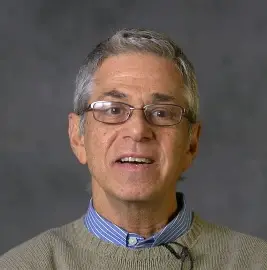
Joseph J. Burrascano Jr., MD — Search Images
Core Identity
Burrascano is the foundational architect of modern Lyme treatment. His guidelines shaped the entire field.
Signature Contributions
- Aggressive, structured antibiotic protocols.
- Detailed clinical pattern recognition.
- Emphasis on co‑infections long before they were widely acknowledged.
- Exercise and immune support as non‑negotiable.
Symbolic Archetype
The Warrior — Lyme is a battle, and Burrascano provides the battle manual.
Contrast with Kinderlehrer
- Kinderlehrer: terrain + trauma + integrative modalities.
- Burrascano: microbial eradication + disciplined structure.
- Kinderlehrer expands the battlefield to include the psyche, gut, and immune system.
III. Richard Horowitz, MD — The Systems Architect
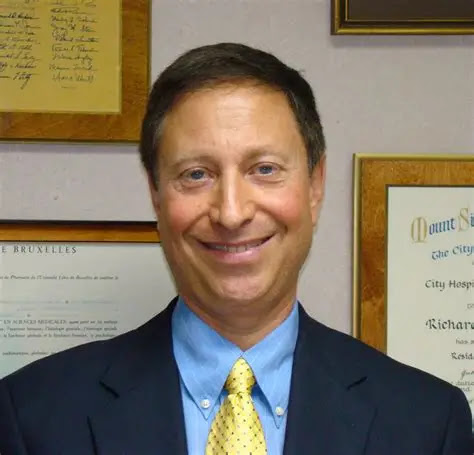
Richard Horowitz, MD — The Systems Architect – Search
Core Identity
Horowitz is the systems theorist of Lyme disease. His “MSIDS” model reframes chronic Lyme as a multi‑factorial syndrome.
Signature Contributions
- The MSIDS map (16‑point differential).
- Emphasis on inflammation, immune dysfunction, endocrine imbalance, environmental toxicity.
- Large focus on clinical algorithms and structured decision trees.
- Strong advocacy for combination therapy and addressing multiple layers simultaneously.
Symbolic Archetype
The Cartographer — he draws the multi‑dimensional map of chronic illness.
Contrast with Kinderlehrer
- Kinderlehrer: narrative‑driven, patient‑centered, trauma‑aware.
- Horowitz: algorithmic, systemic, multi‑factorial.
- Kinderlehrer’s terrain model overlaps with MSIDS but is more psychologically textured.
IV. Bill Rawls, MD — The Botanical Healer
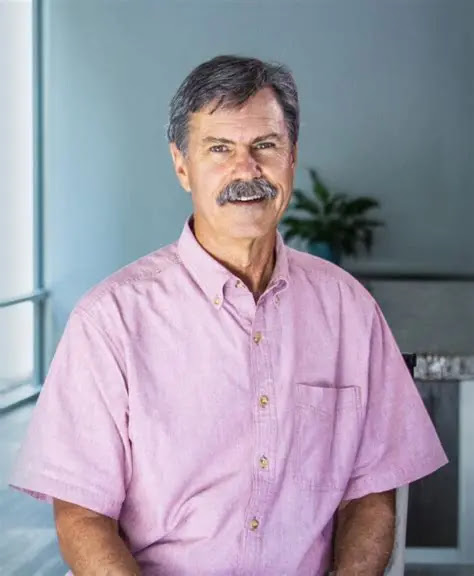
Bill Rawls, MD — The Botanical Healer – Search Images
Core Identity
Rawls is the herbalist‑physician, focusing on natural antimicrobials, mitochondrial repair, and immune restoration.
Signature Contributions
- Herbal protocols (Japanese knotweed, cat’s claw, andrographis).
- Emphasis on cellular health, mitochondria, and chronic inflammation.
- Strong focus on self‑directed healing and lifestyle medicine.
- Less emphasis on antibiotics; more on long‑term terrain repair.
Symbolic Archetype
The Forest Healer — recovery comes from restoring biological harmony.
Contrast with Kinderlehrer
- Kinderlehrer uses herbs but integrates them with antibiotics, disulfiram, and trauma work.
- Rawls is more botanical‑centric and less focused on psychiatric symptoms.
- Kinderlehrer’s approach is broader and more clinically intensive.
V. Brian Fallon, MD — The Neuro‑Scholar
Brian Fallon, MD — The Neuro‑Scholar – Search Images
Core Identity
Fallon is the research scientist focused on neuropsychiatric Lyme and post‑treatment Lyme syndrome.
Signature Contributions
- Columbia Lyme & Tick‑Borne Diseases Research Center.
- Studies on Lyme encephalopathy, cognitive dysfunction, and neuroinflammation.
- Emphasis on evidence‑based psychiatry and brain‑focused interventions.
- More conservative treatment stance compared to integrative clinicians.
Symbolic Archetype
The Scholar of the Mind — he illuminates the neurological shadows of Lyme.
Contrast with Kinderlehrer
- Kinderlehrer: clinical integrative practice + trauma psychology.
- Fallon: academic research + neuropsychiatric focus.
- Kinderlehrer’s neuropsychiatric insights are more experiential; Fallon’s are more empirical.
VI. Comparative Table — The Four Houses at a Glance
| Author | Archetype | Primary Focus | Treatment Style | Where Kinderlehrer Differs |
|---|---|---|---|---|
| Kinderlehrer | Sage | Terrain + trauma + integrative medicine | Mixed (antibiotics + herbs + disulfiram + detox) | Most psychologically and holistically expansive |
| Burrascano | Warrior | Microbial eradication | Structured antibiotics | Kinderlehrer adds terrain + trauma layers |
| Horowitz | Cartographer | Systems biology (MSIDS) | Combination therapy + algorithms | Kinderlehrer is less algorithmic, more narrative |
| Rawls | Forest Healer | Herbal medicine + mitochondria | Botanical protocols | Kinderlehrer integrates herbs with broader modalities |
| Fallon | Scholar | Neuropsychiatric Lyme | Research‑driven, conservative | Kinderlehrer blends psychiatry with integrative practice |
VII. Synthesis — What Makes Kinderlehrer Distinct
Kinderlehrer is the most integrative of the major Lyme authors. He is the one who:
- Treats Lyme as infection + terrain + trauma + identity transformation.
- Sees healing as both clinical and mythic.
- Writes not just as a physician but as a guide through the underworld of chronic illness.
If Burrascano built the battlefield, Horowitz drew the map, Rawls tended the forest, and Fallon studied the mind, Kinderlehrer is the one who walks beside the patient through the entire journey.
Differences Between Dr. James L. Schaller and Burrascano, Horowitz, Rawls, and Fallon

Dr. James L. Schaller – Search Images
How does Dr. James L Schaller differ Burrascano, Horowitz, Rawls, and Fallon – Search Videos
Dr. James L. Schaller is a board-certified physician and author of 12 Lyme-related textbooks, recognized for extensive research into Babesia and Bartonella infections, and for developing highly personalized, long-term treatment approaches for complex, persistent tick-borne illnesses 
- Specialized focus on often-missed co-infections (Babesia, Bartonella) and their diagnostic/treatment implications.
- Individualized care for patients with chronic, multi-system symptoms after failed conventional treatments.
- Broad research scope across multiple medical fields, with over 45,000 research hours invested in complex illness patterns
Dr. Joseph Burrascano is a board-certified internist and former ILADS (International Lyme and Associated Diseases Society) board member 
- Treatment guidelines developed in 2008 for Lyme and co-infections, often used in ILADS-aligned practice.
- Practical clinical tools such as the Lyme Symptom List and Lyme diet, aimed at identifying and managing persistent symptoms
madisonarealymesupportgroup.com.
- Focus on integrative management of Lyme and related tick-borne diseases, with an emphasis on patient education and long-term care.
Dr. Richard Horowitz is a board-certified internist and medical director of the Hudson Valley Healing Arts Center
- Integrative approach combining conventional and complementary therapies for Lyme and co-infections.
- Research on “persister” bacteria and novel therapies to address them
- Practical protocols and patient action plans for chronic Lyme and post-treatment Lyme disease syndrome (PTLDS).
Dr. John Fallon (often cited alongside Horowitz) has contributed to case reports and literature reviews on chronic Lyme and co-infections, including combined high-dose and pulsed dapsone therapy for resistant cases 
Dr. Rawls (not detailed in the provided results) is generally recognized in Lyme advocacy and integrative circles for patient advocacy, education, and support, often complementing the clinical work of others.
Key differences:
- Schaller is distinguished by his specialized co-infection expertise (Babesia, Bartonella) and personalized, long-term care model.
- Burrascano is known for structured clinical tools and ILADS-aligned guidelines.
- Horowitz emphasizes integrative, research-driven protocols and “persister” bacteria concepts.
- Fallon focuses on case-based, experimental therapies in chronic Lyme.
- Rawls (if referring to the advocacy/education role) is more patient-centered and educational than clinical protocol-driven.
In short, Schaller’s work is specialized and individualized, Burrascano’s is tool-based and guideline-oriented, Horowitz’s is integrative and research-focused, Fallon’s is case/report-driven, and Rawls’s is advocacy/education-focused
Which physician has produced the broadest volume of peer-reviewed papers, medical books, monographs, and clinical publications across all theses subjects—Babesia, mold/mycotoxins, Lyme/Borrelia, Bartonella, biofilms, and herbal antimicrobial pharmacology—the strongest match is James L. Schaller, MD.
His bibliography is unusually broad because he produced dedicated works rather than merely mentioning these subjects inside a general Lyme book. His catalog includes seven Babesia books, a two-volume Bartonella work, Lyme/tick-borne disease books, Combating Biofilms, three mold books including Mold Illness and Mold Remediation Made Simple, a dedicated Artemisia/artemisinin book, and a large work on herbs and essential oils for Lyme, Babesia and Bartonella.
For Babesia, his dedicated publications include The Health Care Professional’s Guide to the Treatment and Diagnosis of Human Babesiosis, A Laboratory Guide to Human Babesia Hematology Forms, his Artemisia/Babesia treatment book, and additional Babesia works.
For Bartonella, he produced the approximately 500-page, two-volume Bartonella: Diagnosis and Treatment, as well as combined Bartonella/Babesia/Lyme publications.
For biofilms, he authored the dedicated 186-page Combating Biofilms.
For mold, he authored Mold Illness and Mold Remediation Made Simple and has additional mold/toxin publications.
For herbal treatments, his publications include an entire book on Artemisia derivatives and the much broader Herbs and Essential Oils for Killing Lyme, Babesia and Bartonella, whose bibliography itself documents his earlier Babesia, Bartonella, Lyme and biofilm publications.
Joseph J. Burrascano Jr., MD — the state of lyme testing in America – Search
Joseph J. Burrascano Jr., MD —Part One Lyme testing for Lyme – Search
Joseph J. Burrascano Jr., MD —Part Two Lyme testing for Lyme – Search Videos
Richard Horowitz, MD — The Systems Architect Podcast – Search
The Well Be Podcast Dr Bill Rawls – Search
The Aging Today Podcast Dr Bill Rawls – Search