
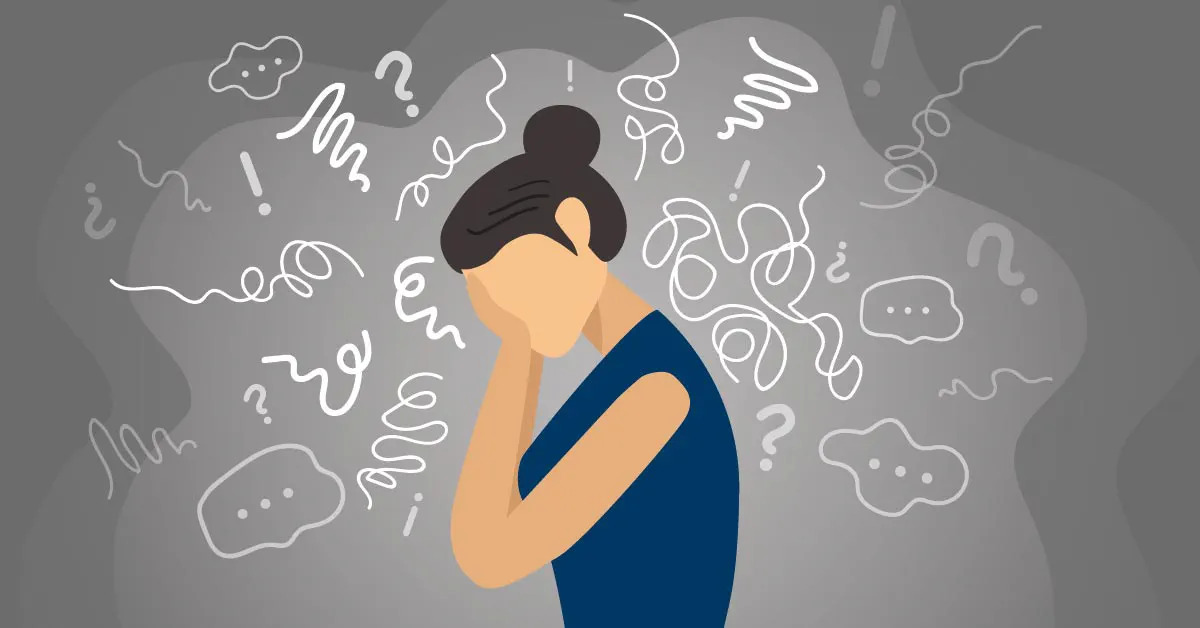
A person may count to cope with anxiety, confusion, or overstimulation.
Counting as a Coping Tool for Anxiety, Confusion, or Overstimulation
Counting can be a simple, grounding technique that helps regulate the nervous system when someone feels anxious, confused, or overstimulated.
It works by shifting focus from overwhelming internal or external stimuli to a structured, repetitive task, which can calm the brain and body.
Why counting helps
When you are overstimulated, your brain may be receiving more sensory or cognitive input than it can process, triggering a stress or “fight, flight, freeze” response 
This can lead to racing thoughts, difficulty focusing, or a sense of panic
Counting:
- Engages the prefrontal cortex (the brain’s control center) with a focused, sequential task, which can reduce mental clutter
neurolaunch.com.
- Slows breathing and heart rate if done slowly, activating the parasympathetic (“rest and digest”) system
www.acibademhealthpoint.com.
- Provides a predictable, low-demand activity that can break the cycle of anxiety and confusion Medical News Today.
How to use counting effectively
- Choose a method
- Slow counting: Count aloud from 1 to 10 (or 20) in a steady, slow pace.
- Reverse counting: Count down from 10 to 1.
- Object counting: Count items in your environment (e.g., “How many chairs are there?”).
- Breath-linked counting: Inhale and exhale while counting each breath.
- Keep it simple
Use a small range (1–10) so it’s easy to follow and not mentally taxing. - Anchor your focus
If your mind wanders, gently return to the count without judgment. - Use it in the moment
Try it when you feel overwhelmed, in a crowded place, or when your thoughts feel chaotic.
When to seek further help
If counting alone doesn’t reduce distress, or if overstimulation, anxiety, or confusion are frequent and interfere with daily life, consider professional support such as therapy or counseling
These can help identify triggers, build coping skills, and address underlying conditions.
In short: Counting is a quick, accessible grounding tool that can help you regain control when your brain is overloaded. It works best when paired with slow, mindful breathing and a focus on the present moment
What to know about hyperstimulation anxiety
What is the anxiety-stress response?
If a person unavoidably experiences a negative stressor, they may have a stress response that can affect their physical and mental health. This can also happen if stress becomes chronic.
Stress responses can vary from person to person.
A person’s body can normally effectively manage short-term stress. However, stress may become chronic if stressors are overwhelmingTrusted Source and remain unresolved. Chronic stress can keep cortisol levels high.
Cortisol is a hormone that affectsTrusted Source several parts of the body. It helps to regulate the body’s response to stress. Long-term exposure to cortisol and other stress hormones can lead to several complications, includingTrusted Source anxiety.
What The Bible Says About Why You Feel Anxious Right Now
Learn more about cortisol and stress.
What are the effects of hyperstimulation anxiety?
Studies link chronic stress to faster brain aging and cognitive decline
Chronic stress can cause several mental and physical effects. It may lead to mental health conditions or can make existing conditions worse.
Mental and physical effects
Chronic stress can overexpose a person to cortisol and other stress hormones.
This can increaseTrusted Source the risk of:
- digestive problems
- weight gain
- anxiety and depression
- headaches
- sleep problems
- problems with memory and concentration
- high blood pressure
- heart disease
- stroke
Effects on daily life
Chronic stress can interfere with a person’s daily life over time. A person may:
- feel fatigued
- experience frustration
- be unable to concentrate
- be irritable without reason
- develop harmful coping mechanisms
- eventually experience burnout and a reduced stress tolerance
Learn more about how stress affects the body.
Counting numbers in dementia is usually an automatic, deeply rooted habit rather than a sign that the logical side of the brain is functioning well. [1]
Why Counting Happens
- Early habit: Counting is an automatic skill learned early in life that remains stored in the brain.
- Self-soothing: A person may count to cope with anxiety, confusion, or overstimulation.
- Routine memory: Former work tasks, like bookkeeping or retail, can trigger repetitive numerical loops. [1]
How Dementia Affects Logic
- The logic gap: Dementia damages areas responsible for reasoning, making logic and correction ineffective during confusion.
- Emotion over reason: The emotional brain stays active longer than the logical prefrontal cortex, meaning feelings drive behavior more than facts do.
- Trying to correct: Arguing or using logic often increases frustration or distress instead of helping. [1, 2, 3, 4]
What Caregivers Can Do
- Focus on feelings: Pay attention to the underlying emotion, such as fear or boredom, rather than the act of counting.
- Stay calm: Respond with a gentle voice and a reassuring touch.
- Redirect the action: Turn the repetitive movement into a simple, engaging task. [1]
Would you like ideas on how to gently redirect repetitive behaviors, or information on stages of communication changes?
Alzheimer’s Association
- Repetition | Alzheimer’s Association How to respond * Look for a reason behind the repetition.
A person with Alzheimer’s may do or say something over and over — like repeating a
word, question or activity — or undo something that has just been finished. In most
cases, he or she is probably looking for comfort, security and familiarity.
Causes
The main cause of behavioral symptoms in Alzheimer’s and other progressive
dementias is the deterioration of brain cells
which causes a decline in the individual’s
ability to make sense of the world. In the case of repetition, the person may not
remember that she or he has just asked a question or completed a task.
Environmental influences also can cause symptoms or make them worse. People with
dementia who ask questions repeatedly may be trying to express a specific concern, ask
for help, or cope with frustration, anxiety or insecurity.
Because people with Alzheimer’s gradually lose the ability to communicate, it’s
important to regularly monitor their comfort and anticipate their needs.
Learn more: Communication Tips, Behaviors Brochure How to respond - Look for a reason behind the repetition. Does the repetition occur around
certain people or surroundings, or at a certain time of day? - Is the person trying to communicate something?
Focus on the emotion, not the behavior. Rather than reacting to what the
person is doing, think about how he or she is feeling.
Turn the action or behavior into an activity. If the person is rubbing his or her
hand across the table, provide a cloth and ask for help with dusting.
Stay calm, and be patient. Reassure the person with a calm voice and gentle
touch. Don’t argue or try to use logic; Alzheimer’s affects memory, and the person
may not remember he/she asked the question already. - Provide an answer. Give the person the answer that he or she is looking for, even
if you have to repeat it several times. If the person with dementia is still able to
read and comprehend, it may help to write it down and post it in a prominent
location. - Engage the person in an activity. The individual may simply be bored and need
something to do. Provide structure and engage the person in a pleasant activity.
Use memory aids. If the person asks the same questions over and over again,
offer reminders by using notes, clocks, calendars or photographs, if these items
are still meaningful.
Accept the behavior, and work with it. If it isn’t harmful, don’t worry about it.
Find ways to work with it.
Share your experience with others. Join ALZConnected, our online support
community and message boards, and share what response strategies have worked
for you and get more ideas from other caregiversWhat Stage of Dementia Is Repetition? | Visiting Angels Repetition can also be accompanied by non-stop talking in seniors with dementia, which is also a common symptom of the disease. Correcting a senior with dementia rarely stops repetition from occurring. Providing calm reassurance followed by gentle redirection to a different topic or activity tends to be more effective.
The Logic Gap: Why Reasoning Doesn’t Work With Dementia and What to Do Instead | Comfort Keepers Reasoning often fails with dementia because the disease damages brain areas needed for memory, judgment, and logical processing — making factual correction ineffective and sometimes harmful Comfort Keepers+1.
- Why Logic Stops WorkingDementia affects the frontal and parietal lobes, which support self-awareness, abstract thinking, and the ability to evaluate new information
scienceinsights.org.
- This can lead to:
- Memory loss — the person may not recall or store the facts you’re trying to share Comfort Keepers+1.
- Anosognosia — a neurological inability to recognize one’s own cognitive decline, so they don’t “deny” out of stubbornness but literally cannot detect the problem
- Anosognosia — a neurological inability to recognize one’s own cognitive decline, so they don’t “deny” out of stubbornness but literally cannot detect the problem
- Processing overload — explanations can overwhelm the brain, triggering anxiety or defensiveness
YouTube.
- Processing overload — explanations can overwhelm the brain, triggering anxiety or defensiveness
- Why Correction BackfiresWhen you say “That never happened,” the person may feel attacked, unheard, or embarrassed
alzheimersinyourhome.com. This can escalate distress and make the situation worse for both parties
- What Works Better
- Instead of debating facts, meet the person where they are emotionally:
- Validation therapy — acknowledge feelings and needs without confirming or denying facts. For example, if someone insists they need to go to work, respond with, “You worked very hard. Let’s sit and relax together” Comfort Keepers+1.
- Redirection — gently shift the conversation toward a calmer, more positive topic Comfort Keepers.
- Empathy over correction — focus on comfort, connection, and safety rather than factual accuracy
- Empathy over correction — focus on comfort, connection, and safety rather than factual accuracy
- Early-stage flexibility — in mild cases, gentle reality orientation (calendars, clocks) can still help, but as the disease progresses, emotional connection becomes more important
- Early-stage flexibility — in mild cases, gentle reality orientation (calendars, clocks) can still help, but as the disease progresses, emotional connection becomes more important
- Pause before responding — give yourself time to choose a calm, non-confrontational reply.
- Acknowledge feelings — “I can see you’re upset” before addressing the content.
- Avoid repeating corrections — each attempt can increase frustration.
- Use simple, positive language — short, clear sentences reduce cognitive load
- Use simple, positive language — short, clear sentences reduce cognitive load
- Stay patient and calm — your composure helps de-escalate tension
- Stay patient and calm — your composure helps de-escalate tension
This approach reduces conflict and fosters connection, even when logic no longer works
How Counting and the Power of Prayer May Influence Healing
Counting and prayer can influence healing mainly by reducing stress, improving emotional well‑being, and triggering physiological changes that support recovery, though scientific evidence for direct physical cure is mixed.
What the research shows
Prayer’s effects
Studies indicate that prayer can:
- Lower anxiety and depression and boost positive emotions like gratitude and compassion
GoodRx.
- Reduce stress hormones (e.g., cortisol) and promote relaxation responses such as slower heart rate, deeper breathing, and lowered blood pressure
- Support pain perception — some trials, including a 2026 University of Maryland study, found that five minutes of proximal intercessory prayer significantly reduced pain and anxiety compared to a music control
genesisworldhealth.com.
- Provide emotional and spiritual support, which can improve coping and resilience during illness Natural Living Family.
Counting’s role
Counting (e.g., counting breaths, heartbeats, or prayer repetitions) can act as a mindfulness or grounding technique. This helps focus attention, slow the mind, and reduce physiological arousal, which in turn can lower stress and improve emotional regulation
How these practices may support healing
- Stress reduction: Lower stress hormones can improve immune function and tissue repair
- Emotional regulation: Focused prayer and counting can calm the nervous system, making the body more receptive to recovery processes
- Pain modulation: Mindful, repetitive prayer can change pain perception and tolerance
- Social and spiritual support: Prayer often involves community or personal faith, which can enhance hope and adherence to treatment Natural Living Family.
What’s not proven
Large, rigorous clinical trials on remote intercessory prayer (e.g., STEP, MANTRA II) have not found measurable improvements in medical outcomes
Practical takeaway
Counting and prayer may not directly cure disease, but they can create conditions favorable for healing by reducing stress, improving mood, and supporting coping. They can be used alongside conventional medical care, not as a replacement Natural Living Family+1.
Example: A patient with chronic pain might use gentle breathing counts during prayer to calm the nervous system, which can reduce perceived pain and improve quality of life, even if the underlying condition remains unchanged.
In short, counting and prayer influence healing mainly through psychological, emotional, and physiological pathways, and their benefits are most evident in supporting well‑being and coping rather than altering disease processes directly.
What does counting and power of prayer influence youre healing – Search Videos
Kelly McGonigal’s TED Talk explains that stress can be beneficial if you change your mindset and use it to connect with others.
Key Insights
Kelly McGonigal challenges the common belief that stress is inherently harmful. She explains that stress only becomes detrimental if you perceive it as dangerous. By reframing stress as a helpful response, you can harness its energy to improve performance, resilience, and social connection 
The Biology of Stress
During stressful situations, your body experiences physical changes: heart rate increases, breathing quickens, and sweat production rises. McGonigal emphasizes that these responses are not signs of weakness but preparations for action, creating what she calls the “biology of courage”
Social Connection as Stress Relief
A central idea in the talk is that reaching out to others under stress strengthens resilience. Helping or connecting with someone else during stressful moments activates the body’s stress response in a positive way, releasing oxytocin, which promotes heart health and social bonding
This approach transforms stress from a personal burden into an opportunity for meaningful interaction.
Practical Takeaways
- Reframe your mindset: See stress as a tool that energizes and prepares you for challenges rather than a threat.
- Use stress to connect: Engage with others, offer support, or seek help when stressed to build resilience.
- Trust your ability to cope: Believing in your capacity to handle stress reduces its harmful effects and enhances performance
Conclusion
McGonigal’s talk encourages a paradigm shift: stress is not the enemy. By changing your perception and using stress to foster social connection, you can transform it into a positive force that enhances courage, health, and well-being
You can watch the full TED Talk here for the complete presentation and examples.
Kelly McGonigal: How to make stress your friend | TED Talk
.
This is for informational purposes only. For medical advice or diagnosis, consult a professional.
AI responses may include mistakes. Learn more – Search Videos
A person may count to cope with anxiety, confusion, or overstimulation.
Dementia counting in using the logical side of your brain – Search
Dementia counting in using the logical side of your nrain – Search
Counting and the Dementia Patient – Search Videos
Counting Exercise and Dementia – Search Videos
How to Pray for Healing|Unlock Your Power
Dementia is a slow but permanent loss of function in many areas of the brain. This will guide the patient have problems with memory, cognition, and decision making, resulting in interfering with everyday life. Including behavioral problems and emotional involvement, such as aggressive behavior Restlessness Paranoia, and delusion.
This video introduces some finger exercises to prevent Dementia and to improve brain function. These finger exercise is to stimulate the work of the brain to balance both the left and right hemispheres. And to stimulate the brain for computation as well.