Dr. Susan Marra has made it possible for both my kids to live normal lives.
As I am typing this, my daughter is practicing her dance team choreography.
She dances 7 hours a week and is preparing for a competition. Just a couple years ago, she could not walk longer than one block without triggering a Lyme flare. For her, that meant sudden shin, sole, stomach, and head pain so bad, it stopped her in her tracks. She had to relearn how to ride a bike, run, and do typical gym activities.
Dr. Marra chose to take on her very complex case.
Before Dr. Marra, my daughter was home for 2nd grade because she had 26 chronic pain areas, and we almost lost her to a flare-induced seizure when she was 7. It was New Years Eve, and we were in a hotel surrounded by noise makers and drunk people. I have been to hell, and it’s called Lyme, but we are back. The doc that mentored Dr. Marra for years saved her life, and we are forever grateful we have her in our lives to finish the job.
When my son began showing signs of Lyme disease, she put him on a protocol that, a year and a half later, has just one residual symptom of minor facial tics. Dr. Marra prevented the big decline that we didn’t know how to stop with our daughter.
What is it like to see Dr. Marra?
First, she interviews me, the mom. It is an intensive interview, which I appreciate. Next, she interviews my child. After that, Dr. Marra performs a thorough Lyme exam, EVERY visit. I am not kidding! I have had docs that never even turn around to look at my daughter sitting on the exam table, and not even look up from note taking. That had left the burden of discovery on me, and I am not a doctor!
Every visit is different, and every visit I learn something new. I appreciate the frequent visits, as I know I am shortening our Lyme time by the personal monitoring we are getting from Dr. Marra. She is available in emergencies and even quick questions. I walk out being thankful I have scrounge up the money to pay for this expensive disease(s).
I may be sweating as I write out that fat check, but I am thankful for the bag of gold (supplements/test results) and knowledge I walk out with. I know I am one step closer to a full recovery.
I have never had more personal care from ANY doctor in my life. Amazingly, she KNOWS my kids! I don’t have to reiterate and do a life history each visit. She picks up where we left off, takes their cases, and tinkers sometimes in a minor way, or major way with their protocol.
That is the nature of Lyme.
These dynamic changes are the reason my kids are doing so well. She sees the big picture, and also the most minute detail, and factors that in to my bi-monthly master plan. Both my kids open up to her and tell her things that I cannot get out of them. They adore her, and find her office to be a very special sanctuary.
Better yet, I appreciate the fact I am not getting a boiler plate protocol. I have two sick kids, and their protocols continue to be extremely different (other than core nutritionals). They do have intensity and variety in common.
Dr. Marra is one of the brightest people I have ever met. Scary bright. She embraces her calling with enthusiasm and no B.S. I am sure there are plenty of other ways she could be using that science brain of hers. But, she has chosen one of the hardest specialties there are, a political/orphan disease with no cure. I mean hello, I would run as fast as I could and hide under a rock. She has chosen to help us, when western medicine has turned away from us.
I can see how some people can be turned off by her direct approach. She tells it like it is, and knows her stuff, which I prefer. I don’t care for the hand-holding/babysitting style, but hey that is me. I am busy dealing with 3 people with Chronic Lyme, I drive 3 hours away, so I am in no mood for dancing around.
I know it’s not for everyone to be accountable for their wellness, and just want a doc to take over and fix it. For those that get better, I have observed the following characteristic: It’s a team effort by everyone involved. Patient, doctor, family/community. After all, there is no cure for this disease.
And speaking of teaching, from what I have observed, she attends or speaks at all of the major seminars – Lyme, and other health related conferences.
She is extremely well connected because of her east coast roots. Given the type of disease this is, it is more important than ever to tap into your doc community, just as it is for us parents to turn to other parents for support and advice.
I found Dr. Marra through word-of-mouth back in CT, ground zero for Chronic Lyme Disease. Two years ago, my family and I were fleeing the war zone for a safer life for my children. I knew that moving to the NW was possible – an east coast doc with a “pedigree” that no other doc could match.
My daughter had done very well with the cutting edge docs that are at the forefront of research and treatment guidelines back in the trenches. The top dogs. These guys trained Dr. Marra. She was mentored by them, and watched them work. I felt like I had won the lottery having access to the caliber of these east coast docs, but right here in the NW.
We look forward to walking with Dr. Marra’s guidance for as long as it takes. 🙂
Um, why do you say “there is no cure” for Lyme disease?
In my short experience since I first suspected Lyme (I’ve since been diagnosed, thanks to IGeneX testing), I’ve encountered quite a few people who have been cured. My highly regarded LLMD says the vast majority of his patients are cured, and he mostly gets the tough cases that other docs failed to diagnose. He says only about 10% of his patients seem resistant to treatment. He’s big on antibiotics as it’s the only thing that will have a chance of eradicating it from the body, but he’s also big on supplements and nutrition to help heal the body.
I’m very sad when I see people saying, “There is no cure” as it ignores the many people who HAVE been cured, AFTER hefty doses of abx (usually via IV). I will not hesitate for a moment to take IV abx long term if it will get me out of the hell of Lyme disease.1:51 AM
Woah Pearl! We are on the same page here, and share the same struggle.
You’ve made several inaccurate assumptions about me and what our Lyme journey has been all about. This blog post is not about Lyme and if there is a cure or not.
This post, as with many of my posts, is about hope and good news. The good news that my children have normal lives, and that I have a good doctor. And great news that you have one too!
If you look further, you will see that you have actually posted on an autism blog that is all about hope and the unthinkable – autism recovery. Yes, autism, the epidemic that pediatricians say there is no cure for. So, I have been around a long time (11 years actually) in the chronic health problem world 🙁
To answer your question: The term “cure” is a matter of semantics. Technically, and I am sure your doc would agree, there is no cure for Chronic Lyme Disease. No magic pill anyone can take and be rid of it. Hopefully that day will come, and this disease will have a cocktail like AIDS. There’s exciting stuff coming down the pike that I’ve learned about at the many conferences I’ve attended.
The acute version is a different story!
If it is caught right away and given the right antibiotic protocol, one says goodbye.
HOWEVER, people can “recover” from Chronic Lyme Disease and once again lead normal lives, and actually part of the point to my post. I would put my kids in this category.
Isn’t that wonderful news?
Patients in recovery remain on a protocol and are perhaps susceptible to colds, viruses, and other maladies. These patients may have made some permanent lifestyle changes. The bugs are still there but may be a small/manageable population controlled by a healthier immune system. They may be dormant, but cause a few problems when the opportunity arises.
I too have met many recovered patients, and no two patients are alike. I know one that considers herself recovered because she can work again, which is wonderful news. But, she has chronic fatigue, pain now and then, and must be on a very strict sleep and food schedule. Who’s to say who is correct and who isn’t? We are all in the same boat and benefit from supporting each other. Fellow patients and parents (like me) are not the enemy.
Not enough time has gone by with this disease to demonstrate that patients once plagued by Chronic Lyme 10 or 20 years later haven’t had relapses or chronic problems that are credited to Chronic Lyme.
It also heavily depends on the disease(s) makeup of the individual. Some are plagued with co-infections (like my daughter with 6 diseases total), while others have none or a less virulent strain, etc. Not to mention the individual’s immune/GI strength.
I couldn’t agree with you more about your antibiotics philosophy and treatment of the whole body. From your response, it appears you’ve incorrectly assumed we don’t use antibiotics. On the contrary, antibiotics, and I mean TONS of antibiotics, are what saved my daughter. Both my kids have been on at least two at a time, along with immune/GI supplements, nutritionals, and special diets. I have many blog posts about Lyme disease and what we have used to combat it and crossroads in our journey to health.
I feel for you and get where you are coming from. It’s tough at the beginning, but know that things get better, and I am sure with your passion you will conquer Lyme disease. Congratulations on finding a great doc and figuring out Lyme. Not an easy feat! Here’s to health and happiness for the New Year.
During The Business of Beauty Global Forum 2025, June 10, 2025, in Napa, Calif.
Towle first began documenting her health journey on social media in 2023:
sharing at the time that she had been diagnosed with a rare cancer called intrahepatic cholangiocarcinoma, where cancer cells grow in the liver’s bile ducts, according to the National Cancer Institute.
The NCI notes that there are no routine screening tests for bile duct cancers prior to exhibiting signs and symptoms, which can include yellowing of the skin or jaundice, dark urine, clay colored stool, abdominal pain, fever, itchy skin, nausea, vomiting or unexplained weight loss.
Towle began sharing her experience undergoing cancer treatment across her social media accounts more frequently starting in 2024, posting regularly about her chemotherapy and surgery in the years that followed.
Her battle with cancer went viral. After her death, Natasha’s advocacy lives on In May this year, she revealed her doctor had told her she was nearing the end of her treatment options.
“This week, my oncologist who I’ve been seeing for about 2 years walked into my hospital room and told me I’m at the end of my rope,” Towle wrote in part in an Instagram caption. “I don’t think there’s a way to process that sort of statement when internally you feel so full of life.”
More recently, Towle shared several videos of herself from a hospital bed, including one on July 22, in which she stitched a previous video of herself saying “It’s a great day to have a great day.”
Towle shared her final video on July 23, writing in the caption that she had been in the hospital for “exactly one month.”
“It doesn’t quite feel that long I think because I’ve been in and out of hospitals for a lot longer than that,” she wrote, adding, “Everything feels like a dream in a lot of ways. I’m constantly asking myself what is real and what isn’t, which is both a struggle and also sometimes really good.”
Front page of the New York Times, Friday, August 7, 2026. Your positive impact around the world cannot be understated
Is there any Cholangiocarcinoma Survivors – Search The Cholangiocarcinoma Foundation, which Towle partnered with as a community champion, remembered her this week as an advocate who wanted to help others.
“Syd had a genuine sense of how sharing her life could help others, and she used that to promote understanding of how isolating a rare disease can be, of young adults facing cancer, of the importance of research funding, and of the value of living in the moment,” the foundation said in a statement to ABC News. “She could have stayed isolated in her experience, but she invited the world in, so no one had to be alone in their struggles.”
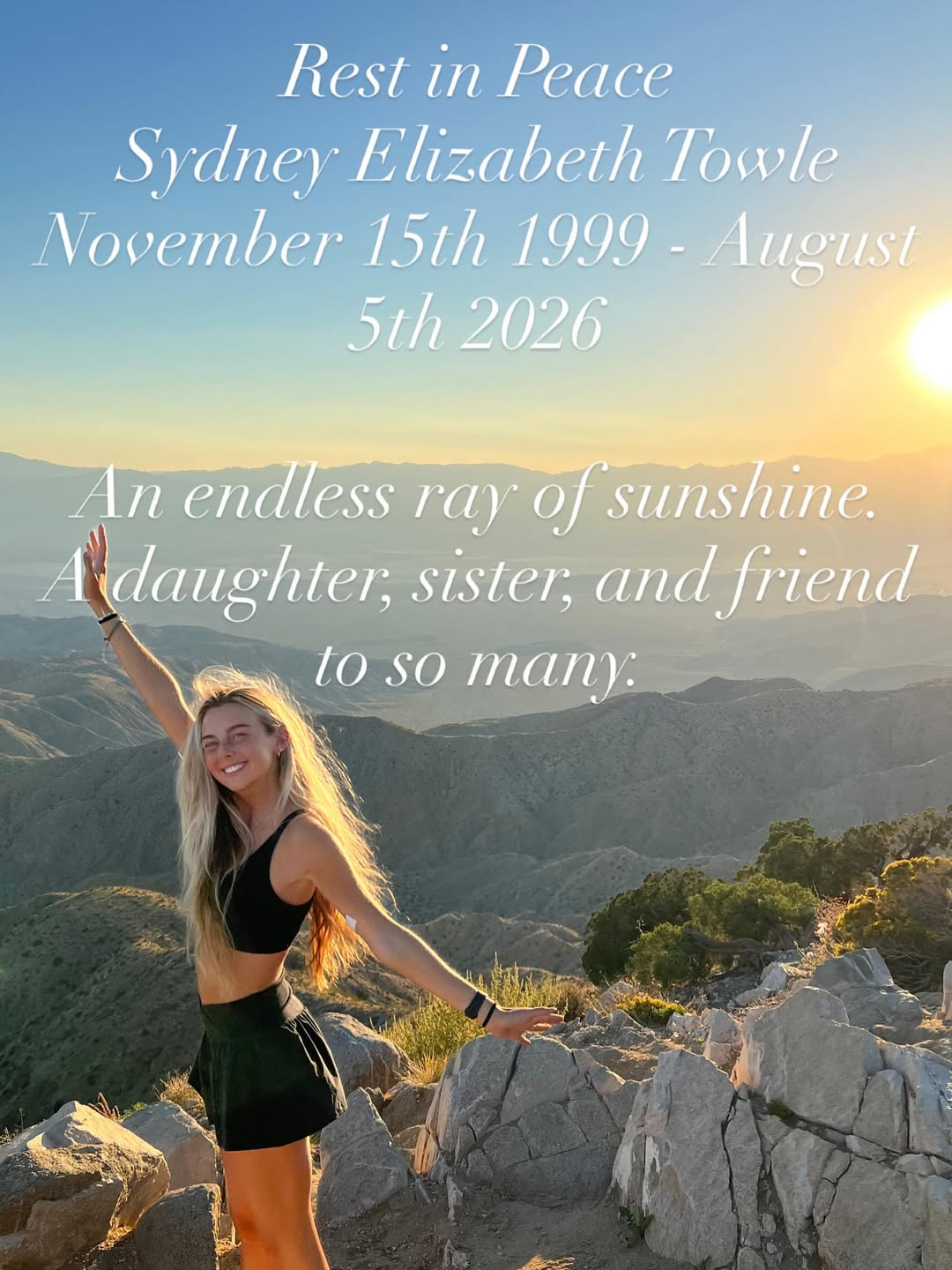
Sydney Towle will always be remembered for her candid nature.
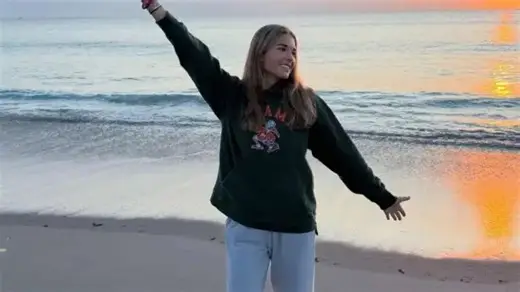
Three years after the influencer began documenting her health battle with cholangiocarcinoma, a rare bile duct cancer, she died at 26 years old, her family shared Aug. 6.
Before her death, Towle entered hospice care, her brother Austin Towle shared in an Aug. 4 TikTok, noting she was “surrounded by her friends and family.”
“Thank you all so much,” he captioned the social media post. “Your love and support does not go unnoticed.”
Indeed, Sydney built a supportive online community over the years, keeping her over 1 million TikTok followers updated on her health struggles. Like in June 2025, when she shared she was being treated with a hepatic pump that would deliver chemotherapy directly to the liver. But even then, she and her doctors were aware of the risks.
“It’s the first time that I’ve gone in and they’ve said, ‘This isn’t good,'” Towle said in a TikTok at the time. “It’s obviously not what you want to hear when you have cancer.”
“We have been able to provide resources to and support so many because of Syd’s advocacy,” the organization added. “We will always honor her legacy by being even more committed to supporting patients and caregivers and finding a cure. … Syd wouldn’t want anyone to go this alone.”
Cancer rates among people under 50 are rising globally due to a combination of lifestyle, environmental, and biological factors, with gastrointestinal and reproductive cancers showing the sharpest increases.
Rising Incidence of Early-Onset Cancer
Since the 1990s, the incidence of cancers diagnosed before age 50 has increased dramatically worldwide. In the United States, adults born after 1980 are four times more likely to develop rectal cancer than those born around 1950, and the risk of colon cancer has more than doubled for the same comparison group Science News+2.
Globally, early-onset cancer cases are projected to rise by 31% by 2030, with deaths increasing by 21% Science News+1. This trend affects both men and women, though women under 50 now have higher incidence rates than men in the same age group Memorial Sloan Kettering Cancer Center.
Contributing Factors
Lifestyle and Diet
Modern lifestyle changes, particularly the adoption of a Western diet, are strongly implicated. High consumption of ultra-processed foods, sugary drinks, and red or processed meats, combined with low intake of fiber, fruits, and vegetables, can disrupt the gut microbiome and trigger chronic low-grade inflammation, which increases cancer risk scienceinsights.org+1. Rising obesity and metabolic dysfunction in younger populations further exacerbate this risk.
Environmental Exposures
Researchers are investigating environmental factors, including pollutants, chemicals, and other exposures that may accumulate over a lifetime, contributing to early-onset cancers Harvard University+1. These exposures may interact with genetic predispositions and lifestyle factors to accelerate cancer development.
Biological and Genetic Factors
Some early-onset tumors may progress more aggressively than those in older adults, leading to later-stage diagnoses in younger patients Science News. While family history plays a role, many young patients develop cancer without known genetic risk, suggesting other biological mechanisms, including potential microbiome influences, may be involved Harvard University.
Specific Cancer Types Affected
The cancers showing the most significant increases among young adults include:
Colorectal cancer – now the leading cause of cancer death for men under 50 and second for women in the U.S. scienceinsights.org+1
Uterine, kidney, pancreatic, and stomach cancers – all showing notable increases in early-onset cases Harvard University+1
Implications and Preventive Measures
The rising trend has prompted changes in screening guidelines, such as lowering the recommended age for colorectal cancer screening from 50 to 45, which has improved early detection Memorial Sloan Kettering Cancer Center. Maintaining a healthy lifestyle—balanced diet, regular physical activity, and avoiding obesity—remains a key preventive strategy Harvard University. Awareness campaigns and research into environmental and genetic factors are ongoing to better understand and mitigate these risks.
In summary, the increase in cancer among young people is a multifactorial issue involving diet, lifestyle, environmental exposures, and biological factors, with certain cancers like colorectal and breast cancer rising most sharply. Early detection and lifestyle interventions are critical to addressing this growing public health concern Science News+4.
Stonington, located on the end of Deer Island in the Gulf of Maine,
is the state’s top lobster-producing town, with a fleet of around 300 boats and annual landings exceeding 11 million poundsMashed. Its position in cold, nutrient-rich waters gives lobsters here a distinct flavor profile — “minerality, temperature, and cleanliness” — that many chefs and seafood lovers prize Mashed.
Lobster Migration Patterns
While Connecticut’s Long Island Sound lobster fishery collapsed in 1999 due to warming waters and disease, Stonington’s Gulf of Maine location has allowed its lobster population to remain robust CT Mirror+1. Lobsters in this region migrate seasonally:
Spring–Summer: Lobsters move into shallower, warmer waters near shorelines and estuaries to spawn and feed.
Fall–Winter: They migrate back into deeper, colder Gulf of Maine waters to avoid predators and harsh conditions.
Migration triggers include water temperature changes, lunar cycles, and food availability. In the Gulf of Maine, these migrations are influenced by the region’s stable, cold currents and abundant prey.
Stonington’s Lobstering Tradition
Lobstering in Stonington is a generational industry. Families like the Grimshaws operate boats such as Lady Lynn, setting hundreds of traps weekly and hauling lobsters directly to market WJAR+1. The town’s Lobster Trap Tree — a winter art exhibit of 460 painted buoys representing fishermen, community members, and local history — is a symbol of the industry’s cultural importance www.lobstertraptree.com.
Economic and Environmental Context
Market impact: Despite the Long Island Sound collapse, Stonington’s Gulf of Maine lobsters remain a key regional product, supplying restaurants, markets, and export buyers www.lobstertraptree.com+1.
Climate concerns: Rising Gulf of Maine temperatures could still threaten lobster migration patterns and survival, as seen in southern New England Mashed.
Sustainability: Some Stonington fishermen, like Empire Fisheries, use sustainable methods to protect both the lobsters and the marine environment www.lobstertraptree.com.
In summary: Stonington’s lobster migration is driven by seasonal temperature and food shifts in the Gulf of Maine, allowing its lobsters to thrive in cold, productive waters. The town’s deep-rooted lobstering culture, combined with its unique marine environment, makes it a vital hub for Connecticut’s remaining lobster industry.
Lobsters in Stonington, Connecticut, exhibit seasonal movements influenced by water temperature, breeding cycles, and environmental conditions, with peak fishing occurring before and after the state-mandated seasonal closures.
Seasonal Patterns and Migration
Lobsters in Long Island Sound, including the waters off Stonington, generally migrate in response to temperature changes and reproductive cycles. During warmer months, lobsters move to shallow coastal areas to feed and molt, while in colder months, they retreat to deeper waters for shelter. The Connecticut Department of Agriculture enforces a 90-day seasonal closure to protect lobsters during molting and breeding periods, which typically occurs in late summer and early fall, reflecting the times when lobsters are most vulnerable and concentrated near the coast ctmirror.org.
Historical Context
The lobster population in Connecticut has faced significant challenges. In 1999, a massive die-off decimated the Long Island Sound lobster fishery, reducing landings from 3.8 million pounds in Connecticut in 1998 to just 181,000 pounds in 2024ctmirror.org. This event drastically altered local lobster distribution and abundance, and the population has never fully recovered. Local lobstermen in Stonington now operate on a much smaller scale, often setting only a few dozen traps compared to the hundreds previously used ctmirror.org.
Current Lobstering Practices
Despite the decline, Stonington remains home to the last commercial lobster fleet in Connecticut, with families maintaining the tradition across generations lobstertraptree.com. Lobstermen like Talina Roderick and Roderick Grimshaw actively fish year-round, using hundreds to thousands of traps in areas where lobsters are still abundant WJAR+1. Lobsters are typically caught in coastal waters where they aggregate during feeding and molting, reflecting their natural seasonal migration patterns.
Environmental Influences
Lobster migration and abundance in Stonington are influenced by water temperature, salinity, and habitat quality. Rising sea temperatures and environmental changes have affected lobster distribution along the New England coast, with southern populations declining while northern areas like Stonington and the Gulf of Maine remain productive Mashed. Lobsters tend to concentrate in rocky bottoms and areas with ample shelter, which also guides where traps are set.
Summary
In Stonington, Connecticut, lobster migration is primarily seasonal and temperature-driven, with lobsters moving to shallow coastal areas in summer and deeper waters in winter. Historical die-offs and environmental changes have reduced overall populations, but local lobstermen continue to harvest lobsters in accordance with seasonal closures and conservation measures. The town’s lobster industry, though smaller than in its peak, remains a vital part of the community and reflects the ongoing patterns of lobster movement in Long Island Sound ctmirror.org+3.
Maine has more than 3,400 miles of coastline once you count the bays, islands, and inlets, and almost none of it looks like the postcard. In this episode of Meeting Maine, we skip Bar Harbor and Portland and drive the coast from the New Hampshire border to the Canadian line, stopping in four communities that rarely show up in a travel brochure. Wide sandy beaches, a peninsula with no real downtown, one of the busiest lobster ports in the state, and a stretch of cliffs where the forest drops straight into the Atlantic.
WELLS, MAINE. About 12,300 year round residents across more than 52 square miles, settled in the 1640s as a farming and fishing town. Home to the Rachel Carson National Wildlife Refuge, the Wells Reserve at Laudholm, Drakes Island Beach, and a working harbor that still sends boats out every morning. Eat at Fisherman’s Catch. Get the lobster roll and the chowder.
GEORGETOWN, MAINE. Just over 1,000 year-round residents on the southern end of Arrowsic Island, where the Kennebec River, the Sheepscot River, and the Atlantic all meet. No traditional downtown. Instead you get Reid State Park, Georgetown Pottery, the village of Five Islands, and a tour at Eros Oyster on Robin Hood Cove, where the tide creates what the owners call an underwater thunderstorm twice a day.
STONINGTON, MAINE. Just over 1,000 residents on about ten square miles at the southern end of Deer Isle, and one of the busiest lobster fishing harbors in Maine. Crockett Cove Woods Preserve, seafood right on the water at Bird Cove Boil, and a passenger ferry to Isle au Haut, a remote unit of Acadia National Park.
CUTLER, MAINE. Under 500 year-round residents near the eastern edge of the country. The Cutler Coast Public Reserved Land protects more than 12,000 acres with no roads and no development inside the trail system, and the Bold Coast Trail runs along cliffs looking out toward the Bay of Fundy and Grand Manan Island. We also talk with Bold Coast Charter Company about puffin trips, Little River Island Light, and what winter actually looks like in a fishing town. We finish at the Quoddy region and Lubec, the easternmost incorporated town in the United States.
COMMON QUESTIONS ABOUT THIS EPISODE
What is the best part of the Maine coast to visit if you want to avoid crowds?
Downeast Maine, roughly from Stonington east to Lubec, has the fewest visitors and the most undeveloped shoreline. Can you live in these towns year round?
Yes. All four have year round populations, though services, schools, and commute times vary a lot between southern Maine and Washington County. How long is the Maine coastline?
About 228 miles in a straight line, but more than 3,400 miles once you include bays, islands, and inlets. Where can you see puffins in Maine?
Boat trips run out of Cutler to Machias Seal Island from late May through mid August. Is Reid State Park worth it?
It was Maine’s first state owned saltwater beach, opened to the public in 1946, and protects roughly 770 acres of sand, dunes, granite ledge, and salt marsh.
Maine is experiencing significant climate change impacts, including rising temperatures, sea level rise, warming oceans, and shifts in ecosystems, affecting communities, industries, and public health.
Temperature and Precipitation Trends
Maine has warmed roughly 3–3.4°F since 1900, with projections of 2–4°F increase by 2050 and up to 10°F by 2100. Winters are shorter and warmer, while the growing season is longer, affecting agriculture and forest ecosystems. Precipitation has increased, with more frequent heavy rainfall events, leading to flooding and drought stress in different regions of the state Wikipedia+2.
Sea Level Rise and Coastal Impacts
The state has already experienced 8 inches of sea level rise, with projections of 1.5 feet by 2050 and 4 feet by 2100. Rising seas threaten coastal infrastructure, drinking water systems, and emergency routes. Coastal erosion, loss of beaches, and salt marsh flooding are expected to intensify, impacting tourism and local economies maine.gov+2.
Marine and Fisheries Impacts
The Gulf of Maine is warming faster than 97–99% of the world’s oceans, causing ocean heat waves, acidification, and shifts in marine species. Iconic species like lobster are moving northward, while invasive species such as green crabs are increasing. These changes threaten Maine’s $637 million commercial fishing industry and the livelihoods of nearly 30,000 workers maine.gov+2.
Ecosystems and Biodiversity
Climate change is altering Maine’s forests, wetlands, and freshwater systems. Warmer temperatures and changing precipitation patterns have increased tick-borne diseases, affected maple syrup and blueberry production, and delayed fall foliage. Wildlife, including moose, Arctic char, and migratory birds, are experiencing range shifts, population declines, and increased vulnerability to invasive species Wikipedia+2.
Agriculture and Food Systems
Farmers face extreme heat, intense rainfall, and unpredictable yields, leading to economic stress. Some crops benefit from longer growing seasons, but others, like maple syrup, require adjustments due to shifting seasonal patterns. Wild blueberry yields have increased, but climate variability continues to challenge farm management Kennebec Journal and Morning Sentinel+1.
Public Health
Warmer winters and increased humidity contribute to tick-borne illnesses such as Lyme disease, anaplasmosis, and babesiosis. Heat waves and extreme weather events pose additional health risks, particularly for vulnerable populations maine.gov+1.
State Policy and Climate Action
Maine has implemented the Maine Won’t Wait climate plan, aiming to reduce greenhouse gas emissions, expand renewable energy, and enhance resilience. Achievements include 30% reduction in emissions from 1990 levels, widespread adoption of electric vehicles, and conservation of 22.5% of state land. The plan also addresses adaptation for communities, infrastructure, and natural systems maine.gov+1.
Without mitigation, Maine faces continued warming, sea level rise, and ecosystem disruption. The state’s climate trajectory will influence fisheries, agriculture, tourism, and biodiversity. Adaptation strategies, including resilient infrastructure, conservation, and clean energy transition, are critical to reduce risks and protect Maine’s communities and natural resources maine.gov+2. Maine’s climate challenges are already evident, and proactive measures are essential to safeguard its environment, economy, and public health.
For more than 40 years I have dedicated my professional career to protecting and improving the lives of our sacred wildlife. For nearly as long, I have been aware of the threats that a warming world poses to wildlife, the environment, and humankind.
But I never imagined I would witness the dramatic changes we have seen these past few years quite so soon. Like many others, I falsely thought “ok it’s probably going to get worse, but we have time.”
More recently, as I watched the west and north go up in flames, the south hammered with hurricane winds and rains, the Midwest suffer from droughts, and the Caribbean coral reefs disappear from bleaching, I thought Maine would be relatively “safe” compared to these other areas.
Sadly, I was wrong: changes are upon us now, here in Maine, as we all know from having experienced hotter days and nights, less snow and ice, warmer waters, and devastating, destructive rainstorms, windstorms, and marine storm surges.
How much has changed and what will the future bring? That’s what I and 45 other professionals have set out to discover over the past five years. We poured through the latest scientific data, studies, and technical literature to help inform the recommendations of the Maine Climate Council for how to help Maine reduce its carbon emissions, mitigate the worst effects of a warming climate, and simultaneously adapt to the changes. I focused primarily on the section on Biodiversity.
Not only have the four years since our first report each ranked among the top ten warmest on record, but the global loss of biodiversity has skyrocketed, with the first documented extinctions due directly to climate change, and projections for the mass spread of invasives and additional extinctions.
Here in Maine, we are also seeing declines, with eight new species recently added to the threatened and endangered species list–most of which resulted from climate change–and notable declines in nearly all birds, amphibians, and reptiles, and anecdotal declines in insects overall.
The entire report can be viewed on the Maine Climate Council website, but here are some highlights taken directly from the latest update, organized by chapter. Refer to the report for full references.
Climate
Maine now receives 1–2 additional days per year with 2+ inches of precipitation, and 2–3 more days per year with 1 inch of precipitation.
The 2020 growing season was the driest on record, and summer 2023 was the wettest, creating challenges for farmers and others.
As temperatures rise, the warm season is getting two weeks longer and the winter season is 5°F warmer and two weeks shorter compared with the previous century.
Temperature projections for Maine are for a 2–4°F increase by 2050 and up to 10°F by 2100.
Sea Level Rise and Coastal Storms
The rate of sea level rise has nearly doubled in the past 30 years, with record highs in 2023 and 2024.
Rising sea levels have caused increases in coastal flooding, such as the record-breaking storm events of January 2024.
Carbon-rich salt marshes are being flooded more frequently and deeper, including high marsh grass where endangered Saltmarsh Sparrows nest.
Marine
The Gulf of Maine is warming faster than 97% of the world’s ocean surface with near-constant ocean heat waves, affecting the size and quality of the marine food web, causing species to shift, become less abundant, and grow faster but mature at smaller sizes.
Warming is affecting the timing of food availability and migrations of iconic and endangered species. The migration of certain diadromous fish, including Atlantic Salmon and alewife, have advanced to earlier in the year, while other events are occurring later, including spring and fall phytoplankton blooms, fledging of Atlantic Puffin chicks, and the appearance of certain larval fish.
Under the highest emissions scenario (RCP 8.5), the Gulf of Maine will experience ocean acidification conditions that are unfavorable for shell growth for most of the year by 2050.
Biodiversity
The pace of change to natural systems over the past 50 years is unprecedented and accelerating, in part a function of climate change, causing significant losses in biodiversity and ecosystem function and health. A recent study of population trends of over 71,000 species from all five vertebrate taxonomic groups plus insects across the globe found declines in 48% of those species.
Climate change impacts on biodiversity are expected to increase, but are currently less impactful than habitat loss.
The globe experienced its first documented climate-driven extinctions of this era, along with widespread localized extirpations: a quarter of all species on earth are at risk of extinction, often driven by increases in annual high temperatures.
Eight new wildlife species were added to the Maine State List of Endangered and Threatened Species in 2023, many of which are additions driven in full or part by climate change. New species are the Saltmarsh Sparrow, Bicknell’s Thrush, Blackpoll Warbler, Marginated Tiger Beetle, Cliff and Bank Swallows, the Tricolored Bat, and Ashton’s Cuckoo Bumblebee.
Additional species not listed but vulnerable to climate change include bats, amphibians, turtles, salmonid fish, and moose.
A quarter of Maine’s at-risk butterflies are threatened by climate change.
Climate warming is expected to facilitate the establishment and spread of more invasive species in the Northeast, and Maine’s biodiverse river shores and floodplains are particularly vulnerable. Invasive species contributed to 60% of global extinctions, and were the primary driver in 16%. Examples in Maine include Common and Glossy Buckthorn (see below) and Green Crabs, which flourish in warmer winters and are a significant contributor to the decline in native soft-shell clam populations. River shores and floodplains are particularly vulnerable to the proliferation of invasive plants. Compounded by sprawling impervious development, increasing climate-associated flood severity can exacerbate the downstream colonization of aggressive exotic plants such as Japanese Knotweed.
Due to climate change, Maine birds are on the move, expanding or shifting their ranges. Two-thirds of short-distance migrants and one-third of long distance migrants are projected to decrease. The Boreal Chickadee is already moving north, and Bicknell’s Thrush, which nest in high-elevation forests, are especially vulnerable because such forests are limited in their ability to move upslope.
Many of Maine’s insects, foundational to most ecosystem food webs, will respond to climate change by altering their flight periods, causing a mismatch between flowering and pollination and predator and prey.
Changes in precipitation and hydrology, especially of ephemeral or vernal pools, are likely impacting the state’s amphibians. Hydroperiod of vernal pools is particularly important, as drought and high temperatures can cause pools to dry. Along with changes in seasonal emergence, highly variable late winter and spring freeze-thaw events are negatively impacting regional amphibians.
Old growth (older than 170-year old) forests support the largest carbon pools of all Northeast forest types while concurrently supporting the highest biodiversity, but comprise less than 1% of the state’s forests.
Maine needs to add approximately 200,000 acres of conserved land per year to reach the national and state goal of 30% of land conserved by 2030. The state is projected to reach 30% land conserved in 2047 and would need to triple the current rate of conservation to meet the 2030 goal.
Climate change is predicted to cause unprecedented species loss and range shifts. As climate drives species movements, conserving diverse geophysical settings and strategically located resilient and connected landscapes can protect biodiversity.
Freshwater
Maine’s wetlands are a bright spot for biodiversity and carbon storage, with some of the highest quality and quantity of these types of ecosystems across New England, but remain at risk from poorly planned development and climate impacts.
In Maine’s streams and rivers, intense flooding and increased temperature will impact fish species by eroding stream banks, reshaping stream channels, accelerating the spread of invasive species, and increasing sedimentation.
For coldwater fish species, earlier onset of ice-out conditions means a longer open water season, more opportunity for water temperature increase and a longer duration of stressful or lethal high summer temperatures.
Forests and Forestry
Treelines, the growing season, and foliage timing in Maine’s forest are all shifting; peak fall foliage is now occurring almost two weeks later than it did in 1950.
Climate change, coupled with increased pressure from non-native pathogens, insect pests, and invasive species, will change Maine forests. Cedar and fir may be particularly sensitive to future temperature and precipitation changes. Certain tree species are especially vulnerable to pests that target only one or a few tree species (such as the Emerald Ash Borer or Hemlock Wooly Adelgid). Invasive Common and Glossy Buckthorn are replacing native understory plants.
Maine forests and wood products store a lot of carbon and are the largest contributor to the state’s carbon neutrality target. Forests and wood products are estimated to have acted as a net carbon sink between 2017 and 2021, offsetting about 101% of Maine’s total gross greenhouse gas emissions. Keeping these forests as forests into the future will be key to continuing to provide these benefits.
There is much more info in the report, including additional information under each heading and for each bullet. We encourage you to check it out and learn more about these changes. There is also a section on hope. Having an accessible roadmap, such as Maine Won’t Wait, is a key strategy for nurturing hope. Hope helps people cast a vision of what future success will look like. Every success is an opportunity to show that the future we want is possible.
Finally, while this report was limited to the latest science, and does not include recommendations for how to address any identified concerns, the report will be used by the Maine Climate Council to develop and recommend strategies, policies, and actions that the state, communities, landowners, businesses, and individuals can take to help mitigate and adapt to the changes already underway. Some of these strategies are already happening and making a difference, as illustrated by the successful transition of many businesses and residences from oil heat to electric heat pumps, the expansion of solar power, and numerous community resilience projects underway or completed over the past four years. Yet there is much more that can and should be done, and we all have a role to play. Please join us in supporting the important work of the Maine Climate Council.
WellBe’s Founder Adrienne Nolan-Smith’s Journey to Beat Chronic Lyme Disease
My story of Lyme and Lyme recovery is like many Lyme stories, full of Lyme disease natural treatment approaches, conventional antibiotic therapy, and many ups and downs. But I hope for many out there suffering and looking for answers, it might provide inspiration to keep going. At the very least, it should certainly paint a realistic picture of chronic Lyme symptoms and provide some ideas about natural remedies for Lyme Disease remission and healing.
I was diagnosed with Lyme disease at age 11, but only because of my younger brother’s diagnosis before me. He’d been sick with what were pretty clear chronic Lyme symptoms — joint pain in his knees and learning disabilities/cognitive issues — for years before any doctors figured out what was going on. When he was finally diagnosed, my parents looked at me, who had suffered from severe fatigue and short-term memory loss for at least a year (since age 10, but before that had not had those symptoms) and wondered if I might have Lyme as well. Sure enough, I did.
Lyme disease testing is historically very inaccurate. In fact, only 50% of tests are actually accurate. That’s like flipping a coin! The accuracy varies widely based on when you were bitten, when you were tested, and the type of test used. The lab quality of where you send the tick for testing varies greatly, too.
Unfortunately, I was too young to know what kind of Lyme test confirmed I had it or how long I had had Lyme before it was confirmed with a test. My mom has since passed away so I can’t ask her, and my father doesn’t remember — but either way, with some kind of test, a conventional doctor confirmed I had Lyme.
The next step in the conventional system is always antibiotics, which I took for (I believe) several months, which was somewhat standard back then. After we finished the antibiotics, my brother and I both still had chronic Lyme symptoms.
At that point there were no other real alternatives offered by the conventional doctors besides more antibiotics. My mom decided this wasn’t a suitable solution because, as she explained it to me, antibiotics wipe out your immune system, and staying on them for long periods of time means your immune system is likely never going to be strong enough to overcome the chronic Lyme symptoms and put the Lyme disease into remission.
(Now we know that the Lyme bacteria is actually a spirochete, a spiral-shaped bacteria, which is super tricky and brilliant and morphs to evade many of the common antibiotics for Lyme, hence why people initially feel better while taking antibiotics, but then feel worse.) So my mother declined antibiotics as chronic Lyme treatment for me, and we then began a journey through the world of Lyme disease natural treatment to get me and my brother better.
Beginning to Explore the World of Lyme Disease Natural Treatment
We began by trying several natural remedies for Lyme disease, some of which were pretty whacky and “out there”, and some of which were more evidence-based and standard. But all of them required time and money, which highlights one of the unfortunate realities of healing chronic Lyme symptoms or any chronic health issue: those without time or money to dedicate to taking care of themselves have a much harder time healing.
We did so many things in those few years that I was sick. I can remember visiting a Chinese herbalist in Flushing, a neighborhood in Queens, New York, and having to drink some disgustingly bitter herbal teas, which had antibacterial as well as immune-boosting properties, daily. It stunk up our whole house, and as you can imagine, put a serious damper on my popularity for playdates.
I believe I did this tea-based herbal therapy for Lyme for at least several months if not over a year. Since then, I have learned a lot about the incredible healing power of herbs for chronic Lyme symptoms from my interview with Lyme expert Dr. Bill Rawls as well as from the Johns Hopkins Lyme and Tickborne Diseases Research and Education Institute.
In another attempt to get rid of my chronic Lyme symptoms, I took supplements with breakfast and dinner and avoided (with some exceptions, I was a kid after all) dairy, processed foods, and gluten (although back then we just called it wheat). About a year after my Lyme diagnosis, I wasn’t getting better and my mother took me to Mankato, Minnesota to see a dairy farmer who helped us do a treatment called Hyperimmune Bovine Colostrum Therapy (HBCT).
Colostrum is the milk produced during her first few days of lactating after giving birth (humans and cows alike produce it!). Hyperimmune Colostrum is produced by cows that have received vaccinations against specific disease-causing organisms (in my case, Lyme). The Lyme vaccination then causes the cows to develop antibodies to fight Lyme, which then pass into the colostrum, which I then drank.
HBCT was I believe in orphan drug phase at the time (around 1996-1997) which means the FDA believes it can be effective but needs a drug company to pay for the clinical trials and “sponsor” the treatment to come to market, so it was technically illegal for us to be using this therapy when we did. But we were desperate, and my mother had heard that it could be quite effective.
We stayed in a Motel 6 for three weeks in the stifling heat of the Minnesota summer, going back and forth each day to a dairy farm swarming with flies. I had my blood taken several times (by my mother in a car!) and then I believe it was injected into the lactating cow, who then produced colostrum that we packed up several frozen gallons of to take back to New York. I walked around school in seventh grade with a little freezer bag for my colostrum and swished a few ounces around under my tongue every few hours for months. Needless to say, my twelve-year-old self thought this treatment was pretty insane.
Finding Natural Remedies for Lyme Disease that Actually Work
The very last summer that I was acutely sick with Lyme, I was taken to a Hyperbaric Oxygen facility in Lancaster, PA (Amish country) for another three-week stay. Hyperbaric Oxygen Therapy (HBOT) uses highly pressurized air (three times that of normal air pressure) to hyper-oxygenate your blood (via your lungs). The oxygen travels through your body and, according to the Mayo Clinic, “helps fight bacteria and stimulate the release of substances called growth factors and stem cells, which promote healing”. I remember lying in this tanning bed-looking machine every day for a few hours and just breathing deeply. Finally, my health began to turn around by the time I was about 13 or 14.
My brother took longer to recover because I believe his Lyme had been untreated for longer than mine, and his symptoms seemed more severe than mine. He was taken out of his highly competitive elementary school at age nine, and went through less rigorous schools and was then homeschooled for the rest of his childhood. His joint pain subsided sometime in his mid to late teens and his brain recovered enough for him to attend and graduate from a top tier university, though his gut microbiome has never quite been the same.
Unfortunately, here isn’t one natural Lyme treatment for everyone to kill off chronic Lyme symptoms, because it depends on a lot of factors: the makeup of your gut bacteria and the strength of your immune system; whether you are battling any other viruses, parasites or bacteria at the same time; how long you’ve had Lyme untreated; whether you also got co-infections in the tick bite; and many other factors.
I offer my story and the natural remedies for Lyme Disease that I used to get better (through my mother’s research and actions, as she was in charge of my care at the time) as a place to start exploring if you’re looking for ways to treat Lyme disease — but they may not work for everyone.
I recognize now that many of the treatments my mom researched and tried for us were experimental, but she had such determination to get us better that eventually one or a combination of several of them (we’ll never be able to know which were effective and which weren’t since many were used in conjunction) worked to put the chronicLyme symptoms into remission and restore my immune system’s ability to keep the Lyme disease from rearing its ugly head.
I will be forever grateful for my mom’s ability to think outside the box and for her ferocious determination to research all the options, from the conventional to the very “woo woo.” She did all this in a pre-Google era (I mean remember Altavista?!) when information about natural remedies for Lyme disease, and about Lyme disease in general, was not readily available.
My mom taught me these three important lessons: 1) knowledge is power, 2) where this is a will there’s a way, and 3) that the world of integrative medicine and holistic healthcare, which I previously thought of as “woo woo” and full of quacks and hippies, was really full of (mostly, I can’t speak for all) practitioners and doctors willing to think, learn, and treat differently from conventional healthcare providers, sometimes at tremendous risk to their reputation.
From these practitioners, I learned the power of courage, conviction, and standing up for truth and medical freedom, no matter what the cost. Lyme disease can be truly heartbreaking and debilitating. I feel incredibly lucky to be on the other side of it, and will continue to bring attention and advocacy to all of those lying in bed right now, who have been exhausted and bedridden perhaps for years or even decades, with antibiotic IV drips in their arms and with seemingly no end in sight and no light at the end of the tunnel.
For anyone reading this in that state, know this: there is light, you can heal, you just have to think a bit outside of the box and fight for your right to heal in whatever way is needed, not whatever way is accepted by the medical establishment and insurance companies. Lastly, it’s important to remember that you have to do the work, even though you feel awful and have zero energy and motivation.
You have to follow the strict diet, take the supplements, take the herbs, get in the tank, or whatever natural remedies for Lyme disease you can access and ultimately whatever ends up working for you. Keep trying different things until something begins to work but also remember that you have to be patient. No natural treatment starts to work without doing it for at least a few months. Healing from Lyme is a one-day-at-a-time, and it will likely take months if not years to fully put chronic Lyme symptoms into remission, but it can happen, so have faith and determination. WellBe by Adrienne Nolan-Smith getwellbe – YouTube
The recovery story above is anecdotal and specific to this particular individual. Please note that this is not medical advice, and that not all treatments and approaches mentioned will work for everyone.
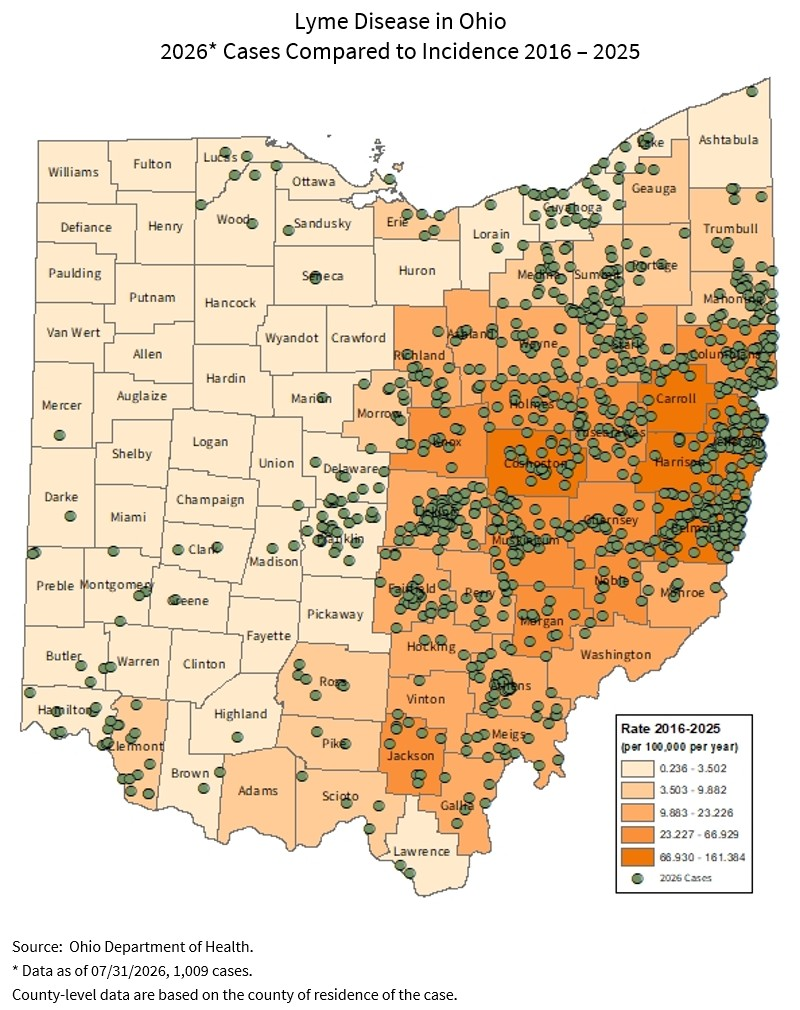
Lyme disease season peaks in late spring and early summer, with June typically the single highest-risk month in the United States. About 54% of all reported cases in 2021 had onset dates in May, June, or July, according to CDC surveillance data. But the full window of risk stretches well beyond those three months, depending on where you live and which life stage of tick is active.
Why May Through July Is the Danger Zone The bacteria that cause Lyme disease are primarily spread by nymphal ticks, the juvenile stage of the black-legged tick (commonly called the deer tick). Nymphs are roughly the size of a poppy seed, making them extremely difficult to spot on your skin. In the Northeast, these nymphs are most active from May through July, and that timing lines up almost exactly with the annual spike in Lyme disease cases.
CDC data from 2021 shows the monthly pattern clearly: cases climb sharply in May (4,509 reported), peak in June (4,970), then drop by more than half in July (2,013). By August, cases fall further to around 1,048. The reason June dominates isn’t just tick activity. It’s also when people start spending more time outdoors in shorts and sandals, increasing skin exposure right when nymphs are at their hungriest.
Research on tick collection rates reinforces this timing. In a Massachusetts study, the number of infected ticks collected per person-hour peaked in May, stayed high in June, then dropped notably through July, August, and September. So while summer feels like “tick season,” the true transmission risk is concentrated in that late spring window before most people are thinking about it.
The Second Season Most People Miss Adult black-legged ticks have their own activity period that runs from October through May, as long as daytime temperatures stay above freezing. These adults are larger and easier to spot than nymphs, so they’re less likely to feed undetected long enough to transmit Lyme bacteria (transmission typically requires the tick to be attached for 36 to 48 hours). Still, adult ticks absolutely can and do transmit Lyme disease, particularly in fall and early spring when people assume tick season is over.
This means there’s effectively no month of the year when Lyme disease risk is truly zero. The 2021 CDC data recorded cases in every single month, including 262 in January and 320 in December. These numbers are small compared to the June peak, but they’re not negligible.
How Temperature Drives Tick Activity Ticks don’t operate on a calendar. They respond to temperature. Black-legged ticks become active whenever the ground is thawed and the air temperature rises above freezing. A warm spell in February can bring them out just as easily as a day in May.
Once temperatures drop and the ground freezes solid, ticks lose the ability to move their muscles, but they aren’t killed. Warm them up even slightly and they’re immediately mobile again.
This is why mild winters and early springs can shift the start of Lyme season earlier. Snow cover actually helps suppress tick activity by insulating the frozen ground and keeping ticks dormant beneath it. A snowless winter with frequent above-freezing days creates more opportunities for tick encounters than a consistently cold, snowy one.
Regional Differences Across the U.S. The classic May-through-July peak applies primarily to the Northeast and Mid-Atlantic states, where the vast majority of U.S. Lyme cases occur. The Upper Midwest (Minnesota, Wisconsin) also sees high case counts, but tick behavior there differs in a notable way. In the Northeast, nymphs and larvae feed during distinct, separate windows. In the Upper Midwest, nymphal and larval feeding seasons overlap, which can subtly shift the timing and intensity of local risk.
The West Coast has its own pattern entirely. The western black-legged tick, the species responsible for Lyme transmission in California, Oregon, and Washington, follows a different schedule. Adults become abundant in early December and stay active through winter into early summer, when dropping humidity shuts them down. Nymphs on the West Coast peak in April, May, and June, roughly similar to the eastern timeline but shifted slightly earlier. If you live in Northern California or the Pacific Northwest, your highest-risk months for Lyme may start in late winter rather than late spring.
Practical Timing for Prevention If you’re in the Northeast or Midwest, your highest-alert period should begin in April and run through July. May and June deserve the most caution, particularly if you’re hiking, gardening, or spending time in wooded or grassy areas. Tick checks after outdoor activity are most critical during these months, but they shouldn’t stop when summer winds down.
For fall hikers and hunters, October through November marks the start of adult tick season. The risk per encounter is lower because adult ticks are easier to find on your body, but you should still check thoroughly after time in tick habitat. Pet owners need year-round awareness as well, since dogs can pick up ticks on any above-freezing day and bring them into the home.
On the West Coast, shift your vigilance earlier. December through June covers the full window when either adult or nymphal ticks are actively seeking hosts. The nymphal peak in April through June is when transmission risk is greatest, since those tiny nymphs are hardest to detect.
The simplest rule: if the temperature is above freezing and you’re in an area where Lyme disease is endemic, ticks can be active. The poppy-seed-sized nymphs of late spring are the ones most likely to make you sick, but the risk never fully disappears until the ground is frozen solid and covered in snow. Tickborne Diseases in Ohio | Ohio Department of Health | ohio tick – Search Videos
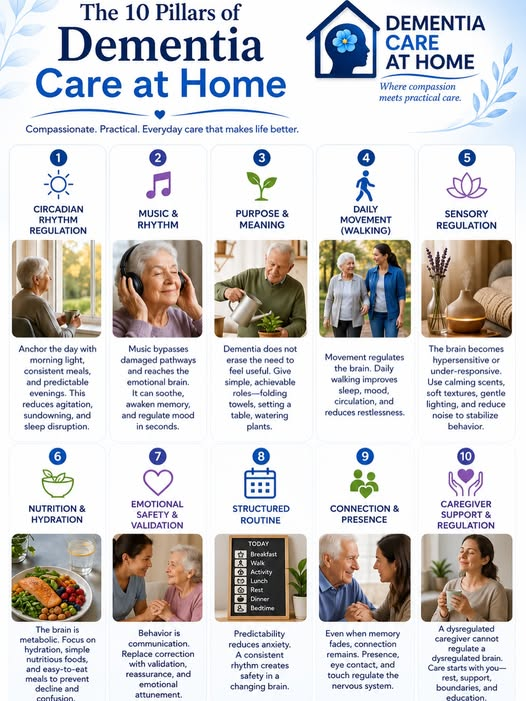
After years of working in memory care, I’ve noticed something important: families are often given information about dementia, but not always clear guidance on what actually helps day to day. People search for the “right thing to say” or the “perfect approach,” while feeling overwhelmed, exhausted, and afraid of making mistakes.
But good dementia care is rarely about perfection. It usually comes back to a few core pillars that make the biggest difference in quality of life – both for the person living with dementia and for the caregiver.
The first pillar is emotional safety.
People with dementia may forget details, names, or timelines, but emotions often remain long after the facts disappear. The feeling of being rushed, criticized, frightened, or embarrassed can stay in the body even when the reason is forgotten. A calm tone, reassurance, gentle redirection, and reducing arguments often work better than trying to force reality or correction.
The second pillar is pain management.
This is one that is frequently missed. In my experience, many behaviors labeled as “agitation” are actually signs of discomfort, untreated pain, constipation, infection, hunger, exhaustion, or overstimulation. Dementia changes communication. Instead of saying “my hip hurts,” someone may pace, yell, resist care, or become withdrawn. Asking “what is this behavior communicating?” changes everything.
The third pillar is routine and environment.
The dementia brain struggles with unpredictability. Noise, clutter, sudden changes, too many choices, or overstimulation can increase confusion and distress. Simple routines, familiar surroundings, proper lighting, and reducing chaos can help the nervous system feel safer.
Another pillar that deserves more attention is preserving dignity.
Even when memory changes, people still want respect. They still want to feel included, spoken to kindly, and treated like adults. Small things matter: knocking before entering a room, explaining care before doing it, offering choices when possible, and protecting independence in the areas they can still manage.
And finally, there is the pillar caregivers often ignore completely: caregiver wellbeing.
You cannot pour endlessly from an empty body and mind. Chronic stress eventually shows up physically – headaches, back pain, exhaustion, insomnia, anxiety, irritability, brain fog. Caregivers are often expected to function at superhuman levels while grieving in slow motion. Support is not a luxury in dementia care. It is part of the care plan.
The truth is, dementia care is not built on one perfect technique. It is built on understanding human needs: safety, comfort, dignity, connection, routine, and compassion.
And sometimes the most powerful thing a caregiver can hear is this:
If this feels hard, it’s because it is hard.
Disruptions in circadian rhythm
significantly contribute to dementia progression by impairing sleep, promoting neurotoxic protein accumulation, and increasing neuroinflammation.
Role of Circadian Rhythm in Brain Health
Circadian rhythm is the body’s 24-hour biological clock, regulated by the suprachiasmatic nucleus (SCN) in the hypothalamus, which coordinates sleep-wake cycles, hormone secretion, body temperature, and gene expression helpdementia.com+1.
In healthy individuals, this rhythm supports sleep-dependent cognitive processes and the brain’s waste clearance system, known as the glymphatic system, which removes neurotoxic proteins like amyloid-β (Aβ) and tau onedaymd.com.
Circadian Disruption and Dementia
In dementia, particularly Alzheimer’s disease (AD), circadian rhythms are often fragmented or weakened, leading to poor sleep quality, irregular hormone secretion, and impaired cognitive function helpdementia.com+1.
Disrupted circadian rhythms are associated with:Increased accumulation of Aβ and tau proteins, which are central to neurodegeneration helpdementia.com+1.Neuroinflammation, with elevated inflammatory markers such as TNF-alpha and IL-6 onedaymd.com.Blood-brain barrier dysfunction, reducing the brain’s ability to clear toxins onedaymd.com.Sleep fragmentation, which further impairs glymphatic clearance and creates a vicious cycle of worsening circadian misalignment and cognitive decline onedaymd.com. Longitudinal studies indicate that older adults with weaker circadian rhythms have 2–3 times higher risk of developing dementia compared to those with stable daily patterns, suggesting circadian disruption may serve as an early biomarker for cognitive decline onedaymd.com.
Mechanisms Linking Circadian Dysfunction to Cognitive Decline
SCN degeneration: Aging and neurodegenerative diseases alter SCN function, disrupting clock gene expression and hormone rhythms MDPI.Melatonin reduction: Normally rising at night to promote sleep, melatonin levels are often lower in dementia patients, contributing to sleep disturbances helpdementia.com.
Cognitive impairment: Circadian misalignment affects memory, attention, and executive function, accelerating progression from mild cognitive impairment (MCI) to full dementia helpdementia.com+1.
Potential Interventions
Addressing circadian dysfunction may delay or mitigate dementia progression.
Strategies include:Behavioral interventions: Maintaining consistent sleep-wake schedules, exposure to natural light, and structured daily activities.
Pharmacological approaches: Melatonin supplementation or other chronobiotic agents to restore circadian alignment.Sleep optimization: Enhancing slow-wave sleep to improve glymphatic clearance and reduce neurotoxic protein accumulation onedaymd.com.
Summary
Circadian rhythm disruption is both a symptom and a driver of dementia.
It contributes to protein accumulation, neuroinflammation, and cognitive decline, while poor sleep further exacerbates these effects. Maintaining circadian health through lifestyle and therapeutic interventions is increasingly recognized as a critical factor in dementia prevention and managementhelpdementia.com+2.
How Morning Light Regulates Sundowning
Morning light exposure can help reduce sundowning symptoms in people with dementia by resetting and stabilizing the body’s circadian rhythm.
Why Morning Light Helps
Sundowning — increased confusion, agitation, and restlessness in the late afternoon or evening — is often linked to disrupted circadian rhythms in dementia. The brain’s master clock, the suprachiasmatic nucleus (SCN), may not respond properly to light signals, causing melatonin to be released at the wrong times helpdementia.com.
Morning bright light (especially blue-wavelength light) suppresses melatonin production during the day, which sharpens and advances the evening melatonin rise, making it easier to fall asleep at a consistent time neurolaunch.com+1. It also triggers a cortisol awakening response, boosting alertness and mood circadiansync.org.
Evidence
A 2015 study in Journal of Alzheimer’s Disease found that dementia patients receiving structured bright light therapy in the morning showed reduced late-afternoon agitation and improved nighttime sleep compared to standard care helpdementia.com. This supports the idea that timed light exposure can anchor the internal clock.
Practical Implementation
Natural sunlight: Encourage outdoor time within 30–60 minutes of waking for 10–30 minutes circadiansync.org.
Light therapy devices: Use full-spectrum light boxes for 30–60 minutes in the morning if outdoor exposure is limited helpdementia.com.
Consistency: Maintain the same wake time and light exposure daily to reinforce the rhythm circadiansync.org.
Evening support: Dim lights, reduce stimulating activities, and use night lights to aid sleep helpdementia.com.
Additional Tips
Avoid caffeine and high-sugar foods in the late day to reduce restlessness helpdementia.com.
Combine light therapy with stable routines, reduced noise, and calming activities during the day helpdementia.com.
Use gentle reorientation techniques (e.g., reminding of time/place) during sundowning episodes
Brain Health, Nutrition, Hydration, and Dementia Care
Proper metabolic nutrition, hydration, and functional dietary support are essential to protect brain health and slow cognitive decline in dementia.
Why Nutrition and Hydration Matter for the Brain
The brain consumes about 20% of the body’s daily calories despite weighing only 2% of total body mass helpdementia.com. It relies on a constant supply of specific nutrients—such as omega‑3 fatty acids, B vitamins, vitamin D, magnesium, and antioxidants—to maintain neuronal integrity, synaptic function, and neurochemical balance infoaging.org+1. Malnutrition and dehydration can accelerate cognitive decline, impair memory, reduce muscle strength, and increase infection risk NursingHome411.
Common Challenges in Dementia
Cognitive changes: Forgetting to eat, not recognizing food, or confusion during meals NursingHome411.
Physical difficulties: Apraxia (loss of motor skills), dysphagia (swallowing problems), or reduced appetite NursingHome411.
Behavioral and sensory changes: Loss of taste/smell, medication side effects, depression, or illness NursingHome411.
Dehydration: Often due to reduced thirst sensation or forgetfulness, which can worsen confusion and increase infection risk NursingHome411.
The Mediterranean diet and MIND diet are linked to lower Alzheimer’s risk.
Omega‑3 fatty acids, antioxidants (vitamins C, E), B vitamins, and vitamin D support cognitive resilience.
Limit ultra-processed foods, excess sugar, and unhealthy fats.
Practical Tips for Caregivers
Calm, well-lit meal environments with simple, contrasting plates NursingHome411.
Encourage participation in meal preparation and choice.
Monitor swallowing for signs of aspiration.
Hydration: Offer fluids at regular intervals, even if thirst is reduced.
Involve home health aides to coordinate nutritional monitoring and support infoaging.org.
Bottom line: Integrating metabolic health, functional nutrition, and individualized hydration support into dementia care can improve brain function, quality of life, and safety. A multidisciplinary, evidence-based approach is key to maximizing outcomes.
Dementia can trigger manic behavior due to neurodegenerative changes in the brain, particularly in the frontal and temporal lobes, which disrupt mood regulation, impulse control, and social behavior.
Neurological Basis
Manic symptoms in dementia often arise from damage to the frontal and temporal lobes, which are critical for regulating emotions, judgment, and social behavior. In frontotemporal dementia (FTD), for example, degeneration in these areas can lead to disinhibition, euphoria, hyperactivity, and inappropriate social conduct. Similarly, Lewy body dementia and late-stage Alzheimer’s disease may also present with manic-like behaviors due to widespread neurodegeneration affecting mood and cognitive control aliyahealthcare.com+1.
Clinical Features
Mania in dementia may not always resemble classic bipolar mania. Older adults often exhibit confusion, irritability, distractibility, and agitation rather than elevated mood. Other signs can include hyperverbal speech, impulsivity, insomnia, and emotional instability. These behaviors are sometimes described as secondary mania, meaning they result from neurological changes rather than a primary psychiatric disorder lidsen.com+1.
Contributing Factors
Several factors can increase the likelihood of manic episodes in dementia patients:
Disease progression: As dementia advances, behavioral and psychological symptoms, including mania, become more pronounced aliyahealthcare.com.
Medical comorbidities: Older adults often have conditions like cardiovascular disease, diabetes, or infections that can exacerbate mood disturbances thecarlatreport.com.
Medication effects: Certain drugs, including corticosteroids or stimulants, may trigger manic symptoms aliyahealthcare.com+1.
Underlying bipolar disorder: Some patients may have a history of mood disorders, which can interact with neurodegeneration to produce mania aliyahealthcare.com.
Types of Dementia Most Associated with Mania
Behavioral variant frontotemporal dementia (bvFTD): High prevalence of euphoria, disinhibition, and hyperactivity aliyahealthcare.com.
Alzheimer’s disease (AD): Manic symptoms are less common but can appear in late stages, often as agitation or emotional lability aliyahealthcare.com.
Lewy body dementia and vascular dementia: Can present with manic-like behaviors, particularly in the context of small vessel disease or cognitive decline aliyahealthcare.com.
Management Considerations
Recognizing mania in dementia is crucial for patient care. Management strategies include:
Behavioral interventions: Structured routines, minimizing overstimulation, and caregiver support.
Medication: Mood stabilizers or antipsychotics may be used cautiously to control severe agitation or hyperactivity.
Monitoring underlying causes: Addressing infections, metabolic imbalances, or medication side effects that may worsen manic symptoms aliyahealthcare.com+1.
Summary
Manic behavior in dementia is primarily a result of neurodegenerative changes affecting mood and impulse control, often compounded by medical, pharmacological, or psychiatric factors. While it may resemble classic mania, it frequently presents as agitation, irritability, and disinhibition, particularly in frontotemporal and late-stage Alzheimer’s dementia. Early recognition and careful management are essential to improve quality of life for both patients and caregivers aliyahealthcare.com+2.
Dementia is a progressive neurological disease that damages brain tissue, leading to memory loss, cognitive decline, and — importantly — emotional and behavioral changeswww.caremountain.com. The brain regions that regulate emotion, such as the frontal and temporal lobes, are often affected, causing mood swings, anxiety, apathy, irritability, and even sudden outbursts or weeping neurolaunch.com. These changes can be more disruptive than memory loss itself.
Depression in Dementia
Depression is common in people with dementia, affecting up to 40% of individuals www.thebrf.org. It can be mistaken for dementia symptoms, but depression is a mental health disorder marked by low mood, loss of interest, irritability, withdrawal, and sometimes physical symptoms like sleep problems, fatigue, and appetite changes Dementia UK+1. Causes include:
Brain changes affecting emotion regulation
Loss of independence and reduced social interaction
These symptoms are not character flaws but disease-related changes. Understanding their causes helps caregivers respond more effectively www.caremountain.com+1.
Care Strategies
For the person with dementia:
Non-pharmacological approaches are first-line: music therapy, reminiscence therapy, structured routines, and a calm, predictable environment neurolaunch.com.
Engagement: Daily activities, physical exercise, and meaningful tasks can improve mood www.thebrf.org.
Behavioral management: Address sleep issues, reduce triggers for agitation, and use redirection techniques Dementia Care Central.
For caregivers:
Recognize signs of depression and emotional distress in the person, and in themselves (40–70% of caregivers develop clinical depression, with higher mortality risk) www.caremountain.com.
Seek support groups, respite care, and professional counseling to prevent burnout www.caremountain.com+1.
Maintain a structured, safe, and emotionally supportive home environment.
Professional Care Benefits
Specialized dementia care can reduce behavioral symptoms by up to 82% within 38 dayswww.caremountain.com. This includes trained staff, tailored activities, and coordinated medical and emotional support.
In summary: Dementia affects the brain’s emotional regulation centers, leading to depression, anxiety, and behavioral changes. Care should combine emotional support, structured routines, and professional interventions to improve quality of life for both the person with dementia and their caregivers.
Structured Routine and Dementia Care
A structured routine is one of the most effective tools in dementia care, helping reduce confusion, anxiety, and behavioral challenges while supporting emotional well-being and safety.
Why Structure Matters
Predictability in daily life provides stability and comfort for people with dementia, which can lower stress and agitation The Herrick House+1. Consistent patterns help reinforce memory pathways, reduce disorientation, and make it easier for caregivers to anticipate needs The Herrick House. This sense of security can also improve sleep, appetite, and participation in activities caregivingexperts.com+1.
Key Elements of a Structured Routine
Fixed mealtimes: Serve meals at the same time each day to support digestion and appetite helpdementia.com.
Consistent personal care: Set regular times for bathing, brushing teeth, and dressing, in the same order each day helpdementia.com.
Daily anchors: Start and end the day with familiar activities (e.g., morning walk, evening tea) The Herrick House.
Scheduled activities: Include light exercise, music, crafts, reminiscing, or group outings Alzheimer’s Association+1.
Rest periods: Build in quiet times or naps to prevent fatigue helpdementia.com.
Visual cues: Use clocks, whiteboards, or labels to reinforce the schedule heartsfordementia.com.
Benefits
Reduces anxiety and agitation by minimizing unpredictability The Herrick House.
Supports cognitive function through repeated, meaningful activities The Herrick House.
Enhances caregiver confidence by creating a clear daily flow The Herrick House.
Flexibility Within Structure
While consistency is key, flexibility is essential. Adjust activities based on mood, energy levels, and changing abilities. Some days may require more rest; others may allow for spontaneous, enjoyable activities Alzheimer’s Association+1.
Practical Example
A sample early-to-mid stage routine might include:
In later stages, focus on comfort and safety—remove hazards, use gentle touch, and assist with all care within familiar routines helpdementia.com.
In summary: A well-designed, flexible daily routine tailored to the individual’s preferences and abilities can significantly improve quality of life for people with dementia, reduce caregiver stress, and support both physical and emotional health Alzheimer’s Association+2.
In dementia care, presence, eye contact, and gentle touch are powerful non-verbal tools that can enhance connection, reduce distress, and support dignity even when verbal communication declines.
The Role of Presence
Being physically and emotionally present means slowing down, focusing fully on the person, and creating a calm, safe environment. This reduces frustration for both the person with dementia and the caregiver, and signals that they are valued and understood National Council of Certified. Presence can help bridge communication gaps, especially in later stages when words are harder to find www.learn2care.us.
Eye Contact
Eye contact is a visual cue of attentiveness and care. For someone with dementia, it can:
Encourage engagement and willingness to communicate AlzheimersLab
Help build trust and comfort AlzheimersLab However, some individuals may avoid eye contact due to confusion, anxiety, or sensory overload. In such cases, gently offering eye contact when they seem ready can be more effective than forcing it AlzheimersLab+1.
Gentle Touch
Touch is a deeply comforting non-verbal signal that can:
Support emotional regulation in later stages entyrecare.com It should be consensual, respectful, and individualized—some people may dislike certain types of touch. Always check for cues and respect personal boundaries.
Integrating Presence, Eye Contact, and Touch
Care professionals and family members can combine these elements:
Sit or stand close to the person, facing them directly (or at a comfortable distance if eye contact is uncomfortable).
Offer gentle touch (e.g., hand on the arm, a pat) when they seem receptive.
Maintain eye contact when they are engaged, pausing if they withdraw.
Be mindful of cultural differences—some cultures may interpret eye contact or touch differently AlzheimersLab.
Evidence and Best Practices
Research shows that non-verbal communication, including eye contact and touch, is central to dementia care in nursing homes and at home MDPI. Structured training in recognizing and responding to non-verbal cues can improve quality of life and reduce behavioral symptoms MDPI.
In summary: Presence, eye contact, and gentle touch are not just “nice to have”—they are essential tools for maintaining connection, reducing distress, and supporting dignity in dementia care. Using them thoughtfully and in line with the person’s comfort level can make a significant difference in their daily experience.
Caregiver support and regulation in dementia care aim to provide resources, training, and coordinated services to help individuals and families meet the complex needs of people with Alzheimer’s or related dementias, while also addressing systemic challenges in the care workforce.
Understanding the Caregiver Role
Caregivers can be family members, friends, or community providers offering unpaid or informal care. In Illinois, for example, over 383,000 caregivers provided more than 486 billion hours of care to people with dementia in 2021, with an unpaid value exceeding $8.8 billion Illinois Department on Aging. Dementia caregiving is often prolonged and intensive, requiring adaptation to changing needs across early, middle, and late stages of the disease Alzheimer’s Association.
Support Services and Training
Training & Education: Organizations like the Alzheimer’s Association, SIU School of Medicine, UCLA Health, and local Area Agencies on Aging (AAAs) offer free, 24/7 online training, assessment tools (e.g., TCARE), and guidance on daily care, communication, and safety Illinois Department on Aging+1.
Assessment & Referral: AAAs can assess caregiver needs and connect them to programs such as Savvy Caregiver®, Stress-Busting Program, counseling, and respite care Illinois Department on Aging.
Support Groups: In-person and online groups provide peer support and coping strategies Alzheimer’s Association.
Public Health Initiatives: The Alzheimer’s Association works with state and local agencies to improve awareness, ensure service availability, and coordinate care to reduce gaps Alzheimer’s Association.
Regulatory and Programmatic Frameworks
National Family Caregiver Support Program (NFCSP): Established under the Older Americans Act, this program funds state-level initiatives to provide information, access to services, counseling, support groups, and respite care Illinois Department on Aging.
State-Level Programs: Illinois’ Caregiver Support Program, funded by the NFCSP, partners with AAAs and community providers to deliver basic services and supplemental support Illinois Department on Aging.
Regulation & Policy: Public health agencies use data (e.g., Behavioral Risk Factor Surveillance System) to identify modifiable risk factors for cognitive decline in caregivers and develop targeted interventions Alzheimer’s Association.
Key Challenges
Workforce Shortage: There is an increasing shortage of direct care providers, especially in aging, disability, and public health networks Illinois Department on Aging.
Caregiver Well-Being: Prolonged caregiving can strain physical and emotional health, making self-care and access to support critical Alzheimer’s Association.
Coordination Gaps: Fragmented services and inequities in access remain significant barriers Alzheimer’s Association.
How to Access Support
Find Local Resources: Use the Eldercare Locator (Administration for Community Living) to connect with services in your area Alzheimer’s.gov.
Join a Chapter: The Alzheimer’s Association has local chapters offering workshops, support groups, and advocacy Alzheimer’s Association.
In summary: Caregiver support and regulation in dementia care combine direct services (training, counseling, respite) with systemic policy efforts to ensure equitable access, coordination, and sustainability of care. This dual approach addresses both the immediate needs of caregivers and the broader structural challenges in the care system.
When I say I have a deep, personal fucking beef with Anthony Fauci and the people who controlled the pandemic response, I need you to understand that I am talking about far more than politics, television interviews, congressional hearings, or whichever political team you think I am supposed to be defending.
I am talking about my sister-in-law, who was also one of my very best friends, dying after she repeatedly told a hospital that something was seriously wrong and they repeatedly sent her home anyway.
My sister-in-law was 31 years old when she was suddenly diagnosed with epilepsy after living her entire life without it, and the hospital prescribed her Tegretol to control the seizures. Within days of beginning that medication, she developed a rash that concerned her enough for my brother to take her back to the same hospital that had diagnosed her and prescribed the drug.
She showed them the rash, explained that she had just started taking Tegretol, and told them that she believed she was having an allergic reaction. The hospital sent her home with instructions to take Benadryl and continue taking the medication exactly as prescribed, so she trusted the medical professionals who told her she was safe and followed their instructions.
Within a few more days, the rash became hives that continued spreading across her body, and my brother rushed her back to the emergency room because the reaction was clearly getting worse. She once again showed them what was happening to her skin, reminded them about the new medication, and told them that she believed she was having an allergic reaction.
They sent her home again with the same instructions to take Benadryl and continue taking the Tegretol.
And this is where the COVID restrictions became a devastating part of the story, because my brother was prohibited from entering the emergency room with his wife and advocating for her in the way he normally would have.
My sister-in-law was an immigrant from Burma, and while she spoke fluent English, English was not her first language. So my brother was the person who usually stood beside her during medical appointments, helped her explain exactly what she was experiencing, asked the questions she may not have known to ask, and pushed harder when he felt that something important was being dismissed.
He explained all of that to the hospital, pleaded with them to let him accompany his wife, and made it clear that his presence mattered because he knew her medical history and could help her communicate. But they refused to let him through the doors and assured him that they would take care of her…
And once again, they sent her home with the same instructions (take Benadryl, keep taking the seizure meds).
Within another day, the hives began turning into painful blisters and open wounds, her eyes were burning, she felt feverish, and my brother rushed her back to the hospital for the third time because her body was now showing every possible sign that this had become a medical catastrophe.
This time, they finally admitted her.
The doctors eventually diagnosed her with Stevens-Johnson syndrome, a rare and devastating reaction to medication that was destroying her skin and ravaging her entire body from the inside out. Then the hospital kept her for several more days before calling my brother and admitting that they were not properly equipped to treat her condition, so they transferred her to another hospital with a specialized burn ICU.
By the time my brother was finally allowed to see his wife, she could no longer open her eyes, and more than 95% of her body had been affected by third degree burns and wounds (yes, 3rd degree burns).
She was still conscious at this point, she was still speaking, and she was still the woman my brother loved trapped inside a body that was being destroyed by the same medication she had repeatedly told the first hospital was hurting her.
About 72 hours later, the hospital called my brother and told him to come immediately because the doctors needed to speak with him… and I was the one that drove him there because there are certain phone calls that tell you everything before anybody has said the actual words.
A nurse met us at the entrance because she was supposed to escort my brother upstairs alone, and security initially planned to stop me from going with him because the COVID restrictions still limited who could enter the hospital. That nurse knew the news my brother was about to receive, understood how incredibly cruel it would have been to force him to hear it by himself, and she fought for me to accompany him.
(I never learned her name, but I will thank God for that woman for the rest of my life because she gave my brother the dignity of having somebody beside him when his entire world collapsed.)
She led us into a conference room inside the burn ICU, and a doctor came in to explain that my sister-in-law had become septic, her organs were failing, and the damage had progressed beyond anything they could treat.
I will never forget my brother looking directly at that doctor and saying, “Look me in the eye, doc, man to man, and tell me. Is my wife coming home?”
The doctor looked completely defeated, let out an empathetic sigh, and shook his head and told him, “no.”
I remember letting out the words, “Oh my God,” while my brother froze so completely that it looked like his body had forgotten how to breathe.
My brother stepped out of the room to process what he had just heard, and the doctor sat next to me and asked me what had happened before my sister-in-law arrived at their facility because he was so confused and sad for us and had been under the impression that his hospital was the first place to treat her.
Then I explained the epilepsy diagnosis, the Tegretol, the first rash, the spreading hives, the repeated emergency room visits, the instructions to continue taking the medication, and the fact that my brother had been forced to remain outside while his wife tried to advocate for herself alone…
I will never forget the disbelief and concern that came over that doctor’s face as he listened, because he understood how many times she had asked for help before she reached him.
He became extremely careful with his words, and I understood why, because multiple hospitals had been involved and there were serious questions surrounding how her case had been handled. All he could finally say was “I am so sorry…” before he walked us into her room where my brother could say goodbye to his wife.
To say my sister-in-law was completely unrecognizable is an understatement.
I watched my brother stand beside the woman he loved for over 10 years while she lay covered in burns and wounds, her organs failing, and her body unable to survive what had happened to her…
My brother gently stroked her head and sob as he said, “Goodbye, my love.”
I watched the numbers on the monitor begin to fall after they removed her from life support, and when her heart reached its final beats, my brother looked at the screen, looked back at his wife, and sobbed again in agony and softly said, “Oh… I know what that means.”
Then the monitor went flat.
It was around 1:30 in the afternoon.
I walked beside my brother through what felt like the longest hallway on the face of the Earth back to my car, carrying his wife’s belongings while he whimpered, “Oh man… oh man…” over and over because those were the only words he could manage to say.
When we reached my car, his crying suddenly stopped, and at the first traffic light outside the hospital, he asked me to do him a solid and stop at a gas station so he could buy cigarettes. He had quit smoking a years before then, but after watching him have to take the love of his life off of life support, I sure as hell was not going to deny him that one small request.
When he got out of my car, I watched him walk into that gas station store with a dazed look all over his face, and I just knew that nothing would ever be the same after that day.
Because I knew that a massive part of my brother had died inside that hospital room with his wife that day.
Over the following years, he turned to alcohol because he did not know how to make that level of grief stop hurting… and last August, alcoholic liver failure took him too.
I received another hospital phone call, sat inside another conference room, listened to another doctor explain that someone I loved would never come home, and watched another heart slow down on another monitor until it stopped.
Now my niece and my youngest nephew have lost both their mommy and daddy, which means the damage did not end when my sister-in-law’s heart stopped beating… because it created a dark ripple effect that continued tearing through our family for years.
So when I say that I have a personal fucking beef with Anthony Fauci and every official who created, enforced, defended, and celebrated pandemic policies that separated vulnerable patients from the people who knew them best, this is the grief I am talking about.
My anger comes from knowing that my sister-in-law repeatedly asked for help and was treated like her concerns were insignificant.
It comes from knowing that she was instructed to continue taking the medication she believed was hurting her.
It comes from knowing that my brother fought to stand beside his wife and was kept outside while the hospital assured him that she would be taken care of.
It comes from knowing that an immigrant woman who spoke English as her second language was forced to advocate for herself alone during one of the most terrifying medical emergencies of her life.
It comes from knowing that had she been treated with urgency the first time she walked through those doors, or had my brother been allowed to fight for her from inside the room, the outcome could have been different.
And my family’s experience with those restrictions did not end there, because my grandmother also died alone inside her assisted-living facility while visitors were prohibited during COVID.
She had advanced dementia, and the people she recognized, trusted, and loved were kept away from her during the final season of her life. My last living grandparent left this world without her family beside her to hold her hand or say goodbye, and that is a grief I will carry for the rest of my life too.
Yes, COVID was real, and yes, COVID killed an unimaginable number of people, but acknowledging the reality of the virus does not require me to pretend that every policy created in response to it was compassionate, justified, effective, or harmless.
People in positions of power used an emergency to make sweeping decisions that stripped patients and families of their voices, removed advocates from hospital rooms, isolated vulnerable people from the humans who loved them, and created consequences that will never be captured by a case count or government report.
I pray for the hospital workers who dismissed my sister-in-law.
I pray for the officials who created policies that separated sick people from their advocates and dying people from their families.
I pray because every one of them is human, every one of them is a sinner, and every one of them needs the mercy of God exactly as desperately as I do.
But prayer does not require amnesia, forgiveness does not remove accountability, and mercy does not require me to sanitize the truth so that the people involved can feel more comfortable with the consequences of what happened.
My sister-in-law deserved to be believed the first time she asked for help, my brother deserved to stand beside his wife and advocate for her, my niece and nephews deserved to grow up with their parents, and my grandmother deserved to leave this world surrounded by the family who loved her.
So I will continue praying for everyone involved, and I will continue telling the truth about what their decisions cost my family, because both realities exist inside me at the same time.
I am a Christian woman trying to forgive, and I am also a grieving sister, aunt, granddaughter, and friend carrying a very personal, very painful, and very fucking justified anger over lives that deserved better.
God help me, some days carrying both feels heavier than I know how to explain.
I am so sorry for everything you all went through.
This happens to thousands of families because this is our medical system and people do not know to question everything and to get second and third opinions. They do not know because no one gave them options, natural health practitioners etc.
I was going to study to become a surgeon while being stationed in the Air Force and learned of how the medical system works while working at this Air Force training hospital and decided I did not want to be a part of that. I instead had an incident of severe back pain that led me to discover Chiropractic.
36 years later I still try to educate my patients and followers on social media of the dangers of so called “medicine” which are synthetic toxic petroleum based drugs with MANY SIDE EFFECTS and those include all vaccines, flu shots etc. At nearly 70 I take no prescription drugs, I do not go to medical doctors.
But if there is a life threatening situation like a gunshot wound, stab wound, broken bone, heart attack, severe burn then Emergency Rooms are you best choice. Other than those situations there are SO MANY NATURAL SAFE WAYS TO HEAL THE BODY. Please find a positive way to channel that anger to help others awaken from the dangers of the medical system
What is Maya Merhige’s next Oceans Seven challenge swim?
How much has Maya Merhige raised for cancer research?
Teen ultra‑marathon swimmer Maya Merhige is pursuing the Oceans Seven challenge to raise funds for cancer research, aiming to become the youngest ever to complete the seven toughest open‑water swims before turning 20.
One of ultra-marathon swimmer Maya Merhige’s biggest fears is jellyfish. Yet she willingly spends hours swimming through some of the world’s largest and most dangerous bodies of water.
Why?
Because she swims for those who can’t.
Every time Merhige jumps into freezing water surrounded by sharks and jellyfish, she is raising money for cancer research and patient programs through the nonprofit Swim Across America.
“If those patients can do cancer treatment – if those 7-year-olds and 4-year-olds can go through a day of cancer treatment – then I can most definitely swim another 20 strokes,” Merhige says.
High School Sports: The best preps coverage in the country, from rankings, scores and stats to local and national news—every team matters.
So far, Merhige, 18, has raised more than $172,000 for cancer research.
On July 8, Merhige completed the fifth swim of the challenge, a 21.4-mile crossing of the North Channel from Ireland to Scotland. Battling 50-degree water, powerful tides and jellyfish stings, she finished in 12 hours, 19 minutes and 37 seconds.
Maya Merhige prepares to swim across the North Channel on July 8, 2026 as a part of the Oceans Seven challenge. This swim held special significance for Merhige: It took place exactly a year after she had major surgery. After she had a ski accident in 2023, doctors discovered a benign tumor on her pancreas that led to several years of hospital visits and surgeries.
“I think it completely changed my perspective and my understanding of what the cancer experience is like,” she says. “The fact that I can do this and I’m healthy enough to do this – I shouldn’t take advantage of that.”
Before Merhige began the Ocean Seven challenge, she became the youngest woman to swim the width of Lake Tahoe at just 13 years old. She then began the challenge with the Catalina Channel as a freshman in high school, becoming the youngest woman to complete the 20-mile swim at age 14.
One year later, she became the youngest person to complete the Molokai Channel swim in Hawaii at age 15. She followed that by crossing the Cook Strait in New Zealand, the English Channel and the Molokai Channel. But those feats didn’t come easily, she says.
“It took me a long time until maybe a year ago to really be OK with not having a lot of control and not having complete awareness all the time. That really scared me at the beginning – the feeling of being so small in such a big body of water.”
Each swim must be completed solo and unassisted. Swimmers cannot touch a buoy, the boat or any passengers. Every 30 minutes, Merhige is handed a water bottle on a rope filled with carbohydrates to stay fueled, though even that can be difficult when she begins to feel sick.
Despite the physical challenges, Merhige says, the mental challenge is even greater. Instagram
“I have swum for a long time, so I know that physically I can. It’s much more a mental thing to be like, ‘How can I continue doing this and not stress myself out?’”
The Molokai Channel swim was the toughest of the five swims, she says – physically and mentally. She was in the water for 28 hours, nearly twice as long as she and her crew had expected.
“I had such a challenging time,” Merhige says. “That was the only time I’ve ever been in the water and been like, ‘Why do I do this?’”
But whenever she questions her decision to continue, she reminds herself for whom she is swimming. Before every open-water swim, Maya Merhige writes the names of those who have been affected by cancer on her cap before every swim. From family members to friends and even cancer patients she doesn’t know, each name serves as a reminder of why she keeps going.
Merhige has raised more than $172,000 for cancer research. Merhige has two swims remaining to complete the Oceans Seven challenge. She is scheduled to swim the Strait of Gibraltar in August and complete the Tsugaru Strait in Japan next year – both before her 20th birthday.
Before each swim, she’ll write the names of cancer patients and survivors across her cap, just as she always does.
Francisco Lopera. [ Courtesy of the Consorcio de América Latina y el Caribe sobre la Demencia (LAC-CD).]
Dr. Francisco Javier Lopera Restrepo (1951-2024) As a young country doctor in the early 1980s, Lopera realized that the villages in the mountainous Paisa region around Medellin where he had grown up were home to families beset with a heritable form of early onset dementia. Since then, Lopera focused his clinical work and his research on these families and their disease. The result?
In large part, the Alzheimer’s Prevention Initiative. The API, together with its cousin, the Dominantly Inherited Alzheimer’s Network (DIAN), has pioneered therapeutic intervention trials founded on large-scale human data gleaned from decades-long clinical and biomarker studies of deeply phenotyped cohorts.
This description hardly reflects the effort involved. Early on, Lopera and colleagues traced afflicted families and their genealogies, building pedigrees that pointed to a founder mutation in the 18th century. Lopera forged international collaborations with Ken Kosik, Alison Goate, and Cindy Lemere, and, in the 1990s, co-authored seminal papers on the presenilin 1 gene and the E280A mutation that caused autosomal-dominant Alzheimer’s disease, named Paisa after its origin region (Alzheimer’s Disease Collaborative Group et al., 1995; Lemere et al., 1996; Lendon et al., 1997; Lopera et al., 1997).
By and by, Lopera built the interdisciplinary Grupo Neurociencias de Antioquia at the University of Antioquia in Medellin. By the late 2000s, Lopera, with many colleagues, students and mentees, had collected information on, and built clinical care for and research relationships with, a thousand members of this kindred.
This was the largest Alzheimer’s kindred known at the time, but it was only a start. When in 2008 Lopera met Eric Reiman, Banner Alzheimer’s Institute in Phoenix, the two joined forces with Banner’s Pierre Tariot and Jessica Langbaum to make prevention trials a reality. For that, the Colombian API registry needed to grow, and now, in 2024, it contains 6,000 kindred members from age 7 to the late 70s, of whom 1,200 carry the mutation that leads to MCI at around age 44, and dementia by 49.
Lopera embraced Reiman’s idea of working to help his families in a way that would help AD patients across the world. When Reiman and U.S. colleagues visited Colombia in 2008, Lopera introduced them to a gathering of 700 family members and took them to visit affected families in their homes. “It was a life-changing experience,” Reiman recalled.
In 2009 and in 2010, the API scientists convened leading AD researchers, funders, FDA regulators, drug developers, and others to persuade them that the time had come, and the tools were in place, to start FDA license-enabling trials of the most promising investigational drugs in cognitively normal people whose genetics and biomarker profiles put them within five years or so of developing Alzheimer’s symptoms (Feb 2010 news series).
Until then, leaders in the field had been paying lip service to this idea, calling it premature. At these gatherings, the pendulum swung toward action. “At the end, we went around the table, asking each participant for their concluding thoughts. Francisco was the last person to speak. When it was his turn, he simply said ‘My families are waiting,’ and everyone understood,” Reiman wrote in a 2023 letter recommending Lopera for the Potamkin Prize, which he won in 2024 (Mar 2010 conference news).
Francisco Lopera ringed by microphones and cameras at a GNA media event. Yakeel Quiroz, MGH, in red jacket on right. [Courtesy of Pierre Tariot.]
By 2011, API was in full gear, planning in detail for trials, bringing in more expertise. Media companies had caught on and were flocking to Medellin. In 2012, then-NIH director Francis Collins announced federal funding for API’s Colombia trial as part of the U.S. National Plan to Address Alzheimer’s (March 2011 news series; May 2012 news). READ MORE A Country Doctor, But Oh So Much More: Francisco Lopera, 73 | ALZFORUM
On Tuesday September 10, 2024. Francisco Lopera died of cancer at his home in Medellin, Colombia. He was 73, and only just beginning to see his life’s work come to fruition.
Francisco Lopera (June 10, 1951 – September 10, 2024) was a Colombian neurologist who made major discoveries in the field of Alzheimer’s. He was a professor at the University of Antioquia in Medellín. He identified the world’s largest extended family with Alzheimer’s which he studied for decades and identified the genetic cause of their disease.[1]
Kenneth Kosik University of California, Santa Barbara
Posted: 16 Sep 2024
Francisco Lopera: A Memory and a Tribute
Autumn already!–But why regret an eternal sun if we are embarked on the discovery of divine light–far from all those who fret over seasons.—Arthur Rimbaud
.
Farewell, Pacho. How grateful I am to have had a moment of farewell, to say goodbye when still the sparkle in your eyes remained.
Three and half decades ago, in 1989, Francisco Lopera told me about a very large family who suffered from dementia with onset in their late 40s. That moment began a collaboration rare among scientists for its uninterrupted duration. He and Lucia Madrigal had pieced together on tattered scraps of paper a family tree that, when pasted together and unfurled across a table, revealed hundreds of individuals, a number that later grew to thousands.
Among the intertwining connections of marriages, of sons and daughters, of aunts and uncles, numerous cousins, and remote ancestors, what was apparent as Francisco listened to their stories was the fearsome presence of a disease that haunted them all. Thirty-five years ago, we did not know what that disease was until the first affected individual donated her brain and Juan Carlos Arrango flew with the brain to my house, in Boston at the time.
It was 11 p.m. when he knocked on my door with a bucket and a brain in formalin. The next morning, we cut and stained the brain and confirmed the clinical suspicion of Alzheimer’s disease with all the diagnostic hallmarks of plaques and tangles. Today, the brain bank in Colombia known as NeuroBanco contains about 500 brains and has been an invaluable source of tissue for research.
A few years after proving the Alzheimer diagnosis, in collaboration with Alison Goate, the responsible mutation was identified in presenilin 1 as a substitution of a glutamic acid for an alanine at position 280. Blood samples for this analysis had been collected over the previous years and stored in refrigerators that lost power numerous times during those tumultuous years, often leaving dried blood along the walls of the tube. Once found, the mutation became known as the paisa mutation in recognition of the people in Antioquia and a few surrounding states called paisas. One stereotype of the paisas is that they are a proud people.
On one occasion when I gave a talk in Cali there was a chuckle in the audience when I mentioned the paisa mutation. I asked what was funny. After all, the mutation causes a devastating disease. They said yes, of course, but the paisa are so proud, they are even proud of their mutation. The meaning of pride has changed since it made the list as one of the seven deadly sins to become a virtue regarding a sense of belonging to a group, and so was it with Francisco, a man deeply attached to his identity as a paisa. Despite offers from institutions all over the world he remained in Colombia, dedicated and at home.
Over the following years we traveled to the pueblitos of Antioquia through mountainous passes along winding roads, often stuck behind an exhaust-spewing overloaded truck struggling up the steep grade. These five- or six-hour trips began early in the morning, and after about two hours we always stopped for fresh pan de yuca and café con leche. Francisco pointed out a bend in the road on the way to San Raphael that was famous for kidnappings.
Along with us, sometimes in a van, sometimes in an SUV, were Lucia and members of the Grupo Neurociencias team from the university. Conversation was boisterous and animated on the way out and sleepy on the return. Francisco, who was rousing, even a bit verbose when he delivered remarks to the family, listened quietly to the running chatter of the team.
With some advance planning at our destinations, the extended family gathered to receive us with big welcoming greetings and hugs. We walked into a modest home with 20 or 30 people already there and more coming and going as the day wore on. We brought snacks and juice boxes and sometimes the family prepared dinner for us. Most were family, a few were onlookers, as very little is private in the small towns and neighborhoods.
The team wasted no time, first explaining our mission, to describe the disease which they knew all too well, the flip-of-a-coin inheritance pattern of an autosomal-dominant disease, the data collection process, and the acquisition of blood samples after carefully explaining informed consent to each subject.
The most animated moments were drawing the family trees. Family members huddled around Francisco as he asked about the parents and grandparents, the siblings and children, those affected and those who were healthy. Sometimes a key informant was missing, but a call to a neighbor reached a cousin who might open another branch of the family.
Glances and half smiles across the room suggested more than was being said about paternity. In every family, there was at least one young man whose death was called an accident, but usually meant a murder. In this painstaking way, the family tree grew to thousands and new founder mutations surfaced. This was medical practice in reverse—not, they come to us, but rather, we go to them.
Colombia is a country of many wonders. It is a place of dreams and nightmares, of outlandish notions and mystical beliefs. It is not surprising that such a country has produced such a remarkable person as Francisco, as it has others whose global impact extends far beyond the small size of the country. In 2018, I flew with Francisco, his wife, Claramonika, and his daughter Karina to Acandí and from there we took a speed boat called a chalupa to Sapzurro near the Panamanian border.
Like everything in Colombia—food, accents, slang—boats, too, are highly regionalized. We took a planchon to travel down the Sinú River to an indigenous village outside Monteria, a Johnson river boat to cross the Magdalena in the town of Suán. Sapzurro is the tiny town where Francisco did his “rural,” Colombia’s obligatory year of service after medical school. His medical school colleague Rafa joined us and they devoured chicharrones. An older woman there remembered him as the doctor who delivered her baby. She was effusive to see him.
For many years Francisco did this work in obscurity, with little money and zero recognition. I faced criticism from colleagues for what they saw as a human-interest story devoid of science. That began to change in 2004, when I brought Eric Reiman to Colombia and introduced him to Francisco.
At last, the dream of offering hope in the form of a clinical trial could be realized. This hope had been part of every family visit, and soon, with the extraordinary efforts of Carole Ho, a clinical trial was on the drawing board. From the barrios of Medellin to the remote countryside, where healing was often in the hands of the bruja, or witch doctor, people endorsed a scientific trial that could benefit Alzheimer patients worldwide.
I recall the first chapter of One Hundred Years of Solitude, in which the village people of Macondo lose their memories until one day a gypsy arrives and brings una sustancia de color apacible, a substance of a gentle color, and restores their memory. We sought the substance.
If we go looking for la sustancia de color apacible, we’re not just searching for an ingredient in a gypsy’s satchel—we’re tracing one of the deepest metaphors in Cien años de soledad: the possibility of recovering what a community has forgotten about itself.
Here’s where the search truly begins.
What restores memory in our own lives? What is our gentle-colored substance?
It might be:
stories,
rituals,
objects,
places,
people who return unexpectedly,
or the act of remembering itself.
Seeking the substance becomes a philosophical quest: How do we recover what we’ve forgotten about ourselves?
The gentle-colored substance restores not just memory but the ability to interpret reality.
It symbolizes the return of sense, context, and coherence.
This is why its color matters: it is apacible, calming, like the return of order after chaos.
The gentle-colored substance is the first symbolic gesture toward the idea that memory is salvation. It foreshadows the ending, where the final Buendía discovers the truth only by reading Melquíades’s manuscript—another “substance” that restores memory.
The substance symbolizes the act of reading as an act of remembering, and remembering as an act of healing.
The gentle-colored substance is the quiet, luminous force that restores meaning, identity, and history—both to Macondo and to the reader.
The Memory-Reset Scene in One Hundred Years of Solitude
In the opening chapter of One Hundred Years of Solitude, the narrator — later revealed to be Colonel Aureliano Buendía — is facing a firing squad and recalls the founding of Macondo. At that time, the village was small, isolated, and still in a state of “recent” creation, with many things unnamed and only indicated by pointing Archive.
Every year, a caravan of gypsies visited Macondo, bringing “new inventions” that astonished the villagers. These included a powerful magnet, a telescope, and a magnifying glass. José Arcadio Buendía, the town’s founder, was fascinated by these objects and often imagined extraordinary uses for them LitCharts+1.
The memory-reset moment you recall is not literally described in the text as a gypsy bringing “una sustancia de color apacible” (a substance of a gentle color) to restore memories. Instead, the chapter’s opening is a flashback to a time when the people of Macondo had lost their memories — a state of collective amnesia that had been ongoing for some time. The gypsies’ arrival and their display of objects (especially the magnet) were part of the cycle of wonder and forgetting that defined Macondo’s early years LitCharts+1.
The “restoration” of memory is more symbolic: the gypsies’ gifts and José Arcadio Buendía’s experiments with them represent the introduction of external knowledge and technology into a society that had been cut off from the outside world. This act of introducing new things — the magnet, the telescope, the magnifying glass — is what triggers the memory of the past, even if the text does not name a specific “gentle-colored substance” as the memory-restorer.
In short, the memory-reset scene is a metaphor for the moment when Macondo is reintroduced to the world through the gypsies’ inventions, and through José Arcadio Buendía’s curiosity, the people begin to remember their history. The “gentle-colored substance” you recall is likely a poetic interpretation of the gypsies’ gifts, which serve as the catalyst for the memory’s return.
We now know the clinical trial did not show a therapeutic effect of treatment. But this trial was conducted like no other trial ever, thanks to the massive amount of groundwork laid down by Francisco as well as others including Lucia Madrigal, Silvia Rios, and David Aguillón, and most importantly, the trust the families placed in Francisco.
This was a trial on a single family who all shared the same point mutation and shared a mostly similar socio-economic status. That platform to which numerous subjects donated their time and their bodies remains, and the population continues to collaborate with new trials that will be one of the many legacies left by Francisco.
More science came in 2019 when the APOE3 Christchurch variant was suggested by Yakeel Quiroz and Joseph Arboleda as the basis for delaying the onset of familial Alzheimer’s disease caused by the presenilin mutation. The discovery of this variant has spurred international research efforts to understand the mechanism of this protective effect.
Family trees conceal untold stories of love and romance, of death and despair. We all experience tragedy and joy but in Colombia the mix differs. Somehow both happen simultaneously. Like when I saw Francisco in his last days—unable to talk or move—and showed him some slides of our memories. One of them was me falling off a hammock at the finca, and from some unsuspected reserve, he laughed.
Valley of Forgetting: Alzheimer’s Families and the Search for a Cure by Jennie Erin Smith
Starting in the 1980s, neurologist Francisco Lopera began riding horseback through the mountains of his home country, Colombia, to explore a medical mystery that had been debilitating and killing people for centuries. In certain villages, residents routinely began suffering severe memory loss before middle age, then dying in their 50s. Lopera discovered that a rare genetic mutation was causing early onset Alzheimer’s disease.
He set out to avert it.
Jennie Erin Smith — an award-winning American science journalist and author — chronicles that work, following the neurologist, the families, and the research carried out in labs and through clinical trials. With the storytelling skills of a novelist, Smith shows in flesh and blood what happens when communities serve as sites for scientific investigation. The experiences are both uplifting and uncomfortable, raising questions about vulnerability, consent, and hope.
For example: How do scientists communicate reality to villagers who excitedly sign up for the trials believing they will be cured? This was named among the best books of 2025 by The New Yorker and The Wall Street Journal.
LikeDislikeHow Uncontrolled Blood Pressure Can Cause Vascular DementiaUncontrolled high blood pressure (hypertension) is a major risk factor for vascular dementia, the second most common type of dementia after Alzheimer’s disease Blood Pressure UK+1. Over time, persistently elevated blood pressure can damage the brain’s blood vessels, reducing oxygen and nutrient supply to brain cells and leading to cognitive decline.How High Blood Pressure Damages Brain Vessels
Small vessel disease: Chronic high blood pressure causes small brain vessels to become narrow, stiff, and less elastic, impairing blood flow to brain regions responsible for thinking, memory, and judgment Blood Pressure UK+1.
Stroke and TIA: High blood pressure increases the risk of stroke (permanent vessel blockage or rupture) and transient ischemic attacks (mini-strokes), which can cause post-stroke dementia or multi-infarct dementiaBlood Pressure UK+1.
Silent damage: Even without a single major stroke, years of micro-damage to small vessels can accumulate, leading to widespread brain hypoperfusion and neuronal injury helpdementia.com.
Why This Matters
Vascular dementia results from reduced blood flow to the brain, starving brain cells of oxygen and nutrients Blood Pressure UK+1.The brain is highly sensitive to even brief reductions in blood flow; chronic underflow can cause permanent damage helpdementia.com.People with mid-life hypertension are more likely to develop dementia in later life, especially vascular dementia Alzheimer’s Society.
Prevention and Management
Control blood pressure: Keeping it within target ranges (e.g., <150/90 mm Hg for most adults, with individualized goals) can significantly lower the risk of vascular dementia Johns Hopkins Medicine+1.
Lifestyle changes: Healthy diet, regular exercise, weight management, limiting alcohol, and quitting smoking help protect blood vessels Alzheimer’s Society.
Medication: Antihypertensive drugs can reduce dementia risk, and some studies show they may slow progression in those already diagnosed Johns Hopkins Medicine+1.
Bottom line: Uncontrolled blood pressure can silently damage brain blood vessels over years, leading to vascular dementia. Managing blood pressure early and consistently is one of the most effective ways to prevent or slow this type of cognitive decline Blood Pressure UK+2.
Kai Trump explains how her mother’s example influenced her food choices, while social media helped her develop routines she considers realistic, sustainable and easy to maintain.
Kai Trump is fueling her golf game with a protein-packed diet, clean meals and a disciplined fitness routine.
In an interview with Fox News Digital, President Donald Trump’s eldest grandchild, 19, discussed how she stays healthy and fit as an athlete, sharing that she eats “a lot of protein.”
“I weigh 120 pounds and I probably eat around 150 grams of protein,” she said. “[I] eat a lot of sustainable carbs and work out a lot.”
The competitive golfer, who is joining the University of Miami Women’s Golf team when she starts college this fall, said she also follows a gluten-free and dairy-free diet, and avoids eggs due to a slight allergy.
Despite her demanding schedule, she makes a point of fueling her body with protein-rich foods rather than skipping meals.
Kai Trump plays her tee shot on the 14th hole during The Annika driven by Gainbridge at Pelican Golf Club in Belleair, Florida, Nov. 14, 2025. (Brian Spurlock/Icon Sportswire via Getty Images)
“No matter what I’m doing, I always have like 40 grams of protein in the morning through a shake or something, just so I have it in my system,” she told Fox News Digital.
“So, if I run or I’m doing something crazy, at least I have that. I got that protein in.”
The young influencer revealed that her favorite go-to dish is a ground beef bowl, which she prepares with rice, avocado and some seasonings.
“I eat very clean and simple,” she said. “I would be totally fine eating steak for the rest of my life, or just chicken and rice, which is weird to some people, but I like it.”
Kai Trump and Ivanka Trump are pictured paddleboarding together in the Bahamas. (Ivanka Trump/Instagram)
When she does decide to indulge in a “guilty pleasure” snack, Kai said she never reaches for sweets, but rather some prosciutto with pesto.
She said her mother, Vanessa Trump, who is in “great shape,” helped instill the healthy habits that Kai follows today.
“Seeing how she eats and what she prioritizes … I kind of grew into that,” she shared.
Don Trump Jr.’s oldest child said her healthy lifestyle paid off after wrist surgery temporarily sidelined her from golf. Rather than viewing the recovery as downtime, she told friends that she planned to use the time to achieve “six-pack” abs.
Kai Trump visits “Fox & Friends” at Fox News Channel Studios on July 16, 2026, in New York City. (Dominik Bindl/Getty Images)
“I literally told them, ‘I have seven months before I return to golf, we’re getting a six-pack,’” she said. “And I got a six-pack literally just by prioritizing the right foods and working out.”
Kai credited that transformation to consistent workouts and a nutritious diet.
At the gym, she follows a well-rounded routine that includes core exercises, squats and cardio on a stair-climbing machine. Before tournaments, she switches to a trainer-designed warm-up that consists of foam rolling followed by muscle activation exercises.
The president’s granddaughter said she’s developed many of her own fitness habits by researching what works and adapting it to fit her lifestyle.
University of Miami commit Kai Trump plays her tee shot on the second hole during The Annika driven by Gainbridge at Pelican on Nov. 13, 2025, at Pelican Golf Club in Belleair, Florida.(Brian Spurlock/Icon Sportswire)
Beyond physical fitness, the golf prodigy said it’s just as important to protect her mental health by taking breaks from phones, spending time with friends and enjoying hobbies.
“I play a lot of golf … and then work out,” she said. “Nothing clears your head better than going to the gym and working out … Even if you’re not lifting heavy or if you’re just walking on the treadmill, being active clears your head and helps your mental health.”
Kai Trump also documents her life on YouTube, where her 1.5 million subscribers follow her experiences as a competitive golfer and member of the Trump family through videos featuring tournaments, travel, family moments and major public events.
Asked for her biggest wellness tip, she said the people you spend time with can have just as much impact as a diet or workout routine.
“If you surround yourself with the wrong people, they can drain you,” she said. “At the end of the day, you are who you surround yourself with.”
Larry Fink and Stephanie Giang, both of Fox News Digital, contributed reporting.
“At the end of the day, you are who you surround yourself with.” Bing Videos
Kai Trump has revealed how she used her recovery from wrist surgery to transform her fitness routine. The competitive golfer focused on nutrition, strength training, and regular workouts. She also followed a protein-rich diet while avoiding gluten and dairy. Her efforts eventually helped her achieve the six-pack abs she wanted.
Kai Trump shared the diet and workout routine she followed to build six-pack abs after surgery
Kai discussed her fitness journey during a recent interview with Fox News Digital. She said she weighed 120 pounds and consumed 150 grams of protein daily. She also started each morning with approximately 40 grams of protein. Kai typically consumed that amount through a shake or similar breakfast option.
The competitive golfer said she followed a gluten-free and dairy-free diet. She also avoided eggs because of a slight allergy. Kai focused on eating clean foods while including sustainable carbohydrates in her meals. Her favourite dish reportedly featured ground beef, rice, avocado, and seasonings.
Kai said she preferred savoury snacks whenever she wanted something indulgent. Instead of sweets, she reportedly chose prosciutto with pesto. She also said she could happily eat steak or chicken with rice regularly. Her approach emphasised simple meals and consistent protein intake.
Wrist surgery temporarily prevented Kai from playing golf as usual. However, she decided to use her recovery period to focus on fitness. She told friends and family that she had seven months before returning to golf. Kai then set herself a personal goal of developing six-pack abs.
“I literally told them, ‘I have seven months before I return to golf; we’re getting a six-pack,’” she recalled. She said she achieved her goal by prioritising nutritious foods and exercising regularly. Her gym routine included core exercises, squats, and cardio. She also used a stair-climbing machine during her workouts.
Kai said staying active also helped her maintain a positive mindset. She believes exercise can help clear the mind and support mental health. Before tournaments, she follows a trainer-designed warm-up routine. That routine included foam rolling and muscle activation exercises.
TELL US – WERE YOU SURPRISED BY KAI TRUMP’S FITNESS ROUTINE?
WOULD YOU TRY HER PROTEIN-RICH APPROACH TO NUTRITION??
For decades, Willie Nelson has been one of the most recognizable figures in American music. With his braided hair, bandana, and legendary guitar named Trigger, he became a symbol of outlaw country and artistic freedom.
But behind that calm and easygoing public image lies a life marked by hardship, loss, and personal struggles that many fans never fully understood.
Just Like Waylon Jennings, Willie Nelson is not currently a member of the Grand Ole Opry.
Willie made his Opry debut on November 28, 1964, and was a regular performer for about five years, playing up to 26 shows a year Whiskey Riff. However, in 1969 he moved back to Texas after his home burned down, seeking a more progressive musical environment and a different career path. This decision meant he could no longer make the frequent Nashville trips required for active membership Whiskey Riff.
In 2018, Willie told Texas Standard that it was “just don’t work out that way” to play in Texas on Friday and return to Nashville for Saturday night Opry shows Whiskey Riff+1. He also noted that as his touring schedule grew, he preferred to stay in Texas and play shows in his home state rather than make the long back-and-forth travel. This logistical challenge, combined with his desire to focus on his Texas-based career, led him to rescind his membership Whiskey Riff.
Membership in the Grand Ole Opry is by invitation only and requires a commitment to perform at least 10 times a year in Nashville Country Thang Daily+1. For artists based outside the state, especially in Texas, the travel demands can make it impractical to meet that obligation. Willie’s case is a well-known example of how the Opry’s rules and the artist’s personal circumstances can lead to a star being omitted from the roster.
In short: Willie Nelson was once an Opry member but left the organization in the late 1960s/early 1970s due to scheduling and travel constraints, and he has not rejoined since Whiskey Riff+1.
Born on April 29, 1933, in Abbott, Texas, Willie Nelson grew up during a difficult time in American history. Raised by his grandparents after his parents separated, Nelson found comfort in music early in life.
Sad Ending Of Willie Nelson Will Disturb You
By the time he was a child, he was already writing songs and performing locally.
That pᴀssion eventually carried him into the music industry, where he would become one of the most influential country artists of all time.
But the road to fame—and the years that followed—were far from smooth.
One of the more unusual stories tied to Nelson’s reputation involves the nickname “SH๏τgun Willie.”
While it later became the тιтle of his famous 1973 album, the name actually came from a dangerous real-life incident.
According to stories shared by Nelson over the years, the nickname originated during a conflict involving his daughter Lana’s former husband. The situation escalated into a violent confrontation when the man reportedly fired sH๏τs at Nelson’s home.
Nelson responded by grabbing a rifle and firing back to drive him away.
Later, when the same man threatened the family again, Nelson reportedly used a sH๏τgun to disable the man’s car by shooting out a tire. Though the story became part of Nelson’s colorful legend, it also reflected the unpredictable challenges that occasionally entered his personal life.
Another source of controversy throughout Nelson’s career has been his outspoken political views.
In a genre often ᴀssociated with conservative politics, Nelson has long embraced progressive causes.
He has openly supported marijuana legalization, environmental activism, and same-Sєx marriage.
His cannabis brand, Willie’s Reserve, even turned his longtime reputation as a marijuana advocate into a legitimate business venture. Still, his political stance sometimes created friction with parts of his fan base.
In 2018, Nelson publicly supported Texas politician Beto O’Rourke during a Senate campaign, even inviting him on stage during a concert. Some longtime fans reacted angrily online, but Nelson remained calm, reminding critics that he had never hidden his beliefs and that people were free to agree or disagree.
Yet political controversy was minor compared to one of the greatest crises of his life: his infamous battle with the Internal Revenue Service. In the late 1980s and early 1990s, Nelson faced what became one of the largest tax debts in music history.
Due to failed tax shelter investments arranged by his accounting firm, the IRS determined that he owed an astonishing $32 million in unpaid taxes, penalties, and interest. When he couldn’t pay the debt, the government took drastic action.
In November 1990, federal agents seized many of Nelson’s properties and personal belongings.
They confiscated homes, clothing, awards, and even master recordings of his music.
For a moment, it looked like the legendary musician might lose nearly everything.
One item, however, escaped the raid—his beloved guitar, Trigger.
Nelson’s daughter secretly sent it to Maui before the seizure, preserving the instrument that had become inseparable from his idenтιтy as a musician.
Determined to recover from the financial disaster, Nelson launched creative efforts to repay the debt.
One of the most memorable was an unusual album promoted through television commercials тιтled “The IRS Tapes: Who’ll Buy My Memories?” Part of the profits from the album went directly toward paying off what he owed.
Although the album didn’t sell as strongly as expected, Nelson eventually settled his debts through additional music projects, legal settlements, and years of work.
Financial struggles were only one part of the emotional toll he experienced over the years.
Nelson’s personal life also included multiple marriages and painful divorces.
Life on the road made maintaining relationships extremely difficult, and he openly admitted that constant touring created enormous strain on his marriages.
One dramatic moment occurred in 1971 when his wife Shirley Collie received a hospital bill addressed to Nelson for the birth of a child she had not given birth to.
The bill revealed that Nelson had fathered a daughter with another woman, exposing an affair and ultimately leading to the collapse of the marriage.
Despite the complicated relationships, Nelson often spoke about his former wives without bitterness, once joking that divorces are expensive “because they’re worth it.”
On Christmas Day that year, Nelson’s 33-year-old son Billy was found ᴅᴇᴀᴅ in Tennessee.
Authorities later confirmed that Billy had died by suicide after years of struggling with alcohol addiction.
The loss devastated Nelson.
Friends said he was deeply affected by the tragedy and later described it as the most painful experience of his life.
As the years pᴀssed, additional hardships appeared.
Nelson faced several health challenges, including emphysema and recurring respiratory problems that forced him to cancel concerts on multiple occasions.
He also developed severe carpal tunnel syndrome, a painful condition that affects the hands and wrists—particularly difficult for someone whose career depended on playing guitar.
At one point in 2004, the pain became so intense that Nelson had to stop performing during a concert and undergo surgery, forcing him to cancel months of shows.
Yet through every setback—financial disaster, family tragedy, and physical pain—Willie Nelson continued doing what he loved most: performing music.
Even into his 90s, he remained active on stage, proving that his connection to music was stronger than the hardships he had endured throughout his life.
For fans, that resilience may be the most powerful part of Willie Nelson’s story. Behind the legend is a man who endured extraordinary struggles yet never stopped creating the songs that made him one of country music’s greatest icons.