John Bienvenu, Beating the Odds

John Bienvenu faced an uncertain future when surgeons rushed to remove a lemon-sized 
glioblastoma brain tumor, revealing it was stage 4

Louisiana man beats the odds in battle against glioblastoma – CBS News
BY DAVID BEGNAUD, ANALISA NOVAK, CHRISTINE WEICHER

JULY 21, 2023 / 9:19 AM / CBS NEWS

 John Bienvenu, 28, of Louisiana, was diagnosed with glioblastoma in 2016 and given
6 months to live. He has been living to the fullest for 6 years. Cancer is an aggressive,
fast-growing type of brain cancer with a very low survival rate.
Only 5% of people who suffer from the disease survive five years or more.
“I decided at that moment that I was going to live to teach him what life was,”
 his 8-month-old son gave him the strength to keep going through the toughest times.

We moved that hope into our spiritual lives, Leslie added.
“When the medical world, the science world tells you, ‘Enjoy your life, good luck,’
there isn’t much hope in it.” Throughout his struggle, Bienvenu’s family, notably his mother Melissa, gave their unshakable support. His mother described the tale as
“a story for hope, a story of love, and a story of faith.” 

image.png
John Bienvenu defied death. And against logic and medical prognosis,
he survived.

The most optimistic thing the doctors who treated him after discovering a lemon-sized tumor in his brain could tell him was that he had only a few months to live. “People
[with this condition] usually live three to six months,” Bienvenu told CBS News.

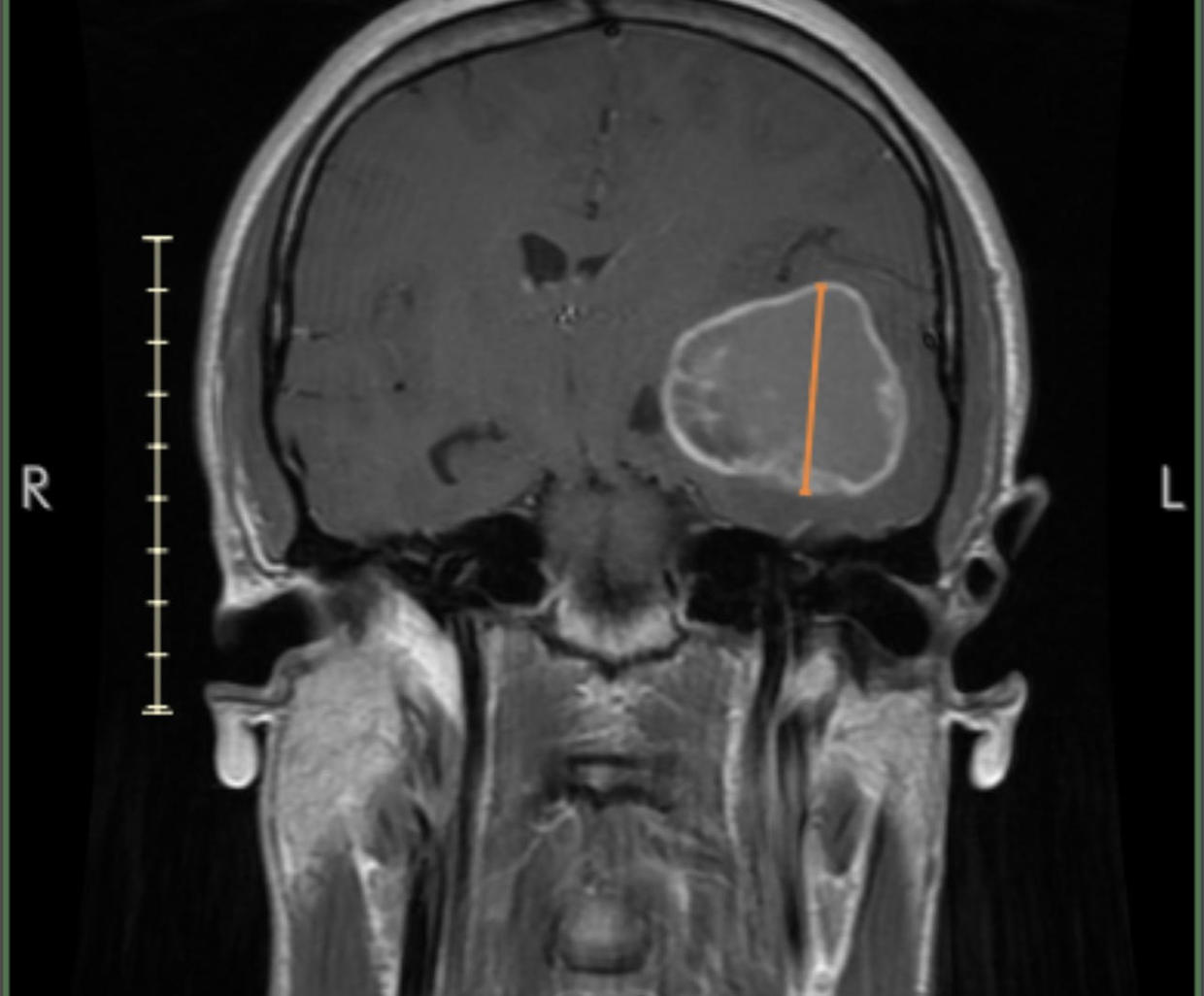
A doctor points to the location of a brain tumor (from a case not linked to John Bienvenu’s) on an MRI image. In his case, the doctors decided to submit him as soon as possible to an operation to remove the cancerous mass, which when it was discovered was in stage 4. Bienvenu said that after the surgery, her 8-month-old son was put on his legs: “He looked me in the eye, he was smiling. 

I looked at him and decided at that moment that I was going to live to teach him what life was,” she said. That, he acknowledged, was the moment when he truly began to win the battle against evil.

Turning hope into faith
“When doctors, science, tell you, ‘Enjoy life and good luck,’ but really [what they’re
saying is] there’s not a lot of hope, we decided to turn that hope into faith for life,”
Leslie, Bienvenu’s wife, told CBS News. Both have known each other since childhood.

 image.png
“It’s a story for hope, it’s a story of love and
it’s a story of faith,” his mother said.

Together with his wife, Leslie, whom he had known since childhood, They decided that even radiation and chemotherapy treatments would not stop them from living as if every day is a special day. Refusing to accept a grim prognosis, they shifted their hope from the medical world to their faith, relying on their strong belief to guide them through the challenging journey.

Only 5% of people with glioblastoma survive for five years or more. John Bienvenu is cancer-free six years after his diagnosis. “When the medical world, the science world tells you, ‘enjoy your life, good luck,’ but there’s not much hope in it, we shifted that hope into our faith life,” said Leslie.

Bienvenu’s family, including his mother Melissa,
Shared their unwavering support during his journey. Their road, however, was daunting, and Bienvenu’s father, Jimmy and brother, James, who were doctors, faced the challenge of reconciling their professional knowledge with their family’s reality.

The family celebrated each milestone, making the most of their time together — thinking they didn’t have much of it left. They marked the end of his radiation treatments with a trip to North Carolina on his 29th birthday.

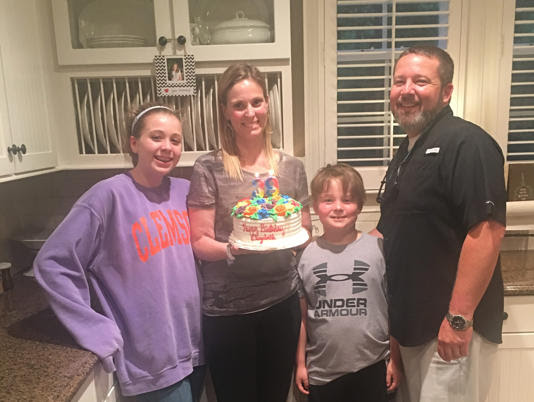
“I remember taking a picture of that cake, thinking that this will probably be his last birthday,” said Melissa. After the initial diagnosis, he underwent a major surgery to remove the tumor and the doctors believed they successfully removed all of it.

Following the surgery, he underwent chemotherapy.
There was a recurrence, and he required another surgery to remove a portion of the recurrent tumor. To address the remaining tumor, he underwent gamma knife treatment, a form of radiation therapy and continued with several years of chemotherapy.

But as he persisted, he was also prepared to die — and decided to live life to the fullest,
by living simply. Bienvenu also traded his comfortable desk job as a vice president for a development company for a job outdoors as a landscaper, embracing the joy of being outside and close to nature.

“We were living a bucket list life,” said Leslie. “And our bucket list didn’t look like skydiving or taking a European backpacking trip or scuba diving. We planted a garden, and we bred chickens.”

 image.png
Over the years, more than three dozen scans have shown no cancer. 

But Bienvenu and his family remain humble and grounded, living with the knowledge
that life can change in an instant. Bienvenu’s incredible journey has become a source of inspiration for many, including his brother James, who uses the story in his practice to offer hope to patients facing difficult diagnoses.

Also the Bienvenu family knows how fortunate they are to be among the 5% of people
with glioblastoma who survive for five years or more. Today, Bienvenu’s purpose remains steadfast: to show others that love triumphs above all else. “I think my purpose is to show others that Love is above all else,” he said.

After the initial surgery, where doctors felt, they had managed to remove the tumor in its entirety, Bienvenu received several sessions of chemotherapy. His battle with glioblastoma was not without some setbacks: the cancer returned and with it another visit to the operating room to remove a part of the tumor that had returned.

To remove the rest of the glioblastoma that the second operation did not remove, Bienvenu received a type of radiation therapy called a “Gamma Knife,” which involves applying beams of gamma rays with very powerful doses of radiation to a small area,
in this case the brain, without doctors having to make an incision. That treatment was followed by years of chemotherapy and radical changes in his life and that of his family.

Enjoy every minute as if it were your last
After six years and many studies, there are no signs that evil has returned.
Bienvenu’s story has become a source of inspiration for many, especially since
only 5% of people who suffer from a glioblastoma survive five years or more.

John explained, live life fully and simply. 
 More than 30 scans throughout the years have revealed no evidence of malignancy. However, Bienvenu and his family continue to be modest and grounded, aware that anything might happen at any time.
Many people have found inspiration in Bienvenu’s extraordinary journey, including his brother James, who uses it in his medical practice to give patients who are dealing with challenging diagnosis hope. 
 
The Bienvenu family is aware of how lucky they are to be one of the 5% of glioblastoma patients who live for five years or more.  John states, “In 2017, I was diagnosed with grade 4 Glioblastoma Multiforme, an aggressive and incurable form of brain cancer.
After my first craniotomy, I began radiation and chemotherapy treatment at MD Anderson. Months later, I had a recurrence and underwent my second craniotomy,
had Gamma Knife radiation brain surgery and began two additional chemotherapies.
I have been cancer-free ever since. God has blessed me with more days on this
earth than doctors could guarantee.  Home Page – Chemocare.com

Bienvenu’s mission is still the same today:
to demonstrate to others that loving life wins above all other factors.
I also owe my life to the people whose lives are dedicated to cancer
treatment & research.” https://www.facebook.com/john.bienvenu
Posted in Uncategorized | Leave a comment

“Sister Jean”

A 103-Year-Old Nun’s 10 Daily Secrets for a Long, Healthy Life© via merchant
Life’s Changes Are Inevitable, God’s Love Is Forever: Sister Jean Schmidt and Tara Sun.
Story by Charlotte Hilton Andersen 

Thousands of fans around the country know “Sister Jean” for her enthusiastic
support of the Loyola University men’s basketball team, having gone viral at age 100 with her cheerleader-level antics. But Sister Jean Dolores Schmidt is so much more than a Catholic nun who loves basketball, and who for years has served as the team’s chaplain.
As Sister Jean looks to turn 104 years old this summer, her first book, Wake Up with Purpose! What I’ve Learned in My first Hundred Years will be released on February 28, just in time for March Madness. In the memoir, “the basketball nun” shares her greatest lessons from working as a teacher, volunteer and spiritual leader for more than 80 years.
Sister Jean Interview – YouTube gave The Healthy @Reader’s Digest a sneak peek of what she recommends in the book for good health and a long, happy life.

23 Celebs Share the Self-Care Secrets They Never, Ever Skip   
 
Sister Jean’s secret to happiness at 103 years old
“I can tell you the secret to living a happy life,” Sister Jean told us.
“Everyone needs to know what they have done well, a pat on the back.
Tell other people what they do well, and then do that for yourself, too.”
She says that every night, the last thing she thinks about before she goes to sleep is one thing she did well that day—something she’s proud of or feels good about. “Too many people go to bed thinking about everything they did wrong and then they wake up sad, and that’s heartbreaking,” Sister Jean says. “This way I fall asleep happy and I wake up happy, every day. You can choose happiness, and being happy helps you be mentally healthy.”
People Who Did This One Thing at Age 50 Were the Healthiest at Age 80    

Sister Jean’s tips to a healthy life
St. Jean’s infectious smile and sense of humor are evidence of her ongoing joy
and love of life. But she has other healthy living tips, as well.Prioritize nutrition
Growing up during the Great Depression, Sister Jean learned her mother’s way of making nutritious meals that don’t cost a lot of money. “Always have a protein and a vegetable at every meal,” she says. 

Eat dinner with loved ones
Turn off the TV and put down your phone, and eat at least one meal a day with your family or friends. “Spending time with your family each night is an opportunity to eat together and to talk about your day,” she says.  

Follow a schedule
Every day, no matter what, Sister Jean goes to sleep at 8 p.m. and wakes up at 5 a.m. She says following this routine for sleep, meals, and activities keeps her motivated and on task.

I Took Magnesium to Help Me Sleep for a Month—Here’s What Happened  

Keep fun, active hobbies
Sledding was her favorite activity as a child and she still enjoys it (safely!). “Make at least one of your fun activities be active,” she says. “I’m a huge fan of sports, obviously, and playing sports is so good for children. It teaches life skills, exercise, nutrition, and sociality.”

7 Gentle Exercises to Tone Your Lower Body  

Eat breakfast
“I have eaten hot mush, like oatmeal, every day for breakfast since I was a small child,”
she says. “It’s filling and delicious and has lots of fiber.” She also drinks coffee (which research has shown is good for the heart, liver and more) and a small glass of cranberry juice.  

Take a walk outdoors every day
Even during frigid Ohio winters, Sister Jean’s parents took the children for a daily walk outdoors—a tradition she still enjoys. “Get outside every day, no matter
the weather. The cold is good for you. Just bundle up and you’ll be fine,” she says.

One Major Effect Walking Has on Your Dementia Risk, Says Research   

Enjoy the occasional treat
Don’t be fooled: She doesn’t always eat a perfectly healthy diet. “Good pizza is, well, really good!” Sister Jean laughs, adding that she adores the Loyola cafeteria’s mac-and-cheese and eats sweets in moderation.

I Ate Cheese Every Day for a Week—Here’s What Happened  

Help others
A large part of Sister Jean’s life as a nun and chaplain is service to God and to others.
She says each day, she looks for someone she can help and is well-known at Loyola for
offering a listening ear and sympathetic advice to generations of students.

5 Science-Backed Reasons Volunteering Is Actually a Powerful Way to Feel Healthier  

Pray daily
Having daily spiritual rituals, including reading her Bible, praying and meditating, help her feel centered and start her day off right. “Every morning, I wake up and immediately pray, thanking God that I’m still here,” she laughs.
  
Don’t be afraid of a do-over
Life, like sports, can feel competitive—but, Sister Jean says, just like there’s always
a new game to be played, there’s always a new day. “When I taught eighth grade, one day the class came in and they were too excited, lots of arguing and talking. And I got a little frustrated,” she says. “So I told them to be quiet for 30 minutes.

I calmed down and after the 30 minutes was up, I stood up and greeted them just like it was the beginning of the school day! I told them that today was a do-over day and we could start fresh.” She says the experience taught her that any of us can decide to have a do-over day at any moment. 

With her infectious spirit, unwavering faith, and avid sportsmanship, Sister Jean has captured hearts worldwide and we’re excited to see what she does next. Perhaps also a sequel is in the works? “Absolutely,” she says. “When I’m 200, I’ll write the next one.”

image.png
Sister Jean, BVM (born Jean Dolores Schmidt,[1] August 21, 1919), is an
American religious sister of the Sisters of Charity of the Blessed Virgin Mary 
and also chaplain for the Loyola Ramblers men’s basketball team of
 Loyola University Chicago.[2][3][4]

Early life
Jean Dolores Schmidt was born in San Francisco, California, and raised in the Eureka Valley neighborhood.[5][6][7][8] She first considered becoming a nun while she was in third grade.[9] As a student at St. Paul’s High School, she played on the girls basketball team.
After graduating from high school in 1937, she entered the Sisters of Charity of the Blessed Virgin Mary convent in Iowa. In 1941, by then a sister, she returned to teach in California.[6] Sister Jean completed her B.A. at Mount St. Mary’s College (now Mount St. Mary’s University in Los Angeles) in 1949 and M.A. at Loyola University of Los Angeles, now (Loyola Marymount University) in 1961.[5]


Sister Jean Bobblehead

Career
Sister Jean began teaching at St. Bernard School in Glassell Park, California and then in 1946 taught at St. Charles Borromeo School in North Hollywood, California.[10] Several students from her teaching days at St. Charles later entered religious life, including Cardinal Roger Mahoney, Fr. Thomas Rausch, S.J. and Sister Mary Milligan, RSHM.[10] Sister Jean moved from California to teach at Mundelein College in Chicago in 1961.[11] 
During the mid-1960s, she was active in the civil rights movement.[12] 
She was hired by Loyola in 1991 when Mundelein was merged into Loyola.[9] She has worked as the team chaplain for the Ramblers men’s basketball team since 1994.[13] 
In 2016, she was presented with an honorary doctorate from Loyola.[14] Providing a mix of spiritual and scouting support, Schmidt inspired her own bobblehead doll in 2011 and was honored with a “Sister Jean Day” on December 1, 2012.[9]

Sister Jean gained overnight publicity beyond the Loyola community after the Ramblers‘ upset of Miami in the 2018 NCAA tournament. Her fame continued to grow after the team upset Tennessee in the round of 32, sending Loyola to their first Sweet 16 appearance in 33 years.[15][16] The then-98-year-old nun quickly became a star in the tournament;[15] her bobblehead sold for more than $300 on eBay.[17] Loyola ultimately advanced to the Final Four for the first time since 1963,[18] but they were defeated by Michigan in the semifinal game.
Sister Jean again drew national attention when Loyola appeared in the 2021 tournament. After reaching the round of 32 as an 8-seed, she incorporated a scouting report into her opening prayer for the game against the top-seeded Illinois Fighting Illini, a team she was reluctant to play against because she did not want to root against another team from the same home state. The Ramblers went on to upset the Illini, 71–58. She had initially been barred from appearing at the tournament but was later cleared after she received a COVID-19 vaccine.[19]

Sister Jean will turn 104 on August 21, 2023.
She maintains an office in the student center on campus.[6] 
As of 2020, she was living at The Clare,[20] a senior living residence in downtown
Chicago that describes itself as “reinventing the luxury retirement community.”[21][22] 
She made an appearance at the 2022 tournament after Loyola qualified for the tournament, with USA Today noting she was still in good health.[23] On August 21, 2022, the plaza outside the Loyola CTA station was dedicated to Sister Jean in commemoration of her 103rd birthday.[24]  Source: Sister Jean – Wikipedia

Brain Connection: ADHD & Alzheimer’s Link – Bing video
More than six and a half million people are living with Alzheimer’s in the U.S. More than six million children have attention-deficit/hyperactivity disorder, or ADHD. Could the two actually be linked

Puzzles & Games Cut Dementia Risk—But Socializing with Friends & Family Barely Helps,
The “Happiness Diet”: How Eating These Foods Can Affect Your Mood (msn.com)
13 Foods You are Eating That Are Gradually Destroying Your Brain (frenzhub.com)
The #1 Best Workout for Dementia Prevention, According to a Neurophysiologist
Men over 60: These 15 hobbies will keep you entertained & active (msn.com)
27 Surefire Warning Signs You’re Dangerously Low on Vitamin D (msn.com)
The Most Popular Junk Food In Every State, Says New Study (msn.com)
Study Unlocks Secrets to ‘Super Agers’ Better Brain Health (msn.com)
20 Easy High-Protein Dinners for High Blood Pressure (msn.com)

Posted in Uncategorized | Leave a comment

STAND UP TO CANCER

Elizabeth O’Connor has defied the odds to survive late-stage pancreatic cancer. 
© Elizabeth O’Connor

Elizabeth O’Connor: Pancreatic Cancer Warrior – YouTube
I was diagnosed with stage 4 cancer shortly after my son’s birth. 
13 years later, I’m still here. Story by jridley@insider.com (Jane Ridley) 

~ Elizabeth O’Connor was diagnosed with stage 4 pancreatic cancer soon
after giving birth.
~ Very few people with late-stage pancreatic cancer are still alive a year
after their diagnosis.
~ But O’Connor beat the odds: She was diagnosed at 31 and is now 44.


This as-told-to essay is based on a conversation with Elizabeth O’Connor.
Read Elizabeth’s Essay: Elizabeth O’Connor | Pancreatic Cancer Warrior
(Seena Magowitz foundation.org) It has been edited for length and clarity.
I heard the words “pancreatic cancer” and immediately thought there was no hope.
I learned I had stage 4 pancreatic cancer shortly after my son, Andrew, was born.
I was 33 years old. It should’ve been one of the happiest times of my life.
Instead, it felt like someone had punched me in the gut.

The prognosis wasn’t good.
I later found out that very few patients 
diagnosed with late-stage pancreatic cancer live beyond a year.
I was mad and depressed. I thought, “Why me?” and “Am I going to see my kids grow up? Probably not.” But 12 years on, I’m still here.
A combination of cutting-edge treatments and research has kept me going.
A lot of it has been funded by the nonprofit Stand Up To Cancer.
It might not happen in my lifetime, but I’m convinced a cure for cancer is within reach.

My OB-GYN discovered large cysts on my ovaries when I was pregnant.
My symptoms started in midpregnancy. I started feeling really tired. I was nauseous all the time and would sometimes throw up. But at that time I thought it was pregnancy-related.
I saw my OB-GYN, who ordered an ultrasound to see what was going on.
They discovered huge cysts on my ovaries at 28 weeks pregnant.
They’d have to wait until I’d given birth to remove them. I saw a specialist.

But at no point did I think it was cancer.
My weight kept dipping because I couldn’t eat due to the nausea.
They gave me fluids at the hospital when I was 34 weeks pregnant as an outpatient.
But I went into labor that same day.

image.png
Elizabeth O’Connor — The Mother I Always Wanted To Be
O’Connor got a cancer diagnosis soon after her son, Andrew, was born. 
© Elizabeth O’Connor

Elizabeth O’Connor was diagnosed with stage IV
pancreatic cancer at age 31 shortly after giving birth to her son.
Elizabeth wanted to see her son and daughter grow up, so for the past 11 years she
has explored every treatment option, to gain as much time as she can. Now she feels
she has reached a place where she can be their mother rather than a patient. Facebook
On the day of Andrew’s birth, my doctor would say only that my ovaries had looked
“Really angry” during the surgery. The following day, he recommended a hysterectomy.
I was devastated. I’d always wanted a third child. The doctor said, “If it were my wife,
I would want her to have the hysterectomy.” Things also didn’t look good because
I had fluid in my lungs and abdomen. I said, “OK, go ahead.”

The results of the biopsy on my ovaries arrived. They did a CT scan.
“We see a tumor on your pancreas,” the oncologist said. He said the cancer had metastasized to my ovaries and one of my hip bones. It was stage 4.
A doctor friend who worked at a cancer center spoke gently to me and my husband, Patrick, about palliative care.
My biggest fear was that my oncologist would tell me I had only four months or so to live. Actually, he told me the exact opposite. “No one holds a crystal ball to your life,” he said.
It put a fire under me. I thought, let’s just get started on chemotherapy and see where we go and what happens.

I’ve had several recurrences over the years
I had targeted chemotherapy, which shrank the tumor.
It was successful enough to allow me to have radiation and surgery.
By April 2013 the doctors said I was a rare exception among pancreatic-
cancer patients in terms of responding to treatment.
Things seemed OK until November 2014, around the time of Andrew’s
second birthday. They found cancer in my brain. It was another punch to the gut.
Thankfully, the location of the tumor meant I could have surgery and radiation.
I’ve had multiple recurrences over the years. We treat life as it comes.
Patrick has been amazing. My daughter, now 17, has become very independent;
she’s had to be. Andrew, now 12, is a worrywart. I’ve been treated out of town
in states as far away as North Carolina, Wisconsin, and Arizona.

Related video: Mom Was Diagnosed with Incurable, Rare Tumor Disease — 
and Then Her 14-Month-Old Got It Too (Exclusive) (People) – (bing.com)

O'Connor's family members celebrating her birthday. Elizabeth O'Connor
O’Connor’s family members celebrating her birthday.
© Elizabeth O’Connor

2020 was difficult because the cancer returned to my brain.
There was inflammation, and unlike in 2014, the tumor’s position made it inoperable.
This time I was treated with a form of immunotherapy developed by researchers funded
by Stand Up To Cancer. It has worked like a miracle, and the tumor has shrunk.
These days I have so much more energy. I can take Andrew to baseball practice and enjoy the long summer days. Even being able to do the cooking and laundry by myself feels good.

I’ve faced plenty of obstacles along the way.
I’ve kept having regular scans. Nothing has shown up on my chest, abdomen, and pelvis for several years now. The doctors and researchers keep saying, “We’re getting to the next best thing for you.” There have been plenty of obstacles.
But I refuse to let them get in my way. The doctors have said that I’m stable.
“Stable” is a good word when you have cancer. Elizabeth O’Connor – Bing video

(1) People on Twitter: “Mom Was Diagnosed with Incurable, Rare Tumor Disease — 
and Then Her 14-Month-Old Got It Too (Exclusive) https://t.co/JHQ5bdqGnO” / Twitter

Elizabeth O’Connor’s Pancreatic Cancer Story | Stand Up To Cancer 

World Series Game 4 first pitch has special meaning (mlb.com)

SU2C Patient Story: Elizabeth O’Connor – YouTube

Stand Up to Cancer - BORGEN
Posted in Uncategorized | Leave a comment

Six-year-old Brixton Woods

6-year-old with leukemia meets Bengals’ Ja’Marr Chase through Make-A-Wish (wcpo.com) 

Make-a-Wish grants one Bengal’s fan’s biggest wish: To meet Ja’Marr Chase
For six months, 6-year-old Brixton Woods lived in a hospital fighting for his life
against the cancer that wanted to steal it, Acute Myeloid Leukemia. His mom and dad,
Ashley and Bodie, wanted his stay in the Georgetown, Texas hospital to feel like home,
so, they also decorated his room with the colors and logos of his favorite NFL team,
the Cincinnati Bengals.

As long as Brix can remember, he’s been a Bengals fan.
His dad fell in love with the team in the Carson Palmer years and Brix followed in his dad’s footsteps. Cincinnati Bengals star wide receiver Ja’Marr Chase tugged at the heartstrings of football fans when he hosted six-year-old Brixton Woods, a former leukemia patient,
in conjunction with the Make-A-Wish foundation.

image.png
My Wish: Ja’Marr Chase makes Brixton’s dream come true  | SportsCenter

Brixton’s story was featured on SportsCenter on Monday night, in a seven minute segment that took the viewers through his journey. He was diagnosed with Acute Myeloid Leukemia (AML), and spent six months fighting for his life in a Texas hospital. He recently achieved remission and celebrated it by meeting his favorite star receiver.

When asked about his experience, he excitedly talked about his trip to Cincinnati.
“I got to see Ja’Marr Chase. I got to score a touchdown on their field. I got to see him practice,” Brix said.

The youngster also got a lesson in the Griddy, Chase’s signature celebration where
he dances in the end zone. It has gone viral along with the Bengals’ WR’s dominance 
in the league, leading to many copycat celebrations.

Chase got technical with his guest, showing him all the right moves to make for the perfect Griddy. After some pointers on the practice field, they entered the big show at the Bengals Paycor Stadium. Brixton ran for a 99-yard touchdown, and hit his best Griddy of the day with Chase and his teammate Trayveon Williams.

The Bengals will get back to work when training camp kicks off in less than 10 days,
and the team will have fuel to the fire after coming up just short of their rival Kansas City Chiefs in the AFC Championship. Chase and Cincy have had great success in his first two years, with back-to-back appearances in the conference title game, and will look to get over the hump this time around.

 The post Bengals’ Ja’Marr Chase helps grant wishes for children with leukemia,
his epic griddy celebration appearing first on ClutchPoints.

Ja’Marr Chase | 2022 Highlights – YouTube

image.png
Posted in Uncategorized | Leave a comment

Vegan Diet

Vegan dietitian Alyssa Fontaine recommends (non GMO) soy products as protein sources for vegans. Alyssa Fontaine/ © Provided by INSIDER

I’m a dietitian who follows a vegan diet.
Here are the four mistakes people make when they go vegan.
Story by kschewitz@insider.com (Kim Schewitz)

A vegan diet has been linked to a decreased risk of cancer, type 2 diabetes, and obesity.
A dietitian shared the biggest mistakes people make when trying the plant-based diet.
People can mistakenly rely too heavily on processed foods and skip supplements. 
Whether it’s for environmental, ethical, or health reasons, switching to a vegan diet
is beneficial. Research has linked plant-based diets to a whole host of health benefits, including a decreased risk of type 2 diabetes and cardiovascular disease, as well as supporting weight loss.

Even some of the world’s most elite athletes, like Serena & Venus Williams and Lewis Hamilton, are vegans. A vegan diet eliminates animal products, including meat, dairy, instead focusing on fruits, vegetables, carbohydrates, and legumes. 
But becoming plant-based can be a tricky transition to make, and should involve
learning about the nutrients your body needs and meal prepping if you want to experience the health benefits, Alyssa Fontaine, a vegan dietitian based in Canada, told Insider. 
Fontaine, who runs a plant-based nutrition company, told Insider about the most common mistakes people make when going vegan.  

Not eating enough protein   
Fontaine said that many people who are vegan come to her with iron deficiencies 
because they don’t properly substitute their animal protein with nutritious plant proteins.
She recommended looking up plant proteins right away and learning how to use them to avoid developing deficiencies. 
Plant-based proteins include things like pulses, such as lentils, chickpeas, and beans,
and soy products such as tofu, tempeh, and edamame, as well as nuts and seeds. 
According to Fontaine, a quarter of your plate should be protein, if not more.
A quarter should be carbohydrates and the other half should be vegetables.
“So it’s very similar to what you would see on a traditional plate, but you have
to replace that protein section,” she said. Plant Based Protein | Garden of Life…

Eating processed vegan food
It can be easy to turn to processed food or takeout if you are strapped for time
and there are no real health benefits to products like vegan sausages, Fontaine said.
To really reap the benefits of a plant-based diet, you have to cook a little bit, she said,
even if it’s just an hour a week. She recommended carving out some time in the week
to meal prep. 
She suggested looking up some protein-rich recipes online and making around four you like the look of in bulk. “In my fridge right now I have a tofu stir fry, a chili, a white bean dish, and a tofu cream cheese,” she shared. “I don’t know when I’m going to eat them,
but I know they’re good for around four to five days.” @Cindy Becker Tofu – video

Not taking a multivitamin supplement 
Transitioning to a vegan diet can be a big change,
and there is a lot of information to take in. To give yourself time to
figure out what works for you, start with a multivitamin supplement, Fontaine advised. 
“Just start with a multivitamin so that you’ll at least have your vitamin D, B12, and a bit
of iron. It will just give you a little bit more room to make mistakes and learn as you go,”
she spoke. IMPORTANT:  all Plants | What Is Selenium And Why Is It Important?

image.png
Trying to be a perfect vegan

Getting all of the nutrients your body needs is extremely important,
but you don’t have to be a “perfect vegan” all the time, Fontaine said. 
While she is conscious of adding enough protein to each meal day-to-day, when she’s eating out on the weekends, she will enjoy the occasional vegan pizza or mac and cheese. She believes that this balance is crucial and the reason she has sustained her vegan diet for over five years. “I don’t hold myself to the standard of being perfect. You’ve got to have a little fun with it and it has to taste good or else why are you doing this?” she also said. 
Blood tests for vegan – Bing video   

Related video: Dieticians Unlock the Carnivore Diet and Reveal ‘No benefit’ –
One News Page VIDEO The carnivore diet. “There’s no benefit to this diet.”
Here’s perhaps why. Veuer’s Chloe Hurst has the story!

With our food systems on the verge of collapse, it’s the plutocrats v life on Earth.

32 Celebrities who have gone vegan (veggie.news)

Every year, more people are choosing to live the cruelty-free life and go vegan, especially the young — and especially those in Hollywood. In fact, PETA even predicted that 2017 will be “The Year of the Vegan,” and cited over a dozen food trends that show veganism
is hitting the mainstream in a big way. From smoked carrot lox to “root-to-stem” dining, there is a place for vegan entrees on every table. A plant-based diet can help promote good health, so it’s no surprise that the health-conscious younger generations are leading the pack when it comes to going vegan.

In 2015, a Nielsen Global Health and Wellness Survey revealed that younger Americans were more health conscious than their elders, and that Generation Z (people under age 20 at that time) were more attuned to concerns about GMOs and ingredients than any other generation. Nearly 40 percent of Gen Z were willing to spend more on groceries to go organic, as were 32 percent of millennials. Comparatively, just 21 percent of baby boomers were willing to spend more money on healthy foods.

Last year, The Guardian reported that the U.K. had seen a 350 percent increase in their vegan population since 2006 — a remarkable feat for such a short time period. Some of the reasons teens cited as being their cause for making the switch included concerns about the environment, animal welfare and sustainability. In their interviews, some of the teens also noted that they felt social media helped expand the concept of veganism, and one of the adolescents noted that Instagram made the diet and lifestyle look particularly appealing.

Going vegan is a choice many people make for health-related or ethical reasons, and celebrities are no different: countless celebrities have gone vegan. Woody Harrelson is even a vegan — and has been for over a decade. In fact, Harrelson was even named PETA’s Sexiest Vegan of 2012. While Harrelson is renowned for his tough-guy roles in movies like Zombieland, he’s also an outspoken activist for environmental concerns and animal rights. He’s even been credited with “turning” other Hollywood stars into vegans — like Liam Hemsworth, according to Bustle.

Some popular stars that you may or may not know as vegans include actors and
musicians such as Ariana Grande, Ellen Page, Miley Cyrus, Liam Hemsworth, Joan Jett,
Stevie Wonder, Pamela Anderson and Travis Barker. That is, by no means, a complete list.
Some lesser-known celebrities included on Bustle‘s list of vegans include musicians such as Sia, RZA, Mya, Wacka Flocka Flame, Morrissey, Dawn Richard and Moby.
For actors and actresses, Bustle reveals that there are many other vegans in the crowd, such as Evanna Lynch, Rooney Mara, Kate Mara, James Cameron, Peter Dinklage, Jessica Chastain, Alicia Silverstone, James Cromwell, Joaquin Phoenix, Mayim Bialik, Bellamy Young, Casey Affleck and Daniella Monet.
Al Gore and Russell Simmons also made it to the list of celebrities who are vegan. While they may not be musicians or actors, they are certainly well-recognized public figures.
Veganism is a lifestyle that many people have embraced — and if current trends continue, it seems that many more people will be participating in this way of life.

5 Mediterranean diet salad recipes that are filling and delicious, by a dietitian,
Mediterranean diet salad recipes that are filling and delicious, by a dietitian.

The Mediterranean diet is widely considered one of the healthiest ways to eat.
If You Don’t Eat Sweet Potatoes Every Day, This Might Convince You to Start.

image.png

CELEBRITIES YOU DIDN’T KNOW WERE VEGAN
By Laura Barns

Laura is our Copywriter, who is obsessed with the Hearty Roots Stew (and has been known to eat a double serve for lunch on more than one occasion). On her day off you’ll find her walking her puppy Ralph, stopping off at bookshops and cocktail bars along the way. 
Read more from Laura

Going vegan has never been easier or tastier. And thanks to lots of celebrities speaking openly about their plant-based diets, those interested in going greener now have more role models than ever. We love breaking stereotypes. The crew of celebrities who are vegan is just getting bigger. So here’s a list of celebrities you probably wouldn’t expect to be vegan.

image.png
1. Ariana Grande
Ariana Grande first went vegan in 2013, tweeting: “Today marks my first day as a
100% Vegan!!!! Joyous day”. After discovering she ‘liked animals more than people’
(can relate). She credits her plant-based diet for making her a happier person, too.

2. Benedict Cumberbatch
Whilst promoting the latest Avengers film, Cumberbatch shared that his vegan diet was integral for keeping him active and in shape. He was even crowned PETA’s Most Beautiful Vegan in 2018, because apparently, they didn’t receive my application.

3. Zac Efron
If you’re a Netflix addict, this may be a little less surprising. In his hit travel documentary, Down To Earth, Efron journeys around the world with wellness expert Darin Olien in search of healthy, sustainable ways to live. So as well as being great documentary material, he also thanks his vegan lifestyle for his physique. 

4. Will.I.Am
The Black Eyed Peas star and my mom’s favorite judge on The Voice went vegan in 2018, after announcing it on his Instagram Stories. He also shared that he’d ‘joined the VGang’
which we all know is the coolest gang going.

image.png
5. Jennifer Lopez
Lopez shared that her vegan diet gives her way more energy than when she ate meat,
and if that Superbowl performance is anything to go by, we’ll have what she’s having.
Though she did say she misses butter. Feel the same? Check out our favorite vegan butter brands. 

6. Thom Yorke
Radiohead lead singer Thom Yorke has been a keen environmental activist and vegan
for years. Though his original motives for going green aren’t quite so pure – he went
vegetarian to impress a girl, and ended up loving the benefits.

image.png
Celebrities BEFORE and AFTER Going VEGAN | LIVE KINDLY

7. Alicia Silverstone
Clueless queen Alicia Silverstone regularly shares snippets of her vegan life with
her family on her Instagram, though would it be too much to ask for her to do it in
the iconic Cher plaid outfit? 

8. Brad Pitt
Sources report a slightly different version of Pitt’s diet, with some stating he’s been vegetarian for decades, and some saying he’s fully vegan. Regardless, he’s always been extremely vocal about animal and environmental issues, which is a win in our books.

image.png
9. Natalie Portman
Natalie Portman is not just my favourite actress for her roles in Garden State, V for Vendetta and more. She’s been vegan for years (apart from a slight break when she was pregnant and had dairy cravings) and often shares tasty recipes on her Instagram. 

10. Stevie Wonder
Stevie Wonder stepped out as an advocate for going vegan when he appeared on James Corden’s Carpool Karaoke and announced that he had only been a vegan for a year and a half, but loves it.

Ok, if you’ve been around plants as long as we have, you’ll definitely know about these guys. But we couldn’t list vegan celebrities without a shoutout to some of our favourites…

image.png
11. Miley Cyrus – Bing video
Never one to shy away from the spotlight, Cyrus has been a keen advocate of a vegan lifestyle on her Instagram for years. PETA even called her a ‘super vegan’ and the ‘veganest vegan to ever vegan’, which is a pretty cool thing to add to your CV. 

12. Liam Hemsworth
Be still my beating heart, The Hunger Games star went vegan in 2015 with the support of then-partner Miley Cyrus and his Hunger Games co-star Woody Harrelson who originally suggested he try a vegan diet. Within a few months, Hemsworth was sold. ‘There are no negatives to eating like this,’ he told Men’s Fitness magazine.

13. Joaquin Phoenix
AKA probably the greatest vegan in the world. Along with his siblings, Phoenix has been vegan since birth, even turning down million-dollar meat and dairy advertising campaigns during his early career. Now he’s an ambassador for PETA AND my top crush. Lucky guy.

image.png
14. Ellie Goulding – Bing video
Goulding’s motivation for going green was music to our ears: ‘Once I fully understood where meat came from … I found that concept quite hard to live with. If you don’t need meat to survive, I don’t see why you have to have it.’

15. Venus and Serena Williams
As anyone with a sibling will attest, putting them both under the same number is NOT cool, but we had to make it an even (well, odd) 15. The world’s most inspiring tennis players are both vegan and have been for a number of years.

Check out the list of other favorite vegan athletes here. 

image.png
16. Billie Eilish. Songs – Bing video
The singer was raised vegetarian and decided to go vegan in 2013,
using her platforms to spread awareness about animal agriculture.

17. Sadie Sink. – Bing video
The “Stranger Things” star went vegan at just 14 years old,
after working on set with another vegan and actor Woody Harrelson.

18. Madelaine Petsch – Search (bing.com)
Growing up as a vegetarian, it didn’t take long for this star to go vegan, with her completely cutting out animal products at just 14 years old. Madelaine Petsch (@madelame) • Instagram photos and videos

40 Celebrities You Didn’t Know Were Vegan (yahoo.com)

Vegan Celebrities You Never Knew Were Vegan — Best Life (bestlifeonline.com)

The One Type Of Meat That Slows Your Metabolism, According To Nutritionists (msn.com)

5 Foods That Mess with Your Meds Nearly 70 percent of Americans take prescription drugs. – Search (bing.com)
Society is Declining: 10 Disturbing Behaviors That Have Become Common But Are FAR From Normal (msn.com)
Yikes! Kamala Harris Pledges to ‘Reduce Population’ Instead Of ‘Pollution’ In Climate Speech Gaffe (msn.com)
American Dream on its Deathbed: Young People No Longer Believe in America’s Promise.
Work Hard – For What? People No Longer Believe in Hard Work as Key To Success.
20 Dangerous Foods Your Doctor Tells You to Avoid, But You Keep Eating Anyway.
As food prices rise in June, analysts warn of a ‘tipping point’ for Americans (msn.com)
The Most Dangerous Chemicals in the Food You Eat (Avoid Them!) (msn.com)

* Biden Cancels $39 Billion in Student Loans for 800,000 Borrowers (msn.com)

* I Ate Eggs Every Day for a Week—Here’s What Happened (msn.com)

Death Valley may reach the hottest temperature ever recorded this week,

image.png
Posted in Uncategorized | Leave a comment

** Alzheimer’s & Dementia

I told a friend about the work being done to reverse Alzheimer’s. 

She’s had family members perish from it years ago. Her first question to me was 
“Why isn’t this all over the news and why isn’t the Alzheimer’s Association talking
about this?”

In my opinion:
The pharmaceuticals are making too much money on the prescriptions so why would they want you to get well. Also, the protocol is probably not covered by insurance and for some people, that’s an issue. For my brother, who passed away in Oct with early onset, my sister-in-law would not consider anything that didn’t come from their MD. 

The good news is I’m slowly seeing more and more conventional doctors being open to the Dr. Bredesen protocol. I realize there is No money in it for Big Pharma for us to get and stay healthy without their drugs!!! I have recently had a respected Neurologist
tell me “Good luck with that” when I told him I was APOE 4/4. 

Then he said, “it’s not a question of, it’s a question of when”. If we all got healthy without the drugs it would cut his income significantly. She won’t take a multivitamin of any kind and refuses to cook. And both healthy eating and exercise are part of the protocol as well. 

I personally used a functional medicine doctor (until he passed) but not from his own Alzheimer’s and he was amazing. He could do with vitamins and minerals what most doctors do with pharmaceuticals!

What’s the best way to answer what they are doing to reverse Alzheimer’s?

It has been a sad situation. But, I think there is progress being made.
I share extra copies of Dr Bredesen’s book, “The End of Alzheimer’s Program” with
my doctor’s and with people I meet dealing with loved ones with Alzheimer’s/Dementia.
My husband passed from Lewy Body Dementia in 2021. We tried and didn’t succeed with the protocol. No regrets. It gave me two extra years with him. We were blessed.

So yes! I spread the blessing that I found “Dr. Bredesen’s protocol.” I purchase used
copies  “The End of Alzheimer’s Program” from Thrift Books | www.thriftbooks.com.

I have heard that it takes about 20 years for new trends in health to become mainstream.
Many functional medicine trained practitioners are doing everything possible to reach the broadest possible audience but unfortunately most Americans are still waiting for a pill to cure them.

Allopathic medicine has trained the public to medicate with a drug to alleviate a symptom without sharing studying the combination of medicines and the negative interactions of the drugs. This protocol takes a lot of effort to be consistent and when so many lifestyle changes happen simultaneously it is difficult to pinpoint what exactly was effective even though the combination was powerful.

You bring up some very common views of most people. I can sympathize with them. Getting a diagnosis of Alzheimer’s is so scary. We have been trained to trust our doctors and that they know best. For the most part our doctors want to help but they have been trained to treat symptoms and not look for the underlying cause of diseases.

For my mother has Vascular Dementia what works best for her is a healthy breakfast
to start her morning off right. Then she does her morning work chores and takes her breather. Then we take a ride and give her shopping cart therapy to talk to others her
own age, so she realizes others are in the same boat she is in. Word Search Puzzles late after noon and towards evening MeTv and Mash, The Andy Griffith Show, Gomer Pyle, Beverly HillBillies and Green Acres for laughter which gives her a good night sleep.

Music Heals: Sing, Sing, Sing – Peanuts Hucko 1990 Videos

This is from the Apollo Health website. You may find it helpful.
   To Our Critics – Apollo Health (apollohealthco.com)

Any thoughts or experience with Fiji water?

Kim Taylor
There’s some pretty strong evidence to say that removes heavy metals from the body.
I drink about a bottle a day ($3 a bottle in my country ) . I only drink it for 10 -12 weeks
then repeat again after a few months. Shouldn’t need it every day of the year .

Stacy Nordquist Author
Kim Taylor Do you notice any physical or mental differences when you are drinking it.

Kim TaylorStacy Nordquist Not really. I take so many supplements and I don’t really think about whether I feel differently. I think of it like getting your car serviced. It doesn’t really run any better but you know that you are taking care of the engine !

RL Optimal Health Admin  
In all my training with Dr. Bredesen, I have never heard him mention Fuji water.
If someone is concerned with heavy metals, I would get a heavy metals test done
by a company like Quicksilver. Dr. Bredesen recommends their Mercury Tri-Test
with Heavy Metals.

I don’t think Fuji water can hurt.
I personally don’t drink it because of the plastic container.

RL Optimal Health Admin
Wendy Box it’s a common test among functional medicine practitioners. You could always find a different practitioner. I can order the test for my clients. I’m not a doctor and cannot diagnose. I meet with the lab on behalf of my client and go over their results so I can educate them and help them self-treat if they decide to do so.

Tracy Kay
 My husband and I drink one Liter each per day. My husband follows Bredesen AND drinks Fiji water and has Alzheimers. He has seen improvement over 2 years (couldn’t work, but now he can…had emotional outbursts, now he doesn’t). There is no way to say which single thing helped him. I haven’t noticed any difference but I don’t have any cognitive deficits.

Whether aluminum causes alzheimers or not, it’s not good for you…..there are plenty of studies showing silica water decreases aluminum so we use it. As for price….It’s a little less than. $2 per day. If I were worried about the money, before I gave up Fiji I would do all kinds of other things to save $2 per day: turn my thermostat down a couple degrees, buy fewer new clothes, give up coffee, take a stay-cation instead of a va-cation.

Downgraded my cell phone plan and kept my old cell phone for longer before replacing, skipped the pay-per-view, canceled Netflix, bike to the store instead of driving………..
I’d do all that before I gave up Fiji if I were personally worried about the $2.

I believe it’s the right thing for my health and my husband’s. So, I obviously am not that worried about the price. I am sure if you aren’t convinced then it might seem pretty pricey.

The Truth About Fiji Water (mashed.com)
NOTE: When you drink Bottled Water Know the Test Results of Your Brand.
Fiji water? I have read that it has value as a detoxifying agent but many of the posts also refer to it clearing aluminum and I think I remember Dr. Bredesen saying that aluminum has not been proven to be a causative agent in Alzheimer’s.  FIJI Water PH Test – YouTube

Let Me Show You the Real Truth About Fiji Water – YouTube
If you would like to check out pH Levels of your favorite bottled water,
chances are also  LaPrentiss Demond – YouTube has made a video on it!
LaPrentiss runs an accurate test 4 drops and blows into it!!!

image.png
Tested the pH of Every Bottled Water  

Analyzing & Comparing Brands of Bottled Water (alkalinewaterplus.com)

Bottled Water Study: Preliminary Results – Simple Lab Tap Score (mytapscore.com)

Sherry Burnside Eldridge
I drink steam distilled water. 
I have been drinking it for years,
I don’t remember exactly why.

No photo description available.

Crystal Maxwell It’s the silica in the water. You can make your own at home.
There’s a recipe, just google “silicade Dennis Crouse PhD” – Search (bing.com)

Kimberly Tronoski
I started drinking Fiji water after reading about a study of the positive benefits on cognitive function after 13 weeks of use. I don’t like the fact that it is in a plastic bottle,
but at least the bottle is BPA free and I feel like the benefits of the Fiji outweigh the risk. Walmart has the best price in my area.

Stacy Nordquist my husband, believes exercise and sleep helps him the most.
But….who knows for certain?

Katie Maria Sandoval Meade
Ideally water needs to be in a glass bottle, not a plastic bottle, ideally it needs
to be mineral / spring water, or at least filtered tap water to reduce contaminants.

RL Optimal Health
Admin  · Follow We never get too old to be passionate about something. Having purpose and meaning in life is critical for our brain health. When we think about the Bredesen 7 strategy Brain Stimulation – Search (bing.com) we often neglect the purpose part.

I always like to bring everyone back to the fundamentals of the program:

KetoFlex12/3 – Search (bing.com)
Stress Management
Restorative Sleep
Brain Stimulation
Detoxification
Supplements
Exercise

I’m not saying Fiji water isn’t good for you, but I am saying let’s not think there is one magic bullet for Alzheimer’s. We are all guilty of trying to find the path of least resistance. We’ve been trained by the medical system to take a pill for what ails us. The Bredesen Protocol calls for us to also take personal responsibility for our health, which isn’t easy.
For those of you that find Fuji water helpful…that’s great! I just want to make sure that those who are new to the protocol understand it’s the 7 strategies implemented together that will give you the best results.

And a supplement CurcuminMD® Plus – With Boswellia Serrata | 1MD Nutrition™

The above was written in a spirit of respect and love💕

Stacy Nordquist Author
RL Optimal Health Well yes. However, if you believe the studies on Fiji water it would be part of the program as it would be a detoxing agent and also provide hydration which is so important to everyone. I, like you, had not used it because the bottles are plastic, however, 
 I understand they are free of BPA.

Thought for the day:

There’s a trait that separates people who reach their goals from those who struggle.
It’s not talent, luck, or genetics (although those things don’t hurt). This trait does more than just help you reach your health goals. It also helps you in your career, and it also plays a role in being a better caregiver and/or spouse.
It’s mental toughness — aka personal responsibility and accountability — and it’s something you can get better at over time. Here’s a quote to keep in mind:  The oak tree fought the wind and was broken, but the willow tree bent and survived. ~ Robert Jordan

Eating Plans That Lead to Longer Lifespans Have One Thing in Common (msn.com)
Aging: 15 Aspects You’ll Eventually Grow To Dislike, Regardless of Your Preferences.
People with the longest life span have 2 common traits – It’s not dieting or exercise.
Forced Maturity: 18 Habits We Dropped in Our 40s in the Name of ‘Growing Up’
The Curious Personality Changes of Older Age (msn.com)

Keep going…one day at a time. Fight it. 💪
image.png
Posted in Uncategorized | Leave a comment

Chronic Depression

When I went through depression it changed my outlook on life – Search (bing.com)

DEPRESSION
6 Ways to Live Better With Chronic Depression
Depression doesn’t have to keep you from a good life.
Posted October 9, 2021 |  Reviewed by Devon Frye

image.png
Amanda Dodson LCSW
Meaning Lost and Found

KEY POINTS
Chronic depression presents genuine logistical difficulties,
as a depressive episode often strikes at the most inconvenient moment.
It’s not necessary for someone to let periodic depression stop them from living life.
Using a few practical techniques can help them navigate themselves safely through
depression. When I went through depression I changed my outlook on life.

Side Note From This Blogger: In 2006 when I overcame severe depression was the day my doctor told me it’s life and unfortunately life ends so get the f’ck over the death of your father to cancer. Thanks Dr. Victor John Stegall for pulling my head out of my arse.
Living with depression can be painful and exhausting. It’s hard enough to get through one episode of major depression—the sadness, the emptiness, the feeling that a gray haze has descended on your life. Sadly, for some, depression returns periodically, more like a chronic illness than a single incident.

This phenomenon, often referred to as chronic depression, may be characterized by recurring episodes of major depressive disorder. You may go months or years functioning normally, then suddenly, depression knocks you off your feet, and you can’t get out of bed for two weeks. For others, their mood disorder manifests in a constant, mild depression, called persistent depressive disorder—a low mood that never quite goes away.

Besides the emotional and social difficulties of depression, chronic depression
also becomes a genuine logistical issue. It is inconvenient to be periodically depressed.
The demands of your life remain maddeningly persistent, even as your resources to cope with those demands are rapidly depleted. Even though your brain feels like a nuclear wasteland, the groceries need to be bought, the bills need to be paid, and you are expected to behave in some approximation of a functional adult.

If you chronically experience depression, emotional endurance is a very handy skill.
It is a strength to have the patience to wait for the storm to pass. But simply enduring is not enough to feel that you live a fulfilling life. Here are a few practical ideas to get you through the next dark time in your life, while still living well.

Stop Resisting and Start Accepting
It is sad to accept that depression may be a permanent fixture in your life.
Nothing could be more natural than wanting an uncomfortable feeling to go away, preferably fast, and forever. Besides, we live in a culture permeated by values of self-sufficiency and self-improvement. It’s tempting to believe that if you could just work
hard enough and stay positive enough, you could overcome your depression for good.

And yet, depression can be situational, environmental, biological, neurological—in other words, there are factors beyond your control contributing to your mood. This isn’t the time for false positivity. When you deny your feelings, they only intensify—determined to make themselves known, because feelings are our internal compass.

There is an old quote from Carl Jung that “What you resist persists.”  
To get through your depression, you must first accept that it’s here. When you notice yourself feeling exhausted, tearful, and irritable, practice saying to yourself: “Yes, I am depressed, and it is probably not my fault. I’ve been here before and survived. This hurts, but there is no reason to panic.”

Rebrand Your Depression
Now that you’ve radically accepted your depression as a periodic visitor, you need to learn how to live together in harmony. One of my favorite therapy techniques is getting playful with naming your depression. Depression is a very precise, clinical term, and it is useful and validating in a clinical setting. But if you’re going to be living with depression as a recurring guest, you might need to get on friendlier terms.
Maybe instead of telling yourself that you have chronic depression, you can rebrand yourself into having a melancholic temperament. Oh, that’s fancy! Or try giving your depression a human name, like Carl or Bernadette.
“Bernadette is visiting this week and boy, is she overstaying her welcome.”
Or, imagine your depression as a yearly flu that puts you out of commission for a few days—inconvenient, uncomfortable, but not unexpected. Depression could also be a passing seasonal storm, a resting period, or a mental health sabbatical. Practice trying out the name that feels right for you.

Focus All Your Energy into Basic Self-Care
When you feel like you’ve been drained of your life force, the last thing you want to
do is cook, clean, or shower. These things feel menial and meaningless, so why bother?
But hunger, dehydration, and feeling smelly never improved anyone’s mood.
If you’re depressed, then you’re already scraping the bottom of your energy barrel just by getting through the day. You need to be strategic about how you spend your limited physical and emotional energy. For the time being, dramatically lower your expectations for yourself to the bare minimum. Focus your (admittedly diminished) will on basic life tasks.

If you get out of bed, put on a fresh pair of pajamas, make yourself a bowl of cereal, and drink a glass of water, you’re doing great, sweetie! If you brush your teeth, shower, and go to work, that’s an absolute A-plus. Good job!For extra credit, use that last gasp of energy to keep your depression from getting too deplorable.

Set a timer for five minutes and use that time to tidy up your living space—maybe
throw out old takeout containers and put your favorite sweatpants in the wash.
Race the clock to see how much you can do in five minutes. My mother-in-law calls this method the Tornado Clean Up, and it’s genius: an oddly satisfying game and a healthy activity all in one.

image.png
Alison Escalante M.D.
Shouldstorm


According to the Polyvagal Theory, Trauma and Neuroscience of the Mind – Dr. Stephen Porges – HPP 101 -The Polyvagal Theory, discovered and articulated by neuroscientist Stephen Porges, our daily experience is based on a hierarchy of states in the autonomic nervous system. When the ANS feels safe, we experience a sense of well-being and social connection. That’s when we feel like ourselves.
But the autonomic nervous system is also constantly scanning our internal and external environment for signs of danger. If our ANS detects a threat or even a simple lack of safety, its next strategy is the fight or flight response, which we often feel as anxiety.

Sometimes the threat is so bad or goes on for so long, that the nervous system
decides there is no way to fight or to flee. At that point, there is only one option left: immobilization. The immobilization response is the original biological defense in higher animals.
This is the shutdown response we see in reptiles. Also known as the freeze or faint response, immobilization is mediated by the dorsal vagus nerve. It turns down the metabolism to a resting state, which often makes people feel faint or sluggish.

Owlie Harring/Unsplash
The immobilization response dulls pain.

Immobilization has an important role. It dulls pain and makes us feel disconnected.
Think of a rabbit hanging limply in the fox’s mouth: that rabbit is shutting down so it won’t suffer too badly when the fox eats it. And the immobilization response also has a metabolic effect, slowing the metabolism and switching the body to ketosis. Some doctors speculate that this metabolic state could help to heal severe illness.

In humans, people often describe feeling “out of their bodies” during traumatic events, which has a defensive effect of cushioning the emotional shock. This is important because some things are so terrible, we don’t want people to be fully present when they happen.
So the immobilization response is a key part of the biological defense, but it is ideally designed to be short-term. Either the metabolic shut down preserves the organism,
i.e. the rabbit gets away, or the organism dies and the fox eats the rabbit.

But if the threat continues indefinitely and there is no way to fight or flee, the immobilization response continues. And since the response also changes brain activity,
it impacts how people’s emotions and their ability to solve problems. People feel like they can’t get moving physically or mentally, they feel hopeless and helpless. That’s depression.

Does Depression Have Value?
It’s easy to see why Laura’s childhood circumstances would set off the immobilization response, and even how it might have helped her survive. But why does it happen in people with less obvious adversity? Our culture tends to think of depression in the person who finds work too stressful as a sign of weakness. Self-help articles imply that they just need more mental toughness and they could lean in and solve it. Even some therapists tell them that their depression is a distorted perception of circumstances that aren’t so bad.

But that is not how the body sees it. The defense responses in the autonomic nervous system, whether fight/flight or immobilization are not about the actual nature of the trigger. They are about whether this body decides there is a threat.
And that happens at a pre-conscious point. The biological threat response starts before we think about it, and then our higher-level brain makes up a story to explain it. We don’t get to choose this response; it happens before we even know it.

Studying anxiety has revealed that many modern circumstances can set off the fight or flight response. For instance, low rumbling noises from construction equipment sound
to the nervous system like the growl of a large predator. Better run.
Feeling like they are being evaluated at school removes kids’ sense of safety and triggers fight-or-flight. Better give the teacher an attitude or avoid homework. And to most of us, fight-or=flight feels like anxiety.
Eventually, if these modern triggers last long enough, the body decides it can’t get away. Next comes immobilization which the body triggers to defend us. According to Porges, what we call depression is the cluster of emotional and cognitive symptoms that sits on top of a physiological platform in the immobilization response. It’s a strategy meant to help us survive; the body is trying to save us. Depression happens for a fundamentally good reason.

And those changes everything:
When people who are depressed learn that they are not damaged, but have a good biological system that is trying to help them survive, they begin to see themselves differently. After all, depression is notorious for the feelings of hopelessness and helplessness. But if depression is an active defense strategy, people may recognize
they are not quite so helpless as they thought.

Shifting Out of Immobilization
If depression is the emotional expression of the immobilization response, then the solution is to move out of that state of defense. Porges believes it is not enough to simply remove the threat. Rather, the nervous system has to detect robust signals of safety to bring the social state back online. The best way to do that? Social connection.

One of the symptoms of depression is shame, a sense of having let other people down or being unworthy to be with them. When people are told that depression is an aberration, we are telling them that they are not part of the tribe. They are not right, they don’t belong. That’s when their shame deepens and they avoid social connection. We have cut them off from the path that leads them out of depression.

It is time that we start honoring the courage and strength of depressed people. It is time we start valuing the incredible capacity of our biology to find a way in hard times. And it is time that we stop pretending depressed people are any different than anyone else.

References:
‘I’m a Neuroscientist and Sleep Expert for the U.S. Army, and Here’s Exactly What I Do To Get a Restful Night of Shut-Eye’ (msn.com)

Porges, Stephen. (Apr 2009) The polyvagal theory: New insights into adaptive reactions of the autonomic nervous system. Cleve Clin J Med. – Search (bing.com)
Porges, Stephen. (Feb 2007) The polyvagal perspective. Biol Psychology. – Bing video
Depression Is 9 Times More Likely for People with This Chronic Disease, Says New Study (msn.com) 
How to Silence Your Thoughts And Drift Off to Sleep: An Expert Explains (msn.com)
Daytime sleepiness: How to manage and not feel sleepy during the day (msn.com)
Healing My Gut with Probiotics Relieved My Depression: I Tried It

                                                                                                 *****
Barack Obama Deemed Donald Trump Was Not Worthy Of Running A Country After A Tweet Regarding SNL (msn.com)

Obama Doesn’t Have The Right to Decide That By Cheating an Election…We The People Have The Right to Decide.Did Trump let Americans die purely for political purposes? (msn.com)

We All Know Covid Was A Tool Democrats Used to Get Trump Out of Office!
Investigative Report: The Coverup of the Century | Epoch Times | C.C.P. Virus | COVID19.
The Epoch Times Jan. 6 documentary explores police response, use of force at U.S. Capitol.
Use-of-Force Expert: Ashli Babbitt Was ‘Murdered’ Under the Color of Authority.
WATCH The Full Documentary: The Real Story of January 6 – Global Research
Jan. 6, Two Years Later: 10 Documentaries to Watch | FRONTLINE (pbs.org)
Epoch Times Documentary: ‘The Real Story of January 6’ | The Epoch Times
Never-before-seen January 6 footage from our photographer – Bing video
2000 Mules (2022) Watch HD – video Dailymotion
The Real Anthony Fauci – video Dailymotion

image.png

Posted in Uncategorized | Leave a comment

A Good Walk of Life Idiom

I walked from end-to-end of Manhattan and a cardiologist said the heart health benefits were similar to running a half-marathon.

I walked from the top to the bottom of Manhattan in 8 hours, checking an item off my bucket list. The walk was a great endurance exercise, a cardiologist told me, with health benefits similar to running a half-marathon.

Here’s what my journey was like:
and the doctor’s tips for people embarking on a similar journey. I walked from the top of Manhattan to the bottom in 8 hours — and lived to tell the tale. The hike from the top to the bottom of Manhattan is popular among locals and tourists, and was even the plot for a Broad City episode.

image.png Tamanna Singh, MD | Cleveland Clinic Cardiovascular Medicine.
But, as a health reporter, I knew the ambitious journey was more than just a check off my bucket list — it was a great way to highlight how walking can help our heart. Dr. Tamanna Singh, cardiologist at Cleveland Clinic, thought so too. Singh told me walking — even if it’s not down the world’s most densely populated island — is an underrated exercise for heart health.

“Your heart really doesn’t care what you do, it can’t distinguish between walking,
running, biking, rowing, swimming, cycling,” Singh said. “There are so many benefits
from a cardiovascular perspective that you can get from walking, similar to running.” 
Here’s what it was like to walk from the top to the bottom of Manhattan, along with Singh’s tips to get the most benefit for your ticker out of a long walk.

image.png
We started our walk around noon at Inwood Park at
the northernmost tip of Manhattan.

I woke up around 7 a.m. and had some leftover rice and tofu soup for a light breakfast but opted not to eat a huge meal in case I felt sluggish on the walk. At noon, I grabbed some coffee and a pan de queso, or Colombian cheese bread, at the start of the walk for some light fuel. 
Singh said my instinct was a good one: it’s best to eat a light, carby meal ahead of a long endurance activity. 
“Carbs are your friend when you’re trying to increase your exercise because your body and your brain run on sugar,” the cardiologist said. “It’s okay to have some simple sugars to help fuel your body.”

image.png
We walked along the Hudson River, taking in the fresh air and
breeze during the first leg of our journey.

To get from Washington Heights to Harlem, my friend and I walked down a greenway along the Hudson River. The weather was perfect for walking: a breezy day in the 60s, which ensured we wouldn’t overheat. 

In Harlem, we moved from the greenery back to the bustling streets.

About 4 miles and 2 hours into our walk, we stopped to refuel for a lunch of veggies, shrimp, and rice from LoLo’s Seafood Shack in Harlem. 

image.png
Energized from our meal (and another cup of coffee)
we power-walked the height of Central Park.

Caught up in deep conversation about religion, marriage, and people from our college newspaper, my friend and I breezed through Central Park. Though the height of Central Park is technically 2.5-miles, the winding paths probably tacked on an extra half mile to a mile, but to me they felt like the quickest parts of the walk. 

image.png
Walking with a friend is actually a great way to keep you motivated.

On long endurance exercises, Singh said. “If you have a specific goal in mind, you can always look for someone to help you train or help motivate you, a partner-in-crime for your exercise.”

We reached the bottom of Central Park and took a well-needed water break.
My feet felt surprisingly fine after 8 to 9 miles of near continuous walking,
due largely to my well-fitted sneakers.
Singh said people interested in long endurance activities like walking and running need
to protect their feet, since discomfort can cause you to get burned out quickly on the trip.
“That kind of takes away a lot of willpower and motivation to keep going,” she added. 

image.png
The next hour of my journey was by far my least favorite:
navigating crowds in Times Square.

Up until we got to Midtown, Manhattan, my friend and I — both fast walkers — maintained a pretty consistent walking speed. But our walking prowess was
no match for the packed crowds on the streets of Times Square. 

image.png
From 59th Street to around 20th Street,

We kept needing to slow down to allow for mobs of passersby, and stop as we waited for the streetlights to change. The pauses made me more conscious of the pain and fatigue in my legs, which, combined with the frustrating crowds, put me in a more quiet, sullen mood. 

image.png
In need of a pick-me-up, we stopped at the Starbucks Reserve Roastery
in Chelsea for some caffeine.

The Starbucks Reserve is high on the list of my friend’s fiancé’s — who had come to tag along with us as we trekked through Midtown — favorite places to go in New York City.
We caught our breath over some espressos and were off again after about 30 minutes. 

image.png
The sun was beginning to set as we made our way from Chelsea
to Battery Park, the final 3 miles of our journey.

We had about 3 miles left, but the path was a straight line, meaning we could reasonably do it in an hour. We were less talkative compared to the first half of the day, choosing instead to power through the pain in our thighs to get to the finish line. 

image.png
Interview with Dr. Tamanna Singh, Sports Cardiologist . M.T.A.

Eight hours and about 16 miles later, we arrived at Battery Park
all the way from Inwood Park. My friend and I were ecstatic and exhausted.
We spent some time taking photos and also looking at the Statue of Liberty
before heading back home to ice our thighs and go to bed. 

image.png
Had we walked a straight line from Inwood Park to Battery Park,

The route would have been 13 miles, according to Google Maps, but we took some winding routes to explore the city. We didn’t track our total mileage, but I’d estimate we walked 16 miles — 3 more than a half-marathon. And Singh said the steps we took — and the amount of time our body stayed active — probably matched that of a half-marathon, too. 

image.png

I took a well-needed break after our journey, and slowly made
my way back to regular exercise.

I took a week-long break from any sort of challenging exercise, and Singh said my laziness was what my body needed after the 16-mile journey. Cardiologists recommend a week of low-intensity mobility following a marathon or long endurance journey, she said. 

image.png
I’m already planning my next walk — maybe this time around
the perimeter of Manhattan.

Human Race: Tamanna Singh (runnersworld.com)
I’d highly recommend anyone take the walk from the top of Manhattan to the bottom, especially tourists visiting the city. It’s a great way to hit a bunch of different neighborhoods and get a feel for the island’s diversity.
 “There is no goal that you cannot hit,” Singh said.
“We’re kind of our own limiting factors. Just get out there and move.”
Tamanna Singh, MD, FACC is a clinical cardiologist and a member of the Sports Cardiology Center in the Robert and Suzanne Tomsich Department of Cardiovascular Medicine, Sydell and Arnold Miller Family Heart & Vascular Institute.
She sees patients at Cleveland Clinic main campus.
Dr. Singh earned her medical degree from Boston University School of Medicine and completed her Internal Medicine Residency at Boston Medical Center. 

She then completed a three-year fellowship in Adult Cardiovascular Medicine at Icahn School of Medicine at Mount Sinai, New York, NY, after which she returned to Boston to complete her specialty training in Sports Cardiology with the Cardiovascular Performance Program Fellowship at Massachusetts General Hospital. She joined the Cleveland Clinic medical staff upon completion of training in June 2018. Her specific interests include: sports cardiology/cardiovascular care of competitive and recreational athletes, women’s cardiovascular health, cardiovascular care for female athletes, cardiovascular disease prevention and wellness, and diet and nutrition.

As a sports cardiologist, Dr. Singh has provided cardiac care for professional sports teams, competitive and recreational athletes and highly active individuals. She has significant experience in cardiopulmonary exercise testing specifically in athletes and has participated in multiple pre-participation screening events for collegiate and professional athletes to help ensure their safe participation in sports.
Dr. Singh’s current research interest lies in evaluating effects of a plant-based diet on heart health. She has published research papers in medical journals on exercise, sports and the heart, has presented at national medical meetings, and has presented on women’s cardiovascular health at multiple community events. In her leisure time, Dr. Singh enjoys running, yoga, plant-based cooking, reading, and spending time with her family and two dogs.

KABC (Los Angeles, CA) – Dr. Tamanna Singh reviews the effects
that COVID-19 has had on cardiovascular health. Watch the Story 

Here’s How Many Extra Steps To Take To Lower Heart Disease Risk –
Parade: Entertainment, Recipes, Health, Life, Holidays
Long COVID and heart issues: What do we know about lingering symptoms —
and treatment? (yahoo.com)
How athletes can return to exercise after COVID-19 infection: New guidance released.
Here’s How You Can Significantly Lower Your Heart Disease Risk in Under 5 Minutes.
What Runners Need to Know About Heart Health | Marathon Training Academy
How Common Are Heart Problems in Athletes, Really? – Outside Online.
Athletic heart syndrome: What it is, and its symptoms and treatments.
Sudden Cardiac Arrest on the Field: Now What? | Cleveland Clinic
COVID-19: Impact on Sports and Exercise (clevelandclinic.org)
Heart Rate Training | Marathon Training Academy
Nutrition | Marathon Training Academy

To make an appointment with Dr. Singh, please call 216-444-6697
or visit the Cleveland Clinic Online Appointment Request form.

A man who noticed his pupils were mismatched said he ended up being diagnosed with
a brain tumor behind his eye: ‘I put it off for a few weeks telling myself it was nothing’.
Cardio workouts may protect men from deadly cancers of the lung, colon, and prostate.
How Good Cardio Endurance Might Help Protect Men From Deadly Cancers (insider.com)
Overthinking Is Bad For Your Health. It’s Time to Get Out of Your Own Head (msn.com)
Colon, lung cancer: Cardiorespiratory fitness may lower risk (medicalnewstoday.com)
Cardio exercise may help men prevent colorectal cancer, study finds | PhillyVoice
Physical Activity and Cancer Fact Sheet – NCI.

image.png
So, once you understand what life idioms are,
it’s time to explore some idioms about life.

 28 Inspiring life idioms (with examples and meanings) (improving-your-english.com)
As the famous saying from John Lennon goes, “Life is what happens when you’re busy making other plans.”Don’t count your chickens before they hatch.
This is more of a proverb, but still a wise saying to live by.
The phrase Don’t count your chickens before they hatch 
is telling you not to be too confident in the outcome of a matter until it happens. 
Equally, don’t make claims of success until after the event. Just picture it:
Although you may have ten eggs, they aren’t all guaranteed to produce healthy chicks.
You’ll only know after they hatch. 


“Don’t throw the baby out with the bathwater” is an idiomatic expression for an avoidable error in which something good or of value is eliminated when trying to get rid
of something unwanted.[1][2][3]

Earliest record of the phrase from Narrenbeschwörung (Appeal to Fools) by Thomas Murner, A slightly different explanation suggests this flexible catchphrase has to do with discarding the essential while retaining the superfluous because of excessive zeal.[4][A]

History
This idiom derives from a German proverb, das Kind mit dem Bade ausschütten.
The earliest record of this phrase is in 1512, in Narrenbeschwörung (Appeal to Fools) by Thomas Murner, which includes a woodcut illustration showing a woman tossing a baby out with waste water. It is a common catchphrase in German, with examples of its use in work by Martin Luther, Johannes Kepler, Johann Wolfgang von Goethe, Otto von Bismarck, Thomas Mann, and Günter Grass.[6][7]
Thomas Carlyle adapted the concept in an 1849 essay on slavery:[7]
And if true, it is important for us, in reference to this Negro Question and some others. The Germans say, “you must empty-out the bathing-tub, but not the baby along with it.” Fling-out your dirty water with all zeal, and set it careening down the kennels; but try if you can keep the little child![8]
Carlyle is urging his readers to join in the struggle to end slavery, but he also encourages them to be mindful of the need to try to avoid harming the slaves in the process.[8]

Image result for life is like a box of chocolate
Life is like a box of chocolates.

This saying was made famous by the popular movie Forrest Gump starring Tom Hanks.

The full version of this infamous quote is: 
“Life is like a box of chocolates; you never know what you’re going to get.”
Think about it: if you dip your hand into a large box of assorted chocolates, you don’t know which one you’re going to pull out. You may not know what’s inside it until you take a bite.
In the same way, life is not always predictable and will probably give you some surprises along the way!

“We didn’t plan for our second baby, but I guess life is like a box of chocolates.”
This saying shouldn’t be confused with Life is like a bowl of cherries,
which means that life is a pleasure and very enjoyable.

Forrest Gump: He sure is fast! (HD CLIP) – Bing video
Forrest Gump – learn English through story – Bing video
Forrest Gump 2: Why Didn’t the Sequel Happen? (collider.com)
Forrest Gump 2 – Forever Jenny – 2023 Movie Trailer (PARODY).
Posted in Uncategorized | Leave a comment

Morgan Bellock

She decided to freeze her eggs at 34. The process revealed aggressive ovarian cancer.
© Courtesy Morgan Bellock

How Cancer Groups Cope With Losing Members – Chicago Magazine
#FighterFriday: An Unexpected Wake-Up Call – Cancer Wellness
Morgan Bellock Scullion (@morganbellockscullion)
I am Morgan Bellock — MB PUBLIC RELATIONS
Story by Meghan Holohan

Morgan Bellock knows her story with ovarian cancer varies greatly from the traditional experience because it was found in stage 1. Ovarian cancer rarely has symptoms, so most people are diagnosed in later stages.

Soon after Morgan Bellock turned 34, she decided to freeze her eggs.
She wasn’t sure if she would be having children soon, and she thought it would be important to save them. As she went through the process, doctors discovered something surprising — Bellock had ovarian cancer.
“It was a big shock to me,” Bellock, now 40, from the Chicago area, tells TODAY.com.
“I didn’t know there was a giant ovarian cyst just sitting on one of my ovaries.”

Egg freezing leads to a surprise.
At the time Bellock pursued freezing her eggs in 2017, she was in a relationship with someone who took a job across the country, and she knew if they were to start a family,
it wouldn’t be any time soon.
“I thought to myself, if this is my person, our timeline is going to be significantly pushed back. And for me, it just felt better looking into freezing my eggs,” she says. “I was worried that two or three years would pass.” Some of her friends and family felt wary about Bellock pursuing fertility preservation, though.

“I remember being met with a lot of skepticism,” she says.
“I had a feeling in my gut, and ultimately I’m glad I did, and I feel like everyone questioning my position felt really bad about it.” As part of the egg-freezing process, Bellock needed to undergo an ultrasound.
During the scan, the doctor noticed she had a mass on her ovary.
At first, doctors thought she had a simple ovarian cyst, which are fairly common, often associated with the menstrual cycle and normally harmless. An article in the Cleveland Clinic Journal of Medicine estimates as many as 20% of women will get one.
Testing, however, revealed that Bellock’s cyst was complex, meaning it was filled with blood or some solid material. Her doctors worried that if she began taking the medication to stimulate her ovaries in order to freeze her eggs, it could cause the cyst to grow or rupture, so he recommended surgery.

“The story became crazy and weird,” she says.
“When they did the surgery, they removed the cyst. But then they also tested something that was hiding behind it, which was the cancerous tumor that none of the scans had shown.”
While the doctors had been worried about the cyst, they had no idea it covered “a very aggressive form of cancer,” Bellock recalls. Luckily, doctors found it early. It was a stage 1 teratoma, a type of tumor “often made up of several different types of tissue, such as hair, muscle and bone,” according to the National Cancer Institute.
“It was good news in some ways that we had caught it so soon, and we could treat it,” Bellock says. Doctors also told her that if the cancer had not been found accidentally,
she might not have experienced any symptoms for years.

By that time, her cancer would have been advanced.
“There’s a very real way that I could have not been here today, which is wild to think about,” she says. “I didn’t have any symptoms.” Doctors agreed that her ovary needed to be removed to treat the cancer. After surgery, she needed to recover before returning to egg freezing. It wasn’t until 2018, that doctors said she could begin again. By that point, she had broken up with her boyfriend, so she was pursing it alone.
“I only had one ovary, so as you can imagine, my desire to do it increased even more,” Bellock says. “It also felt even more disheartening, in terms of what the results were
going to be.”

She underwent several cycles to harvest eggs, ending up with 10.
“I stopped after a couple of cycles because I have had so many surgeries, so many drugs, and my body was done,” she says. “The mental state I was in was very different than when I thought I was going to be doing it.” 

“Ovarian cancer is the second most common gynecological cancer,”
Dr. Zaid Al-Wahab, a gynecological oncologist at Corewell Hospital, in Royal Oak, Michigan, who did not treat Bellock, previously told TODAY.com.
“It is the most common cause of death from gynecological cancers.”

Freezing her eggs when she was 34 helped Morgan Bellock be diagnosed with ovarian cancer at stage 1. Now married, she is grateful she has eggs frozen to try to start a family with her husband. (Courtesy Morgan Bellock)
Freezing her eggs when she was 34 helped Morgan Bellock.
(Courtesy Morgan Bellock) © Courtesy Morgan Bellock

Be diagnosed with ovarian cancer at stage 1. Now married, she is grateful she has eggs frozen to try to start a family with her husband. That’s because, in about 80% of the cases, most ovarian cancers are not found until stage 3 or 4, he noted.
Bellock, like most people with early-stage ovarian cancer, had no symptoms.
“Even when it’s stage 3 or 4, symptoms are very vague,” Al-Wahab said.

Ovarian cancer symptoms include:
Bloating
Change in bowel habits
Back pain
Many people think of ovarian cancer as occurring in older women, but that’s not always the case.
“It can happen in much younger women so more awareness of ovarian cancer (is needed),” Al-Wahab said. 

Life as a survivor
For the first year following her cancer diagnosis, Bellock needed to undergo an ultrasound every three months because that period has the highest chance of the cancer recurring. Gradually, the number of ultrasounds she needed reduced. It’s been five years, so she’s considered in remission and doesn’t need additional surveillance.
“You feel like you’re never going to get (into remission),” she says.
“I struggle a lot with survivorship. … There are many other women that I feel like are on the other side that have gone through way worse and way more.”
She’s became involved in The Breasties, a group for young people who had breast and gynecological cancers. That’s helped her grapple with her diagnosis and surviving cancer.
“It’s a nationwide organization of young women that are just very open and honest with the struggles and triumphs involved in this whole, crazy world ” she says. “That’s been such a blessing in terms of finding community and people who can really understand all the feelings that go on with cancer.”

Morgan Bellock hopes others advocate for themselves if they notice something off with their health. (Courtesy Morgan Bellock)
She met someone new, and in 2021 they got married.
(Courtesy Morgan Bellock) © Provided by TODAY

They have pursued IVF to start a family, but it’s been “challenging.”
Bellock says she has no regrets about freezing her eggs.  
“I knew I had to go in and pursue freezing my eggs, and ultimately it led me down this path, which I’m super grateful for,” she says. “It’s just a really wild way of getting that diagnosis.”

Morgan Bellock hopes others advocate for themselves if they notice something off with their health. She encourages others to speak up if they notice anything wrong with their body. “Trust your gut and advocate for yourself,” she says. 

This article was originally published on TODAY.com
Today : No mail today, federal offices closed for day of mourning ...
Posted in Uncategorized | Leave a comment

What is Retirement Age

100-year-old Cleveland doctor is still going to work | wkyc.com

The world’s oldest practicing doctor says retirement is ‘the enemy’ of longevity.
Here are his 3 tips for living a long and happy life
Story by Bethan Moorcraft

Howard Tucker (born July 10, 1922) is an American neurologist who has been practicing medicine since 1947. In addition to becoming a lawyer and passing the Ohio
Bar Examination at age 67 in 1989, Tucker is recognized by Guinness World Records 
as the current oldest practicing doctor.[1][2]

Early life and education
Howard Tucker was born in Cleveland, Ohio.
Tucker decided to pursue a career in medicine while attending Cleveland Heights High School. After graduating high school in 1940, Tucker attended Ohio State University for his undergraduate studies and Ohio State University College of Medicine for his Doctor
of Medicine degree.[3] Tucker enlisted in the United States Navy during World War II and would later serve as Chief of Neurology for the Atlantic Fleet during the Korean War.[4]

Medical career
Tucker completed his residency at the Cleveland Clinic and training at the Neurological Institute of New York before returning to Cleveland, where he would practice neurology at University Hospitals Cleveland Medical Center and Hillcrest Hospital for over seven decades. While still practicing neurology, Tucker attended Cleveland State University Cleveland–Marshall College of Law where he received his Juris Doctor degree and passed the Ohio Bar Examination at age 67 in 1989.[3][5]
In 1960, Tucker was credited with solving a medical case involving two young girls who would go in and out of coma. Tucker determined the cause of the comas to be barbiturate poisoning.[6]
Tucker teaches medical residents at St. Vincent Charity Medical Center and pursues work as an expert witness for various medical-legal cases.[7] In 2021, Tucker was recognized as the oldest practicing doctor by Guinness World Records.[7]

Personal life
In 1957, Tucker married Sara “Sue” Siegel.
As of 2022, 88-year-old Siegel continues to practice medicine as a psychoanalyst.
The couple have four children and ten grandchildren.[4]
What’s Next? Movie on Instagram: “Currently in production, WHAT’S NEXT?
is a feature documentary on Guinness World Records’ “Oldest Practicing Doctor.” 
currently in production and is being produced by Tucker’s grandson, Austin

Tucker, and directed and produced by Taylor Taglianetti.[1] 
In April 2023, he contributed a piece to CNBC on five important pieces of life advice: staying active and not spending his days retired, staying in shape, not smoking, not restricting himself to a narrow number of activities, and not letting the vast knowledge
and changes he’s seen be wasted.

image.png
A  doctor in Cleveland is officially the world’s oldest practicing physician.

100-year-old neurologist still practicing, has been awarded the Guinness World Record
for being the oldest doctor who is still in practice. A 100-year-old Ohio man who holds
the Guinness World Record for being the oldest practicing doctor, says that he has no immediate plans to retire. In February 2021, when he was 98 years and 231 days old,
Dr. Howard Tucker of Cleveland received initial recognition as the oldest practicing physician in the world. 

image.png 

The doctor still continues to stand by his word of having no intentions to retire,
and his wife Sue mirrors his work ethic —  who is 89, is still a practicing psychoanalyst.
The physician shares that just after reaching his 100th birthday in July, he contracted COVID-19. Despite this, he continued to instruct his residents through Zoom while recovering. 

After reading an obituary for a barber who was listed as one of the oldest people in the world, Howard was motivated to submit an application for the title of oldest practising doctor. Given that they were of a similar age, Howard understood that he could shatter records by himself. Austin, his grandson, assisted him in submitting a formal application to Guinness World Records. When the record was verified, his loved ones were ecstatic.

While speaking to Guinness World Records, he said, “I regard this Guinness World Records title as a singular honor and look upon it as another achievement in a long, satisfying and happy life.”

He further added, “”I take the same approach to each day as I did back in 1947 when
I was just starting out. I continue to learn a lot each day from my colleagues and even
my residents that I teach.”

Here is a photo of Dr. Howard Tucker now and when he was younger:

image.png
Dr. Howard Tucker, an old one from 1947 and the world’s
oldest doctor in a recent pic (R)  @Guinness World Records.

100-year-old neurologist still practicing medicine (news5cleveland.com)

The world’s oldest practicing doctor knows a thing or two about
how to live a long and happy life — but you might not like everything he has to say.
For Cleveland-born Dr. Howard Tucker — who just turned 101 on July 10, 2023 —
a key secret to his longevity is meaningful work.  
Tucker received his medical degree from The Ohio State University College of Medicine in 1947 and he has practiced neurology for 75 years — eventually earning the Guinness World Records title of the world’s oldest practicing physician.
The chipper centenarian has lived a remarkable life, sharing many happy years with his wife Sara (who still practices psychoanalysis and psychiatry at age 89), his four children and 10 grandchildren.
While Tucker says “good genes and a bit of luck” can help to extend your life,
he also follows a few simple lifestyle rules that boost his health and happiness. 

Delay your retirement (if you can)
After his record-breaking career, Tucker’s contrarian view on retirement might not surprise you. “I look upon retirement as the enemy of longevity,” he told TODAY shortly after his 100th birthday. “I think that to retire, one can face potential shriveling up and ending in a nursing home. It’s fun staying alive and working …

Every day I learn something new.”
Not even the COVID-19 pandemic could stop Tucker from practicing his trade.
He continued treating patients for five or six days a week — when his age would have classified him as high-risk.
The 100-year-old did eventually stop seeing patients in 2022, but he continued working twice a week teaching medical residents at St. Vincent Charity Medical Center in Cleveland.
While he’s acknowledged that some jobs are too physically or emotionally demanding to keep into old age, Tucker thinks you should consider delaying retirement if you enjoy your career and are still able to work.
“I’m going to caution (people): If they retire from their work, they should at least do something as a hobby, whether it be communal work or self-hobbies … you need a stimulus for the brain daily,” he said.

World’s Oldest Doctor Turns 100, Shares Health, Longevity Advice (today.com) 
There can also be some financial benefits to delaying your retirement — even by just a few years. Only 24% of Americans nearing retirement age (60-67 years old) believe they have enough money saved to live out their golden years in comfort, the Schroders 2023 U.S. Retirement Survey revealed.
A few extra years of saving and strategizing with the help of a financial planner can
make all the difference and help to ease any money concerns you may have in later life.
Also, if you wait until age 70 to start claiming your Social Security benefits, you will get
a much bigger payout than if you claim at the earliest possible age.

image.png

Stay fit and healthy.
Tucker is a sprightly centenarian who likes to keep busy — both physically and mentally.
He’s never smoked, he has a healthy diet — thanks to his “excellent chef” of a wife, who includes greens with every meal — and he drinks alcohol in moderation, allowing himself the occasional martini.

To this day, Tucker loves to exercise.
“Swimming, jogging, hiking, and skiing well into my late-80s
has kept me strong and healthy,” he wrote in an article for CNBC.
In his 11th decade, while he’s “not quite as active as [he] once was,” Tucker still claims to go at least three miles on his treadmill “at a brisk pace” most days a week — with the help of Turner Classic Movies to overcome boredom.
He’s also taken up snowshoeing after his family banned him from skiing in his late 80s following an accident. Staying fit and healthy into your later years can come with its financial advantages.
For instance, you might be able to shop around and find cheaper health insurance 
to cover unexpected health emergencies — which no one is immune to, even those
with lucky genes.  

Learn something new every day
Upon receiving his Guinness World Record in 2021, Tucker said: “I would tell my teenage self to learn each day as if I were to live forever, and to live each day as if I were to die tomorrow.”
Tucker has practiced this philosophy for decades. To this day, he keeps on top of the latest advancements in neurology by studying and reading.
And he didn’t stop at medicine. He went to law school at night in his 60s and passed the Ohio Bar Exam at age 67 — while doing his normal day job as a doctor — simply because he was interested in the law.
More recently, this love of learning has seen Tucker getting help from one of his 10 grandchildren to understand new technology and apps.
“The whole world is full of computers and they live by computers.
If I want to stay in this world, I’m going to do it,” he told TODAY.
If you’re like Tucker and are keen to explore new opportunities in technology, you might want to check out online investing and money-saving tools that will put your money to work for you.  

image.png
The world’s oldest practicing physician, neurologist, Howard Tucker, 
with his grandson Austin Tucker and documentary filmmaker Taylor Taglianetti

World War II vet who is still working as a neurologist turns 100 years old (breatheful.com)

His fans can watch the mild-mannered doctor from Cleveland Heights throw a baseball, give dating advice to Leonardo DiCaprio, and try a burrito for the first time. And yes, you heard that right, he has fans, and millions of views on TikTok.

“We have people contacting us asking ‘Can we go meet Dr. Tucker?’ ‘I live in Ohio,
how can I meet him?’” said Taylor Taglianetti a documentary filmmaker from New York, who, together with Tucker’s grandson Austin Tucker is producing a film about Tucker’s
life entitled What’s Next?

It turns out, turning 100 makes you a little bit of a rock star.
On his 100th birthday this past July, Tucker received letters of congratulations from
five of the six living U.S. presidents and Canadian Prime Minister Justin Trudeau,
plus a personal serenade from country music legend Dolly Parton.

And the following day he threw out the first pitch at a Guardians baseball game. Taglianetti says they may organize some meet-and greets with Tucker and his many admirers so he can answer all their questions.

“It bewilders me. I just can’t understand it,” said Tucker about all the fuss. “People say to me, you’re doing pretty good for a hundred, and I say to myself how many 100-year-old people have they sampled? I don’t think I’ve ever met another 100-year-old person. I have only met myself.”

But beneath the genuine humility there is a hint of childish delight in the fanfare that has surrounded his centennial milestone. His intellect, and wit, are still intact and sharp as ever. And, as it turns out, applying for the Guinness World Record was sort of his idea.

“A man died, and the obit said he was a barber. He was in the Guinness Book of World Records. He was 98 years old and the oldest barber in practice in the world,” said Tucker. “And so that’s why I asked Austin if we should look into it.” Austin did. And after months of inquiries and a lengthy application process, they got the news.

“Right before his 99th birthday we got the call that he got the record,” the younger Tucker said. “And that was the wakeup call for me. It was an opportunity for me to really sit back and think: ‘Wow, I’ve never truly understood what my grandfather has seen over almost a century of being around, but also over seven decades of practicing medicine.’ ”

image.png
100-year-old Cleveland doctor still working | wkyc.com

That’s when Austin Tucker says he realized not everybody has grandparents in their
90s who still go to work, and also when he and Taglianetti, his former NYU classmate,
began to hatch a plan to tell his grandfather’s story.

At first, he says, he thought it would be something short – maybe a 10-minute profile.
Once they began interviewing him, they realized they wanted to make a full-length film.

As sharp as ever
This slender, grey-haired man is maybe 5 and a half feet tall, with a sharp mind and an even sharper wit. He quotes Winston Churchill and Dorothy Parker, and has thoughts on just about everything, having experienced, or read more than most. It seems immediately obvious that this is a man who not only refuses to retire, but has probably never spent an idle moment – physically or mentally – in his 100 plus years.

He still exercises two miles on the treadmill or stationary bike four times a week, reads the paper with his wife of 65 years over breakfast every morning, then puts on a bow tie and heads to the hospital where he still teaches neurology residents and sees patients. And when the occasion calls for it, he’s been known to pull an all-nighter to prepare a new medical lecture for his students.

His grandson says he was even sneaking out of the house to go to the hospital during
the height of COVID-19, 98 years old at the time, although the doctor remembers it differently.

“Well, I had to work,” he said. “I put on a mask. The hospital didn’t tell me to stay home. They said everyone should come to work. In medicine we have a responsibility.

If you take it seriously, you follow through.”
And as if medicine wasn’t enough, 40 years into his medical career, he earned a law degree while working full-time, passing the Ohio Bar Exam at the age of 67. These days, in his days off from the hospital, he also works on the side as an expert witness, reviewing medical cases — an intellectual challenge he says he loves.

“I get as much enjoyment out of reviewing records as I would if I were golfing. …
And it’s less expensive, too,” Tucker said with a chuckle.
What prompted him to go to law school? He read an obituary about a man who was supposedly the oldest man to have ever passed the Ohio bar exam He. was 62, he recounts.

“I think I beat him by 5 (years). I suppose I ought to call the Ohio State Bar Association and ask them,” he said, looking over at his grandson across the table.

A bit of luck and a life well lived.
“I guess we have to know,” his grandson replied.

There are some signs that Tucker is slowing down.
For example, he holds the handrail now when he climbs the stairs.
He no longer does the NordicTrack anymore because he says his balance is off, and
he only walks two miles on the treadmill at a time instead of the previous three to four.

He’s also given up downhill skiing in favor of snowshoeing at the behest of his family.
They also would prefer he give up driving, but Tucker says he’s not ready to hand over
the keys to the BMW he bought at age 94 yet. “I can’t lose my independence,” he said.

He may also be the luckiest man alive. This month he was getting rabies shots after being bitten by a bat, and undergoing physical therapy after taking a tumble down a flight of stairs that necessitated spinal fusion surgery.

A decade earlier in his 80s he walked away from a skiing accident in Colorado that fractured the second cervical vertebrae – the same vertebrae he points out that killed Sonny Bono and paralyzed Christopher Reeve. And in his 70s he was airlifted of a mountaintop in the Alps in a basket suspended from a helicopter, after he slipped
and broke his kneecap while hiking with his wife.

And yet, he never lost his sense of humor. When the medic asked if he would
like a tranquilizer to calm his nerves, he recalls asking, “Will it cushion the fall?”
The joke he recalls was lost in translation.

A living legacy: 75 years in medicine
There are not a lot of working doctors that can see a patient and say
“Wow, I haven’t seen that in 50 years,” but Howard Tucker is one of them.

The neurologist earned his degree in medicine from Ohio State University 75 years ago, and was among the first Jewish members of the medical faculty at Columbia University
in New York. He later returned to Ohio to join the faculty of what was then known as Western Reserve University and worked for over a decade at the Cleveland Clinic.

As a doctor he has lived through the polio epidemic, the last outbreak of smallpox, the discovery of DNA and the rise of modern genetics. And he has seen advances in technology he could once never have dreamed up.

Twice a week you can still find Dr. Tucker at St. Vincent Charity Medical Center. And if by chance you are his patient, he’s likely to spend some extra time with you. While he says he appreciates the advances technology has made in medicine, he believes it shouldn’t come at the expense of the doctor listening to the patient.

“I am always running behind,” he says. “The patient in front of me is the important one.”

Medicine back in the early days was much more cerebral, he says.

“We didn’t have CAT scans. We didn’t have MRIs.

We had our brains. … We had to think through a problem – so it was fun in those days.”

Tucker says he never followed a strict diet or ran marathons.
He came home every night for dinner and to spend time with his four children, and then went back to work. He and his wife had a tradition of drinking martinis on Friday nights. The secret to his longevity he says is doing a little bit of everything- but not too much. “Everything in moderation,” he said.

So what’s next?
“Oh, I expect I’ll keep working until it’s over with,” he says, speaking of his eventual death with the clinical confidence of a physician who has fully embraced the one thing he knows medicine can’t cure. “You know, life,” he says, “is a fatal disease, it does eventually end.” The World’s ‘Oldest Practicing Doctor’ Shares How He Keeps His Brain Sharp as a 101-Year-Old Neurologist (msn.com)

What’s Next is in its final phase of production.
To learn more about the film, click here.

image.png
Opinion | How Do You Feel About a 100-Year-Old Doctor?  (nytimes.com)

What to read next:
36% of millionaires say it’ll ‘take a miracle’ to retire amid rising costs and a
shaky market — here are the best shock-proof assets to grow your nest egg.
Want to invest your spare change but don’t know where to start? 
Acorns has an app for that*
Here’s how much the average American 60-year-old holds in retirement savings 
— how does your nest egg compare? Rule of 72 – calculator – Search (bing.com)
Read more: Here are 7 amazing 1-week vacations you can do for around $1,000  
The eight foods that Harvard recommends eliminating from your diet (msn.com)
25 Foods You Didn’t Know Were Killing Your Metabolism (msn.com)
*** A 45 year-old tech executive’s extreme longevity routine to age backwards
involves taking over 100 daily supplements and waking up at 5 a.m. (msn.com)
Want to Live a Long Life? DON’T DO These 20 Things (msn.com)

This article provides information only and should not be construed as advice.
It is provided without warranty of any kind.
Posted in Uncategorized | Leave a comment