Story by Irina Ivanova The U.S. may be only a matter of weeks from defaulting on its debt, an unprecedented scenario that government officials have variously described as “unthinkable” and “catastrophic.” With Republicans and Democrats remaining at an impasse for now, economists are examining the potential economic fallout if the situation comes to a head and the U.S. fails to make some payments.
In the event of a full-fledged debt default: the impact would be felt by anyone expecting funds from the government, whether a Social Security check, SNAP payment or government bond payout. But the impact wouldn’t be felt equally across the nation, Moody’s Analytics chief economist Mark Zandi said in a report this week.
“Most state economies will be hit hard if there is a debt limit breach, although the economic pain varies,” he and coauthors Adam Kamins and Bernard Yaros wrote. Washington, D.C., where 1 in 4 jobs are tied to the federal government, would be hardest hit, becoming the “poster child” for a financial disaster, they said.
BONUS:Looks like this is another fine mess you got us into – Search (bing.com) States with large federal facilities, such as national laboratories or military bases, would be next in line. That includes Hawaii, which is home to the United States Pacific Command and to 11 military bases; Alaska, with vast federal land holdings; and New Mexico, home to Los Alamos National Laboratory. “While the public sector typically serves as a stabilizing force, in the case of a breach it supercharges its economic fallout,” according to Moody’s. Also vulnerable are regions that rely heavily on federal spending, including those with defense contractors. “Professional services firms suffer, hurting white-collar support firms in and around the Beltway, particularly Northern Virginia,” Moody’s said. “Aerospace is also hurt, impacting states including Connecticut, Kansas and Washington.”
Even a short debt ceiling breach, in which the government defaults for less than a week before lawmakers raise the government’s borrowing limit, would likely push the economy into a recession, according to Moody’s. In this scenario, 1.5 million people would lose their jobs, pushing unemployment from its current rate of 3.4% to 5%, while the nation’s gross domestic product would shrink by 0.7%. Moody’s also assesses the potential damage from a default lasting several months, an outcome it calls “cataclysmic.” The federal government would have no option but to slash its spending by about $150 billion. “As these cuts work through the economy, the hit to growth would be overwhelming,” Moody’s said.
‘What difference at this point does it make?’ ~Hillary 13hours Secret Soldiers : Free Download, Internet Archive “The economic downturn that would ensue would be comparable to that suffered during the global financial crisis,” with nearly 8 million jobs lost and the unemployment rate rising to 8%, according to the financial research firm. In this scenario, several states would suffer disproportionately, with Moody’s estimating that unemployment would top 9% in Alabama, Illinois, Ohio and Mississippi, while shooting up to nearly 11% in Michigan.
The turmoil would likely depress stock prices by nearly 20%, vaporizing $10 trillion in household wealth held in 401(k) plans, pension funds and also brokerage accounts, according to Moody’s. The cost of borrowing for households and businesses would soar. Because of the enormous economic fallout of a debt default, it’s worth noting that Moody’s considers such an outcome highly unlikely. And if there is a breach, it’s likely to be short. “But even a lengthy standoff no longer has a zero probability,” the analysts said. “What once seemed unimaginable now seems a real threat.”
Thousands lined up at the US-Mexico border anticipating the end of Title 42. However, the Biden administration rolled out new measures requiring migrants to apply online or seek protection in the country they passed through.
As New York City considers a price increase for rent-stabilized apartments, TikTok star asks strangers what they pay in rent — and for a tour of their apartment, one TikTok host has struck a nerve. Caleb Simpson asks strangers how much they pay in rent and then brings his more than 7 million followers on a tour of their apartments. Simpson joins CBS News to discuss his videos.
House Republicans Say Biden Family Received Millions From Foreign Contracts NPR reports that House Oversight Chairman James Comer laid out the allegations on May 10. He claims the panel is in possession of bank records indicating that the Bidens, including Hunter, received millions of dollars from people connected to Romania and China. He claims the panel is in possession of bank records indicating that the Bidens, including Hunter, received millions of dollars from people connected to Romania and China.
We’re pretty confident that the president was very knowledgeable of what his family was doing, James Comer, House Oversight Chairman, via press conference. The White House denied the claims. Congressman Comer has a history of playing fast and loose with the facts and spreading baseless innuendo while refusing to conduct his so-called ‘investigations’ with legitimacy, Ian Sams, White House spokesperson for oversight and investigations, via statement. He has hidden information from the public to selectively leak and promote his own hand-picked narratives as part of his overall effort to lob personal attacks at the president and his family, Ian Sams, White House spokesperson for oversight and investigations, via statement. Abbe Lowell, Hunter’s lawyer, also denies the allegations.
Now comes Rep. Comer who has spent the last five months making wild predictions without proof, asking inane questions out loud and falling short every time – including today, Abbe Lowell, Hunter Biden’s attorney, via statement. Today’s so-called ‘revelations’ are retread, repackaged misstatements of perfectly proper meetings and business by private citizens, Abbe Lowell, Hunter Biden’s attorney, via statement.
Three years later… Joe Biden announced earlier this year that he will end all Covid-19 health emergencies on May 11th. “An abrupt end to the emergency declarations would create wide-ranging chaos and uncertainty throughout the health care system — for states, for hospitals and doctors’ offices, and, most importantly, for tens of millions of Americans,” the OMB wrote in a Statement of Administration Policy.
Biden also signed a GOP-proposed bill officially ending the US’s Covid national emergency last month.
The House already passed the resolution 229-197. The law ends Title 42, a Trump-era policy that blocked illegal aliens seeking asylum from crossing over the US border. “The law immediately ends the national emergency & public health emergency first enacted during the Trump administration and continued through the Biden’s regime. Former President Donald Trump first declared a national emergency over the virus on March 13, 2020, retroactive to March 1 of that year. The declarations allowed for federal funding to be freed up to cities and states for things like testing and vaccination centers.” CBS News reported.
The COVID-19 public health emergency has ended as of today, Thursday. “May 11, 2023, marks the end of the federal COVID-19 PHE declaration. After this date, CDC’s authorizations to collect certain types of public health data will expire,” CDC said in a statement. COVID-19 will be treated as an endemic threat to public health, which will be handled using the agencies’ normal authorities, per AP.
The CDC will no longer collect data on Covid-19 in the community, and hospitals and testing facilities will no longer be required to report specific case details. The COVID-19 case, and death data will no longer be highlighted on COVID Data Tracker. The end to Covid emergency declarations also means people will have to pay out-of-pocket expenses for Covid tests, vaccines, and treatments.
USA Today reported: Once the public health emergency for COVID-19 ends, insurance providers will no longer be required to waive costs for COVID-19 tests, according to the Centers for Disease Control and Prevention. Medicaid: Free tests are available until Sept. 30, 2024; state Medicaid programs will decide whether to continue coverage after that. Medicare: Enrollees will no longer receive free at-home tests, but lab tests are covered. Private insurers: They are no longer required to pay for eight home tests a month. Consumers should check with their insurer about access because coverage varies by state and insurance company. Uninsured: Testing may be available through pharmacies and community-based sites under a CDC program. According to CDC, vaccines, therapies, and tests will continue to be accessible.
Vaccines will remain available. Access to COVID-19 vaccines will generally not be affected for now. The U.S. government is currently distributing free COVID-19 vaccines for all adults and children. To help keep communities safe from COVID-19, HHS remains committed to maximizing continued access to COVID-19 vaccines. COVID-19 at-home tests may not be covered by insurance. Insurance providers will no longer be required to waive costs or provide free COVID-19 tests. CDC’s No Cost COVID-19 Testing Locator can help people find current community and pharmacy partners participating in the Increasing Community Access to Testing (ICATT) program. Treatments will remain available. Medication to prevent severe COVID-19, such as Paxlovid, will remain available for free while supplies last. After that, the price will be determined by the medication manufacturer and your health insurance coverage.
Check with your healthcare provider if you need early treatment to prevent severe COVID-19. The Biden administration is also planning to remove vaccine requirements for international air travelers and federal employees this week. The change will go into effect on Friday, May 12th at 12 a.m. ET. “Considering this progress and based on the latest guidance from our public health experts, we also no longer need a government-wide vaccination requirement for federal employees or federally specified safety protocols for federal contractors,” the White House said. “Vaccination remains an important tool to protect individuals from serious illness, but we are now able to move beyond these federal requirements.”
You aren’t meant to test a person if they are not displaying any symptoms. Doctors weren’t doing the testing because that is against their training. We were scammed. We had useful idiots doing the testing, shoving crap up peoples noses…even children were forced or could not go back to school! Fall of the Cabal (Full Feature 10 Part Documentary) Everybody should look up episode 21 of ‘the Sequel to the Fall of the Cabal’ to see what was really happening during testing…what is a Theragripper? A spike protein delivery system! It can be used to VACCINATE! Cows are routinely vaccinated via the nasal cavity! NEVER EVER GET TESTED!!!! The people behind these health con jobs are psychopaths and are hiding stuff in even the testing gear!
“Sequel to the Fall of the Cabal” by Dutch journalist, Janet Ossebaard, and am now halfway through it, fully expecting to complete the remaining episodes in the next few days. There are supposed to be 17 episodes in this sequel, however, I could only locate the first 16. It is a sequel because a year ago. I came across “Fall of the Cabal”, all ten episodes, and this has played an important part in my own awakening on what is truly going on in the world and has helped turned me into a proverbial pain in the neck, looked down on as crazy by several of my, who know better, peers, adverse to things like “conspiracy theories” and Q-Anon.
The criminals should be hanged just for the ‘testing’! Watch that episode, then watch the rest! You can find all the episodes Here! 0r StopWorldControl website has them all.
They don’t care about destroying society, only growth if their own wealth, power, influence. The #pope is in fact Satan and the church is their army of shameless unrepentant evil demons. Shame on every Catholic that funds that satanic organized crime syndicate. May they burn in hell for eternity as their master watches & laughs. #maga#trump@RealAmVoice@benbergquam
Just wondering, why do Americans need a passport now? Everyone from around the world just walks right in now! America is lost. Democrats will look at an issue, see what republicans say about it… and then take the opposite position just to be different.
Doesn’t matter what it is. Democrat supporters are complete morons. A mass disease infested migration to over-burden or possible destruction of Hospital services/ Welfare system! AIDS, STD’s, ZIKA, POLIO, TB, MALARIA, several POXES, EBOLA, several VIRUSES, etc.. SARS-COV-2, the virus that causes COVID-19, is a weapon of mass destruction launched at the US/Orange Man from China with the help of Fauci and other deep state/globalist operatives. Millions died as a result but it failed to kill its intended targets.
Traitor Joe Biden is now trying to normalize the injurious mRNA-jab with the help of the Clinton Foundation. The Illegitimate Regime probably considers the media-state campaign has been a success thus far in silencing covid-jab casualties. [One who is injured, killed, captured, or missing in action through engagement with an enemy]. Joe Biden is waging a global genocide. through A panocide: The Clintons & Obama’s though Soros are going to perpetrate. Is this a Holocaust, or @DrNaomiRWolf may be able to answer more accurately based on her latest videocast
WITH..ALL THESE ILLEGALS HERE AMERICANS WILL GET SICKER Fake Dr. Walensky is not a Hypocrite at all. it seems, considering the mass-murder campaign against whosoever by jab, stopping pro tennis, in the U.S. Open, with Biden, and Fauci, and Mayorks, and Garland. Vaccine mandates are still destroying the lives of those who comply ( by killing them) and those that don’t by destroying their ability to work and go to school……… NUREMBERG CODE VIOLATION!
What it means is they are planning the NEW Pandemic. They don’t want you having that normal freedom to live as you choose back. They have to keep you in that panic mode. Sudden death happens and they will tell you the Virus has evolved while upgrading the same virus and re-release it as an evolved virus. You can see their wheels turning to start all over again. They change whatever they plan against you a little bit and do the same thing over and over. Same thing they do with Trump. Because we love and want Trump back, they do the same to us. It’s their Satanic punishment on the world because we fight back against their NWO.
Mayorkie (he is a Biden lap dog) was speaking saying mass migration is not exclusive to America, many countries are being invaded too. And I say, the only countries being invaded by illegal aliens are countries who Refuse to protect their citizens & borders.
The funny thing is, most of these illegals won’t vote for Democrats, they know who went down there to help scam the election to install a criminal socialist dictator who proceeded to destroy their economy. Nothing has changed for me regarding anything whatsoever. The initial fear tactics wore off long ago. No mask, no vaccine and I’m good to go. LOL To me it only means the liberal health Nazis have lost their grip momentarily. Have avoided all their restrictions fairly uniformly as my state was never a “blue Kool-Aid” drinking state.
We all know exactly what it means, millions more illegal aliens. I thought it was against the law for a business to hire an illegal alien and if that’s true, how are these millions of illegals going to survive & who pays for the luxury hotels, food, health care, education? Nothing but a sham used for election cheating and attempted communist government takeover. The intelligent people thankfully outsmart the brainless sheeple that fell for it.
So sick of the Joe Biden administration. When the hell are Republicans going to do something? Both parties are contributing to this invasion. Where the hell are RINOS in the Senate?
Where the hell are the Republican Governors And Republican AGS? The fastest way to get rid of the illegals is simply have President Trump say, “make them all citizens.” (Of course, he won’t do it) The leftists and RINOs will pass legislation so fast to deport them, that they will build a bullet train from El Paso to Mexico City running 24/7 until they are all gone. Dems used covid to shut down schools and our economy and now they want to end it so they can continue their invasion of America. Like the song asks; Democrats, what are they good for?
Absolutely Nothing. When was the last good idea a democrat had? Or when Al Gore ‘invented’ the internet? ON THE FEELING SIDE OF HUMANITY FUNGALITY IS RECOGNIZED WALKING TOWARDS CENOBITES AS THE FUTURE INHERITANCE OF OUR FORMER SELFS., Wow just in time for the for illegal horde rushing our border what another coincidence! Somewhere in the bowels of the White House there is a destruction of America time table and it is right on schedule.
BBC UNVACCINATED DOCUMENTARY – Covid-19 is on the rise again in the UK. After multiple lockdowns and more than 197,000 deaths, experts are warning we’re now entering a fifth wave of the pandemic. So why are around four million adults in the UK still yet to receive a single dose of the vaccine? In this timely, eye-opening investigation Professor Hannah Fry seeks to understand why so many remain unvaccinated against Covid-19.
To fully explore this complex and deeply divisive debate, Hannah brings seven unvaccinated participants together under one roof to unpack long-held opinions, beliefs and fears that have prevented them from getting the vaccine. Together, they meet leading experts, confront the latest science and statistics to emerge in the field, and dissect how misinformation spreads on social media. At the end of the experiment, each contributor is asked if what they have learned has changed their mind, and whether they will now take up the vaccine.
The programme also features the largest UK-wide survey on attitudes to the vaccine since its rollout, conducted by ICM. From a sample size of over 2,500 adults from across the UK, 1,894 were vaccinated and 664 were unvaccinated. The findings shed light on what the biggest barriers to vaccination are for those who remain unvaccinated, as well as attitudes towards Covid-19 information and also misinformation from across the whole sample. For example, it suggests that 27% of all adults are unlikely to want any more Covid vaccines.
With all of the news that’s coming out regarding risks from the C O V I D V A X, I thought I would bring back my greatest achievement: Being one of the first people to warn the public about the risks and harms from the V A X on mainstream media, before it all came out. Now that the truth has come out (and they have very quietly banned them for under 50’s), people aren’t calling me crazy anymore. I am getting so many apologies, people are now coming to me for advice – and the death threats have stopped.
I take pride in being brave enough to speak up about this on the BBC, knowing I could lose my job, family, and friends (which I did). I take pride in being the first and only person to mention the Pf-i-zer documents on the BBC. I’m proud of myself for calling out the 9 pages of adverse reactions which no one is allowed to talk about. I take pride in the numerous messages I receive daily, saying I was the reason people didn’t get injected, or didn’t inject their children – and thanking me for possibly saving their lives.
For changing their mindset, and for making them realise that the government lied to them. That the pharmaceutical industry does not have their best interests at heart. I knew that the documentary was a BBC setup, I knew that they would try to use it to brainwash the masses even more. But I also knew that it would fail massively if I took part in it, so I did. Everyone told me not to, that they’d edit everything I said to make me look stupid. But something told me it would be okay. And I think that was God speaking to me. The constant manipulation and silencing I experienced in that house had a massive effect on me, and I struggled to get through it – but it was something I knew I had to do, and I was able to turn my sadness into strength. A massive shout out to Vicky, who was in there with me and kept me strong. She is the only reason I was able to get through that week without losing my mind completely. You will never understand this, but it was the most difficult thing I’ve ever been through, I will talk more about what they did to me in a separate video. Thank you for all your support
The surgeon who operated on an Italian girl, Camilla Canepa, who died at the age of 18 from the effects of the vaccine, said he has never seen anything like this. “It’s not normal,” he added.
Camilla Canepa was operated on by Gianluigi Zona, director of the neurosurgical and neuro-traumatological clinic of the San Martino hospital: “I had never seen a brain that was affected by such an extensive and severe thrombosis.” The neurosurgeon on duty in San Martino that night was Alessandro d’Andrea, who also called the chief physician to his side at the operating table. “We decided to have a decompression craniotomy, in which the skull is opened to relieve internal pressure.” Zona recounted the experience: “All venous sinuses were blocked with thrombi, a scenario I have never seen in my many years in this profession. Think of the venous sinus as the river in the middle of a valley where several streams converge. If a dam is built in the middle of the watercourse, the river swells and the tributaries can no longer drain at this point, so that the pressure rises upstream.
“I’m neither a virologist, nor an epidemiologist, nor a coroner, but given the image I saw in the girl’s head; it is clear that we are dealing with something that is not normal.” The parents of the 18-year-old who died, told the media: “She had no disease.” Last week, the prosecutor of Genoa, which coordinates the ongoing investigations, will instruct the Pavia coroner to perform the autopsy on the body of Camilla Canepa, the eighteen year old who died after the vaccine. The girl allegedly suffered from chronic platelet deficiency, a “familial autoimmune thrombocytopenia”.
This is what investigators have learned from the first reports of the doctors. But the girl’s family, assisted by the lawyer Angelo Paone, is firm on this point. “Camilla had no disease,” explained their lawyer. Supporting their claim, are two different CT scans. She had undergone the two scans and was discharged after the first one that had not shown the situation of the thrombosis in progress, but immediately transferred to the hospital after the second showing that her health had been compromised. The girl arrived in the emergency room in the Lavagna hospital on June 3, just a week after the AstraZeneca shot. She had complained of severe headaches. Canepa, who was from the town of Sestri Levante in Liguria, was given the jab during a vaccination “open day” for youths over 18. The AstraZeneca jab has been approved for all over-18s, but in Italy it is only recommended for over-60s due to links to several cases of blood clots in younger people. Camilla’s case has raised concerns among young people previously keen to get vaccinated to obtain the Green Pass or vaccine passport enabling them to travel and attend mass events.
What a tragedy but just one of millions around the world. There is a special place reserved for the monsters behind this genocide. Camilla had an “autoimmune disorder” which might have made her ineligible for the vaccine.
The article states she was only 18. May she rest in peace. I have never understood why they forced an age group that had a 99.9 percent survival rate to get inoculated with an experimental .
So many unnecessary deaths. I protected my family from getting the \/, and also could have lost my job over it. How could they give gene therapy to billions of people? I just can’t wrap my head around all of this. Beautiful, young, vibrant lives lost. Anonymous
Known professionally as Nightbirde,[1] was an American singer-songwriter.
Host and judges pay tribute to ‘America’s Got Talent’ contestant who lost battle to cancer. Jane Marczewski, a singer known by her stage name Nightbirde, who earned a legion of followers after being a contestant on NBC’s “America’s Got Talent,” has died after a battle with cancer, her family confirmed. “We, her family, are devastated by her passing and unimaginable loss,” the Marczewski family said in a statement, provided by NBC. Marczewski fought cancer for four years and died Feb. 19, her family said.
The singer caught the attention of many after delivering a stunning audition last year on “America’s Got Talent,” performing an original song called “It’s OK.” During her performance, she disclosed to the judges that she was battling cancer that had spread to her lungs, spine and liver. She impressed judge Simon Cowell with her positivity and resolve. “You can’t wait until life isn’t hard anymore before you decide to be happy,” she told the judges. Cowell awarded Marczewski a coveted “golden buzzer,” which advanced her to the next round of competition. She ultimately had to drop out, but during a virtual interview aired on the show, Marczewski said it was “beautiful to see the world welcome that song into their own dark night.”
“I’m overwhelmed by it,” she said, of the reaction to “It’s OK.” “Your voice, your story, and your message touched millions. Nightbirde will always be a member of the ‘AGT’ family. Host Terry Crews and judges Heidi Klum and Simon Cowell also paid tribute on their own social media accounts. “Heart breaking news to hear about @_nightbirde, she was an extraordinary person, so brave, so talented,” Cowell wrote on Twitter. “She made a huge impact on AGT and the world. Her determination to fight this terrible illness was remarkable. Rest in peace, Jane. I am sending my love to her family.” Her family added in their statement that those who knew Marczewski “enjoyed her larger-than-life personality and sense of humor.”
“She had a witty joke for every occasion – even if the joke was on her,” her family added. “Her lasting legacy will be the gift of hope she gave to so many through her music and the strength she found in Jesus. We thank everyone for their messages of love and support.” Previously having released two EPs and several singles, Nightbirde auditioned on America’s Got Talent in 2021, where she received a Golden Buzzer for her original song “It’s OK”.[2] However, she decided to withdraw from AGT before the quarterfinals, because of worsening health due to cancer.[3] Marczewski died on February 19, 2022, after keeping the battle with cancer a secret. She was 31 years old.[4][5]
Music career Marczewski uploaded her first songs, and gave her first live performance in 2011, while a student at Liberty University.[17] She released a three-song EP in 2012, called Lines, on which she sang and played acoustic guitar.[10][16] In 2013, she released Ocean & Sky, a six-song EP that she funded on Kickstarter.[14] Remaining in Lynchburg after graduating, Marczewski was a popular performer locally.[17] She returned to Ohio in 2014, and following her marriage, moved in 2015 to Nashville, Tennessee (where she later resumed performing under her married name, Jane Claudio, with her husband acting as her producer).[18]
Credited as Jane Marczewski-Claudio, she contributed music for the 2015 documentary film, Leonard Knight: A Man & His Mountain.[19] Nightbirde adopted her professional stage name based on a recurring dream, in which birds sang outside her window at night in anticipation of the morning.[20] She explained: “It felt so poetic that these birds were singing as if it were morning, and yet there was no sign of it yet, and that’s what I want to embody.”[21] When asked the meaning behind her name by a fan on Instagram, Nightbirde responded: Woke up in the night three times, dreaming of birds singing in the dark. The third time, I went to the window and they were there singing morning songs at 3am. I wanted to be one of them singing as if it was morning, though I couldn’t see it yet.[22]
Nightbirde peaked at No. 3 on the Billboard“Emerging Artists” chart in June 2021.[26] Her song “New Year’s Eve (The Remix)” peaked at No. 14 on iTunes in December 2021.[27] It also charted in the United Kingdom, Canada and Australia.[28][29][30] In March 2022, Nightbirde’s song “It’s OK” appeared during an episode of Good Trouble.[31] Her 2021 song “Brave” was officially released posthumously as a single in April 2022.[32] Her 2019 song “Fly” was officially released as a single by her family on July 4, 2022.[33]
America’s Got Talent
In June 2021, Nightbirde performed during the 16th season auditions on America’s Got Talent. During her appearance, she offered two inspirational statements: 1. It’s important that everyone knows I’m so much more than the bad things that happen to me… 2. You can’t wait until life isn’t hard anymore before you decide to be happy.[34][35]
Nightbirde subsequently received a Golden Buzzer from Simon Cowell for her performance of her original song “It’s OK”.[8][35][36]
The song became No. 1 on iTunes[36][37] and No. 2 trending on YouTube.[15] In August 2021, before she could compete in the show’s quarterfinal round, Nightbirde withdrew from the competition because of worsening health.[15][38][39] Cowell encouraged her not to return to the competition, saying “You don’t need the stress right now.”[40][41] She appeared via remote broadcast during the live quarterfinals of AGT to express gratitude, and gave an update about her health on August 11, 2021.[42][43] In an interview with Entertainment Tonight, Cowell said Nightbirde could have gone all the way and been crowned champion, if it had been possible.[44] In July 2022, Cowell ranked his favorite Top 15 Golden Buzzer moments in AGT history during season 17, and Nightbirde placed first.[45]
Personal life Marczewski was married to musician Jeremy Claudio.[18] The couple separated and divorced in 2020, after which she moved from Nashville to Huntington Beach, California (where she was baptized).[7][46] Nightbirde sold merchandise on social media, and raised money for medical expenses via GoFundMe.[47][48] She also wrote poetry and painted prior to her death.[49] Frequently posting, the singer’s final message and selfie to social media was on January 11, 2022.[50]
Health and death Marczewski was diagnosed with breast cancer in 2017,[7][17][18] and declared cancer-free in July 2018.[24] Her cancer recurred in 2019,[21] and she was given three to six months to live,[7] but she was again declared cancer-free in 2020.[25][9] Prior to her America’s Got Talent audition, Marczewski was told that the cancer had metastasized to her lungs, spine and liver.[51][1] With only a 2% chance of survival,[35] she gave health updates on CNN and social media.[52][53][54] According to Nightbirde: “I have a two percent chance of survival, but two percent is not zero percent. Two percent is something, and I wish people knew how amazing it is.”[55]
Legacy and honors The Marczewski family created the Nightbirde Foundation (nightbirdefoundation.org), a 501c3 nonprofit that helps encourage and support young women with breast cancer.[62] America’s Got Talent: Extreme also honored Nightbirde at the end of the “Auditions 2” episode on February 28, 2022. A title card with a photo of her read: “In Memory of Jane ‘Nightbirde’ Marczewski”.[63] Inspired by Nightbirde, the Lebanese dance group Mayyas (who received a Golden Buzzer from Sofía Vergara) honored her during the audition episode of AGT’s season 17 on June 21, 2022.[64] Nightbirde’s song “It’s OK” also played in the background, during the beginning and ending of their performance.[65]
An emotional tribute to Nightbirde was highlighted during an America’s Got Talent special on July 5, 2022. Judge Simon Cowell and host Terry Crews featured their favorite Golden Buzzer winners, with Nightbirde being ranked the best moment (No. 1), on the retrospective episode.[66] “There was something really special about Jane. I adored her,” declared “America’s Got Talent” judge Simon Cowell during the July 5 episode that looked back at the Top 15 “AGT” Golden Buzzers of all time. He was referring to Jane Marczewski, known professionally as Nightbirde, who earned the #1 spot on his list. Nightbirde received the coveted honor during the 2021 season thanks to her original song “It’s Okay” about living with cancer. The singer-songwriter later withdrew from the competition due to health complications and passed away six months later at age 31.
On the year-old video, Nightbirde remained hopeful about her condition, telling the “AGT” judges, “It’s important that everyone knows I’m so much more than the bad things that happened to me.” Simon continued on, “What was so special about Jane in my opinion was she was always optimistic. But she recently passed away, which makes this tough. All she ever kept talking about was her music.” After watching Nightbirde finish her performance of “It’s Okay” up on the big screen, Terry and Simon both had trouble speaking. “I don’t know what to say,” Terry stated. Simon instructed someone off-camera, “Give me two seconds.”
SEE ‘America’s Got Talent’: Is Sofia Vergara really a ventriloquist? One of Nightbirde’s most influential quotes was included in the video package: “You can’t wait until life isn’t hard anymore before you decide to be happy.” That’s the moment where Simon decided to push the Golden Buzzer. Watching the scene play out, an emotional Terry noted, “The amazing strength she showed in the midst of incredible adversity, it was a lesson for all of us … I feel like I’m watching an angel.”
“The last time I saw her, she did say what that moment meant to her,” Simon recalled. “All these years she’d been trying to get recognition as a songwriter, as a singer, and in an instant everything changed for her. I promise you, so many people come up to me and talk about what she did, giving people hope and perspective with the lyrics of that song. She typifies what the Golden Buzzer is all about. Watching it back, it makes you feel hopeful. Her Golden Buzzer will live on forever. No one else in my opinion could be number one.”
NBC’s reality TV show ended with this note about Nightbirde’s lasting impact on the world: “Jane’s family has started The Nightbirde Foundation in her memory to help other young women with cancer. NightbirdeFoundation.org
I plan my schedule, so I have some type of outdoor time every day. Samantha Shea had never been outside the US before she started college in 2014. After graduating in 2019, she visited India and Pakistan while developing her travel writing. She moved to Hunza Valley in Northern Pakistan in 2021.
Where she’s lived ever since.
When I tell people from back home that I live in Northern Pakistan, I’m usually met with shock. On moving to Pakistan, Samantha Shea writes: “I avoid the American hustle culture, which I find toxic. The people I meet in Hunza are generally quiet, polite, and respectful. I breathe clean air and eat organic, home-cooked food for every meal.” Samantha Shea had never been outside the US before she started college in 2014.
After graduating in 2019, she visited India and Pakistan while developing her travel writing. When I tell people from back home that I live in Northern Pakistan, I’m usually met with shock.
Their disbelief escalates when I show them pictures of the snow-capped Karakoram Mountain range that surround the village where I live. “I thought Pakistan was a desert” is the most common response. As wrong as they are, I don’t blame them. I didn’t know much about Pakistan before traveling there after college.
I live in Hunza Valley, 8,500 feet above sea level on the border with Western China, where I work as a digital nomad. When I first came to Pakistan in 2019, I was a recent University of Miami grad who’d never lived outside the US.
In Hunza, electricity comes on for only a few hours a day, you walk to the local market if you need anything – Amazon doesn’t deliver to the mountainous valley region – and running hot water isn’t guaranteed.
The valley has, despite these elements, become my home. Here, I don’t lock up my bike or my front door, I can walk everywhere, and my recent major home renovation cost me only $3,000.
Current guidance around traveling to Pakistan. The US travel advice for Pakistan is to avoid traveling to Balochistan province, many parts of Khyber Pakhtunkhwa, and the Indian-Pakistan border because of the potential for terrorist attacks, kidnapping, and armed conflict at the border.
The US government warns that the assistance it can provide citizens traveling in Pakistan is limited because of these security issues. However, I have personally traveled to some of these areas and did not feel unsafe at the time.
Although this doesn’t mean these threats aren’t real and something to consider, many foreign nationals and local Pakistani people travel to the Hunza Valley without incident. Forbes recently named Pakistan an up-and-coming adventure vacation. CN Traveller also awarded Pakistan as their top holiday destination in 2020.
My journey to a remote village in Northern Pakistan.
My love of travel began at college. From 2014 to 2019, I was a student at the University of Miami in Florida. While I loved my school, being by the beach, and Florida’s eternal summer, I never felt settled in Miami.
Because I grew up in suburban Connecticut: the move to a busy city was a big adjustment. It was noisy and fast-paced, and the proximity to crime, common in urban areas, put me on edge. I had never traveled outside the US growing up, but I fell in love with backpacking at college. My trips became more and more offbeat. I was traveling through India the summer before my senior year in 2018 when I decided to pursue a career in travel.
I wanted to become a freelance travel blogger after graduation I worked three part-time jobs while finishing my degree to save up for my indefinite adventure. After graduating in 2019, I set off for India again, traveling around the country and into neighboring Pakistan.
Despite media negativity and concerns from family and friends, I didn’t feel nervous crossing the border from India. I traveled from the historical city of Lahore to the Hindu Kush mountains of Upper Chitral — a region that directly borders Afghanistan — and felt comfortable everywhere I went.
I found it easier and more fun to travel here than in India, a much more “mainstream” backpacking destination. I encountered fewer scammers traveling in Pakistan. I also found Pakistan had less trash on the streets, and the roads were in better condition.
I worked for DoorDash and learned Urdu while waiting out COVID-19 limitations In December 2019, I returned to my family home with the plan to move to Pakistan full time in the spring as a digital nomad.
My plans were halted by COVID-19. I spent the next year learning Urdu, the national language of Pakistan, and delivering for DoorDash. I also finally saw some freelance traction.
I got my first paid byline, increased my blog traffic, and freelanced in content writing and social-media management. I wanted to have established myself as a digital nomad before I left home.
In April 2021, I traveled alone to Pakistan’s capital, Islamabad. I hadn’t arranged a guide and had no plan beyond my first few nights at a hostel.
To many, my trip seemed insane, but I was committed.
Why Hunza Valley? My 2021 journey brought me to Hunza Valley for a reason. I’d heard it was well known as the safest destination for solo female travelers, largely due to its liberal culture toward women.
The Gatorade-blue rivers and snow-capped mountains make Hunza a popular tourist destination. The local community is known for its hospitality, and I immediately felt at home – something I’d never felt in big-city America.
The community is welcoming of outsiders — respecting and taking care of guests is a core value here. Before 9/11, there were droves of foreign travelers coming to Hunza, and many locals and their families worked in tourism, so I was welcomed readily.
Hunza is home to a majority Ismaili community, a liberal sect of Islam. Teens hang out in mixed groups, women own restaurants and shops, and it’s common for girls to receive higher education.
I settled in Hunza and have lived here for nearly two years.
Many Westerners I’ve spoken with have trepidations about Pakistan Hunza itself could not be safer. I don’t worry about locking my bike, or even my doors. I’ve never witnessed a crime of any kind, nor any of the terrorist incidents the US State Department warns travelers of.
Barely a day after I’d arrived, I found myself lost on a 5-mile trek I set out on alone. Wandering, I ran into a young male shepherd. He insisted on showing me the route back and carrying my bag.
I kept waiting for “that moment” for which all solo female travelers are on high alert — but it never came. The shepherd was polite and helped me safely find the trail.
I think I felt more comfortable in Hunza than I did in Miami for several reasons: The local cuisine shared many similarities with my Polish grandma’s recipes, I experienced daily peace, and being surrounded by 20,000-foot peaks made me feel like I was positively on another planet.
I didn’t have great WiFi for the first few months of living in Hunza, which was stressful at times. I’ve since found workarounds, but it’s not simple.
The biggest issue is that electricity comes on for only around 5 or 6 hours a day, primarily at night. I knew Northern Pakistan didn’t have great electricity from my 2019 trip to other mountain valleys. Regardless, I always travel with a power bank.
I remember times when the electricity wouldn’t come on as planned and I’d forgotten to charge my devices properly. I found it incredibly stressful, especially if I had a lot of work.
Once, while on a road trip through Upper Chitral, another mountainous region in Pakistan’s Khyber Pakhtunkhwa province, my power bank fell in water and wouldn’t turn on.
I was in an area even more remote than Hunza and knew the power bank likely wasn’t sold anywhere in Pakistan. The bank amazingly came back to life, but I did end up breaking another one a year later.
When these things happen, it makes me miss conveniences like Amazon, but a company called Daraz does manage to deliver plenty of items to Hunza within two or three days.
Power banks and other electronics can also be sourced from other countries via Packr, an app I’ve used several times to receive items from the US.
Now I have a permanent home, I’ve arranged more long-term solutions. I bought a $35 UPS car battery at a local market, which keeps my WiFi router and basic lights working 24/7. I also have two 26,800-mAh Anker power banks as backups, the 2nd of which I purchased after that road-trip scare.
How I live and work in Hunza Valley One month of accommodation costs between $150 and $250 on average — a far cry from the $1,300 I paid in Miami to share an apartment with roommates.
My life in Hunza began in Gojal, the local name for the northern portion of the region. When I arrived, I stayed in hotels. Nowhere I stayed cost more than $15 a night, and if I got a long-stay rate, they averaged closer to $8 a night.
Hunza was slightly more expensive than I thought, especially before I found permanent accommodation. I was shocked by how expensive some hotels were. Budget options are available, but a large portion of Hunza’s tourism caters to the wealthy sector of the domestic market.
This experience has positively influenced my career as a freelancer.
I’ve had my stories published in major media outlets. I also run an Instagram account and a YouTube channel focusing on life here and helping travelers plan their trips.
I now live in Aliabad in central Hunza, the largest town in the district I met my now partner, Fareed, in a local coworking space a few months after I arrived in Hunza. He was born and raised in Hunza and now works in trekking tourism. We’re happily settled in Aliabad in central Hunza, close to my partner’s family, who have become a second family to me.
Aliabad has high-speed fiber-cable Wi-Fi, which makes uploading content or taking Zoom calls easy, and it’s where you’ll find amenities like ATMs, stores, small hospitals, and a few restaurants and shops.
The main roads are paved, but many residential areas have dirt roads. Everything from the doctor to my cellphone provider is within a 15-minute walking radius.
My partner and I moved into a house his parents owned. It had no electricity, flooring, or running water. We recently renovated two rooms and added a bathroom with running water and a Western toilet. It ended up costing about $3,000.
If we were renting, it would cost around 20,000 Pakistani rupees a month, or about $50. Renting might have been cheaper in the short term, but I love having a space all our own.
A meal at a restaurant is usually between $2 for local spots and $7 for Western fare, but cooking at home is much less expensive and often tastier. Wi-Fi costs around $8 for unlimited data each month, and I pay $4 for 10 gigabytes of data for my SIM card.
Hot water is also not a given in Hunza — but an $80 gas-powered water heater solved that, with refills totaling about $20 a month. The electricity that does come is only about $2 a month, and the cold running water, sourced from a glacier, is free.
Aliabad has a cold desert climate. The coldest month is January, with temperatures averaging 25 degrees Fahrenheit. Frequently frozen pipes and a lack of central heating mean winter can be difficult.
Having spent most of my life in Connecticut, I was used to cold, long winters, and I find Hunza’s to be shorter. Winter limits my daily activities, but it almost feels like a cozy hibernation period.
I spend lazy days working by my bukhari — a traditional fireplace. The benefits of living in Hunza Valley far outweigh any negatives. I save thousands each month compared with living in a US city, and my quality of life is infinitely better.
I avoid the American hustle culture, which I find toxic. The people I meet in Hunza are generally quiet, polite, and respectful. I breathe clean air and eat organic, home-cooked food for every meal.
Though my solo journey to Pakistan started as a trip, Hunza Valley is now my home. I’ve even obtained the equivalent of permanent residency. With the money I’ve saved, I hope to travel to other countries, with Hunza as my base. Hunza Valley – Bing images
And now, she’s advocating for others to be proactive about their health. The 44-year-old former E! News correspondent opened up about her experience fighting and beating cancer in a People interview published Wednesday. Her battle arrives as she and husband Keven Undergaro are preparing for the birth of their first child via surrogate. Early detection, she said, saved her. “I need people to know there are places they can go to catch things early,” the “Heal Squad” podcast host told the outlet.
“You can’t let fear get in the way. I had that moment where I thought I was a goner—but I’m okay because I caught this early enough.” Menounos has dealt with a series of health complications: Including a brain tumor half a decade ago, and a type 1 diabetes diagnosis. But she prevailed overall, having the brain tumor removed, and improving her glucose levels by taking insulin and following a specific diet, she told People. She felt she was doing really well by last October.
But a month later, she found herself back in the hospital with abdominal pain and diarrhea. After testing and a CT scan, doctors found nothing.
“They said, ‘Everything’s fine.’ But I kept having pains,” she told People. As her pain continued, she looked for answers and turned to a full-body MRI scan with a company called Prenuvo, which offers scans to the public for a fee. She said the scan found a 3.9 centimeter mass on her pancreas and a biopsy showed that the mass was a Stage 2 pancreatic neuroendocrine tumor, which was found to be cancerous. “I’m like ‘How in the freaking world can I have a brain tumor and pancreatic cancer?'” Menounos told People. “All I could think was that I had a baby coming.”
Menounos said she is ‘so lucky’ A pancreatic neuroendocrine tumor has the ability to spread and metastasis but is less common and typically comes with a better prognosis than the more commonly found pancreatic cancer which is rooted in a different kind of tumor called pancreatic ductal adenocarcinoma, James Farrell, gastrointestinal oncology specialist with Yale Cancer Center, told USA TODAY Wednesday. On February 16, Menounos had surgery to remove the mass, a portion of her pancreas, a large fibroid, her spleen and more than a dozen lymph nodes. Menounos does not need additional treatment, just a once yearly scan going forward for five years.
Menounos reiterated her gratitude on Instagram Wednesday. “Obviously, there’s so much to say about this and what I’ve gone through these last few months, and even year,” she wrote. “First, dealing with the diabetes diagnosis last summer, second (my other miracle) preparing for my soon to be newborn baby and third, pancreas cancer. I still haven’t come to grips with it all, including the fact that so very few even survive pancreatic cancer.”
Pancreatic cancer has low survival rates. “The early detection of pancreatic tumors is a key to improving the overall survival for this disease,” Farrell said, noting Menounos was “very lucky” that her tumor was found. Pancreatic cancer makes up 3% of cancer diagnoses in the U.S. and 7% of cancer deaths, according to the American Cancer Society. Pancreatic cancer’s 5-year relative survival rate across all stages is estimated to be 12% based on a number of factors. An estimated 50,550 people will die this year from the disease which claimed the lives of Jerry Springer, Alex Trebek, Aretha Franklin, Ruth Bader Ginsburg and other public figures. Steve Jobs – Search (bing.com)
Part of that low rate comes from a lack of cost-effective screenings that can reliably detect cancer in people without notable symptoms, making it difficult to diagnose. “The majority of pancreatic tumors present at a stage that they cannot be removed surgically which offers the best chance of cure,” Farrell said. Because the pancreas is located deep in the abdomen, pancreatic tumors may develop and grow for a period before people become symptomatic. And most symptoms are not specific to the pancreas, Farrell said pointing to abdominal pain, back pain, jaundice, weight loss and depression adding that some patients present with pancreatitis or newly onset diabetes which could result in further investigation to rule out a pancreatic tumor. Most cases are diagnosed at advanced stages when the cancer has spread to other parts of the body. Most people diagnosed with the cancer are not candidates for surgery because the cancer has metastasized – spread outside of the pancreas to other parts of the body.
What to know about Prunovo MRI scans Prenuvo, the company Menounos credited for finding the mass, offers body scans starting at $999. A full-body scan costs $2499. Booking is available through the company website with locations in New York City, Los Angeles, Dallas, Chicago and a couple of other major cities, too, with additional facilities in more cities set to open within this year and next. “This is not a new concept of people walking in off the streets and getting scans. For a long time, executive health physicals would offer this, it’s not covered by insurance,” Farrell said. “In the past, CT scan was used, MRI is considered safer because of the lack of radiation.” While early detection is key to survival, Farrell said current clinical guidelines don’t include recommendations for CT scans or MRI scans for pancreatic tumors in patients who are low risk and asymptomatic. That said “we do (recommend) pancreatic imaging with CT scan or MRI imaging, and in certain individuals an invasive test called an endoscopic ultrasound for people who are considered at an increased risk of developing pancreatic cancer,” Farrell said, pointing to factors like family history, genetic predispositions, pancreatic cysts and type 2 diabetes, which is newly accepted as a risk factor.
Walking into a private imaging center like Prenuvo could prompt another issue if you are asymptomatic, according to Farrell. In some instances, patients may find something at an early stage but “for the vast majority of people that is not the case.” Instead, the process could result in a lot of worry for asymptomatic patients and force the patient and doctor to undergo more workups without yielding anything significant. The American College of Radiation released a statement on total body MRI screenings in April noting that the organization “at this time, does not believe there is sufficient evidence to justify recommending total body screening for patients with no clinical symptoms, risk factors or a family history suggesting underlying disease or serious injury.” If you have symptoms, Farrell recommends seeing a healthcare professional. #Healthsquad – Maria Menounes – Search (bing.com)
mariamenounos Verified Obviously, there’s so much to say about this and what I’ve gone through these last few months, and even years. First, dealing with the diabetes diagnosis last summer, second (my other miracle) preparing for my soon to be newborn baby and third, pancreas cancer. I still haven’t come to grips with it all, including the fact that so very few even survive pancreatic cancer. I have SO much information and SO many breakthroughs that I think/hope can save others. I plan to share everything on my podcast and on as many platforms as I can. For now, I’ll say how grateful I am to be alive. well and that I WILL get to hold my baby! Thank you, God, St. Nectarios the healing saint, my doctors and nurses, and my family and friends who helped me through. Longer list of thank You’s to come but thank you @prenuvo for catching this early enough to save my life. Now I’m working to get these scans covered by insurance for everyone!! And thank you Lisa Paulsen and @eifoundation. The new issue of @People is on newsstands nationwide Friday to learn more. Link to story: Maria Menounos Reveals She Survived Pancreatic Cancer (people.com)
So glad you are doing well and recovering. As someone that also has neuroendocrine cancer, I just want to say please make sure you are dealing with a neuroendocrine specialist (Nets). They are the ones that have the knowledge about this type of cancer. I am surprised the article said no further treatment is needed, although I really hope that is true. Many ends up doing Sandostatin to keep any new tumors from forming. Also, highly recommend a 3 – 6-month scans including CT, MRI and Gallium scan (specifically for neuroendocrine cancer).
Wishing you the best.
@a.verlinden.83 she may be keeping some of it out of the media for now or may not yet have all the information she needs. I do recommend the FB group. Neuroendocrine Cancer – Ronny Allan’s Group (facebook.com) Lots of valuable information on the medical side of it. I look to others for the nutritional side.
@carlamarielementals I also highly recommend more frequent scans. Also know the type of neuroendocrine tumor. It sounds like she did have symptoms. Given the size of Maria’s tumor, the risk of spread can be greater, depending on type. Also, It is SO important to be under the care of a neuroendocrine specialist whether it be a surgeon or oncologist. I think her surgeon can guide her.
@meaghanbmurphy I am so sorry for your loss. I don’t know why God chose me to be his Miracle. 90 percent of my Pancreas was removed. My surgeon left only 10 percent of my Pancreas. The cancer had not spread to the 10 percent left. That 10 percent worked like I still had all of the pancreas. It was malignant. I did not become a diabetic for 23 years.
The doctors were baffled why I didn’t become a diabetic. The doctors told me I am a miracle. The tumor board voted that no chemo or radiation was needed. The tumor grew in a self-contained cell. I give God all the glory, honor and praise. Each day is a gift from God. I am so grateful, thankful and blessed. I lost the love of my life, my husband of 43 years, to stage four non-Hodgkin’s lymphoma. Cancer I wanted a miracle for him, but I know he’s healed in heaven.
Abundant blessings to you. mrs.jennifer.schmidt You are so brave. I’m so glad you survived this and are using your voice to help others. I have chronic hereditary pancreatitis, which is due to a genetic defect, and was completely unaware of how much the pancreas does for our body. It also amazes me that so many people are unaware of the signs of an unhealthy pancreas, as I was before my diagnosis. I would love to see more awareness, so people know the signs to look for regarding both pancreatic cancer but pancreatitis as well, which is a chronic disease that has no cure nor treatment other than fluid replacement during an attack.
@teri_w2022 sure. Start with your stool. Is it soft, yellowish or difficult to flush/stick to the toilet? Being overly bloated after a meal and or experiencing lots of gas that is foul smelling. Sudden nausea when eating fatty foods or even smelling them. Abdominal pain that occurs after eating. Losing weight without trying.
Sudden vitamin deficiencies such as vitamin A, E, D & K. If in doubt speak to your doctor.
@mrs.jennifer.schmidt Unfortunately @mariamnounos is bringing awareness to a cancer she does not have. She was not diagnosed with Pancreatic cancer. She was diagnosed with Neuroendocrine cancer which happens to be in the pancreas. These are 2 very different diseases. Neuroendocrine cancer is on the rare cancer list. It definitely needs more awareness.
@teri_w2022 have you managed to see a doctor? How did you go?
But I don’t feel fine! But Thanks for asking mrs.jennifer.schmidt @teri_w2022 if you don’t feel fine seek a second opinion. Only you know your body and what’s normal and what isn’t. Demand an ultrasound of your gallbladder and pancreas Thank you @mariamenounos for bravely sharing your story!
You are an inspiration.
We Stand Up for you and all those affected by cancer. If you or a loved one is a parent with cancer (or pregnant with cancer!) navigating how to talk to your kids about cancer, or looking for community as you do the difficult work of parenting with cancer, @brightspotnetwork has resources to support you, your kids, and your loved ones. https://youtu.be/Z2R9ki7znIg
Thank you @mariamenounos for sharing your experience with #pancreaticcancer, and bringing awareness to the disease’s symptoms.
We’re sending you our wishes for strength and healing.
If you or a loved one has been diagnosed with pancreatic cancer, now is the time to take charge and understand all of your options. PanCAN is here to provide you with free, reliable, personalized resources and support: pancan.org or 1-877-2-PANCAN.
I am so sorry you are going through this… Your words resonate with me so much. In 2021 I was diagnosed with stage 4 lung cancer at 20 weeks pregnant. I was 39 years old. 18 months later I am still here. Every day is a gift. You have an amazing outlook.
That sweet baby is going to give you strength like you never knew you had.
tellisaclarke She has/had neuroendocrine cancer with her primary tumor in her pancreas. Completely different cancer to pancreatic with a very different prognoses. pancan Verified
Thank you for your question. Maria announced her diagnosis of a pancreatic neuroendocrine tumor, also known as PNET, a rare type of #pancreaticcancer that differs from the more common diagnosis of pancreatic ductal adenocarcinoma (PDAC).
joanthrax@pancan can you please help the neuroendocrine cancer community by spreading the truth? It’s doing an amazing disservice to a community that so desperately needs funding and resources to combat this terrible disease. Please help us. She has neuroendocrine cancer in the lining of the pancreas. It is NOT pancan
Maria oh my God!! Your strength is an inspiration to us all. Sending endless love.
carlamarielementals So glad you are doing well and recovering. As someone that also has neuroendocrine cancer, I just want to say please make sure you are dealing with a neuroendocrine specialist (Nets). They are the ones that have the knowledge about this type of cancer. I am surprised that the article said no further treatment is needed, although I really hope that is true.
Many end up doing Sandostatin to keep any new tumors from forming. Also, highly recommend a 3 – 6-month scans including CT, MRI and Gallium scan
(Specifically for neuroendocrine cancer). Wishing you the best.
sandra_mcvey_pettit@carlamarielementals I also highly recommend more frequent scans. Also know the type of neuroendocrine tumor. It sounds like she did have symptoms. Given the size of Maria’s tumor, risk of spread can be greater, depending on type.
sandra_mcvey_pettit@carlamarielementals also, It is SO important to be under the care of a neuroendocrine specialist whether it be a surgeon or oncologist. I think her surgeon can guide her.
mariamenounos Verified Can you guys believe this rainbow is REAL?! I also thought I had seen all the rainbows in life, but this was my first time seeing an ocean rainbows phenomenon. It literally sat on the ocean!! I was absolutely blown away by it! I also learned about ‘Moonbows’ which can happen in Maui when it rains at night from the moonlight-
I didn’t get to see one of those, but maybe next time .
Michelle Alipao Chikaonda (she/her/hers) is a nonfiction writer from Blantyre, Malawi. She is currently a graduate student at the University of East Anglia in the UK, studying biography and creative nonfiction at UEA’s School of Literature, Drama and Creative Writing. She has won the Literary Award for Narrative Nonfiction of the Tucson Festival of Books, the Stephen J. Meringoff Award for Nonfiction of the Association of Literary Scholars, Critics and Writers, and the Archie D. and Bertha H. Walker Scholarship for writers of color from the Fine Arts Work Center in Provincetown. In 2015 she was nominated for the Pushcart Prize by the Oracle Fine Arts Review, and in 2020 she was long listed for the inaugural Toyin Falola Prize for emerging African writers; her essay was published in the prize’s anthology, “In the Sands of Time” (2021).
A Philadelphia resident for over 10 years, Michelle has taught regularly with Blue Stoop, a hub for the Philadelphia literary community; she has also served as a teaching assistant, student mentor and workshop instructor at Mighty Writers, a Philadelphia nonprofit teaching writing and critical thinking to children and teens.
In addition to being a 2019 resident at The Seventh Wave’s Rhinebeck Residency, she is a Voices of Our Nations [VONA] Workshop fellow, a Tin House Summer Workshop alumna, and has presented at several Association of Writing and Writing Programs [AWP] conferences. A contributing editor for nonfiction at Electric Literature, she is currently published at Al Jazeera, The Globe and Mail, Catapult, the Broad Street Review, Business Insider, and Africa is A Country, among others.
5 lessons I learned about debt after my dad’s death that everyone should know.
My dad died in 2018, and he spent his last 13 days in the ICU — which came with a massive bill. Medical debt like this is one kind of unsecured debt, which goes away if it isn’t covered by the estate. Debt collectors are legally limited in how they are allowed to seek repayment after someone dies. When my father died of cancer in October 2018 — in a small California town named Loma Linda — we were sent a massive ICU bill in his name, exactly one week after he’d died. He was admitted to the ICU for 13 days after nearly two years with colon cancer.
My family was still figuring out the expensive logistics of getting his body repatriated to our home country of Malawi, and the bill felt unreal. It may as well have been Monopoly money, for how real the implied stacks of banknotes actually felt. My mother and I laughed bitterly as we sat together at the dinner table, in horrified awe at the absurdity of our essentially being billed for my father’s death.
The nearly 10 pages of hospital itemizations detailing the technicalities of the final 13 days of my father’s life forced me to realize the intimidating extent of knowledge I did not have about how to handle the financial affairs — especially regarding debt — of the recently deceased. I was even naive enough not to be aware that someone could still be medically billed after they died. That seemed nonsensical, but it is an absolute truth of the financial realities of death in America.
Thus information and research became twin weapons in the months following my father’s funeral. I knew that it would be easy for my family to be financially taken advantage of in that emotionally sensitive period, and I was determined to ensure that did not happen. As I was the only member of my family who was still a US resident, I spent several painstaking months making phone calls and mailing out copies of my father’s death certificate by myself, as I closed out his American financial affairs.
Related video: Should you be worrying about the US debt limit right now? In the nearly five years since Dad’s death, I have seen stories both frustrating and heartbreaking about the ways in which bereaved families have not only been financially lost after a loved one’s passing but have been taken advantage of by unscrupulous companies looking to maximize their earnings by razor-thin margins of ethics and legality. Here are what I consider to be the five most important things for people to know about what they most likely do, or do not, owe debtors upon a loved one’s passing.
1. Debt doesn’t go away, but that doesn’t necessarily mean someone has to pay it
Per the Consumer Financial Protection Bureau, a person’s debts are assumed by their estate — this is simply any money and property left behind after their death — and any outstanding debts should be paid off by what remains in the person’s estate. This is handled either by the executor of the estate, named in the deceased person’s will, or by a government-appointed administrator, if the person died without a will. There are very limited cases where someone else — such as a spouse or parent — may be required to pay off certain debts of the deceased. In community property states, for example — where spouses share joint ownership of certain debts undertaken during their marriage — a surviving spouse may be required to pay off certain debts. Confirm state-specific requirements to ensure only what is legally owed is paid.
2. Unsecured debts generally remain the property of the deceased
Unsecured loans include most credit card debt, student loans, personal loans, and medical bills. According to Experian, these should be handled by the estate if there is any money remaining to pay those off with. Even then, whether or not those debts are paid off is determined by the legal order in which estate disbursements are required to be handled. If, for example, a person died in a state where survivors are paid out first, there may be no money remaining in the estate to pay off unsecured debts. Ensure the executor or administrator of the estate confirms specific state requirements before paying.
3. Secured debts must be paid off by someone
The most common secured loans are mortgages and auto loans. If they aren’t paid by the estate or by someone else, the asset backing them — the house or the car — can be claimed by the lending institution. Houses and cars often have co-signers for loans, so it’s important to understand who will be responsible for that debt and what happens, especially if they plan to maintain use of them after their loved one’s death.
4. Federal student loans are discharged — private student loans usually aren’t
If you die with federal student loan debt, those loans will be discharged. Private lenders, however, may still require the loan be repaid — especially in the case of certain parent-student loans, or other types of co-signed student debt. The estate administrator should contact the lending institution directly to find out what is applicable.
5. The law restricts debt collection after death
The emotional vulnerability of survivors of the deceased can unfortunately make them ideal targets for aggressive debt collectors intent on seeing debts of the deceased repaid by any means necessary. The Federal Trade Commission gives detailed information on what debt collectors may and may not do in order to collect on a loved one’s death, especially to protect against manipulative and potentially deceptive practices targeted at loved ones willing to do whatever they’re made to believe is required to settle a debt.
Handling a loved one’s debts in the wake of their passing can feel daunting, and even retraumatizing. I discovered in the wake of my father’s death just how bureaucratically difficult it is to make the biological fact of a loved one’s death a legal one — especially regarding their debts.
My father’s ICU bill was eventually written off after several letters and phone calls between myself and the hospital billing office; the last letters I wrote to the hospital were to all of his various medical teams, thanking them for their own intensive care in the worst 13 days of my and my family’s lives. With that, the emotional process of moving forward could finally begin.
https://www.scribd.com/doc/86513629/DNA-in-the-Sands-of-Time The hourglass is an antiquated timing instrument consisting of two glass chambers connected vertically by a narrow passage which allows sand to trickle from the upper part to the lower by means of gravity. The amount of sand determines the amount of time that passes as the chamber is emptied. The image of the sand being emptied in the hourglass creates a visual metaphor for the limited duration of human life, and for the inevitability of change in the world as a whole.
Lives of great men all remind us We can make our lives sublime, And, departing, leave behind us Footprints on the sands of time
SiriusXM radio host and former Fox News personality Megyn Kelly accused advocates of gun control of standing in the way of progress that could cut the number of gun deaths in America. “Serious q for gun control advocates: and you’ve failed to effect change,” Kelly wrote on Twitter Saturday.
“Pls face it. You can’t do it, thx to the 2A. We’re all well aware you don’t like that fact, but fact it is. What’s next? Must we just stay here sad, concerned, lamenting? Could we possibly talk about OTHER SOLUTIONS?”
In lieu of gun control, the former Fox News host suggested a myriad of other solutions that might decrease the prevalence of mass shootings, including mental health interventions — quipping that this would require something “real” and “not the BS we now do” — as well as “greater willingness to lock people up (w/protocols in place for civil libs) who are deemed to be threats [and] fortification of soft targets, coordination of media response to not lionize shooters.” “We need a mental health facility that is secure (guards/locked down) but still humane enough that a loving parent would send her kid there, for one,” Kelly continued. “Right now parents who know they’re raising the next school shooter have next to no recourse.” While little was known about the shooter in the Texas incident, Kelly suggested that “mental health interventions” and a “greater willingness to lock people up,” along with the “fortification of soft targets” were issues deserving of attention instead of limiting access to guns and a possible assault weapons ban. By suggesting mental illness is linked to mass shootings, Kelly was perpetuating a myth that’s been disproven in several scientific studies.
The FBI, which studied the individuals responsible for 160 active shooter incidents. Between 2000 and 2013, noted the “erroneous inclination to assume that anyone who commits an active shooting must be de facto mentally ill,” and found that “only 25% of the active shooters…were known to have been diagnosed by a mental health professional with a mental illness of any kind prior to the offense.” That figure is roughly the same for Americans at large, with about 1 in 4 adults suffering from a diagnosable mental disorder in any given year.
Truth. Obama was and is a worthless communist Piece of SHIT Since we allow the killing of 63 million innocent children by abortion, how could God not “Spank us” for our allowing that sin.
When did we start to see the decline of the US? Is this the fruit? Which then causes a lack of purpose, relative morality, no eternal accountability and societal breakdown.
My people are destroyed for lack of knowledge: because thou hast rejected knowledge…” ~God Our five continents are caught in a whirlwind.
But it is during trials such as these that the highest gifts of the human spirit are manifested. If we perish and lose this world, the fault will be ours alone.
It may be bad in the States but you’re lucky you’re not in Canada, it’s 10 times worse here. Yep, when we violated the US Constitution and elected a man born in Kenya we proved the fears of the founders to be correct.
OBAMA WANTS TO BE KING!! Silver tongue devil….I knew it the moment I heard him debate! Wanting a 3rd term, he got that through Biden, look at our country. This was the first seed of deception, fraud, racism, and an anti-American agenda planted. Now it’s growing to fruition at an unstoppable speed ~ Indeed.
GHW BUSH New World Order – Bing video Actually, I think it began Before Bill Clinton who was a member of PedoIsland and sold us out to BigPharma & NAFTA. The US has been waging foreign wars and overthrowing Govts FOR NO REASON, well, for $$ and power for at least 100 years. And Bush did the Iraq war which was atrocious looking back now. Because he didn’t know nor Hillary 13hours Secret Soldiers : Internet Archive
Terrorist was flying planes in the United States Before 9-11. Right
Obama was the Biggest con job in #America And he never left D.C. after his term in office. I wonder why? 1St POTUS in history to stay in D.C. He bought 2 oceanfront mansions & lives in D.C. Right… pulling strings must be profitable. Old Joe actors must love working with him.
This person is the face of evil on earth.
He is the face of world destruction….. he must be stopped!
The COMMI COMMUNITY ORGANIZER in short what that means is exactly what he did! Go into the community and engage and enrage the blacks against the whites promoting the wrong facts that violence will set them free! More food stamps are better for them! More housing dollars will give…us more votes!
Treason And Destroy the United States from Within Extremist Cry!
Look up COPD, chronic obstructive pulmanory disease. Home / Twitter Breathing in all those cloth/plastic fibers and particulates all day long will kill you, not to mention increased risk of pulmonary bacterial infections.
Effectiveness of Adding a Mask Recommendation to Other Public Health Measures to Prevent SARS-CoV-2 Infection in Danish Wearers a Random Controlled Trial…
Masks have delayed verbal & social development in children. They lower oxygen saturation levels as well.
You were told that from day one Unbelievable how many can’t see past their noses! If they cared, the message would’ve been to keep calm and fund healthcare, not fear induced. Propaganda with mandates meant to divide, make us anxious, stressed and sick! Not once they acknowledged pre 2020 studies or other experts.
Rebekah Koffler is a Russian and English bilingual woman who previously worked as a US intelligence analyst. Despite this, she is an author who has been working on her book “Putin’s Playbook: Russia’s Secret Plan to Defeat America.” She is currently performing her duties as a strategic intelligence analyst.
Early Life Rebekah Koffler was born in Russia on June 15, 1965. She was educated and trained with the deep thinking of Russians, as well as wartime knowledge and behavior. She has brought many briefings regarding US military commanders to her job. Rebekah Koffler is a writer, commentator, and security expert whose work has appeared on numerous media sites such as Fox News, WSJ, NY Post, The Hill, and others.
Koffler obtained his graduate intelligence certification from the Institute of World Politics in Washington, D.C. She then earned a B.A./M.A. in foreign languages from Moscow State Pedagogical University. She also has an M.A. in International Transactions from George Mason University in Virginia. Rebekah has worked on projects involving Russian leadership and intents, intelligence tradecraft, and special tactics involving cyber and counter-space. She formerly worked for the Defense Intelligence Agency, where she led “red” squads during a war exercise.
She has briefed the White House, NATO, Russian wartime doctrine, and the presidency of Putin’s goals and the Pentagon in her work and essays. Koffler’s professional career began in 2008, when she applied for the position of senior intelligence analyst for Russian doctrine and strategy, which she held from July 2008 to December 2016.
During her tenure, she collaborated with the Pentagon. According to multiple reports, in one of her articles published in 2021, she described and criticized the leaders of the United States military. Because of this, she was fired from her post as a US officer in December 2016. Koffler has worked in Washington, D.C. as an author and national security commentator, and has been a strategic intelligence analyst with The Lindsey Group (TLG) since November 2021. Her LinkedIn page lists her as an author who has worked on her most recent book, Putin’s Playbook
Benny Johnson was live. Yesterday at 5:00 PM RFK Jr. vs. The Deep State Exposed By Tech Visionary David Sacks. During the last 15 mins they show how MSM n bad social media r crumbling Also shows how RK Jr. is revealing the truth. His run for presidency will do that!!!! (4) Facebook Live | Facebook(4) Facebook
Hello, A year ago in May, I was diagnosed with Uterine Leiomyosarcoma, also a rare, aggressive cancer. Stage 4, mets to the lung. I have followed Jane’s Protocol, Hoxsey and did Chemo. I have a naturopathic doc; I live in Wisconsin. I am NED and surviving and thriving!!!Thriving!!!!
DO NOT GIVE UP HOPE (I am a Christian and put my trust in God, I believe He laid out the path before me and has taken care of all of my needs, and then some) I do nothing perfect. I keep a positive attitude; I am in a win/win situation! I have a huge support network and focus on life, living each day to the fullest. I did not go to Hoxsey but did a meeting over the internet with them. I have to do a follow up with them soon.
JANE STUMBLED ACROSS THE ANSWER TO CANCER?
Life Extension Magazine®
Against All Odds
Jane McLelland beat cervical, lung, and blood cancers using the missing
link to defeat cancer: starving it. She is partnering with Life Extension®
McLelland was reluctant about writing her book, but she felt she had a duty to share with the world what she had discovered—and what had saved her life.
Jane McLelland shouldn’t be alive.
According to doctors and cancer statistics, she should have lived only about 12 weeks after receiving her diagnosis of stage IV cancer.
But McLelland refused to go down without a fight. Taking matters into her own hands, she dug through medical journals, poring over long-forgotten research and overlooked evidence, looking for clues to overcoming her cancer.
Along the way, she discovered a missing link to defeating cancer: starving it. Based on this concept, she developed her own cancer-starving cocktail—utilizing diet, supplements, and off-label drugs—that proved to be more effective than any current cancer treatment.
Now, 18 years later, after suffering from cervical cancer, secondary lung cancer, and treatment-related myelodysplasia, she is alive, well, and cancer-free.
And she has made it her life’s mission to help other cancer patients achieve the same results.
This is Jane’s remarkable story.
Strike One
Jane’s First Cancer Diagnosis: You have cervical cancer.
When Jane McLelland first heard the devastating news, she was only 30 years old. Just three days later, she underwent a complete, radical hysterectomy, followed by months of chemotherapy and radiation.
A cancer diagnosis was terrifying enough, but what McLelland struggled with most was the fact that she would never be able to have her own biological children.
“I was massively depressed. With cervical cancer, it’s not just about having a lump cut off,” she said. “Knowing that I would never have my own children was utterly devastating.”
What made the diagnosis even more tragic was the fact that McLelland’s doctor had misdiagnosed her for years. Since cervical cancer is highly treatable in its early stages, her tragedy could have been avoided.
After treatment, McLelland believed she was out of the woods. But two short years later, her mother’s cancer diagnosis was the wake-up call she needed.
A Wake-up Call
In 1996, McLelland’s mother received her own devastating news:
She had stage IV breast cancer.
After an initial breast cancer diagnosis and treatment a few years earlier, the cancer had come back with a vengeance, and she died within a few months.
But McLelland says that her mother’s death is what ultimately saved her life.
“My mother’s cancer was a huge wake-up call to me to re-evaluate the situation I’d found myself in. For the first time ever, I realized I was only one step away from terminal cancer,” McLelland said. “That’s when I started looking at diet and supplementation in more detail as a way to combat cancer.”
In the early stages of her research, McLelland first learned that glucose feeds most cancers and that IGF-1 (an insulin-like growth factor hormone found in high levels in dairy and meat) also helped to drive its growth.
So, she modified her diet, cutting out simple carbohydrates and removing dairy and most meat. She cut out foods like potatoes and tomatoes because they caused an inflammatory reaction in her body (and she had learned that inflammation was a driving force for cancer). She also started drinking green tea, juicing, and taking numerous supplements.
Unfortunately, just a few months later, Jane started coughing up blood, and found out that her worst nightmare had come true: Her cervical cancer had spread to her lungs.
She now had stage IV, terminal cancer.
Strike Two
Just like the cervical cancer, Jane’s lung cancer was initially misdiagnosed (this time as a chest infection). But the benefit of having the improperly read X-ray from four months prior—along with the properly diagnosed X-ray—was the ability to see the rate at which the cancer was growing.
McLelland had repeatedly been told that diet had no impact on cancer, but the fact that her lung tumor had remained the size of a golf ball—and the fact that there were no tumors in other locations in her body—proved to her that the dietary changes she had already made were making a difference.
“You could see that my approach had slowed the tumor’s growth,” said McLelland. “I may have had that tumor for a long time. That was actually quite reassuring for me.”
This time, Jane would not be rushed into a hasty treatment decision. She delayed surgery and dove even deeper into cancer research. That’s when she learned that in order to fully eradicate her cancer, she’d have to attack it in a different way: by starving it.
Starving Cancer
The idea behind starving cancer cells is nothing new.
In 1931, Otto Warburg was awarded the Nobel Prize for his discovery that cancer cells have an altered metabolism. Since then, more research has expanded on his initial studies, and has revealed that cancer cells require a tremendous amount of three fuel sources in order to survive: glucose, glutamine (an amino acid), and lipids.
Mainstream medicine ignores this simple fact, focusing instead on using chemotherapy and radiation therapy to target the tumor’s abnormal, fast-dividing cells. Given that chemotherapy often has poor outcomes for stage IV cancer, McLelland determined that she had to attack her cancer from two fronts: starve the cancer’s stem cells, and then kill them when they’re in a weakened state. Cancer stem cells are dangerous because they are more resistant to conventional treatment and are capable of producing new malignant cells that are more difficult to eradicate.
This one-sided approach is why mainstream treatments can appear to work for a time, only to have the cancer come back more aggressively in the future. It is also why the percentage of positive outcomes in a stage IV patient is, too often, zero.
On the other hand, starving the cancer by cutting off the supply to its three main fuel sources attacks the elusive stem cell. Based on that research, McLelland determined that she had to attack her cancer from two fronts: starve the cancer’s stem cells, and then kill them when they’re in a weakened state.
Jane McLelland’s Key Cancer-Starving Supplements:
Quercetin
Silibinin
Berberine
Polydatin
Vitamin C
Vitamin D
Indole-3-carbinol
Curcumin
Ursolic acid
EGCG (green tea)
Sodium selenite
Niacin*
Hydroxycitrate
Sea buckthorn oil
Omega-3 fish oils
Bergamot
Luteolin
Artemisinin (pulsed)
Working Together
McLelland underwent surgery to remove the tumor in her lung, and she endured six months of chemo (at a much lower dose than that recommended by her oncologist).
But this time, she also employed a strategy to starve the cancer’s stem cells.
Her diet and numerous supplements were already helping on that front—particularly berberine, hydroxycitrate, gymnema, curcumin, niacin, and pycnogenol—all of which were inhibiting key pathways that are abnormal in cancer. She also underwent treatment with high-dose intravenous vitamin C.
“Intravenous vitamin C has been shown to target cancer stem cells, the original cancer cells that are responsible for chemo and radiotherapy resistance, because it stops a key step in the process of glycolysis, effectively starving the cancer as well as triggering apoptosis, or cell death,” said McLelland. “It helps block off one of cancer’s main energy supply lines.”
To her doctor’s utter amazement, it appeared that McLelland had beaten the odds once again. Nine months later, she was not only alive, but her cancer blood markers were good.
Those months turned into years of living cancer-free.
Still, McLelland lived with the constant realization that her cancer could always come back. And four years later, it did.
Strike Three
McLelland’s cervical cancer markers were in the normal range. But in 2003, she received yet another death sentence: treatment-related myelodysplasia, a form of bone marrow mutation that may progress to leukemia.
What has gone wrong?
“I couldn’t understand why I was controlling one cancer without controlling the other,” said McLelland. “But it’s all about metabolism. The metabolism of my leukemia was totally different from that of my cervical cancer. So, with my low glycemic index diet, I was controlling cervical cancer, but I wasn’t controlling leukemia, which instead thrives on proteins.”
She had to cut off the fuel supply line to this new cancer. In order to do that, she would need to bring in the “big guns”—off-label drugs. In doing so, she serendipitously reduced the nutrient supply to her first cancer as well.
McLelland’s Big Guns
McLelland discovered that there were numerous drugs on the market designed for other purposes (like heart disease or infections) that could go beyond diet and supplements to effectively cut off cancer’s various fuel lines. These drugs are considered “off-label,” since they were developed for conditions other than cancer.
The first big gun was a cardiovascular drug called dipyridamole, which stops protein from getting into the cancer cell, a key factor in starving leukemia, according to McLelland.
This was exactly what she needed, McLelland decided.
She made another critical finding when she picked up an issue of Life Extension® Magazine that she says played a key role in saving her life.
From Life Extension, she learned about a novel combination of a statin (lovastatin).
Plus, a non-steroidal anti-inflammatory drug (etodolac).
“I already knew that statins would be potentially useful against cervical cancer.
However, research had also shown that they caused apoptosis in acute myeloid leukemias. I also had overlooked the fact that NSAIDs could cause cell death (apoptosis),” said McLelland. “What I learned from the Life Extension article was that there was a synergy between the two drugs, making them far more potent when taken together.”
She later learned that statins also block the cell surface receptor Glut1, which is used by most cancers to access more glucose.
Another key, off-label drug McLelland learned about from reading Life Extension was the diabetes drug, metformin. Metformin is critical for starving cancer because it cuts off cancer’s supply to glucose and insulin, and reduces IGF-1.
“I recognized that Life Extension was ahead of its time. It was providing information that nobody else seemed to be providing, and piecing together research and reporting on it before anybody else did,” said McLelland. “Life Extension really was instrumental in helping me survive.”
Years later, she also discovered the anti-cancer effects of the antibiotic doxycycline (which slows the creation of new cancer cells) and of the anti-worming drug mebendazole (which stops the cancer cells from being able to take on more glucose).
“All of these drugs are cheap and off-patent, which is why they have largely been ignored by the pharmaceutical industry, despite research supporting their effectiveness against cancer,” said McLelland.
According to McLelland, drugs like these are necessary because cancer cells rely on the same fuel the rest of your body requires to live. You can cut down on glucose, protein, and fat, but you can’t remove enough from your diet to starve the cancer cells without starving your own body in the process. These drugs solve that problem because they allow your body to access the nutrients it needs, while blocking the cancer’s access to them.
After intensive research, McLelland concluded that all of these drugs would starve the cancer from different angles: dipyridamole cut off cancer’s access to protein, metformin cut off access to glucose, and the statin cut off access to fat. Once the cancer cells were in their weakened state, the addition of etodolac could help finish them off.
McLelland believed she had finally found out how to beat her cancer once and for all. And her test results proved her right. Blood tests revealed that her TM2PK tumor markers (a marker of abnormal glycolysis) had dropped from 397 to 21.5—just slightly above a “normal” reading of 15.
She had done the impossible. Her cocktail of cheap, off-label drugs—in addition to diet and supplementation—had. halted the progression of myelodysplasia
.
Spreading the Word
In 2018, McLelland chronicled her cancer journey—including detailed information on her science-backed approach to cancer—in her book, How to Starve Cancer Without Starving Yourself.
McLelland was reluctant about writing her book, but she felt she had a duty to share with the world what she had discovered—and what had saved her life.
“I didn’t want to have to relive everything,” said McLelland, “but I knew I had information I had to pass on. It was a social responsibility to provide people with information they weren’t getting elsewhere.”
That information has already saved countless lives.
One man who followed her protocol took his PSA numbers from 1008 down to .67. She’s also helped a stage IV pancreatic cancer patient achieve full remission—another success story unheard of in the medical world.
And a breast cancer patient who was told by her oncologist she was going to die is still alive and well, going to the gym, working as a nurse, and living a full life—all as a result of following McLelland’s approach to starving her cancer.
But McLelland cautioned that we have to start looking at cancer differently.
“People are always looking for the disappearance of tumors, but we have to rethink how we evaluate success with cancer,” she said. “I have a huge number of people following my protocol who still have tumors in their bodies that are no longer growing. Success is not necessarily about getting rid of the tumor. You can live with the tumor quite happily as long as it’s not pressing on something vital.”
Utilizing the Metro Map
McLelland created a diagram depicting her approach to starving cancer that she calls the “Metro Map,” based on an analogy of an underground metro system.
If one tunnel is blocked, the trains will be rerouted through a different tunnel, but will ultimately keep running. Cancer is the same way. If you cut off one fuel source, it will simply “reroute,” using a different source for energy.
McLelland’s system simply boils down to this:
You have to cut off all fuel sources at the same time in order to effectively weaken cancer. “The Metro Map is the key to starving the cancer. Once you’ve done that, killing it becomes much easier,” said McLelland.
She lists several off-label drugs (like chloroquine and loratadine), supplements (like curcumin, resveratrol, and quercetin), and treatments (like intravenous vitamin C, and following a low-glycemic diet). According to McLelland, all have been shown to block one or more of cancer’s three main fuel lines.
However, McLelland cautions that there is no one-size-fits-all approach. Her own experience with her various forms of cancer highlight that fact. Instead, McLelland’s approach focuses on learning which fuel sources your particular cancer uses—and then creating a targeted treatment plan based on that information.
In her book, McLelland provides all the information a cancer patient might need to point them in the right direction for developing a protocol to starve their cancer.
“The book is a starting point,” said McLelland.
Not a Death Sentence
For people currently struggling with a cancer diagnosis,
McLelland has an important message: Never give up.
“I do believe we already have every drug and every supplement that we need to beat cancer. The key is getting the right combinations to people at the right time,” said McLelland.
“Yes, in certain circumstances there can be too much damage to the body from the cancer itself. But if you can get to people before that, I cannot see why patients can’t be rescued even from advanced malignancies.
Stage IV cancer should not be a death sentence, in my view.”
McLelland herself is the living, breathing proof of that belief.
Now, 18 years after her initial cancer diagnosis—after battling cervical, lung, and blood cancers—McLelland is living the life of her dreams. She married the love of her life, and through the selflessness of a surrogate, was able to have two sons of her own.
“I didn’t even think I was going to be alive, and I certainly didn’t expect to have a family,” said McLelland. “I have to pinch myself to believe it sometimes.”
If you have any questions on the scientific content of this article, please call a Life Extension® Wellness Specialist at 1-866-864-3027. To order a copy of How to Survive Cancer Without Starving Yourself, call 1-800-544-4440.15-year Survivor Jane McLelland on How to Starve Cancer with Off-Label Drugs
Today I have an interview with my friend and 15-year holistic terminal cancer survivor Jane McLelland, author of How to Starve Cancer.
Jane was diagnosed with cervical cancer in 1994 and did conventional treatment. In 1999 her cancer progressed to stage IV and she started incorporating complementary and alternative treatments alongside chemotherapy. In 2004 she started developing leukemia as a result of the chemotherapy and/or radiotherapy treatments she received.
Facing terminal cancer with little time left to live, Jane poured through research on old drugs with anti-cancer effects and put together a cocktail of off-label drugs and nutraceutical supplements in an attempt to block the pathways that cancer stem cells use for fuel. This metabolic approach effectively “starved” her cancer of its fuel (glucose, glutamine, and fat) and she healed herself.
Jane is absolutely brilliant and understands cancer cell biology and off-label drugs better than most oncologists. I know you will learn a lot from this interview. You may even find the breakthrough you’re looking for… Enjoy!
or listen to it on the Chris Beat Cancer podcast on iTunes or Spotify.
Show Notes
-“I have strong beliefs held loosely” [00:01] -Jane’s cancer story [04:48] -How chemo makes cancer stem cells more aggressive [10:48] -The ‘McLelland Metro Map’ of cancer fuel lines [15:02] -Leukemia caused by treatment [20:34] -Discovering old drugs with anti-cancer effects [21:44] -Dipyridamole [22:00] -Berberine [24:00] -Lovastatin [25:00] -NSAID Etodolac [27:00] -How cancer cells get supercharged [29:38] -Jane’s theory on why Tamoxifen causes secondary cancer [33:40] -More on anti-cancer superstar Berberine [35:49] -Ornish study: plant-based diet vs prostate cancer (38:40) -Cancers that like fat [39:30] -Jane’s anti-cancer protocol [40:35] -Tagamet (cimetidine) to boost immune function [43:20] -Aspirin’s anti-cancer effects [43:45] -Mebendazole (pinworm drug) works like chemo drug vincristine [45:00] -How to incorporate off-label drugs into your protocol [51:00] -Why off-label drugs aren’t being used [01:02:20] -Chris and Jane talk about the healing journey [01:05:24]
Connect with Jane McLelland: How to Starve Cancer by Jane McLelland www.howtostarvecancer.comIn this truly ground-breaking book, Jane takes us through her remarkable, heart-breaking journey, and the medical discoveries she made along the way. The use of ‘off label’ drugs for treating cancer is finally gaining traction. Yet Jane discovered these herself in 2003. Unbeknown to her, she would become ‘patient zero’.
Diagnosed with terminal cancer in the prime of her life, and with no viable treatment options, she used herself as a human guinea pig, putting together a cocktail of low toxicity drugs, not normally used for cancer, alongside a low glycaemic diet and powerful supplements. These ‘starved’ her cancer of glucose, glutamine and fat, which she demonstrates with her ingenious, easy-to-follow ‘McLelland Metro Map’.
I started at BCM in 2004 with a six month clinical trial. Interesting that the combination of drugs which I took has been going for metastatic breast cancer…… they say, I am one of the “rarely cured” guinea pigs. I was most fortunate and glad as soon as mets developed, I got the obligatory injection of Lupron and immediately started with chemotherapy, etc.
Good luck and I pray that you find what you want. Choose wisely.
This week’s Preacher’s Point is difficult for me to write. The difficulty is that I like to stick to Biblical facts; this week is nearly all theory. The topic is something I have never preached or written about. I have only discussed this in a few private conversations.
We had a guest speaker in college, Dr. Clifford Wilson (1923-2012). Dr. Wilson was an archaeologist. During the 1970s and 80s, Wilson wrote a series of books about UFOs. His general premise was that the alien and UFO phenomenon was spiritual, not physical. He believed the aliens the world thinks are from a galaxy far, far away are demons. Dr. Wilson made some compelling arguments in his speeches at college and in the books he wrote. I will not get into the details here other than to say that comparing the two times we read about flying objects in the Bible and the descriptions of some UFOs will make a person think. 2 Kings 2 describes Elijah being taken “up by a whirlwind into heaven” at the appearance of a flying “chariot of fire.” Whatever the chariot may be, we know it has a crew of at least two. Elisha, who was with Elijah at the time, says he saw “the horsemen thereof.” Another occurrence in Ezekiel chapter one sounds more like a spacecraft. Ezekiel describes it as “a wheel in the middle of a wheel.” How the vehicle navigates coincides with descriptions of modern-day UFO maneuvers.
It turns at 90-degree angles without changing speed, appearing to defy physics. An amber glow came from the inside of the vehicle. Four “living creature” are mentioned. It seems to land horizontally, like a helicopter. Are aliens demons? Before addressing that, let us look at some things we know. The entire world, except those that receive Christ as Savior, will worship the Antichrist (Revelation 13:8). A one-world religion will form to worship the Antichrist and the devil behind him.
Many wars have started because of religion. There are separate sects (Christianity calls them denominations) within each religion, as differences divide us. Uniting all the world’s religions seems an impossible task. The Antichrist will rule the world. There will still be nations and heads of state, but the Antichrist will have total control. He will establish a one-world financial system requiring a mark on everyone’s right hand or forehead to buy or sell anything. The government will monitor every transaction (Revelation 13:16-17). The impossible will occur; nations will relinquish sovereignty to one individual.
We also know Rapture comes before the Antichrist rises to power. How the world moves from hundreds of religions, all claiming to be correct, to a one-world religion worshipping the Antichrist, we do not know. How nations turn their governments over to one man is anyone’s guess. How the disappearance of millions of people is explained is totally unknown. Before I get back to the alien/demon theory, I want to explain it is only a theory. Nothing I am about to say about space aliens/demons may ever happen. There is nothing in the Bible to claim what you are about to read is true. The Bible is silent regarding how the world will unite into a one-world religion and simultaneously lift one individual to the height of world leader. Again, what you are about to read is theory. There have been too many sightings and claims of abduction to say it is all a hoax. Sure, some of these experiences are fraudulent. Others have logical explanations, but where there is smoke, there is fire, and when it comes to UFOs, there is too much smoke for something not to be burning.
With the United States issuing its UFO report in 2021, nations are moving toward admitting there is something out there. Could a “Close Encounter of the Third Kind” be on the horizon? Will a moment come when a ship lands, the occupants speak to world leaders, talk to the press, and make their presence known?
Everyone will know that we are not alone. But what if these creatures are not what they claim to be? What if, instead of being from a galaxy off in the cosmos, they have been here all along? What if they are Satan’s demons and not visitors from outer space? The world will automatically “know” they are from a distant planet. The lack of spiritual thinking will cause no one to consider an ulterior explanation. The Bible says that a “strong delusion” is sent to get people to believe the lies of the Antichrist (2 Thessalonians 2:11). Could the “strong delusion” be the world believing demons are space aliens? How would the world respond if the world believes superior beings with technology beyond our imagination arrive?
What would the world think of the Bible? If the aliens tell the world, it is a book of fairy tales or lies, hatred toward the Good Book would explode. Could our visitors explain the Rapture? Could they claim to have removed those who believe in ancient book to help advance the human race? Will they tell the world that those archaic beliefs hold the world back from our full potential? What if the “aliens” point to a man and tell the world that this fellow is the only one that can lead us out of the mess we are in and into the utopia the world desires? Demons, believed to be space aliens, can explain the Antichrist’s rapid rise to prominence, the beginning of a one-world religion, the persecution of Christians and Jews during the Tribulation, and the Rapture. While the lies are spreading, the two witnesses (Revelation 11) and the 144,000 (Revelation 7) will be telling people the truth of the Scriptures. The vast majority of the world will fall for the lies of the Antichrist.
History professor Yuval Noah Harari — author of Sapiens: A Brief History of Mankind — explains why humans have dominated Earth. The reason is not what you might expect. 70,000 years ago, humans were insignificant animals. The most important thing to know about prehistoric humans is that they were unimportant. Their impact on the world was very small, less than that of jellyfish, woodpeckers or bumblebees. Today, however, humans control this planet. How did we reach from there to here? What was our secret of success that turned us from insignificant apes minding their own business in a corner of Africa, into the rulers of the world?
We often look for the difference between us and other animals on the individual level. We want to believe there is something special about the human body or human brain that makes each individual human vastly superior to a dog, or a pig, or a chimpanzee. But the fact is that one-on-one, humans are embarrassingly similar to chimpanzees. If you place me and a chimpanzee together on a lone island, to see who survives better, I would definitely place my bets on the chimp. The real difference between us and other animals is on the collective level. Humans control the world because we are the only animal that can cooperate flexibly in large numbers. Ants and bees can also work together in large numbers, but they do so in a very rigid way. If a beehive is facing a new threat or a new opportunity, the bees cannot reinvent their social system overnight in order to cope better. They cannot, for example, execute the queen and establish a republic.
Wolves and chimpanzees cooperate far more flexibly than ants, but they can do so only with small numbers of intimately known individuals. Among wolves and chimps, cooperation is based on personal acquaintance. If I am a chimp and I want to cooperate with you, I must know you personally: What kind of chimp are you? Are you a nice chimp? Are you an evil chimp? How can I cooperate with you if I don’t know you? Only Homo sapiens can cooperate in extremely flexible ways with countless numbers of strangers. One-on-one or ten-on-ten, chimpanzees may be better than us. But pit 1,000 Sapiens against 1,000 chimps, and the Sapiens will win easily, for the simple reason that 1,000 chimps can never cooperate effectively. Put 100,000 chimps in Wall Street or Yankee Stadium, and you’ll get chaos. Put 100,000 humans there, and you’ll get trade networks and sports contests.
Cooperation is not always nice, of course. All the terrible things humans have been doing throughout history are also the product of mass cooperation. Prisons, slaughterhouses and concentration camps are also systems of mass cooperation. Chimpanzees don’t have prisons, slaughterhouses or concentration camps. Yet how come humans alone of all the animals are capable of cooperating flexibly in large numbers, be it in order to play, to trade or to slaughter?
The answer is our imagination. We can cooperate with numerous strangers because we can invent fictional stories, spread them around and convince millions of strangers to believe in them. As long as everybody believes in the same fictions, we all obey the same laws, and can thereby cooperate effectively. This is something only humans can do. You can never convince a chimpanzee to give you a banana by promising that after he dies, he will go to Chimpanzee Heaven and there receive countless bananas for his good deeds.
No chimp will ever believe such a story. Only humans believe such stories. This is why we rule the world, whereas chimps are locked up in zoos and research laboratories. It is relatively easy to accept that religious networks of cooperation are based on fictional stories. People build a cathedral together or go on crusades together because they believe the same stories about God and Heaven. But the same is true of all other types of large-scale human cooperation.
Take for example our legal systems. Today, most legal systems are based on a belief in human rights. But human rights are a fiction, just like God and Heaven. In reality, humans have no rights, just as chimps or wolves have no rights. Cut open a human, and you won’t find any rights there. The only place where human rights exist is in the stories we invent and tell one another. Human rights may be a very attractive story, but it is only a story.
The same mechanism is at work in politics. Like gods and human rights, nations are fictions. A mountain is something real. You can see it, touch it, smell it. But the United States or Israel are not a physical reality. You cannot see them, touch them or smell them. They are just stories that humans invented and then became extremely attached to. It is the same with economic networks of cooperation. Take a dollar bill, for example.
It has no value in itself. You cannot eat it, drink it or wear it. But now come along some master storytellers like the Chair of the Federal Reserve and the President of the United States, and convince us to believe that this green piece of paper is worth five bananas. As long as millions of people believe this story, that green piece of paper really is worth five bananas. I can now go to the supermarket, hand a worthless piece of paper to a complete stranger whom I have never met before, and get real bananas in return.
Try doing that with a chimpanzee. Indeed, money is probably the most successful fiction ever invented by humans. Not all people believe in God, or in human rights, or in the United States of America. But everybody believes in money, and everybody believes in the dollar bill. Even Osama bin Laden. He hated American religion, American politics and American culture — but he was quite fond of American dollars. He had no objection to that story. To conclude, whereas all other animals live in an objective world of rivers, trees and lions, we humans live in a dual world. Yes, there are rivers, trees and lions in our world.
But on top of that objective reality: We have constructed a second layer of make-believe reality, comprising fictional entities such as the European Union, God, the dollar and human rights. And as time passes, these fictional entities have become ever more powerful, so that today they are the most powerful forces in the world. The very survival of trees, rivers and animals now depends on the wishes and decisions of fictional entities such as the United States and the World Bank — entities that exist only in our own imagination.





 .
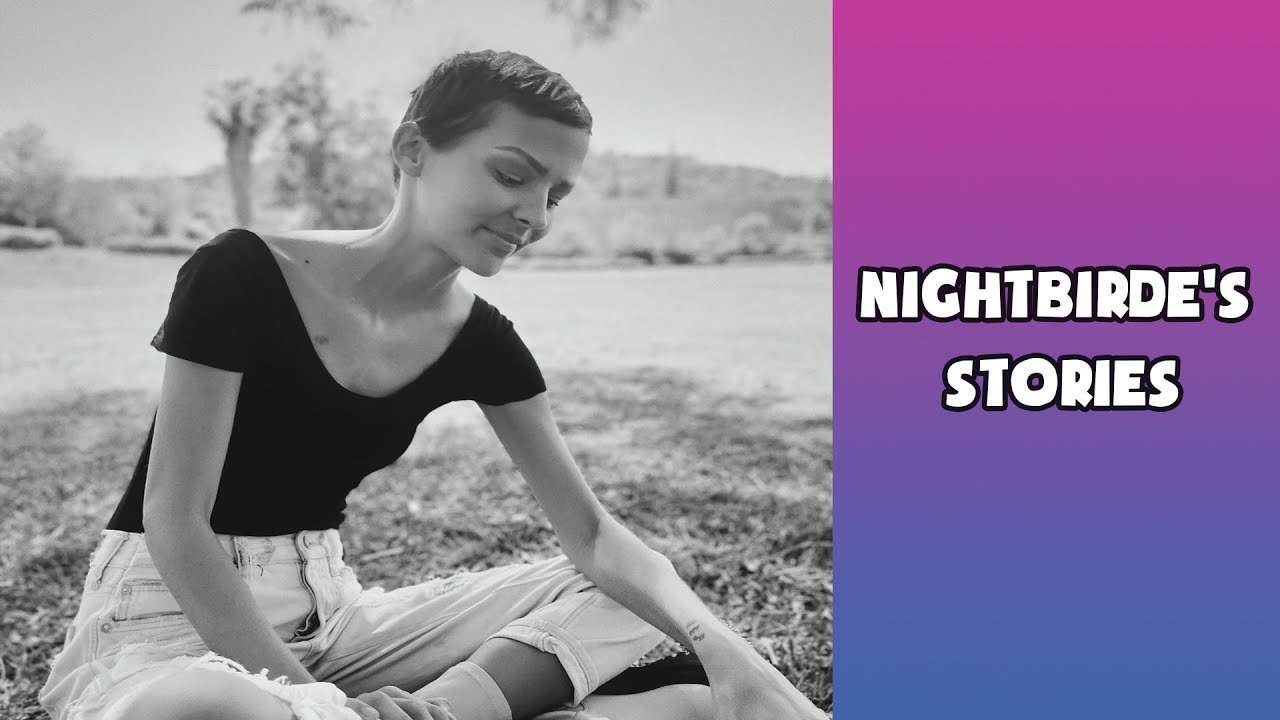


 for your loss. I don’t know
 why God chose me to be his Miracle. 90 percent of my Pancreas was removed. My surgeon left only 10 percent of my Pancreas. The cancer had not spread to the 10 percent left. That 10 percent worked like I still had all of the pancreas. It was malignant. I did not become a diabetic for 23 years.
 were baffled
 why I didn’t become a diabetic.


 1-877-2-PANCAN.


 .
 P.s. If you haven’t checked out the curated page
 I LOVE it and you will too!
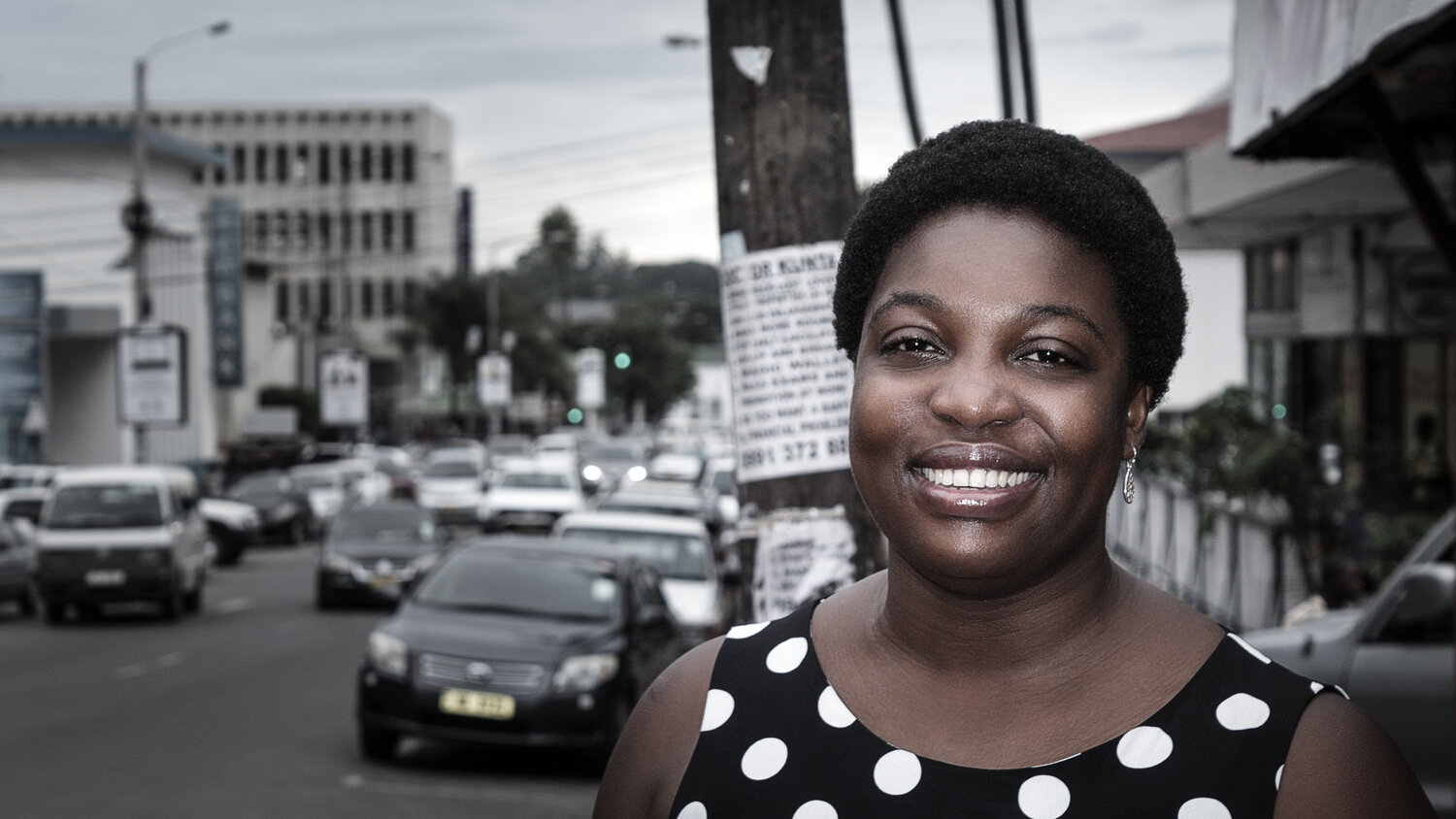

 for Socialism…


 didn’t work.