
Sometimes Trying Is Enough

USA’s Mikaela Shiffrin concentrates before taking the start of the women’s downhill first training AFP VIA GETTY IMAGES

Mikaela Shiffrin On Winning, Failing and Grief: 

OLYMPIC SKIER MIKAELA SHIFFRIN KNOWS SHE MIGHT NEVER STOP GRIEVING
THE SUDDEN 2020 DEATH OF HER FATHER, JEFF. AND SHE’S OK WITH THAT.

Two-time Olympic champion Mikaela Shiffrin has opened up about the mental health issues she suffered since the death of her father and says she is still unable to explain
how she came away from this year’s Beijing Winter Games without a medal.
The 27-year-old American detailed in a lengthy and deeply personal essay on
The Players Tribune the extent of her grief at the loss of her father and how it
still intruded into her life on a daily basis.
Expanding on the subject of mental health, the multiple world champion broached the subject of her disappointing form in Beijing, where she came nowhere near a medal despite competing in all disciplines.
“People always ask me, ‘What happened in Beijing?’,” she wrote.

“They want some kind of answer. And I genuinely don’t have one.
“I could give you the media answer that I always give.
I could put on a brave face and tell you some generic thing. But the real truth is… I don’t know. “It’s two minutes of your life. Two minutes, on a random day. You go down the hill. You try to go fast. You try not to make mistakes. Sometimes, you win the gold, like I did. Sometimes, you fail, like I did.”
Shiffrin said she did not want to ski, eat or sleep after her father’s death in an accident in February 2020, likening the loss to “an injury in your soul”.
She won the overall World Cup title in March following her Beijing disappointment but said that did not mean that all her personal issues had suddenly disappeared.
“People would say things to me like, “Mikaela, now that you’re in a much better place…” she added.
“And I never said it out loud, but I would always think: ‘Am I’?
“We equate winning with being okay, and failure with being not okay.
The real truth is that I’m neither okay nor not okay. It really depends on the day,
and it has almost nothing to do with how fast I came down a mountain.”
She had taken gold in giant slalom and silver in alpine combined at the 2018 Olympics in Pyeongchang, and she finished just off the podium in slalom. When you fail at the Olympics, there’s no private time for reflection and processing. Instead, there are cameras from every major international news network, in your face, immediately. And there are questions.

What happened? What went wrong?
After those Games, Shiffrin, now 27, had acknowledged that her aspiration
to win a gold medal in each of the five individual events was lofty—perhaps impossible. But ahead of Beijing, she was a favorite to at least make the podium in most of her races.
Instead, we all know what happened. Shiffrin recorded a “did not finish” in her first event, giant slalom—for the first time since January 2018, breaking a 30-race streak.
Then, in her second—and best—event, slalom, she took another DNF.
Shiffrin finished her third race, the super-G, placing ninth—an accomplishment considering how top-heavy that field of women is and the fact that it’s not Shiffrin’s
best event.
As she continued to learn to shift her perspective and find the positives in her experience in Beijing, Shiffrin headed into her fourth event, her Olympic downhill debut, focused not on medals but simply on skiing her best. Finishing 18th, then, on a day with difficult conditions, was a win.
In her fifth individual race and last chance to win a medal, alpine combined, Shiffrin started out strong, in fifth place entering the slalom portion following the downhill portion. But the medal was not meant to be; she recorded her third DNF in five events.

In her final event, the mixed team parallel, Shiffrin and the U.S. just missed the podium, finishing in fourth. “It’s not always easy, but it’s also not the end of the world to fail, fail twice.
Fail 5 times. At the Olympics. (Enter me …),” Shiffrin tweeted after her final individual race. “Why do I keep coming back? Gosh knows it hurts more than it feels good lately.
I came back because those first 9 turns today were spectacular, really heaven.
That’s where I’m meant to be and I’m stubborn as s**t.”
And then, a month after the Olympics, Shiffrin was back on top of the world again.
She clinched her fourth World Cup overall title, winning that coveted crystal globe to
tie fellow American Lindsey Vonn for the second-most all time.

Audi FIS Alpine Ski World Cup - Women's Giant Slalom
COURCHEVEL, FRANCE: Mikaela Shiffrin of Team United States wins the globe in the overall … [+] GETTY IMAGES

Shiffrin has experience with living out her life’s highest and lowest moments in
the public eye. Almost exactly two years before the Beijing Games’ opening ceremony,
her father, Jeff, had died after suffering a head injury in an accident at home.
Shiffrin has been navigating the unpredictable journey of grief—which she stresses
is not a linear one—publicly, redefining her relationship to skiing in the process.
In an intimate essay published by The Players’ Tribune on Thursday, Shiffrin discussed
all of it more candidly than she ever has before. Hers was the first essay in the site’s new Signature Stories series, which seeks to transform the traditional cover story into a 360-degree view of the athlete, combining first-person essays with original video, audio and photography.
The day before her essay was published, I spoke with Shiffrin—who is used to having her story being written about, not penning it herself—on the phone about what it was like to have more agency over her narrative and what she hopes readers take away from her piece.

“I just tried to explain the emotions that I go through from a more human perspective
than what people see me as—Mikaela Shiffrin the Olympian, the ski racer, the World Cup winner,” she said. “There’s common misconception that as an athlete, as long as you’re winning everything’s OK, and if you’re not winning, everything’s not OK. With this piece, it’s been so much about being able to put into words and tell the story that sort of goes against that theory.”
In the beginning of her career, Shiffrin says—when she was racking up titles and world championships, winning her first World Cup race in December 2012 at age 17—her emotions tended to go in line with success and failure. “Everything made a lot more sense,” she said. “It’s much different now.”

As she dealt with the fallout of losing her father—and as, after a few months,
she started to feel that the world had begun to move on without her—Shiffrin found it helpful to realize that others who came before her had experienced pain, sadness and
tragedy and loss and had somehow come out okay.
“Not necessarily come out on the other side,” Shiffrin said, “but have just continued
to go through life and have good moments, knowing it’s possible not necessarily to
be OK but to find happiness, even though it’s not a linear process.”
In writing her essay, Shiffrin hopes to be that example for someone else—proving that, while loss and tragedy might never actually be overcome, it’s still possible to continue building a life and setting goals.
At the same time, there’s a little bit of apprehension that comes with sharing her experience so widely. Someone out there is probably going to read the article and it might strike a chord and help them through something, she says, but many others might be stuck on the concept of “you’re the one who’s supposed to help me escape my life.”

The recent examples of other athletes and Olympians—like Simone Biles, Naomi Osaka and Michael Phelps—who have spoken out about their mental health struggles have been welcomed by many, but not by all. After all, Shiffrin says, sports is entertainment—it’s understandable that the public would look to athletes to forget about their own struggles.

Elite athletes are almost expected to be robots—to consistently dominate, to never disappoint. They’re allowed to show emotion if it is the type of emotion we have prescribed for them.
“You can’t forever brush aside everything else that’s going on in your life and opinions you have and things you see,” Shiffrin said. “You build this platform if you succeed in sports and you start to realize all the things in life you care about, at least for some of them,
you may be able to have an impact if you speak up.”

What she never wants to hear, Shiffrin stressed, is that experiences like the Beijing Olympics prove that she’s “just” human. “We’re all ‘just’ humans,” she said.
“That’s actually a pretty beautiful thing, if you don’t put the word ‘just’ in front of it.”
Now the competitive skiing season is over, Shiffrin has time to slow down and think about her goal-setting—for her training in the off-season, for the season to come, for the rest of her career. For so long, she says, her only goal in skiing has been simply to continue.

Of course, she can’t lie and say that, with 74 World Cup wins, the thought of overtaking Vonn (82) and Sweden’s Ingemar Stenmark (86) for the most all-time hasn’t crossed her mind. It’s close…but it’s still far enough away that it could never happen. “That record is not going to be the thing that defines my success in my career, ” Shiffrin said.
“It’s already been successful—but I’m still here and still doing it.

As I keep skiing in the next season or so I’m almost on a journey to find out
what the goal needs to be and what my career is going to look like moving forward.”
And just as grief is not linear, progress isn’t, either, Shiffrin said. “In my case the grief is probably never going to go away; it doesn’t mean that you can’t have wonderful times and things to look forward to in your future.” And when it comes to goals, sometimes it’s not about designating some outcomes as “successes” and others as “failures.”

The most important thing is to keep doing it.
“That’s what I hope people take away—the main point to tell this story is that sometimes it’s as simple as getting out of bed and putting one foot in front of the other,” Shiffrin said. “You don’t have to succeed every single day—you won’t succeed every single day. Sometimes all you’re doing is trying, and sometimes that’s enough.”
In an emotional essay published by The Players’ Tribune on Thursday, Shiffrin offers new details and perspective on her grieving process over the past two years, and how it has impacted her on the slopes. She describes grief not as linear “like a climb up a mountain,” but rather “more like a maze.” And winning, she writes, is no antidote.
“After Beijing, when I turned things around and ended up winning the World Cup,
people would say things to me like, ‘Mikaela, now that you’re in a much better place…’ 
And I never said it out loud, but I would always think: ‘Am I?’ ” Shiffrin writes in the essay.
“We equate winning with being OK, and failure with being not OK. The real truth is that I’m neither OK nor not OK. It really depends on the day, and it has almost nothing to do with how fast I came down a mountain.”
Shiffrin, 27, has won three Olympic medals and 12 World Cup titles but is coming off 
a disappointing performance at the 2022 Beijing Olympics, where she was favored to
win multiple medals but finished no higher than ninth in any of her individual events.
She proceeded to win the overall World Cup title in March.

Shiffrin writes in The Players’ Tribune that she still doesn’t know what happened
to her at the Olympics. “(People) want some kind of answer. And I genuinely don’t have one,” she writes. “I could give you the media answer that I always give. I could put on a brave face and tell you some generic things. But the real truth is… I don’t know.”
Shiffrin does suggest, however, that her father’s death has changed her mindset during competition. She writes that she struggled “just to not feel guilty for doing the thing that he loved to do.
“When I knew that I had a chance to win my first race after his death, I had this really surreal moment at the top of the mountain before my second run,” Shiffrin writes.
“I knew that if I had a good run, then I’d win. But if I won, then I’d be winning in a reality where my dad isn’t here to experience it. And I was asking myself,

‘Do I want to even exist in this reality?’ “

Mikaela Shiffrin, of the United States sits on the side of the course after skiing out in the first run of the women's slalom at the 2022 Winter Olympics, Wednesday, Feb. 9, 2022, in the Yanqing district of Beijing. (AP Photo/Robert F. Bukaty)
This article originally appeared on USA TODAY: Olympic skier Mikaela Shiffrin pens emotional essay on ‘maze’ of grieving father’s death

Mikaela Shiffrin gave insight into how she navigated the grief following her father’s death, and she may never stop grieving, something she is O.K. with. 

“It’s not linear. It’s not a climb up a mountain,” Shiffrin wrote in an essay published by 
The Players’ Tribune on Thursday. “It’s more like a maze.
Some days, I feel O.K. Some days, it still feels as raw as when we walked into the hospital after our 10-hour flight home and saw him on the ventilator.”
Shiffrin’s father suddenly in February 2020 after an accident, and she detailed the call she and her mother received, the emotions she felt during the 10-hour plane ride and the nine hours she laid with him in the hospital as he was on a ventilator.
But going through the pain of recounting the memories with him,
his influence on her skiing and his death have a purpose. 
“It’s extremely hard to relive this pain, but the reason I’m doing it is because
maybe it can help someone else. I’m doing it because someone did it for me.
A stranger, as a matter of fact,” Shiffrin wrote. 
The Olympic gold medalist detailed how people highlight feeling “endless sadness
of losing that person, and the ‘celebration’ and happiness of remembering their life.”
However, there is anger as well. She wrote, “It’s like you have an injury in your soul.
There is no timetable. There is no rehabilitation. Some days you wake up and think,
“What’s the point?”

Contact Tom Schad at tschad@usatoday.com or on Twitter @Tom_Schad.

“I’m Not at Peace With It”: Mikaela Shiffrin on Coming Back After the 2022 Olympics in Beijing | Vanity Fair

Olympic skier Mikaela Shiffrin pens emotional essay on ‘maze’ of grieving father’s death | Flipboard

Mikaela Shiffrin Writes Emotional Essay on Navigating Father’s Death – Sports Illustrated
Mikaela Shiffrin On Winning, Failing And Grief: Sometimes Trying Is Enough (forbes.com)
Mikaela Shiffrin pens emotional essay on grief, father’s sudden death (usatoday.com)
I Want to Remember Everything | By Mikaela Shiffrin (theplayerstribune.com)
Golden Buzzer: Nightbirde’s Original Song Makes Simon Cowell Emotional –
America’s Got Talent 2021 – YouTube


Posted in Uncategorized | Leave a comment

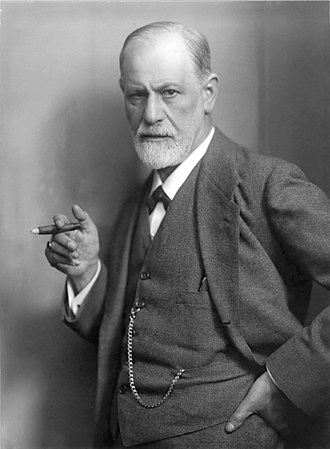
How Freud escaped

Evidently, ignoring problems doesn’t make them go away.

Sigmund Freud is a legend in psychology. Many are interested and sometimes disturbed by his psychoanalysis but the man was a genius and ahead of his time. As the founder of psychoanalysis, he helped develop psychotherapy into what it is today. You don’t have to agree with his ideas but there is no doubting his contributions to the field of psychology.

Thanks to technology we can see Sigmund Freud in living color. The Austrian neurologist escaped Nazis but couldn’t escape cancer. Later in his life, he developed a benign tumor on his mouth associated with smoking. By 1939, the cancer in his mouth had grown to affect the entire jaw – ultimately leading to his death, since it had become inoperable. 

Octogenarian Sigmund Freud was ailing from cancer and it was long past the time
to leave Vienna. Hermann Göebbels and Joseph Himmler had set out to kill psychoanalysts, especially Jewish ones. Hermann Göering had their property and assets seized, which included Freud’s publishing company. Moreover, a month after the Nazis took over Austria on March 12, 1938, every business owned by Jews had a Nazi appointed to run it. The appointed “commissar” was a 35-year-old chemist, 
Anton Sauerwald.
“By the time he finally decided he could not live at 19 Berggasse anymore, Freud and his extended family were already living under a form of self-house arrest, his daughter Anna had been interrogated by the Gestapo, and the family’s assets were being confiscated. Freud could look out his window and watch Jewish shops being looted by ‘respectable’ Viennese; he could see Jews being beaten and shot dead by thugs.”
So writes Bettina Berch for the Jewish Book Council. 

Why did he wait so long?
I hadn’t heard of The Escape of Sigmund Freud when it was released.
I ran across it in my usual internet wanderings. The book, by David Cohen,
was published by one of my favorite houses, Overlook Press. It sounds riveting.
Freud was an especial target but, as Debbie Hagan at Psych Central writes, “the Nazis couldn’t escape the fact that Freud was a well-connected, international figure, who they grudgingly had to respect. Freud did have friends throughout the world, such as 
William Bullitt, the American ambassador in Paris, and President Roosevelt, who telegrammed Hitler, warning him that any harm done to Freud would be considered a deplorable act. Still it didn’t stop Nazis from hanging swastikas on Freud’s stoop or the Gestapo from harassing him, claiming that he had not paid his taxes and his publishing company had outstanding debt. Thus, military police  confiscated the family’s cash and passports. These actions reached a climax when the  Gestapo arrested Freud’s daughter Anna, a noted analyst in her own right, which shook Freud into a stark reality:
His life in Vienna was over.” 
In Freud’s 1927 The Future of an Illusion, he concludes that all religious beliefs are “illusions and insusceptible of proof.” He notes that “civilization has little to fear from educated people and brain-workers,” but “the great mass of the uneducated and oppressed” were of more concern. Freud concluded with the “hope that in the future science will go beyond religion, and reason will replace faith in God.”
Yet he could not have conceived of the Nazis, and what the “educated people and brain-workers” might have been brought to by their own thinking. And there might be a little more to the oppressed than he had suspected. In fact, he had become one of them.  

On March 13, 1938, the Vienna Psychoanalytic Society met and Freud reached into his knowledge of Jewish history for the right story to give them hope. He told his friends: “After the destruction of the Temple in Jerusalem by Titus, Rabbi Jochanan ben Zakkai asked for permission to open a school at Jabneh for the study of the Torah.
We are going to do the same. We are, after all, accustomed by our history and tradition, and some of us by our personal experience, to being persecuted.”

In the end, he was saved, not by intellectuals or grand thinking, but by bourgeois kindnesses– of friends, admirers, and a Nazi who, in the course of his relationship with Freud, developed an old-fashioned conscience and chose to look the other way as the Freuds escaped. That’s right, Anton Sauerwald himself. (Read his story here.)

“Thus, the Freud family (including his daughter, Anna, his wife, Martha, and their faithful housekeeper, Paula), fled to Britain. They toted along Freud’s famous couch, some of his books, and many objets d’art. Four of Freud’s sisters stayed behind. Even though Freud made many attempts to contact them, he never succeeded. Years after his death, researchers would discover that three had died in concentration camps.
And the fourth most likely died of malnutrition.

image.png
Offensive Yards: The Worst NFL Stadiums Ranked (moneywise.com)

”The Real Blue States: These Are the Unhappiest Places in America!
Everyone loves to complain about their home state — the crummy stadiums, the weather, the taxes — but some unhappy residents have way more ammunition than others.
The personal finance site WalletHub maintains a list of the Happiest States in America1, based on numerous factors across three categories: “emotional and physical well-being,” “work environment” and “community and environment.”
It probably comes as no surprise that the gorgeous island state of Hawaii got the highest total happiness score, but you might not be able to predict some of the most miserable states languishing at the bottom of the list.

25. Rhode Island Happiness score: 50.96
The lovely ocean views are free, but Rhode Island is very expensive to live in. Plus, CNBC has dubbed it the worst state in the country for businesses due to slow economic growth and poor infrastructure.
America’s tiniest state got a half-decent score for emotional and physical well-being but didn’t fare as well when it came to work environment and community and environment. One benefit: Rhode Islanders work fewer hours than the residents of almost any other state, besides Utah.
“I left Rhode Island many years back and moved down south, and I like it better in every way, shape and form,” one Redditor writes. “I didn’t like living in Rhode Island…
The taxes are insane, the cost of living is insane and the winters suck.”

24. Florida Happiness score: 50.58
The Sunshine State offers sandy beaches, perpetually warm weather and Disney World. What more could you ask for?
Well, the retiree and tourist haven came second last for its community and environment, beaten only by Texas. It has some of the worst rankings in the country for safety, divorce rates, volunteering and long-term unemployment.
Plus, the summers can be blisteringly hot, with highs of 90 F, and the fall season gets plenty of thunderstorms and hurricanes.
OtherwiseReflection on Reddit points to the “massive wealth inequality,” citing “areas in the panhandle that are like areas in West Virginia, with crushing poverty. And there are areas with million-dollar mansions and condos and yachts.”

23. Pennsylvania Happiness score: 50.16
The Keystone State has a rich history. It was one of the original 13 colonies in the U.S. where the Declaration of Independence, U.S. Constitution and the Gettysburg Address were written.
Residents should hold on to that pride because it’s harder to celebrate these days.
While it didn’t receive an abysmal score in any category, Pennsylvania didn’t fare well in any category, either. It took 40th place for work conditions and 30th place for community and environment.
Plenty of Redditors add that the road infrastructure here is terrible.
“Potholes everywhere, and in some suburbs, previous work on gas lines or repeated water main breaks have basically destroyed some roads,” user deechbag writes. “Also, Pittsburgh is not set up like a normal city. There really isn’t the standard grid setup. Throw in random one-way roads, all the hills, too … and the result is a terrible city to drive in.”

22. Illinois Happiness score: 50.14
This midwestern state is known for its farming and manufacturing strength and hosts some of the country’s biggest companies, but it also has the third highest rate of long-term unemployment in the nation.
The Land of Lincoln ranked fairly well for emotional and physical well-being, at 12th place, but received low scores for work conditions and community and environment.
“The taxes are high, things were always just a bit pricier, and it just wasn’t worth it anymore,” explains former Illinois resident and Redditor whitecollarredneck. “Making the 3.5-hour drive to Chicago once or twice a year wasn’t worth the cost of living in the state.”

21. Maine Happiness score: 50.12
Maine boasts beautiful coastal views and is one of the safest states in the U.S., but residents say its lack of excitement and job opportunities push young folks away.
The Pine Tree State fared decently well for work conditions as well as community and environment but came in 35th place for emotional and physical well-being.
The state has one of the highest rates of adult depression in the U.S.
“Maine isn’t great for youth because there really aren’t that many jobs,” Doox4 on Reddit says. “After living in a few other states, I have noticed the lack of communities and opportunities for young adults. Still a great place to live … but it’s easier (and warmer) to move further south.”

20. Wyoming Happiness score: 49.26
You don’t hear too many people complain about Wyoming, but that’s probably because
it’s the least populated state in the U.S. Its population in the last census was just 578,759.
Wyoming came in 23rd place for working conditions, 30th for emotional and physical well-being and 39th place for community and environment. It also ranks close to the bottom for income growth and has the lowest minimum wage in the country, tied with Georgia at $5.15.
“I was born and raised in Wyoming and I’ve seen an enormous exodus of young people,” phargmin writes on Reddit. “We just don’t have enough college-degree-requiring entry-level jobs. Their choices are to accept underemployment here or go down to Denver and actually find work and start a career.”

19. North Carolina Happiness score: 49.19
The Tar Heel State was once dubbed the furniture capital of the world due to the strength of its factories, and it was also a major producer of tobacco and textiles.
That reputation was lost in the 1990s thanks to globalization and changing consumer tastes. North Carolina has since embraced food processing, banking and other sectors,
but it’s no longer a prized place to live and work.
The state took a so-so 28th place for emotional and physical well-being and 27th place for work conditions but fared far worse for community and environment. That’s the category focused on volunteering, weather, leisure time, divorce rates and public safety.
Redditors commiserate about the heat and abundance of deer flies in North Carolina. TheRealirony says there’s “not a lot to do once you’ve seen/done a handful of things here. We have what everyone else has (malls, movies, shops, restaurants, etc.), but to do anything worth talking about you normally have to drive out to somewhere in the mountains or coast.”

18. Kansas Happiness score: 49.16
The Breadbasket State is the country’s leading wheat producer and still has a substantial fossil fuel industry, helping Kansas land at 19th place for its work environment.
That category tracks things like employment rates, work hours, commute times and income growth.
On the other hand, it stumbled into 31st place for emotional and physical well-being
and 40th for community and environment. The odd twister does Kansas no favors.
“I have a love-hate relationship with the weather,” Daniel Welsey writes on Quora.
“The transition between seasons is always fun and interesting, but when you’re stuck in the middle of -15 F and five inches of snow or 97 F with 80% humidity or yet another Severe Thunderstorm Warning, you’re ready to move on.”

17. South Carolina Happiness score: 48.78
The Palmetto State has its charm, but residents say that charm can fade once you’re outside the bigger cities like Greenville and Charleston.
South Carolina took the 36th spot for emotional and physical well-being, which focuses on coronavirus rates, depression, life expectancy and food security. Wallethub calls this state one of the worst for health care2, as it has one of the highest infant mortality rates in the U.S. “The educational system leaves a lot to be desired,” says Angela Goodale on Quora.
“South Carolina ranks at the bottom of many important lists such as health risks for diabetes and heart attacks. Availability of health care is poor in rural areas.
Poverty is widespread.”

16. Ohio Happiness score: 48.37
While the decline of U.S. manufacturing hasn’t been as devastating
for Ohio as it has been for some other regions, the economy is still troubled.
It seems like Ohioans are burning the midnight oil on a regular basis, as they fall in the bottom five for the amount of sleep they get. Yet that hard work is not paying off, as the median household income here lags behind the national rate.
Ohio falls right in the middle of the list for community and environment, but came
in 32nd place for emotional and physical well-being and 41st for work environment.
“I grew up in Crawford County which … has like no industry aside from Arctic Cat
and that plant that makes electronics for Honda,” Redditor VncentLIFE writes.
“I went to undergrad in a town that is the direct back road from Pittsburgh to Cleveland.
The poverty is insane there. The drugs on the north side of Alliance are very real, along with small spurts of violence.”

15. Indiana Happiness score: 47.96
The Hoosier State might be affordable to live in,
but it’s also considered one of the poorest states in the U.S. due to stagnant wages.
According to a 2018 report by the Indiana Institute for Working Families,
basic expenses jumped almost 32% since 2009, while incomes rose by a meager 6.3%.
Indiana received lower-than-average scores across the board but performed worst for emotional and physical well-being. Perhaps as a result, some visitors to Indiana find Hoosiers cranky and rude.
“I lived in Indiana for five years, and people there were not naturally friendly in any way,” comments zonk3 on Reddit. “For example, even a mention of the day’s weather was met with contempt. And no one ever said welcome or thank you when visiting their businesses.”

14. Michigan Happiness score: 47.27
Michigan’s freshwater coastlines are breathtaking,
but turn back inland and things don’t look quite so pretty.
The abandoned, dilapidated buildings of Detroit make it the most famous example of urban decay following the decline of the auto manufacturing industry, and Wallethub 
says Michigan has the third-worst drug problem in the country.
The Great Lakes State didn’t do so badly for its community and environment score, but it took 38th and 35th place for emotional and physical well-being and work conditions, respectively.
“Much of southern Michigan never recovered from the Great Recession (or, for that matter, from the 1980s),” explains homerinthe details on Reddit. “Detroit, Flint and Saginaw are like dystopian novels, and many small- and medium-sized cities are poor
and run-down after the factories moved to Mexico.”

13. Montana Happiness score: 47.25
Mighty Montana comes in fifth place for its work environment
and has one of the lowest long-term unemployment rates in the U.S.
So why is it listed as one of America’s unhappiest states?
The Treasure State’s happiness score was dragged way down by its emotional and physical well-being and community and environment rankings, at 40th and 41st respectively. Depression is a serious problem, and many residents feel socially and geographically isolated despite the natural wonders around them.
“A big one for me has been boredom,” Robert Sunset on Quora writes. “Being from
San Diego, I grew up with constant recreational and fun activities. Also, no real seasons.
In Montana, you aren’t even within eight hours’ driving distance of a big city. It gets really cold and really hot. People are tribal in nature and suspicious of some outsiders.”

12. New Mexico Happiness score: 47.03
The Land of Enchantment’s low humidity may have helped it snag eighth place for its community and environment. In particular, Wallethub places Las Cruces in the top 3%
of all U.S. cities for mild weather conditions4.
But being warm and dry only means so much. New Mexico ranked 39th for emotional and physical well-being and a dismal 46th for work environment. It has some of the highest divorce and long-term unemployment rates in the nation and also scores poorly for income growth.
“Nobody has money. Nobody is hiring. Pay is low. If you want a job, you have to know people who know people. I searched for months without even getting so much as an interview when I first moved here,” explains Ih8Hondas on Reddit.

11. Missouri Happiness score: 45.79
Missourians praise the low cost of living here and the lush Ozark Mountains,
but there’s suffering just beneath the surface. The state has been repeatedly dubbed the meth lab capital of the U.S. by various media outlets; Wallethub gives it the worst score in the nation for drug use, making special note of poor law enforcement.
Missouri was awarded 12th place for community and environment and 22nd place for work conditions but fell behind for emotional and physical well-being.
“Drug addiction causes societal and personal decline on the whole, and the overarching drug problem is creating more work for family services, more kids in the foster system, more felons, and more welfare recipients,” writes Ryan P. Walsh on Quora.

10. Oregon Happiness score: 43.67
At first glance, the Beaver State seems to have it all: the second-lowest work hours,
third highest rate of volunteers and the No. 1 rate of income growth in the nation.
It’s hard to imagine why Oregonians are among the top 10 unhappiest.
Nevertheless, Oregon has the second-highest share of adult depression in the U.S. The state takes 43rd place for emotional and physical well-being, although it fared well for its work environment and achieved a middling score for community and environment.
To find answers, you may need to look to the skies. Several Redditors point to the state’s gloomy and gray winter climate, particularly in Portland, being a major trigger for someone with Seasonal Affective Disorder.
“I work out nearly everyday, use a happy light, Vitamin D, week-long Mexican vacations — and the winters are still crushing,” says schallplatte. “You simply cannot get around the lack of light, and all of these things are a Band-Aid to the problem.

9. Alaska Happiness score: 40.85
It’s not hard to imagine why Alaska is buried near the bottom of the happiness scale.
The state way up north is isolated and sparsely populated, with long, frigid winters and short, mild summers.
Alaska performed poorly across the board, but its low rankings for work conditions (47th) and community and environment (48th) are particularly telling. It has some of the longest work hours and lowest income growth in the country.
“It can feel like you’re trapped because it costs a small fortune to go almost anywhere.
My family is in Florida (which I realize is about as far from Alaska as you can get in the U.S.) and it cost my husband and I $2,000 to fly home one Christmas. It cost my aunt
and uncle less to visit my cousin in Germany,” writes notstephanie on Reddit.

8. Alabama Happiness score: 40.28
The Yellowhammer State isn’t a cheery place for adults, but it’s even worse for the kids.
It has one of the worst education systems in the nation, Wallethub says. While its schools are safe, they suffer from poor test scores and relatively low K-12 funding.
Its health care system ranks just as badly — beaten by only two other states — and few people can muster the energy to play sports. Overall, Alabama fared decently well for its community and environment but struck out for emotional and physical well-being, ranking 46th.
The economy is no saving grace, either.
“My hometown was once booming with steel mills and the coal industry, and everyone
had a job,” WillyXL on Reddit says. “Those are all gone now and there’s nothing left.
I’m hoping if I do move it would be a plus for my kids to have more opportunities for careers and jobs.”

7. Mississippi Happiness score: 39.52
Surprise: While Mississippi often falls at the bottom of all kinds of national rankings,
it has best its neighbors this time thanks to an impressive 14th place finish for community and environment.
That could only be because of its extremely pleasant weather or extra-long leisure time — because the other factors that make up that category are abysmal. The Magnolia State is the least safe in the nation, has one of the highest divorce rates and has one of the lowest rates of volunteerism.
And don’t even think about finding a pickup game, because Mississippi also ranked dead last for sports participation.
“Our politicians are awful, our schools are awful, our health care is awful,” Weneedmalllions writes on Reddit. “The best part is no one tries to make it better, every single person is just content to writhe in this awfulness. It’s all just awful, and I’m pretty certain old rich white people just come here to die staring at our lakes, the only things
that don’t suck.”

6. Tennessee Happiness score: 39.21
Tennessee may be nicknamed the Volunteer State for the number of soldiers who
signed up to battle in the War of 1812, but it failed to crack the top five for volunteerism in Wallethub’s recent study.
The state boasts strong growth in its manufacturing, mining, logging and construction industries, so it fared decently well for its work conditions. However, Tennessee could only reach the 44th spot for community and environment and the 45th spot for emotional and physical well-being.
Tennesseans have some of the highest rates of adult depression and get very little sleep. Plus, locals say the weather can be extremely unpredictable.
“One time, I came home for Thanksgiving break from college (only about an hour and
a half away from home) and played soccer on Friday with friends in mid-70 degree weather,” Logan Flowers on Quora recounts. “Then I drove back on Sunday in snow.”

5. Kentucky Happiness score: 38.29
No matter how entertaining the Kentucky Derby is, an annual
extravaganza isn’t enough to keep smiles on faces year-round.
Kentucky is one of the poorest states in the country, with a median household income of just $50,589. In January, 14% of the state’s population was enrolled in the Supplemental Nutrition Assistance Program (SNAP), though that number was as high as 39% in Owsley County.
The Bluegrass State took 32nd place for work environment and 47th place for emotional and physical well-being. Kentuckians also get very little sleep and rarely participate in sports.
Ggeunther on Reddit feels the “education system is terribly underfunded, with no end in sight,” and “the health care system is below the national average, and the pandemic is completely out of control.” While Wallethub is more optimistic about Kentucky’s schools, it ranks the state 44th for health care outcomes.

4. Louisiana Happiness score: 38.15
Louisiana’s workers are the most miserable in the country, and for good reason.
They work some of the longest hours but have the lowest income growth of any state.
The minimum wage remains at the federal rate of $7.25 per hour. Unemployment is rampant, and about one-in-five people (and one-in-four children) live below the poverty line. The Bayou State is also rated the second most dangerous in the country — and we’re not just talking about the alligators — and one of the worst for divorce and sports participation.
“It’s not uncommon for people graduating in Louisiana to head to Texas right away for higher wages there and more things to do,” Grenshen4px writes. “And Louisiana cutting back on education funding makes it less likely for businesses to move there since high-paying industries are looking for educated, skilled workers, not unskilled workers.”

3. Oklahoma Happiness score: 37.66
The Sooner State is no stranger to tornados, wildfires, floods and severe winter storms,
but it’s not just natural disasters leaving people in despair. As the price of oil has crashed,
the Oklahoma government has declared “revenue failures” three times — in 2020, 2017 and 2016 — meaning it pulled in less money than it allocated for public services.
Oklahoma’s lowest ranking was emotional and physical well-being, at 48th place. In a scathing 2017 analysis, The Guardian said Oklahoma was leading the nation in education cuts, expulsions and female incarceration rates, while it came second for male incarceration.
“The western half of the state is in economic arrest unless they have a military base, oil or gas boom going,” writes Gordon Couger on Quora. “We don’t have much skilled labor left. Most are old or have found greener pastures. It is difficult to hire people and get them to move to Oklahoma due the lousy weather and poor schools.”

2. Arkansas Happiness score: 36.83
Business is hardly booming in the Land of Opportunity.
Arkansas is one of the poorest states in the country, and even then certain areas have far fewer jobs than others. The recent trade war with China has also hurt the state’s exports, causing farmers to drop prices in the face of lower demand and triggering a wave of bankruptcies.
The state ranks poorly for its work environment (42nd) and emotional and physical
well-being (49th) — it’s one of the most dangerous and least sports-loving — although it managed to snag an impressive 15th place for the quality of its community and environment.
“Three-quarters of the state isn’t worth living in. The northwest is your best bet,” explains Cari Murphy on Quora. “Mosquitos are horrible, unless you get to the Ozarks. No alcohol sales on Sunday, and there are a lot of small towns where the streets roll up at 6:00 pm. And nothing is open on Sunday except Walmart and gas stations. Northeast Arkansas is terrible about its crime rate.”

1. West Virginia Happiness score: 30.58
In 2014, the West Virginia Legislature made John Denver’s Take Me Home, Country Roads one of its four official state songs. Yet this place is far from “almost heaven.”
The Mountain State is the most miserable of all the United States of America, with the highest rate of adult depression. West Virginians are also chronically sleep deprived, beaten only by happy Hawaiians having too much fun to rest.
Incomes are stagnant. West Virginia came last for emotional and physical well-being
and second last for its work environment. 
Wallethub adds that this state has the second-worst drug problem in the nation.
“Lack of adequate medical care (not enough doctors, etc.) leads to pharmacies and pill mills just handing out pain medication and opioids like candy,” ftxs writes on Reddit.

1 Happiest States in America, Wallethub
2 Best & Worst States for Health Care, Wallethub
3 Drug Use by State: 2020’s Problem Areas, Wallethub
4 Cities With the Best & Worst Weather, Wallethub
5 States with the Best & Worst School Systems, Wallethub
6 Crime Statistics by State and City – CityRating.com
7 Crime by Zip Code | CrimeGrade.org

A top lithium expert agrees with Elon Musk that there’s not enough of the crucial metal to meet booming demand (msn.com)
Ducey, Abbott and other GOP governors join Border Strike Force to combat illegal activity at southern border (msn.com)
Canada eyes new measures to protect economy from national security threats (msn.com)
Saudis’ Biden snub suggests crown prince still banking on Trump’s return (msn.com)
Biden job approval second lowest among presidents since 1950s: Gallup (msn.com)
Zelensky warns Putin’s Ukraine invasion is only the ‘beginning’ [Video] (aol.com)
Climate change threatens to sink U.S. coastal communities – Search (bing.com)
Social media ‘well designed’ to destroy democracies, says Obama (msn.com)
How Antarctica tells the story of global climate change – Search (bing.com)
Climate progress remains elusive for Biden on Earth Day (msn.com)
Posted in Uncategorized | Leave a comment

One Room School Houses

Bring back One Room School Houses where they gave you a class on common sense daily. 

A Local Legacy:  One-Room Schoolhouse
0ne room schoolhouse – Search (bing.com)

Would you like to experience what going to school was like in the late 1800s? 
To start with, imagine everyone in school sharing only one teacher and one classroom.
In the 19th and early 20th centuries — most American students attended a one-room schoolhouse. A single teacher would typically have students in the first through eighth grades, and she taught them all. The number of students varied from six to 40 or more. The youngest children sat in the front, while the oldest students sat in the back. The teacher usually taught reading, writing, arithmetic, history, and geography. Students memorized and recited their lessons.

The classroom of a one-room schoolhouse probably looked much like your own.
The teacher’s desk may have been on a raised platform at the front of the room, however, and there would have been a wood-burning stove since there was no other source of heat. The bathroom would have been outside in an outhouse.
In Honeoye Falls, New York, there is a one-room schoolhouse where kids today can experience what it was like to be students in the late 19th century. For a week during the summer, they wear 19th century clothes and learn the way children learned more than a hundred years ago.

image.png
Inside of the one-room schoolhouse. 

Honeoye Falls One-Room Schoolhouse
– Town of Mendon Historical Society
1 Allen Park Dr.
Honeoye Falls, NY 14472

In the 19th and early 20th centuries, most American students attended a one-room schoolhouse. A single teacher would typically have students in the first through eighth grades, and she taught them all. The number of students varied from six to 40 or more. The youngest children sat in the front, while the oldest students sat in the back.
The teacher usually taught reading, writing, arithmetic, history, and geography. Students memorized and recited their lessons.  The classroom of a one-room schoolhouse probably looked much like those of today. The teacher’s desk may have been on a raised platform at the front of the room, however, and there would have been a wood-burning stove since there was no other source of heat. The bathroom would have been outside in an outhouse.

 In Honeoye Falls, New York, there is a one-room schoolhouse where kids today can experience what it was like to be students in the late 19th century. For a week during the summer, they wear 19th century clothes and learn the way children learned more than a hundred years ago.  In 1991 the Honeoye Falls/Town of Mendon Historical Society began the transformation of an old one-room schoolhouse into a living history museum.
Mendon District School Number 15 was moved to the Village of Honeoye Falls Town Park some years ago and opened to the public as part of a Village Days celebration. The opening was met with great enthusiasm, and the Historical Society went on to restore the schoolhouse and develop a program to preserve its history.

 This little one-room schoolhouse building has been beautifully restored with the inside
set up as it would have looked 135 years ago.  During the 19th and early 20th century, the rural school often also served as a church, meeting place, and theater, thereby bringing the community together. One of the Historical Society’s educational programs is “Miss Eliza’s Summer Session,” a week-long summer class for graduating fourth graders.
During the class, the children dress in period clothing and are immersed in an educational experience from the past.  The Honeoye Falls – Town of Mendon Historical Society is dedicated to the preservation of local history and the education of the community.
The Society operates a museum located at One Harry Allen Park, which is open to the public Sunday afternoons from 2 to 4.

The teacher’s desk may have been on a raised platform at the front of the room, however, and there would have been a wood-burning stove since there was no other source of heat. 

The bathroom would have been outside in an outhouse.

During the summer they wear 19th century clothes and
learn the way children learned more than a 100 year ago.

What else has changed about school since the 19th century?

A Day in the Life – The One Room Schoolhouse (one room schoolhouses.ca)

The Logic of a One Room Schoolhouse – Bing video

One-Room Schoolhouses in America – YouTube 

Lessons to be learned from a one-room schoolhouse
There’s nothing like a desk and a chalkboard to bring back memories of the one-room schoolhouse. Unless, that is, you live in one of the American towns where these fabled schools are more than just a memory. They’re alive and teaching.

Our Sunday Morning Cover Story is reported by Barry Petersen:
For a century-and-a half, Montana’s Pioneer Mountains have echoed
with the young voices from the Divide, Mont.’s one-room school.
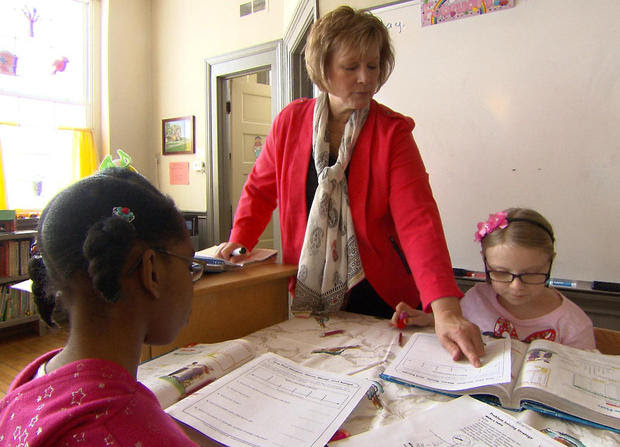
Yes, there are still one-room public schools in America. Today about 200 one-room schools carry on a tradition that’s older than America itself. And while the frontier where they first appeared may be gone, the spirit that they helped create is alive and well in towns across rural America.

 “This is the heart of the community,” said teacher Judy Boyle.
At Divide School, Boyle loves what she does: “I have teacher meetings once a week.
It’s with me, myself and I. We get along really well!” 
Divide School teaches grades K through 8. At times it had as many as 30 students.
This year, with only three students, Boyle can also give such individual attention,
she makes lesson plans for each student.

one-room-schoolhouse-b-620.jpg
There are three students at the one-room school in Divide, Mont. CBS NEWS

“You’re really designing something custom-made for these three kids.
That I would think, is something great to be able to do as a teacher,” said Petersen.
“It is, it really is,” said Boyle, “because you can respect their differences and what makes them tick.”  But there are some key similarities between a one-room schoolhouse and your neighborhood school. Take the cost: it’s roughly the same per student, and all the schools have to meet the same state and national standards.
And sometimes, like at Divide, there are additional expectations at a school that has been operating since the 1870s.
“In these small communities, their schools are really important to them,” said Boyle, “because the school is what generates the reputation of that town.”
There was a time when almost every American child learned in a one-room school. In the 1700s, John Adams taught in a one-room school near Boston; Abe Lincoln was educated at a one-room school; and Henry Ford loved him so much, he had it moved to a museum in Michigan.

As late as 1913, half of the country’s schoolchildren were enrolled in the country’s 200,000 one-room schools. But after the First World War, one-room schools started to close, as people moved into cities and small schools started to consolidate. So, for most of us, the one-room school is now just folklore — the kind that Laura Ingalls Wilder brought to life in “Little House on the Prairie.” It’s been a long time since the farmlands near Lansing, Mich., were prairie.

one-room-schoolhouse-c.jpg
 CBS News Poll: Are bigger schools better?

“In a big school the teacher would call in the guidance counselor —
that would be you,” said Petersen. “Or complain to the principal — that would be you.”
“Yes!” said Hydon. “At first, it was overwhelming. But now it’s part of the job. You just have to [have] the instinct to know what to do and what to say.” And here the lessons are not just about math or science, but about older children helping the younger ones with things like learning how to read.
And there is an unusual teaching tool that may only work in a one-room school: eavesdropping. It sure helps first grader Thomas Trygier: “‘Cause when I was in kindergarten, I was, like, listening to all the third-grade stuff,” he told Petersen.
“So, I learned a lot in kindergarten.”

“I remember last year he came from kindergarten, ‘Mom, what is the Silver War?'” said
his mother, Cynthia. “He didn’t know it was the Civil War. But he hears the older kids talking.” Which is why Cynthia Trygier (herself a teacher at a Christian high school) wanted seven-year-old Thomas in a one-room school, even though there were bigger schools closer to their home.
“Kindergarten, he was already moved up into first grade reading and math, and it was a smooth transition,” she said. “I don’t want him to grow up too fast; I want him to enjoy his childhood. And in this school, he is still a first grader, but he’s doing second and third grade work in reading and math.” 
And at Strange, there are other lessons of life; students must clean the school every day.
Petersen asked, “What are you trying to teach there?”
“Responsibility,” said Hydon. “I think responsibility goes with every aspect of life that we do. I mean, it carries over to a work ethic that everyone should have instilled in them.'”
You might think kids would miss things like team sports, but they don’t. At Divide the local one-room schools get together to make up a track or basketball team.

But for some, it’s hard when the day comes to go to the big city high school.
It can be, in a word, terrifying. “I mean, you’re going from, you know, seven, eight kids to thousands,” said Jon Dupuis. How did he handle it?
“Pretty poorly at first. But as freshman year moved on, I came out and was able to, you know, make friends, talk to people, get on with my life.”
Jon Dupuis — now a senior who’s going to college next year for a degree in computer science — says that, in balance, the one-room school was the unique basis for a life of learning.
Petersen asked, “How do you think you did academically against the kids who had gone through a normal school system?”

“In the top ranks,” Dupuis said.
Why? “I think it was the push of education here. There was no discouragement.
It was always, what can you learn, what can you do? You can do this. You will learn this.”
“I’m with these students 180 days a year for nine years of their lives,” said Judy Boyle.
“You have a real personal interest in these kids,” said Petersen. “These aren’t just kids behind a desk for you.” 
“You can’t help but love them,” Boyle said. “You’re a part of you. And I’m a part of them.”
No wonder that when it comes to education, the teachers and students in one-room schools so often consider themselves the lucky ones.

For more info:
Strange School, Grand Ledge, Mich.
One-Room School Program, The Henry Ford, Dearborn, Mich.

image.png
A Social Credit System Aimed at Modifying Climate Change Behaviors is Being Deployed in Italy. BY WAHAGEN KHABAYAN — APRIL 22, 2022

Italy will become the first European nation to implement a social credit system –
where citizens will be rewarded for their “good behavior”. Starting in the fall of 2022, the city of Bologna will begin a new pilot project. Citizens who display good behavior such as correctly recycling or using public transportation will be rewarded. The Bologna municipality is deploying a “Smart Citizen Wallet” which will be the primary method for citizens to collect digital coins in exchange for behavioral changes.

Based on the given scores, a person can also receive discounts for local shops.
The primary argument for this program is to “save resources” and promote climate friendly behavior.

As reported by Bologna Today, Massimo Bugani, the councilor for the digital agenda in
the northern city, said that while no one will be forced to use this application, he expects a high user uptake. In its current state, the system will not be tied to others, such as online identification and social media usage.

Given the increasing interest by the European Union, some fear it is only a matter of time before more regions and nations will implement similar methods to solve “social issues”.
Germany and Austria (ID Austria) have already accelerated their respective digital ID plans. Both countries are introducing new platforms to integrate more public services and IDs, digitize mail, and even national passports. These new measures have been introduced under the auspices of solving “bureaucratic problems and [saving] resources.”

European Commission President Ursula von der Leyen has also expressed keenness
over introducing ‘EU ID’, which would integrate national IDs with internet sign-ups.
In 2021, von der Leyen said: “Every time an App or website asks us to create a new digital identity, or to easily log via a big platform, we have no idea what happens with our data.”

That is why the Commission will propose a secure European e-identity.
One that we trust, and that any citizen can use anywhere in Europe to do anything from paying taxes to Renting bicycles. “Given the amount of data such a platform could log on every EU citizen, a looming privacy nightmare seems inevitable.” The European ID Wallet app began its testing phase in 2021 and will also deploy in the fall of 2022.

image.png
And Tips to Waitresses at your favorite restaurants.
Posted in Uncategorized | Leave a comment

Obama is Marxist

 Photo of Obama in Muslim garb shows deep ties to his faith, O’Reilly says | Fox News

BY BARRY RUBIN SEP 10, 2012 

Obama would like a third term puppet.
Barack Obama Is a Dangerous Leftist of a New Kind, not a Communist, Muslim, Marxist, or Socialist.
Barack Obama is not a communist, a fascist, a Muslim, a Marxist, a Progressive (in the pre-1920s meaning of that word), or even a socialist. Obama and those who control much of America’s academia, mass media, and entertainment industry — plus a number of trade unions and hundreds of foundations, think tanks, and front groups — are believers in a new, very American form of leftism. It is very statist, very dangerous for freedom, and economically destructive. But we first have to identify what “it” is. Our difficulty in doing so has been a huge reason why we have not persuaded more people — though goodness knows a lot of people have woken up and now realize that there is a huge problem here.

Yet calling Obama those various names doesn’t persuade a large portion of the American population because they sense that these definitions aren’t accurate. They can come up with valid counter arguments or be fed phony ones by schools and media. And all of those who rage in the comment sections of websites aren’t persuading anyone of anything except, perhaps, that Obama’s opponents are delusional. You may not like hearing that, but it’s the truth.
I’m amazed and amused by people who say that Obama cannot be a leftist because
he–gasp! –appointed people from Wall Street to his cabinet and favors certain specific companies and banks.
Excuse me, but you are merely saying that by engaging in corruption and getting some favored capitalists to give him big campaign donations in exchange for favors, Obama shows that he isn’t an “honest” leftist. Íf the left can get support from some such people,
it would be foolish to throw away the chance. Refusing to act like that was how the
Old Left and the New Left of the 1960s behaved, and we saw what happened to them.

Is Obama Waging Jihad?
We are in a totally new era. The nineteenth and early twentieth century debates and categories no longer hold. Indeed, when the New Leftists climbed out of the wreckage of the 1960s to early 1970s, they realized this and successfully built something very new.
(If you are looking for a “prehistoric” founding document in terms of some important themes, albeit very much altered, read the original Weatherman Manifesto and then
delete all the hysterical parts. Dress it up in a suit and tie and seat it behind the desk of a professor, foundation director, reporter, or politician.  I don’t have the space here to explain this point in detail.) Muslims in Obama’s Administration.

Let’s start with the word “socialist.” 
The European socialist (or social democratic) movement was strongly anti-communist. Did they hate their countries? Remember, these were the people who remained patriots during World War II — that’s one of the main reasons they first broke with the communists. The European socialists gave up the idea of abolishing capitalism many decades ago. While some parties were further to the left (notably in Spain and Sweden), most had settled into relatively moderate positions. When was the last time they nationalized anything?
Moreover, remember that European statism is as much of conservative origin as of socialist origin. Consider France, a country whose high degree of centralization goes back to feudal times and Napoleon, not to mention the Gaullists. America is very exceptional all right, but only because it broke with both European conservative and leftist models.
The welfare states there were the results of multi-partisan efforts.

Have European socialists — I’m not talking here about left-wing academics and journalists — fallen in love with Barack Obama? Not at all. They might like Obama more than George W. Bush, but they liked Bill Clinton even more.
Not only do they not see Obama as a comrade, but they could probably give him good advice about why his policies will inevitably fail. They may not have the answers for their own countries, but they understand capitalism and how to make it work (and they want to make it work) far more than he does.
So here’s a key point: Obama and his ideological comrades–let me call them the
New New Left (NNL)–are to the left of almost all of the European socialist parties.
Are Obama and company a Marxist group or a bunch of communists (referring to the movement begun by Vladimir Ilyich Lenin and run thereafter by Joseph Stalin)?

Well, certainly there are parallels and ideas taken from that movement. But in many ways they have turned Marxism on its head. Let me give one critical example.  Marxists held that material conditions were primary and would determine the course of history. The NNL rejects this and argues that it can use ideas and modern methods of advertising, educational indoctrination, a takeover of most media, and so on to bring about the fundamental transformation of America. They draw mainly from a deviant form developed by such people as Antonio Gramsci and the Frankfurt School. But they have learned the most by taking mainstream American techniques and putting them towards the service of radical ideology.
Moreover, in contrast to the NNL, Marxists saw the “bourgeois” government as an inevitable enemy. Impossible to change, it could only be overthrown. The NNL sought to take over that government and use it to force a “revolution” from above. The Marxists focused on the proletariat; while working with some (mostly government workers’) trade unions, the NNL bases itself on certain elements of the upper middle class while trying to buy off crony capitalists and the poor, who Marx called the lumpenproletariat.

Lumpenproletariat (/ˌlʌmpənproʊlɪˈtɛəriət/) refers – primarily in Marxist theory – to the underclass (deplorables) devoid of class consciousness. Karl Marx and Friedrich Engels coined the word in the 1840s and used it to refer to the unthinking lower strata of society exploited by reactionary and counter-revolutionary forces, particularly in the context of the revolutions of 1848. They dismissed the revolutionary potential of the Lumpenproletariat and contrasted it with the proletariat.
Well, of course, the result is a disaster when an anti-capitalist regime takes over a capitalist system. How can the system do anything but crash? The pilots are motivated by something that blends deliberate suicide with incompetence, and an ideology that ensures a crash. And they will never ever get better because they are just uninterested in learning what to do.

So what are we dealing with here? 
A radical leftist movement pretending to be liberal, growing out of the New Left of the 1960s, painfully aware of how the far left miserably failed in American history, and trying to create a twenty-first century stealth leftism. The first step was to gain hegemony in the key institutions that created ideas, rather than the factories that created material goods. They succeeded brilliantly.
The next step was to shape millions of Americans, especially young Americans, to accept their ideas that the United States was a force for evil in the world, a failed society, a place of terrible racism and hatred for women, and a country where the vast majority didn’t have a fair chance because the system was unfair. In fact, if you take away the varnish rhetoric, they argue that America is a virtual dictatorship of a small minority of wealthy people who just set everything up for their own convenience. Obviously this parallels both Marxist and non-Marxist historical leftism.
The fact that their description of America has so little to do with the actual country makes it all the more impressive that they’ve been able to sell this set of ideas. Having one of their indoctrinated products become president was a special bonus. That doesn’t mean Obama was backed by some conspiracy or singled out for highest office. There are thousands of such people who are in positions of power, including one-third of the Democrats in the House of Representatives. Obama just perfectly fits the needs of the moment.

Is Obama a Muslim? 
Of course not, and there is no evidence that he is no matter how much you jump up
and down and holler about it. On one hand, Obama is– like his NNL colleagues–rather obviously a cynical atheist who has no serious religious belief. On the other side, he certainly had close contact with Islam and functioned as a Muslim in Indonesia.
It is worth mentioning that generally speaking, Indonesia has about the most moderate form of Islam in the world. Note how in his autobiography, Obama describes his Muslim step-father’s tolerance for “pagan” Indonesian practices.
This would be virtually unimaginable in any other country.
Coming from that experience, Obama fancies himself an expert on Islam with a
special rapport and sympathy for Muslims.  His policy is a disaster because he refuses to recognize that non-al-Qaeda Islamists are extremely anti-American, totalitarian, and anti-democratic. Does Obama want to help Islamists take power? In many cases, yes, but that isn’t because he’s a Muslim but because he falsely believes–encouraged by various “experts”–that this would tame them and cause them to like America and become democratic.

Has this kind of thinking happened before? 
Absolutely yes. In the 1950s, the U.S. government decided that Arab nationalists would
be anti-communist modernizers, but they turned out to be bloodthirsty anti-American tyrants. In the early 1990s, both the U.S. and Israeli governments decided that helping Yasir Arafat would transform him into a statesman who just wanted to have his own country and settle down to fixing potholes.
Note that even if Obama were to be defeated in the election, the far left’s relative monopoly over mass media, academia, many schools, and much of publishing and entertainment would not be affected. The left wing’s control over the Democratic Party might also not be affected, because that would require a revolt by courageous people, further motivated by disastrous defeat, of which so far there is no sign whatsoever.
Obviously, only so much can be said about these things in 1000 words and these are central themes in a book I hope to complete before year’s end called Silent Revolution.
But unless we can persuasively explain what is going on and avoid being labeled–at least by anyone who has been duped but wants to be honest–as a bunch of crazy name-callers, there’s just going to be more years of the same.

Obama: His Marxist / Communist Past Exposed & How It Continues – Freedom Outpost (investortimes.com)

Barack Hussein Obama, the First Marxist and Hidden Radical Muslim President | BWCentral

Biden officials release new post-Title 42 plan amid bipartisan criticism (msn.com)

Hannity: Liberals are on day two of a full fledged public meltdown (msn.com)

China Urges Restraint After Russia Warns of World War III (msn.com)

Obama College Term Paper About Socialism – Search (bing.com)

French Peasants of 1848: The First “Deplorables” – Broadstreet

A Deplorable Definition | FirstOneThrough (wordpress.com)

Kamala Harris bailed out rioters – Search (bing.com)

Obama Marxist Muslim – Bing video

Posted in Uncategorized | Leave a comment

U.S. Covid Death Rates

Related video: A new study unveils the disproportionate impact COVID-19 has on America’s poor (MSNBC).

U.S. COVID deaths could hit 1-million mark in next few weeks.
When Trump left office with 24,255,934 coronavirus cases and 402,269 deaths, 
Biden was saying he had a plan even with Trump’s Operation Warp Speed in place. 
Now two years into the pandemic, the U.S. is approaching the “once-unthinkable”
threshold of one million COVID-19 deaths, The Wall Street Journal reports.

Of the 990,000 and counting death certificates recorded by the U.S. Centers for Disease Control and Prevention, “at least 90 percent list COVID-19 as the underlying cause of death,” the Journal reports. The remaining 10 percent list the virus as a contributing
cause of death.

The New York Times has estimated the country will arrive at the one-million mark within the coming weeks. When independently analyzed using the current seven-day average of 376 deaths, per CDC data, The Week similarly calculated the U.S. would hit one million COVID deaths in about a month.

Meanwhile, experts have cautioned that the virus’ exact toll is likely being underestimated in official reports, considering undiagnosed cases, especially those from early 2020, per the Journal.

Since the start of the pandemic, almost 75 percent of all deaths have been among those at least 65 years old, the CDC has reported. The virus also hit nursing homes especially hard, phenomenon vaccines eventually help curb.

When the data is adjusted for age, Black and Hispanic Americans are overrepresented among COVID-19 deaths, while white Americans are underrepresented. The total number of pandemic deaths is otherwise highest for the white population, “both because it is the largest and significantly older, on average,” the Journal writes.

Virus deaths also hit men harder than women, considering “[m]en are prone
to cardiovascular problems that can heighten the risks of COVID-19 infections,”
per the Journal.

Researchers believe there could also be a difference in how the male and female immune systems respond to the disease. Today when you do the math shows case deaths equal in both red and blue states.

If you use the ships for a sample: 
The British-registered Diamond Princess was the first cruise ship to have a major outbreak on board, with the ship quarantined at Yokohama  from 4 February 2020
for about a month. Of 3711 passengers and crew, around 700 people became infected 
and 9 people died.

When you superpose those number within the United States 332 million population.
The total number of deaths before it would be over (would be around 850,000 without
a vaccine.) This is why: I am not a proponent of a vaccine because after two years if you
haven’t had covid or if you had covid like I had the virus.  

Why would you want the vaccine? 
COVID-19 patterns vary widely depending on community behaviors, including whether
or not people are practicing good hygiene or social distancing (cities versus rural areas.)
For a look at how a state’s cases and deaths in the past week stack up to cases and deaths since the start of the pandemic, see the chart below.

The current total cases and deaths in each state since the beginning of the pandemic and in the last 7 days. As of April 26, the Centers for Disease Control and Prevention (CDC) reports there have been 80,807,564 cases of COVID-19 in the United States.

people looking at charts

California has over 9 million cases, followed by Texas with over 6 million, Florida with over 5 million, and Illinois with over 3 million. A growing number of states are hitting milestones, including:

Over 2 million cases: Pennsylvania, New York, Georgia, New Jersey, North Carolina, Ohio, Michigan, Arizona, and Tennessee.

Over 1 million cases: South Carolina, Indiana, Massachusetts, Virginia, Wisconsin, Missouri, Minnesota, Colorado, Alabama, Louisiana, Washington, Kentucky, Oklahoma, and Maryland

At a per capita level, the daily average of new cases in the last week was highest in Vermont and New York. Since the start of the pandemic, 988,707 people in the U.S.
have died from COVID-19. In the last week, California reported the highest number
of new deaths with 348, followed by Oklahoma with 163.

COVID-19 patterns vary widely depending on community behaviors, including whether or not people are wearing masks and practicing social distancing. For a look at how a state’s cases and deaths in the past week stack up to cases and deaths since the start of the pandemic. COVID-19 Rates by State (verywellhealth.com)

Posted in Uncategorized | Leave a comment

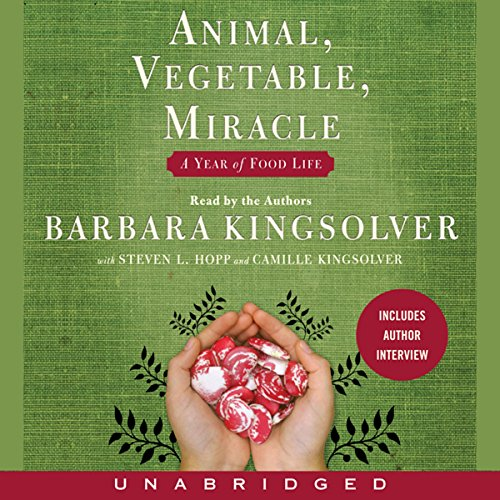
Animal, Vegetable, Miracles

Animal, Vegetable, Miracle
A Year of Food Life

By: Barbara Kingsolver
Narrated by: Barbara Kingsolver, Steven L. Hopp, Camille Kingsolver
Length: 14 hrs. and 35 mins
Unabridged Audiobook
Categories: Biographies & Memoirs, Art & Literature
4.4 out of 5 stars4.4 (2,115 ratings)

Animal, Vegetable, Miracle A Year of Food Life.
Kingsolver was born in Annapolis, Maryland, in 1955 and grew up in Carlisle, Kentucky.[2][3] When Kingsolver was seven years old, her father, a physician, took the family to Léopoldville, Congo (now Kinshasa, Democratic Republic of the Congo). Her parents worked in a public health capacity, and the family lived without electricity or running water.[2][4]
After graduating from high school, Kingsolver attended DePauw University in Greencastle, Indiana, on a music scholarship, studying classical piano. Eventually, however, she changed her major to biology when she realized that “classical pianists compete for six job openings a year, and the rest of [them] get to play ‘Blue Moon‘ in a hotel lobby”.[3] 
She was involved in activism on her campus and took part in protests against the Vietnam war.[2] She graduated Phi Beta Kappa[5] with a Bachelor of Science in 1977, and moved to France for a year before settling in Tucson, Arizona, where she lived for much of the next two decades. In 1980, she enrolled in graduate school at the University of Arizona,[3] where she earned a master’s degree in ecology and evolutionary biology.[6][7]

Kingsolver began her full-time writing career in the mid-1980s as a science writer for the university, which eventually led to some freelance feature writing, including many cover stories for the local alternative weekly, the Tucson Weekly.[3][7] She began her career in fiction writing after winning a short story contest in a local Phoenix newspaper.[3] 
In 1985, she married Joseph Hoffmann; their daughter Camille was born in 1987.[8][9]
She moved with her daughter to Tenerife in the Canary Islands for a year during the first Gulf War, mostly due to frustration over America’s military involvement.[10] 
After returning to the US in 1992, she separated from her husband.[9]

In 1994 Kingsolver was awarded an Honorary Doctorate of Letters from her alma mater, DePauw University.[11] In the same year, she married Steven Hopp, an ornithologist, and their daughter, Lily, was born in 1996.[2] In 2004, Kingsolver moved with her family to a farm in Washington County, Virginia, where they currently reside.[2] 
In 2008, she received an Honorary Doctorate of Humane Letters from Duke University, where she delivered a commencement address entitled “How to be Hopeful”.[12]
In the late 1990s[13] she was a founding member of the Rock Bottom Remainders,
a rock and roll band made up of published writers. Other band members include Amy Tan, Matt Groening, Dave Barry and Stephen King, and they play for one week during the year. Kingsolver played the keyboard, but is no longer an active member of the band.[13]

In a 2010 interview with The Guardian, Kingsolver says, “I never wanted to be famous, and still don’t, […] the universe rewarded me with what I dreaded most”. She said she created her own website just to compete with a plethora of fake ones, “as a defense to protect my family from misinformation. Wikipedia abhors a vacuum.
If you don’t define yourself, it will get done for you in colorful ways”.[14]
Kingsolver lives in the Appalachia area of the United States. She has said that friends
in the urban literary community disparage rural areas such as Appalachia, but also that the COVID-19 pandemic might change these types of opinions as people move away from cities to practice social distancing long-term.[15]

Local-eating experiment
Starting in April 2005, she and her family spent a year making every effort to eat food produced as locally as possible.[16] Living on their farm in rural Virginia, they grew much
of their own food, and obtained most of the rest from their neighbors and other local farmers.[17] Kingsolver, her husband and her elder daughter chronicled their experiences that year in the book Animal, Vegetable, Miracle. Although exceptions were made for staple ingredients which were not available locally, such as coffee and olive oil, the family grew vegetables, raised livestock, made cheese and preserved much of their harvest.[16][18]

Writing career

Kingsolver’s first novel, The Bean Trees, was published in 1988, and told the story of a young woman who leaves Kentucky for Arizona, adopting an abandoned child along the way; she wrote it at night while pregnant with her first child and struggling with insomnia.[7] Her next work of fiction, published in 1990, was Homeland and Other Stories, a collection of short stories on a variety of topics exploring various themes from the evolution of cultural and ancestral lands to the struggles of marriage.[19]
The novel Animal Dreams was also published in 1990,[20] followed by Pigs in Heaven,
the sequel to The Bean Trees, in 1993.[21] The Poisonwood Bible, published in 1998, is one
of her best known works; it chronicles the lives of the wife and daughters of a Baptist missionary on a Christian mission in Africa.[22] Although the setting of the novel is somewhat similar to Kingsolver’s own childhood trip to the then Republic of Congo, the novel is not autobiographical.[2] 
Her next novel, published in 2000, was Prodigal Summer, set in southern Appalachia.[23] The Lacuna was published in 2009; and Flight Behavior, was published in 2012.
It explores environmental themes and highlights the potential effects of global warming
on the monarch butterfly.[24] 

Jonathan Pulliam • States
The late acclaimed novelist Michael Crichton pioneered the use of footnotes and full references for HIS masterful 2004 climate controversy novel “State of Fear”. Though I’ve not yet read “Flight Behaviour”, “State of Fear” so raised the bar for novelistic innovation and attention to verifiable detail, it makes me wonder if Kingsolver hasn’t bitten off more than she can chew: “… the struggles and realizations of the characters effectively emphasizes Kingsolver’s assertion that there are no legitimate excuses to ignore climate change.”
One must work to set aside our normal human ego-centricity when considering the likely validity of such assertions, given what we do know about the periodicity of past terrestrial ice ages. The most “rapid-change” in both warming and cooling periods occurs at regular intervals along an amplitude “waveform”, in which “slow-change” occurs when Earth’s poles are “ice-free” AND ALSO when pack ice is about a mile deep over what is now Manhattan island.
So the reason a wise person may elect to “ignore” climate change is simply that despite
our presently being in the “rapid change” portion of Earth’s ice-age amplitude, the change occurs extremely slowly, relative to terrestrial life-spans, and will occur IRRESPECTIVE of humankind’s sensible near-term reliance upon fossil fuels.
Her most recent novel, entitled Unsheltered, was published in 2018 and follows two families in Vineland, New Jersey with one in the 1800s and the other in the aftermath of Hurricane Sandy.

Kingsolver is also a published poet and essayist. Two of her essay collections, 
High Tide in Tucson (1995) and Small Wonder (2003), have been published, and
an anthology of her poetry was published in 1998 under the title Another America.
Her essay “Where to Begin” appears in the anthology Knitting Yarns: Writers on Knitting (2013), published by W. W. Norton & Company. Her prose poetry also accompanied photographs by Annie Griffiths Belt in a 2002 work titled Last Stand: America’s Virgin Lands.[25]
Her major non-fiction works include her 1990 publication Holding the Line:
Women in the Great Arizona Mine Strike of 1983[26] and 2007’s Animal, Vegetable, Miracle, a description of eating locally.[16] She has also been published as a science journalist in periodicals such as Economic Botany on topics such as desert plants and bioresources.[3][27]

Animal, Vegetable, Miracle – Bing video
When Barbara and her family move from suburban Arizona to rural Appalachia,
they take on a new challenge: to spend a year on a locally-produced diet, paying close attention to the provenance of all they consume. Animal, Vegetable, Miracle follows the family through the first year of their experiment. They find themselves eager to move away from the typical food scenario of American families: a refrigerator packed with processed, factory-farmed foods transported long distances using nonrenewable fuels. In their search for another way to eat and live, they begin to recover what Kingsolver considers our nation’s lost appreciation for farms and the natural processes of food production. 

Americans spend less of their income on food than has any culture in the history
of the world, but they pay dearly in other ways: losing the flavors, diversity, and creative food cultures of earlier times. The environmental costs are also high, and the nutritional sacrifice is undeniable: on our modern industrial food supply, Americans are now raising the first generation of children to have a shorter life expectancy than their parents. 
Part memoir and part journalistic investigation, Animal, Vegetable, Miracle makes a passionate case for putting the kitchen back at the center of family life and diversified farms at the center of the American diet. 

Barbara Kingsolver – Animal, Vegetable, Miracle Audiobook Free
(fulllengthaudiobooks.com)

image.png

Posted in Uncategorized | Leave a comment

Super Messed up World

Has the world “set the stage” for the end times’ “global” deception? – YouTube

The Stage is Set for the End Times :: By Britt Gillette
by RRadmin7 Category: Britt Gillette, General Articles

As a student of Bible prophecy for almost 30 years, and specifically end times Bible prophecy, no other time has seemed as close to the end times as right now. Why do I say this?
Because, particularly in the past year, the geopolitical & economic stage has been set for the fulfillment of several end-times prophecies. We now have several potential crises on the horizon. And those potential crises are the same ones the Bible says we’ll experience either in the Tribulation or the days immediately preceding the Tribulation.
Below are just a few:

The Gog of Magog War
The Bible points to a future attack on Israel known as the Gog of Magog War
(Ezekiel 38-39). It says a military alliance that includes Russia, Iran, Turkey,
and a number of Muslim nations will attack Israel “in the latter days” (Ezekiel 38:8)
when God brings His people home from among the enemy nations (Ezekiel 39:27).
Today, we see those nations forming an alliance for the first time – an alliance that has never existed in world history. Russia, Iran, and Turkey all have an active military presence in Syria, meaning they’re right on Israel’s northern border at this moment.

Why is this important?
Because Ezekiel specifically says this alliance will attack Israel from the north
(Ezekiel 38:15; Ezekiel 39:2).

Global War Prospects
While “rumors of war” have been common since the end of World War II,
the current situation is different. The world is in the midst of an energy crisis.
Europe has seen natural gas prices surge in the past month.
China and India are experiencing rolling blackouts of electrical service.
Not only will this create problems in an already broken global supply chain,
but these are the conditions which often give rise to war.
And energy resource issues could provide the spark that ignites the next world war.
For example, China threatens to invade Taiwan on an almost daily basis.
If China does invade, the United States claims it will defend Taiwan.
If it occurs, such a conflict will devastate the world.
Both China and the U.S. are nuclear powers, and both likely have high-tech space weapons, cyberwarfare capabilities, and innovative weapons never before seen on a battlefield. Such a conflict could easily erupt into World War III. Even if it doesn’t, the global economy would collapse, and the global supply chain would be irreparably broken
if the two largest economic powers went to war.

The same is true in regard to Israel and Iran. Both nations have been engaged in a type
of “cold war” for years, and with each passing month, the prospect of all-out war only increases. A conflict between the two could pull the Middle East and the entire world into a cataclysmic war. Throw in India’s border disputes with China and Pakistan as well as North Korea’s belligerence toward its neighbors and the United States, and the prospects of global war are probably the highest they’ve been in the post-Cold War era.
At any moment, a flare-up in any one of several hotspots could cascade into a global war. Yet, contrary to popular belief, the world will survive World War III. The death toll will be enormous, but the human race won’t be annihilated (Revelation 6:4). The Bible says a global war will kick off the Tribulation and precede the global rule of the Antichrist.
Right now, the odds of a devastating global war appear high.

Global Inflation Prospects
Shutdowns, travel regulations, and other COVID restrictions have wreaked havoc
on the global supply chain since early 2020, and it’s only getting worse. Lack of shipping containers, global port congestion, and a lack of workers to produce, transport, and stock goods have led to shortages in everything from toilet paper and microprocessors to chicken wings and tractor tires. Meanwhile, central bank and government policies creating low interest rates and instituting rent/mortgage moratoriums, student loan moratoriums, stimulus checks, and tax credits have only added to demand. Basic economics says if you lower supply and increase demand, you get higher prices. We’re seeing that right now, especially at the grocery store. Don’t expect it to get better.
The Bible says the world will experience unprecedented hyperinflation during the Tribulation. Following the global war outlined in Revelation 6:4, the world experiences a time when an entire day’s wages will barely buy enough food to survive
(Revelation 6:5-6).

Given the inflation and shortages we’re already seeing, how bad will it get if a major war breaks out anywhere in the world, much less an all-out global war like the one foretold in Revelation 6?

See the source image

The Rising Mark of the Beast System
Throughout the world, governments are pushing COVID vaccines.
Those who refuse the jab face a long list of penalties, including loss of employment, healthcare, freedom of movement, and liberty in general. Those pushing vaccine
mandates and vaccine passports seek to coerce people into compliance.
The goal is to ostracize the unvaccinated from society.
If these coercive policies remain in place, they’ll create a mark of the beast system indistinguishable in impact from the true mark of the beast (Revelation 13:16).
In doing so, they’ll pave the way for the rise of the Antichrist and the actual mark
of the beast as outlined in the Book of Revelation.
The Bible says those who refuse the mark of the beast will be shut out of the global economy. They’ll be unable to buy or sell anything without it (Revelation 13:17).
Today, we see the stage being set for the fulfillment of this prophecy.
In some places, vaccine passports are required to appear anywhere in public,
including grocery stores. Is it really hard to believe they’ll one day be required
to engage in any buy/sell transactions?

The Days of Noah and Lot
Jesus said when He returns, the world will be “like it was in the days of Noah”
(Matthew 24:37). Is this what we see in the world today? 
The times in which we live are clear to anyone who knows the Bible.
We are living in the days just before the Tribulation takes place. Jesus will soon return to take His church (1 Corinthians 15:51-53; 1 Thessalonians 4:15-18). How can I be so sure? Because Jesus says so. Jesus said when you see all the signs He and the prophets said to look for, you should look up (Luke 21:28), and we see those signs right now.

The Convergence of Signs
So, what are these signs? Jesus and the prophets pointed to dozens and dozens of signs. This article only cites a few, but each one is undeniable. Their convergence for the first time in history tells us the return of the Lord is close at hand.

In addition to the events already mentioned, these signs include:
Israel Back in the Land (Jeremiah 23:7-8; Ezekiel 39:28; Isaiah 11:12; 
Psalm 107:3; Ezekiel 20:34; Isaiah 11:11-12)
The Jewish People in Control of Jerusalem (Luke 21:24-28)
The Gospel Preached Throughout the World (Matthew 24:14)
An Increase in Travel and Knowledge (Daniel 12:4)
Arrival of the Exponential Curve (Matthew 24:3‐8)
Israel Surrounded by Enemies (Psalm 83:4; Psalm 83:12; Ezekiel 11:14‐17; 
Ezekiel 35:10)
Israel’s Exceedingly Great Army (Ezekiel 37:10; Zechariah 12:6; Zechariah 12:8)
The Rise of a United Europe (Daniel 2, Daniel 7, Revelation 17)
The Rise of a Global Government (Revelation 13:7-17)
The State of Mankind (2 Timothy 3:1-4)
Denial of the Signs (2 Peter 3:3‐4)

Stay Awake
Jesus commanded us to watch for these signs (Matthew 24:42).
He scolded the Pharisees and religious leaders when they failed to recognize the signs of His first coming (Matthew 16:3). Will He do any different for those who fail to recognize the signs of His second coming?
Jesus warned us not to be caught sleeping when He returns (Mark 13:36).
Now is the time to point out these signs to others and warn them the end is near.
If you’ve been waiting to share the Gospel with someone, don’t wait any longer.
You may not have another opportunity. Jesus is coming. The signs are all around us.
——————
Britt Gillette is author of the free ebook Coming to Jesus as well as the books 
Signs of the Second Coming, Racing Toward Armageddon, and The End Times.
I think so. Even after 19 months of a global pandemic, a global supply chain crisis,
and threats of war, people are still enjoying banquets and parties and weddings.
In other words, much of life remains normal. After a series of events that should have shaken the world from its slumber, most people continue to go about their daily lives unaware of the times in which we live.

 In addition, the ancient territory of Magog covers a number of modern-day nations,
one of which is Afghanistan. Up until recently, it was difficult to imagine U.S.- occupied Afghanistan joining the Gog of Magog invasion. But now? With the Taliban back in control, it would be odd if they didn’t join this invading alliance. The way nations are aligned today, the Gog of Magog invasion could take place tomorrow.
All the pieces are in place. Even just a few years ago, that wasn’t the case.
Jesus said, “In those days before the flood, the people were enjoying banquets and parties and weddings right up to the time Noah entered his boat. People didn’t realize what was going to happen until the flood came and swept them all away. That is the way it will be when the Son of Man comes” Matthew 24:38-39, NLT).
Donald Trump highlights candidates at rally in Delaware Saturday

More Americans at risk of gas and electric shutoffs as prices rise and US moratoriums end
A Trump-era border policy is set to end. Here’s what could happen next | Watch
Republicans, Democrats push dueling economic narratives ahead of midterms
Swing-state Democrats turn on Biden over Title 42 border decision
Climate Activists Rally at the White House to Demand Action
4 Strategies the 1% Use to Deal With Inflation | Finance Buzz
Why young voters probably won’t cost Democrats in 2022

Russian journalist gives update on what Russians are hearing about war
Ekaterina Kotrikadze, a Russian journalist for the outlet TV Rain, explains what Russian civilians are hearing about the war after the Kremlin’s crackdown on journalism.
 
Ukraine accuses Russia of new war crimes – Search (bing.com)
Ukrainian officials say that they are continuing to find evidence of Russian war crimes. New satellite images show what a Mariupol official claims is a second mass grave of more than 20,000 people just outside the besieged city. NBC’s Raf Sanchez reports for Saturday TODAY. The world’s top 30 military powers today (msn.com)

Biden notes ‘brutality of war’ in Orthodox Easter message amid Ukraine invasion.
Canada eyes new measures to protect economy from national security threats (msn.com)
Bongino: The Left’s mask mandates are not about safety, they’re about power (msn.com)
ICE preparing for ‘historic border surge,’ says migrant arrivals could triple (msn.com)
Christian Orthodox spiritual leader says indescribable tragedy in Ukraine (msn.com)
Climate change threatens to sink U.S. coastal communities – Search (bing.com)
With inflation looming, Congress returns to battles over spending (msn.com)
How Antarctica tells the story of global climate change – Search (bing.com)
Biden, Democrats battle with perceptions of over-promising (msn.com)
Why Russia is losing so many of its military vehicles | Watch (msn.com)
Exposing George Soros’ Secret Network in Ukraine (rumble.com)
what does revelation say about the end times – Search (bing.com)
End times revelation Russia China Syria Iran – Search (bing.com)
Russian military leaders who died in the Ukraine war (msn.com)
World Governments Confront Grim Ukraine Toll (msn.com)

EWTN Mother M Angelica about heaven – Bing video
Biden’s tax plans would worsen inflation (msn.com)
Joe Biden nukes the environmental Left (msn.com)
end times prophecy updates – Bing video
end times prophecy – Search (bing.com)
end times ministries – Search (bing.com)
end times timeline – Search (bing.com)
end times news – Search (bing.com)
end times 2022 – Search (bing.com)
end times headlines – Bing video

end times revelation – Search (bing.com)
end times revelation study – Bing video
end times revelation bible – Search (bing.com)
end times revelation prophecy – Search (bing.com)
end times revelations you tube – Search (bing.com)

             revelation signs of end times – Search (bing.com)

revelation end times bible gateway.

Image result for Revelation 6?
Posted in Uncategorized | Leave a comment

10 Nazi Scientists Who Survived the War

10 Secrets of Nazi Scientists Used as Pawns in The Cold War Arms Race (historycollection.com)
by Sammie Dove

10 Nazi War Criminals Who Escaped Justice Because They Were Useful to the US (historycollection.com)
In the lead-up to World War II, ( WWIII – Search.) It was well understood that the Third Reich was the most formidable force of science and technology that the world had ever seen. Blending occult lore and magic with cutting-edge engineering and physics, Adolf Hitler sought to master matter and spirit in much the same way as he sought to master the nations of the world.
So formidable did Hitler’s scientific might seem that many American business interests desired to ally with Nazi Germany rather than resist this growing global superpower. Chagrined with President Franklin D. Roosevelt’s socialist New Deal, prominent American businessmen even attempted to enlist the aid of decorated war hero Major General Smedley Butler in their plot to replace Roosevelt’s administration with a fascist American government.
As Nazi Germany grew in territory and influence, Hitler became increasingly envious of American manufacturing power. He dreamed of an unstoppable union of German occult science and American brute force that would solidify the Third Reich’s stranglehold over the planet’s future. Though history remembers Hitler as having lost World War II, his unholy fantasy was destined to come to fruition.
Unfazed by the war crimes perpetrated by the Third Reich during the war, leaders of the American military and industrial sectors imported dozens of top Nazi scientists to work in America after the victory of the Allies in World War II. Called Operation Paperclip, this secret initiative led to numerous medical and engineering breakthroughs, including the development of the Saturn V rocket and the founding of NASA.
In many ways, the Operation Paperclip scientists were directly responsible for the unquestioned military and economic supremacy enjoyed by America in the postwar years, yet their Nazi past was generally overlooked or whitewashed by the American media. In the following list, we’ll tell the stories of 10 Nazi scientists who survived the war and flourished as American assets. 
CIA Investigated Whether Hitler Survived World War II And Moved To Colombia | The Levant News (the-levant.com)

10 Nazi War Criminals Who Escaped Justice Because They Were Useful to the US
10. Walter Schreiber – Wikipedia

Was a critical player in the Third Reich’s wartime production. His prewar experience in textile manufacturing made him immensely useful to the National Socialist Party, and in 1943, Hitler awarded him with the War Merit Cross.
After the war, Schieber caught the eye of Charles Loucks, a brigadier general with the US Army Chemical Corps. Loucks was assigned to the German town of Heidelberg to work on the development of nerve agents like tabun and sarin gas. Rather than being repelled by Schieber’s past, Loucks was drawn to this Nazi war criminal for his close connections with Heinrich Himmler and his intimate knowledge of the gases used by the Third Reich during the war.[1]
Schieber worked for the Chemical Corps for 10 years and later became an asset of the CIA. Since he was useful to the American government, Schieber was never prosecuted for his war crimes. In fact, he played a pivotal role in the development of the sarin gas that has subsequently been used by the US military.


9. Hubertus Strughold – Wikipedia

Known as the “Father of Space Medicine,” Hubertus Strughold helped the United States Air Force and NASA 
develop many of the principles of medical care in space that are still in practice today. For years, the Aerospace 
The Medical Association (AsMA) gave an annual award named after Strughold to prominent contributors in the 
field of space medicine. But when his suspicious connections to Nazi war criminals came to light, AsMA struck 
Strughold’s name from the award.[2]

Throughout his long career as a respected scientist in the United States, Strughold fervently denied any knowledge of the war crimes committed by the Nazis. However, he was implicated during the Nuremberg trials as having involvement with the atrocities committed at Dachau, and he spoke in detail at a Nazi conference in 1942 about the infamous “cold” experiments.
Beloved by his colleagues and students, many found it hard to believe that Strughold had lied about his involvement in Nazi human experimentation. But the evidence suggests that Strughold’s expertise in keeping people alive in space was derived at least in part from his intimate knowledge of just how much the human body can endure under extreme stress.


8. Kurt Blome – Wikipedia

Ostensibly, Dr. Kurt Blome was Hitler’s head of cancer research. But in reality, he was in charge of the development of Nazi biological warfare capabilities.
Blome stood trial at Nuremberg for performing euthanasia and conducting human experimentation, but he was acquitted due to the intervention of the American military. The United States government wanted to expand on Blome’s intimate knowledge of human biological weaknesses to create even deadlier nerve agents.[3]
Blome’s US Army Chemical Corps personnel file makes no mention of his involvement in human experimentation. He lived out the rest of his life in West Germany working on secret projects for the American government and remained active in the right-wing Germany Party until his death in 1969.


7. Arthur Rudolph – Wikipedia

When Arthur Rudolph was brought into the United States in 1947 as part of Operation Paperclip, he was noted to be an “ardent Nazi,” but all mention of his war crimes was omitted from official reports. However, documents from two years later confirm that Rudolph had been designated as a war criminal by Allied officials.
In 1961, Arthur Rudolph joined fellow Nazi Wernher von Braun at NASA to design the Saturn V rocket. Without Rudolph’s rocketry genius, the Apollo project would never have come to be.
Though the American government was undoubtedly grateful for his service, the Justice Department charged Rudolph in 1984 with working thousands of slaves to death while overseeing the development of the V-2 rocket during World War II. Rather than face charges, Rudolph agreed to turn in his American citizenry and leave the country.[4]
When it comes to American aerospace programs in the postwar era, it seems like asking for a history without Nazi influence is a bridge too far. We must simply content ourselves with our gratitude that NASA elected to avoid using slave labor as an expediency when paving the way to the 1969 Moon landing.


6. Magnus von Braun – Wikipedia

Though admittedly less famous than his brother Wernher, Magnus von Braun certainly enjoyed a degree of infamy among members of the American military. They labeled him as a “dangerous German Nazi” who posed a greater threat to national security than “half a dozen discredited SS generals.” Serving as his brother’s personal assistant, Magnus negotiated the surrender of the German assembled rocket team in 1945.
After proving himself just as capable as his brother when it came to engineering, Magnus was welcomed by the US Army personnel at Fort Bliss, Texas, with a mixture of pragmatic enthusiasm and wary skepticism. Their qualms about the younger von Braun were quickly proven to be justified when Magnus was caught attempting to sell a brick of platinum that he’d stolen from the base to a jeweler in El Paso.
The incident was hushed up to avoid garnering any negative press directed at Operation Paperclip. Wernher von Braun meted out justice for the infraction personally by inflicting a brutal beating on his brother. His reputation seemingly untarnished by the incident, Magnus went on to enjoy a long and prosperous career with Chrysler before retiring to the Arizona desert.[5]


5. Dieter Grau – Wikipedia

As a member of the von Braun rocket group, Dieter Grau was an integral player in the development of the V-2 rocket during World War II. After the war, Grau was sent to the United States as part of Operation Paperclip. He served as quality director on a number of rocket projects spearheaded by Wernher von Braun on behalf of the US government, including the development of the Saturn V rocket.
Before his work for the US Army and NASA, Dieter Grau performed quality control of a somewhat different kind. During his time as a Nazi asset in Germany, Grau was briefly posted in Mittelwerk, the underground slave labor rocket factory run by Arthur Rudolph.
At Mittelwerk, Grau employed his expertise in “debugging,” or the detection of worker sabotage. The slaves that he outed at Mittelwerk were subjected to a special punishment reserved for saboteurs: public hanging in the factory’s main hall by a crane that was raised slowly to extend the anguish.[6]
Grau lived to be 101 and was fondly remembered by his American colleagues for his attention to detail in everything that he did.

See the source image
4. Walter Dornberger – Wikipedia

Unlike other Operation Paperclip Nazi assets who got away with their war crimes scot-free, Walter Dornberger saw prison time for the use of slave labor in the production of V-2 rockets. But Dornberger, who had reached the rank of lieutenant general under Hitler’s regime, only spent two years behind bars before he was released by the American military.
He was subsequently taken to the United States to rejoin his fellow Nazi rocket scientists, and SS General Dornberger was soon elevated to the post of vice president of the Bell Aircraft Corporation.
During his career as a Nazi general, Dornberger had fired over 1,000 V-2 rockets on residential areas of London. Dornberger was also there the day that the first V-2 rocket was launched in 1937, on which occasion he asked fellow Nazi rocket scientist Wernher von Braun if he recognized the momentousness of the event that had just transpired. Von Braun responded, “Yes, today the spaceship was born.”
Dornberger believed that it was the Third Reich’s obsession with space travel that led to Hitler’s defeat. Yet when it came time to build space exploration vehicles for his new American benefactors, Dornberger was more than happy to oblige. General Dornberger lived out the rest of his life seemingly unhaunted by his past. He died in his homeland of Germany at age 84.[7]


3.Hermann Oberth – Wikipedia

It was Hermann Oberth’s pioneering work in rocket design that originally inspired Wernher von Braun to apply himself to the study of rocketry. When Oberth first posited the idea that rockets could operate in the vacuum of space, he was ridiculed.
But when he developed the German V-2 rocket alongside von Braun, his theories took an important step toward validation. And when Oberth rejoined von Braun in America to develop the Saturn V rocket, his dreams finally took flight.[8]
While Oberth’s contributions to rocket science are undeniable, other aspects of his legacy are more open to interpretation. Potentially apocryphal quotes attributed to Oberth seem to indicate that this Nazi scientist was under the impression that human spaceflight capabilities weren’t developed by human beings alone. When asked who had assisted humanity in our quest to reach for the stars, Oberth supposedly replied, “The people of other worlds!”
Regardless of whether this quote is accurate, Oberth is on record as a firm believer that UFOs are spaceships from another solar system. Was this belief just a random supposition, or was this acclaimed Nazi aerospace scientist privy to evidence of extraterrestrial life kept outside the public sphere of knowledge?


2. Kurt H. Debus – Wikipedia

Next to Wernher von Braun, Kurt Debus is the most famous former Nazi to grace the ranks of American rocketry’s hall of fame. Debus was the director of the John F. Kennedy Space Center in Florida from 1962 to 1974.
But in another life, he was Hitler’s flight test director during the development of the V-2 rocket. Despite what we know about the horrors of the V-2 development program, Debus was never held accountable for his past and he still enjoys a glowing posthumous reputation.
Debus was part of the group led by Magnus von Braun that negotiated the surrender of the German rocket scientists at the end of the war. Almost immediately, Debus was whisked away to begin work at Fort Bliss. He was soon transferred to Huntsville, Alabama, to oversee the construction of the NASA facilities at Cape Canaveral.[9]
With Debus at the helm, NASA successfully launched 13 Saturn V rockets into space, including the rocket that carried the Apollo 11 astronauts to the Moon. Yet Debus would never have been able to make these great American achievements possible had it not been for his involvement in forcing slaves to build rockets of war for the Nazi empire.


1. Wernher von Braun – Wikipedia

Wernher von Braun was quickly recognized by Nazi authorities as being a physics and engineering genius. But von Braun was anything but bookish in nature.
His potent charisma and visionary prowess made him the perfect candidate for organizing large-scale production operations, such as the development of the V-2 rocket. At age 25, von Braun was in charge of a team of 400 people. By the time he was 30, his team had swelled to 5,000 strong.[10]
During the war, Wernher von Braun visited the slave factory at Mittelwerk at least a dozen times. On one occasion, he toured the abysmal sleeping quarters for the forced laborers. Yet, during his tenure in the American space program, he did his best to distance himself from the atrocities committed by the Nazis by putting forth the position that there was nothing that he could have done to help.
Fully aware that hundreds of slaves were dying to bring his dreams to life, von Braun still feverishly dedicated himself day and night to the development of the V-2 rocket. Without von Braun, it’s doubtful that the Saturn V rocket would have ever seen the light of day. But because of von Braun, endless ranks of forced laborers toiled and died in the darkness. At what awful price did America buy her incontestable supremacy in space?

CIA Investigated Whether Hitler Survived World War II And Moved To Colombia | The Levant News (the-levant.com)

Watch live: Biden delivers remarks on lowering costs amid record inflation (msn.com)
 
Read more: horrific stories about the Nazi scientists on Top 10 Horrific Nazi Human Experiments and 10 Engineers And Scientists Who Built The Nazi War Machine.

SOURCE:  10 Nazi Scientists Who Survived The War – Listverse
10 of the Most Evil Nazis of the Third Reich – Search (bing.com)
The Most Horrifying Nazi Experiments on Humans – ViraLuck
Did the Nazi WW2 experiments contribute to science? – YouTube
10 Engineers And Scientists Who Built The Nazi War Machine – Listverse
Behind the secret plan to bring Nazi scientists to US (nypost.com)
10 Nazi Scientists Who Survived The War – Bing images
Soros connection to Obama Clinton and Holder – Search (bing.com)
Obama Muslim Brotherhood – Search (bing.com)
Obama Marxist Communist – Search (bing.com)
Is Obama a Nazi – Search (bing.com)
Posted in Uncategorized | Leave a comment

Earth Day

What is Earth Day? When is it in 2022? And what happens?
World Economic Forum (weforum.org)

Rising gas prices bring Biden to a political crossroads over climate policy. 
By Maegan Vazquez, CNN

Each year on 22 April, around 1 billion individuals across more than 190 countries take action to raise awareness of the climate crisis and bring about behavioral change to protect the environment. In 2020, Earth Day celebrated its 50th anniversary. 

 Earth Day Podcasts | iHeart

Earliest 90 Degree Day in Dayton Ohio?’ Answer: April 30, 1899.
Federal investments to address climate change, Joe Biden has long said, are also about investing in the economy and creating jobs. But now, amid a war that caused fuel prices to soar and American wallets to feel the pinch, his White House has been forced to reexamine how to balance its economic approach with the President’s past ambitious climate policy commitments.
Pitching his social spending plan to the public last year, the President said his proposed spending would create new jobs for America’s transition to cleaner energy and equip the country adequately to deal with the toll climate change has taken on American infrastructure. And last year at COP26, the President told world leaders that climate change posed an existential threat, saying that taking action was not just a moral imperative, but also an economic one.

But last fall, Biden’s proposal, known as Build Back Better 
Didn’t pass through the Senate. And at COP26, he failed to bring a law codifying his proposals to the table as a way to up the ante on other nations’ commitments toward climate change.
In these subsequent months, the nation has continued to be hamstrung by an economy complicated by the recovery from the pandemic, slowed supply chains and, more recently,  the war in Ukraine. Congressional Republicans, meanwhile, have remained Un swayed by Biden’s proposals on climate and the President’s potential regulatory moves in the works — like those to curb emissions — could face legal challenges.

In the weeks ahead of Friday’s Earth Day, the administration issued new efforts that
Biden officials say do not contradict one another — taking steps to lower gas prices and,
at the same time, work to strengthen environmental protections.
The newest step, an executive order aimed at safeguarding old-growth forests on federal lands, is slated to be announced by Biden on Friday in Seattle. The President is also expected to discuss a recent historic release from the Strategic Petroleum Reserve and
his issuing of an emergency waiver for E15, gasoline with a 15% ethanol blend,
the White House has said.

Dual tracks
Speaking in Oregon on Thursday, the President credited his decision to tap into the Strategic Petroleum Reserve with lowering gas prices, but said it was time for the U.S.
to “get off the roller coaster” of relying on fossil fuels, calling on the country to declare “energy independence” from oil.
Along with the new executive order to preserve older forests, the Biden administration  took steps this week to strengthen a foundational environmental law that had been rolled back by then-President Donald Trump.
The White House Council on Environmental Quality said it restored three major provisions of the National Environmental Policy Act, which requires federal agencies to assess the environmental impact of projects such as the construction of mines, highways, water infrastructure and gas pipelines.

The Biden administration also unveiled two new programs earlier this week, established by the bipartisan infrastructure law, that will provide $20 million worth of rebates to replace old transformers and upgrade electric motor systems, according to the Department of Energy.
Along with the recent Strategic Petroleum Reserve release and the waiver to permit the summer use of E15, this week the Biden administration announced that it would resume onshore oil and gas lease sales on federal land, with a higher royalty rate for companies to pay to the federal government.
The White House is framing the fuel-related actions as efforts that will save American families money and combat Russian President Vladimir Putin’s war. Administration officials are simultaneously arguing that concessions haven’t been made to achieve the President’s climate goals.

“We are going to continue to meet our climate goals,”
White House principal deputy press Secretary Karine Jean-Pierre told reporters en route to the Pacific Northwest. “Look, the President is committed to doing everything that he can to address the pain that Americans are feeling at the pump. … Our strategy from day one has been to meet folks where they are. It’s about delivering solutions that help people take on the real challenges of real life.”
Jean-Pierre said, “Addressing the emergency supply crunch while accelerating clean energy efforts is fully consistent,” adding, “We believe we can walk and chew gum because families need to take their kids to school and go to work, get groceries and go about their lives. And sometimes that requires gas today, this month and this year. But at the very same time, we must speed up, not slow down, our transition to clean energy.
We believe we’re going to reach our goals.

We are very committed to doing that.”

image.png
Ohio River – drought of October 15, 1908
from West Virginia. to Bridgeport, Ohio

Pushback from climate activists
Biden’s first year in office had several climate policies wins. The US rejoined the 
Paris climate accord. He brought on a climate envoy and a national climate adviser.
And he revoked a permit for the Keystone XL pipeline. But now, nearly a year and
half into Biden’s tenure, climate activists say the President isn’t doing enough.
The sale of E15 gasoline is usually prohibited from June to mid-September
because of air quality concerns.

While supporters of the biofuel have argued that E15
As an essential part of transitioning to cleaner energy, some activists have argued that
its use is bad for Americans’ health and contributes to environmentally destructive corn production.
The waiver comes the same week that a new report was released by the American Lung Association, which shows that the US saw the highest number of “very unhealthy” and “hazardous” air quality days between 2018 and 2020 that it had ever had.
Although the administration’s recent move to resume its drilling leases marks the first time the federal government has ever increased what companies pay to drill for oil and
gas on public land, environmental groups have generally criticized the effort.

The Sunrise Movement.
A youth-led progressive climate activist group, argued that Biden is going back on a campaign promise from when he told voters: “No more drilling on federal lands, period.” Varshini Prakash, the executive director of the organization, said in a statement that the decision will have political consequences, arguing that “Biden can’t get away with this disastrous climate decision.”

“The fact of the matter is that more drilling won’t solve high gas prices right now —
so why is Biden breaking his campaign promise to stop drilling on public lands?

This is why young people are doubting the political process altogether.
If Biden wants to solve for voter turnout in 2022, he should actually deliver
on the things he promised, not move farther away from them,” Prakash added.
Randi Spivak, public lands director at the Center for Biological Diversity, told CNN that while the President’s latest move to protect older forests is “an important step in the right direction,” the move on drilling leases on public land “is locking us into more fossil fuel” for a decade or longer.

Manish Bapna, the president and CEO of the Natural Resources Defense Council, wrote ahead of Earth Day that “it’s maddening to see the US oil and gas industry try to exploit (the tragedy of the war in Ukraine) as a way to lock us into decades’ more dependence on the very fuels that hold our families and businesses hostage to global price shocks we can’t control while driving the world toward climate catastrophe and padding the Kremlin war chest.”
Still, Bapna expressed hope that the war has sparked global efforts to move away from oil dependence.

Americans’ perspective on gas prices and climate change.
The apparent dual track of federal actions comes amid Americans’ continued concerns about both gas prices and the climate.
While the US joblessness rate recently matched a 1968 low, Americans have continued to witness economic turbulence due to inflation and rising gas prices.
But as the administration has taken steps to alleviate consumer price hikes, including increases at the gas pump due to the war in Ukraine, Americans have started to feel slightly better about the economy.
Consumer expectations have improved, in terms of both the economic and personal finance outlooks, according to the preliminary April data from the University of Michigan’s consumer sentiment survey.
However, consumers’ uptick in optimism is relative. April’s sentiment index remained below its January level, and lower than in any month in the past decade.

And a Gallup poll released earlier this month found that 1 in 3 Americans said they have been affected by some kind of extreme weather in the past two years, and those who had been were far more likely to say the climate crisis is a threat.
The survey also found that 78% of respondents who have faced recent extreme weather believe the effects of climate change are already unfolding, compared with 51% who had not.

The Manchin element
Crucial to Biden’s lofty climate plans is buy-in from Congress, especially from
Democratic Sen. Joe Manchin of West Virginia — the moderate who sank the President’s ambitious climate agenda items that were part of the initial Build Back Better package.
In recent weeks, Manchin has engaged with White House officials for informal discussions about measures involving energy, prescription drug costs, tax changes and deficit reduction that he could potentially support in a new version of that package.
Manchin has previously said he’s supportive of clean energy tax credits. But amid Russia’s invasion of Ukraine, the chair of the Senate Energy Committee has also called for more fossil fuel production and infrastructure to be built in the US to help Europe move away from Russia’s natural gas.
In February, the West Virginia Democrat also held up a vote on the nomination of a key Interior Department appointee after holding a rare second hearing over her nomination.

Manchin’s office delayed a vote on Laura Daniel-Davis, the President’s pick to serve as the Department of the Interior’s assistant secretary for land and minerals management, citing the energy crisis brought on by the war. His office said at the time that the senator “would like to see more from the Department that it intends to get back to the business of leasing and production on federal lands and waters in a robust and responsible way.”
Biden’s climate adviser, Gina McCarthy, told “CNN Newsroom” on Thursday that there are “quiet discussions” ongoing with Manchin. McCarthy said she expects a package to move forward that would cut what American families pay for clean energy.

“There are things Joe Manchin wants, too.
… We’ll keep working through those and have every intention to keep pushing Congress, because these are not just little things we need to add on. These are substantive efforts to actually make sure that we can grow jobs in this country,” she continued.
It’s still unclear whether a bill that Manchin supports could also garner the support of House and Senate progressives, especially if he asks for guarantees around fossil fuel projects or infrastructure. Democrats have razor-thin majorities in both chambers of Congress and can’t afford to lose any votes.

10 States with the Worst Tap Water in America – SpringWell Water Filtration Systems
According to the CDC, America has one of the safest and cleanest water supplies on the planet. Yet, hardly a day goes by without water quality issues cropping up in the national news cycle.
Millions of Americans in various cities across different states
(not just Flint, Michigan) are exposed to unsafe drinking water year after year.
Perhaps that’s because every year, from 1982 to 2015, between 9 million and 45 million Americans got their drinking water from a source that violated EPA standards.
Or maybe it’s because state and local water authorities have dramatically underestimated the threat of contaminated tap water across the country.
Whatever the case, many county residents are forced to deal with the onslaught of toxic contaminants in their water.
If you’re curious if you live in a state with poor water quality, we’ve gathered a list of states in the US with the worst tap water. Should you see your state on this list, don’t worry or panic. We will include a few safe, reliable, and effective filtration methods you can use to treat your tap water and significantly improve its quality.

What makes a state have low-quality water?
Many different factors can contribute to a state’s substandard water quality.
One common reason is the deplorable condition of the water infrastructure. For instance, when there’s a leak in a water pipe, the leak creates a vacuum inside the pipe. The vacuum sucks in the untreated water into the pipes, which then combines with the treated water. The water then flows through people’s homes and faucets. Aging pipes can also leach lead, copper, and other heavy metals into the water, bringing dangerous chemicals to your drinking glass.

Another cause of bad-quality tap water is the runoff from agriculture and manufacturing plants. This includes runoff from aut0-industry or coal mining plants leaking into surface waters (rivers, streams, lakes, etc.). While water municipalities may add chlorine to improve the water’s taste and smell, chlorine is not as safe as people think.

Who is responsible for monitoring tap water quality?
In 1974, Congress passed the Safe Drinking Water Act (SDWA) to strengthen
public health protection against dangerous contaminants in water. This law allows states to set standards for tap water quality, as long as they fall in line with those of the EPA. The EPA standards include water-test scheduling, contaminant limits, and treatment methods each state’s water systems must follow. Local water suppliers within each state conduct testing for SDWA every year. 

After the tests, all community water providers must issue a report to residents. Energy & Environment — Biden officials target transportation emissions.
How much unsafe drinking water in the United States 2021 – Bing images
How much unsafe drinking water in the world 2021 – Search (bing.com)
Cities With the Worst Public Water Ratings | Pro stack

States with the Worst Tap Water in the US
While some states go above and beyond to ensure safe drinking water for residents,
others settle for water that meets the minimum requirement of being drinkable.
Here are ten American states with the worst tap water. And Also World War III:
the safest countries to seek refuge if the worst were to happen.
Georgia Guidestones Commandments pdf – Search (bing.com)
Europe saw warmest summer on record in 2021 (msn.com)
Water Pollution Facts: Causes, Effects & More – Facts.net

Bonus: Ingraham: The left won’t think twice about ‘punishing perceived wrongdoers’
at home (msn.com) Laura Ingraham discussed on ‘The Ingraham Angle’ how Obama labeled those with dissenting views as spreading ‘dangerous disinformation’ and how that tactic is common of dictators.


Posted in Uncategorized | Leave a comment

Vaccinated Deaths

This is the latest offer. These clots are impossible to explain away.
By Steve Kirsch


FEBRUARY 28, 2022
This is the end of February and I have not caught covid after being fully vaccinated
and boosted. I have however seen many that were fully vaccinated still catch covid when Omicron first hit. I don’t think (my opinion) that the vaccine fully matches (protects) up
to the omicron variant. That is why I still use mask protection indoors in public places. Having worked in manufacturing for many years in a somewhat hazardous environment.
I am used to wearing N95 masks and other PPE and understand how they work.
They would not let me work in that environment (work rules) and not (protect your lungs) mask up. Something to think about when everyone runs around screaming about masks. Aaron Redding

I want everyone to know that every time they have been offered to see evidence of harm, they refuse to see it. I’m posting this to establish a public record that they were informed and offered the evidence and took no action.

This is extremely important evidence that has been in the public domain
for a while that they have been willfully ignoring. I don’t expect a reply anytime soon because every time they have indicated that they aren’t interested in evidence showing they are killing people. They don’t want to see it.I don’t expect a reply because the videos and tissue samples would be impossible to explain. All of this information has been known for months (since at least Feb. 4 when Hirschman appeared on Stew Peters and a few days later on my channel). Has Richard Hirschman ever been contacted? Of course not!
They will prefer to just ignore the issue and pretend it isn’t happening.
Or perhaps they can claim it is rare since it only happens in up to 90% of cases
(they define rare as less than 100% of cases).
In Hirschman’s case, it’s gone from 65% of his cases to now over 83% of his cases.
Check out just one of the videos (just 60 seconds; it’s a must see) that I want them to see. This is from embalmer Richard Hirschman who is seeing these clots in over 40% of the cases he embalms. This is taken from an artery in a man who died after — the COVID vaccination. 

Richard is seeing these clots now in 83% of the 35 cases that he did this month. 
I formally filed a complaint with the HHS Inspector General today
I reported these people to the HHS Inspector General today.
Dr. Ryan Cole on these telltale blood clots in vaccinated people
Watch this video at the 40 minute mark where Dr. Cole explains that these clots are caused by the spike protein which is why the body can’t break them down. I’m mentioned in the video a couple of times. Watch it for around 7 minutes to get the full story. 

People who get vaccinated are at markedly higher risk of dying, permanent disability, and also brain diseases such as Alzheimer’s. My email to the FDA and CDC is one more piece of additional evidence showing people at the FDA and CDC are uninterested in seeing any evidence showing the vaccines are killing people.
There is simply no way to explain the video above.
Bhakdi/Burkhardt pathology results show 93% of people who died after being vaccinated were killed by the vaccine
The vaccine was implicated in 93% of the deaths in the patients they examined.
What’s troubling is the coroner didn’t implicate the vaccine in any of those deaths.

SUMMARY
The vaccines are bad news. Fifteen bodies were examined
(all died from 7 days to 6 months after vaccination; ages 28 to 95). 
The coroner or the public prosecutor didn’t associate the vaccine as the cause of death in any of the cases. However, further examination revealed that the vaccine was implicated in the deaths of 14 of the 15 cases. The most attacked organ was the heart (in all of the people who died), but other organs were attacked as well. The implications are potentially enormous resulting in millions of deaths. The vaccines should be immediately halted.
No need to worry. It is doubtful that anything will happen because the work wasn’t published in a peer-reviewed journal so will be ignored by the scientific community.
That’s just the way it works.

The paper
I got an email recently from Mike Yeadon, former VP of Pfizer,
who urged me to check out this video. 
He wrote me this email on 12/24/21:
https://www.bitchute.com/video/fHIT55iM4Zv9/
Steve,
This is about the worst 15min I’ve ever seen.
Mass covid19 vaccination is leading to mass murder.
Mike 
The video references this paper, posted on December 10, 2021, On COVID vaccines: why they cannot work, and irrefutable evidence of their causative role in deaths after vaccination by Sucharit Bhakdi, MD and Arne Burkhardt, MD. 
It has been getting a lot of attention lately.
Check out the number of likes and retweets… just in the first 3 hours!!!!

The authors did an autopsy in 15 patients who died (from 7 days to 6 months) after receiving the COVID vaccine. These were all cases where the coroner ruled as NOT being caused by the vaccine.
They discovered that in 14 of the 15 patients there was widespread evidence of the body attacking itself, something that is never seen before. The heart was attacked in all 14 cases.
A number of salient aspects dominated in all affected tissues of all cases:
inflammatory events in small blood vessels (endotheliitis), characterized by an abundance of T-lymphocytes and sequestered, dead endothelial cells within the vessel lumen; the extensive perivascular accumulation of T-lymphocytes; a massive lymphocytic infiltration of surrounding non-lymphatic organs or tissue with T-lymphocytes. Lymphocytic infiltration occasionally occurred in combination with intense lymphocytic activation and follicle formation. Where these were present, they were usually accompanied by tissue destruction.

Here’s the video presentation of the results.
VAERS as well as other independent studies (e.g., see this vaccine injury paper)
shows the vaccines are killing people and that cardiac events were highly elevated.
This study is consistent with those results.
This work independently validates the analysis of Peter Schimacher who showed a minimum of 30% to 40% of the deaths after vaccine were caused by the vaccine.

Reactions from a level-headed scientist (name withheld to protect him from attack)
If the autopsy findings are confirmed by other pathologists with additional samples, and if they are combined with the findings of Dr. Hoffe (>60% inoculant recipients have elevated D-dimer tests and evidence of clotting) and Dr. Cole (increase in cancers after inoculation, including twenty-fold increase in uterine cancer), we are seeing a disaster of unimaginable proportions.  The conclusion (if supported by further data) is that essentially EVERY inoculant recipient suffers damage, with more damage after each shot.  Given the seriousness of the types of damage (autoimmune diseases, cancer, re-emergent dormant infections, clotting/strokes, cardiac damage, etc.), these effects will translate into lifespan reduction, which should be counted as deaths from the inoculations. 

So, in the USA, where ~200M people have been fully inoculated, the number of deaths
will not be the 10,000 or so reported in VAERS, or the 150,000+ scaled-up deaths from VAERS but could be closer to tens of millions when the inoculation effects play out!
What the above three findings (Burkhart, Hoffe, Cole, and I suspect many others who have not yet come forward) show is that the post-inoculation effects are not rare events (as reported by the media-gov’t), but are in actuality frequent events.  They may be, in fact, universal, with the severity and damage different for each recipient. 
The question in my mind is whether it is possible to reverse these inoculation-based adverse events.  
Can the innate immune system be fully restored?  Can the micro clotting be reversed? 
Can the autoimmunity be reversed? 
 
I have seen a wide spectrum of opinions on whether this is possible,
none of which is overly convincing. 
Are we headed for the situation where the ~30% unvaxxed will be devoting their lives to operating whatever is left of the economic infrastructure and serving as caretakers for the vaxxed?
I realize the above sounds extreme, and maybe when more data are gathered from myriad credible sources the results and conclusions may change, but right now the above data seem to synchronize with the demonstrated underlying mechanisms of damage.  Additionally, we seem to be doubling down on inoculations, with a fourth booster being proposed for Israel, and the UK suggesting quarterly boosters.
Dr. Ryan Cole’s reaction

Background of two of the scientists behind the study
Dr. Bhakdi has spent his life practicing, teaching and researching medical microbiology and infectious diseases. He chaired the Institute of Medical Microbiology and Hygiene at the Johannes Gutenberg University of Mainz, Germany, from 1990 until his retirement in 2012. He has published over 300 research articles in the fields of immunology, bacteriology, virology and parasitology, and served from 1990 to 2012 as Editor-in-Chief of Medical Microbiology and Immunology, one of the first scientific journals of this field that was founded by Robert Koch in 1887.
Dr. Arne Burkhardt is a pathologist who has taught at the Universities of Hamburg, Berne and Tübingen. He was invited for visiting professorships/study visits in Japan (Nihon University), the United States (Brookhaven National Institute), Korea, Sweden, Malaysia and Turkey. He headed the Institute of Pathology in Reutlingen for 18 years. Subsequently, he worked as an independent practicing pathologist with consulting contracts with laboratories in the US. Burkhardt has published more than 150 scientific articles in German and international scientific journals as well as contributions to handbooks in German, English and Japanese. Over many years he has audited and certified institutes of pathology in Germany.

New studies show that the COVID vaccines damage your immune system, likely permanently.
The vaccines are making it more likely you’ll be infected with Omicron 90 days after you are fully vaccinated. To keep vaccine effectiveness high against omicron, vaccination every 30 days is needed.

Update Jan 7, 2022: The numbers in the Denmark study described below are now confirmed by government data from Germany showing that vaccinated people are 8X more likely to develop Omicron than unvaccinated people. This is not surprising since a paper from Germany showed the same thing: the more you vaccinate, the worse it gets.
Worried about Omicron? Guess what? After 90 days, the vaccine they gave you is going to make you MORE likely to get infected from Omicron, not less. The longer you stay on the vaccine treadmill, the harder to get off in the future and the easier you’ll make it for the virus.
In short, we’ve been lied to about the vaccine. It is protecting you less and less over time. While you may get a benefit for earlier variants, the benefit for other variants (and likely other diseases) is going to be negative. In short, you are getting a short term benefit against Delta, but at the expense of a degradation of your overall immunity to everything else.
These vaccines may help you win the war against a variant that may soon be rare, but the price you pay is that you make your immunity to everything else worse. It’s a dumb tradeoff (especially since early treatments work so well). But the people making the laws won’t believe any of the science referenced in this article, so it will continue.
Alix Mayer alerted me to this game changing tweet about a study in Denmark which instantly went viral as you can see from the number of retweets:
Ezra Levant @ezralevant
Holy moly. This study shows that after three months the vaccine effectiveness of Pfizer & Moderna against Omicron is actually negative. Pfizer customers are 76.5% more likely and Moderna customers are 39.3% more likely to be infected than unvaxxed people.
medrxiv.org/content/10.110…

Image
I want to tell you what this really means and how it is being attacked.

Summary: Refuse to comply with mandates. Now.
This paper means we will need to inject people every 30 days if we want to “protect” them. Based on the harm that the vaccines do to our immune system, it’s likely that the needed interval will shorten with each booster.
If people don’t get boosted as required, they will be MORE vulnerable to Delta and Omicron than if they weren’t vaccinated. That’s what NEGATIVE vaccine efficacy means. It doesn’t mean the protection wears off (like we were told). It means the OPPOSITE of what you were told: it means the vaccine helps the virus to infect you
(by suppressing your immune system, probably permanently each time we are injected according to Dr. Ryan Cole). It means we were lied to.

In short, the vaccine is like a heroin addiction: once you’ve had a taste of it, you are hooked: you have to continue it for life if you want protection. If you stop it, you’re a sitting duck for the virus.
What’s worse is our government is mandating this now. In light of this paper, they will change the vaccine mandates to force you to get vaccinated every month or you will be fired from your job. Their next move could well be to make it illegal not to be vaccinated. This seems like where things are headed based on what is happening in other countries where they are quickly stripping away your rights to do anything without a vaccination.
And we have no clue what monthly (and later weekly) vaccination will do to your body. This has never been tested.
My advice is simple. If you have been vaccinated, you need to stop now. Do not get the booster.

My friend Dr. Robert Malone is fond of repeating the old adage,
“When you find yourself in a hole, stop digging.”
Sadly, most people cannot afford to lose their jobs, so they will get vaccinated and medical professionals will not speak out since doing so will cause them to lose their license.
The faster, safer, lower cost way to end the pandemic
Everyone needs to stop listening to the CDC now and start listening to people who have been saying to ditch the vaccines and aggressively promote early treatment with repurposed drugs.
The entire pandemic will end as soon as the CDC stops ignoring the existing early treatment protocols which have been available since March 2020 (Fareed and Tyson protocol was first available back then). Masking, vaccines, mandates, lockdowns, and social distancing were never needed. We could have (and still can) end the hospitalization and death with just one thing: early treatment. Just like Japan has done. But the CDC refused to listen.

What the paper said in detail:
First, the link in the tweet is to the outdated version of the paper.
 The current version can be found here.
Start at the comments, both from social media and also from Medrxiv readers.
Check out the social media portion of the comments
Here are some comments (on old and new version of the paper):
So assume the results you like (high VE for recent vaccination) are causal, but hand wave confounders at results you don’t like (negative VE for distant vaccination)? Science?
This is a superb paper, especially the careful approach to CNV calling and the Bayesian methods used throughout.
Looking at the graphs, I see both vaccines lose all effectiveness at 90 days, but worse, actually drop into strong negative effectiveness after that time.
This would mean that these vaccines *increase* one’s chances of infection after the initial 90 days “honeymoon” period. Am I getting this right?
If so, why are governments pushing third doses as Omicron is becoming dominant?

The key material is in the full PDF:
The graphs above tell the story.
Negative VE means the vaccine is helping the virus, not you.
So at 60 days, the protection is close to zero, so if you want to maintain protection,
getting vaccinated every 30 days is required.
This isn’t a vaccine at all. This is basically stimulating your immune system so it is already “geared up” to fight the virus. That’s not what a vaccine is supposed to do.
Furthermore, the negative VE after 90 days means you are hooked for life and I would guess (based on the mechanism of action), that we will need shorter and shorter dosing intervals for every booster you get (since it kills off your immune system every time).
So it could very well be monthly boosters after the 2nd dose, weekly boosters after the
3rd dose, and perhaps daily boosters after the 4th dose to maintain your “immunity.”
You can’t stop after that because if you stop, you’re in worse shape than if you never started.

The stunning conclusion of the paper:
In light of the exponential rise in Omicron cases, these findings highlight the need for massive rollout of vaccinations and booster vaccinations.
All I can say is “wow.” The people who wrote this paper are clearly drinking the Kool-Aid on their interpretation of what their study means.
They also wrote this (which is purely speculative with no data behind it as noted in the italics were my addition):
The negative estimates in the final period arguably suggest different behaviour and/or exposure patterns in the vaccinated and unvaccinated cohorts causing underestimation
of the VE. This was likely the result of Omicron spreading rapidly initially through single (super-spreading) events causing many infections among young, vaccinated individuals.

This paper should be a wakeup call: the vaccines do not work. Stop repeating the insanity.
Early treatments like the Fareed and Tyson protocol are 10X better than any new therapy, they don’t “hook you,” and they don’t cause disability or death.
If doctors started prescribing the Fareed and Tyson protocol, we’d have virtually no deaths, and few hospitalizations. But they can’t do that since medical board will take
away the licenses of any physicians who prescribe ivermectin, etc.

This is happening now.
We are in this mess because the NIH, CDC, FDA are corrupt and incompetent and they will not hold themselves accountable in an open debate. This has been going on for 20 years in the vaccine space… it’s nothing new.

The book “Evidence of harm” documents all of this.
Kirby was deliberately neutral in his presentation (being non-judgmental like reporters are supposed to be), but any neutral thinking person will side against the authorities.
Why the paper went viral
So, the reason this paper went viral is because
It is well done,
It was done by PhDs in infectious disease and epidemiology,
The results show what is really happening, and
Nobody has been able to attack the paper with a credible argument, even on Twitter.
It confirms what my team of experts has been saying about negative VE

Here are some of the ridiculous attempts to discredit the paper:
RobertNorton @robertnorton_
@ezralevant The article says that it’s not peer reviewed and is not published in any scientific journals. So without verification there are all kinds of claims out there about all kinds of things. We go by those principles that have passed peer review to separate fact and fiction.


SwingTrader @SwingTrader1114
@ezralevant It is impossible to have a negative VE. You cannot have a negative VE. The absolute lowest VE is zero, which infers no protection whatsoever. Your statement is completely false, including the data table that isn’t even in the study you cited.


Supporting evidence
The paper isn’t a fluke. There is lots of other evidence in support of the negative VE
(and not supporting their speculative explanation for it).
Here’s the data from Canada which shows that we have it backwards. We should be mandating “no vaccines” in order to keep your job and fire all the vaccinated people because these people are the most risky.
In Ontario in the last few days, cases per capita among the vaccinated have skyrocketed above cases per capita among the unvaccinated. Clearly, mandates are nonsensical at this point, because the entire case for restricting unvaccinated people is their presumed higher per capita infection rate.

Here’s the UK data showing the same thing.
We need to flip around the mandates ASAP.
Robert W Malone, MD @RWMaloneMD
It looks like the U.K. data may support the vaccine-enhanced infection issue both FDA and I have raised.
Triple-Vaccinated More Than FOUR Times As Likely to Test Positive For Omicron Than Unvaccinated, Data Shows – The Daily ScepticAccording to new ONS data, the triple-vaccinated are 4.5 times more likely to test positive for Omicron than the unvaccinated. The double-vaccinated, meanwhile, are 2.3 times more likely to have Omicron.dailysceptic.org

Other supporting data:
On COVID vaccines: why they cannot work, and irrefutable evidence of their causative role in deaths after vaccination and the video about that paper. If the vaccines don’t kill you, they will leave you weaker. Over 90% of the deaths investigated after vaccination were found to have been caused by the vaccines. There is no other explanation.
The BNT162b2 mRNA vaccine against SARS-CoV-2 reprograms both adaptive and innate immune responses
An excellent article by Jessica Rose which explains the underlying mechanism for why
we are seeing the effect that the more you vaccinate, the more you make things worse for people. The vaccine damages both your adaptive and innate immune systems.

Vaccine efficacy declines to be negative in the UK (Expose article)
Booster protection fades within 10 weeks against Omicron: UK study
Booster shots protect against symptomatic Omicron infection for about 10 weeks, study finds — which could mean more doses for some in 2022

This sub stack article looks at the Danish study (described here) and the UK data. Note that the VE numbers in the two studies are different because if you separate our Omicron, you get a very different picture of VE compared to analyses that don’t separate out VE by variant.

Dr. Ron Brown – Opinion Editorial December 23, 2021 Ontario, Canada reported 5,790 new COVID-19 cases on Thursday, December 23, 2021, setting the province’s one-day record for new cases since the beginning of the pandemic: Ontario: Case numbers | COVID-19. Thursday’s numbers include 971 unvaccinated new cases compared to 4,392 fully vaccinated new cases—a rapidly rising trend over the past several weeks clearly showing that most new cases are now occurring in fully vaccinated people.

New big data study of 145 countries show COVID vaccines makes things worse (cases and deaths), I missed this study. So did the mainstream media for some reason. 
But this study is yet another independent analysis that is difficult to refute: we have been misled by the CDC, FDA, and NIH. (You can check your area’s status on the CDC’s website.)

At-a-Glance

A new study by Kyle A. Beattie entitled “Worldwide Bayesian Causal Impact Analysis of Vaccine Administration on Deaths and Cases Associated with COVID-19: A Big Data Analysis of 145 Countries” concluded that vaccines are doing the opposite of what they were promised to do.
Rather than helping us regain our freedoms, the vaccines are associated with higher rates of COVID-19 infections and higher rates of COVID-related deaths.  In the US, the vaccines were associated with an increase of 38% in the number of COVID cases per million and an increase of 31% in the number of deaths per millions associated with COVID.

Numerous other studies have independently reached the same conclusion. The more you vaccinate, the worse things get. Beattie concludes: “These results should encourage local policy makers to make decisions based on data, not narrative, and based on local conditions, not global or national mandates”. However, based on past performance it is not expected that health authorities will react to these results in a rational fashion. 

Rather they will continue pressing their vaccine mandate for all, regardless of age or medical history. The next time you see you county health officer, President Biden, or
Boris Johnson why not ask them if they can find a mistake in this study by Kyle A. Beattie entitled Worldwide Bayesian Causal Impact Analysis of Vaccine Administration on Deaths and Cases Associated with COVID-19: A BigData Analysis of 145 Countries 
(the PDF version is here).

The study found that the COVID vaccines cause more COVID cases per million
(+38% in US) and more deaths per million associated with COVID (+31% in US).

The abstract says: The statistically significant and overwhelmingly positive causal impact after vaccine deployment on the dependent variables — total deaths and total cases per million should be highly worrisome for policy makers. They indicate a marked increase in both COVID-19 related cases and death due directly to a vaccine deployment that was originally sold to the public as the “key to gain back our freedoms.” The effect of vaccines on total cases per million and its low positive association with total vaccinations per hundred signifies a limited impact of vaccines on lowering COVID-19 associated cases.

These results should encourage local policy makers to make policy decisions based on data, not narrative, and based on local conditions, not global or national mandates. These results should also encourage policy makers to begin looking for other avenues out of the pandemic aside from mass vaccination campaigns.
In other words, we were lied to.
The vaccines are making this worse, not better. This is why we are not getting ourselves out of the hole. Mandating vaccines are making this and this is hardly the first study to reach those conclusions. These studies, all done independently, found the same thing—
the more you vaccinate, the worse things get.

The Lyons-Weiler paper
The Harvard study
The German study
The Denmark study (which shows Dr. James was right;
you have to boost every 30 days to maintain protection.
German government data (this is from The Expose)
80% of the COVID deaths in the UK are vaccinated
Lancet: 89% Of New UK COVID Cases Among Fully Vaxxed

The response to this new study by the health authorities is predictable
I think I’ve figured out the pattern and can now confidently predict how health authorities worldwide will react to this stunning result: they will ignore it. Instead, they will mandate vaccines for everyone of every age ASAP. Am I right?
My offer to share videos and blood clot tissue samples from multiple embalmers with the CDC and FDA (substack.com)

More on Brain Health:
Can COVID-19 lead to dementia?
The noise brain-health connection
Could a ketogenic diet offer brain health benefits?
The connection between air pollution and cognitive health

World Bank warns of ‘human catastrophe’ food crisis (msn.com)
https://www.reuters.com/article/fact check-study-idUSL1N2TU1SW
Ukraine round-up: Civilians trapped as fighter gives ‘last address’ (msn.com)

Ukraine’s Air Force has added about 20 more operational aircraft after influx of spare parts, senior US defense official says (msn.com)
Ukraine offers to negotiate with Russia ‘without any conditions’ to allow troops and civilians in Mariupol to evacuate (msn.com)
What has Russia and Putin said about the possible incorporation into NATO of Finland and Sweden? (msn.com)
Ukrainian marine commander in Mariupol pleas to world leaders for evacuation of civilians – Search (bing.com)
Chinese President Xi on Pandemic, Global Economy, ‘Cold War Mentality’ | Watch
Busing migrants, halting trade: Abbott bets future on divisive border plans (msn.com)
Can Texas declare a border ‘invasion’ and return migrants to Mexico? (msn.com)

Biden Is Blaming Everyone for Inflation but Himself | Opinion (msn.com)
Why Putin’s inner circle hasn’t turned on him – Search (bing.com)
Israeli warplanes strike Gaza after rocket attack (msn.com)
Russian soldiers exposed to radiation – Search (bing.com)

Meet Putin’s biggest threat – Search (bing.com)

Posted in Uncategorized | Leave a comment