Laura Baugh, winner of the 1971 U.S. Women’s Amateur Championship which was held at Atlanta Country Club, Atlanta, Ga.
Laura Zonetta Baugh Born May 31, 1955 in Gainesville, Florida was a professional golfer from the early 1970s into the 21st century. She never lived up to the promise of her amateur career, and battled drinking problems, but earned a good living through endorsements as one of the LPGA’s glamour girls. She was smart (Baugh turned down a full academic scholarship to Stanford University), glamorous blonde, who also happened to be very good at golf. Baugh turned pro before she was 18, and seemed on the path to a great career. In 1973, she finished second in her first LPGA event and, despite not recording a victory, Baugh was the LPGA’s Rookie of the Year.
Significant Wins 1971 U.S. Women’s Amateur Championship Although Baugh played for many years on the LPGA Tour, and made appearances on the Japanese tour, she never won a professional golf tournament on a significant world tour. (Buy Baugh’s book)
In the Majors Laura Baugh’s best finish in an LPGA major was a tie for eighth place at the 1979 U.S. Women’s Open. But she never won a professional tournament. Baugh did play her way into one playoff, at the 1979 Mayflower Classic, against Judy Rankin and Hollis Stacy. Stacy won, and Baugh never got closer to winning than that. But her stardom wasn’t quick to dim. Baugh’s beauty garnered her much attention, including many more endorsement deals than were common for LPGA players at the time. She also appeared in fashion and sports magazine photo shoots in bikinis, and in glamorous poses. By some estimates, she made as much as $300,000 a year from endorsements, a huge sum for an LPGA golfer (or any golfer) in that era. Her LPGA career lasted through 2001. … Baugh developed a serious drinking problem that nearly killed her. She entered the Betty Ford Clinic in 1996, and in 1999 wrote about her battles with alcoholism in a book, Out of the Rough. … Baugh was married four times, twice to South African golfer Bobby Cole. Baugh and Cole had seven children together. … After her retirement, Baugh dabbled in television work and running golf clinics for women. … She played on the 1972 American Curtis Cup team. … Post-LPGA, Baugh has worked as a teaching professional and played on the women’s senior tour.
Laura Baugh’s colorful and sometimes controversial life started a new chapter recently when she moved to Ponte Vedra Beach to become a golf instructor at the Sawgrass Country Club. Baugh was a Los Angeles city champion at the age of 14, a high school graduate at 15 and a U.S. Amateur champion at 16. Even though she was born in Gainesville and lived in Cocoa Beach until the age of 10, she was the epitome of California glamour, blonde and a smile so dazzling one of the first of her many endorsements was for Ultra Brite toothpaste 1974. But Baugh always had a girl-next-door image that differed with the other LPGA sex symbol of that era, Jan Stephenson. While Stephenson posed for a poster, naked in a bathtub and covered with hundreds of golf balls, Baugh was more like a “Brady Bunch” girl – with a lethal putting stroke.
“There’s no mold that you really have to fit into,” said Baugh, who bombs it off the tee. Last year Baugh told Golfweek she hit 260.
Baugh signed up for U.S. Women’s Open qualifying because it’s one of the few opportunities she has to play in a bona fide competition before the U.S. Senior Women’s Open July 29-Aug. 1 at Brooklawn Country Club, which happens to be the site of Baugh’s best USWO finish (T-8 in 1979). This year’s U.S. Women’s Open will be played for the first time at The Olympic Club in San Francisco June 3-6. Baugh chose Bradenton Country Club as her preferred site for the 36-hole qualifier on May 3 because the last time she played in a competition was last August at Bradenton Country Club in the Florida Women’s Senior Open. “I hit it plenty far,” said Baugh. “I’m a good putter. I don’t have the yips. So you ask yourself well, why wouldn’t you? Right now, my only excuse to myself is my age, and that’s not OK.” Last June, Baugh launched Laura Baugh Golf Schools at Palencia Golf Club in St. Augustine, Florida. She teaches amateurs, collegiate players and several Korn Ferry Tour and mini-tour pros. Her son Eric, 32, competes on the KFT. Baugh qualified for her first U.S. Women’s Open in 1970 at age 14. She missed the cut by one that year at Muskogee Country Club. This year marks the 50th anniversary of Baugh’s U.S. Women’s Amateur victory. She finished 33rd at the USWO in 1972 at Winged Foot at age 17. Baugh has made 14 USWO appearances in all, with her last coming in 1987. Baugh said she frequently shoots under par from 6,600 yards in casual rounds but knows that’s not the same as feeling the pressure of a qualifier. Especially when she goes nearly a full year without competing. Bradenton Country Club is expected to play around 6,300 yards. “I will tell you, when the bell goes off,” said Baugh, “I have the occasional seven that shows up.” Baugh’s children range in age from 23 to 37. Daughter Haley, a frequent golf partner, will caddie for her in Bradenton. Baugh, who is single with two grandkids, was an immensely popular LPGA player who frequently appeared in ads for the likes of Ford, Wilson and Colgate. “I’m not in any way trying to be 30 again,” said Baugh, who was part of the contingent that pushed for a Senior Women’s Open, going as far as competing in a men’s U.S. Senior Open qualifier to help bring attention to the void.
“What can I tell you?” “Fore in golfing” —actually, fore!—is a word of warning yelled out by a golfer who hits an errant shot. If your shot is in danger of hitting or landing very close to another golfer or group of players on the golf course, you should yell “fore!” to warn players to watch out. Baugh always the gamer, becoming the youngest player to win the U.S. Women’s Amateur in 1971 at age 16. The striking blonde beauty turned professional and joined the LPGA in 1973, earning Rookie of the Year honors. She gave birth to eldest daughter Chelsea nine years later and married PGA Tour winner Bobby Cole, the father of all seven of her children, twice, sometimes balancing it all on the road as a single mom. Though Baugh never won on the LPGA, she was immensely popular, appearing in ads for the likes of Ford, Wilson and Colgate. She also had a successful clothing line.
Golfweek recently caught up with 64-year-old Baugh, who now lives in Ponte Vedra Beach. Her seven children now range in age from 37 to 22. She’s single again and has two grandkids. Son Eric, 31, lives in Delray Beach, Florida, and competes on the Korn Ferry Tour.
With 15 moms currently competing on the LPGA, it’s a fitting time to talk to Baugh about lessons learned on her most unusual journey.
Here are excerpts from that conversation: I was told that I couldn’t have children. My plan in golf was to do my commercials and do my promotions – because I had some wonderful opportunities that other golfers didn’t have, I was really lucky and then I was going to be serious about my golf and then adopt a couple children. That was my plan. I got pregnant and I had a baby, a little boy. He didn’t make it. At 6 months, I had a miscarriage. Two weeks later, I got pregnant with Chelsea. So I was pregnant for about a year and a half the first time.
I was really in love with being a mom. We traveled in a large van and had great times, saw the Smithsonian. But my golf definitely suffered. A single mom with seven kids playing the LPGA tour sounds bizarre, but at the same time, we had great times. I homeschooled my oldest. There’s a six-year difference (between the two oldest kids), so I could continue to play the tour and be with her. I did it in a combo to where I had the same criteria. I went and got the same books, so that when I got back in the offseason, she could go ahead and be in school and be right there with the students. That gave me extra time. Then, as the children got older, I thought, you don’t want to homeschool and play professional golf and travel. I did everything. At one point there, I hired a nanny. First time it was a woman, the second time it was a young man who was a friend of my eldest daughter. … When I went and played, I took the ones that weren’t in school and the ones that were in school stayed and attended school.
In the summertime, they all came out. Even when I went to Sweden and different places, I would take the bottom two with me. I was very much a hands-on mom. I always had children with me.
It was a gift and a blessing that I didn’t expect to experience in life. I taught them all to play golf. One out of seven really found the passion. But tomorrow I’m playing golf with Haley (30). My kids now love golf in their own way. Haley plays a lot. She hits it a long way. I haven’t lost my distance, which is fun. We have driving contests. So for parents that teach their kids and think oh my kids are never going to play golf, you never know when they’re going to pick it up.
I probably hit it 260. I hit it plenty long. I don’t hit it short. When I played in the Senior Women’s Open, it was ‘My god, how did you bomb it so far?’ I run a lot. I’m really blessed that there’s nothing wrong with me physically. Although my chipping and putting is where it’s all at, it’s still a rush to hit it long. Baugh was open about her struggles with alcoholism in her book “Out of the Rough.”
I will be sober 25 years on the 17th of May.
During that journey, some of my relaxation was just to take a glass of wine, and I took that too far. I’m very strong in my (12-step) program. I was beaten at one point. Not (by) the father of my children, but before that. I deal with abuse. I do speaking (engagements) in that realm. I do a lot of work for people in recovery. I do inspirational speaking for them. The reason I do that is to carry the message. But the main thing is to make what I did good. In other words, if a woman that is being abused sees that there’s a way out, then my abuse was not all bad.
Or if I speak to sobriety, then some of the bad decisions I made while still drinking are not for all bad. There’s some good. I can carry a message of hope.
I’ve never missed a tee time. One time I was staying at a Residence Inn and for some reason my alarm didn’t go off. When I did look at the clock, I had 20 minutes before my tee time and I’m staying 25 minutes from the golf course. Well, you finally missed a tee time, Laura. Part of my dad’s deal was that you never give up, so we tried. I picked up the children, they were sleeping and I put them gently in the van, grabbed some clothes and drove to the golf course. I put on the clothes that I had worn the day before. It was the only thing I could find. I drove pretty much the speed limit but there must not have been many people on the road. I drove to the course and the daycare was right across the street. I pulled in. There was a nice young lady standing there and I said ‘You know, I play in a couple minutes. My kids are asleep in the van.’ She said, ‘I’ve got them!” I went to the first tee, put my shoes on and actually made it. I shot 74.
Professional golfers, women, are very different from the men’s tour. If a great player, Tiger Woods, has a child, he goes out the following week and plays. Women have a child, they don’t go out the next week and play. The soonest I played was less than a month after giving birth, many times. Jamie went into daycare about seven weeks out, maybe eight weeks. I’m lucky, my body kicked back quickly. I was playing in the LPGA Championship. I was doing quite well. It was Saturday and the pace of play had been quite slow. I was in the second to the last group and we were on TV. If you nurse your children, you get larger as you play. Sometimes in the gallery if there are children that cry, your milk kind of knows that.
Going to the 17th tee there was a little baby crying and the front of my shirt got wet because I’m nursing. So now I’m going down there and I think NBC is televising and I’m in contention, so I don’t really know what to do. For some reason I walked to the back of the tee and there was a (cooler) of water. I just wet the whole front of my shirt, so that it didn’t stand out, and played the 17th and 18th holes. Those are things that happen!
Joanne Carner and I used to play practice rounds together. I was pretty long but when I was pregnant, I was 20 pounds heavier and hit it really big. We used to have driving contests. I never played after seven months. Everybody always concentrates on the physical parts of having the baby. Although that is a challenge, that is, to me, the least of the challenges. The challenge is the mental part. I’d have been a better player and a better mom if I didn’t try to do everything.
In other words, I would never work on my 5-footers as much as I think I should when I had children. I will never be there as much as I want to be around my children because I‘m working on 5-footers. Just don’t be as hard on yourself. Practice your 5-footers if you’re putting badly. If you’re putting well, go home and really play with your children. Have a mommy-and-me afternoon. Do what your gut instinct tells you. Being able to hug your child does more for you mentally than being out there practicing.
Brian Mogg has been named one of the Top 50 Teachers In America by Golf Digest for 10 straight years. His students have won 29 times on Tour. Including Y.E. Yang’s win over Tiger Woods for the PGA Championship. And now he’s sharing one of his biggest secrets for gaining distance… no matter what your age. This video reveals how Power Loading makes it simple for golfers to gain yardage… even as they age. It takes just 40 practice balls to master it. And the new distance gained through Power Loading actually stays. It doesn’t fade away like some cheap “trick” or “gimmick”. One of the reasons it works so well is because it allows golfers to swing with their body, not against it. This is the key to loading the club with more power. Press the play button on the video at the top of this page to begin watching. Use This “Power Loading” Formula For A Boost In Natural Yardage In Less Than 40 Practice Balls – Performance Golf Zone
Life’s a roller coaster, some days we’re up and ready to conquer this damn world, other days we can barely get out of bed.
I trust the science technocrats and bureaucrats ignored. I trust the science: I know as a former Army medic (5yrs) and Medical Service officer (17 years). The new studies are out there, now one from Stanford about . Google it. Montgomery Granger
Hell no! Truthfully I never did. After many vax-drug injuries in my family & medical abuse, lies, idiocy, I don’t put faith in drug cartel pushers & their agenda to drug everyone, keep folks sick. Drugs don’t heal, they mask & they create customers! Pharma owns US UK politicians!
Science can be bought just like any other business… Science was manipulated and used to install a left itinerary. And it has happened worldwide that is what must be clear for us. Science is a loaded word too. Science bought and paid for by whom, one ought to ask. When it’s pharma so called “studies” paid for by the ones who’ve created the products that are NOT science …. When politicians are put into office via pharma dollars, who the heck are those politicians beholden to? BIG Pharma MONEY, not the U.S. citizens. F that!
I would say they were practicing scientists and they haven’t perfected their craft … “Trust the science” or is it just rhetoric with an agenda behind it so, no, I don’t/won’t “trust the science.” Using scientific methods to search and explore is great. BTW, science is never settled either – that is unscientific! Science is constantly evolving. In the 17th century they used leeches to cure illness! Making it the “end all” defeats the purpose! The bad guys have hijacked Science, Medicine, Education, Religion, Entertainment, Fashion, Sports, Agriculture, etc.
Just about anything that brought humans progress, unity, strength etc. has been bastardized by them. Science is a process by which we guess about things in nature and then try to prove our guesses while others try to disprove them. “Trust the science” means “blindly follow the guesses of the rich and powerful,” but it should mean “scrutinize and doubt everything until proven.” add to the “Don’t Trust List” – almost all politicians. Many of the medical professionals that perpetuated ill-gotten data, and anyone else that took advantage of vulnerable citizens.,
I was already skeptical of their science, which is why I didn’t buy the covid-19 narrative from day one. I’ve spent the last year + of fear of my government, not covid-19.. All junk science. Politicians get paid off & so do scientists. The trick is discerning what science is actually legit. Never trust anything that’s told out of Washington. Never did and never will…science is always controlled and propaganda!!!
Trust science; don’t trust billionaire nerds claiming to be scientists.
Their “science” isn’t science! Nope. The medical profession has lost any trust they had left. Big pharma has never been trustworthy even with liability. That vaccine is essentially playing medical Russian roulette, especially without liability protection. You should trust Putin. You’re a Russian sympathizer right? More like “Trust the Voodooism.” Twisted Sister We’re Not Going To Take It (rumble.com)
NEVER. 2020 just created a large group of people who are seeking the truth and aghast at all the deception of the past 60 years….. “Trust the science” is an oxymoron. Science involves not trusting a damned thing. If you think “science” had anything to do with the liberals lying, editing video, cutting out passes, creating misinformation, spreading propaganda and stair up fucking Americans; you’re wrong, science is never wrong, just misinterpreted and twisted by idiots. Not a chance. I know science….this is fairy-tales.
How come no one in any lab all over the world has ever isolated and purified this virus in its entirety? That’s because they’ve never found the virus, all they have found was small pieces of RNA which were never identified as a virus anyway. Dr. Derick Knauss PhD virology.
It’s not the science, it’s the scientists who can be bought like Dr. Fauci who is an immunologist, not an epidemiologist as he plays on TV. He knows nothing about PPE. People like him come to experts like me for advice. Dr. Rick H, Psy.D., Ph.D., MS (Environmental Sci.) Depends. I know Science Soni – can tell the bullshit from the truth. Here’s a clue – any scientist that claims the science is settled is not to be believed. Science is only as good as the latest data and assumptions. Scientists let new data change their minds. I never did in the first place. Between the global warming bullshit and the vaccination thing, which has been fought against since it started, governments cannot be trusted not to weaponize everything and control the “theories”.
I never trusted it from the start. When Bureaucrats are being allowed to run the show because elected politicians ceded their powers to people who never lost a pay cheque it was a scam fright from the start. Just go back to H1N1 in 2009 when more died and Nothing shut down. Wait until you realise outer space has been nothing but cgi and cartoons this entire time! #flatearth#firmament
I didn’t beforehand but it just re-affirms what I already knew. Scientists are so easily “bought” by political interests. The biggest political interest right now is the budding one world government that’s trying to be born at this moment. These days scientists are not altruistic but pragmatic. Money makes the world go round and they don’t want to stop that! Dr. Fauci Just Said When We’ll Be Back to “Normal” (msn.com)
Democrats use “MASK” the same way that Isis uses beheadings. Tactically they are the same. Submit or die.
I don’t trust: CDC | FBI | DOJ | MSM | DNC | BIG TECH | RINOS | IRS | FDA | FCC | SEC | WHO | CCP | UN. They Have Lost Credibility!!
It has become $cience, and that’s the problem:. You’re only making money if you produce the “test results” that the pay masters want.
Dr.’s take an oath to “DO NO HARM” but lately, oaths don’t mean a whole lot!
I stopped trusting it long ago…..science is only as good as the ethics of the scientific community!
What science, It’s called old Soviet rag style PROPAGANDA! Nazis also used scientists to place fear into People Lol. Sorry for the Lol, it’s not funny, it’s pathetic.
There’s science and political pseudo science… Actually, leeches are still used to prevent clotting in extremities, bloodletting as well to reduce intracranial bleeding. Lets not bash science … let’s bash the way science is used to manipulate. Science is the study of things and produces theories.
While in the hospital Dr. Says to me “Meds & human physiology are NOT EXACT SCIENCE. We tweak things to get the results we hope for” I told him to tell that to Dr. F*ck Face Fauci…
I didn’t trust “The Science ” blindly ever. Scientists can be bought and paid for just like any other group. When they put out provable studies, then it can be researched by others and tested. Take an idea, poke holes in it and see if you can repeat it. That’s science.
I knew It was crap when Pelosi was saying come to Chinatown a week before lockdowns;?!? Masks!? No more arrows in that ole quiver!?
“There was a time, in the 1960s and 1970s, when people such as my father, Stanley, were becoming interested in demography.. and it was perfectly respectable to talk about saving the planet by reducing the growth in the number of human beings.” Global overpopulation is the real issue.
“So long as man remains free he strives for nothing so incessantly and so painfully as to find someone to worship.” ~ Fyodor Dostoyevsky, The Brothers Karamazov.
The virus causing COVID-19 has begun to recede, just slightly, in the U.S. As experts predicted, the pandemic is operating on less of a light switch than a dimmer — dialing back and forth in different pockets of the country. For once though, it seems, the nation’s pandemic dimmer is turning in the right direction.
“I think we can confidently say the worst is behind us barring some crazy unforeseen variant that none of us are expecting to see,” said Dr. Ashish K. Jha, dean of the Brown University School of Public Health.
“We will not see the kind of suffering and death we have seen over the holidays. I think we are in much better shape heading forward,” Jha told ABC’s “Good Morning America” Friday. More than half the country – 26 states – has reported declining case numbers in the last week with new cases down 18 percent. Deaths and hospitalizations are down too. Even Michigan, the U.S. hotspot this spring, has seen its daily case average drop by more than 36 percent, according to data by the Centers for Disease Control and Prevention. “We think this is related to increased vaccination, increased people taking caution, and so I’m cautiously optimistic that we’re turning the corner,” CDC Director Dr. Rochelle Walensky told GMA this week. The Children’s Hospital of Philadelphia, which conducts its own weekly forecast, called it “clear evidence that transmission is falling” and predicted the trend would continue. “Much of the improvements can be tied to increasing vaccination rates among younger and middle-age adults,” the hospital’s PolicyLab concluded this week. READ MORE: Chicago to roll out ‘Vax Pass’ so vaccinated can attend summer concerts That cautious optimism comes with big caveats. Health experts predict the nearly 100 million Americans who are fully vaccinated isn’t nearly enough to crush the pandemic. While that represents some 30 percent of the population, it’s estimated some 70-85 percent of the country would have to be protected for “herd immunity” to take effect. Past infection of the virus might not count either because it’s unknown how long immunity lasts. In Oregon, for example, officials warned cases were surging and hospitalizations doubled in the past two weeks, a trend driven by younger unvaccinated residents. Also, as the U.S. situation improves, the global situation is still tenuous. India is deteriorating and its health system is broken by a massive outbreak this spring. Other countries too have struggled to contain outbreaks, making it more likely that as the virus spreads unchecked, new variants will form.
“This can happen in a number of countries, in any country if we let our guard down. I’m not saying that India has let its guard down but I’m saying we’re in a fragile situation,” said Dr. Maria Van Kerkhove, the World Health Organization’s technical lead for COVID-19, at a press conference this week. So far, the vaccines offered in the U.S. are believed to provide protection against global variants. But the worst case scenario, health experts say, is that a new strain will develop overseas that is smarter at evading the body’s immune system, chipping away at the vaccine’s protection. In other words, it’s possible that a lesser version of the pandemic will drag on for months in a kind of game of Whack-a-Mole. Communities with high vaccination rates would enjoy more freedom from the virus, whereas areas with more reluctance might contend with flareups. If global variants arrive, as is almost certain as travel resumes, the U.S. will scramble to deliver booster shots. Still, even with all the warnings that the pandemic isn’t over, signs of life are returning. Louisiana convened its state fair Thursday, after canceling it last fall, and promised a second festival in fall. California’s Disney Land reopened Friday and water parks were planning to reopen this summer, after last year’s lost season. Perhaps the biggest sign of life returning to the U.S. was the announcement that New York City would fully reopen July 1 with large Broadway productions expected this fall. “This is going to be the summer of New York City,” Mayor Bill de Blasio declared triumphantly this week. “I think people are going to flock to New York City because they want to live again.” READ MORE: CDC says vaccinated people can ditch the mask outdoors in many cases
Other local officials are ready to declare the pandemic over, even with some 50,000 cases averaging a day in the country. “A widely available vaccine changes everything and it’s a new season in Tennessee,” said Tennessee Gov. Bill Lee. “I am not renewing any public health orders because COVID-19 is no longer a health emergency in our state.” The spring wave of coronavirus infections that began in March is subsiding in most of the country, with 42 states and D.C. reporting lower caseloads for the past two weeks. Hospitals in hard-hit Michigan and other Upper Midwest states that were flooded with patients in mid-April are discharging more than they’re admitting.
The daily average of new infections nationwide has dropped to the lowest level since mid-October. Many cities are rapidly reopening after 14 months of restrictions. The mayor of virus-ravaged New York City, Bill de Blasio (D), said he plans to have the city fully open by July 1. These Women Caught COVID-19 After Getting Vaccine.
The positive trends are not uniform across the map, however. The Pacific Northwest is seeing a surge in cases amid the spread of coronavirus variants. Oregon is the hottest of the hot spots, and Gov. Kate Brown (D) declared that the state is moving backward. The progress against the virus has received cautious applause, with public health officials aware that the virus continues to evolve and the vast populations of Brazil, India and the Philippines are enduring catastrophic, late-pandemic surges of infections and death. Infectious-disease experts emphasize that the public needs to remain vigilant even as government restrictions on activities are incrementally lifted. The country is averaging about 51,000 cases a day, the lowest since the second week of October — but still many times higher than what public health officials say is necessary if the pandemic is to be declared under control.
Hospitalizations and deaths are also down nationally, although more modestly, as those numbers tend to trail, by several weeks, the rate of infections. The seven-day average for daily deaths stood Friday at 689, a dismayingly high number but barely more than a fifth of the 3,347 daily average recorded Jan. 17 during the peak of the winter surge. Multiple factors are driving the ebbing of the spring wave, said Natalie E. Dean, a University of Florida biostatistics expert. “Things are all very encouraging, even despite the circulation of these variants, because so many people are vaccinated and because there had already been a fair amount of infection and because we’re moving into the spring,” she said. “There could be smaller, local flare-ups, but in general, things are looking really good as we move into the summer.” The exceptions can be found, mainly, in the American West. Oregon has shown the sharpest increase in cases, up 42 percent in the past two weeks, followed by Washington state at 22 percent, according to a Washington Post analysis of government data. More modest increases have been reported in Arizona, Arkansas, Colorado, New Mexico and Wyoming.
Jeffrey Duchin, health director for Seattle and surrounding King County, where cases have continued to climb, cautioned in an email that it is premature to compose any eulogies for the spring wave. “I hesitate to prognosticate with certainty about the course of the pandemic,” Duchin wrote. “I don’t think we fully understand why SARS-CoV-2 does what it does when it does and the vagaries of human behavior.” He noted that in recent weeks, vaccinations have largely protected the most vulnerable population — the elderly. Now, young people ages 20 to 29 outnumber the over-70 patients in hospitals, he said.
In Michigan, the coronavirus patient count in the Beaumont Health system dropped from about 800 to 540 during the past week, said Nicholas Gilpin, Beaumont’s top infectious-disease doctor. “Everybody’s getting a bit of relief right now,” Gilpin said. “We were really at our breaking point there about a week ago.” He warned, though, that there remains a large contingent of people vulnerable to infection, and another surge is possible. “When we’re in a period of substantial transmission, such as we are right now, people in the community need to recognize there’s a greater-than-ordinary risk,” he said. “People need to be more cautious, they need to be sure they’re wearing their masks, practicing their social distancing, staying home if they’re sick, and getting vaccinated.”
Centers for Disease Control and Prevention Director Rochelle Walensky, who just weeks ago repeatedly expressed alarm about rising infection numbers — at one point going off-script and saying she had a feeling of “impending doom” — this week highlighted the “really hopeful decline” in cases. One scenario advanced by infectious-disease experts is that the country is entering a warm-weather period in which the virus will struggle to spread, both because of the growing immunity in the population and the environmental conditions that disfavor the spread of respiratory viruses.
Scientists are generally cautious about saying that this coronavirus is “seasonal,” because it remains novel and has been able to transmit in all conditions — including last summer, when there was a moderate wave that built in the Sun Belt. Some experts suspect that hot weather drives people indoors and makes them more likely to catch the virus. Whether this short-term trend continues to drive down cases in the coming weeks and months depends on multiple factors not easily estimated, including coronavirus vaccine uptake. The news on that front is mixed. Nearly 4 in 10 adults are fully vaccinated and more than half have had at least one dose. Older Americans, who are most vulnerable to severe illness, are largely vaccinated. Vaccines that performed well in clinical trials have proved to be just as safe and effective in their full deployment, with post-vaccination “breakthrough infections” rare, as are dangerous allergic reactions.
But vaccination rates — a point of pride for the Biden administration as it twice exceeded its goal for getting shots into arms — have dropped since April 13, when the country hit a peak of 3.4 million daily vaccinations on average. It has dropped since then to 2.7 million. Vaccination is dropping in every state. At the Wicomico Youth & Civic Center in Salisbury, Md., hundreds of people lined up for shots on the first Monday in April; three weeks later to the hour, there were no lines and perhaps one-fifth as many people. “We got the easy ones out of the way,” said Janis M. Orlowski, chief health-care officer for the Association of American Medical Colleges. “Now, it’s the hard work of getting to the people who are in the middle, who are sort of wishy-washy — ‘Do I want a vaccine or do I not?’ ” New Hampshire peaked a week earlier than the country and has dropped by 88 percent, to an average of fewer than 4,000 shots a day. Alaska, Mississippi and Nevada are all down by almost two-thirds. The Veterans Health Administration reports a decline of more than 60 percent in vaccinations. The Indian Health Service is down more than 50 percent, and the Department of Defense more than 40 percent.
The decline may reflect a combination of factors: The coronavirus vaccine “early adopters,” the most enthusiastic and motivated to get their shots, have succeeded in their quest. Many people who are willing to get vaccinated are in remote locations or have jobs or caregiving obligations that lack flexibility. And finally, polls suggest that a large cohort of the unvaccinated population does not intend to get vaccinated. Some portion of that population may have a degree of natural immunity to the virus from a previous infection, but vaccines generally trigger a more robust immune response.
The near-term future of the pandemic in the United States depends in part on whether young people — who are typically more mobile and are major spreaders of the virus — seek vaccinations. From the virus’s perspective, it doesn’t matter how old a person is, because the virus just wants hosts in which it can replicate. But individuals calculate their own risk, and young people are significantly less likely to have a severe or fatal case of covid-19 and may feel less motivated to get shots. Popular podcast host Joe Rogan drew the wrath of public health officials when he told his audience that he would not recommend that a healthy 21-year-old get vaccinated. He later backed off his comment, saying he was not a doctor (“I’m not a respected source of information”).
Dr. Anthony Fauci and Bill Gates Do Have Ties to COVID-19 Vaccine Maker. In the interval between those comments, Anthony S. Fauci, director of the National Institute of Allergy and Infectious Diseases, said on NBC’s “Today” that young people are vulnerable to the virus and also need to think about more than just their own interests, because they can spread the virus. If someone focuses solely on personal risk, “you’re talking about yourself in a vacuum then.”
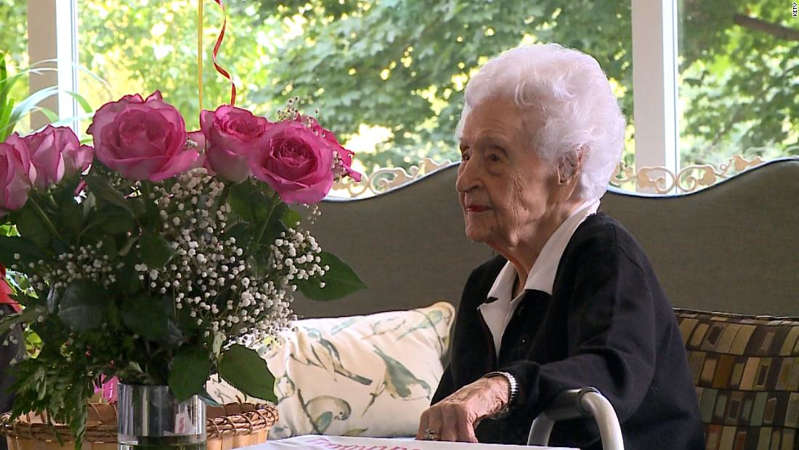
Sutcliffe, an Omaha, Nebraska native, became the record holder on April 17, when 116-year-old Hester Ford died on April 17, died in North Carolina, according to the Gerontology Research Group. Like all of us, Sutcliffe has been affected by Covid-19. Her assisted living facility stopped allowing residents to eat meals in the communal area, Mason said, and residents had to eat in their rooms. It was hard for Sutcliffe, she said. “It breaks my heart, because the first thing out of her mouth is, ‘Are you going to stay and eat with me?'” Mason told CNN. “And I have to say I can’t, they won’t let me … I tell her we have to go by the rules.” Now, even as the facility has started letting some people eat communally, Mason said Sutcliffe still won’t eat in the common area. “I don’t know anybody down there anymore,” Sutcliffe told Mason. As for her longevity, Sutcliffe credits the fact that she never had children, never smoked and believed strongly in never worrying about anything, Mason said. “She’ll say that to this day,” Mason said. “Don’t worry. She has a philosophy of not worrying.” Sutcliffe does know that she is now the oldest person in the US, Mason told CNN. But when the fact is brought up, she typically brushes it away with a, “We don’t need to talk about it.”
Biography Thelma Sutcliffe was born in Benson, Omaha, Nebraska, on 1 October 1906 to August and Maude (née Adams) Liesche. On 3 September 1924, at the age of 17, she married Bill Sutcliffe in Council Bluffs, Iowa. The couple had no children, and were married until Bill died in the early 1970s. Sutcliffe has survived two bouts of breast cancer over the course of her life. At the time of her 110th birthday in 2016, Sutcliffe lived in a residential apartment in Omaha, Nebraska. She reportedly exercised every morning, did her own laundry, and played bridge several times a week. In 2017, Sutcliffe moved into an assisted living facility in Omaha. She celebrated her 114th birthday in October 2020. Sutcliffe’s sister, Marie Kelso (1904-2011), lived to the age of 106.Sutcliffe was married in 1924 at age 17. She and her husband, Bill, who died in the early 1970s, had no children. She worked for the War Department in the 1940s, but otherwise did not work outside the home.
Currently, she is living at the city’s senior-citizen home. Due to the novel coronavirus, she had to stay locked down for most of 2020 as the people in the age group and below are the most vulnerable. Despite her hearing and sight fading steadily, Sutcliffe is still extremely determined to live her life to the fullest till the very last day. “Thelma is as determined as ever to do what she wants to do,” her longtime friend named Luella Mason told the Associated Press. However, she further added that Sutcliffe is not liking the quarantine life. She wishes to step out as soon as the situation allows her to do so. Not only that, she even asks her friend to come and dine with her as well. She also added how she does not enjoy getting the COVID tests done. Thelma has received all her vaccines on time. Here’s hoping she lives for the longest time and makes the most of it! “I was born and raised here,” she said in a strong voice. “I’ve never lived a day anywhere else.” When it came time to blow out the candles on her birthday cake, she got a little help from her nephew and from Tamera Trudell, the Brighton Gardens activity director. Thelma was an avid bridge player when she lived at Elmwood Tower, even when she became a supercentenarian at age 110. She moved to Brighton Gardens last year. The 112-year-old doesn’t look like she’s going anywhere. One more year, after all, and she’s a teenager again.
Longevity Records Is an American supercentenarian who holds the record as the oldest person ever documented from the U.S. state of Nebraska. At the time of her 110th birthday in 2016, Sutcliffe was the oldest known person living in Nebraska. Following the death of Minnie Whicker on 22 October 2020, Sutcliffe entered the top ten oldest validated living people in the world. Following the death of Beulah Meloche five days later, she became the last remaining validated American born in 1906. Following the death of Hester Ford on 17 April, 2021, Sutcliffe became the oldest validated living person in the whole of the United States. On 14 April 2020, Sutcliffe became Nebraska’s all-time longevity record-holder after surpassing the previous record of 113 years, 195 days set by Helen Stetter. Additionally, upon reaching the age of 113 years, 328 days on 24 August 2020, Sutcliffe became the oldest person ever born in Nebraska, surpassing the age of Clara Huhn. Sutcliffe’s sister, Marie Kelso (12 June 1904 – 8 March 2011), lived to the age of 106 years, 269 days. With a combined age of 221 years, 114 days, the sisters are one of the oldest pairs of siblings ever recorded. Sutcliffe is currently the oldest person living in the United States and is the last known American born in 1906 whose age is validated by the Gerontology Research Group (GRG).
Her longtime friend, Luella “Lou” Mason, said she is happy that the senior living center where Sutcliffe lives is locked down, but “Thelma is as determined as ever to do what she wants to do.” Until visitors are allowed in the dining room, Thelma is taking all her meals in her room. Mason, who has Sutcliffe’s power of attorney, calls the senior living center 24 hours ahead of time to schedule visits. “She asks me every time I visit, ‘Are you going to eat with me today?’” Mason recalled. “It breaks my heart that I can’t.” Sutcliffe received her COVID shots at the earliest opportunity, but testing for the coronavirus was a nonstarter. Mason said Sutcliffe looked at the swab and said, “You’re not going to be sticking that thing up my nose. You can tell Lou to stick it up hers.” Sutcliffe’s senses aren’t what they used to be, but her mind is “very sharp,” according to Mason. Sutcliffe is now the seventh oldest person in the world, according to researchers. “Thelma is as determined as ever to do what she wants to do,” her friend said. America’s oldest person wants the same thing as everyone else — for the pandemic to end.
What worrying does to your body. When you worry, your body responds to your anxiety the same way it would react to physical danger. To help you cope with the physical demands you are about to ask your body to perform, your brain releases stress hormones like adrenaline and cortisol into the bloodstream. It is widely accepted that stress and anxiety can lower your immune system, making you more susceptible to picking up colds or more serious illnesses.
If your body is affected by the physical effects of worry, it may not fight germs as well. Just thinking about things that made you angry or depressed in the past can take a toll. It can make it harder for you to fend off the flu, herpes, shingles, and other viruses.
With excessive worry, our immune systems have little time to recover so you become even more tired and lethargic. This messaging network is made up of your brain, spinal cord, nerves, and special cells called neurons. Worrying too much can trigger it to release “stress hormones” that speed up your heart rate and breathing, raise your blood sugar, and send more blood to your arms and legs. Over time, this can affect your heart, blood vessels, muscles, and other systems.
When you’re troubled about something, muscles in your shoulder and neck can tense up, and that can lead to migraines or tension headaches. Massage or relaxation techniques, like deep breathing and yoga, may help. If you’re worried a lot, you might breathe more deeply or more often without realizing it. While this usually isn’t a big deal, it can be serious if you already have breathing problems linked to asthma, lung disease, or other conditions.
If it sticks around long enough, something as small as a nagging concern in the back of your mind can affect your heart. It can make you more likely to have high blood pressure, a heart attack, or a stroke. Higher levels of anxiety can trigger those stress hormones that make your heart beat faster and harder. If that happens over and over, your blood vessels may get inflamed, which can lead to hardened artery walls, unhealthy cholesterol levels, and other problems.
When you’re worried about something, stress hormones give you a burst of fuel (in the form of blood sugar). This can be a good thing if you need to run from danger, but what happens if you don’t use that fuel? Your body normally stores it to use later. But sometimes, if you’re overweight or have diabetes, for example, your blood sugar can stay too high for too long. This can lead to heart disease, strokes, or kidney disease.
You may feel “butterflies” in your stomach when you’re nervous — in more serious times, you may feel nauseous or even vomit. If this happens often, it can lead to stomach pain and sores in your stomach lining (ulcers). And if you eat a lot of foods high in fat and sugar, your stomach has to work harder to digest them, and that makes more acid. This can cause acid reflux — when acid flows up into your throat.
Constant fretting can affect your bowel habits — you could have diarrhea or find it hard to go to the bathroom. Diet, exercise, and over-the-counter medicines can often help, but you might be able to keep these problems from happening if you find ways to calm your anxiety. Worry can tire you out and distract you so you’re less interested in sex. Over the long term, it can lower a man’s levels of the sex hormone testosterone.
That can affect sperm development and slow or stop their body’s normal response when they want to have sex. For women who have gone through menopause, it can make hot flashes and sleep issues worse. You don’t have to be in a scary situation to have a panic attack. You could be on a hike, at a restaurant, or asleep in bed. All of a sudden you get a strong surge of fear. This triggers physical symptoms like a pounding heart, sweating, shortness of breath, nausea, chest pain, or trembling. It can last 5 to 20 minutes.
Once you learn to recognize when attacks are coming on, you can find ways to stop them. It’s understandable that you’d want to avoid a panic attack at all costs. But it’s important not to let fear control your life. For example, don’t avoid places where you’ve had panic attacks in the past. If you have one, stay where you are, if it’s safe. When the attack is over, you’ll realize that nothing terrible happened.
Live Your Life
When you feel a panic attack coming on, remind yourself that you’re feeling anxiety, and not real danger. You can even try directly addressing the fear. Practice a go-to response Talk to Yourself: like, “I am not afraid” or “This will pass.” and as tempting as it may be to try to focus your mind elsewhere, the healthiest way to deal with a panic attack is to acknowledge it. Don’t Distract Yourself, Try not to fight your symptoms. But keep reminding yourself that it will pass.
Breathe Through It
An attack may make you take quick, shallow breaths, so get your breathing under control. Close your eyes. Put your hand between your bellybutton and the bottom of your ribs. Inhale through your nose slowly and deeply. Then let all that air out gently through your mouth. You’ll feel the hand on your belly rise and fall. If it helps, you can count from 1 to 5 on each inhale and exhale. After a few minutes, you should start to feel better.
Keep Your Mind in the Present
Notice five things you can see around you. Then, four things you can touch. Three things you can hear. Two things you smell. One thing you taste. When you stay grounded in what’s going on around you, it gives your mind something better to do than focus on fear or bounce from one worry to the next. When you think a negative thought, punish yourself about three positive things about your life.
H.A.L.T. Your Attack
H.A.L.T. stands for hungry, angry, lonely, tired — four feelings that bring out the worst in everyone. If you’re prone to panic attacks, they can turn into triggers. When symptoms pop up, check in with yourself: Am I hungry? Am I angry? Once you pinpoint what’s going on, you can take steps to fix it. Rate Your Fear: When fear scrambles your mind, rate it on a scale of one to 10 every few minutes. This keeps you in the present moment. It’s also a good reminder that you’re not on a 10 the whole time.
Progressive Relaxation
When you feel a panic attack coming on — or are in the middle of one — tense one muscle at a time and then relax it. Repeat this everywhere until your whole body is relaxed. Stop the ‘What Ifs’ Panic attacks feed on thoughts of “what if.” What if I can’t do it? What if I run into my ex? What if everyone laughs at me? Acknowledge that fear, then shift from “what if” to “so what?” Sometimes the worst-case scenario isn’t as bad as it seems.
Careful With Coffee, Booze, Smoking
Caffeine can make you feel nervous and shaky. It can also keep you awake, which can trigger tiredness later. Nicotine and alcohol can make you feel calm at first, then make you jittery as your body processes it. All three can trigger panic attacks or make them worse. It’s best to avoid them.
Make Time to Exercise
Physical activity lowers stress, which is one of the main causes of panic attacks. A workout, especially the kind that gets your heart pumping, can also get you to a calmer place. Can’t work in a workout? Even a 10-minute walk can help. Slow your body down, and your mind will follow. Practices like yoga and tai chi use slow body movements and train the mind to be calm and aware. Having it MADE means: Managing Attitude, Diet & Exercise…
Transformation of self is not about adding things to your life.
It is the removal of things in your life causing you stress, suffering and all that is weighing you down. It is the return of your psychological being to the day you were born, clean and pristine; then starting out by yourself without a mother or father. As your own mother and your own father, you would be the source of everything in your new consciousness rather than it being forced on you as the old consciousness was. Transformation is the birth of a new consciousness, one that is not polluted with the present consciousness. Transformation means to begin from that blank space of creation, but this time you are being 100 percent responsible for your creation. This time no one is telling you what to do or who to be. Well, they are still there telling you these things, but you are now able to see the truth and the lies and not be swayed by the old consciousness. The new consciousness can see all the old, but the old consciousness cannot see the new consciousness.
I say the old consciousness must die in order for the new consciousness to be born. This does not mean a death of the physical being; it is a psychological death or clearing of the brain which will bring us back to where we were at birth. I call it born new rather than a re-birth. Re-birth assumes that the old consciousness is still active. Born new means never having been before. You will still have all your memory. You have been educated.
You know how to read and write and do mathematics, all the things needed that have brought forth such marvelous inventions. You will keep the necessary knowledge to function in the world while dropping all the things you do not need. Your mind will be empty until you need to use the knowledge you learned. Your actions will come from intelligence, and intelligence will be using the tools of knowledge and memory rather than knowledge and memories using you to keep the old program running.
Since the core of the old consciousness is embedded in violence, and violence is now embedded in today’s world, the core will be the last to die. That causes people to have awakening experiences and then shift right back into the old consciousness. This happens because their core is still alive. That is why death, a psychological death, is necessary. It is this death that kills the core in the brain. Self-transformation allows you to create a new life from intelligence void of our present manner of existing. This is an evolution of humankind that will save us from the path of destruction we are now on. As you and others begin to transform your lives, transformation will reach a critical mass, and we as a species will manifest a new consciousness. This is the natural evolution of the human species. It is the heaven, the nirvana, the ecstasy, or whatever you care to call it that transformation of consciousness will deliver to the world, and you are the source of it, not a god, not a supreme power or any kind of belief.
Death Rate …. April 24 April 29 DEATHS Full Vax United States 576,265 579,162 ****** 28.9%
Seven Stages of Self Transformation Throughout my life I’ve engaged in self transformative processes on several occasions, at times without understanding that this was what I was doing. Perhaps the best way to understand this process is to think about the transformation of a caterpillar into a butterfly.
The caterpillar reaches a point in its life cycle where it is ready to change. It ceases its normal life activities and retires from the world. It constructs a cocoon to shelter it and structure the change. Inside the structure of the cocoon it introduces an agent that dissolves it, it liquefies itself. After it has dissolved itself it reforms as a new being inside the cocoon structure. And once it has solidified in its new form it breaks away that shelter and re-enters the world to engage in new life activities.
These are the seven stages of self transformation. We can adapt these stages to enable radical changes in ourselves and in our lives. One of the more profound uses I’ve put this process to was curing myself of clinical depression.
Stage 1: Resolving In order to make a self transformation you have to be ready to change. When you honestly want to change enough, you resolve to go through the next six steps. For people with substance abuse problems this is usually characterized as hitting bottom. While hitting bottom can sometimes be necessary to motivate change it isn’t the only way that resolving occurs. Another way it can happen is by hitting a ceiling, when things have been going well but now improvement has plateaued. When you hit the ceiling you can’t improve any further the way you are and you are going to need a more significant transformation. Understanding this can lead to resolving.
When I was depressed I reached a point where I hit bottom, this experience led to me getting antidepressants. I stabilized and stopped getting any worse but eventually I realized I wasn’t getting any better either. I decided that the medication wasn’t enough and I resolved to make more fundamental changes.
Stage 2: Retiring Once you have made the resolution to change you need to separate yourself from your day to day existence. The places, people and habits you fill your life with all act to reinforce your current way of being. The caterpillar separates itself completely from its normal way of life. Depending on how major the change you need to make, your retirement might not need to be that extreme but better to err on the side of severity and success than laxness and failure. Separate from anything that encourages or supports what you are trying to move away from. You own habits are the most important. Those routines are what define you more than anything else.
My retirement when working on my depression was rather extreme. I stopped associating with almost everyone and detached myself from my commitments. I even broke my habitual sleep-wake cycle. I wouldn’t necessarily do it the same way if I had to again but I required a near total break from life as usual. Other changes I’ve accomplished within a week in a different city.
Stage 3: Structuring When the caterpillar retires from the world it builds a cocoon to shelter it and to structure the coming changes. We need to do a similar thing. WE need to create a space for change to occur in and a structure to keep ourselves alive while we go through the process. The structure provided by routine can be as or more valuable to us than the physical space. WE create a space and routine free of the anchors and distractions of our old way of being and supportive of the new way. A good example of this is a Buddhist meditation retreat. They have a clear and austere space free of the distractions of day to day life and routine of practice and chores to keep the attention concentrated on the process.
When I’ve gone through transformative retirements I clear away the normal objects of my life and install a variety of new routines to fill the time. Things like journaling, new sleep schedules, exercise routines and I combine them into a ritualized structure for the period of the retiring.
Stage 4: Dissolving Once the caterpillar is secure in its cocoon it secretes an enzyme that liquefies its body. After we have created the structure that we are going to change within, we want to dissolve our sense of self. We also want to introduce an agent or method to make the normally solid construct of our identity more fluid and flexible. There are any number of ways to achieve this end. People have used meditation, sensory deprivation, psychoactive substances, ecstatic dancing, and many other methods. What is important is that you lose yourself in it and your boundaries between you and not you become uncertain or fuzzy. When the existing lines are blurred or erased new lines can be drawn, a new self can be born.
While working on my depression I used severe sleep deprivation to dissolve myself. I wouldn’t necessarily recommend that method as it’s not particularly healthy but it was very effective for me at the time.
Stage 5: Reforming Liquefied in its cocoon what was a caterpillar reforms itself in its new shape, that of a butterfly. Within the structure of routine and ritual we created for ourselves we too must reform our liquified sense of self. A new outlook and new body of practice are forged. We tell ourselves a new story of who we are and what we are capable of and we let old beliefs and old habits be forgotten. Affirmations and mantras can be very useful at this point. This is also when we stop or at least cut back on whatever agent we were using to dissolve ourselves. We are no longer trying to break a pattern, now we are trying to set a new pattern. We define our new self and let go of the old. Frequently some kind of ritual action is taken to mark this rebirth. Some people get tattoos.
When I was reforming after my depression I stopped the sleep deprivation, adopted a personal slogan and threw away my pills. Although the pills had been useful the new depression free me didn’t need them any more.
Stage 6: Solidifying After the butterfly has formed its new body it’s still not ready to rejoin the world it needs to solidify and dry out. We too need time to solidify after we have formed our new selves. If we were to rejoin the world too quickly we would find our new selves too fragile and it would be very easy to fall, or be pushed, into old habits. So we give ourselves time for the new way of being to solidify and gather some momentum of its own. This is probably the least glamorous phase but no less essential. We just keep being our new selves and doing our new habits until it feels comfortable and normal. Thirty days is a good length of time for this if you can manage it. If you have to make a partial return to the world, say for work, just keep as much of the structure you created in place as you can and avoid temptations of old patterns.
After I threw away my pills I had the patter part of a month before I had to face the day to day pressures of life as usual, this made a great difference for me.
Stage 7: Returning Now that the butterfly is fully formed and solidified in its new body, it breaks out of its cocoon, unfolds its wings and returns to the world. When our new habits and self have stabilized it’s time for us to return as well. Some times we can find this difficult as we can grow comfortable in the routing and simplicity of our hermitage. However, we didn’t transform ourselves to hind in the cocoon. So we break apart the discipline that sheltered us and go out into the world with new habits and attitudes. We go out and flap our wings. When returning you should go out and have some fun, enjoy your new self. A good way to mark your return is with a party.
When I returned after transforming my depression I had to go back to school, back to work, but I made sure to go and enjoy myself as well. Why shed depression if you don’t go and have any fun?
You might have some resistance from people you know to your new way of life but some people will always resist change. Just go out in the world and be the butterfly.
Whatever your journey, your struggle, your appearances, your affiliations; none of that defines you. At this point, just be a decent human and we’re cool… Choose your thoughts on how you choose your clothes. Make sure they are the best fit for the time, place, and location
If you’re not making mistakes, then you’re not making decisions.
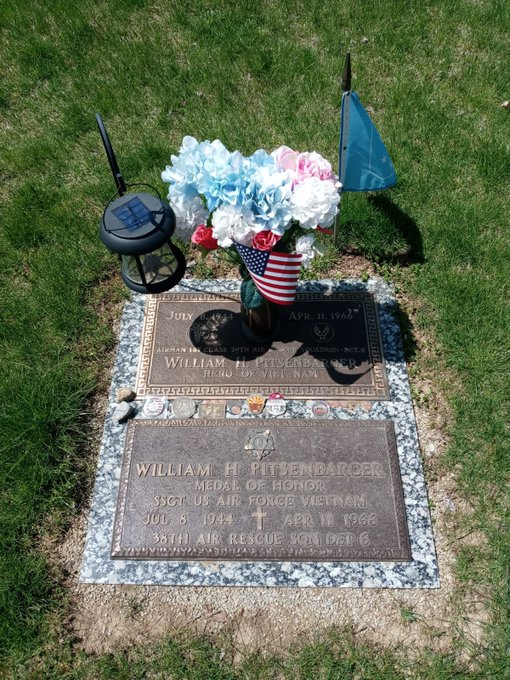
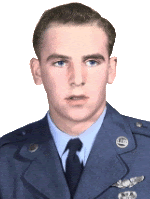
The Last Full Measure paid tribute to William H. Pitsenbarger and took 20 years to make.
Finally, a war story worth watching. Sebastian Stan‘s new war drama film.
The movie is an outstanding, well-rounded biography war story. It is gripping and incredibly well acted with a first-class cast. The Last Full Measure is about real-life Vietnam War hero William H. Pitsenbarger who tragically died at the age of 21 during a rescue mission in 1966 after saving countless lives during the war. More than 30 years later, Pentagon investigator Scott Huffman probes a Medal of Honor request for Pits made by his family and his friends .
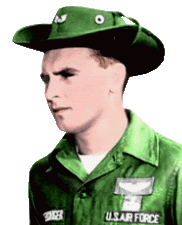
William Hart Pitsenbarger was born July 8, 1944, in Piqua, Ohio, a small town near Dayton. During his grown-up, he dreamed about joining the Green Berets. When he was a junior in high school, he tried to enlist in the U.S. Army, but his parents refused to give their permission. After he graduated from high school, Pits decided to join the U.S. Air Force, and on New Year’s Eve 1962, he was on a train bound for basic training in San Antonio. During his basic training in early 1963, he volunteered for Pararescue. He easily meets the qualifying requirements and was one of the first groups of airmen to qualify for Pararescue right out of basic training. After completing pararescue training, he was assigned to the Rescue Squadron assigned to Hamilton AFB, California.
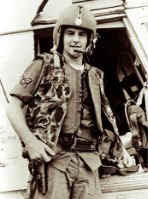
His first assignment in Vietnam was in the form of Temporary Duty (TDY). Upon completing his first TDY assignment, he volunteered to return and received orders in 1965 to report to Detachment 6, 38th Air Rescue and Recovery Squadron at Bien Hoa Air Base near Saigon. During his time in Vietnam, he has become one of the most reliable service members in the 38th Air Rescue and Recovery Squadron. His commanding officer, Major Maurice Kessler, called him: “One of a special breed. Alert and always ready to go on any mission. ”He was killed in action on April 11, 1966, during the rescue mission in a battle near Cam My, 35 miles east of Saigon. The Joint Rescue Center dispatched two Huskies from Detachment 6 to extract a half-dozen or more Army casualties pinned down and surrounded by Vietcong. Upon reaching the site of the ambush, he was lowered through the trees to the ground where he attended to the wounded before having them lifted to the helicopter by cable. After six wounded men had been flown to an aid station, the two U.S. Air Force helicopters returned for their second load.
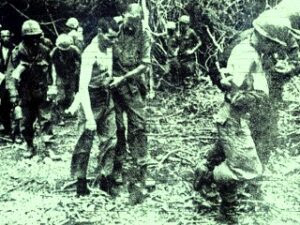
Vietnam War: Napalm Strike in 1966 (Photo: XY)
For the next hour and a half, Pitsenbarger attended to wounded soldiers, hacking splints out of snarled vines and building improvised stretchers out of saplings. When the others began running low on ammunition, he gathered ammunition from the dead and distributed them to those still alive. Then, he joined the others with a rifle to hold off the Viet Cong. Pitsenbarger was killed by Viet Cong snipers later that night.
When his body was recovered the next day, one hand still held a rifle and the other clutched a medical kit. Although Pitsenbarger did not escape alive, nine other men did, partially thanks to his courage and their devotion to duty. During his service, William H. Pitsenbarger flew on almost 300 rescue missions during the Vietnam War to aid downed soldiers and pilots.
During the Vietnam War, the United States Air Force awarded its second-highest award, the Air Force Cross, to nineteen enlisted airmen. Of those nineteen awards, ten were awarded to Pararescuemen better known as PJs.
The Pentagon is a mighty big place, an American institution filled with legends, lore, and high-ranking military men and women. For Mr. and Mrs. William Pitsenbarger, the September 22, 1966 visit to the home of America’s military men and women had all the elements of culture shock. It was like walking into a whole new world, a world separated from their small hometown of Piqua, Ohio by more than miles. Calming their uneasiness and fighting to overcome the emotions that struggled for release, the brave couple found themselves being introduced to the US Air Force Chief of Staff, General John P. McConnell. Standing to the side to witness the events that were about to unfold was Ohio Senator Frank Lausche. Later that same afternoon the Senator would write in the Congressional Record,
“They (Mr. and Mrs. Pitsenbarger) stood there heroically, in my opinion reflecting the courageous and stalwart character of their son.”
Their son…that’s what this was all about. As the couple waited for the ceremony to begin, perhaps they could not avoid remembering young William Pitsenbarger’s zest for life…a zeal that had always driven him to experience every adventure and push the envelope to the limits. Irene Pitsenbarger may have thought briefly about the many times her young son had given her reason for fright. Even as a lad he had flirted with danger, taking his childhood games like “follow the leader” to the ledges of the highest buildings or the limbs of the tallest trees. In his junior year of high school in his small town of 20,000, young William Pitsenbarger had tried to enlist in the Army’s Special Forces to wear the coveted Green Beret. Adamantly Irene and her husband had refused to give their 17-year old permission to join the Army, requiring him to remain in school one more year to graduate.
In the Spring of 1962, William Pitsenbarger graduated from high school. He continued to work as a stock boy at the local Kroger supermarket, all the while thirsting for more adventure. While there, it was the Air Force recruiter who captured the young man’s attention. On the last afternoon of the year, New Year’s Eve 1962, William Pitsenbarger broke the news to his parents. He had enlisted in the Air Force and would soon be boarding a train for San Antonio to begin his training. How soon? He was leaving that very night.
In the quiet dignity of the halls of the Pentagon, the senior Pitsenbarger remembered how proud he had been of his son. Not only had he chosen to serve his country in uniform, but he had also chosen to serve among some of the most elite. After Air Force basic training, the young airman had continued to push the envelope and expand his thirst for adventure.
He trained with members of the Army at Fort Benning, Georgia to earn his jump wings. He attended the Navy’s underwater swimmers’ school. He successfully completed the rescue and survival medical course. At Stead AFB, Nevada, he completed the combat survival course, at Eglin AFB in Florida he attended the Tropical Survival School, and at Albrook AFB, C.Z. he attended the fire-fighters course for the HH-43 helicopter. Through it all, he emerged as one of the Air Force’s elite Pararescuemen, more commonly known as PJs.
PJs were born out of the efforts of Lieutenant Colonel Don Fleckinger and two medical corpsmen who parachuted into remote jungles near the China-Burma border in August 1943 to rescue survivors from a disabled C-46. For nearly a month the officer and his two medics had treated the injured while leading them to rescue. Among those restored to safety was Eric Severeid, who would go on to become a well-known news commentator. He described the forerunners of the Pararescue program as “Gallant”.
Gallant, they were true. They were also dedicated to saving lives, not only during times of war but also in peace. The PJ motto is “That Others May Live”, and the unspoken preface to their motto was that the men of this highly trained rescue force would do anything…including risking their lives to the highest degree…
“These things we do, so that others may live”
Yes, the elder Pitsenbarger was justly proud of his son. Young William had come home after his extensive training as a grown man, confident that he could accomplish any task and fulfill any demands his job might require. His role had taken him to Perth, Australia as a Pararescue-medic in the earliest days of the space program, working on the Gemini and Mercury space probe recoveries.
Then had come the looming threats of conflict in Vietnam. When Airman Pitsenbarger got orders for service in the war zone in August 1965 he had only a little more than a year remaining in his 4-year Air Force enlistment. For the first time, the senior Pitsenbarger began to worry about the risks inherent in his son’s military specialty. Father and son agreed not to tell Irene the full story. It would be best if she did not know that her only son would be performing some of the most dangerous missions faced by any young man in a combat zone.
Vietnam
Airman Pitsenbarger arrived in Vietnam on August 8th and was assigned to Detachment 6, 38th Air Rescue and Recovery Squadron at Bien Hoa Air Base. His unit was responsible for many different kinds of rescue missions, from recovering downed pilots to evacuating wounded airmen or soldiers for both the US military units as well as South Vietnamese units. Detachment 6 consisted of five aircrews that flew three HH-43F Kaman Huskie helicopters. The Air Force rescue craft with their twin rotors was not as trim in appearance as the “Dustoffs” used by the Army for evacuating their own wounded. But the Huskies had a unique advantage. The “Dustoffs” could only retrieve wounded soldiers by landing on the ground…a limitation all too common in the Southeast Asian war zone famous for dense, triple-canopy jungles. The Air Force Huskies could hover over the last layers of the jungle foliage and winch a wire-mesh Stokes Litter to those on the ground. When a wounded man had been properly strapped inside the litter, he could then be winched up into the Huskie where Pararescue medics like William Pitsenbarger waited to administer lifesaving first aid during the flight to a field hospital.
Over the months that followed William Pitsenbarger did his best to downplay the dangers of his job in his letters home. In fact, the letters and pictures he sent back seemed to indicate that Airman Pitsenbarger was actually having a good time at the Air Base a short distance from the South Vietnamese capital city of Saigon. Pits, as the Airman from Piqua, Ohio came to be called, was a happy and likable young man. The other men in his Detachment enjoyed being around Pits. He never complained and had a great sense of humor and tendency to clown around when things were quiet.
At the same time, when things were not quiet, Pits was great to have around, especially if you were a downed airman alone in an enemy-controlled jungle or a wounded soldier in the field. “All of us PJs had a strong desire to save lives,” said Chief Master Sergeant Dave Milsten, the ranking Pararescueman in Detachment 6, “that’s what we lived for. But Bill (Pitsenbarger) had a triple dose of that.”
In the 275 days from August 8, 1965, to April 11, 1966, Airman First Class William Pitsenbarger flew more than 300 rescue missions over the jungles of Vietnam. Time and again he has faced enemy fire, stared death in the face and calmly set himself to the tasks of a Pararescue medic. Hundreds of men owed their lives to a young medic called Pits…and not only for his lifesaving first aid in the airborne trip from the jungle to a field hospital. Time and again, as was not uncommon among any of the dedicated PJs, Pits had made the ascent from the relative shelter of his hovering Huskie to the jungle floor to render immediate first aid to wounded and then strap them into the lowered Stokes Litter.
On March 7th Pits’ aircrew flew on a mission to rescue a wounded South Vietnamese soldier who had walked into an old minefield while fighting a fire. The man had lost his foot when he stepped on a mine and was trapped inside a maze of old and unstable explosive devices. As Pits’ Huskie began the approach, a plan for extracting the wounded man without detonating other mines in the field had to be devised. Pits’ solution? “Lower me down on the penetrator (a rudimentary seat lowered by cable from a hovering helicopter) and I’ll straddle the guy. Pick him up, and then you can lift me up.” Heedless of the potential for disaster should the heavy prop wash of the Huskie’s twin-blades detonate other mines in the field, Airman Pitsenbarger made the ascent, snatched the wounded soldier, and restored him to safety.
For that selfless act of heroism, Pits was awarded the highly regarded Airman’s Medal by the United States Air Force. The government of South Vietnam awarded him Vietnam’s Medal of Military Merit and the Gallantry Cross with Bronze Palm. Time and again these brave medics had been inserted to save lives. But the choice to “go in” was always a voluntary call, made by the PJs themselves. When the mission called for such acts of personal courage, there was never a shortage of volunteers.
The Air Force Cross
Irene Pitsenbarger did her best to push the memories momentarily aside and stand stoically next to her husband. The elder Pitsenbarger struggled with his own emotions, unable any longer to restrain the tears. In addition to the Airman’s Medal and the Vietnamese awards, their son had received the Purple Heart and six Air Medals with four more pending. And now, here at the Pentagon, Mr. and Mrs. Pitsenbarger would receive one more award on behalf of their son. Slowly, the citation was read:
“A1c William H. Pitsenbarger distinguished himself by extraordinary heroism in connection with military operations against an opposing armed force near Cam My, the Republic of Vietnam on 11 April 1966. On that date, Airman Pitsenbarger was a rescue and survival specialist aboard a helicopter engaged in the evacuating of American casualties in a dense jungle. With complete disregard for his personal safety, Airman Pitsenbarger voluntarily rode a rescue hoist more than one-hundred feet to the ground and organized and coordinated rescue efforts at the scene. During the rescue operation, he cared for and prepared the casualties for evacuation, and ensured that the recovery operation continued in a smooth and orderly fashion. Following the recovery of the ninth casualty, the rescue aircraft hovering overhead was damaged and disabled by automatic weapon fire. The helicopter was forced to abandon recovery efforts to make an emergency landing at a nearby airstrip. Airman Pitsenbarger volunteered to remain on the ground and administer medical treatment to the wounded. Shortly after rescue efforts were interrupted, the area came under heavy sniper and mortar fire. Airman Pitsenbarger repeatedly exposed himself to intensive automatic fire while gathering rifles and ammunition from fallen comrades which he passed among the defenders. His bravery and determination in the faces of overwhelming odds are in keeping with the highest standards of performance and traditions of the American fighting man under attack.”
William and Irene Pitsenbarger looked with reverence at the medal presented to them by General McConnell on behalf of their son. It was the Air Force Cross, our Nation’s second-highest award for military valor by a member of the United States Air Force. Their only son, Pararescue-medic William Pits Pitsenbarger had just made history…becoming the first enlisted Airman in history to receive the Air Force Cross…posthumously.
“The mother was brave. The father shed tears. But both were proud.” Wrote Senator Lausche in his Congressional Record account of that day. “At the conclusion of the award, I felt that I was spiritually cleansed and fortified for a better rendition of service in the responsibility which I have for my government.”
In the years that followed the 1966 presentation of the Air Force Cross to Mr. and Mrs. Pitsenbarger just five months after the death of their son, the name William Pits Pitsenbarger became synonymous with the proud traditions of sacrifice and service of the Air Force Pararescuemen. Air Force buildings were named for him, and the Air Force Sergeants Association introduced an annual award for valor in honor of the heroic actions reflected in his award citation. In time, Pits became an Air Force legend… not so much for what his citation said about his actions that day in April 1966, but for the details, it did not include!
Operation “Abilene” and the PJ’s (April 10-12, 1966)
BINH GIA, Vietnam (AP)
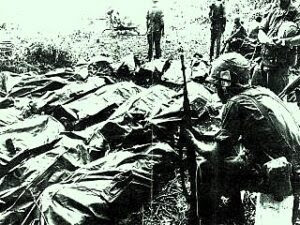
“It was horrible,” said Pfc Ronald Haley, as he stood in the tiny clearing blasted from the jungle so that the dead and wounded could be evacuated. “I’ve never heard such screaming in my life. Many of the wounded were yelling for their mothers. Some of the kids were calling for God.” said Haley, one of the few survivors.
Haley, of Ukiah, Calif., was dirty and unkept after his unit had been in the jungles 30 miles east of Saigon for two weeks searching for the Viet Cong. The U.S. 1st Division Infantrymen found them Monday afternoon and in the bitter fight perhaps a third or more of their company were killed or wounded.
The company commander, Capt. William Nolen of Florence, S.C. described how the battle involving his “Big Red One” troops developed. He was wounded twice.
The company, part of the 2nd Battalion, 16th Regiment, was moving through the jungle’s northeast of Binh Gia on a routine-patrol. At noon sniper fire began. “After a while,” Nolen said, “heavy fire started coming in. We moved into a perimeter. In this first part of the fight that lasted from 45 minutes to an hour, we took quite a few casualties. The Viet Cong withdrew and we called in artillery fire. An Air Force rescue helicopter came over and lowered a ladder. They hauled out about a dozen of our wounded. Suddenly we started receiving fire from all around. There were mortars coming in, heavy machinegun fire. We were completely surrounded.“
The Viet Cong were everywhere. An estimated battalion of the enemy from the main force regiment was involved. First Lt. Kenneth Anderson, of Nashville, Tenn. said snipers kept firing from the trees. “One of my boys picked up a grenade and charged one of the trees. He was killed. I saw another lieutenant running from tree to tree looking for Viet Cong positions. He was hit seven times before he was finally killed,” he said.
At times, the Americans fought the enemy hand to hand.
Here the jungle grows in layers, often triple-canopy (3-layers) of heavy vegetation. So thick is the top layer, often rising over 150 feet upwards, that sunlight never reaches the vegetation at ground level. During the brightest day, soldiers moving across the jungle floor can almost feel that they are moving about at night.
Operation Abilene began on April 10, 1966…Easter Sunday. Soldiers of the 1st Infantry Division, better known as “The Big Red One”, began to move into the jungle between Saigon and Vung Tau in search of the enemy. Alpha, Bravo and Charlie Companies of the First Infantry’s 2nd Battalion, 16th Infantry (2/16th) were seeking elements of a 400-man Viet Cong battalion. On Monday, the second day of the sweep, the rugged terrain forced Charlie Company to move outward instead of parallel to Alpha and Bravo Companies. Sporadic sniper fire picked at the men of Charlie, 2/16th throughout the day, but no one could have predicted how intense the enemy fire would become as morning gave way to afternoon.
Staff Sergeant James Robinson, a former Marine, had volunteered for Vietnam duty.
Had in fact, engaged in a determined year-long letter-writing campaign from his duty station in Panama in efforts to be assigned as an advisor to soldiers of the Vietnamese Army. Sergeant Robinson believed strongly in the U.S. role in Vietnam, telling his father in one letter: “There’s a world on fire and we should do something about it.” Now, as he led his fire-team through the dense jungles of Phuoc Tuy province, he recalled what he had written home in his most recent letter…”The price we pay for freedom is never cheap.” Little did he know how expensive that price was about to become.
The first explosion came from American artillery fired in support of Operation Abilene. One round fell short, detonating in the top of the jungle canopy and raining deadly shrapnel on Sergeant Robinson’s platoon. Two men were killed, twelve wounded, and the tall sergeant from Cicero, Illinois set his men to the task of clearing a landing zone for medevac choppers to extract the casualties. As the survivors hacked through the jungle vegetation, they did not realize they were only yards from their primary objective…the command post of the Viet Cong Battalion Operation Abilene sought to find and destroy.
As the infantrymen fought to reclaim enough jungle landscape for the medevacs to land, the enemy attacked with mortars and machine gun fire. Pandemonium erupted among the American soldiers as they clamored for any semblance of shelter. In the midst of sudden death and unrestrained terror, Sergeant Robinson began moving among the men to organize defensive fire and inspire confidence. Locating one highly effective enemy sniper, Robinson used a grenade launcher to end the threat. In the distance, he could see an Army medic kneeling to bandage the wounds of a wounded American infantryman. The enemy fire reached out to tear flesh and the medic fell to the ground. Realizing the two wounded men were dangerously exposed to continued enemy fire, Robinson ignored the whine of deadly missiles around him to rush into the open and drag the two wounded men to safety.
As the fighting continued to escalate, more wounded fell. Sergeant Robinson noticed another American fall ahead of his position. Rushing forward to rescue the wounded man, enemy rounds slammed into Robinson’s shoulder and leg. Ignoring the pain, he dragged the wounded man to shelter, administered lifesaving first aid, and then treated his own serious wounds. While patching up his broken body he noticed the location of an enemy machine gun that had been inflicting heavy casualties on his unit. His rifle empty, Sergeant Robinson again ignored his wounds to attack.
Another Viet Cong bullet hit the intrepid soldier in the leg. The round was a tracer, igniting the trousers of his jungle fatigues. Sergeant Robinson ripped the burning uniform from his body and continued forward. At six feet, three inches tall he was an inspiring sight for the beleaguered men of his platoon. He was also a very large target. The full force of the aggressors turned their firepower on the advancing American.
Two more rounds struck flesh, ripping into Sergeant Robinson’s chest and draining what little strength remained in his broken body. Somehow, through sheer force of determination, he continued forward…falling only after reaching an effective range and throwing the two grenades to destroy the enemy position. The price Sergeant Robinson paid for freedom wasn’t cheap…he purchased it with his own life.
Abilene and the Pits
The worst was yet to come for Charlie Company. Normally the unit consisted of 291 men but, going into Operation Abilene, company strength was down to 134 soldiers. These men were now cut off from Able and Bravo companies and were surrounded by 400 or more enemy soldiers. Hidden by the dense jungle, the enemy was able to hide and still place effective sniper fire on the Americans. Quickly the attack escalated to intense mortar and machine gun fire throughout the entire area. Dead and wounded American boys littered the undergrowth in what was quickly becoming a massacre. Because of the thick, triple-canopy jungle, Army medevacs could not come in to retrieve the wounded…there was simply no place to land. The nearest clearing was 4 miles away. The only hope of getting the wounded out and headed for emergency field hospitals lay with the Air Force Huskies that were capable of hovering above the canopy to lower an empty stokes litter, then winch it back up with the body of a wounded strapped inside.
At 3 o’clock on the afternoon of April 11th, the call for help arrived at the headquarters of the 38th Aerospace Rescue and Recovery Squadron at Bien Hoa. Two Air Force Huskies were quickly airborne and moving east to find and extract the wounded soldiers of Charlie Company. Captain Ronald Bachman piloted the primary HH-43, called the “Pedro 97”. Captain Harold Salem piloted the back-up aircraft, “Pedro 73”. Behind the pilot and co-pilot in Pedro 73, was Airman William Pitsenbarger. His only remark when the call for help arrived had been, “I have a bad feeling about this mission.” It was the first time the pararescueman had ever voiced any misgivings about any mission.
By 3:30 the two Air Force choppers were hovering over the tops of the jungle canopy while death and devastation raged below. Pedro 97 went in first, lowering the stokes litter to retrieve one of the wounded. Then Captain Bachman pulled back a short distance to transfer the patient to a folding litter while Pedro 73 went in to pick up a second wounded soldier. That done, Captain Bachman returned to use the stokes to pull one more wounded soldier from the field of battle. The two Huskies then turned towards the field aid station 7 miles away near the village of Binh Ba. While the three initial recovered casualties were unloaded, Pits and Pedro 97’s PJ Sergeant David Milsten discussed “going in” on the choppers’ return.
The choppers could only carry two stokes litter patients on each in-and-out, and only one if there was no PJ aboard. Ambulatory casualties could be hoisted to the waiting choppers on “jungle penetrators”. This cable contained 3 spring-loaded seats that could be dropped through the heavy canopy to pull up men capable of riding the hoist up. Usually when a PJ “went in”, he rode the penetrator down to either load a casualty in the stokes litter or aid two casualties in riding the penetrator. With the three-seat penetrator, a PJ could send up three wounded, then ride back up to his Huskie with two more wounded on a second lift. This allowed the rescue team to recover 4-5 wounded men with each in and out trip of the helicopters.
On the ground, things had gone from bad to worse. Army Sergeant Fred Navarro of Hutchins, Kansas was a squad leader in Charlie 2/16th. Seven of his 10-man squad had already been killed in action. Navarro himself was wounded. Nearby Lieutenant Johnny Libs was doing his best to bring some semblance of order to what remained of his platoon. Dead and dying were everywhere and panic was pushing his young soldiers beyond reason. Then, over the cries of the wounded, he heard the sound of a returning rescue helicopter. Moments later a stokes litter was being lowered to the ground. Still taking fire, the infantrymen were struggling between survival and attempts to load a wounded man in the litter.
From above, Airman Pitsenbarger watched them struggle with the apparatus. He turned to Captain Salem at the controls and said, “I’m going in.” The captain consented and slowly the chopper’s crew chief Airman First Class Gerald Hammond lowered his friend on the jungle penetrator. Totally exposed at the end of the cable, enemy rounds sang past the gallant PJ as he voluntarily rode the penetrator into a nightmare beyond human comprehension.
Lieutenant Libs strained his eyes against the unexpected sight. He turned to his machine gunner and said, “That guy coming out of the helicopter from above, in an Air Force uniform, must be out of his mind to leave his not-so-safe helicopter for the inferno on the ground.” Days later in retrospect, he added, “We were in the fight of our lives, and I just couldn’t understand why anybody would put himself in this grave danger if he didn’t have to.”
When the young PJs feet touched the ground, he went into immediate action. His experience expedited the process of getting the wounded soldier into the stokes litter and a fourth casualty was being hauled skyward. Once the man was airborne the crew of Pedro 73 expected their pararescueman to ride the penetrator back up to his waiting chopper. Instead, Airman Pitsenbarger waved them off, electing to remain with the soldiers on the ground. Without their PJ aboard, the chopper could only carry out one stokes patient, so Pedro 73 headed back to Binh Ba.
As Captain Salem headed towards the aid station, Pedro 97 moved in to hover over the battlefield. Under the guidance of the brave PJ, the infantrymen were able to quickly send two more stokes patients to safety. The rescue effort took on new efficiency with an experienced man on the ground. In little more than an hour, the two birds had each made two in-and-out trips to recover six wounded soldiers.
After unloading at Binh Ba, Pedro 73 diverted to refuel while Captain Bachman and Pedro 97 returned for the fifth pick-up of the day. This time, working in tandem with Sergeant Milsten on Pedro 97, Pitsenbarger was able to load one litter case and two more wounded on the penetrator. Nine men out and Captain Salem was returning for more as Pedro 97 headed for Binh Ba with their heaviest load of the day.
As Captain Salem hovered, the Airman Hammond began lowering the stokes from Pedro 73. On the ground, Pits signaled for the penetrator. Since the litter was already outside the helicopter, Hammond placed the penetrator inside the stokes and began lowering both. The package was about 10 feet off the ground and Pits was reaching upwards to receive it when a flurry of enemy .30 caliber rounds from two separate positions, raked the hovering rescue helicopter. At least nine rounds hit the aircraft, one of them tearing through the wiring and causing the throttle control to jam at full throttle. The power and rpm shot over the red lines and the helicopter lurched forward and up…out of control. The stokes litter dragged through the trees as Captain Salem fought for control. Among other problems, he had also lost partial rudder control.
The dragging litter threatened to snag in the foliage and bring Pedro 73 crashing to the ground. Quickly the pilot threw the switches to arm the cable cutter, releasing the litter and freeing his aircraft. As Salem fought to save his Huskie, his departure left the valiant PJ stranded on the ground with Sergeant Navarro, Lieutenant Libs, and the few survivors of Charlie Company.
William Pitsenbarger loved his job. An adventurer since boyhood, his greatest thrill had always been the opportunity to save lives. His medical training had served him well, so well in fact, that he had applied to Arizona State University to study to become a medical technician or male nurse upon completion of his Air Force tour of duty a couple of months hence. Now, stranded on the ground with the few survivors of Charlie Company, he took little time to ponder the predicament into which he had voluntarily placed himself.
Even as the enemy fire continued to scorch the area, he moved among the casualties to tend the wounded and administer life-saving medical attention. When he found the bodies of American boys that could not be saved, he gathered weapons and ammunition to distribute among those who could still fight. Finding one wounded infantryman, injured beyond the ability to fire a rifle, Pits gave the soldier his own pistol to enable him to continue to resist. He was one of the few calm visions of hope that moved among the damned.
How bad was it on the ground? One of the few survivors, Army Lieutenant Martin Kroah later said, “At times, the small; arms fire would be so intense that it was deafening, and all a person could do was get as close to the ground as possible and pray. It was on those occasions I saw Airman Pitsenbarger moving around and pulling wounded men out of the line of fire and then bandaging their wounds. My own platoon medic, who was later killed, was totally ineffective. He was frozen with fear, unable to move. The firing was so intense that a fire team leader in my platoon curled up in a fetal position and sobbed uncontrollably. He had been in combat in both World War II and Korea.”
One cannot judge the young men who reacted to the horrible events of April 11th with fear and panic. Ranging in age from 19-21, most had never witnessed such horror firsthand. One must imagine William Pitsenbarger must have felt fear himself. No sane man could live through such a nightmare without such emotion. But what made the young pararescueman from Piqua, Ohio stand out was how he dealt with fear. His decisions were deliberate, calculated, and carried out with the highest degree of professionalism.
Pits expected the Air Force Huskies, or at least Pedro 97, to return for more wounded. He noticed the stokes litter caught high in the jungle canopy. Despite the continuing enemy fire, he climbed the trees to salvage the litter and make it ready for the choppers’ return. Indeed, after escorting the badly damaged Pedro 73 to an emergency landing, Captain Bachman and his team returned. By this time, the Viet Cong were lobbying mortars into the area, and American forces responded by dropping artillery rounds in and around the small perimeter the survivors of Charlie Company were trying to create. Pedro 97 hovered in the area as darkness fell, then returned to Bien Hoa to wait out the night.
In the hour and a half Pits was on the ground, he was everywhere.
When the company was ordered to move a short distance, the intrepid Airman began cutting branches to improvise litters to transport the wounded. As darkness began to fall, he disappeared for about 10 minutes, returning to the area receiving the heaviest enemy fire with 20 or more magazines of ammunition he had scrounged from among the dead. Next to him, the wounded Sergeant Navarro was struggling to stay alive and to resist. Quickly the total darkness of the jungle night was falling across the area as the two men lay in their position returning fire on the enemy. It was nearing 7:30 in the evening as the enemy fire was beginning to taper off. Sporadic rounds continued to whistle through the air around Sergeant Navarro, but with the encroaching darkness, there was an eerie quiet as well. Next to him, all was quiet. No longer could he hear the sounds of William Pitsenbarger’s M-16. Even without looking, the young infantry sergeant knew what had happened. William Pitsenbarger was dead.
Of the 291 men, fewer than 20 men survived the night of April 11-12, 1966. As the enemy pulled back from the surrounded remainder of Charlie Company, in the total darkness of the jungle, civilian women and children under Viet Cong control slipped through the underbrush to recover the VC dead and wounded.
The only real defense the American survivors had in the dark rainforest came from American artillery. Every fifteen seconds from 8:30 Monday evening until 7:00 A.M. Tuesday morning, five or six rounds of artillery fell within 25 meters of the small perimeter to keep the enemy at bay.
Meanwhile, Alpha and Bravo Companies poised themselves for a rescue attempt at daylight. In the darkness of the early morning, Army Engineers slipped into the jungle to clear a landing place for the helicopters that would come with the dawn to extract the survivors and the bodies of the dead.
Arriving with the Army’s CH47 helicopters on Tuesday morning was the only operable Huskie from Detachment 6. The PJ on board was one of the Pits’ closest friends, Harry O’Berne. The Huskie was the first chopper to land and O’Berne moved among the dead to find and load three wounded infantrymen. Then, as the Huskie lifted off, O’Berne remained on the ground to treat wounded and load them on the Army Chinook. As he moved among the bodies that littered the jungle floor, an Army captain approached and asked if he was a medic. O’Berne replied that he was. “I’m sorry but one of your buddies was killed last night,” he informed the PJ, then pointed towards a poncho covered bundle in the distance.
Slowly, O’Berne approached to gently lift the poncho. Beneath was the body of his friend, Pararescue medic William Pitsenbarger…shot four times. In one lifeless hand Pits still held his M-16 rifle. In the other, he still clutched his medical kit.
Within days of that horrible night, Sergeant Fred Navarro provided the Air Force with a taped statement detailing the heroism of Airman First Class William Pitsenbarger in support of a recommendation for the Medal of Honor. Few witnesses remained of the young PJs service and sacrifice. Of the 134 soldiers in Charlie Company at the beginning of Operation Abilene, there were 106 casualties. Only two members of Sergeant Navarro’s 10-man squad had survived.
Army Staff Sergeant James Robinson was submitted for the Medal of Honor for his heroic sacrifice during Operation Abilene. His posthumous award was presented to his father at the Pentagon in ceremonies on July 16, 1967. The recommendation for William Pitsenbarger’s Medal of Honor was downgraded to the Air Force Cross. When Mr. and Mrs. Pitsenbarger accepted that award on behalf of their heroic son on September 22, 1966, William Pits Pitsenbarger became the first enlisted airman in history to receive the Air Force’s second-highest award for military heroism, posthumously.
Twelve members of the United States Air Force received Medals of Honor for heroic actions in Vietnam. Just one month prior to the Easter Sunday beginning of Operation Abilene, Major Bernard Francis Fisher became the first person to earn the newly designed Air Force Medal of Honor. (During the Korean War, four Air Force pilots were posthumously awarded the Medal of Honor but all received the Army design for the award.)
Four years after William Pitsenbarger’s death, Airman First Class John Lee Levitow became the first and only enlisted airman to receive our Nation’s highest military award. William Pitsenbarger’s story survived for more than three decades, making the young airman something of an Air Force legend. In the 1990s, a campaign was initiated by numerous private citizens as well as federal officials, to revisit the story of the boy from Piqua, Ohio. The subsequent review determined that the level of voluntary heroism displayed by the 21-year old PJ in the jungles of Vietnam was more in keeping with the levels of valor reflected by the Medal of Honor.
On December 8, 2000, an impressive ceremony was held at Wright-Patterson AFB in Pits’ home state of Ohio. The guest list included combat veterans, hundreds of pararescue airmen, a Congressional representative, and the Air Force Chief of Staff. Also attending was an elderly gentleman, now well into his 80s…William F. Pitsenbarger.
Amid a flood of memories, an invocation by the Chief of the Air Force Chaplain Service, and remarks by the Chief Master Sergeant of the Air Force, Secretary of the Air Force the Honorable F. Whitten Peters stepped to the podium. Then, with the dignity unprecedented valor demands, the story of William Pitsenbarger was read in greater detail than his Air Force Cross citation had set forth. At long last, after 34 years, the young PJ would indeed receive the Medal of Honor. The elder Pitsenbarger gratefully accepted the award on behalf of his only son.
Stanford medical professor ‘stunned’ by DeSantis’s coronavirus knowledge, says ‘most epidemiologists’ less informed by Emma Colton, Social Media Manager [ April 26, 2021 02:15 PM]
A Stanford medical professor lauded Florida Gov. Ron DeSantis for his knowledge of the coronavirus, saying “most epidemiologists don’t know the literature as well as he does.” “He could go up against an epidemiologist,” Jayanta Bhattacharya said on The Tom Woods Show. “I mean, most, most epidemiologists don’t know the literature as well as he does. I mean, I just, I don’t have the words. … I’ve just been, I’m still stunned by it. I didn’t know anything about him, actually, before, you know, basically before September, really. I’ve just been very impressed.” Bhattacharya said he spoke with the Republican governor in September and called him “extraordinary” and unlike any other politician because of how well-versed he was with data on the coronavirus. Read more in: POLICY IMPLICATIONS OF COVID-19 | Hoover Institution
“He had read all the papers I had referenced, and not just my articles — lots and lots of other papers. He knew all of the details; it was a remarkable conversation. And then, we had this like roundtable on Sept. 25, with Martin and Mike Leavitt, and with DeSantis leading it, and the next day, he lifted most of the restrictions all across Florida.”
DeSantis has been hit with criticisms from Democrats and the media for reopening his state and vowing never to lock it down again. Bhattacharya added that one reporter implied to him that DeSantis got “lucky” on reopening the state without serious issues, to which Bhattacharya said it had nothing to do with luck.
“I had a reporter ask me about him, from Politico, and the sort of line the reporter was trying to give me was that [DeSantis] got lucky, that he turned out to be right … but he got lucky,” Bhattacharya said. “Obviously, there’s great uncertainty about risks about any policy of this kind of scope, but you know, it’s not actually luck. He was very, very well-informed.” “By adopting a policy that’s robust to scientific uncertainty, he’s sort of inoculated himself against, in a sense, being wrong, because he’s — he’s adopted a policy that will be right over a very broad range of sort of scientific parameters,” Bhattacharya said. “Whereas the lockdown folks, they’re only right for a narrow set of scientific parameters. And those scientific parameters turned out to be not right. So, I think in a sense, he’s not lucky; he actually is smart. And he really got the policy right by delving deep into the science.” Jayanta Bhattacharya, professor of medicine at the University of Stanford, raved about Florida Republican Governor Ron DeSantis during a recent interview, saying that DeSantis was unlike any politician that he has ever met because of how well DeSantis researched and understood the science involving COVID-19.
“I’ve never met a politician that likes him. He’s extraordinary,” Bhattacharya said on “The Tom Woods Show” with host Tom Woods. “We had a two-hour conversation, about COVID policies, this was in September of last year … and he had read all the papers I referenced and not just my just my articles, lots and lots of other papers. He knew all the details, it was a remarkable conversation. And then we had this like roundtable on September 25th, with Martin and Mike Leavitt, and with DeSantis leading it, and the next day he lifted most of the restrictions all across Florida.”
Bhattacharya — who has a PhD in economics in addition to being a medical doctor — said that DeSantis had a unique combination of “intellectual bravery” and the “willingness to take a stand.”
Woods said that he had completely misjudged DeSantis and that he could go up against any governor in the U.S. despite all the criticism that he has faced from left-leaning media that he was “not following the science.”
“He could go up against epidemiologists,” Bhattacharya said. “I mean, most, most epidemiologists don’t know the literature as well as he does. I mean, I just don’t have the words… I’ve just been, I’m still stunned by it, I didn’t know anything about him actually, before, you know, basically before September really. I’ve just been very impressed.”
“I had a reporter ask me about him from Politico and the sort of line the reporter was trying to give me was that [DeSantis] got lucky that he turned out to be right … but he got lucky,” Bhattacharya continued. “[O]bviously, there’s great uncertainty about risks about any policy of this kind of scope, but you know, it’s not actually luck. He was very, very well informed.”
Bhattacharya said that part of the genius in how DeSantis managed Florida’s response to the pandemic was that he built a system that was “robust to a very large number of … scientific uncertainties.”
“By adopting a policy that’s robust to scientific uncertainty, he’s sort of inoculated himself against the sense being wrong, because he’s, he’s adopted a policy that will be right over a very broad range of scientific parameters,” Bhattacharya said. “Whereas the lockdown folks, they’re only right for a narrow set of scientific parameters. And those types of errors turned out to be not right. So I think in a sense, he’s not lucky, he actually is smart. And he really got the policy right by delving deep into the science.”
TRANSCRIPT:
TOM WOODS, HOST: Wrapping up, but I just want to know, what is your impression of Ron DeSantis having interacted with him at least several times? JAY BHATTACHARYA, STANFORD MEDICAL PROFESSOR: I mean, I’ve never met a politician that likes him. He’s extraordinary. He called me out of the blue sometime in mid-September, like on a Sunday morning, I’m not sure exactly how he got my number, but he called me up, said, would you like to speak to Governor DeSantis? I said, Okay. And he had read, I mean we had a two-hour conversation, about COVID policies, this is in September of last year … and he had read all the papers I referenced and not just my just my articles, lots and lots of other papers. He knew all the details, it was a remarkable conversation. And then we had this like roundtable on September 25th, with Martin and Mike Leavitt, and with DeSantis leading it, and the next day he lifted most of the restrictions all across Florida. I mean, this is a combination of like, bravery, intellectual bravery, and also willingness to take a stand that it’s a knowledge that I’ve never seen in politicians before.
WOODS: Yeah, and I completely misjudged him. Initially, I thought he was like one of these jocks who, you know, gets into Yale and pulls Cs and, you know, whatever. I just for some reason, I thought that and I, now I really reproach myself for some reason, having jumped to that conclusion, because he’s, when I saw the initial roundtable he did numerous months ago, I thought he was he was so informed, and without any notes, he was so informed about the literature. And I mean, now, it’s not that uncommon for people to know about the Iceland contact tracing study of early on relating to schools and the spread and stuff. But, you know, he just knew that off the top of his head, for all these people criticizing him for not following the science or [other] Governor’s route, he could go up against any governor in the U.S., it seems to me. BHATTACHARYA: He could go up against epidemiologists. I mean, most epidemiologists don’t know the literature as well as he does. I mean, I just don’t have the words. I mean, I’ve just been, I’m still stunned by it, I didn’t know anything about him actually, before, you know, basically before September really. I’ve just been very impressed.
WOODS: Well, one way I know there won’t be any other lockdowns in Florida. I mean, not not only because the numbers seem to be trending down, and we have reasons to think this thing is coming to an end, or at least a manageable equilibrium, is that he staked his entire political fortunes on there being no more lockdowns. There’s no way, it’s not like George Bush saying, ‘read my lips, no new tax.’ This is way beyond that. Everything about Ron DeSantis now is that he is the guy who left Florida live. That’s who he is. BHATTACHARYA: Yeah, I think, I think you’re right. He’s basically, like I had a reporter asked me about him from Politico. And the sort of line the reporter was trying to give me was that he got lucky that he turned out to be right … but he got lucky. And, you know, I mean, like, you know, obviously, there’s great uncertainty about risks about any policy of this kind of scope. But you know, it’s not actually luck. He was very, very well informed. And the policy that he adopted for his state, this focus protection policy is robust to a lot of uncertainty. I mean, that’s, like, let’s say, the [Infection Fatality Ratio] is double what I think it is, well, that actually still focus protections is the right policy because you, as long as you have that age gradient in risk, the right thing to do is focus protection. It’s robust to a very large number of … scientific uncertainties. By adopting a policy that’s robust to scientific uncertainty, he’s sort of inoculated himself against the sense being wrong, because he’s adopted a policy that will be right over a very broad range of, sort of scientific parameters. Whereas the lockdown folks, they’re only right for a narrow set of scientific parameters. And those types of errors turned out to be not right. So I think in a sense, he’s not lucky, he actually is smart. And he really got the policy right by delving deep into the science.
WOODS: Yeah, no kidding. And the thing is, though, in despite all the confidence you might have, in what you’ve been reading, there’s still, he still must have had some sleepless nights, you know, when they’re with the Sun Belt spike was going on, maybe and now that was probably before the full opening, but it was still somewhat open. And he must have been wondering, and second guessing himself, at least in private, because you are dealing with people’s lives here, but he stuck with it. BHATTACHARYA: Yeah, yeah. He staked his career on this, right. I mean, I guess I staked my career on this too, right, but I think the key thing here is like, why, why are we having, this is one of these things were like, it’s, we’re going to look back and just hang our heads and say, why did we do, why does it require sticking people’s careers on this? When what should have happened is a reasoned discussion in March about who’s at risk and how do we protect them? I’ve read a Washington Post piece by Mike Osterman, who was like one of Joe Biden’s advisors now I think on COVID from I think it was March, where he basically argued for the red [inaudible] declaration March of last year, so I don’t really understand, even Fauci was in February was talking about it in sort of a more correct way. I don’t, I mean, we just changed policy without a discussion, without actually thinking about what the risk profiles were and what the right thing to do based on those risk profiles. Older people are the most vulnerable. Why not just protect, why not work incredibly hard to protect them? Lockdowns are really going to be deadly, how could we not know that? I mean that’s a conversation that shouldn’t require people staking their career, that should have just been the outcome of a reasoned discussion at the beginning of the pandemic.
WOODS: Yeah, that is indeed how it should have gone. I remember him saying young people should go on that cruise. There’s no reason they can’t, but old people should think twice. And then suddenly, absolutely no one ever can go on any cruise. Even as the numbers seem to become less panic inducing, the more manageable it seemed to be, the crazier everybody became, I don’t know what was going on there. But all the same. Jay Bhattacharya, I want to thank you for your time and also for being a quiet scientist who just wants to do his work, but who in this particular set of circumstances has risen to the occasion in ways that are probably not comfortable for you, but that are important for the rest of us.
The Daily Wire is one of America’s fastest-growing conservative media companies and counter-cultural outlets for news, opinion, and entertainment. Get inside access to The Daily Wire by becoming a member. DeSantis is currently being floated as a possible 2024 presidential contender, with those speculations growing after it was announced he’ll make a trip to the battleground state of Pennsylvania in May. A straw poll conducted during the Conservative Political Action Conference also found DeSantis as the clear choice of attendees for the 2024 presidential election if former President Donald Trump doesn’t run.
Well, I just recorded a rather memorable episode of the Tom Woods Show.
Before we started recording, I joked with my guest — Stanford’s Jay Bhattacharya, one of the three authors of the heroic Great Barrington Declaration — about what it’s like suddenly having fans.
He said the whole experience has been surreal.
And of course, not everyone would describe himself as a fan of Bhattacharya, who has emphasized the public health damages of lockdowns from the very beginning.
Anthony Fauci isn’t a fan, that’s for sure.
But the good guys love him.
I asked him all kinds of questions, many of which I took from listeners inside the Tom Woods Show Elite group (remember to join us via this link).
We talked about asymptomatic transmission and how common (or otherwise) it is, how concerned people should be about the variants, what the prospects are for fall and winter, YouTube censorship, what his opinions are of the vaccines, the problems with “vaccine passports,” and a heck of a lot more.
(I know you’re all sharp enough not to hit “reply” and send me the midwit response that YouTube is a private company and can take down videos if it wants to.)
Your Stanford colleague Scott Atlas needs to write a book, detailing his time in the White House and naming names, and comparing his approach with the destroy-society lockdown strategy.
And Bhattacharya replied: he is indeed writing that book, and it’s going to be great.
YouTube explained that they took the video down because certain participants dissented from the alleged consensus about masks; when Martin Kulldorff was asked whether children should be wearing masks in school, he said no. Bhattacharya said the same thing.
Bhattacharya and DeSantis have enjoyed a close relationship since their first meeting last fall and have appeared at several roundtables together. Most recently, they discussed Big Tech and censorship after YouTube banned a March 18 video of a roundtable discussion between DeSantis and several health experts, some of whom said facemasks were unnecessary for children.
The move appeared to indicate that YouTube claimed to have more authority over pandemic response than Florida’s leading health officials. Even the World Health Organization says children under six years old should not wear masks, and children … aged six to 11 should do so only under certain conditions.
Bhattacharya, along with scientists from Oxford and Harvard Universities, co-authored a petition last October called the Great Barrington Declaration, a call to end lockdowns. The group proposed instead a “focused protection” plan, designed to isolate and protect those most vulnerable to COVID-19 instead of keeping all of society under severe restrictions.
As of this week, the Great Barrington Declaration has received upwards of 14,000 signatures from medical and public health scientists, as well as over 42,000 medical practitioners, and over 780,000 concerned citizens.
After YouTube took the video down on those grounds, Kulldorff said on Twitter that he was unaware of any infectious disease epidemiologist who thought children should be wearing masks at school, but that if such a person existed he would be glad to debate him.
Despite growing popularity, the petition has faced resistance from top U.S. official Dr. Anthony Fauci, as well as the Infectious Diseases Society of America, which called the declaration, “inappropriate, irresponsible, and ill-informed.”
“Glad to debate,” meanwhile, isn’t exactly how I’d describe people on the other side of these issues.
Dr. Fauci is a Talking Head Out To Line His Pocket With Money? 🙁
President Joe Biden’s “reckless rhetoric and policies (Buying Votes) ” have brought the biggest surge in illegal migration in more than 20 years, according to Sky News host Rita Panahi.
“There are illegal migrants on the Mexican border with Joe Biden T-shirts waiting to cross,” she said. The United States is currently on track to receive two million migrants on the southern border alone over the course of 2021 with some facilities already exceeding capacity by 900 per cent. However, Ms. Panahi pointed out the celebrities and media have become “suddenly uninterested” in the plight of “kids in cages” despite treating migration problems under Trump as a major crisis. “Under Biden they are not cages but holding facilities. Under Trump the media called them concentration camps.
“As the number of migrant children in detention has more than tripled, the very same people who saw kids in cages as the biggest crisis facing the US are suddenly silent. Ms. Panahi said, “the issue is now far worse under Biden thanks to him abandoning policies that worked and all but inviting undocumented migrants to cross illegally”. In response to the issue Mr. Biden said “well I guess I should be flattered. People are coming because I’m the nice guy … I’m a decent man or however it’s phrased”. The US government is currently paying more than $86 million on hotel rooms to house illegal migrants and have brought about a “humanitarian disaster” by repealing Trump’s asylum reforms. Illegal migrants wearing ‘Joe Biden T-shirts’ line up at Mexican border (news.com.au)
Why is it that liberals all act on feelings instead of reasoned thought?
Driving today: just past someone that was going below the speed limit on a two lane highway and as soon as I started passing her she sped up. Why do people do that (BTW… I had no problem passing.) I believe there’s no improvement if you have an inferiority complex and victim mentality … Kim Nam-joon Liberals try to make themselves feel better through their actions and deeds. The solutions tend to be disastrous. I tend to think maybe it has something to do with the feminization of men and the fact that so many gay’s are liberals. Is it a lack of testosterone that causes this lapse in judgement! I think liberals act on feelings instead of reasoned thought. I don’t think anybody really acts on reasoned thought.
The difference between the two ideologies, to me, follows a federalist/anti-federalist distinction. It used to be Republicans/conservatives tend to view a government that’s best is one that governs least. Our Founding Fathers set up the constitution for separation of state. They liked the concept of the states having more power allowing the federal government to worry about federal issues, dictated by Article I of the Constitution. Democrats/liberals used to see the federal government as the answer to America’s problems. They thought the states should take care of the ills in their State. I think it’s better if both sides would sit down, shut up and start listening to each other. It’s amazing how much people really do agree (if you don’t mention socialism or abortion) on what needs to be done.
1st of all Liberal used to have a totally different meaning than it does today.
For instance the 1st Republican President Abraham Lincoln was deemed Liberal in his time, however, according to today’s meanings of Liberal and Conservative he certainly was a Conservative. I pretty much classify myself as a Moderate Conservative since well I am not Ultra Conservative but I am pretty Conservative on many things and I am of course a Republican. I would be deemed Liberal by Iranian Clerics for sure due to my viewpoint on being opposed to forcing Women to wear a Veil. But anyways to the point though on how Liberal is applied today, a lot of Democrats call themselves Liberal and a lot of Liberal ideology today is pretty Marxist compared to what Liberal used to mean. A lot of today’s Liberals (especially Liberal Democrats) have the idea that they will not listen to what the Public wants but instead will tell the Public what to want and expect the Public to comply. For instance the Liberals are Pro-Choice on Abortion and they want to tell us to think the same way, they like to call Pro-Life people names instead of trying to understand why a person is Pro-Life.
The Liberals can’t seem to get over the fact that Bush won in both 2000 and 2004. Ok yes Gore won Popular vote in 2000 but got this numerous states that Gore won he outranked Bush by virtually the same number of votes where Bush outranked Gore in Florida. However Bush did not demand a recount in those states that Gore won (and heck maybe a recount would have given those states to Bush but it does not matter because Bush did not demand a recount in those states). Furthermore after the Supreme Court made their final ruling Al Gore on his own free will conceded Florida to Bush. Had the Florida recount went to Gore then Bush would have conceded to Gore and no further recount would have occurred. After Bush became President Liberal and Conservative Media outlets did their own investigations to see who really won Florida and guess what, every Media outlet Liberal and Conservative all concluded that Bush won Florida and was thus the rightful winner of Election 2000
Election 2004 it did not matter this time if we would use Popular or Electoral vote because in that instance Bush won both not to mention Bush won 51% of the Popular vote. But the Liberals cannot get over the fact that loads of American people do not wish to pledge allegiance and guilt to Liberal ideologies in fact the Conservatives and the Moderates of America outnumber the Liberals of America majorly big time. The Liberals are failing repeatedly to sway a lot of Moderates into voting for their side. Conservatives try to solve the problem. It might not “look” right to many but the solutions tend to work. Read Marxism, then it makes more sense why they think the way they do. It’s all based on a pipedream of an utopia. I think your close homosexuals, baby killers, bush bashers and atheists all find a home with liberals. They are all different people and think different things long before they have any political knowledge.
Liberals love to think of themselves as intellectual and nuanced, but liberalism is incredibly simplistic. It’s nothing more than “childlike emotionalism applied to adult issues.” Very seldom does any issue that doesn’t involve pandering to their supporters boil down at its core level to more than feeling “nice” or “mean” to liberals. This makes liberals ill equipped to deal with complex issues. Since liberals tend to support or oppose policies based on how those policies make them feel about themselves, they do very little intellectual examination of whether the policies they advocate work or not. That’s because it doesn’t matter to them whether the policy is effective or not; it matters whether advocating the policy makes them feel “good” or “bad,” “compassionate” or “stingy,” “nice” or “mean.”
Because of this, liberalism has more in common with religion than it does with other political ideologies like conservatism or libertarianism. Moreover, liberal beliefs are more like religious doctrine than any sort of battle-tested policies that bear up under logic or examination. Although the interpretation of the doctrine that the Left supports may change a bit over time, just as religious doctrine does, it’s essentially taken on faith, like scripture. That’s why, for example, you may see ferocious debates on the right side of the blogosphere about the war, illegal immigration, or spending. But, with the netroots, the debates almost always revolve around the best strategy to get more liberals elected. The issues are not really up for debate, other than debate over how to get them enacted.
This same thinking leads to very little criticism of liberals by other liberals. Liberals will ferociously defend and even happily echo the lies of other liberals. Liberal feminists will defend Bill Clinton and Ted Kennedy. Liberals who pride themselves on being tolerant of other races will support Robert Byrd. Why? Because even if they’re wrong, they’re still fellow liberals — which must mean they’re nice people. What this leads to is an attitude that can be summed up like so: “The only things that a liberal can do wrong is to be insufficiently liberal, to question an important plank of the liberal agenda, or to do something politically that aids conservatives.” Conservatives, on the other hand, just by virtue of being conservatives, are mean at best and evil at worst. Is it wrong to lie about an evil person? Technically, “yes,” but there’s a reason “two wrongs don’t make a right” is said so often — it’s because so many people do believe “two wrongs do make a right.” Moreover, what about defending the indefensible? Well, is it wrong to defend a good (liberal) person who is being attacked by an evil (conservative) person, even if it’s justifiable? At the gut level, most liberals don’t think so. Once you understand what I’ve written so far, you can understand everything that liberals do.
* Why are so many liberals hostile to religion? Because religion sets rules and tells people that if they break those rules, they’re sinning! That keeps people from doing things that make them feel good and telling people that they’re sinning makes them feel bad.
* Why are so many liberals hostile to the troops? Because the troops tend to be conservative (evil) and because they’re out killing people and breaking things (which would make most liberals feel like bad people).
* Why are so many liberals unpatriotic? It makes liberals feel morally superior to rant about what’s wrong with their own country. Plus, as an added bonus, people from other nations agree with them and that makes them feel good as well.
* Why do so many liberals have so much confidence in the government? With liberals, it’s not about whether something works or not, it’s about how it makes them feel. So, they can look at the IRS, post office, airport security, FEMA, and ICE and then say, “These are the same people we want handling our health care” — because it’s about making themselves feel good that they got people insured, not about getting the best system of healthcare for everyone.
* Why do so many liberals have so much confidence in the UN? See the previous answer and apply it on a global scale. The UN may be corrupt, anti-American, and utterly incompetent, but it makes liberals feel good to think they’re sending money to the poor in some godforsaken country (sure, it’s not their money and almost all the money may be wasted or stolen, but it’s the thought that counts).
* Why are liberals so hostile to successful people who don’t happen to be celebrities, trial lawyers, or big donors to the Democratic Party? Again, this is another great opportunity for them to feel morally superior. They can feel like good people because they want to give money to the poor — granted, not their money, but rich people’s money. The rich have so much and the poor have so little, so why shouldn’t liberals take it from them and then pat themselves on the back for their compassion?
Once you understand the basics of how liberals think, you can understand everything that they do. Granted, there will be a few exceptions, but if the vast herd of liberals is doing something that doesn’t seem to fit the template, it’s either because there’s money or sex involved, they’re doing what they have to do to win politically, they’re taking that position because they refuse to be on the same side as conservatives, or there’s something going on you don’t know about and it’s not really an exception. You’ve heard of the Dog Whisperer, right? Well, congrats, because after reading this column, you are now a “liberal whisperer” and you understand everything you need to know about the way that liberals think.
Why Liberals Think What They Do Note that Barack Obama ran not on his liberal record, but as a challenger against incumbent Mitt Romney who has done all sorts of terrible things like causing the 2008 meltdown and outsourcing jobs to China. In Obama’s view, given the supposedly tranquil world abroad, we must try nation building at home, and thus concentrate on bold new initiatives like stimulus, infrastructure, green jobs, and federalized health care — none of which have been envisioned before, much less funded.
And to the extent Obama has a concrete example, he points to efforts of the private oil sector to find more gas and oil despite, rather than because of, his own efforts. Conclusion? Obama himself apparently has given up on liberal ideas in lieu of Big Bird, binders, bull****ter, movie stars, and hip-hopsters, which prompts the question: does anyone believe in liberal ideology anymore — and if so, why?
Did California’s redistributive elite really believe that they could all but shut down new gas and oil production, strangle the timber industry, idle irrigated farmland, divert water to the delta smelt, have 37 million people use a highway system designed for 15 million, allow millions of illegal aliens to enter the state without audit, extend free medical programs to 8 million of the most recent 11 million added to the population, up taxes to among the highest in the nation, and host one-third of the nation’s welfare recipients — and not have the present chaos?
The California schools — flooded with students whose first language is not English, staffed by unionized teachers not subject to the consequences of subpar teaching, and plagued with politicized curricula that do not emphasize math, science, and reading and writing comprehension — scarcely rate above those in Mississippi and Alabama. Did liberals, who wanted unions, a new curriculum, and open borders, believe it was good for the state to have a future generation — that will build our power plants, fly our airliners, teach our children, and take out our tumors — that is at the near-bottom in national test scores?
Do Bay Area green tree huggers really believe that they will have sufficient water if they blow up the Hetch Hetchy Reservoir? Did Barack Obama think that the Keystone pipeline or new gas and oil leases in the Gulf were superfluous, or that we do not need coal to make electricity, oil to make gasoline, wheat to make flour, or to cut timber to produce wood? Did liberals (and their hand-in-glove employer supporters who wished for cheap labor) think that letting in millions from Central Mexico, most without legality, English, or a high school education (and in some sense at the expense of thousands waiting in line for legal admission with capital, advanced degrees, and technological expertise), was not problematic and that soaring costs in law enforcement, the criminal justice system, the schools, and the health care industries were irrelevant? What, then, are the motivations that drive so many to such absurdities? Note here that I am talking of the architects of liberalism, not of those who receive generous entitlements and whose desire for bigger government is thus existential and elemental.
Equality of result: Keen minds from Aristotle to Montesquieu and Tocqueville have lamented that the proverbial people sometimes prefer equality under authoritarianism to inequality accompanied by personal freedom. As long as there was grinding poverty, the liberal agenda of “leveling the playing field” made sense enough — Social Security, disability insurance, the 40-hour work week, and Medicare. But once modern mass production and consumption arose, energized by globalization and the entry of billions of new foreign workers into the equation, and high technology extended the appurtenances of the aristocracy to the poor (today’s ubiquitous smart phone is 100 times more versatile than yesterday’s $3,000 primitive suitcase cell phone), how could you keep promoting government-sponsored equality for the less well-off? Why Liberals and Conservatives Think So Differently | Psychology Today Conservative Vs Liberal Minds – YouTube
Monica Martinez tested positive shortly after her first vaccine dose in January – but she had traveled back from the holidays and experienced symptoms the day she went to get her shot. She is photographed near her home in West Jordan, UT on Sat. April 17, 2021. (Photo by Kim Raff for The Washington Post)
Those who got Covid between vaccine doses urge caution: ‘We were so close’
Abbey Quinn regrets the Easter dinner.
The 29-year-old celebrated the holiday with her roommate’s family five days after nabbing her first Moderna vaccine shot. Later that week Quinn, a restaurant worker in Asheville, N.C., woke up feeling her shirt hurt against her skin and knew it wasn’t a typical cold. Everyone at the meal tested positive for coronavirus, she said. Quinn falls into an unlucky group of Americans exposed to the virus before their vaccine doses could offer them full protection. Their stories offer a reminder of the danger of people letting their guard down while highly transmissible virus variants circulate and a spring wave drives up hospitalizations across the country. “We all had a collective, ‘Oh man, you were so close,’” Quinn recalled after telling her family about testing positive after her first shot. “I understood I wasn’t fully protected. I did feel some sense of relief not because I felt like I was immune, but just because it felt like the end was near. I saw a light at the end of the tunnel.” There’s no clear data on how many people contracted coronavirus before their vaccinations could take full effect.
D.C. jail inmates have been under complete lockdown for more than a year. Based on a Washington Post analysis of data from the Centers for Disease Control and Prevention, The Post estimates about 21,000 of 470,000 people who tested positive for coronavirus for the week ended Sunday already had their first dose. Michigan, where cases have been rising sharply with the rise of highly transmissible variants, accounts for about a tenth of that estimate. Experts warn these cases should not be interpreted as evidence vaccines don’t work. The immune system needs several weeks to provide robust protection as the body learns the blueprint for stopping the virus before it can cause serious disease. They are not the same as “breakthrough infections” happening at least two weeks after the final dose — which are overwhelmingly mild and extreme outliers. With every American adult eligible for a vaccine this week, public health authorities and experts are pleading for vigilance and social distancing for a few more weeks to deliver a finishing blow to the pandemic in time for summer.
How this summer could bring the pandemic relief we’re longing for Experts say the first dose may keep coronavirus infections mild, but the protection probably wouldn’t start kicking in for at least a week. A CDC study of 4,000 vaccinated health care workers and first responders found the risk of infection was reduced by 80 percent two weeks or more after the first shot and protection increased to more than 90 percent two weeks or more after the second shot. “Even if you develop disease, you already have a head start from an immune system standpoint on controlling the virus,” said C. Buddy Creech, the director of Vanderbilt University’s vaccine research program. “The real challenge is we have to show the blueprint to the immune system with enough lead time.”
Krutika Kuppalli, an infectious-disease doctor in South Carolina, said most patients who tested positive after a first vaccine dose that she encountered had mild symptoms. “The thing people need to remember is the vaccine is not 100 percent protective, nothing is 100 percent protective,” Kuppalli said. “We want this to become akin to it feeling like a nuisance cold if you get vaccinated. We don’t want people having significant morbidity and mortality from covid.” In other cases, a person may have been exposed to the virus before their first jab. Montana Gov. Greg Gianforte (R) may be among the most high-profile of those cases after experiencing mild coronavirus symptoms three days after his first shot. Anuraag Routray, a 19-year-old freshman at the University of Texas Austin, was excited for a shot on Jan. 25 through the university. Then he felt stomach pains, which he initially chalked up to bad dorm food, and tested positive for the virus on Jan. 24. “It felt like all the work that we had done since the pandemic began being careful went to waste in a sense because you are so close to the vaccine, the final prize and you lose right before it,” Routray said.
Close to a vaccine, these Americans got covid-19 instead Kuppalli said vaccines for other viruses, such as Ebola, have been shown to be effective as a post-exposure prophylactic that could prevent disease. But no studies have demonstrated a similar effect with the coronavirus vaccine, and the CDC advises people to wait until they are fully recovered before getting vaccinated. This is because the immune system could produce an “overly robust” response for people recovering from infection, Creech said. There’s no clear cut guidance for people infected between shots, who are usually advised to consult their doctor. Zack, a 30-year-old Philadelphia entrepreneur, lucked out when a friend told him a mass vaccination site had leftover doses at the end of an early March evening. He wasn’t particularly worried about the virus as a young adult without high-risk medical conditions. That weekend, he went to a restaurant to dine indoors for the first time in months and joined a small home dinner party with friends. He woke in the middle of the night with a fever a few days later. Tests confirmed he and a friend at the dinner party contracted the virus. “It’s not like I was running around licking door handles or making out with random strangers, but I was thinking now I can eat indoors even though I knew I hadn’t changed my risk profile that much at that point,” said Zach, who asked his last name not be published to avoid harassment.
Covid-19 vaccine tracker: View vaccinations by country (cnn.com) His case was mild and he has since become fully vaccinated. Now he’s trying to help others avoid his situation. “If I hear someone who says I got the first vaccine, I say, ‘Hey, just keep in mind you still got to behave safely and keep masking up,” he said. “The first vaccine is not going to totally protect you.” Others who tested positive for coronavirus after their first vaccine dose have been trying to make sure their bad timing does not fuel vaccine hesitancy among friends and family. How groups are trying to vaccinate residents of D.C.’s poorest, hardest hit ward Monica Martinez, a 25-year-old Utah resident, has been kicking herself for flying with her husband to visit relatives in Florida over the holidays. She tested negative five days before her vaccine appointment on Jan. 11, but felt feverish on the day of her appointment. Staff at the site told her she could get her shot anyway, but two days later, she tested positive. “I didn’t tell everyone I got Covid, at least not right away, and would say please get vaccinated — it’s not the vaccine’s fault,” said Martinez, a psychology student. “I didn’t want to add to any sensationalism that ‘She just got vaccinated and she got Covid two days later, I wonder what that’s about.’” The disease hit her hard the first few days akin to a bad flu and leaving her with a high heartbeat. Her husband, who also tested positive, is just starting to recover his sense of taste and smell four months later. “The theme of this is we are trying to be as careful as we can during a pandemic and the one time we slipped up and went traveling is the time we paid the price,” Martinez said. “We learned our lesson.” Frequently Asked Questions about COVID-19 Vaccination | CDC
But what happens when, despite all the skepticism, two souls which are meant to be together, come together? Thus begins an enchanted journey, which will see them always coming together because the universe itself wants to see them with each other. And when the universe itself is making sure that your paths will always cross, it is futile to say no. even their romance is one notch higher than those of the others because it is backed up by the most inexplicable and powerful source, the cosmos itself.
So what does a relationship like this feel like? 1) You can be your most original self: You finally have a person in front of whom you don’t have to hide any aspect of your personality. They accept and love you, every bit of you, flaws included. And when you are comfortable enough to let them see your shortcomings, they will also be happy enough to help you get over them.
2) There is a lot of spontaneity in your conversations: You never have to wait and weigh your words when you are talking to them. You know that they will understand the meaning beneath your words and not focus on the words themselves. This also means that you will be spontaneous in your exchange with them, and many a bright idea will be shared among the two of you.
3) There is equal freedom for both the partners: True love is when the relationship allows both individuals to grow separately as well as together. Personal space is very important and when you have someone like them in your life, they won’t ever second guess your motive, nor will you second guess them.
There will be fights and misunderstandings but at the end of the day, all can be resolved because both of you would know the importance of each other. Anyone who has been in love or experienced this pure emotion would know how liberating it feels. However, the problem is that we sometimes confuse other feelings and emotions for love. And when these feelings or emotions bring us conflict or unhappiness we blame love and think of it as something that is to be avoided at all costs. Romance is usually a rocky road for many because of the high expectations and the subsequent hurts that it entails.
Love is in fact freeing, but when we add the attachment to the mix, things get all confused and messed up.
I know the concept of love sans attachment might seem quite strange for many. But it is actually wrong when we confuse attachment for love. But attachment is the reason we bring all the miseries of heartbreak upon us. The attachment has quite a few markers which are similar to love. In both of these you sort of give yourself over to the person you love. You stop thinking about yourself and care only for the happiness of the other person. In fact, this is what allows people to write impeccable verses describing the beauty of their lover. A lot of great art has come into existence thanks to the artist’s beloved. But attachment also has a very definite downside. We start believing that our entire life will come to a standstill just because the person we love (whom we might not even have known a few months ago) leaves us. The sole purpose of our life is turned into pleasing this other person.
Love is a much vast experience in comparison. It is definitely not limited to just one person, the so-called ‘object of our love’. True love is universal. Someone who has known the secret of how to love- will love every being and non-being alike. It requires an understanding of the inherent unity in the universe. All of us are one. And therefore it makes no sense loving (or rather getting attached) to one part of the creation and not the other. Such an all-encompassing love is liberating and the true essence of what it means to love. When we love only a certain person, we are being selfish to them. True love is never selfish.
Here are a few pointers which will help you understand love better:
1) Make sure you are in love, not in love with something or someone. Can you narrow down the object of your love to one person? In that case, it cannot be love. Love flows in all directions and for everyone and everything. But if you feel this way only towards one person- you are in for a fall. This is the attachment. And attachment never bodes well. Attachment makes you clingy and needy. Don’t let attachment limit and chain you to only one person. Learn to love everyone and everything. If you feel that you are becoming attached to just one person, take care not to let this attachment grow any further. Don’t choose something which will limit you in the place of something which is truly freeing. It might seem difficult at first to not obsess over someone you like, but it is not impossible. When you allow yourself to not get attached to them, you will see that you are able to love deeper. Loving one person might make you selfish, which is not what love is about.
2) Don’t try to label, hoard or hold on to love. Love is a fleeting feeling. And it is best enjoyed like that, living in the moment. As much as you might like it, you cannot bind it. When we first experience love, the feeling is so overwhelming that we want to capture it and want to keep it with us forever. But the moment you try to bind love, you are giving in to attachment. You cannot bound love, it will only turn sour or worse. For instance, when you see a beautiful flower- your first instinct is to pluck it from its garden and keep it with you. It will definitely give you the momentary pleasure of having it in your possession. But it will soon wilt away and turn bad. The moment you seek to take control of the object of your love- it turns into attachment. Love is momentary. You need to appreciate it in the moment. If you start thinking that having a certain person in your life is crucial for your existence, leave immediately. You have become attached to them. And this will lead to conflict. You might try to limit them or yourself in trying to hold on to each other. You need to realize that limiting each other will also mean hindering the wholesome development that each individual needs. Let it go. The memories of a perfect moment are enough, you don’t have to try and prolong that perfect moment, it will only malign it.
3) Don’t try to control someone because you want your love to be perfect .Remember the in-the-moment nature of love. This also means that love doesn’t care how perfect or imperfect someone is. Love happens out of the blue and just as the person is. Thinking about improving on your partner, telling them how they could be better is not living in the moment. It is anticipating the future, and that is the beginning of the end of true love.. Love doesn’t require change. In fact, love is quite in opposition to attachment or this need for perfection. Love is spontaneous and all about the quirks that make you an individual. Don’t get caught up in the idea that you need to be perfect for your spouse or they need to change certain aspects about themselves. All of that is just attachment talking. Love someone for exactly how they are, not some imaginary perfect image of their future.
In Conclusion: :Just because love is momentary, doesn’t mean that your relationship has to be. Love will come and go as it pleases. Instead of being daunted by it, try to welcome it every time it comes around, and enjoy it to the fullest for however long it lasts. You don’t have to limit or change yourself or your partner for true love. Those are only the urges of attachment, learn to break away from them.
We Don’t Meet Anyone by Accident—3 Types of Cosmic Connections. Kate Rose is an artist, free thinker, lover, writer, passionate yogi, teacher, mother, rule breaker, and rebel. She can usually be found walking barefoot in the moonlight between worlds with the dreams of stars still hanging in her hair, swaying her hips to the music of life and smelling of sweet bourbon and honeysuckle. She lives for adventure and wakes each morning with the excitement of a new day waiting to unfold at her feet. She truly believes the best is yet to come and waits, with bated breath, to see what it may hold. Follow her on Twitter, Facebook or Instagram, and find more of her words on her website.
Nothing happens by chance. In this world that we are blessed to live in, every single meeting and chance encounter serves a greater purpose. Sometimes, we need people to wake us up and help change the direction of our lives; at other times, we need people to uplift us and remind us who we are. And sometimes, it’s simply about those who are meant to hold space for us. Ironically, we aren’t meant to know the purpose of every person we meet in this life, but we are meant to remain open to whatever each encounter will reveal. In some ways, we have to look at the world as having connections running all through it—some threads are silken and crimson, while others are roughened burlap. Each thread depicts a different meeting that has yet to occur. We are meant to interact with one another in this life and let our lives overlap. It sometimes seems that social media is chasing away the need for those real life connections, but something within our own minds begins to shift when we start to truly believe that every single thing that happens does so for a reason. Not all encounters are supposed to last forever; sometimes, those meetings come in for just a mere moment in time. Perhaps it was to delay you, so that a car accident would be missed—or even to arrange a meeting for you with a potential lover. Sometimes, the universe sends us people to help us on our journey, even if they aren’t meant to be a significant part of it. Life is a magical mystery of synchronicity, which is the belief that the universe sends us signs along the way to help direct us toward our life purpose. This can be the random meeting of people, angels, numbers, songs, and even feathers letting us know that there is a plan in place that we are not yet aware of.
Sometimes it seems that the more amazing something is the less we can actually recognize it in our lives. Perhaps we can’t truly ever plan for destiny—but maybe we can prepare ourselves for it by making room for the unexpected. I suppose these are those individuals who come into our lives permanently, or at least for an extended period of time. Sometimes, these are even soulmates or twin flames. These individuals come into our lives to create a roadblock for us. They ultimately stop us from living the life that we had been, and they make it impossible to ignore the call to awaken.
In many ways, these people are those who are rare gold, and we can sometimes sense them upon our initial meeting. Usually there is a sense of recognition in our eyes as well as a familiar vibration between individuals, yet this doesn’t mean that they aren’t meant to disrupt the status quo. When we are young, we all have an idea of how we think our life will go—and then we get to the place where all we can do is laugh because of the actual path that it is taking. Nothing goes according to plan, but that’s because things aren’t meant to. Instead, we sometimes receive divine intervention from these souls who are sent to us because of prior soul contracts. In essence, we have agreed to meet in this life prior to being born; we have agreed upon the time and even the meeting place. All that is then left is for fate to play out, so that we can be directed back toward ourselves and the life purpose that we have yet to fulfill.



 . Google it.
 I told him to tell that to Dr. F*ck Face Fauci…
 ” blindly ever. Scientists can be bought and paid for just like any other group. When they put out provable studies, then it can be researched by others and tested. Take an idea, poke holes in it and see if you can repeat it. That’s science.