Hey Tiffany Markins: An abstract writing much like art provides definitions and examples of the two main types of abstracts: descriptive and informative. It provides general guidelines and general tips for you to keep in mind which are thought provoking. Finally, its NEW AGE abstracts broken down into their components. Much like abstract art and why Lincoln wears the sunglasses in the above Artwork. Solitarius is Abstracting and indexing subjects aimed at compiling a body of literature for A particular subject designed to draw the attention of the person reading it. Charlie from Top 10s counts down Stephen Hawking’s Warning For #2020! The scientist Stephen Hawking gave some warnings and predictions for the far future as well as the new year and decade we are going into: 2020! Here are his biggest predictions for the future of the Earth including robots and going to new planets & universes like SpaceX going to Mars! #Future#Animation
2020 QG —originally known by its internal designator ZTF0DxQ—is an Earth-crossing near-Earth asteroid (NEO) and potentially hazardous object (PHO) that flew by Earth at a distance of ~2,900 kilometres (1,800 mi) (less than one-quarter of Earth’s diameter) on 16 August 2020. The car-sized asteroid flew past our home planet in the closest flyby of such space rocks on record and scientists hardly had any information about it until it departed. The first image of this record-setting space rock, asteroid 2020 QG, was taken by a NASA-funded facility six hours after the closest point of approach as the asteroid was heading away from Earth. The SUV-sized asteroid was discovered by two students of IIT-Bombay, hailing from Pune and Haryana. The students are Kunal Deshmukh and Kritti Sharma—working on a research project to hunt for Near Earth Asteroids—who discovered the celestial object just hours later using data from the robotic Zwicky Transient Facility, (ZTF), California. — IANS The asteroid passed 2,950 kilometres above the southern Indian Ocean on Sunday at 12.08 am EDT (9.38 pm India time), NASA said, “The asteroid was small – roughly the size of a large car – so would most likely have broken up in the Earth’s atmosphere anyway without causing harm. Paul Chodas, director of Nasa’s Centre for Near-Earth Studies, said: “It’s really cool to see a small asteroid come by this close, because we can see the Earth’s gravity dramatically bend its trajectory,” and “Our calculations show that this asteroid got turned by 45 degrees or so as it swung by our planet.”
As if Earth didn’t have enough going on right now — In yet another 2020 surprise: An asteroid heading towards the Earth has a fraction of a percentage chance of colliding with the planet, according to Nasa. There are reports an asteroid is heading our way and could reach — Within 300 Miles Of Earth November 2020 Election Eve’ NASA has predicted a small asteroid heading towards the Earth has a 0.41 percent chance of hitting the planet one day before the US presidential election that is scheduled for November 3. NASA scientists have predicted that the asteroid “2018VP1” with a diameter of 0.002 km (about 6.5 feet) will pass near Earth one day before the 2020 US election, reports the CNN. Although the chance of the asteroid hitting the earth is extremely slim. The space agency is saying that there could be three potential impacts “based on 21 observations spanning 12.968 days. This report comes days after an asteroid the size of a small car just flew by our planet at an extremely close distance? The good news is it was only about the size of a car, however, NASA had absolutely no idea that it was coming.
Response to Globebusters – The Earth Still Isn’t Flat. It was first identified when Astronomers spotted the object from Palomar Observatory in San Diego County in 2018 followed by a 13 day observation arc and have not been detected since. Asteroid 2018VP1 is currently projected to come close to Earth sometime during the day before the 2020 presidential election on Nov. 3, according to NASA. The asteroid will likely come as close to between 4,700 miles and 260,000 miles of Earth, according to Forbes. The good news is there is only a 1 in 240 (0.41%) chance of the asteroid entering earth’s atmosphere and because the asteroid is only around 7 feet in diameter, if it does manage to enter the Earth’s atmosphere, it would appear as an extremely bright meteor and break up into tiny pieces. The logarithmic scale used by astronomers to rate the potential hazard of impact of an asteroid rates 2018VP1 Actual scale values less than – 2 reflect events for which there are no likely consequences, while Palermo Scale values between -2 and 0 indicate situations that merit careful monitoring. For the past 290 million years, large asteroids have been crashing into Earth more than twice as often as they did in the previous 700 million years, according to a 2019 study in the journal Science. Asteroids still only hit Earth on average every million or few million years, even with the increased crash rate.
NASA’s list of potential big space rock crashes shows no pending major threats. The biggest known risk is a 4,200-foot wide asteroid with a 99.988% chance that it will miss Earth when it flies very near here in 861 years.
Oh, 2020 please give up! Along with the Lockdown from Covid-19, killer bees, hurricanes, fire tornados, what else ya got 2020 to throw at us and to think about… AND what would we see if we could journey through time, from Earth’s birth up to its death? Watch the (video below) on a voyage through time, from planetary creation to the blossoming of life, from the first civilizations to the planet’s ultimate demise.
Norway and Denmark are to drop border controls between the two countries but have excluded their Scandinavian neighbor Sweden, which has taken a lighter-touch approach to the Covid-19 pandemic and suffered a far higher death toll. The Danish prime minister, Mette Frederiksen, told a news conference in Copenhagen on Friday that restrictions on Norwegian nationals entering the country, as well as on citizens of Iceland and Germany, would be lifted from 15 June. “Denmark and Sweden have a close relationship and that will continue in the future,” Frederiksen said. There was “a strong desire to find a solution with our neighbor, Sweden”, she added, but Denmark and Sweden “are in different places when it comes to the coronavirus, and this affects what we can decide on the border”.
Norway’s prime minister,Erna Solberg, said at a simultaneous Oslo event that Norway would admit only Danish citizens for now, but that her government was talking to Sweden, Finland and Iceland about including them at a later date. Solberg said she had twice spoken to the Swedish prime minister, Stefan Löfven, but had entered a bilateral agreement with Denmark “because we have a similar infection situation … The infection situation looks different in Sweden”. While her objective was “a common Nordic regulatory framework”, she said, “it is going to be hardest to find a solution for Sweden. But there are regions in Sweden with a low level of infection where we might be able to find a solution.” The decision by Denmark and Norway to exclude Sweden from an early Nordic “travel bubble” is a blow to Stockholm. The Swedish foreign minister, Ann Linde, said this week that such a move would be “a political decision” and not justifiable on health grounds. Dr. Anders Tegnell, Sweden’s chief epidemiologist and the main architect of the country’s coronavirus strategy, said dialogue between the Nordic neighbors was “continuous. We can certainly find good solutions to this.”
An MP from the Swedish border city of Malmö, Niels Paarup-Petersen, told the Local website he had “hoped that we wouldn’t be treated differently. The numbers are a bit different on a national level, but I’d hoped they’d look more at a regional level.” Sweden has closed schools for the over-16s and banned gatherings of more than 50, but has only asked – rather than ordered – people to avoid non-essential travel and not go out if they are elderly or ill. Shops, restaurants and gyms have remained open. Polls show a large majority of Swedes support and have generally complied with the government’s less coercive strategy, which starkly contrasts with the mandatory lockdowns in many countries, including Norway and Denmark. But the policy, which Dr. Tegnell has said aimed to slow the spread of the virus enough for health services to cope, has been heavily criticized by some Swedish experts, and the country has recorded a death toll many times higher than its neighbors’. Sweden’s 4,350 deaths represent a toll of 419 per million inhabitants, compared with 44 in Norway, 98 in Denmark and 57 in Finland. Its per million tally is, however, lower than the corresponding figures of 548, 570 and 580 in Italy, the UK and Spain. Frederiksen, who placed Denmark in strict lockdown as early as 11 March, said she hoped solutions might be found to allow travel between Denmark and certain Swedish regions. A decision on travel from other countries in Europe’s passport-free Schengen zone would be taken later, she said.
Source: Lockdowns Never Again: Sweden Was Right, and We Were Wrong Sweden, which has stood out among European countries for its low-key approach to fighting the coronavirus pandemic, has recorded its highest tally of deaths in the first half of 2020 for 150 years, the Statistics Office said. Covid-19 claimed about 4,500 lives in the period to the end of June – a number that has now risen to 5,800 – a much higher percentage of the population than in other Nordic nations, though lower than in some others, including Britain and Spain. In total, 51,405 Swedes died in the six-month period, a higher number than in any year since 1869, when 55,431 people died, partly as a result of a famine. The population of Sweden was about 4.1 million then, compared with 10.3 million now. Covid-19 meant that deaths were about 10% higher than the average for the period over the last five years, the office said on Wednesday. In April the number of deaths was almost 40% higher than average due to a surge in Covid-19 related fatalities. Sweden has taken a different approach to most European countries in dealing with the pandemic, relying to a greater extent on voluntary measures focused on social distancing & opting against a strict lockdown. https://www.theguardian.com/world/2020/apr/25/why-do-female-leaders-seem-to-be-more-successful-at-managing-the-coronavirus-crisis Most schools have remained open and many businesses have continued to operate to some extent, meaning the economy has fared better than many others. However, the death toll has been higher than in its Nordic neighbors, which opted for tougher lockdown measures. Norway, with about half Sweden’s population, has had only about 260 Covid-19 deaths in total. The economy of Finland also outperformed its larger neighbor in the second quarter, despite a tougher lockdown. Finland’s gross domestic product shrank by 5% against an 8.6% contraction in Sweden from the previous three-month period.
Swedes rapidly losing trust in Covid-19 strategy, poll finds!!! Naysayers may point to Sweden’s mortality rate to discount its success. But the virus has taken nearly 6,000 people in a country of 10 million, and one that tallies about 100,000 annual deaths each year. Given that 70 percent of those who died with COVID were over the age of 80 and very unhealthy, he argues, “quite a few of those 6,000 would have died this year anyway,” making COVID a “mere blip in terms of its effect on mortality.” And while Sweden will likely continue to see deaths from COVID, it will likely never see anything close to those numbers again. The large number of deaths can be clearly attributed to a “complete lack of any immunity” to this novel coronavirus. A few months ago, Dr. Rushworth said, “practically everyone who was tested had COVID,” even if the presenting symptom was a “nose bleed” or “stomach pain.” Today, he reports that he hasn’t seen a COVID patient in over a month, and even when he tests patients with fever or cough, the “tests invariably come back as negative.” To be clear, Sweden’s economy is wide open. No one is social distancing or wearing a ridiculous mask. Life is back to normal, and the infection rate is still falling. It’s pretty safe to say the population in Sweden has now built some level of immunity to the virus, and all signs indeed point to the pandemic being over in Sweden.
To answer that, we’ll look to Alex Berenson, who is nothing short of a national hero for his honest reporting throughout the pandemic. It often serves as a counterbalance to the panic porn preferred by the media, and I could not more highly recommend following his wonderful Twitter feed. In Part 2 of his book series, Unreported Truths About COVID-19 and Lockdowns, he reminds his readers that lockdowns, complete with the economic disruption and social distancing required, aren’t some tried and true means of slowing the spread of a virus in a pandemic. “The idea of using lockdowns to slow epidemics took off in 2006,” Berenson writes. In the aftermath of an avian flu scare in 2005, President Bush “asked for research on slowing epidemics.” I wish what follows were a joke or some conspiracy theory, but it’s not. The idea was the brainchild of the 14-year-old daughter of a computer scientist named Robert Glass. She “created a model of the way social distancing might slow the spread of the flu,” and this was expanded upon by her father in a “simulation “proving” lockdowns could reduce an influenza epidemic in a hypothetical town of 10,000 people by 90 percent.
In 2007, predicated upon the strength of the simulated results, the CDC issued new guidance to “reduce transmission, from “voluntary isolation of ill adults” to “reducing density in public transit.” This was the moment, according to the New York Times, when Non-Pharmaceutical Interventions, or NPIs, became “official US policy,” thus presenting the 2020 lockdowns as just an example of long-standing procedures, and totally understandable policymaking. Crucially, [the 2007 CDC paper] also contained a “Pandemic Severity Index” that included five categories. On the low end, Category 1 represented a normal flu season, which might kill up to 90,000 Americans. On the high end, a Category 5 pandemic, like the Spanish flu, would kill at least 1.8 million Americans. Based on the CDC’s scale, Sars-Cov-2 almost certainly should be classified as a Category 2 epidemic, meaning it will cause between 90,000 and 450,000 deaths. For an epidemic like that, the CDC merely said governments should consider school closures of less than four weeks, along with moderate efforts to reduce contacts among adults, such as telecommuting.
The prospect of closing all retail stores or offices is not even mentioned in the paper, not even for the most severe epidemics (emphasis added.) In short, it was a high school sophomore who initially dreamed up the modern notion of lockdowns and social distancing. Her computer scientist father then created a compelling simulation involving 10,000 hypothetical people enduring a pandemic, and the CDC applied the hypothesis by creating some new interventions, though even those interventions certainly did not include recommendations for an economic lockdown, stay-at-home orders, or mask mandates. In other words, economic and social lockdowns, stay-at-home orders, and mask mandates had all only worked in theory before 2020 but had never been shown to be effective in practice. And we are enduring all of this because of a belief that it is theoretically possible to achieve what Sweden has achieved by enduring none of it in reality. Very likely, America will join Sweden in building immunities and being past COVID-19 sometime in the coming months, though we will have paid a much, much higher price to have achieved that goal. We should all hope and pray that Americans will look back to the public policy reaction to this pandemic and recognize it as the colossal mistake that it has been. And, if we are wise, we will commit to never, ever doing anything like it again. Basically, Sweden did the exact opposite of what most Americans tragically still believe are the necessary requirements to reach the outcome that Sweden has achieved — In life, we encounter things that may work in theory but not in practice. Communism is famously one of those things. Time travel is another. With any luck, Americans will soon come to realize that strict social distancing, economic lockdowns, and mask-wearing all belong in that category of supposedly sound ideas that simply don’t work in reality.
For evidence, let’s look to Sweden. As Dr. Sebastian Rushworth, an E.R. doctor at a hospital in Stockholm, writes on his blog, “COVID is over in Sweden. He argues what should now be obvious to any rational, thinking person, which is that “the size of the response in most of the world (not including Sweden) has been totally disproportionate to the threat.” People have gone back to their normal lives and barely anyone is getting infected anymore.” Unlike so many other countries, “Sweden never went into complete lockdown,” Dr. Rushworth writes. Non-essential businesses remained open, people continued frequenting restaurants, the kids stayed in school, and “very few people bothered with face masks.” What is the obvious takeaway from this? Perhaps Dr. Rushworth sums it up best, saying he is “willing to bet that the countries that have shut down completely will see rates spike when they open up. If that is the case, then there won’t have been any point in shutting down in the first place.” In other words, all of the lockdowns will have been meaningless. But we were assured that the lockdowns, the distancing, the masks, all of it would absolutely work, because science (Science!) suggested that these are the only things that could work. But how strong was the scientific evidence to support our government making us lab rats in its experimental and unprecedentedly oppressive response to this virus.
“It’s just not gonna happen. You gotta do both. You gotta get control of the biology as you carefully open the country.” Fauci emphasized the importance of acting in a measured, prudent way. He noted that Americans have seen the consequences of jumping over the guideposts that have been established for safe reopening. He said it goes beyond the financial aspects and that what happens it could be devastating psychologically and medically.
“If you’re really shut down, children may not get their vaccinations. People don’t go to hospitals when they get chest pain,” he added. “There’s a lot of different things that could go wrong, beyond the economy.” He also gave another grim warning. “There’s projections that if you stay shut down, the number of deaths unrelated to Covid will go up,” he said. “The number of suicides, overdoses, family issues, such as child abuse and things like that, they all go up.” Ultimately, Fauci said that he believes the country can come together to overcome the virus.
The CDC issued a dire warning for the fall A top federal health official is issuing a dire warning: Follow recommended coronavirus measures or risk having the worst fall in US public health history. “For your country right now and for the war that we’re in against Covid-19, I’m asking you to do four simple things: wear a mask, social distance, wash your hands and be smart about crowds,” said Dr. Robert Redfield, director of the US Centers for Disease Control and Prevention.
“I’m not asking some of America to do it,” he told WebMD. “We all gotta do it.” Without following the recommendations, this could be “the worst fall, from a public health perspective, we’ve ever had,” he said.
Some officials are already preparing for the coming months. Mayor Quinton Lucas of Kansas City, Missouri, extended the city’s coronavirus state of emergency order until January 16, 2021. The order requires most people to wear face coverings in public places and limits crowds at bars to 50% capacity. “It is now obvious to everyone that Covid-19 is not going away over the next five months,” Kansas City Health Department Director Dr. Rex Archer said in a news release Thursday. “As we move out of summer and into fall and winter, we will still be confronting this health emergency.” The flu season also occurs in the fall and winter, the CDC said.
Coronavirus has infected more than 5.2 million people, according to Johns Hopkins University. Coronavirus continues to spread at high rates across the South, Midwest and West — even as the total number of new cases has declined following a summer surge. The seven-day average of daily coronavirus deaths was over 1,000 on Thursday, the 18th consecutive day the US averaged over 1,000 deaths per day. “You can’t run away from the numbers,” Dr. Anthony Fauci, director of the National Institute of Allergies and Diseases, said during a National Geographic panel Thursday. “You can’t run away from the numbers of people who’ve died, the number of people getting hospitalized, the surges we’re seeing.”
You asked, we’re answering: Your top coronavirus questions Dr. Tina Hartert of the Vanderbilt University Medical Center said lack of faith in the vaccine can lead to major outbreaks. She described the government’s communication on the vaccine as crucial. “We should have started on this months ago but it’s never too late to start this important messaging. Because otherwise the messaging people will listen to is the story of one child from another parent,” Hartert told CNN’s Anderson Cooper.
Dr. Mike Ryan, the executive director of the World Health Organization’s Health Emergencies Programme, said governments will need to have a “dialogue” with their citizens about vaccination. “I think science and government have a job to do that is to make the case,” Ryan said Thursday. “I think communities and people have a job to do, which is to listen to that case, and hopefully the result of that will be a widely accepted successful vaccine that could bring this pandemic to an end.”
<<<<<<<< >>>>>>>>
I hope you stay well, but if COVID-19 strikes you or a loved one, I hope you can find a doctor willing and able to help you. Yale epidemiologist Harvey Frisch told Laura Ingraham that the anti-malaria drug hydroxychloroquine (HCQ) could save up to 100,000 lives. But you probably won’t be able to get it. If you have symptoms of COVID-19, with or without a positive test, your doctor may tell you to stay home, isolate yourself, take Tylenol for symptoms, and go to the ER if you can’t breathe. Once in the hospital, you might—or might not—get the $3,000 new drug Remdesivir or qualify for a clinical trial.
If you get HCQ it will likely be too late to help.
Antiviral drugs need to be given early. HCQ was FDA approved in 1955 and has been taken safely by hundreds of millions of people. High government officials who are determining federal policy insist in private that doctors have the legal authority to prescribe HCQ or other FDA-approved drugs for “off-label” uses. However, the FDA has refused to reverse statements that state and local authorities cite to threaten doctors or pharmacists who provide you with this cheap remedy. AAPS has filed for an injunction to force the FDA to stop obstructing use of this drug, while it hoards and wastes the millions of doses that manufacturers donated to the Strategic National Stockpile. If a drug could save 100,000 lives, then government agencies that block its use are responsible for 100,000 needless deaths. In some countries in Central America, officials are going door to door to distribute HCQ. Poor countries that allow free use of HCQ have far lower death rates than rich countries that hinder it. For a summary of the evidence on HCQ, see c19study.com.
Majority in poll say US coronavirus response worse than other countries. When Did the Coronavirus Arrive in the U.S.? Here’s a Review of the Evidence. Was the virus here in January? In December? Earlier? Here’s a look at the evidence of how the virus emerged from China and landed in the United States.
By Mike Baker Published May 15, 2020 Updated June 1, 2020 (for the first half of the year.) SEATTLE — In a county north of Seattle, two people who came down with respiratory illnesses in December now have antibodies for the coronavirus. In Florida, a public health official who got sick in January believes he had Covid-19. The U.S. Centers for Disease Control and Prevention has confirmed the first case of coronavirus in the United States. After returning to Seattle, Washington, from traveling in Wuhan, China, a man in his 30s began to experience pneumonia-like symptoms, the CDC announced Tuesday. “Based on the patient’s travel history and symptoms, healthcare professionals suspected this new coronavirus. A clinical specimen was collected and sent to CDC overnight, where laboratory testing yesterday confirmed the diagnosis,” the CDC said in a press release. The man is being treated at a hospital in Everett, outside Seattle, and “(The patient) is in good condition and is hospitalized out of an abundance of precaution and for short-term monitoring, not because there was severe illness,” Washington state health officials said.
See Video at the Bottom 0f This Blog Post!!!
Many of the patients in China are believed to have gotten sick after spending time at a food market in Wuhan, a city of 11 million people. But according to officials, the U.S. patient reported that he was “just traveling through the area,” and did not visit the market or know anyone who was ill. State health officials said the man did not take a direct flight from Wuhan to the U.S., but did not say which airports he flew through to get to Seattle-Tacoma International Airport on January 15. Washington Governor Jay Inslee said Tuesday night that the man fell ill a day after arriving in the U.S., and sought medical treatment on the same day. He added that the man lived alone and traveled alone.
And in California, a surprising discovery that an early-February death in San Jose was linked to the coronavirus triggered a broader search for how that person was exposed. As those cases have contributed to growing questions about when the virus first reached the United States and how long it had been circulating by the time its arrival was publicly confirmed in Washington State at the end of February. While there was limited testing to uncover specific cases before then, researchers have other tools to trace the path of the coronavirus. That includes genomic sequencing of the virus to help scientists build an ancestral tree of cases, a re-examination of specific deaths and thousands of old flu samples that have been repurposed to look for the coronavirus.
Here is a look at the evidence and what it shows: I got really sick in February. Did I have the coronavirus? It is possible, but it was most likely something else.
The Seattle area emerged as an early epicenter of the coronavirus outbreak at the end of February, but there is compelling evidence that, even there, the virus did not yet have much of a foothold compared with the flu, which had a particularly potent season. A team that analyzes flu trends in the region has been able to review nearly 7,000 old flu samples collected from around the region in January and February, re-examining them for the coronavirus. All of the samples from January were negative. The earliest sample that tested positive was Feb. 20. Based on that and later case counts, Trevor Bedford, who studies the evolution of viruses at the Fred Hutchinson Cancer Research Center in Seattle, and who was part of the flu study team, estimated that there were probably a few hundred cases in the area by that point.
<<<<<<< >>>>>>
A New York Post editorial on July 3 denounced the Liberal Media, including The New York Times and Washington Post, for disseminating the false narrative that the recent spike in COVID-19 cases was mainly attributable to states with Republican governors, who recklessly re-opened a few months ago. By Mark Schulte
“Media Refuse to Admit the Coronavirus Doesn’t Care About Red vs. Blue” notes that in April the “national daily death toll was often above 2,000,” but it has now plunged to “around 600.” But neither the NY Post nor other conservative media outlets have documented how many coronavirus fatalities occurred in states with Republican governors, as compared to the number of deaths in states with Democrats.
Based on the death tolls compiled at the Atlantic Magazine’s COVID Tracking Project, as of the afternoon of July 6, I calculated that the 26 states with Republican governors have 35,384 coronavirus deaths, or 29%, of America’s 121,926. The 24 states with Democratic governors have 86,542 deaths, or 71% of the nation’s fatalities. However, on July 1, 2019,the 24 Democratic-led states had 177,301,000 residents, or 54.2%, of the nation’s 326,826,000 people. The 26 Republican-led states had 149,525,000, or 45.8%. Thus, the states with Republican governors have 23.7 deaths per 100,000 residents, while those with Democratic governors have 48.8 deaths per 100,000.
With a population of 326,826,000 and 121,926 coronavirus deaths, America’s fatality rate is 37.3 per 100,000. What factors account for states with Democratic governors having more than double the number of deaths per 100,000 residents, as compared to those with Republicans? The primary reason is that the three states in metro New York – New York with 24,904 deaths, New Jersey with 15,211 and Connecticut with 4,335 – accounting for a mind-boggling 44,450 deaths, or 36.5%, of the nation’s 121,926 total fatalities. But in 2019, the three states total population of 31,903,000 represented just 9.7% of America’s 326,826,000 people.
Their COVID-19 death rates per 100,000 residents are: Gov. Andrew Cuomo’s New York: 128.0 Gov. Phil Murphy’s New Jersey: 171.3 Gov. Ned Lamont’s Connecticut: 121.6
New York City, led by the serially incompetent Democrat Bill de Blasio, has 18,596 deaths as of July 6, or 223.1 per 100,000 residents. While Andrew Cuomo’s New York has the second highest fatality rate among the 50 states, the three states with larger populations – California, Texas, Florida – has a combined 12,800 fatalities as of July 6, and thus much lower death rates. California’s Democratic governor is Gavin Newsom, and the Republican governors of Texas and Florida are, respectively, Greg Abbott and Ron DeSantis, and their key statistics are: State Population Deaths Per 100,000 California 39,512,000 6,331 16.2 Texas 28,996,000 2,637 9.1 Florida 21,478,000 3,832 17.8
Gov. Cuomo’s performance in fighting the COVID-19 epidemic is so abominable that the Democratic-controlled state legislature should have impeached him in May. New York City Mayor Bill de Blasio should have also been removed from office two months ago. In addition to California’s Newsom, other Democratic governors of states among the Top 13 most populous, who effectively battled the coronavirus epidemic are: Roy Cooper of North Carolina, Dr. Ralph Northam of Virginia, and Jay Inslee of Washington.
Their vital statistics are: State Population Deaths Per 100,000 North Carolina 10,488,000 1,396 13.3 Virginia 8,536,000 1,853 21.7 Washington 7,615,000 1,354 17.8
Conversely, two states with Republican governors – Charlie Baker in Massachusetts and Larry Hogan in Maryland – performed badly in the battle against the COVID-19 epidemic: State Population Deaths Per 100,000 Massachusetts 6,893,000 8,183 118.7 Maryland 6,046,000 3,243 53.6
Four other Democratic governors – J.B. Pritzker of Illinois, Tom Wolf of Pennsylvania, Gretchen Whitmer of Michigan and John Bel Edwards of Louisiana– did not effectively fight the COVID-19 epidemic: Illinois 12,672,000 7,320 57.8 Pennsylvania 12,802,000 6,753 52.7 Michigan 9,987,00 6,221 62.3 Louisiana 4,649,000 3,288 70.7
Key conclusions about how each of America’s 50 states battled the epidemic are: Overall, the 26 Republican-led states performed much better than the 24 states with Democratic governors. Tri-state New York governors – New York’s Cuomo, New Jersey’s Murphy, Connecticut’s Lamont – have the worst records in battling COVID-19. Over the last two weeks, they have taken epidemiological demagoguery to McCarthyite levels by announcing an ever-expanding “Fake Voluntary Quarantine” from visitors from 19 states, 13 of whom have Republican governors. These states have recently seen a spike in the number of residents testing positive for the virus, but not a worrisome increase in daily death totals.
Fourteen Democratic-led states have done well. Only two Democratic-led states – Massachusetts and Maryland – have done poorly. Indeed, the Center for Disease Control’s provisional death tallies show only six states have experienced at least a 10% spike in total deaths from all causes this year, as compared to deaths for the first six months in previous years: Illinois, Maryland, Massachusetts, Michigan, New Jersey and New York. As the late Democratic Senator from New York, Daniel Patrick Moynihan, who retired in 2000, famously said: “Everyone is entitled to his own opinions, but not to his own facts.” Tragically, wise, decisive and moderate leaders, like Sen. Moynihan, have been in short supply among the top leadership of the Democratic Party nationwide during the 21st century. Indeed, seven major states with Democratic governors – New York, New Jersey, Connecticut, Illinois, Pennsylvania, Michigan and Louisiana – account for 68,032 of the nation’s 121,925 coronavirus deaths, or a highly disproportionate 55.8%. Mark Schulte is a retired New City school teacher and mathematician who has written extensively about science and the history of science. Read Mark Schulte’s Report’s —More Here.
Coronavirus (COVID-19) cases per 100,000 in Europe 2020, by country. Published by Conor Stewart, Aug 18, 2020. As of August 17, 2020, there were 3,488,546 confirmed cases of coronavirus (COVID-19) across the whole of Europe since the first confirmed case on January 25. Armenia has the highest incidence of coronavirus cases among its population in Europe at 1,408.61 per 100,000 people, followed by a rate of 1,211.77 in Luxembourg. With 922 thousand confirmed cases, Russia has been the worst affected country in Europe, which translates into a rate of 632.64 cases per 100,000 population.
Current virus hotspots in Europe The Faroe Islands have the highest rate of cases per 100,000 in the last week at 129, as of August 18. In Moldova, 95 cases per 100,000 people have been recorded in the previous seven days. Spain, a popular summer holiday destination, has had 77 cases per 100,000 in the last week. This prompted countries such as the UK and Germany to place Spain on their ‘high-risk list’ which requires travelers to quarantine on their return from the country.
Coronavirus deaths in Europe There have been 210,519 recorded coronavirus deaths in Europe since the beginning of the pandemic. The UK has the highest number of deaths recorded in a single European country at 41,366. However, Belgium has the highest rate of deaths from the virus with approximately 86.7 deaths per 100,000 as of August 16, followed by the UK with 62 deaths per 100,000 population. For further information about the coronavirus pandemic, please visit their dedicated Facts and Figures page.
The universe is a natural balancing act and doesn’t discriminate or quantify your energy, it just returns it.
It treats positive and negative the same way – Be careful of what you send out there. ♡ 𝕎𝕖 𝕤𝕙𝕠𝕦𝕝𝕕 𝕨𝕠𝕣𝕣𝕪 𝕝𝕖𝕤𝕤 𝕒𝕓𝕠𝕦𝕥 𝕨𝕙𝕠 𝕨𝕖 𝕞𝕚𝕘𝕙𝕥 𝕠𝕗𝕗𝕖𝕟𝕕 & 𝕔𝕒𝕣𝕖 𝕞𝕠𝕣𝕖 𝕒𝕓𝕠𝕦𝕥 𝕨𝕙𝕠 𝕨𝕖 𝕞𝕚𝕘𝕙𝕥 𝕚𝕟𝕤𝕡𝕚𝕣𝕖 ♡
That sounds like “bad things happen because you deserve it” “good things happen because you deserve it”. There’s no judge whether it’s deserving or not, it just IS. You get back what you give. It’s just Energy, which follows the laws of physics. There’s a huge benefit in understanding the way energy works.
A lot of the time when I try to deeply ponder the bigger picture, my resulting conclusion is the only real thing that “God” can truly be, or is active in, is keeping the balance.
Indeed, the pendulum swing, as another mentioned. You have to master the pendulum. Pay forward enough positive energy to eat up the negative if you plan on sending it out. That has been my experience. Manifestation in the 3d will show you the balance of this. It’s impossible to only give the universe positive energy all the time. The universe is always seeking balance and finding your own… extremism breeds opposing extremism.
How did New Zealand contain the virus the first time? When COVID-19 was beginning to spread to other countries at the beginning of this year, New Zealand took decisive action to protect itself from the virus. On February 3, New Zealand, which did not yet have any reported cases of COVID-19, banned entry to any foreigner coming from or via China where the outbreak began. Shortly after COVID-19 was declared a pandemic in March, officials imposed a mandatory lockdown for all those entering the country, one of the strictest lockdown measures in the world during that period. Within weeks, the government closed the border entirely to all non-citizens and residents. At the same time, the government implemented a countrywide lockdown that restricted movement and limited social interaction to within a household. The government also carried out over 10,000 tests a day and implemented extensive contact tracing. Although the island country is isolated and has a low population density, making containment efforts easier, experts say it’s the government’s decisive action that helped curb the spread of the virus. “New Zealand had the advantage of being an island but also established a hard lockdown and strict border controls early on, which were critical,” said Davies. Part of what also appears to have made New Zealand’s strategy so successful is the willingness of citizens to abide by lockdown rules. Overwhelmingly, New Zealanders support the government’s approach to the pandemic, with one poll finding that 87% of citizens backed the government’s lockdown measures and only 8% opposed. Ardern has repeatedly thanked the New Zealand public, referring to the country as a “team of five million.” For the past three months, New Zealanders have enjoyed a ‘COVID-free’ country, with citizens hugging one another, children returning to classrooms and sport fans filling stadiums. But this changed on Tuesday, when a family of four from Auckland, the country’s biggest city, tested positive for the virus, breaking a 102 day streak without any new COVID-19 cases.
As of today, 29 people have tested positive for the virus, all of which remain linked to the original four cases.
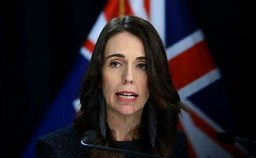
Although the government says the latest outbreak appears to currently be limited to one cluster, it is taking tough actions to prohibit any further spread. The small outbreak has sent a third of the population back into lockdown and the rest of the country into restrictions. Auckland has been placed under level 3 lockdown, with residents asked to stay home unless they have to go into work, buy groceries or exercise. “We can see the seriousness of the situation we are in,” Jacinda Ardern, the country’s prime minister said at a press conference. “It’s being dealt with in an urgent but calm and methodical way.”
New Zealand has been lauded internationally for its handling of the COVID-19 pandemic with some suggesting Ardern is “the most effective leader on the planet.” Intense contact tracing, isolation and testing made New Zealand one of the first COVID-free countries in the world. On June 8, all social distancing measures were lifted after a 51-day lockdown, allowing citizens to return to normal life. Strict border controls remained in place, however, prohibiting entry to non-New Zealanders and requiring all returning citizens quarantine for 14 days. But the latest outbreak in New Zealand—a country held up as an example by the World Health Organization—shows that even in a COVID-free nation that is implementing the toughest border control measures, coronavirus remains a threat. “Once again we are reminded of how tricky this virus is and how easily it can spread,” Ardern said in a televised media conference on Thursday. “Going hard and early is still the best course of action.” New Zealand is not alone in confronting new COVID-19 waves after initial success in curbing the spread of the virus. Vietnam went 99 days without any new cases only to see a surge of new infections in July centered on the port city of Danang. Australia—where officials had talked of eliminating the coronavirus there, as well—recorded its deadliest day of the pandemic on August 10 due to a major outbreak centered on Melbourne. Much of the city, and surrounding state of Victoria, was forced a second lockdown to curtail the spread.
But it’s very rare to get sick from such packages. COVID-19 restrictions have been reintroduced across New Zealand after four new COVID-19 cases were diagnosed in Auckland. Auckland has been placed in Level 3 lockdown for three days from Wednesday 12 August, with all residents to work from home unless they are essential workers and all schools and childcare centres are closed. The rest of New Zealand has returned to Level 2 restrictions. The new cases are all in the same family, with health authorities working to trace back the source of the infection. On Tuesday, four people from the same family tested positive for the virus, becoming the first cases since the country declared itself COVID-free on June 8. None of the patients worked at the country’s borders or had traveled overseas, raising questions about how they became infected in the first place. As of Friday, the cluster of cases has grown to 29 but remain connected to the original cases in Auckland.
Thirty-eight people are in government quarantine. Over 200 people who may have been exposed to the patients have since been tested, the majority of whom are from the same two workplaces as the infected individuals. One unproven theory is that the virus arrived in New Zealand by way of cargo, as one of the original infected individuals worked at Americold, a cold storage facility with imported food. Everyone at the company has been tested, with seven workers testing positive for the virus. Surfaces at the companies’ facilities have also been tested, amid evidence that the virus thrives in cold storage facilities. The company has mandated that all employees and their families self-isolate. Additional testing is also being done at Rotorua, a town 142 miles southeast of Auckland, where the four family members visited prior to testing positive with the virus. Although New Zealand has seen success in curbing the spread of the virus, experts say it is unsurprising the country is experiencing a new surge.
“Even with quite stringent precautions I don’t think we can be too surprised to see clusters arising,” said Angharad Davies, a clinical associate professor in microbiology at Swansea University. “Asymptomatic or near-asymptomatic infection and transmission makes this infection very difficult to track and it can circulate below-the-radar before being picked up, especially in clusters of younger people.” Although all cases have been linked back to one cluster, it is too early to know whether the virus is circulating more widely. The original patient started showing symptoms on July 31, making it possible that the virus has been spreading undetected in New Zealand for several weeks. “As we all learnt from our first experience with [COVID-19], once you identify a cluster, it grows before it slows,” Ardern said at a media briefing in Wellington on Thursday. New Zealand PM Jacinda Ardern s live TV interview interrupted by magnitude-5.8 earthquake
“We should expect that to be the case here.”
New Zealand is bracing for a second wave of coronavirus infections as the country records another 14 new cases. Of the new cases, 13 have been linked to the Auckland cluster which plunged the nation back into lockdown. Just one is a returned traveler in hotel quarantine. There are now 36 active cases in the country – a massive spike for the nation as it had just celebrated 102 days without a single case through community transmission on Sunday. Three of the cases are employees at Americold, a cold storage facility believed to be at the heart of the outbreak. Another seven are family members of these employees.
What new restrictions has the government imposed? On Wednesday, the government implemented a three-day lockdown in Auckland, requiring residents of the city to stay home except for work, necessary shopping and exercise. All schools, childcare facilities and non-essential businesses have been closed. Although restrictions are less strict across the rest of the country, people are required to socially distance by maintaining two metres apart and wearing masks. The government has released 5 million masks from the national stockpile and is circulating them to vulnerable people who may be unable to afford one. All retirement homes have also been shut down and gatherings have been limited to under 100 people. Unlike with the previous lockdown, all patients who test positive for COVID-19 will be required to stay in a government-managed quarantine. The government is also rolling out a COVID-19 tracer app to allow individuals to create digital records of where they have been that will help with contact tracing in the event of an outbreak. All businesses and services are required to display a QR code at the entry of their sites so that people using the app can check themselves in to that establishment. On Tuesday night alone, 100,000 people downloaded the app. “The ability to contact traces is one of the key tools we have to find new cases and get them in isolation to avoid future lockdowns,” Ardern said. “Using the app is a big investment in keeping our businesses and economy open.” Since lockdown measures were announced on Wednesday, the country has seen a mixed response, with many abiding by the new rules and some fighting against them. In the Northland city of Whangarei, a small group of sixty people protested against new lockdown measures on Thursday. The protesters argued that the government’s latest restrictions violated their rights. On Friday, Ardern announced a 12-day extension of the Auckland lockdown. “They have achieved such a good level of control and so few cases that quite drastic short-term local measures are justified, in order to preserve relative normality in the medium to longer term,” said Davies. Source: https://time.com/5879177/new-zealand-coronavirus-cases/
First infections in 100 days throw Kiwis back into lockdown!!! New Zealand Prime Minister Jacinda Ardern has appealed for calm from Aucklanders heading back into lockdown after a clutch of new COVID-19 cases were identified. Four south Auckland family members have tested positive to the deadly virus on Tuesday, prompting the return of emergency measures. As of noon on Wednesday, Aucklanders will be required to stay home unless they are conducting essential work or essential personal movement – such as supermarket shopping, health care or exercise.
“One of the most important lessons we’ve learnt from overseas is the need to go hard and go early and stamp out flare-ups to avoid the risk of wider outbreak,” Ardern said in a late-night press conference on Tuesday. “As disruptive it is, a strong and rapid health response remains the best long term economic response. “In line with our precautionary approach, we will be asking Aucklanders to take swift action with us.” The lockdown has been announced for 60 hours – from noon on Wednesday to midnight on Friday – to allow health officials to contact trace, isolate potential cases and conduct mass testing. However, the short-term lockdown still prompted Kiwis to head out to shops; within the hour Radio NZ reported hundreds of people queuing outside supermarkets.
“There will be ample stock on the shelves, there is no reason to go out and make any purchases this evening,” Ardern said. “I know that this information will be very difficult to receive,” she said. “We had all hoped not to find ourselves in this position again but we had also prepared for it. “As a team we have also been here before. We know if we have a plan and stick to it we can work our way through very difficult and unknown situations.” While Aucklanders will be largely shut off from the rest of New Zealand, where social distancing and gathering caps will be enforced, all New Zealanders would have felt flummoxed by the news. Psychologist Jacqui Maguire said Kiwis would be experiencing a range of emotions, including “anxiety, fear, anger and disappointment”. Jacqui stated, “Turning away from or suppressing your emotional reactions will only intensify them,” “Take that disappointment and use it as motivation to stick to the rules,” “Hold compassion and kindness for yourself and others as you adjust, reach out and offer support to those around you.” “Take one day at a time, practice your wellbeing strategies and hold the hope that we will get through this together.” * Everything that’s happening makes anxiety so much worse too. *
Our Global Nations are hurting. Lord, we need You! Please sweep through the world and heal this land. Restore our strength, renew our minds, and cast out anything that’s not of You. In Your Son, Jesus’ name, WE pray. Amen.
You cannot move on ~ until we accept: • you will not receive closure in every situation • you cannot change people, no matter how much you think they need change. • some people won’t apologize because they can’t • some things cannot be explained • people can only change themselves • So you can’t change everybody!!!
When life doesn’t go as planned, remember that God knows best. Thank you Jesus for putting the best people in my life. A life that feels good on the inside is so much more important than a life that just looks good on the outside, The sooner you realize that some people aren’t meant to be in your life forever the better. Just tell yourself to be thankful for the season you had and let go. No hard feelings. The sooner you realize that some people aren’t meant to be in your life forever the better. Just tell yourself to be thankful for the season you had and let go. No hard feelings.
I’m a firm believer in “be the kind of person who makes everybody feel like somebody.” LOVE YOUR NEIGHBOR!!!
If you’re having one of those days where it feels like you’re completely on your own, please know that God is with you.
My best friend said, “at some point you just have to let go of what you thought should happen and live in what is happening” and that’s good advice for everyone. No matter the truth, people see what they want to see, but God knows everything and that’s all that matters.
Racism is a heart problem. It hurts me that there are people too full of hate and too full prejudice to see that we are all God’s children.
Today I saw something that said, “don’t be afraid to lose people; be afraid of losing yourself trying to please everyone around you” and that’s so important
I saw a quote that said, “Speak to people in a way that if they died the next day you’d be satisfied with the last thing you said to them,” and I can’t emphasize this enough. I don’t know what you’re going through right now, but I want to say this: Don’t hurry through it & don’t hide in pain. Talk to God about your hurt & allow Him be your strength to keep going one day at a time.
My pastor said, “Jesus has so much more for you than what you’re holding onto” and that’s something everyone should hear. “when it feels like your back’s against the wall and you can’t keep going, God is fighting for you” and that’s so important to remember during the hard days. even on the bad days, remember God has a plan for your future.
Jesus replied, “You do not realize now what I am doing, but later you will understand.” – John 13:7
“If you have the chance to make people happy, just do it. Sometimes people are struggling silently. Maybe, your act of kindness can make their day.” Today I heard a pastor say, “God isn’t comparing you like you’re comparing you” and that’s so important to remember. Do you ever think about how your life would be if you would’ve made just one decision differently or is it just me??? . Jesus has my heart. Shining for Him. Always smiling. Stop trying to prove yourself to others when what God knows about you matters most. God made you for a purpose. Don’t doubt it. This year has taught me to appreciate everything and take nothing for granted. When looking back doesn’t interest you anymore, you’re doing something right. Keep moving forward. Friendly reminder that Jesus is greater than whatever you are facing right now. Maybe you’d do parts of your life differently if you could, but don’t discount what you’ve been through and the person you’ve become. everything happens for a reason. Through absolutely everything, I know Jesus is with me. Kindness matters because life is hard and people have feelings. Jesus said to love one another and that includes everyone. Read that again.
“Stop waiting for Friday, for summer, for someone to fall in love with you, for life. Happiness is achieved when you stop waiting for it and make the most of the moment you are in now.” I don’t know who needs to hear this but please remember that no matter how alone you feel… God is always with you. I’m that person who will go shopping with you and tell you to buy everything you like. Sorry, not sorry.
The only way to sleep is with a fan on. sorry, I don’t make the rules. Praying for your friends is so important. you never know what they could be going through that they don’t talk about. Shoutout to the people who haven’t felt okay lately, but get up everyday and refuse to quit. stay strong.
First impressions are important, but so are second chances. read that again. If this year has taught me anything, it’s that you never know what the future holds. I’m such a believer in “it’s so important to love someone a little extra on their bad days.” Whatever you’re worried about, God is taking care of it for you. The pain that you’ve been feeling, can’t compare to the joy that’s coming. Romans 8:18
Friendly reminder that God’s not comparing you to others, so you shouldn’t be comparing yourself to others either. just focus on being who He made you to be. Maybe everything you’re going through is God preparing you for something great. I’m such a believer in “you’re only as pretty as you treat people.” How would I describe 2020?? Well, when Michael Scott said, “I’m going through a little bit of a rough patch, the whole year actually” that pretty much sums it up.
People may let you down, but God never will. He’s always by your side. Just because someone seems okay on the outside doesn’t mean they’re okay on the inside. don’t forget to check on your friends. When everything seems like it’s falling apart, that’s when God is putting things together in just the right way. I think part of trusting God is looking to the future with excitement and not worry or dread. Be the reason someone feels welcomed, loved, heard, seen, and supported today.
Don’t ever let someone make you feel bad for doing what’s best for you. Respect yourself enough to walk away from what you want when you know it’s not what you deserve. Just because some people don’t like you, doesn’t mean you need to change. You should never change to please others. Be who God made you to be and you’ll be okay. Don’t ever assume you know what someone else is going through or what their life is like because you don’t. Everyone is going through something. Be kind.
There is always a purpose for your pain with God. keep going. Nothing is too big for God to handle. Whatever you’re going through, you’re not going through it alone. God’s got you. Even in uncertain times, I’m certain that God still has a plan. you never know whose life may be impacted because of you. be kind. build others up. go out of your way to show love. 0ne of my biggest goals is to make my parents proud. You won’t have to chase what God sent and that’s how you’ll know it’s right. Whatever it is you’ve prayed about today, God is saying, “I got you.”
Do you ever just wish you could go back in time and do a few things differently?? I don’t know who needs to hear this but the world would be so different without you in it. “Don’t be afraid to lose people, be afraid of losing yourself trying to please everyone around you” YES. always keep in mind that God knows what’s best for you. If people don’t respect or appreciate you …you shouldn’t be in their life. Don’t ignore the signs you asked God to show you. Pay attention to the people who make you feel your best when you’re around them.. friendly reminder that nothing good comes from tearing down other people so don’t be that person. be kind. I’m a strong believer that a little bit of kindness goes a long way.
“At some point you just have to let go of what you thought should happen and live in what is happening” and that’s good advice for everyone. Actions speak louder than words. Loving God changes how you love others and how others see you. Today, I’m praying for peace and rest in all the hearts of people who are fighting unseen battles that others know nothing about. If there’s one thing I’m absolutely sure about it’s that God is good. If you wouldn’t like it done to you, don’t do it to others. Read that again.
In the words of Michael Scott, “Fool me once, strike one. Fool me twice, strike three.”
Be the person that will help others find their way back to God. When God closes a door, don’t keep pulling on the handle. Let It Go.
MAY His presence go before you and behind you, and beside you all around you, and within you He is with you, He is with you!
When God tells you no He is simply protecting you from less than His best. It’s such a good feeling just driving around on a sunny day with the windows down & music up. “Sometimes God lets you hit rock bottom so you will discover that He is the rock at the bottom. ”WOW. Whatever you’re holding on to, pray and give it to God. Don’t try and manipulate or force the outcome. Be strong, have faith, and trust Him to open the right door at the right time.
If you have the opportunity to make someone happy, do it. Sometimes people are struggling silently and your kindness could mean everything. Today I read, “God didn’t remove the Red Sea, He opened it. Just because God hasn’t removed your problem, doesn’t mean He won’t provide a way through it” and that’s a good reminder for everyone. Pay close attention to the people you feel your best around and the people you feel your worst around. The Same God that created mountains, oceans and galaxies looked at you and thought the world needed one of you too. Imitation is the highest form of flattery 🙂 ️
For many years I’ve been dealing with an illness that changed my life. By B. Tiffany Markins
Footprints in the Sand!!! In January 1991 I was diagnosed with Lupus. Lupus is a systemic autoimmune disease ~ that occurs when your body’s immune system attacks your own tissues and organs. Inflammation caused by lupus can affect many different body systems – including your joints, skin, kidneys, blood cells, brain, heart and lungs. I was devastated that I cried for many days wondering what is Lupus? Where did it come from? Am I going to die?
I’ve always been healthy up to that year.
It all started when I attended an outdoor “God and Country” event at the Tanglewood Park Golf Course at Clemmons, NC. It was an event held by my Church (First Assembly of God). That day was brutally hot. Without thinking, it never crossed my mind that I needed to wear a hat or bring an umbrella. Few days later a rash appeared on my face (a butterfly shape). The rash also was on my shoulders. And at that time, in order to be diagnosed with Lupus, I had to have three types of symptoms out of seven. I had two. With Lupus it can be difficult to diagnose because its signs and symptoms often mimic those of other ailments. With that being said, the dermatologist questioned the disease, but recommended: I be on prednisone to help control the rash from flaring up more. Being on Prednisone scared me. I had to take 14-15 tablets per day for a week, and that was on top of other medications that I already were taking. I felt like a walking pharmacy. But as the weeks went by, my doctor gradually reduced the dosage. Reason for that is because it is important that I do not stop “cold turkey.” This can cause an acute withdrawal reaction that can lead to a crisis situation.
Prednisone must be slowly tapered under doctor’s supervision.
Within a month, the rash started to ease off. Thank God for that. Having that awful rash on my face looked awful. I didn’t want to go out of the house. It made me feel uneasy and I know people would feel the same. But when I did go out, I was stared and questioned. People looked at me like I was a disease or something. And basically, I did, but I didn’t know what to say. The next day (Monday) I called my friend Veronica (Dr. Romulo C. Jacinto ‘s wife and assistant) to make an appointment for me as she recommended. When the doctor saw me, he had an idea but since he didn’t specialize in that type of disease, he recommended I see a dermatologist. When I did see the dermatologist, he right away put me on Prednisone. When the rash got controlled, he told me that I needed to see a specialist. In the meantime, Dr. Jacinto held his private practice in Winston-Salem, where he practiced in Internal Medicine with a specialization in Pulmonary Disease and Geriatrics. Sadly, on January 2001, Dr. Jacinto passed away. He was 66 years old.
To make a long story short, my friend Veronica asked her husband (Dr. Romulo C. Jacinto, MD, CMD), “where would you send me if I had the lupus?” He said to her – Duke in Raleigh, NC. She asked him why? He tells her, Duke University is one of the top ten clinics/hospitals in the world. Therefore, they have the best doctors. According to the President and CEO (2012 Directory) of Duke, he says to his colleagues, “among the world’s preeminent academic health care and biomedical research institutions, Duke Medicine is dedicated to delivering their very best to every patient they serve. At every level, from primary care to the most sophisticated subspecialty services, their faculty and staff are committed to providing evidence based, multidisciplinary care in a patient-centered environment.”
The doctor that I saw at Duke was Dr. John R. Rice MD. His particular Clinical interest and skills is Rheumatoid and Immunology, specializing in arthritis, systemic lupus erythematosus, giant-cell arteritis, vasculitis, gout, spondyloarthritis, psoriatic arthritis. I remember the first visit at Duke. I spent half the day in his office being questioned and examined by his assistant. I was getting antsy. But I understood a thorough examination was needed to be diagnosed correctly. After the examination, I finally met with Dr. Rice. After talking to him he recommends me to be on Plaquenil (Hydroxychloroquine), twice daily But let me tell you about him a little. I can’t stress enough to say Dr. Rice is the best doctor a patient could ever had. The way he cared for his patient is something I never heard of. He told me that his patients is like his own family.
And hearing those words made me feel special. I love it!
With Plaquenil, he recommends I see an ophthalmologist. Her name was Dr. Laurie K. Pollock MD. Her interest and skill are general ocular problems and eye examinations, medical management of eye disease urgent eye care. Being on Plaquenil means frequent eye examination to see if there were any changes. This medication can cause serious eye and vision problems. The risk for these side effects is increased with long-term use of the medication and with taking this medication in high doses. It can cause blindness and if any changes were seen, I would be off the Plaquenil. Also seen at Duke was a dermatologist. His name is Dr. John C. Murray MD. His interest and skills are Demographic, etiology and treatment of keloids, clinical trials and phototherapy for psoriasis; tele dermatology. Bless his heart the many prescribed creams did some good until the second phase of the Lupus returned. Again, I was faced with the rash on my face.
According to WebMD.Com Plaquenil aka Hydroxychloroquine is used to prevent or treat malaria caused by mosquito bites. Plaquenil is also indicated for the treatment of chronic discoid lupus erythematosus, systemic lupus erythematosus, and the treatment of acute and chronic rheumatoid arthritis in adults. In my case, the use of the drug did not give me serious effects. Although, there are many side effects to the drug, I am doing very well. Thank God I am able to do things for myself without any assistant. Yet, the disease may slow you down and affect you, but, I believe if we change our way of thinking, to think positive, we can live a normal life. Also, common sense plays a big part of my life because your body would tell you what you can and cannot do. I understand everybody’s body is different. And by all means, I’m not trying to tell you what to do.
We have been giving a God-giving choice to make our own decision.
In 2003, the rash returned. I’m not sure what caused it. Dr. John Murray, my dermatologist, tried to treat it with many different creams. After 2 years straight, I started to get frustrated because it seems that the creams didn’t help. I was at a point where I wanted to give up. Don’t get me wrong, Dr. Murray is a great doctor but I lost faith when none of the creams worked. In the meantime, I had to think of something that could help get rid of this ugly rash.
In February of 2005, I was really desperate. I couldn’t stand looking at my face. I felt unwanted, and unsecured. I cried thinking “Why me God?” What have I done wrong to deserve this disease? With that kind of thinking, I just realized why anybody? But that is another story.
Suddenly a thought crossed my mind that changed everything. What do I have to lose? I saw a flyer on a car window at CVS drug store in Wilmington. Nobody was in it but minutes after, she showed up. We talked a little and we exchanged numbers etc. Two weeks later someone else contacted me. I was okay with that because I didn’t care who it was. All I cared about was getting help. And out of desperation, I had to do something that may or may not help me. I was at my last straw. Her name is Lynda. She was one of the directors of a company that could possibly help with my skin problem. I say that because I used to use the products but due to the cost, I stopped. When she finally called me, I shared my problem with her. I told her I had lupus and that I was on many different creams that didn’t help. She told me that she may have something that could help me. Without any hesitation, I invited her to my house.
After two years straight, I didn’t care anymore. I was desperate to try anything.
It may not be the miracle you may have expected but it was my miracle that did wonders on my face. I couldn’t believe what I was seeing. I was excited with joy and I couldn’t wait to tell everybody. In fact, I couldn’t wait to tell my doctors at Duke University Clinic. Dr. John Rice was happy for me. He even mentioned that his wife used the same product. Dr. Murray on the other hand was not enthused. He acted like he didn’t want to hear what I had to say. Instead, he told me that I should continue using the creams. In my mind, I said why would I continue with the cream when for two years it never did a thing.
My Miracle SURPRISE! The miracle I am talking about is the “Timewise Miracle Set” by Mary Kay Cosmetics. Yes, you read it right! I was 21 years old when I first got introduced with Mary Kay Cosmetics. At the age of twenty-one years old, the only product I was interested in was the make-up. Being a young girl, the skin care products never interested me because I felt I didn’t need it. My face was flawless then. Besides, to go through the entire steps would take longer for me to get ready for work. I was not ready for that even though I knew the product would be better for me in the long run. Mary Kay Inc is a dedicated company that advanced the science of beauty, which is why the company’s scientists are passionate about creating products that will surprise and delight you – from the latest skin care innovation to the perfect shade of foundation. According to Dr. Lucy Gildea (MK Chief Scientific Office), “Innovation is in the DNA of our Company. We are dedicated to discovering the trends and technologies that enable us to create products no one else has.” On top of that, we are to protect our skin from pollution. Pollution causes an increase in age-accelerating free radicals, which is why Mary Kay scientists spent years developing a complex of ingredients that would defend skin against environmental damage. By collaborating with Columbia University and Dr. Liang Liu, the Company has been able to show that the patent-pending Age Minimize 3D” Complex reduces the effects of pollution on skin.
Within three days, the rash disappeared. Yes, there were a few scars here and there but with daily use of the Timewise Miracle Set, it cleared it all completely. I was stunned! Within the month, I became a Mary Kay consultant myself. This year (2020), I’ve been with the company for fifteen years. Since the product did wonders on my skin, I decided to sell the product. After all, I am a true testimony of the product and with that, I could do good. Unfortunately, moving back home to Hawaii changed that. I am now using the product for personal use but if anyone is interested in trying the product, please contact a local MK Consultant in your area. Trust me, the product is awesome and it may help you if everything you tried fails.
My Attitude Came From Prayer I like to say it has been at least ten years since my way of thinking changed. I was involved with someone who I thought the world of but only to be disappointed by his action. I won’t go into details because it still hurts a little. But I am doing great thanks to God who directed me to get out of the relationship. No regrets!
Since then I changed my entire perspective on how I live and how I think. All these diseases that came upon me throughout the years, doesn’t matter anymore. Why? Because I have put God first in my life. God is my healer and even though the doctors tell me differently, I know God has healed me. In many ways God has blessed me abundantly, more than I could ever imagine. No diseases can stop God’s plan for me. I know I may sound like I am preaching and I don’t mean to, but I don’t know any other way to tell my story without including Him. God is the reason why my attitude changes. Regardless, the pain I go through at times. I won’t allow crimplenes stop me from doing anything. I just deal with it quietly.
Many years ago, I wrote a blog that I thought could help many. And because it pertains to attitude, I found this blog appropriate to add in this story. The title of the blog was called: “THE BEST TIME TO GET INVOLVED AGAIN IS WHEN YOU FEEL YOU DON’T HAVE TO!”
For the first time in my life, I find that this is true. After my recent break up, I was so sad. But, at that same time, I have already made a decision that I wasn’t going to sit around the house and feel sorry for myself. Instead, I continued to attend my church and made it known that I would be available for any church activities. When that fell in its place, my life had completely changed. My business started to boom and before my eyes I felt that I didn’t need a man in my life, meaning I didn’t need someone to make me whole.
At 51 years old then, now at 64, LIFE IS GREAT! I couldn’t be happier than I am now. If you are a person that can’t pick up the pieces after a break-up, look at yourself in the mirror and tell yourself that you are worthy! Tell yourself that you are beautiful or handsome. Make changes in your life and live your life the fullest! Nothing is worth it if you can’t feel good about yourself. Believe me, YOU CAN DO IT! Also, you must have God in your life. Without Him, things won’t change. You will face the same-o, same-o headaches. But when you are healed and ready, God will bring that special person in your life. With God, nothing is impossible (Luke 1:37).
If there was one thing you want to know about me is my attitude. For many years, I have faced many trials and tribulations that it’s not funny. I had often wrestled and struggled with Him, trying to do things my way. It just doesn’t work. And when you realize your way does not work, you might as well get over it and allow God to come into your life. Thank you Jesus for all you have done in my life.
The Orlando Magic beat the Brooklyn Nets in their first game of the restart and Jonathan Isaac sparked controversy when he stood for the national anthem.
Let’s hear it for all of those Orlando Magic players on Friday and every other player from every other NBA team for choosing to exercise their constitutional right to take a knee during the national anthem.
And let’s hear it, too, for Jonathan Isaac for exercising his constitutional right to NOT take a knee during the national anthem.
God bless you all.
Each and every one of you deserves our respect and understanding for choosing to peacefully protest during the national anthem or, in Isaac’s case, for choosing to peacefully not protest during the national anthem.
We all have a right to choose.
It’s the American way.
Isaac, the former Florida State star who is arguably the Magic’s most likable, spiritual and charitable player, shocked the league Friday when he not only became the first and only player in the NBA bubble to stand for the national anthem, he also became the first and only player to not wear a “Black Lives Matter” T-shirt during the playing of the anthem.
Isaac, playing his first game since a left knee injury on Jan. 1, stood with his arms behind his back while wearing his Magic jersey.
After the Magic’s resounding 128-118 victory over the Brooklyn Nets in their first game in nearly 5 months, Isaac was asked repeatedly by the local and national media why he made the decision. He stressed it had nothing to do with the flag or patriotism or the military or any of the other hot-button reasons the anti-Colin Kaepernick crowd always recites.
Isaac, a recently ordained Christian minister, said it all came down to his faith. He simply doesn’t believe that taking a knee and wearing a T-shirt go “hand in hand with supporting Black lives.” He believes that “the true support of all lives is the repenting of the sins we all commit and trusting in God’s grace and love shown in the death of Jesus for each and every person.”
“Absolutely, I believe Black lives matter,” Isaac said. “I don’t think kneeling and putting on a T-Shirt for me, personally, is the answer. … I feel the answer to all of the problems and all the things that go on in our lives is Jesus. … Black lives are supported in the Gospel and all lives are supported in the Gospel.”
Isaac’s Christian version of the taboo phrase “all lives matter” is obviously going to receive a ton of social-media backlash in today’s cancel-culture climate. Personally, I admire Isaac’s conviction and his courage for making a decision that he knew would be unpopular.
He talked with his Magic teammates and coaches before he made the decision and he said they all supported him. Said Magic coach Steve Clifford, who knelt with the team on Friday: “That was Jonathan’s personal decision. If guys are not comfortable kneeling and they want to stand, nobody has a problem with that. That’s part of living in our country.” Amen, Coach.
Said Isaac: “My teammates know who I am and what I believe as a person and they respected me for the decision. For me, personally it’s not coming from a position of wanting to be popular or wanting to be seen; it all came down to what’s in my heart.
I stake my flag with Jesus.”
The controversy over Isaac’s decision just goes to show how the world has been turned upside down in the past few weeks. It wasn’t so long ago that Kaepernick became an outcast for kneeling during the national anthem and now Jonathan Isaac actually has to explain himself because he is standing for the national anthem.
Isaac shouldn’t have to apologize just as Kaepernick and his fellow kneelers should not have to apologize. Not everybody believes in the same thing, and that’s OK. But, of course, in today’s polarized environment where the politicians, the president and the clanging cymbals on the cable news networks have somehow managed to even politicize a pandemic, we simply can’t respectfully agree to disagree anymore.
I wrote a column after the first game of the NBA’s restart on Thursday praising the NBA and commissioner Adam Silver for waiving the long-standing rule requiring players to stand for the national anthem. I thought it was a powerful moment of solidarity on Thursday night when players and coaches from both teams and even the referees took a knee in the tumultuous aftermath of the killing of George Floyd.
It’s baffling to me why some people insist that those who kneel for the national anthem are somehow un-American and are disrespecting the flag or degrading the military. It’s not like the protesters are burning or stomping on Old Glory. It’s not like they are criticizing those who fight for our country. They are simply peacefully protesting and sending the message,
“We love our country, but our country needs to be better at eradicating racial injustice.” I happen to agree with former Magic and current Lakers head coach Frank Vogel, who knelt in unison with his players Thursday night.
“Peaceful protest is patriotic,” Vogel said.
Let us not forget, this country was founded by not-so-peaceful protesters. Our forefathers were considered traitorous because they had the audacity to protest the way England treated the American colonists. If there had been sporting events back in 1774, you better believe George Washington and Thomas Jefferson would have been kneeling during the playing of “God Save The Queen.”
Likewise, I also admire Isaac for the stance he is taking. As Charles Barkley so eloquently said on Thursday night, it’s important to give players freedom to react however they preferred to the anthem. “The national anthem means different things to different people,” Barkley said during the TNT broadcast.
“I’m glad these guys are unified. If people don’t kneel, they’re not a bad person. I want to make that perfectly clear. I’m glad they had unity, but if we have a guy who doesn’t want to kneel because the anthem means something to him, he should not be vilified.”
Jonathan Isaac certainly shouldn’t be vilified. He has nothing to apologize for, and doesn’t have to kneel to show he cares about human kind. This guy is the real deal. He won the Magic’s community service award last year and is renowned around town for accommodating most every charitable cause that seeks him out. He and his local church, J.U.M.P Ministries, have been active in feeding underprivileged children weekly during the coronavirus pandemic.
He helps raise money and awareness to fight for literacy in Central Florida. He spearheaded a relief effort when Hurricane Dorian ravaged the Bahamas. He took kids from the Valencia Horizon Scholars program on a tour of the Bronze Kingdom African Art Gallery, where they learned about African American history.
Some players prefer taking a knee. Jonathan Isaac prefers lending a hand. “We all sin and the answers to all of the world’s problems, not just racism, is the true Gospel of Jesus Christ,” he said.
More power to Jonathan Isaac for his decision not to protest. More power to all of the other players for their decision to take a knee. Whether you’re kneeling down for what you believe or standing up for what you believe, we all have the unalienable right to choose.
PLEASE NOTE: I personally believe there are better ways to show your displeasure than kneeling for our National Anthem, protesting and looting the streets. A few years ago I sat on a bench outside The Lincoln Presidential Library in Springfield Illinois talking to a black guy who was wearing a suit and tie. As he told me he personally didn’t believe racism exists in our country. If you welcome yourself into someone’s world with a smile ~ act with respect toward others, Your life works upon how another person preceived you to be.
How New Zealand got rid of a virus that keeps spreading across the world!!! By: Michael Baker, Amanda Kvalsvig, Nick Wilson
“Achieving 100 days without community transmission is a significant milestone,” Director-General of Health Ashley Bloomfield said in a statement on Sunday. “However, as we all know, we can’t afford to be complacent.” New Zealand just marked 100 days with no new domestic COVID-19 cases. The country of 5 million people implemented strict lockdown measures in April. All restrictions on New Zealand businesses were lifted by June, but its borders remain closed to outside visitors. Now, bars, restaurants, and sporting events are open for business across New Zealand — but health officials say they’re staying vigilant for another possible outbreak. Visit Business Insider’s homepage for more stories. New Zealand has made it 100 days without a single new local case of COVID-19, the country’s Ministry of Health announced Sunday.
The public health milestone comes as coronavirus cases are spiking in other countries, including nearby Australia. The total number of cases in the US surpassed 5 million Sunday — by contrast, New Zealand has only reported 1,219 cases of the virus, most in April and May, and 23 of those cases remain active. “It has been 100 days since the last case of Covid-19 was acquired locally from an unknown source,” the health ministry said in a statement Sunday. “No additional cases are reported as having recovered, so there are still 23 active cases of Covid-19 in managed isolation facilities.” New Zealand took an early, aggressive approach to stop the spread of the virus. The country of 5 million people entered a hard lockdown in April that closed schools and nearly all businesses, including food delivery. By June, most restrictions were lifted in the country, but New Zealand’s borders remain closed to foreigners and incoming New Zealanders are required to self-quarantine for two weeks after arriving. Now, life has returned to normal for most New Zealanders, with bars, restaurants, and sporting events open for business — but public health officials said they’re staying vigilant for the possibility of another outbreak. Households should add masks to their emergency supply kits in the case of further Covid-19 outbreak, Health Minister Chris Hipkins says.
From the first known case imported into New Zealand on February 26 to the last case of community transmission detected on May 1, elimination took 65 days.
New Zealand relied on three types of measures to get rid of the virus: 1. Ongoing border controls to stop Covid-19 from entering the country 2. A lockdown and physical distancing to stop community transmission 3. Case-based controls using testing, contact tracing and quarantine. Collectively, these measures have achieved low case numbers and deaths compared with high-income countries in Europe and North America that pursued a suppression strategy. New Zealand is one of a small number of jurisdictions – including mainland China, Hong Kong, Taiwan, South Korea, Vietnam, Mongolia, Australia and Fiji – pursuing Covid-19 containment or elimination. Most have had new outbreaks.
The exceptions are that of Taiwan, Fiji and New Zealand. Australia adopted very similar responses to the pandemic and it is important to note that most states and territories are in the same position as New Zealand. But Victoria and, to a lesser extent, New South Wales are seeing a significant resurgence. The key difference is that New Zealand committed relatively early to a clearly articulated elimination strategy and pursued it aggressively. An intense lockdown proved highly effective at rapidly extinguishing the virus. This difference can be seen graphically in this stringency index published by Oxford University’s Our World in Data. There are key lessons from New Zealand’s Covid-19 experience. A vigorous, decisive response to the pandemic was highly effective at minimising cases and deaths. New Zealand has the lowest Covid-19 death rate in the OECD. Total all-cause deaths also dropped during the lockdown. This observation suggests it did not have severe negative effects on health, although it will almost certainly have some negative long-term effects. Elimination of the virus appears to have allowed New Zealand to return to near-normal operation fairly rapidly, minimised economic damage compared with Australia. But the economic impact is likely to keep playing out over the coming months.
Getting through the pandemic — We have gained a much better understanding of Covid-19 over the past eight months. Without effective control measures, it is likely to continue to spread globally for many months to years, ultimately infecting billions and killing millions. The proportion of infected people who die appears to be slightly below 1%. The infection can cause serious long-term consequences for some people. The largest uncertainties involve immunity to this virus, whether it can develop from exposure to infection or vaccines, and if it is long-lasting. The potential for treatment with antivirals and other therapeutics is also still uncertain. This knowledge reinforces the huge benefits of sustaining elimination. We know that if New Zealand were to experience widespread Covid-19 transmission, the impact on Māori and Pasifika populations could be catastrophic. We have previously described critical measures to get us through this period, including the use of fabric face masks, improving contact tracing with suitable digital tools, applying a science-based approach to border management, and the need for a dedicated national public health agency. Maintaining elimination depends on adopting a highly strategic approach to risk management. This approach involves choosing an optimal mix of interventions and using resources in the most efficient way to keep the risk of Covid-19 outbreaks at a consistently low level. Several measures can contribute to this goal over the next few months, while also allowing incremental increases in international travel:
• Resurgence planning for a border-control failure and outbreaks of various sizes, with state-of-the-art contact tracing and an upgraded alert level system • Ensuring all New Zealanders own a reusable fabric face mask with their use built into the alert level system • Conducting exercises and simulations to test outbreak management procedures, possibly including “mass masking days” to engage the public in the response • Carefully exploring processes to allow quarantine-free travel between jurisdictions free of Covid-19, notably various Pacific Islands, Tasmania and Taiwan (which may require digital tracking of arriving travelers for the first few weeks.) • Planning for carefully managed inbound travel by key long-term visitor groups such as tertiary students who would generally still need managed quarantine.
Building back better…. New Zealand cannot change the reality of the global Covid-19 pandemic. But it can leverage possible benefits.
We should conduct an official inquiry into the Covid-19 response so we learn everything we possibly can to improve our response capacity for future events. We also need to establish a specialised national public health agency to manage serious threats to public health and provide critical mass to advance public health generally. Such an agency appears to have been a key factor in the success of Taiwan, which avoided a costly lockdown entirely. Business as usual should not be an option for the recovery phase. A recent Massey University survey suggests seven out of ten New Zealanders support a green recovery approach.
New Zealand’s elimination of Covid-19 has drawn attention worldwide. We’re about to publish an overview of the approach in the New England Journal of Medicine. We support a rejuvenated World Health Organization that could roll out an elimination model in other countries where there is public support for this approach.
HAVE FAITH ~ “WHAT IS THE WILL OF GOD?” You formed my inward parts; You wove me in my mother’s womb. I will give thanks to You, for I am fearfully and wonderfully made. —Psalm 139:13–14 In today’s world ~ with Arrogance & Corruption ruining the very fabric of our society and Greed being the root of all evil. It’s getting harder and harder to earn a living and support ourselves with fewer good paying jobs and corporations not caring — if we live or die or can put food on the table for our families. Many are questioning ~ GOD’s whereabouts ~ with my feeling being why do people treat other people the way they do. And why don’t we solve the basic root cause of our Health Care Whoa which is the escalating cost of doing business and causing economic strife.
All the while damaging our future outlook on life in The United States … My father was WWII and when he got home drove a truck down the back roads (prior to interstates) of our fine country (without power steering) witnessing true hard times of the late 40’s early to mid 50s in this country. As he once told me, when this country came out of those harsh times …. was when people stopped blaming the higher being or government and started taking personal responsibility for their actions and started seeing the Relevance of the Golden Rule. Which is the principle of treating others as though you want to be treated. It’s the deeply held belief and maxim that is found in many religions and cultures. As it can be considered an ethic of reciprocity in some religions, although different religions treat it differently.
Why Take This Inner Journey? We all feel stress from a fast-paced, over-stimulated world. We all spend a lot of time thinking about where we are going and what to do next—so much that we are rarely present to ourselves. This can make us feel disconnected, unsure, and imbalanced.
Balance: the body in perfect harmony... Your mind, body, and spirit are in perfect harmony Your mind, body, and spirit have achieved perfect balance! This is one of the most rare outcomes from our studies, but it indicates that you have the perfect combination of rational thinking, good instincts, and sound morals.
How does God speak to Christians today? Before I answer that question, we need to define what we mean by the will of God. Throughout the Old and the New Testaments, the phrase the Will of God is used in three distinct ways. Sometimes the will of God refers to God’s providential will. God’s providential will is that secret plan by which He governs everything that happens in the universe. Ephesians 1:9–10 says, “He made known to us the mystery of His will, according to His kind intention which He purposed in Him with a view to an administration suitable to the fullness of the times.” Before the foundation of the world God’s plan was to send Christ to die for us, but in later times He revealed to us this mystery. And notice that there’s only one will. God doesn’t have multiple wills. Contrary to what you may have heard, God doesn’t have a perfect will and also a permissive will. Some people say God’s perfect will is what He wishes would happen, however, God’s permissive will is what actually happens. Do you believe in a God who is so impotent He can’t achieve His own purposes? The fact is, God has only one plan that He formulated before the foundation of the world. And God’s plan was big enough that it encompassed the sin of Satan, the fall of Adam and Eve, Israel’s disobedience, and even the crucifixion of His own Son. God has a plan by which He governs everything that happens in the universe.
The Will of God also refers to God’s “preceptive” plan. This is the part of God’s will that can be understood from the precepts, or teachings, in Scripture. Most of what we need to know about God’s will has already been revealed in Scripture. For example, in 1 Thessalonians 4:3, Paul says, “For this is the will of God, your sanctification; that is, that you abstain from sexual immorality.” It’s very clear. God wants you to abstain from premarital sex, extramarital sex, homosexual sex, pornography. Or maybe somebody comes to you and says, “I’m trying to get on my feet financially, but I need some help. The bank says they won’t loan me any money unless you cosign this loan for me.” Do you need to pray about that? No. God already has said what His will is about co signing a note. Proverbs 17:18 says, “A man lacking in sense pledges and becomes guarantor in the presence of his neighbor.” Don’t cosign a loan. If you want to give someone money, fine. But don’t cosign a note. God’s “preceptive” will is that part of God’s will that is clearly defined in Scripture.
The third use of the will of God refers to God’s personal plan for our lives. Does God have a blueprint that governs every part of your life? Of course He does. How do I know that? Psalm 139:13–14 says, “You formed my inward parts; You wove me in my mother’s womb. I will give thanks to You, for I am fearfully and wonderfully made.” The psalmist said, when you were in your mother’s womb, God wove every detail of your life. The color of your hair and eyes. Your personality. Your DNA. Everything about you is according to God’s plan. Think about all the details God had to orchestrate to get your father and mother together at just the right time. He had to make sure they were born in the right generation. He had to make sure they came into contact with one another. He had to preside over thousands of details to bring your father and mother together at just the right time to produce you. Yes, God has an expiration date stamped in our DNA blueprint, a plan, for your life and that ought to give you great assurance. What puzzles me is why are people so resistant to good news? The type of news you would think would be accepted gladly but Nope, the info is censored with only a few wanting to hear it all the while the silent majority just sticking their heads into sand. Indeed, this is a magical alignment.
Wellness of The Mind…
The Healing Power of the Mind and Visualization. A picture is worth a thousand words. Our belief system is based upon the accumulation of verbal and non verbal suggestions that have been gathered throughout our life experience. Through patterns of repetition and its associated rewards and punishment we learn to create our own perception of reality. In essence, we therefore become what we think. In healing, repetitive use of positive visualization allows access to the mind and body connection. This lets the mind and body work together which allows the healing process of the body on a physical level.
What is the mind & body connection? And how does it work? When we have an emotion, it generates a feeling that turns into a physical sensation. For example; You are watching a horror movie, you feel frightened and then get a chill up your spine. In this case you were getting a negative suggestion through your sensory perception (sight & sound) that produced an emotion of fear which turned into the physical sensation of chills up your spine. Visualization uses positive images to produce positive emotions that manifest into positive physical sensations in the body.
Simple, but how does it work? Can what we think actually have an effect on healing? Bodies do react to the thoughts you make. Our psychological emotional state affects the endocrine system. For example, the emotion of fear is related-to-adrenaline. If no feeling or fear exists there is no adrenaline and the same applies in reverse – no adrenaline nor fear. They work in relationship to each other. Wherever a thought goes there is a body chemical reaction. The hypothalamus, the emotional center of the brain, transforms emotions into physical response. The receptor of neuropeptides, the hypothalamus also controls the body’s appetite, blood sugar levels, body temperature, adrenal and pituitary glands, heart, lungs, digestive and circulatory systems. Neuropeptides, the chemicals messenger hormones, carry emotions back and forth between the mind and the body. They link perception in the brain to the body via organs, hormones and cellular activity. Neuropeptides influences every major section of the immune system, so the body and mind do work together as one unit. The brain is divided into two sides: Left side is the logical side (words, logic, rational thought) Right side is the creative side (imagination and intuition). Day – to – Day circumstances usually are met in a logical left brain mode, however by yielding to the right, creative side of the brain we actually restore balance in the brain. This allows access to the mind body connection to achieve what you want. The right side of the brain automatically steers you to your goal. It totally accepts what you want to accomplish without giving an opinion and acts upon it without judgement. That is why visualization targets the right, creative side of the brain and not the left logical side.
Positive thought is essential to producing positive results. Negative thought and emotions lower the immune system, while positive thoughts and emotions actually boost the immune system. To maximize success of visualization, as a support to the healing process, with the following suggestion being offered:
1. Defining your Specific Intentions: Visualization puts your intention of what you want to work. The more specific the intention, the more specific the results. Remember whatever you believe is what your body will do. So when you are thinking of your intention make sure it is: . Clear . Specific . Achievable . You feel, know and trust it is being accomplished.
2. Take Responsibility Trying to do visualization without taking responsibility, will prove to be futile experience. To accomplish what you want you must take action. Visualization usually takes about six weeks to work. It is done once in the morning and before bedtime. Some people do see or feel results the very first time, but remember everyone’s body and mind is different and so is the way they process information, so have patience with yourself. To take responsibility is to: . Be accountable to and for yourself. . Make a commitment . Do Visualization regularly. . Be persistent and Patient. . Keep positive.
3. Get Mentally Relaxed: A relaxed state allows you direct access to your subconscious mind. Here are some tips to help you relax. . Find a quiet place. Relax in a favorite chair or lie down. . Get comfortable and lose clothing. . Uncross your arms and legs . Get centered by focusing on the breath and breathing. This activates the vagus nerve which is the major quieting nerve in the body.
4. Visualize: . Think of or speak your intention out loud. . Close your eyes and imagine yourself in the healing process or as you want to be. . Watch as your body heals you. . Feel the healing taking place. . Know the healing is being accomplished. If you have difficulty you may want to try one or more of these methods. . Use creative imagery like seeing the cells in your body healing you. Your immune system fighting off invaders, your pain being taken away by healing mud . Imagine yourself in a very beautiful place, whole, healthy, and happy. . Try reading scripts from a visualization or self hypnosis book.
Heart and Soul: Wellness for the Mind and Body Do you want to maintain wellness to the best of your ability over your lifetime? Then you must consider every aspect of your health—body, mind and spirit—and make choices that increase your chances of wellness. The total package Try to see yourself as a complex being where your thoughts, emotions and body, down to your very cells, which work together to form your unique picture of wellness. You’re bound to know firsthand how a disturbing thought can make your heart race or how lack of sleep can make you feel blue. Attending to the health of all systems is necessary for optimum wellness. No one gets a guarantee against cancer, heart disease and other illnesses. But by taking the best possible care of your body, you can reduce the risk of some diseases and strengthen it to fight against others. Establish a regular relationship with your doctor. He can assess your medical history, tell you what preventive screenings you need and when and suggest ways to manage any chronic conditions you might have.
You should also tell your doctor all of your health concerns. Also be sure to: • Eat right—Follow the USDA Food Guide Pyramid or the Mediterranean Pyramid. • Drink plenty of water. • Maintain a healthy weight—Consult your doctor for your recommended weight. • Exercise regularly—with aerobic activity, strength training and stretching. Research shows 150 hours of exercise a week promotes longevity. • Get sufficient sleep—Most people need six to eight hours each day. • Relax—Teach your body to breathe deeply and loosen your muscles daily. Those are the basics, but you might also need to make some important changes such as these: • Limit your alcohol use. • Use caffeine products moderately. • Quit smoking. • Give up recreational drug use.
It’s possible to get perfect scores at the doctor’s office and strive to take good care of your body, only to feel less than well. Why is this? Perhaps you are neglecting the needs of another important health component—your mind. Is it running faster than you are or bogged down with negative attitudes? Maybe it’s overwhelmed by the amount of “no-fun” tasks you pile onto it daily, with no breaks for playing, leisure, hobbies, etc. Notice your thoughts: What is the overall tone of your thinking — is it negative or positive?
Looking on the bright side improves your total health. You can also nurture your mind with • Stress management — Learn how to let go of worry and literally let go of excess work. • Continual learning—Exercise your brain by taking a new class or learning new skills or hobbies. • Play—Feed your mind daily doses of humor, recreation and special interests. • Social support—Regular time with friends is vital to your health. If your thoughts remain negative no matter what you do or if you notice confusion, persistent memory problems or anything else that seems out of the ordinary, consult your doctor. You might need his intervention to help restore your mind’s health.
The spirit Dr. Edmund Bourne, author of The Anxiety and Phobia Workbook, asserts that everyone needs to develop “meaning, purpose and spirituality” for complete wellness. You can set realistic goals for yourself to foster your need for purpose. The question of “meaning” might involve taking an honest look at what you are doing in your life to find satisfaction.
You could: • Write a personal mission statement. • Keep a journal and record your values, goals and dreams of the future. • Brainstorm ways you can help others or make a difference in your community. What does it mean to have spiritual needs? You surely recognize your desire to love and be loved. That’s the foundation of your greatest spiritual need. You also need to feel secure, protected, hopeful and trusting— needs that inspire many to seek out a “higher being.” Whether or not you believe in such a power, you might try some of these suggestions to nurture your spirit: • Build a time of “stillness” into each day, free from distractions, interruptions, etc. • Forgive—Bitterness and resentment destroy your health. • Nurture your self-esteem. • Accept change and your inability to control all things. • Explore local places of worship. • Pray. • Read: Aging Well: The Complete Guide to Physical and Emotional Health by Jeanne Y. Wei. John Wiley and Sons Inc., 2000. Healthfinder www.healthfinder.gov
Gates: We will have a coronavirus vaccine, but the disease will keep coming back!!! By Hillary Brueck Jul 30, 2020, 10:07 A.M.
https://www.businessinsider.com/author/hilary-brueck Billionaire philanthropist Bill Gates has been warning about the threat of a pandemic for years. Gates told Insider US coronavirus testing is “worthless,” and the US response could have been much better with a “modest amount of money.” But he’s confident that scientists will eventually develop a vaccine that’s “very effective, and very safe.” He worries that if the vaccine is not shared equitably, the virus will “just keep coming back.” “The ‘go it alone thing,’ whether it’s as an individual or as a country, I do worry about that,” he said. When you hear Bill Gates talk about the US coronavirus response, his words don’t carry the billionaire philanthropist’s erstwhile optimistic tone. “This pandemic is a huge setback,” he told Insider. This is precisely the kind of setback he’s been warning of for years, saying we need to prepare for pandemics in the same serious way we prepare for wars. “It could have been not nearly as bad, with a very modest amount of money,” he said. Still, he suggests there is room for hope. The Gates Foundation co-founder said he’s confident the United States could put an end to the pandemic by mustering the country’s wartime fighting strength (and money) to lead a global coronavirus vaccine drive. Insider spoke with Gates in a wide-ranging interview, where he laid out his thoughts on the coronavirus vaccine race, what he’d fix first about the US pandemic response, how to get your neighbors and friends to wear their masks, and what he thinks Joe Biden might do on day one if he becomes the next president. The United States testing system is ‘absolutely useless’ Gates grew frustrated in the early days of this year, watching countries like Australia and South Korea pump out coronavirus tests as the US fumbled. One of his own research projects, the Seattle Flu Study, later discovered the first homegrown US coronavirus cases had emerged in January and February, weeks before federal authorities acknowledged community spread. Gates saw one common denominator among other countries with the best coronavirus responses: they “had been forced to think through the procedures, because they had exposure to the SARS or MERS viruses.” “There are countries that responded very quickly,” Gates said. “Number one on the checklist is you call up the commercial PCR [testing] companies and you get them going.” Even now, coronavirus test results in the US take days or weeks, not hours, to get back, which means patients may unwittingly infect others and grow the number of cases in their communities exponentially during that time. Gates says this is a “worthless” testing system — and it’s the first thing he’d fix if he were in charge. “The saddest thing today is that the majority of the testing is absolutely useless, because the results don’t come back in 24 hours,” he said. Mask compliance in the US is also abysmally low. Gates says this is the second thing, after testing, that he’d fix about America’s coronavirus response. “We need more masks,” he said. “The US is the worst of the rich countries in terms of mask usage, which is unfortunate.” But Gates doesn’t think forcing people to put on face coverings is the best idea. Instead, he suggests peer pressure as a tactic. “What you need is that if you’re walking around without a mask, people go, ‘Hey, buddy, that’s inappropriate,'” he said. “Most good social behaviors, like not littering, it’s not because the federal government increased the littering penalties. It’s because you get this sense of we’re in it together … You really need everyone that you respect, who you listen to, to be setting out that message, and the US just isn’t there.” At the beginning of the pandemic, “we didn’t understand the role of masks,” Gates said. “This respiratory disease actually doesn’t involve coughing the same way that almost every other respiratory disease does.” Public health experts, he said, need to “apologize” for not explaining very well how the thinking shifted, as they learned more about asymptomatic and pre-symptomatic spread. “Even the idea that, ‘Oh, masks need to be saved for the health workers.’ Yeah, we confused people. So our communication skills starting a few months ago needed to be better at saying why we’d had a counter-revelation,” he said. Despite all this, he finds it baffling that people still grumble about putting masks on. ” The sacrifice of wearing a mask is almost so trivial that you almost hate to use the word ‘sacrifice,’ but since it’s not working without that, you know — wow. I guess we have to push it in some stronger way,” he said. The virus may not be seasonal, but Gates says things could still get much worse this fall Masks or no masks, as more Americans return to work and school in the months to come, the coronavirus outbreak could get much worse. The fall could be tough, we’ll be indoors more, it will be colder — we know those are things that push the disease up,” Gates said. The World Health Organization voiced a similar concern recently, saying that even though the coronavirus does not yet appear to be seasonal like the flu, there are a “mélange” of factors that can drive disease rates up. In the fall and winter, there’s the additional burden of more seasonal flu cases that will tax the healthcare system. People may also come together more indoors for work, school, and socializing — increasing the odds that infections may spread. Gates still holds out hope the US could lead the world’s vaccine response.
The Land with no face masks: Holland’s top scientists say there’s no solid evidence coverings work
Warn they could even damage the fight against Covid-19.
Gates said the US drive for vaccine funding and research is the one big thing the country has gotten right in its coronavirus response. More than 160 different coronavirus vaccine candidates are being developed around the world. But two of the four speediest trials that are testing vaccines in humans right now are US-based: Moderna and Pfizer/BioNTech. Gates sees this aggressive spirit of competitive research as a win, one he’s “confident” will, at some point, produce a successful shot. “Thank goodness we have many vaccines. If we only had the one, the Moderna vaccine, I’d have to say to you, ‘Boy, the likelihood of that really driving things back to normal is not super high,'” he said. “Even if the first vaccine to get approved is only modestly effective, somewhere in this set of vaccines is going to be something that’s very effective, and very safe.” Still, Gates says vaccines will never put an end to the pandemic if they aren’t shared with the world. “The disease will just keep coming back,” he said. The US has, until recently, shared his passion for this kind of globally-minded public health, playing a key role in eradicating smallpox and funding billions of dollars in HIV treatments globally every year. But Gates says things are different now, with the US buying up tens of millions of vaccine doses from around the world for itself before they’re even approved for use.” The world has been looking to the US to say, OK, as you’re funding all this [research and development] and factories for your own use, do you care about anybody else, or are you creating a leadership vacuum here?” Gates said. “Without the US, the coalition to stop the disease globally just doesn’t come together.” He is pressing US lawmakers to spend more on coronavirus response worldwide. Gates is pressing for Congress to allocate more money in its coronavirus spending bill this week to fund the global vaccine drive, and invest in research and development for coronavirus treatments globally. The current Republican relief plan being circulated offers $3 billion for global vaccines. Gates says the figure should be more than double that: $8 billion all in for global health, with half the money going towards vaccines and half for treatments. “That would be less than 1% of the bill,” Gates said. “But it would, from a humanitarian point of view, and strategic point of view, and getting the epidemic not to come back, it would send a clear message that the US is not being self-centered on this.” Those extra billions could be critical to building vaccine factories for other areas of the world in the months to come, before a shot is ready. That’s why Gates says it’s critical for the money to be allocated before congressional recess, and the fall election season. “If it doesn’t get into the bill, then you’re probably six months before you could get anything,” he said. “And that means the factories aren’t being built.” If Joe Biden wins the presidential election, Gates has an idea for what he should do first upon entering office: listen to the pros. “Hopefully, there’s some vaccine progress,” Gates said.
“Certainly, he may want more expert advice.” Gates said Biden would “probably choose not to leave the WHO” but more than that, he hopes that he would be a leader who appoints “strong people” to help him out. “There are lots of people who are involved in the global response to Ebola, and smallpox, and polio, who would love to help out the US bring this thing to a close,” he said. “You really have to view the pandemic as a problem that you’re willing to talk about, and willing to admit we’ve made some mistakes and that we’re going to keep learning, and let the voice of the CDC and experts like Dr. Fauci not be restricted, in terms of allowing them to speak to the public — and not be drowned out by whatever treatments you have a personal thought about.” Gates sees the coronavirus like a World War that may be won with strong US leadership. President Trump has referred to himself as a wartime president during the coronavirus pandemic, but Gates doesn’t think this is a war the US is winning. There’s not enough national unity or willingness for individual sacrifice. “The ‘go it alone thing,’ whether it’s as an individual or as a country, I do worry about that,” he said.
“This is a collective thing.” Despite this, Gates said he’s optimistic that we can “avoid the next pandemic being like this.” He imagines that diagnostic tools built for the coronavirus could one day help diagnose other diseases, like HIV, malaria, or the seasonal flu. Remote work is also changing the calculus for “how we use telemedicine” and “how many business trips we need to make,” he said. “The world keeps getting smarter,” he tells me. “Innovation and generosity in combination will get us out of this thing.” FILE – In this June 30, 2020, file photo Senate Majority Leader Mitch McConnell, R-Ky., listens to questions during a news conference following a GOP policy meeting on Capitol Hill in Washington. McConnell is emerging as the GOP’s mask spokesman, the highest ranking Republican in Congress proselytizing about the importance of wearing a face covering during the pandemic.
Dr. David Samadi is a world renowned urologist and front runner in prostate cancer treatment and Robotic Assisted Laparoscopic Prostatectomy or RALP, a type of surgery commonly used to treat men with prostate cancer. He specializes in the diagnosis and treatment of prostate cancer, bladder cancer, kidney cancer and other urologic diseases. Dr. David Samadi‘s blog, https://samadimd.com/ which explores, everyday health tips, latest global health news, healthy food and living was created as an online destination to make people healthier.
I’ll stick to taking medical advice from people with medical degrees, Mr. Gates. There has been no void of US leadership states, Dr. David Samadi The Chinese Virus was our final wake-up call! We cannot let China infiltrate our country – medically or through technology. We need absolute independence from the CCP. Mandates do not work well in America. “Medicare For All” Mandatory Masks” “Mandatory Lockdowns” People come to this country for freedom. The more that the media & local government push mandates on the population, it seems that they have an adverse effect. These mandates may work in socialist countries, but not here. If people wanted to live under an iron fist, they would’ve stayed home. They have better quality fruits & vegetables. And nicer beaches. They’re here for the freedoms! Current status of coronavirus: 90% politics + 10% Medicine