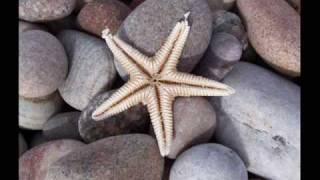
A man saw an old woman stooped over on a beach covered with starfish. He asked her what she was doing, to which she replied, “I am throwing the starfish back into the sea – if I don’t, they will dry up and die.”
Laughing, the man said, “But Old Woman, there are so many starfish on the beach, you can’t possibly make a difference.”
She picked up a starfish and threw it back into the sea. Then looking at the man, she said, “I just did to that one.”
The next day, the old woman visited the beach to check on the starfish. She saw the same man and his children throwing the starfish back into the sea. “Hello, Old Woman,” he said with a twinkle in his eyes. “We are here to make a difference to a few more starfish.” Adapted from The Star Thrower by Loren Eiseley 1907 – 1977
There are hundreds of variations of this lovely little starfish story on the web.
Making a difference can seem overwhelming, especially if you view your actions to be inconsequential. But if enough individuals impact just one other person, then collectively we can impact the world.
On a much smaller scale, in the Knowledge Management sphere, start sharing knowledge yourself – don’t wait for everyone else – you may wait for ever!
The moral of the story sums up my point about wanting to make a difference. We can make a difference to individuals, even to groups of people. A rare few of us may even influence whole communities and societies. But to change the world outright? To throw thousands of starfishes into the ocean single-handedly? I’m afraid this isn’t possible.
Why isn’t this possible? Part of it is because of the nature of the world right now – there are many global aids and charities in effect today, and they have made significant and important strides towards solving the world’s ailments. But, no matter how much more work they achieve, I fear that the ailments will still exist. There will still be problems. Remove a corrupt leading group, and another one springs up in its place. Lift up a third-world country from poverty, and another one falls back into it. Save a species from being hunted, and the hunters find another species to kill.
But there’s another, bigger reason. The other reason why changing the world isn’t possible, and I believe this is the main reason, is because we need to change ourselves first.
Do you remember the Mother Teresa quote? It goes something like this:
“If everyone only cleaned their own doorstep, the whole world would be clean.”
What does this say to you? To me, it says that we can only change ourselves, and our first priority should be changing our ways and beliefs, cleaning our own doorsteps.
How can I lead others if I can’t lead myself? How can others trust me, or I trust others, if I first can’t trust myself? How can I love others if I can’t love myself? All these require change within to achieve.
Remember this, it’s not the world that needs to change, it’s ourselves.
If you change the people within the world, the world then changes as a result – it’s not the other way round. I admire the great charities of this world for doing what they do, and for what they’ve accomplished, but ultimately it’s pointless UNLESS those involved change themselves first.
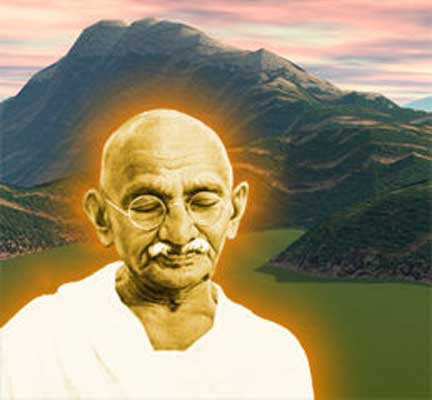
“Be the change you want to see in the world” – Mahatma Gandhi
How To Change
Over the months and years I’ve made some changes in my life, and it has made my surrounding environment a much better place to live in. I believe this is testament to the thinking I’ve offered in this post, and I believe you can do the same with your own lives.
Here are two ways that you can change yourself, and change the world as a result. I only offer these as my own interpretation – feel free to use both, or just one of these ways:
1. Practice Forgiveness
All of the conflict in this world has been due to misunderstandings, which have been due to a lack of communication, which has been due to fear. Fear of losing out, fear of being controlled, fear of looking weak.
Just think, by changing ourselves to being more forgiving, we could do a lot of good. If we could practice forgiveness more often, and forgive the person who has wronged us rather than seek to cause conflict, this would reduce the amount of conflict in the world.
We all know of the world’s problems – global warming, terrorism, recessions, etc. But what are we actually doing about it? For the majority of us, all we do is complain.
The simple fact is that complaining will get us nowhere. As much as it may seem to be enjoyable and relieving, all it does in the long term is to make us complain more, and become more run-down and depressed. Complaining leads to more complaining, the spiral runs on, and nothing ever gets done.
So why not go one day without complaining? Tomorrow, make a vow to stop complaining, and get on with the day. Sure, there will be problems, but instead of complaining about them, focus on solving the problem. Or if you can’t solve it, move on. Just don’t complain about it.
I love the quote from Gandhi “Be the change you want to see in the world.” We must be the change first. To move in that direction of inner change and transformation, we must begin with awareness. We must be willing to look at ourselves honestly and see that which is limiting us and that which no longer serves us in this world.
When we are able to do that and dig deep, we can begin to take those first steps towards change. As others see the transformation in us, and we begin to live it, it becomes a ripple effect of change. https://www.arvinddevalia.com/blog/2011/09/15/be-the-change/
Please bear in mind that I never said that we ‘can’t’ change the world – we can only do so by changing ourselves first. As you said, it’s a ripple effect that flows outward from ourselves and affects the world around us.
It’s entirely possible to change the world, but we have to view ‘changing ourselves’ as the main priority !!
By changing ourselves we are changing the world. We are ripples. Our thoughts and our actions have an outward effect on the world. I have to disagree with the fact — we cannot change the world. We do, we can and we do everyday. Change begins with us; and if we wish to change the world in which we exist, we need to be that change.
Oh… and I want to highlight something you said so profoundly and subtly: “…change within to achieve”. I believe that it is important for us to follow that path of change.
This path allows us to be at the most excellent state for any particular time. From this one phrase, I do not see in any way you suggesting that we need to be perfect first before we help others or the world in general. You only state that we need to seek or develop the excellence within us; and in doing so, as we, our “selves” interact with “others” we create experiences in which we all benefit…. in which we all grow… or “change”.
“Stop seeking perfection, settle for excellence…”
If we wait until we could develop the ability to throw all of the proverbial starfish into the ocean, we would never be a factor of change in this world; conversely, we if strive to successfully get at least one starfish back in the ocean, we have just demonstrated our excellence in achieving change.
Trying to change the world first won’t work out – instead, change yourself, and become a better person. This will then have a ripple effect which influences the world, starting with those around you.
The mindset you’re laying out in this post is basically the only way to live. If you insist on changing the world, you can make it far too easy to not bother improving yourself.
But one thing I think you’re forgetting, the changes you’re proposing will change the world. You will be a happier more enjoyable person. And that doesn’t just make you more likable – it makes the people around you happier as well.
And it can so easily spread like a wave. That’s a great way of looking at things – as soon as we realize we need to change, then the change will start to happen. No-one else will make that change happen for us, we must bring it about ourselves.
I think “changing ourselves” is one of the biggest secrets, which many people don’t know or know but don’t practice. In either cases, results are same. People blame the whole world for their problems, they fill their hearts with negative feelings and spread the negativity even around them.
Changing ourselves instead of expecting the world around to change, is so simple yet powerful. Once our internal transformation begins, the world around us amazingly changes (world is mirror of ours) and a wonderful life begins.
The sooner, one realizes that he needs to change, the faster he will on his way to a amazingly satisfying life.
Now, what would I do to change the world?
Change in the world begins with me. So to change the world, I would:-
• Eat less, exercise more
• Sleep less, write more
• Accumulate less stuff, share much more
• Stop seeking perfection, settle for excellence
• Surf the internet less, meet more real people
• Think less, speak more and share my wisdom
• Stop wasting time, create more special moments
And I would eat more ice-cream and do things that really bring me a lot of joy! Because when I am joyous and my vibration is high, good things happen to me and those around me:-)
That sounds wonderful do which raises your energy levels, and this will bring out the joy in you!
After all, joy is infectious
I believe that changing the world is possible as long as we have the faith to believe in it. Only in such a state will the positive energy and vibrations affect others enough to cause a major change for the better. If we think that we can make a difference, than we are actually sending out a mentality to the universe. But if we have the faith that our eventual action will make a difference,
Thoughts changes things and to make that change we must change ourselves first. It is the most powerful force we can give for the good of the people. When we change we lead by example and others will follow.
We all live in a world where people have the freedom to choose how they will live their lives. Some strap bombs to their bodies and blow up women and children and other innocent lives. Others go on walks. Some shoot people and rape people and rob people. Others choose not to. Their values are different. Their anger is different. Their beliefs are different. I agree with you, Stu, that the only way real world changes can occur is if each individual decides strapping explosives to their bodies to destroy the lives of others is a horribly bad idea. Cultural change can occur, but it is cultural change only because a bunch of individuals chose to change things. It all starts, as you say, with the individual, looking in the mirror and saying, “It’s time to change!”
I hear what you’re saying – our actions and energy can make a difference in the world. But I’ve found that all the change in the world has been a direct or indirect result of the change in ourselves.
We can’t try to force the world to change, but we can force ourselves to change.
We don’t have to physically make those changes happen. The real leverage comes from when we take the energy path, which does create real change. So, while we can make a difference with our actions, we can change the world with our energy. We can inspire millions, we can line up with peace, we can line up with a safe, whole, healthy earth and happy, joyful, passionate people. You do not need other people to line up with this vision in order to experience it. All it takes is you.
More Inspiration from Gandhiji to Help you Be the Change:-
Now please check out these inspirational blog articles written by me and inspired by Mahatma Gandhi:-
When Stephanie first began getting headaches in November 2016, she wasn’t terribly worried because they “came and went,” she says.
By January, they became more constant with no relief from the pain, so she decided to go to her doctor to get checked out.
When the diagnosis came on Feb. 16, it was worse than anything she could have imagined. She had a grade 4 glioblastoma — which is the most aggressive, deadly brain tumor there is — on her brain stem. Without removal and treatment, patients typically die within a few months, experts say. Even with treatment, without removal the average survival rate is 15 months, doctors told her.
“The doctor said because of the location, they weren’t willing to operate; it was too risky,” Stephanie, who asked that her last name not be used to protect her family’s privacy, tells PEOPLE. “They decided to leave it and press forward with radiation and chemotherapy with hope for the best.”
She and her husband Michael consulted three other top neurosurgeons in the country who also refused to try to remove it, she says.
“I was a young mom and wife and I really felt like they gave me a death sentence,” she says. “Everything we’d read about glioblastomas said you need surgery to remove it if you stand a chance.”
Devastated, Stephanie started a blog, mainly to update her friends and family but also to capture everything she was feeling.
“So I have the worst kind of cancer in the worst place possible,” Stephanie wrote on Feb. 18. “Hearing statistically I have 15 months to live is just heartbreaking. I’m only 27 years old, I have a beautiful 2-year-old daughter and I love my husband more than anything on this earth. How could this be happening!?”
Miraculously, that blog somehow found its way to Dr. Michael Sughrue, a neurosurgeon at OU Medical Center in Oklahoma City who specializes in removing brain tumors other doctors say are inoperable. He immediately posted a comment.
“I wrote, ‘Hey, I’m a neurosurgeon. I specialize in very difficult brain tumors. Not all of these things are really inoperable. Why don’t you show me your films and I can see if I can do something to help you,’ ” Sughrue, 38, tells PEOPLE. “Within five minutes she emailed me and said, ‘What do I need to do?’ “
She sent him the MRIs of her tumor. After reviewing them he told her he thought he could help her.
“I said, ‘I can get at least most of this out without too much risk but here’s what the risks are,’ ” he says.
Stephanie and her husband, who were on their way to Disney World in Orlando, were floored by his reaction.
“He said, ‘Honestly, I thought it would be much worse than what you showed me,’ ” says Stephanie. “I thought he was going to tell us the same thing the other doctors did. I really didn’t think he’d tell us he could do it.”
Stephanie’s tumor before the surgery (left) and after
Courtesy OU Medical Center
.
She and Michael tabled the discussion for the day so they could enjoy their daughter’s first trip to Disney and decided to talk about it that night.
“I was terrified,” she says. “Why were all these other doctors saying, ‘No, it’s not worth the risk’ and he’s saying, ‘It’s not as bad as I thought it would be?’ “
They decided to fly out to at least hear what he had to say.
“We said, ‘This is just too crazy.’ We’ve been praying about this and all of a sudden my blog finds its way to a neurosurgeon a thousand miles away that says it’s not that bad,” she says. “We decided we’d fly out there and if he’s crazy we’ll just come home. So we flew out there and hoped we didn’t waste the money on plane tickets.”
By week’s end, she was being operated on.
“I was scared to do the surgery but I was scared not to,” she says. “From everything we’d read, people don’t survive a glioblastoma if they don’t take it out. I felt like my chances were greater having had the surgery.”
Stephanie and Michael before the surgery
OU Medical Center
.
After a two-and-a-half hour operation on Feb. 24 (Michael’s 29th birthday), Dr. Sughrue was able to remove about 90 to 95 percent of the tumor and Stephanie is now considered cancer free, he says. Six days after her operation, Stephanie started a regimen of five days a week of radiation for a month and seven days a week of chemotherapy.
She was able to come home to Florida on April 15, the night before Easter.
“It’s been two months since my surgery and I feel really great,” she says. “We just feel so much more hopeful now. I know even with having the surgery my chances aren’t great, but I have to believe this is going to be okay because if I believe any other way there’s just no point.”
After a four-week break, Stephanie will start taking a pill form of chemotherapy one week a month and get another MRI in the next two or three months.
It’s hard for Stephanie to put into words how grateful she is to Sughrue.
“He gave me a chance when no one else would,” she says. “I’m so thankful he was willing to reach out to a random person on a blog and look at my scans without me having to fly out there. I don’t think a lot of doctors would do that.”
While she has no idea what her future holds, for now she’s just grateful to be alive.
“I’m just trying to take every day as the gift that it is,” she says. “I feel like I’m trying to make everything a moment in my life. You never think something like this is going to happen to you. Who goes to a doctor for a headache and finds out they have a grade 4 brain cancer? I’m happy to be here and I’m happy to be at home.”
And she has advice for others who are in her situation.
“People need to know that inoperable doesn’t necessarily mean inoperable,” she says.
In fact, Dr. Sughrue says about 50 people with similar dire prognoses have contacted him after reading stories about how he helped Stephanie. He’s evaluating their cases.
The reason he can help people like Stephanie when other surgeons won’t is due to a personal decision he made in early 2012, shortly after arriving at OU Medicine and starting his professional career. Most surgeons won’t try to remove tumors like Stephanie’s because it is risky, not because it’s impossible, he says.
He decided to talk to his patients and get their thoughts.
“Most people were willing to take some risk to get more time with their families,” he says. “As doctors, we’re trained to think of things in terms of science and statistics. So I came to the conclusion that patients view it very differently. They view it as a battle for their lives. I just said, ‘I’m going to get on that team.’ That team makes more sense to me. . . than the team of trying to sit down and infinitely split hairs.”
Since then he’s removed about 50 or 60 “inoperable” brain tumors, he says.
“Everyone who comes to my door, I’m going to do what I can for them,” he says. “I want to be able to look in their eyes and say I did everything I could to keep them alive.”
LOOKING BACK:
“It was a miracle for how everything transpired and how he found us, how we connected because as soon as I sent him my scans, four days later I was on the operating table.”
The surgery was successful and Jones said she is ‘doing great.’
She is now sharing her story with even more people as a way to encourage them to never give up.
“It’s so important that you never lose hope because when you lose hope that’s when the fear creeps in. You can’t survive on fear.” Unfortunately on October 6 2017 Stephanie lost her battle with this deadly type of cancer.
8+ years of chronic Lyme disease, Epstein Barr Virus, inflammation, nerve damage and other health failures = only completely resolved with no recurrent symptoms once I finally went back to balance my energy system and address/release the emotional component of my illnesses.
15+ years of intensely painful menstrual problems (endometriosis, fibroids, polyps) accompanying chronic fatigue symptoms + 5 surgeries + every medical and alternative therapy I could find = only resolved after using energy therapy techniques. No drugs, no supplements, no special diets.
How it started:
After 8 years suffering with Chronic Lyme disease and other associated health failures, I recovered largely thanks to an experimental embryonic stem cell treatment in India. However, the endometriosis, fibroids, polyps and intensely painful menstruation that I had suffered for 15 years, became dramatically worse. I began to question why this too, didn’t heal with such radical treatment. And not only didn’t it heal, but it got worse.
Then, years after my stem cell transplant, I start to see the emergence of some troubling symptoms — very similar to the ones I originally experienced. All my Lyme tests were also negative, but it was later confirmed that chronic Epstein Barr Virus, various food allergies and other conditions that I had been free of for so long, were back. This meant, once again, my immune system was impaired. I was scared to death that I would end up where I once was, in a downward spiral of chronic pain.
So, I started to look more deeply at my health conditions than I ever had before….
I obsessively researched alternative ways to get my debilitating menstrual issues (pain, heavy bleeding and fatigue) under control. I tried everything from a world renowned Traditional Chinese Medicine doctor to herbs to special diets and supplements. After endless therapies with the best specialists and 5 failed surgeries, I became determined to find out what was really causing this.
I knew that whatever was causing my body to be so imbalanced, this could manifest, was likely why I couldn’t stay well from all of my other health challenges. The immune system, when it’s strong, is the gatekeeper for disease. Something was wrong at a fundamental level — and it had to be somewhere I hadn’t looked deeply enough at yet.
“If treating the body alone doesn’t resolve the challenge, then the body alone must not be what created it.” – Me
What contributes to one person manifesting a disease or post traumatic reaction to an event, while another person remains healthy? What will help ignite the body’s own mechanism for healing after the onset of injury or illness?
I began to explore the concept of energy, and how the body actually has its own energy system. If it becomes imbalanced, symptoms of any kind can arise.
What I found out
After working with myself first and then many others, I believe wholeheartedly that unprocessed emotions, unresolved trauma and damaging belief systems (ones we don’t even recognize we have!) are the biggest contributors to why we suffer with symptoms. In many ways, the way in which we experience our lives from an emotional standpoint is a blueprint for how it unfolds.
Not only do stored energies cause us to experience intense emotional reactions like fear, excessive worry, and sadness; but also, they have a huge impact on our immune systems, which affect our physical bodies. By releasing these emotions, we also free ourselves from negative emotional patterns, and employ our immune system’s full healing capabilities.
I believe because the trapped emotional energy I was storing in my body was never addressed, the stem cell transplant forced the physical repair of some of my body; but the underlining emotional energy was still there. . . .and just began to re-manifest in different ways. While I grew so much spiritually and emotionally in India, I eventually fell back into some of my old unhealthy patterns of living and thinking when I returned.
Although disease is often viewed as a negative experience, I do believe that it is a vessel to help us clear out from our lives that which no longer serves us. It’s the sometimes-hard-to-see-the silver lining to suffering. And while I had many ups and downs in my process of healing, I see now with clarity, there was purpose to it all.
Where I am now
After learning to move energy in my body and addressing emotional links to my symptoms, I found wellness again. And I know in my heart, it is for good. The feeling that accompanied my return to full health is nothing like I’ve ever felt before — like I’ve truly healed to my core.
I addressed issues like:
Being extremely fearful of things like germs, not being in control, and the future — which really translated to deep fear about not being safe in the world
Being scared to be healthy (yes, I really had that fear and I believe the majority of ill people have it in them somewhere too)
Unprocessed grief, resentment and other issues
The emotional patterns I now find to be prominent in those with chronic Lyme disease.
I now live a normal life without the interference of menstrual issues. The worrisome symptoms I started to experience once again years after my treatment in India completely reversed. I am healthier and happier now than I have ever been in my entire life.
I truly feel this is because I went back and healed all the parts of myself that were also struggling – not just my physical body. I re-established a foundation for myself in this world – one without the fears I had carried for so long. In turn, I believe I sent strong messages to my whole being that it was safe to relax…and that released my immune system from so much of the stress it was burdened by.
I put myself in a space of allowing my complete healing. 🙂
Many cancer survivor stories within the first 100 blogs of this website. However within — this Survivor Story, Ryan Sternagel shares about his son Ryder’s cancer journey.
In May of 2014, about a month before Ryder’s first birthday, Ryder’s mom Teddy noticed a lump in Ryder’s back next to his spine. Their concerns were initially dismissed by their doctor, however, as they were researching online, many sites led them to neuroblastoma – a childhood cancer of the nervous system.
After an ultrasound which led to an MRI, the doctor and nurse came out with tears in their eyes. It turned out that the lump Ryan and Teddy felt was just the tip of the iceberg. The tumor inside of and growing out of Ryder’s spine was larger than his kidneys. There were also two additional tumors that had metastasized in his bones.
From day one, Ryan and Teddy chose to implement as many natural options as possible along with the conventional cancer treatments. The original Quest for the Cures came out two weeks after they received their son’s diagnosis and Ryan attributes much of their initial success with finding answers to having watched this docuseries.
Ryan and Teddy constantly researched and used many alternative cancer treatment modalities including juicing and infrared sauna. By the second scan, Ryder’s secondary tumors were gone and the primary tumor was reduced beyond expectation. Today, the secondary tumors are still gone and the larger tumor is about 5% of what it was and has been flatlined for about a year and a half now.
Click on the video to hear more about Ryder’s cancer experience, including his parent’s continued efforts to inspire other children and provide information to parent’s going through a similar experience.
When Leanne’s son, Drew was sent home to die from the Mayo Clinic when 15 months of intensive treatment failed curing him of his Stage IV Neuroblastoma. Drew, was honestly one of my biggest sources of inspiration when Ryder was first diagnosed with cancer.
After learning about natural therapies (primarily juicing and supplements which Leanne administered through a g-tube) Drew was completely healed within weeks of his death sentence. Miracle? Yes of course…But also the power of natural therapies.
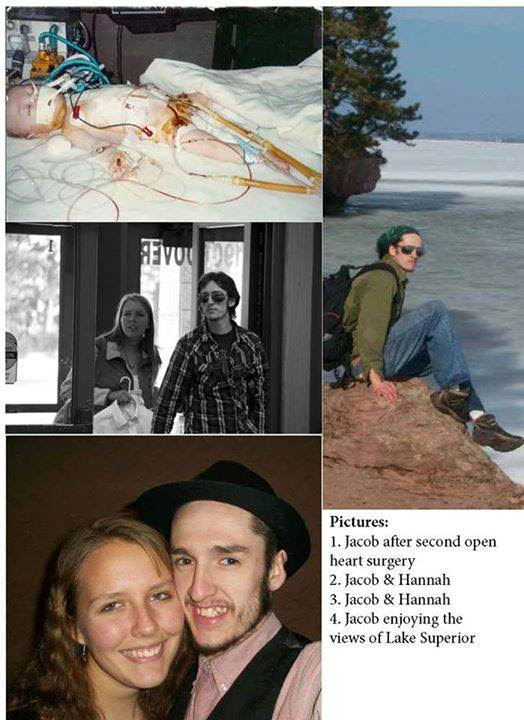
At the time I never knew about the story of Leanne’s older son Jacob who was diagnosed with a terminal heart defect and underwent three open heart surgeries before the age of one. Talk about inspiration…
“With all due respect, I would rather die living than live dying.” -Jacob Sorteberg
From Leanne (Jacob’s mom):
Those words were spoken by our son Jacob, age 20 at the time, after his cardiologist advised him to prolong his life by finding a desk-job career.
This is a story about resilience, advocacy and energy.
Resilience:
Jacob was born with a terminal heart defect called Total Anomalous Pulmonary Venous Return to the Coronary Sinus or “Total Veins” for short. In laymen’s term the 4 pulmonary veins bringing oxygenated blood from the lungs to his heart are slowly clasping.
Jacob underwent 3 open-heart surgeries before he turned 1-year-old. The first surgery was to correct an atrial septal defect, which was a hole in one of the upper chambers of his heart. The next two surgeries were an attempt to create an unobstructed pathway within the four veins for blood to flow to his heart.
Unfortunately both surgeries were unsuccessful. During his second open heart surgery (recovery picture posted here) doctors discovered Jacob had two left lungs and that he was also born without a stomach.
Jacob’s journey from birth to present day is wrought with profound life-lesson. He was hospitalized for the first 3 ½ years of his life. He had a feeding tube and oxygen for his first 5 ½ years. During that time nurses became my sisters, and some doctors became my teachers.
I’ll never forget the first words spoken to me after Jacob was rushed to the university’s neonatal intensive care unit.
“We’ve worked on tons of babies with this heart defect. They never live past the age of one.” –UM Pathologist.
Jacob barely survived that first year. I held him in my arms 3 times as a “Code Blue” ushered a team of medical staff to his bedside. He suffered countless bouts of life-threatening double pneumonia due to blood pooling in his lungs.
Doctors preformed a surgery to create a micro-stomach so we could feed him through a g-tube. Little did we know then how critical that g-tube would become. When Jacob’s younger brother, Drew, was diagnosed with stage 4 cancer and eventually sent home to die, placing a g-tube in Drew allowed us to bolus feed him organic juices and natural supplements, which cured his cancer in a few short weeks!
Treating Drew’s cancer natural had a significant impact on Jacob’s health. Once we eliminated everything white (i.e. dairy, flour, sugars, etc) from our diet and literally became vegans overnight, Jacob’s health slowly began to improve. First, he went six months without getting double pneumonia. That was a huge milestone!
Then he was finally able to come off oxygen support. Next, his appetite improved so quickly we were able to pull the g-tube so Jacob could eat normally. To this day, Jacob will eat anything you put in front of him. He even tried lobster brains when we lived in Maine. He said they tasted like almonds.
Months of wellness turned into years. Every time we saw Jacob’s cardiologist he would run tests and say with a smile, “I don’t know what you’re doing, but keep doing it.”
Advocacy:
It was 4am. The ringing phone startled me. Murphy’s Law strikes. It was the one time the nurses convinced me to go home to sleep in my own bed. During the night Jacob’s health took a terrible turn for the worse. By the time I arrived at the hospital he was in congestive heart failure.
After alerting us, the hospital called our extended family to explain that he would not make it through the day. They were instructed to come immediately. When I walked into his hospital room my eyes immediately fixed on Jacob. He was heaving with each breath and his skin was a purplish gray. He looked panicked, and rightfully so…. his little heart was beating 180 beats per minute, a condition known as Tachycardia. Two doctors and our primary nurse stood by his bedside. I had grown to love Mary. She took great care of our son, but also took the time to teach me how to be a young mom (age 23 at the time) with a special needs child.
The energy in the room was tense. One doctor was holding a syringe with medication. The three on the medical staff became abruptly silent. I could sense they had been arguing and my suspicion was confirmed when one doctor broke the silence. He gritted his teeth and said to the other doctor holding the syringe, “Just give it to him!”
The reply was, “No. We’ve given him too much. This will push him over the edge.”
With a red face and raising his voice the other doctor replied, “I am your superior.
Give it to me so I can give it to him!” Again, the younger doctor shook his head no in defiance. Suddenly, Mary turned toward me and calmly said, “You have a say in this matter.”
It was one of those ah-ha moments, an epiphany that would shape me as a mother forever. Her words resonated through every fiber of my being.
In that instance, I knew no one could advocate for my child/children better than me and I was determined to become the best advocate ever. I asked both doctors to leave the room. The angry one demanded Mary follow. Left alone, Jacob and I were finally able to snuggle. Tears rolled down his cheeks as I spoke calmly to him.
The energy in the room shifted. I unhooked monitors and rocked him gentle in my arms. His breathing calmed as he laid his head against me. I could hear the yelling in the hallway. Obviously flustered, Mary tucked her head into the room and asked me what I wanted to do.
With confidence I replied, “No more doctors. No more needles. No more drugs.”
Jacob was moved into intensive care. Mary was able to follow with due to a nursing shortage. For the next 12 hours Mary and I were the only ones allowed in his room. Monitors remained on but nearly silenced and lights were dimmed. Jacob slept the entire time. By morning he was stable and my resolve as his advocate was internally secured.
Energy:
Today, If Jake is in poor health he knows now to consider his options with both conventional and alternative/natural healthcare. He doesn’t panic. He researches. He also works to eat healthy and more importantly he works to maintain a positive attitude… a positive energy.
His heart has to work extra hard to bring blood from his lungs. Doctors tell us his heart’s efforts to do so have come at a cost. Jacob is nearly half my age. His heart’s age is much closer to mine. Stress on the heart causes one’s hair to gray prematurely. Jacob’s hair is graying, but his attitude and zest for life shine! He is an avid hiker, camper, fisherman, and canoeing enthusiast. He loves to spend as much time outdoors embracing nature.
Just to get-my-goat, he often sends pictures of him rock climbing, hanging off a tree branch high in the air or balancing on a cliff’s edge. Nature offers a healing and calming energy. Jacob is soaking it all up. More importantly, Jacob is not letting a life-limiting statement become his reality. He has chosen to live life abundantly on his terms.
He has chosen to live a life that brings him joy, harmony and happiness. He has chosen a healing energy. He recognizes he is a product of intelligent design and has a sincere faith and trust in God for his life’s destiny.
The resources for natural healing are endless and priceless for those dealing with disease. Our planet has everything we need to heal and will continue to offer healing herbs, plants foods, as long as we stop destroying it. Often times, the person diagnosed with a deadly illness will need a strong, positive advocate by their side to research and uncover proven natural healing modalities because the mind–fuck of a deadly illness overwhelms the one diagnosed.
Become someone’s advocate. If you are dealing with a deadly disease or are an advocate for someone, I hope Jacob’s story of resilience, advocacy and energy inspires you. Rid your life of negativity. Find your divine power. Also Stand your ground, especially when confronted with egos. Have faith and may you crave a connection with nature’s healing energy. Become an #inspiration 🙂
“Hey You”
Heather Rayburn Lyrics, Vocals
Peter Gallinari Keyboard
Published on Aug 17, 2018
Heather Rayburn. “Hey You” is about what I went through emotionally. Those moments of pulling it together with pep-talks in the mirror to find courage and support within myself.
An extraordinary song that has been waiting 2 1/2 years to be heard. It even brought tears to many men’s eyes! Fireman, cowboy, police officer, marine etc.
(Please share with anyone struggling with cancer or who has been dealing with other hardships) I felt I had to overcome my fear and cross over the border to get to the other side of becoming cancer free.
This beautiful song was written for me about my cancer journey by my best friend, Hey you, quite simply was about me and my self-talk when I’d look in the mirror to find courage and support within me. Many of us do that. My first mirror “Hey You” moment of doing this was July 19th, 2006 the night of my first diagnosis of breast cancer stage 3. I excused myself politely from the doctor’s office and went to the restroom because I did not want to cry in the office. I closed the door behind me and Gripped the sink.
I looked in the mirror holding back the tears that were trying to pour out and I said quietly, “Please God no, this can’t be true. Not me!” There were many more “Hey you moments” and I know many people will be able to relate to this song. Finding the hero within yourself.
The video shows pictures doing CMN hospital doing alternative cancer treatment therapies, #ParadiseCove in Malibu the day UCLA gave up on me and other moments of celebrating the Anniversary years that passed of being cancer free.
I cannot express enough how much Heather means to me and how she always said to me “Oh, Cancer can’t take you, you are too bright of a light” I kind of thought she was crazy, but she was right TWICE! Stage 3 and stage 4, she said this to me and then I believed it was impossible! This is the kind of friend that is invaluable because
I started to believe her! Our mind and heart are powerful and she filled me with faith, passion to try and most of all that I was worth a miracle. She said other amazing things wrote more beautiful songs but this one was written in the way she knew me. Heather Rayburn, Melody Kanter Williams Dawn Fulkerson Allen headed up Angels for Shannon, held meetings and pushed for its success continuously to raise money to get me to CMN hospital for alternative cancer treatment when I. was diagnosed with stage 4! We succeeded with the help of hundreds of other angels by the time we finished.
This song deserves the very best presentation! I know it will have that one day. For now, it is a humble snapshot type of video of my journey. It does not barely begin to do her song justice. Not even close! Her song is a masterpiece!
I post this with a prayer that angels carry this song on a journey so it can help others. It needs to be heard because so many will relate.
Tony Hauenstein and Peter Gallinari and some of the most respected musicians in Nashville and Juanita Copeland president of the prestigious Sound Emporium Recording Studio allowed all of this to come together.
I just could not let this song stay in hiding any longer. It is moving and inspiring for all tough circumstances besides my own. This song is for all of you who are struggling; believe me. Thank you to all especially my best friend and songbird! An angel, truly. I love you, Heather Rayburn! ~ Love Shannon
Hey Cheyann: I stumbled upon your page today. I know you probably get these comments constantly, but I just wanted to say that you’ve inspired yet another person. Thank You for your positivity, strength, and humor. Also your strength and faith are beautiful- and don’t surprise me at all. Survivors are everywhere and you put up one hell of a fight 🏻 I’m also thankful for your health, for your experience, and for your willingness to share your story with the world. https://www.instagram.com/cheymarie_fit/
Cheyann States: “When I was first diagnosed August 3rd, 2016, I was really scared, but it went away quickly. I knew that I had no choice but to fight. I wasn’t going to let cancer win. I knew that my husband and family needed me – there was no way I am leaving them. So that is when I put my boxing gloves on and got in the ring to knock cancer out.”
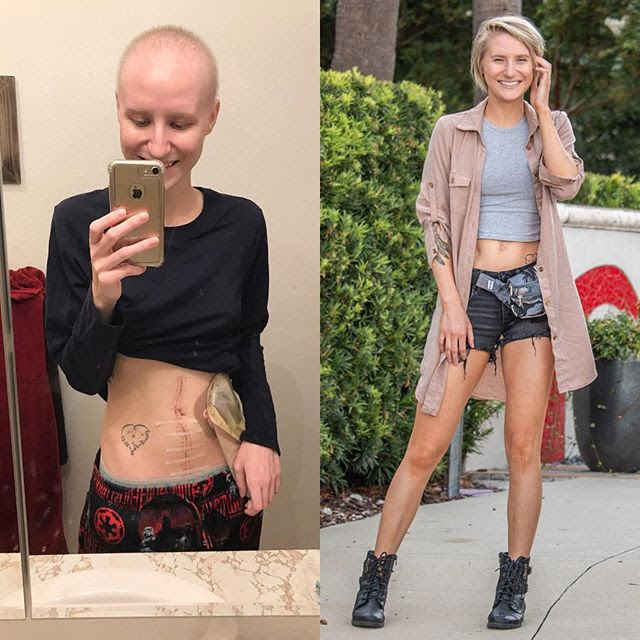
Left- Before we knew I had cancer. I was a solid 130lbs and 15% body fat.
Also had a nice little booty growing back there. –
Right- was taken Stage 4 Low Grade Serous Ovarian Cancer. After almost 14 days in the hospital, a poop bag, and a major surgery; I stand at 105lbs and that’s way to small for me. I’m 5″5. I lost everything. Cancer has taken so much from me. The body I worked so hard for 2 years to get, the ability to have and carry my own child, my hair, and so much more, was all taken from me. But one thing for sure is that cancer did not take my determination to fight and my faith. –
–
I will never stop fighting. I will never lose my faith. I will never let cancer win. Some days may have been rough days for me mentally, but that’s okay. Because I knew tomorrow would be much better and I’m thankful to be alive and to see another day. I knew GOD is up there working and I know he will give me the strength to fight, also the light to see in the darkness, and will lay his healing hands on me. –
Shaw’s was always optimistic that she would recover and get back to her muscular self. “I have a hard time looking at myself in the mirror, but I’m learning to love myself again, and I knew deep inside my being this would be only temporary.”
Some good news: when doctors gave Cheyann the OK to start lifting light weights. Before cancer, she could curl 30 pounds with ease. After cancer she knew she would be starting over in the gym, but she was up for the challenge. Cheyann also stated on Instagram, “I’ll be starting at square one again, but that’s okay, that just means I will come back better and stronger and I’ll also have a new badass scar.”
This is the toughest battle I have and will ever face in my life, but I know I can do it. The hardest part of all this is my body change. I have a hard time looking at myself in the mirror but I’m learning to love myself again and I know this is only temporary. Once I get the clear light to workout, I’ll be in the gym banging those weights🏻
Started the morning off with some much needed beach time 🏻
Yesterday was a good day but a weird day for me, so I decided to not let yesterday’s funk roll over to today and took my lil peach to the beach. The beach has become my home away from home. A place I can collect my thoughts and where I started to feel centered again. For me, time stands still at the beach and for a person who’s mind/ body is always on the go — time standing still is sometimes much needed.🦋
Your health is 🦋 MOST IMPORTANT 🦋
Ps. I haven’t used anything on my scars. They have naturally faded and I believe it has something to do with genetics 🙂
And I can’t believe how far I have come in 2 short years.
Ginger Hultin, M.S., R.D.N., a certified specialist in oncology nutrition, tells that weight fluctuations can often happen when someone is fighting cancer. Also some patients experience unintended weight loss, while others experience unintended weight gain. See her long-time nutrition blog ChampagneNutrition.com
As for weight loss, Hultin cites a number of potential causes, including a taxing healing process after surgery, digestion issues, and more. “People can lose lean body mass, and there can be a lot of muscle mass loss,” Hultin says. “And people also are sometimes doing less physical activity because they’re feeling tired.”
Loss of appetite is also a common side effect of chemotherapy, according to the Mayo Clinic. Hultin explains that chemotherapy can shift a person’s tastes, too. “Lots of taste changes can cause avoidance of protein-rich food, so that can cause weight changes, too,” she says. https://www.youtube.com/watch?v=oeYoX-Qwnwk
If your first answer was, “nothing” you are badly mistaken. Right now while you sit quietly, a myriad of wonderful events are taking place necessary for your survival. Right now your heart is beating. If you’re in average physical condition, it beats between 60 and 70 times per minute, 93,000 times per day, 655,000 times per week, 34 million times per year, and 2.4 billion beats in the average lifetime. What’s also so amazing is that, most of the time, it fuels itself, paces itself, repairs itself, and alters itself in response to lifestyle changes, with no conscious effort on your part.
In addition to your heart, your liver is detoxifying your blood, your brain is storing away information, cells are being formed and cells destroyed, energy is being used and produced, and many other tasks vital to life and function all carry on in a wonderful, harmonious way. Thomas Jefferson may have had similar thoughts in mind when he observed, ” No knowledge can be more satisfactory to man than that of his own frame, its parts, their functions, and actions.”
In an earlier era, St. Augustine noted, ” Men go abroad to wonder at the height of mountains, at the huge waves of the sea, at the long courses of the rivers, at the vast compass of the oceans, at the circular motion of the stars, pass by themselves without wondering.”
In deference to Jefferson’s hypothesis and Augustine’s criticism, this essay will discuss three topics arising from even a cursory examination of man’s physical form and function:
1) the complexity of man and what it suggests about man’s origins,
2) the efficient and versatile operation of man compared with machine,
3) the depth of our ignorance about how man’s physiological systems operate.
Within man’s span of abilities, he can run more than 26 miles at less than 5 min per mile, he can jump over three feet higher than his own stature, he can create an artificial heart, he can explain some of the workings of the chromosome.
Yet, Man is one of the slowest of the fast animals, and one of the weakest of the strong animals. Despite his superior intellect, man does some stupid things (consider chronic use of tobacco for one), and seems doomed to repeat the same mistakes periodically. Let’s examine man’s function in detail. http://www.leaderu.com/science/bishop.html
Utilizing and tapping into the creator force from within.
We tend to lean towards those who hold a tripartite view and the following is my understanding of our design and how the spirit, soul and body are interconnected. Indeed, we are very, very complex beings and only a living God could have created us as we are. I urge you to study the scriptures to arrive at your own understanding of man’s design.
Our Body
It is by our body that we function. It’s comprised of organs and cells which consists of protein carbohydrates and fats. Our body contains our nervous system. . with nerves and the brain. It’s through our bodies that we connect to the physical world with our 5 senses.
Psalm 139:14 says that “you are fearfully and wonderfully made.” Open this document for examples of how marvelously God made our bodies to function as they do.
Our Soul
Our soul is what gives us our personality and it’s through our soul that we live out our relationship with God, with other people and with our self. Our soul likely has three major components — our mind, will and emotions. Our mind has a conscious part and a subconscious part.
The conscious mind is where we do our thinking and reasoning. The sub-conscious mind is where we hold our deep beliefs and our attitudes. It’s also where we have our feeling, our emotions and retain our memories. Our will is what gives us the ability to make choices.
Through a very complex way, our mind, our will and our emotions are connected to the body through our endocrine, nervous and immune systems. “The mind, body and spirit communicate constantly. What the mind thinks, perceives, and experiences is sent from our brain to the rest of the body.” Herbert Benson, M.D., The Benson – Henson Institute for Mind Body Medicine
Our Spirit
It’s in our spirit that we have meaning and purpose in life. At the deepest level our spirit gives us meaning and purpose and our spirit enables us to love one another, our self and God. It’s through our spirit that we have communion and fellowship with God. Our spirit gives us intuition between right and wrong.
For in-depth reading about the distinction between spirit, soul and body consider material written by Watchman Nee, especially The Spiritual Man which is a book online and free.
Our spiritual health will have a significant impact on our emotional health which will have a major influence on our physical health. The inter-connection between the spirit, the soul and the body is certainly a complex connection, nevertheless, the connection is very real. The apostle John was inspired by God to write in 3 John 1:2, “Beloved, I pray that you may prosper in all things and be in health, just as your soul prospers.” This is an indication of the importance of attending to matters of the soul as it relates to being healthy.
The Interaction Between Spirit, Soul and Body
Many of us are affected by how we handle the stress that life brings us. If chronic stress is left unchecked, over a period of time our bodies will take a toll. A strong faith can help us to cope with the stress we experience in our life and enable the impact of that stress to be less significant.
Without a strong personal faith we must resort to our own resources to cope with the stress present in our life. Often we attempt to cope with this stress through addictions and other methods of escape. This behavior can further exacerbate the effect of stress on our physical health. A strong personal faith can be a resource that helps to manage stress. Read more at Stress, Health and Faith.
Our beliefs and attitudes, determined in large degree by our faith, will play a major role in our thinking patterns. Our day to day thinking will have an impact on our emotions and feelings, and our emotions and feelings will have a major impact on our behaviors. In this regard, our thought patterns play a significant role in our emotional and physical health. In the page on Spiritual Exercises we address the importance of our thinking patterns and how we can change our thinking which can transform our life.
Caring for our heart – our ‘spiritual’ heart as well as our physical heart – is a huge part of being healthy.
Read more about spirituality and health to better understand why this connection between one’s faith and their health exists. “Now may the God of peace make you holy in every way, and may your whole spirit and soul and body be kept blameless until our Lord Jesus Christ comes again.” 1 Thessalonians 5:23
Human behavior can be confusing. Add to that the influence of being a fallen human being and the sinful habits we develop – and you can go “tilt” trying to figure it out. This screencast is designed to help you understand what the Bible says about how your body, soul, and spirit work together – and how the entrance of the Holy Spirit into your life can make all the difference! https://www.youtube.com/watch?v=7rqEy1jL-iA
Mind–body dualism, or mind–body duality, is a view. . . in which the philosophy of mind that mental phenomena are, in some respects, non-physical, or that the mind and body are distinct and separable. Thus, it encompasses a set of views about the relationship between mind and matter, between subject and object, and is contrasted with other positions, such as physicalism and enactivism, in the mind–body problem.
Aristotle shared Plato’s view of multiple souls and further elaborated a hierarchical arrangement, corresponding to the distinctive functions of plants, animals, and people: a nutritive soul of growth and metabolism that all three share; a perceptive soul of pain, pleasure, and desire that only people and other animals share; and the faculty of reason that is unique to people only.
In this view, a soul is the hylomorphic form of a viable organism, wherein each level of the hierarchy formally supervenes upon the substance of the preceding level. Thus, for Aristotle, all three souls perish when the living organism dies. For Plato however, the soul was not dependent on the physical body; he believed in metempsychosis, the migration of the soul to a new physical body.
Dualism is closely associated with the thought of René Descartes (1641), which holds that the mind is a nonphysical—and therefore, non-spatial—substance. Descartes also clearly identified the mind with consciousness and self-awareness and distinguished this from the brain as the seat of intelligence.
Hence, he was the first to formulate the mind–body problem in the form in which it exists today. Dualism is contrasted with various kinds of monism. Substance dualism is contrasted with all forms of materialism, but property dualism may be considered a form of emergent materialism or non-reductive physicalism in some sense.
When you connect with your source of strength and faith, whether you believe in God, the Creator, the Universe, Ala, Jehovah, Yashua’s or any name you use for your source, you can always tap into this source at any time, in times of gratitude and of need.
I tap into my Creator Source to ask for guidance. I ask to be guided and protected whenever I’m sitting down to write. I believe that when I ask for guidance it comes; for me, it shows up as a thought, an idea, an image, visualization, a sense of peace. Over the years, I’ve learned to listen and follow this guidance. It gives me strength.
An impenetrable source of strength will make your life’s foundation unshakeable, especially during difficult periods of your career or personal life when circumstances or people appear to be at their worst.
You always have your source—an internal, undeniable, and abundant source to get the support you need to move forward, to believe you can do it, to trust that all will eventually turn out okay.v No one or anything can take it away from you. That’s harnessing your personal power, the ability to tap into all your resources—mind, body, and spirit, and take action.
In the human brainstem, the solitary nucleus (SN) (nucleus of the solitary tract, nucleus solitarius, nucleus tractus solitarii) is a series of purely sensory nuclei (clusters of nerve cell bodies) forming a vertical column of grey matter embedded in the medulla oblongata. Through the center of the SN runs the solitary tract, a white bundle of nerve fibers, including fibers from the facial, glossopharyngeal and vagus nerves, that innervate the SN.
The SN projects to, among other regions, the reticular formation, parasympathetic preganglionic neurons, hypothalamus and thalamus, forming circuits that contribute to autonomic regulation. Autonomic functions include control of respiration, cardiac regulation (the cardiac control center), vasomotor activity (the vasomotor center), and certain reflex actions such as coughing, sneezing, swallowing and vomiting. https://en.wikipedia.org/wiki/Autonomic_nervous_system
Cells along the length of the SN are arranged roughly in accordance with function; for instance, cells involved in taste are located in the higher, more anterior (“ventral”) part, while those receiving information from cardio-respiratory and gastrointestinal processes are found in the lower, more posterior (“dorsal”) part.
Information goes from the solitary nucleus to a large number of other regions of the brain including the paraventricular nucleus of the hypothalamus and the central nucleus of the amygdala, as well as to other nuclei in the brainstem (such as the parabrachial area, the locus coeruleus, the dorsal raphe nucleus, and also other visceral motor or respiratory networks).The signals projected from the SN to the parabrachial area originate in the oral cavity and gastrointestinal tract.
The pathways for gastric and gustatory (taste) processes are believed to terminate in different subdivisions of the parabrachial area, but still interact in the SN. So me neuronal subpopulations in the SN, such as the noradrenergic cell group A2 and the aldosterone-sensitive HSD2 neurons project as far ventral as the bed nucleus of the stria terminalis.
“Our mental state can be crucial in determining our experience of symptoms such as pain, nausea, fatigue and depression…Feeling stressed or afraid can cause your heart to race and your bowels to empty, and trigger an immune response called inflammation.
These processes aren’t usually under our conscious control—we can’t will changes to occur—but there are indirect methods we can use to influence them.”
While in no way suggesting that illnesses are “all in the mind,” Marchant’s analysis suggests that our mental and physical health is affected by the way we perceive and relate to it. Meditation, says Marchant, is one of those indirect, influencing, methods that can help, which is perhaps not surprising given that how we perceive and relate to our lives is precisely what’s trained in mindfulness practice.
The effect of mindfulness on inflammatory health was shown in a study by David Creswell that came out in February. This research showed changes in brain circuitry and reduced inflammation after three days of mindfulness training, while three days of relaxation did not have the same effect. Creswell explains the difference in impact between mindfulness meditation and relaxation:
“We show that mindfulness meditation impacts measurable brain circuits more so than helpful relaxation practices, and that these brain circuit changes help us understand how mindfulness meditation improves health. Mindfulness also teaches participants how to be more open and attentive to their experiences, even difficult ones. By contrast, relaxation approaches are good in the moment for making the body feel relaxed, but…. harder to translate when you’re dealing with difficult stressors in your life. This new work sheds light into what mindfulness training is doing to the brain to produce these inflammatory health benefits.”
How meditation helps me deal with the symptoms of depression and lingering triggers
A mindful way of perceiving and relating to difficult experiences has helped in my journey with depression. I came to meditation around 15 years ago, when stuck in a two-and-a half year depressive trough. I had thrown myself in desperation at various treatments, however mindfulness offered something different.
The method itself meant practicing acceptance, just the opposite of what I was used to. This marked the beginning of a transformation—a recognition that the way I was approaching the “problem” of depression actually helped perpetuate it.
Through meditation, I learned to see how my attitude and behaviour, characterized by self-critical striving and resistance, was a significant factor in how I felt. Mindfulness offered a gentler way, and I learned how to be kind to myself, even—especially—when feeling stressed.
For me, mindfulness has been the “master key” to understanding how the mind and body work, as well as a skillful method for managing them. It’s not magic, of course. Our physiological and psychological habits are strong, and we can’t just think our way out of them—believing this would be falling prey to the pseudo-science which has given mind-body medicine an undeservedly poor reputation.
Our experience is conditioned not just by our mentality, not just by our biology, but also our relationships, external environment, society and culture, and we have limited control over all of these. But practicing a shift in view, a change of heart, over and over again, seems to be a vital mechanism. . .through which mindfulness training also helps our sense of health. As Creswell’s study elegantly demonstrates, it leads to measurable biological shifts.
There’s a traditional mind training slogan which says: “Change your attitude, but remain natural.” I think this captures the paradox. . . .that mindfulness training invites. Without getting caught in trying to change the moment, we nevertheless change our relationship with the moment—the meaning we give to what’s happening, and our way of responding. This, it turns out, changes the moment too.
Dr. Joan Borysenko – After graduating magna cum laude from Bryn Mawr College in 1967, Dr. Borysenko earned her doctorate in Medical Sciences from the Harvard Medical School, where she completed post-doctoral training in cancer cell biology. Her first faculty position was at the Tufts University College of Medicine in Boston.
But after the death of her father from cancer, she became more interested in the person with the illness than in the disease itself, and returned to Harvard Medical School to complete a second postdoctoral fellowship, this time in the new field of behavioral medicine. Under the tutelage of Herbert Benson, M.D., who first identified the relaxation response and brought meditation into medicine, she was awarded a Medical Foundation Fellowship and completed her third post-doctoral fellowship in psychoneuroimmunology. https://www.youtube.com/watch?v=PBtkS7XpkKs
When You don’t move the mountains
I’m needing You to move
When You don’t part the waters
I wish I could walk through
When You don’t give the answers
As I cry out to You
I will trust, I will trust, I will trust in You
Claire Lucia Wineland (April 10, 1997 – September 2, 2018) was born with cystic fibrosis in Austin, Texas.
What is cystic fibrosis?
‘Cystic fibrosis is a genetic disease that causes persistent infections in the lungs and limits one’s ability to breathe over time.
A defective gene causes a thick, sticky buildup of mucus in the lungs, clogging airways and trapping bacteria that leads to infections, lung damage and eventually respiratory failure. Mucus buildup also occurs in the pancreas, preventing the release of digestive enzymes that allow the body to break down food and absorb vital nutrients.
CF is typically diagnosed in infancy and has a life expectancy rate of 37 years old.
There are approximately 30,000 cases of CF in the US, with roughly 1,000 new cases diagnosed each year.
“Give Me Liberty or Give Me Death” were the words delivered by Patrick Henry during his impassioned speech at the 1775 Virginia Convention in seeking independence for his home state. Now, nearly 250 years later, Claire Wineland, an impassioned cystic fibrosis patient and founder of a (501)c3 charitable foundation, Claire’s Place Foundation (that assists families living with CF), whose desire to see terminally ill patients live life to their fullest, puts her own spin on that famous phrase “Give Me Dignity or Give Me Death.”
Claire shares her message of hope and her daily struggle of prioritizing happiness over health. She enjoyed performing from a young age and appeared in The Music Man at age 4. At age 13, her lungs failed, and she was placed in a medically-induced coma. She was given a 1% chance of survival and awoke after 16 days. Inspired by community support while she was in a coma, she also launched the 501(c)(3) non-profit to provide support to children with cystic fibrosis and their affected families.
Claire Wineland has been living with cystic fibrosis her entire life. At the age of 13 she founded Claire’s Place Foundation, Inc., a 501c3 non-profit organization providing support to children and families affected by cystic fibrosis (CF).
At 20 years old Claire’s unique inspirational model for people living with this disease has led her to be a TEDx Speaker at 14 years old and receive multiple awards including being named one of Seventeen Magazine’s “17 Power Teens” of 2016, Fox Teen Choice Awards 2015, also the Gloria Barron Prize for Young Heroes, and the winner of Los Angeles Business Journal’s “Small Nonprofit of the Year” among others.
She has been featured on CNN, Inside Edition, The Dr. Oz Show, Huffington Post, ABC News, Cosmopolitan, People, Ladies’ Home Journal and more. Claire’s Place Foundation is a way for Claire to give back with hope, strength, and joy and make meaning of what she has had to go through. For more information and make a donation, please visit
The “Claire’s Place Foundation”, operates through 2 programs: Support Families, which offers personalized support and assistance in areas such as treatment, care processes and emotional support from other parent volunteers; and also Extended Hospital Stay Grants which provide financial assistance to families who are struggling with extended hospital stays. Claire’s Place Foundation has provided financial assistance to 26 families to date.
The Clairity Project is a website featuring a series of videos, or vlogs, which hopes to inspire and educate others about living with a terminal illness. According to the website, Wineland’s activism aims “to shed some light on what it’s really like to be sick, and change the way we view illness and those living with it.”
Wineland was chosen to be the keynote speaker at AARC Congress, 63rd International Respiratory Convention and Exhibition. She was a TEDx speaker and has spoken at a number of conferences worldwide. Claire appeared in an episode of Red Band Society and in the documentary My Last Days. She joined the Philips “Breathless Choir” as a soloist. Wineland also wrote the book Every Breath I Take, Surviving and Thriving with Cystic Fibrosis and was a TEDx speaker. “Death is Inevitable. Living a full-life we can be proud of is something we can control.” ~Claire Wineland 🙂
The way sick people are captured in the media completely ruined any ounce of self confidence I had growing up.
I learned to deeply hate having my picture taken by professionals because there was always a need to make me look childlike and innocent — lacking in anything sexual or appealing. I was convinced I looked like an ugly sickly five year old for the first 2 years of high school and that was why guys never seemed to be interested in me “that” way. It took having a fair amount of relationships before I realized that. . . I wasn’t the empty smiling shell of a girl I saw reflected back in pictures.
It’s so much easier to believe that sick people are cherubs- held in perpetual youth and innocence- who simply don’t understand the truth of their condition because they are living up in the clouds. Seeing people who are sick as anything more complex and intelligent than that would mean we couldn’t use them as these false beacons of hope.
I’ve struggled more with guys, depression drugs, family and career than I ever have with my illness. I’m not an innocent and I’m not a child. I’m not “dying before I have had a chance to live” and what I choose to talk about with the world is not just empty positive falsehoods.
Sick people deserve to be seen as more than hollow shells. . . just waiting for their lives to begin. As always thank you to deeply profound .. rest easy. On August 26, 2018, Wineland had a stroke due to a blood clot which “cut off blood flow. . . to the right side of her brain.” one week after a double-lung transplant. She died, aged 21, on September 2, 2018, at 6:00 PM, at the UC San Diego Thornton Pavilion.
Claire Wineland, who was an organ donor, has already saved the lives of two people, according to an email Claire’s mother shared with CNN. Her right kidney reportedly went to 44-year-old San Diego woman, and a 55-year-old man from Northern California is said to have received her left kidney. “Claire’s corneas and tissue was recovered and she will be able to enhance the life of up to 50 people,” a family services specialist wrote in the email.
“Claire’s gift is huge, I want your family to know that your daughter is a hero.”
Wineland’s family asks that anyone who wants to honor Claire’s memory donate to her foundation, which will continue to assist people around the world who are impacted by cystic fibrosis.
At a 2017 TEDx talk, Ms Wineland spoke about the importance of self-worth when living with a life-shortening illness. “Life isn’t just about being happy… It’s about what you’re making of your life and whether you can find a deep pride in who you are and what you’ve given,” she said.
When I met Rosanne Lindsay, B.C.N.D. on Facebook, a writer, mother, health freedom activist and author of the book, “The Nature of Healing: Heal the Body and Naturopathic Doctor, certified by the American Naturopathic Medical Certification Board. She is also a graduate of Trinity School of Natural Health in Naturopathic Medicine, holds an M.A. in Environmental Health Science, and is an advocate. . . for natural health and healing, self-empowerment, and the freedom to choose one’s own foods. She came to healing through her own journey of reversing profound hypothyroidism naturally using the tools of Nature from which she discovered her gifts as a healer. and so can you. If you have thyroid disease or any disease, you have come out of alignment and given up your power.
In today’s ‘age of technology,’ the costs of disease and disease rates have been escalating in all age groups with no end in sight. Is it possible we have been focusing on treatments and searching for cures without understanding the cause of disease or real nature of healing?
Like art, healing is a work in progress as unique as the healer. As art imitates life, healing imitates nature. Just as the planet is not set up to fail, neither are we. True health reflects a connection to our environment to find balance. As such, health is our birthright and our natural state. The Nature of Healing is really a journey without a destination. Your health today reflects every choice you make along the way, from the foods you choose to put into your body, to the beliefs you choose to keep in your mind.
Your answers are not found outside yourself. They come to you in the form of signs from your body, mind and spirit. Since our choices ultimately leads us toward health or disease, your health becomes your responsibility. The true nature of healing recognizes our nature is Nature. And if given the right tools, the body has the innate capacity to heal itself.
Today, the silent epidemic of thyroid disease is not only a universal phenomenon but also a reflection of how people have lost their collective voice. Silence and powerlessness go hand in hand. When we suppress our ability to speak our truth, we manifest it in the physical. Women are ten times more likely than men to be diagnosed with thyroid disease, of which 80 percent is autoimmune.
Yet, most of us have no idea about the thyroid, its needs, or how we got here.
What is happening?
Autoimmunity exists when the body decides healthy cells are foreign invaders and mounts an attack against itself. In this unfortunate case of “friendly fire,” our bodies become reluctant victims of our environment and our choices–from the foods we eat to the thoughts we think. The attack of Self defines the Age of Victimhood. We are the cause of our disease. Victimhood is not only a state of dependency but also a wake-up call.
This book: Free Your Voice Heal Your Thyroid connects the dots between science and intuition to answer the question of how we find full healing. There is no reason to accept the status quo of “living with thyroid disease” when you can heal yourself to by coming into balance.
Because balance is found in Nature, a return to Nature for real food is as important as a return to the heart for speaking truth. The power to heal is a choice to be responsible to yourself. In autoimmune disease, the moment you stop attacking yourself is the moment antibodies cease to exist. When you focus attention to healing versus disease you begin to replenish your reserves. If you don’t invest in yourself, who will?
If you don’t love & respect yourself, why should anyone else? As soon as you decide to love yourself, you claim your inheritance as a healer. If I was able to reverse thyroid disease naturally, so can you.
“For us to live in balance, we must embody balance. We must merge our dual aspects, shadow and light, have and have-not, feminine and masculine and connect as individuals, first. As creators, we fuel ourselves from power within, connected to a universal power source. We are individual expressions of a greater Source, all connected.
Therefore, if we can write reality, we can also right reality. We only need to change the game. In a dual reality, we can choose different labels to become the Masters. That is how the holographic program functions.”
“Everyone is a victim at some point in their life, and there is no doubt that terrible things may have happened to you that were unfair. But seeing yourself as a victim is being focused on the past. Instead, look forward to who you can be today, master of your own destiny.” – Alex Blackwell, author.
Breast Cancer
This is the classic disease that is known to be caused by estrogen stimulation. In general, estradiol causes cells to proliferate and progesterone causes cells to differentiate and grow up. Estradiol causes the femaleness in women. It causes the breasts to grow and the hips to round out. However, too much estradiol can cause an increased incidence of breast cancer. Women who have menarche early and have menopause later are at a greater risk of breast cancer. Numerous studies show that some chemicals pretend to be estrogen and can stimulate breast cancer cells in the test tube to grow.
Download the paper from Breast Cancer Fund here that talks about Environmental Estrogens that cause Breast Cancer. Recently, there have been law suits that have been filed against a major pharmaceutical manufacturer asserting that birth control pills are causing an increased incidence of breast cancer. Millions of dollars have been awarded to the plaintiffs. Web search law suit and hormone replacement.
In the 1995 Nurses� Health Study, a study was done on the increased risk of breast cancer in women taking various synthetic hormones. It was found that women taking synthetic estrogen alone had a 36% increased risk; those that are on synthetic estrogen plus progestin had a 50% increase; those on progestins alone had a 240% increased risk of acquiring breast cancer!
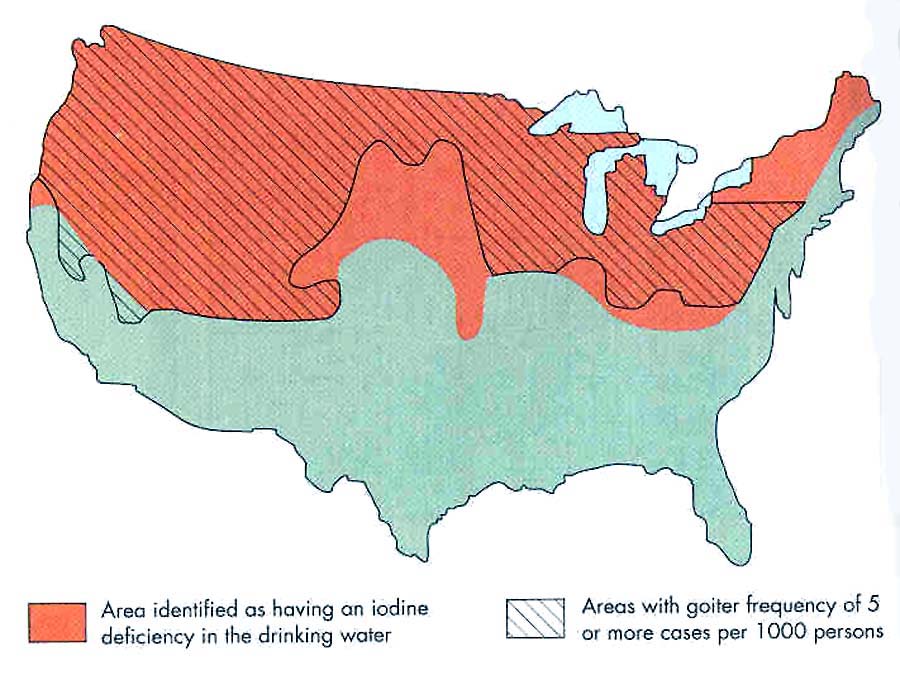
Women who, at the time of the study, had been taking estrogen and progestin for 5-10 years had a 45% increased risk. This study is 1 of the largest done to date. Breast cancer is more common in areas where iodine consumption is lowest. The highest incidence of breast cancer in the U.S. is in the “Goiter Belt,” an area inland in the region of the Great Lakes.
The land in the region has iodine-poor soil and there is no native, iodine-rich seafood to consume. In contrast, Japanese women consume 25 times more iodine than American women and their risk of breast cancer is reduced.
Think how often this statistic is attributed to soy consumption or lack of red meat. Perhaps it has nothing to do with soy or fat, but rather with iodine?
How much iodine is the “right” amount to keep breasts and thyroid glands healthy? This is a hotly debated topic. It appears that up to 1 milligram a day is considered safe, even though this is more than 6 times the recommended daily allowance. Doctors who are proponents of iodine therapy advocate up to 50 milligrams per day. This is more than 333 times the recommended daily allowance!
The theory behind this level of supplementation is to replenish the gland and leave extra to be taken up by other cells in the body. Advocates of this regimen suggest that women be tested to see if they need higher dose iodine. . . by challenging them with a 50 mg dose and then collecting their urine for 24 hours. If their body has sufficient iodine, 90 percent of the dose should be excreted. Iodine appears to be the great energizer for healthy cells.
If they are holding on to more than 10 percent, they are labeled as iodine-deficient and advised to go on a high-dose supplementation protocol for months followed by lifelong lower-dose daily dose.
The Goiter Belt
In the early 1900s, much of the northern continental United States. . . .was known as the “Goiter Belt.” Many people living in this so-called Goiter Belt, which encompassed a region from the Rockies to the Great Lakes Basin to western New York, also developed goiters (swollen thyroid glands) because the soil lacked iodine.
Before the 1920s, iodine deficiency was common in the Great Lakes, Appalachian, and Northwestern U.S. regions and in most of Canada. Treatment of iodine deficiency by the introduction of iodized salt has virtually eliminated iodine deficiency and the so-called “goiter belt” in these areas. However, many other parts of the world do not have enough iodine available through their diet and iodine deficiency continues to be an important public health problem globally. Approximately 40% of the world’s population remains at risk for iodine deficiency and iodized salt is energy!!!
The human body does not make iodine, which is needed for the production of thyroid hormone. If adequate iodine is not present, the thyroid gland goes into overdrive and becomes swollen, often leading to hypothyroidism.
Today, most people in the United States and other industrialized nations consume iodized table salt, which has dramatically lowered rates of iodine deficiency in these countries. However, about 40% of the world’s population remains at risk for iodine
Learn more about thyroid health.
Iodine is an element that is needed for the production of thyroid hormone. The body does not make iodine, so it is an essential part of your diet. Iodine is found in various foods (see Table 1). If you do not have enough iodine in your body, you cannot make enough thyroid hormone.
Thus, iodine deficiency can lead to the enlargement of the thyroid (goiter – see Goiter brochure), hypothyroidism (see Hypothyroidism brochure) and to intellectual disabilities in infants and children whose mothers were iodine deficient during pregnancy.
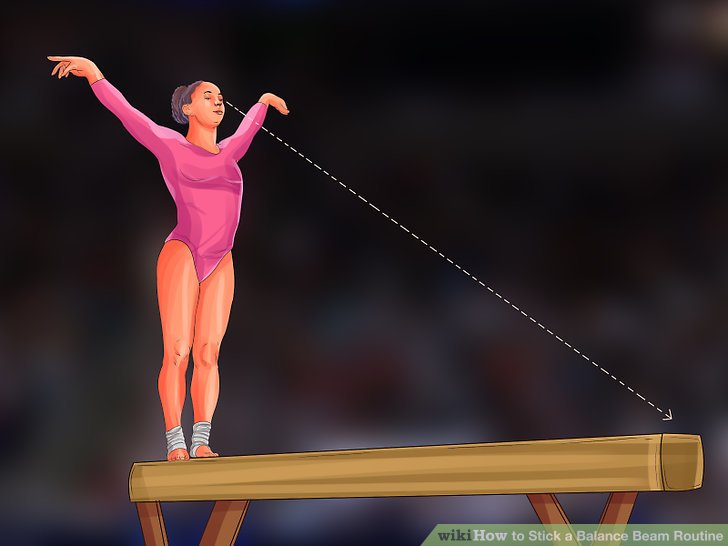
Think of your center of balance and keep it in the arc of your foot while staying focused to the very end of the beam 🙂
Balanced diet or balance diet?
In fact, balance is a noun and balanced is an adjective. The correct English is “balanced diet.” A balanced diet consists of a healthy combination of foods…. in all the food groups. These include vegetables, fruits, grains, dairy, protein and oils. Vegetables: Get plenty of these; preferably unsalted and not fried. Try to varythe types of vegetables you eat. Fruits: Like vegetables, these contain healthy vitamins and antioxidants.They also have fructose, so don’t overdo it. http://www.algarcia.org/AnimationPhysics/BalanceTutorial.pdf
Get plenty of these. Whole grain products such as whole wheat bread, brown rice and oatmeal are the healthy types. Dairy: The calcium in milk is also an essential part of a balanced diet. Dairy products including cheese and yogurt count towards your dairy needs. Proteins: This group includes meat (preferably lean), beans, fish, nuts and seeds. Try to eat a combination of each of these foods throughout the week. Oils: Oils also play an important role because they allow us to consume unsaturated (healthy) fat. There are certain foods that count towards your healthy fat such as almonds, salmon, sardines and avocados. Olive oil is very healthy.
I would also like to define it in the field of biophysics, a field little explored in reality, there is not only the common cell biophysics, but also the “natural biophysics” which is the search for the intrinsic logic of nature and mechanisms of it specifically in the field of health.
This is opening up new horizons for developing treatment of degenerative and chronic diseases, which to date have no solution except pharmaceutical palliatives that lead to long term intoxication of the patient. Natural biophysics always tries to explain through pure logic since nature always is. An inconsistency or anomaly is usually the result of previous erroneous axioms, because nature uses the same building blocks and with the same formula in all its natural process.
The basic principles should always be simple and science is increasingly difficult getting lost in details without knowing irrefutably the bases. There are many doctorates in physics but none can explain even the most basic things like why gravity or a magnet works. There are many professors and doctorates in medicine but no one knows. . . why a body gets sick with certain pathogens and other not, in the official dictionary of diseases, the renowned Merck Manual®, most chronical diseases are of “unknown origin.”
We must seriously ask ourselves what kind of mainstream medicine is this…?
In order to advance we have to do the right question.
The key question therefore is: What is the lowest common denominator of all diseases?
The denominator of all disease is the lack of energy that creates imbalance in the body.
(I = EQ – E)
It’s a very simple equation where I represents the state of disease, EQ balance and E energy. If treatment is able to get more E the result is equivalent to EQ balance and therefore health.
This lack of energy is not only meant at the biochemical level but also at biophysical and psychological level. A trauma for example, draw a lot of energy from the body regardless of whether it was a physical or a psychological trauma, such as the death of a family member.
The body needs to be balanced to be healthy something already discovered by Claude Bernard (1813-1878) who had the idea that the body’s healing capacity depends on the internal environment. https://andreaskalcker.com/en/diseases/
Science explains complex life, sometimes so complex that nobody realizes incongruities. They are the same inconsistencies that can give us a clue to the truth, and this truth will teach that the earth is not flat ( perhaps…:).
Science should be focused in the future on if their bases are actually valid and correct since a laureate prize does not mean precisely that a theory is absolutely true, and if you do not believe can find documentation on the Nobel António Egas Prize Moniz “for his discovery of the therapeutic value of lobotomy in certain psychoses.”
Let’s concentrate on the basics.
Our body and our cells obtain energy through a combustion process. This combustion or oxidation provides us with energy. We burn fats, carbohydrates and proteins, but we are also capable of burning toxins. All of us are familiar with the expression “I am going to burn some toxins” when somebody goes for an exercise and provides oxygen & more oxygen to the fire.
There is a simple way to prove this: we can see this process when we have a barbecue. When we blow the coal, temperature increases and so does combustion. We can see it in combustion engines. When we want more efficiency consuming the same amount of fuel, we obtain that power through a turbo compressor, which is no more than a fan blowing extra oxygen to the combustion engine. This way, we obtain much more potency with the same amount of fuel.
We use oxygen constantly from the moment we are born, therefore, oxygen can be much more crucial than what we currently think. At medical school, we have been told that free radicals are harmful to the body according to Denham Harman’s theory. However, we also don’t need a lot of brains to realize that people who regularly practice sport consume more oxygen but somehow are also healthier, which is the opposite of what the “oxidative stress” theory claims.
Actually, this theory was debunked by Prof. Dr. Michael Ristow *, who won the German research award for this work on oxidative stress research. Mitohormesis demonstrates an increase in mitochondrial activity when there is low potency oxidative stress.
However, nobody has rewritten the books to rectify the false theory of free radicals…
Why? Chlorine dioxide in all its forms provides oxygen to the interstitial tissue and to all the body fluids, activating the mitochondria, which in turn generate more energy. This energy allows the body to recover and heal from most diseases. Oxygen is essential and the free radical concept, as it has been promoted in the past, is erroneous.
I will try to simplify so as not to go into a lengthy biochemistry lesson. Essentially, carbohydrates and lipids are broken down during the metabolic pathways to produce ATP via such processes as anaerobic and aerobic glycolysis, the citric acid cycle (krebs cycle), and the electron transport chain. Think of these processes as a Willy Wonka factory machine.
You drop in a glucose molecule (with lipids and carbohydrates and they are essentially broken down to before they hit the first steps in ATP production) and at the end of the mechanical “assembly line,” you will have ATP molecules.
Why is ATP called the energy currency of the cell?
Because it is responsible for the transfer of energy from one set of biochemical reactions to another. Gtp and Utp are sometimes also used. Atp delivers energy wherever energy is needed in the Cell. Atp (Adenosine tri-phosphate) is a molecule that can store energy.
The bond between terminal phosphate: the second phosphate is a high-energy bond.
When it is broken (Atp is turned into Adp and Pi) this energy is released and can be harnessed by the Cell. During the breakdown of sugars in the body, the energy from the sugars are stored in Atp molecules which can be used later.
ATP (adenosine triphosphate), also contains three phosphate groups linked through phosphoanhydride bonds. To spell this out, a phosphate group is a phosphorus atom surrounded by four oxygen atoms.
An phosphoanhydride is a bond in which one oxygen is shared by two phosphorus atoms of different phosphates, acting as a link between them. So the anhydride looks like this: P-O-P, with three additional oxygens bound to each phosphorus.
Now the phosphoanydride bond is very high in potential energy. Phosphate groups have a large negative charge and like charges repel, so the phosphates do not like being next to each other. However, the anhydride bond locks them together.
Naturally, though, this takes work and so you have to put in some energy in order to form this bond. Once the bond is broken though, the phosphates quite happily break apart from one another, releasing that energy which was put in order to keep them together. Imagine a spring: in order to compress it with your hands it takes energy. However, once you allow the spring to return to its preferred state, it will exert a force on your hands, pushing them apart. It’s a similar idea with ATP.
In addition, the energy from ATP is often funneled down to many subsequent reactions by transfer of phosphates (a process called phosphorylation). With this, initial energy is released from the removal of a phosphate from ATP.
However, some of this energy is devopted to attaching the free phosphate to another molecule, reforming the phosphoanhydride somewhere else. While, this too is a high energy bond, it is also somewhat weaker than ATPs since some energy went towards producing.
This process of removing the phosphate and releasing energy followed by attaching the phosphate to another molecule utilizing some of that energy continues until there simply is not enough energy left to do any meaningful work. –>Camille Llamas 😉
Homeostasis is the tendency of an organism to maintain stable internal conditions amid environmental change. Reproduction is the process through which a species produces offspring. Commensalism is the relationship between two organisms in which one benefits and the other neither benefits nor is harmed. Metabolism refers to the physical and chemical changes in an organism which release or use energy.
Claude Bernard, generally acclaimed as the greatest physiologist of all time, succeeded François Magendie as Professor of Medicine at the Collège de France. Bernard interned in medicine and surgery before serving as laboratory assistant (préparateur) to Magendie in 1839. Three years later, he followed Magendie to the Hôtel-Dieu hospital in Paris. For the next 35 years, Bernard discovered fundamental properties about physiology.
“Bernard was right; the pathogen is nothing; the terrain is everything.” — these are Louis Pasteur’s deathbed words!!!
Internal Environment and Homeostasis
The body is surrounded by the external environment that provides nutrients and oxygen that are necessary for life. The external environment receives waste materials from the body. The body has an internal environment which is maintained more or less constant by certain biological mechanisms. The skin separates the internal environment from the external environment.
The internal environment is water-based in which the cells of the body exist. A fluid known as interstitial fluid or tissue fluid bathes the cells. Oxygen and nutrients from the internal transport systems reach the cells through the interstitial fluid. As Waste products move through the interstitial fluid to transport systems which excrete them out of the body.
The cell membrane surrounds the cell. It acts as a barrier and regulates the substances entering and leaving the cell. The cell membrane is semi-permeable i.e. and allows certain types of molecules to pass through but blocks others. Smaller molecules can pass through the cell membrane easily than larger molecules. Some molecules pass through more easily than others. Due to the selective nature of the cell membrane, the intracellular fluid has a different chemical composition than the interstitial fluid.
Homeostasis: The internal environment of the body is maintained more or less constant and within a narrow range of limits. This is called homeostasis.
Homeostasis literally means ‘unchanging’. However, it should be noted that the internal environment is not exactly unchanging. It is dynamic but is maintained within particular limits. Many diseases involve a disturbance of homeostasis.
There are many factors in the internal environment that are maintained within narrow limits. Some of these factors include:
Temperature
Water and electrolyte concentration
pH of body fluids
Blood glucose level
Blood pressure
Blood and tissue oxygen and carbon dioxide levels
There are control systems in the body which detect and respond to changes in the internal environment and maintain homeostasis. There are three parts in any control system: The detector or sensor detects environmental stimuli and sends this information to the control centre. The control centre receives and processes the information supplied by the sensor. It signals the effector to respond to the stimuli. The effector responds to the commands of the control centre and opposes or enhances the stimulus.
Homeostatic imbalance occurs when the body is unable to regulate a physiological variable within the normal range. If homeostasis is not maintained, an abnormal state results. Which can detrimental to the well-being of the body or even be fatal.
Human Biofield
The human body emits low-level light, heat, and acoustical energy; has electrical and magnetic properties; and may also transduce energy that cannot be easily defined by physics and chemistry. All of these emissions are part of the human energy field, also called the biologic field, or biofield. However, no agreement has been reached in the scientific community on the definition of the biofield.
Various approaches have been submitted by this author (Rubik, 1993, 1997, 2002b) and other authors [Popp (1996); Tiller (1993); Welch (1992); Welch and Smith (1990); and Zhang (1995, 1996)]. Most research has focused on electromagnetic aspects of the biofield.
Biology has been preoccupied with its molecular revolution that focuses on structure-function relationships in biochemistry. This effort culminated in the Human Genome Project whereby teams of scientists from around the world have mapped all the genes in human deoxyribonucleic acid. Most of the scientific effort and funding remains in molecular biology.
By contrast, only a small number of scientists worldwide have worked to understand the energy fields of the human body. Moreover, measuring the biofield and understanding its role in life are more difficult than the study of more tangible phenomena, and the funding for the former has been extremely scarce.
Therefore scientific advances in biofield research have been few, and biofield science remains a frontier area ripe for exploration. If we try to pick out any thing by itself, we find it hitched to every thing else in the universe” ~ John Muir, 1911.
The biofield is also elusive. We cannot isolate it or analyze it comprehensively.
As John Muir wrote, “if we try to pick out any thing by itself, we find it hitched to every thing else in the universe” (Muir, 1911). For a field, this connection is especially true, given that, regardless of its source, it travels outwards to infinity, interacts with other fields by superposition, and interacts with matter along the way. Additionally, phenomena such as resonance can occur, involving an energetic coupling of, or oscillation within, matter.
The fields of the human body may also be influenced by the fields of nearby organisms, the biosphere, and even the earth and cosmos, especially geo-cosmic rhythms.
From a theoretical perspective, we cannot calculate the human biofield from first principles because of its dynamic aspects and enormous complexity.
Nonetheless, we can measure certain aspects of the biofield and observe its footprints via novel technologies. The human biofield may carry novel information of diagnostic and predictive value for medicine.
Thus new technologic developments and methodologic improvements in measuring the biofield should be a central aim of health-related research. By measuring various aspects of the biofield, we may be able to recognize organ and tissue dysfunctions even in advance of diseases or symptoms and treat them appropriately so as to eradicate them.
We may also be able to use biofield measurements to predict whether the effect of a particular course of therapy will be effective or ineffective, depending on whether it improves or thwarts the biofield.
This possibility is especially true for the CAM therapies, which, in principal, often evoke a shift in response to extremely small stimuli that harmoniously work with the human body’s natural dynamics to restore balance.
Conventional science and also medicine have long used the electrocardiogram (ECG) and the electroencephalogram (EEG) to assess physiologic function of heart and brain, respectively. The heart produces coherent contraction of numerous muscle cells, also resulting in vigorous electrical activity.
In fact, the heart makes the greatest contribution to the electromagnetic, as well as the acoustic, human biofield. The brain’s activity contributes to a lesser extent to the biofield because its field emission is weaker than that of the heart. The ECG was first developed in 1887 and records the electrical activity from different areas of the heart. The EEG was developed in 1875 and records electrical activity from the various brain regions by using multiple electrodes on the head.
In addition, corresponding magnetic field measurements of the heart & brain have been discovered, which are the magnetocardiogram (MCG) and the magnetoencephalogram (MEG), respectively.
However, the magnetic fields of the body are very low level and typically require specialized equipment such as super-conducting quantum interference devices (SQUIDs) that are expensive to operate. Nonetheless, such magnetic field measurements of the body reveal more information than the electrical measurements, especially if also coupled with three-dimensional resolution, as in the case of MEG.
For the latter, localizing the activity of a region of the brain approximately the size of a pea is possible. Additionally, some of the more recently developed medical scans, such as functional magnetic resonance imaging and positron emission tomography, can also be used as indirect indicators of electromagnetic activity.
Galvanic skin response (GSR) measures the electrical conductance between two electrodes placed on the skin. This value is a mainstream measure that is used in lie detectors to help determine veracity and in biofeedback technology to help promote relaxation.
The human body is a strong emitter of infrared radiation, on the order of 100 watts, and visualization of this emission is used in medical imaging. Thermography uses an infrared camera and are associated software system to visualize the pattern of infrared emission, which we cannot see directly but experience as heat.
This method can detect changes as small as 0.01° C in the human body. Thermography can detect acute and chronic inflammatory conditions. This method is documented by many research studies to show toxic accumulations, tumors, and other diseases, often much earlier than x-ray mammography or other imaging procedures, for example, in the case of breast thermography (Amalu et al, 2006).
Typically, thermography is used to locate hot spots and left-right imbalances correspond to problem areas. However, the actual temperature and emissions pertaining to infrared portion of the human biofield have been considered much less important thus far to some clinicians and investigators.
Thermography is also used before and after therapy to visualize its influence, as for example in the case of infrared photonic treatment to look for improvements in the symmetry of the emission patterns after treatment. Thermography is now an accepted diagnostic procedure in medicine.
In summary, various strategies for measuring the human biofield include measurements of biophoton emission, as well as induced light emission; measurements on practitioners performing biofield therapy and on patients receiving biofield therapy; and bioassays for biofield therapy, as mentioned previously. Additionally, measurements of the electric or magnetic fields (or both) directly from the human body, especially from the acupuncture points, have also been developed.
Besides the veritable energies of the biofield discussed thus far, the human biofield may also consist of other putative energies as well, more subtle than the energy fields presently known in physics. In relation to this possibility. . . is a less common form of therapy known as distant healing, in which the practitioner and patient are in different locations, ranging from many feet to many miles away.
Invoking electromagnetic fields as causal in distant healing is impossible because electromagnetic energies diminish rapidly over distance, varying as the inverse of the square of the distance. Nonetheless, many biofield practitioners, including Reiki and external qi therapists, often learn and practice both local and distant healing.
Distant healing, which is often combined with spiritual healing and prayer, may involve no energy transfer whatsoever if it occurs by the principle of quantum nonlocality, or it may involve a putative energy not yet identified in science. However, in this chapter, we will address only specific aspects of the human biofield that are tangible and can be measured. We will also focus only on local biofield therapy.
Devices and Techniques Used to Measure the Biofield
Various devices have been developed that claim to assess aspects of the biofield, most of them electromagnetic in nature. That this area of research is in its infancy, with inadequate funding, no ongoing government sponsorship, and developed by a small number of people working largely in isolation, must be pointed out.
Thus, not surprisingly, several issues remain to be resolved.
Here, we describe a few of the devices and techniques that are being used in biofield research or the clinic that appear promising but that need further substantiation to become accepted.
These techniques fall into three categories: (1) high-voltage electrophotography, (2) acupuncture point conductivity measurements, (3) and biophoton measurements.
High-Voltage Electrophotography: the Gas Discharge Visualization Camera
The gas discharge visualization (GDV) camera, developed by the Dr. Korotkov Co., St. Petersburg, Russia, is perhaps the best-known form of contemporary high-voltage electrophotography based on the Kirlian effect (Kirlian and Kirlian, 1961) and was first discovered in Russia in 1948. Kirlian photography was not introduced to the West until the 1970s because of communication difficulties during the Cold War.
This digital camera, introduced in the West in the late 1990s by its inventor, physicist Dr. Konstantin Korotkov, comes with software and offers the advantage of using a lower voltage than conventional Kirlian photography… that is not felt… as an electric shock by subjects.
Factors that Encourage the Dangers of Electromagnetic Radiation.
Though every person’s cells are affected by electromagnetic radiation, each is affected at different ‘speeds’. Here are some of the factors that encourage a faster or stronger reaction to EMF exposures.
High stress levels
Low iodine levels
Heavy metal toxicity
Having Lyme disease
Weakened immune system
High total EMF exposure (How full is your radiation ‘cup’?)
One or more single incident of very strong exposure
Having other pre-existing health problems http://www.best-emf-health.com/dangers-of-electromagnetic-radiation.html
As more and more people like myself discover better options to fight cancer and to see less of our family, relatives and friends die from the treatment of this dreadful disease. It’s hard for me to see people harassed by the F.D.A. and big pharma: Who has filled more cemeteries than those multi billion dollar for profit organization in a system that doesn’t work BIG PHARMA 🙁 and we read articles like this one!!!
(Natural News) A world-famous doctor who offered her naturopathic services for free was forced to close her clinic after the Philippine equivalent of the FDA went after her and she received a wave of death threats.
Dr. Farrah Agustin-Bunch went to a conventional medical school, but the fact that doctors are encouraged to prescribe treatments to patients that haven’t been scientifically proven to be safe and effective made her uneasy and ultimately pushed her toward naturopathy. Her late father was the famous herbalist sir Antonio Augustin, who established the first natural cancer treatment center in the Philippines in 2000.
She eventually decided to open up her own practice. Her clinic in Victoria, two hours from Manila, was frequented by celebrities, business people and even royalty from the Philippines and beyond. She never charges patients for their visits or exams, believing that everyone has the right to see a doctor at no cost.
Dr. Bunch has successfully treated conditions like lupus, hypertension, diabetes, and other problems. She has even successfully treated stage 4 cancers. In total, she has treated more than 100,000 patients since becoming a doctor. She has also come up with protocols based on clinically and scientifically proven methods that make use of medicinal plants, extracts, herbs, and minerals. Some variations of her immunotherapy treatment are even used at some of America’s biggest cancer treatment centers.
Are her successes threatening the profits of more powerful people?
Her impressive treatments probably weren’t well received by the pharmaceutical and medical industries, and she likely drew further ire through her website, which offers up more than 20,000 pages of scientific evidence to inform and educate her patients. Also in addition to demonstrating the effectiveness and safety of immunotherapy, it also exposes the lack of scientific evidence for conventional treatments like radiation, chemotherapy, and most surgeries.
She recently announced to her 3 million Facebook followers that she had to temporarily close her operations after the lives of her patients, children and herself were threatened if she remained open. She stated that several cases were filed against her after government offices and agencies received complaints from unnamed medical societies.
She said that her clinic and property were raided, and she has been prohibited from manufacturing health products, administering them to patients, and distributing them.
If she continues to help patients right now, she could lose her license to practice medicine and her career as a doctor would come to an end. After her clinic was closed for allegedly selling supplements that were unauthorized, she said in a video message on Facebook: “I was also told that if my outpatient clinic was still open tomorrow, that I would be arrested and my license to practice medicine would be revoked.”
She said that she’s cooperating with the government agencies and using legal remedies to help fix the situation. She apologized to her patients for the inconvenience and suffering this situation could cause for them and said that she hopes to reopen as soon as possible so she can continue helping people.
A tearful Dr. Bunch added in her video message: “If something bad happens to me, please remember that I fought for my fellow Filipinos to have choices in their healthcare.”
It’s an unfortunate turn of events for the patients who rely on her treatment, but it’s not surprising. Naturopathy, homeopathy, chiropractic, acupuncture, and other so-called “alternative” medicine areas that have long been under attack by conventional doctors, pharmaceutical companies, and the FDA in the U.S. and countries around the world.
As authorities continue to bully trained professionals who are only trying to heal people, medical freedom is slipping away from us and few people are noticing and speaking out about it. The Philippines’ first Natural Cancer Treatment Clinic was first established by the late Sir Antonio “Ton” Agustin, Dra Farrah’s father.
It was then called as the “Boston C Clinic” for it is where Sir Ton and Dra Farrah have perfected the formulation of the famous concoction, the Boston C. This facility has also honed Dr. Farrah into the magnanimous doctor she is today, also treating over 20,000 patients of cancer and thousands of other degenerative illnesses from all around the world.
The Natural Medical Center Today
Today, the Boston C Clinic is known as the Dr. Farrah Agustin-Bunch Natural Medical Center, relocated at Brgy. Maluid Victoria, Tarlac. It is continuously growing, occupying a total of one hectare land with a modern facility powered by solar and wind energy to fully serve the electricity needs of its patients.
The clinic’s “unique, all-natural and organic treatments” are made accessible to all those who are afflicted with dreaded and debilitating diseases regardless of their social and economic status. At present, there are approximately 1,000 patients who are diagnosed with different types of cancer malignancy. The Center has derived its comprehensive “natural medicine” experience from treating more than 100,000 patients since the year 2000.
The Dr. Farrah Method
More than knowing what cancer is, it is more important to treat it. The “Dra Farrah Method” involves a very holistic view of analyzing and treating the disease, considering the underlying cause of it and not just producing a one-off cure.
Furthermore, the Dr. Farrah Agustin-Bunch Natural Medical Center focuses on the specific details of the patient’s medical case in the diagnosis. We consider the patient’s current condition, the location of the cancer, and impact or damage, if any, of prior treatments the patient has undergone. There is no “one size fits all” treatment being administered here at the Center; every patient has a medication and diet protocol tailored for each patient’s specific needs and conditions.
The foundation of the Dra Farrah Method is Dra Farrah’s Boston C and also other supplementary all-natural and organic treatments and herbal remedies.
It is safe to say that Dr. Farrah Agustin – is a woman with a passionate mission.
A woman determined to make a difference in the world of medicine, Dr. Farrah is a graduate of St. Louis University in Baguio City while completing her internship in China and Scotland, and completed a Holistic Health Practice from Natural Healing College in Los Angeles, California.
Her passion stems from a deep desire to go beyond a diagnosis to determine what is the cause of a disease, particularly cancer. To fulfill her purpose, Dr. Farrah, along with her father, the world-famous herbalist, Sir Antonio Agustin. Mr. Agustin developed the first natural cancer treatment center in the Philippines in 2000 and together with Dr. Farrah, they later on developed The Dr. Farrah Method.
The Dr. Farrah Method is unique because of its different approach to treating cancer. Dr. Farrah notes, “In conventional medicine, the focus is on the disease, in alternative medicine, the focus is the patient.”
Dr. Farrah believes in a treatment called ‘Integrative Medicine’, an approach that combines conventional medicine with alternative interventions that help overcome and compensate for the abject failures of chemotherapy, radiation, and surgery.
Her method works to reach the cause of cancer by eliminating toxins eradicating both the cancer and the cause. Treatments are entirely tailored to the individual, Dr. Farrah works closely with her patients to determine the best way to treat them.
The Dr. Farrah Agustin Method has also made Dr. Farrah the leader. . with 15 years of experience in integrative cancer treatments as well as introducing the world to the word, ‘Immunopathy’. The cornerstone of the treatment is Boston C, invented by Dr. Farrah herself, as well as other support system necessary for the patient. 🏻⚕️ Dr. Farrah Agustin is a World-leading Natural Oncologist
// She Save lives by empowering and educating the world’s population to better way and different prescription for fighting cancer.
Public Health Warning Against the Purchase and Consumption of the Following Unregistered Food Products:
1. Dr. Farrah’s Boston C
2. Dr. Farrah’s Cyeton
3. Dr. Farrah’s Skeleton
**********************************************
In this talk, Wesley shares details on understanding how cancer works in order to develop new treatments and better practices. What is immunotherapy and could it open the door to treating aggressive and difficult to treat cancers? Could our own immune systems hold the clue for defeating these diseases?
Wes is a Canadian cancer researcher working on developing new therapies and cancer treatments. He had the opportunity to work and study around the globe in 5 countries.
His previous work has led to the understanding of gene expression changes as cancer progresses in brain tumors, the discovery of new pathways involved in the tumorigenesis of breast cancer, and development of new strategies in radiotherapy treatment.
He also has a long history in the technology sector and serves as CTO of two medical technology companies in North America. He has received engineering and innovation awards for his work in health tech from Waterloo, Massachusetts Institute of Technology (MIT), Microsoft, and Intel. He continues to work on machine learning algorithms to produce new tools for the future of medicine.
Wes currently lives in Perth, Western Australia, where he works at The University of Western Australia and Harry Perkins Institute of Medical Research. This talk was given at a TEDx event using the TED conference format independently organized by a local community.
IT’s True: People eating a whole foods plant based diet continue to live longer and with less heart disease, diabetes, and cancer….
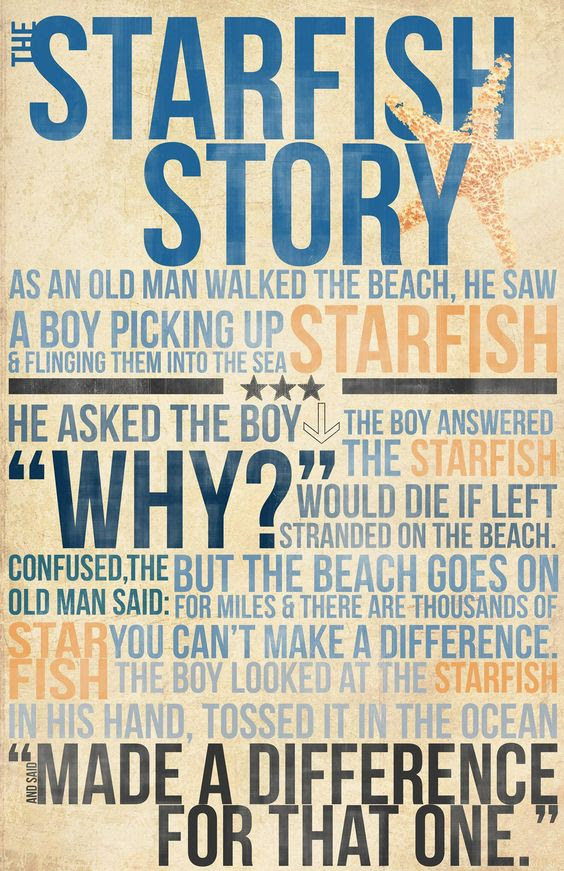
 on the web.